I remember a time back when for me and my friends in high school, this was the must-see movie for us! One of us even had one of those shirts that said “I Am McLovin” (anyone else remember those?). We just HAD to see this movie, and when it was released on DVD, we watched it over and over and over again.
As I got older, some of the more outrageous comedy sort of wore out on me (while the rest of it still makes me laugh out loud). But I also saw something more within the movie too. “Superbad,” for all its talk of partying, drinking, and getting “lucky,” is subtly an anti-party movie. Really think about it–all Seth (Jonah Hill) and Evan (Michael Cera) want to do is get drunk, have sex with their crushes, and party all night. They go through great lengths to get liquor. On the way, they wind up at a rowdy adult party where partying gets nasty and unwelcoming. They finally get to the party where their crushes are, and Evan’s crush gets crazy-drunk while Seth ultimately strikes out by drinking and accidentally giving his girl (Emma Stone in one of her first roles) a shiner. Do you think these guys are going to want to act this way after that crazy night? I don’t think they would, especially after they’ve declared their shared platonic love to each other at the end of the night.
This makes “Superbad,” a movie I loved as a teen, somewhat more realistic and also a better film to watch as an adult. As funny as it is, I think it works as a cautionary tale too.
Of course, Fogell (Christopher Mintz-Plasse) doesn’t learn a single thing, but whatever–let the kid have a good time this night. (“BREAK YO’SELF, FOOL!”)
My favorite scene: Fogell reveals his fake ID to Seth and Evan, which has one name: McLovin! The dialogue here is so silly, you have to be a genius to write Fogell’s idiotic logic. (That’s one of the reasons I’m jealous of Seth Rogen & Evan Goldberg’s writing.)
Like I said, some of “Superbad” doesn’t work as much for me–for example, what was the point of the multiple penis drawings, other than Rogen & Goldberg wanted to push the envelope? (I think I just answered my own question.) But a lot of it still does, and that’s what keeps me coming back to it every once in a while. It’s naughty, it’s hilarious, it’s even kind of sweet.
One of my most unpleasant memories of film-school was in a Film Theory course in which we learned about Auteur Theory by watching Francois Truffaut’s French New Wave classic The 400 Blows.
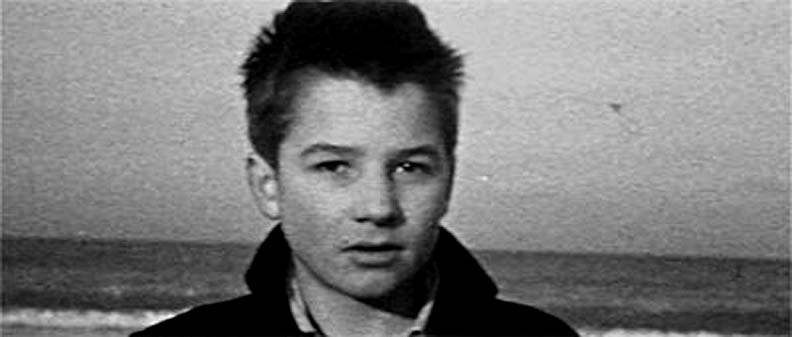
I had already seen “The 400 Blows” about a year before watching it in class. I knew it was a great film and something special, and watching it in this class and learning about Auteur Theory made it all the more intriguing to me…when it ended with that iconic image of Antoine Doinel (Jean-Pierre Leaud) looking to the camera with a look of question (like, where does he go from here?), I was getting ready to applaud but nearly everyone else in the class was laughing. One student in the front row even said, “Why would you want to show us that? That was one of the worst movies EVER!”
I felt so bad for the professor that at one point, as I ran into him in the hall, I told him, “For what it’s worth, ‘The 400 Blows’ is one of my favorite movies.”
And it is, too. It’s also one of the biggest influencers for my favorite subgenre of film: the coming-of-age story.
It’s also one of the tougher ones: no melodrama or sentimentality–it’s just showing this troubled kid who always gets in trouble with school and with his parents, puts himself in a bad position many times, and everyone sees him in the worst possible light. Even when he changes his mind to return something he had stolen, everyone wants to label him as a bad egg. In one of the most heartbreaking scenes in the film, done in one shot (which was actually the young actor’s audition footage–Truffaut liked it so much he included it in the film), we get numerous reasons for his unhappiness.
My favorite scene: the psychologist interview I already mentioned is a highlight, but my favorite scene is still the ending that my peers/classmates laughed at. Yeah, that awkward optical camera zoom-in is dated, but what it means, I will never forget. Antoine has just done yet another thing that will get him in even more trouble, he has no idea where to go from there, and neither he nor we have any idea what is going to happen to him. The push-in on his face says it all: an uncertain young man faces an uncertain future.
Truffaut has made four other films featuring this character of Antoine Doinel–I’ve only seen the immediate follow-up (“Antoine and Colette”) but not the others. Not yet, anyway…
A few months into 2021, there’s a few 2020 films I consider “favorites.” For instance, I’ve already seen I Used to Go Here, The Rental, Bad Education, and The Invisible Man countless times. But there’s one particular film from this past year that I think I’m going to treasure…
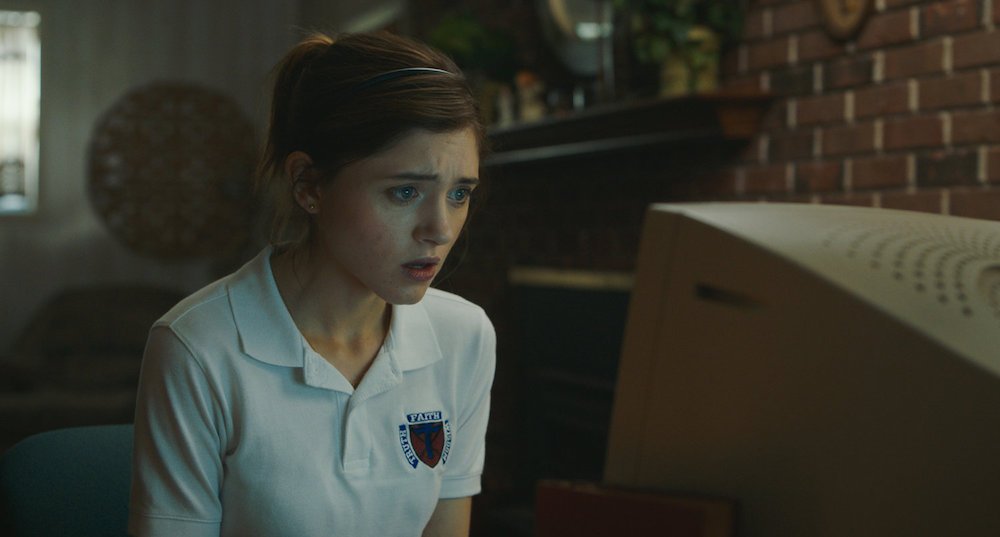
Based on the short film of the same name, “Yes, God, Yes” is about a devout Catholic teenage girl, named Alice, whose world is changed when she discovers pornography and…self-pleasure, I’ll call it for my most sensitive FB friends.
Natalia Dyer of “Stranger Things” fame plays Alice–Dyer is 25 years old and could probably still play these naive-teenage-girl roles when she’s 45!! She absolutely shines in “Yes, God, Yes” as her character goes through a coming-of-age personal journey that never strikes a false note. (I’m surprised that this film didn’t garner any Indie Spirit Award nominations, especially for Dyer’s great performance.)
Alice is curious about sex but totally inexperienced in the subject. She’s also afraid to try experiencing it because her Catholic school teaches that it’s a sin to engage in premarital sex–and even after marriage, sex is strictly for procreation. That’s why when a rumor starts in the halls about her having been intimate with a male classmate, she has no idea what anyone is talking about. (I’d say what sexual act is being questioned in this rumor, but it’s funnier when you hear it yourself.) She didn’t do it, but now she’s being slut-shamed due to the rumor. She also has growing feelings of sexual desire (not helped by a cybersex encounter in a chat room), for which her friend Laura (Francesca Reale) and Father Murphy (Timothy Simons) cause her to feel shame.
Alice thinks if she goes on a school-funded retreat, she’ll get back to the path of righteousness. But there’s a lot on her mind that leaves her more curious to explore her sexuality…including a hunky senior, Chris (Wolfgang Novogratz), from whom she craves attention.
One of the things I admire most about “Yes, God, Yes,” written and directed by Karen Maine (who was a co-writer for “Obvious Child,” another challenging film on taboo subjects), is how frank and honest it is about this girl’s story, and it’s never mean-spirited. It’s handled in a sweet, sincere manner. It can even be very funny but never because of cheap, exploitative jokes. We laugh at these moments for the same reasons we feel for Alice throughout the film: because the film feels real.
It’s also a film with a message: how we need to be more open about ourselves and trust each other with honesty and respect, because that’s what Jesus would want us to do. (You could also go to an extent and argue that the message is about how we need to understand our own sins so that we can deal with them better.) Alice learns that just about everyone, including Father Murphy, is hiding something, which confuses her even more. That leads her to a calm discussion with a kindly bar owner (played wonderfully by Susan Blackwell) who assures her that it’s only human to discover where certain developments may lead personally.
In this scene, she basically taught poor Alice in just a few minutes a lesson that no one in that school could in years.
“Yes, God, Yes” ends ambiguously, with no easy answers (at least, that’s how I see it). Where Alice goes from here is anyone’s guess. But I wish her the best. She’s bright and sweet and lovely–she deserves to be happy.
I couldn’t tell you how many times I’ve streamed this wonderfully acted, subtle, gentle comedy-drama on Netflix in the past few months. And the greatest part about it? It’s short–about 77 minutes, including credits! That’s another thing I admire about “Yes, God, Yes”–it’s only as long as it needs to be.
You know, maybe that’s the reason I love it so. It’s a wonderfully-crafted, beautifully-detailed “compact film” (if you will) that wastes no time establishing characters or motivations and yet gives us just enough material to make us understand it all, without ever once wearing out its welcome.
“Yes, God, Yes” is currently streaming on Netflix and available elsewhere on-demand–I can’t recommend it enough. It’s honestly the kind of wonderful, charming little indie comedy that I’d like to see more of.
You know, I sometimes don’t know right away whether or not a movie I see will become a “favorite.” Sometimes, I’ll see it and give it a positive review and want to see it again. And after a good amount of time, I’ll have seen it enough times so that when I’m reorganizing my DVD/Blu-Ray collection, I pick up that particular one and think to myself, “Yeah…I think this IS one of my favorite movies! Maybe not in the top 100 but top 200 maybe?”
Believe it or not, David F. Sandberg’s 2016 supernatural horror film “Lights Out” is one of those movies. Why? I’ll try to explain.
Based on Sandberg’s truly scary short film of the same name, “Lights Out” tells the story of a broken family trying to survive as a supernatural demonic entity haunts them–and the monster can only overpower you in the dark. In the light, you’re safe. In the dark, you’re doomed!
“The Babadook,” this is not. In fact, it’s a much simpler film than the complex “The Babadook”–but that’s part of what I like about it. “Lights Out” has the attitude of a mainstream horror film but a serious message about fighting depression underneath the surface.
The characters are all well-developed and interesting. Maria Bello delivers great work as Sophie, the mother of an adult daughter named Rebecca (Teresa Palmer) and a pre-teen son named Martin (Gabriel Bateman)–she has mental health issues that seem to be worsening and it worries little Martin as she seems to be talking to herself…or is she? Things get creepier when it becomes clearer to Martin that there is someone else with his mother–someone who told her to stop taking her medications because “she” can make everything better for Sophie. Martin can’t sleep at night because of what’s happening, so Rebecca, who has been estranged from Martin and Sophie for a while especially after her father mysteriously died (we see in a very creepy prologue, featuring Billy Burke as the father, how he died), now has to play a parental role to protect him as it seems things aren’t safe with Sophie as long as this thing is with her. When Rebecca learns of who/what this thing is, she and Martin learn they have to protect Sophie from it as well.
They feel like real people I can identify with. There’s another character worth mentioning because he’s my favorite in the whole film: Bret (Alexander DiPersia), Rebecca’s boyfriend. Any other horror film would have written this guy as your one-dimensional idiotic jerk who would be the first to die. But not only is Bret supportive, loyal, and resourceful–he lives!
“Lights Out” was made by someone who clearly loves horror movies enough to know when to break the rules and when to follow them, and like Mike Flanagan (the king of modern American horror these days), he puts atmosphere and character ahead of scares so that we care about who the scares are happening to.
Now, as for the ending…I was a little unsure about the ending because you could look at it many different ways. One way is that there’s a sacrifice from one character that had to be made to protect the others. Another way is to look at it as tragic that it had to happen. Another way is to think there were many other alternatives to this. Another way, the sickest way, is to say this ending promotes suicide, which I definitely don’t think is the case. There is an extended ending (seen on the film’s Blu-Ray) that doesn’t really work because it makes it seem pointless overall. Without giving it away, I think the ending works as a way of combining tragedy and the will to keep fighting because things are always going to be tough. Plus, it’s amazing I’m even thinking so hard about this for a horror film in which it’s destined that people die.
Whatever the case, I know David F. Sandberg worked really hard in making this more than just another mainstream supernatural horror film. He made a mainstream supernatural horror film that is truly about something. And it’s also given me inspiration in writing my own horror films these past couple years, so I know the film has had that effect on me.
My favorite scene: would it surprise anyone if I said it was the “cellphone scene?” Those who know the film know what I’m talking about.
Many different times on this blog, I’ve tried ranking my favorite movies. Well, now I’m going to do something different–I’m going to create individual posts for some of my top 300-400 favorite movies (just because I love movies so much).
And even I’m not necessarily ranking anymore, I still have to level with you…this movie is in my top 5!
Complete and total honesty–I LOVE this movie! Just had to throw that out there. “Stand by Me” has been THE movie that I’ve grown up with and I will always love it until the day I die. Based on the Stephen King novella “The Body” (part of King’s “Different Seasons” collection of four stories), “Stand by Me” centers around a group of four 12-year-old boys, each dealing with their own problems, going on a trek to search for a missing dead body. They go on many misadventures along the journey (which obviously appealed to 9-year-old Tanner the most), but they’re not what the film is about (which grown-up Tanner would come to learn).
Each of the boys has their own personal issue to get through–our main kid Gordie (Wil Wheaton) is coping with the loss of his older brother and the possibility that his parents believe the wrong son died; Chris (River Phoenix) is looked down upon by others due to his family’s bad reputation; Teddy (Corey Feldman) still suffers emotional (and physical) scars from his abusive father; and Vern (Jerry O’Connell) is a feeble scaredy-cat. All four of these juvenile main characters are well-developed, but what truly makes them stand out is the excellent acting from each of the young actors playing them. Corey Feldman as Teddy can be very funny and obnoxious, but he also shows he can be highly vulnerable too. My favorite is the late River Phoenix as Chris–playing arguably the most complex character in the bunch, Phoenix presents the kind of friend you’d want to have at that age: the friend who will listen to you and be there for you because no one else will. It makes his most emotional scene, in which he breaks down to Gordie about when he was wronged by a schoolteacher because it was her word against his, all the more special because we want to be there for him in return. He’d be there for us too.
Also, there are plenty of memorable lines in this movie, but here’s one that stuck out to me the most–it’s when Chris encourages Gordie’s writing: “It’s like God gave you something, man. All those stories that you can make up. And He said, ‘This is what we got for you, kid. Try not to lose it.’ But kids lose everything unless there’s something there to look out for them…and if your parents are too f***ed up to do it, then maybe I should!”
“Stand by Me” has plenty of jokes and adventures and entertainment value, whether it’s the kids braving a train trestle or just shooting the breeze around a campfire, but what makes it one of my absolute favorite movies even to this day are the genuine human moments that deliver tough life lessons and develop the friendship of these kids who need each other at this point in their lives.
This is my example of a perfect “dramedy” (comedy-drama)–it’s a film that shows when times are tough, it helps to have good people to share laughs and positivity with. And it balances the comedy and the drama brilliantly.
“Stand by Me” was a sleeper hit in 1986. In a summer when everyone was talking about big-budget monster movies like “Aliens” and “The Fly,” here was a quiet, gentle coming-of-age film about four boys growing up and relating to each other over the course of two days. The word-of-mouth was apparently so wide that it became one of the bigger surprise hits of the year.
It’s amazing to look up vintage 1986 reviews of the film and interviews with director Rob Reiner about making the film–it’s almost like they knew then that the film would still be as highly regarded 35 years later. And Stephen King himself was impressed by the film–after a private early screening of the film, he excused himself for a while…and then when he came back, he told Reiner personally, “That’s the best film ever made out of anything I’ve written, which isn’t saying much. But you’ve really captured my story. It is autobiographical.” (Also, upon reading about what it was like for Reiner to make the film, as he constantly felt he was in his father Carl Reiner’s shadow and wanted to break away from that, it must have been so great to have one of the best all-time authors say that to him.)
Oh, and I also found an old Chicago Tribune review of the film by Gene Siskel (THANK GOD, because I still can’t find any evidence of a review from Roger Ebert!!)–he rated it 3 1/2 stars out of 4 and even praised the campfire-story scene involving the pie-eating contest that results in…you probably know what I’m talking about. It was a relief that he found that scene hilarious–I thought he would’ve seen it as a weak spot!
That scene is indeed hilarious–and so are the moments of small-talk between the boys that’s worthy of “Seinfeld,” such as, “You think Mighty Mouse could beat up Superman?”
My favorite scene has always been the scene at the trestle, where the boys are in danger of being run down by a freight train if they don’t make it to the other side in time. The buildup is great (especially when Vern is taking too long crawling across the planks), Wil Wheaton’s scream upon noticing the oncoming train is priceless, and the resulting chase makes for overall an exciting, funny, suspenseful scene. (“Hey…at least now we know when the next train was due!”)
The screenplay by Raynold Gideon & Bruce A. Evans) was nominated for an Academy Award for Best Adapted Screenplay (losing to “A Room With a View”)…but it got more recognition from the Film Independent Spirit Awards, garnering nods for Best Screenplay, Best Director, AND Best Film (all of which lost to Oliver Stone and “Platoon”…OK, fair enough)!
Yet another reason for me to appreciate the Indie Spirits more than the Oscars…this won’t be the only time I make comparisons in this new series.
“Stand by Me” is a movie that means so much to me that I can’t help but be thankful that I live in a world in which it exists. It’s a hell of an unforgettable adventure. I’ve seen it about a million times already, and I’ll definitely see it a million times more.
I remember over six years ago, this 40-minute short film closed out one of the Arkansas-short showcases at the 2014 Little Rock Film Festival. When the end-credits rolled, the audience went wild with loud applause and even louder cheering for over 30 seconds.
I was among the audience members making that noise. I saw many exceptional short films in that festival, but there was something about this one that truly stood out. When it won the award for Best Arkansas Film at the end of the festival, I knew it felt…right.
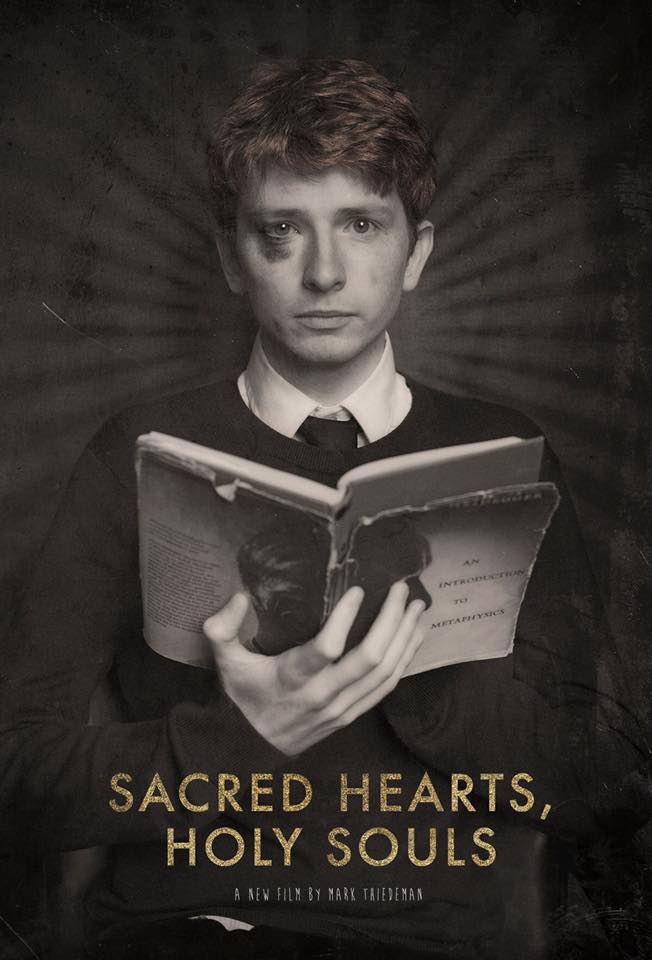
The film was writer/director Mark Thiedeman’s “Sacred Hearts, Holy Souls.” And six years later, I still enjoy watching it from time to time.
Harrison Tanner Dean is immensely likable as Max, a conflicted Catholic schoolboy who attends boarding school and is struggling with both his sexuality and his religious beliefs. That inner struggle is what gives the film its key interest–someone coming to terms with who they are in what is already an awkward time for all of us: the teenage years. This character of Max takes us through the film, which is a great collection of moments in this time in his life–confusing moments, comfortable moments, harsh moments, and victorious moments. All of that makes for an effective coming-of-age film, and by the end of this film, we can’t help but feel (or at least hope for) happiness for Max.
Dean is excellent here, and so is Quinn Gasaway as Andy. Andy is the wisecracking rebel on campus who breaks numerous rules and tries to get under the skin of Father Alphonsus (C. Tucker Steinmetz), who punishes students by humiliating them. He becomes Max’s friend and confidant, leading to a wonderful scene late in the film, in which the two sit at a riverside and talk about their beliefs. It’s short, but it’s an open, frank, and understanding discussion that puts us further inside their heads.
And speaking of solid characterization, I also got that out of Father Alphonsus. Upon first viewing, I saw him as a two-dimensional strict archetype, especially since he seems to punish Max simply for being gay. Watching it again, there was a scene that made me think there was more to this guy than meets the eye–a scene in which Andy serves detention time under him and receives a stern lecture about why he’s not going to kick him out of school. Alphonsus uses a parable about a similar type of student as Andy. That scene gave me an idea as to how Alphonsus’ methods are effective…they’re hardly condonable, mind you, but little things like that let you know how he thinks.
The cinematography from David Goodman is fantastic. I learned from one of the film’s extras that it was shot mostly in natural light, which was a smart choice. The effect made me feel like I was there attending this school with Max and Andy and their classmates. It also helps that the acting from all the other boys is spot-on–early in the film, when they’re goofing off together before class is in session, I could have sworn I was watching a documentary.
Also delivering solid work are Karen Q. Clark as a friendly nun who seems to be the only person who understands and cares for Max, Jim Linsley as a sex-ed teacher who has an unusual way of warning students against masturbation, and Schafer Bourne, delivering a Tom Cruise-like cocky charisma as Max’s bully Kirby, whom Max has to fight in front of the whole school (as part of Alphonsus’ ultimate punishment).
But the real standout of “Sacred Hearts, Holy Souls” is Mark Thiedeman himself. As writer and director, he shows how he truly cares for his characters, delivers an atmosphere for them to explore, gives them a few laughs and a few troubles, and teaches them (and as a result, us as an audience) that while it’s easy to give in to the bullying that threatens your identity, it’s harder to grow and to embrace who you are right in their faces. You can tell he put his heart and soul into this project. (I haven’t mentioned that he loosely based the film on his own school experiences in real life–I don’t think I needed to.) And more importantly, it feels true.
I can’t recommend “Sacred Hearts, Holy Souls” enough. You can check it out here on Vimeo:
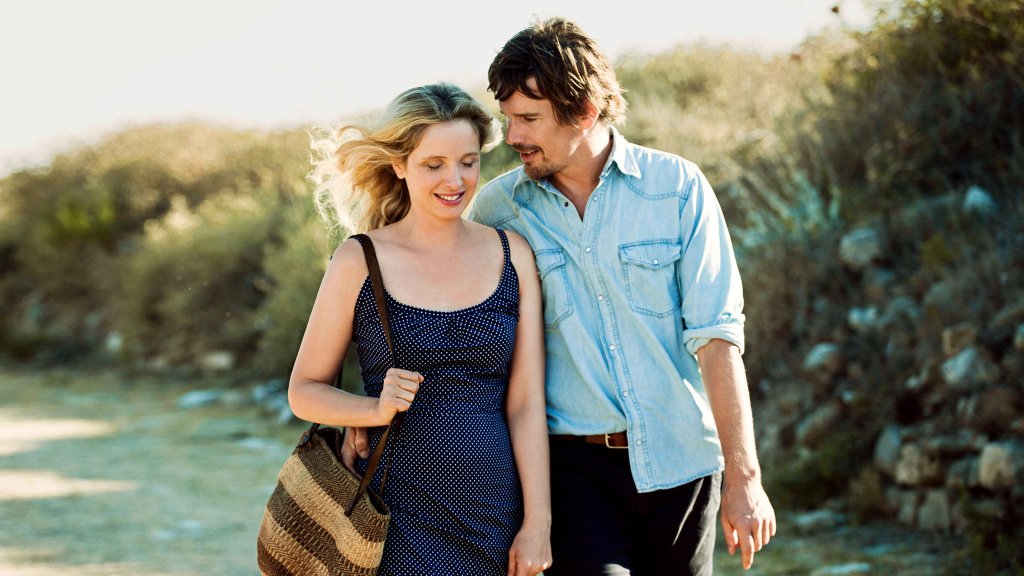
Yes, it’s the latest (final, perhaps?) chapter of Richard Linklater’s much beloved “Before…” trilogy that is my personal favorite film of the 2010s. The whole trilogy of films is among my absolute all-time favorite movies, so for this decade-end list, there was no question that my #1 choice would be Before Midnight, released in 2013.
But wait. In my post about The Spectacular Now, I mentioned that I had trouble choosing between four films for my #1 pick of the 2013-end list. Why didn’t I choose “Before Midnight” right away? Well, for one thing, time changes minds unpredictably, and so obviously, it’s what I would pick for the best film of 2013 now. Second of all, I didn’t have a very pleasant time when I first saw this movie in a theater (with a very talkative and irritable little girl sitting a few rows behind me–I’m guessing her parents dragged her to see this sequel to two other movies that I assume she would have no interest in whatsoever??)–I still reviewed the film the way it was meant to be (or the way I wanted it to be), but I was “looking” at the film rather than “seeing” it. Now that I’ve “seen” “Before Midnight,” I can’t deny it–it’s an excellent film that made its mark on me (better late than never).
“Before Sunrise” (1995) was a wonderful romance about two young people (Ethan Hawke and Julie Delpy) who meet by chance and spend a wonderful night together before separating…until nine years later, with “Before Sunset” (2004), where they finally meet up again and wonder if this is a second chance. Now it’s another nine years later, and we have “Before Midnight.” Jesse (Hawke) and Celine (Delpy) have been together all that time, they have twin daughters, and this is a film about what *is*, rather than what might have or could have been.
By this point in their relationship, the honeymoon phase is over and now they have to think about what the future holds. It begins as Jesse says goodbye to his vacationing son, with whom he attempts to maintain a relationship with after divorcing his ex-wife. (The boy lives in Chicago with his mother–Jesse and Celine live in Paris.) Jesse feels a disconnect between him and his son and feels he’s failing as a father to him. Leaving the airport, he mentions to Celine a potential move to Chicago, which Celine immediately turns down. But that’s not the end of that debate. This scene, which is made up of about 15 minutes of dialogue (none of which is improvised–all of it is as written by Linklater, Hawke, and Delpy), is wonderful. Not only do Hawke and Delpy exhibit the same chemistry as we’ve seen in the previous “Before…” films, but they also show how it’s developed over time–bitter and knowing, but still with charm to themselves that they can’t deny to each other.
For a good chunk of the film, Jesse and Celine are in the company of friends in the Greek Peloponnese peninsula, discussing life and love. The things they talk about in this middle portion of the film are explored as someone as innovative as Linklater would write–and with Hawke and Delpy themselves aiding him, I’ll listen to these people talk anytime.
And then, it’s back to Jesse and Celine, as they’re to have a romantic night alone in a prepaid hotel room. It starts pleasant enough, as they walk around outside and talk about whatever; they still enjoy each other’s company, even if they’re tired of each other’s certain characteristics, and then…they get to the room. A chance at romance is gone as soon as an action is mistaken for another meaning, the wrong thing is said, and the debate about whether or not to move to America is brought back again. This escalates into a fierce argument that goes on…and on…and on…and I don’t know who to side with. They both make strong points…even if those points could have been expressed a little differently.
This is the final act of the film: a heated argument in which a couple’s present and future are brought to question. Is this a rough patch? Will it mend? Is this the end of their relationship? I don’t know, but I’m on edge to find out, especially since I’ve gotten to know these two people for three whole films!
“Before Midnight” is a film that illustrates that love is easy but relationships are very difficult. Once the honeymoon stage is over, there’s still the present and future to consider. That we’ve gotten to know and love these two characters through these movies makes it all the more effective when we see this issue brought to light with them. The passage of time is evident with them, and that makes this third film the most powerful of the “Before…” trilogy because it’s the most eye-opening and thought-provoking.
Will there be a fourth “Before…” film? It’s possible this is the end of a trilogy, as it ends on a beautifully ambiguous (but somewhat hopeful) note that challenges both romantic viewers and cynical ones. But then again, I wouldn’t mind seeing what would become of them nine years after the most important argument of their relationship (if they’re still together by then). Perhaps Linklater, Hawke, and Delpy are ready to leave these characters behind, or maybe they have yet to let them go. All I know is I’m down for another chapter in this story.
As time goes by, I have no doubt that movies like “Life Itself” and “Ruby Sparks” will stay with me. But not quite like “Before Midnight” surely will. For that reason, among many others, “Before Midnight” is my favorite film of the 2010s.
If it wasn’t for the Roger Ebert, the late Pulitzer Prize winning film critic of the Chicago Sun-Times from 1967 to his death in 2013, I wouldn’t be writing about movies today. The way he always expressed his opinion on a movie really spoke to me–it was never really about what he thought of the movie, but rather, it was about what he had to say about it. He inspired me to find my own voice–I always knew I loved movies, but Ebert taught me how to express my feelings about them.
I was a big fan of Ebert’s. Every week, I would keep up with his latest reviews online. I became obsessed with vintage episodes of his TV show (“Siskel & Ebert”) with the Chicago Tribune’s Gene Siskel. I was one of the people that continuously tuned into the short-lived 2011 revival, “Ebert Presents At the Movies” (with central critics Christy Lemire and Ignatiy Vishnivetsky). When I read the news of his death, I was devastated–I never met my hero and I would never get to.
Over a year later, “Life Itself,” a documentary from director Steve James (Hoop Dreams) that was more or less based on Ebert’s memoir of the same name, would be released in cinemas. I already knew I would love it, but even I didn’t think I would love it this much.
The documentary is a mixture of interviews (with mostly friends/ colleagues), old video clips of “Siskel & Ebert” reviews and Ebert interviews (among others), and new footage shot by James, which consist of Ebert in the hospital and in rehab being treated for a hip fracture, before being called in again for treatment of thyroid cancer that he’s been battling for years…which would then lead to his tragic death.
The new stuff is the most intriguing, as we get a powerful look at Ebert’s last days. But the rest makes it all the more meaningful. It paints a clear portrait of not just the professional film critic that he was but the person that he was as well. And it’s not afraid to be honest about the portrayal–his former colleagues have some unflattering stories about him from way back when, for example. (And we also get some hilarious outtakes of Ebert and Siskel arguing and insulting each other, giving us a clear sense of their love/hate relationship.) We see Roger Ebert here, flaws and all.
My personal favorite interviews are amongst the filmmakers that owe a great deal of debt to Ebert for being among the first to recognize their talents–Errol Morris (“Gates of Heaven,” one of Ebert’s favorite movies), Gregory Nava (“El Norte”), Ava De Vernay (whose debut film was the family drama “I Will Follow”), and Ramin Bahrani (“Man Push Cart”–also, his film “99 Homes” was dedicated to Ebert). I also liked the voice actor chosen to narrate passages from the book for the movie–Stephen Stanton, who voiced Ebert on the animated comedy sketch show “Robot Chicken.”
When his widow Chaz Ebert gives a heartfelt interview in regards to her husband’s death, it’s tear-worthy–no joke; I got a little teary-eyed at the end of this film.
“Life Itself” is my favorite documentary of the decade because it feels like the most human documentary of the decade. It’s truly moving, it paints a compelling portrait of a man, his passion, and his family/friends, and it’s so wonderful and powerful that it pained me that the Academy Awards neglected it for Best Documentary Feature consideration. Thankfully, it has 25 other wins and 33 nominations (according to IMDb) to its name because it deserved all the recognition it received. And it’s one of my favorite films of the 2010s.
“Quirky, messy women whose problems make them endearing are not real.” That is a line of dialogue from the wonderful magical-realism-based comedy-drama Ruby Sparks that needs to resonate with people who are constantly looking for their “ideal” mate.
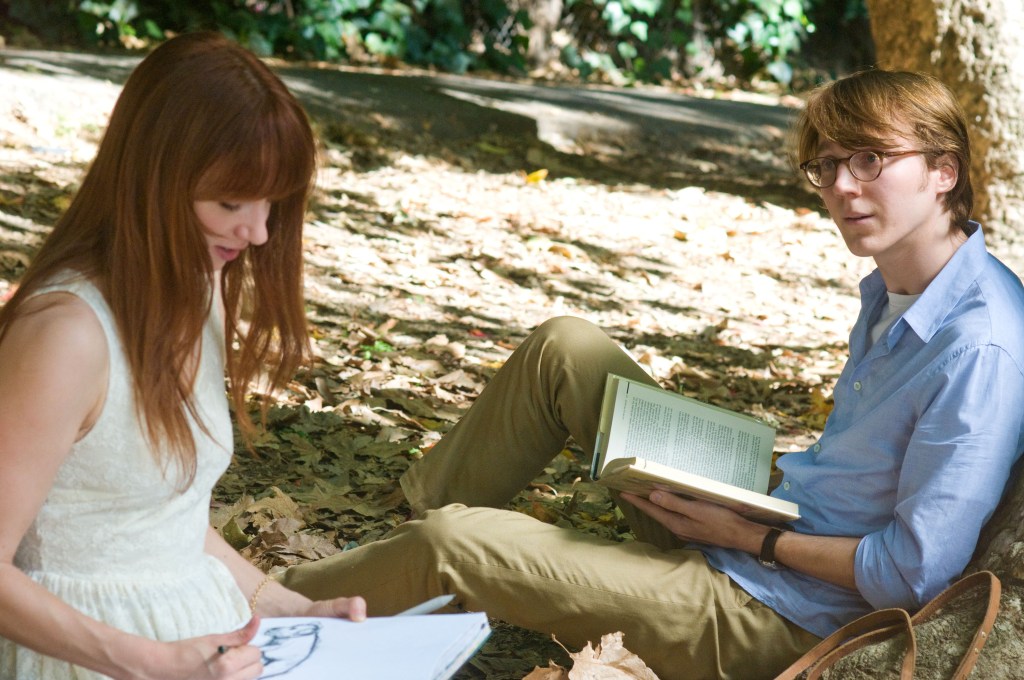
“Ruby Sparks” is a film in which a lonely, desperate, hopeless-romantic writer named Calvin (Paul Dano) writes about a manic-pixie-dream-girl type named Ruby Sparks (Zoe Kazan, Dano’s real-life girlfriend and this film’s screenwriter). She’s the woman of his dreams, but she’s also someone who’s only real in his mind, which is something his brother Harry (Chris Messina), who is married and knows the honeymoon phase never lasts, tries to break down for Calvin, who simply won’t listen. But before long, it turns out he doesn’t feel the need to listen, as suddenly Ruby herself is manifested physically into his real life. At first, he thinks he’s gone crazy, until it becomes clear that other people can see her too. (There’s no explanation for why she’s suddenly “real,” and I don’t need one either. There’s only one throwaway line: “It’s love! It’s magic!”) Everything seems perfect for Calvin, until Ruby starts to develop thoughts and feelings of her own, which scares Calvin into thinking she’ll leave him. He realizes he can alter her personality and tries to change her to his liking…and by doing so, he also realizes that what he wants simply is not real and will never be.
I used to like “Ruby Sparks” just as an inventive, endearing comedy-drama, with some fantasy and romance and something to say about relationships. But it wasn’t until I was a few months into my relationship with my girlfriend (who is now my fiancee after five years) that I really started to appreciate it. I saw it a few times (and reviewed it) about a year before the relationship started. Then soon after that, I revisited the film and it had a strange effect on me. I found myself considering the main character (a writer named Calvin, played by Paul Dano) and the film’s theme of reality vs fantasy, and then I started analyzing my relationship with my girlfriend (Kelly) and what it meant to me.
I felt like Calvin at some point in my life—desperate for a relationship with a wonderful woman and having a clear idea of the kind of person I wanted her to be, failing to realize that the person I’m after isn’t a real person at all. It’s just an idea of who I thought I deserved in my life. In the film, Calvin learns this the hard way, and the line of dialogue that really cements it for him (and for us as an audience) is delivered by his ex: “The only one you wanted to be in a relationship with was you.”
It took me quite a while to learn it too and get what the film was really trying to say. There are times when my introverted nature gets the better of me, but when Kelly wants me to interact and be more sociable at a party or something, I’ll at least make an effort (something Calvin hardly attempts) even if it doesn’t always work out. There are times when I notice our differences as well as (or sometimes more than) our similarities, but I don’t try to change her to my exact liking. And if there’s a problem, we talk about it. We try to find a solution and we usually do. And we’ve been together for five years now. (And we’re engaged!)
So, it’s like personal experience blended with the messages of this 2012 indie film and influenced me to be the best I can be in a long-lasting relationship, and I didn’t even know it until I revisited the film whilst still in the beginning stages of my relationship. Since then, it’s become one of my all-time favorite films (#15 on my Top 100 Favorite Movies list), period.
Disney/PIXAR, what have you given us this decade? “Toy Story 3,” “Toy Story 4,” “Coco”–all of them are great. “The Good Dinosaur,” “Cars 2” and “Cars 3”–never saw them, saved my money for “Incredibles 2,” which was really good (albeit very late to the party). Brave–eh. “Monsters University”–not bad. “Finding Dory”–very good.
Disney/PIXAR has had some ups and downs these past 10 years, but that doesn’t matter…because this decade, they also gave us Inside Out, one of the best Disney films I’ve ever seen and probably the best Pixar film I’ve seen too (right up there with “Up” and “Toy Story 2”).
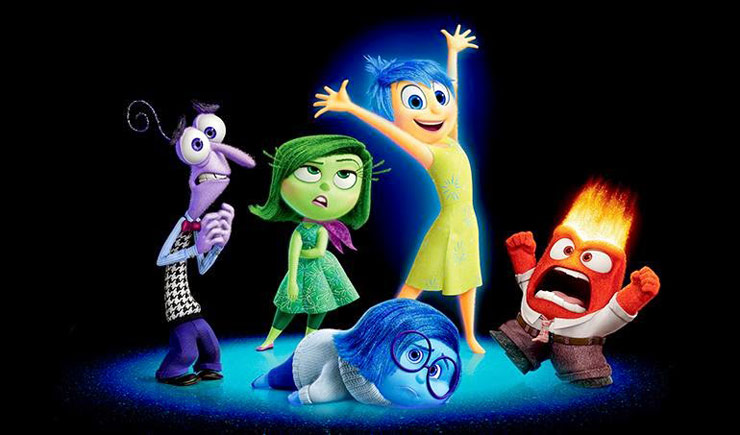
It has an interesting idea–the emotions we feel are manifested by our own inner universes–and it’s able to do just about everything great that can be done with it. The personalized emotions that help make a girl named Riley who she is are Joy (voiced by Amy Poehler), Sadness (Phyllis Smith), Fear (Bill Hader), Anger (Lewis Black), and Disgust (Mindy Kaling). Joy is the chief emotion, which constantly throws her overboard whenever Sadness wants to step in and ruin core emotions with her very touch. As Riley moves from Minnesota to California with her parents, Joy has to help her make the best of it. But something goes wrong, and Joy and Sadness are ejected from the master controls. Fear, Anger, and Disgust try to take charge in the meantime, resulting in Riley snapping at her parents, not trying to make new friends, and even thinking about running away. Joy and Sadness have to work together in order to make their way back to the control room to settle Riley’s emotional state.
Brilliant. Bright. Funny. Imaginative. Profound. Moving. Sometimes sad. All of these adjectives can be used to describe the power of “Inside Out.”
This world is amazing. Memories are created and stored in collections of glass spheres, whether they’re short-term, long-term, or forgotten entirely. And there are also theme parks connected with one another, with the themes being dreams, nightmares, her favorite sport (hockey), imagination, and so on. It’s amazing to see how this “world” inside a person’s head works. There’s a dark abyss where forgotten memories are stored and eventually fade away, a dream-land that resembles a Hollywood studio where actors act out Riley’s dreams and nightmares, and all sorts of inventive components. As Joy and Sadness go on this journey through the subconscious, they encounter many strange things like abstractness, fears, daydreams, and even a forgotten imaginary friend, named Bing Bong (Richard Kind).
But the story and character development are just as impressive as the environment they’re set in. It balances funny and dramatic perfectly, as we laugh at the insane inventiveness of how this world works and how some of the emotions run it (or try to run it), but more importantly, we learn something that most of us don’t like to think about: the importance of the emotion of sadness. This is exactly what the overall film is about: balance. Joy and Sadness have to learn to get along, and Joy constantly pushes her aside because she feels Riley doesn’t need her, but over time, she realizes that not only do they have to work together but that Sadness is more important to the team of emotions than anyone would give her credit for–in fact, Joy learns in a brilliant scene late in the film that Joy and Sadness are essential together.
What I really love about this development is that the film stays true to its own message it’s been pushing all along: that it’s OK to be sad because that’s part of growing up. In order to adapt, we need all of our emotions in order to get through whatever. There are many things in life we can’t get back, and “Inside Out” knows that. Instead of bringing back many elements from the first couples acts of the story, they stay gone and are replaced with new ones, because that’s part of the process of coming of age. For a Disney film to play this message of stuff-happens-and-you-gotta-deal-with-it, this is pretty gutsy and very much appreciated.
I would love to see a sequel to “Inside Out” that shows the difficulties of Riley growing up, but I would also love to see spinoffs with other people and their emotions trying to cope with whatever change comes their way.
I love “Inside Out.” I wanted this to be nominated for Best Picture at the Oscars–I already knew it was a dead lock for Best Animated Feature, but that’s beside the point. This isn’t merely the best animated film of the decade–it’s one of the best films, period.




 Smith's Verdict