Hearts Beat Loud (2018)

4 Jun

Smith’s Verdict: ***1/2

Reviewed by Tanner Smith

As I think about Brett Haley’s “Hearts Beat Loud” after seeing it at least 10 times in the last two years since its theatrical release, I ask the questions…

Did we really need the best-friend character played by Ted Danson, who is also a bartender so that we can make “Cheers” references in reviews regarding this film? 

What about our protagonist’s mother played by Blythe Danner, who is always shoplifting and getting arrested by police so her son can bail her out? Does she have much purpose in this story?

Come to think of it, what about Toni Collette as the landlady for the protagonist’s record store? Even though the two have an interesting relationship together, I have to wonder…does she even need to be here?

And once I answered that last question, I answered the other two questions about the aforementioned side characters who seemingly serve no real purpose. Yes, we do need Danson. Danner does serve a purpose in this story. And Collette did need to be here. 

Why? Because…why not? 

Sometimes, when you see a movie, you ask certain questions like, “Did Tony Hale really have to play his role so over-the-top in ‘Love, Simon’?” And you keep coming back to those movies because there’s something about the main aspects of it that keep you distracted from questioning the others. Then, after seeing the movie for a certain number of times, it dawns on you—not only do you love this movie, but the little things that didn’t seem so important before suddenly feel like elements you would miss if they were removed. My point is, these side characters in “Hearts Beat Loud” exist in the world our lovable main characters live in, and they don’t seem so extraneous to me anymore, now that I’ve seen the film many times. I feel like they do have a place in this universe. They may not have much to do with the main story, but I feel like they do have a lot to do with how we see the main characters. 

Sorry, I know I have a film to review, but I feel like I just started a seminar for indie-film supporting character usage. (That wouldn’t be a bad idea, actually…)

Anyway, “Hearts Beat Loud” is a lovely father/daughter tale about Frank Fisher (Nick Offerman in his finest film role by far), a former musician who now owns a failing record store in Brooklyn, and his recent-high-school-graduate daughter Sam (Kiersey Clemons), who is about to leave to study pre-med in California. Sam wants to study and spend more time with her new girlfriend Rose (Sasha Lane), but Frank wants to spend more time with Sam before she leaves. One night, he insists that they have their habitual musical jam session together, where they record a song together (written by Sam) called “Hearts Beat Loud.” 

Despite Sam not wanting to start a band with her father, Frank puts the song on Spotify, under the name “We’re Not a Band.” Unexpectedly, it becomes a viral success, thus urging Frank to pursue a new career together with his daughter as a music duo. But Sam, despite having musical interests of her own, doesn’t share her father’s dream. 

This is an emotionally rich father/daughter story about a father using his interests in an attempt to keep his daughter at home because he isn’t ready for her to leave the nest and fly away. In the end, it becomes more of a story about the two of them sharing an interest in music for one last quality father/daughter time. Even if Frank doesn’t win Sam over to his dream, he accepts the fact that Sam will have her own life, Frank will have to set his sights a little lower than expected, and the music they created together for a brief time will be something they will always remember. 

And speaking of music, I love the songs in “Hearts Beat Loud.” Aside from the title track, there’s also a song about Sam’s feelings toward Rose (“Blink (One Million Miles)”) and another about Frank’s feelings toward losing his business (“Everything Must Go”). The songs were composed by Keegan DeWitt, and they’re all memorable and wonderful to listen to. They serve as effective mood pieces, especially an early version of “Everything Must Go” that truly reflects Frank’s current mood in this scene—I won’t lie; I added that piece to my personal playlist.

Oh, and there’s also the flirting between Frank and Leslie (the landlady played by Collette) that turns into somewhat of a fling. And then there’s Frank’s out-of-touch mother (Danner), who is mainly there for comic relief. And there’s Dave (the bartender played by Danson), who is probably here to give Frank someone to chat with occasionally. Like I said, these side characters have very little to do with the main plot of “Hearts Beat Loud”—the girlfriend, Rose, arguably has more of a purpose to the story because Sam realizes she’s not only leaving behind a father but also a summer romance, thus adding to Sam’s confusion about her current status. But I have to admit, the others make for good company and are played by appealing actors. And each time I see the film again, I don’t want to fast-forward past them. 

It’s the story of these two well-rounded, lovable characters that kept me coming back to “Hearts Beat Loud” in the first place, and because I got to know them well, it made me want to those around them well too. 

“Hearts Beat Loud” has so much going for it—a memorable soundtrack, a heartfelt story about this father and daughter, and a charming feel all throughout. It’s an indie mix that I don’t mind listening to every once in a while. 

The Invisible Man (2020)

4 Jun

Smith’s Verdict: ***1/2

Reviewed by Tanner Smith

With a concept like an invisible stalker, I feel three things need to handled exactly right–1) the directing and atmosphere, 2) the cinematography, and 3) the leading performance.

To say Blumhouse’s “The Invisible Man” handled all three of these crucial elements exactly right would be an understatement—in fact, I was surprised by how effective “The Invisible Man” was. I didn’t think a recent stalker-thriller could give me chills and keep me on the edge of my seat anymore–this one did, and the stalker’s INVISIBLE!

The film was directed and written by Leigh Whannell, whose work I’ve admired before, particularly in writing the first Saw and directing the underrated “Upgrade”–I think he outdid himself here.

The cinematography from Stefan Duscio is also outstanding–much of the time, it feels very voyeuristic (keeping in theme), which makes other certain shots (where we anticipate one thing while waiting for another) all the more chilling.

But more importantly, it’s the leading performance from the target of the invisible stalker: Elisabeth Moss in her career-best work. She plays Cecilia, who, in a very tense and disturbing prologue, barely escapes from her abusive relationship with the wealthy Adrian and tries to be free of him forever. A couple of weeks pass when Cecilia gets the news that Adrian has killed himself and left her with $5 million. The end? Not quite. Even after seeing photos of Adrian’s blood-soaked corpse, she can’t believe he’s truly gone…in fact, she feels like he’s still with her…silently and INVISIBLY stalking her.

Moss handles all of her scenes of paranoia and terror brilliantly and flawlessly. But what I also love about this movie is how we see her from everyone else’s point of view, especially when we learn more about Adrian and Cecilia’s relationship and how Adrian was a sly manipulator to the point where he could psychologically damage people severely. It’s that kind of clever storytelling that I love to see, especially in modern mainstream horror.

And it is scary! The film overall has this feel of “oh man, he’s in here and they can’t see him” creep-factor that never got old, even when it got to its inevitable climax. And there’s one jump-scare that truly got me (you’ll know it when you see it).

Overall, “The Invisible Man” is a film about a young woman trying to regain her independence and put to rest a psychologically damaging relationship, making it an effective stalker-thriller especially for today’s day and age. There’s so much to recommend in “The Invisible Man”–it’s just really damn good.

Disney+ Original Movies (Togo, Timmy Failure: Mistakes Were Made, Stargirl)

4 Jun

By Tanner Smith

Wondering what else to watch on the streaming service Disney+ when you already revisited Disney movies/shows you grew up with? Believe it or not, there is some good, quality Disney+ Original content besides “The Mandalorian” (the “Star Wars” series that finally put divisive fans in perfect harmony). There are three Disney+ Original movies I can recommend for being just as solid and entertaining via streaming on a small screen as they would be via projecting on a big screen. 

In chronological order of release, here are three mini-reviews of three solid movies available exclusively on Disney+.

Togo (2019)

Smith’s Verdict: ***

Reviewed by Tanner Smith

Hey, remember the Universal Studios animated 1995 film, “Balto,” supposedly based on a true story? Sure you do. Do you care about the TRUER true story that inspired it? Not especially. Do you know anything about musher Leonhard Seppala and his dog Togo who contributed even more to the 1925 serum run to Nome that inspired “Balto”? Well, whatever the case, “Togo” is an entertaining watch if just for a little insight into these two key figures in rescuing an Alaskan town from an epidemic. 

Willem Dafoe stars as Seppala, who sincerely cares for his dog Togo. As a puppy, Togo is too small for mushing. But as Togo gets older, he proves his worth as he leads Seppala and other sled dogs on a treacherous trek to bring medicine to their small Alaskan town of critically ill children. This obviously means we get intense scenes of conflict upon this journey (and unlike the recently-released “The Call of the Wild,” I can tell they used actual canines instead of CGI for the most part), but what surprised me were the scenes that take time to show Dafoe and his lovable doggie companion forming what looks to be a genuine connection. 

Those scenes are sure to make any dog lover happy, but there’s also a good deal of well-executed sequences of great danger, such as a highlight in which Togo and company must race their way across a quickly dissipating field of ice! (Good use of green-screen here, and again, I feel like the actual dogs are really there!)

Some of the pacing is a bit slow (and I’m sure it’s also not 100% historically accurate), but I forgive it because there are several great moments throughout the film that make “Togo” overall entertaining and heartwarming. 

Timmy Failure: Mistakes Were Made (2020)

Smith’s Verdict: ***

Reviewed by Tanner Smith

One of the reasons I was interested in “Timmy Failure: Mistakes Were Made” was because it was a Disney movie that premiered at the Sundance Film Festival, which I thought was unheard of…even if the director/co-writer was Sundance favorite Tom McCarthy (“The Station Agent,” “The Visitor,” “Win Win,” “Spotlight”). (But to be fair, he was also one of the credited writers for Disney/PIXAR’s “Up,” so that automatically makes him a Disney favorite too.)

“Timmy Failure: Mistakes Were Made,” based on the book series of the same name, is about a wildly imaginative little boy named Timmy Failure (yes, that is his real name) who holds his own private-detective agency (the attic of his mother’s house is his office) and whose partner is an imaginary giant polar bear. (That polar bear, named Total Failure, will put a smile on any cynic’s face.) Timmy goes on many different misadventures when his mother’s Segway goes missing and races all about town (Portland) to find it. Along the way, he learns lessons about “normal” and “different” and…it’s actually a pretty heartfelt conclusion that the movie leads to. 

The film is very funny, in the same grounded, character-driven way that McCarthy can direct a kid’s fable. But it also feels like it’s about something as well. In the way this environment is set up and seen through this wild child’s eyes, as well as how he sees the people around him who either want to scold or help him due to his self-destructive behavior, it’s a film that kids will enjoy just for the comedic deadpan nature of the wacky antics this likable kid embarks upon. But it’s also enjoyable for adults who remember what their childhood was like and what taught them to put at least one foot in the real world. 

I like this movie. You did good, McCarthy—you can actually make a good fable (and make me forget about “The Cobbler”). 

Stargirl (2020)

Smith’s Verdict: ***1/2

Reviewed by Tanner Smith

“Stargirl” is a coming-of-age high-school movie based on the novel of the same name by Jerry Spinelli. (I haven’t read yet, though strangely, many of Spinelli’s other works are no stranger to me.)

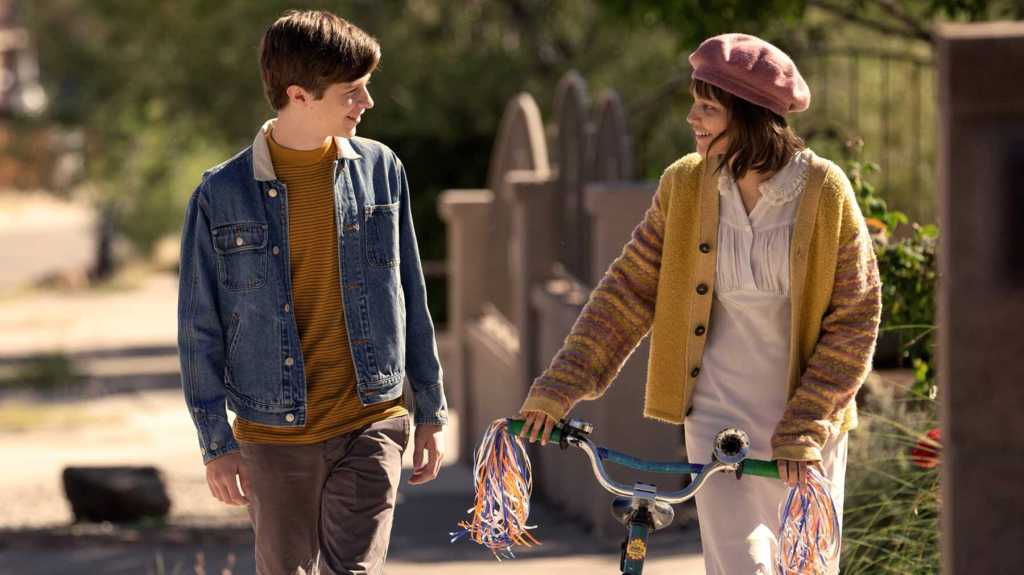
Directed by Julia Hart and also co-written by Hart and her partner Jordan Horowitz (they also collaborated together on wonderful indie fare such as “Miss Stevens” and “Fast Color”), “Stargirl” is about a 16-year-old student named Leo (played by Graham Verchere) who has spent years blending in with his classmates (after an incident involving his favorite necktie, which he wore at school when he was 9) in a school where nothing happens. (In fact, the school is so uneventful that the trophy case has always been empty.) He’s fine with his status until he’s attracted to a new girl in school, simply because she’s so…DIFFERENT. She dresses in rainbow-influenced wear and sings while strumming a ukulele—oh, and her name is Stargirl. (Her real name is Susan, but Stargirl is the name she prefers because it suits her identity.) But Leo’s not the only one turned on by her eccentricities—the moment she performs the Beach Boys’ “Be True To Your School” in the middle of the field at a football game, it raises everyone’s spirits, thus making her the school’s “good-luck charm.” Before too long, Leo engages in conversation with Stargirl, thus beginning an interesting relationship that of course changes his life forever. 

Even though we’ve gotten many, MANY movies that contain messages about “being yourself,” we still need them. After all this time, most of us are still afraid of appearing even slightly foolish in front of large crowds—and this is especially true of high-schoolers, who need movies like this. As these movies go, “Stargirl” is one of the best to come around recently—and for a high-school movie released by Disney (and featuring musical sequences at that—don’t worry, it’s as far away from “High School Musical” as you could get), that’s especially impressive. 

Leo is a genuinely nice and likable kid. Stargirl (played by Grace VanderWaal of America’s Got Talent—not a very polished actress, but with this role, that doesn’t matter) is charming and adorable but not without fears and vulnerability, which surface late in the film. I like Leo and Stargirl individually and I like Leo and Stargirl together. 

The cinematography is lovely, the writing is solid, both our leads are appealing, we get some much-appreciated mature moments here and there, and I was invested throughout the whole film. Even when I wasn’t smiling at the film, I was still invested. 

I didn’t expect to find a new coming-of-age high-school movie on the same level as John Hughes’ best-known works or “The Perks of Being a Wallflower” or “Love, Simon” brought to me by Disney+. But it’s here and it’s available to stream for your viewing pleasure. 

Bad Education (2020)

4 Jun

Smith’s Verdict: ***1/2

Reviewed by Tanner Smith

HBO’s “Bad Education,” based on a true story, begins with the implication of a few important questions viewers should ponder. 

For instance, why is it that one of the top public school systems in the country (in this case, New York’s Roslyn School District) has roof leaks (in many different places)? It’s a bit strange, especially considering the school has enough money in the budget for construction of a “Skywalk” for the students to access easily. Wouldn’t there have been numerous budget requests to repair the roof(s)?

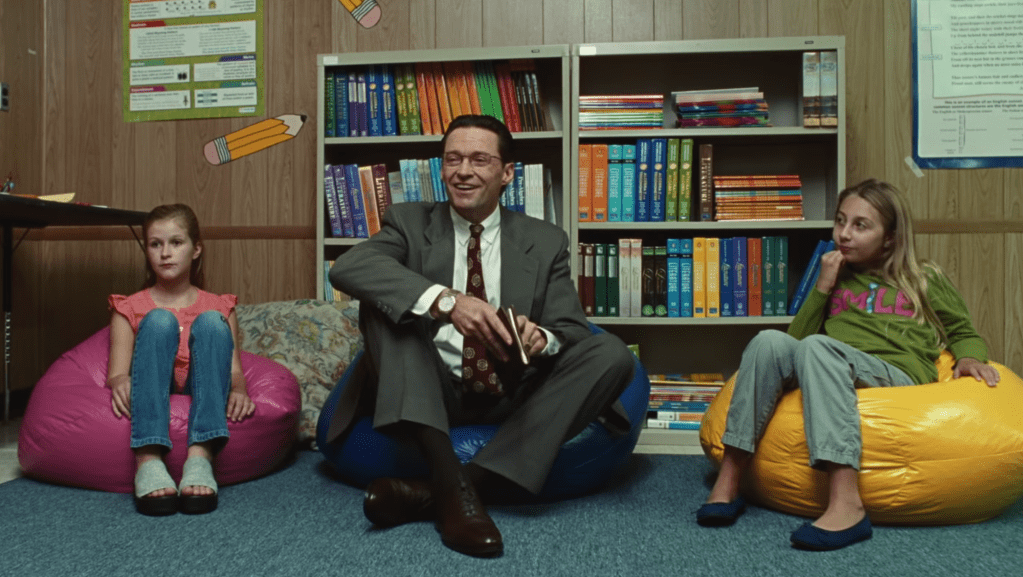
And what about the superintendent Frank Tassone (Hugh Jackman)? He undergoes many a plastic surgery to make himself appear forever youthful. He sports many expensive suits to look stylish each day. He takes expensive trips wherever he chooses. He has a luxurious apartment. 

And what about Tassone’s second-in-command Pam Gluckin (Allison Janney)? She and her family have a fabulous home in the Hamptons. 

No one bothers to ask any such questions, because…well, Tassone is too cool to judge, frankly. Everyone at the school worshipped the direct, charismatic Tassone because he was able to propel the school district one of the highest ranking in the USA. They all trust and respect him—his staff, the students, their parents. But we know he has secrets belonging to a second life (maybe even a third life as well) that he wouldn’t want any of his peers to know about. 

Because the school is so highly regarded, it grants students rides into Ivy League schools of their choice. But as a reporter for the student newspaper discovers, there’s something fishy about the budget. This leads to the discovery of theft brought on by Gluckin. Tassone gets her to resign quietly, under the cover of her having a “serious illness”—but that’s mainly because the embezzlement goes farther than that. The reporter, Rachel (Geraldine Viswanathan), and her editor, Nick (Alex Wolff), dig deeper into the oddness within the school’s invoices, which promises to expose more than Tassone argues (or threatens) the school will allow. 

Side-note: I mentioned “Bad Education” was based on an actual embezzlement scandal (the largest in public school history) in the mid-2000s—the screenwriter, Mike Makowsky, was a Roslyn student at that time. Apparently, every major newspaper in the tristate area covered the scandal story only after it was exposed in this student paper. I don’t doubt that part is also true, but it’s so awesome that it’s practically unbelievable. 

“Bad Education,” skillfully directed by Cory Finley, approaches this serious subject matter with a dark comic edge—and not with over-the-top asides, such as breaking the fourth wall or celebrity cameos to explain background details or whatever “The Big Short” or “I, Tonya” did. For instance, Tassone’s passive-aggressive approach to those who threaten to expose him and the system for the corrupt crooks they really are make those scenes all the more interesting—you want to laugh at his attempts to cover it up, but at the same time, you know just how far his manipulative techniques can go. There are times when he’ll even attempt to make himself out to be the real victim. Class act. 

It’s played for satire, which is even more effective than performance art. (I like “The Big Short” and “I, Tonya” and “Vice,” to name examples of the based-on-a-true-story performance art pieces, but it wasn’t until I saw “Bad Education” that I realized I needed something a little more subtle.) 

Not a single person asked any questions about how anyone working at a school was able to afford their fancy lifestyles. That’s because no one wants to believe there’s anything suspicious about the behavior from the higher-ups in the fourth highest-ranking school in the country. Even Nick is hesitant about printing Rachel’s story because Tassone is writing his college recommendation letter. 

Hugh Jackman turns in one of his very best performances as Frank Tassone, the narcissistic,  likable authority figure with many secrets as well as talents for impressing those around him. It also helps that he has the ability to form connections with teachers, students, and the students’ parents. There’s a wonderful scene where a worried mother brings in her autistic son, and Tassone is able to connect with him. That’s all I’ll say about the scene—you have to see it to try and interpret what could be on Jackman’s mind as he plays it. I know this is an HBO film, but don’t waste his talent on an Emmy—give him an Oscar nomination!

Also great are Allison Janney as Gluckin and Ray Romano as the school board president who can’t grasp what’s really happening—even when the story is printed and the truth is exposed, he doesn’t want to believe it and his heart is broken. (Romano is turning into one of the most reliable character actors of today’s films.) 

“Bad Education” is sharply written, features excellent acting, and is overall effective at being what it set out to be: a darkly funny, informative study on a 2002 public-school corruption that also serves as an allegory for similar events that are still happening today. Check it out on HBO.

Composer vs. Filmmaker: Hans Zimmer’s Score to The Dark Knight

6 May

By Josh Rousseau (composer) and Tanner Smith (filmmaker)

NOTE FROM TANNER: This is something my musician friend, Josh, wanted us to work on together–what does a composer take from a music score in a film and is it any different from the point-of-view of a filmmaker/critic? Obviously, I’m not going to be as specific in my review as Josh is here, but I’m still willing to give my two cents on the subject. So, to get it started, we’re going to talk about the infamous Hans Zimmer score in Christopher Nolan’s The Dark Knight.

Scene 1: “Why So Serious?” (The Joker’s Theme)

Josh’s review: Here we go! Analyzing one of my favorite scores, and one of the scores that started the new modern epic sound. This scene starts out with the suspenseful ticking clock sounds that Zimmer loves to use for momentum. Then as soon as we see what could be our iconic villain, we get his famous motif on electric cello (sliding a dissonant 2 note chord up the strings). Zimmer himself described this as “a string that keeps on stretching but never breaks”. Then we hear the same dissonant chord played in a sort of groovy rhythm in violins (another Joker motif that we hear throughout the film). This piece of music is a great example of electronic instruments like the pulsing synth basses and percussion combining with live orchestral elements like the string players. The music dips down during the standoff between the last two clowns. Which is a good choice. Sometimes less music is the correct choice to fit the emotion of the scene. When we finally see The Joker himself, we get one big dark minor chord. This piece of music breaks rules! It has both a sense of chaos and control (it has dissonance and rule breaking with the note choice, but control with the specific rhythms), very much like The Joker himself.

Tanner’s review: This is what starts the film with a bang–a bank heist that shows us the dark, gritty world we’re going to fight our way through in this new Batman flick. It’s thrilling, gorgeously executed, and sets the tone early on for the chaos that our main villain, the Joker, stands for. And the best part–it doesn’t feel like your typical action-movie opener. We need the right music for this scene, and this is the perfect choice. Why? Because it doesn’t make a big deal about itself. It flows with the scene rather than distract from it. And given that the score is composed with a bombastic orchestra, that’s saying something!

Scene 2: “A Dark Knight” (Ending Theme)

Josh’s review: This clip starts off with the Harvey Dent/Two Face theme which is mostly subtle dark chords and was probably written by James Newton Howard (it matches his style). At the point where Batman says “I’m not a hero” though, this theme starts. This theme is a variation of the Batman theme from Batman Begins with the pulsing violin ostinato (repetitive rhythmic groove), but it develops more and has a beautiful soaring melody. The first of this track is a more traditionally orchestral than most of the music in this movie. It doesn’t have a ton of electronic stuff in it, and it’s mostly strings, brass, and timpani drum (not like the huge tribal drums we hear in the action scenes) until the end where it brings back the electronic elements, and the big drums to close out the movie into an epic finale.

Tanner’s review: Whoa…that was one of the best movies I ever saw in my life… If you’re like me, you came out of “The Dark Knight” feeling like your world was rocked severely after witnessing an ending that was uncompromisingly dark and brutally compelling. It deserved a hell of a closing theme, and it got one! Using mostly percussion and violin, we get a haunting, bombastic score that says one thing to you, which is, “That was the f***ing Dark Knight.” Remember what I was saying about the music in the first scene about how the music didn’t make a big deal out of itself? Well, by this point, it earned its ability to go big or go home.

And that’s it for now. Maybe we’ll do some more in the future!

2019 Review

28 Jan

2019 Review

By Tanner Smith

I realize I haven’t done a lot of writing since concluding my Looking Back at 2010s Films series. (I guess you could say it took a lot out of me–I haven’t even reviewed any new movies in two months.) But now it’s that time…the time that should’ve come for me weeks ago: looking back at my favorite films of 2019!

Better late than never.

Some critics have said that 2019 was a particularly weak year for movies, and I would agree…if the cinematic year overall depended on your enjoyment of Glass, It: Chapter Two, Star Wars Episode IX, The Lion King, Super Size Me 2, and Where’d You Go Bernadette.

But first, my least favorite films of 2019 (in alphabetical order)–Annabelle Comes Home, Brightburn, In the Tall Grass, The Laundromat, The Lion King, Tall Girl, and Where’d You Go Bernadette. (“Bernadatte” was the most disappointing film of the year for me because until this year, I never saw a film from Richard Linklater I didn’t like. Not even his “Bad News Bears” remake.)

And what about TV seasons? Were there some I saw, let alone enjoyed? Yes, there were five (remember, I’m a movie guy)–5) Easy: Season 3 (Netflix), 4) The Chef Show (Netflix), 3) Stranger Things 3 (Netflix), 2) Mr. Mercedes: Season 3 (Audience Channel), and 1) The Mandalorian (Disney Plus).

Why is it that “Mr. Mercedes” always ends up at #2 on these year-end reviews?? I love this series–why isn’t a new season ever #1 for me?

Oh, did I forget something? No, I didn’t–Game of Thrones: The Iron Throne is an honorable mention for my favorite *films* rather than *series* this year………….*I* liked it!!

And, before I talk about all the films I liked this year, I have to mention some 2019 films I missed that I’ll most likely catch up with in the following year: Jojo Rabbit, Ford v. Ferrari, Fighting With My Family, Ad Astra, Hustlers, John Wick Chapter 3, Waves, Apollo 11, The Two Popes, and Judy.

And now, we come to my most personal favorite films of 2019. But first, I’ll mention my honorable mentions, of which there are quite a few: Honey Boy, The Lego Movie 2: The Second Part, Untouchable, The Souvenir, Velvet Buzzsaw, The Mustang, Happy Death Day 2U, Brittany Runs a Marathon, Blinded By the Light, I Lost My Body, Spider-Man: Far From Home, Fast Color, Antiquities, Frozen II, and The Peanut Butter Falcon.

But of course I can’t stop there. So here are some more films from this year that I enjoyed: Arctic, The Boy Who Harnessed the Wind, El Camino, It: Chapter Two, Midsommar, The Last Black Man in San Francisco, Rocketman, Star Wars Episode IX: The Rise of Skywalker, Harriet, Always Be My Maybe, I am Mother, The Man in the Trunk, Super Size Me 2: Holy Chicken, Yesterday, Paddleton, A Beautiful Day in the Neighborhood, High Flying Bird, Glass, Long Shot, Gloria Bell, Teen Spirit, Klaus, Captain Marvel, Isn’t It Romantic, and Extremely Wicked, Shockingly Evil and Vile.

Oh, but there’s also The King, Aladdin, Greener Grass, Beats, Family, Pet Sematary, Child’s Play, Dumbo, Sweetheart, Let It Snow, Wine Country, I’m Just F*cking With You, The Perfect Date, and Someone Great.

Now which 20 (or 21–there’s a tie in here) films did I enjoy more than those? Here we go–these are my Top 20 Favorite Films of 2019!

20. The Lighthouse–Funny, when I first saw this film, I “admired” it more than I “liked it.” There was something very alienating about it in execution and performance…but in hindsight, that’s what I love about it.

19. How to Train Your Dragon: The Hidden World–This was the year I came around to fully appreciating DreamWorks’ “How to Train Your Dragon” franchise. If the beautifully animated, emotionally powerful The Hidden World is the end of a trilogy, it’s definitely a strong swansong.

18. Shazam!–This one’s just a whole lotta fun! I had a big smile on my face throughout most of this highly enjoyable romp from DC.

17. Dolemite is My Name–Eddie Murphy is BACK! Welcome home, Eddie, I’ve missed you so. This is a hilarious, raunchy, even heartfelt film about the making of the blaxploitation-era classic “Dolemite” and the rising star of Rudy Ray Moore, the comedian who made it happen. And it’s a fun, heartfelt biopic with a highly charismatic lead. Available on Netflix.

16. Luce–Whoa. I’m glad I knew very little about this one going in, because it surprised the hell out of me. To say this film is “powerful” and “effective” doesn’t describe my feelings towards it–I was terrified.

15. Knives Out–Boy, was I glad this wasn’t a traditional (read: predictable) murder mystery. Rian Johnson’s “Knives Out” is fresh, new, and pure entertainment–and I loved that I didn’t know how it was going to play out. And as a plus, seeing it a second time made the film even more enjoyable. I will happily see a spin-off film with Daniel Craig’s private eye Benoit Blanc!

14. Booksmart–Sometimes, all I need is raunchy fun. And it all comes down to the writing, which puts a fresh take on the last-day-of-high-school-movie subgenre. It’s funny and clever and just my cup of coffee. 

13. Once Upon a Time…in Hollywood–What I liked most about Tarantino’s latest is its laid-back tone. This film is about nothing and yet about something at the same time, not unlike the Coen Bros’ “The Big Lebowski.” Will this film have as much staying cultural power? Time will tell. But “Once Upon a Time…in Hollywood” is one of my favorite films of the year.

12. Love, Antosha–This documentary about the late young actor Anton Yelchin sort of broke me. Everything I learned about this talent was a lot to take in. But at the same time, I was delighted to know him a little better this way. Because of that, this was one of the most emotionally affecting films of the year for me.

11. The Irishman–Martin Scorsese’s “The Irishman” is a VERY long movie, and yes, I think a lot of it could have been trimmed. But perhaps if it was, some of its power brought on by its atmosphere, environment, and characterization that was brilliantly set up might have been taken away…but MAN I’m glad this was available on Netflix where I could pause, rewind, and take a break every now and again!

10. The Farewell–This represents the kind of film I love to watch again and again–a “dramedy” (comedy-drama) that is appealing, emotionally honest, witty, and compelling all at the same time. If there’s anything more important than a comedy that can make you laugh, it’s a comedy that can make you feel. Lulu Wang’s semi-autobiographical “The Farewell” is a beautiful film that handles both the comedy and the drama flawlessly.

9. A tie between Joker and Uncut Gems–Cheating, you say? Well, it’s my list, and I’ll do what I want with it. Both character-based dramatic thrillers are as effective as they are brilliantly acted. And while I’m happy for “Joker” getting so much Oscar recognition, I agree with (almost) everyone else that “Uncut Gems” was badly snubbed.

8. Us–A very clever commentary on the haves and the have-nots (one of two–the other’s coming up on this list), with a very intriguing premise and beautiful execution from writer/director Jordan Peele, who proves yet again that he’s one of the most talented filmmakers working today. A satisfying horror film.

7. 1917–One of the best cinematic experiences I had [last] year comes from one of the best World War I films ever made. (I think both DP Roger Deakins and director Sam Mendes have outdone themselves with this one!)

6. Little Women–I saw Greta Gerwig’s beautiful adaptation of the popular Louisa May Alcott novel twice, and I’ll definitely be seeing it many more times in the near future. There have been many different adaptations of this book–I think I like this one even more than the wonderful ’94 version!

5. Doctor Sleep–Mike Flanagan, the best director working in the horror film genre today, had a major challenge with this sequel to “The Shining”: respect and appeal to the legacy of not only filmmaker Stanley Kubrick but also novelist Stephen King. He pulled it off big-time.

4. Toy Story 4–Nine years after a satisfying conclusion with “Toy Story 3,” I get a “Toy Story” sequel I didn’t know I wanted. And it was as moving as reuniting with old friends (in the best possible way).

3. Marriage Story–Yes! Another Netflix film! (God bless Netflix!) Noah Baumbach’s “Marriage Story” contains some of the best acting (from Adam Driver, Scarlett Johansson, and Laura Dern–all of whom are currently nominated for Oscars for this) and writing (from Baumbach, also nominated) of 2019. Emotionally powerful and true, this is a film I won’t forget anytime soon.

2. Avengers: Endgame–It’s amazing when I think of how far the Marvel Cinematic Universe has come since its origin over 11 years ago. Once it was going, we knew it was building up to something huge, and thankfully, it didn’t disappoint. For a long while, this was my favorite film of 2019. But there’s one better. Which is it…?

My absolute personal favorite film of 2019 is…

  1. Parasite–I went into this crushing commentary of the haves and the have-nots almost completely cold … I came out of it excited to tell everyone about it. Bong Joon Ho’s “Parasite” was one of the best films of the decade.

I love this time of year! Let’s see what the start of the new decade has for us…

Top 20 Films of the 2010s–#1

31 Dec

By Tanner Smith

Continuing my countdown of my top 20 favorite films of the decade, here’s a recap: 20) Mad Max: Fury Road, 19) Fruitvale Station, 18) Hugo, 17) Parasite, 16) Spotlight, 15) Spider-Man: Into the Spider-Verse, 14) Midnight Special, 13) Take Shelter, 12) The Spectacular Now, 11) The Social Network, 10) Frances Ha, 9) Get Out, 8) Gravity, 7) The Dirties, 6) Boyhood, 5) Whiplash, 4) Inside Out, 3) Ruby Sparks, 2) Life Itself

And my favorite film of the 2010s is…

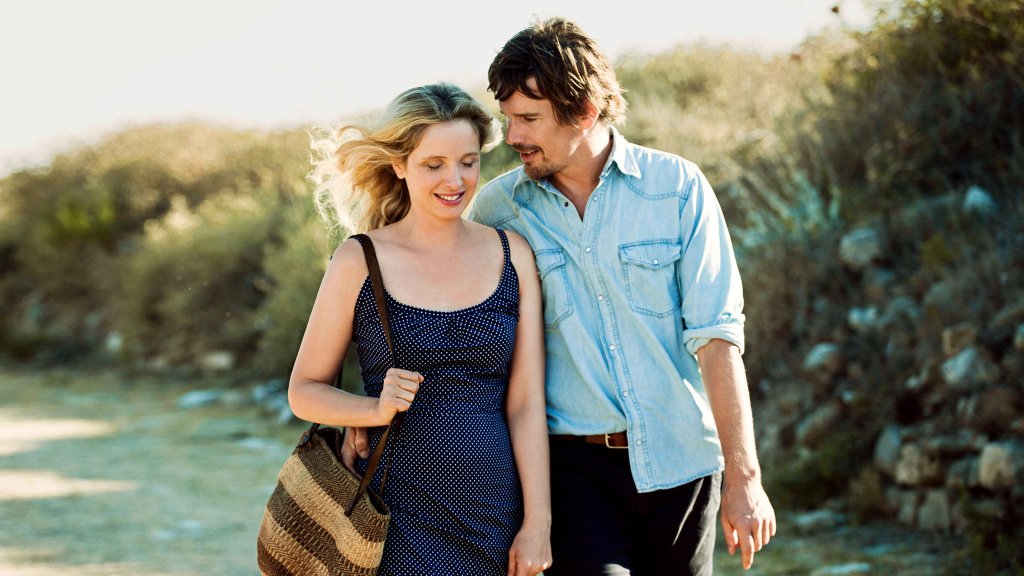
1) BEFORE MIDNIGHT (2013)

Yes, it’s the latest (final, perhaps?) chapter of Richard Linklater’s much beloved “Before…” trilogy that is my personal favorite film of the 2010s. The whole trilogy of films is among my absolute all-time favorite movies, so for this decade-end list, there was no question that my #1 choice would be Before Midnight, released in 2013.

But wait. In my post about The Spectacular Now, I mentioned that I had trouble choosing between four films for my #1 pick of the 2013-end list. Why didn’t I choose “Before Midnight” right away? Well, for one thing, time changes minds unpredictably, and so obviously, it’s what I would pick for the best film of 2013 now. Second of all, I didn’t have a very pleasant time when I first saw this movie in a theater (with a very talkative and irritable little girl sitting a few rows behind me–I’m guessing her parents dragged her to see this sequel to two other movies that I assume she would have no interest in whatsoever??)–I still reviewed the film the way it was meant to be (or the way I wanted it to be), but I was “looking” at the film rather than “seeing” it. Now that I’ve “seen” “Before Midnight,” I can’t deny it–it’s an excellent film that made its mark on me (better late than never).

“Before Sunrise” (1995) was a wonderful romance about two young people (Ethan Hawke and Julie Delpy) who meet by chance and spend a wonderful night together before separating…until nine years later, with “Before Sunset” (2004), where they finally meet up again and wonder if this is a second chance. Now it’s another nine years later, and we have “Before Midnight.” Jesse (Hawke) and Celine (Delpy) have been together all that time, they have twin daughters, and this is a film about what *is*, rather than what might have or could have been.

By this point in their relationship, the honeymoon phase is over and now they have to think about what the future holds. It begins as Jesse says goodbye to his vacationing son, with whom he attempts to maintain a relationship with after divorcing his ex-wife. (The boy lives in Chicago with his mother–Jesse and Celine live in Paris.) Jesse feels a disconnect between him and his son and feels he’s failing as a father to him. Leaving the airport, he mentions to Celine a potential move to Chicago, which Celine immediately turns down. But that’s not the end of that debate. This scene, which is made up of about 15 minutes of dialogue (none of which is improvised–all of it is as written by Linklater, Hawke, and Delpy), is wonderful. Not only do Hawke and Delpy exhibit the same chemistry as we’ve seen in the previous “Before…” films, but they also show how it’s developed over time–bitter and knowing, but still with charm to themselves that they can’t deny to each other.

For a good chunk of the film, Jesse and Celine are in the company of friends in the Greek Peloponnese peninsula, discussing life and love. The things they talk about in this middle portion of the film are explored as someone as innovative as Linklater would write–and with Hawke and Delpy themselves aiding him, I’ll listen to these people talk anytime.

And then, it’s back to Jesse and Celine, as they’re to have a romantic night alone in a prepaid hotel room. It starts pleasant enough, as they walk around outside and talk about whatever; they still enjoy each other’s company, even if they’re tired of each other’s certain characteristics, and then…they get to the room. A chance at romance is gone as soon as an action is mistaken for another meaning, the wrong thing is said, and the debate about whether or not to move to America is brought back again. This escalates into a fierce argument that goes on…and on…and on…and I don’t know who to side with. They both make strong points…even if those points could have been expressed a little differently.

This is the final act of the film: a heated argument in which a couple’s present and future are brought to question. Is this a rough patch? Will it mend? Is this the end of their relationship? I don’t know, but I’m on edge to find out, especially since I’ve gotten to know these two people for three whole films!

“Before Midnight” is a film that illustrates that love is easy but relationships are very difficult. Once the honeymoon stage is over, there’s still the present and future to consider. That we’ve gotten to know and love these two characters through these movies makes it all the more effective when we see this issue brought to light with them. The passage of time is evident with them, and that makes this third film the most powerful of the “Before…” trilogy because it’s the most eye-opening and thought-provoking.

Will there be a fourth “Before…” film? It’s possible this is the end of a trilogy, as it ends on a beautifully ambiguous (but somewhat hopeful) note that challenges both romantic viewers and cynical ones. But then again, I wouldn’t mind seeing what would become of them nine years after the most important argument of their relationship (if they’re still together by then). Perhaps Linklater, Hawke, and Delpy are ready to leave these characters behind, or maybe they have yet to let them go. All I know is I’m down for another chapter in this story.

As time goes by, I have no doubt that movies like “Life Itself” and “Ruby Sparks” will stay with me. But not quite like “Before Midnight” surely will. For that reason, among many others, “Before Midnight” is my favorite film of the 2010s.

Top 20 Films of the 2010s–#2

30 Dec

By Tanner Smith

Continuing my countdown of my top 20 favorite films of the decade, here’s a recap: 20) Mad Max: Fury Road, 19) Fruitvale Station, 18) Hugo, 17) Parasite, 16) Spotlight, 15) Spider-Man: Into the Spider-Verse, 14) Midnight Special, 13) Take Shelter, 12) The Spectacular Now, 11) The Social Network, 10) Frances Ha, 9) Get Out, 8) Gravity, 7) The Dirties, 6) Boyhood, 5) Whiplash, 4) Inside Out, 3) Ruby Sparks

2) LIFE ITSELF (2014)

If it wasn’t for the Roger Ebert, the late Pulitzer Prize winning film critic of the Chicago Sun-Times from 1967 to his death in 2013, I wouldn’t be writing about movies today. The way he always expressed his opinion on a movie really spoke to me–it was never really about what he thought of the movie, but rather, it was about what he had to say about it. He inspired me to find my own voice–I always knew I loved movies, but Ebert taught me how to express my feelings about them.

I was a big fan of Ebert’s. Every week, I would keep up with his latest reviews online. I became obsessed with vintage episodes of his TV show (“Siskel & Ebert”) with the Chicago Tribune’s Gene Siskel. I was one of the people that continuously tuned into the short-lived 2011 revival, “Ebert Presents At the Movies” (with central critics Christy Lemire and Ignatiy Vishnivetsky). When I read the news of his death, I was devastated–I never met my hero and I would never get to.

Over a year later, “Life Itself,” a documentary from director Steve James (Hoop Dreams) that was more or less based on Ebert’s memoir of the same name, would be released in cinemas. I already knew I would love it, but even I didn’t think I would love it this much.

The documentary is a mixture of interviews (with mostly friends/ colleagues), old video clips of “Siskel & Ebert” reviews and Ebert interviews (among others), and new footage shot by James, which consist of Ebert in the hospital and in rehab being treated for a hip fracture, before being called in again for treatment of thyroid cancer that he’s been battling for years…which would then lead to his tragic death.

The new stuff is the most intriguing, as we get a powerful look at Ebert’s last days. But the rest makes it all the more meaningful. It paints a clear portrait of not just the professional film critic that he was but the person that he was as well. And it’s not afraid to be honest about the portrayal–his former colleagues have some unflattering stories about him from way back when, for example. (And we also get some hilarious outtakes of Ebert and Siskel arguing and insulting each other, giving us a clear sense of their love/hate relationship.) We see Roger Ebert here, flaws and all.

My personal favorite interviews are amongst the filmmakers that owe a great deal of debt to Ebert for being among the first to recognize their talents–Errol Morris (“Gates of Heaven,” one of Ebert’s favorite movies), Gregory Nava (“El Norte”), Ava De Vernay (whose debut film was the family drama “I Will Follow”), and Ramin Bahrani (“Man Push Cart”–also, his film “99 Homes” was dedicated to Ebert). I also liked the voice actor chosen to narrate passages from the book for the movie–Stephen Stanton, who voiced Ebert on the animated comedy sketch show “Robot Chicken.”

When his widow Chaz Ebert gives a heartfelt interview in regards to her husband’s death, it’s tear-worthy–no joke; I got a little teary-eyed at the end of this film.

“Life Itself” is my favorite documentary of the decade because it feels like the most human documentary of the decade. It’s truly moving, it paints a compelling portrait of a man, his passion, and his family/friends, and it’s so wonderful and powerful that it pained me that the Academy Awards neglected it for Best Documentary Feature consideration. Thankfully, it has 25 other wins and 33 nominations (according to IMDb) to its name because it deserved all the recognition it received. And it’s one of my favorite films of the 2010s.

Top 20 Films of the 2010s–#3

30 Dec

By Tanner Smith

Continuing my countdown of my top 20 favorite films of the decade, here’s a recap: 20) Mad Max: Fury Road, 19) Fruitvale Station, 18) Hugo, 17) Parasite, 16) Spotlight, 15) Spider-Man: Into the Spider-Verse, 14) Midnight Special, 13) Take Shelter, 12) The Spectacular Now, 11) The Social Network, 10) Frances Ha, 9) Get Out, 8) Gravity, 7) The Dirties, 6) Boyhood, 5) Whiplash, 4) Inside Out

3) RUBY SPARKS (2012)

“Quirky, messy women whose problems make them endearing are not real.” That is a line of dialogue from the wonderful magical-realism-based comedy-drama Ruby Sparks that needs to resonate with people who are constantly looking for their “ideal” mate.

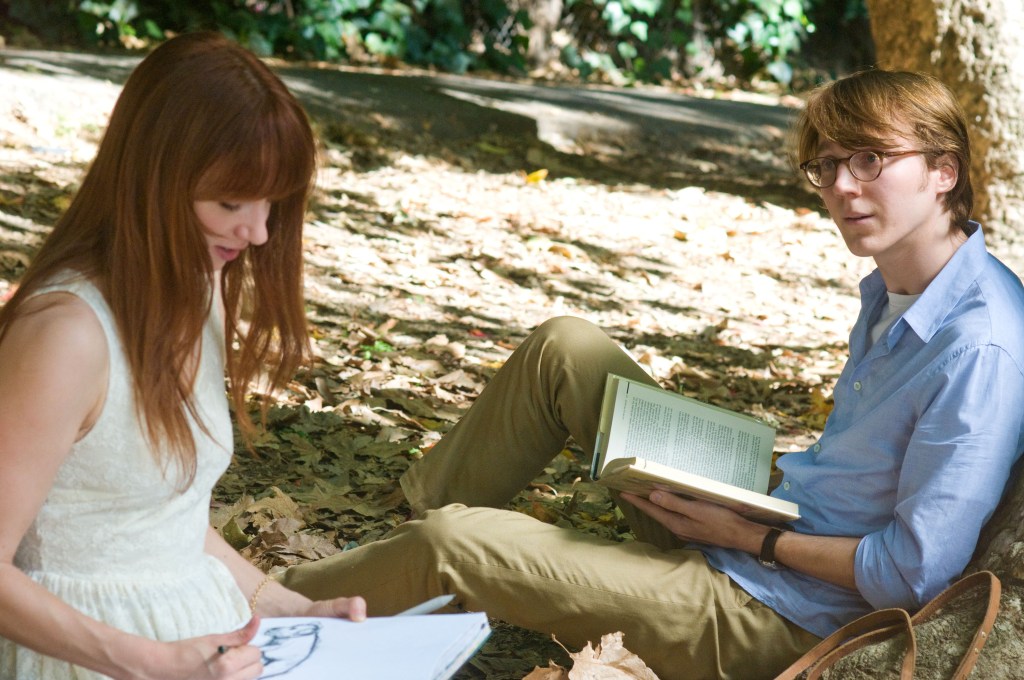
“Ruby Sparks” is a film in which a lonely, desperate, hopeless-romantic writer named Calvin (Paul Dano) writes about a manic-pixie-dream-girl type named Ruby Sparks (Zoe Kazan, Dano’s real-life girlfriend and this film’s screenwriter). She’s the woman of his dreams, but she’s also someone who’s only real in his mind, which is something his brother Harry (Chris Messina), who is married and knows the honeymoon phase never lasts, tries to break down for Calvin, who simply won’t listen. But before long, it turns out he doesn’t feel the need to listen, as suddenly Ruby herself is manifested physically into his real life. At first, he thinks he’s gone crazy, until it becomes clear that other people can see her too. (There’s no explanation for why she’s suddenly “real,” and I don’t need one either. There’s only one throwaway line: “It’s love! It’s magic!”) Everything seems perfect for Calvin, until Ruby starts to develop thoughts and feelings of her own, which scares Calvin into thinking she’ll leave him. He realizes he can alter her personality and tries to change her to his liking…and by doing so, he also realizes that what he wants simply is not real and will never be.

I used to like “Ruby Sparks” just as an inventive, endearing comedy-drama, with some fantasy and romance and something to say about relationships. But it wasn’t until I was a few months into my relationship with my girlfriend (who is now my fiancee after five years) that I really started to appreciate it. I saw it a few times (and reviewed it) about a year before the relationship started. Then soon after that, I revisited the film and it had a strange effect on me. I found myself considering the main character (a writer named Calvin, played by Paul Dano) and the film’s theme of reality vs fantasy, and then I started analyzing my relationship with my girlfriend (Kelly) and what it meant to me.

I felt like Calvin at some point in my life—desperate for a relationship with a wonderful woman and having a clear idea of the kind of person I wanted her to be, failing to realize that the person I’m after isn’t a real person at all. It’s just an idea of who I thought I deserved in my life. In the film, Calvin learns this the hard way, and the line of dialogue that really cements it for him (and for us as an audience) is delivered by his ex: “The only one you wanted to be in a relationship with was you.”

It took me quite a while to learn it too and get what the film was really trying to say. There are times when my introverted nature gets the better of me, but when Kelly wants me to interact and be more sociable at a party or something, I’ll at least make an effort (something Calvin hardly attempts) even if it doesn’t always work out. There are times when I notice our differences as well as (or sometimes more than) our similarities, but I don’t try to change her to my exact liking. And if there’s a problem, we talk about it. We try to find a solution and we usually do. And we’ve been together for five years now. (And we’re engaged!)

So, it’s like personal experience blended with the messages of this 2012 indie film and influenced me to be the best I can be in a long-lasting relationship, and I didn’t even know it until I revisited the film whilst still in the beginning stages of my relationship. Since then, it’s become one of my all-time favorite films (#15 on my Top 100 Favorite Movies list), period.

Top 20 Films of the 2010s–#4

28 Dec

By Tanner Smith

Continuing my countdown of my top 20 favorite films of the decade, here’s a recap: 20) Mad Max: Fury Road, 19) Fruitvale Station, 18) Hugo, 17) Parasite, 16) Spotlight, 15) Spider-Man: Into the Spider-Verse, 14) Midnight Special, 13) Take Shelter, 12) The Spectacular Now, 11) The Social Network, 10) Frances Ha, 9) Get Out, 8) Gravity, 7) The Dirties, 6) Boyhood, 5) Whiplash

4) INSIDE OUT (2015)

Disney/PIXAR, what have you given us this decade? “Toy Story 3,” “Toy Story 4,” “Coco”–all of them are great. “The Good Dinosaur,” “Cars 2” and “Cars 3”–never saw them, saved my money for “Incredibles 2,” which was really good (albeit very late to the party). Brave–eh. “Monsters University”–not bad. “Finding Dory”–very good.

Disney/PIXAR has had some ups and downs these past 10 years, but that doesn’t matter…because this decade, they also gave us Inside Out, one of the best Disney films I’ve ever seen and probably the best Pixar film I’ve seen too (right up there with “Up” and “Toy Story 2”).

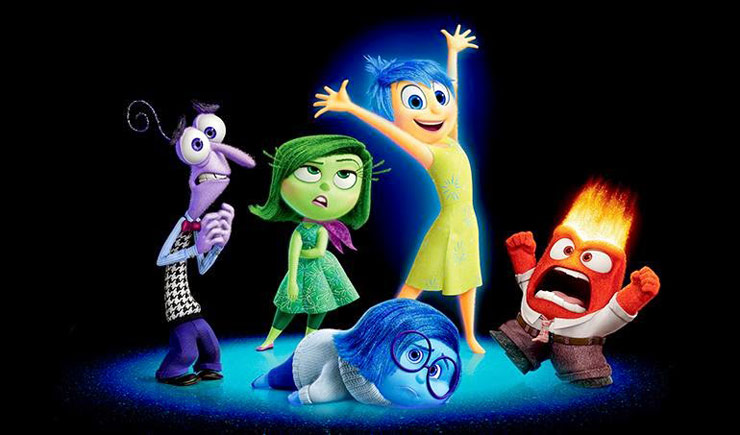
It has an interesting idea–the emotions we feel are manifested by our own inner universes–and it’s able to do just about everything great that can be done with it. The personalized emotions that help make a girl named Riley who she is are Joy (voiced by Amy Poehler), Sadness (Phyllis Smith), Fear (Bill Hader), Anger (Lewis Black), and Disgust (Mindy Kaling). Joy is the chief emotion, which constantly throws her overboard whenever Sadness wants to step in and ruin core emotions with her very touch. As Riley moves from Minnesota to California with her parents, Joy has to help her make the best of it. But something goes wrong, and Joy and Sadness are ejected from the master controls. Fear, Anger, and Disgust try to take charge in the meantime, resulting in Riley snapping at her parents, not trying to make new friends, and even thinking about running away. Joy and Sadness have to work together in order to make their way back to the control room to settle Riley’s emotional state.

Brilliant. Bright. Funny. Imaginative. Profound. Moving. Sometimes sad. All of these adjectives can be used to describe the power of “Inside Out.”

This world is amazing. Memories are created and stored in collections of glass spheres, whether they’re short-term, long-term, or forgotten entirely. And there are also theme parks connected with one another, with the themes being dreams, nightmares, her favorite sport (hockey), imagination, and so on. It’s amazing to see how this “world” inside a person’s head works. There’s a dark abyss where forgotten memories are stored and eventually fade away, a dream-land that resembles a Hollywood studio where actors act out Riley’s dreams and nightmares, and all sorts of inventive components. As Joy and Sadness go on this journey through the subconscious, they encounter many strange things like abstractness, fears, daydreams, and even a forgotten imaginary friend, named Bing Bong (Richard Kind).

But the story and character development are just as impressive as the environment they’re set in. It balances funny and dramatic perfectly, as we laugh at the insane inventiveness of how this world works and how some of the emotions run it (or try to run it), but more importantly, we learn something that most of us don’t like to think about: the importance of the emotion of sadness. This is exactly what the overall film is about: balance. Joy and Sadness have to learn to get along, and Joy constantly pushes her aside because she feels Riley doesn’t need her, but over time, she realizes that not only do they have to work together but that Sadness is more important to the team of emotions than anyone would give her credit for–in fact, Joy learns in a brilliant scene late in the film that Joy and Sadness are essential together.

What I really love about this development is that the film stays true to its own message it’s been pushing all along: that it’s OK to be sad because that’s part of growing up. In order to adapt, we need all of our emotions in order to get through whatever. There are many things in life we can’t get back, and “Inside Out” knows that. Instead of bringing back many elements from the first couples acts of the story, they stay gone and are replaced with new ones, because that’s part of the process of coming of age. For a Disney film to play this message of stuff-happens-and-you-gotta-deal-with-it, this is pretty gutsy and very much appreciated.

I would love to see a sequel to “Inside Out” that shows the difficulties of Riley growing up, but I would also love to see spinoffs with other people and their emotions trying to cope with whatever change comes their way.

I love “Inside Out.” I wanted this to be nominated for Best Picture at the Oscars–I already knew it was a dead lock for Best Animated Feature, but that’s beside the point. This isn’t merely the best animated film of the decade–it’s one of the best films, period.