My Favorite Movies – mid90s (2018)

26 Apr

By Tanner Smith

Maybe I should just stop rewatching movies and just let my original thoughts be. I fear change………

How DARE subsequent viewings of certain movies force me to like them better than my initial mild recommendations deserved??

My biggest issue with Jonah Hill’s directorial debut mid90s upon first viewing was the ending. I said in my initial review, “I’m all for ambiguous conclusions, but I don’t think there was a conclusion to be found at all. […] At the end of ‘mid90s,’ I don’t feel like much was accomplished. But thankfully, that’s not what I’m going to remember for time to come, when I’m thinking of ‘mid90s.’ I’m going to remember the memorable characters, the effective time capsule, and my own teenage memories.”

Hey, IDIOT-PAST-TANNER–did it ever occur to you that maybe Hill’s intention with the ending was to leave his audience with that exact type of nostalgic feeling??

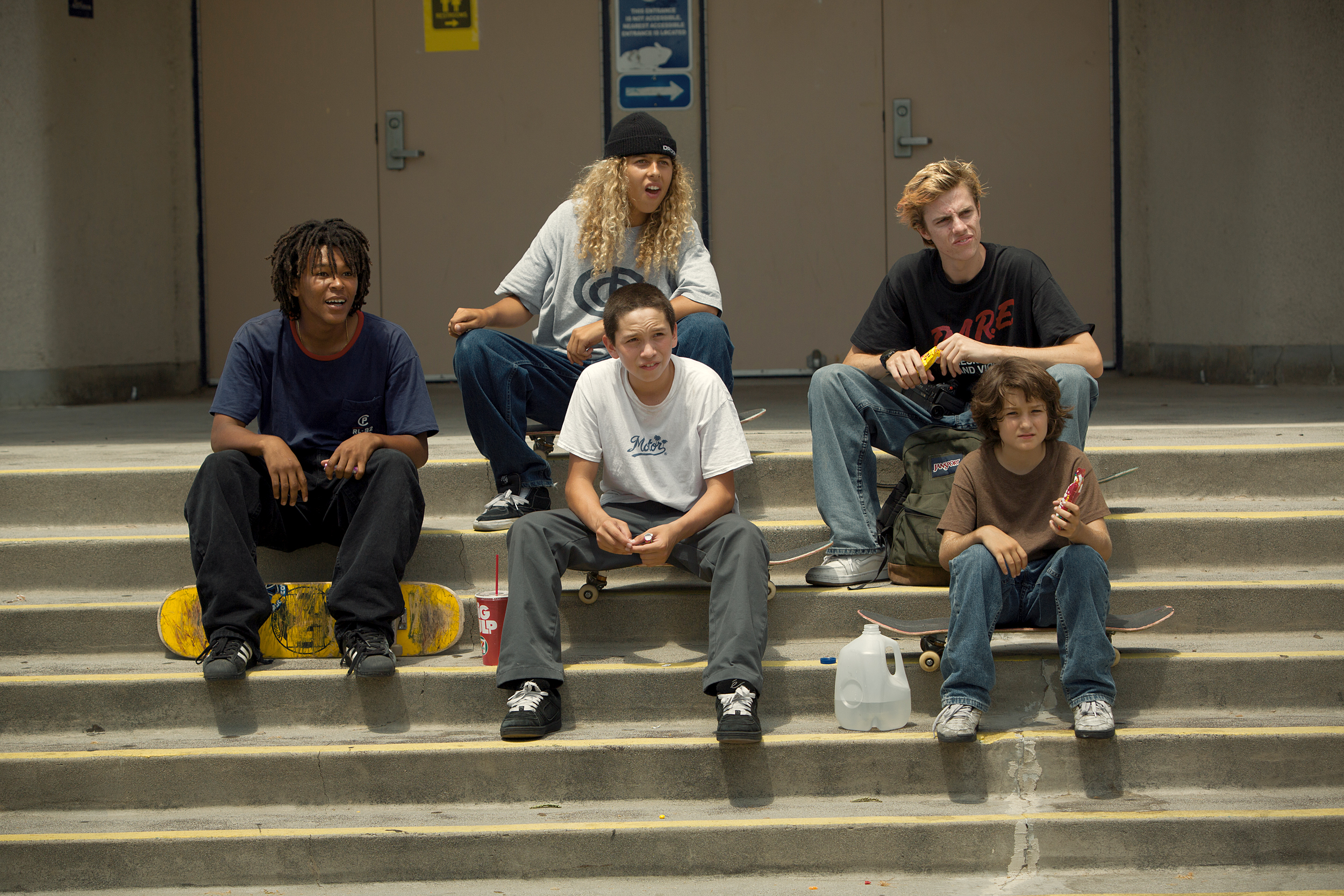
Set in the mid-1990s (obviously), mid90s is about a short, scrawny 13-year-old boy named Stevie (Sunny Suljic) who falls in with a crowd of skateboarders to escape the abuse of his older brother. He of course comes of age and learns he doesn’t have to take the hardest hits, on or off the board. Call it “The Sandlot” meets “Kids.”

Jonah Hill does a really good job as a first-time director. If I didn’t know any better (or recognize today’s actors like Lucas Hedges and Katherine Waterston), I’d swear this film was actually made in the mid 1990s. The aesthetic is reminiscent of a ’90s indie flick, and the passive-aggressive attitudes of these ’90s teens feel genuine. (In fact, it’s rumored that a theater projectionist asked the distributor where they found a lost treasure from the 1990s…I hope that’s not true, but that says something about the film’s quality.)

Besides, we need a break from the ’80s anyway, right?

There’s hardly a plot here, but that’s not what matters–what matters is the emotions that are felt throughout. This poor kid has been pushed around and beaten up by his jerk older brother, and he takes up skateboarding as a sporty means of escape…mainly because when he falls, he’s used to getting hurt. This is disturbing and screwed up–it makes you feel for the kid even more, even when his friend Ray (Na-kel Smith) tells him after the most brutal accident, “You literally take the hardest hits out of anybody I’d ever seen in my life. You know you don’t have to do that, right?”

And it’s not just the sport that can used as a means of escape–it’s who you’re sharing the escape with that also truly matters. These other kids have their own problems, but altogether, each other is what they need to get through.Would I relate to any of the kids if I saw this film at a younger age? I’d see a part of myself in Stevie aka “Sunburn”, but if I’m being honest…I think I was more like Fourth Grade, the kid who’s always filming with a video camera because he wants to make movies someday. I was pretty dumb at that age (and filming stuff constantly) but not dumb enough to say some of the things he says in this movie. (“Can black people get sunburned?”) But I won’t go there.

The authenticity of the kids, of course, means there’s a lot of misogynistic and homophobic language, which sadly was very common in the mid-90s. Hill wanted his characters to discuss why they talk like that, but producer Scott Rudin (who himself is gay) advised against the idea, stating he didn’t think anyone would have this conversation in the mid-90s. Hill also said in an interview, “I’m not celebrating it–I’m just telling the truth. Why are artists supposed to be like the moral police? YOU make the decision.” Meaning, this is a conversation that would probably most definitely take place nowadays, but probably not back then…maybe.

OK, now I’m going to talk about the ending, so SPOILER ALERT!!!

Everything DOES add up at the end of “mid90s”–Sunburn takes the biggest hit he’s ever had (and ends up in the hospital), he makes amends with his abusive older brother, his mother finds out in a wonderful quiet moment how much his friends care about her son, and Ray, the older kid, reassures Sunburn that he doesn’t have to hurt himself anymore.

“mid90s” doesn’t end with a bang, but it instead chooses a quieter approach–I just didn’t see it that way the first time and I felt empty as a result.

Actually, none of what I just said is why my opinion has changed so highly on “mid90s.” (They’re good factors, though.) No, the part that really got me was what happens after–Fourth Grade, who has minimal dialogue throughout the film and is constantly filming everything with a video camera, shows his friends a movie he put together based on stuff he’s filmed. It’s a montage of all the good times they all have together. We know all of these kids have their troubles–but none of that matters when they’re together because they help each other get over those issues by just having a good time together.

I had something similar happen to me in my life with my old friends (I was filming everything, which basically means I was Fourth Grade)–my friends were upset about something, more upset than I was, and so I put together a little film about all of us having fun together prior to the disappointment we all faced (because I didn’t want them thinking of it as anything other than a fun time with friends).

Really good stuff here. Good job, Jonah.
My Favorite Movies – Adventureland (2009)

26 Apr

By Tanner Smith

Like a lot of people, I was disappointed that director Greg Mottola’s follow-up to “Superbad” wasn’t…well, much like “Superbad.” I would still recommend “Adventureland” for what I saw it as: a funny, sweet coming-of-age dramedy that wasn’t anything special. But then after watching it again a few years later, holy cow, it’s something special–it even caused me to write my first revised review. (Link: https://smithsverdict.com/2013/06/28/adventureland-2009-revised-review/)

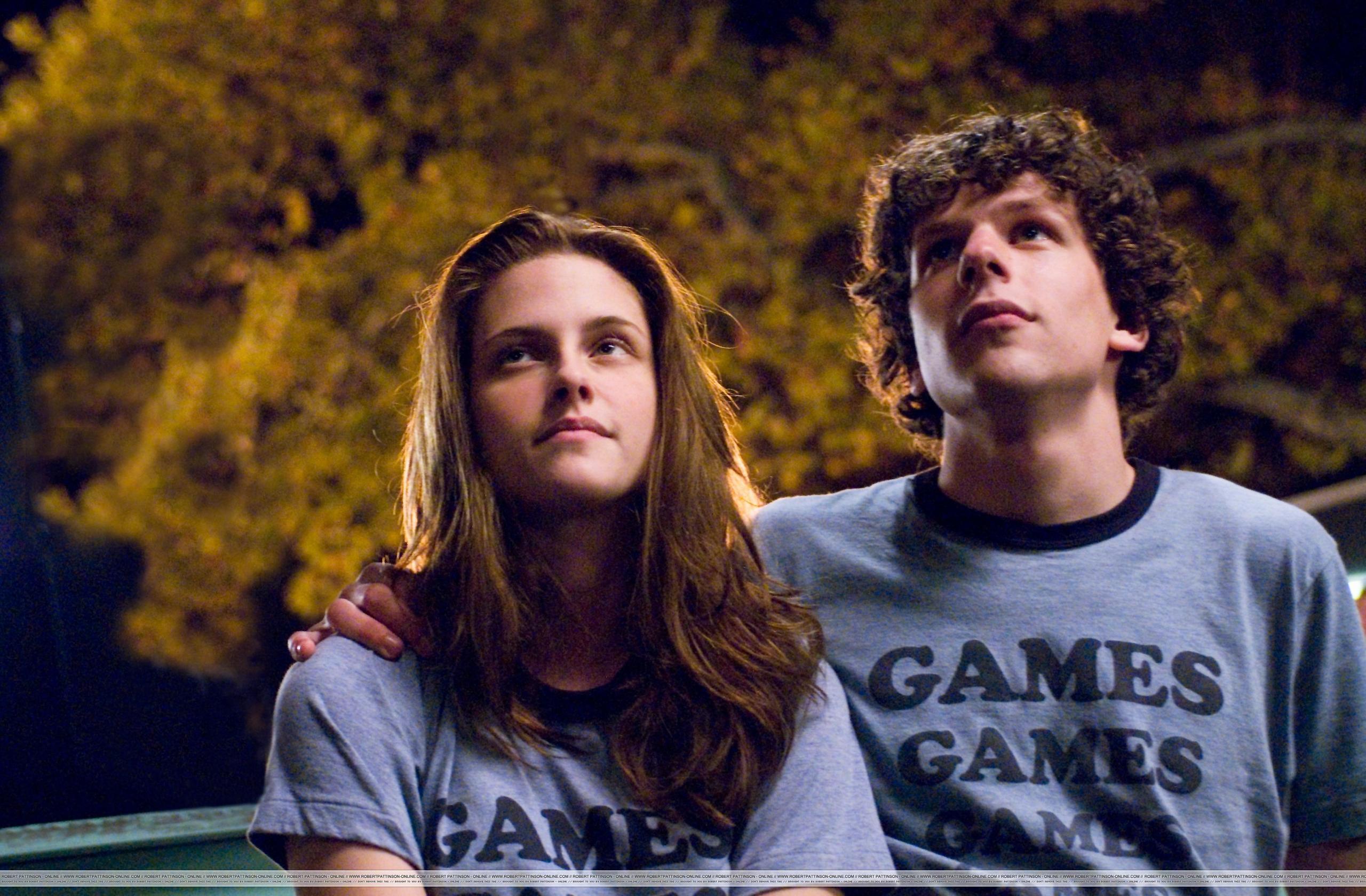
Everyone remembers their first job, and not everyone has the most pleasant memories of it–but there were some things worth remembering about it, whether we want to acknowledge them or not. James (Jesse Eisenberg) is the artistic type: one who would rather do anything but work a minimum wage job at a summer amusement park. But that’s exactly what happens to him, as he’s in charge of games at Adventureland for the whole summer, just so he can pay for grad school in New York City.

This is one of those theme parks where half the games are rigged and even if you win, you throw away the crappy prize soon after.

James makes friends with his coworkers, including deadpan intellectual Joel (Martin Starr), and starts a possible fling with Em (Kristen Stewart), who is also heading to NYC after the summer. When the bombshell Lisa P. (Margarita Levieva) is also working at the park and starts flirting with James, that’s when James has trouble.

I know the obvious choice is for James to stay with Em because she seems more his type, but how many of us made smart choices at a young age? Even if we’re smart, who says we can’t act stupid? What makes it even more complicated is that Em is the secret mistress of Connell (Ryan Reynolds), the park’s maintenance man who is married.

There’s more to these characters than we expect, and in a weirdly effective way, both the comedy and the drama come from how they react to each situation. And things don’t resolve in ways we expect them to either.

“Adventureland” is about the routine experiences of a summer job, finding ways to keep it interesting through the people you meet and the misadventures you have, and with characters that grow a convincing bond together. It’s about structure and about character, and I loved spending time with these people. I wondered what would become of these people years down the road.

Oh, I forgot to mention it takes place in 1987–pre-social-media, and a time when if you wanted to ask a girl out on a date, you had to call her house phone and ask her father if she was home.

My favorite scene: I’m not entirely sure this is my favorite scene, but it has my favorite quote in the movie. It’s when James and Joel are thinking about the future, and Joel wonders what the point is of being an artist, especially since Herman Melville, the author of Moby Dick, was so insignificant that he was referred to as “Henry” Melville when he passed.

James disagrees:

“No, I mean, he wrote a seven-hundred page allegorical novel about the whaling industry. I think he was a pretty passionate guy, Joel. I hope they call me Henry when I die, too.”

My Favorite Movies – Shaun of the Dead (2004)

26 Apr

By Tanner Smith

“Shaun of the Dead” is a great film because it works wonderfully as both a zombie-movie and a satire of a zombie-movie. The zombies still pose a threat, there’s still a lot of the zombie-movie survival conventions, and there’s still a lot of bloody action–the twist is that it’s all happening to a couple of slackers who don’t even realize there’s a zombie attack until it affects their daily routines.

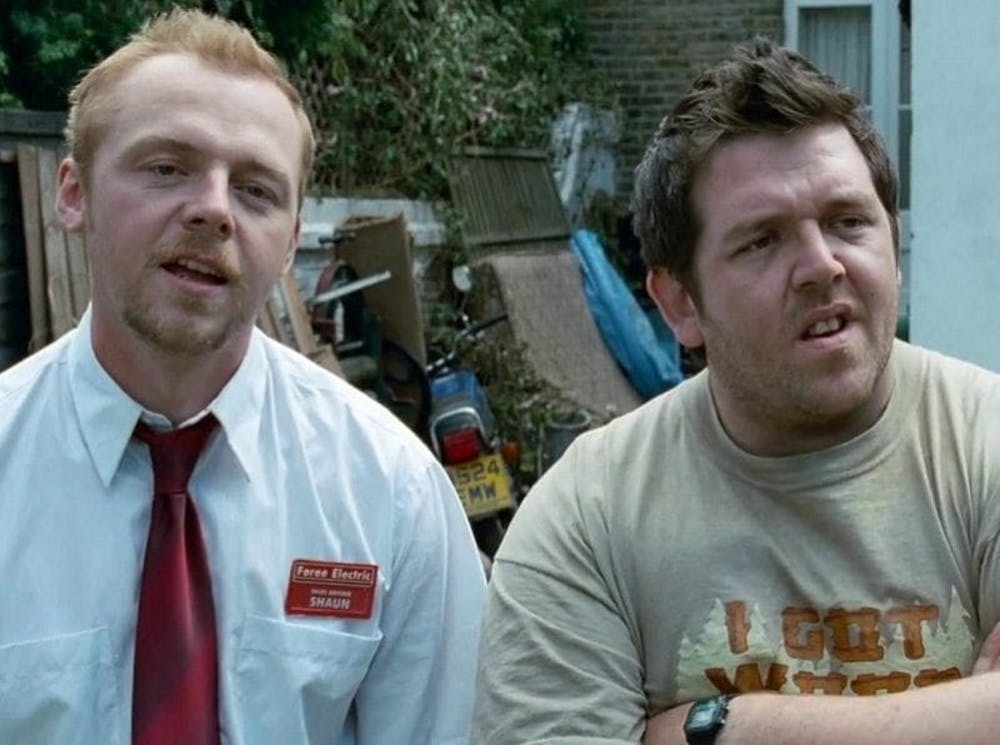
Shaun (Simon Pegg) has no direction in his life, and his buddy Ed (Nick Frost) is even less ambitious. These jokers wouldn’t know a zombie if she popped up in their backyard…hey, is that a zombie girl in their garden? Anyway, they become more wary of the mayhem that’s happening in town, and they race to find shelter with Shaun’s mother (Penelope Wilton), Shaun’s ex Liz (Kate Ashfield), and Liz’s flatmates Dianne (Lucy Davis) and David (Dylan Moran). Their plan is to “wait for all this to blow over”…but it’s not as simple as that.

And as funny as “Shaun of the Dead” is (and it’s VERY funny), it also tackles the hardships of surviving such an experience, such as the harsh sacrifices that have to be made.

But even with that in mind, it is fairly consistent in how funny it is. It’s not camp nor is it unintentionally laughable; it’s just funny. Much of that has to do with some of the best timing I’ve ever seen in any comedy. (Actually, something writer-director Edgar Wright is known for is quick comic timing in all of his movies.) And it has fun with the premise of a zombie invasion, while paying heartfelt homage to George Romero zombie flicks.

It’s also a film with a cautionary message about getting too used to routine. Shaun would’ve stayed ignorant in his cycle if the dead didn’t walk the earth. The zombies are essentially representative of those who are so desensitized to life that they have nothing more to do in life (or…death).

Among the comedic highlights in the movie include Shaun and Ed’s first encounter with the zombies, the group pretending to be zombies to be unnoticed, and the jukebox bar brawl. Though, I do have to ask…why did they bring out their LP collection and throw some at the zombies? I know they’re not the sharpest tools in the shed, but…they didn’t really think that was going to work, did they?

But whatever, it’s still funny to hear their tastes in music–what album would YOU get rid of during apocalyptic times?

My Favorite Movies – Lady Bird (2017)

24 Apr

By Tanner Smith

First thing I’ll say is I WANT TO SEE A MOVIE ABOUT THE FOOTBALL COACH CHARACTER FROM “LADY BIRD!” Or maybe a sitcom about a similar character: a high-school football coach who has to direct the school musical and puts his extreme all into it.

It’s a small role in this great film called “Lady Bird.” The coach, Father Walther (Bob Stephenson), has only about three scenes (one of which is my favorite scene in the whole film)–but when he shows up, it’s memorable.

In any other film, he’d be this disgruntled middle-aged dumb jock who doesn’t care about directing “The Tempest” for the school play and doesn’t take it seriously at all. But in “Lady Bird,” to hell with that noise! It turns out Father Walther gets just as excited about play rehearsals as he does about football plays! It’s hilarious and I can’t get enough of it–PLEASE give this character his own movie, I beg of you, Greta Gerwig!

The trope of a coach being thrown into something he’s not familiar with is an old one. But here, it’s given new life. And that describes the whole film itself.

“Lady Bird” is a comedy-drama film about a high-school teenager who comes of age in her senior year. See, right there, it doesn’t sound very fresh–it sounds like a bunch of other movies. I remember, the first time I saw (and loved) it, I tried describing to friends…and it just sounded like “The Edge of Seventeen” or “Mean Girls” or something. That’s when it hit me: writer-director Greta Gerwig breathed new life into a familiar concept.

Saoirse Ronan, one of the best actors working today, stars as Christine “Lady Bird” McPherson, a bright but not very accomplished Catholic schoolgirl. She’s not very popular but she’s not an outcast either–the only one below her average status is her best friend Julie (Beanie Feldstein). Lady Bird lives in Sacramento but yearns for life in New York because she finds California boring. She and her mother (Laurie Metcalf) don’t get along–in fact, in the film’s surprising opening scene, they go from getting along to arguing in just a couple of seconds! Her father (Tracy Letts) finds it in his heart to help Lady Bird with East Coast college applications when her mother doesn’t totally like the idea. (She says it’s because they can’t afford tuition, but it’s also implied that what she means is she doesn’t want to be too far away from her daughter.)

I’m just laying out the basics of what life is like for Lady Bird in this movie. In just an hour-and-a-half, the film “Lady Bird” guides us through a full year in this girl’s life, as she argues with her mother sometimes, gets along with her other times, courts a cute boy (Lucas Hedges), meets another boy (Timothee Chalamet), makes friends with the popular girl (Odeya Rush), has a falling-out with Julie, gets back together, and on and on until the end of the film, in which she learns that not everything is about her and everything that she has known all the time is more special than she thought.

This leads to a heartwarming ending in which everything makes sense. It’s the end to a journey in which one hopes for something enlightening and it becomes something unexpected and yet still enlightening at the same time. And that’s all I’ll say about it–if you haven’t seen the film, please check it out.

Greta Gerwig, who wrote and directed the film, is one of my favorite people in show business. She became one of my favorite actresses ever since “Frances Ha” in 2013, and I made sure to see everything she’s in from that point forward because she’s so charming and lively and quirky–not just in movies but in real life too, as shown in interviews. She’s also a great writer, as evidenced before with the Noah Baumbach-directed films “Frances Ha” and “Mistress America” (both of which she starred in). And I just had to see “Lady Bird” because it had Gerwig’s name on it as both writer AND director.

If I may quote from Richard Roeper’s review, “Please write and direct another 25 films, Greta Gerwig.”

I concur. Make as many as you can, Greta Gerwig–I will see it.

Gerwig followed up “Lady Bird” with a wonderful adaptation of “Little Women” in 2019…and I’ll get to that soon enough.

Back to the football coach. This guy’s just a freaking riot. I could watch that scene in which he’s delivering the play blocking a thousand times and not get tired of it and laugh every single time!

My Favorite Movies – Big (1988)

24 Apr

By Tanner Smith

I wish I could be as gleeful and excited as Josh Baskin when he got his first paycheck at his first job–“187 dollars?!!” Actually, I was once, back when I had my first job–it felt good to earn an honest pay for once.

“Big” has been one of my favorites since childhood–even when I didn’t get a lot of the jokes as a kid, I was still with the movie because it was so likable and appealing and wanted to treat me like an adult. (I think the target audience was both children and grownups–the PG-rating standards were pushed a little bit back when it was made and released.)

I first drawn to it at a young age (I think I was 8 or 9, I forget…) because like most kids, I wished I was bigger or grown up. As I got older, the comedy spoke to me more, so I kept coming back to it for that. Not too long after, I felt like I “got” it, like I knew what it was trying to tell me all that time–and I loved it even more.

The film is about a 12-year-old New Jersey boy named Josh (David Moscow) who is going through the normal average pre-pubescent stages–he’s being nagged by his parents to do his chores, he wants the attention of the pretty girl, he’s too short for the best carnival rides, all of that stuff. He comes across a fortune-telling machine that asks him to make a wish…so he wishes he was “big” (or “grown up”). (He doesn’t realize until after he’s made the wish that the active machine was unplugged the whole time. Spoooooky…)

The following morning, Josh is surprised to find that his wish has come true–he’s now taller, bigger, and played by Tom Hanks. His own mother doesn’t recognize him, but he’s able to convince his best friend Billy (Jared Rushton) of the situation. So, Billy helps Josh lay low in New York City until he can find the machine and wish himself back to being a kid again. But meanwhile, he needs work–so he gets a job working at a toy company. (He gets the job too easily, but remember it’s a fantasy.) He gets the attention of the boss, MacMillan (Robert Loggia), because rather than analyze target demographic surveys and processed datas and all that junk, Josh tests toys the old-fashioned way: he plays with them.

The best scene in the movie, I think everyone who’s seen it agrees, is the one where Josh and MacMillan meet at a toy store and play the carpet piano. Josh starts playing the scales and “Heart and Soul,” and it’s right there in a quiet little moment where MacMillan is reminded of his own childhood and smiles at the memory, leading to a piano duet between the two–first “Heart and Soul” and then “Chopsticks.” Everything about this scene is gold–it’s beautifully shot and choreographed, it’s funny, and it’s charming. I love it.

Anyway, Josh gets a promotion at work and blows everyone away because no one understands toys better than he does–he knows what kids want! (Go figure.) He gets a nicer apartment, he makes a decent living (ah screw it, it’s more than decent–I WANT THAT APARTMENT!), he upholds new responsibilities, and he even gets a girlfriend in a pretty coworker named Susan (Elizabeth Perkins), who has somewhat of a reputation amongst her male coworkers. This strange, interesting man interests her, so she tries to pick him up…

“I WANT to spend the night with you,” she tells him. He doesn’t quite get it: “Do you mean sleep over?” “Well…yeah.” “Well OK…but I get to be on top!” That is one of the jokes that went WAY over my head as a kid!

The more time Susan spends with Josh, the more she loosens up. She doesn’t carry herself as much as the movie continues. Josh has the same effect for other people, including MacMillan, who gets sick and tired of all the business talk around the office. Josh even has that effect on the uptight a-hole executive Paul (John Heard)–when Paul gets ticked off at Josh, he becomes a schoolyard bully (which he probably was as a kid).

It’s an interesting theme, but even more fascinating is Josh’s development as he continues further into the adult world (and his friend Billy has to remind him who he really is). When the time comes where he’s offered the opportunity to go back and live his teenage years before handling all the adult responsibilities…will he take it?

Just writing about “Big,” I’m reminded of the things I love about it. There’s a wonderful delicate balance of comedy and drama. Tom Hanks is phenomenal as the literal man-child. The supporting cast, especially Robert Loggia as the boss and Jared Rushton as the only one in on the secret, is excellent. The final act is emotionally charged. The directing by Penny Marshall is tender-hearted and cheerful. And so on.

And arguably most importantly, it’s THE SCREENPLAY–the only way this script by Gary Ross (who went on to write and direct “Pleasantville,” another favorite of mine) and Anne Spielberg (sister of Steven) could have been ruined is if the original casting choice (Robert De Niro) was put in the lead role. (I love De Niro, but I could never see him as Josh.)

I love this movie. I always have and I always will.

Last thing I’ll say about “Big” is I usually stick with the original cut. The extended version is fine (though I would’ve liked to see that legendary alternate ending), but I think they made the right editing choices for the theatrical cut. If you’re a “‘Big’ completist,” it’s worth checking out–but I don’t think you’ll love it as much as the version you’ve come to know and love at that point.

My Favorite Movies – Phantasm (1979)

17 Apr

By Tanner Smith

Just for fun, I’m going to insert quotes from Siskel & Ebert’s harshly negative review of this movie at certain points in this post, starting with, “[Phantasm] has no social significance whatsoever.” Already an odd start for reviewing a horror film.

To be honest, there are times when I’m looking at a cheesy horror or sci-fi or action film and wondering why it was made. But then there are times when I just have to answer my own question with, “Well, why not?”

Don Coscarelli’s “Phantasm” is a very unique supernatural-horror film. It has the biggest number of inventive horror aspects I’ve seen in just one movie. It has the very “indie” feel of making it up as they went along. It inspired a series of sequels that I honestly have no interest in whatsoever. And I have to wonder if I would enjoy it if I were seeing it for the first time today at age 28 as opposed to growing up with it since age 14.

Well, I revisited Phantasm as well as “The Gate,” another horror film I grew up with at the same time–and I’ll tell the truth: I didn’t enjoy “The Gate” nearly as much today as I did “Phantasm.” (So no, I won’t be talking about “The Gate” in this series. But it’s still a cool movie and I have a soft spot for it.)

So, what are among the horrors in “Phantasm?” Take it away, Ebert: “There’s a few nice touches, like a severed finger that kind of creeps around with a mind of its own and a weird little stainless steel ball that flies through the air, and it has two claws that come out, and they dig into your forehead, and the little screw comes out and drills into your brain…kinda like a lobotomy from a dentist!”

Yeah, there’s that and the three-foot hooded monsters and the giant fly creature and the seductive (and dangerous) Lady in Lavender and the super-strong Tall Man and the portal to another dimension and–should I continue?

Way before I read director Don Coscarelli’s memoir “True Indie,” about making his films with limited resources, I dug the hell out of “Phantasm” just because it was ambitious and creative and funny and also one of the inspirations for me as a filmmaker. Is it overstuffed with ideas? Absolutely–but what do I care anymore?

Ebert? “The movie’s really just a bunch of special effects and horror cliches borrowed secondhand from The Late Show–they’re sprung together, they make no particular point… If the movie had a better story and even remotely convincing characters, along with those unique little touches like that stainless steel buzzsaw for the brain, it might have been a pretty good horror film. But as it is, Phantasm is a mess!”

Oh, you’re just jealous because you couldn’t do it.

The scene with the sphere is still effective after all these years (I keep forgetting it’s tied to a fishing line and shot in reverse after it’s been thrown)–though, it’s hard to believe it almost gave the film an X rating; it’s kind of tame by today’s standards. The scene that frightens me the most is when the kid, Mike (Michael Baldwin), has a nightmare of the Tall Man (Angus Scrimm) looming over him like a boogeyman.

It’s just a fun movie about young people coming across something unexplainable and trying to survive it, much like Coscarelli’s inspiration, Ray Bradbury’s “Something Wicked This Way Comes.” And I admire the “true indie” spirit behind it.

My Favorite Movies – Little Miss Sunshine (2006)

17 Apr

By Tanner Smith

What makes a winner and what makes a loser? Who is anyone to decide that anyway?

Co-directed by Jonathan Dayton & Valerie Faris, who would go on to make Ruby Sparks (a film in my top-20), “Little Miss Sunshine” is about characters in a win-or-lose situation. What they learn along the way is that the ultimate resolution doesn’t matter as much as the hard work it took to get there.

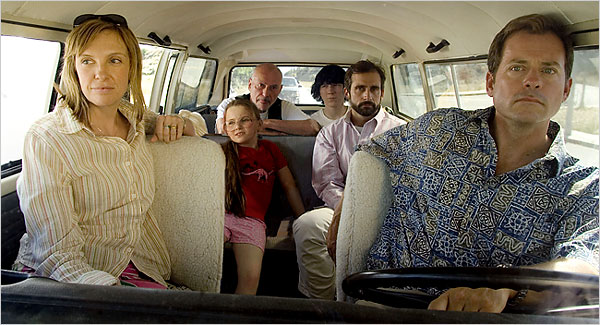
We have Richard Hoover (Greg Kinnear), a type-A personality who strives to be a motivational speaker and sell a book about his own “9 steps to winning.” He’s married to Sheryl (Toni Collette), an overworked mother to teenaged Dwayne (Paul Dano) and 7-year-old Olive (Abigail Breslin). Dwayne reads Nietzsche and has taken a vow of silence to prepare himself for the flight academy. And it’s Olive’s obsession with beauty contests that sets the story forward, as she earns a spot in a girls’ beauty pageant called Little Miss Sunshine in Redondo Beach, California. So, the family, which also includes suicidal Proust scholar Frank (Sheryl’s brother, played by Steve Carell) and Richard’s profane, heroin-snorting father (Alan Arkin), has to drive from Albuquerque, New Mexico to Redondo Beach in two days in order for Olive to compete. Their VW bus might not survive the trip…

Being a road movie, the symbolism is obvious–the journey is more eye-opening than the destination itself. Richard gets harsh news about his book sales, forcing him to reevaluate his own values. Frank copes with having attempted suicide and wonders what to do next as an unemployed Proust scholar. Dwayne learns something about himself that completely shatters his own world. Many of these well-defined characters have their own little thing to get through, and it’s through Grandpa, who is unorthodox but still more experienced than the others, that they learn that they don’t have to do it alone. With the right support and effort, there is satisfaction in the outcome, win or lose.

An effective piece of symbolism is in the form of the bus, which has a shot clutch. The only way to get it going is for everyone to push it together to start it.

As moving and effective as its overall meaning is, “Little Miss Sunshine” is also hilarious in the ways it pushes these characters along their journey, such as a sequence that recalls “Weekend at Bernie’s” and a show-stopping encounter with a patrol cop. The screenplay by Michael Arndt is great at balancing comedy and drama–if there’s anything more important than a comedy that can make you laugh, it’s one that can make you feel. And with characters as colorful as these, it’s easy to feel something for them.

This film tells us that it’s not about what we achieve but how we behave in attempting to achieve it. And if you disagree with what society declares a winner or loser, well…screw ’em. What do they know anyway?

Now…I HAVE to talk about the final act, in which they get to the Little Miss Sunshine contest and are totally unnerved and disgusted by who/what Olive is sharing the stage with. I worked as a PA for the reality TV show “Toddlers & Tiaras” once, and I can tell you that the horrified reactions of most of the characters during this totally unpleasant experience in the final act of this film are very accurate. Every time I rewatch the film, it’s a truly uncomfortable sequence…but it’s totally worth it to get to the ultimate (and hilarious) payoff, which is basically a great big middle finger to those kinds of beauty contests!

Actually, no–it’s TWO middle fingers! One isn’t enough.

God bless you, you little indie film that could (and did). And I salute you for making me believe that it’s OK just to be OK.

My Favorite Movies – The Farewell (2019)

16 Apr

By Tanner Smith

There are movies that take time and many viewings to become one of my favorites–even if I praise it at the start, there’s a difference between “one of the best” and “one of my favorites.” But there are also movies that click with me right away so I already know it’s a new favorite.

The time I saw Lulu Wang’s wonderful, emotional comedy-drama The Farewell in a theater, I knew I was seeing something special.

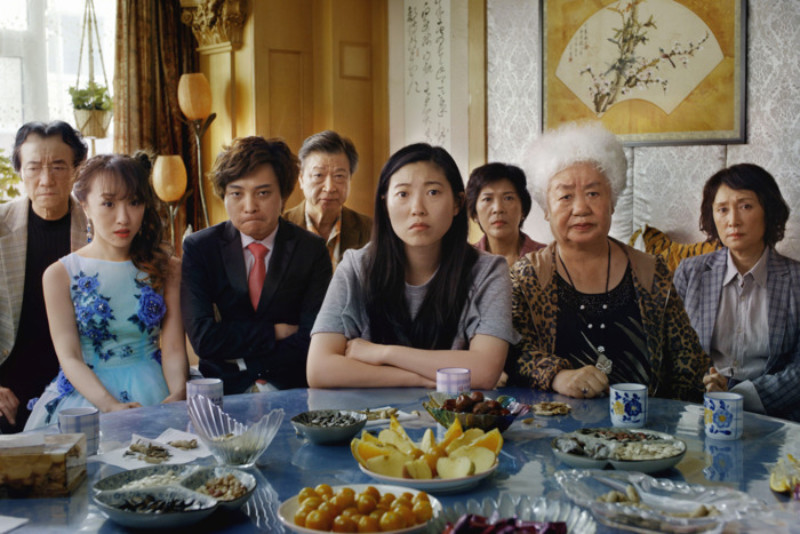
It’s a comedy if you laugh because you recognize the reality and the honesty of the family dynamic and Awkwafina’s Chinese-American lead character feeling out of place in Changchun and the overall “lie” that drives the narrative. And it’s a drama because said-lie is a family reunion–a wedding that is actually a ruse for the whole family to see Nai Nai (Mandarin for “grandmother”), who doesn’t know (but the family knows) that she has terminal cancer. Naturally, the emotions are going to be there, especially since Awkwafina’s Billi doesn’t understand this is a typical Chinese family custom and feels the need to tell her beloved Nai Nai.

And like my favorite “dramedies,” like “50/50” and “Frances Ha,” “The Farewell” blends both the comedy and the drama flawlessly. Both work because the characters work–you have to laugh with them before laughing at them, and thus, you feel what they feel when something as serious as cancer troubles them.

If there’s anything more important than a comedy that makes you laugh, it’s one that makes you feel.

My favorite scene: There’s an extended dinner sequence in which the family talks about whether or not moving from China to America is the right thing. Is the American Dream a myth? Some think so, while others think it hasn’t been achieved yet.

Here’s an interesting piece of trivia: “The Farewell” won Best Feature at the 2020 Film Independent Spirit Awards, the same award that writer-director Lulu Wang’s boyfriend received from the Indie Spirits for his film just one year prior: Best Feature, Barry Jenkins, “If Beale Street Could Talk.” Maybe these two talented people should write/direct something together–I’d see it! 

My Favorite Movies – Signs (2002)

16 Apr

By Tanner Smith

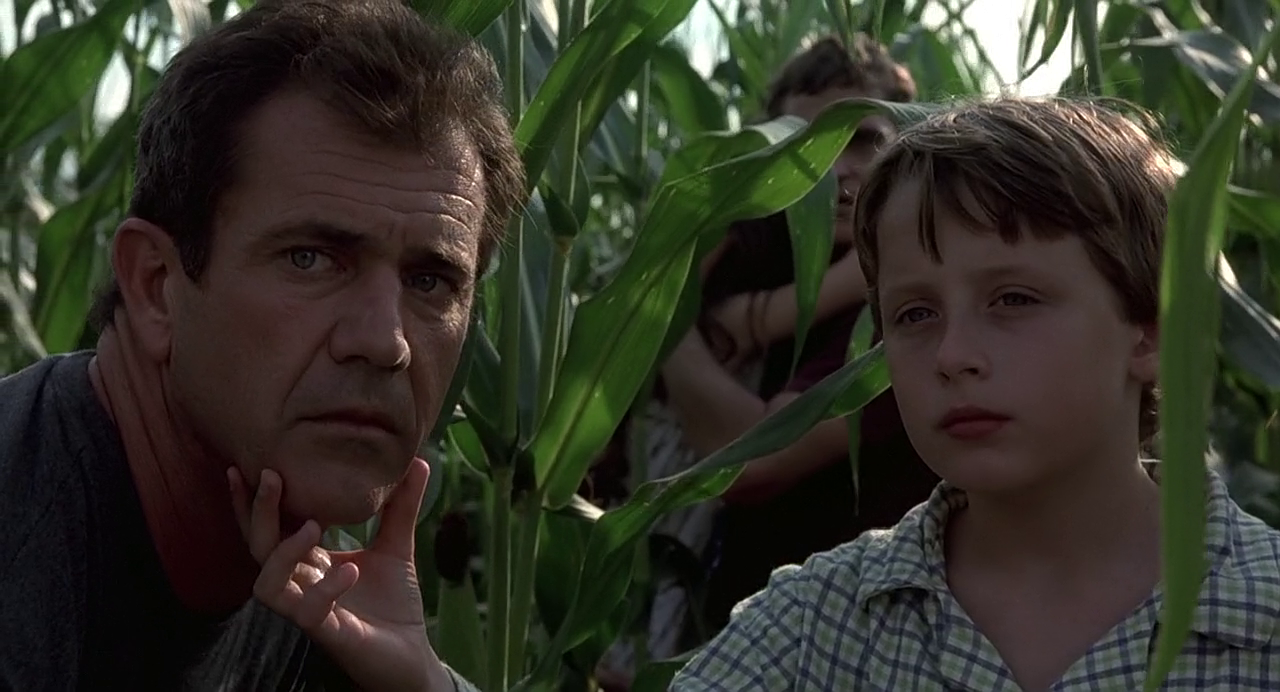
I HAVE to go into spoilers here if I’m going to defend this one. Here’s a sleeper hit that everyone was talking about positively before they asked themselves, “Why would aliens come to a planet mostly covered with water if that’s what hurts them?”

I don’t think they ever bothered to actually answer that question. They’re ALIENS! What the hell do they know about water??

Oh, and why couldn’t the alien get out of the kitchen pantry through the wooden door? Well…at the end of “Signs,” there’s the alien from the pantry…obviously it got out of the pantry!! It’s going to take some time for something to bust through wooden planks like that when these aliens don’t have laser guns.

I wrote an entire post about why a lot of people’s criticisms towards “Signs” don’t make sense to me. (Check it out here.) My point is there is nothing anybody can say against this movie that is going to make me love it any less. It’s still wonderfully made, effectively acted, beautifully directed, and hella suspenseful–this film makes great use of silence to add tension.

My favorite scene: the scariest scene in the movie is the first reveal of the alien, seen through shaky home-video footage. The alien appearing into frame is scary, but what really sells it is Joaquin Phoenix’s horrified reaction towards watching it–he’s so shocked that he gets out of his chair and takes a few steps back because he just can’t believe it! Stuff just got real!!

Richard Roeper added “Signs” to his best-of-2002 list and put it best with this wonderful quote: “Any director can blow up the world. But what M. Night Shyamalan does is riskier: he tries to blow our minds.” I couldn’t have said it better myself.

My Favorite Movies – Superbad (2007)

16 Apr

By Tanner Smith

I just freaking love “Superbad,” OK?! 

I remember a time back when for me and my friends in high school, this was the must-see movie for us! One of us even had one of those shirts that said “I Am McLovin” (anyone else remember those?). We just HAD to see this movie, and when it was released on DVD, we watched it over and over and over again.

As I got older, some of the more outrageous comedy sort of wore out on me (while the rest of it still makes me laugh out loud). But I also saw something more within the movie too. “Superbad,” for all its talk of partying, drinking, and getting “lucky,” is subtly an anti-party movie. Really think about it–all Seth (Jonah Hill) and Evan (Michael Cera) want to do is get drunk, have sex with their crushes, and party all night. They go through great lengths to get liquor. On the way, they wind up at a rowdy adult party where partying gets nasty and unwelcoming. They finally get to the party where their crushes are, and Evan’s crush gets crazy-drunk while Seth ultimately strikes out by drinking and accidentally giving his girl (Emma Stone in one of her first roles) a shiner. Do you think these guys are going to want to act this way after that crazy night? I don’t think they would, especially after they’ve declared their shared platonic love to each other at the end of the night.

This makes “Superbad,” a movie I loved as a teen, somewhat more realistic and also a better film to watch as an adult. As funny as it is, I think it works as a cautionary tale too.

Of course, Fogell (Christopher Mintz-Plasse) doesn’t learn a single thing, but whatever–let the kid have a good time this night. (“BREAK YO’SELF, FOOL!”)

My favorite scene: Fogell reveals his fake ID to Seth and Evan, which has one name: McLovin! The dialogue here is so silly, you have to be a genius to write Fogell’s idiotic logic. (That’s one of the reasons I’m jealous of Seth Rogen & Evan Goldberg’s writing.)

Like I said, some of “Superbad” doesn’t work as much for me–for example, what was the point of the multiple penis drawings, other than Rogen & Goldberg wanted to push the envelope? (I think I just answered my own question.) But a lot of it still does, and that’s what keeps me coming back to it every once in a while. It’s naughty, it’s hilarious, it’s even kind of sweet.