Less Than Zero (1987)

10 Mar

less than zero 1987

Smith’s Verdict: ***1/2

Reviewed by Tanner Smith

I wouldn’t be a fair critic if I reviewed “Less Than Zero” based only on the novel of the same name that the film is based on—so I guess in that sense it’s fortunate for me, because I hadn’t read the novel. But I heard that this film had very little do with it, save for its title and subject matter. I’m reviewing “Less Than Zero” as a movie. I thought it was a sad, effective portrait about how cocaine—and having more of it—can mess your life up. It features the same kind of rich, white, young yuppies seen in “St. Elmo’s Fire,” which I thought was kind of terrible in the way that the characters were portrayed. “Less Than Zero,” in my opinion, is better because it shows that these characters actually know what they’re getting into and just can’t deal with the reality of facing the future.

The three leads of the film are high school graduates who are best friends and have grown up together in Beverly Hills, California. In an opening scene, we see that they’re happy that things are working out great for them. Two of them are going to school in Harvard; the other is being set up in the recording industry. The latter one’s deal is supported by his rich father. All three of these kids come from rich families.

Cut to six months later, when suddenly, things aren’t the way we saw them in that scene. Clay (Andrew McCarthy, “St. Elmo’s Fire” and “Pretty in Pink”) has had his first semester at college without his girlfriend Blair (Jami Gertz), who, as we see in a flashback, decided to stay because she “wasn’t ready.” We also see that Clay hasn’t contacted Blair or his best friend Julian (the one getting the recording job, played by Robert Downey Jr.) since he caught them both in bed together on Thanksgiving. Blair calls Clay and asks him to see her—she knows that he’ll be home to see his family for Christmas. So Clay returns home and gets reacquainted with old friends at local parties. He meets up with a terrified Blair who tells Clay that Julian is in trouble. She tells him that Julian disappears for quite a time and wakes up not knowing where he is. And now, Julian is in debt by the local cocaine dealer, a suave young man named Rip (well-played by James Spader).

Julian is hooked on cocaine and hasn’t had things going for him since he started with it. He’s been kicked out his parents’ house, lost the recording studio, spent all of his money, and is constantly in a state of confusion. He tries to keep his cool when around the visiting Clay. But Clay knows something is wrong and that Julian may be on the path to self-destruction, if he hasn’t self-destructed already. So what can he do? How can you get someone to stop when he has a drug addiction?

This is where “Less Than Zero” gets disturbing, but it’s also tragic and effective. I didn’t think the film was dumb or dull. I thought the story played itself out just right in how these characters are developed into people who started out with everything and could possibly end up with nothing if they continue along this path. “St. Elmo’s Fire” tried to cover this issue, but not to good effect. The people in that movie didn’t seem like real people to me. “Less Than Zero” seems more realistic.

The film’s performances are terrific. Andrew McCarthy is suitably nice as the young man who finds his friend’s life going down the drain. The beautiful Jami Gertz is quite good, playing a frightened girl who has cocaine problems of her own. But the best performances come from Robert Downey Jr. and James Spader. Downey Jr. gives a frightening portrayal of a young man who took the wrong path and is currently on the brink of losing everything he had, which could also mean his own life. And the best thing—his acting is so subtle. The less-than-subtle way of showing this character’s self-destruction goes to McCarthy’s observations of it. Downey Jr. does such an excellent job as this character that it almost seems real and in that case, frightening. Spader starts out as suave and cool, but then develops into an intimidating personality. But the truth is, he’s not really a bad guy; in fact, he’s kind of reasonable. We can see that in the scene in which Clay tries to tell the guy to lay off of Julian. He gets the response; “I’m not the problem. Julian is the problem.”

The film’s ending took me by surprise. I didn’t expect it to go the way it did, but it was like a kick to the gut. I won’t give away the ending, but I can say it is tragic. “Less Than Zero” is a cautionary tale of what can happen when addicted to cocaine (or any other drug, for that matter) and it works.

30 Minutes or Less (2011)

10 Mar

images

Smith’s Verdict: ***

Reviewed by Tanner Smith

I know a lot of critics reviewing the comedy “30 Minutes or Less” bring up the tragic incident that this film plays its premise off of. To get through it quick, this is a movie about a pizza delivery man with a bomb strapped to him by some guys who tell him to rob a bank or they’ll blow him up. This is a flashback to a 2003 incident where a pizza delivery man planned to rob a bank with what was supposed to be a fake bomb strapped to him, but his partners double-crossed him with a real bomb.

I must confess I didn’t know about that at the time I was watching “30 Minutes or Less,” and I enjoyed watching it with blissful ignorance. Knowing now, I guess I should hate it now, right? Well…I don’t.

No, I still find “30 Minutes or Less” to be a reasonably entertaining comedy that managed to take a grim situation and make it quite amusing. It doesn’t break new ground or fashion a distressing tale about greed, and a lot of the humor comes from politically incorrectness. But I laughed, I wasn’t ashamed by it (for the most part), and I liked the comic actors that are oddly game for this material. It’s not a breakthrough comedy hit, like “Zombieland,” directed by Ruben Fleischer, the same director of this film. It’s just a modestly funny film.

Nick (Jesse Eisenberg) is a loser. He’s a post-college age pizza delivery guy with no ambition in life. He’s labeled a pathetic “man-child,” even by his best (and only) friend Chet (Aziz Ansari) who works as a substitute teacher. Things aren’t much better between the two of them when Chet finds out that Nick has slept with his twin sister Kate (Dilshad Cadsaria) and still has feelings for her.

Meanwhile, two even bigger losers have come up with a scheme. This is Dwayne (Danny McBride), a hapless, witless, wisecracking jackass, and Travis (Nick Swardson), his equally-luckless buddy. Dwayne lives with his Ex-Marine father “Major” (Fred Ward), and makes 10 bucks just by cleaning his swimming pool. “Major” has won the lottery and Dwayne gets the idea of hiring a hitman to kill him so he can get that money. They need a hundred grand to pay off the hitman (Michael Pena). What to do? Travis creates a bomb vest and he and Dwayne decide to strap it to some unfortunate loser and force him to rob a bank or blow him up. They order a pizza, Nick is the delivery guy, and there you go.

Of course, they could have just constructed a realistic-looking fake bomb vest and robbed the bank themselves instead of hiring a hostage. But oh well.

Scared out of his wits, Nick turns to Chet for help and as the bomb timer is winding down, Nick and Chet pair up to pull off the robbery and save their own lives.

There’s something about the tone that is just right for the movie and makes it watchable. Ruben Fleischer is careful not to overdo the heavier material. The robbery scene is paced just perfectly, with the right dose of comedy. And even though there are routine car chases, they’re still lively enough and not supposed to be taken too seriously.

Jesse Eisenberg is a likable lead and Aziz Ansari is a game comedic foil. Together, these two are a good buddy-comedy duo with very amusing banter. Even though Eisenberg’s character makes so many stupid mistakes, running around with explosives strapped to his chest and even risking the life of his girlfriend (who, by the way, is only in the movie so she can be kidnapped in the climax), it’s hard not to like and root for him.

Danny McBride’s Dwayne is an effective villain for this material—idiotic, menacing, and charismatic. This is the McBride I was looking for and really missed in the dreadful “Your Highness.” Nick Swardson is usually next to Rob Schneider as a constantly failing comedic actor, but now he has found the right role as Dwayne’s sidekick—smart, but completely weak-minded compared to Dwayne’s strong will. He’s quite funny here.

Also having their moments in “30 Minutes or Less” are Fred Ward, outstanding as Dwayne’s ex-Marine father with that Fred Ward strict attitude (and a pen-gun, if you can believe it); Michael Pena as the not-entirely-macho hitman the guys hire; and Bianca Kajlich as a stripper named “Juicy,” who goes crazy when someone messes with her investment.

“30 Minutes or Less” recalls some effective moments in “Pineapple Express,” has some game comic actors who do what they can, and brings the laughs however it can. Even if some of the gags don’t work and its raunchy jokes are sophomoric to say the least. But it never runs out of steam and it’s over in just an hour and twenty minutes, excluding the end credits. Laughs overstay the film’s flaws.

Can’t Buy Me Love (1987)

10 Mar

600full-can't-buy-me-love-screenshot

Smith’s Verdict: *

Reviewed by Tanner Smith

Among the “teen movies” that came around during the mid-‘80s, 1987’s “Can’t Buy Me Love” is a stupid one. Not just stupid because of the lazy storytelling and unfunny dialogue, but because its teenage characters are stupid. This is a disgrace to the genre of “teen movies,” if there ever was such a genre. (And let’s face it—there is.)

The film’s main character is a geeky outcast named Ronald Miller. The only reason he’s labeled a nerd and a geek is because he doesn’t play football, tell raunchy jokes, act nasty even in public (one of the football players has a—excuse me—gas problem, ho ho), or date the most popular girl in school. Instead, he spends most of his days playing poker with his friends and mowing lawns to save up for an overly expensive telescope. (Really? A telescope? Is it really worth it?) He mows the lawn of the school’s queen bee, named Cindy, who is completely irresponsible, shallow, and selfish (but she’s beautiful—that’s all that counts in this high school, right?). Her first scene shows her mother disappointed that she used her credit card on the most expensive wardrobe—her mother asks, “Why can’t you be as responsible as Ronald Miller?” Cindy scoffs, “Mom, get real.”

One of Cindy’s acts of irresponsibleness leads her to a desperate need for a thousand dollars, which Ronald conveniently happens to have. He’s desperate to become popular in school so he offers the money to her in exchange for her pretending to be his girlfriend for a month, hoping that it will make him popular.

Let me stop there—what springs her need for cash is that she stole her mother’s suede jacket and wound up accidentally spilling red wine on it at a back-to-school party. This is unrealistic and (broken record) stupid. Or maybe the filmmakers wanted to highlight the expensive items they could possess (i.e. the jacket).

So the plan works (again, stupid) and Ronald is among the elite crowd and ditching his “nerdy” friends. But the way these popular students are portrayed is insulting. They’re portrayed as cruel, mean-spirited jocks that look ready to go for the kill whenever the “nerds” stand up at a high school dance. And they’re also dumb and witless, to be added. Ronald becomes one of them—a snobbish jerk who forgets the better deal of high school life and everyone looks to him as the popular guy in school. There’s one scene set at a high school dance in which he performs a dance move which he learned from “African Hour” instead of “American Bandstand,” looking like a complete idiot. The elite crowd doesn’t know what to think, but then they state, “Since he’s doing it, let’s do it too.” And it’s the nerds who have a big laugh (I have to admit, that one bit was kind of funny).

What about the parents? With the exception of Cindy’s mother, the parents are either uncaring or missing. Then again, this is a “teen movie.” They don’t have much to do in this genre anyway, with the exception of “Sixteen Candles,” with that scene in which the father and daughter have a nice little talk.

The actors who portray Ronald and Cindy—Patrick Dempsey and Amanda Peterson—do give off some appeal, but they deserve a whole lot better in script and role. Their characters would fit in with no problem in a dumb high school sitcom, which is exactly how “Can’t Buy Me Love” functions.

Tall Tale: The Unbelievable Adventures of Pecos Bill (1995)

10 Mar

MSDTATA EC004

Smith’s Verdict: ***

Reviewed by Tanner Smith

“Tall Tale: The Unbelievable Adventures of Pecos Bill” is an entertaining family adventure that has an interesting group of heroes for its target audience—being a Disney film, I assume that’s children under the age of ten, although if you get past the silliness of the premise, people of all ages can enjoy it too. The premise and its group of heroes are quite intriguing material for a family adventure movie. It’s a Western about a young boy who saves his family’s farm from an evil land developer with help from three legendary figures—Paul Bunyan, John Henry, and Pecos Bill. That’s our group of heroes (the “tall tales” of the title)—folk heroes, not necessarily superpeople with abilities to fly or practice jujitsu onto their enemies. Already, I’m intrigued. Even if “Tall Tale: The Unbelievable Adventures of Pecos Bill” gets a little too ridiculous at times, it is mostly very entertaining.

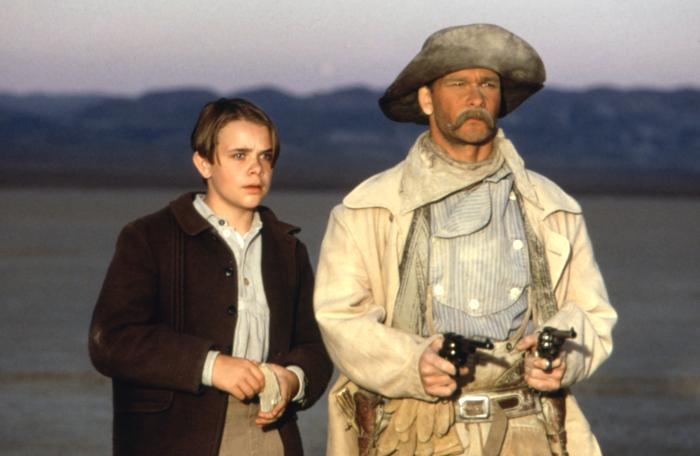
The boy’s name is Daniel Hackett (Nick Stahl, who’s OK but a little bland in the role) who has been told these tall tales by his prideful father Jonas (Stephen Lang). They live in Paradise Valley, a Western area untouched by sinister land developer Stiles (Scott Glenn) that plans to tear it all down as soon as he gets the deeds to every inch of it. But Jonas turns down Stiles’ offer, which leads one of Stiles’ hired guns to wound him. Jonas leaves the deed to the land to Daniel, who runs and winds up falling asleep on a boat in the nearby lake. But he awakens to find himself in a Texas desert (magically, I suppose), where he meets the first of the three heroes he will encounter—gun-slingin’ cowboy Pecos Bill (Patrick Swayze, who is hands-down the coolest person in the movie). As Pecos Bill assists Daniel to get back home for his father, they run into lumberjack Paul Bunyan (Oliver Platt) and strongman John Henry (Roger Aaron Brown) along the way. They teach Daniel how to stand up for himself and his beliefs.

It’s a strong asset to the movie that these “tall tales” are represented with the same dignity of their legend. Pecos Bill may remind some viewers of Indiana Jones, but I guess that’s the point in giving him an adventurous personality with a sly sense of humor and manner. John Henry is a strongman who knows a thing or too about pride and respect (and had his own rocky relationship with his own father which shadows the life Daniel has with his strict father). Paul Bunyan is not a giant (though he is relatively large in human height), but he is as strong as they come when it comes to lumberjacking—he even lives inside of a hollowed-out redwood tree, which is a nice touch. (And of course, there’s Paul’s loyal blue ox, Babe, to complete the ensemble.) All three roles are played very well by the actors.

The film is not great—some motivations are unclear, and the writers couldn’t avoid sentimental clichés as well as adventurous clichés (such as when Daniel is only inches away from being cut in a sawmill). And there’s a walk-on by Calamity Jane (Catherine O’Hara), who I wished had a much larger part. But there are some things to like about it, especially the visuals. Visually, “Tall Tale: The Unbelievable Adventures of Pecos Bill” is a treat, with top-notch production design and great cinematography. There are many great shots in the movie; my most favorite features a mountain meadow where butterflies flutter around the characters. The visuals, the heroes, and some gripping adventure sequences make “Tall Tale: The Unbelievable Adventures of Pecos Bill” a terrific adventure indeed.

Jade

9 Mar

8182604

Smith’s Verdict: ***1/2

Reviewed by Tanner Smith

NOTE: Before I begin this review, I’m obligated to state that I saw this film at a private premiere-screening at Rave Motion Pictures in North Little Rock, Arkansas, and that the film will soon begin its film-festival run. Whatever editing alterations there may be since its screening won’t be significant to this review.

There is a campaign known as “Not for Sale- Arkansas.” According to their Facebook page information, their mission is “to spread awareness in Northwest Arkansas regarding the human trafficking epidemic within the US and the world.” I don’t guess I was fully aware of the horror that is human trafficking, but I now know that statistics show over 30 million people are victims of kidnapping, slavery, and prostitution, among other things. And this campaign is here to help raise awareness of it, and also to bring back the lives of individuals who have practically nearly had theirs destroyed by it.

The made-in-Arkansas indie feature “Jade,” written and directed by Little Rock native Jess V. Carson, is a film that centers on the atrocity that is human trafficking that I don’t think I realized was happening right around us. It can happen anywhere. (Hell, maybe we’ve seen it on the streets of our hometown and just never realized what was really going on.) The film tells a fictional tale about such a young woman, named Jade, who was a victim of captivity and sets out to rebuild her life.

From Jade’s voiceover narration, we learn that her mother sold Jade to a pimp at age 12, and Jade has been serving him ever since. Through numerous intensive flashback sequences, we see the sheer unpleasantness of what she went through, along with other women (one of which is only about 12-13 years old), and the fear and distress that she can no longer deal with. This drives her to escape, as she hitches a ride to the next town (presumably North Little Rock, AR).

Free from her captor (seen in flashbacks as a truly sick individual known as “Prince,” played by Scott McEntire), Jade (Krystal Kaminar) spends most of her time at the local library, and stays at a motel (spending money she stole from Prince). Soon enough, two people come into her life. One of them is the kind librarian, Marcie (Verda Davenport-Booher), who notices that this young woman is in need of some sort of benefit. So she hires her to work in the library, and also invites her to stay in her home. (By the way, one of my favorite scenes in the film is how Marcie is able to convince Jade to accept her invitation—she practically pushes her, saying, “Ask me anything you want so you know you can trust me.” Great line.)

The other person who arrives into Jade’s life is Garrett (Joe Ochterbeck), an earnestly-goofy young man who also works in the library and clearly does not know the meaning of the word “quit.” He spots Jade and constantly tries to make small talk with her, while Jade, who doesn’t trust men anymore, is cold towards him and always cuts right through the bull. To be fair, though, Garrett is a nice guy who persists for friendship, not for sex.

The flashback sequences, which are intersected between scenes set in the present-day, don’t back down from the horror that Jade underwent. These scenes that show the living environment of Jade and her fellow victims of smuggling are disturbing and even painful (though no on-screen sex is present, and the most graphic violence mostly occurs off-screen, but clever editing still makes it effective). In particular is whenever the loathsome Prince arrives on-screen to set his “slaves” straight in his eyes—it feels like the real deal. Credit for that not only goes to the believable performances by the actors (which I’ll get to soon), but also to the screenplay by Jess V. Carson. The dialogue rings true, and the situations seem realistic—you can tell that Carson did her research on the subject, and she even claimed at the panel discussion of the aforementioned private premiere-screening, at which I saw the film, that she interviewed a former victim of human trafficking, and gained insight for the script. It shows.

The flashbacks present a great contrast to the present-day story, but that’s what’s needed in order to further represent the developments and changes that Jade will undergo with her new life in comparison to her past. This is an important element that helps make “Jade” an effective tale of redemption, as Jade continues to reconstruct her life after a horrid past. The first few times she spends with Marcie and Garrett, she’s uncertain and very standoffish. But as she spends even more time with these two nice people, she learns to trust for the first time after years of despair and feeling worthless/hopeless. She now feels like she may have something worth living for, and feels comfortable for once.

Among the film’s strengths are the performances from the actors. Lead actress Krystal Kaminar portrays Jade convincingly, and really sells the dramatic moments (particularly in most of the flashback scenes). It’s an effective representation of the kind of person that falls victim to human trafficking and needs help in order to distance herself far from it—the kind of person these anti-trafficking campaigns (whose web links are posted in the “Resources” section of the film’s website www.jadethemovie.com) are here for.

Of the other principal actors, Scott McEntire is suitably creepy as vile Prince, portraying the menacing pimp in a disturbingly plausible manner; Verda Davenport-Booher is excellent as helpful Marcie, the “guardian angel” (if you will) of the story (she has that distinctive presence as an actress, and there’s just something about her voice that makes you want to listen to whatever she says); Joe Ochterbeck is winningly sincere as Garrett, and also finds the right note of realistic goofiness for comic relief. Also terrific is Kayla Esmond as Nina, who was Jade’s lone companion and fellow victim of abduction.

What it really comes down to with “Jade” is the message, which is that there is a way for people with tragic pasts to overcome their fears and turn everything around for the better. Jade finds the courage to break free from her bonds, and from seeing the horrific memories of what she’s been through, we know she needed to. The truth of the matter is that human trafficking is a terrible reality in today’s society. We may not know about it, it may be covered up, we may not notice it if it’s right around us…but it is here.

“Jade” gets its message across and it also manages to end with a sense of courage and hope, and thankfully Carson’s script didn’t succumb to conventional plot gimmicks in order to do so. This film is very effective, and I hope it finds its audience during its festival run and beyond.

127 Hours (2010)

9 Mar

bilde

Smith’s Verdict: ****

Reviewed by Tanner Smith

OK, so acclaimed Oscar-winning director Danny Boyle has a film that has only a limited theatrical release. At the time, I thought it was quite odd for a movie made by the director of the Oscar-winning “Slumdog Millionaire” to not get a wide release. But then, I realized that this movie—entitled “127 Hours”—is based on the true story of Aron Ralston’s…incident. In 2003, Aron Ralston, a 27-year-old hiker, hiked along Blue John Canyon in Utah without telling anybody where he was going. Something went wrong and he fell into a narrow canyon—his right forearm was crushed by a boulder against the rock wall, keeping him trapped in there for nearly five days until he finally did what he had to do in order to escape and live. What he had to do is shown in great detail for a three-minute gruesome scene in “127 Hours”—it’s a scene so gruesome that many test audiences for the movie either walked out, fainted, or closed their eyes. This is why the movie is only in limited release.

Now, it’s not that I blame Fox Searchlight Pictures for a long trip to see this movie (I had to go all the way from Manila, Arkansas, to Little Rock to see it at Rave Motion Pictures—I usually see my movies in Jonesboro). It is a gruesome scene and I must admit that I did close my eyes at a couple points. But here’s my statement: You shouldn’t let three minutes of realistic gruesomeness in a 92-minute movie ruin a great experience. “127 Hours” is a haunting, effective, gripping, and unforgettable film that accurately tells the amazing story of how Aron Ralston came to terms with his own life while trapped “between a rock and a hard place” (that being the name of the book written by Ralston himself).

The movie stars James Franco in an excellent performance as Aron, a cocky, adventurous hiker who lives for adventure. By bicycle and foot, he treks along the Blue John Canyon in Utah just for the fun of it. We have a nice prologue in which we get great shots of the canyon—very lovely cinematography here—and we get to know Aron a little before the big incident. Aron starts his hike and then he meets up with two female hikers (Kate Mara and Amber Tamblyn). He shows them the way they want to go, but after they take a swim in an underwater cavern. Then, he waves goodbye to the women and goes off alone again…and then the unthinkable happens.

So he’s trapped inside the canyon and the thought of anybody looking for him (or even passing by) is unthinkable itself. People rarely hike down here and Aron isn’t close with anybody, so he didn’t tell anyone where he was going. He sums it all up in one word: “Oops.” No kidding—this is a pretty big “oops” moment. He’s very low on supplies, food, and water. He has a watch, a video camera, and a cheap multipurpose tool he tries to use to chip the rock a little so he can free his hand and get out of the canyon. But this shows no luck, since his hand seems to be supporting the rock, rather than the opposite.

I imagine it’d be very hard to make a movie like this. To make it right is a greater obstacle. How do you make a movie where a character remains immobile for more than an hour in the film? How do you make a startling story like this into a dramatically satisfying piece of work?

Well, I have the answer—the casting of James Franco. He makes for good company, his acting is natural, and he apparently knows Aron Ralston enough to make him seem like…Aron Ralston. He’s a wild adventurer who is also smart and quick-thinking. There is room for cockiness and humor (such as when he documents himself on his video camera and imagines himself on a talk show) while there is also a great deal of dramatic range. He realizes that he hasn’t appreciated his family and friends as much as he used to and since he is probably going to die here, he feels so sad about it. After a couple days in the canyon, he starts to experience hallucinations in which they all visit him. The drama in “127 Hours” really works, especially considering that we know that Aron will have his second chance after being trapped for five days in the canyon. He had to do what he had to do in order to live and that was…to use his cheap tool to self-amputate his arm. Would anybody have done it? I don’t know. I’m not even sure I would’ve done it, though it seems very logical. One thing is for sure—it is not easy to watch. This is a very unpleasant scene and I don’t blame anybody who had eyes closed. But it takes almost an hour and a half leading up to it, letting us understand who Aron is and why he’s doing this.

“127 Hours” is not a film I will soon forget. It’s an effective film set in some of the most beautiful places on Earth, it tells an accurate retelling of an amazing and haunting true story, the drama works wonderfully, the movie is splendidly well-made, and then there’s the most important ingredient—James Franco’s flawless portrayal of Aron Ralston. It also makes you think—this is a movie about a guy who never embraced life until he almost dies. He realizes that everyone he knew, he never appreciated until this moment. This goes to show that every second in life counts. It’s a terrific film.

Hollow Man (2000)

9 Mar

images

Smith’s Verdict: *1/2

Reviewed by Tanner Smith

“Hollow Man” is a science-fiction film that is truly a missed opportunity, considering that a film about a man becoming invisible can be very interesting. Invisibility is a common fantasy for some people and “Hollow Man” would like to be the new adaptation of “The Invisible Man.” But instead, it starts out promisingly, but only gets worse as it continues, and ultimately results in an unnecessary and very silly action climax that shows that the screenwriters have given up trying to tell a compelling story and just decided to go for the throat. This is one of those scientific-experiment-gone-wrong movies, which can either be very effective or very campy. “Hollow Man” doesn’t fall into either of those categories.

It’s a shame too, because the film has some really great special effects. But effects don’t make a movie—if they did, there’d be more appreciation for the “Star Wars” prequels (but I digress). While the effects are eye-popping, they can’t excuse the film for its flaws.

“Hollow Man” starts out in an interesting way. There’s a startling shot in which an invisible predator eats a rat (since we can’t see the creature actually eat the rat, you can imagine a disgusting sight). And we learn of a top-secret experiment run by a six-member scientist team. Most notable is the egotistical, intelligent Sebastian Caine (Kevin Bacon), who plans to be the first human subject to be turned invisible. But it can be tricky, because if it doesn’t work, he could die. (This has only been tested on gorillas so far. By the way, don’t ask me how this invisibility formula works—there’s a great deal of technobabble that I didn’t get.) Luckily, the formula does work. After much eagerness, Sebastian is invisible.

This is a scientific breakthrough that can change the history of the world as we know it! Or at least, that’s what someone was supposed to say in a movie like this.

Sebastian takes a great deal of pride in his being invisible, and is constantly stalling on being changed back to his visible form. He’s having way too much fun and letting everything go to his head. What you can know for sure is that he is not going to give this up, and he has also become a sex fiend that his prey can’t see. The other scientists—including personality-deprived heroes Linda (Elisabeth Shue, who very rarely turns in a bad performance) and Matthew (Josh Brolin, equally wooden)—realize that Sebastian has transformed into a transparent monster and try to figure a way to change him back without him knowing, but Sebastian is one step ahead of them…

So you know the drill—big climax, transformation into a different movie (a practical slasher movie only the killer is unseen), heroes try to escape from an elevator shaft, and they improbably save the day. This final act of “Hollow Man” loses the film its dignity. When it isn’t boring, it’s laughable.

Kevin Bacon’s Sebastian is the only interesting character in “Hollow Man,” but only in the first hour. When he goes psycho and starts to kill off people, he becomes as ruthless as Jason and just as dull. The movie loses track of his plight and just gives him scenes of mindless violence to take over. Bacon does what he can with the role (that is, when he’s Sebastian’s disembodied voice after his character is invisible), but it’s just not enough.

I want to say more about the effects in “Hollow Man.” They’re incredible. When a gorilla is tested for the formula early in the movie, you actually see the layout of its skeleton, nerves, organs, muscles, and skin as it transforms. It’s not a simple task—most movies about invisibility just make the character disappear like that; but not here. We see what looks like a legitimate painful process and it’s repeated once Sebastian has undergone the procedure. These effects are outstanding, but it’s just not worth waiting for them to show up on screen.

SpaceCamp (1986)

9 Mar

joaquin phoenix SpaceCamp

Smith’s Verdict: **1/2

Reviewed by Tanner Smith

“SpaceCamp” had the misfortune of being released around the time of the tragic 1986 Challenger accident. The movie features a group of kids accidentally sent into space after a failure engine test on a shuttle, and the movie handles it very tensely so you couldn’t help but have flashbacks of that terrible occurrence with the Challenger. So the film wasn’t necessarily dead on arrival, but it certainly was doomed on arrival.

But how does the film itself hold up nowadays? Better, but that’s not saying much.

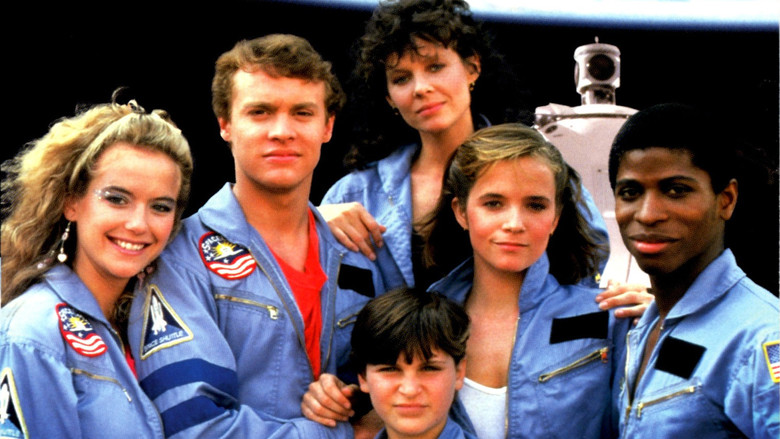
The movie is about a group of teenagers at NASA Space Camp. On a roll call by their astronaut host Andie (Kate Capshaw), there’s Kathryn (Lea Thompson, “Back to the Future”), a space enthusiast who really wants to be shuttle commander for the camp’s shuttle simulation, but is shifted to pilot; Kevin (Tate Donavan), a ne’er-do-well slacker who only signed up for Space Camp for his own Jeep, and has the hots for Kathryn; Tish (Kelly Preston), a new-age girl with a photographic memory; Rudy (Larry B. Scott) who lacks confidence; and Max (Joaquin Phoenix), the younger kid who is also a “Star Wars” fanatic and loves to spew its references.

In the first half of the movie, we see them go through the standard Space Camp procedures, though not standard to most of us watching it. Actually, this is one of the pleasures of the film—watching certain detail of the technical aspects at this camp has a real appeal. In particular, there’s a flight simulator and a pilot mechanical chair that spins about. I would have liked to see more of these elements, but they make way for moments of teenage melodrama, including a romance between Kevin and Kathryn that isn’t as interesting as what they’re going through with the camp activities.

I’ve heard arguments that the kids aren’t very bright and they make many mistakes. Well…some of these kids are first-timers. What do you expect? But then again, Andie puts a lot of pressure on them, like she expects more from them after what I guess is a week! No wonder they mess up badly in the simulator.

And if you can believe this, the Camp thinks this group is the right one to actually sit inside an actual shuttle during an engine test. How they were chosen after the washout simulator test is beyond me. And on top of that, why would NASA allow real kids to sit inside a real shuttle while real rockets are being fired? Shouldn’t they have taken into consideration that something could go wrong—something like, say…thermal curtain failure?

For those who don’t know, the movie explains that thermal curtain failure is very rare and it means that only one rocket will launch the shuttle and cause it to crash. Surely enough, through the efforts of an annoying robot (voiced by Frank Welker) befriended by Max that takes everything too literally, the thermal curtain does fail and NASA is forced to launch the shuttle, lest the shuttle crashes with the kids inside it.

So the kids, along with Andie, are thrust into space. At first, it seems like a dream come true. In a marvelous scene, we see them float around the cabin and get a great view of the sun setting on Earth. But there’s the issue of getting home without burning up in the Earth’s atmosphere. There’s no radio contact and there’s only one tank of oxygen left that won’t leave enough time for them to make the nearest window home. Luckily, Andie is an experienced astronaut and there’s a currently-under-construction space station that’s nearby with plenty of oxygen tanks.

The film has its share of chilling moments that should have been exciting. For a family film, this conflict is too heavy. We have many scenes that come across as unsettling. Like, how about we let the little boy out into space to help get the oxygen tanks from the unfinished space station?! Let’s have him suddenly lose control and fly out into space so Andie can save him! Then let’s have the conflict of hooking up the tank the right way! Then let’s have the final climax in which Kathryn must get the shuttle through the atmosphere without incinerating everyone on board! This is supposed to be a high-powered family adventure, right?

So I’m guessing people didn’t like “SpaceCamp” because it reminded them too much of the risks of being in space rather than being bewildered by the amazing emptiness of it all, not just because of the Challenger accident. While the special effects are impressive and the acting isn’t so bad (Kate Capshaw stops whining for once and Lea Thompson shows a sense of conviction to her role), “SpaceCamp” isn’t as wonderful as we’d like to think a movie about kids going into space would be. Maybe if it was just about a group of juvenile space nuts and their lives at space camp—learning all the technical aspects while also adjusting their social lives—it would be a nice, entertaining movie. As it is, it’s a half-baked adventure.

The Last Airbender (2010)

9 Mar

THE LAST AIRBENDER

Smith’s Verdict: *

Reviewed by Tanner Smith

I’ll state right away that I haven’t seen a single episode of the popular animated TV series, aired on Nickelodeon, called “Avatar: The Last Airbender.” So I don’t know the exact details of its story, characters, etc. But I do know that it is held in high regard—it has a cult following and apparently even the most stubborn critics can’t help but like it. So when the fans heard of a theatrical film adaptation of the show, they were hyped. When they heard that it was going to be live-action…they were worried. When newcomers to this story heard that the writer/director was M. Night Shyamalan, we had little to no expectations.

We all know that Shyamalan is a talented filmmaker and has brought us some outstanding achievements (“The Sixth Sense,” “Unbreakable,” and “Signs”). But he has really lost his way since then. Projects like “Lady in the Water” and “The Happening” were not promising evidence that Shyamalan was gifted, if we hadn’t seen the other three films. And now here he is adapting a film from this animated TV series. I’m surprised that the Paramount studio entrusted this man with something as apparently delicate.

Like I said, I haven’t seen the original show, so I’m reviewing “The Last Airbender” (the “Avatar” was omitted for obvious reasons) as a movie, like it should be. And the verdict is I hated it. It’s a confusing, uninteresting, jumbled mess that is a huge case of bad writing, bad storytelling, and bad filmmaking. This is not only M. Night Shyamalan’s worst film to date—it’s one of the worst fantasy films I’ve ever seen.

The plot is incomprehensible, though to be fair, I think it’s because I’m not accustomed to watching it develop in episodes on TV. There’s a scroll that tries to explain everything in the very beginning, and most of the dialogue is full of spewing exposition. But I couldn’t tell you what happens in this story or why it happens. I just know that in some distant future (or maybe a parallel dimension), mankind has split into four tribes, each representing an element—earth, air, water, and fire. And there are people in these tribes who can enchantingly manipulate their elements—or “bend” them, as they put it. These tribes are at war with each other, particularly because the Fire-benders are brutally hostile because…whatever. Only one can bring peace to the world—the “Avatar,” who can control all four elements.

The Avatar, named Aang (Noah Ringer), is found by two water-benders—a sister and brother named Katara (Nicola Peltz) and Sokka (Jackson Rathbone, the “Twilight” movies). They release him after he’s been buried under the ice for years. But by the time they figure out who he is, they are attacked by the Fire tribe warriors, led by Prince Zuko (Dev Patel) who tries to capture him before Fire Commander Zhao (Aasif Mandvi) claims him for the Fire Lord (Cliff Curtis)…at least I think that’s why this is happening. Oh, and Aang, aided by Katara and Sokka, heads to the lands of different tribes to train and master his own abilities, so he can make himself known as the Avatar.

“The Last Airbender” takes itself way too seriously, to the point where we’re supposed to be familiar with most of the material. But it’s hard to be invested when it’s pretty much just a callback to those fantasy films that tried for the same “complexity” that this one does, and it ends up looking like a joke as a result. (Well hey, not every fantasy film can be “Lord of the Rings” or “Harry Potter”—at least those films knew how to tell their stories.)

The screenplay is horrible. The dialogue is laughably bad and the story developments are inconsequential. It’s like we’re being challenged to follow along with what’s going on in this movie. I wouldn’t mind so much except that it’s so rushed and ends on a note that suggests a sequel, which I would definitely not look forward to seeing. And like I said, most of the dialogue is just awkward exposition—there’s no reason for these characters to explain these details except for informing the audience what’s going on. It’s not informatively helpful; it’s boring.

The special effects range from average to completely unconvincing. Some visual shots are clever, like the water spheres that the Water-benders create, and even a few shots of this “giant water buffalo” (I have no idea what Aang’s humongous pet really is). But mostly, they’re very weak. The fire looks like obvious CGI flames, the twister scenes (in which air is “bended”) are unimpressive, and every battle sequence is unintelligible, making for an uninteresting final-battle climax. Shyamalan’s gifts do not include action scenes.

I’m just glad I didn’t see “The Last Airbender” in 3-D.

But to be fair, the settings are quite extraordinary. It really does look like we’ve entered another world. Look at the icy mountains, the medieval-looking castles, the large-scale ships—the production design deserves credit.

I really don’t like to criticize young actors, but Noah Ringer is totally flat as Aang, and is given unable support by his two co-stars Nicola Peltz and Jackson Rathbone. All three young actors are dull, stiff, and unconvincing. The villains—Cliff Curtis, Aasif Mandvi, and Dev Patel—are slightly better, but here’s the main problem with them. They play it too straight, like they’re leading men in another movie. Dev Patel, in particular, has apparently forgotten that his role is supposed to be hammy, not deadpan serious.

“The Last Airbender” is an unintelligible, badly-made fantasy film. And I find it very hard to believe that Shyamalan, this man formerly known as an influential filmmaker, botched up this adventure that should have been exciting. Maybe he’ll find his way again. I sure hope so.

NOTE: Sometime, I will watch an episode or two of “Avatar: The Last Airbender” and see what all the love is about.

Shiloh (1997)

9 Mar

00318253

Smith’s Verdict: ***1/2

Reviewed by Tanner Smith

“Shiloh” could be seen as a “boy-and-his-dog” story, but it’s actually more than that. This is actually a nicely-done coming-of-age story, based on the novel by Phyllis Reynolds Naylor, about a young boy who would like a dog, but must learn life lessons like taking responsibility and growing up in order to prove that he deserves a dog.

It is also a terrific family film. It’s thoughtful, well-crafted, and avoids the types of lame, dumb formulas that most family films of the 1990s (or any decade, for that matter) seemed to think would work as high-quality family entertainment. And when you look at the family-film list for 1997, you notice what a lackluster year it was for the genre, with only very few gems such as “The Education of Little Tree,” “Fairytale: A True Story,” and “Shiloh” (arguably the best family film of ’97). These three family-oriented movies had one major thing in common—they were suitable for all ages, not just for kids. Adults can get as much out of it as children do. A lot of that has to do with quality character development and intelligence brought from the screenwriting.

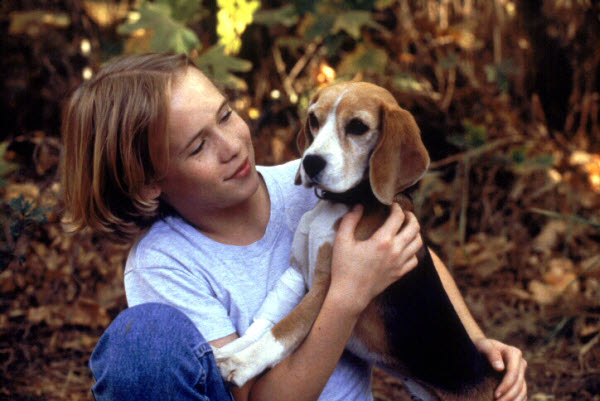
“Shiloh” is about an eleven-year-old loner boy named Marty (played by Blake Heron), who lives in a small rural community in West Virginia with his family. It’s a lazy summer, and Marty is looking for odd jobs to do around town in order to pay for a bicycle. “Dad says if I want it, I gotta pay for it,” Marty says resentfully. While wandering around his home, he realizes he is followed by a beagle with a cut over its eye, and finds a kind of connection with the dog, even giving it the name of “Shiloh” after the name of the bridge where he found it. But it turns out that “Shiloh” is the new hunting dog of Judd Travers (Scott Wilson), an isolated hunter with an acid attitude. Marty’s dad (Michael Moriarty) has Marty do the right thing and return the dog to Judd, while Marty is reluctant about doing so because he believes Judd has mistreated poor Shiloh.

A few days later, Shiloh runs away again and finds Marty again. This time, Marty decides to keep Shiloh hidden from Judd and a secret from his parents. With help from his friend Samantha (J. Madison Wright), Marty fixes up an old shed nearby for the dog to live, and even sneaks away food for it.

Of course, this can’t be a secret forever, and Marty must figure out what to do about all dilemmas that follow. And “Shiloh” is surprisingly mature about its lessons and themes, and treats its subject matter wisely. This is especially true in the way that there are no easy answers or solutions to the problems presented here; it’s merely morals vs. ethics. Marty’s dad accuses Marty of lying and not doing the right thing, while Marty believes that if he does “do the right thing” and return the dog to Judd, he’ll beat it to near death. In that case, what is the right thing? Marty has already learned to take responsibility while caring for the dog at this point, and now he learns that if he really wants Shiloh, he has to fight for it. Somehow he must bargain with Judd, which is no small task, given how revolting he is.

This leads to what is also successful about “Shiloh”—its character development. Judd Travers, in particular, has his reasons for being nasty. A lot can be said about him in certain lines of dialogue—for example, when Judd finds that Marty has named his dog Shiloh, he chuckles and says, “I don’t name my dogs. When I want ‘em, I whistle. When I don’t want ‘em, I give ‘em a kick.” You can tell right there that Judd may have been treated the same way as a child, and it goes even further when Marty tells him that having a dog is like having a kid, and if you don’t treat it right, it’ll run away. Judd states he never ran away when he wasn’t being treated right—he mentions many welts on his back every now and then in his childhood.

The kid Marty does not have all the answers to everything and must learn as he goes along, making “Shiloh” an effective coming-of-age story about growing up and learning about property, honesty, and accountability. He protects the dog, not caring whose property it is, and lies to his parents, until his mom (Ann Dowd) discovers the secret of Shiloh, and Marty begs for her not to tell Dad because he believes he wouldn’t understand. While the mother doesn’t lie to her husband, she can’t stand to have her son’s heart broken if the dog is given back. She serves as the film’s sympathetic figure that appears the background when needed.

The father is not a one-dimensional overbearing individual. He’s a man of principle, is angry that his son lied to him, and believes that the dog should belong to its rightful owner. But at the same time, he understands Marty’s attachment to Shiloh and tries to find some ways to support him.

Among the characters, there’s also the town doctor (Rod Steiger) and his wife (Bonnie Bartlett), who manage to patch up the dog after it gets into a dogfight (thus revealing Marty’s secret, I forgot to mention) and give Marty some helpful advice about what he could do to keep it.

Everything comes together when Marty strikes a bargain with Judd only to discover, after days of doing manual labor for him, that he’s been stiffed. “All I had was your word,” Marty tells Judd. “Ain’t that worth somethin’ to ya?” Marty has learned his lesson of honesty, now knowing what his father felt like when he found out that he was lied to. And then there’s the main question of whether or not Marty will get the dog, and more importantly, whether or not he truly deserves the dog. And what will Judd ultimately do?

I have to admit; I haven’t seen “Shiloh” in quite a long while. I watched it just recently and wrote the review to see how it holds up. It turns out it really holds up. The themes are more realistically handled than I remember; the writing is very smart; and it’s a most pleasant surprise in the poorly-stated “boy-and-his-dog” film genre (oh, and did I mention this was released the same year as “Air Bud” too?). And of course, give credit to all the actors for giving credible performances. “Shiloh” is a lot better than I remember—it’s a great family film that I won’t forget anytime soon. If you (or your kids) haven’t seen it, do yourself a favor and check it out.