My Favorite Movies – Batman: Mask of the Phantasm (1993)

15 Sep

By Tanner Smith

There are three Batman movies in particular that I hold in such high regard–and they’re all very different in style and tone, but neither of them is any less entertaining or powerful or thought-provoking. I love Christopher Nolan’s The Dark Knight, I love Tim Burton’s Batman, and I love Batman: Mask of the Phantasm, which I’m going to talk about now.

I didn’t watch “Batman: The Animated Series” as a kid–I was in college when I watched the first season on DVD and I was enthralled by the gritty atmosphere and adult themes and complex ideas that made for the very best episodes. To my pleasant surprise, this was not just a show for kids–in fact, I’d even say it treated kids as if they were adults. And my first time watching the cinematic spinoff, “Batman: Mask of the Phantasm,” which I had bought soon after watching my first episodes of the show, was like watching a fully-realized three-part episode crafted by the show’s best writers (and a bigger budget as well).

There’s a reason “Mask of the Phantasm” has grown a following over time and is even hailed by some as THE best Batman movie of all time: because it is really freaking good.

It was so good that when Siskel and Ebert missed seeing it in theaters, they dedicated a spot to it on a much later show, after they had finally caught it on laserdisc. They thought it was so good that it was worth talking about regardless. Better late than never. I agree with their review, except for one major point: Mark Hamill as The Joker. “I don’t like this Joker’s voice,” Siskel admitted.

I disagree–I always thought Mark Hamill was one of the best Jokers in Batman entertainment. As a maniacal clown, he was both twisted and funny at the same time; he’s like Pennywise fully realized. And I like him in this movie too, especially in his final moments where he’s at his craziest.

So what is it about “Batman: Mask of the Phantasm” that everyone including myself loves? Well, for one thing, it’s short (77 minutes, including credits)–that means every single frame of animation counts. Nothing in the story is wasted.

Speaking of which, the story is great. It delves more into Bruce Wayne’s past and how he could’ve had a normal life with the right woman before becoming Batman. It also gives us a compelling mystery with another masked vigilante who is mistaken for Batman, whose name is now sullied as a killer. The more we learn, the more interesting the mystery becomes. (Also, if you look up who does the voice for the Phantasm, it leaves a pretty good clue as to who’s behind it all.)

And yeah, people die in this PG-rated action-thriller–the sight of a smiling corpse (one of Joker’s victims) that the Phantasm finds always gives me a jolt each time I see it! If I had seen that as a kid, WHOA!

My favorite scene: a flashback scene in which Bruce Wayne ultimately becomes Batman and dons the infamous mask. Alfred reacts, “My God!” The music, the shadows, the sheer delivery of that one line from a man who’s raised Bruce all his life and now seeing him become a terrifying figure–it’s all so great!

I’m glad I caught this movie when I did. And I’ll talk about “The Dark Knight” and “Batman” at some point in the future too.

Good Boys (2019)

11 Sep

Smith’s Verdict: ***1/2

Reviewed by Tanner Smith

“Don’t you boys look cute! Everybody’s in the basement…I don’t even want to know what’s going on down there!” states a possibly-intoxicated mother who cheerfully welcomes our three prepubescent main characters to her equally-preadolescent son’s “kissing party.”

That’s one of many delightfully satirical touches added to “Good Boys,” a Superbad-inspired comedy that is made for adults to look back on their idiotic youthful days. (If the film’s clever poster and DVD/Blu-Ray cover design indicates anything, it’s that this film is definitely not for their kids.) All the ingredients for a teenage comedy are here (big party, sexual talk, drugs, violence, lots and lots of hijinks)…but the protagonists of “Good Boys” are not teens–they’re “tweens” (“preadolescents”).

And yes, I did say the film was inspired by “Superbad,” so it’s no surprise to see “Superbad” creators Seth Rogen & Evan Goldberg’s names in the credits. (They co-produced it.)

When you’re a pre-teen, there’s a lot to figure out about life and about yourself. And it’s not pleasant–especially when everyone else claims to know more about “the facts of life” than you. We’ve seen this material made for dramatic purposes (Eighth Grade), but “Good Boys” is a brash, offensive, and very funny comedy about three young boys who get into all sorts of trouble along their journey to be cool and kiss the girl. Thankfully, they’re not following the course of most teen movies and looking to get laid–these are little kids, after all, so they’re only naive enough to misunderstand many of the jokes they say and the, um, let’s say “objects” they come across. (Like I said, this will offend some people–art is not safe and neither is comedy, and there are worse things these kids could be doing.) In the end (spoilers, I guess), they learn very little about what they thought they should know and instead understand that they have each other, which gets friends through the toughest times at that tender age of 10-12.

Yeah, yeah, yeah, we get the emotionally resonant portion of this coming-of-age story, whatever–the film is really f***ing funny, and the funniest moments come not just from what these little sh*ts get themselves into but also from relating to them because of similar incidents in your youth.

Er…hopefully not the extreme scenes such as the one in which the kids cross a busy freeway–do not try that in real life, ever.

Our lead characters are three sixth-graders–Max (Jacob Tremblay), Thor (Brady Noon), and Lucas (Keith L. Williams). They’re all good kids who want to be “bad”–much like the “South Park” characters, they swear up a storm and talk about things they know nothing about because they think that makes them “adult.” (All three young actors play off each other wonderfully–you buy them as real friends.) When Max earns the respect of a “cool kid” named Salen (Izaac Wang), by taking a swig (or, in the kids’ minds, a “sip”) of beer at the local skate park, he also gains an invitation to Salen’s party. Sounds great, but wait…it’s a kissing party! And Max has a crush on a pretty girl who is also attending the party! This is his chance! But he doesn’t know how to kiss! What will he do!?

For a poor timid good kid like Max, this is as dramatic as his life gets. (His friends have different issues–Lucas’ parents are divorcing and the wannabe-tough kid Thor is insecure about his musical talents.)

Max, with the help of Thor and Lucas, wants to learn how to “prepare” for the party, and naturally, everything goes wrong. They search the Internet to learn how to kiss, which results in watching porn, which confuses them more. But it’s OK–one of the boys’ parents has a “CPR doll” they can practice with… (Oh yeah, this movie goes there–it walks that fine line and maintains a certain edge in the process. Just wait until you see the “necklace” that Max wants to give to his crush.)

Max is aware of his neighbor’s sexual activity–or rather, he heard she’s a “nymphomaniac.” (What’s that, one of the boys asks? “It means she can have sex on both land and sea.”) Using his father’s forbidden drone (his dad’s out of town), Max, Thor, and Lucas spy on the neighbor, a teenage girl named Hannah (Molly Gordon), but things don’t go as planned. Not only does Hannah break up with her boyfriend Benji (Josh Karras), which means no kissing is witnessed, but also the drone is caught by Hannah and her friend Lily (Midori Francis).

If Max’s dad (a very funny Will Forte) gets home and finds his drone missing or damaged in any way, Max is grounded and unable to go to the party. So, the boys go through desperate measures to one-up the “old girls” and solve this dilemma. And thus, hijinks ensue, involving a violent brawl at a frat house, a nervous encounter with a tired cop who just wants to go home, and yes, a race across a 12-lane freeway (complete with a pretty hilarious payoff).

Oh, and Lucas dislocates his shoulder during a bike chase. (That scene was shown in the trailer and didn’t sell me on seeing the movie upon initial release–I don’t like seeing kids getting hurt. But hey, one of my new favorite movies shows a kid falling off a roof and bleeding from his head, so I thought I’d take a chance with this comedy.)

Lots of hijinks, lots of raunchy dialogue from kids who don’t know sh*t…and yet, somewhere in the midst of this 89-minute crazy R-rated comedy, there’s room for heart (much like “Superbad” and Booksmart). What helps is the overall good nature of the three kids, all played by appealing young actors. (Plus, it’s fun to hear the R-rated dialogue come out of Jacob Tremblay, best known for roles that are more innocent, to put it lightly.) “Good Boys” was directed and co-written by Gene Stupnitsky, who recalls the fears and insecurities of being that young and naive and exaggerates them for ultimate comedic effect. The film is at its funniest when the kids misunderstand certain behaviors (and devices) and at its warmest when they have to say to each other, “F*** this,” and realize more important things such as being themselves.

The latter also has many priceless lines of dialogue, such as near the end, when Max stands up to a bully by saying…well, I won’t give it away here. “Good Boys” is a hilarious gem.

My Favorite Movies – Cyrus (2010)

10 Sep

By Tanner Smith

Jay & Mark Duplass, famously known as The Duplass Brothers, made quite a name for themselves as heroes in the micro-budget (or no-budget) filmmaking movement. (Many call it the “mumblecore movement,” but even the “mumblecore” filmmakers don’t seem to appreciate that term; why not call it “semi-pro?”) After making short, Sundance-accepted films with no money and making their impressive debut feature “The Puffy Chair” with only 15 grand, the Duplass Brothers had an opportunity to make a film with a bigger budget financed by a studio such as Fox Searchlight. (If their shared autobiography “Like Brothers” is any indication, that preparation process took so long that they made Baghead for cheap in the meantime just to stay creative–great move, guys.)

Whenever indie filmmakers get a chance to show a wider audience what they’re all about, it’s always kind of a risky move. Sometimes, it works, like with David Lowery and “Pete’s Dragon,” Richard Linklater and School of Rock, Mike Flanagan and Ouija: Origin of Evil…and yes, I know those are some strange examples, but try and fight me on their effectiveness. And with the Duplass Brothers, it really works. The film they made for $7 million, and with a cast of great, popular talents such as John C. Reilly, Marisa Tomei, Jonah Hill, and Catherine Keener, and made to appeal to a more mainstream audience than their arthouse features, actually turned out to be very funny, very sweet, and very weird–a great mix of their “mumblecore” (er, “semi-pro,” sorry) techniques and the mainstream “dramedy” entertainment they grew up watching.

That film is titled Cyrus.

I appreciated this film when I first saw it long ago (in 2011, I think; I missed its 2010 theatrical release). It’s grown on me even more over time because of its unique mix of dark comedy and romantic drama. And, I must confess, it currently rivals “Baghead” for the position of my favorite Duplass Brothers film.

John C. Reilly, one of the best character actors still working today, stars as John, a lonely guy who is depressed when his ex-wife Jamie (Catherine Keener) tells him she’s getting married. Knowing the news is devastating for him (even though they’ve been separated for seven years), Jamie invites John to a party, hoping he’ll meet somebody. And to John’s surprise and delight, he does meet someone: Molly, a quirky, delightful, fun woman who is played with the effortless charm of the lovely Marisa Tomei. They hit it off really well (and partake in a great dance number set to “Don’t You Want Me” by The Human League) and promise to see each other again, but…she has a secret.

John stalks Molly to discover said-secret and that’s when he meets Cyrus (Jonah Hill), Molly’s 21-year-old son who still lives with her. John finds it somewhat difficult to connect with Cyrus, a grown man who is very attached to his mother (so close to the point that I think he could be reaching Norman Bates levels), whom John is now dating and having sex with. And yes, that is a bit much for John to take in–but Cyrus seems cool about the situation (and even makes uncomfortable jokes about it). But as this dynamic continues and Cyrus is more off-putting and clingy towards his mother, John has his suspicions about Cyrus’ intentions–and we do too, such as, is Cyrus trying to break up John and Molly? What is Cyrus truly all about? Where is this going?

Jonah Hill is absolutely brilliant as “Cyrus.” This film was released in 2010, a time when audiences who were familiar with Hill as the abrasive loudmouth in comedies like Superbad got to see a different side to him as an actor; to see him as this creepy, manipulative sort of man-child is to recognize this talented actor’s impressive range. (And a year later, Hill would star in “Moneyball” and earn his first Oscar nomination.) There are many different levels to Hill’s performance as Cyrus, and the more times I watch the film, the more amazed and intrigued I am by what he accomplishes in his facial expressions, his dialogue, and his attitude.

When John and Cyrus are at wits with each other, it makes for some delightfully dark comedy, with this relatively nice guy trying to figure out what the deal is with this potential psychotic and whether it will damage his relationship with the psychotic’s wonderful mother–and there are moments when we’re looking at it from John’s perspective and finding moments such as when Cyrus and Molly are wrestling together in the park…very off-putting.

But because John is so likable and played by the lovable John C. Reilly, and also because the Duplass Brothers care more about character, we’re not just laughing at the actions/reactions; we’re also caring about the main character and getting to know the other characters through him. When Cyrus’ humanity (his true humanity) does show, it doesn’t feel forced; it feels like a real person with faults and even guilt. And with Molly, it’s not as simple as, oh if only she could just wake up and get rid of this creep of a son–it’s more complicated for her to take sides.

It’s this kind of characterization that many mainstream comedy-dramas lack–those films are about comedy and drama with character, while “Cyrus” is a film about character with comedy and drama. The Duplass Brothers did a wonderful job here, making an indie film with mainstream appeal (or a mainstream film with indie appeal, however you see it).

American Animals (2018)

8 Sep

Smith’s Verdict: ****

Reviewed by Tanner Smith

NOTE: This may be one of my new favorites, but I decided to go back to the standard-review format. (Maybe after another viewing or two, I’ll add a My Favorite Movies post about it.) I am giving it four stars because I feel it deserves it. (But really, what do these stars mean anyway?)

In writer-director Bart Layton’s brilliantly-crafted docudrama “American Animals,” we find ourselves asking the very same question as its interview subjects do: why?

As in, why did these good boys do this bad thing?

They came from good homes. They had no criminal records. They had no reason to commit this crime that ruined their good names.

And it was meant to be a harmless theft too. It didn’t turn out that way. (It was also very horribly planned out–let’s just say, professional thieves, they are not.)

“American Animals” tells the true story of four young men who in the mid-2000s attempted to pull off a heist at the library of Transylvania University in Lexington, Kentucky. Their plan was to steal the library’s rare-book collection and sell them off to underground art dealers.

But this is not your typical documentary with brief dramatic reenactments of the events told to us by the interviewees (i.e. the real-life people who recall the incident and more). A majority of the film belongs to the dramatization of the choices made by the boys who planned this heist. And they’re played by familiar young talents such as Evan Peters (Quicksilver in the “X-Men” movies), Barry Keoghan (“The Killing of a Sacred Deer”), Jared Abrahamson (“Hello Destroyer”), and Blake Jenner (The Edge of Seventeen, Everybody Wants Some). (We also get nice work from character actor Ann Dowd in a pivotal role as an unsuspecting librarian.)

However, for the context, we are treated to testimonials from the real-life people who perpetrated the event: Warren Lipka, Spencer Reinhard, Eric Borsuk, and Chas Allen II. (In addition, some of their parents, one of the culprits’ teachers, and even the real-life librarian are sharing details with us as well.) The way these people tell this story in the present-day, looking back at what they did in the mid-2000s, it’s almost as if even they don’t fully understand why they did this.

(Note: This narrative device not only leaves plenty of room for analysis; it also makes for some comedic moments as well, such as when Warren Lipka and Spencer Reinhard have contradicting memories as to where Spencer first told Warren about the rare-book collection. Unreliable narrator, anyone? What makes the scene better is when the real-life Warren interacts with fictional Warren to assure him to trust Spencer’s memory better than his own as he was drunk and/or stoned that night.)

I mentioned that writer-director Bart Layton crafted this story brilliantly, and I wasn’t exaggerating–there is so much to desire about this art-imitates-life (or life-imitates-art) approach. The complicated editing by Nick Fenton, Chris Gill, and Julian Hart is also very impressive, making for a great mix of documentary and crime-drama.

How did all this begin? Well, in the beginning, we follow the college life of art student Spencer (Keoghan), who lacks inspiration. (He even tears through his canvas of a new work because it doesn’t satisfy–I’m not sure if the real Spencer really did that.) He confides in his troublemaking childhood buddy Warren (Peters) that he wants something exciting (or even tragic) to happen. (Note: Keoghan and Peters share convincing chemistry as the oil-and-water type of friendly duo.) When Spencer is given a tour of the library’s special collection of rare books, such as a first edition of John James Audubon’s “Birds of America,” he and Warren share a thought: what if we could steal it? And not just that book, but all the books?

How hard could it be?

The idea grows particularly in Warren’s head to the point where Warren even travels to Amsterdam to meet with black-market art buyers for an answer to how much they would pay for these books.

Millions, Warren assures Spencer upon arriving home. Millions. And thus, it’s on! They bring in two other boys, Eric (Abrahamson) and Chas (Jenner), and come up with a plan so crazy and far-fetched that it could only work in the movies…

What happens when they attempt the heist, I’ll leave for you to discover if you don’t know the story already. (I didn’t.) Layton has fun with the lighthearted approach upon planning the heist before pulling the rug out from under us to show how serious and real and unplanned the situation really is. That’s because, while the film is entertaining, there’s a real sense that Layton is making the film in an attempt to understand why this event happened and why these four kids felt compelled to go about this plan that ruins their lives.

These are four white, rich, jaded college boys who already have pretty much everything they need in life. It’s like they do this for the excitement, because it’s different, because it’s risky, because it gives them purpose, or whatever. Even with its narrative structure, “American Animals” doesn’t pretend to have all the answers to the questions it raises–it leaves room for its audience to analyze the situation. And it’s both fun and interesting to think about.

“American Animals” is one of the smartest and most intriguing heist films I’ve ever seen–I can’t think of another that kept my attention as much as this one.

My Favorite Movies – If Beale Street Could Talk (2018)

28 Aug

By Tanner Smith

Very rarely do I use the term “beautiful” to describe a film. (The most recent one I called “a beautiful film” was Minari.) Director Barry Jenkins’ “If Beale Street Could Talk” is indeed a beautiful film, following the equally-remarkable Moonlight.

Granted, there’s a lot of roughness in “If Beale Street Could Talk.” Despite its 1970s setting, a lot of issues being addressed within this story are sadly still relevant today. The film isn’t a pleasant nostalgic look back at “the good old days”–instead, it’s more of a cautionary tale during which we lament that injustices towards innocents happened back then…and still happen today.

So, why is “If Beale Street Could Talk” worthy of the term “a beautiful film?” Because, after these characters at the center of the story, all of whom we’ve come to understand and sympathize with, have undergone some truly sad circumstances, there is a real sense that they will continue living the best way they can because they have each other to lean on–and when times are tough, that’s the best you can truly hope for.

I guess it was a little too tough for the Oscars, though, seeing as how it didn’t reach the same surge as “Moonlight.” You know for whom it wasn’t too tough? The Film Independent Spirit Awards, to the rescue yet again! (Is that a common theme in my favorite movies of this past decade?)

“If Beale Street Could Talk” received Indie Spirits for Best Feature, Best Director, and Best Supporting Female. In a year that also included great nominees such as Eighth Grade and Leave No Trace, I could find any faults in the voters’ decisions. (It wasn’t totally shut out by the Academy, to be fair–it was nominated for Best Adapted Screenplay and Best Music Score, and it won for Best Supporting Actress.)

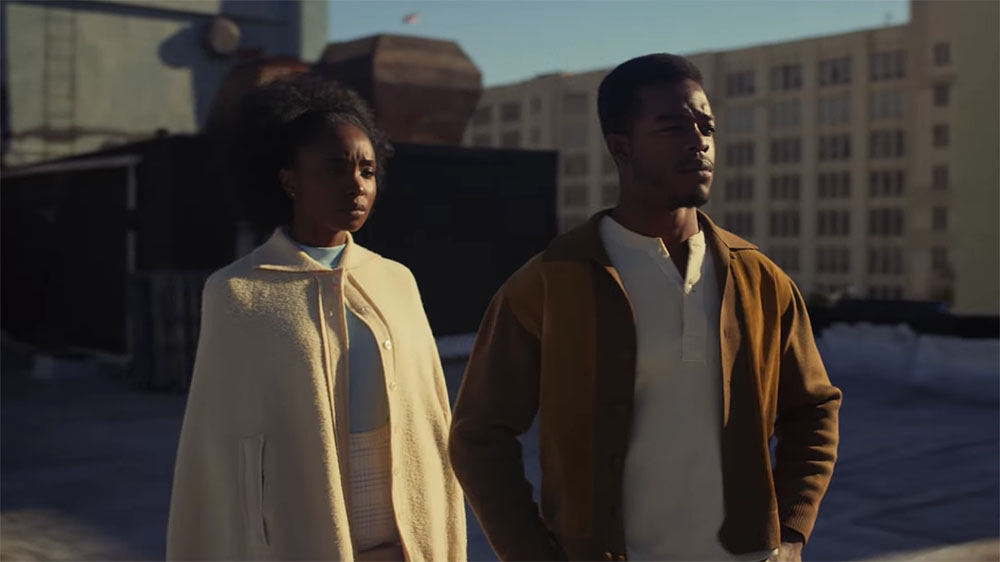
Based on the 1974 novel of the same name by James Baldwin, “If Beale Street Could Talk” takes place in Harlem in the early 1970s (and give credit where it’s due, the setting feels like another world with its great attention to detail for the time period). Our two protagonists are lovebirds Tish (KiKi Layne) and Fonny (Stephan James). Tish narrates the story and tells us about how she and Fonny looked forward to a wonderful life together (they knew each other ever since they were little)…until everything changed.

Fonny has been falsely accused of rape and is in jail. The whole thing was a setup by a racist cop, and because the victim (who was raped, but not by Fonny) has fled the country and could not testify, it was Fonny’s word against the cop’s. So now, who knows what the future holds in store for Tish and Fonny now that they’re separated by the glass wall that separates them during Tish’s visits.

Tish is pregnant with Fonny’s baby, and Tish’s family is supportive (and also trying their hardest to see what they do to defend Fonny)…which is more than can be said for Fonny’s family.

Actually, Fonny’s father (Michael Beach) seems like a relatively okay guy. But Fonny’s mother (Aunjanue Ellis) and Fonny’s sisters, on the other hand…yikes.

In probably the best (and most intense) scene in the film, Tish’s parents (Regina King and Colman Domingo) invite Fonny’s family over to the family apartment so they, Tish, and Tish’s sister (Teyonah Parris) can share the blessed news of Tish delivering new life into the world. Well…Fonny’s fanatically religious mother doesn’t feel so blessed and lets Tish know immediately that neither she nor the child will be welcomed into the family.

What happens next, I’ll leave for you to discover–the scene gets pretty heavy after that, when Tish’s mother and sister come to Tish’s defense (and Tish lets out some words she’s been aching to let out probably long before this moment).

It’s a great scene, and it leads me to another reason as to why I identify the film as “beautiful”: it has a real notion of faith and love. In this scene, we have two different, conflicting versions of “faith.” Tish’s family sees Tish’s pregnancy as a reason of celebration, while Fonny’s family is mostly so self-righteous that to them it’s the opposite of a blessing. One’s faith is more authentic than the other. And one is more loving than the other too.

The extent of love comes with a pivotal sequence late in the film in which Tish’s mother visits Puerto Rico to find the rape victim and convince her to come back and testify, in an effort to help Fonny out of jail and help her daughter make her vision come alive. What results is another heartbreaking scene, in which…well, it hurts to write about (and it’d be a spoiler anyway). Regina King is excellent in these scenes; she sells the love that she feels for her daughter and for those in her daughter’s life.

Midway through the film, there’s another heavy moment, set before Fonny’s jail time (the film is told non-linearly), in which Fonny’s old friend Daniel (Bryan Tyree Henry) joins Fonny after being released from prison. He tells Fonny about the tough times he endured behind bars, and it’s especially heartbreaking because we know Fonny is about to feel more or less the same things he felt.

That’s another thing I love about the film–the non-linear story structure adds more emotional weight due to scenes like that. And there’s also the moment in which Fonny first comes across that same cop that would set him up…

Faith and love is what keeps Tish and Fonny going, and they’re what will keep them going too. And long after the film is over, I can’t help but be optimistic about their future.

Because they deserve it.

Revisiting: The Kings of Summer (2013)

9 Aug

By Tanner Smith

Well, it’s time for another “Tanner Changes His Opinion Of A Movie After Several More Viewings” post. It’s like initial reviews are practically pointless!

When I first saw The Kings of Summer back in 2013, I liked parts of it, but other parts like stylish slo-mo sequences and REALLY annoying side characters that should’ve been funnier always took me out of it.

Much of my original review hasn’t changed. Whenever I see those scenes that clearly establish the director Jordan Vogt-Roberts has a style he’s trying to go for, all I see is “NOTICE MY DIRECTING” in big bold letters. But they’re still not nearly as grating as all the scenes involving the idiot cops played by Mary Lynn Rajskub and Thomas Middleditch, a random appearance from Kumail Nanjiani as a Chinese-food delivery man for an argument about wontons, and a subplot involving Alison Brie’s dorky boyfriend played by Eugene Cordero. They don’t feel real–they feel like a screenwriter is trying desperately hard to make his audience laugh when he’s not confident enough in his essential comic relief!

With that said, at least the parents of our teenage protagonists, Joe (Nick Robinson) and Patrick (Gabriel Basso), are meant to be grating, since that’s what causes them to run away from home and live in a makeshift home in a woods clearing. Nick Offerman plays Joe’s a-hole father, and he’s more real than the other adults I mentioned. And as annoying as Megan Mullally and Marc Evan Jackson are as Patrick’s overly clingy parents (Mullally even has a riff on cops that goes on WAY too long), they at least add to the story.

The essential comic relief I mentioned is supplied by Biaggio, a weird, WEIRD kid who tags along with Joe and Patrick. He’s played by Moises Arias, who has appeared in other films like “The Stanford Prison Experiment,” “Five Feet Apart,” and “The King of Staten Island,” and he clearly wants us to forget he was Rico on “Hannah Montana.” (It’s working–I have to remind myself sometimes.) I have absolutely no idea who Biaggio is supposed to be as a person, and it’s amazing how he’s barely a character at all, but I find him freaking hilarious. And Arias is giving it his all throughout the film.

Here are some out-of-context examples of Biaggio’s dialogue:
-“I can read…I can’t cry.”
-“He has a shadow behind his eyes.”
-“I met a dog the other day. It taught me how to die.”
-“It took very little time. Very few days.”

It’s easy to pick on the little stuff scattered throughout “The Kings of Summer,” but what about the main story with Joe and Patrick? All of that is handled really well. The two young actors are very good, carry convincing chemistry as friends, and have interesting individual arcs. Even though they have a rivalry that develops when their mutual crush threatens their summer paradise, I don’t mind that it’s predictable because it feels inevitable.

The things that are good about “The Kings of Summer” are so good that the other stuff doesn’t really matter. Better to realize it later than never.

My Favorite Movies – Leave No Trace (2018)

30 Jul

By Tanner Smith

I think it’s time to admit I won’t be talking about Winter’s Bone in this series. After many, many viewings in nearly 11 years, I still really like the film, but I think I like its lead character (Ree, played by Jennifer Lawrence) more than anything else–so it’s a movie with some favorite “moments” but not really one of my favorite films overall.

Yeah, watch me suddenly change my mind after watching it again and being like, “OK it’s one of my favorite movies now!”

However, Leave No Trace, “Winter’s Bone” director Debra Granik’s follow-up film, is one that I think is going to stay with me for a long time to come–characters, story, atmosphere, and all.

Watching this film in a theater (the Glenwood Arts Theater in Leawood, Kansas, three years ago) was like an emotional experience, as it felt like the passions of the characters were overwhelming me and I had no choice but to pay attention and fear for them as well as admire them. This is one of those films in which you feel like the characters’ actions and words are reaching out from the screen and touching you. I think much of that has to do with the fact that not much is explained about their situation(s) through a lot of dialogue. It’s just the expressions and carefully-chosen dialogue delivered by powerful actors in brilliant performances that help carry the emotional weight of the characters’ story. Do it right, and the audience can feel like they’re in a whole other place for nearly two hours.

When “Leave No Trace” opens, we meet a father and his teenage daughter–Will (Ben Foster) and Tom (Thomasin McKenzie)–living quietly in nature. We don’t know why they’re here or who they are, but we’re immediately intrigued by how they live. It gets revealed fairly quickly that they do live in modern times but not with modern civilization–they mostly live off the land, mind their own business, and only go to the town market once in a while for some supplies.

It’s only through a few props (like newspaper clippings) and a few actions (such as Will’s visceral reactions to helicopters) that we learn Will was a soldier who is now living with PTSD–he has found peace in nature and brought his daughter up to appreciate it the same way he does.

But they’re living in this nature park illegally, and so they’re caught and brought to social services. Thankfully, this isn’t one of those stories in which authority tries to split the father and daughter because they think the father’s a bad influence. (Though, they do make their concerns known because Will & Tom’s way of living is unknown to them. “Your dad needs to provide you shelter and a place to live,” Tom is told. “He did,” Tom replies.) They instead provide a house for Will and Tom to live in, in exchange for Will working on a Christmas tree farm. While Tom is open to trying new things and adapting to this change in her life, Will isn’t having any of it.

And I’ll leave it at that, because honestly, where it goes from there is even more intriguing.

Thomasin McKenzie has received many accolades for her brilliant performance as Tom, but it always bothered me that she was considered a “supporting” actress, because really, the film is seen through her character’s eyes. It’s interesting to meet a teenage girl who wasn’t born into the kind of life or privilege that most of us are accustomed to, and to see her in tune with nature just like her father, who we can gather has lived a life that failed him severely, makes me wonder constantly how she’s going to react to change. And her reactions to a lot of what she sees is pretty refreshing, because she wants to actually try new things.

And it’s even more interesting when you think about it and realize that it takes a lot to not conform–for example, Will refuses a cellphone when offered and that’s seen as a big deal.

My favorite scene: Without giving much away, it’s near the end and a nonverbal understanding between father and daughter when a decision is made.

Wonderful stuff here. And after watching “Leave No Trace” again today, it still leaves a hell of an impression on me.

My Favorite Movies – Wildlife (2018)

30 Jul

By Tanner Smith

One of my top 20 personal favorite movies is an indie dramedy called Ruby Sparks, starring real-life long-time couple Paul Dano & Zoe Kazan. Kazan also wrote the film’s screenplay, and as much as I like her as an actress (and she does indeed have appealing screen presence–check out The Ballad of Buster Scruggs), I’d like her even more if she wrote more films.

Well, there is another–this one was written by both Kazan and Dano. And Dano directed the film as well. I’ll take it!

Wildlife is an adaptation of Richard Ford’s 1990 novel of the same name. When Dano requested the rights to adapt the novel to film, Ford told him this: “I am grateful to you for your interest in my book, but I should also say this in hopes of actually encouraging you. My book is my book, your picture, were you to make it, is your picture. Your movie maker’s fidelity to my novel is of no great concern to me. Establish your own values, means, goal. Leave the book behind so it doesn’t get in the way.” Dano got his blessing…but he’d never written a screenplay before–lucky for him, his long-time girlfriend Kazan has. (Yes!) So they worked together in adapting the screenplay.

I’ve never read the book. But someday, I’d like to, if only to see how different it is from the film, which I admire a great deal.

Dano proves to be a darn good director too. His passion shows, as does his ability to communicate with his actors.

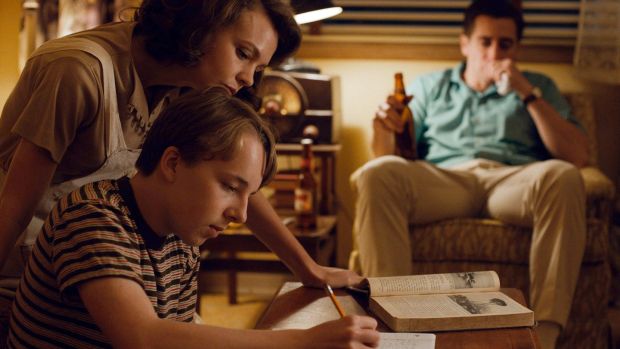
Set in the early 1960s, Wildlife is told from the perspective of 14-year-old Joe (Ed Oxenbould). (Oxenbould is best known for playing comedic relief in movies like The Visit and “Better Watch Out”–I sometimes have to remind myself this calm, mild-mannered young man is the same actor from those movies.) He and his family live in a small Montana town, where his father Jerry (Jake Gyllenhaal) works as a golf pro at a country club and is very friendly with the clients. But because Jerry refuses to stay out of the way, he loses his job–even when he’s offered it back shortly after, he refuses due to excessive pride. Joe’s mother Jeanette (Carey Mulligan) looks for work herself, and since Jerry won’t look for a new job, Joe gets work too, at a photography studio.

Soon, Jerry leaves the family to help fight forest fires in the nearby mountains. Jeanette is left to care for Joe and the household. But the situation gets more complicated when she starts an affair with an auto dealer named Warren Miller (Bill Camp, one of our most reliable character actors working today), which confuses and worries Joe. Whenever Joe tries to confront her about what he knows is going on, it’s like she doesn’t want to be a mother but a free person now that Jerry’s out of the picture (even temporarily).

Carey Mulligan delivers her best performance here, in my opinion. I’ve liked her work before in other movies and she deserved all the accolades she received recently for her daring work in “Promising Young Woman”–but here, she truly shines. She plays a motherly figure whose natural sweetness dies down when her ideals are suddenly changed and she becomes her own person. Courage? Confusion? Maybe both? Do we shun her for it? No, not necessarily. But she’s easily empathetic. Jeanette is an interesting, compelling character to study each time I watch the film.

Which, of course, means that Mulligan was ignored by the Oscars. Indie Spirit Awards to the rescue yet again! (Mulligan was nominated for Best Female Lead and the film also garnered nods for Best First Feature and Best Cinematography, for Diego Garcia’s stellar cinematography.)

The film is all about Joe coming of age and realizing that his parents aren’t perfect, they make mistakes for their own pride and pleasures, and…he’s either going to grow up into a well-adjusted individual or a mom-obsessed psychotic killer. (But I’m an optimist, so I’ll hope for the former.) The moment that truly got me was when Joe witnesses his father do something insanely rash when he finds about Jeanette’s affair. There’s a long tracking shot of Joe running off in tears. Was this Dano’s blatant tribute to a similar shot in Truffaut’s The 400 Blows? I don’t care–it still worked for me.

OK, so maybe “Wildlife” isn’t wholly original in its depiction of a American nuclear family unwinding, but when it works, it’s still effective. And with acting this good and directing this skilled, I’ll take it.

And I look forward to what else Paul Dano and/or Zoe Kazan will direct/write in the future.

My Favorite Movies – Heavyweights (1995)

11 Jul

By Tanner Smith

If you know me, you know I’m a fan of Judd Apatow’s work. I love The 40-Year-Old Virgin, Funny People, “Trainwreck,” and Knocked Up. (I’m sure some day, I’ll come around to loving “This is 40”–I’m not there yet though.) I love many of his productions too, like Superbad, Bridesmaids, Pineapple Express, The Big Sick, Walk Hard, and “Begin Again.”

…I often have to remind myself that Judd Apatow, the same Judd Apatow, wrote one of the ’90s live-action Disney movies I frequently watched over and over as a kid.

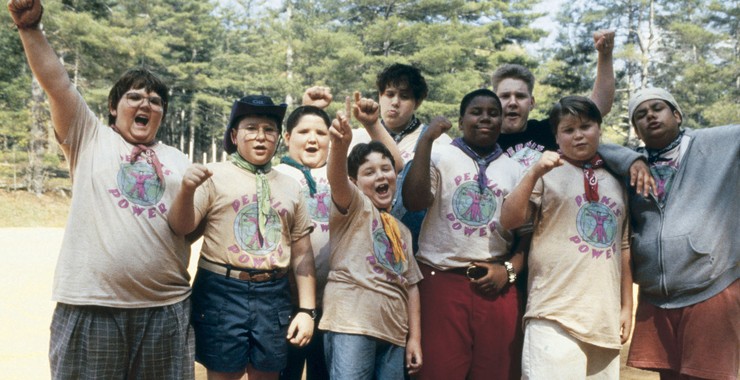
No joke–Judd Apatow co-wrote (w/ director Steven Brill) Heavyweights, a 1995 Disney comedy about boys running wild on a fat farm!

The comedy in “Heavyweights” is obviously gentler than what Apatow is most famous for, but it’s also edgier than you saw in most family-oriented comedies in the 1990s. The kids aren’t your basic cookie-cutter kids like you would see in something like “Major Payne”* (which came out the same year); they feel like real, wisecracking, mischievous kids–Apatow knew how to write for them.

For what could have otherwise been a deplorable, standard summer-camp romp for Disney, Apatow gave the material a much-needed edge with a lot of witty one-liners, an awareness of itself, and colorful characters that don’t get dumbed down (for the most part). He and Paul Feig went on to create “Freaks and Geeks,” and honestly, I think I like “Heavyweights” almost as much as my favorite episodes of that wonderful series.

Plus, there’s a deleted scene on the Blu-Ray in which the boys are joking about the possibility of getting boners while getting inspected by the attractive nurse–now THAT’s an Apatow scene!

Best part of the movie? No question about it–it’s Ben Stiller as Tony Perkis, the extreme fitness guru who aims to turn the fat camp into a business opportunity. Seeing this movie as an adult, I recognize its wonderful satire as we realize what this guy is all about, which is to use the kids as profit for an infomercial, while the kids themselves are not at all serious about losing weight.

Stiller is having a ton of fun here and he has a lot of the best lines that I love to quote from time to time.

There is, however, a problem that I notice upon watching this movie nowadays. Late in the film, the kids fight back against this guy, who turns out to be a sociopath–and I’m not sure how to take that. It bothers me a little bit that the idea of satirizing the infomercial-weight-loss concept isn’t stretched out to its full potential (and accidentally treating the overweight kids as the problem, if you really think about it—none of the kids end up with serious pain as a result of the “system”).

But…eh. I’ll let it pass. At least the kids learn something about self-confidence at the end.

My other favorite character in “Heavyweights” aside from Tony Perkis? Lars, played by Tom Hodges. He’s one of Tony’s assistants, who speaks with an Austrian accent (gee, I wonder who he’s supposed to remind us of), and he delivers some real good laughs as well.

I thought I outgrew Heavyweights as I got older (I even gave it a mixed review before)…who was I kidding? Not only did I still watch it often, but I also bought the Blu-Ray because it had a whole lot of vintage behind-the-scenes material and retrospective modern interviews as bonus features.

It’s just a funny movie. What else can I say about it?

*I’m not dissing “Major Payne”; it’s just that Damon Wayans is better than anything or anyone else in that movie.

My Favorite Movies – Rocky II (1979)

9 Jul

By Tanner Smith

Not enough people talk about Rocky II, I don’t think. That’s a shame, because I think it’s one of the best movie sequels.

It was criticized for giving Rocky Balboa (again played by Stallone, who also directed this one) his happy ending, which critics argued went against what was set up in the prior film. Rocky wins the rematch against Apollo and thus earns the World Heavyweight Champion title. Well, why not? After everything I’ve experienced as a film viewer with this appealing character who just kept doing his best at what he was good at, I would’ve been disappointed if he lost again!

He earned it. He pushed it to the limit. I can’t help but feel happy for him! (“YO, ADRIAN!” he shouts to his wife. “I DID IT!!!”)

The first “Rocky” movie was about a nobody who wanted to prove his worth. This second movie, “Rocky II,” shows what happens after. Rocky marries Adrian and he thinks it’ll be a happily-ever-after. But new problems arise, starting when he spends money he thinks he can earn back with endorsements, but he can’t play to the camera (in a really painful scene; it’s funny but it’s also sad at the same time). Well OK, maybe he can fight again–actually, no, because his eye is too damaged for it. Reality hits Rocky real hard, and what makes “Rocky II” so interesting to watch is seeing how Rocky and Adrian cope with what should have been a fairy tale ending.

This of course leads to the big rematch between Rocky and Apollo Creed (Carl Weathers), who is humiliated because everyone thought he was too fair to Rocky in the previous fight. I’m more invested in this fight because it feels like there’s more at stake this time around.

I love “Rocky II.” It’s emotional, heartbreaking, and still knows when to bring out the positives in a negative situation. And it leads to a resolution that is definitely well earned because Rocky is still a realistic heroic figure worth cheering for.

My favorite scene: Rocky’s proposal to Adrian. I am a sucker for this scene, guys. It’s one of the sweetest, most romantic scenes I’ve ever seen in any movie in my life.

Now, what about the other sequels? Obviously, they don’t really match up, but there is still something to them. “Rocky III” has its enjoyable moments and “Rocky IV” is crazy in its silliness. “Rocky V”…has SOME good moments, but is still kind of a missed opportunity. “Rocky Balboa,” the first “Rocky” movie I saw in a theater, is decent enough and felt like a satisfying farewell to Rocky’s boxing career.

Finally, Rocky Balboa was brought back to train another fighter, Apollo Creed’s son Adonis, for the 2015 film Creed, which was a terrific revival and a brilliant new direction. (I also like Creed II. A few more viewings, and it might join “Rocky,” “Rocky II,” and “Creed” for a spot as one of my new favorites. Maybe.)