Archive | Three-and-a-Half Stars ***1/2 RSS feed for this section

Spree (2020) – Rent-A-Pal (2020)

1 Mar
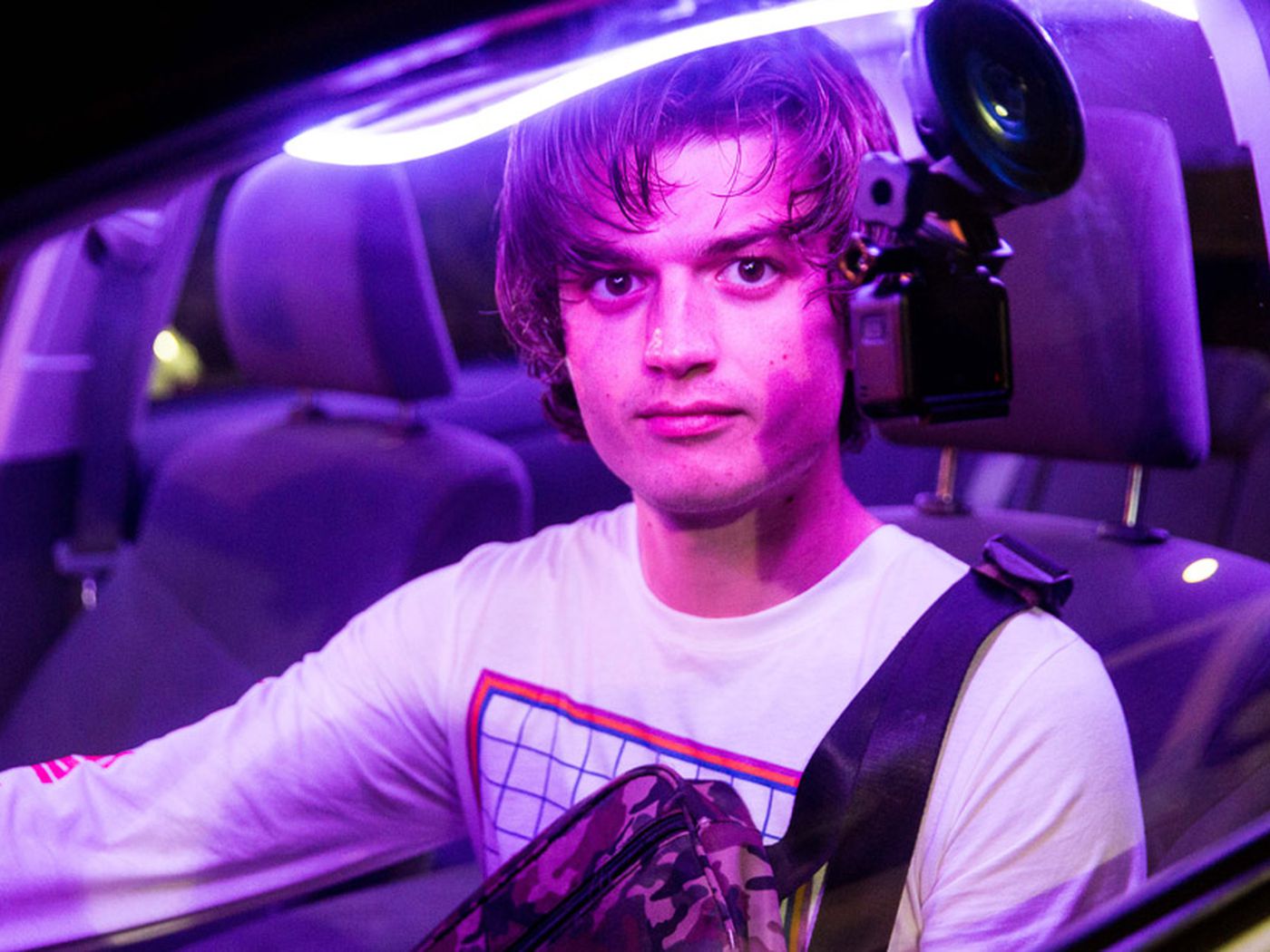
Joe Keery, “Spree”

Smith’s Verdicts:

Spree: ***

Rent-A-Pal: ***1/2

This past week, I caught up with three 2020 horror films. One was Freaky. The other two: “Spree” and “Rent-A-Pal.”

One film involves one of our favorite “Strange Things” actors as a cyber-serial-killer, and the other involves Wil Wheaton as one of the scariest villains of the past year. (Didn’t think that second one could happen, but here we are.)

“Spree” is an uneven but intriguing cyber-thriller told from the perspectives of different livestreams, one of which is hosted by a pathetic loner named Kurt (played by Joe Keery). Kurt is obsessed to the point of making it big as a large social-media presence with thousands of followers–he’s tried everything by this point to bring in the views and nothing seems to work for him (even when he tries interfering with the streams of his frenemy Bobby (Josh Ovalle), who’s a mega influencer). But now he has the answer to get everyone’s attention…

As a driver for a rideshare app called Spree, Kurt documents himself picking up passengers…and instead of dropping them off to their destinations, he murders them! At first, no one watching (the numbers aren’t even in the double digits) thinks it’s real; they think it’s an act, causing Kurt to get more extreme with his victims. And of course, all Kurt cares about is gaining more and more followers/viewers, so he does everything he can to up his game (and the body count).

The social commentary is obvious and the film sags in the middle act particularly, but director/co-writer Eugene Kotlyarenko uses dark humor and a darkly brilliant leading performance from Joe Keery to keep things interesting. “Spree” has enough clever tricks up its sleeve to keep cyber-savvy viewers invested.

Wil Wheaton in “Rent-A-Pal”–can this “friend” be trusted?

Now…as for “Rent-A-Pal,” I didn’t know anything before streaming it on Hulu recently, aside from Wil Wheaton is in it and some critics have praised it as one of the best thrillers of 2020.

I didn’t realize I was getting into this deeply disturbing, brilliantly crafted, and truly twisted character study of a lonely 40-year-old named David (played very well by Brian Landis Folkins) who…well, I’ll keep it spoiler free, but I’ll just talk about the story’s setup.

The film is set in 1990. David, a bachelor who cares for his Alzheimers-stricken mother, uses a video dating service to try and find a romantic partner, but to no avail. He then buys another videotape called “Rent-A-Pal,” in which its host, a seemingly nice, charismatic guy named Andy (Wil Wheaton), sits in the middle of the frame, talks directly to the viewer, and leaves in pauses to simulate a conversation. It doesn’t do much for David at first, but the lonelier he gets, he more into the tape he becomes. He’s soon able to partake in conversations with Andy, which leads to Andy being his confidant and his best friend.

And…that’s all I’m going to describe for you. The idea of this sad, lonely, depressed man taking comfort in a friendship through someone in a TV screen is interesting enough…but where it goes from there is riveting. I don’t even know who’s creepier here–David, for having this seemingly one-sided relationship with a videotape he watches repeatedly, or Andy, whose friendly demeanor and prerecorded phrases seem to have alternative meanings. I’m going to have to go with Andy as the scarier choice, mostly because we don’t know anything about the person who made the video in the first place, and that itself gets unnerving, the more I think about everything I saw in the film before. (Something else I like about “Rent-A-Pal”–there are no easy answers at work here.)

Both “Spree” and “Rent-A-Pal” feature unbalanced main characters seeking purpose and companionship, whether personal or virtual…but of course, they’re both horror movies, so you can expect some nasty business. Both films work as parables of such a concept, and I recommend them both (particularly “Rent-A-Pal”) for giving us unique, original ways of putting us in the heads of each of those disturbing individuals.

The Wretched (2020)

28 Feb

Smith’s Verdict: ***1/2

Reviewed by Tanner Smith

Man, I wish I had seen this in a theater with an audience!

“The Wretched” has all the moments where something scary happens, such as when the Nun pops up in “The Conjuring 2,” and some woman sitting near you exclaims “OH SH*T!!!”

But also, this movie gave me CHILLS!

“The Wretched,” directed by the Pierce Brothers (Brett and Drew), is about a teenage boy, Ben (John-Paul Howard), who notices strange goings-on in the house next door. The more he looks into it, the more convinced he becomes that there is an evil witch taking the form of the neighbor…

The creature itself is a scary creation, and the makeup is truly impressive. But it’s what it can do, and what we learn she can do as the movie progresses, that truly put me on-edge. How many people can the kid save from this thing? How many are going to fall victim? And late in the film, it becomes a one-on-one as the witch becomes all too aware of the kid’s suspicions and manages to make him to be the one to fear. I love stuff like that, especially in horror films, when you don’t know who’s safe and who isn’t. Certainly, this main character, who has enough teen angst that it’s like he’s in a YA novel interrupted by an ’80s horror movie, isn’t safe from pure evil.

This movie also taught me a very valuable lesson–if I hit a deer with my car, I won’t take it home to prepare it for dinner. (I couldn’t do that in an apartment anyways.) Pro tip: hit a deer, just leave it…because there’s a chance there’s a monster living inside of it that will take you over and destroy everyone around you. (Also, the guts might spill out over your driveway.)

Also, this horror movie has a real good twist!…I just wanted to bring that up because so many horror movies lately lack a real good twist!

I truly dug the hell out of “The Wretched.”

Horse Girl (2020)

28 Feb

Smith’s Verdict: ***1/2

Reviewed by Tanner Smith

I’ve seen this film three times on Netflix–I’m still not entirely sure I “get” it, but I am still intrigued by it.

“Horse Girl” is a strange……STRANGE film about a person who…is strange.

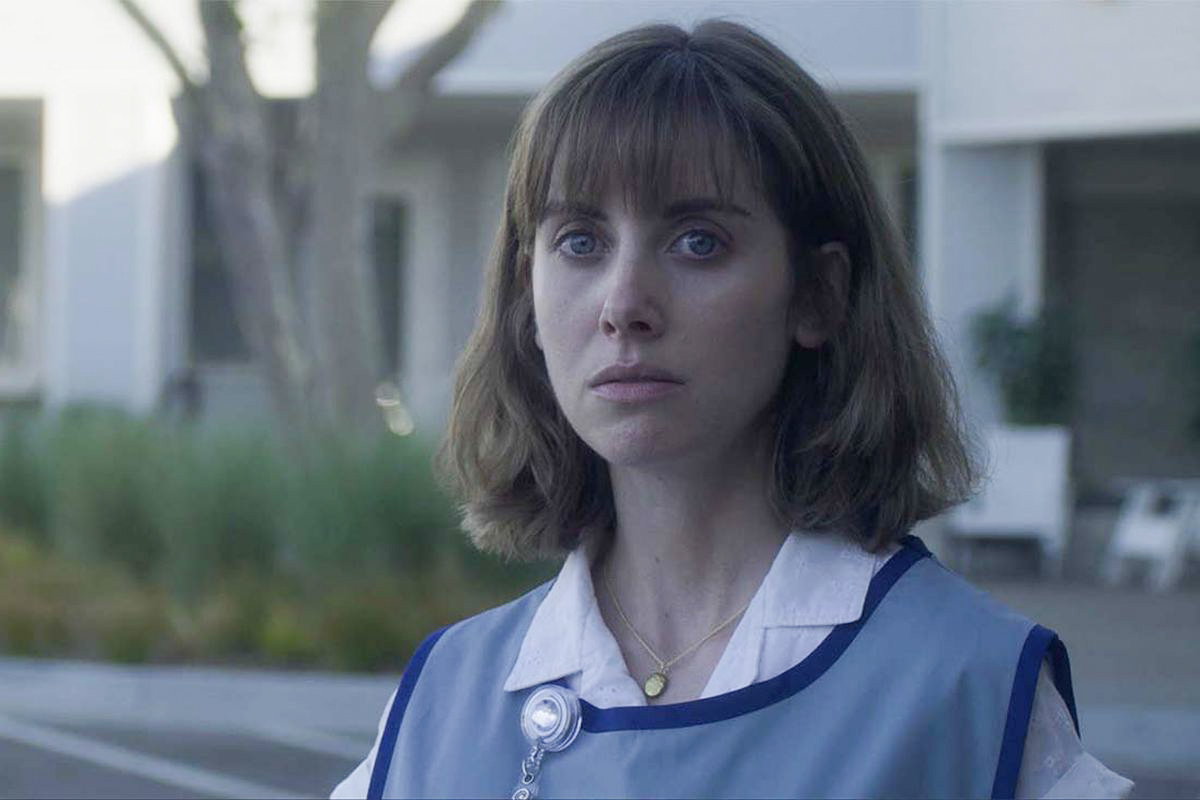
Alison Brie, who also co-wrote the film’s screenplay with director Jeff Baena, stars as Sarah. Sarah is sweet, polite, sensitive, and smart–she’s also socially awkward and tends to make those around her somewhat uncomfortable. Wonder if it has anything to do with these weird dreams that feel all too real. Or the lapses in her memory. Or the constant nosebleeds. Whatever the case, Sarah’s not doing so great right now. What could be the problem? Well, as Sarah digs deeper into her own issues and her family’s mental health history, she starts to suspect there may be something otherworldly happening all around her…

It’s right about here where a low-key indie character study of a disturbed awkward misfit takes a turn for the weirder. For example, what if Sarah’s dreams about possible alien abduction are accurate? If that’s true, who can she truly trust? She goes from a little off to REALLY disturbed as neither she (nor we) knows what’s going on here!!

I still don’t know for sure–was that real? was it all in her head? It’s a fascinatingly abstract, surreal look into this person’s life made even more fascinating by the way Brie presents the character. This story was inspired by Brie’s real-life family’s history of mental health issues and her own experiences with depression. The more I think about what Brie was intending to accomplish with her co-writer/director Jeff Baena, the more intrigued I am by their film. I haven’t really been a fan of director Baena’s work–I didn’t like “Life After Beth,” though “The Little Hours” is growing on me a bit. “Horse Girl” is his most accomplished work. It’s also Alison Brie’s most accomplished work as an actress–I loved her in shows like “Community” and movies like The Disaster Artist and The Rental; this is the role she’s been working towards.

Whatever you believe is real or not in “Horse Girl,” just keep telling yourself…well, at least Sarah believes it’s real.

I know, this isn’t much of an analysis–maybe in the future, however, I’ll try my best with a spoiler review.

Freaky (2020)

28 Feb

Smith’s Verdict: ***1/2

Reviewed by Tanner Smith

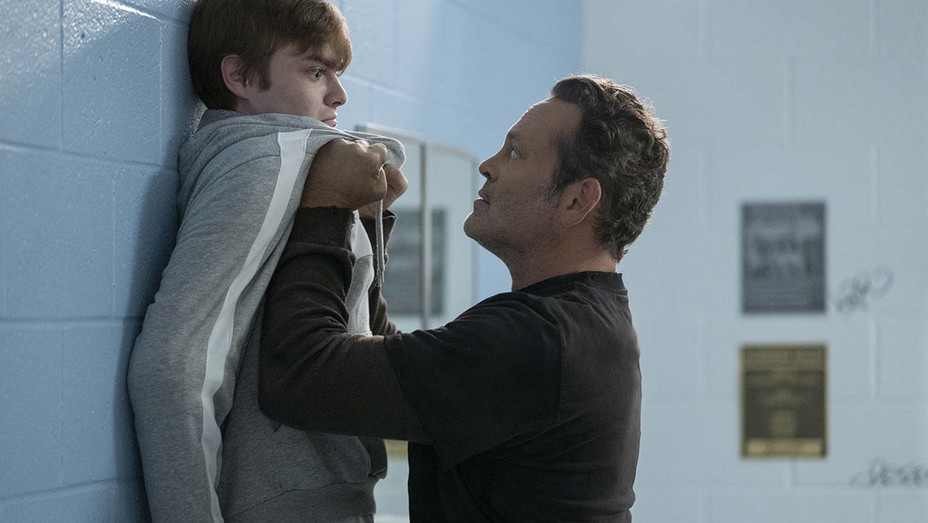
It’s time once again for director Christopher Landon to put a satirical horror spin on popular cinematic comedy! He did it before with the time-loop concept of Groundhog Day to make the fun, clever Happy Death Day movies–this time, he takes the body-swap concept of “Freaky Friday,” adds doses of Friday the 13th, and gives us “Freaky Friday the 13th”…or just “Freaky.” Thus results in a body-swap comedy with a moderate-to-high body count and a fresh take on the subgenre that entertained me throughout the 100-minute running time.

Vince Vaughn may not have played a convincing Norman Bates (as evidenced in the unfortunate 1998 “Psycho” remake), but “Freaky” makes a compelling case that he could make for a terrifying Jason Voorhees. In the bitingly satirical cold open of the film, Vaughn is totally convincing as a silent small-town serial killer known as the Blissfield Butcher (who even has a mask that looks very similar to Jason’s traditional hockey mask), who slaughters horny, stoned, drunken, idiotic teenagers in spectacularly gruesome fashion.

(Btw, unlike the PG-13-ified “Happy Death Day” movies, director Landon is given both an R rating and free reign to give us some truly graphic kills–this is not for the faint of heart; a lot of this material is for horror buffs.)

From that murder spree, the killer obtains a mystical cursed Aztec dagger (known as “Le Dola”). We’re uncertain of what its powers are until the Butcher advances towards his next would-be victim: a shy, wallflower high-school girl named Millie (Kathryn Newton). The Butcher uses the Dola to stab Millie, which results in a supernatural switching of minds and bodies. So, as Millie, having barely escaped the killer’s attack, awakens the following morning (which happens to be Friday the 13th, naturally), she discovers that she now looks exactly like the Blissfield Butcher. And vice versa, as the Butcher awakens in Millie’s body and decides to go to school and do some unsuspected killing!

Millie is able to convince her best friends, Nyla (Celeste O’Connor) and Josh (Misha Osherovich), that this 6’5″ hulking middle-aged man who looks like a killer is actually their bestie in this body (though not without some wacky hijinks in the funniest scene of the movie), and together, they realize they have to reverse the process before midnight or else the change will be permanent. So now they have to retrieve the dagger from police evidence storage and stop the Butcher (in Millie’s body) from killing more people before it’s too late.

Of course, you know people are going to die anyway–as fun as the general concept of this story is, it is fun to go back to the old-fashioned horror-movie trope that among the bodies waiting to be piled up are those who are just asking for it, such as the idiot teens in the opening, some rapey misogynistic jocks, and probably the worst teacher you could have in high school (played by Alan Ruck, Cameron from “Ferris Bueller’s Day Off”). The way many of these people are killed are almost too good for them. (As a side-note, it’s also funny that this determined killer now has to put up with a petite, weaker new body.)

“Freaky” has a lot of fun with its horror and comedy, but it also has a heart to it as well. In particular, there’s a moving scene in which Millie, in this new body, finds a way to really talk to her troubled mother (Katie Finneran). And that’s not even the best scene in the film–that comes later, when Millie’s crush, a nice football jock named Booker (Uriah Shelton), understands that even as Millie has a new body, her mind is still intact. Whether this was the intent or not, “Freaky” was able to be a new modern movie that commented subtly on concepts such as gender identity.

Director Christopher Landon clearly has fun mixing genres, and I’m curious to see what else he has up his sleeve. (Maybe he could make a horror version of “Anchorman” or “The Hangover” next.) With a talented cast (including Vaughn and Newton each having fun with their dual roles) and every rule in the horror-movie handbook as well as a clever script co-written by Landon and Michael Kennedy, “Freaky” doesn’t break a lot of new ground in either the horror genre or the body-swap subgenre but it is still a hell of a fun time.

Yes, God, Yes (2020)

3 Dec

Smith’s Verdict: ***1/2

Reviewed by Tanner Smith

For every high-school teenager’s sexual awakening, there’s a movie made to exploit it for broad comedic purposes. But there’s a film that handles it differently. While there are funny moments in it, it’s a surprise to see that it’s handled very delicately. It’s a sweet and sincere little indie gem that knows how difficult it can be if you’re not sure about whether or not what you’re feeling is good or bad.

The film’s title… “Yes, God, Yes.” OK, it doesn’t sound very delicate, but trust me when I say this film, about a sexually-awakened teen, takes teens more seriously than others.

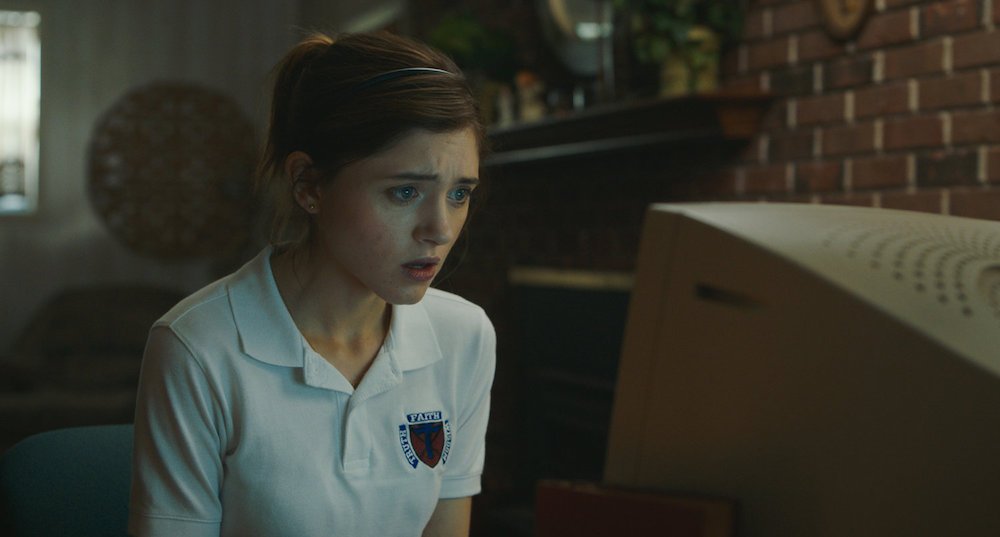
Natalia Dyer of “Stranger Things” fame is 25 years old and probably going to play high-school-aged characters until she’s 35-40. She absolutely shines here as naive, innocent 16-year-old Alice, who is sexually inexperienced–that’s why when there’s a rumor spreading in the halls of her strict Midwestern co-ed Catholic high school that she performed a sexual act for a male classmate, she has no idea what anyone is talking about. (It’s not true–it’s just a rumor.)

A funny running joke is she quietly tries to figure out what “tossing the salad” means and she doesn’t get valid answers until near the end. I should also mention that this film takes place in fall 2000, so she doesn’t have a smartphone to give her a proper definition of the term.

Yep–2000. Alice goes on AOL chat rooms. She has a contraband cellphone that she mostly uses to play that addicting “snake” game we all remember. And she watches “Titanic” on VHS–actually, to be specific, she watches the making-love scene of “Titanic” and rewinds it again because she’s so fascinated by it.

While in one of the chat rooms, she comes across provocative photos of a couple having sex. This leads her to discover masturbation for the first time–she’s surprised to learn the effect of it and even more surprised that she enjoys it.

But she’s brought up to believe that it’s a sin. In school, she’s taught that any sort of sexual activity outside of marriage is punishable by eternal damnation. She doesn’t know what to think of everything she’s discovering except that she’s curious about it. When the rumor that she hooked up with classmate Wade (Parker Wierling) gets her slut-shamed, she seeks to redeem herself by attending a school camping retreat that she hopes will put her back on a pathway to righteousness. But while she’s there, she learns more ways of pleasuring herself, develops a crush on hunky senior Chris (Wolfgang Novogratz), and learns something about a seemingly angelic senior (Alisha Boe) and even about hip, 30something priest Father Murphy (Timothy Simons) that has her asking even more questions.

By the way, if you’re wondering, none of the scenes in which Alice practices masturbation are portrayed in graphic fashion. Writer-director Karen Maine, who wrote the film as a semi-autobiographical account of her own experience as a youth, cares more about how she feels rather than what she feels, which is a huge difference and makes the film all the more refreshing for it.

I’m not sure how Catholics would take to this material, but I’m a Christian and I found “Yes, God, Yes” to be smart, engaging, and quite funny–especially when Alice visits a nearby bar and has a heart-to-heart with lapsed-Catholic lesbian (Susan Blackwell, wonderful), who teaches her more valuable life lessons than any of her teachers/mentors had attempted. It leads to a wonderful scene near the end in which Alice gives a speech (it’s not forced–everyone has to express themselves at this retreat) about how we shouldn’t feel the need to hide who we are, because Jesus himself would want everyone to treat each other with respect and honesty.

And that about sums it up.

Side-note: This may or may not be an odd aspect to praise about a film, but I admire that this film is only 77 minutes long (including credits). It’s as long as it needed to be, and I don’t know why certain other films feel the need to be overlong.

The Rental (2020)

2 Dec

Smith’s Verdict: ***1/2

Reviewed by Tanner Smith

Thanks to today’s modern conveniences, we can go online and check for highly positive ratings on a restaurant or a hotel or an Airbnb homestay (instead of just take a chance on it regardless of customer reviews)…but we forget that there’s always that one chance that something will still go terribly wrong with our own experiences there.

How bad could it be? Well…worse than a one-star rating would suffice, let’s just say.

The characters in the low-key, chilling, stylish, and witty horror film “The Rental” are a small group of people who rent a large remote seaside dwelling for the weekend. Nothing wrong with a little time away from home…but this is a horror film, so even if they don’t know something’s bound to go horribly wrong, we sure do.

Directed by Dave Franco (brother of James and actor in films such as The Disaster Artist), making his feature directorial debut, and co-written by Franco and mumblecore king Joe Swanberg (who directed Franco in the Netflix series “Easy”), “The Rental” is very sly in setting up these four main characters as real people with moral dilemmas and easing the audience into the terror that is to come. Without giving away many particulars, lest I spoil the fun of discovering them for yourself, it begins as two couples–Charlie (Dan Stevens) and his wife Michelle (Alison Brie), and Charlie’s brother Josh (Jeremy Allen White) and his girlfriend Mina (Sheila Vand), who is also Charlie’s business partner–take a trip to this house on the Oregon coast for a weekend getaway, get high on ecstasy the first night, and, uh…Mina and Charlie hook up in the shower.

So far, we’re a half-hour in and “The Rental” just seems like an ordinary indie “dramedy.” It isn’t until about 10 minutes later that a chilling discovery is made that could kick things into high tension.

Oh, and why don’t Charlie and Mina call the police when they make this discovery? Because then, it would expose their little fling to Michelle and Josh! Priorities, of course.

That’s about as far as I’m going to go in describing the story of “The Rental” because going into the more chilling aspects of it cold is part of the fun, as things go from relaxing to uncomfortable to straight-up nightmarish for these people who don’t even suspect that there’s far more here than meets the eye. When answers are revealed, some may be turned off due to its ability to negate many other parts of the film, but that’s another reason I liked it–it uses an old-fashioned Hitchcockian approach to unraveling this chilling mystery.

I’ll sum up my final thoughts: The actors are solid, their characters are well-defined, Franco proves to be a capable director, the cinematography from Christian Sprenger captures the perfect establishing moods for both day and night, and what begins as an effective ensemble character piece smoothly descends into a twisted horror film. All of that, plus the creepiest ending (or rather, ending-credits) I’ve seen in a long time, makes “The Rental” more than worth recommending.

All the Bright Places (2020)

1 Dec

Smith’s Verdict: ***1/2

Reviewed by Tanner Smith

There’s a film on Netflix that tackles grief, bipolar disorder, and suicide…but this isn’t “13 Reasons Why.” “All the Bright Places,” based on a YA novel by Jennifer Niven, is not an easy film to sit through, as it takes these issues very seriously. But it is an important film to get through because of that same reason. (The producers even went out of their way to list many helpful resources on the film’s website. There’s also a note during the end credits: “This film is dedicated to those who have been impacted by mental health concerns, suicide, or grief. If you’re struggling or know someone who is, you can find more resources at allthebrightplacesfilm.info.”)

Netflix was already in hot water because “13 Reasons Why” premiered with a depiction of a teenage suicide in graphic detail, so much so that they had to edit that scene out two years later. In adapting the book “All the Bright Places” into a film and dealing with teenage depression and suicide, Niven, her co-screenwriter Liz Hannah (“The Post,” “Long Shot”), and director Brett Haley (Hearts Beat Loud) agreed with Netflix that they need to take extra care while presenting tragedy as earnest as possible. (They even brought mental health professionals on board as consultants.)

Btw, there are mild spoilers from this point forward.

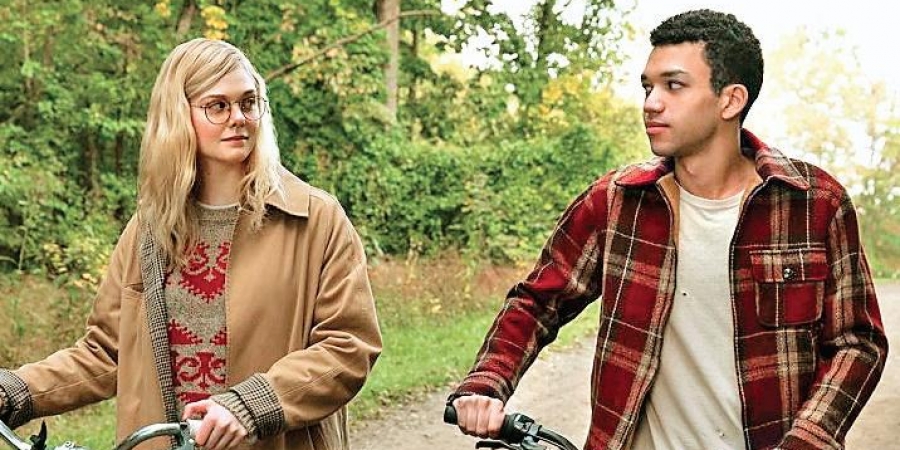
The film is about two high-school teens, Violet (Elle Fanning) and Finch (Justice Smith), who are each grappling with their own personal demons. Violet has survivor’s guilt after surviving a car accident that killed her sister, and Finch has manic episodes, which puts him on probation in school (where students refer to him as “the Freak”). When he first meets her, she’s standing at the ledge of a bridge, contemplating suicide.

Finch decides to help heal Violet, and as they work together on a class project, his advances work in helping her come out of her shell. But when she tries to help him in return, he doesn’t go for it. And things get more complicated from there…

If you’re looking for a typical Netflix teen romcom, check out The Half Of It or “To All the Boys I’ve Loved Before” or “Candy Jar,” because “All the Bright Places” gets pretty heavy.

There is a death. It occurs off-screen, leaving it open to our interpretation what exactly happened, as details about the death are left purposefully vague. Was it suicide? Was it an accident? While “13 Reasons Why” delves deep into meanings about why its suicide happened, “All the Bright Places” asks us to open a conversation about its tragedy ourselves. Why? Because what happened and why it happened is never as simple as we might like to think.

Some of this is even explained in more detail in the book, but author Niven agreed some things should be left vague in the film. “All the Bright Places” is not manipulative or exploitative in the slightest–it was made by people who genuinely wanted to help other people.

And for that reason, it’s one of my favorite films of the year.

Spontaneous (2020)

8 Oct

Smith’s Verdict: ***1/2

Reviewed by Tanner Smith

It’s just a normal day at school until something totally unexpected and truly terrifying happens when a student suddenly dies. No, it’s not a school shooting, though one parent admits to fearing that was the case upon hearing of the tragedy. Instead, it’s…spontaneous combustion.

That’s right–a high-school senior just suddenly explodes like a balloon filled with blood, sending the whole town in a panic. No one knows why it happened or even if it will happen again. But things get even scarier when it does happen again…a lot. More of the upperclassmen at Covington High School are randomly exploding without rhyme or reason. The crowd is celebrating a high-school football game–one of the players goes kaboom! Our young protagonist enjoys a nice drive with friends and then suddenly…well, you get the idea.

That’s the setup for Brian Duffield’s “Spontaneous,” a terrific dark comedy with plenty of surprises in its cynical humor and (I’m not kidding here) its smart insight in how modern-day teenagers react to tragedy around themselves. As funny as this film is (and it’s very funny at times), it’s also quite moving and sincere when it needs to be.

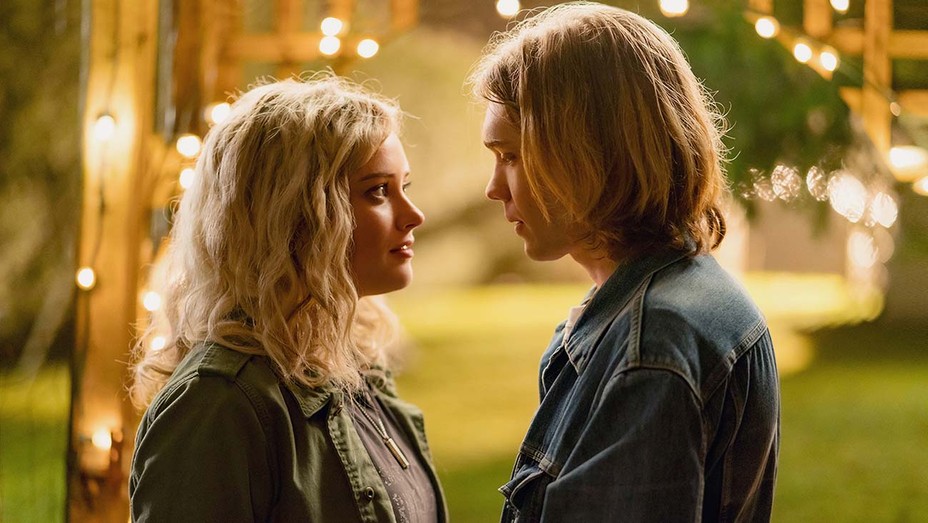
After the first tragic combustion, a kind boy named Dylan (Charlie Plummer) sees this as a sign to live life to the fullest, which not only includes buying his own car (or in this case, his own milk truck–how random) but also revealing his true feelings to his crush from afar. That would be Mara (Katherine Langford), the film’s sassy, sarcastic narrator who doesn’t take everything seriously, let alone her own future. Not even the explosions of her own classmates seem to faze her all that much–she and her bestie Tess (Hayley Law) can only comment on how weird it all is.

Anyway, after Dylan starts up conversation with Mara (by sending “Dick” pics of Richard Nixon–“Sorry if it’s crooked,” texts Dylan), they start hanging out together and connecting like they wouldn’t have before. Thus starts a relationship that continues even when the rest of their class is in quarantine while the government tries to come up with some kind of cure to prevent further kids from blowing up.

After that, well…I’ll leave that for you to discover. I was surprised by how much I enjoyed this film, which is not only very funny in a dark, cynical way (the way that Duffield, the writer of the Netflix bloody gem “The Babysitter,” could deliver–and this is his directorial debut)…but it’s also very insightful and pretty moving, again, when it needs to be. When you think about these kids who think nothing bad can happen to them and their whole lives are ahead of them and then suddenly this unexplained epidemic comes along, think of how much anxiety and fear comes from such a wakeup call.

(Note: It’s amazing that this film came out when it did, considering it was made two years before the COVID-19 global pandemic. You can make many parallels to it, strangely.)

Mara goes through the stages of it all–jokes about the situation, then denial, depression, lashing out irrationally, everything–and it’s an intriguing, compelling character growth that comes out of it. All I’ll say about the ending is that I think it’s perfect for this material. It’d be somewhat preachy if it weren’t so damn funny.

What helps elevate this film from typical “cult movie” status, which I think it’s destined to become*, is the interesting relationships that many characters have with each other. Mara and Dylan are cute, funny, and lovely together and they complement each other perfectly. Mara and Tess are a wonderful duo of best friends (the best “best-friendship” I’ve seen in a long time), as their witty banter develops into something more as the film progresses and they fear one or the other might explode. And Mara also has a nice relationship with her parents (played very well by Piper Perabo and Rob Huebel)–funny, loving, obviously concerned, and even going as far as to allow their daughter to do drugs with them. (They know she’s not good at hiding her marijuana.)

“Spontaneous” could have just been your typical cynical dark comedy just to provoke a shocked response from the audience–it’s more than that. By the end of the film, I’ve laughed, my heart leapt for these characters, I bought the romance, and I believed in what the film got across in the end. This is an ambitious dark comedy that pays off in a superb way.

*There are already plenty of reviews for “Spontaneous” that reference an obvious comparison: the ’80s cult dark teen comedy “Heathers” once or twice. I personally feel like this film is more mature, but don’t quote me on that.

Under the Sun (Short Film)

7 Sep

Smith’s Verdict: ***1/2

Reviewed by Tanner Smith

Sad as it is, we still need more movies serving as anti-prejudice parables because there are still many groups of people in today’s society that are victimized and often attacked by other groups of people who have their own idea of “normal.”

Take the 28-minute short film “Under the Sun.” What is the conflict? Well, it’s an unspecified time in the future–you can tell because it’s set in a bleak city that looks like sunset all day every day, people don’t often dress in color, and there are glitchy florescent advertisements on wall screens. No wonder people are miserable…oh, and there’s also a breakthrough in medical science that allow people to undergo surgeries that result in cybernetic augmentations (while their human minds remain intact).

Dem derrty rerberts dernt berlerng wit’ uss nerrmal ferrks! Subtitled: “Them dirty robots don’t belong with us normal folks!” That’s over-the-top hater speak for “I do not particularly care for those with that kind of alteration.”

“Under the Sun,” written and directed by Kansas City’s Samuel Tady, conveys this idea very effectively, with good commentary and skillful filmmaking. (For a short sci-fi film made on the cheap, the production values are pretty impressive.) We do see this kind of thing happening today, with violent hate groups and casual bystanders (you know, the kind that “support” a cause without actually doing anything), and this film comments on the complicated issues of all sides through a science-fiction parallel–one in which the remaining humans who haven’t been augmented look upon the half-cybernetic individuals as a threat to society and thus treat them like second-class citizens.

Solymar Romero plays Meadow, a woman with a replacement robotic arm. Her journey gains interest in an audience because she feels halfway between human and cybernetic. When she sees a cybernetic person being attacked by a hate group, she turns away. When she sees the story of his attack on the news, as the victim’s cousin Dominic (Alfredo Mercado) expresses his disdain for how the situation is being handled, she starts to listen. After meeting a new augmented friend, Zetta (Valeri Bates), and having her eyes opened wider by everything happening around her, she learns there’s a time when something has to be done about current wrongdoings.

The film is surprisingly rich with character. (I shouldn’t say “surprisingly,” but I’ve seen many sci-fi stories where characters are more of a side thing to the environments they inhabit.) I’ve already mentioned Meadow, Dominic, and Zetta, all of whom are interesting protagonists to follow. But there’s also the group of anti-cyborg demonstrators, led by Daina (Meredith Lindsey) and Nick (Samuel Kelly), who take a new recruit: James (Zachary Weaver). We don’t know where their hatred of cyborgs comes from, but I can’t pass them off as one-dimensional violent bully types because there are sadly more people like this in the real world (again adding to the film’s social commentary, whether the augmentations stand for race, disability, sex, or whatever). Of the trio, James’ story is predictable but still well-handled due to a solid performance from Weaver–when he sees the extent of what these people do in order to spread their anti-cyborg message, he starts to question his morals/ethics. He’s an angry college-aged kid trying to find a place in this world, so he’s at that point where he needs to figure out what to do. Predictable, yes, but it works.

There’s also a character who represents the type we know all too well: the well-meaning but socially-unfocused type of person who will voice their support without actually taking the time and effort to do something for a certain group or cause. (Instead, they use semi-sincere statements such as “I have a friend who’s [such-and-such]” or whatever makes them look good.) That character is played by Meadow’s all-human friend Stella (Debbie Diesel). Her interaction with Dominic, whom she saw on TV news, is the most priceless moment in the film.

Stella also has a brilliant payoff at the end, in which all key characters (Meadow, Zetta, Dominic, James, Daina, Nick, Stella) are fatefully brought together to partake in a climax in which there is a clear winner and loser…or is there?

“There’s thousands like us,” one of the villains states, regarding the anti-cyborg demonstration. True, but A) who exactly is “us”? And B) There are more of the rest of us than one would like to think. It’s just a matter of who stands up first (or next). I think that message is at the core of “Under the Sun,” and I recommend the film for its well-meaning, imaginative, and powerful storytelling.

Check out the film on YouTube.

The Half Of It (2020)

13 Jul

Smith’s Verdict: ***1/2

Reviewed by Tanner Smith

I don’t review enough Netflix teenage romcoms, but I have seen my fair share, from the good (“To All the Boys I’ve Loved Before”) to the mediocre (“Tall Girl”) to the pretty-bad (“Sierra Burgess is a Loser”) to the laughable (“The Kissing Booth”). Why review those movies when I could review the one Netflix teen flick I think stands high above the rest? So let’s talk about Mindy Kaling’s “Never Have I Ever”…

I apologize—that’s a series, and I rarely review series. You want my review of that? Here it is: “Never Have I Ever” is the best Netflix Original teen romcom yet. There you go. Now let’s talk about writer/director Alice Wu’s “The Half Of It,” which is a step above “good,” which means it’s pretty darn good. 

“The Half Of It” is Wu’s queer take on the “Cyrano de Bergerac” story. And when I first heard that, I groaned because another Netflix teen romcom (“Sierra Burgess is a Loser”) already used similar elements, and not to good effect. But to quote the late Jean-Luc Godard, “The best way to criticize a movie is to make another movie.” Thus, “The Half Of It” succeeds where the other movie failed. (I know there are fans of “Sierra Burgess,” and I don’t want to dump all over that movie so much, but it just didn’t work for me at all.) 

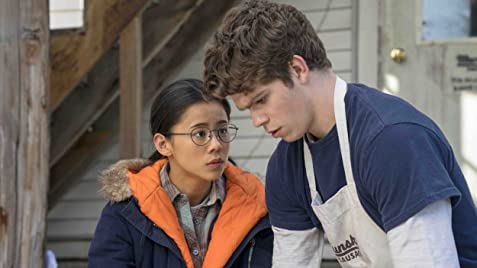
“The Half Of It” stars Leah Lewis in a star-making performance as shy, awkward, intelligent high-schooler Ellie Chu, whom her classmates pay to write their essays for them. Because she’s so good with words, a goofy football jock, Paul (Daniel Diemer), hires her to write a love letter to his crush, the pretty popular girl Aster (Alexxis Lemire). Though reluctant at first, she agrees to help him woo her. In the process, Ellie and Paul become good friends…which makes things very difficult as she also develops romantic feelings for Aster. 

That’s basically the gist of it. Even though many parts of “The Half Of It” feel familiar, the way Wu plays them does not. From the visually intriguing opening scene, which illustrates the idea of a “soul mate,” we already know we’re in good hands. Wu also more than enough care for her characters to make them more than the archetypes we’ve read about in young adult novels (or seen in young adult novel-to-film adaptations). 

“The Half Of It” is a film about desire. Ellie hasn’t felt anything towards another person because she’s so closed-off—and now, she experiences friendship with Paul and a growing longing for Aster. Paul feels something for Aster, even if he isn’t entirely sure what it is (though he’s pretty certain he’s in love—a lot of us remember what that high-school self-assurance is like). Aster is trapped in a constant loop with the in-crowd on campus, and thus isn’t allowed to express her true desire just yet. (Again, it’s high school—you do what you can do.) Aster kind of reminded me of Lea Thompson’s character in the John Hughes dramedy “Some Kind of Wonderful,” struggling between placement in the high-school hierarchy and truly expressing herself.  All three key characters are well-developed and also wonderfully acted. 

Wu’s script and direction, which I’m guessing (having not read many articles about the making of the film as of now) comes from a place of semi-autobiographical truth, are tender-hearted and result in numerous scenes that made me feel for these people. Another character my heart reached out to is Ellie’s father, played by a wonderful Collin Chou—even before his inevitable big speech in the final act (because these movies always have one), I loved this guy.

Speaking of speeches, there’s one scene that felt false to me. (And it’s not the scene involving a character’s homophobia—I think given the film’s small-town setting, there were enough subtle touches to set that up.) It’s a scene set in a church where our key characters each get a chance to give speeches about what they’ve lied about and what they’ve learned and so on. It’s a “courtroom-outside-a-courtroom” moment, which usually don’t work. However, I’m willing to give it a slight pass because I found the payoff to be pretty hilarious, resulting in my favorite line, “Now THAT’s divine intervention!” (That line, by the way, was delivered by an effective Becky Ann Baker as a teacher. As someone who grew up with “Freaks and Geeks,” it was great to see her in another teen flick.)

But even with that bit of forced melodrama, I still very much enjoyed “The Half Of It.” I loved what these characters had to say to each other (whether it’s about artists or loneliness or God or even something called “taco sausage”). I loved Leah Lewis in the lead role. I loved how Wu was able to turn the small-town setting into its own character. And with the exception of the church scene, I also loved how so many issues were handled with just the right touches. I haven’t seen Alice Wu’s previous film, “Saving Face,” made 16 years before this one. I’ll happily check that one out, as well as whatever Wu delivers in the future.