Archive | May, 2021

My Favorite Movies – Old Yeller (1957)

17 May

By Tanner Smith

Poor Phoebe didn’t learn what happens to Yeller until she was all grown up. (She also didn’t see “Brian’s Song” or “Rocky” until after seeing the ending of “Old Yeller,” which totally breaks her spirit.)

Btw, that’s one of my favorite “Friends” episodes–“[‘It’s a Wonderful Life’] just kept getting worse and worse, it should have been called, ‘It’s a sucky life and just when you think it can’t suck any more it does.'”

I grew up with “Old Yeller.” When I was a little kid, something about it just appealed to me. Whether it was how people lived on the frontier in those days, or the adventures Travis and Yeller went on together, or the trouble bratty Arliss got into playing with wild animals, it was one of my absolute favorites as a kid. As an adult, it’s still one of my top 100 favorites.

The film works wonderfully as a slice of life. There’s no villain, no save-the-farm stuff, nothing like that–it’s just about a family who gets a dog that helps the oldest son, Travis (Tommy Kirk), learn the tough choices of growing into adulthood. That’s all it needed to be, and it succeeds very well as being exactly that.

It’s Travis’ coming-of-age story, as he has to accept the responsibility of helping his mother (Dorothy McGuire) look after the farm and his little sh*t of a brother (Kevin Corcoran). Everyone keeps piling up against him, but he keeps going because he wants the responsibility–he wants to become a man. But he also learns that the road to becoming a man has complicated turns, such as when to be afraid of certain situations so he can know which precautions to take, and…when to fire the gun and when to put the gun down….

Yeah…let’s talk about the ending a bit. SPOILER ALERT! When I was little, it was “Old Yeller’ (and Mufasa from “The Lion King,” which I’ll talk about sometime) that introduced me to death. And as far I know, it makes everyone cry. Every time I watch this film again, I start to get emotional at an earlier point before the inevitable end–it’s when Travis goes to see Yeller, who’s been locked up due to a rabies scare, and Yeller begins snarling at him. This is not Travis’ best friend anymore. That’s what gets me each time: the fact that Travis starts off in denial and then walks off to think about what he has to do…and then he has to do it.

What can we learn from this? What does Travis learn from it? When his father (Fess Parker) comes home from the cattle trail and has a sit-down with him, he lays down the overall meaning of it all for us–there will always be tough, depressing moments and there will always be happy, joyous moments. “You can’t afford to waste the good part frettin’ about the bad. That makes it all bad.” That’s my favorite scene–it’s a wonderful father-son moment.

This is a film about both the joys of life and the difficulties of life, and it’s perfect to show to kids. I wonder if Phoebe ever showed it to her kids…

My Favorite Movies – The Sandlot (1993)

17 May

By Tanner Smith

“The Sandlot” is a movie that I’m sure someone will start a fight about if someone else says it’s not an American classic. And I’ll back the first person up.

I’m going to be totally honest here–when I was a little kid, watching this movie about kids playing baseball was more fun to me than actually playing Little League baseball. (I mean, I like baseball–it’s America’s pastime. I just was never any good at playing it.) So why did this movie speak to me back then and why does it still speak to me now?

The simple answer is because of the kids.

These young actors are GREAT together. The way they pal around, trade insults, go on misadventures, and of course play ball together–you just feel like this is a gang of friends just having a great time. What especially makes it work is that they behave like real kids. When you have a film that looks back on childhood memories, it’s so easy to turn the children into idealized versions of themselves where fun little moments are suddenly overly whimsical, making for a certain unidentifiable nostalgia. (I know that’s how it was done in “A Christmas Story,” but that’s part of what made that film so funny.)

You can identify with Smalls, Benny, Ham, Squints, Yeah-Yeah, Denunez, Bertram, Timmy, and Tommy (you’re damn right I remember all their names!!) because they feel like real kids–not romanticized, angelic memories of BEING a kid.

That’s why this film is as cherished and beloved as it is (even by MLB members–the 25th anniversary reunion was even held at Yankee Stadium!)…and then of course, there are all these quotable lines:

“THE GREAT BAM-BIN-O!”
“For-ev-er!”
“You play ball like a GIRL!!!”*
“You think too much–bet you get straight A’s and shit, huh?”
“L-7 weenie!”
And of course, “You’re killin’ me, Smalls!”

I also credit this movie for the reason I never once tried chewing tobacco.

Here’s a random piece of trivia: in the original screenplay, titled “The Sandlot Kids,” the reason Benny invited Smalls to play on the sandlot was because he thought his stepfather abused him–Benny witnessed the two playing catch and saw Smalls get hit in the eye and jumped to the wrong conclusion. No wonder Benny risked his life to get the stepdad’s ball back–he thought he’d kill Smalls otherwise!! Pretty dark, eh?

My favorite scene: the series of events in which the kids try to get the Babe Ruth autographed ball back from the yard guarded by The Beast and they try all kinds of harebrained schemes. I just love that THIS is the conflict for the back half of the movie and not some big game they have to prepare for.

There’s only ONE baseball game played throughout the entire movie, and that’s over and done with in just a few minutes! I love that. The rest of the baseball-playing is just them practicing and scrimmaging just for love of the game, which is ultimately refreshing.

*That’s the one funny moment in the otherwise deplorable “The Sandlot 2,” when they throw that line back at the sandlot kids, one of whom is a girl who exclaims, “Ex-CUSE me?!”

My Favorite Movies – The 40-Year-Old Virgin (2005)

16 May

By Tanner Smith

I’m going to begin this one by mentioning my favorite scene because it’s seriously, undoubtedly, unquestionably the movie scene that makes me laugh the loudest!

It’s the body-waxing scene, which just thinking about it makes me crack up. This was originally written as a brief part of a “makeover” montage, but the idea of Steve Carell getting his chest waxed for real was too good of an idea to pass up. Damn right it was! Carell’s reactions upon painfully going through this process, as well as the reactions of everyone watching him, are more enough to make me laugh out loud…but it’s when we see the aftermath that I just SHRIEK with uncontrollable laughter!

I love watching the behind-the-scenes doc extra about the making of this scene because it reassures me that nothing about it was faked.

OK, so it’s a hilarious scene. What makes the movie, “The 40-Year-Old Virgin,” overall so special?

For one thing, there are plenty more funny moments, such as exactly how Andy’s (Steve Carell) friends (Romany Malco, Paul Rudd, Seth Rogen) find out Andy’s a virgin (because he compares a woman’s breast to “a bag of sand”), Andy’s attempt at “dating” himself, his dangerous drive home with a drunk girl (Leslie Mann), difficulties with condoms, Jane Lynch as Andy’s boss who introduces the term “f***-buddy,” and unconventional dating advice when trying to pick up Elizabeth Banks as a horny bookstore employee.

A lot of the comedy is sexual and apologetically R-rated, and it just keeps coming with gag after gag–even when a gag fails, it’s quickly forgotten about.

But that’s not the main reason “The 40-Year-Old Virgin” is one of my favorites (it’s a good reason, but there’s more to it than that). What truly stands out about “The 40-Year-Old Virgin” is that it’s more like a bait-and-switch–you come in for the hilariousness…and stay for a genuinely touching love story.

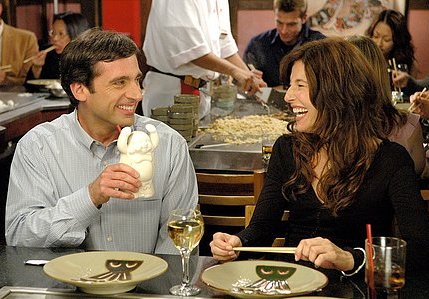
No joke–when shy, sincere, innocent Andy begins dating sweet-natured Trish (Catherine Keener), it’s beautiful. These two are freaking precious together! There’s great affection felt between the two, and it’s clearer to Andy (than it is to his buddies who have been trying to get him laid) why he’s been waiting so long to have sex–as corny as it sounds, he was waiting for the right one.

If there’s anything better than a comedy that can make you laugh, it’s a comedy that can make you feel.

One last thing I’ll say about it is that sometimes editors know what they’re doing. The “unrated” DVD version of “The 40-Year-Old Virgin,” which features about 17 additional minutes of footage, just isn’t as funny. It feels like filler and hurts the pacing.

The original theatrical “rated” version, however? One of my favorite comedies of all time.

My Favorite Movies – (500) Days of Summer (2009)

16 May

By Tanner Smith

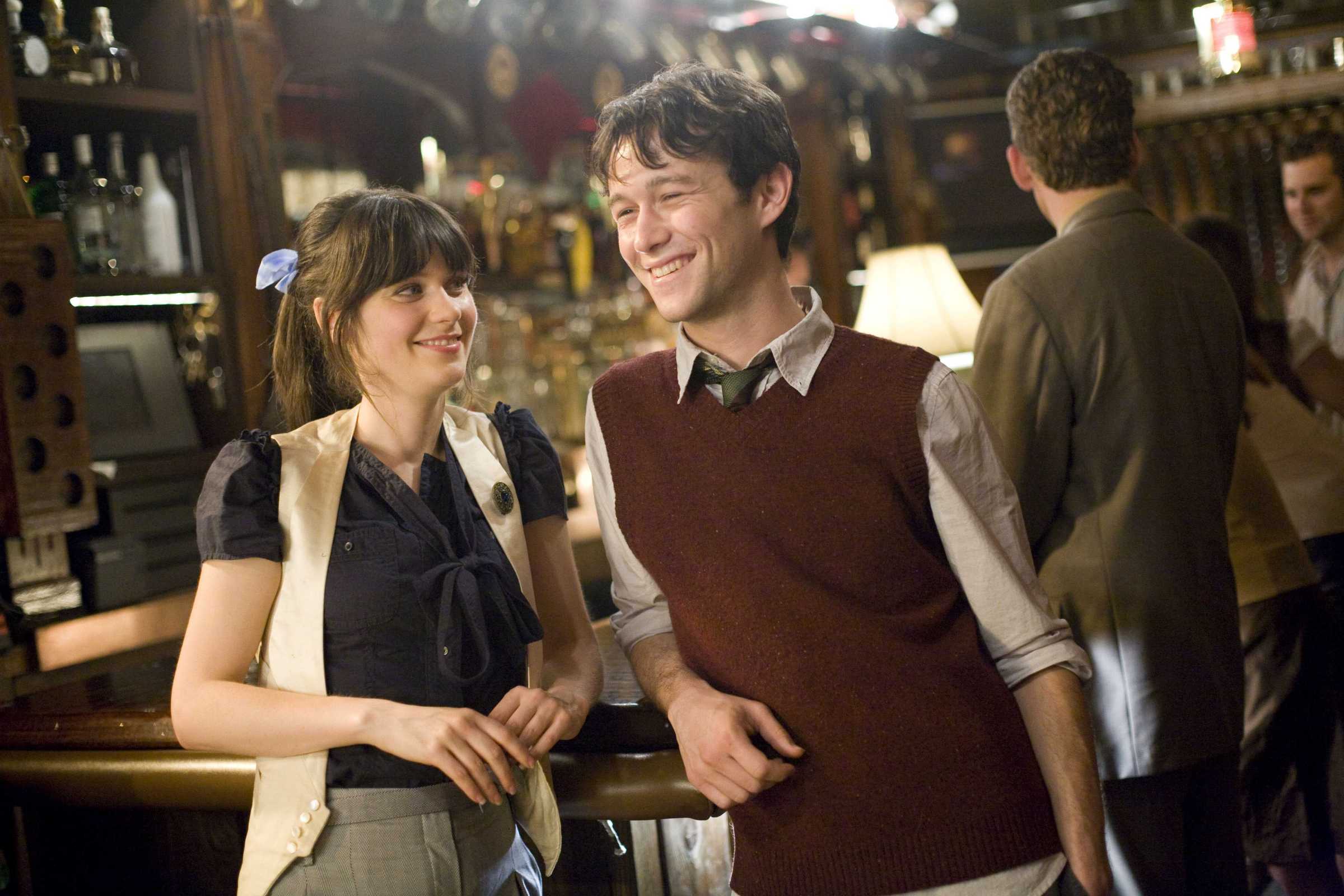
Marc Webb’s (500) Days of Summer has gotten somewhat of a backlash in recent years, and I…honestly can’t quite understand why.

Joseph Gordon-Levitt’s Tom is a selfish guy who sees himself as a romantic lead who has this delusion of what he thinks true love is or should be…THAT’S THE IDEA!

Oh, but he unlearns the harsh lesson he learned upon the very end of the film…THAT’S THE JOKE!

Yes, the myth of the Nice Guy has been debunked–but are you seriously telling me that you’re realizing Tom’s character flaws NOW??

“(500) Days of Summer” works BECAUSE of that character and his flaws. It’s not a love story–it’s a cautionary tale. I was 17 when I first watched this movie in 2009, and even I could see that! (And I was one of those Nice Guys!! It’s because of life experiences and movies like this and Ruby Sparks that I was able to grow out of that toxic mindset.)

PSA: don’t be a Nice Guy–it’s too easy. Be a Kind Guy instead.

Don’t worry, you still have good reason to love this movie: because it’s great!

Part of the reason it’s great is because of the brilliant screenplay by Scott Neustadter & Michael H. Weber (the screenwriting duo that has since gained recognition for writing The Spectacular Now, The Fault in Our Stars, and The Disaster Artist). The story of how Tom (Gordon-Levitt) met, courted, and ended things with Summer (Zooey Deschanel) is told in non-linear fashion, telling us how one way went in another direction in this relationship and how an attitude can change upon life experience. I haven’t seen that many movies that carry this approach THIS effectively.

Another reason it works is because of the lead performance by Joseph Gordon-Levitt. It’s so easy to mistake Tom for the common romantic leading man, but it turns out he’s more complicated than that. He causes us to look at romantic leads from previous romances and see if THEIR actions hold up–that makes sense, considering Tom learned all his “expertise” on romance probably from watching those movies.

“(500) Days of Summer” is a movie about a guy who learns some harsh lessons about love and life, and that’s what it was always meant to be. And it’s great at being that.

So lighten up!

My Favorite Movies – Stop Making Sense (1984)

13 May

By Tanner Smith

Here’s one that’s just 88 minutes of pure unadulterated music. And I LOVE IT!!!

It’s Jonathan Demme’s Talking Heads concert film Stop Making Sense, and it’s just a showcase of the band performing 16 songs live as the cameras are right on stage with them. This is as intense a concert film as you could get as we the audience are not only marveling at the awesomeness of this ambitious band’s performance art, but we’re right there in the action too. There are no backstage interviews with the members of the band nor is there any footage of setting up for the concert–once David Byrne steps out with his guitar and rhythm recording to perform “Psycho Killer,” it’s off to nonstop music we go.

This is the film that made me a fan of the Talking Heads. I admired how much they put into their music–elements of punk and rock and pop and ska and r&b and overall just a wonderful mix with original talent.

I haven’t seen this film on a big screen–I would love for that opportunity to happen once in my lifetime.

My favorite scene (or music number, in this case): “Girlfriend is Better,” complete with the “big suit.” There are other songs I like better, but that’s just a funny-looking suit.

I don’t have much else to say about it. It’s just awesome!

My Favorite Movies – 20th Century Women (2016)

9 May

By Tanner Smith

I’m not sure I have a favorite type of movie, but small, observant, down-to-earth character pieces are right up there for me.

One of the best of the past decade is writer/director Mike Mills’ 20th Century Women–there’s no telling how many times I’ve streamed this film on Netflix by now.

And I don’t say this about every one of these movies, but I would like to see more movies that show these characters as they develop over time (something like Richard Linklater’s “Before” movies).

Set in Santa Barbara 1979, it’s about a single, middle-aged mother named Dorothea (Annette Bening) whose 15-year-old son Jamie (Lucas Jade Zumann) is discovering girls and music and other stuff in a confusing time for him.

And it’s not just a coming-of-age for the boy; it’s a coming-of-age for the mother too, because she herself gets tested along the way of her son’s journey through life. Dorothea believes in letting Jamie go off on his own and make his own mistakes, but there are times when that worries her, especially when Jamie nearly dies in a game with his friends. (I speak from experience–teenage boys do the dumbest things when they get bored.) Thus, she recruits her boarder, punk-loving Abbie (Greta Gerwig, always a delight), and Jamie’s neighbor girl-friend, Julie (Elle Fanning), to help him. Abbie introduces the kid to her favorite music and the punk scene, and Julie teaches him how to fit in with the other guys their age (and even that becomes kind of a wake-up call for her). All of this confuses Dorothea, who feels out of step with the times and wonders herself what this modern world does to someone who wants to become an adult–what does that mean nowadays, and so on.

All of these people connect and then grow apart, but it’s moments like these that a lot of us can never forget because they and the people within those moments helped shape who we are.

The characters, which also include a working-class handyman named William (played by Billy Crudup) who lives in Dorothea’s boarding house, are all very interesting and keep me coming back to this film again and again so I can be in their company and learn something more about them through each subsequent viewing.

That’s the kind of film I love–films that introduce me to such appealing characters and how they get around in the world they live in.

My favorite scene: Dorothea and William check out two different albums to see which side of the punk scene they would belong to. They can’t get into Black Flag, but they have a fun time grooving to the Talking Heads’ The Big Country. For a Talking Heads fan like me, this scene is pure satisfaction.

My Favorite Movies – Good Night, and Good Luck. (2005)

9 May

By Tanner Smith

Remember that “South Park” episode where everyone caught the “smug?” A cloud brought on by George Clooney’s Oscar acceptance speech that threatens to make everyone in South Park think they’re better than everyone else?

Well, I’ve never seen “Syriana,” the film for which he won the award and gave that “extremely smug” speech. But I have seen Clooney’s other 2005 film, Good Night and Good Luck, which he himself directed and co-wrote. And as highly left as it is, I very much doubt it could be seen as smug. (Well…except maybe for people like Rush Limbaugh, who probably saw the film as nothing more than blatant leftist propaganda during the film’s initial release.)

Here’s the thing though–I don’t think you have to be a liberal to know that Senator Joseph McCarthy was a corrupt thug. He was an a**hole, people were scared of him, and he used his power to assure that anyone who disagrees with his politics were shamed by their country. Even his defenders would probably say he went over the top.

“Good Night and Good Luck,” set in the mid 1950s, is a film that reminds us that McCarthyism was just as present in 2005 as it was in 1940s-1950s. (It’s still present in the 2020s.) And it’s also a film that reminds of how to handle bullies like that, as we too have certain power of the people–back then, it was TV; today, it’s social media, for example. How do you go up against someone who uses blunt verbal force and trigger words to scare people? You use calm rationality AND (this is most important) carefully chosen words.

“Good Night and Good Luck” is a dramatized account of the public struggle between McCarthy and CBS newsman Edward R. Murrow (played brilliantly by David Strathairn). Murrow dedicated episodes of his popular TV news program “See It Now” to attack McCarthy’s persecution of men he views as un-American. Now, this was at a time when the media was afraid to go against McCarthy, in fear of themselves being targeted and labeled as “Communists” as well. Murrow was warned that McCarthy won’t stand for this public attack. But as Murrow carried on with his crusade, he managed to discredit McCarthy’s most damning allegations, resulting in the Senate investigating McCarthy and McCarthy’s reign of terror come to an end. (MIC DROP!)

The scene in which Murrow responds to McCarthy’s counter-attack is my favorite scene in the film. McCarthy was given permission to put himself on the show to correct any errors Murrow made in previous episodes–instead, he accuses Murrow of being a Communist (and even calls him “the leader and the cleverest of the jackal pack”) and cites some supposed evidence to support this claim. Well, how’s Murrow gonna get through this one?……….

Well first, he brings up that McCarthy never mentioned any errors made from previous shows. Then, he looks at McCarthy’s accusations against him one by one. He claims one to be false and the other to be true–but there’s more to the latter. Apparently, a late Socialist author dedicated a book to Murrow after being moved by his wartime broadcasts long ago, and Murrow states, “He was a Socialist. I am not. He was one of those civilized individuals who did not insist upon agreement with his political principles as a precondition for conversation or friendship.”

I’m gonna type that again because it bears repeating even in this day and age:

“He was one of those civilized individuals who did not insist upon agreement with his political principles as a precondition for conversation or friendship.”

Like I said: carefully chosen words.

The dialogue in “Good Night and Good Luck” is pitch-perfect. It’s all calculated, calm, and forward (except when Murrow’s crew gets together to chat–then it’s as natural and sloppy as real conversations). And when you’re fighting a battle this controversial, that’s especially important.

Oh by the way, all of McCarthy’s footage in this film is genuine real archive footage of the man himself. No actor played Joseph McCarthy. This is literally the way he talked and the way he behaved. And here’s a funny story–test audiences didn’t believe it was really him; they thought the “actor” playing McCarthy was too over the top! That’s just too funny.

How far do you go in journalism and when do you go beyond just reporting the news? That question is asked throughout “Good Night and Good Luck,” and I think its lesson is to know what you’re against so you can know what you’re for and to use your means of expression for something more meaningful rather than, as Edward R. Murrow put it about TV, “wires and lights in a box.” And that about sums it up.

Now, please…don’t be smug.

My Favorite Movies – Cedar Rapids (2011)

8 May

By Tanner Smith

It was around the third viewing I started to recognize this one as a “favorite.” A few days ago, I was watching some ’70s films like “Rocky,” “Harold and Maude,” and “Being There.” Then I randomly decided to watch “Cedar Rapids,” and I couldn’t help but notice…it feels like a Hal Ashby film from the ’70s! The way the characters talk and relate to each other, the low-key approach to the filmmaking, the delicate balance of outrageous comedy and gentle drama… Actually, now that I think of it, even John C. Reilly’s party-animal character reminded me of Jack Nicholson’s Bad Ass character in “The Last Detail!” (Except, Reilly in this film says a lot of things that Nicholson wouldn’t have been allowed to say in the ’70s.)

Anyway, I decided to make a post about it after watching it again this morning. So here we are.

Ed Helms stars in the film, and as tired as I am of the typical Helms character (I mean, I liked him fine in “The Hangover,” but his Andy Bernard is one of my least favorite characters in “The Office”), he shines here as the naive, idealistic, socially awkward insurance salesman named Tim Lippe, who is put in a fish-out-of-water scenario, leaving his home to spend a weekend in Cedar Rapids, Iowa, where everything is strange to him. He doesn’t understand why the hotel front desk needs his credit card if he’s paying with traveler’s checks, he doesn’t pick up on certain social cues (such as a pickup from a prostitute, to whom he gives a butterscotch candy), and he’s horrified to find he’s sharing a room with a black man, a fellow salesman named Ronald Wilkes (Isiah Whitlock Jr.). (When he’s on the phone with his lover back home, played by Sigourney Weaver, who tries her best to make it clear that she doesn’t want a romantic commitment, he exclaims, “There’s an Afro-American man in my room!”)

Tim Lippe’s sincere naïveté reminded me of Peter Sellers’ Chauncey Gardiner in “Being There.”

Anyway, Tim is in Cedar Rapids to represent his insurance company at a regional conference. He’s actually a replacement for the company’s best salesman who died in an act of autoerotic asphyxiation. (Though no one at the company wants to talk about HOW he died, especially not Tim, who saw the man as a moral Christian.)

Tim is given one instruction from his uptight, moralistic boss Bill Krogstad (Stephen Root): stay away from Dean Ziegler (John C. Reilly), a foulmouthed cynical salesman. But it turns out Dean is sharing the hotel room with Tim and Ronald, so it’s hard to avoid his loud mouth and ability to get people to party with him.

As you would expect, a lot happens with Tim in this wild, eventful weekend. He participates in conference activities such as a scavenger hunt, he makes friends with Dean, Ronald, and flirty Joan (Anne Heche), he has a drugged-out experience at a rowdy house party, he learns harsh truths about people he thought he could count on, and he even goes as far as to abandon his own principles (not a good thing in this particular case). But the film is not funny because it’s laughing at this innocent character throughout–it’s funny because it’s sincere. It likes Tim Lippe. It’s not funny when he’s being humiliated; it’s funny when his pure good-guy persona causes him to be confused by certain things in this strange land called Cedar Rapids, Iowa. And that’s what gives the film its heart as well.

The heart also lies in the film’s biggest strength, which is its character interaction. I’ve seen so many buddy comedies where the friendship is forced to further the plot forward–but here, the friendships Tim forms with Joan, Dean, and Ronald feel REAL. They’re given time to naturally develop. (And in an 86-minute film, that should truly say something.)

The director of “Cedar Rapids” was Miquel Arteta, who is best known for his films that have as much to with heart as they do comedy. Not all of his films work for me though, like the forgotten “Youth in Revolt” and the overrated “Beatriz at Dinner,” but I really like his trademark style. And I also like “The Good Girl,” which I thought was his best film until I saw this one. (He also directed the critically-praised “Chuck & Buck,” which I have not seen yet.) The writer was Phil Johnston, and his screenplay was nominated for the Indie Spirit Award for Best First Screenplay.

You know, the name Phil Johnston doesn’t sound familiar to me. Let me see what he’s written since “Cedar Rapids”….. Whoa. “Zootopia” and the “Wreck-It Ralph” movies?? The guy gets around! Kudos, Phil!

If you haven’t seen “Cedar Rapids,” I highly recommend it. It’s a pitch-perfect indie comedy that deserves more attention. Also, stay during the end-credits–it’s one of the biggest laughs of the movie!

My Favorite Movies – Scream (1996)

8 May

By Tanner Smith

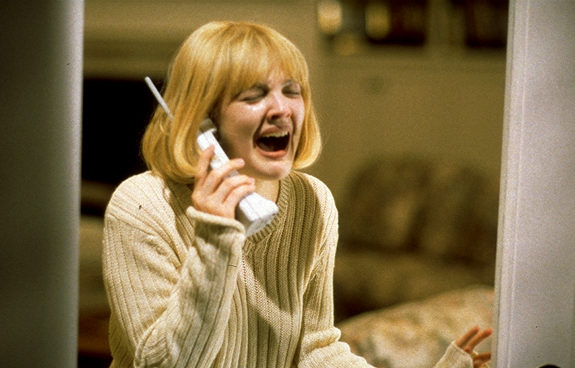
“Scream” became popular for still being a solid slasher-horror film while satirizing slasher-horror films. When a serial killer is on the loose, a bunch of savvy high-school kids recognize the scenario as something from a slasher movie. The rules for survival are put in place:

1) Don’t have sex.
2) Don’t drink or do drugs. (An extension of #1, in that committing any sin gets you killed.)
3) Never EVER say “I’ll be right back,” because chances are…you won’t be right back.

Other rules scattered in the film are not to say “Who’s there?” or investigate a strange noise outside your safe zone. And also, as movie-geek Randy (Jamie Kennedy) exclaims, “EVERYBODY’S A SUSPECT!!!”

This was from a 1990s point-of-view. With the solid horror movies of today, we have a new important rule: just do what you can do and hope for the best. That way, things are less predictable in knowing who lives and who dies.
It’s a lot scarier when there are no rules (which is something that Scream 4 (or “Scre4m”) proclaimed in 2011).

I love “Scream.” It has a neat mystery, a unique blend of horror and comedy while still keeping a consistent tone, and likable characters (which is more than I can say for a lot of other ’90s horror films).

But this one part always bugged me–for all the beatings the killer takes, wouldn’t it have been interesting if one of the suspects ended up with a black eye or a broken nose or something? That would’ve added to the mystery element!

I also really like “Scream 2,” which I think is underrated. The commentary about that thin line between horror and reality (which was hinted at in “Wes Craven’s New Nightmare”) is more compelling in this one, particularly in the prologue that shows a horror-movie audience applauding a murder, not realizing right away that there’s a murder happening right in front of them and it’s not fun anymore. And the twist involving the identity of one of the killers, I thought was very well-done and I didn’t see it coming. (Though, that scene in which the boyfriend serenades Sidney in the cafeteria…yeah I always skip through that part.)

“Scream 3″…sucks. I can’t beat around the bush when it comes to this one–it’s just not as memorable because it’s just not as fun or energetic as the other two films.

I like “Scre4m” a lot more now than I did when I first saw it. It’s got a lot of good stuff in it.

The late Wes Craven made good horror films because he focused on making good films first and good scares second.

My favorite scene: a drunken Randy watches Halloween alone and shouts advice at the TV (“LOOK BEHIND YOU!”), totally unaware that the killer is creeping behind him. That’s the best piece of satire in the whole film.

And always remember not to blame the movies for violence in real-life, because “MOVIES DON’T CREATE PSYCHOS–MOVIES MAKE PSYCHOS MORE CREATIVE!!!”

My Favorite Movies – Munich (2005)

7 May

By Tanner Smith

No matter how many times I watch this movie, I ALWAYS tense up every time it gets to the part with the bomb, the phone, the wrong person answering the phone, and the desperate race to stop the bomb from detonating! Everything about this scene is masterfully done–the editing, the sound design, the directing, everything about it raises the suspense of this already-tense scene to “Good God get me out of here” levels!

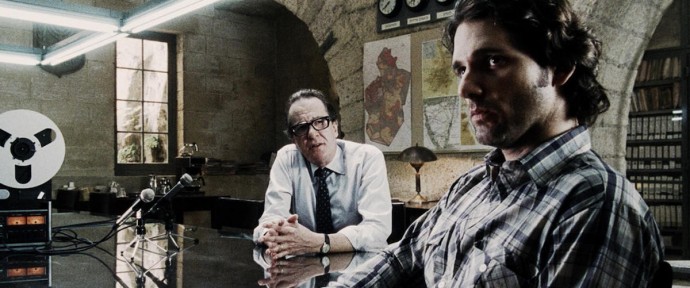
Director Steven Spielberg made “Munich” soon after “War of the Worlds” in 2005. (Actually, it might have been made right after “WotW’s” release–the time it took to plan, shoot, edit, and release Munich was SIX MONTHS!) “Munich” was Spielberg’s attempt to understand the war on terror by using a parallel story from the 1970s–in this case, it’s the aftermath of the 1972 Munich Summer Olympics, where a Palestinian terrorist group attacked and killed Israeli athletes. A team of covert, ex-Mossad operatives are assigned to assassinate all involved in the massacre.

Even though James Bond himself (Daniel Craig) plays one of the assassins, this is as far from a Bond movie as you could get. (Actually, as cold as Craig’s James Bond could get, his hotheaded character here is more bloodthirsty!)

Eric Bana stars as Avner Kaufman, the leader of the team. For Avner, patriotism is most important, which is why he decides to leave his pregnant wife for seven months to partake in this mission that takes him and his team across the globe. But as the mission goes on, things get more complicated, especially when his conscience starts to get the better of him. By the end, Avner isn’t so sure what has been accomplished here.

While the fictional setting is the 1970s, it matched the world of the 2000s. When “Munich” ends with a striking image (of what, I’ll leave you to discover if you haven’t seen it already), it all becomes clear what Spielberg has been saying with this film from the start.

Of Spielberg’s most serious endeavors, “Munich” may not be the best (that still goes to “Schindler’s List,” in my opinion), but it’s definitely one of his most accomplished. One of the things that drew controversy amongst this film’s release was Spielberg’s decision to attempt to understand both sides of the war against terrorism without easy answers. But that’s the point he’s making here: there are no easy answers when it comes to questions like when vengeance becomes disadvantageous, when a patriot with the best intentions at heart loses a good part of himself, and whether a war on terrorism can truly be won. So many of these questions, people don’t even want questioned.

But that is why “Munich” is as powerful as it is.

And that’s all I’ll say about it…but I will share this quote from “Knocked Up,” when Seth Rogen and his friends talk about how awesome “Munich” is: “That movie was Eric Bana kicking f***ing ass! You know, every movie with Jews, we’re the ones getting killed–‘Munich’ flips it on its ear! If any of us get laid tonight, it’s because of Eric Bana in ‘Munich’.” I bet Seth Rogen was starstruck when he co-starred with Eric Bana two years later for “Funny People” (which was also shot by Spielberg’s frequent cinematographer Janusz Kaminski)!