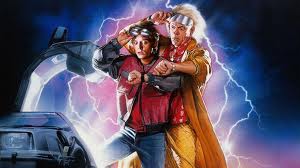
The Purple Rose of Cairo (1985)

25 May

images-1

Smith’s Verdict: ****

Reviewed by Tanner Smith

What if you saw the same movie so many times that one of the characters (who is practically the main reason you keep seeing this movie in the first place) actually starts to notice you? That’s what happens to Cecilia (Mia Farrow) in Woody Allen’s delightful fantasy-comedy “The Purple Rose of Cairo.” During the Great Depression era, in a distressing time in her small-town life, Cecilia finds solace in the cinema, feeling the magic of the movies. The movie she goes to see is “The Purple Rose of Cairo,” an adventure movie about an archaeological explorer named Tom Baxter. After Cecilia sees the film several times, in a fabulous scene, Tom notices her seated in the audience, breaks the fourth wall, and starts up a conversation with her. He has apparently noticed her watching all this time, and so he literally steps off of the movie screen and into the real world, as Cecilia decides to show him around town.

This is fantastic! It’s great wish-fulfillment for movie buffs alike; what if this happened to you? What if your favorite actor/actress (or rather, your favorite actor/actress playing a character) suddenly emerged off the silver screen just to talk to you and be with you? “The Purple Rose of Cairo” wants to play that, and the way it goes along with this idea is thought-provoking, fun to watch, amusing, and sweet. This is a movie that truly loves movies and is made with skill and delight by the great writer-director Woody Allen.

The movie has fun with the simplicity of this woman and this movie character in how they can develop a romance with no setbacks whatsoever. Tom knows that things aren’t so simple as in the movies, but his presence is a relief to Cecilia who sees him as a way of making her bleak, unfair life feel better. There are problems, though. In the movie’s funniest subplot, the rest of the characters in the fictional film are still lingering about on the screen, waiting impatiently for Tom to return so the movie can keep going. Audience members that pop in complain, stating “they didn’t do this last time I saw the movie.” And also, the theater owner has called the studio that distributed the film, stating the problem that the character is missing. And so what do the studio executives do? They bring in the actual actor of that character of Tom, Gil Shepard (both roles played by Jeff Daniels, by the way), and send him to that town so that he can convince his character to go back into the movie. He encounters Cecilia, who understands the situation…and then they develop a sort of romance themselves!

I love how creative Allen gets with the storytelling here, with the love triangle between Cecilia, Tom, and Gil; the other characters lingering on the screen; the decision that Cecilia must make between the two men now in her life; and so on. “The Purple Rose of Cairo” is a wonderful film from beginning to end. Even in the ending, which people have questioned Allen about, there’s something to be said about the sudden frankness of the situation. Without giving it away, there’s not a “happily-ever-after” in a traditional sense; it resolves itself as a reality sense. But there’s still one element of comfort—the movies. When Allen was asked why he didn’t film a happy ending for the film, his reaction was simple enough: “That was the happy ending.” The more you think about that while watching this film and pondering the details these characters go through, the more intriguing it is. “The Purple Rose of Cairo” is pure movie-magic.

Kazaam (1996)

25 May

images

Smith’s Verdict: Half-a-Star

Reviewed by Tanner Smith

“Kazaam” was to be NBA superstar Shaquille O’Neal’s major starring vehicle, with “Shaq” himself playing, as the marketing suggested, “a rappin’ genie with an attitude…ready for some slam-dunk fun!” This came out the same year as another movie starring another NBA player—“Space Jam” with Michael Jordan. What that movie got right with its iconic figure was to have him actually play the iconic figure. Michael Jordan didn’t have to play a superhero (or a “genie,” for that matter)—he already is one. Here, in “Kazaam,” Shaquille O’Neal is not given the right material to start with—it’s as if the filmmakers took one look at this seven-foot, imposing black man and thought to themselves, “Hey, this guy’s tall, bald, and black—I think he’d make a good genie.”

“Kazaam” is such a deplorable movie. It’s stupid, unimaginative, often unpleasant, and a truly sad excuse for a Shaq vehicle.

Yes, Shaq plays a genie, named Kazaam (isn’t that an odd name for a genie—was “Abra-Cadabra” already taken?). He’s the genie of a magical boombox that is suddenly released by a young city boy named Max. Kazaam is now Max’s slave (I’m not even joking—Max even acknowledges that he “owns” Kazaam) until he grants three wishes for the kid. But meanwhile, he does all right for himself in the city (though where this takes place, I may have missed—maybe New York City? The Bronx? Brooklyn?) and even becomes a hit at a local nightclub as a rapper.

Before I go any further, this needs to be said—Shaq raps even worse than he acts. He has no rhythm, his voice drones monotonously when it should be driving, and his improvised “lyrics” are terrible (“Let’s green-egg-and-ham it!”). And unfortunately, we’re subjected to many sequences in which he raps to impress.

Max (played by Francis Capra), the kid that Kazaam is granting three wishes to, is an unsympathetic little brat. I guess we’re supposed to care for this loathsome little toad because he’s in need of a father figure, and his father is a jerk who is also in the underground pirated-music scene. But Max is irritating and obnoxious all the way through. His interactions with Kazaam mostly consist of showoffish, in-your-face dialogue that gets annoying very fast.

The story is very boring as it goes along with the whole subplot involving Max’s father who is involved in something violent and dangerous involving the latest score. There’s a cassette tape involved that just serves as an uninteresting McGuffin, and there’s also a group of bullies that think they themselves can get rich with it if they grab it themselves. And it gets even more tedious as it goes along.

The special effects that go with Kazaam’s powers aren’t very impressive. They look cheap and not as “magical” as the movie would like to make us believe it is. Notice a flying-bicycle scene that involves a lot of gold-sparks, and you’ll know what I’m talking about. Actually, I should probably delete that last sentence, because that would imply that I suggest you check out this movie, which I hope you don’t. It’s hardly worth it.

And about Shaquille O’Neal himself—he’s pretty dull here. I think an acting coach would have done him well (Lord knows he needed one for his free-throws). I think Shaq can be very likeable, and maybe if he had better direction, he would have been the one to save this movie. He’s trying, but he needed to remember that grinning every single minute (just like he did with his TV commercials) doesn’t make one a credible actor. (And again, neither does his rapping-rhyming.) “Kazaam” is a waste of time.

Mary (Short Film)

24 May

625622_508333739224239_528916055_n

Smith’s Verdict: ****

Reviewed by Tanner Smith

In two reviews I’ve written of short films lately (“Last Shot Love” and “The Discontentment of Ed Telfair”), I couldn’t reveal their resolutions for the sake of people who should be pleasantly surprised by twist-ends. But in the case with Zach and Caleb Turner’s 25-minute film “Mary,” you won’t have to worry about me giving much away here. That’s because honestly, I’m not entirely sure what I just saw. I mean, I think I have some idea, but this is one of those fantasies that play with minds of the audience. And those who care can think about what they just saw and come up with certain interpretations about certain details.

I recommend “Mary” because I did care. Did I understand it? Not entirely. But it did leave me thinking about it.

But I’m getting ahead of myself. What’s the story? The main character is Craig Rifter (played by Matt Newcomb), a depressed, sleep-deprived schoolteacher who is coping with divorce. No one seems to help cope; least of all, a weird janitor (Graham Gordy) who babbles about reincarnation. While browsing in the local bookstore, he notices a beautiful woman staring at him, and wants to find out more about her. So he seeks advice from one of the clerks—a supposed psychic (Jason Thompson, a riot) who constantly puts him down (with strangely, a lot of penis jokes…OK) until he is convinced that he is the right one for her and states her name is Mary. Once Craig and Mary (played by an astonishingly beautiful Raeden Greer) ultimately meet, Craig is surprised to find that she is genuinely attracted to him.

And don’t ask me how, but things only get strange from there. Somehow, the subject of reincarnation comes back into the mix (so that the janitor’s ramblings actually had a point), and there’s also the strange aspect of a dreamlike matter, indicating maybe this is all a dream, or maybe it’s not. There are symbolic images (such as floating pieces of paper early on that probably indicate Craig’s life out of his control, though I could be wrong) and effective moments of magic realism, all of which surprisingly work in the film’s favor. It’s all quite fascinating and seems to know what it’s going for…although maybe a lot more than we do! “Mary” leads to somewhat of a resolution that could be a happy ending or a sad ending, depending on what you would figure what you’ve just seen, because this is not a film that relies on conventional storytelling; instead, it’s an artful film that asks the question of whether or not we deserve “the girl of our dreams.” For that matter, is this a dream? Does Mary really exist? Has Craig’s sleep deprivation gotten the better of him, causing all of this? Or, wait a minute…who or what even is Mary? Is she real? Is she a manifestation of Craig’s desire? Is she a ghost? Is she…something else?

I don’t know! I’m still trying to figure it out. Now I want to see “Mary” again. Maybe I can go back and see if it answers any of the questions I have. It’s kind of like “Donnie Darko” in that there are questions involving these fantasy-supernatural elements and because of the effective setup leading to it, its ambiguity worked in the film’s favor. That’s the case with “Mary”—I actually cared enough to ask these questions. I don’t hate this film, by any means. I’m intrigued by it. Spellbound. Fascinated. It worked for me. And I’ll admit I have a short fuse when it comes to symbolism (because while it can be effective and subtle, I’m usually not a fan of its occasional broadness in short art films), so this was a pleasant surprise!

What can I even rate this? 4? 3.5? 4? 3.5? 4? You see what this short film is doing to me?!

This is a deep, intriguing short film that is now in its festival run. If you haven’t already seen it at the Little Rock Film Festival, see it whenever and wherever you can. But prepare yourself.

Twinkletown (Short Film)

23 May

547667_380113565370260_1794727755_n

Smith’s Verdict: ***

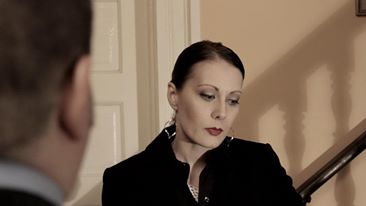
Reviewed by Tanner Smith

The tagline for the short film “Twinkletown,” written and directed by Scott McEntire, states, “Absolute power corrupts absolutely in a small Southern town.” And knowing that tagline doesn’t make the subject matter for this film seem necessarily “new,” but there is something oddly captivating about a premise that mostly involves greed and power taking over a small (Southern) town almost as if it were a run of the Mob. With that said, “Twinkletown” is satisfying in the way it handles this premise, and is able to overcome its minor flaws.

“Twinkletown” (which is 20 minutes in running time) opens with three men chained in a warehouse, where they are tortured by Eve Wallace (Kristie Pipes), the latest of the corruptive Wallace family, who has run a small town in the Arkansas Delta for years. Eve learns that these three men have stolen Wallace money, as she and her henchmen, including her right-hand man Max (Johnnie Brannon), torture and kill the other two. The last one alive, a young man named Terrence (Dustin Alford, “Foot Soldier”), is given a chance to save himself. But as Eve allows him to settle things, Terrence’s grandfather (Tucker Steinmetz) suddenly becomes involved and this leads to a complicated situation that Terrence must get himself out of before he puts himself in more danger with the Wallaces.

One thing that stands out about “Twinkletown” is that there is a real feel for the sort of system that this town seems to run through. Eve and Max are broadly developed, but that’s what makes them memorable and their presences impactful. Particularly, there’s a scene in which Eve talks with the town sheriff (Don Pirl), and it’s clear where everyone seems to stand in this town. You either accept the melancholies here, or your ass is grass if you’re desperate enough to make the wrong choices in order to escape. No one can mess with Eve, and you’d have to be as crazy as Terrence’s grandfather to go up against her.

But really, what “Twinkletown” fully seemed to represent is an effective metaphor for the differences between the rich and poor in small Southern towns, taken to the level of a crime drama about the Mob, practically. In that sense, it’s more intriguing.

But there is a problem I had with “Twinkletown,” and unfortunately, it had to do with Terrence’s story. Terrence is merely a clean-cut kid who fell with the wrong crowd, and that’s why he found himself in this situation. As a result, the character is not very interesting. Maybe it’s just a personal preference, but I wonder how it would have been if a member of that “wrong crowd” was put in this situation himself. That’d be interesting because he’d have to rely on his wits and question his own morals and ethics, as well as the Wallaces’. As it is, Terrence is boring (though not exactly the fault of talented actor Dustin Alford, who was great in “Foot Soldier”), but I think his grandfather makes up for it (though that probably has to do with Tucker Steinmetz’s delightful overacting).

Kristie Pipes is enjoyable to watch as this despicable, unsympathetic woman who does anything to get her way and keep the family in power (even to the point, such as the case in the opening scene, of mocking sympathy to toy with somebody in order to receive some answers). At times, Pipes comes close to overacting, but for the most part, she’s quite good here. Johnnie Brannon underplays the role of Max, Eve’s cold-blooded associate. He doesn’t say much, or do much, and yet surprisingly he really leaves an impression. He’s great here. Tucker Steinmetz…to say his role here is more flamboyant than his “Antiquities” character would probably be an understatement. But to be honest, it did sort of grow on me. Sure, he’s over-the-top, but he does put a lot of energy to the role, and I admire him for that.

It would seem as if there are some roles that are somewhat one-dimensional, but there is a twist at the end of “Twinkletown” that changes that, for the most part. It shows there were further motivations than what may have been declared earlier. And without giving away certain details, it does bring the film full-circle in a satisfying way. While “Twinkletown” does have its flaws, it impressed me with its story structure, its moments of humor and danger, and some nice camerawork as well.

Batman (1989)

23 May

images-3

Smith’s Verdict: ***1/2

Reviewed by Tanner Smith

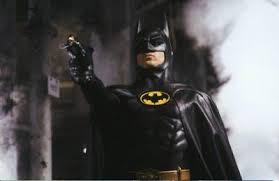
In the late-1980s, “Batman” was the most anticipated movie to come around. Warner Bros. was hoping that this would make people forget that they distributed the “Superman” sequel-bomb “Superman IV: The Quest for Peace,” released in 1987, and so they turned from DC Comics’ Man of Steel to its Caped Crusader. And people were excited to see a dark, live-action film adaptation of Batman that didn’t have the campiness of the 1960s “Batman” TV series or the in-jokes that the comic book series had, but it did have the promising director of “Beetlejuice,” Tim Burton. Sure, there were some uncertain comments from people who even wound up petitioning not to have Michael Keaton star as Batman (but I’ll get to that later), but nothing was going to keep people from seeing “Batman.” And so, in the summer of 1989, it was released in cinemas and became a box-office hit, leading to become the highest-grossing film of the year. And honestly, I can definitely see why. “Batman” is a solid entertainment. It’s dark, it’s brooding, it’s suspenseful, much like the Caped Crusader himself.

Yes, this “Batman” is dark and not necessarily for younger kids. This is more in the spirit of an old-school film noir, with Gotham City as its backdrop. There is a lot of crime, and fascist crime bosses, but there is also someone out there on a crusade to foil it. This is Batman, a dark-costumed vigilante whose presence scares criminals and angers local Mob boss Carl Grissom (Jack Palance). Gotham City locals don’t really know of any “bat man,” outside of robbers and murderers, but there are rumors about him. Reporter Alexander Knox (Robert Wuhl) describes him as a man-sized bat who is indestructible, and wants to find out more about him. In comes Vicki Vale (Kim Basinger), a reporter/photographer who is interested in his theory. To get some answers and an inside scoop, she believes that eccentric billionaire Bruce Wayne (Michael Keaton) is secretly Batman, and so she decides to romance him.

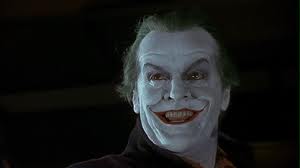
Meanwhile, Grissom’s right-hand man, Jack Napier (Jack Nicholson), is set up by Grissom on a mission that leads the cops to him. Along comes Batman, who corners Jack and tosses him into a vat of acid. Jack survives, but his facial nerves are severed, leaving a permanent smile. This also changes his personality so that he’s more gleeful and also more psychotic. He calls himself The Joker, overtakes the Mob, and begins his own reign of terror in Gotham City.

Despite being called “Batman,” the title character himself is more or less kept in the shadows for the most part. We don’t get his standard “superhero origin story” here; instead, the origin story that the movie delivers is of the Joker, the movie’s villain and Batman’s arch-nemesis. (I think the movie could have been titled “Joker,” in a way.) After all, we see how this Jack Napier becomes Joker and what will lead to his downfall in the film’s inevitable climax. And so, most attention is brought onto the Joker in this movie, as well we see a lot more of him than of Bruce Wayne/Batman. While this may seem like a flaw, it actually makes it all the more solid. Batman is known for being dark and mysterious; the less you know about him, the more interesting he is. You want to find out more about him, and there are some good details that indicate what he’s been through and what he’s going through, but had there been anymore, the fascinating mystery may have been gone. And so in the sense, I’m glad Batman wasn’t the main focus of this story.

I know having a villain as practically the “star” is a risky move to pull in a movie like this. But Jack Nicholson is so enjoyable as the Joker that it doesn’t matter how sick and psychotic he is; you just watch him go throughout his schemes, while still knowing that Batman is still the one to root for.

What we do see of Bruce Wayne is very interesting, and Michael Keaton is excellent in portraying Bruce as an odd billionaire with dark secrets and a tragic past. When Keaton plays Bruce Wayne as he socializes with people, you wouldn’t really believe that he is secretly Batman. He keeps his pain inside, not making it anyone else’s problem but his own. And when Keaton is Batman, he practically “breathes” cool. He’s intimidating, purposeful, and rock-solid, which makes his performance of Bruce Wayne all the more interesting. As the movie develops and you start to see more of this character than before, you understand what Bruce is going through—this is his problem that hardly anyone else can handle and so, he’ll deal with it by himself. Although he does have a couple people to turn to (including Vicki, who becomes his romantic-interest who discovers his secret, and his loyal butler Alfred, played by Michael Gough), he tells only what they deserve to hear and leaves everything else for him to handle. This leaves him with a few strengths for us to notice about the character, making it even more fascinating that this is our hero. When all is said and done, Michael Keaton is a great choice for Batman. I know that back then, he was known for his broad-comic persona in films such as “Night Shift” and especially “Beetlejuice”; but here, he’s absolutely brilliant. You may not see as much of him as the Joker, who practically hungers attention from the audience with the manic Nicholson performance, but there’s always that sense that this is Batman and he knows what he’s doing. I’m glad that that ridiculous petition to remove Michael Keaton from the role was ignored—seriously, what were those people thinking?
images-1

Jack Nicholson owns it as the Joker; it’s not only menacing, but also funny. You can tell he’s not just doing for a nice paycheck, much like how Marlon Brando must have felt when he played Jor-El in “Superman.” You can tell he’s just having a good time and that energy that he brings to the screen is always evident.

Kim Basinger plays Vicki Vale, whom Bruce falls for while she is attempting to gain a scoop on Batman for Knox’s story. While many critics felt that this character was pointless and a misstep, I thought she fit into the story really well. She is the one who aids the audience into discovering Bruce’s secret (and also the reason Bruce wants to admit the truth to somebody for the first time), and she is an interesting character. Sure, she screams a lot (whether she’d be menaced by the Joker or reacting to one of Batman’s surprise gadgets), but she was kind and polite while also having her limits. And when she’s captured by the Joker in the climax so Batman can save her, she still manages to fool Joker into thinking he’s winning. Basinger is game in a role that would have had her doing a lot less.

We still have the traditional Batman gadgetry, such as a self-guiding grappling hook that aids Batman up the side of a building. But more importantly, we also have the awesome-looking Batmobile and the Batplane (even though the Batplane looks more like a model in some shots, it’s still pretty awesome). Those visuals are well-handled, but the look of Gotham City itself is a true marvel. Director Tim Burton is best known for specializing in gothic production design in his films, and this is no exception. Gotham City looks kind of like Manhattan if it was redesigned to look like a carnival funhouse—it’s just incredible to look at.

The action sequences are set up and executed with such flair and energy that it makes the film all the more exciting to endure. It’s engaging and well-crafted, although I will admit that I thought the final climax went on a bit too long. That is the main reason I’m rating this film three-and-a-half stars instead of four, but just be impressed I’m even rating it that (I’m surprised to find that not many people seem to like this movie very much, because of how little of Batman is seen—oddly enough, I found that to be the most intriguing factor). But to the credit of that climactic half-hour, it does allow for some psychological turns as well as physical force. You see, in the middle of the battle, Joker and Batman attempt to turn one another off by admitting that they created each other, as Batman threw Jack into the acid that made him this way, while Jack was the one who killed Bruce’s parents long ago (this is why Bruce would become Batman). That’s pretty clever.

Another thing about “Batman” I want to praise is the music. And no, I’m not talking about the dated Prince soundtrack. I’m talking about Danny Elfman’s memorable, fantastic score. Whenever I think of Batman, this is the music I’m going to be thinking of every time. It’s terrific in the way it keeps with the dark tone of the movie and yet maintains a consistent quirky side to it, making us remember that this is a superhero movie after all. Elfman nails it here with his score.

“Batman” is told with a more adult approach, than one might have expected at the time, and that makes it interesting and all the more solid. With a dark look, a fantastic production design, and convincingly troubled characters played by great actors, this is an enjoyable, good-looking, terrific film that is respectful to the superhero-movie genre and delivers some truly great surprises.
Fargo (1996)

23 May

images

Smith’s Verdict: ****

Reviewed by Tanner Smith

“Fargo” is one of the most original films I’ve ever seen. I practically dare you to name one element from another movie from which you can say something from this movie borrowed. Everything—from its premise to its protagonist to its screenplay—feels like you hadn’t seen it before. It takes the scheme-gone-wrong thriller element and provides it with fresh twists in its story and its characters. Crafted by the Coen Brothers (Joel and Ethan Coen), “Fargo” is a masterpiece—an amazing, well thought-out film that was absorbing and original from beginning to end.

You could say that the minds of both Coen brothers are unusual and somewhat twisted, compared to most filmmakers, but there’s no denying that they have a great deal of ambition that comes through with their scripts. “Fargo” represents all of their trademarks, taken up a notch—quirky humor, dim-witted characters, visual knack, and more.

The film even uses a stylish device as an inside-joke, saying it’s based on a true story when it’s not. There’s an opening caption stating that events similar to those in 1987 were the inspiration for this story, and the characters’ names have been changed. Reportedly, it turned out not to be true and just a sly joke at the concept.

The story begins in Fargo, North Dakota, as a Minnesota car salesman, Jerry Lundegaard (William H. Macy) meets two thugs, Carl Showalter (Steve Buscemi) and Gaear Grimsrud (Peter Stormare). Jerry has a bizarre, absurd plan for these two to put in motion for him—to kidnap his own wife in his Minnesota hometown and hold her for a ransom of 80 grand. He plans to have his father-in-law, Wade (Harve Presnell), pay the ransom so that Jerry can receive about 50-percent of it. It seems like a foolproof plan to him—he gives them a car and a plan and simply waits it out. But what he didn’t rely on was the notion that Carl and Geaer are not very good at what they do; in fact, they’re actually lousy, pathetic crooks. They do kidnap Jerry’s wife, all right, but then while driving through Brainerd, Minnesota, they wind up killing a state trooper and two witnesses to the crime.

That’s the first 30 minutes of “Fargo” and believe it or not, that’s just the prologue. We are then met with our true protagonist, a pregnant cop named Marge Gunderson (Frances McDormand). Marge is a grinning individual who lives a good life with what she has—a good husband (John Carroll Lynch) and a nice outlook on life, in that it’s the little things that bring her pleasure. She goes to investigate the murders, as she questions those who may have seen the two killers and takes lead upon lead until she is led to the truth.

Meanwhile, things only get worse for Jerry and the two thugs. Jerry’s kidnapped wife is hysterical and shrieking throughout to the point where her constant freakouts amuse the two. They are obviously having fun doing this, which brings a creepy, sardonic edge to the situation. And as Marge is soon enough led to Jerry, Jerry fully understands that his stupid plan has gotten way out of control, and unless he can do something about it, he’s going to be in big trouble.

The character of Marge is arguably the best thing about “Fargo.” This is just a fantastic, wonderful character to follow. She’s a police chief in Brainerd who happens to be seven months pregnant, and maintains a chipper attitude as well as a heavy Minnesotan accent (her “yeah’s” sound like “ya’s”). She’s very smart, very bright, and able to reconstruct certain events in the investigative situation she’s called to solve. Even if she knows someone is lying to her, she’ll still maintain her cheerful attitude with a smile, knowing something new will come from this eventually. And at the end, you realize she is the character in “Fargo” with the most control and the most ideal outlook on life. She doesn’t focus on just money for happiness; she knows the little things in life are worth having. Everyone else either wants something big, like money for instance, so desperately that all it does is bring them to hell. Marge is the one that stands tall among the rest. I loved watching this character work throughout this film, and Frances McDormand did a wonderful job at portraying her.

William H. Macy is also fantastic as Jerry Lundegaard. His fear and frustration that comes through as the character realizes his big mistakes in hiring the wrong people (and starting the idea in the first place) comes through with a great performance. Steve Bucsemi is wonderfully talkative as the beyond-sly Carl, while Geaer Grimsrud is very droll as the tougher, and bloodier, companion. They’re surprisingly three-dimensional psychotics—pathetic but not willing to admit it yet, if ever.

There are many moments in “Fargo” that create comedy from views on human nature. For example, there’s a scene in which the two thugs have sex with hookers in a sped-up one-shot that immediately cuts to them all in bed together watching “The Tonight Show.” There’s also the behavior of the cops, particularly Marge’s dim-witted male partner who doesn’t understand that the “DLR” on license plates means that they’re “dealer plates.” (I love it when Marge states, “I’m not sure I agree with ya a hundred percent on your police work there, Lou.”) Other moments like that provide effective comic relief. There is one scene that comes out of nowhere (actually, I should probably rephrase that because every scene seems to come out of nowhere in order to keep it all going). It involves Marge meeting up and having dinner with a high-school classmate, Mike Yanagita (Steve Park). She is simply there to have dinner with an old friend, while he obviously has something else in mind. After the dinner, she learns from another high-school friend (a woman) that Mike has lied about everything to her in order to get closer to her. At first, I didn’t see the purpose in this scene, but the more I thought about it, the more I thought it made sense. You see, this is sandwiched between Marge’s two meetings with Jerry. In the first meeting, Marge was unsure of Jerry’s story, but this encounter with Mike served as a sort-of wakeup call for her. This then leads her back to Jerry’s office, where she is determined to find some true answers—and this is the interview that Jerry just can’t take anymore.

“Fargo” is built upon originality and is a true delight that way. It’s well-made, well-acted, well-executed, and just so incredibly detailed without ever getting boring or clichéd. This is a wonderful movie that truly highlights the amazing talent of the filmmaking Coen brothers.

The Discontentment of Ed Telfair (Short Film)

22 May

images

Smith’s Verdict: ****

Reviewed by Tanner Smith

“The Discontentment of Ed Telfair” is yet another brilliant short film from a most unique, inspiring filmmaker named Daniel Campbell. Campbell’s previous short films/festival favorites were “Antiquities” (already reviewed by me) and “The Orderly,” both of which were fiercely inventive in their human (and comic) elements. These films are not only funny but also very memorable. They’re some of my prime examples of excellent short narratives in that they’re very successful in screenwriting, pacing, and even an artistic sense. It’s almost as if Campbell makes the films that he would like to see play at film festivals, and the results make quite an impact on filmfest audiences, making them not only laugh but also care. “The Discontentment of Ed Telfair” is no exception, by any means.

Like the previous films, “The Discontentment of Ed Telfair” is a short comedy, but with a somewhat dark edge to it. It begins with a shot of two seemingly-ordinary men standing yards away from the camera, facing away from it. They stand for a while, not doing anything, until one of them points a pistol at the other man’s head and shoots him dead. The way the shooter looks at the fallen man (as the film’s title appears) practically sets the tone for the rest of the film. It’s disturbing and yet oddly funny.

That opening shot is worthy of the Coen Brothers.

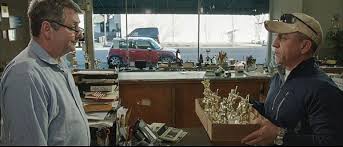
Cut to shortly before that incident, as we see what led up to that surprise kill. Ed Telfair (Jeff Bailey) is an insecure, mundane man who runs a trophy shop (in a scene that recalls “Antiquities,” he’s pushed around by a client who isn’t satisfied with his order, and he’s just forced to take it). Ed has a beautiful wife, Cindy (Mary Faulkner), and a likeable best friend, Doug (John Isner). But he starts to notice a few things about the two that become somewhat clearer to him, the more he translates from afar. So he decides to take care of things on his own.

Period. That is all I’ll say about the plot. I’m not even sure what I can get away with revealing anymore. But treading a little bit of water here, I’ll just say that this setup is leading up to a payoff that is beyond hilarious. I’ve noticed that Campbell’s films seem to end exactly when the time is right (and being comedies, they also serve as effective “punchlines”), particularly with “The Orderly” and especially with this one. Without giving anything away, the ending to this film is just perfect.

When all is said and done, “The Discontentment of Ed Telfair” is pure Campbell through and through. This guy is clearly distinguishing himself as a very talented, inventive independent filmmaker—somewhat of an “unsung hero” in that sense (although certainly not in the Central Arkansas filmmaking field; he has a respectable position there). I heard that he is working on a feature-film version of his short film “Antiquities”—if it’s as great as the original short (or Campbell’s other shorts, for that matter), I think independent-film audiences all over the country are in for a real treat. For now, we have this fantastic short film called “The Discontentment of Ed Telfair,” which is currently in its festival run. If it plays in a festival near you, check it out. It’s shot nice, it leads to a brilliant resolution, and it’s quirkily deranged to the high point of enjoyment.

Back to the Future Part III (1990)

22 May

images

Smith’s Verdict: ***1/2

Reviewed by Tanner Smith

While “Back to the Future Part II” was more of a zany screwball comedy and not really with the human emotions aspect that made “Back to the Future” the great film that it is, “Back to the Future Part III,” the final chapter of the “Back to the Future” trilogy, is actually closer to capturing that emotion that the original film had. While it has moments as goofy (though also as fun) as in the second film, there is still something good and moving within the human-interest story that is found here. As a result, it’s still not quite up there with the original film, but it’s still a terrifically entertaining movie that winds up having more on its mind than just slapstick and action.

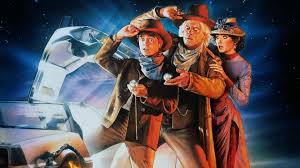
But I’m getting ahead of myself here. “Part III” begins where “Part II” left off, as teenage time-traveler Marty McFly (Michael J. Fox) has returned to 1955 to settle things so that his present-time of 1985 will be fixed after a mishap. His companion, Dr. Emmett “Doc” Brown (Christopher Lloyd), accidentally ended up going back in time to the Old West in 1885. After sending a 70-year-old letter to Marty to be delivered at that particular point in time, Marty enlists the help of the 1955 equivalent of Doc Brown to restore the time-traveling DeLorean motorcar so that he can get back to the future. But Marty soon discovers that Doc is destined to be shot by a bandit, Buford “Mad Dog” Tannen (Thomas F. Wilson), who of course is an ancestor of Marty’s bully in the other two films, Biff Tannen. So once the DeLorean is up and running, Marty decides to travel back in time to 1885 and rescue his friend before that happens.

Now in the Old West, Marty reunites with Doc, but runs into a problem—after a run-in with some Indians, the DeLorean’s fuel line is torn, and so without gasoline, Marty and Doc must come up with another way to bring the car up to 88mph in order for the “time-circuits” to operate and bring them back to the future. Their scheme includes pushing it with a freight train and hoping it bring it up to enough speed that it works. But there’s also another problem. Doc has fallen in love with a local schoolteacher, Clara Clayton (Mary Steenburgen). Upon meeting her, he is instantly attracted to her, and the feeling is mutual. The feeling is so much so that Doc sometimes forgets that he owes it to himself not to interfere with history again, even if it means going back to the future and leaving Clara behind. Marty has to be the one to talk some sense into him, for a change.

This element of “Back to the Future Part III” is the sweetest and most interesting of the film. Lloyd and Steenburgen are great together and exhibit convincing, appealing chemistry. It gives Lloyd a chance to show further dimensions in his character of intelligent Doc Brown, and Steenburgen’s Clara is not a one-dimensional floozy for Doc to fall for; she’s an odd, quirky woman who is able to capture Doc’s heart with no problem. She’s easy to like and even easier to fall for. This is the kind of performance I was hoping to receive from Steenburgen in a similar time-travel comedy/adventure, “Time After Time” with Malcolm McDowell.

Oh, and I forgot to mention Marty’s encounter with the big, bad bandit himself, “Mad Dog” Tannen. This encounter leads to Marty standing up to him when he threatens Doc and Clara, and Mad Dog challenging him to a shootout. (Although, instead of high noon, it’s high eight a.m.) Marty thinks this won’t happen, as he and Doc are expected to leave for home before that time. But of course, something has to go wrong, and Marty must ultimately face up to the jerk once and for all.

“Back to the Future Part III” is essentially a Western, and it’s an immensely entertaining one. Even if this Western world is more of a “movie-Western” than an “actual-Western,” it’s still enjoyable to see the standard stuff you usually see in Westerns. (You even see Pat Buttram as a regular in a bar.) It’s a fun Old West world that, much like “Back to the Future Part II”’s futuristic design, the production design for this Western town is impressive.

“Back to the Future Part III” concludes the “Back to the Future” trilogy, and ends on a satisfying note that pays off everything that was set up and is creative in its storytelling. It makes you want to rewatch the entire trilogy from the first film to the last to view the full experience as a whole itself.

And that’s just what I do with the entire “Back to the Future” trilogy. Yes, the first film is my favorite movie of all time, and the sequels are somewhat lesser in tone, but they are still fun to watch and I like them without comparing them to the original so much. They may not be as good, in that case, but they are still highly enjoyable, energetic romps.

Back to the Future Part II (1989)

22 May

images

Smith’s Verdict: ***

Reviewed by Tanner Smith

I said in a previous post that “Back to the Future” is my all-time favorite movie. I truly love it because it kept me invested and entertained throughout, while also playing to certain emotions that it’s hard to fully describe how much it worked. So with that being the movie I can watch a hundred times and never get tired of, that must mean I hate the sequels by comparison, right? I mean, they are more broad and definitely goofier in tone than the first film, so with the strong way I feel towards the first film, I should necessarily hate the sequels, right? Well…I don’t. No, I really don’t. I think they’re very entertaining films in their own way, not necessarily in comparison to the original. They’re just fun action films that maybe don’t have the emotional impact of the original, but still some good treats that make them enjoyable. They’re imaginative, fun movies that I do enjoying watching every now and then, but for different reasons than the first.

Let’s start with “Back to the Future Part II.” “Back to the Future Part II” picks up right where “Back to the Future” left off, as teenager Marty McFly (Michael J. Fox) has just returned home (to 1985) after a trip to the past (in 1955) via a time-traveling DeLorean motorcar invented by zany scientist Doc Emmett Brown (Christopher Lloyd). Marty’s reunion with his girlfriend, Jennifer (Elisabeth Shue, replacing Claudia Wells this time), is quickly interrupted by Doc Brown and his DeLorean as Doc frantically asks Marty to accompany him to the future and handle a situation involving his children.

So, Marty and Doc travel to the Hill Valley, California of the year 2015 so that Marty can impersonate his own teenage son and prevent an incident that would jail his son and ruin the family’s life. They succeed, but Marty now has a new goal. He buys a sports’ almanac that covers statistics for fifty years, and comes up with the idea that if he bets on the winner of a sporting event back in his own time, there’s no way he can lose. Doc talks him out of it (“I didn’t even invent the time machine to win at gambling; I invented the time machine to travel through time!”), but it turns out that old Biff Tannen (Thomas F. Wilson), the bully from the original film, was listening in on the idea, and winds up stealing the almanac and the time machine to go back in time and use it to change history. Once Marty and Doc are back in 1985, their hometown is a hellish area where Biff is rich and corrupt and married to Marty’s mother (Lea Thompson).

And so as Marty finds out that this present-Biff got the almanac from the old-Biff when he was actually young-Biff in the year 1955, he and Doc go back to 1955 and race to retrieve the almanac and set things right with the time-space continuum. Are you getting any of this, by the way?

One of the pleasures of “Back to the Future Part II” was just how much time-travel is used. It was fun watching these characters that we’ve grown to like from the first film now in the middle of a runaround through time. First, they travel to 2015; then, they go back to 1985; then, they go back to 1955 to fix a future that wouldn’t have been altered if Biff didn’t switch it to appear this way in 1985 after first traveling back from 2015…wow, describing it like that makes it even more confusing, now that I think about it. But I got into the spirit of it and wound up having a good time.

Now, it is true that the relationship between Marty and his father, George McFly, which one of the most refreshing things about the first film is missed here (in fact, George is hardly ever seen, and when he is, he’s played by a different actor than Crispin Glover). And also, when you get down to it, this sequel really is just a romp. It’s more of a complicated comedy than anything else. But in its own goofy way, it is a ton of fun. Michael J. Fox and Christopher Lloyd are very game and appealing in their well-known characters, and Thomas F. Wilson has a ton of fun playing all versions of Biff—young (1955), middle-aged (1985), and old (2015). He’s an amusing villain as well.

Oh, and while we’re on the subject of an actor playing different roles (and yet the same role), I might as well mention that Michael J. Fox not only plays Marty, but also his 2015 counterpart, his teenage son, and…even his teenage daughter (yeah, it’s as creepy as you’d expect).

The look of the futuristic Hill Valley in the year 2015 is incredible. Even though it’s 2013 and we’re not even close to half the things that are invented here, it still makes for a good fantasy and a nostalgic imagination-fuel that the filmmakers must have felt. They apparently went all out to make this world look credible, and it is a marvel with many things to behold. There are flying cars, hence a “skyway” (a highway in the air). There are holographic movie ads (“Jaws 19,” with a CGI shark that “attacks” passersby). There’s even a nostalgic diner called “Café 80s,” which is chuck-full of ‘80s material—there are video waiters that look like either Michael Jackson or Ronald Reagan, there are multiple TV screens that play old ‘80s sitcoms (like “Cheers” or “Taxi”), and there’s even a “Wild Gunman” arcade game that kids in the future call a “baby’s toy,” much to Marty’s surprise. Oh, and let’s not forget the wardrobe—Nike sneakers that lace themselves up to fit; a jacket that is able to fit anyone; and a multicolored reflective cap. Oh, and how about the hoverboard? There are literally so many surprises to be found in this future world that it’s hard not to admire the production design and creativity behind these props and sets.

“Back to the Future Part II” is a different movie than the original film in that it’s more of a screwball comedy. But it’s still a good, enjoyable movie that I recommend for what it is rather than just focusing on the comparisons to the first film. It’s not as emotionally involving, but it is still good fun.

Death of a Superhero (Short Film)

21 May

532557_197176317063003_661340127_n

Smith’s Verdict: ***

Reviewed by Tanner Smith

“Death of a Superhero” is a 10-minute short film that asks the question, what happens when a superhero loses his powers? Of course, he would have to give up the job (and throw away the costume) and reduce himself to his regular human alter-ego permanently. That’s the case with John Jameson, a.k.a. Captain Amazing. After an intense battle with his arch-nemesis, Dr. Disaster, Amazing loses his powers and therefore his identity of a superhero.

After his battle (which I’m assuming he easily ran away from after the final thrashing), Amazing (well-played by Ed Lowry) is bloodied and beaten as he returns to his apartment. Now without his strength and whatever those cool-looking lightning/laser effects that Amazing shot out of his hands were supposed to be (yeah, what were those again?), he is forced to live with his identity of John Jameson. He burns the Captain Amazing attire (which include cape and mask), his identity is declared dead by the media, and John prepares to accept a relatively normal life. However, it turns out that it isn’t so easy, as he still finds himself listening to a police band waiting for a crime he can stop. He does try to foil some thieves, but gets his ass handed to him. It’s then that he comes to grips with the concept that Captain Amazing is now dead. But is there a way a normal person can become a hero without superpowers?

For a 10-minute film, it’s intriguing how “Death of a Superhero” was able to tell an admittedly complex story and manage to tell it within certain limits so that it doesn’t feel rushed. There’s no padding involved, so there’s nothing really slowing it down, which works to the film’s advantage. The Amazing/Disaster battle is simply overlooked in the opening credits, but with enough intensity to deliver the point. This means the story gets rolling real quick, as John comes to his apartment, realizes his loss of identity, interacts with people (including a little girl who lives in the same apartment building), tries to bring himself back to being a hero, and then there’s the ending, which is satisfying with a positive (and subtle) message that isn’t forced in the slightest.

I think what I really liked about “Death of a Superhero” was that while it was about a superhero, it wasn’t a superhero movie in the traditional sense in that there’s a supervillain and a big climax. There is a climactic moment near the end, and something close to a villain (in the form of an abusive husband/father), but it’s played in a realistic way and, in a clever move, in a way that mirrors the opening battle. So we have three fights in this short film—one that serves as a traditional superhero duel (with some good visual effects by Brandon Bogard, who also provided FX for the short film “The Man in the Moon”…and unfortunately with a lot of camera-shaking so that those effects are not fully appreciated); one that serves as a standing point for the failed hero midway through the film; and another that gives the hero a moment of redemption, as a person. It’s a clever structure that works.

“Death of a Superhero,” which was made by student filmmakers of the Digital Film program at the University of Central Arkansas, is an effective short that serves as a metaphor for how modern, everyday people can be heroic in their own form or fashion. It’s a touching, well-made film with a respectable message delivered successfully.

NOTE: You can see the film here: https://vimeo.com/44162407