My Favorite Movies – Black Rock (2013)

14 Dec

By Tanner Smith

Three girlfriends go camping on an isolated island and guess what–they’re not alone. That’s the setup for the tense and well-executed thriller “Black Rock,” which mixes both mumblecore and bare-bones genre filmmaking flawlessly. Who cares how limited resources were for making this film when there’s such skill and craftsmanship, not to mention an appealing cast of protagonists to root for, involved?

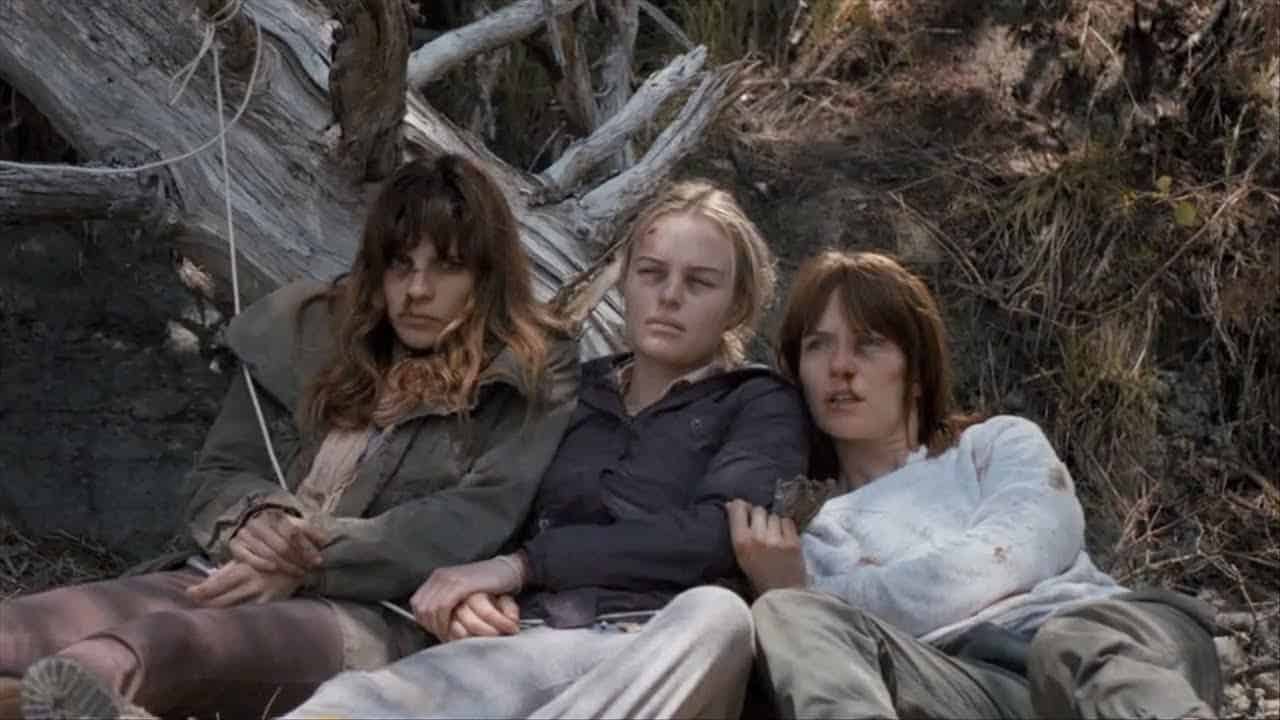
Directed by and co-starring Katie Aselton and written by her husband Mark Duplass, “Black Rock” features three women (Aselton, Kate Bosworth, and Lake Bell) who decide to rekindle their childhood friendship by escaping to their favorite place from growing up: an island off the coast of Maine. Two of the friends (Aselton’s Abby and Bell’s Lou) aren’t on good terms due to a betrayal from long ago, but the third and ringleader of the trio (Bosworth’s Sarah) manages to keep the peace (for a little while, at least).

Right off the bat, all three actresses are extremely believable in their roles. I buy them as friends, their dialogue rings true, they share unique chemistry, and they’re a cut above your standard thriller movie characters. (Aselton, in particular maybe because she also directed the film, stands out with real charm as a comic actress early in the proceedings–but her emotional moments late in the film are effective too.)

Not long after they’ve set up camp, they find they’re not alone, as three hunters (Will Bouvier, Jay Paulson, and Anslem Richardson) happen upon them. They recognize one of them from way back when, so they figure they’ll spend some time together, catch up, get a little drunk, and have a good time…

It doesn’t turn out that way.

Without giving away specifics as to how this came to be, all three women are now threatened with death by these gunmen (who, by the way, were in the military and have served numerous tours overseas), who plan to hunt them through the woods and kill them. A bit of “Deliverance” mixed with a bit of “The River Wild” mixed with a chilling and tight script from Duplass help make the back half of “Black Rock” effectively thrilling. What also helps is that by then, I’ve come to know the key characters and root for them to take some control of the horrific and grisly situation. Thankfully Sarah, Lou, and Abby aren’t completely helpless nor are they invincible superheroines–they feel like real people thrust into a world they didn’t make.

But when the chips are down, they do prove to be worthy badasses. An interesting theme “Black Rock” keeps is one of the power of friendship, as cheesy as that sounds. Each group, of the heroes and the villains, is loyal to each other and that’s what motivates their actions.

Oh, and while keeping this spoiler-free, there is a scene in which Lou and Abby strip naked in the woods at night–but this scene isn’t gratuitous; there’s a reason for why they’re doing this.

You know how they say don’t go camping in a horror movie? Well, how can you know you’re in a horror movie unless something terrifying happens while you’re camping? That’s essentially the mindset of the movie.

C’mon C’mon (2021)

9 Dec

Smith’s Verdict: ****

Reviewed by Tanner Smith

I’m not gonna lie–I had to sit with what I just saw for about 10 minutes before writing about “C’mon C’mon.”

I’m a big fan of writer-director Mike Mills’ work–he makes deeply personal films about inter-family relationships and characters I deeply care about. With his 2011 drama “Beginners,” it was Ewan McGregor learning from his father (Christopher Plummer) how to relate to someone again. With 2016’s 20th Century Women, it was Annette Bening struggling to relate to her teenage son (Lucas Jade Zumann) in changing times. And now with “C’mon C’mon,” we have the always-interesting Joaquin Phoenix in one of his softer roles as a radio journalist having to connect with his 9-year-old nephew.

I didn’t see “20th Century Women” in time for my best-of-2016 list (and only after did I check out “Beginners,” so obviously that one wasn’t on the 2011 list either)–this time, I can finally have a Mike Mills film on my year-end list.

As I mentioned, Phoenix plays a radio journalist named Johnny, who goes around different cities asking many different children questions about particularly heavy topics like how they see the future. One of the great touches of the film is when he teaches his little nephew Jesse (Woody Norman) how to use his equipment to record natural sound as they walk around the city–whether Johnny knows it or not, it’s helping open up Jesse’s mind to the world around him.

Side-note: there’s already critics asking why this film had to be presented in black-and-white, especially since it seems set in modern times and there were two recent films set in the past (Belfast and Passing) that were also in B&W–I will not argue against this decision, especially because all this talk about the future helps give the film a sense of timelessness. (Plus, Johnny and Jesse are often walking around the city streets of Los Angeles, New York, and/or New Orleans–Jesse lives in LA, Johnny takes him with him to NY, and the two later visit NO–and the cities always look great in black-and-white.)

NY-based Johnny calls his LA-based sister Viv (Gaby Hoffman), with whom he doesn’t usually talk except on occasions such as the one-year anniversary of their mother’s death, and Viv needs a favor from him. She needs to go to Oakland to be with her manic-depressive soon-to-be ex-husband Paul (Scoot McNairy), because he had another breakdown recently, and she needs Johnny to look after her 9-year-old son Jesse. So, Johnny moves into Viv’s house to be with Jesse, who is a very strange but also very bright little boy. Naturally, the two don’t know how to get along, but as some time passes, he decides he likes the little tyke and doesn’t mind being a parent.

But naturally, this is only the beginning. With Viv’s permission, Johnny takes Jesse back to New York with him so he can get back to work and spend more time with him. Of course, with Jesse being a little kid who lives in a world all his own, Johnny realizes that this parenting gig isn’t as easy as he thought. When he tells Viv about how difficult things are with him, she responds, “Welcome to my f***ing life”–but she also assures him that nobody knows what they’re doing and there are going to be times when you want to be away from your kid and times when you love your kid, but you just have to keep going.

There are beautiful moments of gentleness and sincerity in the moments where Johnny and Jesse truly bond together, and there are heart-stopping dramatic moments such as when Johnny loses Jesse on a busy city street(!)–one of the things I love about Mike Mills films is the way he balances lighthearted humor and heavy emotional drama. The relationship between uncle and nephew is at the heart of the movie and it’s wonderful seeing seasoned veteran Joaquin Phoenix and pre-pubescent newcomer Woody Norman interact together as these two characters.

C’mon C’mon is one of my favorite films of 2021 and I’ll make sure it gets a spot on my year-end list.

My Favorite Movies – Gremlins (1984)

3 Dec

By Tanner Smith

“Die Hard” is technically a Christmas movie, but I’ll watch it anytime. “Gremlins,” however…even though it was initially released in the summertime, it just feels right to watch only in Christmastime. (That’s probably just me though.)

I DO think of Christmas when I think of “Gremlins.” The pleasant small-town setting looks like a Norman Rockwell painting. Christmas tunes are either hummed by characters or played in the playground. It even begins with the adorable little creature Gizmo being given as a Christmas present.

But I guess I can see why some people don’t like to associate “Gremlins” with the holiday season. The little red-eyed monsters attack Santa Claus, they tie up the dog outside in Christmas lights (poor pooch), and then there’s that random hella tragic speech about how the female lead found out there was no Santa Claus!

But that’s kind of why I love to watch this movie each Christmas too. I already have “Home Alone,” “It’s a Wonderful Life,” “A Christmas Story,” “Arthur Christmas,” and whatever “Christmas Carol” adaptation I feel like watching–why not a twisted horror-comedy about little monsters raise hell in a quiet little town on Christmas? I need a little variety! (And hey, why not a little dark comedy like “Bad Santa” or “The Land of Steady Habits” to go along with it? Those take place on Christmas too.)

“Gremlins” is a Spielberg production directed by Joe Dante (who made another favorite of mine: “Matinee”). It begins with a Spielbergian touch as young adult Billy (Zack Galligan) cares for his new pet, a strange big-eyed little creature called a Mogwai, named “Gizmo.” Right off the bat, Gizmo is freaking adorable–he reminds me of my late beloved Shi Tzu puppy.

But there are rules that come with owning a Mogwai: keep it away from bright lights (and sunlight will kill it), don’t get it wet (just let it clean itself like a cat), and NEVER feed it after midnight. (Whatever you want to say about how it’s “always ‘after midnight'” is pretty much moot–“Gremlins 2: The New Batch” already had fun with analyzing the concept.) When all three rules are broken, that’s when Gremlins gets more fun, as Dante goes with a sci-fi thriller approach, paying homage to 1950s monster films.

Oh, not just with the small town being invaded by otherworldly beings–Dante literally throws in Robby the Robot and the infamous Time Machine at random spots of the movie! (Dante always likes to fit in references to such in each of his films.)

“Gremlins” has a body count–don’t show this to kids unless you’re sure they can take it. When the Mogwai multiplies into more of them, they become vicious fanged beasties with scaly claws instead of furry paws. And they do kill people, and many of the Gremlins themselves get killed in pretty grisly ways too, especially when Billy’s mother (Francis Lee McCain) defends herself against some of them in her own kitchen. There’s also an intense scene in which Billy is nearly sliced by a Gremlin with a chainsaw. This film is rated PG, but this was back when PG didn’t just mean “Practically G” and also it paved the way for the PG-13 rating (along with Spielberg’s “Indiana Jones and the Temple of Doom,” which came out the same year as “Gremlins”). If you want to show this to your younger family members, keep that in mind.

I guess you could say “Gremlins” is a lovely bit of coal to fit into your Christmas stocking–and I enjoy it as such.

My Favorite Movies – Planes, Trains & Automobiles (1987)

23 Nov

By Tanner Smith

Here’s one from my personal top 100. No, top 50. No, you know what? Maybe even top 10! It’s pretty much my definition of “a perfect movie,” and since it takes place around Thanksgiving, it’s declared the ultimate “Thanksgiving movie.” What better time of year to talk about it?

I’m of course talking about “Pieces of April.” What a delightfully droll indie gem with a winning performance from Katie Holmes as a quirky, rebellious young woman struggling to make everything perfect for her dying mother because this might be her last Thanksgiving– No, it’s obviously Planes, Trains & Automobiles. OF COURSE it’s “Planes, Trains & Automobiles!” Why would it be anything other than “PLANES, TRAINS & AUTOMOBILES??”

Sorry, not sorry. I love this movie. (Btw, “Pieces of April” is really freaking good too.)

Where do I begin with this one? Why do I love it so? Well, the first thing that comes to mind is that it’s my idea of a “dramedy”–part comedy, part drama, and overall wonderful. With movies like this, City Lights, and 50/50, among others, I’ve learned that if there’s anything more important than a comedy that makes you laugh…it’s one that makes you feel.

Where does the comedy come in? Well, Steve Martin and John Candy are a great comic duo with differing personalities–Martin’s Neal Page is an uptight, tidy marketing exec; Candy’s Del Griffith is a messy, joyous (and blabbering) traveling salesman (of shower curtain rings). They meet by chance as they try to fly from New York City to Chicago. Del doesn’t have a good first impression after inadvertently stealing Neal’s cab en route to the airport, and it gets even worse when they’re seated together on the plane and Del WILL NOT SHUT UP. When a snowstorm forces them to land in Wichita, Del helps Neal find a motel room to sleep in…and one bed for them to share together.

We’re not even a half-hour in before Neal totally loses his cool with this slob. Del’s a good-natured guy, but he’s just too much for Neal when it comes to being friendly. And Neal blows up and lets him have it; at one point, he states that he could tolerate an insurance seminar before sitting next to Del on the plane and listening to him tell his boring anecdotes again. This kind of thing usually happens near the final act of your typical buddy comedy–but this is not your typical buddy comedy, as writer-director John Hughes will assure you. (This isn’t the only time Hughes toys with conventional story elements in this movie.)

Steve Martin’s long rant is funny…but the scene doesn’t entirely play for laughs. During this rant, we often cut back to John Candy’s face as the character takes it all in with genuine pain–and when Martin is finally done, Candy delivers a heartfelt monologue of his own, resulting in a wonderfully touching moment that makes me forget I’m watching a comedy.

Oh, and the morning after…is always a riot to watch. (“THOSE AREN’T PILLOWS!”)

This is only the first act! The rest of “Planes, Trains & Automobiles” includes a lot of great moments that follow, such as Neal trying to lose Del while fate keeps bringing them back together, they take a train, they rent a car, Neal has his infamous profane breakdown in front of an auto clerk, Neal and Del realize THEY’RE GOING THE WRONG WAY on an expressway, they finally become friends and learn a lot about each other on their journey to get Neal home in time for Thanksgiving dinner with his family… There’s just so much going on in this movie, and at barely an hour-and-a-half of running time, every minute counts.

A lot of it is very funny and the rest of it is very endearing. I already mentioned Del’s reaction to Neal’s angry words towards him (which is one of my favorite moments in any film honestly). But there are some more tearjerking moments that come right near the end.

And this movie earns those tears. We’ve spent this entire movie getting to know these two characters, and by the end of it all, we love them both.

Oh, and here’s a delicious piece of irony–if Del and Neal had just stayed at the Wichita airport, they would’ve been able to catch a flight out and make it to Chicago right on time. But where’s the fun in that?

I truly love this movie and I’ll be watching it with my family this Thanksgiving Day. It is one of my absolute favorite movies of all time.

Passing (2021)

19 Nov

Smith’s Verdict: ***1/2

Reviewed by Tanner Smith

Netflix’s “Passing” looks at an age-old issue in the Black community: light-skinned Black people “passing” as white.

“Passing” is the screenwriting/directing debut of actress Rebecca Hall, who adapted the screenplay from a 1929 novel of the same name and for whom this was a deeply personal project, as her grandfather was Black but passed for white. The result is a gem with skillful filmmaking, gorgeous cinematography, and two extraordinary leading performances at the center of it.

Set in New York City in the 1920s, “Passing” is focused on two light-skinned Black women who were good friends in the 1910s but went their separate ways after. Irene aka Rene (Tessa Thompson) now lives in Harlem and has settled down with a doctor for a husband (Andre Holland) and two children, and is a member of the Negro Welfare League. She’s doing some shopping downtown (and doing her best to hide certain features so the posh white people don’t know she’s Black) when she encounters her old friend Clare (Ruth Negga)…who has reinvented herself as a glamorous blonde, married to a wealthy man who doesn’t know she’s Black. As Clare brings Rene up to her hotel suite for a drink, Clare’s husband, John (Alexander Skarsgard), arrives and already shows his colors as slimy and bigoted and never sorry for it (of course never realizing the ethnicities of present company). Clare welcomes herself into the lives of Rene and her family, hoping to rekindle her friendship with Rene. But of course, things aren’t as simple as they may seem…

“Passing” was shot in black-and-white, giving Hall and cinematographer Eduard Grau ample opportunity to emphasize skin color–it’s much more effective than if it were done in color.

This film has a great cast. Both Ruth Negga and Tessa Thompson are Oscar-worthy in their roles; they’re able to get across the numerous layers their conflicted characters are covered with. (It’s also the first time I’ve truly seen Thompson, who was good in the “Creed” movies and the Marvel Cinematic Universe, disappear into a role.) Alexander Skarsgard is of course great as the oily creep, Andre Holland is solid as Rene’s husband who has mixed feelings about where his kids are growing up, and Bill Camp, one of today’s best and understated character actors, turns up as a celebrated white author who is the guest of honor at an NL dance party.

The overall point of “Passing” is made pretty clear, as everyone is passing as something else one way or another, no matter what the race, sexuality, social stance, etc. And I was intrigued by how Rebecca Hall, who proves to be a very capable director, gets it across.

“Passing” is now available on Netflix.

Language Lessons (2021)

17 Nov

Smith’s Verdict: ****

Reviewed by Tanner Smith

I don’t often do this on my blog, because it’s more about other people’s films than my own, but I’m going to plug my short film “Cassandra.” It’s a 43-minute comedy-drama that takes place entirely through video-chat. I co-wrote and directed it and it can be seen on YouTube here.

What does this have to do with the film I’m reviewing, titled “Language Lessons?” Well, this film also tells its story through a webcam-perspective format and I was kind of jealous of it for that.

No joke–many times throughout “Language Lessons,” I kept thinking to myself, “Oh THAT’s how I was supposed to make our video-chat movie!” But at least now I can tell those who told me they couldn’t get through the first 8 minutes of “Cassandra” that there IS a way to do it. And this is that way.

I mean it; “Language Lessons” is one of my absolute favorite films of the year. I love this movie.

“Language Lessons” is, like I said, told entirely through webcam and focused on two characters played by Natalie Morales and Mark Duplass. (Morales also directed the film and co-wrote it with Duplass.) And it’s about a Spanish teacher (Morales) and her student (Duplass) who form a friendship over a long period of online Spanish lessons.

Mark Duplass is one of my favorite people working in the film industry, and this, I believe, is his very best work. Just when I think I’m going to get the Duplass I already know and love from his other works, such as Safety Not Guaranteed and Creep, he shows some heavy dramatic chops I didn’t even know he had. There’s a scene in which he’s coping with tragedy and he has an emotional breakdown in trying to figure out how to tell people about it–that was the moment I talked to the screen: “Dang, Mark, you should get an Indie Spirit Award nomination for this!”

Natalie Morales is a skillful director (and soon after watching this film, I checked out her other film, “Plan B,” available on Hulu–very good work there too) and a winning screen presence as a friendly soul who first teaches her student and then is there for support. She deserves Indie Spirit recognition as well, especially when we see more levels to her character late in the film.

Being a film centered on two people through virtuality, “Language Lessons” is a 90-minute conversation piece. Not only are the two people such appealing personalities that work off each other wonderfully, but the conversations they have are interesting to listen to (and watch, seeing as how those who don’t already know Spanish will need to read subtitles much of the time). That’s the reason I watch indie dramedies: to watch characters I care about go through life the best ways they know how.

“Language Lessons” is now available to rent/buy on-demand and will be available on DVD/Blu-Ray next month–and I highly recommend it.

Now…maybe I should start writing another webcam movie, huh?

The Water Man (2021)

17 Nov

Smith’s Verdict: ***1/2

Reviewed by Tanner Smith

“The Water Man” is a charming and moving family film directed by acclaimed actor David Oyelowo, who proves to be a successful director based on this first effort. It feels like he took elements from the classic ’80s Spielbergian kid-adventures like “The Goonies” and “E.T.” and put a modern spin on them. In today’s movies, we can have a couple of kids going on an extraordinary adventure…while also dealing with real terrors such as leukemia, abuse, and even a wildfire.

Oh, and there’s some monster out there or…something.

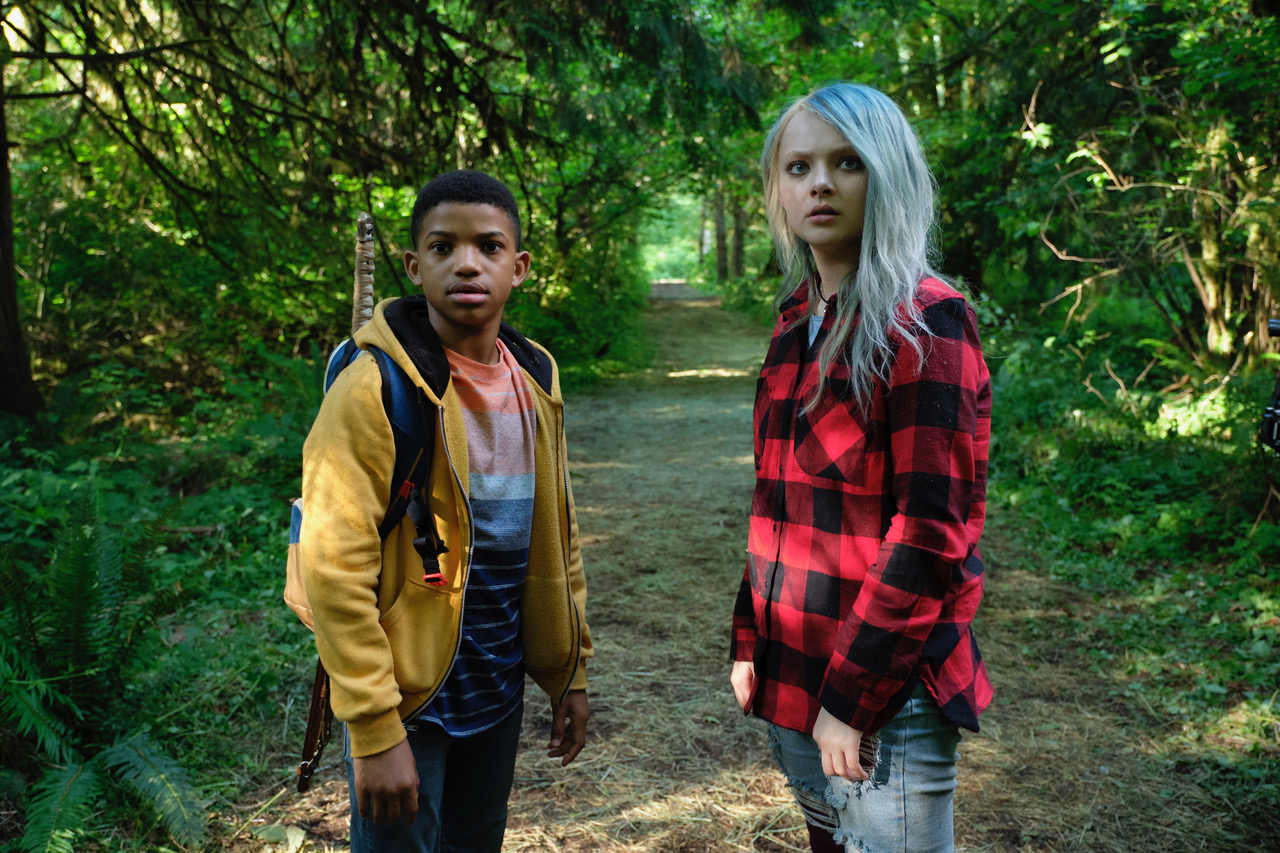
“The Water Man” is about a young boy named Gunner (Lonnie Chavis) who learns of the legend of the Water Man, which dwells in the woods near his hometown and has harnessed the power of immortality. Believing the Water Man is real and can help save his ailing mother (Rosario Dawson), he, along with an older girl named Jo (Amiah Miller) who claims to have seen the legend itself, goes on a quest to find him.

Both the young actors are outstanding and their characters are richly drawn. (Though, Jo’s backstory is a little too easy to figure out upon first viewing, but it’s still compelling.) I was invested in their journey, especially because I didn’t know what was going to happen or even if this Water Man character was real. And in the end, I cared deeply about what became of these kids–and that goes for the adults too, from the leukemia-stricken mother to the struggling father (played by Oyelowo himself) to the helpful sympathetic police officer (Maria Bello) to the man who is absolutely certain that the Water Man is 100% real (he’s played by the great Alfred Molina).

“The Water Man” is proof that the family film is alive and well even today–both children and their parents can get something out of this beautiful story filled with tense adventure and well-deserved drama plus appealing characters going through it all. Check it out, show your kids, and prepare for an interesting blend of fantastical legend and human interest.

Help, I Shrunk My Friends (2021)

17 Nov

Smith’s Verdict: ***1/2

Reviewed by Tanner Smith

Ohh boy, how am I going to defend this one?

“Help, I Shrunk My Friends” plays like a cheesy sitcom episode that runs for an hour-and-a-half and doesn’t leave you with anything except a few cheap laughs. But I have to admit…I not only laughed, but I smiled too.

No kidding. I actually enjoyed this film as a piece of mindless fun, which at some point or another is just what I need. Maybe you’ll enjoy it too–you won’t know unless you see it.

“Help, I Shrunk My Friends” is a German import dubbed into English. (And I’m not going to sugarcoat it–the English dubbing is AWFUL.) It’s also a sequel to two other badly-dubbed family films, “Help, I Shrunk My Teacher” and “Help, I Shrunk My Parents” (don’t you love it when the titles tell you what to expect?), both equally cheesy and dopey and not really worth recommending–so why is this third movie worth recommending?

As strange as it may sound, I admire this film for growing up with the adolescent main characters. The previous two films starred prepubescent kids dealing with something odd and supernatural; this time, it’s the same group of kids, only they’re teenagers (about 15 years old), they’re swearing up a storm (and one even flips another the bird at one point), and they’re oddly enough involved in a story that serves as a parable for hormones. (Bear with me; I’ll get to that.) In a strange way, these films represent a coming-of-age “Up Series” aspect as we see these kids grow up with each film.

Now, where does the “shrinking” aspect come in? Well, all of these films take place in a prep school that is haunted by the ghost of the late warlock Otto Leonhard (Otto Waalkes), whose spells include shrinking people to about seven inches tall with help from a magical marble and a bowl. Through Leonhard’s will, the sphere spins round and round inside the bowl, then fire and smoke burst up, and shazam! You’re suddenly shrunk. (Weird, but somewhat inventive.) In this film, Leonhard’s ghost grants the power of Shrinking to our young hero named Felix (Oskar Keymer) to protect all of his magical artifacts kept on display.

But Leonhard didn’t count on the possibility of a teenage boy having trouble sorting out priorities, as Felix uses his new powers to impress the pretty new girl in school, named Melanie (Lorna zu Solms), to shrink a magical necklace for her to wear as a bracelet. (This necklace/bracelet glows when certain people are near, revealing someone’s attraction.) When Felix’s friends accuse Melanie of stealing items and get on his case since they know he’s too smitten to see their side, Felix gets mad and shrinks all four of them–Mario (Georg Sulzer), Robert (Eloi Christ), jokester Chris (Maximillian Ehrenreich), and most notably, Ella (Lina Huesker), who has a not-so-secret crush on Felix (who, of course, sees her as just a friend).

Well, it turns out they were right–Melanie has been helping an old grudge-fueled witch, Hulda Stingbeard (Andrea Sawatzki), and two teenage bullies (Cosima Henman and Tobias Schafer) steal Leonhard’s book of spells so Stingbeard can extinguish his spirit and…I dunno, rule the world or something like that. Melanie is also a kleptomaniac and has stolen the magic marble, which means it’s going to take a while for Felix to get his friends back to normal size. Thus results in a crazy adventure in which Felix must keep his now-tiny friends safe before they all must face the villains and inevitably foil their plans.

The villains are the strangest and funniest aspect of the movie. Stingbeard was seen in the previous film as an old nemesis of Leonhard’s who was shrunken and resized as a rapidly-aging (because apparently shrinking causes you to age 10 times faster) practically-skeleton-like monster who has spastic rapid movements when she’s not depending on mobility via wheelchair–she also barks orders to her young assistants to the point where I’m wondering why they even bother taking her crap for so long. The two assistants, who eventually capture the shrunken kids and treat them to deadly games of killer tops in a nicely-done sequence (btw, the digital effects here are actually quite impressive), get some good laughs as well, particularly when they bicker like your typical high-school couple.

They definitely score more laughs than the antics involving Felix’s dope of a father who becomes a chaperone for a school overnight and adds pretty much nothing when he’s asked to look after the other students while Felix and his friends save the day.

There is a charm to the way Felix, a likable young protagonist, has to handle the responsibility of protecting his ghostly mentor’s property, keeping his friends safe, even shrinking himself to rescue them from the two regular-sized bullies, and questioning whether or not to trust Melanie to help him–not to mention, the love-triangle cliche I usually can’t stand in movies is interesting here when we have Ella trying to talk some sense into Felix who is smitten by Melanie. And being a “shrinking” story, you would hope to see some fun action with differing sizes–while there aren’t many, there is a fun chase scene involving the shrunken kids riding a big skateboard to pursue the villains.

“Help, I Shrunk My Friends” doesn’t have the humor or even the smarts of “Honey, I Shrunk the Kids,” nor is it even something I would tell my friends to seek out immediately. Look, I’m here to tell you–this movie is silly. Don’t come at me with your comments that it’s too silly. But it’s my kind of silly and that’s why I have trouble telling you that I had a fun time watching “Help, I Shrunk My Friends.”

Belfast (2021)

17 Nov

Smith’s Verdict: ****

Reviewed by Tanner Smith

“Belfast” is acclaimed writer-director Kenneth Branagh’s deeply personal tale based somewhat on his young childhood in Belfast, Northern Ireland before he and his family emigrated to England when he was 9 years old. And with its black-and-white cinematography on top of the autobiographical aspect, many (MANY) reviewers have made their comparisons to Alfonso Cuaron’s equally personal and masterful “Roma.”

BTW, stop. OK? Just…stop. That was “Roma,” this is “Belfast.” Let’s move on, shall we?

Oh, and other critics have pointed out how the specific use of color to blend with the mostly-B&W visuals is more obvious than necessary. I say, so what? It’s effective either way.

Well, yeah, it is clear that the reason visual mediums such as the silver screen, the TV screen, and the theater stage display their art in color to our 9-year-old protagonist beholding them is to give him an escape from the black-and-white bleak troublesome world he has to live in. But come on. It’s still effective.

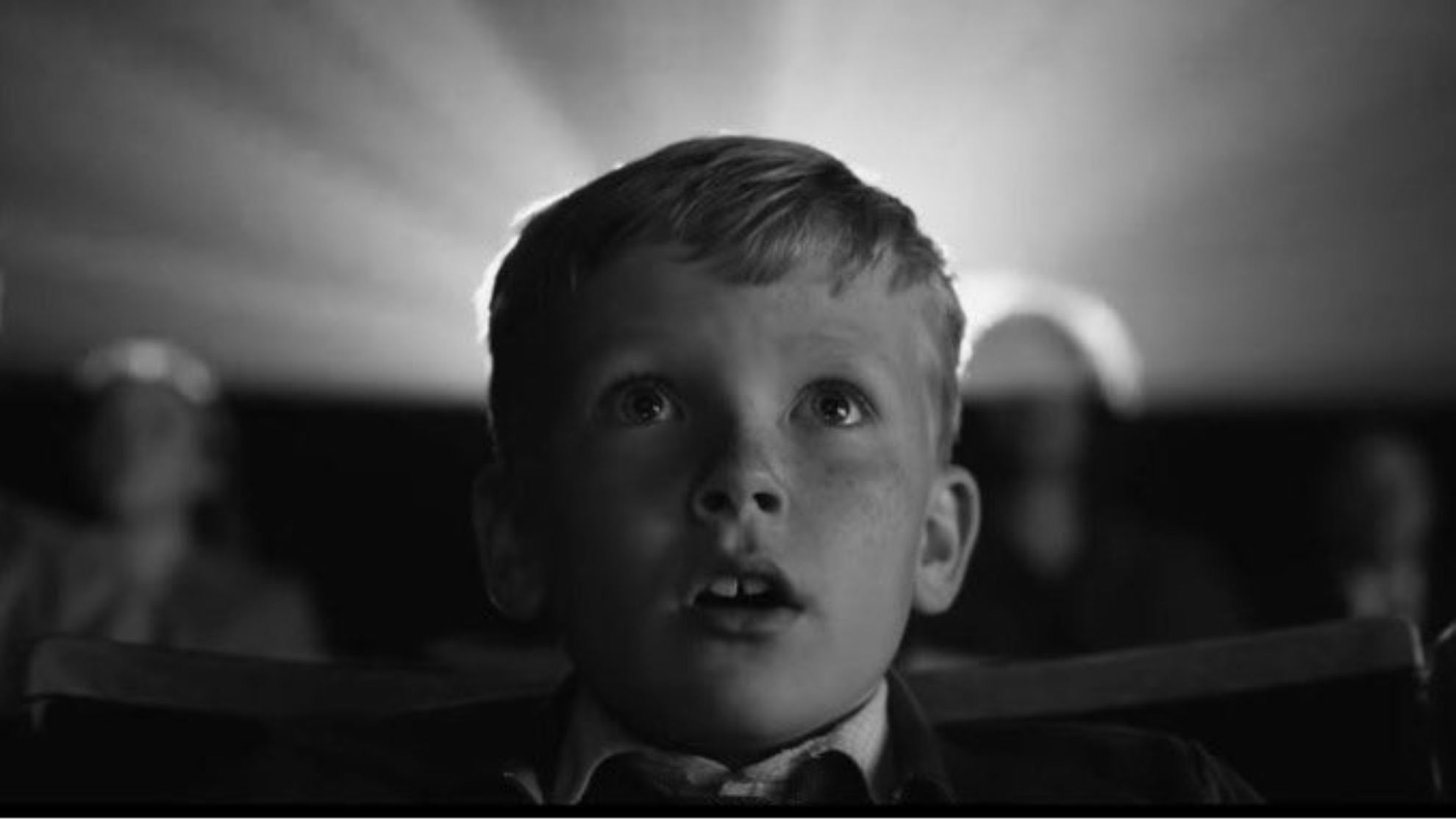
The whole film is effective and wonderfully crafted, paying tribute to those in Belfast who, in the late 1960s, either had to stay or leave (or be sadly lost) when a violent war practically destroys their peaceful neighborhoods. And it does so from the point of view of a child, which keeps us on ground level when going through this world. It also makes the “colorful” (forgive the pun) moments, such as when the boy and his family delight in seeing the movie “Chitty Chitty Bang Bang” in a cinema, all the more precious–while, at the same time, it also makes the scarier, more violent moments a little more romanticized.

Buddy (Jude Hill, adorable throughout) is our little guide through a working-class neighborhood in 1969 Belfast. As the movie opens, he’s enjoying playing a game on his block when suddenly, a violent mob of anti-nationalist Protestants arrive and set fire to the Catholic houses they come across. (We don’t get a lot of detail regarding the history of this civil war–Branagh is careful enough to give us just what we need to know. Even those who aren’t familiar can tell that this isn’t about religion; more so, it’s about nation.)

With all going on outside, there’s also personal issues occurring inside, as Buddy’s family has to consider the future now more than ever. Buddy’s Pa (Jamie Dornan) works as a laborer in England and is often away for business, while Ma (Caitriona Balfe) has to care for Buddy and his older brother and also deal with Pa’s dealings that keep leaving the family in heavier debt. When Pa has the idea to uproot the family to Sydney or England, she argues that they barely even afford to stay here.

Ma also argues that everything she knows is right here in Belfast–that includes Ma’s parents (the wonderful pairing of Ciaran Hinds and Judi Dench), with whom Buddy is often spending time. These two people are delightful to watch. They bicker and make jokes at each other’s expense, but you can feel the love they share for each other and they’re also wonderful grandparents to little Buddy. (Grandpa even helps Buddy with his math homework–Buddy doesn’t want to merely do well in school; he wants to get to know a smart classmate, Catherine (Olive Tennant), on whom he has a crush.)

There’s so much for Kenneth Branagh to pack into his sentimental nostalgic trip that it’s amazing he’s able to succeed in giving us a satisfying film that only runs about an hour and 37 minutes (usually filmmakers think they need an extra hour, so this was a pleasant surprise). When the time comes for Buddy’s family to truly consider where they’re supposed to be at this point in life (do they wait out the war or do they move far away), it’s not hard to feel for them and hope they find some happiness while surviving together. The cinematography from Haris Zambarloukos is outstanding, the acting is nomination-worthy, and the writing and directing from the already-skilled Kenneth Branagh show me that he doesn’t need Shakespeare or great visual technique to warm my heart. “Belfast” is a great film.

My Favorite Movies – Home Alone (1990)

16 Nov

By Tanner Smith

It’s the hugely successful family comedy that didn’t get many positive reviews from critics at the time–well, it still remains a holiday classic to this day, so I wonder who brainwashed who?

I grew up with “Home Alone” and I still watch it every holiday season. It’s hilarious sometimes, heartwarming other times, and altogether a delight to watch every time.

And believe it or not, this is actually one of the first instances that pop into my head when I think of “character development.” Look at Kevin McCallister (Macaulay Culkin) at the beginning of the film and then look at him at the end of the film–this 8-year-old little bratty pissant has learned self-preservation and the value of family. It’s intriguing to see this kid’s coming-of-age journey in between.

I can see someone (let’s say an adult) watching this movie for the first time and thinking to themselves, “This is an annoying self-entitled little puke–why am I watching a movie about him?” And…yeah, in the early scenes, Kevin can be a bit much for the audience to handle, let alone his large family. But that’s just because most of us would rather forget how annoying and bratty we were at that age.

Then the kid is accidentally left alone in his large suburban household, after his extended family left for a vacation to Paris in a hurry. Well, now what’s to do? Easy answer: jump on the parents’ queen-size bed, eat all the junk food, go through your older brother’s private collection, watch violent movies, and do things your parents would never let you do before (like ride a sled down the stairs and out the front door)! That’s the first day alone–but on the second day, he needs a new toothbrush, so it’s time to steal some hidden money from the house and go out to buy one. And on the third day, he goes grocery shopping and even does some laundry because he knows when there’s play, there’s also work to be done.

Kevin is smarter than maybe even he thought, which also comes through when he learns of the constant reappearances of two burglars, Harry and Marv (Joe Pesci and Daniel Stern), outside the house. He comes up with clever ways to fool them into leaving–turning on all the lights, setting up a fake house party with mannequins (seriously, how many mannequins are in this house??), and matching firecrackers with a TV-movie shootout. (“Keep the change, ya filthy animal!”)

But the charade doesn’t fool the “Wet Bandits,” as they’re called, for long, as they learn the kid’s home alone and decide to rob the house with him inside. So, Kevin sets up elaborate traps all around the house for them to fall into…bringing us to the hilarious sequence late in the film in which Harry and Marv get beat up…BAD!

This whole extended sequence is the comedic highlight of the film–it’s a kid’s wish fulfillment to take down the bad guys, and this takes it to the extreme. It’s been proven that many of these pranks would actually KILL someone in real life (go watch the “Honest Action – Home Alone” video on YouTube for a health professional’s opinion)–but in a movie, seeing irons and paintcans bounce off their heads and knock them to the ground is a riot to watch because Joe Pesci and Daniel Stern are hamming it up big-time and play it as jerks who have it coming–it’s like a Three Stooges short or a Tom & Jerry cartoon in that the harder the hits, the funnier they are.

Eh…except when Marv steps on a nail. That was too much for me. (OUCH!!)

Obvious joke is that Kevin has become the Jigsaw Killer, to which I say, “Go see ‘Better Watch Out’ for a twisted version of ‘Home Alone’–the kid in THAT movie makes Macaulay Culkin’s sociopathic character in ‘The Good Son’ look like the Nutcracker Prince!”

What else is there to love about “Home Alone?” There’s actually a lot.

For one thing, I already mentioned that it was heartwarming. The way Kevin’s mother (Catherine O’Hara) practically threatens violence in her complicated journey to get back home to Kevin on Christmas Eve is funny but also very sweet. And of course, there’s the scene that even made George Costanza cry in one episode of “Seinfeld”–the church scene, in which Kevin has a moving heart-to-heart with an elderly, formerly intimidating neighbor (Roberts Blossom).

John Williams’ music score is also great, with a lot of memorable orchestral themes making for the best music composition I’ve ever heard in a comedy.

Director Chris Columbus’ work is often what could be labeled as “workmanlike,” but he deserves credit here for his uses of the colors red and green in the backgrounds and foregrounds to give the film a Christmas atmosphere. That’s another reason I love to watch this film around Christmas–it just FEELS like the type of film to watch during the season.

And of course, there’s young Macaulay Culkin, who was in the spotlight for a long time after this movie, which sadly didn’t do his life and career any favors. (Though, at least he seems happier now.) His work here in “Home Alone” is absolutely genuine, giving us a very bratty but also very innocent character to follow throughout the film. By the end, we’re happy that Kevin has learned his lesson…until “Home Alone 2: Lost in New York.”

“Home Alone 2″…is basically the same movie except set in New York. You could call it “Home Alone 2: The Search for More Money” (of which it made a bundle, because of course). Culkin and Columbus even make fun of what a pointless sequel it is in “Home Alone’s” audio commentary. But with that said, I do enjoy watching this sequel every year too. It has enough fresh humor and a certain charm to it that makes it fun for me to watch… Just don’t expect me to call it a legit good film–let me put it this way: it both “is” and “isn’t” “22 Jump Street,” at the same time. But if the people who made it can mock it and have fun with it at the same time, why shouldn’t I?

“Home Alone” is another holiday treasure written by the late, great John Hughes (“Planes, Trains & Automobiles”). I’ll probably watch it about 4-5 times by Christmas Day. (And that goes for “Home Alone 2” as well.)