That Sinking Feeling (1984)

27 Sep

hqdefault

Smith’s Verdict: ***

Reviewed by Tanner Smith

How can I properly describe, in detail, the charm of Bill Forsyth’s “That Sinking Feeling?” Well, to begin with, in its droll, matter-of-fact way, it’s quite funny and appealing. It has an odd premise—a bunch of bored teenagers band together to plan a heist and steal some kitchen sinks. And its humor is offbeat (and also quite broad, particularly when it features characters in drag). But “That Sinking Feeling” is presented in a way that is engaging and peculiarly true-to-life and makes it interesting to watch.

The film is set in a Scottish small town called Glasgow, where a group of unemployed, broke, bored young people live. They’re so bored that one even tries to kill himself…by drowning himself with his breakfast of Corn Flakes and milk (that is darkly hilarious). But he comes to realize, “There’s got to be something more to life than committing suicide.” And there is, as he notices a stainless-steel sink being sold for 60 pounds. He rallies his friends and some other teenagers in town to come up with a plan to rob the local sink factory.

Most of the film is showing the kids preparing the robbery. They learn complicated hand signals that aren’t as easy to learn or remember for a crucial point. They gain inside information. They get an idea to distract the building’s night guard…by having two of the boys dress in drag. You might be asking yourself why they didn’t just get their girlfriends to do it, and at times this subplot can get pretty disturbing, but watching one of the boys slip in and out of character when he should or shouldn’t is worth sitting through it.

There’s also the matter of the truck they need to store the sinks in after they’ve robbed the place. One of the kids has concocted a “sleeping potion” so that the driver of a bakery truck will pass out with enough time for the amateur thieves to borrow it for a while. And surely enough, the potion works and the driver is immobile and snoring the whole time…though he doesn’t seem to wake up.

Watching a couple of Bill Forsyth’s other films made around the time this was released (“Local Hero,” “Gregory’s Girl”), you can tell that this is a director who likes to tell stories and execute them with gentle goofiness, with some parts practicality and other parts black comedy. Early on in “That Sinking Feeling,” which he made before those two other films, you can definitely see that in the scene in which one of the kids is expressing himself to a statue of a war hero, and just when he gets angry at himself and the statue, he awakens a bum who was sleeping at the nearest bench. And just a couple scenes later, he and two other boys his age are conversing in a car, talking about contemplating suicide (one tried to drown himself with Corn Flakes and milk), and it’s soon revealed that they’re in a wrecked car in a vacant lot instead of a parked car somewhere public.

The film is full of great, droll moments like that and some funny lines of dialogue—my favorite line comes from the nurse who states that the comatose driver will wake up in the year 2068, with the plus that he’ll be rich with hospital benefits! There’s also a nice payoff to a foot chase, as one of the kids is chased by a cop who turns out to be an old friend, and they eventually engage in friendly conversation, asking how “the gang” is doing. (“I’m not in a gang!” the kid exclaims.)

The actual heist itself isn’t as interesting as the buildup to it; actually, what happens after it is more interesting and funny, particularly how not just Scotland Yard is baffled by the heist, but also the plumbers (and because the police find a woman’s shoe, they suspect a female gang is involved). And things don’t necessarily work out the way the kids plan, but…eh, screw it, they’re easygoing enough not to care about it nonetheless.

“That Sinking Feeling” is an effectively low-key film with honest portrayals of people with too much time on their hands and enough idle speculation and funny dialogue to pass off to one another. It’s an original piece of work with likable characters, a nicely-done execution, and a scheme that is absurd enough for us to laugh and even care because we come to care about these kids.

Mean Streets (1973)

23 Sep

mean-streets

Smith’s Verdict: ****

Reviewed by Tanner Smith

What’s it like to live in a gangster environment? More important, what’s it like to survive it? Martin Scorsese’s “Mean Streets” presents a portrayal of people going through life in New York’s Little Italy in a way that it’s hardly about gangsters as much as it is about those who have grown up and developed an understanding about that place. Some people are innocent, others strike deals, others are enforcers, and then there are those you really don’t want to cross. One of the characters states it as practically living in a constant state of sin, but continuing through with it because that’s what’s expected of him and his friends.

“You don’t make up for your sins in church. You do it in the streets.” Those are the opening, narrating words from Charlie (Harvey Keitel), a small-time hood collecting on the mean streets of Little Italy. He’s a Catholic with hints of feelings of guilt, but is too focused on the mob business to feel much guilt for what he does or sees. He’s also not entirely good at this business, and can hardly take care of himself. With the money he can bring in from collecting from his uncle’s protection racket, he’ll be lucky just to open a small business. But what separates him from the other Mafiosos is that he actually does have a conscience, as part of his Catholicism. Sometimes it does make him wonder (he even hovers his hand over a candle while thinking about the fires of Hell).

We meet the people in Charlie’s life, including Johnny Boy (Robert De Niro), Tony (David Proval), Michael (Richard Romanus), and Teresa (Amy Robinson). Johnny Boy is a special case—being an out-of-control, intense thug, he embraces the criminal street life, takes everything as it comes, and tends to take out his anger and emotions by beating whomever he can find. He is also very pathetic, as he paid his debts to Michael, the local loan shark, in quite a long while, and his extensions are running out. Charlie sometimes feels forced to look out for him and make sure he stays on track with everything, including a pivotal moment in which he must calm him down when he’s shooting a .38 on a rooftop. His constant getting into trouble leads to even more trouble.

Tony is also part of the Mafia community—along with Michael, he co-owns a local bar and is much a Mafioso as Michael. That leaves Teresa, Johnny Boy’s epileptic cousin, who is very beautiful and the object of Charlie’s affections. But due to her epilepsy, she is shunned by society and thus her and Charlie’s relationship is kept secret.

These are the characters of “Mean Streets,” and the film’s main focus is on what they do, how they live, how they relate to each other, what they get into, etc. Scorsese takes these fully-realized characters and puts them in a fully-realized world for a film that has something to say about them and we’re interested in knowing what that is. By the time the film is over (to its tragic end), you sympathize with them and hope they continue to survive in this messed-up place, no matter what it takes, and just hope it doesn’t push too far.

When you follow a group of characters in a film that doesn’t have a story in the traditional sense, and just focuses on how they live their lives, it helps the most when they feel real. Charlie, Johnny Boy, Teresa, Tony, Michael, and others around them seem exactly right for this material, and are played excellently by the actors, especially Keitel who brings the sincerity within the budding Mafioso, and De Niro (his very first collaboration with Scorsese; three years before “Taxi Driver,” seven years before “Raging Bull”) who brings a powerful screen presence to his performance. They feel real; the brotherly relationship between Charlie and Johnny Boy feels real; their whole world feels real; the way Scorsese frames them all feels as if we’re eavesdropping on them; the scenes of violence are very well-controlled.

“Mean Streets” came out the year after Francis Ford Coppola’s “The Godfather,” the gangster film to end all gangster films. While most gangster films released back then would try to imitate that film’s success and grand scale, Scorsese opted to make a dark, small, personal film that was more mature than a good deal of the copycats that “The Godfather” inspired. “Mean Streets” is a great film, and it was the commercial debut of Scorsese, who of course would become later known to us as America’s greatest filmmakers.

After Hours (1985)

21 Sep

936full-after-hours-screenshot

Smith’s Verdict: ****

Reviewed by Tanner Smith

When I first heard the premise for Martin Scorsese’s comedy “After Hours,” I didn’t think much of it. An uptight workaholic has the craziest night of his life? Maybe it’s because I’ve seen too many movies, but I kind of thought it wouldn’t be anything special, because I didn’t think there would be enough creativity or enough courage to really go all out and make it something unforgettable. In other words, I thought it would be relatively safe and I wouldn’t care much about it. But boy, was I wrong. “After Hours” is not only original and funny, but it is also unrelenting, unafraid, riveting, and best of all, unpredictable. This is a great film—one that had me hooked from the start of the mayhem to the end, and that couldn’t make me even begin to guess what was going to happen one minute to the next.

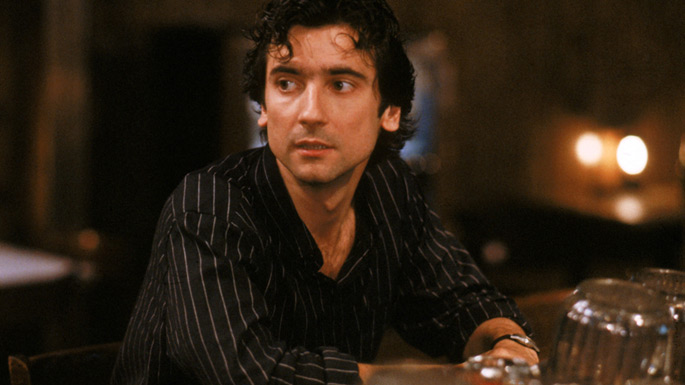
Why tonight? Why did all of this have to happen to him tonight? Why is he in one mess after another? Why can’t he just catch a break and call it a night? Why can’t he just go home? When will this ever end? Those are the exact questions that ordinary, uptight word-processor Paul Hackett (Griffin Dunne) asks himself as he takes a cab to SoHo, Manhattan, on a night that starts out as an interesting date with a beautiful woman and transforms into a nightmare that he cannot escape from. It all begins as he meets said-woman, knockout Marcy (Rosanna Arquette), in a café. They strike up a conversation, she gives him her phone number, and as soon as he gets back to his apartment, he immediately calls her up and asks her for a date.

Big mistake. Now, I’ll only reveal just the beginnings of this “wild night” that Paul finds himself in the middle of, because trust me, I want you to be as surprised as I am so that you’ll enjoy the film more. (I’m doing you a favor, trust me.) Paul takes a cab to SoHo, but the ride is so violent that it causes all of Paul’s money to fly out the window. A frustrating start, but no matter. Paul has a date with a beautiful woman and is even roped into giving her sculptress roommate (Linda Fiorentino) a massage after she finishes up a sculpture that looks like a man calling for help. (Very effective foreshadowing aspect here.)

Not enough for you? Of course it isn’t. How could it be? It sounds relatively harmless so far. It’s only keeping me interested so far because I can relate to this guy’s confusion—losing his money, just wanting to move forward with his date, etc. Then, they go to a diner and Paul finds that Marcie is not exactly date-material; he doesn’t like her very much. So he bolts. He wants to catch a subway train home and he only has 97 cents. Not a problem, right? He can just forget all about it.

Wrong. The fare went up and he can’t get a token for the train. He’s stuck there in the SoHo district with no money and no reason to be there. What else could go wrong? You name it. The whole rest of the night only gets worse and worse and worse, in a series of confusion, misunderstandings, violence, craziness that later leads to a huge misunderstanding, a death, and an angry mob.

“I mean, I just wanted to leave my apartment, maybe meet a nice girl. And now I’ve gotta DIE for it?!”

“After Hours” is a hard-edged comedy-thriller with a lot going on, and all of it very original and with a very clever blend of humor and horror. It’s an urban nightmare that never seems to end, as Paul tries to find some way to get himself out of this mess and back home. And being a Scorsese-directed film, you also expect the film to be very well-made, and it is. Scorsese uses all kinds of camera shots to get each point across and also to add to the agitation that the main character is going through. And it’s obvious that Scorsese, as evidenced in some of his other films, has a great eye for big cities—the SoHo district seems like a character of itself. The film is also very cleverly-edited—for example, there’s a scene in which Paul finds himself in yet another messy situation, and after an important line is delivered, suddenly there’s the sound of a mousetrap snap (mousetraps are set all around the windows of a certain character’s apartment). Paul is the mouse. He was curious, and now he’s trapped.

But wait, you may ask. How can I possibly reveal so little of the story for “After Hours,” when I said in the first paragraph that just hearing the premise wasn’t enough to impress me, and so how are you supposed to be impressed? Well, that is kind of tricky, I’ll admit—it took a risk for me to have to do that. My only hope is that you’ll take a chance on the film, as I did, and maybe you’ll be surprised by what it has to offer. It’s a scary, funny, wild ride that I was glad to have taken. I loved every minute of “After Hours.” Take that for what it’s worth.

The Way, Way Back (2013)

13 Sep

THE WAY, WAY BACK

Smith’s Verdict: ****

Reviewed by Tanner Smith

You ever have that experience when you’re there with what seems like the wrong people at the wrong place and time, and you can’t leave because you don’t know where else to go? And during those times, were you ever picked on for being so awkward by simply being there and not contributing to the conversation everyone else is having? Has this happened many times in your life? Chances are this has happened to us numerous times, and most often when we were young and attending family reunions or other social events.

It’s always a most uncomfortable situation because not only are you not relevant to the conversation these people are having, and don’t have much input (if any at all), but you barely know these people to feel like you want to be part of it. You’re just sort of stuck there, not knowing what to do.

“The Way, Way Back” knows what that feels like, as its young protagonist, an awkward, shy, nerdy 14-year-old named Duncan (Liam James), is dragged to the beach house of his divorced mom’s new boyfriend, Trent (Steve Carell), and is the butt of humiliation when he isn’t bored of being stuck in the middle of uncomfortable get-togethers with Trent and his neighbors and friends. It’s one thing to be stuck on vacation with your family, because most teenagers don’t enjoy that very much; it’s quite another to be stuck there particularly with someone you don’t like very well.

While Trent sometimes seems like an okay guy, Duncan has legitimate reasons to hate him. In an opening scene, on the drive to the beach house, Trent asks Duncan to rate himself on a 1-to-10 scale; when Duncan nervously answers “6,” Trent says he sees him as a “3.” Trent has his own ways of “tough love” that show that he surely doesn’t know the full meaning of “sensitivity,” which also puts a bit of a strain on his relationship with Pam (Toni Collette), Duncan’s mother.

By the way, that opening scene is great at setting up the story because it makes us easily sympathize with Duncan and establishes that people can see you how they want and it wouldn’t be very true. We only see Trent in this scene through the rearview mirror so that we see his eyes looking back at Duncan—nicely-done move on the filmmaker’s part.

Anyway, Duncan is trapped at this beach house with nothing to do and no one to hang out with, until he discovers the local water park, called “Water Wizz.” There, he meets the park’s offbeat manager, Owen (Sam Rockwell), who takes a liking to the kid and decides to give him a job at the park. So, while Duncan has to endure the behavior of Trent, his mother, and the next-door neighbor, Betty (Allison Janney), (who is always drunk and knows even less about tact than Trent does, and sometimes points out what should never be pointed out in public, even when it has something with her own children) by night, he works the park by day and finds he fits in with the other employees and has fun working the pools and slides. He even learns to be cool, or at least “cool” by Owen’s eyes. It’s a safe haven for him, and he tells no one back at the house about it—the only one who finds out is Betty’s rebellious but sweet teenage daughter, Susanna (AnnaSophia Robb), who also takes a liking to Duncan, if only Duncan can find the right words to say to her.

“The Way, Way Back” is an effective coming-of-age movie in how it presents this gawky, socially weird boy and how he can stand up for himself, talk some sense into his somewhat-meek mother who should know better than to date a jerk like Trent, form a friendship with some unlikely fellows, and even work up the courage to talk to a girl he likes. Duncan is able to do all of this by the time the vacation (and the film) is over. And the transitions are presented in a credible way with intelligent writing and believable characters who don’t like types in the slightest, but real people. Even Trent, who could have been written as a villainous type, is not entirely evil; he’s mainly a flawed individual who isn’t fit for certain situations that require parenthood or reliability. He tries, though. But it doesn’t quite work.

The character of Pam surprised me as the film went on, because early in the film, I wasn’t so sure what this mother figure was going through when socializing with these bizarre characters (including Rob Corddry and Amanda Peet as an offbeat couple) and doing something she shouldn’t be doing, like getting high (as she’s led on by Trent and company). As the movie progresses, you do get to see more of the character and that she is a complete person and not simply a dopey “mom” role. You see that this is a woman who clearly wants as much time with her son as she does fulfilling her own interests, and before the film ends, the relationship between her and her son is mended too.

A lot of nicely-formed characters are put into this screenplay by Nat Faxon and Jim Rash (who also co-directed the film and each have supporting roles as two of the water park workers), and they’re played very well by the actors. Steve Carell is a convincing jerk, which is a surprise considering he’s one of the nicest guys to see on screen or on TV; Toni Collette is very good as Pam; AnnaSophia Robb delivers her best, most sincere performance since “Sleepwalking” five years ago; Allison Janney is freaking hilarious as Betty, and she gets some of the funniest moments in the film; the actor who gets the rest of the film’s funniest moments is definitely Sam Rockwell, who is just excellent as the park owner Owen (I mean it—this performance needs to be seen to be believed; writing about it doesn’t do it well); and last but definitely not least, Liam James is perfectly natural in playing the awkward teenager who comes of age and becomes more comfortable with his life.

“The Way, Way Back” is a very charming film that also has a seamless blend of humor and drama, mainly because the comedy plays from the awkwardness and unpredictability of most of these events. Aside from character moments from Betty and Owen and some of the park workers (including Maya Rudolph as Owen’s potential girlfriend who can’t take any more of his antics), there are laughs that just come from simple things, like a legend on one of the waterslides, for example. They add to the charm and appeal of this film.

Reality Bites (1994)

11 Sep

reality1

Smith’s Verdict: *1/2

Reviewed by Tanner Smith

A film that shows the plight of post-college graduates can be made well, if the makers of it just take their time to really dive into what it’s like to accept the reality of growing up and facing real life. Joel Schumacher’s horrid “St. Elmo’s Fire” was not that film, and unfortunately, neither is Ben Stiller’s “Reality Bites.” Instead of presenting its characters as real, reasonable people, “Reality Bites” presents them as shallow, callous, and all-around terrible.

Now, to be sure, there are people like that in the world, and I’m not saying you can’t like a film with unlikeable characters. But the story framing of “Reality Bites” is all wrong, trying to make the film into a quirky romantic comedy (even with old clichés to assist it), and that can only mean that no serious consequences are necessary for their behavior. And I hated it even more when I realize that nothing about them has changed and that these are supposed to be our sympathetic heroes all along.

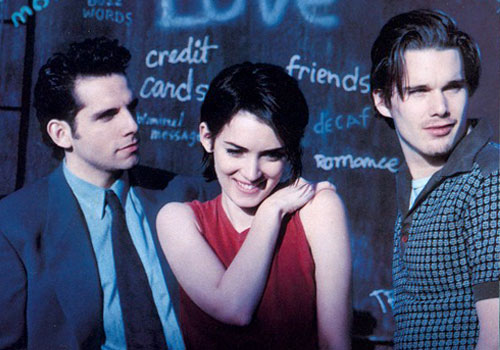
These are nonconformist Gen-Xers in the mid-‘90s whose plights are centered around two common rules for them—don’t sell out and don’t give in to The Man. Would that explain why Winona Ryder’s Lelaina Pierce isn’t the best employee working for a local morning television show? Would that explain why Ethan Hawke’s Troy Dyer lost his twelfth (yes, twelfth) job and is now living with Lelaina and her friends, sleep-around Vickie Miner (Janeane Garofalo) and closeted Sammy Gray (Steve Zahn)? Would that also explain why he spends his time playing guitar at a coffee house when he’s not lounging on the couch, spewing pretentious “insight?”

Of the four characters I just mentioned, the only two characters that have legitimate dramatic conflicts in their lives are not the two main characters, Lelaina and Troy, but Vickie and Sammy. And because the film is too focused on the former two to care about these two more interesting people, they get little to no resolution. Vickie has a series of one-night stands that leads to her confronting a very real risk of catching the HIV virus. What happens then? The test comes out negative, and we’re not sure of whether or not she’ll continue with these flings. Then there’s Sammy—very possibly gay. He hasn’t come out of the closet yet because of how his conservative parents might react. What’s his resolution? I don’t know, because Lalaina’s documentation doesn’t follow into Sammy’s parents’ house where he goes to tell them. I guess we’re supposed to assume it went well and now Sammy will starting seeing men.

Oh yeah, there’s a story here, isn’t there? “Lalaina’s documentation,” as I forcibly brought into the review just now, refers to Lalaina constantly videotaping her friends goofing around or discussing their current situations. (Hello, Mark Cohen from “RENT.”) She uses a regular home-video camera with bad video quality so the film can try and make it seem “real.” Maybe if they were worried about reality with this angle, they would know that not many filmmakers shake the camera as much as Lalaina does, except for those who are either starting out in this field or don’t know how to frame a shot.

This documentary has a chance to aired on TV, when Lalaina meets a nice yuppie who happens to work for an MTV-like station. This is Michael Grates, played by the director himself Ben Stiller. He is a good man—he’s smart, he’s attentive, he’s nervous, he’s pretty much everything that Troy is not, which the film tries to make us think is a bad thing. Why? Because Lalaina has to choose between the two of them, even though it’s very obvious (to us, anyway) who the right guy is for her. Michael is supposed to be “the other man” for Lalaina to leave, so she and Troy can get together.

The most frustrating aspect of this film is that it had a chance to avoid that cliché and it just didn’t ignore it. Here’s what happens—Michael takes Lelaina’s finished documentary to the station network; it’s edited severely in a stylized montage that Lelaina doesn’t recognize as her “artistic vision”; she’s mad because Michael sold out to The Man; and she leaves him so she can be with Troy. (Actually, I think the network improved the documentary!) Ben Stiller sold his own character out.

“Reality Bites” is essentially hipster trash. It has nothing to present aside from superficiality and callousness, the very things that the characters claim they don’t want to be involved with. This film didn’t make me care about the problems of post-college graduates; it just made me think of rewriting the screenplay myself and thinking of what I would personally add. Now, I’m just wondering where I would begin.

The Spectacular Now (2013)

8 Sep

130729_MOV_TheSpectacularNow.jpg.CROP.rectangle3-large

Smith’s Verdict: ****

Reviewed by Tanner Smith

When a film truly captures what it’s like to be a teenager in high school, or in a high school romance, it’s something special. Generally, most of us come of age in a major way in our high school days and so, a film that captures certain dilemmas or relationships (either platonic or romantic) can make for a great, effective coming-of-age story, given the right amount of detail in writing and characterization. I can think of many such films that are great examples of such, including “Tex,” “Lucas,” and last year’s “The Perks of Being a Wallflower” among others; another to add to the list is “The Spectacular Now,” a truthful, incredible film about forming a high school senior forming a new relationship with someone he’d never met before, and learning to fully prepare for his own future.

His name is Sutter Keely (played by Miles Teller). He’s a semi-popular 18-year-old who lives in the “now” mainly because he doesn’t look forward to growing up and dealing with life the way adults in his life do. He has an amusing, likable personality that compensates for somewhat of a sad existence, having been without a father for a while and with not much of a relationship with his mother (Jennifer Jason Leigh). He also drinks a lot, carrying around a whiskey flask to spike his soda cups, even at his part-time job. He would probably be best referred to as an “alcoholic Lloyd Dobler,” in reference to the John Cusack character in “Say Anything,” but that probably wouldn’t be fair.

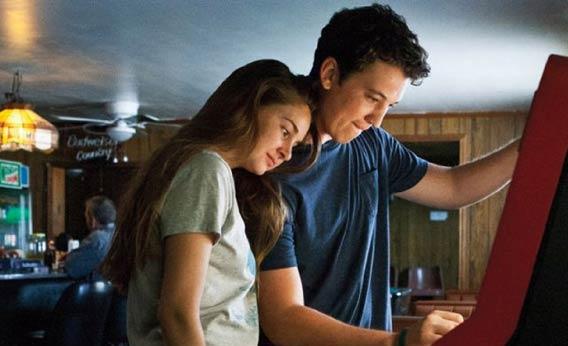
One morning, Sutter is found lying flat on the front lawn of a house he doesn’t recognize, having drank heavily the night his girlfriend, Cassidy (Brie Larson), broke up with him. The person who finds Sutter is Aimee Finnicky (Shailene Woodley), who goes to the same school as Sutter (though he doesn’t recognize her). Aimee is in the neighborhood covering for her mother’s paper route, and Sutter decides to help her with the rest of it, having nothing else to do. Sutter decides he wants to spend some more time with her, and wallflower Aimee is glad to be accepted by someone like him. So they share conversation after conversation as Aimee tutors Sutter in geometry, Sutter invites her to a lake party, and their relationship is mostly consisting of talks and meetings that simply don’t need any reason to be—they enjoy each other’s company, talk to and listen to one another, and their relationship flows naturally as it becomes something more.

Then comes the time when Sutter can’t deny his true feelings for Aimee, despite what he tells his friend who thinks Sutter is using Aimee as a clumsy rebound for Cassidy. Then comes the prom, to which they go together and see the good time that everybody has, despite being a somewhat pointless tradition. Then comes a sex scene, which I have to say completely surprised me in how it was handled. This could have been a low point of the film, in that it would have been sloppy and in a mean-spirited way. But instead, with the careful direction of James Ponsoldt, it’s handled in such a careful and delicate way that at no point does it seem embarrassing or a cheat. Sutter and Aimee don’t merely have sex; they make love. And as a plus, it knows just when to fade away from it.

Sutter and Aimee look, act, and feel like real high-schoolers. Their conversations, their world around them, their misadventures, etc. feel like the real deal, and with enough conflicts in their lives to make them even more interesting, these two are a high-school-film romance that is undoubtedly worth paying attention to. I loved watching these two together; they’re sincere, appealing, and well-rounded characters that feel like people we knew, or even people we were. The film goes even further with them as the film continues. As the first hour or so creates a unique spin on high-school-film territories, as the relationship and their situations are played with a great natural realism, the rest of the film, in my opinion, is surprisingly even better. This is the point in the film in which Sutter and Aimee are willing to help each other out—after Aimee has taken Sutter’s advice and stood up to her overbearing mother, Sutter then decides to take Aimee’s advice and get his deadbeat dad’s phone number from his mother or his older sister (Mary Elizabeth Winstead). And what happens? Sutter, bringing Aimee along, goes to visit Dad (Kyle Chandler) and he realizes how clear things are becoming. Not only does he see why he’s better off without his dad, but he also realizes the kind of person he himself might become if he keeps living life the way he does. And he truly realizes that he must somehow create his own future. But how? And does he want to? Can he change?

The final half-hour of “The Spectacular Now” is what truly pays off about the film. It’s all about coming of age and things coming into full perspective for the subject of that concept (in this case, Sutter). It’s not predictable and it’s as realistic and natural as what was set up before. It’s played with a sense of harsh reality and a possibility of learning to deal with it. I felt for the characters all throughout the film, and this final act made me care even more about them.

“The Spectacular Now” is a wonderful film—a film that is smart and knows how teenagers talk and act; the characters are three-dimensional and always appealing; the director and writer(s) don’t go for the easy ways out of a situation because they’re too respectful to their audience for that; and all in all, a rich, deep, meaningful, effective drama about growing up, forming a relationship, and facing your own future. This is one of the best films of 2013.

Blue Jasmine (2013)

8 Sep

680x478

Smith’s Verdict: ***1/2

Reviewed by Tanner Smith

I’m not sure I can necessarily write about Woody Allen’s latest film, “Blue Jasmine,” without even mentioning a similar type of film released just a couple months ago (not Tennessee Williams’ “A Streetcar Named Desire,” of course, though the story of “Blue Jasmine” is probably more closely similar to that)—Noah Baumbach’s “Frances Ha.” That film was about a neurotic young woman trying to find a secure hold on life while practically on the verge of a nervous breakdown. I mentioned in my favorable review of that film that it reminded me in dialogue, acting, style, and tone of a Woody Allen screenplay and film. That’s not too far off here, because…well, “Blue Jasmine” is a Woody Allen film. Imagine Frances “Ha” Halloway aged a decade or two and having found a success in life, becoming materialistic and pampered and married to a Wall Street wizard…and is now having to face reality yet again, after everything has just hit rock bottom along with her.

How odd is it that I compare Baumbach favorably to Woody Allen when I would find that Allen has crafted a slice-of-life/character-study similar to Baumbach’s film…which in itself is similar to some of Allen’s best dramatic work? I don’t know, but I do know that I feel these two films are terrific, and they’d make a great double-bill with each other.

Nearing the age of 78, Allen’s styles haven’t changed much—neurotic characters, the old-school title font, the sharp dialogue, the music he likes, etc. But he shows he still has game in the art of filmmaking. As long as this guy continues to make films (and he has for several decades now), we know there are some truly original artists still at work here. And with “Blue Jasmine,” he has crafted one of the most thoughtful, effective films released this year.

The film stars Cate Blanchett in an Oscar-caliber performance, reminding us that she is still one of the very best actresses we have, as Jasmine, a disillusioned, indigent woman who is learning to face reality the hard way. Seen in flashbacks, we get an idea of what her original life was like, when she was married to wealthy Hal (Alec Baldwin) and living a great, acquisitive life in New York. We also learn in this present-day setting that Hal has been caught for illegal activities (and apparently not just cheating on his wife numerously, either) and has also committed suicide in his cell because he couldn’t handle facing a life sentence. The FBI has taken everything away, leaving Jasmine penniless and homeless.

Now, Jasmine has moved in with her sister, Ginger (Sally Hawkins, wonderful here), in her San Francisco apartment. Ginger has never had anyone depend on her before, and Jasmine never needed her for anything until now. But Jasmine is not the greatest houseguest—in fact, she’s rather critical and doesn’t quite know when to keep her mouth shut. This is especially true when she judges Ginger’s apartment and constantly puts down Ginger’s current boyfriend, Chili (Bobby Cannavale). Though Chili may have his moments of rage, he is somewhat of an improvement over Ginger’s ex-husband, Augie (Andrew Dice Clay—yes, Andrew Dice Clay), and doesn’t necessarily deserve to be the butt of Jasmine’s unfavorable remarks.

Life goes on for Jasmine, and it’s something she isn’t prepared for. She has to go find a job, which she isn’t used to at all, and finding one is not easy. She does, however, get a job working as a receptionist for a dentist, but that doesn’t seem to last very long, as she’s an incompetent employee (and it also doesn’t help that the dentist she works for likes to hit on her until it’s the last straw for her—at least she knows the meaning of “sexual harassment”). Also, she’s not very good in social situations like she used to be—due to the events in her life, she has developed a habit of talking to herself without even being aware of it as she gets confused looks from passersby. That, and she’s still as ignorant and selfish as she was when she was rich, making her just a shallow, almost-unbearable woman to be around.

Now, don’t get me wrong—Jasmine is not a one-dimensional bitch, by any means. Because of the flashbacks and a few moments when she’s alone and trying to figure things out for herself, we see how and why she has become who she is and why her life is tragic. We can understand why she acts the way she does. That’s what makes “Blue Jasmine” an effective character-study and a convincing drama.

Cate Blanchett’s performance helps a great deal—she understands this character inside and out and is just excellent here. I hope she gets an Oscar nomination for this performance; she’s that good. And so is Sally Hawkins, who adds a great amount of depth to her role of Jasmine’s sister Ginger, who has her own experiences in life and love, not only with Chili, but also with a sound man she meets at a party, played well by Louis C.K. It’s a credit to Allen that he is still able to use familiar faces for surprising effect, and that’s especially true of the casting of Andrew Dice Clay, who is truly rock-solid here (especially near the end, when he gives a key speech to Jasmine about what’s going on).

Allen still has it. People may not believe it that much anymore, but Allen still has it. And I don’t even know what “it” is, but whatever “it” is, Allen has used it to good effect in “Blue Jasmine,” a nicely-done character piece.

Peggy Sue Got Married (1986)

29 Aug

Peggy Sue Got Married (1986)

Smith’s Verdict: ****

Reviewed by Tanner Smith

Francis Ford Coppola’s “Peggy Sue Got Married” is a film that tells a sweet-natured story from the concept of going back in time to a certain point in your life when you feel you could do things dissimilar to the way you did before, knowing what you know now. It begins at a high-school reunion, at which 40something Peggy Bodell (Kathleen Turner) practically relives her past—not only is she reunited (and catching up) with her old friends and acquaintances from the glory days of high school, but she also imagines what things would have been like if she hadn’t married her boyfriend at the time because she was pregnant shortly before graduation. “If I knew then what I know now,” Peggy tells her friends. “I would have done things differently.” She is divorcing her disloyal husband, Charlie (Nicolas Cage), who has been cheating on her and hasn’t been there for her or their two kids.

Peggy and her friends look back on high school memories and notice how times, as well as their classmates, have changed. It turns out Peggy doesn’t quite know the half of it, as she will experience her senior year for a second time. This happens when Charlie shows up at the reunion, she doesn’t know how to deal with the situation, and she suffers a heart attack (I think) and passes out. She then awakens in her 18-year-old body in the year 1960—twenty-five years before. Her 43-year-old mind is still intact, but everything else around her has changed. She relives high school, she hangs out with her friends, she dates Charlie again, she eats with her family for breakfast and dinner, and she even hears her grandmother’s voice again, which almost breaks her heart.

Peggy knows what will happen in the future, but no one else does. With this knowledge, she isn’t quite sure about how to deal with what may or may not affect her life, if she can help it. To start with, she is cold and somewhat distant towards Charlie, who can’t understand why she is acting silly lately. But she also recalls the fun she has with Charlie and relives some of those moments, including “parking.” Though, this particular parking moment is different, seeing as how she is the one who wants to go all the way, while nervous Charlie wants to get his car to start so he can take her home.

Peggy can also say the things she could have said to her parents long ago. She’s nicer and more helpful around the house. And she can even experience life with the people she may not have wanted to or was afraid to have been affiliated with—those include young, Hemingway-bashing beatnik Michael Fitzsimmons (Kevin J. O’Connor), with whom she shares pot, and math-science whiz Richard Norvik (Barry Miller), who is the only one she tells about her predicament of time-travel (she is also able to reveal inventions to him that haven’t been invented yet, to see what he can do for the future—“think ‘high-tech,’” Peggy tells him).

What it comes down to is whether Peggy will change her destiny as well as other people’s destinies, so that if and when she returns back to her old self in her present time, things will have been different from when she left. And one question I’m sure many people will be asking after watching “Peggy Sue Got Married” is whether or not Peggy really did travel back in time. Was it a dream? Did it really happen? I don’t think it really matters whether or not it really did happen, because if you ask me, “Peggy Sue Got Married” is more about an experience rather than much else. It’s the experience of reliving and revisiting what it felt like to be young again and trying to understand whether or not things were better off for you then. You know how people will say that high school is the best time of your life? What if they were right? If there is a way of knowing what will happen to you in the future, or in Peggy’s case, if there was a way of reliving those days because you have already lived the future, wouldn’t you find a way to make it feel as good as it can be? The point here is that it doesn’t matter whether or not you change events in your life—it’s how you can deal with events that are inevitable. And without giving away the ending, Coppola and co-writers Jerry Leichtling and Arlene Sarner, found an effective, subtle way of presenting that message and making a satisfying conclusion and presenting an answer to the question of whether or not Peggy really did time-travel. Some things, you just have to figure out for yourselves, and I admired that about this story.

The theme of nostalgia is present throughout “Peggy Sue Got Married” even before Peggy has her flashback experience. The high-school reunion at the beginning of the film presents what it feels like for these people to find themselves back in the good ol’ days. They’re not only there to provide setups for certain payoffs when Peggy goes back (hell, one character, in a wheelchair, is never even seen again after this opening)—they set the tone for the rest of the film.

And what would you feel/say if this ever happened to you and you weren’t sure of whether or not it was a dream? What if you answered the phone and suddenly there was the voice of your grandmother on the other end of the line? This is a voice Peggy hasn’t heard in many, many years, and there she is on the phone, making a casual call to say hello. What would you say? You couldn’t tell her what would happen to her, but you would know it, and it’d be hard to say anything.

“Peggy Sue Got Married” is a great film when it comes to the theme of nostalgia and the way it presents its story to a puzzling payoff (but in a good way), and it’s also very well-made as you can tell certain Coppola shots (there’s one such optical effect in the very first scene that I’m wondering how it was done). But there’s one very important element to its success, and that is the lead performance by Kathleen Turner. Turner is nothing short of excellent in this film. I don’t know how she was able to play this part in two different ways—as an adult and as a teenager—but she pulls it off in a spectacular performance. Sometimes she’ll even go back and forth between adult and teenager and we can catch on even though we’re just not sure how she did it. How did she change back and forth in certain scenes? Did the lighting help? Did Coppola have anything to do with this? I don’t know, but it’s fascinating to watch Turner play one shot as an adult and then another shot as a teenager, because she knows her character inside and out, and she knows how each side would react to any kind of situation being thrown her way.

I know no one who has seen this movie and are reading the review will not stop reading until I say something about Nicolas Cage’s performance as Charlie, the boy Peggy will later marry and then divorce. Yes, Cage’s performance is slightly odd (but nothing as odd, to understate it, as most of his roles to come later after this) and he would only do this movie if his character’s speech impediment matched that of Pokey’s (and he was almost fired from the movie entirely because of this). But to be honest, I don’t really mind him very much here. Sure, his voice can be a little grating, but Cage gets what it’s like to be an awkward high-school teenager, and he gets the body language down as well as Turner does.

And the other actors, for the most part, had to play young and old versions of their characters—from 1986 and from 1960. They deserve credit too, in their early roles before their profile careers in film and TV, particularly Jim Carrey, Joan Allen, Catherine Hicks, Lisa Jane Persky, and Kevin J. O’Connor. Barry Miller, known at the time for his roles in “Saturday Night Fever” and “Fame,” acquits himself admirably in the role of nerdy Richard; it’s a shame his acting career didn’t go much further. Also in one of her early roles is Helen Hunt, as Peggy’s teenaged daughter. (And also look out for future director Sofia Coppola as Peggy’s kid sister.)

What have I left out? Only a handful of wonderful, delicate scenes that you’ll just have to see for yourself. “Peggy Sue Got Married” is a superb movie with sharp direction from Francis Ford Coppola, an appealing concept, and to top it all off, a great leading performance from Kathleen Turner.

The Last Picture Show (1971)

9 Aug

hero_EB20040704REVIEWS08407040301AR

Smith’s Verdict: ****

Reviewed by Tanner Smith

Anarene, Texas. Fall 1951. The weather is either too windy or too humid. The wind blows down the empty main street in the morning, and from looking at it, you’d think it was a ghost town. Even a few tumbleweeds can be seen whisking down the street. There’s nothing special to look at, but for the locals, the three key places to go to are the pool hall, the diner, and the Royal movie theater. All three are run by Sam the Lion, though he sometimes prefers to enjoy time away from town, at a pond called “the tank,” where he takes two local boys fishing (even though there are turtles instead of fish)—he enjoys the setting and always recalls fondly a moment from his past. (He doesn’t like fish, anyway.)

This small Texas town of Anarene is presented as a backdrop for a character study—Peter Bogdanovich’s 1971 film “The Last Picture Show,” a classic that shows the certain death of a small community in a narrative that presents the town’s inhabitants as real people having true-to-life experiences. Taking place in the early-1950s, the film is pure nostalgia for anyone who grew up in that era. But this is an effective film for members of any generation (I was born in the early-1990s) because this is one of those “nostalgic” films that feel nostalgic because even though most of you weren’t raised or coming of age around the time the film was set, you still feel like the situations that occur are real or even had some of them happen to you in one way or another.

The character study that is “The Last Picture Show” follows three important characters—three young people; graduating high school seniors who live in Anarene and are about to step into the realities of…reality. They are naïve Sonny Crawford (Timothy Bottoms), smooth, distracted Duane Jackson (Jeff Bridges), and sexy, rich, manipulative Jacy Farrow (Cybill Shepherd). Sonny doesn’t have much ambition in life and mostly tends to getting himself in situations he can’t out on top of; Duane is his friend who is slick and handsome but is unfocused and mostly tends to ask too much of a girl he’s in a relationship with; and the sexually inquisitive Jacy uses her good looks and wealth is influence any boy she wants into having sex with her…and then dump him. It’s quite easy to label Jacy as a “bitch.” And she is a real bag of tricks in how she cunningly seduces these boys in order to increase her sexual interest and thus, have her continue to do so, which results in her not only dumping Duane, but also going after Sonny, even when he is in somewhat of a relationship. But the thing is, Sonny’s relationship is an adulterous one.

Presented in glorious black-and-white (which I know was chosen due to technical problems and aesthetic reasons; I don’t care either way because it looks great), “The Last Picture Show” shows a year in the lives of these young people, from November 1951 to October 1952. Sonny and Duane are best buddies and co-captains of the local high school football team, which the locals constantly mock in how inept they are at the fundamentals. Jacy is Duane’s girlfriend, which gives another reason for Sonny to envy Duane, aside from the fact that he’s handsome, popular, and amusing. Sonny is nicer and more sensitive, but his girlfriend is an unpleasant one, so they break up…after more-or-less a year of being together.

At Christmastime, something unusual and fascinating happens to Sonny. He finds himself in an affair with Ruth Popper (Cloris Leachman), a depressed 40-year-old woman who is married to Sonny and Duane’s football coach. Sonny doesn’t know everything about her marriage, but he does understand that Ruth is not happy, and she sees what a kind, loving young man he is and invites him into bed. Of course, this affair is doomed and anyone could tell you that, but in the moment, no one could convince you at all. Not even those who know about the affair (it’s a small town where most people seem to know everything that goes on). And this goes on for quite a long time, until about summertime.

Meanwhile, Jacy has her eyes set on wealthy Bobby Sheen (Gary Brockette), whom she meets at a naked indoor-pool party. The only problem is, as long as Jacy is a virgin, he’s not interested. And this is where she shows her true colors in the film, as she toys with Duane for him to have sex with her and then dump him for selfish reasons. Where are her parents, you may ask. Well, her father practically lives on the living-room couch in front of the TV while her mother, Lois (Ellen Burstyn), (get this) advises Jacy to sleep with Duane so that she’ll know that sex isn’t all that it’s built up to be. (Though, Lois will sometimes sleep with one of her husband’s co-workers.) She does understand what Jacy’s rebellion is about, and she knows it won’t end well.

(And by the way, Jacy’s parents are the only parents we see in this film. Sonny and Duane’s parents are hardly ever seen at all. And we don’t see their home life either. Just an observation—not a judgment.)

As you guessed from the descriptions I’ve already given for the story (or stories, if you will), “The Last Picture Show” features more sex in manipulation or adultery than in tenderness or warmth. Well, there is the latter in the relationship between Sonny and Ruth. It’s a need to connect with someone that makes it special in comparison to what Duane and Ruth continue to go through. But reality eventually (and unfortunately) will take its toll, leading to the “stuff-happens” effect that seems to be apparent throughout this film.

I almost forgot where I was going with that last paragraph, and that’s what this film can do to you, I guess. A lot happens in the two-hour-six-minute running-time of “The Last Picture Show,” a good deal of it having to do with the sexual encounters these kids face. This all happens mainly because when these kids don’t have the diner, the pool hall, or the theater to go to, the next place they can think of, aside from home, is the bed (or, in the case of one particular scene, a pool table—don’t ask). And midway through the film, that does seem to be the main place to go, especially after the aforementioned Sam the Lion (Ben Johnson), the soul of Anarene, is put out of the picture, leaving Sonny the pool hall and the theater in danger of closing down. Without the soul of Anarene comes the certain death of the town itself, with less ambitions for the people still living here and the human condition only decreasing with each passing week. No wonder the sex in this movie is mostly out of lust rather than love.

“The Last Picture Show” was filmed in 1971, but is set in the early-1950s, and the odd thing is that it’s easy to forget that. That’s because the feel of this setting in the film is exactly right. It really looks like a small town in the ‘50s, and we as an audience are taken there. Credit for that not only goes to the director Peter Bogdanovich, but also to cinematographer Robert L. Surtees, and the set design deserves a lot of credit as well. (Though, I’m not sure the explicit nudity in the film would have been allowed in a drama back in 1951.) Shooting it in black-and-white helps as well, strangely. And you really get a feel for this small rural town in Texas; you really feel the environment that these people live in.

And you also get a good sense of who these characters are, and what sort of people they will become, and despite some of their deeds, you do sort of hope for them to do better than they do now in life. Duane may smarten up now that he’s joined the US Army (and gone off to fight in Korea), Jacy may learn a bit about what her mother has been trying to tell her, and Sonny may be stuck in town, but may make the best of what he has, though it may be difficult (especially in a few crucial moments in the final act, each having to do with grief, regret, and resentment). The characters’ stories are rich and with many levels to them that you want to imagine what their lives will be like.

Timothy Bottoms is solid as Sonny; Jeff Bridges brings a rugged appeal to Duane; and Cybill Shepherd wonderfully brings her role of Jacy to where it can be seen as a three-dimensional dream-girl (she’s not invulnerable and only uses her moxie and body as a way to make things exciting in this town). Of the supporting cast, Ben Johnson is excellent as Sam the Lion; you really feel that he truly is the “soul of Anarene” and without him, there’s hardly a way for the town to be cured of the illness that’s killing it. The scene in which he tells Sonny and a mentally-disabled boy, Billy (Sam Bottoms, Timothy’s brother), about a time he cherished back when he was younger is just wonderful. His presence is an important one, and even though he disappears from the film midway through, it doesn’t make us forget him. Cloris Leachman is equally great as Ruth, capturing the character’s warmth, loneliness, and pain. Also good are Ellen Burstyn as Lois and Eileen Brennan as Genevieve, a waitress at the diner.

Anarene, Texas is dying. By this time, many decades later, it may already be dead. The title of the film is symbolic for meaning the closure of the movie theater and thus the loss of a place where teenagers can meet, hang out, make out, etc. Once that’s gone, there isn’t much else, except for loneliness and harshness. That’s what I got from the meaning of the title “The Last Picture Show,” even though the theater has no key role in the film. In the end, when the theater closes, there is that sense that the people in this town have lost something special. They may not know it until later on, but there is something disappearing there. Peter Bogdanovich’s “The Last Picture Show” is a highly accomplished slice-of-life drama with a feel for its setting and strong characterization. It’s a thoughtful, well-put-together nostalgia-trip that is powerful no matter what generation you belong to.

Hoosiers (1986)

2 Aug

hdEmvJqqt6SEWhDWcVtAc13EQ9h

Smith’s Verdict: ****

Reviewed by Tanner Smith

I never played high-school basketball. I was the oddball that played “b-ball” from 4th grade to 6th and then decided to focus on other things, like the school band and choir. But I never backed down from a little game in P.E. class and also, maybe going to a game wasn’t exactly what I wanted to do on a Friday night, but back then, what else was I going to do? And truth be told, I somehow found myself enjoying the game—it’s alive, intense, uplifting (when it can be), and entertaining, and you really find yourself rooting for the home players. That statement can be used to describe “Hoosiers,” which is my favorite film about basketball and is as much fun as attending a high-school basketball game.

“Hoosiers” is based on the true story of a small-town Indiana high school basketball team that, in the early 1950s, surprised everyone by not only progressing to the Indiana State Championship, but also winning. Despite that story to back it up, “Hoosiers” doesn’t use the “based on a true story” caption early on to manipulate us, and that’s probably a good thing, because much of the movie is focused on how the triumphant underdog concept can fully come through. This is a movie that is all about heart and you could see through the writing, direction, and acting that everyone put their all into this. The result is a wonderful movie.

Right at the opening credits, you can tell we’re in for something special, and nothing has necessarily happened yet. The first few shots are of a car going down rural streets of the Midwest in the autumn season, with fallen leaves swirling around by the wind. Assisted by a nice, soft music score by Jerry Goldsmith, you truly get a sense that you are there. And since we already feel at home in these shots, we feel throughout the rest of the movie that we’re in a good place to be.

Making that long trip is Norman Dale (Gene Hackman), who has come to the small town of Hickory, Indiana to coach the local high school basketball team, the Hickory Huskers. This would prove as a challenge for quite a few reasons. One is, he’s being asked to replace a coach that everyone in town knew and loved, and so he’s constantly being tested at just about each turn by a local—it doesn’t help that he bans parents and other supporters from practices either. Another is, there aren’t many players on the team—indeed, there are seven and their star player, Jimmy Chitwood (Maris Valainis), is taking a year off from sports to focus on his academics. And also, this is Dale’s chance to redeem himself from a mistake he made coaching many years ago, and if he screws up now, his coaching career is over for good. This is a changed man, and he’s out to prove it. He uses disciplinary tactics to further boost the team’s confidence and athletic ability, and though they don’t start out very well, he is able to make them into a team that can play good basketball.

One of the things that further increase the townspeople’s displeasure is that Dale hires the father of one of the boys, who is Shooter (Dennis Hopper), the town drunk, to come on as an assistant coach. While his worst moments show him as a drunken buffoon that sometimes embarrasses his son, his best moments show how much he knows about basketball, which is why Dale decides to take a chance and bring him on and give him a chance of redemption as well.

This decision, along with quite a few losses, lead to a petition signed for Dale’s resignation. Just as a clear verdict is about to be brought up, Jimmy steps up and says that he’ll finally play again…but only for Dale. (This is one of the best scenes in the movie—it’s the perfect “up-yours” to cynical people.) Soon enough, they all play better and start winning, and their successful run eventually leads to a spot in the State Finals, which is incredible for a small school.

With Dale redeeming himself, Shooter shaping up and getting himself a new, respectful image, and a small school about to show all of Indiana who they really are, “Hoosiers” is not only a film about basketball and the community that celebrates it—it’s mainly about redemption. And in that respect, this is a powerful film because the relationships that these people have in this town make it all the more worthwhile because of who they were and who they will become. By the time the movie is over, with the Big Game and the ultimate win, you feel like these people have truly done well for themselves and are happy for them, just as you’re excited at the success of this basketball team. The basketball scenes are riveting and well-shot, but they’re not the center of the film. It wasn’t supposed to be. But with this theme of redemption, it works even better as a sports underdog story.

And you do get a feel of the game itself—the coaching tactics, the basketball drills, the sense of the gym, the excitement of the crowd, the thrill of the game, etc.—which is why “Hoosiers” is regarded as, for good reason, “one of the best sports films ever made.”

The rock of the picture is the performance by Gene Hackman, who is excellent here as Coach Norman Dale, giving him full characterization and a three-dimensional portrayal. He has the competitive spirit down to a T, but he has a real human side to the character as well. He nails the quiet moments as well.

Dennis Hopper, as Shooter, was honored a Best Supporting Actor nomination for his performance in this film, even though the actor himself believed he should have been nominated for “Blue Velvet,” released that same year. This must have come as a surprise for most people who believe that weaker individual characters are often ignored by the Academy, and while that wasn’t what he played in “Blue Velvet,” that’s definitely what he played in “Hoosiers.” Shooter is a loser, to be sure, and in need of gaining self-respect and respect from his son. But Hopper makes us care about him and want him to change that it is a sympathetic portrayal of such a man, and I think the Academy made a good choice in voting.

There’s another character in this movie—Myra Fleener, played by Barbara Hershey. She’s one of the few Hickory locals who have experienced big city life before moving back here because it’s where she has what she needs. She’s a bit cold toward Dale because she doesn’t trust him to stay away from Jimmy, as she sometimes looks out for him ever since his father died, so that he doesn’t push him into playing basketball again, before Jimmy decides for himself he wants to play again. But of course when she does see the true man Dale is, she realizes she can trust and possibly love him. This is admittedly one of the weaker aspects of the movie, as it does sort of make her into a regular love-interest for our protagonist, but I’ll let it slide because she does have a reason for starting out the way she does. And Hershey does a fine job in the role.

I’m also glad that actual young athletes were trained to be actors, instead of the other way around, because this way, you get natural performances from the young men who play the team players. They may not be the greatest actors, but the script allows them to stay within the limitations of their range.

I’ve tried, but I don’t think I can think of a better basketball movie than “Hoosiers.” You know how they say, “It’s not if you win or lose, but how you play the game?” That serves as an effective metaphor for this story of redemption on and off the court. This is a well-made, effective, wonderful movie that earns its title as “one of the best sports films ever made.”