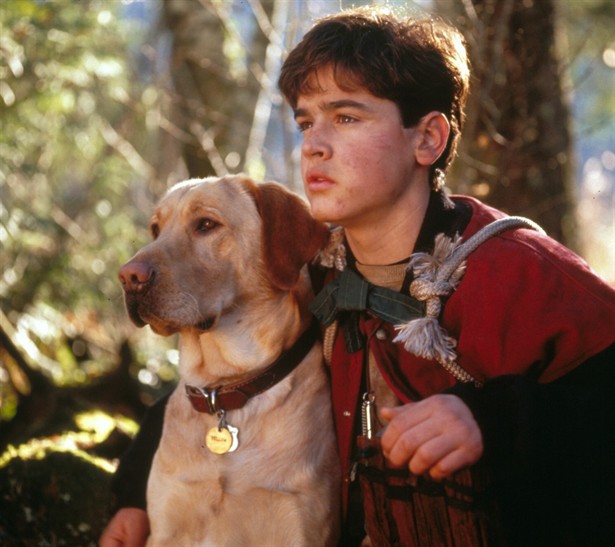
Far From Home: The Adventures of Yellow Dog (1995)

12 Nov

Far_from_Home_The_Adventures_of_Yellow_Dog_35534_Medium

Smith’s Verdict: **1/2

Reviewed by Tanner Smith

There were moments in the family film “Far From Home: The Adventures of Yellow Dog” that really surprised me. For one thing, I was shocked to discover that this film about a boy and his dog braving the wilderness alone for a three-week journey was not a harmless picnic. The boy is resourceful and quick-witted, and the dog is truly wonderful, but man do they go through some pretty rough stuff. By the end of this trek, the boy is tired and weak and he and the dog have already been through what is absolutely no fun camping trip. Moments in this film ring true when it’s focused on the outdoor scenes. Even in the inevitable material such as when the boy and his dog encounter a wolf and a cougar, there’s a surprising level of suspense that keeps it interesting.

But those moments are so few in “Far From Home: The Adventures of Yellow Dog,” which despite the title is more about the boy finding his way home than it is about the dog. The boy, named Angus (Jesse Bradford), has been taught by his father (Bruce Davison) some of the basic rules of wilderness survival. These tactics come in handy when he is a boat accident that leaves him, and his new dog Yellow, in the Canadian wilderness. They must rely on their courage and skills for about three weeks, enduring violent rainstorms, a pack of wolves, starvation, freezing temperatures, and a curious cougar, all while Angus’ father and mother (Mimi Rogers) continue to pay ($200,000 a week) for searches.

It’s hard not to recommend a film like this, especially since it has moments that make it a little more mature than most boy-and-his-dog stories, and it is well-made with nicely-done photography of the island that the boy is stuck on. Jesse Bradford is quite good in the leading role too. I think my problems mainly had to do with everything else. The scenes with the worrying parents are too corny for my taste; sometimes the tone of the film is too innocuous to be anything but predictable; and I’m sorry to say this, but the dog is too perfect. The dog always knows what to do and how to do it, and the kid suffers worse than he does. I know that’s weird of me to say, as I am a dog person and truly wouldn’t want any harm to come to this dog, but to make this dog so perfect loses the film some of its credibility.

By the way, where did the dog come from anyway? Angus finds him at the beginning of the film, and we know nothing about where the dog came from in the first place. Isn’t that strange?

The last fifteen-or-so minutes of the film are the most boring because it drags on for far too long, as we know that somehow, as Angus continues to blow that dog whistle in the hopes that Yellow will find his way home, Yellow will finally come. How did Yellow manage to find his way back to Angus? Why didn’t we see that story?

I don’t know what else to say, except that it sort of feels like perhaps this film was done in a hurry. Many parts of the film feel a little too rushed, without much time to let everything sink in. Some of the time, scenes are glanced over and forgotten. It’s kind of embarrassing for me to give a film like this a mixed review, considering that it has moments that are more mature than in most boy-and-his-dog stories. But “Far From Home: The Adventures of Yellow Dog” could have been better.

Yellow (Short Film)

11 Nov

419811_10100215044536027_1249789668_n

Smith’s Verdict: ***1/2

Reviewed by Tanner Smith

I remember a time back in high school when I realized how much I loved my best female friend and I couldn’t deny it anymore. When I found this out, I immediately turned to my best male buddy and told him how I felt. Then I asked for advice, hoping he would say that telling her would be the right move to make. What was his response? Don’t tell her.

I asked why. He said it was because she and I were great friends since grade school and if she didn’t feel the same way about me, it would make things very awkward and lead to our separation. That wasn’t something I wanted, so I let it be for a while. But as time went on, I told some other people (my parents, my sister, and some other peers) how I felt about her. Some said I should go for it; others weren’t so helpful and even said some discourteous comments that I probably shouldn’t reveal here.

I eventually did tell her, one day during our senior year. Of course, she said she only saw us as “just friends” and didn’t see this relationship going any further than that. I asked her to forget what I said; she agreed…but things weren’t the same between us at all. We stopped having lunch together, she stopped answering my phone calls, and we spent very little time together, until eventually we drifted apart.

Telling a close friend of the opposite sex you love them isn’t an easy decision to make, whether you’re in high school or not. Maybe that’s why I admired Jasmine Greer’s film, titled “Yellow,” as much as I did—because it knows that. It’s a 13-minute short about an earnest young man named Max (played with convincing sincerity by Brian Roberson) who spends a few days trying to convince himself that “today’s the day” to tell his best female friend the truth: that he loves her. He’s unsure about what would happen and turns to those around him for advice. But no one is fit to offer help—not his weird roommate (Jason Willey, hilarious) who uses a “Temple of Doom” reference as a metaphor for how it’ll turn out (badly), and definitely not his oblivious family (his mother played by Jeri Shire, his grandfather played by Tony Gschwend, and his uncle played by Alan Rackley) who have little to give other than rude remarks. His older sister (Krystal Kaminar) is the only sane one in the family, but by the time he calls her, he’s lost his confidence yet again to listen to new advice.

“Today’s the day,” Max keeps telling himself as he builds up confidence before losing it. Is it “the day?” Max knows he won’t know for sure unless he just lets it out, but if he does let it out, will it be the beginning of something more for him and this girl or will it be the end of a solid friendship? Questions like this run through Max’s mind as he expresses in thought (and through voiceover) his nervousness. He’s so nervous that he doesn’t even know what color tie he should wear at work—black or yellow?

Midway through “Yellow” is my favorite scene in the short, and it involves Max’s encounter with a friendly, attractive co-worker (Brittany Reed) in an elevator at work. Her action, in a way, mirrors Max’s goal. His reaction imagines the anxiety and confusion for the reaction for that goal. It’s a well-written, suitably awkward moment that feels true and is an effective prelude to the film’s final scene.

I don’t want to make “Yellow” sound so wholesome and melodramatic that no one would be interested in seeing it, because it is actually very funny. The comedy comes from the situation—the film has a goofy sense of humor, but it also knows how a young man in this setting would talk and behave. The film is fresh and cheerful in that it uses human comedy as it’s found in this situation. It also helps that writer-director Jasmine Greer doesn’t hate her characters—she never condescends to Max, and the side characters are portrayed as suitably weird instead of overly or scornfully so. There’s the semi-annoying slacker-roommate character played by Jason Willey (we all have a friend like him in our lives); Max’s jackass boss played by Scott McEntire who mocks Max’s yellow tie (I love his sarcastic dialogue about if the tie has superpowers); the three family members Max calls for advice are people who just might say the things they say, as they have experienced love long before; and that attractive co-worker, Myra, has her quirks as well.

We don’t see Max’s potential girlfriend until the end of the film, but when we do, it’s hard to question why Max didn’t just decide to give Myra a chance. They have a sweet moment together and surprisingly, the way it’s developed and presented is enough for us to care. You could argue that because the film waited until the end to introduce this girl that Max has been obsessing about throughout the film, it’s hard to care about whether or not their friendship goes further. But somehow it worked for me, and I’ve been trying to figure out why. Maybe it was because she seems much kinder than everyone else in Max’s life, and so it was a relief that there really is a tender moment that Max shares with someone, finally. Oddly enough, these two do feel right together. And so I did find myself wondering whether Max would ultimately tell her how he felt about her or just keep the friendship they share together.

Telling your close friend of the opposite sex you love them is a tough decision to make. It can go one way or another, for better or for worse. I felt that Max’s anxiety was legit and I cared about what would happen for him. That’s how effective “Yellow” was for me. It’s an insightful, well-written, and often very funny short film.

NOTE: The film can be seen here: http://www.youtube.com/watch?v=Yf77YIC42FM

S For Sally (Short Film)

5 Nov

resized_99265-img_8929_48-16924_t728

Smith’s Verdict: ***1/2

Reviewed by Tanner Smith

Melanie Addington’s “S For Sally” is an unsettling short film about a mother who is concerned about her daughter Sally’s disturbing behavior. How disturbing? In an opening scene, she stands in the doorway to Sally’s bedroom, shocked by the things Sally says when she plays with her dolls. “You’ll have to die like the others,” she says. “They should all die.”

Sally’s mother, Mona (Jennifer Pierce Mathus), has good reason to be unnerved by her daughter’s behavior. (As do we, for that matter—that was a quite upsetting opening scene.) But weirdly enough, what’s more disturbing is how Mona’s husband, Phil (Rhes Low), reacts to Mona’s expressive thoughts. “Something is very wrong with our little girl,” she tells him. How does he respond? He’s bitter and cold, as if he’s heard this many times before (at one point, he tells her, “We’ve been through this”).

What person acts like this? What does he know about it? Does he notice it as much as Mona does? And what about Sally’s school teacher whom Mona and Phil talk with at a parent-teacher conference? She seems as calm as Phil, bringing Mona to reveal Sally’s behavior, only to have the teacher say in order to comfort her, “It’s not the school that can help.” It’s even more unsettling when the reverend Mona visits isn’t much help either.

There’s a consistently creepy tone throughout “S for Sally” that makes the film both unsettling and convincing. It’s effectively done and well-made, making the unnerving moments in this film even more so. There’s hardly a way of knowing exactly what’s going on in this family’s life until the film reaches its twist ending. Yes, there is a twist ending here, and to my surprise (without giving anything away), it worked for me. It made me want to analyze what I’d just seen in the last 12 minutes, and so I watched the film again; the more I thought about it, the more I appreciated the film.

We’re as confused as Mona about what’s going on here, and since we follow her throughout the course of this 12-minute film, I’m obligated to talk about the performance. To start with, I really like Jennifer Pierce Mathus as an actress. I’ve admired her in side roles in short films such as Daniel Campbell’s “Antiquities” (already reviewed by me) and Christy Ward’s UCA thesis film, “tree.” She has a true presence that can’t be forced. It’s nice to see her in a leading role such as this. She’s excellent here as this concerned mother, not once striking a false note.

With a suitably dark tone, skillful direction by Melanie Addington, and a standout performance by Jennifer Pierce Mathus, “S For Sally” is an effectively unsettling short film.

NOTE: The film can be seen here: https://vimeo.com/76911811

The Silence of the Lambs (1991)

1 Nov

The Silence Of The Lambs 1

Smith’s Verdict: ***1/2

Reviewed by Tanner Smith

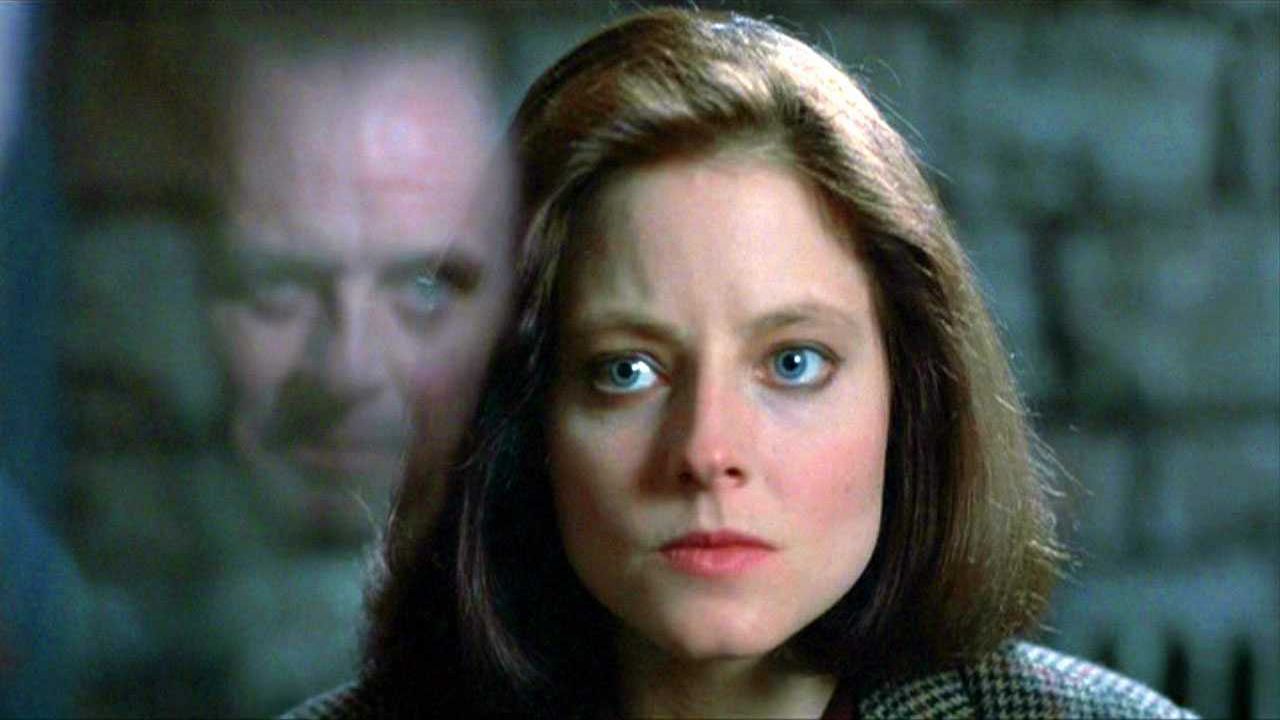
The first time you see Hannibal “The Cannibal” Lecter in “The Silence of the Lambs” always brings a shiver up my spine every time I watch the film. FBI trainee Clarice Starling has been asked to go to the prison where Lecter is being held, has heard about his sick nature, and has been warned not to approach the glass that separates his cell from the world. With much buildup given to her (and to us, as an audience), Clarice walks through the basement cells toward the last one on the left. When she arrives, there he is, standing in place and looking at her as if he were expecting her.

Hannibal Lecter is a psychotic serial killer who had been known to eat the remains of his victims. He was also a respected psychiatrist until his capture and imprisonment, and so whenever people like Clarice comes into his world, he delights in using his intelligence to play with their minds. That makes him one of the most interesting, fascinating villains to be found in any thriller.

“The Silence of the Lambs,” based on the novel by Thomas Harris, opens with Clarice Starling (Jodie Foster), who is still in training at the FBI academy but is very bright and observant. Those characteristics and more convince the head of the FBI, Jack Crawford (Scott Glenn), to send her on a potentially dangerous mission—maybe not dangerous physically but possibly mentally. He wants her to visit the infamous Hannibal Lecter (Anthony Hopkins) and find out if he knows anything about a serial killer called Buffalo Bill, who skins his victims.

So, Clarice goes to the institution where he’s being held, and already, he’s enjoying himself by playing with her mind. He assumes immediately, and accurately, that she comes from a “white-trash” community and the FBI is her main escape. She responds by testing him, by seeing if he can use that same psychiatry on himself. His response is a line most often quoted from this movie:

“A census taker once tried to test me. I ate his liver with some fava beans and a nice Chianti.” This is of course followed by the infamous sifting through his teeth (which was actually improvised by Hopkins).

Lecter does agree to offer a profile on Buffalo Bill, in exchange for quid pro quo. Clarice must reveal some things about herself, even traumatic events from her past, and then he in return will deliver a new piece of information about the killer. And so, he is having Clarice search within herself and playing with her psyche as each visit to Lecter reveals more and more.

Clarice is as tough as she can be during each situation such as this, and sometimes she even manages to play a mind game with Lecter as well, but there are times when she can’t help but react with frightened awe at Lecter’s interpretations. And we can’t either. The scenes involving Clarice and Lecter together are brilliant. They’re written intelligently and acted beautifully. Jodie Foster is quiet but attentive and very strong as Clarice, making her an appealing heroine to follow. Probably the best thing about her character visiting this intelligent, twisted killer is that because she is forced to reveal things about herself to this man, the character becomes multidimensional with each time they see each other. You understand where she came from, you know what led her to where she is in life, and you do feel like you do know her. Therefore, when she is put in real danger at the end of the film, during her ultimate encounter with Buffalo Bill, you root for her to get out of it.

And then there’s Anthony Hopkins, who is hands-down the most memorable aspect of “The Silence of the Lambs.” His performance in this film is nothing short of brilliant. He makes the role his own, making Lecter as frightening as he is smart and gracious. He’s the epitome of evil personified. It’s the performance that practically defines an actor’s career, and Hopkins’ chilling portrayal of Hannibal Lecter is always going to be remembered.

“The Silence of the Lambs” continues with Clarice as she joins the FBI in the pursuit of Buffalo Bill and it intersects with the subplot of Buffalo Bill, whose real name is Jame Gumb (Ted Levine), who is definitely not as sophisticated (or as clever) as Lecter. He’s a transvestite who is so intrigued by women that he’s even gone as far as to making a suit made out of women’s skin. He has already taken five victims, and in this film, he is holding his latest victim captive for days until he will finally kill her off and remove her skin as well. And so, there’s a race against time for the FBI to discover who the killer is and where he is so they can save the woman. I won’t go into the truly sick hobbies that this guy likes to perform when he’s alone, but I will say that it’s beyond disturbing. Granted, the scenes with Buffalo Bill aren’t as brilliantly written as the exchanges between Clarice and Lecter, but then again, what can be? This is a more traditional sick killer type, and I thought the contrast between him and the sophisticated Lecter is kind of interesting because you know there are different types of personalities for serial killers.

“The Silence of the Lambs” builds up to a climax in which Clarice does eventually find out who the killer is, and actually finds herself trapped in his house, and there’s a truly frightening sequence in which she is wandering through a dark room with her gun in hand and trying to find a way out, all while Buffalo Bill is watching her with night-vision goggles. That is a truly unnerving, suspenseful sequence. But if there’s a flaw in this climax, for me anyway, it’s that there’s no psychology involved. We don’t know much about the past of Jame Gumb, so there’s really nothing to discover that would pay off. Wouldn’t it be interesting if Clarice used something from his past against him to save herself and bring him down?

Another problem I had with the film is the imposing music score that indicates danger, mainly because I thought it was a little too much. I could already tell there was danger coming because of that score, so there weren’t that many surprises there. (Though, to be fair, most of the surprises that the music brings with them, I didn’t see coming.)

Something else to be said about “The Silence of the Lambs” is that it’s very well-made. Directed by Jonathan Demme and photographed by Tak Fujimoto, this film has a great look and a creepy atmosphere, along with a consistently creepy tone that is apparent throughout. In keeping with the spirit of the novel it was based on, the film is something unusual: a thriller that relies more on essence and sensibility than cheap thrills and blood and gore. It’s well-crafted (especially in the scenes involving Lecter and Clarice, with neat visual tricks thrown in to raise the tension) and smart and very skillful.

The Ring (2002)

31 Oct

Naomi-Watts-as-investigative-reporter-Rachel-Keller-watching-the-mysterious-videotape-in-Dreamworks-The-Ring-2002-2

Smith’s Verdict: ***1/2

Reviewed by Tanner Smith

“Have you heard about this videotape that kills you when you watch it?”

Yes, “The Ring” is about a VHS tape that brings certain death to those who view it. After you’ve been subjected to many disturbing images, the telephone rings. When you answer it, you’re told you have seven days to live.

There are many horror films in which so much disturbing, unnerving imagery has been subjected to us and when it’s over, we’re all relieved to be in the real world again, alive and well. But “The Ring” actually suggests that the mere act of watching this weirdness can kill you. Already, I like this horror film for that concept.

“The Ring,” based on the Japanese horror film “Ringu,” is one of the scariest movies I’ve ever seen. It has an atmosphere that can hardly find comparison; it’s spooky in all the right parts; it takes you on an intriguing mystery that answers some questions but not all, so that you can fill in some of the blanks yourself after you’ve seen it; and it has a great share of effectively scary moments that are tense and very frightening.

After the cursed tape has taken the life of a teenage girl (in a very creepy prologue) seven days after she’s watched it, the late girl’s aunt, reporter Rachel Keller (Naomi Watts), decides to look further into her reasons for dying. After hearing about the tape from high-school gossip and discovering that the girl’s three friends have died the same night that she did (presumably seeing the tape as well), Rachel happens upon the tape and decides to watch it, only to seal her doom.

With seven days and counting (as titles inform us of the countdown), Rachel believes that something supernatural is afoot here and decides to bring in her ex-boyfriend Noah (Martin Henderson), a video geek, to help figure this out. Together, they decide to view the images as a series of clues leading to the tape’s origins and set out to solve the puzzle before seven days are up. Things get even worse when Rachel’s eight-year-old son, Aidan (David Dorfman), watches the tape as well, sealing his fate as well.

The plot thickens as Rachel and Noah are brought to research the life of a woman whose daughter may be connected to the surrealism of it all, and are also brought to the place it originated where they find more answers. The fun thing about “The Ring” is that with all the images that stay in your head no matter how hard to try to forget about them (it’s an effectively executed, creepy show of images on that tape), you find yourself trying to figure out all this as the characters are. There’s hardly an instant when you’re ahead of the characters in solving this puzzle. And it’s fascinating to watch each new development continue to be thrown into the mix, while it’s also creepy at the same time because it’s more unnerving as the mystery grows and comes full-circle.

“The Ring” is great to look at. With nifty camerawork, creepy visuals, and an effectively grim tone, this is a very well-made ghost story. And somehow, that it takes place in Seattle which is mostly dark and gloomy makes it all the more effective.

Critics are rather split about the twist-ending, but I didn’t have a problem with it. Sure, it brings more answers that I would have liked to have come up with myself, but on the other hand, it is quite intriguing to see some version of a possible answer. And let’s face it—it’s here to give us the “money-scare,” the “money-shot” that every horror film must have in order to give audiences nightmares for days, if not weeks. “The Ring” has a hell of a good scare at that point. If everything else was a whimper, this ending was a scream. And I liked that the ending came an unexpected time, when it seemed as if everything was going to be all right.

And once again, there are as many questions that arise as there are answers that are revealed. I didn’t mind so much, because I was caught up in this mystery and wanted a few things to figure out for myself.

Naomi Watts makes for an appealing heroine—not only beautiful, but also resourceful and bright and caring for those around her. I also liked that it’s a reporter that is the protagonist of this ghost story, because she has that gut feeling to go out and investigate the strangeness that’s going on here. (Though, whether or not she actually does write this story for the Seattle Post is open to wonder.) Martin Henderson is good as her partner, and he and Watts share convincing chemistry as their relationship mends through this experience (of course). Brian Cox has a memorably creepy cameo appearance as a farmer that knows too much and is hesitant to tell.

Not everything about “The Ring” works, however. My main problem with the film is the character of Aidan. One thing I neglected to mention is that Aidan is actually psychic. He can see the same kind of surreal imagery that Rachel is trying to figure out. The problem I have with this kid is that he’s just too creepy, and with no emotional involvement to balance anything out. This kid doesn’t act like a regular kid—he acts like a carbon copy of the kid in “The Sixth Sense.” There’s never a sense that he cares for anything in the slightest; so why should I care if the kid lives?

And there are some little things that bugged me a bit, but they’re mostly nitpicks, such as why is the ghost able to call via telephone and how the lid of a well can create a ring that can be seen from inside? But I guess this is the kind of film where you don’t ask such questions and just be wrapped in the atmosphere and mystery of “The Ring.” There are many standout moments that unnerve, others that frighten, and others that inspire. That is why this is one of the most effective supernatural horror films I’ve ever seen.

Short Term 12 (2013)

15 Oct

Short Term 12 Brie Larson and Keith Stanfield

Smith’s Verdict: ***1/2

Reviewed by Tanner Smith

OK, so you have this setup: foster care, the people involved, emotional attachments proceed. Describing the independent film “Short Term 12” like that would make it sound like a overly sappy and sentimental melodrama with enough manipulation to make you puke when you realize you’re not crying (and not going to either). But “Short Term 12” is a lot better than that. It’s a well-written, deeply effective film that takes a close, realistic look at the lives of those who live in a children’s group home and those who work there as caretakers. These are complicated people that are brought to life with good writing and convincing acting.

“Short Term 12” is mostly centered around the character of Grace, who works as a caretaker at a foster-care “short term” institution, acting as a surrogate big-sister to troubled kids who live there. She’s played in a star-making performance by Brie Larson. Larson has been good in supporting roles before (and has appeared in two indie films recently: “The Spectacular Now” and “Don Jon”); in this leading role, she owns it with her best work that is sure to gain a lot of attention. She delivers an honest, successful portrayal of a person who seems to have everything under control on the outside and is insecure and unsure on the inside. And that’s what Grace is like—she seems to have it together when she’s around people at work and has a no-nonsense personality to assist, but life outside work is a confusing mess as things in her life spiral out of control in ways she didn’t expect.

“Short Term 12” is an intriguing character-study in that we know very little about Grace to begin with, and then events from her past are revealed as the story continues. Events happen and we know more about her through these events, in the way she responds to them. We understand why she behaves certain ways (and at one point, it’s revealed that she may actually be mentally unstable) and grow more and more interested in her story as it’s revealed in small doses, not with overwrought exposition but with realistic talk. Credit for that not only goes to Larson, but also to writer/director Destin Cretton, who remade (and expanded) this feature film from his earlier short film in 2008. And I should also give credit for the crafting of the film too. It’s done in handheld camera footage, which I usually can’t stand in films anymore, but it works here because it gives the film a more “you-are-there” feel. This way, we feel like we know these people and are with them throughout the film, like any great character-driven film.

And something else “Short Term 12” gets right is that it’s one of the truest portrayals of troubled teenagers you’ll ever come across. Their issues are as serious as the issues the caretakers are going through—and while we’re on that subject, it’s also interesting in how a standoffish newcomer to the home, Jayden (well-played by Kaitlyn Dever), has problems that mirror that of Grace’s. That gives Grace all the more reason to ultimately break down as well as try to help her. It gives a very interesting dynamic in that sense.

I don’t want to make “Short Term 12” sound entirely depressing, because it does have its comic-relief moments, such as the amiable stories that Grace’s lover/co-worker Mason (John Gallagher Jr.) loves to tell to his co-workers, including newcomer therapist Nate (Rami Malek). And the friendship that the workers share is convincing and easygoing. Other amusing moments come from the kids, particularly wisecracking Luis (Kevin Hernandez) and odd Sammy (Alex Calloway). Sometimes, you need to laugh or hassle your fellow “inmates” and supervisors in order to further go along the road to recovery, given these kids’ pasts.

Even when there are some rough character choices in the final act, and Grace does perform a most extreme action that really makes you question her mental state, “Short Term 12” finds a way to recover. This is a film that I will not forget anytime soon. The performances are on-target, the script is solid, the execution is well-handled, and hopefully, this will turn out to be a deserving career breakthrough for Brie Larson, for her brilliant performance. I look forward to seeing her in more leading roles. And I also look forward to Destin Cretton’s next film.

War Eagle, Arkansas (revised review)

4 Oct

Luke Grimes and Dan McCabe in

Smith’s Verdict: ****

Reviewed by Tanner Smith

This is a “revised” review of “War Eagle, Arkansas.” When I first watched and reviewed this film three years ago, I saw it as the great film it was and wrote a very favorable review. It was a film I would definitely want to see again. And surely enough, I did. I rented this film several times at the local video store in my Northeast-Arkansas hometown until I ultimately bought it there for $10.75. It was well worth the cash. The reason I’m writing a new review of it is because I feel there’s more I can say about it now, especially considering that it’s now one of my absolute personal favorite movies.

I love this film. I mean, I really love this film. It’s not just that it’s a well-executed, well-acted, and very credible independent film, but there’s also its sense of place (an idyllic rural community that hits very close to home), the excellent characterizations (believable, effectively-realized characters all around; they remind me of people I know/knew), and its courage to tell a story that is emotionally accurate even if it goes against what most audiences would like to see (the resolution is melancholy and yet hopeful, with a hint of satisfaction nonetheless). All of those elements speak to me in ways I didn’t expect.

The film is somewhat based on the true-life friendship of producer Vincent Insalaco’s son, Vincent III, and wheelchair-bound Tim Ballany. A similar friendship is imagined in the film, with Enoch Cass (played by Luke Grimes) and Samuel “Wheels” Macon (Dan McCabe) in the small town of War Eagle (said to be “at the top of a plateau in the Ozark Mountains”).

Enoch and Wheels are both outcasts—Enoch, because despite him being a gifted baseball player with a chance at a university sports scholarship, he has a terrible stutter that doesn’t allow him to carry out a full sentence half the time, and that also makes him somewhat insecure; and Wheels, not only because he’s confined to a wheelchair due to cerebral palsy, but because he is a witty loudmouth who rarely shuts up. They’ve been friends their whole lives, they hang out around town every day, and despite their disabilities, they are able to create a full personality all their own in a way that a long-running friendship can create.

The film takes place in the summer after Enoch and Wheels have finished high school, and is essentially a slice-of-life drama simply about certain events in this time period surrounding this central relationship. Things happen because they are supposed to do happen—they simply are, and it’s more about how these things happen. It’s told episodically, as it shows Enoch preparing to pitch for the All-Star baseball game in Fayetteville, working up the courage (and speech) to ask a girl he likes out on a date, and wondering about his life in his hometown and what life could be like elsewhere.

These are all very relatable issues. Particularly for me, speaking as someone who has lived in a small town most of his life (and also in Arkansas, believe it or not), there were many times when I would feel tired of the all-too-familiarities and think of moving outward to a new life in a new surrounding. But there would always be at least something in that town that always made it feel like home—it was my home, and the people in it made it worth staying for a little while longer. And that’s Enoch’s deal here—his best friend Wheels, and also his family, are important to him, despite his wishes of leaving.

Even if you haven’t felt that way in your life, you realize how accurately it is portrayed in this film. In the case of Enoch wanting to ask out a local girl, Abby (Misti Traya), every guy has felt this way before. Working up the courage to ask her out, not knowing what the response will be, uncertain of what will happen if she actually says yes, and so on. There are embarrassing moments that ring true, one of which is very painful—it’s when Enoch meets Abby and her friends and tries to ask her out, but because of his stutter and inability to even let out the first word, her friends can’t help but giggle and laugh at him until Enoch is humiliated and leaves. Eventually, he does score a date with Abby but has to bring Wheels along just in case.

But there are two problems with this new relationship between Enoch and Abby. One is that Wheels is now the odd man out and feels lonely without Enoch (he also gets the feeling that Abby is not right for Enoch after all), and the other is that it gives Wheels time to think about what not only his relationship with Abby does but also what their own relationship does, which is to keep Enoch in a working-class town when he should be taking his chance at a baseball scholarship in Tennessee. This leads to a confrontation in which Wheels, after trying to keep everything bottled up inside, finally lets out to Enoch that he needs to wake up and know what he has to do.

It all manages to fit around a decision that Enoch must ultimately make—either stay in his hometown or leave to play baseball for a Tennessee university. The result may not be obvious to most people, but what’s really important about this resolution is why and how it had to happen, and it becomes even more clear the more times you watch this film (or at least, for me, anyway). Whether you’re satisfied with it or not, it’s hard to deny that it feels very true to life.

What also makes the film silently tragic is the character of Wheels. This is a person that can never be independent and always needs someone to help him, whether it’s his mother or Enoch. So while Enoch has a chance of getting out of this hometown he’s lived in his whole life with Wheels, Wheels is going to feel more and more imprisoned by the community he’s been way too familiar with. You feel for him, because amidst all the wit and profane talk he spews, you understand more of the isolation that he feels and can’t help but sympathize with him.

The film is called “War Eagle, Arkansas,” and surely enough, the town itself feels like a character in the film. A great deal of atmosphere is noticed all throughout as you get a good sense of the environment these characters live their lives in. Particularly, there’s the local diner, the practice baseball field, the farm Enoch lives on with his grandfather and mother, the open fields, the main street, and the overlook near the “War Eagle” sign, where Enoch and Wheels sometimes sit and contemplate. There’s enough atmosphere here that you can understand why Enoch does in fact like this place and why Wheels is imprisoned by it.

I should mention the supporting characters, because they are terrific. For instance, there’s Pop (Brian Dennehy), Enoch’s grandfather and baseball coach, who is crusty and tough with his grandson, and has reasons for being so. This is not a Wilford Brimley type of character that has all the answers and kindly puts them in ways that those in need of help can understand, and he is not a warm presence. Sometimes he’s a jerk, he’s not always right, and he can get a little carried away. Yet at the same time, there’s a sense of humanity that keeps him from fully being a jerk. As the film progresses, we get a little more of his story through Enoch’s eyes, learning more about him through little actions and few words. He is trying to give Enoch the opportunities that were denied to him in his past, like baseball glory.

There’s also Jack (James McDaniel), a black video store clerk who wants to start his own church in a community that’s…well, mostly-white. You would think, since he is a preacher, that he would fit the role that the Dennehy character could have had, and while he does have a few inspirational speeches, they’re not overly written or played unrealistically. This film is consistent in how it doesn’t always go for the easy way out, and that’s true of how Enoch slowly but surely reacts to some of Jack’s advice. Also among the supporting characters is Belle (Mare Winningham), Enoch’s resolving mother who is sick and tired of the feud going on between Enoch and Pop because of the way Pop treats him; she’s an understanding woman who knows when to step in. And last but not least, there’s Jessie (Mary Kay Place), in a brief role that says a lot, as Wheels’ hardworking mother who is still trying to make ends meet.

All of these characters are believable and fully-realized, and the dialogue they deliver seems very genuine. The credit for that, as well as for the ways the story is presented, has to go to the writer, Graham Gordy, and the director, Robert Milazzo. They have created a great portrait of relationships, ambitions, and small-town life, with authentic characters and situations to help present them. And a great deal of credit also has to go to the actors; there is not a single false note in any of the performances. This film probably has my favorite performance delivered by character actor Brian Dennehy, who creates a very credible “crusty-old-man” character with purposes and also regrets. I learn more about him each time I watch this film. Luke Grimes (not a stutterer) and Dan McCabe (not diagnosed with palsy) are absolutely perfect in their roles, and their friendship is very convincing, as if they really had been friends all their lives. Misti Traya is a three-dimensional dream girl, with her quirks and flaws that balance out her good looks and nice qualities. James McDaniel, Mary Kay Place, and Mare Winningham are solid as well.

There’s hardly anything more I need to know about Enoch, Wheels, Abby, Jack, Belle, and Jessie than what I know from this film (and it helps that there are ending texts explaining what happened to half of these people later on). But if there was ever a sequel to this film, I would definitely check it out, because I certainly wouldn’t mind spending another hour-and-a-half with these people. But because I’m sure that a sequel will never come about, I guess I’ll just have to stick with this film as is.

And I have. I’ve watched “War Eagle, Arkansas” a hundred times already and will continue to watch it a hundred more times in the future.

Jeepers Creepers II (2003)

3 Oct

15522__jeepers_l

Smith’s Verdict: *

Reviewed by Tanner Smith

“Every 23rd spring, for 23 days, it gets to eat.” Yes, apparently, “Jeepers Creepers II,” the sequel to the modest horror-movie hit “Jeepers Creepers,” went with that angle that is just as ridiculous now as it was then. That’s apparently the main rule for a fiendish winged half-man/half-beast known as The Creeper. And I have to admit—it is a neat monster. It’s fast, dark, tall, ugly, vicious, and ruthless. And it doesn’t talk or wisecrack, so it only has a snarling personality.

But it’s a really bad move to make us root for the villain in a horror film just so we can say how intriguing the villain might be. “Jeepers Creepers II” has a nice monster, but it has it entrapped in a nothing story with extremely unlikable, annoying “heroes” that we just want to see die faster so that the movie will be over and we can move on with our lives. (And maybe the most dedicated fans of this movie, which I’m hoping are a very limited few, can make pieces of online fanfiction that is more interesting than what they had to watch to get started with.)

Yeah, “Jeepers Creepers II” is well-made (for the most part, anyway), but it’s boring, stupid as hell, and contains the dumbest, most unpleasant group of characters you’ll ever find in a horror film or a mindless action-adventure. Never before have I wanted a whole group of protagonists to die faster than they do in this movie. They’re that obnoxious.

The film starts out in a suitably unnerving way, as a young boy sets up scarecrows in the middle of a wheat field and then notices one that seems unfamiliar. He sees the claws, and then bam! It springs into action, grabbing the boy, and running off with it as his father and older brother give chase before it ultimately flies away. (Why it didn’t just fly away before is anyone’s guess.)

And then, we’re introduced to our heroes. No, it’s not Jack Taggart (Ray Wise), the farmer who was the dead boy’s father and now seeks vengeance in a mere subplot. Instead, we’re forced to follow a group of jackasses—a high-school football team on the bus ride home from a big game. The Creeper causes the bus to have a flat tire (by using one its…ninja-stars? What were those again?) and picks off the driver, coach, and assistant coach, leaving the team and a few cheerleaders to fend for themselves.

How stupid are these kids? Well, let’s do bullet-points for all the idiotic actions they perform.

  • Even though the Creeper is super strong and fast, and has even removed the head of one of their teammates, they still slowly look upward to see if it’s still out there.
  • It never occurs to them that they should stay low in that bus.
  • When they get out of the bus (yes, they get out of the bus), they do nothing but stand on the road until they see it coming. When they can’t get back in, what do they do?
  • They run out into an open field instead of hide under the bus!

And let’s not forget Scotty, the jackass homophobe who angrily takes charge and decides to split the group in two, seeing as how The Creeper only saw a few of them earlier, and thus those it hasn’t seen will live. One thing he forgets (that, by the way, someone does bring up but not soon enough) is that The Creeper saw him too, so that whole scene in which he tries to take charge, resulting in him making an even bigger jackass out of himself, was completely pointless.

It’s pretty easy to hate Scotty, but there are others on that bus who are equally loathsome, including Scotty’s girlfriend who always says the wrong things; one kid who assumes another is gay (which is interesting, considering how many gay undertones there are in this movie); and there’s even a cheerleader who is actually psychic so she can explain the motivations of The Creeper. I haven’t mentioned any names of the actors playing the kids; I’ll cut them a break. What I won’t cut a break, however, is the screenwriter for writing so much atrocious dialogue that forces us to listen to these “heroes” go on and on and never shut up. I’d much rather see what Jack Taggart has to do with anything, but he’s unfortunately a supporting character who’s able to show up for a somewhat-kickass climax, in which he packs a quite lethal weapon: a post-puncher turned spear-thrower. Why not follow this guy instead? Anybody but these detestable jerks!

You get the point—“Jeepers Creepers II” is a horror film with not much of a story and no one to identify or sympathize with. I guess the idea of characters being trapped on a bus by a vicious villain that won’t stop is kind of intriguing, but when you have to spend an hour and a half with people you don’t like, and just wish they would get it sooner, it takes the fun out of everything it could have had going for it.

P.S. By the way, why is this thing called The Creeper when it does everything else aside from “creep,” like fly, stare, and…lick the glass on one of the bus windows? (What?)

The Witches (1990)

30 Sep

images

Smith’s Verdict: ***

Reviewed by Tanner Smith

Kids often have that feeling that the grownups are out to get them, and in “The Witches,” the children have much to fear from the women of the world—particularly those with gloves and purple eyes. As an elderly woman tells her grandson (and as a result, the audience) a story about real witches, they apparently look like real people walking the streets. If you look closely at them, you can see the purple haze in their eyes. They have square feet, so they wear plain, ordinary shoes. And whenever a witch is near a child, she often holds her nose, since clean children have a distinct odor.

They’re out to destroy every child in the world. And they’re everywhere, in every country.

The story is told early on in Nicolas Roeg’s “The Witches,” based on Roald Dahl grim children’s story of the same name, as the Norwegian grandmother, Helga (Mai Zetterling), tells her American grandson, Luke (Jasen Fisher), all she knows about witches. When she was a little girl, her friend was taken by a witch and imprisoned in a painting until her image aged, withered and vanished. (Helga kept seeing her image move as years went by. She also lost a finger due to an encounter with a witch.)

That’s a very chilling opening sequence, told in flashback and with effective atmosphere, and it sets the tone for the rest of the movie, which is like a well-told children’s bedtime story that would probably scare little kids and give them nightmares. But I think kids like to be scared (or else they wouldn’t go out for Halloween or watch scary movies that their parents forbid them to) and “The Witches” would probably delight them. Though, granted, some of them might want to prepare themselves first, as there are some disturbing elements in this movie.

Helga takes Luke on a vacation to England, where they stay in a fancy hotel. At this particular hotel is where all of the witches of England have an annual secret meeting, including the Grand High Witch, the most dangerous, fearsome one of them all. These witches pose as a children’s charity group hosting a convention at the hotel. They’re led by Miss Ernst (Anjelica Huston, having a lot of fun playing the role), a tall, striking woman with a distinctive manner and accent that lets us know immediately that she can’t be trusted. She is indeed the Grand High Witch, as Luke realizes as he stumbles upon the witches’ meeting and overhears their secrets, as well as their secret plan. Their plan is to use a magic formula to hide in sweets—when children eat them, they are transformed into mice.

Luke is discovered (a little too late, conveniently—I thought they would’ve smelled him earlier, since witches have a keen sense of smell) and he is forcibly turned into a mouse (a talking mouse too—OK, maybe it’s a little too convenient now). Luckily, he’s able to convince his grandmother who he really is, and so they come up with an idea to stop the witches before they carry out their plot.

The late Jim Henson produced “The Witches”. He and his special-effects crew bring their genius and talent to work in the sequences in which Luke, in mouse form, and his friend Bruno (Charlie Potter), also turned into a mouse, run about gigantic pieces of furniture and, even in close-ups, are able to make us believe that they really are talking mice with specific actions to perform. For kids, this is a fun adventure to take with the boy-mouse, and for adults, it’s an interesting visual look that impresses. It’s the best of both worlds.

It’s here that “The Witches” turns into a romp and loses of its tenseness that was set up in the aforementioned opening scene. But it is a good deal of fun, and it’s hardly predictable, as we can’t exactly see how everything will play out. It’s also a race against time, which makes things more exciting for the final act of the movie.

I admire how grim Nicolas Roeg made “The Witches” to be, given that it’s a family film that could have been played relatively safe. While it has a certain sensibility to it, the implications of the story are very grim and the imagination contains what could become or what might have become. If there is one problem, it’s probably the ending, but this is coming from someone who has read the book. I won’t spoil it, but let’s just say some kids may enjoy a happy ending after all the grim stuff is over with. Mostly though, “The Witches” is quite fascinating.

Gregory’s Girl (1982)

27 Sep

GREGORY'S GIRL 1981 film still

Smith’s Verdict: ***

Reviewed by Tanner Smith

In the early 1980s, there was a trend in the movies called “teenage-sex movies.” Ever since “Porky’s” was released in 1982 and became a huge box-office hit, studios have tried to cash in on its success by simply making comedies about horny teenagers, usually boys, looking to “get lucky” with the opposite sex. They claim to be about growing up and becoming a man, when really, they’re really about unlikable jackasses who would nothing better than to have sex. They’re not looking for love or friendship with a member of the opposite sex; they see them as mysterious creatures or objects to obtain or hunt (or jump). So few movies about teenagers at the time were about real teenagers with real relationships and problems and so on—one in particular I can think of at the top of my head is “Tex,” which is one of my favorite movies; that film wasn’t about sex, but it was about coming of age and becoming a man.

Another film released around this time, and undoubtedly a breath of fresh air for critics and audiences looking for that type of film, was a Scottish film called “Gregory’s Girl,” made by Bill Forsyth. This is a film about an awkward, weird, not particularly handsome young man, named Gregory (Gordon John Sinclair), and his misadventures through life and through love. He’s curious about the girl he likes, but just wants to get to know her better, unlike his friends who would just do anything to get girls to notice them, even if it’s not particularly charming topics of conversation. (We all had friends like that in high school, didn’t we? My friend would often quote “Austin Powers” to try and impress a girl. Don’t try that, by the way. But I digress.)

Gregory is on the soccer team (though, it’s actually known as “football” there, of course), but his lack of skill and coordination on the field puts him down to the position of goalie. Taking his place is Dorothy (Dee Hepburn), an attractive, athletic girl who is a very talented soccer player. No one can believe how well “a girl” can play, especially the coach, but Gregory notices it as “modern” and sees her true athletic skills. But also, he immediately falls in love with her. He can’t stop thinking about her, he likes the way she plays, he likes the way she smells, he likes everything about her. He even likes her scars—there’s one scene in which Gregory and Dorothy show each other scars and injuries from their pasts. That’s a great scene—the chemistry is perfect, the body language is accurate, and you can really get a sense of what these two feel towards each other, as they’re polite during certain feelings they go through in this sequence.

So, we know that Gregory likes Dorothy a whole lot, but how does Dorothy feel about Gregory? Well, truth be told, I’m not sure. You can tell she likes him a little, and she knows he likes her, and she’s not above flirting with him while also making friendly conversation. You’re not quite sure of what she feels, but you know what? I was never sure how any girl in high school really felt; there’s hardly a way of knowing for us guys. Despite the title “Gregory’s Girl,” the film is not necessarily about Dorothy, but more about how Gregory reacts to these feelings he has now developed and how he works up the courage to ultimately ask her out on a date. The last 20 minutes of the film, in which he does have the courage to ask out Dorothy and what happens after he does, do not go in the way you’d expect it to be, but without giving too much away, you do feel Gregory’s confusion that slowly but surely turns into happiness.

Now, to be sure, this isn’t a complete success. Sometimes, it can be a little too cute in its humor and sometimes tries a bit too hard, particularly whenever Gordon John Sinclair does some bizarre improvisations (like mimicking a cat’s meow repeatedly) to make us laugh at him. And there’s also a disturbing subplot that sneaks its way in later in the film and is never made of anything again—is it me or did it seem like the soccer coach was flirting with Dorothy?

When “Gregory’s Girl” focuses on the mixed, messed-up emotions that real adolescents have in their lives, it works as comedy and drama, with gentle goofiness and a sense of sincerity. There are funny moments to be sure, but there are more sweet moments. I didn’t even mention the conversations Gregory has with his precocious 10-year-old sister, who herself is oblivious to boys (there is one, however, that does pine for her). They add to the charm and humor of this nicely-done film.