Turn Right On Madness (Short Film) (2014)

21 Jan

1477348_190896667767974_1673487650_n

Smith’s Verdict: ***

Reviewed by Tanner Smith

“Turn Right On Madness” is a short slasher film, and we can go through a checklist of certain elements for the subgenre.

Wrong turn: Check.

Wrong gas station: Check.

Psychotic killer in the middle of the woods: Check.

Death, death, death: Check.

One left alive: Check.

Obligatory scary ambiguous ending: Check.

Heavy blade involved: Check.

Dumb decisions made by characters: Check.

You come to expect these things in a slasher film, and “Turn Right On Madness” is no exception. Indeed, the film is about a group of three young people (that’s a change; usually it’s a group of five) who decide to go camping in the middle of nowhere, take a wrong turn, and get stalked and hunted by a psychotic killer with an axe.

Some of you may be thinking while reading this, “Sounds good! Keep talking!” The rest of you may be thinking this has already been done. And yes, it has already been done, but not entirely. For one thing, there’s something more ominous afoot, as if the characters (played by Geneva Galloway, Steve Helms, and Hannah Blackburn-Parish) were pawns in some sort of sinister game. Technology is involved (echoes of “The Cabin in the Woods”); people inform others through radio that their targets are moving, and what brings these people to danger (or “madness,” if you will) is actually their GPS, which has brought them to their doom. And a delightful touch is that the GPS voice is set to a scary-voice track. There is also where most of the film’s humor comes from—its sinister voice stating a new direction, followed by something along the lines of “if you dare,” followed by mechanized evil laughter. I’ve heard the rant of “technology is evil,” but…wow.

And yes, the GPS does bring them to the “wrong gas station.” Well, at least this one actually looks modern (despite what the Blackburn-Parish character thinks, as she packs a “pink tazer” with her).

Well OK, it does accept cash-only (originally spelt on a sign as “ownly,” being not-so-thoroughly scratched out) for gasoline, but what can you do?

Not too far from the gas station is where the GPS leads them to a remote area, and (in the film’s funniest moment) the car suddenly stops, leaving them stranded in the woods. As they look at the map (yes, there is actually a map), they realize they were led the wrong way, as two of them go into the woods looking for help. Big mistake.

By the way, I love this line by the character left behind while the others embark into the woods—“I would’ve taken the road instead of the woods, but that’s just me.”

Something that shouldn’t surprise me yet nevertheless does is that this film was written, edited, and directed by Sarah Jones, a graduate of the University of Central Arkansas Digital Filmmaking MFA program. The surprise is “Turn Right On Madness” is her first film since the effective 20-minute drama, “John Wayne’s Bed,” Jones’ graduate thesis film. But the more I think about it, this shouldn’t surprise me, as she was involved in shorts such as a vampire thriller and a zombie flick. I can tell she’s a fan of the horror genre, and I can tell those who helped her make the film (including producer Jennifer Mazzacane, who wrote/produced the short horror film, “Campout”) like the horror genre as well. It has a tense moment or two (being a film of 10 minutes in length, that’s about the best you can do, I guess), its blood and gore effects are nicely-done, it seems to have an affection for the slasher-film subgenre, it has some surprises, and of course, being the modern horror film, it can even be a little self-referential.

When all is said and done, “Turn Right On Madness” is a slasher film, and it all depends on whether you can tolerate this type of film and also appreciate the little touches thrown in to make it somewhat more original than the average. The idea of a GPS being the cause of the madness that befalls these three people is both original and funny. There are funny lines of dialogue at certain points in the first 4-5 minutes. The lead actors are fine, though not much range is required for a film like this (even though a certain amount of credible screams help). And I must admit there were a couple moments that did get to me: one was the first death, because it came out of nowhere, and another was the final appearance of the killer (played by Johnnie Brannon). So I’d say I enjoyed this short film. It is what it wants to be and you can tell the filmmakers had fun while making it…well, except for maybe that time when Jones apparently cut her foot with a sheet metal door. But what’s making a horror film without losing some blood in the process?

OK, that may have been a sick joke, and I apologize for that.

On a side-note, I asked Jones why she chose to make this film after something as serious as “John Wayne’s Bed.” She said she wanted to do something “campy and fun after JWB [“John Wayne’s Bed”].” Being a filmmaker myself, I can respect that.

Contracted (2013)

14 Jan

contracted

Smith’s Verdict: ***

Reviewed by Tanner Smith

Just to get this out of the way, the tagline for the “Contracted” poster reads “Not Your Average One Night Stand.” And the problem with that is I don’t think the sexual encounter in the opening of this film could be considered a “one night stand” so much as “rape.” Our female protagonist is clearly drunk, the predatory male picks her up, the next thing we know is that they’re getting it on in the back seat of a car with her repeatedly telling him to stop when he doesn’t, and it’s indicated later that roofies were more than likely involved.

Yeah, I’d consider that “rape.”

Now that that’s out of the way, let’s talk about Eric England’s “Contracted,” an effectively horrific, suitably gross horror film with as many smarts as gore. It’s a nicely-done chiller that plays as horror and as a cautionary tale about safe sex. It begins as 20something lesbian Samantha (Najarra Townsend) attends a party held by her best friend Alice (Alice Macdonald). Feeling her relationship with her girlfriend Nikki (Katie Stegeman) is deteriorating, she gets smashed, making her the perfect target for a mysterious stranger named BJ (Simon Barrett). Before she knows it, she has unprotected sex with him in a car, which will result in the impending horror.

The next day, which is given the foreboding caption “Day 1.” Samantha awakens with a slight case of the chills. She also has a rash and a bloody…well, never mind. She goes to see a doctor about it, but she gets that usual lame story about blood tests (though why she isn’t given a prescription at least, I couldn’t figure out). But things get even worse during the next couple days, and on Day 3 (which is labeled “Day 3 of 3”), things get even worse as her eyes change color, she gets a sore on her lower lip, and her hair, teeth, and fingernails fall out. (I won’t even mention the maggots.) This is far from STD; she is slowly but surely falling apart and losing her life.

The “grossout quality” is evident throughout “Contracted” and the makeup and effects in how they change the appearance of Najarra Townsend and do some neat practical effects for parts of the body are definitely something to be complimented, as they are well-done. And they did make me squeamish, particularly when Samantha notices something is not quite right with one of her fingernails.

But if that were all “Contracted” was, it would have been creepy but sort of ordinary. What I like about “Contracted” is that it is more of a character study than a straight-up horror flick. We come to understand Samantha as a person and thus we feel for her as she slowly and literally falls apart. There are hints given by her mother (Caroline Williams), whom she lives with, that she has had a troubled past involving drugs and that she has enough to be mad about, particularly with her lesbian lifestyle which her mother disapproves of. And I like that we’re not given expository dialogue about what Samantha has gone through in her life; everything is said to us through either hints of dialogue or how relationships between these characters flow with each meeting.

And Samantha does have a lot to deal with—her mother is overbearing; her girlfriend Nikki is hardly interested anymore; Alice is a little too clingy; there’s a nice guy (played by Matt Mercer) who won’t take the hint that Samantha isn’t interested in him; she isn’t too fond of her waitress job; she would rather do something with her hobby of growing orchids; and so on. There’s too much for her to deal with, which is why she sometimes makes mistakes due to her muddled priorities and sometimes-standoffish attitude. And now she’s had sex with a man for the first time, which came to this disease that is disturbingly ruining her life. But she’s too scared and too naïve to get everything on track once at a time. All that and more leads her to descending into madness and becoming destructive to herself (and to others) once it’s clear there’s no hope for her.

Samantha is not always easy to like, but she is easy to empathize with and you do feel sorry for her. And Najarra Townsend does a great job in the role. There isn’t a single false note in the performance, as far as I’m concerned.

Also, by having “Contracted” be more ABOUT a person, it also has the advantage of being an effective allegory about how people feel in the weird stages of early adulthood and how their deeds can lead to mistakes and consequences.

Not everything in “Contracted” works. Some of the mother’s reactions to her daughter’s illness are a little too unrealistic. You could argue that she’s afraid she’s resorting to old bad habits and she thinks that’s what this led to, but come on. And then there’s the second visit to the doctor, when the doctor notices that Samantha’s “condition” has only gotten worse. He doesn’t take her in for observation; he just tells her not to get in contact with anybody. Really? Then there’s a really nasty encounter with the nice guy who has been stalking Samantha for quite a while. Maybe if he were a little sleazier (or maybe if he were replaced by BJ), that would have been an effective comeuppance, if that’s what it was supposed to be. And what about BJ? (By the way, a brilliant move on the filmmakers’ part is that BJ is always kept out of focus during his scenes.) We don’t see him again except for a moment in which he picks up another woman. Why not put him in the nice guy’s place and give Samantha a moment of revenge?

(Granted, the fact that BJ isn’t given a form of comeuppance is somewhat chilling, since it’s obvious he’s going to keep spreading the disease around.)

Now I must admit I did read a few reviews of this film before watching it, because I am friends with this film’s 2nd 2nd Assistant Director and I wanted to know how the film was doing, critic-wise (as of now, it ranks 50 percent on Rotten Tomatoes). Each one of the reviews I read mentioned a certain word that made me correctly guess the film’s ending. What was that word and would it lead you to assume (possibly correctly) what the payoff to the disease is? I’m not sure I should reveal it. On the one hand, knowing beforehand made the film a little more fascinating in where it was going. On the other hand, I’m not sure how people would react to the final shot. I could see it having mixed reviews—some might react with an awed “whoa” (in a positive way); others might react with a dissatisfied, deadpan “what?”

Well, great. Now I can’t reveal that word now that I’ve built it up so much. People would guess the payoff for sure. Well, I guess the best thing to do would be to say to check out this film and decide for yourself whether you like the payoff or not.

I liked “Contracted.” It has a great protagonist; it’s well-made; it has a nice supporting cast, especially Katie Stegeman as unfriendly Australian lesbian Nikki and Charley Koontz as perpetually high Zain; the make-up effects are outstanding; it’s chilling; and its ending…well, I accepted it. Maybe you will too.

Staying Alive (1983)

12 Dec

staying-alive-1983-04-g

Smith’s Verdict: *

Reviewed by Tanner Smith

What has happened to Tony Manero? By the end of “Saturday Night Fever,” you feel that this Brooklyn wiseass has smartened up and matured enough to know there’s more to life than being a jerk and being king of the dance floor at a disco. But in its sequel, “Staying Alive” (named after the popular Bee Gees song), which catches up with Tony about five years later in Manhattan, Tony is someone we hardly recognize. And it doesn’t help that a boring, recycled plot with a PG rating replaces the hard R-rated edge of “Saturday Night Fever.” The result is a quite lame movie that didn’t need to be a sequel to “Saturday Night Fever” because we’re not seeing Tony Manero grow up; we’re just seeing John Travolta as a Broadway dancer in a series of one heavily-edited music-video-style sequence after another so that the whole movie feels like another version of “Flashdance.”

This is what Tony Manero (played again by John Travolta) has reduced to—a wimp who has lost his edge in the same way that Rocky Balboa lost his edge with “Rocky” sequel upon “Rocky” sequel. And wouldn’t you know it—this sequel was directed and co-written by Rocky himself, Sylvester Stallone. Stallone has made Tony into a naïve bore whose occasional smartass moments don’t define him in the slightest and apparently hasn’t learned a damn thing since the first film (remember—five years ago) about women, since he is trapped in yet another story in which he falls in love with the wrong girl instead of the girl he only sees as a pal, and then he will learn the only person who matters. And what’s worse is that he and Jackie (Cynthia Rhodes) are so good together, despite the fact the Jackie is all too patient and should probably just forget about Tony already, that you just want to smack Tony for not only going to score with the other girl, a snobby, experienced British dancer named Laura (Finola Hughes), but constantly staying sweet and making promises he can’t keep to Jackie who deserves better.

What about the real story? It’s dreadfully dull, as it involves Tony getting a job dancing for a stage play called “Satan’s Alley,” and desperately trying to give the audience something to remember about him. And that’s about it—it’s all too simple. Love triangle, rehearsals, coming of age, blah blah blah. It’s pretty tired stuff. And it doesn’t help that the film barely goes five minutes without a new song, a heavily-edited montage, or usually both. There’s no substance; it’s all style. And the worse part is the big explosive climax in which Tony does perform in the play. And this play, this “Satan’s Alley” which is assumingly about an ascension into heaven, is ridiculously bad. This payoff is a play that I would walk out of very quickly. It’s incomprehensible and just plain outlandish.

Oh, and the dancing sucks too. It’s below par when you think of Broadway dancing. And there isn’t a single moment that comes close to capturing the excitement and energy of John Travolta’s solo disco dance in the previous film, because we can guess that Travolta doesn’t have what it takes to be a Broadway dancer and he’s usually shot from the waist up. He may dance disco, but not much else.

“Staying Alive” forgets what “Saturday Night Fever” was all about. The previous film was not about dancing; it was about a complicated character that danced. This time, there is dancing all throughout, and there is a character who is not so complicated this time around. It would not matter in the slightest if Tony Manero was the focus here because the character is completely lost, and not even the charismatic John Travolta could bring him back. “Staying Alive” is one of the worst sequels I have ever seen.

Saturday Night Fever (1977)

11 Dec

1977

Smith’s Verdict: ***1/2

Reviewed by Tanner Smith

When people think of the title “Saturday Night Fever,” they mostly think of the lighthearted moments that involve John Travolta dancing on a disco floor, as well as the soundtrack, which includes many memorable songs performed by the Bee Gees. And that’s how I thought of it, having heard the soundtrack before actually watching the film. In fact, there were even a few times when I labeled it as “the disco movie.”

And boy, was I way off. “Saturday Night Fever” may have its entertaining, cheerful moments on the dance floor, but the film as a whole is a hard-edged, gritty drama about a guy trying to get by in life while hanging on to what he has left to lose. And its main character is not a wholesome, happy-go-lucky leading man, as for the most part, he’s sexist, racist, and vulgar. But he lives for Saturday night and lets out his anger brought on by life on the dance floor at a disco. He has a charisma that can either be admired or laughed at. And maybe he can change and grow out of his habits and lifestyle.

John Travolta stars in a brilliant performance as 19-year-old Brooklyn local Tony Manero, a macho guy who cares for looking good, getting laid, and being the best dancer. His personality gives his less-ambitious friends the illusion that he has everything covered. But his life is as screwed up as everyone else’s. He lives with a family that worships his older brother, who is a priest (his mother even makes the sign of the cross when she mentions his name). The father yells for no apparent reason and often snaps at Tony at the dinner table.

By the way, the funniest moment is when Tony’s dad hits him in the head and Tony reacts by shouting, “Watch the hair! I work on my hair a long time, and you hit it!”

But outside of his home, Tony is king of the dance floor at the 2001 Odyssey disco and worshipped by women, including a young, spunky floozy-wannabe named Annette (Donna Pescow) who desperately wants to make it with Tony. Tony doesn’t care for her in the slightest, but dances with her because she’s a good dancer.

Tony has a certain way of looking at women—they are either nice girls or they’re tramps. He does know that he doesn’t want to have sex with Annette because he wouldn’t respect her anymore, but he himself isn’t entirely fond of his own belief, especially when he sets his sights on a Brooklyn girl, Stephanie (Karen Gorney), and decides he wants her. But first he wants to get to know her first and for her to know him before bringing up snappy judgments—and she does, as she describes him to his face as a “cliché” who is going nowhere, while she has made it as a secretary in Manhattan. She only comes to Brooklyn to dance, and with the $500 dance contest approaching, Tony and Stephanie team up to enter it.

Let’s talk about the themes of “Saturday Night Fever.” There are two in particular. One is relating to women not just in a sexual way. Tony doesn’t see most women as people and more like objects he and his friends can put in the back seat of their car and perform sexual deeds with. But with his new, complicated relationship with Stephanie, he can learn to respect women and acknowledge them more than his friends can or will. For example, on their first date, he tries to act more mature than he is, and Stephanie sees right through it, causing Tony to subtly realize that women aren’t as dumb as he would like to think they are. Another important theme is the dream of young people escaping the same old routine of working and “being nowhere, going no place” and reaching their version of the towers of Manhattan. There’s a scene in which Tony sits with Stephanie on a bench in a park, where they can see one of the bridges that lead out of Brooklyn. He tells her about it, and you can sense that his dream is to just leave his Brooklyn life behind and start anew in Manhattan. This is after Stephanie put him down about being a “cliché” doing the same stuff over and over again with his friends and blowing off steam on the dance floor, and you get the sense that the desire is becoming more evident to him.

Everything pays off in the end in which Tony does grow up, leave his worthless buddies (whose macho deeds accidentally gets one of them killed), and he does cross that bridge into Manhattan, where he will start a new life with an enlightened view of the world around him and the women in his life.

These themes are very well-handled and make the film much more deeper than you’d expect, as you can interpret your own analyses toward most of the little events, such as Stephanie’s reasoning, Tony’s reasons for dancing, or the visit of Tony’s priest brother who is thinking of quitting priesthood, etc.

And then there’s the dancing. Disco may be dated, and most cynics who haven’t even seen this film can argue that that’s the reason for not watching it. But the themes are far from dated, and dancing here is not what the film is about at all. Dancing is only here as a way for Tony to escape his regular life, even if it is for just a little while each week. It’s a subtle fundamental point that people can miss if they don’t watch this film all the way through. And at times, I can imagine why it would be tough to sit through this, because Tony and his friends really are profane and vulgar to themselves and to others, including women and minorities. But really, this film doesn’t necessarily glamorize their attitudes; if anything, it criticizes them. But I digress. The dancing in “Saturday Night Fever” is energetic and the soundtrack, especially the songs by the Bee Gees (“Staying Alive,” “Night Fever,” “You Should Be Dancing,” and so on), is fabulous.

Actually, I just realized how perfect the song “Staying Alive” is for this movie. Especially that lyric that goes “I’m going nowhere / Somebody help me / Somebody help me yeah”—I didn’t realize until now how much meaning it has.

John Travolta takes center stage in “Saturday Night Fever” and his performance is nothing short of brilliant. His character can be rough around the edges at times, but the more you get to know him, the more you realize how much he needs to leave Brooklyn. And he’s very charismatic, particularly in the little moments that give him joy, such as when his boss at the paint store gives him a $2.50 raise. He’s so happy about it that his annoyed boss actually doubles it! His happiness is so real you can reach out and touch him. And Travolta is also a terrific dancer. There’s one extended moment midway through in which he has a solo dance in the middle of the floor, and it’s the most energetic dance sequence in the movie. Travolta is wonderful here. And “Saturday Night Fever” is a very well-done film that has more than meets the eye.

Light It Up (1999)

30 Nov

clifton_collins_jr_rosario_dawson_sara_gilbert_robert_richard_fredro_starr_usher_raymond_light_it_up_001

Smith’s Verdict: ***

Reviewed by Tanner Smith

There are times in a high-schooler’s life in which he or she just wants their voice to be heard, and no one is listening. And when the school is as messed up as the one in “Light It Up,” you can kind of understand the anger and confusion the students feel when they just want to state what they want or maybe even need. Things can get worse when authority figures don’t give them the type of attention they need, and that tends to lead to extreme measures. That’s what happens in “Light It Up,” which is about how six high-school students who stage a hostage situation in their own school in order to get their points across.

Now, despite how that sounds, this is far from an exploitative thriller or a hostage-negotiation film. While some of those elements are present, they’re not what are important to the story. Instead what the film focuses more on is character development and getting its message across. People who want to boycott a film like this need to consider what they haven’t seen more than what they’ve heard, because “Light It Up” is an effective urban drama.

It begins with a typical day at a ramshackle Queens high school, except for a newcomer on campus—the new security guard, former cop Dante Jackson (Forest Whitaker). Jackson is ready to take force to get these kids in line. And he’s ready to jump into action when a group of students start to protest when their favorite teacher, Mr. Knowles (Judd Nelson), is suspended. When a couple of the students try to reason with the principal, they are suspended too. When they argue, Jackson is there to break it up. But the situation becomes dangerous when a kid he apprehends gets ahold of Jackson’s gun and it accidentally fires, hitting Jackson’s leg. When Jackson pegs it on the kid and tries to take him away, another kid grabs the gun and holds Jackson at gunpoint. So he, the kid, and four others hole up in the school’s library, holding Jackson hostage.

The group is led by star-athlete Lester (Usher Raymond). On his side are Ziggy (Robert Ri’chard), an innocent artist who inadvertently started all this; class-brain Stephanie (Rosario Dawson); pot-dealer/class-clown Rivers (Clifton Collins, Jr.); pregnant loner Lynn (Sara Gilbert); and Rodney (Fredro Starr). Rodney is the only gang member among the group, but the media has already labeled the others as being criminals. When the kids realize the gravity of this situation, they decide to use it to their advantage. As they negotiate with the H.N., Audrey (Vanessa L. Williams in a thankless role), they decide to make global news as they make their demands. Their demands to be heard and to improve their school surprise everyone, but also earns support from most of the public.

As the film continues, we get to know these kids in ways that Jackson never even bothered to do before he labeled them immediately as bad people. Ziggy comes from an unwelcome home, which is why he secretly lives in the school. The main reason he freaked out in the first place was because Jackson was going to call his parents to take him home. And when Jackson sees the scars on Ziggy’s back, he sees why Ziggy wasn’t going to have it. And also when he sees Ziggy’s true gift for drawing and painting, he can also see his pure innocence. Rightfully so. This is a kid you don’t want bad things to happen to.

Lester is a strong leader, but there are layers of depression and tragedy hidden that he doesn’t like to talk about. The reasons for that come through when he finally lets out his reasons for hating the police. Stephanie is the type of smart, intelligent student you wouldn’t expect to find in a situation like this, but any situation in which she can help somebody is one she can’t say “no” to easily. Lynn’s plight is obvious (unexpected pregnancy and a jackass boyfriend who wants no part of it), but it’s still effective enough. Rivers doesn’t have much, but his presence is welcome to lighten things up a bit. Actually, I take it back. If he wasn’t the only one on drugs, I don’t think he would have taken things seriously, and there are times when he does; he’s not dumb and he’s very reliable. Rodney is the closest thing to a criminal-type, is only there to hide from a gang that would like their way with him, would like to shoot Jackson if he had the gun and not Lester, and also has a hard time controlling himself.

We even get to know Jackson a little bit, as we find out why he’s a security guard at a public school instead of a police officer on the beat. We see that he lives in a cruel, difficult world just like these kids do. And he realizes that too, so there’s also room for him to grow in this film.

When the film focuses on these characters’ plight and growth, “Light It Up” works. The actors all do solid jobs, especially Forest Whitaker, Usher Raymond, and Robert Ri’chard. And even when the script goes for certain clichés that I’m not sure could be helped, the situations are kept fresh for the most part. You could argue that sometimes it preaches, but these are issues that need to be addressed. In that case, “Light It Up” is also an effective parable that speaks about the American inner-city public school system. The questions asked early on in this film are legit, and authority is too uptight and too unfocused to answer them.

And I should also mention that “Light It Up” is also a nicely-done thriller as well. The situations with these kids, the gun, and their hostage is tense, and the film knows that. Sure, the outcome of the hostage situation may be predictable for some, but there are moments when you find yourself not knowing exactly how certain situations, particularly in the final act, will play out. For all you know, somebody could die.

There was true effort put into “Light It Up” that made it into an effective, well-acted film that works as a coming-of-age story, a thriller, and a cautionary tale.

Return to Oz (1985)

30 Nov

return-to-oz-1985-pic-3

Smith’s Verdict: **

Reviewed by Tanner Smith

Talk about not being in Kansas anymore, Toto.

I know “The Wizard of Oz,” one of the greatest fantasy films of all time, had its dark moments too (and I will never forget the horrific scene involving the flying monkeys and what they do to poor Scarecrow), but look at what its 1985 sequel threw at its young audience. I wouldn’t be surprised if the kids who saw this movie weren’t having nightmares based on the film’s images, or even running from the theater while screaming. We’re talking severed heads (which are very much alive), rocks with moving faces on them, and creepy menaces called Wheelers.

What’s weird is that this movie was clearly intended for children. Its plucky little protagonist and the quirky creatures she befriends along a journey through the fantasy world of Oz (though it doesn’t look as incredible as it did before; the Emerald City is a ruins now and what I guess was originally Munchkinland looks like it was replaced by a nature reserve) to be sure of that. But while it has its suitably silly fantasy-story moments, it has more moments that are bleak, disturbing, and even terrifying that you wonder if they weren’t originally going to make a horror film, or maybe a horror-comedy like a parody of “The Wizard of Oz.”

But on one hand, I think what scares some kids about this movie will delight others. Some people could argue that scaring kids is an irresponsible and somewhat too-easy move to pull in order to keep the movies edgier. But on the other hand, you could argue that kids rather enjoy being scared. That’s because when they’re scared by what’s happening on the screen, there’s the chance they could be further sucked in by what’s happening on the screen. So, I won’t pan “Return to Oz” for being dark. (However, I do wonder what the hell they were thinking when the film opens with Dorothy being locked in an insane asylum and about to undergo shock therapy to cure her insomnia!)

But aside from nifty Claymation effects and an admittedly interesting villain known as the Nome King, there really isn’t much to “Return to Oz.” It’s just Dorothy and her friends off to find the Scarecrow from the original movie and adventures happen to them. I like some of the side characters, like a talking hen and a mechanical assistant called Tik Tok. But there’s also a scary-looking, towering, naïve pumpkin-head who sees Dorothy as a mother-figure, which is kind of creepy. The delight of Oz is barely existent. And when they find the Scarecrow, there’s hardly any time to get reacquainted with the beloved character. Some of the set pieces aren’t taken enough advantage of, such as a sandy desert that swallows those who step onto it. Dorothy is not interesting in the slightest, not that I blame Fairuza Balk because the role is thankless to begin with. The pacing is slow. There’s hardly a development, nor a solid resolution. And to sum it up, “Return to Oz” isn’t a very exciting return, except for the grim scenes that are actually more interesting than anything else in the movie.

The Hunger Games: Catching Fire (2013)

24 Nov

images

Smith’s Verdict: ***1/2

Reviewed by Tanner Smith

There have been many stories in categories of science-fiction, action, drama, or all of the above that a similar element—the future sucks. There’s usually a dystopian society that runs under more strict, controlling, even violent procedures, and there’s usually a main character, or main characters, that have figured out the answer and use it to bring down this society that has turned the future into a hellhole. We’ve seen it all before. And it’s also used in quite a few young-adult novels, so it’s becoming more and more popular with each generation.

But “The Hunger Games,” Susanne Collins’ book series, finds many twists and turns with the sort of “dystopian future” tale that can either compel or bore audiences. In this case, Collins found a way to appeal to beyond the books’ supposed target demographic by giving her stories original ways to bend around the familiarities and give us some effective political and social commentary as well.

And it helps that with each book in this series of three stories, the themes deepen, the commentary is more active, the emotional conflict is more compelling, and you have something special with this series. That’s essentially a way to describe the film adaptation of the second book, “Catching Fire.”

“The Hunger Games: Catching Fire” picks up about a year after the original “Hunger Games” left off, as Katniss Everdeen (Jennifer Lawrence) and Peeta Mellark (Josh Hutcherson) prepare to go on a victory tour after winning the Hunger Games, which if you recall required them to be the last two of 24 young people to survive. But just because they won doesn’t mean there aren’t any ramifications for their futures. For one thing, they haven’t left the arena without any deep emotional scars that can come from killing in order to survive (and win). Katniss in particular has trouble coping and even functioning half the time. And also, President Snow (Donald Sutherland) is angry and wants Katniss dead. Why? Because Katniss’ actions in the Hunger Games, including her idea of both her and Peeta winning, has made her into a symbol of hope and rebellion. Some of the 12 districts have begun to rise against the system, bringing it to a halt. In order to maintain his power and put an end to revolt, Snow believes Katniss should die.

As Katniss and Peeta embark on their tour and witness the rebellion of these districts, Snow is even more angry and decides to bring their district to the ground slowly but surely. Armed forces come in (dressed as…Stormtroopers?) and attack the villagers, including Katniss’ best male friend, Gale (Liam Hemsworth). Worse yet, in order to ensure her doom, Snow arranges for a new game in which Hunger Game victors are forced to face each other. Katniss and Peeta end up in an arena yet again to fight for their lives, and for their freedom. This time, Katniss and Peeta have allies, such as athletic Finnick (Sam Claflin), angry rebel Johanna (Jena Malone), and intelligent Beetee (Jeffrey Wright).

The final hour of this two-hour-25-minute film occurs in the dome in which the game takes place. But these games are rather different from the original story in two ways. One is, there’s a lot more at stake than Katniss’ own life. She has to question the loyalty of her allies, before they may or may not become each other’s enemies later; she has to question what awaits her and her loved ones if she does survive; she has to wonder if she will put her life down to save those closest to her, such as Peeta. What will come out of this if either Katniss or Peeta live? Will it further raise the rebellion? If so, what will come from it?

And unfortunately, for those who haven’t read the books, those answers won’t be revealed until the last two films in the film series, each based on the third book “Mockingjay.” The film ends with a cliffhanger that may anger some, but keep most anxious to see what’s going to happen on November 21, 2014.

The other reason these games are different, at least on an entertainment level rather than an emotional level, is the series of adventures that these characters come across. More obstacles chase after them, each more dangerous than the last. These sequences are very exciting and tense (even the scenes with the gigantic baboons are thrilling to watch)—even more so than the tricks in the original film. “The Hunger Games: Catching Fire” is a rousing action film in that sense.

It’s also an intriguing film to look at. The visual style of the film, from the poor districts to the Presidential palace, is consistently brilliant and fun to watch, with all sorts of colors and visual effects that really stand out.

And it works with its drama as well. The stress disorder that Katniss feels is legitimately effective, and it not only causes her to think about what she had to do to survive the Hunger Games, but also causes the audience to consider what they were watching as entertainment! You understand Katniss’ plight and you wish for the comeuppance of those who want to strike her down because she already has too much to deal with, including keeping her family and friends safe. Even the smaller elements work well, including (surprisingly) a love-triangle involving Katniss, Peeta, and Gale, who is also in love with Katniss and watches with disdain and Katniss and Peeta continue a charade of romance in order to keep their fans happy. (Hopefully, it stays that way in the next film.)

Once again, this “Hunger Games” film is graced with a top-notch cast. Jennifer Lawrence is excellent as Katniss; even more so than in the original film because of the emotional complexity she has to bring to her character. Josh Hutcherson is again likable as Peeta; Woody Harrelson is great, reprising his earlier role as the drunk but helpful Haymitch; Liam Hemsworth’s Gale has more screen time than before and has room for more development; and Donald Sutherland plays President Snow like a despicable villain we desperately want to see comeuppance brought onto. Of the new additions to the cast in this story, I’d say Jena Malone is the strongest (let’s face it—you would like to say what she says about her situation when she’s interviewed for TV), but let’s not rule out Phillip Seymour Hoffman, who is terrific in the role of the new gamemaker.

“The Hunger Games: Catching Fire” is a terrific film and I hope that this film-franchise continues strong so that the next two films can further deepen the elements that made it not only entertaining but also thought-provoking. As far as young-adult-novel film adaptations go, “The Hunger Games” is by far the strongest in a long time. I eagerly await the next entry.

The Journey of Natty Gann (1985)

20 Nov

kinopoisk.ru

Smith’s Verdict: ***

Reviewed by Tanner Smith

Is it a requirement in a lot of family films that a majority of side characters must be a jerk so that the nice, plucky protagonist can give us more reason to like and root for him/her? It seems like a common device in a lot of family films I’ve seen—people who won’t listen to reason and are very cruel to the young hero, and thus we root for escape so the journey can continue. Take Disney’s “The Journey of Natty Gann.” The main reason (or one of the main reasons) its plucky heroine, Natalie “Natty” Gann, runs away from home to travel cross-country in search of her father is that her caretaker who’s fed up with her calls an orphanage, reporting an “abandoned kid.” She does this despite already being told that Natty’s father will soon send for her! I don’t know about you, but to me, that’s low even by Disney-animated-villain standards. But Natty escapes her caretaker and sets off to find her father.

“The Journey of Natty Gann” is set during the Great Depression and begins in Chicago. People are out looking for work quick, and Natty’s widower father Sal (Ray Wise) is lucky enough to get himself a logging job. But there’s one major problem—the job is in Washington and his transport leaves very soon. Natty (Meredith Salenger) is playing with her friends at this time, and so Sal has to leave without saying goodbye. He leaves a message to her saying he will send for her as soon as he makes enough money, but until then, she is left in the care of a bad-tempered hotel caretaker (Lainie Kazan) who treats her like dirt. It’s all she and Natty can take from each other, so Natty decides to travel by railroad to the West Coast to be reunited with Sal.

Along the way, she is befriended by a wolf who accompanies her after she gives him food. The wolf in turn brings her a rabbit to eat when she is alone in the wilderness. The wolf becomes Natty’s protector and friend, defending her from vile, cruel people they come across (again, that aforementioned rule comes into place—there’s even a pedophile thrown in at one point for no reason other than the wolf has to protect Natty from him). But they do come across another companion later in the film—a teenage drifter named Harry (John Cusack) who joins them. He does this begrudgingly so, but he does prove to be a good guy to travel with.

We see more of Natty with the wolf than we do of her and Harry. He only appears at the beginning of her journey and then much later, he comes back into the film and accompanies her and the wolf until he must part. As moving as the scenes involving Natty and the wolf are, I have to admit I was kind of hoping for more of this relationship between Natty and Harry. True, their relationship isn’t quite romance-intended, and it seems more like a sibling relationship in the ways they both hate and like each other; but the human companionship and them trying to relate with one another and gain a friendship is very interesting, especially considering what Natty has already been through on her quest. Probably a personal complaint, but I just wish Natty and Harry had more screen time together. I liked this guy and I felt he was underused.

But like I said, the scenes with Natty and the wolf are moving and effective. The wolf is cute enough so that its moments on screen can cause people to say “aww.” And the girl-and-her-wolf angle works well in the girl-versus-nature element that comes midway through the film, as Natty is learning to survive after taking a detour through the woods.

“The Journey of Natty Gann” is a good-looking movie. The cinematography by Dick Bush is top-notch; the film looks remarkably like the period it’s set in; the railroad scenes are incredible; there’s a good sense of atmosphere. It’s just terrific to watch.

Another strength to the film is the leading performance by Meredith Salenger as Natty Gann. She portrays Natty as a girl who is suitably witty, appealingly spunky, sharp, sometimes standoffish, but doesn’t take “no” for an answer. She’s absolutely terrific here. The supporting cast includes a few that stand out—one is Cusack, who is very likable here; another is Ray Wise, who turns in a solid performance as Natty’s father whom the film catches up on from time to time; and Barry Miller who has a brief role as a quick-thinking street-smart would-be-entrepreneur that runs with a gang of young runaways.

Not everything about “The Journey of Natty Gann” works. The aforementioned “everyone’s-a-jerk” rule follows through with scenes that are rather painful to watch, including a character who gives Natty a ride and turns out to be a pedophile. That scene was just creepy and unnecessary. There’s also a dead-spot for me that I usually fast-forward through—it’s a 15-minute long sequence in which Natty is mistakenly tossed in a girls’ orphanage and has to escape. And sometimes, the film is a little too desperate for its audience to cheer. After a well-done adventurous scene in which the wolf must jump onto a moving train to join its human companions, the film does it again to try and make us cheer again. It didn’t quite work for me the second time. (But I’ll admit, I was glad he made it the first time—that was a terrific scene.)

However, the things that work in “The Journey of Natty Gann” work really well. It’s a nice cross-country adventure, it has a good, smart protagonist, and its setting is more than convincing. And it’s also interesting in that it’s Depression victims that are involved here, and for the most part, they act the way real Depression victims probably could have acted. Kids who see this film (though I’m not sure how many did, as this is one of Disney’s most overlooked, along with “Tex,” when it comes to their live-action films) might be fascinated by this portrait of the Depression Era and how these smart, independent young people learn to survive it. “The Journey of Natty Gann” is an entertaining, well-made journey indeed.

City of Ember (2008)

15 Nov

ce_10467_jpeg

Smith’s Verdict: ***

Reviewed by Tanner Smith

Before I begin, let me state that while I like this film adaptation of Jeanne DuPrau’s science-fiction fantasy novel “The City of Ember,” I can’t help but wonder how more effective it would be if the prologue was omitted from the final product. Let me explain—it’s not that we don’t need somewhat of an explanation for some of the elements given to the film (even though some elements, we have to figure out for ourselves—I’ll get to one specific example later); it’s that there could have been a great surprise twist that would have made sense and, more importantly for a sci-fi film, would have been intriguing.

As “City of Ember” opens, we’re given a prologue (with the voice of Tim Robbins narrating the setup) that lets us know right away that the action is going to take place in an underground city that was built to protect the survivors of a catastrophe that has gotten the best of Earth, so that new generations will live on. A box is given to the first Mayor of the City of Ember—inside the box are rules and instructions that will help the people of Ember to come back to the world, 200 years later. (A timer is set on the box to be opened in a specific 200 years—by the way, you ever wonder if that box’s batteries run out after a couple weeks or something? But I digress.) As time passed, the box was unfortunately abandoned and forgotten until finally, on its 200th year, it opens.

Do we really need to know right away that Ember is an underground city? Wouldn’t it have been a great twist if it were revealed to us, while being revealed to the film’s heroes, that Ember was underground the whole time? With this prologue, we’re now ahead of the protagonists instead of wondering along with them what else is out there among this “post-apocalyptic” world. It would have been more interesting to try and figure out where Ember was, but it’s set up early on that it’s underground.

Aside from that missed opportunity, “City of Ember” is a nicely-done sci-fi family adventure film with a unique visual look, an interesting setting, a cast of characters we can root for, and a mystery that keeps you invested. And no, that mystery isn’t where Ember is—it’s how to escape from it.

The box with instructions is found by two Ember children—teenagers Lina Mayfleet (Saoirse Ronan) and Doon Harrow (Harry Treadaway)—who ultimately use the written guides to find an exit. And just in time, too—the city’s generator that provides the city’s light and air is broken, leading to frequent malfunctions for Ember. Not only that, but the food storerooms are running empty and the water supply is low. Lina and Doon follow complicated, enigmatic clues that lead closer and closer to a safeguarded path to a place outside of Ember. But while on this journey, they come across a treasonous plan of Ember’s corrupt mayor Cole (Bill Murray), meaning they must work fast in order to ultimately figure everything out.

The setting of Ember is fun to look at, with one of the most fascinating movie sets I’ve ever seen. It reminded me of a George Orwell/Terry Gilliam type of city, with its claustrophobic setting, its color palette, which mostly consists of browns and golds, and even somewhat-retro technology without the updated present-day luxuries we’re used to. There are no computers in this world, which is kind of odd, but there are messengers running from place to place to deliver a new message to somebody from a customer. Everything is much more mechanical, with all sorts of gears and motors. There’s a fitting metaphor for how life has drained long since our modern technologies somewhere in here, and I think that’s what makes it all the more intriguing.

The last third of the film shows the two kids on their journey to find an exit from Ember. This leads them to a secret passage that leads to a couple of waterwheels and an old control room, where it all seems like a Rube Goldberg invention. Again, we have more visual effects to admire and the sets are very impressive. This city of Ember is a very inventive vision and has just what a sci-fi film such as this needed.

Oh. Yeah. I should mention the gigantic mole-like creature that is loose in the pipes down below. It only has a couple of scenes on-screen, but its presence is never explained in the slightest. Why is there a giant mole in this world? Did it have something to do with the end of the world? If it was due to radiation that Ember was created, was this a side effect? There’s also a cat-sized moth that Doon comes across and helps after it’s broken its wing. It seems to fly up to the surface; that’s a clever way of establishing some sort of radioactive-related theory. But still, it’s kind of a confused way of letting us take it seriously when a random giant mole is scattering around the city.

By the way, here’s something odd—the novel doesn’t even mention the giant mole or moth at all.

There are some problems I have with “City of Ember.” One is a few scenes go on a little longer than they should and some parts feel like filler to fill in the hour-and-a-half running time. Another is that the CGI ranges from passable to…in the case of the moth in particular, not very good. And the dialogue could have used a little work, particularly from Doon’s mentor, vague old Sul (Martin Landau, cashing a nice paycheck), and his father (Tim Robbins) who mostly speaks through trailer-type dialogue. And then unfortunately, there’s Bill Murray. As big a fan I am about Bill Murray, I really don’t believe his performance here. Murray just seems to be phoning it in and I couldn’t buy him for a moment.

But “City of Ember” has more things for me to appreciate that I enjoy watching the film and recommend it. The two young leads are appealing; the setting is unbelievable and very imaginative; there are clever twists and turns to the story here and there; the adventures are fun; and what’s probably most refreshing is that unlike most post-apocalyptic stories, this one is more centered on hope rather than misery. And that’s what made the ending of the film all the more satisfactory (even if it is ambiguous).

It’s a Wonderful Life (1946)

13 Nov

It's_A_Wonderful_Life

Smith’s Verdict: ****

Reviewed by Tanner Smith

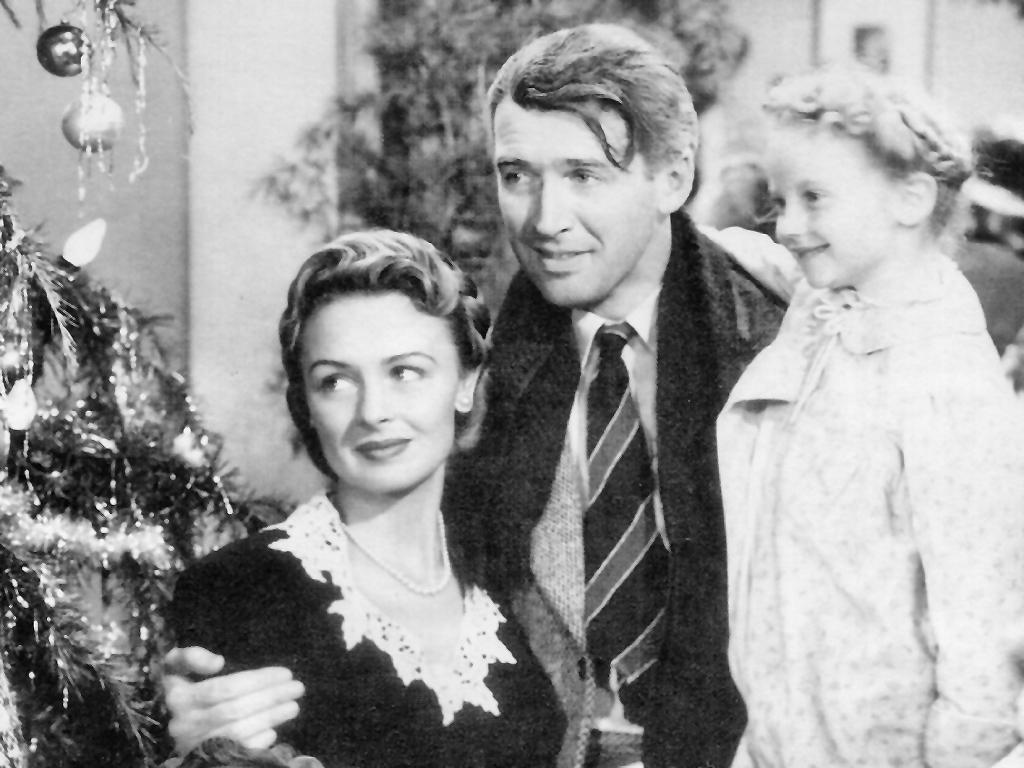
“It’s a Wonderful Life” is undoubtedly one of the most well-known, popular Christmas films, but it really is something more than that. To call this film a treasure would be to understate it. It’s not only a celebration of storytelling and filmmaking, but also a celebration of life. It’s about acknowledging what you have, knowing that things can be good, and how you couldn’t imagine your life going another way. That its important final half occurs during Christmastime just raises its emotional level.

I love this wonderful movie, and I still find it hard to believe that it was obscure when it first released in 1946. Even though it was nominated for five Academy Awards (including Best Picture), it received mixed reviews and barely made back what it cost, despite the box-office popularity of filmmaker Frank Capra. But as time went by and it hit public domain, it did find its audience as movie-lovers fell in love with what this beautiful film had to offer.

“It’s a Wonderful Life” is a masterpiece in storytelling. The structure of the film is just brilliant. It begins with shots of a quiet, snowy small town called Bedford Falls on the night of Christmas Eve, with voiceovers from people praying to help George Bailey. The prayers reach Heaven, as God assigns a “2nd-class” angel named Clarence (Henry Travers) to be George’s guardian angel. But first he has to show him (and the audience) who George is and what led him to contemplate suicide…

George grew up in Bedford Falls, but had big dreams of seeing the world and becoming a world-famous explorer. But as he grew to adulthood, he had to give up those dreams, as well as college, to take over the Bailey Building and Loan Society after his father passed away. George continues through his life in Bedford Falls, always putting human need above anything else such as wealth, always supported by his family and friends. His main problem: a ruthless banker named Potter (Lionel Barrymore) works the opposite way, using his riches to drain the spirit of Bedford Falls. Potter wants to hit the Bailey Building and Loan because it’s the one place in town he doesn’t own, and he knows if he can buy George out, he’ll run the whole town. As Potter constantly thinks of a new way to get his hands on the institution, George thankfully finds a way to foil him.

This is essentially the first two-thirds of “It’s a Wonderful Life”: giving us insight into George’s life, showing events from his childhood to his adulthood. We know what he was expecting his life to be, and are as heartbroken as he is when things don’t work out the way he planned. While there are many comic, upbeat moments (such as the infamous swimming-pool scene where George dances with his first love, Mary), there are also some grim moments in between, particularly those that lead to George standing on a bridge, about to jump off and end his own misery.

After all this buildup, we finally get to Clarence being sent to Earth to help George however he can. This is what this film’s admirers remember most from this movie: the final third of the film. Clarence jumps into the river under the bridge so that George can save him. When George does save him and Clarence introduces himself as his guardian angel, George doesn’t believe him and only sees him as an oddball. But Clarence has a way of proving himself and also showing George how wonderful his life truly is: by making it so that George can see what Bedford Falls would have been like if he was never born. It’s in this alternate reality that George makes some shocking discoveries about how things would have turned out without him around—everyone is much worse off. Potter owns the town; George’s uncle, Billy, is committed; George’s brother, Harry, is dead; his wife, Mary (well-played by Donna Reed), is single and lonely; his children are gone; and so on.

And so George learns that each contribution he could give is helpful to others, that things in life can work out though not always in ways expected, and that the greatest values in life are family and friends. It’s no wonder that “It’s a Wonderful Life” is one of the very best “feel-good” movies (in fact, you could make the argument that it’s the absolute best)—its story is told in such a way that when the payoff ultimately occurs, it really means something and strikes emotional chords with audiences.

Everything about “It’s a Wonderful Life” works. The story, the characters, the filmmaking, the message, and the acting all make this film all-around, for lack of a better word, “wonderful.” I watch it numerous times every Christmas, and I see no reason why I shouldn’t watch it about 8-10 times this season.