Come Morning (2013)

3 Apr

MlaX6fe9cLTROakOq21mlDTJ7IxD6odqkI2IEFOjXLYnOejeD43XZqNYXDDeKDDJ9Mql_0skzmy-NWKBK7Nwhk

Smith’s Verdict: ****

Reviewed by Tanner Smith

As I’m writing this review, it’s been a few days since I saw “Come Morning.” And I’m convinced that it’s one of those films that haunt you with not only how good it is but also how profound, effective, and unforgettable it is. It has a premise that sounds like a suitable idea for a tense thriller, and it’s easy to expect something exciting but also kind of generic. But not with “Come Morning.” It has its effective setup, it grabs you, and then it takes you where it wants to go.

The film is about 10-year-old D (Thor Wahlestedt) and his grandfather Frank (played wonderfully by Michael Ray Davis) who are on an afternoon hunting trip. The trip takes a tragic turn when D accidentally shoots and kills a trespassing neighbor. D wants Frank to call the authorities and explain what happened. But due to a long-running, complicated (and violent) feud between the two families, Frank knows that telling the other neighbors that the death was an accident won’t go well, and so he and D set out to bury the body deep in the woods.

The story occurs mostly in the woods and mostly at night, which creates an ongoing, effective, metaphorical visual for the narrative—the deeper into darkness the characters embark into, the more lost they become in their moralities. Things slowly but surely go more wrong as suddenly the realization of D’s accidental murder isn’t as relevant as what becomes revealed later with Frank. Some of his demons come back to haunt him, he runs into enemies from the past, and his actions causes him to consider his own morals and ethics as well as the loss of D’s innocence.

What really makes this whole film special is just how subtle it is. There is much revealed of the history between Frank’s family and the neighboring family, but hardly anything is spelled out for the audience. We just get visual storytelling, understated dialogue, and thought-provoking questions to interpret by the time the film is over. Without giving too much away, there isn’t just the guilt that D feels, but there’s more than Frank feels when it comes to facing his demons and trying to find ways out of the danger he put his family through; you can feel that he has had things happen that he can’t feel proud of and also can’t forgive himself for. It is also a damn good thriller; very suspenseful and becomes even more so as it continues.

Derrick Sims

Most of the praise for “Come Morning” unquestionably goes to Derrick Sims, who not only wrote and directed the film but also edited and photographed it. Not knowing another way to put this, I’ll say every move he makes for this film is the right one. There’s one particular scene in this film that spoke me in many ways as to just how great Sims was as a filmmaker; without giving too much away, it involves the final moment in a character’s life. It’s an amazingly effective scene that could have gone one of two ways and may have sunk the film. It went the other way and became the best scene in the film.

I also admire how he shot the film himself. It’s as if he had this vision in his head and just wouldn’t be satisfied unless he created it. And indeed, the cinematography is first-rate. I don’t know how he managed to create beautiful scenery when most of the film takes place in the wilderness in the dark, but he certainly did.

This is a great film; one of the best I’ve seen in a long time. That’s why it shocks me that while it had great reception at festivals (including the Oxford Film Festival, where it received the Jury Award for Best Cinematography), the film never got a real theatrical release. That’s a shame, because I can see a lot of people seeing “Come Morning” the same way I did: as an atmospheric, unforgettable, well-executed, haunting piece of art.

NOTE: “Come Morning” is available on DVD and BluRay, and can be purchased at www.fabledmotionpictures.com.

The Sacrament (2014)

23 Mar

sacrament_05

Smith’s Verdict: ***1/2

Reviewed by Tanner Smith

The film I’m reviewing opens in wide release on May 1st. This is an early review, having seen the film screened at the Little Rock Horror Picture Show.

What really goes on in a seemingly-peaceful religious commune? Every time a horror film wants to ask that question, you know that something has to go wrong and nothing is going to end peacefully. But what really surprised me about “The Sacrament” was that even though I knew something bad was going to happen, I couldn’t guess exactly what it was or when it would happen.

And why would it happen? That’s another strength of “The Sacrament,” which is the latest horror film by Ti West, who is a top-notch name in the modern-horror film genre right now, following the terrific “The House of the Devil” and “The Innkeepers.” West is known for his effective setups. Slowly but surely, something will happen, and we’re just waiting for it to come; then when it does happen, we’re on edge, very unnerved by what we’ve been waiting for. “The Sacrament” has a payoff I can use as a great example, because the film’s final half-hour or so is so tense and horrifying that it made my stomach turn and my throat tight.

I hope I’m not giving this film too much buildup by saying that it’s unbelievably suspenseful. I’m going out on a limb by saying that “The Sacrament” may be West’s most accomplished film because I was more scared by the final act of this film than I was by the basement scene in “The Innkeepers” or the big reveal in “The House of the Devil.”

It’s funny because I wasn’t sure what to expect from this film when I heard that it was using the “found-footage” approach and featured the dark goings-on of a mysterious Christian commune. But West knows how to put his spin on familiar elements and make them effectively scary. I know I said this already in my “Innkeepers” review, but I’ll say it again. “Ti West is the new king of horror.”

All it takes is a little patience from the audience to get to that final act. If they’ll accept the long time it takes to get to the ultimate payoff, it’ll prove to be even more satisfying when it comes. The story is about a trio of investigative journalists who check out a rural, secretive Christian commune, where one of the journalists has a sister who has led a formerly dead-end life and may or may not need to be picked up from this place. Together, reporter Sam (AJ Bowen), videographer Jake (Joe Swanberg), and photographer Patrick (Kentucker Audley) take a trip to document and expose the commune, which is called Eden Parish. They’re not met with warm welcomes, as gun-toting security guards give them a hard time before accepting them inside. But as they look around the place, they find it’s weird but peaceful. Patrick’s sister, Caroline (Amy Seimetz), is perfectly happy here and doesn’t want or need to leave. And that’s how most of the locals they interview seem to feel; most of them have led tough lives in the past before being comfortable and happy here.

When they interview the leader of the “paradise-on-Earth,” simply known as “Father” (Gene Jones)…actually, that’s enough of the synopsis I’m going to write about right there. That’s the buildup, and there’s more to come before the aforementioned tense payoff, but there you go. The film takes its time to let us get a great sense of the environment these people are in, so we can ask how can something possibly go wrong in a place like this? (I mean, aside from the not-especially-warm welcoming and the creepy little girl that constantly stares at the newcomers…don’t ask.) It fooled me, delighted me, and then…it horrified me. There were times in the final act of “The Sacrament” where I could hardly move because I couldn’t believe just what the hell was going on.

The film is told in the style of a documentary, with time-updates, texts explaining some background, and even some music to give us the sense that something is wrong. While this is effective for the most part, as “found-footage” films can create efficiently disturbing moments in its simplicity and “first-person” camerawork (and can create some clever editing in certain scenes), it doesn’t succeed as a whole. First and foremost is the tense music score that appears often; granted, it seems like what a VICE documentary would use to get its point across, but it’s not subtle and come sometimes be annoying rather than frightening. And this is probably just a nitpick, but I never like in some of the films that use the usual first-person camera gimmick, there are shots that the person (or character) filming shouldn’t be able to get on the fly. Even when the characters get to use a second camera, it still manages to cheat.

That aside, the gimmick does work. The editing works, there are some original touches (such as one shot that tricks as to where the camera is and where the camera operator is), there’s a credible reason as to why these journalists would keep filming everything but not focusing entirely on how each shot looks as they run for their lives, and it makes moments more unsettling.

“Found-footage films” rely on convincing acting, and “The Sacrament” has some likable performers to follow. Joe Swanberg adds more personality to a role that could have been thankless; AJ Bowen is suitably cocky and narcissistic as the reporter who subtly tries to figure out the deal behind the commune; and Gene Jones is perfectly cast as insightful, mysterious, no-nonsense Father in a deeply unnerving performance. Michael Parks’ psychotic preacher in Kevin Smith’s “Red State” has nothing on this guy.

I can’t say anymore about “The Sacrament” except that it can be seen in two different ways—one is alone, the other is with an audience. Watching it alone can make for a tense experience; watching it with a packed audience (on a weekend night) can be enjoyable because the film can get specific reactions at specific moments. Either way, it’s an edgy, very scary horror film that shows once again why Ti West is one of the best people working in this genre nowadays.

Non-Stop (2014)

3 Mar

non-stop01

Smith’s Verdict: **1/2

Reviewed by Tanner Smith

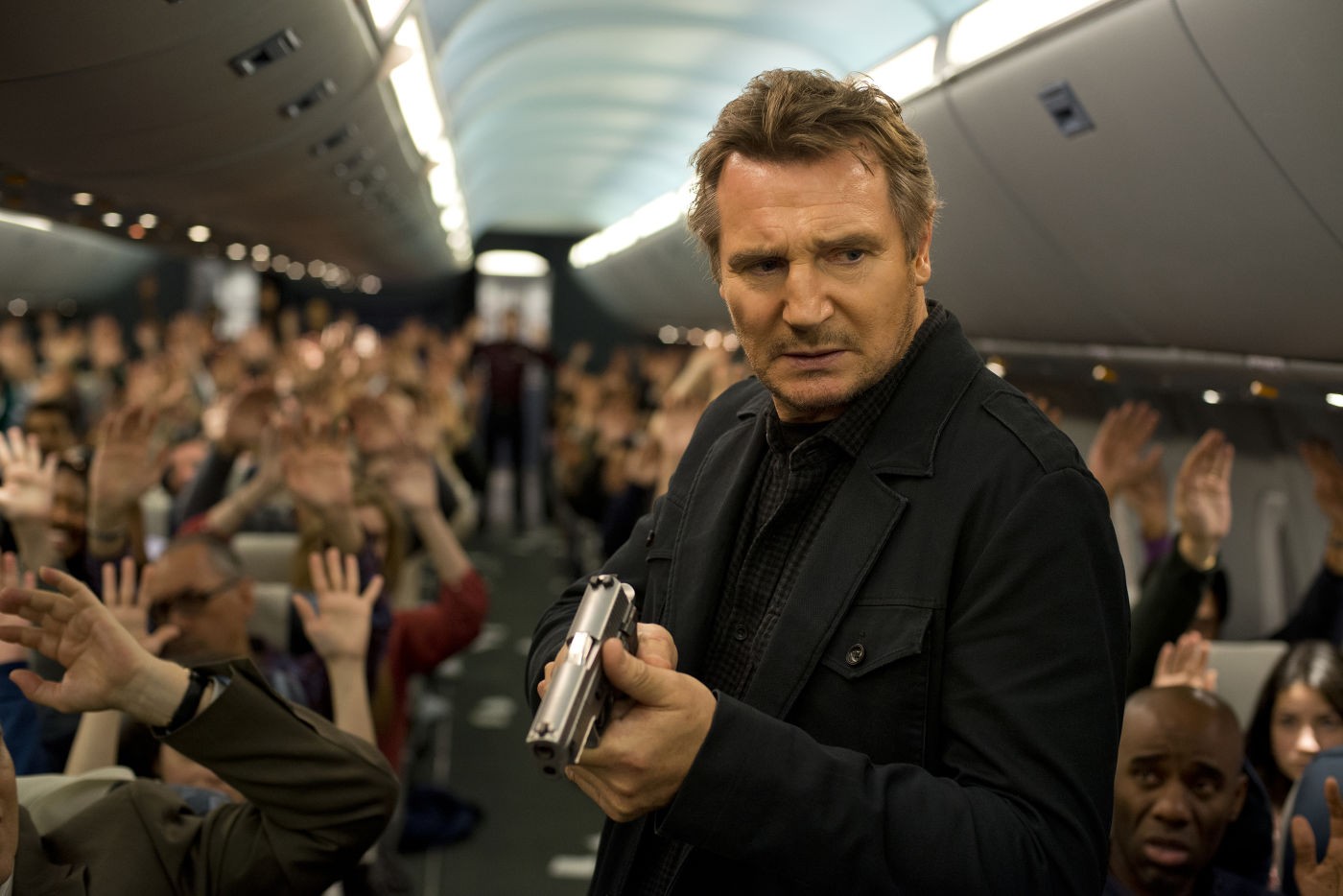
The premise for “Non-Stop” goes like this. A Federal air marshal on a non-stop flight receives menacing messages from an anonymous terrorist aboard the plane, threatening to kill a person on the plane every 20 minutes until his demands are met. It’s up to the marshal to figure out who’s behind this as time is running out.

Liam Neeson, still showing that even at age 61 he’s a badass action hero, stars as Bill Marks, an air marshal who is also a bitter alcoholic whose life is falling downhill. He boards a transatlantic flight to London. Midway through the flight, he receives e-mails from an anonymous messenger on a secure system. His demands are millions of dollars into a bank account given to him. Until he gets the money, he will kill one person on the plane every 20 minutes. While searching for the terrorist on the plane and trying to figure what to do next, he enlists the help of head flight attendant Nancy (Michelle Dockery) and a trustful passenger named Jen (Julianne Moore). But things go from bad to worse as Marks is labeled as the cause of the disturbance, as it turns out the bank account is in his name. And the plot thickens…

This is a neat idea for a thriller; you could say it’s something you would have liked to see Alfred Hitchcock try to create into a tense thriller. And for the first hour or so of “Non-Stop,” directed by Jaume Collet-Serra, it is a tense, nail-biting thriller that keeps you on edge and guessing. The tension keeps rising as the mystery develops and the body count rises. It’s handled in a plausible way, given its subject material.

But once the film gets to its final act, that’s when things start to go downhill. When the action has to take over, it makes the film into what looks like a generic action-thriller, and it just gets too preposterous. The action becomes too absurd; clichés are thrown in once the passengers get involved; and without giving anything away, there’s a right-wing element that may be seen as bad taste from some people, and I don’t think it’s just me. I could tell what they were trying to do, but was it something that was needed?

If this film had eased up on the action a bit and had a bit of a rewrite, “Non-Stop” would probably have more lasting power as an edgy nail-biter. If Collet-Serra and his team of screenwriters had just focused more on the paranoia of being trapped on the plane where almost everyone is either frightened, angry, or possibly a suspect, this film would have been great. As it is, I could say it’s forgettable entertainment. But the thing about that is, to me, the first hour is too well-done to be considered forgettable. In that respect, I suppose I could give “Non-Stop” a marginal recommendation, mainly because through it all, Liam Neeson manages to keep everything interesting. But I can only give it a mixed review, because it could’ve been a lot more riveting if only it stayed riveting.

About Last Night (2014)

24 Feb

IF

Smith’s Verdict: ***

Reviewed by Tanner Smith

“About Last Night” is a modern update of the 1986 romantic comedy of the same name, which in itself was an adaptation of the play “Sexual Perversity in Chicago” by David Mamet. And while you can hardly hear Mamet’s dialogue for a majority of this remake, I’d have to say this new film is just as good as the original. It’s good for the reasons the play and the 1986 movie are good. It’s still an effective, sometimes funny story that examines the sex lives of two men and two women. The play looked at it from the 1970s; the movie from the 1980s; and now this one looks at it from the 2010s.

There are notable differences here. For one, this film takes place in Los Angeles instead of Chicago (though one of the characters goes to Chicago for a work trip at some point). For another, the cast is mostly comprised of African-American actors, including comedian Kevin Hart and comedienne Regina Hall. And another notable difference is the tone that the film is going for, particularly in the ending. Mamet in his play didn’t see any hope for his characters, as the men and women just weren’t meant to be because they had so much trouble relating to each other no matter how hard they may have tried. Here, there are troubles among the characters and they are presented well, but it ends on a note that is much more hopeful than sorrowful, to say the least.

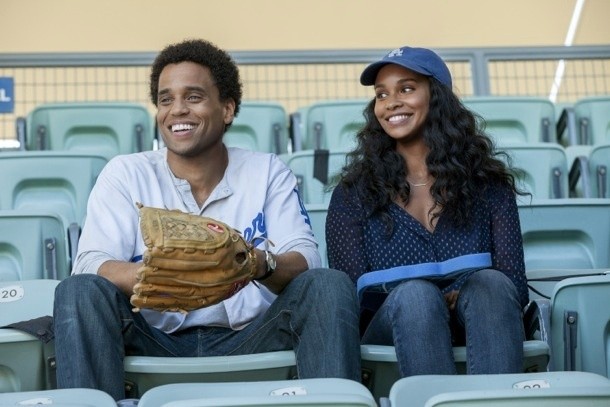
The film stars Michael Ealy and Kevin Hart as Danny and Bernie, best friends living in L.A. Bernie is a loudmouth horndog who is always looking for action, while Danny is looking for something more. When Bernie brings his date, Joan (Regina Hall), who in turn brings her roommate, Debbie (Joy Bryant), for a double-date, Danny and Debbie hit it off really well and become friends-with-benefits. But soon enough, they accept who they are as a couple, she moves in with him, and the rest of the film is about how everything they like about each other will grow tiresome and lead to romantic weariness.

The story is interwoven with the comedic subplot involving the relationship between Bernie and Joan. After a few nights together, Joan can’t stand him anymore and mostly tries to make sure she never sees him again. But when they do see each other, she goes out of her way to make sure he’s as uncomfortable as she is.

The strangest and yet most intriguing about the film’s writing, dialogue-wise, is that the lines are technically still recalling Mamet, but most of the dialogue is updated and melded with new dialogue by writer Leslye Headland. It’s funny listening to Kevin Hart seamlessly blend Mamet with Headland as he spews the film’s best lines with the comedian’s usual trademark quickness.

“About Last Night” makes a statement about how relationships are even harder to understand than love itself. With love, there’s the belief from one or both of the characters that they will live a very happy life together with no complications in the future. But once the Honeymoon Phase is complete, there’s the challenging world of working to stay together and trying to find compromise. This is where the film really works, when Danny and Debbie reach the point where they wonder if they deserve each other anymore. Can they make it work? Will they make it work? It’s not as easy as it may seem in most romantic comedies.

Now, granted, this film isn’t much of a downer and it offers more happy hopes than it should. But it is more accurate than most romantic-comedies because it doesn’t give contrived misunderstandings or other sorts of clichés that cause rough patches to happen. Even in a scene in which Danny’s ex-wife (Paula Patton), when you’re praying that it won’t go in the direction it should go, it manages to answer that prayer by giving a low-key, true-to-life payoff.

Michael Ealy and Joy Bryant make an engaging couple and they each share convincing chemistry with Kevin Hart and Regina Hall, as well as with each other. Hart is very good here as Bernie who is the romcom-sidekick who spews bad advice to the main character sometimes, but learns a thing or two about love and relationships himself. He also has the funniest lines in the movie. And then there’s Regina Hall as Joan. This was the actress and character I never got into. First of all, Hall overdoes it, even in the less comedic moments. Sometimes I found her funny but other times I found her annoying. And also, I never got into the plight of her character, because she’s a conniving bitch. Now, I know that could be because she’s secretly jealous, but she’s too much of a mess for me to care about her, and I think that might be because of the way Hall plays it as well.

Aside from my problems with Hall and some unevenness with the film’s tone, “About Last Night” is a worthy remake that keeps true to the original’s theme while changing details to make it modern while no less satisfying.

The World’s End (2013)

10 Feb

the-worlds-end-simon-pegg-nick-frost-martin-freeman1-600x399

Smith’s Verdict: ****

Reviewed by Tanner Smith

“The World’s End” is the supposed final entry in the “Cornetto” (or “Blood and Ice Cream”) trilogy, and I seriously hope that doesn’t mean writer-director Edgar Wright and co-writer Simon Pegg aren’t going to make any movies together, because with “Shaun of the Dead,” “Hot Fuzz,” and now this, they make some of the most intriguing, entertaining, ambitious, wonderful films (not just comedies; that’s too easy) to give us the pleasure of seeing. I don’t know what it is; maybe they bring out the best in each other through each other. But I love all three of these movies. I would be first in line to the next Wright-Pegg collaboration.

The review has barely started and I must sound like a fanboy right about now. Let’s get right to it.

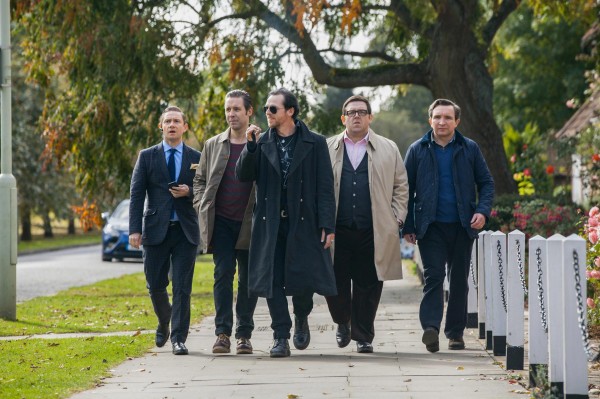
“The World’s End” stars Pegg as Gary King, a middle-aged man stuck in a stage of arrested development and always lives in the past. He recalls a time 20 years ago when he and his four best friends, when they were teenagers, embarked on a journey known as the Golden Mile, which is mainly a series of 12 pubs, with the World’s End tavern being the final stop. Gary looks back with fondness but also with regret since he and his friends didn’t make it to the World’s End. But he still likes to see himself as a king of cool, as back in his teenage days, he was a charismatic, daring teenager who felt like he could take on the world as opposed to actually dealing with real-life issues.

Nowadays, 20 years later, he’s a pathetic middle-aged man who still thinks things can return to the way they were, still drinks, and still sees himself as king-of-cool. He hasn’t aged mentally and doesn’t care how pathetic he looks to everyone else. His friends, meanwhile, have drifted away from him. They live their lives with jobs, marriage, families, etc. They get surprise visits from Gary, whose plan is to rally his group together to relive the old days and do it right this time. He manages to talk his friends (Andy, played by Nick Frost; Steven, played by Paddy Considine; Peter, played by Eddie Marsan; and Oliver, played by Martin Freeman) into returning to their hometown of Newton Haven and finish the Golden Mile.

The only reason the friends, one of which (Andy) holds a grudge against Gary, go along with Gary’s plan is because they feel worried about his way of living and because he said his mother died (which isn’t true). Gary becomes a little too much for them to handle at times, and the friends have to try and talk sense into him and bring up that what he’s doing isn’t healthy or welcoming, and he needs to grow up and face reality.

Oddly enough, this first part of “The World’s End,” which runs for about 35 minutes, proves that it would be a great, funny and effective movie about a reunion of old friends thinking about the old days and when their lives are like now. They notice what’s changed and what hasn’t changed, and that includes their first few pub-stops in Newton Haven, which have been cleaned up and “Starbucked.” Gary even finds that his old flame, Sam (Rosamund Pike), isn’t interested in Gary anymore.

Think Adam Sandler’s “Grown Ups” done right. There’s great writing (the dialogue and one-liners are absolutely wonderful and very funny) and great acting and it seems like the story is going somewhere mature with what it has already. And it kind of does, but…not quite in the way those who haven’t seen the trailers or read the plot synopses would have expected. Those who have are waiting for me to bring up the “blanks,” the nicknames the main characters give to the robot-alien-things that have invaded the town.

Yep. Gary and friends discover that Newton Haven has been invaded by an alien intelligence, and most of the townspeople have been replaced by blue-ink-filled, life-size action-figure like, robotic replicates. Rather than get the hell out of that town, Gary figures the best solution is to continue on the Golden Mile so as they don’t raise suspicion and thus don’t fall victim.

Makes sense to me.

Bottom line is that Gary came here to complete a pub crawl and he’s going to do it, no matter how many times his friends try to convince him otherwise or how many other messy situations they get into with the robots. Gary pours himself a pint everywhere they go and rarely lets anything stop him. No matter what other changes he’ll come across, Gary will not back down. Through all this madness, there is still time to keep true to the reunion story by taking time to bring up new issues about past, present, and future. It all manages to oddly fit together, mixing comedy, drama, and sci-fi to give us a spot-on satire and a gripping story at the same time. Also, this is probably the most personal story Wright and Pegg have put together, since the focus is mainly on Gary’s character and how he’ll grow despite not wanting to and not expecting to.

But of course, I cannot forget to talk about the action sequences. They’re very entertaining to watch, as we get some of the funniest fight choreography I’ve ever seen in a comedy. Great stunts and the right moves help make these scenes gripping action and fast-paced comedy. And in these scenes, be sure to rewatch them a couple more times on DVD because there’s a chance you’ll miss a couple things, it’s so fast. It’s edited energetically, much like the other films (as well as “Attack the Block,” a Wright production). The special effects are pretty damn good too.

Simon Pegg delivers what is arguably his best performance here. He’s been good in movies before; this is his most accomplished work. I could also say the same for Nick Frost, who has co-starred opposite Pegg in the other “Cornetto” movies. As Andy, the uptight businessman who constantly tries to talk some sense into his friend, Frost is very effective. That comes as a surprise, as Pegg is usually the straight-man and Frost is usually the jokester. Here, it’s the other way around, and Frost is wonderful here. The rest of the cast, which includes David Bradley as a crazy old man who knows the score and Pierce Brosnan in an uncredited cameo, perform well and make for an appealing supporting cast. I don’t know why, but seeing Martin Freeman with an earpiece and a suit trying to fight is a joy to watch.

Everything builds to a climax in which Gary faces off against the leader (who’s just a voice of reason, so to speak) of the aliens. I won’t give away the ultimate resolution, but let’s just say it’s very clever and leads to one hell of an epilogue that you don’t see coming and are nevertheless fascinated by (or at least, I was). Mainly though, “The World’s End” is a joyous experience. A ton of fun. A funny, slick, well-made film. There’s more I could say about this film that express how much I love it, but I’ll do you a favor and leave you to enjoy it for yourself. What else can I say but it’s time to look into the future. And in my future, there’s more viewings of this film.

Wait, doesn’t that go against the “don’t cling to the past” message?

Ah well, I’ll figure it out later.

The Monuments Men (2014)

10 Feb

Clooney_Murray_Monuments-Men

Smith’s Verdict: **1/2

Reviewed by Tanner Smith

“The Monuments Men” is a war film that is never dull, features an all-star cast, has great cinematography, has a fascinating story to be told (a WWII tale that most people forget about), and has its share of effective moments, both lighthearted-comedic and sorrowful-dramatic. That’s why it disappointed me when there wasn’t much else to it. A few things seem to be missing from what could have been a great film. That it’s merely “okay” is more disappointing.

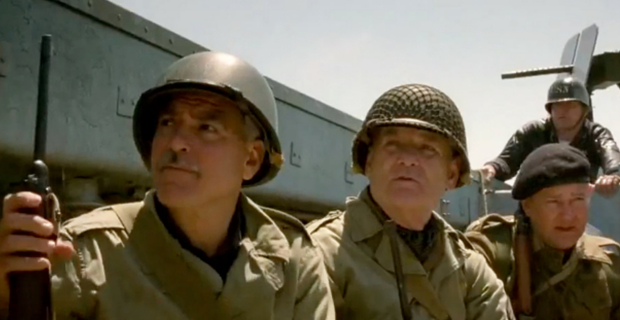
Based on a true story, the Monuments Men in the title refer to a unit of eight men who, near the end of World War II, are there to track down and save as much of Adolf Hitler’s art as they can. They are led by George Clooney (who also directed and co-wrote the film) and consist mostly of historians and professors played by Matt Damon, Bill Murray, John Goodman, Bob Balaban, Jean Dujardin, Hugh Bonneville, and Dimitri Leonidas.

Why did I use the actors’ names as opposed to their character-names? Because it’s Clooney, Damon, Murray, Goodman, Balaban, Dujardin, Bonneville, and Leonidas. One of the major problems with this film is that there’s a distracting lack of characterization. I know these actors are playing characters based on real people, but the film doesn’t give them a lot to do. By the end, I never remembered any of the characters’ names, let alone knew who they were. I just saw recognizable actors doing their thing. They get big moments, but not much else.

There’s a saying that music can make or break a movie. In this case, there are moments when the music score in this film really cripples the film. The “lighthearted” music for the humorous moments is too much, the “sorrowful” music for the dramatic moments is too much, and even in a tense moment, such as when Matt Damon’s character accidentally steps on a land mine and the others have to help him out, the music ruins things. The problem is that the music is too reassuring—everything seems to be OK.

I can’t help but wonder if either the film was made very quickly or there was more material that had to be cut out of the final version before release or what, because at a nearly-two-hour running time, “The Monuments Men” feels strangely too short. There are moments that seem to be going somewhere, but they’re forgotten about quickly. And that’s a shame, because those moments make the film for a while. I have to wonder how much better this film might have been if it had more to deliver with each of the characters and the journeys they face. There’s a French spy played by Cate Blanchett who strikes up somewhat of a relationship with Matt Damon’s character. That’s interesting, and her character is interesting at first. But like everything else, there’s a distracting lack of development here.

With such talent involved, “The Monuments Men” is at least watchable. And there are a few good moments that I’m glad I saw. But it’s either the script or the editing that has to be faulted here. In the end, I saw an “okay” film and I’m forced to write a mixed review for a film that I could have liked.

That Awkward Moment (2014)

3 Feb

9594d367-8ae3-486e-996c-588621d92bb2_thatawkwardmoment_trailer_gs21

Smith’s Verdict: **

Reviewed by Tanner Smith

“That Awkward Moment” is a romantic comedy (“romcom”) told from the male perspective. For most moviegoing males, this would be interesting, since they generally hate romcoms. They’re tired of the usual clichés that romcoms share and push them aside as “chick flicks.” Well, now we have three main characters in “That Awkward Moment” who are guys, but this doesn’t fix the problem of the romcom clichés. That’s because the clichés are still present here. It doesn’t matter from whose perspective you center a romcom on; it doesn’t change much in the story. You still have the relationships with The Lie, The Bad Advice, The Misunderstanding, The Final Emotional Speech In Front Of A Large Crowd, etc.

Oops, I gave away the ending, didn’t I?

“That Awkward Moment” isn’t as clever or smart as a Judd Apatow romantic comedy, which I sometimes see as an exception to the rule, mainly because Apatow knows how to keep the romance and comedy consistent and original for the most part. But to the credit of “That Awkward Moment,” the film has its moments of both romance and comedy that do work, mainly when it focuses AWAY from its running gags (most of which include a neverending series of cracks about genitalia).

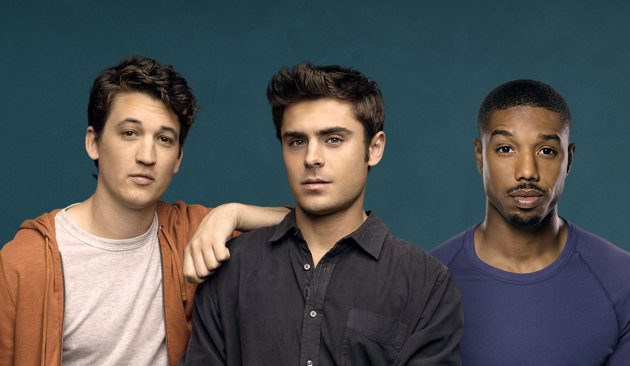
It also deserves credit for its casting. The actors playing the three main characters (Zac Efron as arrogant, selfish Jason; Miles Teller as wisecracking barfly Daniel; and Michael B. Jordan as Mikey, the most mature one of the trio) are spot-on and play their roles well. They share good chemistry together and you really buy them as good friends. Unfortunately, you don’t care enough about them to spend more time with them. That’s because they each put themselves in situations where you just want to smack them in the face for thinking this. (And I know it’s part of the joke, because they refer to each other as “idiots” for their deeds, but that still doesn’t excuse the acts already executed.) That’s one of the major problems with this movie.

“That Awkward Moment” is about how these three young men make a pact to stay single after Mikey has just gotten out of a relationship with his wife (played by Jessica Lucas) who was cheating on him. His friends, Jason and Daniel, try to cheer him up by going out to a bar. Jason meets a beautiful blonde named Ellie (played by an astonishing Imogen Poots) and goes home with her, but when he sees signs that point to her as a hooker, he bails, only to discover (big shock) that she isn’t a hooker at all.

Tell me something, ladies. If a guy says he bailed on you because he thought you were a hooker right to your face, would you give him another chance?

Well, Ellie does. And she and Jason go out on many dates, which Jason isn’t so sure about, since has been through the “so” moment just recently with his previous girlfriend (“so” as in the question “so are we officially dating”). Meanwhile, Daniel starts a fling with his female buddy, Chelsea (Mackenzie Davis), and decides he wants to be more than “friends with benefits.” She agrees, as long as Jason and Mikey are cool with it. So of course, Daniel lies about telling them. Oops.

And get this—Mikey’s soon-to-be ex-wife wants to start something again with him, even though all logic points to a trap. Anyone can see this. Anyone except for Mikey, that is.

Mikey’s story gets the least development as Mikey is always sidelined by that of Jason and Daniel. That’s a shame too, because Mikey seems like the guy you’d like to pal around with and talk random stuff with. And it’s also unfortunate, seeing as how he makes as many dumb mistakes as the other guys.

Jason and Ellie have nice moments together, as Efron and Poots exhibit convincing chemistry. But the problem falls with Jason, who is too much of an arrogant jerk to care for. Even when the inevitable happens and he learns his lessons after making dumb mistakes, it’s hard to feel for him, though another problem with that may be the way it’s written. It doesn’t seem convincing enough.

I was actually wishing the relationship with Daniel and Chelsea was its own movie. Of the three central relationships, this one was my favorite. It was both sweet and funny at the same time, keeping that right balance. I enjoyed watching both actors play off each other. I was hoping they wouldn’t go through the usual clichés (but alas, the Misunderstanding had to happen).

Now for the comedy. I’ll admit to having laughed a few times, sometimes despite myself. But you also have to question most of the setups. For example, what about when Jason confuses Ellie’s “dress-up” party for something so different he wears an embarrassing outfit to? Why would he wear it anyway if he knew Ellie’s friends and family were going to be there? There’s also a gag involving Viagra that questions what these guys consider a pickup at a bar, but to be fair, it does lead to a funny sight gag.

Also, I couldn’t help but feel that “That Awkward Moment” is a PG-13 story in an R-rated movie, meaning the filmmakers must have thought the relationships were too sweet for a male romcom, so they needed more F-bombs and a lot (and I mean A LOT) of genitalia jokes. It’s a good thing I didn’t bring a date to this movie, because we would have had our own awkward moment.

Why I Don’t Particularly Care for Oscar Predictions

29 Jan

By Tanner Smith

The nominations for the 86th Annual Academy Awards, which represent the best in 2013 for film, were announced January 16th, 2014. People all over the Internet have expressed their glee and outrage, bringing up both pleasant and unpleasant surprises related to which were nominated and which were not. But now, nearly two weeks later, it seems that is done, meaning it’s time for print and electronic media to write about a popular subject in relation to the Oscars: Oscar predictions.

It’s the time of year when the general moviegoing public loves to state who/what is going to win which award. There are two reasons for this. One is, they like to think like the Academy and think they can enhance their knowledge for what the Academy may call art. The second is, they can make a game out of it. Certain Oscar parties are thrown and they have a contest: those who can come close to predicting correctly what’s going to win what award, they get a prize.

To me, it seems that people who post Oscar predictions are becoming a little overconfident nowadays. They seem to really like to state to their peers (or film students as well) that they’re absolutely positive that this actor or actress is going to win that award or that director or producer is going to win that award and so on. It’s to the point where they seem to be a little overzealous on the subject.

I am not one of those people who like to predict who/what’s going to win which Oscar. For that matter, I’m not particularly fond of Oscar predictions either. I can understand that predicting the winners can lead to some entertainment come Oscar night (which is March 2nd, 2014). But on the other hand, it can also make people seem somewhat full of themselves. Maybe I read too much into Oscar predictions when I notice them posted in magazines such as Entertainment Weekly or online websites such as RichardRoeper.com. Maybe they really like to predict the Oscars just to see what they can get right. That’s fine. But I think the main reason I’m not particularly fond of Oscar predictions is because I feel like something is missing from those magazines and websites. That is the lack of explanation for why they believe which is going to what award, as well as lack of statement for opinion, meaning most of these predictions aren’t who they would pick if they were part of the Academy and got to vote. There’s also a lack of acknowledgement for technique and skill and mainly it seems to be all about popularity.

That is why what I would like to see is something that would be considered “old-fashioned.” That would be something that the late film-critic duo Gene Siskel and Roger Ebert used to do on their television programs “At the Movies” and “Siskel & Ebert”: not predicting who will win, but announcing who they each thought should win. Their annual show was entitled “If We Picked The Winners.” That was a definite accurate title for this special show, because they went against what was popular in pre-Oscar times. They stated their own opinions. They stated why they would choose this. They were not members of the Academy, as most film critics aren’t, so this was like wish-fulfillment for them.

This is something I would like to see more of nowadays: people not predicting the Oscar winners, but stating their opinions of who they think should win. Who would they choose if they got a voting ballot for the Oscars? Why can’t I read more posts/stories about why they would like this or that to win? Oscar predictions are not my thing; I’d rather write or talk to people about my personal opinions regarding the Oscars, and I would read or listen to their responses and their opinions as well. You can learn a little about the person that way, you have something to discuss, and you’re not trying to think like you know the Academy’s mindset. Nobody knows for sure what’s going to win the Academy Awards except possibly for members of the Academy. Let it be.

My favorite “If We Picked The Winners” Siskel & Ebert special is their 1986 show. Check it out: Siskel & Ebert: If We Picked The Winners 1986

Saving Mr. Banks (2013)

28 Jan

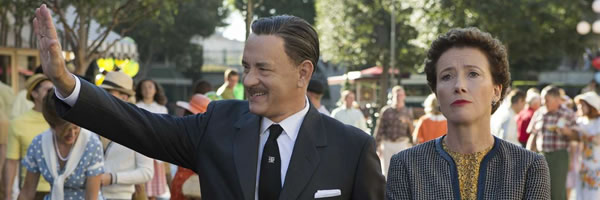
saving-mr-banks-tom-hanks-emma-thompson-slice

Smith’s Verdict: ****

Reviewed by Tanner Smith

Here’s something I’m not sure anyone would have expected: a Disney film about the making of a Disney film. And it’s not just any Disney film, but “Mary Poppins,” well-known as one of Walt Disney’s best. Yet it also seems kind of ideal of an idea to be made, since the story behind Walt Disney and co. getting the rights to the original source material by author P.L. Travers is an interesting one. That story is made into Disney’s “Saving Mr. Banks.”

The film takes place in the early 1960s. Emma Thompson stars as P.L. Travers, the author of the popular “Mary Poppins” books, which Walt Disney (played by Tom Hanks) has been trying to obtain the rights to for years so he can produce a film adaptation. For 20 years, Travers has resisted the urgency because she isn’t a particular fan of Disney. She can’t abide cartoons, she doesn’t like his lighthearted fare, and she just can’t see her beloved characters treated in a way she’s afraid Disney would do. But now, she’s struggling with her financial situations and feels she has no choice but to agree to let the Disney studio make the “Mary Poppins” film.

She travels from London to Los Angeles to meet and negotiate with Disney, the songwriting Sherman brothers (Jason Schwartzman and B.J. Novak), and the writer Don DaGradi (Bradley Whitford). But each session tests her patience, as she doesn’t always agree with their decisions. She’s a stubborn, bitter woman who won’t stand for nonsense. They come to compromises (sometimes to her disdain) and Disney tries to open Travers’ heart to what magic he has to offer.

There is a lot of delight in the scenes where she visits with her collaborators, especially for those who know and love the popular Disney film. There are comic moments that reference what almost was and what did become part of the film, and the dialogue in these scenes is just fun to listen to. This is one of the most interesting, entertaining films I’ve seen about the collaborative process in Hollywood filmmaking. Even if some of it doesn’t necessarily ring true, it’s still interesting to watch.

It’s kind of unusual for this film to be made, since it isn’t an entirely pleasant story to be told. But director John Lee Hancock (who also directed the 2002 sports film released by Disney, “The Rookie”) and writers Kelly Marcel and Sue Smith found a way to make this film sweet and entertaining but also very effective. The story is intercut with the rougher edges of the film, which occur in flashback sequences in which Travers, living in Australia, deals with the sickness of her father (Colin Farrell) who is fighting a losing battle with alcoholism. In these sequences, we see where Travers got the idea for most of the characters and events in her books. We understand their meaning and why they’re so important to Travers.

It can be argued that the contrast between the 1900s flashbacks and the 1960s events makes the former feel like a different film. But I think the combination of light and darkness is suitable for giving the audience an understanding for why Travers feels the way she feels about certain things occurring now. This gives most of her meetings with Disney a greater meaning. And because of the flashbacks, we also have a complete portrait of P.L. Travers, seeing her as a child played by Annie Rose Buckley and as a middle-aged woman played by Thompson.

Emma Thompson carries this movie. Her performance as P.L. Travers is definitely spot-on. She plays a stubborn woman who has had a troubled past, as well as a writer who loves her characters too much to see them ruined. Any writer could relate to that in some way. Thompson’s great here. The surprise performance for me came from Tom Hanks. I didn’t know how well he would portray Uncle Walt himself, but he managed to project the right amount of optimism and happiness that can definitely remind you of the late Hollywood titan. And it’s just hard not to see him as Disney. Note the scene later on when he talks to Travers about why years back, he never gave away his character of Mickey Mouse for money; you can see and hear the sincerity in his performance.

Those who know the story beforehand may have a bit of an issue with the ending of “Saving Mr. Banks.” Without giving too much away, it may rub some people the wrong way. But personally, I would see it as a “on the one hand/on the other hand” resolution. Maybe it doesn’t entirely make clear what Travers is feeling at the premiere screening of “Mary Poppins,” but so what? It didn’t need to go one way by fully presenting what should be felt here; that would have been cheating. Instead, we get an ending that can be analytical and heartwarming at the same time.

For those with a soft spot for “Mary Poppins,” “Saving Mr. Banks” is a treasure. For those who are interested in the collaborative process in a movie studio, it’s also a treasure. And of course that can also be said for those who are straight-up Disney fans. I can relate to all three. I loved “Saving Mr. Banks.” It’s solidly-acted, it’s entertaining, it has an effective balance of comedy and drama, and for lack of a better term, it’s “Disney magic.”

Fruitvale Station (2013)

25 Jan

images

Smith’s Verdict: ****

Reviewed by Tanner Smith

“Fruitvale Station” is one of the strongest films I’ve seen in quite some time. It’s an effective, tragic, well-done account of the last day of the year 2008 and the last day in the life of Oscar Grant III. For those who don’t know, Grant was a 22-year-old Bay Area resident who was celebrating New Year’s with his friends when he was shot and killed by police at the Bay Area Rapid Transit (BART) Fruitvale Station in Oakland, California. The event was recorded by bystanders on their cellphones and uploaded online, leading to international outrage.

Ryan Coogler makes his feature debut with “Fruitvale Station,” a film based on the events leading up to the incident. It’s obvious Coogler cares so much for the subject that a film about it would have to be done exactly right. And thankfully, he knew how to tell the story. The film is presented in a straightforward way, as if the viewers are innocent bystanders or eavesdroppers as Oscar Grant III goes about his day, not knowing it will be his last. It’s an effective process.

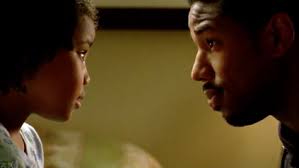
The film begins with actual footage of that incident on the platform, as police brutally pin him to the ground, people shout “hey” and “let him go,” and the cop brings out his gun. Then the film starts, as it’s a dramatization of the day that led up to the incident. Oscar (played by Michael B. Jordan) is just going about his day—spending time with his girlfriend Sophina (Melonie Diaz) and their 4-year-old daughter Tatiana (Ariana Neal), looking to regain his job after having lost it, calling his mother and wishing her a happy birthday, finding her a birthday card, buying seafood for his grandmother’s gumbo, eating dinner and chatting with family, and more, with only one flashback showing that Oscar was once in jail for dealing drugs.

The first half of the film is just an ordinary day in Oscar’s life, but what makes it all tragic is that we know something important that Oscar doesn’t—whatever he does on this day is going to be his last. We know how it will end. He doesn’t. That makes a moment in which he tells his daughter goodnight before he and Sophina set out for a night out with friends—he promises to take her to Chuck E. Cheese the next day, but we know it’s not going to happen.

Then comes that night. Oscar, Sophina, and their friends ride the train, party before the countdown to New Year 2009, come across a couple pleasant people to talk with, and then they step onto the train leading to Fruitvale Station. A fight breaks out when Oscar comes across a hateful ex-cellmate, leading to the arrest of Oscar and his friends on the platform, leading to…

“Fruitvale Station” may be more about Oscar’s final day than it is about Oscar himself, but we do learn a few things while in his company. We know some things about his past, we see how his year in prison makes things uneasy for his mother (well-played by Octavia Spencer), we see his good qualities, we see his bad, we see him interact with people who love him. It’s enough for us to get a good sense of who he was, and Coogler is careful not to present him as a heroic type but as a many-sided human being. Oscar was a regular guy who had his problems but also had people who love him and would miss him. It’s a compelling portrait of such a man who befell a case such as this, and it also leads to one of the most brutal, uneasy scenes I’ve seen in recent memory. When the climax arrives, it’s a truly effective tough case of police brutality and even tougher to stomach as it was based on a true event. Though it also makes you think—do you think anyone would have even remembered Oscar’s name if he wasn’t killed the way he was?

“Fruitvale Station” is never manipulative (even a scene in which Oscar helps a young woman at the grocery store decide which fish to buy is convincing), and even when you think it’s going to be (such as when he helps a dog who just got hit by a car), Coogler finds a way to effectively roughen up the scenes, keeping with the consistency of the film which feels gritty and realistic. He’s aided by an excellent actor in the role of Oscar Grant III. Michael B. Jordan turns in a star-making performance, giving a powerful portrayal of a young man who goes about his day, not knowing it’s his last. He, along with the nontraditional cinematography and solid supporting cast, adds to the compelling nature of “Fruitvale Station,” a film I will not forget anytime soon.