13 Pieces of the Universe (Short Film)

17 May

resized_99261-13-pieces-of-the-universe_85-18301_t728

Smith’s Verdict: ****

Reviewed by Tanner Smith

“13 Pieces of the Universe” is an Arkansas-made short film that follows a trait I’ve seen in a few other films at the Little Rock Film Festival, where it premiered—quiet. I admire a film, even a short, that has the nerve to be quiet every now and then so that we can take in the atmosphere and situations that are present. I’ve seen it in “Sidearoadia,” “Watch the Rhine,” and especially the feature documentary “Rich Hill”; this is pretty strong material as well.

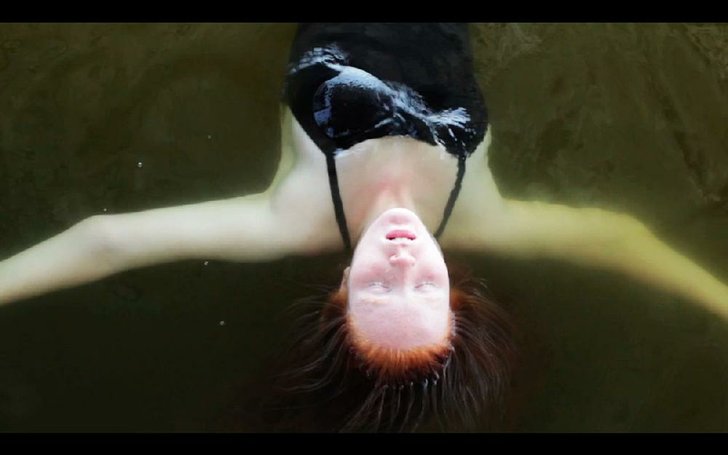
Written and directed by Tara Sheffer, “13 Pieces of the Universe” tells the coming-of-age of a 16-year-old girl named Sara (Emily Cotton) in the Arkansas delta. The title is based on a poem that Sara remembers, which is Jamey Jones’ “Elsewhere in the Universe,” which states that there are pieces of the universe within each of us. Indeed, within Sara’s coming-of-age story, we can get about 13 individual occurrences in this 20-minute film that create senses of themes that stay true to the story structure, such as uncertainty, choice, stability, emotion, the little things in life, and so on. It’s told in a story that shows Sara in different situations such as canoeing with her friend, seeing a boy in town, unknowingly abandoning her friend for a while, dealing with her parents’ divorce, and so on, until a tragedy occurs.

This is a beautifully-made film that doesn’t have a lot of dialogue and only has a few conversations between characters, and relies on visuals to further suck its audience in by letting us breathe in what it’s getting across to us. There’s a lot of great atmosphere in this film, as the South is shown in a way that can either be seen as a wonderful thing or as a haunting memory, depending on the conditions. And I think the reason I liked this short so much was that it managed to speak volumes by saying very little and showing something as artful as, say, a burning forest as Sara watches from a distance.

In the end, I got a great feel of the film’s landscape, I bought the character’s emotions, and I felt the grief that was left by an unfortunate circumstance at the end of the film. There’s a sense of loss present in this film, not just for something physical but for something psychological as well. It’s mostly told through visual storytelling and by the end, it requires you to think about what it means not only in this girl’s life but also in your own life. After seeing it, I asked myself questions such as what are the little things I enjoy in my own life and do I take them for granted; whom can I rely on; what made me the person I am today; and so on. That it can bring out such a reaction from me convinced me that this short film worked wonderfully, and I recommend it sincerely.

Rich Hill (2014)

17 May

A007_C067_0929FV

Smith’s Verdict: ****

Reviewed by Tanner Smith

“Rich Hill,” a Sundance-Grand-Prize-winning documentary about three disadvantaged Missouri teenagers, is one of the finest films I’ve seen this year. It’s only midway through the year of 2014, as I recently saw this film at the Little Rock Film Festival, and so I expect some films will come along later to be even more impressive. But this film is simply the best I’ve seen so far this year; any film I see in the next couple weeks, or even in the next month, is going to be given the difficult task of topping this film. If it did, it’d be great, but I don’t see it happening anytime soon; I love this film that much.

I’ve seen films try and truly capture what it’s like to live in the South, especially for a kid. Some of them have been successful; others have proven embarrassing; but this one, being a documentary, shows the real deal in a hard but sensitive journey into the lives of three teenage boys who live in Rich Hill, Missouri.

Produced and directed by Tracy Droz Tragos and Andrew Droz Palermo, “Rich Hill” follows and observes its three subjects, Andrew, Harley, and Appachey, as they go about their daily lives. Sometimes the camera will be like a fly on the wall, showing events in a cinematic fashion, while other times the kids will have fun with the fact that they’re being documented for a film, and sometimes talk to the lens. But while they will make jokes to the camera at times, they will have the courage to express themselves with dark secrets from the past when they feel comfortable enough, so that you know how things have been for them in the past. And when the camera is simply observing, you see even more of what they go through.

Appachey is a portly, unpleasant 12-year-old who comes from a broken home, often acts out when he’s angry, and lives with his multiple siblings and widowed mother, who is tough, bright, and often irritated by her son’s behavior (though it is a relief to find later, in a touching moment where he awaits a juvenile court hearing, that she does love her son). It’s clear in scenes where he wanders off alone and does things like break puddle ice that this kid doesn’t care about much in this world—not school, not home, nothing. He likes to think he’s old enough to know what he wants to be like, as he smokes a cigarette and mouths off to people. But it’s apparent that he won’t live out his limited dreams, such as “moving to China” to be an art teacher and “get to draw dragons all day,” as he keeps getting into trouble.

images

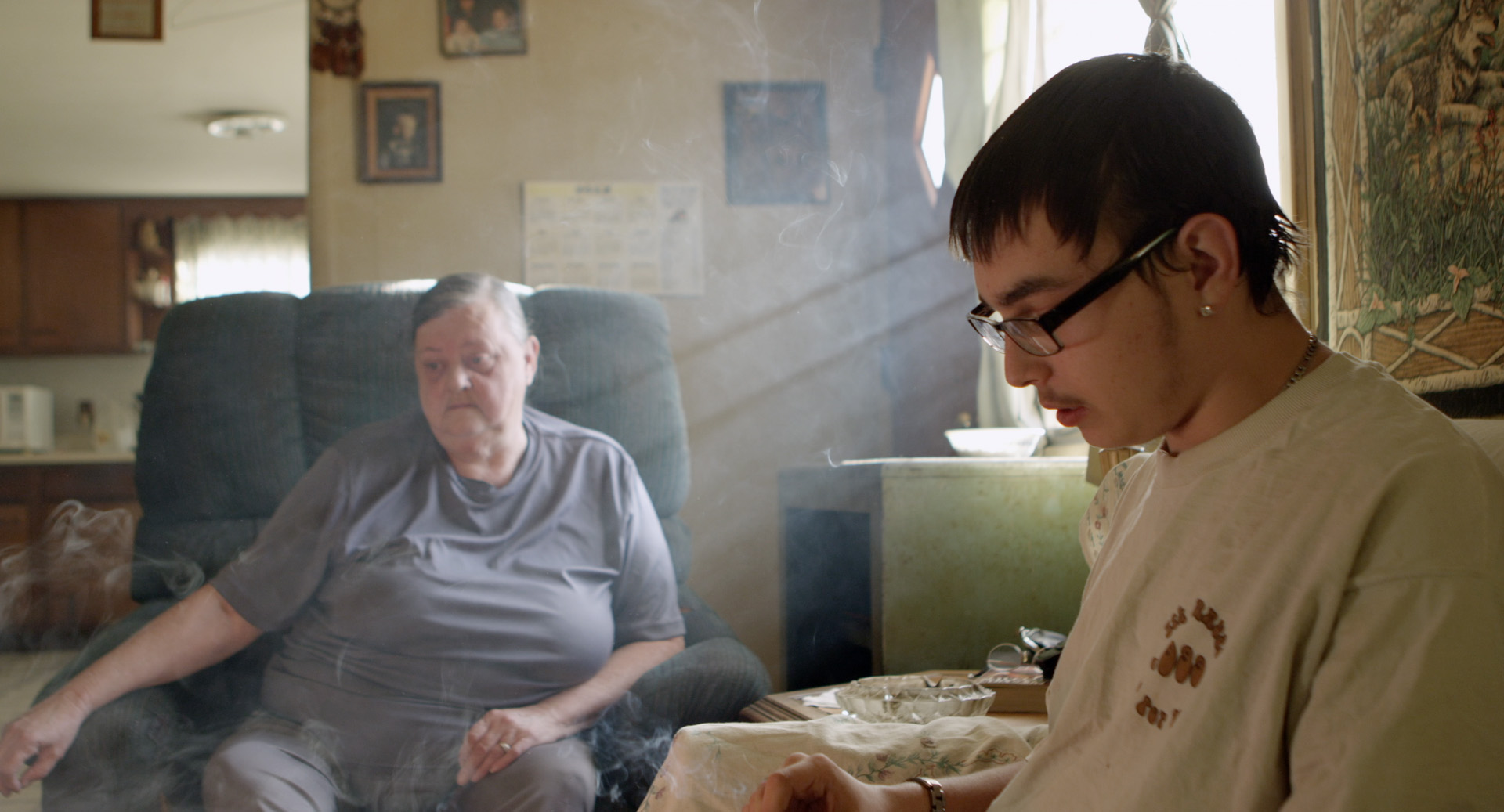
15-year-old Harley is the most disturbing and yet the most interesting of the three subjects. He hasn’t had a normal childhood and won’t get a chance at one before adulthood, but he has a good sense of humor and is good-natured, though he is doing poorly in school. He lives with his grandmother after his mother has been incarcerated for attempting to kill his stepfather. Later, we discover what drove that to happen and worst of all, why the mother is imprisoned and the stepfather is not. Harley talks to his mother on the phone once a week and they still remind each other they love and think about each other.

006

14-year-old Andrew is more optimistic and one to adapt to his surroundings. He has two things to remember in life—one is, “We’re not trash; we’re good people”; the other is, “God is busy with everyone else” while he believes that God’s plan for his family will come into motion eventually. He and his family move around a lot because his handyman father, who is also a Hank Williams Sr. tribute artist, can’t keep a steady job and often keeps the family in a state of isolation. Andrew knows more about how it all works, as he has grown quickly into manhood, while he also wants to continue to be his mother’s baby boy. Even when it seems he might be a little ticked as the family moves from house to house, he still keeps an optimistic point of view because he still relies on his Christian faith.

These are real teenagers with real problems. It’s how they deal with it that speaks volumes about what the future can hold in store for them, whether they like it or not. In that sense, especially in the case of Appachey, it’s kind of sad and tragic that after he’ll have spent some time in juvenile hall, he may still resort to what brought him there in the first place. We might be catching glimpses of these three kids before they become the violent, addicted Southerners that small Southern towns are often typecast by. And it’s all real; it’s all being documented. That’s why I hope that they choose the right paths in life down the road—I hope Andrew still keeps the faith; I hope Harley can be reunited with his mother; I hope Appachey is reformed. Do you know what I would like? I would like a sequel to this documentary, some time later (like Michael Apted’s “7-Up” series) so we can see how these kids turn out.

Even if you don’t live in the South, you can notice some familiarities from when you were that age—struggling with class grades, making friends, thinking about the future, and so on. What makes them different from most teenagers is their lifestyles. Sometimes, Harley’s grandmother can’t afford energy drinks and can’t always rely on food stamps. Andrew’s family doesn’t have gas for heating water, let alone a good home. Appachey’s home is too crowded, too messy, and too unstable. They’re all used to it by now and they just learn to survive whatever comes.

Sometimes there is room for fun, such as when Harley and his friends go out for Halloween and one beautifully-photographed sequence in which Andrew and his family and friends shoot off fireworks and light sparklers on the 4th of July. And sometimes there is possibility that the American Dream is hidden within this realm of shakiness. That makes the whole film melancholy and yet somewhat hopeful at the same time.

And I like that the film’s producers/directors chose their three subjects carefully by choosing a nice kid, a not-so-nice kid, and another kid in between the other two. And neither of these kids are portrayed as bad kids, like Andrew says in the beginning (“We’re not trash; we’re good people”); they just have their misfortunes and bad moments. The documentary does a great job at presenting these kids in a rural setting.

I’ve seen films that try to feature real life in the South, but “Rich Hill” is as real as it gets. You don’t find scenes quite like the ones in this film in other films. It’s authentic, it’s crafty, it’s riveting, it has characters as compelling as any fictional movie character, and it’s one of the best films of the year. I can’t recommend “Rich Hill” enough.

Andrew+Jewell+Rich+Hill+Portraits+2014+Sundance+Dm7RPbsmUoAl

Sacred Hearts, Holy Souls (Short Film)

17 May

1622208_267085190117598_419312271_n

Smith’s Verdict: ****

Reviewed by Tanner Smith

Something I notice now in Mark Thiedeman’s films (particularly his shorts; I haven’t seen his feature “Last Summer” yet) is not merely how artsy and practically story-free they are, but how similar they are in theme and trademark. They all take place in the South; Christian elements are present; the main character is usually a homosexual male; and what I notice with his latest short, “Sacred Heart, Holy Souls,” is the assumption that the character’s homosexuality is possibly a burden when it comes to his Christian faith. That’s a fascinating concept, and while it was assumed in his slow-paced, artsy projects before, it’s actually discussed in “Sacred Hearts, Holy Souls,” as Thiedeman tries a narrative story arc for once and allows his characters to talk about what they’re going through.

This can be either very schmaltzy or very effective, depending on the dialogue. Thanks to sharp writing by Thiedeman, it fits into the latter category. He shows a departure from his earlier films that really works.

That’s not to say none of his trademarks are absent in this one. They are there; they’re just not as blatant in this narrative. Though there is one exception, it makes for a clever gimmick. Often, the film shows pictures of Biblical elements that introduce a new story in this episodic piece (for example: a picture of “David & Goliath” is shown before a boxing match between two characters).

“Sacred Hearts, Holy Souls” takes place at an all-boys Catholic boarding school, where a nervous boy, Max (Harrison Tanner Dean), attends. Max has been at the school for about a month now and doesn’t fit in with the other boys, who, particularly bully Kirby (Schafer Bourne), like to torment him. The usual places Max experiences torture is Sex-Ed and Gym class—Sex Ed, because the other boys like to make jokes about anatomy and sometimes call on Max to get a rise out of him; gym, because he keeps having certain feelings towards his classmates and is (possibly) afraid he might act on them. The only one at the school who knows that Max is unquestionably gay is a friendly nun, Sister Dolores (Karen Q. Clark), who understands what Max is going through and tries to help him through it. But Max knows he cannot tell anyone else at the school nor can he act upon his feelings. He does believe in God (“I’m not ready to be an atheist,” he says at one point), and he knows that he is gay, but he doesn’t see it as a choice as much as a curse.

In a Catholic school where all the boys make sexual jokes at one another and the priest produces punishment in old-fashioned ways, Max is in a predicament. The priest punishes students who smoke by smoking cigars with trash barrels over their heads, and even demands that two students who quarrel in the hallway must box each other in front of the whole school for humiliation on the weaker one’s part. Imagine what he would do if he found out Max was gay. These are some pretty complex issues presented in “Sacred Hearts, Holy Souls,” and thankfully, they’re all portrayed in a convincing way. I bought Max’s plight and felt for him throughout the film. The conversations he has with the nun and his only friend & roommate sound like genuine conversations; Theideman not only has an eye for visual style, but he also has an ear for convincing dialogue. This is a very well-written script. Even when the story descends into a Big Match cliché, with a boxing match between Max and Kirby near the end of the film, he doesn’t go for the easy way out nor does he forget the importance of the situation at hand. After the match, it ends on a satisfactory note that says little but projects much.

The credibility not only goes to the writing but arguably more importantly, to the acting. Great acting is an important asset to this film. Harrison Tanner Dean doesn’t have a false note in his performance; C. Tucker Steinmetz is both funny and menacing as the old-fashioned priest who delights in humiliating students; Quinn Gasaway is excellent in the role of Andy, Max’s wiseass (straight) roommate/confidant, and delivers some funny one-liners as well; Karen Q. Clark presents genuine sweetness as the one who feels for Max; and Schafer Bourne is a credible jerk.

You just don’t see issues like this addressed this well in a teen feature film (though I would say “The Perks of Being a Wallflower” is still very close, to be fair), and so I was pleasantly surprised to see how successful Mark Thiedeman is at switching gears in his own work to make this short film (which runs about 40 minutes in length). He has crafted a well-made, well-acted, well-written drama that shows what he can do when he steps outside his comfort zone. This is one of the best short films of 2014.

Two Step (2015)

16 May

twostep2

Smith’s Verdict: ****

Reviewed by Tanner Smith

(Originally reviewed in May 2014 for the Little Rock Film Festival)

“Two Step” is an unconventional thriller that I must give my highest compliment about out of the way quickly: I couldn’t predict from one point to the next what was going to happen. The way events occur in this dark, violent, gruesome film, I would have expected anything to happen. As a result, the film kept me on edge from the disturbing start to the violent settings to the bitter end. This is one hell of a film.

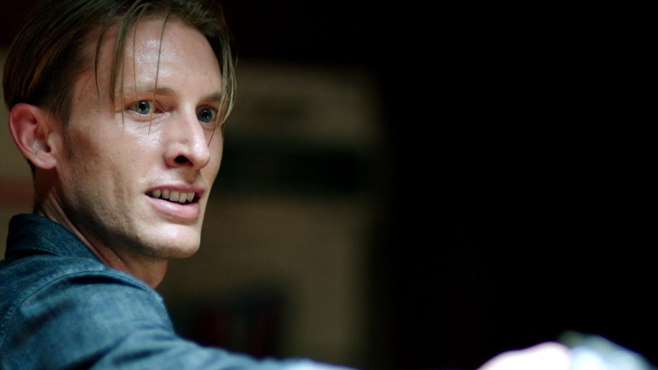
It’s hard to pick where exactly to begin with this film, so let’s just start with the story. The first half of the film introduces us to its two main characters separately—college dropout James (Skyy Moore) and career criminal Webb (James Landry Hebert). James comes to a small Texas town to visit his grandmother, only to be there as she passes away. He’s left with everything she has, including the house and his late parents’ money. He moves into the house and gets to know part of the town, as well as strike up a friendship with kindly middle-aged neighbor Dot (Beth Broderick), who is also a ballerina and dance instructor. Meanwhile, Webb is released from prison after eight months and goes to see his girlfriend Amy (Ashley Rae Spillers). But she isn’t particularly pleased to see him, since he broke her nose before he was locked up. She leaves with his money (in an account they both share), and Webb’s trouble begins again once Duane (Jason Douglas), the local crime boss, pays him a visit and expects him to pay a heavy debt in two weeks. Otherwise, he’ll have to leave town.

For a long while, it seems like two separate stories being told (Webb turning back to crime and James being shown the local bar scene). We’re wondering when they’ll intersect and how. Almost halfway through is when things start to get intriguing, as James uncovers one of Webb’s cons to fool elderly people into putting money into Webb’s account. James learns that Webb has tried to con his grandmother and decides to bust him somehow. But the situation turns ugly very quickly…

Period. That’s all I’m going to say about the plot. I knew close to nothing about this movie when I first watched it, and trust me—not knowing what’s going to happen makes it more special. Let’s just say that…Oh wait, I’m sorry, I’m rewriting my review of the Coen Brothers’ shocking thriller “Blood Simple.” Back to “Two Step”… Actually, no. That’s it with the story for now. Like I said earlier, I couldn’t predict what was going to happen in the latter half of the film, and I would like each of its audience members to feel the same way I felt when they see it.

The first half of “Two Step” does a great job in developing its characters with the right amount of time and situations for them to develop themselves into fully-realized characters. When the blood hits the fan eventually, it matters particularly if you care about who is in jeopardy, what is at stake, and what these people have to face. You get a good feel for these characters before things start to get grisly—James is an outsider trying to find his place in a new town; Webb is a live wire with a taste for violence and torture, and Duane constantly threatening him isn’t making things any easier; and Dot is a kind woman who also possesses a lively spirit and an acid tongue.

You know a little bit about Webb’s past and even see him do a horrific deed (such as break a man’s arm as he reaches for his money at an ATM), and so it leaves a good amount of suspense as we wait to see what will happen when he eventually meets up with either James or Dot. When he does, that’s when writer-director Alex R. Johnson, making his feature debut, delivers the punches (no pun intended). By taking the time to get to this point, the abrupt shocks of violence seem all the more surprising. There’s one particular random act of violence that did something for me that hasn’t happened for me in a thriller in a long time: it made me jump out of my seat and shout a hard exclamation at the same time.

All of the actors perform excellent work. Hebert and Moore effectively portray opposing ends of a grim situation. Hebert, in particular, has the juiciest role as the violent criminal who can be vulnerable at times when he doesn’t quite know how to handle a situation he put himself into. With the right balance of charisma and horridness, Hebert is great in this role. Beth Broderick, while playing her character as kindly and tender, is mostly on hand for much-needed comic relief and makes a very good impression here. Jason Douglas adds a dose of one-liners into the mix with his villainous character and creates an effective comic bad-guy.

Also, “Two Step” is a very good-looking film with great cinematography. Even a few things as standard as a dead body, a person tied to a chair, and a dull knife are attention-grabbing in the framework of the story and situations. It also delivers a great dose of Texas atmosphere. You feel like you are there in this environment as you’re watching it.

The story structure is fantastic, as you learn more and more as the film continues. Johnson manages to make scenes more meaningful by revisiting certain undercurrents introduced before (such as the interaction between Webb and Duane) and creating effective payoffs.

The characters’ relationships are convincing, and so we buy why certain events happen when it comes to where they fit into them. It makes the horrific and very intense second half all the more credible as well as shocking, chilling, and well-executed. I apologize for not saying more about the thriller aspect of this film, but I will say this: This film is not for the squeamish; there are only a few brutal acts of violence, and so Johnson makes the most of his limitations.

“Two Step” is such a good film. How effective a thriller was it? I’ll be honest; after I’ve seen it and left the theater, I had to walk several blocks in North Little Rock to get to my car, and I was afraid someone was going to come along and strike me. The film premiered at SXSW and recently screened at the Little Rock Film Festival. If and when it gets a theatrical release, check it out and see if it has that same effect on you afterwards.

To Kill a Man (2014)

16 May

14036-1

Smith’s Verdict: ****

Reviewed by Tanner Smith

The Chilean film “To Kill a Man” is one of the most rare of revenge films: a type that is morally uncertain. This film, based on a true story, sets up a conflict that drives its protagonist to kill the antagonist and then the resolution causes the protagonist, and the audience for that matter, to wonder what has been resolved. On the one hand, some people are safe again. On the other hand, the protagonist is left wondering what vengeance solved, and with his usually emotionally-insecure inner life even worse than before. By trying to change things for the better, the worse has risen as an effect.

That’s not a mark against the film, necessarily. In my opinion, it leaves a stronger impact and causes you to think about what you’ve seen after you leave the theater.

The film, written and directed by Alejandro Fernandez Almendras, sets up the conflict as we’re introduced to our main character named Jorge (Daniel Candia). Jorge is a caretaker at a nature reserve and lives with his wife, Marta (Alejandra Yanez), and two children. He’s also somewhat emotionally timid. He can’t stand up for himself and tries to avoid confrontation. When he encounters a gang of thugs from the projects, the gang picks up on this right away and decides to mock and humiliate him before actually mugging him. His teenage son is anxious to stand up to the leader of the thugs, Kalule (Daniel Antivilo), since Jorge won’t, and sneaks out in the middle of the night. By the time Jorge catches up with him, Kalule shoots the son and is sent to prison for 18 months.

Two years later, Jorge is not living with the family anymore, as Marta has kicked him out of the house for not standing up for himself in the first place, thus putting their son in that situation. Kalule is released from prison and seeking revenge. He harasses the family with threatening phone calls and vandalism on their property. He even sexually assaults Jorge’s young daughter. Jorge and Marta try to get Kalule arrested for terrorizing the family but are unsuccessful. That leaves Jorge with the choice to man up and decide to take the matter into his own hands.

“To Kill a Man” uses long, interrupting tracking shots and static shots to give a documentary-like/voyeuristic feel. It’s both disturbing and fascinating to watch events unfold; and as the inevitable creeps around the corner, it gave me tension waiting to see how it would play out. The two most memorable scenes occur halfway through the film, as Jorge sets out on his crusade. One is a tracking shot involving a car alarm as a lure. The other is a long-running static shot where more is heard rather than seen.

It’s easy to see what’s coming; even the title renders it expected. But what makes “To Kill a Man” more memorable is what happens afterwards. The pride that Jorge expected from performing his deed is instead replaced with guilt and more apprehension. He can’t even bring himself to tell his family not to worry about Kalule coming after them anymore. This turns the film not only into a well-crafted revenge tale but also an effective character study. Jorge is an outcast and will remain so for the rest of the life. There’s not a clear answer as to how long he’s been the way he is or how it originated; there are just subtle emotions from his family that state they’ve put up with it for so long.

That Jorge spends most of his time in an empty forest is symbolic in the isolation that he feels. There’s also a scene in which he tries to tell a vagrant to move from the forest, as part of his job, but then he returns to chase him away with a shotgun. I could be reading too much into this, but I took it as a way of saying that Jorge prefers to be alone and possibly doesn’t want change in his life after all.

Something else that can represent this is the camerawork that leaves plenty of headroom for the character. This originally annoyed me (and I even felt like I wanted to grab the camera and tilt it down a little bit), but shortly after my friend saw the film, he had a comment that changed my view for the better—that the headroom was further emphasizing Jorge’s seclusion from everyone and everything. Looking back with that in mind, I let it pass.

Even if we’re not sure exactly what to take from “To Kill a Man,” from a moral stance, it’s hard to deny the sheer power it delivers with the way it presents a dilemma, a possible resolution, and how a flawed protagonist can act and feel throughout such an ominous situation. It’s a dark, compelling film that I won’t forget anytime soon.

A Matter of Honor (Short Film)

14 May

1506842_760343980665585_1388284654934726831_n

Smith’s Verdict: ***1/2

Reviewed by Tanner Smith

David Bogard’s short film “A Matter of Honor” is a war drama that premiered in the Little Rock Film Festival. And how odd is it that it screens in the same festival as another made-in-Arkansas war drama, Taylor Dan Lucas’ “Watch the Rhine?” Both shorts are exercises in setting, acting, and writing, and they don’t rely on cheap gimmicks to make their audiences feel something they couldn’t already. They’re both small films that rely on something more—the performances, the location, and the script. They’re both very strong pieces of work.

I’ve already reviewed “Watch the Rhine,” so if you want my further thoughts on that, check out this link: https://smithsverdict.wordpress.com/2014/05/13/watch-the-rhine-short-film/

While “Watch the Rhine” took place during World War II, “A Matter of Honor” occurs on the night of June 2, 1864, during the American Civil War. Three Confederate soldiers (Ed Lowry, Tom Kagy, and Elliot Gilmartin) are sitting around a campfire in the middle of a forest talking about what they should expect in the future during the war. The youngest one (Gilmartin) is fighting for vengeance after a Union soldier killed his father, while the two older soldiers don’t feel like they know what they’re fighting for anymore. After one (Lowry) leaves the other two, a young Union soldier (Jason Willey) comes along to arrange a trade of scarce goods, such as coffee and tobacco. The two Confederates agree to it, and they enjoy a moment of friendly banter with the soldier. But when a gruff Confederate officer (Scott McEntire) comes across them, the situation takes a serious turn and leads to a deadly encounter. The only solution they can think of in the moment tests their honor.

“A Matter of Honor,” which runs for 19 minutes, is a powerful short. The reasons for this are many: For starters, the actors are all solid as they exhibit the true emotions of what their characters are going through. It’s a dialogue-heavy short; the conversations these people have are perceptive and convincing without being too heavy about the themes and conflicts. The flow of each talk is convincingly handled, even when the soldiers from each side meet and talk around the fire; their banter about how they’re going to handle battling on opposite sides the next day is not only insightful but also humorous, which is a refreshing move. The character arcs, while we’ve seen them before, are well-done and suitable for the material. The film, shot on RED, looks good, and the cinematography is great. I like that it’s held in one outdoor location (like “Watch the Rhine”). The costumes look convincing. And when the Confederate officer comes to resist the Union soldier’s appearance, I felt the suspense; I must confess even though I probably knew the resolution, I didn’t know how this scene would play out.

There’s much to like about “A Matter of Honor.” And when all is said and done, if you can get into the talks, the characters, and the conflicts, then you can get into how the film plays itself out after the climactic encounter. You have five soldiers, different in many ways but similar in one in that they fight for honor, in the middle of a war and of a scenario that isn’t seen in most war films. It’s effective and very well-handled.

There’s one thing I didn’t like about “A Matter of Honor.” Without giving it away, it features characters practically taking turns during a grisly act. The way it’s handled, you’d think it was a “Monty Python’s Flying Circus” performance. But it’s not very long and the film bounces back with its complexities afterwards. That’s one flaw in an otherwise well-executed short war drama.

Sidearoadia (Short Film)

14 May

Screen-Shot-2014-05-03-at-6.11.35-PM

Smith’s Verdict: ****

Reviewed by Tanner Smith

“Sidearoadia” is a short film by University of Central Arkansas Digital Filmmaking professor Bruce Hutchinson, and it’s a deeply moving tale of two different people coming together as they accept life by dealing with death.

Teenaged Rose (Hannah Culwell) has just lost her older sister, Dawn (Kristy Barrington), and doesn’t know how to deal with it. In comes David (Warren McCullough), Dawn’s boyfriend, who attempts to comfort her. Rose is more into outdoor hobbies and mythical legends, and doesn’t like to talk about something as tragic as her sister’s death. So when David first approaches her, she tells him not to even mention it. Instead, he decides to get to know her better, as he watches her with small animals (such as a rabbit), listens to her talk about mythical creatures (such as “selkies”), and so on. Rose and David spend more time together, as their conversations turn to the subject of Dawn and how her death has affected their lives deeply.

Where do I begin with this film (which runs for about 15 minutes)? Just about everything in this film is done just right. The screenplay is great, with dialogue as insightful and natural as reality (I love the conversations these two have together). The acting and characterizations are excellent; Hannah Culwell and Warren McCullough are great together, exhibit convincing chemistry, and portray realistic characters with a few quirks, particularly with Rose. The film looks great, thanks to top-notch cinematography; this is a beautiful-looking film that brings the Southern outdoors to life. And the film, for all its great dialogue, even knows when to be quiet. There’s a scene in which the two characters sit together in a field, and, for some type of ritual Rose knows more about, they use only notepads and short messages to communicate. It’s a touching scene that says more about what the characters are going through.

That “Sidearoadia” is not predictable is rare and it really works. There’s hardly a story being told here; it’s just the friendship between two people who need comfort, consultation, and assurance, and find all three in each other. It’s interesting and very effective. And I can’t tell you how glad I was when the relationship between Rose and David didn’t go in the direction I was expecting it to. In any other film, they probably would have been romantically involved.

I can’t think of anything I dislike about “Sidearoadia,” except for perhaps the final line of dialogue that feels somewhat random and seems a little off in mood and tone. But if that’s the biggest problem with this short, I have little to complain about. I love this short film.

The film can be seen here:

Watch the Rhine (Short Film)

13 May

473112284_640

Smith’s Verdict: ***1/2

Reviewed by Tanner Smith

“Watch the Rhine” is writer-director Taylor Dan Lucas’ University of Central Arkansas undergraduate thesis film, and it’s considered a smaller project than one might expect to come out from the school’s digital filmmaking program. But “smaller” does not mean it’s any less effective. It’s quite a strong short film, and its minimalism works in its favor. It gives more of a lasting impression because we’re not watching a film as much as living it. The execution is intimate, the actors are extremely convincing, and there’s a great deal of atmosphere throughout.

What I mean by “smaller” is that it’s mostly a two-character piece set in one location, which is unusual, considering it takes place in World War II. But this is not a war epic, and there’s hardly any action to be found here. It’s just a short drama about two soldiers from opposite sides and how they react, and even relate, to each other. That’s it. And you know what? That’s actually pretty good.

“Watch the Rhine” takes place in a forest somewhere in France, 1944. The story begins with Jim (Schafer Bourne), an American soldier, awakening alone in a foxhole. Alone and confused, he frantically hikes through the forest in the hopes of finding his unit. Soon, he comes across Curt (Nick Lewellen), a German soldier/medic. Jim sees that Curt is unarmed and seemingly alone, so, not knowing what to do, he holds him and forces him to trek along with him. As they go further, they come to trust one another and even form a sort of bond.

That’s the main idea that Lucas goes with in this film, and he manages to make the simplicity of this premise quite effective. He’s aided by two very convincing actors in the central roles, the costumes they wear which look authentic, and a great amount of atmosphere, thanks to the film’s directors of photography, River Shelman and Corey Shelman.

Something else that works in the film’s favor is the lack of music score. I got to see the original rough cut of this film months ago, and I heard that Lucas and the film’s producer, J. Cole Lansden, were planning to arrange a score for the finished film. I was concerned because I thought the film would have been stronger without it, because the cut I originally saw was pretty damn solid. And it pleasantly surprised me that there was no score in the end. Honestly, the film doesn’t need it. If the execution and acting is great, then the film doesn’t need music to tell how the audience is supposed to feel. That was a good move on the filmmakers’ part.

If I did have a problem with the film, it’s that I would have liked it to run a little longer. The ending comes a little too quickly, which you could argue shadows abruptness of this type of situation and environment, and I feel there’s a key shot missing. I don’t know; maybe I would have liked to see more of these two together. But that’s just me nitpicking, and this does add to tragedy of this situation/environment. You accept what you can get, and what I got was a very short but nonetheless very powerful drama.

You can watch the film here: https://vimeo.com/92346956

Stuck (Short Film)

13 May

1614319_269154369930564_7839115434050606911_o

Smith’s Verdict: ***1/2

Reviewed by Tanner Smith

“Stuck” is a short film with a quite original hook: an offbeat comedy about a door-to-door salesman who sells…glue. That’s right—lots and lots of glue; so much glue that the man’s entire home kitchen leaves very little room for the dining table because of so many boxes of unsold products. “Stuck” is the University of Central Arkansas Digital Filmmaking undergraduate thesis film by John Hockaday, and it’s a delightful, funny short that does more with that premise.

The glue salesman is named Spence (played by Scott McEntire). He’s a bored, repressed, working-class family man with hardly any time for his wife (Julie Atkins) and his young son (Peter Grant) or especially for fun. And he hasn’t seen either his parents or immature man-child of a brother, Bob (P. Jay Clark), in years. It comes as a shock when he receives a phone call from Bob, saying, “Mom and Dad are dead.” How did they die? This is a riot—skydiving! That is hilariously tragic. Anyway, the situation becomes more tragic to Spence because Bob, who has stayed with his parents all his life (“They’ve been asking me to leave for 20 years,” he says at one point), now needs a place to live. (“It’s just I never slept without them!” Bob says.) Spence shudders at the very idea of letting this childish fool into his house, but Bob does move in, befriends his nephew who lets him sleep in his bedroom, and makes himself at home. Spence’s wife and son love the guy, but Spence is of course nearly driven crazy by his antics. Will he ultimately learn the true meaning of family and brotherly love?

Well…the answer to that question is “yes,” of course. It’s the old story of a buffoonish clod that enters the life of an uptight straight man who at first hates him and then slowly but surely comes to love him. But that the story is predictable is not the point here. What’s important with any story, old or new, is how it’s presented. And the way Hockaday, who wrote, directed, and edited the film, presents this story is fresh and very funny, and with a certain love for his characters. Nowhere is that clearer than in a scene near the end where Spence and Bob, in a playground where Bob goes to play, talk about the good and bad qualities about Bob and how Spence may actually learn how to loosen up while also learn the importance of family. Yes, it’s essential, but it’s still touching because at no point do you want these two to hate each other or to take the wrong path in their relationship, especially since (hilariously) tragic circumstances brought them together.

The character of Bob takes a little getting used to, but I guess that’s the point. Bob can be aggressively obnoxious, but his energy and spirit grew on me and I came to like him. Also, I thought P. Jay Clark was flat-out hilarious in the role.

At the same time, you can understand the frustration that Spence goes through when he has to put up with his antics, such as gluing the TV remote to the coffee table, talking his son into skipping school, and so on. One of the pleasures about the film is that it isn’t necessarily one-sided. Even with the ending I could see some people having trouble with (and by the way, I’ll save that for a spoiler-review when the film is online), Hockaday doesn’t mean for one character to be right and the other be wrong.

It’s not just that Hockaday loves his characters; he also loves film and filmmaking. Watch this film on a technical level, and it’s hard not to enjoy the way it’s shot, the way it’s edited, the overall spirit of it all, etc. I like to think Hockaday had everything pictured in his head the whole time and this came pretty close to his vision. Jarrod Beck, the film’s DP, deserves credit for the film’s look as well.

Now I want to review the first scene of “Stuck,” because it is quite honestly the film’s best part. It’s so wonderfully done that you could argue that maybe the rest of the film doesn’t top it because it’s so great. It’s an introduction that establishes Spence’s job as a door-to-door glue salesman…in musical form. That’s right—it’s a musical sequence that begins the film, as Spence sings the catchy theme song (think the “Super Mario World” theme crossed with Danny Elfman’s “Simpsons” score) about the glue (called Grant’s Glue: The Miracle Glue) to one of his customers (Amber Erdley, who deserves credit for capturing the same kind of reactions that anyone would have to craziness such as this). It’s a fast, funny sequence that had me laughing out loud as Spence frantically goes over what this glue can do for the common household, as outlandish as it all seems, and then slows down to sing about his plight; how he hates his job and his glue; how he must provide for his family; and then speeds back up again to finish the song with an “all sales are final” closer. This scene is hilarious, perfectly-crafted, and even worthy of being watched and studied by film students who would like to craft the same kind of musical-theatre type of scene. Also, the song is pretty good too; credit goes to Hockaday, who wrote it, and Michael Xiques, who created the music for it.

I can think of one other filmmaker who would like to attempt to create this film (albeit a feature film), and that would be Wes Anderson, a filmmaker who delights in, for lack of a better phrase, making the unusual usual. I think he would be proud of this short.

The film can be seen here: http://www.johnhockaday.com/stuck.html

Shattered Glass (2003)

5 May

D9F86B198896C1E6045CF2CBBF946

Smith’s Verdict: ***1/2

Reviewed by Tanner Smith

How far does ambition go in the workplace? Or, in the case of “Shattered Glass,” how far does ambition go in journalism? “Shattered Glass” is a film based on true events in the late-‘90s, about a young writer, named Stephen Glass, who strived to get so far in the reporting business that he actually fabricated more than two dozen stories for the New Republic just so he could get ahead. He didn’t just bend the rules; he flat-out made up the facts as he went along and attempted to cover his tracks with elaborate stories and hoaxes. Why did he do it? Maybe he thought he would impress his fellow staff writers if he could write the most riveting stories, so he created stories about a drunken Young Republicans hotel-gathering and a computer hacker’s convention featuring a young hacker who sold computer companies his knowledge to get rid of other hackers, in exchange for anything he wanted.

You could say these stories are too good to be true, and that’s probably what Stephen’s co-workers think. But Stephen has notes for fact-checkers to verify, they love Stephen’s enthusiasm as he talks about his stories, and more importantly, they love him. Even when his wispy, whiny personality seems to annoy people, all he has to do is ask the question, “Are you mad at me?” They can’t stay mad at him.

That’s the way writer-director Billy Ray sees it in “Shattered Glass,” which stars Hayden Christensen as Stephen Glass.

Christensen portrays Glass effectively, as a naïve kid who desperately wants to be liked by his peers and co-workers and will even flat-out lie to everybody to gain sympathy, even when he is caught by his editor, Chuck Lane (Peter Sarsgaard in an excellent performance), by accident. When is Stephen Glass telling the truth in this film? It’s hard to tell, because he’s a convincing liar. He always plays an innocent. Is he an innocent? There are times near the end, when he creates a sob-story when he knows he’s about to be fired from the New Republic, that it’s so unsettling to watch him like this. But it’s all so fascinating, and Hayden Christensen turns in a solid performance.

One thing we don’t see in this film is how good Glass is as a journalist. You have to wonder from watching this film if he ever wrote a story he didn’t make up himself. If so, why is that? Is it because he kept thinking he could get away with it? That he could continue to fool people? Is he just addicted to lying? What we do know is that when Glass is ultimately caught, he doesn’t see it as a big deal by that point.

This really did happen. Stephen Glass did in fact create these stories. The New Republic published fiction and didn’t even know about it until Internet journalist Adam Penenberg (played by Steve Zahn) checked the facts himself, brought the attention TNR editor Chuck Lane, and exposed the article, causing Lane to fire Glass. It’s almost hard to believe, but sometimes the most impressive stories are the ones that are true. Maybe if Glass looked around some more, he wouldn’t have had to imagine his articles.

“Shattered Glass” is a terrific film that shows the pressures of journalism as well as the questions of limited ambition in such a workplace (Glass’ opening narration about his job is one of the most truthful speeches I’ve heard, especially now that I’ve worked at the University of Central Arkansas newspaper, the Echo, for two semesters now). It’s also very well-acted. I’ve said how good Hayden Christensen is as the title character, but I can’t forget Peter Sarsgaard as Chuck Lane, who’s really the hero of the story. In the beginning of the film, he already has enough to worry about—he’s not popular among his co-workers, and is even less so when he replaces the original editor Michael Kelly, whom everyone loved. He’s not very charismatic, is constantly under pressure with deadlines and all that fun stuff with journalism, and now he has to deal with this “kid” (because, really, that’s what the others see Glass as: a kid), and hope that he’s wrong about his suspicions because he knows that if he fires him, no one will want to listen to his reasons why. Sarsgaard is great here; he does an excellent job at balancing out his ethics and wants. He, along with many other aspects (the script, the execution, the rest of the actors) make “Shattered Glass” definitely worth looking into.