Valley Inn (2014)

22 May

1544603_263786480460163_9040261442275233140_n

Smith’s Verdict: ***

Reviewed by Tanner Smith

I’m just going to say right up front that I was a little uncertain about writing this review. I thought maybe I should see it a second time just to make sure I wouldn’t neglect to mention something important (non-spoilers, mind you). With that said, there’s a lot that happens in “Valley Inn,” with many side characters and subplots. And if I get to see it again later, I’ll revise my review unless it’s not anything important I forgot to comment on the first time.

“Valley Inn,” which recently premiered at the Little Rock Film Festival, is a two-hour comedy-drama, shot in Northwest Arkansas, and takes place mostly in Hindsville, a small community in Madison County. This is one of those films that show a pleasant portrait of a small Southern town and its residents, and while sometimes it can be a little overly drawn, it manages to present itself as a cute, enjoyable film that didn’t bore me or make me wish I was somewhere other than this town.

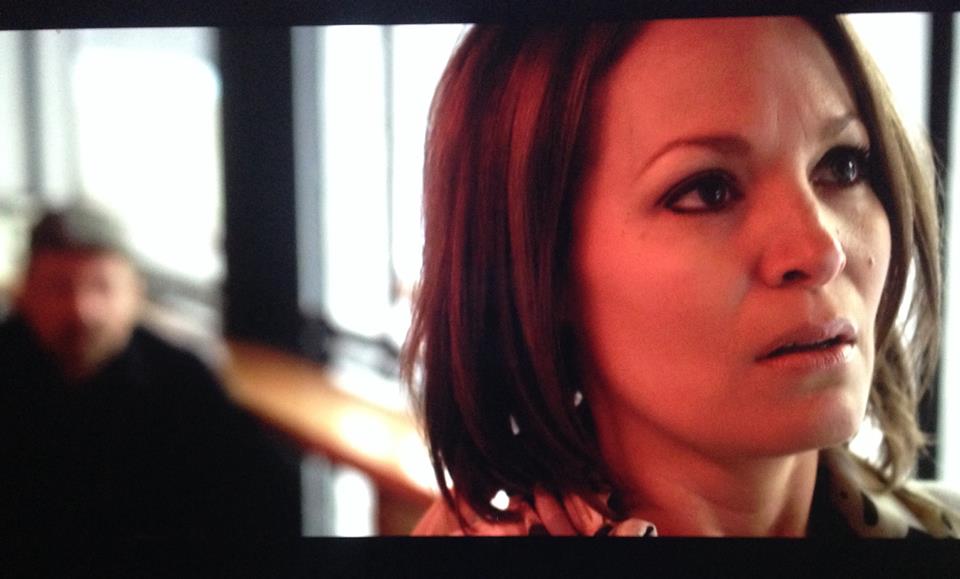
“Valley Inn,” directed by Kim Swink and Chris Spencer (and written by Swink and Nelsie Spencer), begins as New Jersey college student Emily (Jordan Scott) is assigned by a Christian book company to travel to Hindsville, Arkansas, to sell books door-to-door for the summer. She brings along one friend, Maddy (Whitney Masters), and stays one night in a secluded rural home. But one day and one night in this change of scenery with some odd folks is too much for Maddy, as she takes the car and leaves Emily alone in town for the summer. (Sheesh, that’s pretty low.)

Emily finds a room to sleep in above the Valley Inn, the local café & hangout where all local gossip is spread. And from here on in, it’s an episodic series of events involving Emily trying to fit into the town, make a good quota on her book sales, and even finding herself in a relationship with the local preacher’s handsome son, Lee (Colley Bailey). Oh, and there’s also a brief subplot involving “Sunday/Fun Day” with other members of her “bookfield,” where everyone is perky and happy, and the leader doesn’t allow tardiness, even for church reasons.

But that’s just the tip of the iceberg. There are also many side characters and subplots in “Valley Inn,” and every now and then, the film cuts back to these people for us to catch up. There’s the nice woman who runs the Valley Inn (Natalie Canerday); there’s the “cowboy” with a reputation (David Lansbury); the waitress he constantly tries to woo (Joey Lauren Adams); there’s the high-class couple (Kenn Woodard, Mandy Fason), one of which may have a secret deceitful plan in mind, and their pretty daughter (Jaclyn Marlan); there’s the elderly woman (Candyce Hinkle) who refers to Jesus by the nickname “Jerry”; good God, there are a lot are a lot of quirky characters she comes across. Some of them are caricatures, and not much time is used to develop anything other than one trait; but to be fair, isn’t there one thing you know about people you only meet once in a while in a strange place? That’s what the film basically is—a vacation from one place to another (in this case, from a New Jersey town to a small Southern town) and the many people they come across. In that respect, I liked these people and was curious as to what would happen each time we cut back to them. There’s a scene later on that begins as people walk out of a church, apparently for a funeral—I actually kind of gasped because I was concerned about knowing which one of them died. That scene comes way late in the film, and that’s how I knew “Valley Inn” worked for me. I cared about these people. And also to the film’s credit, I can see some of these people in my own small hometown. Oh, and there’s also a brief subplot involving “Sunday/Fun Day” with other members of her “bookfield,” where everyone is perky and happy, and the leader doesn’t allow tardiness, even for church reasons.

(Oh, and I forgot to mention the small part of a little boy who makes his own home war movie with his friends and other, older locals. I not only feel like I knew this kid; I feel like I was this kid when I was making random home movies in my hometown!)

We get a good feel of the town. Aside from the Valley Inn, we see rural-area homes, urban houses, annual rodeo events, cattle auction yards, a country-music jamboree, a low-water bridge, a beautiful swimming hole, and even a brief moment at the home of a shotgun-packing meth-cooker (whom Lee must rescue Emily from)—hey, when someone goes door-to-door for a full summer, you expect to come across at least one psycho.

Now I have to make a confession. I went into this movie not knowing exactly what it was about. I knew about some of the cast members and that it was labeled as “a love-letter to small town America,” but not much else. When I was introduced to Emily and Maddy, and it shows Maddy reacting to their place of assignment, the population number of the town, a dead critter on the side of the road, and trying her best not to laugh at the behavior of her house hosts (even when Hinkle refers to Jesus as Jerry), I kept paying attention. I expected the story would be about Maddy as this stubborn New Jersey girl who comes across these people, learns about tolerance and patience, and manages to befriend the locals. Granted, that’s probably predictable, but the way Whitney Masters was playing Maddy, I would have looked forward to it! She has a natural, appealing screen presence that Jordan Scott by comparison seemed kind of bland, even with her perky morning mantra, “I feel happy! I feel healthy! I feel terrific!” (By the way, doesn’t she wake people every time she shouts it in the early morning? Does anyone even mention it to her?)

But no—Maddy is gone from the movie after 15 minutes, and she never returns. So instead, we have a character arc for Emily as she goes from being repressed to a free-spirit. There’s nothing wrong with that, as Emily does seem like the type of person who needs a change in her life, and the people she comes across, particularly Lee who manages to kidnap her from one of her door-to-door business days (by the way, guys, don’t try that at home), are just the people to help her break free. And Jordan Scott did manage to make me care for her.

Yes, “Valley Inn” does go all over the place (actually, you could call this five or six LRFF Arkansas Shorts thrown into one). Yes, some of it is corny and predictable. Yes, some of it is over-the-top (I won’t go into “Fun Day” and its crazy leader). But I can’t hate this movie or even give it a mixed review; there’s just so much that I like in this—the actors, the overall atmosphere, the smart writing (some good dialogue here), and little details that amount to the big picture. Something else I like about “Valley Inn” is that it’s very chill. It has a laid-back tone that strangely works in the film’s favor. A lot of it is just watching these people interact with each other and go about their days and make a living in this town. And I don’t mind that in the slightest. I enjoyed “Valley Inn”—it’s cute, it’s funny, and it contains a great deal of atmosphere.
Before I Disappear (2014)

21 May

before-i-disappear

Smith’s Verdict: ***1/2

Reviewed by Tanner Smith

“Before I Disappear” is Shawn Christensen’s premiere feature-length film based on his Academy Award winning short film, “Curfew,” and it’s a dark, riveting, successful portrait of a man who’s hit rock-bottom and may be able to find a way out again.

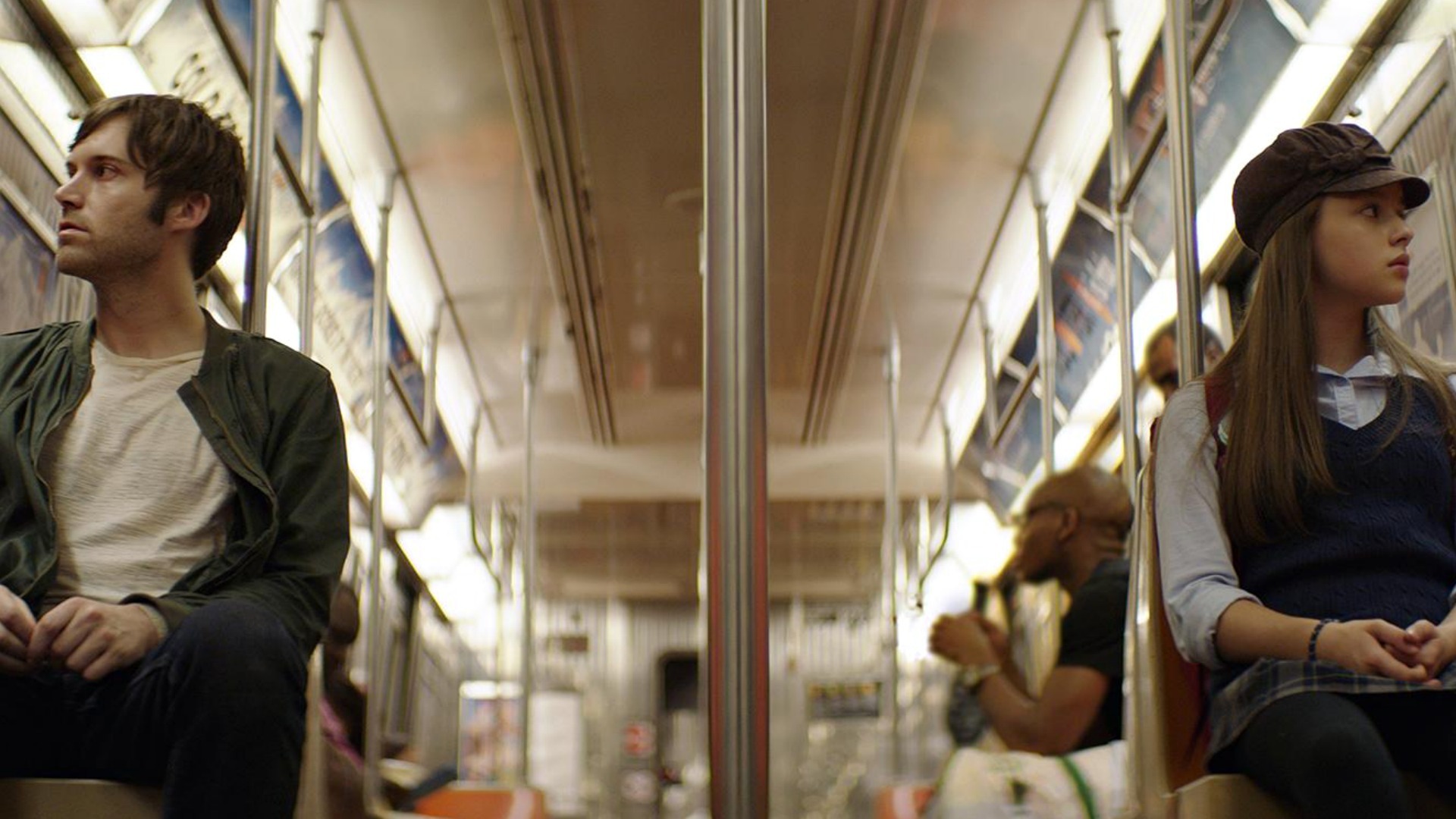
Christensen wrote, directed, edited, and co-stars in this film as Richie, who has found nothing to live for after the death of his girlfriend. Severely depressed, constantly threatened by moneylenders, and even discovering a grisly sight in one of the bathroom stalls at the place he works as a janitor, he contemplates suicide. One day, he cuts his wrist and lays in the bathtub for a while. Not dead, he answers a phone call from his sister, Maggie (Emmy Rossum). Maggie needs him to pick up her pre-teenage daughter, Sophia (Fatima Ptacek), whom he has never met. After bandaging his wrist, he picks her up and drops her off at her apartment until he’s called again to babysit her. The problem is she’s a spoiled brat and he has enough on his plate already. The only reason he’s here is because Maggie, whom he has spoken to in years, is relying on him, which is enough for him to carry on living for a while longer.

A mysterious circumstance (though actually, it’s one of many) causes Richie to Sophia to leave the apartment and walk across the dark side of the city through the night. Richie introduces Sophia to a few places and people he knows well, though they’re not right for a girl her age and he’s not even sure if it’s right for him anymore. As the night grows longer, Richie discovers new harsh truths about some already-harsh people in his life and also comes across unfortunate discoveries related what he saw in the bathroom stall. All while he awaits reuniting Sophia with her mother, Richie must consider the rest of his possibly-short life in order to know if he truly has something to live for.

“Before I Disappear” is a carefully-constructed character piece that is skillfully acted. Shawn Christensen has many hats to wear behind the camera, but he must also act center-stage. As what can probably be expected of someone who must direct his own acting and carry out his own written character, Christensen is nothing short of brilliant, delivering the perfect amount of staggering coldness and genuine emotion that is just right for the character. But he also knows his character and script inside and out, and because of that, he is able to deliver subtleties about the character that tell about his past and his current feelings. Watch this film again, and you might notice something about his performance that you haven’t before. He’s perfect here.

The character of Sophia is not easy to like at first. She’s cold towards her uncle (though to be fair, she’s never met him before) and kind of annoying. And I thought her transition to caring wasn’t entirely convincing to me. I thought it was going to cause a problem for the relationship that develops between her and Richie as the film went on. But surprisingly, the script doesn’t let her down either nor does it let down the character of Maggie, her mother. I won’t say exactly how or why, but you can see full dimensions in these characters as you can see what they’re going through and come to feel for them.

I’ll admit I at first thought the story was overstuffed when it introduced grim subplots including Richie’s drug-addicted, bad-tempered friend (Paul Wesley) and his intimidating mafia-type boss (Ron Perlman), both of whom have connections in one way or another. But as the film went on, there wasn’t a moment when I was bored or thought I’d rather spend running time with another story. And there are many ways to keep it interesting, including a strange but fun sequence in which people in a bowling alley randomly dance to Goodnight Radio’s “Sophia So Far.”

I haven’t seen “Curfew,” Christensen’s short film this is based on, but after seeing “Before I Disappear,” I am curious to seek it out and even more curious to see what this extremely talented filmmaker has in store next.

The Night the Blackbirds Fell (Short Film)

21 May

1393715_542818722464712_1081021356_n

Smith’s Verdict: ***1/2

Reviewed by Tanner Smith

As tough as it is to admit, something a lot of people will be curious about every New Year’s Eve is whether or not thousands of birds will suddenly drop in Beebe, Arkansas. Ever since Beebe made international news in January 2011, when more than 3,000 red-winged blackbirds fell from the sky and roughly 85,000 drum fish were washed up along the Arkansas River shore, it drew concern and investigation afterwards, even when it happened again in the beginning of 2012.

These mysterious bird & fish deaths are the topic of the 40-minute documentary, “The Night the Blackbirds Fell.”

Directed by Will Scott and written by Brian C. Campbell and Gustav Carlson, “The Night the Blackbirds Fell” presents the investigation of these mysterious animal deaths in a crafty, entertaining way. It uses a mix of sketch drawings and computer animation to present fictional characters looking up real-life media coverage, documenting first-hand testimony and explanation, and connecting theories and facts together to gain answers. It’s an interesting narrative flow, as the animated characters dig deeper into the mystery surrounding what killed the birds and the fish.

It begins as Danny (voiced by Matt Duncan), a university student developing a thesis project, walks alone from a New Year’s Eve 2010 party when he comes across a fallen blackbird, which he names Virgil, before encountering a shower of falling birds. As he watches TV and laughs at the jokes made by Jon Stewart and SNL, he quickly realizes how serious it is when he watches news coverage of the strange phenomenon. He decides to create a website as his thesis project, called “The Night the Blackbirds Fell,” as he investigates the wildlife deaths and adds new interview footage to the site.

Among the interviewees are Beebe residents, scientists, roost landowners, and anyone else who has an opinion on what happened and how it happened. It seems that everyone has their own theory as to how the blackbirds fell and how thousands of drum fish were washed ashore. Oil, toxins, military conspiracies, roost relocations, fireworks, and even, the grand consensus given by the media, the beginning of the End Times (I’m surprised Harold Camping wasn’t mentioned at all during this). You name it, someone has thought of it. It’s a puzzle that Danny must piece together as he (and the actual documentary crew) research and visit these different places and people, including a nuclear power plant and a Wal-Mart where a birds’-thicket once was (that’s a nice environmental message there). There are also two interviewees that give some input and who only agreed to be a part of the documentary if their faces and names were never revealed (one of them has his voice changed in post-production). One of them claims to know “who” killed the blackbirds.

Are the bird deaths and the fish deaths connected? Danny believes so, but Betty isn’t so sure. “The Night the Blackbirds Fell” has a clever mix of fiction and documentation with the mixture of interview footage and scripted animated sequences. The animated scenes are presented with a certain quirkiness that works well for the most part. Sometimes it’s funny when Danny and Betty’s reactions to most of these are about the same as the audience’s, and Betty’s snide commentary works for comedic effect. But other times it can seem a little forced, like an educational TV special, particularly when the film cuts back to the two and they recap on the footage they just watched. Mostly, however, it’s engaging enough to keep your attention. Some of the lines are good too—I love when Danny watches the SNL Weekly Update that shows Andy Samberg as a “lone-survivor blackbird” (with a heavy Southern accent), and reacts laughingly, “He sounds like my aunt!” And I admit it was a cute idea to have the bird, Virgil, as the “Lassie” of the situation, always pointing Danny towards important clues.

There are two shots that stay with me after seeing this documentary. One is a beginning wide shot that features the Beebe roost landowner, Lee Hayes, standing in the middle of the land and watching thousands of birds flying around. Another is an ending shot of more birds flying near a McDonald’s arch pole. These shots speak volumes as they indicate the possible extinction of blackbirds, as well as environmental threats to nature and people in Arkansas. It’s as if the film is saying that we need to rethink our connection with wildlife and by the end, it challenges us to consider the way things are now and how they may turn out to be in the future, especially if we’re going to keep checking on Beebe every year and see if more of these incidents occur, without actually contemplating them.

“The Night the Blackbirds Fell” is a well-crafted, intriguing film that entertains with the graphic-novel-style segments, involves/educates with the documentary aspects, and leaves the viewer thinking about it afterwards.

I Believe in Unicorns (2015)

20 May

unicorns

Smith’s Verdict: ***1/2

Reviewed by Tanner Smith

Leah Meyerhoff’s “I Believe in Unicorns” is one of the most compelling coming-of-age stories I’ve ever seen. I haven’t seen a feature about teenagers this direct or this honest in a long time. There are parts in this film that are so accurately portrayed that it’s hard to watch at times. It’s a frank, sometimes-brutal portrayal of a teenage girl’s first love experience that shows her come of age in an effective way.

The film stars Natalia Dyer in an excellent performance as Davina, a secluded 15-year-old girl who cares for her handicapped mother (Toni Meyerhoff) and has only one friend (Julia Garner) at school. More than often, Davina daydreams of herself as a princess in a fantasy world of unicorns and dragons. What she doesn’t have in this world is a prince. In reality, she advances towards an older skateboarder, Sterling (Peter Vack), a bad-boy who represents the rebellious spirit within Davina’s soul. Davina and Sterling spend time together. After they have sex, Davina, who was a virgin up until that point, wants to explore her sexuality even further.

I thought I had the rest of the story figured out in the first half-hour. Sterling would shut her out, Davina would grow desperate to earn respect from him again, and she’ll learn an important life lesson. Is that what happens? Actually, no. They do see each other more. When they find that their sexual encounters in Sterling’s room isn’t enough, they decide to hit the road and run away from their boring, lonely family lives just to be together.

The further they go on this journey and the longer they are together, they behave like characters in a fugitive road movie but don’t commit acts of violence toward people they come across. They instead commit acts of violence towards each other (or at least, for Sterling, it’s physical as he has a mean streak; and for Davina, it’s mental because she can say the wrong things to Sterling and set him off). The only way this road trip will end is if things go too far in their sexual sessions, and when it happens, it’s presented with the right amount of time to understand when and how it came to this and how the line will be drawn. Without giving much away, it builds up to a choice Davina must make in order to make herself happy—or if not happy, then fine enough without escaping the harsh realities of her life.

I was a little concerned when I knew there were going to be stop-motion animation sequences showing unicorns and dragons in Davina’s fantasy world, and I thought the gimmick would wear off fast. But the way it’s handled is in a sensible way that doesn’t get old and has something new to represent at crucial moments that mirror Davina and Sterling’s adventure together. It makes the film more profound in that sense. They let you know what Davina is thinking and further depict examples what she’s going through.

The characters are rich and fully realized, thanks to intelligent writing/characterization by Meyerhoff. The film is shot and written in a way that makes everything feel like the real deal, but the honesty and cruelty can mainly come through if the actors were credible. Boy, are they ever. Natalia Dyer is brilliant in the role, capturing the loneliness and curiosity of an adolescent girl going through her first sexual experience with a boy who may not be good for her. Also, give Meyerhoff credit for casting an actual teenager in the role, so the authenticity can come through. This was a risky move to pull, given how unflinching the film is on sex. But because there’s a real teenage girl in the role, we can see and understand what she goes through. She’s great here.

It was a great move not to make Sterling into just a bad guy. He’s not entirely bad; he’s misunderstood while his arrogance can get the best of him. He’s flawed, which makes him more realistic. And he’s written as a three-dimensional character—he can be enthusiastic, he can be upset, he can be angry, he can be confused, and we get to know more about him not just from his dialogue but from his actions as well. There are many emotions for the actor, Peter Vack, to pull off, and he does a great job with the role. When he changes quickly from endearing to hurtful, you believe it. There’s one particular scene later in the film in which Davina and Sterling get a motel room and start to get busy. In one long shot, the scene turns from intimate to violent after a certain action on Davina’s part that causes Sterling to react immediately. This would be a difficult task for an actor to pull off, and Vack is completely convincing.

I can’t think of another recent film that is harder or even as frank about teenage sexuality than this. Even with its fantasy sequences, some of which show a unicorn battling a dragon, it’s still very compelling because it shows how Davina will have to separate fantasy from reality.

Sometimes the film is heartfelt; sometimes that’s confusing; sometimes it’s upsetting. You know what? That’s teenage love.

A Night in Old Mexico (2014)

20 May

680x478

Smith’s Verdict: ***1/2

Reviewed by Tanner Smith

The premise for “A Night in Old Mexico” goes like this—an ex-rancher who’s lost his South Texas land to the banks is about to live in a trailer park when he, along with his visiting grandson, takes off for a fun, exciting night across the border, where he runs into a series of mishaps involving crooks, a bounty hunter, and a bag of money that winds up in his possession. If that sounds a bit old-fashioned, it was originally written by “Lonesome Dove” alum Bill Wittliff as a “Lonesome Dove” episode more than 30 years ago. Now that it’s finally made in the 2010s, I’m not sure I could tell you which parts were updated in the final draft of the script. But in the spirit of things, I don’t think I care very much.

“A Night in Old Mexico” is a gritty, well-made thriller made even better by the leading performance of Robert Duvall. Duvall has always been one of those actors who puts his all into everything he’s in and clearly has fun doing whatever he has to do. The story itself is fine and fairly timeless, but it’s Duvall who gives the movie its backbone. He turns in a strong performance as Red Bovie. He’s an ex-rancher whose South Texas spread has been set up for foreclosure, since the cattle has died and his son ran off years ago, leaving him with nothing and no one to help him. Along comes his grandson, Gally (Jeremy Irvine), whom he hasn’t met before and who shows up for a visit. He shows up the day Red is supposed to move into a tiny trailer park.

When Red and Gally show up at the trailer park, Red quickly realizes it’s not for him and hurriedly speeds away, with Gally in the front seat. They head down to Mexico for a long night of drinking and partying. Along the way, they pick up a couple of rowdy hitchhikers, who, as we saw in a prologue, have already committed murder and have taken a bag of money. Red kicks them out when they drink too much of his beer, which means they now unknowingly possess the bag.

In Mexico, Red roams the village and streets, looking for some action, with Gally reluctantly in tow. As the night continues, they befriend a down-on-her-luck singer (Angie Cepeda) but eventually realize what they’ve been holding onto and that there are people out there who want it back. And wouldn’t you know it—they happen to be nearby.

Something I really liked about “A Night in Old Mexico” was that I couldn’t predict from one situation to the next what would happen. There are many twists and turns the story takes, especially with the villains because there’s surprisingly more than the two hitchhikers. When the thriller aspects kicked in, I was curious to see where it was going, especially if this Red Bovie character was involved. He is an interesting character, and Robert Duvall does a great job at bringing him to life. He’s gruff but sensitive too. He has a heart of gold but also a knack for finding excitement and trouble. Sometimes he’s not entirely likable but you can see why he acts one way or another.

The scene that lets you know right away that Duvall still has that quality that made him a star. It’s a scene early on in which he sits alone in a barn and contemplates suicide. He talks to God while he struggles to pull the trigger on his revolver. You can see he’s a man who feels like he’s hit rock-bottom and that God has abandoned him. You can also see why he would need a good night out.

I enjoyed “A Night in Old Mexico” for what it did with its premise and for turning out a neat thrill ride. But more importantly, I enjoyed the film for Robert Duvall. Without the character and Duvall playing him, the film would’ve been merely okay. There are probably too many villains, only half of which are interesting; we don’t get to know the singer very well, except that she’s standoffish and presumably downtrodden; and come on—what did Red do for her that was different from every other guy that leers at her? Was it because of his age? Was it because he was Robert Duvall? But those are just nitpicks. I recommend “A Night in Old Mexico.”

Devil’s Knot (2014)

20 May

Colin-Firth-in-movie-Devils-Knot-2013

Smith’s Verdict: *1/2

Reviewed by Tanner Smith

I can probably see why filmmaker Atom Egoyan agreed to direct this film. It is a compelling subject matter that he touched upon in one of his earlier films, “The Sweet Hereafter.” That 1997 film was about how a community struggles to come to grips with an unspeakable tragedy while expressing anger and grief. Egoyan probably thought he could make something as strong if he created a fictionalized version of the 1993-1994 “West Memphis Three” trials. But Egoyan is in a no-win situation with this material. A fictional film based on this material would be extremely difficult to pull off, and I’m afraid that Egoyan’s attempt, titled “Devil’s Knot,” is an okay-try but hopelessly redundant.

I can’t think of anyone seeing this movie who won’t know about the West Memphis Three or the child murders at Robin Hood woods in West Memphis, Arkansas. That’s one of the biggest problems with this film. The WM3 trials have been big world news and the subject of a trilogy of documentaries called “Paradise Lost.” Those documentarians went into the courtrooms, caught the trials and testimonies from the defendants and witnesses on camera, and also captured how the town reacted to the murders and to the trials, as well as the possibility the defendants were in fact innocent. They were three teenage boys who dressed in black, listened to heavy metal, and research the Wicca religion, and so the townspeople and the police linked the boys to the grisly murders of three little boys, claiming they performed devil-worshipping sacrificial rituals. They were found guilty and spent 18 years in prison. It was one of the most documented and publicized crime stories in our history, and we all know about it thanks to the news, sponsors representing the three prisoners and demanding their freedom, and the “Paradise Lost” documentaries.

And there was even a documentary released in 2012 (“West of Memphis”) that had the advantage of telling the whole story in hindsight. What we know is that these three kids were punished for crimes they didn’t commit and lost 18 years of their lives in prison. What we don’t know is who killed those three little boys.

Everything we know about the West Memphis Three is in “Devil’s Knot,” which tells a fictionalized version of the original 1993-1994 trials of Damien Echols, Jason Baldwin, and Jessie Miskelley Jr. There is nothing new to be said here. We’ve seen this all before, we all know how it goes, and there is no new true insight to be found in this pointless film.

The strange thing is, I would have given the film a slight pass if it wanted to tell about how the victims’ families try to go about their day after their little children were taken away from them. Egoyan can capture this well (again, see “Sweet Hereafter” for example), and he does have a few scenes that focus on the mother of one of the murdered boys, Pam Hobbs (Reese Witherspoon), and her husband, Terry Hobbs (Alessandro Nivola). But they’re so few and cast aside for scenes involving a private investigator, Ron Lax (Colin Firth), trying to put some pieces together. And just when you think Egoyan and the film’s writers, Paul Harris Boardman and Scott Derrickson, are going to try and come up with new insights for these characters, they’re cast aside for everything we’ve seen before. The smartass behavior of Damien Echols. Jessie Miskelley’s recanted confession. The ranting of John Mark Byers (Kevin Durand), the adoptive father of one of the victims. The false witnesses. The dumb police. The modern-day Salem Witch Trials parallels. The tedious police interrogations. Been there, done that. I’m not saying new theories as to who would’ve murdered Christopher Byers, Stevie Branch, and Michael Moore would’ve been necessarily acceptable; I’m just saying that, in my opinion, there is no reason this film should exist since it’s telling us what we already know.

The actors do their best to play familiar characters (er, people). Reese Witherspoon acquits herself nicely as a grieving mother, though her main role is to look on with grief and then concern; the actors playing the three suspects (James Hamrick as Damien, Seth Meriwether as Jason, Kristopher Higgins as Jessie) are just right for the roles; Mirelle Enos is fine as the mother of a little boy who testifies with a possibly false story; and Dane DeHaan does a nice job as Chris Morgan, another possible suspect. But Colin Firth is wasted in the role of the private investigator; he has nothing to work with here, even when the film tries to give him a superfluous back story with an ex-wife living in the town.

The courtroom scenes offer no surprises; elements we’ve heard about are introduced and then dropped, such as a man covered in blood and mud; and again, we’ve been through this before. And then at the end, when the film decides to wrap itself up quickly, it gives us text upon text upon text reminding us what happened since the suspects were found guilty.

Mainly, what it comes down to is no matter how hard any filmmaker could try, a fictional retelling of the West Memphis Three story cannot give us anything more compelling than what we already know. If you want to see a film that goes into great detail and depth about this story, the answer is obvious: watch the documentary “West of Memphis” instead.

Perfect Machine: Homefront (Short Film)

20 May

10250079_318576618290285_4939622160913917489_n

Smith’s Verdict: ***1/2

Reviewed by Tanner Smith

Originally, Eric White’s short film, “Homefront,” was part of a series of Vimeo videos that served as vignettes that show in more detail the background of the world within Jarrod Beck’s University of Central Arkansas graduate thesis film project, “Perfect Machine.” “Perfect Machine” is a science-fiction story that takes place in a dystopian future where all citizens are forced against their will to comply to the new system of government for a perfect society. Two vignettes show what happens to noncompliants. Another vignette showed how people are matched together. White’s vignette, titled “Homefront,” takes a more dramatic approach, showing two characters on the run from the ominous Administration.

Now, “Homefront” is a stand-alone two-minute short and has recently screened at the Little Rock Film Festival. How does it stand as its own thing? For what it is with its very short running time, and the way it’s shot and edited, “Homefront” is pretty damn strong. Luckily, you don’t have to know about what happens to those who don’t comply to this system; here, it’s hinted with one powerful line, “Is it better to be dead or to not know you’re alive?”

With a two-minute running time, the film is edited like a trailer (though the two characters, played by Johnnie Brannon and Kirby Gocke, don’t appear in the finished “Perfect Machine” film). It’s a story told through music, visuals, and narration, as a couple, living on their own in a secluded forest for some time, consider their future together. We see shots of them living off the land and staying in a cabin intercut with a couple closeups of an approaching militant force’s arsenal. Through it all, we hear Brannon’s voice as he talks about how limited his and Gocke’s choices are in the future. Near the end, we see Brannon and Gocke in the cabin, as he delivers that aforementioned pivotal line of dialogue, as they sit next to two glasses of water with drips of red liquid (presumably poison) dropped into them. What will become of them if they stay, go, or get captured by the Administration? The short ends with a great final shot that allows its audience to think about what lay ahead in their own futures if they don’t control them.

It also caused me to think about it if it was a teaser trailer. If it was, I would be excited to see its finished film. I’d be interested in knowing more about this couple and how they live away from this aggressive society; I would expect a good, gripping story. And maybe that’s the biggest problem with “Homefront.” To me, as a vignette for an upcoming 20-30 minute film (which will have different characters/actors and probably a different situation with elements introduced in other vignettes), it’s too good. Get Eric White and his crew (which includes Beck as cinematographer) to create a longer piece (10-20 minutes, at least) with the premise, and…wait, we already have Beck’s “Perfect Machine” for that (which White is the cinematographer for), minus Brannon and Gocke (though Brannon is working as the film’s casting director and 2nd assistant director).

“Perfect Machine” may turn out to be as good, or maybe it will be better. But that’s not the subject of this review. If I’m going to review “Homefront” as a film, I say it’s effective on its own. It’s well-photographed; it’s well-acted; the music serves it well; it moved me; and it got me to imagine possible outcomes for the characters, as well as look forward to seeing similar elements in the final version, “Perfect Machine.”

Check out the film here: https://vimeo.com/186520240

Citizen Noir (Short Film)

19 May

472317605_640

Smith’s Verdict: ***1/2

Reviewed by Tanner Smith

Some people say classic film noir is easy to parody, but to me, that’s like saying comedy is easy to write. That being said, I found Michael Ferrara’s 10-minute short film “Citizen Noir,” which is a noir film parody, to be well-written and very funny. This is a strange, offbeat short comedy with originality within the usual elements of what it’s parodying…for the most part. Instead of parodying the complexities of the stories within noir films, “Citizen Noir” decides to make fun of the obligatory basics of the usual formula. Yes, the film is in black-and-white (with color only at the beginning and end, as the B&W represent a flashback). Yes, there’s a whodunit. Yes, there’s a solemn hero/narrator. Yes, there’s a mysterious run of characters who are practically forced to wear black and act suspicious. But the narrator is purposefully comedic-deadpan, the characters are delightfully odd, the whodunit is quite unusual as we’re informed from the start, and the B&W…well, that just makes the film look better.

“Citizen Noir” begins as Mark Crane (Alex Huey, who delivers a great comic-deadpan personality), a downtrodden private eye, is given his next case to follow. What is it? A little girl’s (Kwynn McEntire) cat, Mayor McMeow, has been murdered and Crane has to find out who did it. (And yes, the little girl, when she goes to see Crane about the case, is dressed in black.) As he investigates, he encounters a series of weird characters, including an attractive, sultry artist (Sabrina Runge), a strange man (George Zumwalt) obsessed with small animals, and a wannabe gangster (Matt Martens) whose private hideout is his own personal toilet stall (take a guess as to how Crane is able to get answers from him).

“Citizen Noir” is strange but in a good, funny way. The characters are suitably weird for us to laugh at them and the lines of dialogue are even more hilarious. The best lines come during the voiceover narrations as Crane analyzes things in his own way. I won’t give away any of the best lines, but my favorite line came as a response to a certain 12-letter word.

I don’t really know what else to say about “Citizen Noir.” It’s just very funny, befittingly offbeat, fun to watch, and also smarter than I may have made it out to be. I can see that writer-director Ferrara went all out for this short film and thought about the story as well as the jokes, and so he tried to make it as original and weird as possible (again, while keeping certain film-noir standards). As a result, he’s crafted a well-made, well-thought-out, funny short.

Origin (Short Film)

18 May

10251966_781130765252716_1094800935897492426_n

Smith’s Verdict: ****

Reviewed by Tanner Smith

Some of the most interesting genre pictures are those that are dramas with quiet elements of fantasy, science-fiction, or horror that help serve the story. Caleb Fanning’s 20-minute short film “Origin” is an example of such films. At the surface is a dramatic love story about loss and starting over, while there is something else to make it unique. In this case, that “something” is the “creation-gone-wrong” element. Everyone knows this particular topic—man plays God, man loses. It manages to fit into this story well.

The story for “Origin” centers around a distressed woman (Mandy Fason) who is ready to grieve the loss of her husband (Wade King) when a doctor (Kenn Woodard) claims he has an experiment that will prolong his life. When the man dies, he is reanimated some time after. He seems like the same person and is hardly fazed that he’s been to death and back; it’s as if he’s come out of a coma. His wife welcomes him back and they pick up where they left off. But as time goes by, there seems to be something a little off about him, as he seems like he doesn’t belong in this world.

One of the most fascinating aspects about “Origin” is how well this story works. This is a husband and wife who try to continue with their lives and their relationship, but because of this unusual experiment, something seems to be missing this time around. It causes the woman to wonder what is the true reliable feature in this world—science or nature? She encounters the doctor again and he tells her some background about the experiment, and how this man was the first successful test. Then she wonders if the whole project was a good idea to begin with, and that maybe she could have let nature take its course if her husband died.

What has the man become? A dream (or rather, nightmare) sequence suggests something grisly. We can assume that he has become something that is one-part the man he was, one-part something else. And maybe the latter part is taking over slowly. The film ends ambiguously, so there isn’t a clear answer as to what has happened with him by the end, or what is going to happen. But it doesn’t seem man will stop playing God anytime soon. If this experiment continues, who knows what will happen?

Mandy Fason and Wade King do great jobs at making us care for this couple. I cared about their characters, feared for them, and by the end of the film, I felt sorry for them. One particularly strong scene is when Fason’s character knows she has to let go of what’s left of her husband and looks at a photograph of the two together, and weeps over it. It’s chilling because we believe the situation and Fason’s tears seem genuine. She’s terrific here, and so is King who has an equally difficult role of the man in question—if his transformation didn’t work, the whole film wouldn’t work.

Even though I wouldn’t have minded a little more clarity about certain ideas in the film, particularly in the final act, I still liked “Origin” for what it implies. And for people out there who search for new ways of changing the world as we know it, just be sure you know what you’re doing.

The Heart Machine (2014)

17 May

heart-machine-579x360

Smith’s Verdict: ***1/2

Reviewed by Tanner Smith

Long-distance relationships are always risky, no matter what some people may say. They may sound good enough at first for two people who can’t see each other, because talking on the phone, chatting on Skype, and just hearing each other’s voices will seem like enough. But eventually, there will be a point in which one person (or both people) in the relationship will feel the lack of physical intimacy and want to actually be with the other. Zachary Wigon’s “The Heart Machine” presents that concept with a psychological spin, as it brings us a narrative with two people in an online-dating relationship. Surely enough, one of them becomes paranoid.

The two people in the relationship are Cody (John Gallagher Jr.) and Virginia (Kate Lyn Sheil). Cody is a fairly average New Yorker with a lot of time on his hands during the day and every night to look forward to. Every night, he chats with his girlfriend, Virginia, via webcam. Cody has fallen in love with Virginia and waits impatiently for the day when he can actually touch her. Cody and Virginia have never actually met in person, as Virginia is in Berlin…or is she? Cody swears he sees her double on a train, but then starts to be convinced that he actually saw her and that she may live somewhere in the city. So he checks her social-network page to find some evidence to prove his theory and decides to subtly interrogate those in the city who might know her.

It turns out he’s right. Virginia lives in Greenwich Village. And not only that—she’s a sleep-around. She picks up guys from Craigslist and a hook-up app called Blendr. But every night, she still chats with Cody and still tries to make him believe that she’s in Berlin and the relationship is still going strong.

the_heart_machine_-_h_-_2014.jpg

Eventually, the relationship is strained due to the distance between Cody and Virginia, and it only gets worse when Cody becomes more paranoid and convinced that he’s being conned and cheated, while Virginia feels more and more isolated when she realizes what she’s doing.

Online dating has been touched upon before but not quite like this. Wigon, who wrote and directed the film, sees this long-distance relationship in a lenient way, not judging the relationship while having a bit of doubt about how it will turn out. He’s presenting the relationship between his characters as a cautionary subject, and we, as an audience, can simply observe and notice the pain and difficulties of such. And I’m glad he used webcam dating to present the topic, so we can see both sides of a long-distance conversation (though mostly we see Virginia talking through the screen of Cody’s laptop to Cody). I mean, let’s face it—would “The Heart Machine” be as strong if these two were just Facebook friends or email buddies and just messaging each other back and forth? Granted, that would be more frustrating for one, waiting for a response from the other. But it would be hard to show that on a film and make it interesting. (Though, if a skilled filmmaker wants to try, I’m interested.) in the scenes involving the video chats, you get a sense of the affection between the two characters and even feel the intimacy through the medium.

John Gallagher Jr. has proven in films like “Short Term 12” that he’s a capable, likable actor. In a starring role, he holds his own quite nicely, capturing Cody’s paranoia and loneliness effectively without a single false note. Even when Cody does a few things that would render him unlikable, such as sneak his way into a guy’s apartment to look at his phone for evidence that he knows Virginia (even when he suspects he doesn’t really know her), Gallagher manages to at least make us understand why he does it.

Kate Lyn Sheil has the film’s most complicated role, as a woman who constantly puts herself in unhappy situations when she fails to acknowledge the possibility of a good thing between her and her boyfriend. That quality makes her character quite unlikable, but it also makes her more real in the way she’s flawed. Though honestly, because of this, it’s a little hard to feel for her near the end of the film, when we’re supposed to buy how hurt she is when she realizes her mistakes. But I’ll let it slide because as I said, she’s flawed, which makes her more realistic.

“The Heart Machine” is an effective untraditional romance, though by no means is it condoning online dating or long-distance relationships. It ends on a note that would even make those who are involved in such a relationship think twice before continuing on. if a film like this can make a reaction like that, I’d say it’s worth checking out.