
Streetwise (1985)

24 Aug

3e0fbeac60369bbb4641cc6436924d28_large

Smith’s Verdict: ****

Reviewed by Tanner Smith

The first shot of Martin Bell’s documentary “Streetwise” is a medium-shot of a teenage boy named Rat, drenched with water and staring off into space deep in thought. It’s followed by a faraway shot of him climbing up a side-rail on a bridge and then jumping off. The camera follows his 50-foot plunge into a river. Over this is his narration:

“I love to fly. It’s just, you’re alone in peace and quiet and nothing around you but clear, blue sky. No one to hassle you, no one to tell you where to go or what to do. The only bad part about flying is having to come back down to the f*cking world.”

This sets the underlying grim tone for the whole film “Streetwise,” which is a documentary about young street people in Seattle—streetwise teenagers and young adults who lead empty lives. Most of them are homeless. Most of them are con artists. Most of them are seen roaming the busy streets of Seattle, begging for spare change. Some are prostitutes; others, pimps. It’s hard to tell which is worse—that most of them are more or less content with their freedom or that hardly anyone is helping them.

Take Erin (a.k.a. Tiny), for example. She’s a 14-year-old prostitute who cons herself into calling her clients “dates.” She sees her mother every now and then, mostly to borrow money or makeup. But the mother just figures that Tiny’s prostitution is “just a phase she’s going through.” When stating this in the film, she doesn’t seem at all concerned that Tiny might develop an STD or become pregnant by any of these “dates.” And get this—there’s even a moment in which she tells her daughter not to bug her. Why? “I’m drinkin’.”

Then there’s Dewayne, a 16-year-old beggar/thief as well as a drug addict. He doesn’t get any help from his father because he’s in jail. He does wish he was around to look out for him.

Rat, short, 17, and a loudmouth, has no help either. He lives with an older man, Jack, in an abandoned hotel and has about the same daily routines as Dewayne with no guidance, no help, and not much to care for when he finally hops a train to leave the city, which he constantly talks about with his girlfriend, Tiny, who doesn’t want him to leave.

Then there’s Shellie, a 16-year-old blonde prostitute. In probably the most upsetting moment in the film, she has an argument with her mother about what her perverted stepfather did to her when she was little and didn’t know what he was doing. Shellie sounds sad and miserable just talking about it. What is her mother’s response? “Yeah, but he doesn’t do it anymore.”

These are only four of the kids that are the subject of “Streetwise,” one of the most heartbreaking films about troubled youth that I have ever seen. This was based on a 1983 Life magazine article on a group of the homeless and/or abandoned children who roam the streets and become hookers, beggars, thieves, squatters, dealers, junkies, and hustlers. The film came about as an extension of that, as writer Cheryl McCall and photographer Mary Ellen Mark team up with director Martin Bell to first gain the trust of many of these kids for weeks, and then bring in their cameras to film their routines, eavesdrop on conversations, and explore the usual flophouses, abandoned buildings, and mean streets that these kids spend most of their days in. We even see how one of them (Rat) manages to get food for free through a trick. He orders a pizza with an odd choice of topping on it, then waits for a while until it’s tossed in a dumpster, so it’s there waiting for him.

These are not all bad kids. They know their ways of getting by, they’re tough enough to manage, they look out for each other since no one else will (one prostitute’s income even pays for the clothes of another streetwise girl), and yes they break the law, but how many legal ways are there for young people to use to care for themselves on the street?

Something I have to wonder about this film is, is any of this staged? There are many moments that are shot and edited like a “real” film, as if these people don’t notice the cameras on them or around them. Do they really want to say what they say, particularly Tiny’s mother when she tells Tiny not to bug her because she’s drinking? Or what about when Tiny breaks down during a tender moment with Rat—I sort of wondered why she didn’t just turn to the camera and ask the people around to go away? Or what about when Dewayne visits his father in prison? It plays kind of like a parody of estranged father-son relationship, as if the father is telling Dewayne what he wants people to hear. But then again, that’s probably what he wants Dewayne to hear too, which actually says a lot considering the other parents you see in this film!

However it was all done, it doesn’t make the finished product “Streetwise” any less effective. At its most tragic is in its ending when we attend the funeral of one of the kids…and it’s so empty. Only a few people, such as the deceased boy’s father, a few social workers, and some strangers, attended the funeral; not even his closest streetwise friends came to mourn. What’s worse is that even though this is a solid example showing the scenario of these kids’ lives, nothing changes after this death. After the funeral scenes, we see these kids one last time, going through their usual procedures. It says a lot about some of their futures.

NOTE: It’s worth noting that Rat and Tiny have made it out of this lifestyle since this film was released in 1985. According to Wikipedia, Rat is married with children and has grandchildren, and Tiny (I’ll just call her Erin Blackwell now) has gotten worse as time went on, until cleaning up and settling down in the mid-2000s with a husband. Another (Lulu, whom I’m sorry I forgot to mention is an 18-year-old angry lesbian who gets involved in the wellbeing of some of these kids in the film, and seen as somewhat heroic) is sadly stabbed to death soon after the film’s release.
Boyhood (2014)

23 Aug

boyhood_promotionalstills3_1020_large_verge_medium_landscape

Smith’s Verdict: ****

Reviewed by Tanner Smith

I’ve always been fascinated by the concept of following characters through real time. I think that’s why I enjoy Michael Apted’s “7-Up” documentary series, because each film, released every seven years, shows the same people as they progressed since we last saw them. Richard Linklater did kind of the same with his “Before” trilogy (“Before Sunrise,” “Before Sunset,” “Before Midnight”), following fictional characters through real time (in this case, 18 years with nine years between each film). But with “Boyhood,” Linklater has taken that concept quite a step further. He has made a film that shows moments from the life of a boy growing into a man over the course of twelve years. How did Linklater do this? By getting his core cast together once every year for 12 years. It’s not exactly like “Hoop Dreams,” the documentary that followed the lives of two young men closely for about six years—each year, Linklater and his cast & crew get together and make a short film, and when it’s finished, it’s all compiled into one big epic to create the ultimate slice-of-life; a chronological coming-of-age tale showing the life of a young man from age 6 to 18.

By making it like this, the actors are allowed to develop their portrayals of the characters as they age. We get to watch these actors grow up on screen and it changes the way we look at this film in a sense of knowing it’s the same actor playing the same character rather than having different actors play the same character from time to time in most movies.

“Boyhood” is a great film and is already being hailed as a masterpiece and a landmark film, and thankfully it’s not a gimmick film where its background history makes it great. I’m not sure what all I can say about it that no one else has already, but I’ll give it a shot.

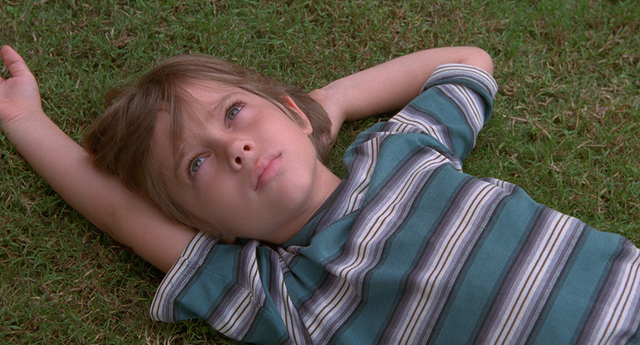
Let’s start with the actors and characters. Ellar Coltrane and Lorelei Linklater (Richard’s daughter) play siblings Mason and Samantha. Mason is first seen as a typical, curious-minded little boy who constantly fights with his sister who is a precocious little brat. We follow these two children over the next decade as they grow and mature as events in their lives slowly shape up their future. We see them do what most young people do as they grow up—discover the opposite sex, experience heartbreak, try some drugs, drink alcohol. By the end of the film, when they’re both in college, Mason is a thoughtful, good-hearted college freshman and Samantha is a self-assured young woman, and they both know the feeling of freedom, having moved out of their mother’s house.

But we’re also treated with professional actors Ethan Hawke and Patricia Arquette who also play characters that grow. Arquette plays Mason and Samantha’s single mother, Olivia, whom they live with. Olivia is struggling to make ends meet and trying to keep a social life intact while also carrying the huge responsibility of motherhood while the kids’ father, Mason Sr. (Hawke), is away in Alaska following some dream. (At least, that’s what Olivia and her mother tell the kids—for all we know, Mason Sr. could be in jail or they just didn’t want him around at this time; it’s like when your parents tell you, when you’re a little kid, how they “sent your dog to live on a farm.”) We get to see Olivia come of age in this film as well—she will marry and divorce a second time, explore new romantic relationships, struggle with finances, go back to school, finally get a job she likes, and ultimately find herself. When you first see her, she is a somewhat bitter young woman who isn’t all that proud to be a parent; that becomes clear when she has to call off a date because of Mason and Samantha at home—she states out loud that she’d like nothing better to do than to go out and have fun. By the end of the film, she tries to stay connected to her children and resents the fact that they’ll both be leaving.

Mason Sr. is in these kids’ lives as well, seeing them on every other weekend and during summers. At first, he’s the typical absentee father with big ambitions that make him sound like he’s just full of it (and he has a kick-ass car which he will have to sell later on, to Mason’s disappointment). He’s in a band and likes to spew some B.S. life lessons (wait ‘til you hear his philosophy when he takes Mason and Samantha bowling), but over the course of the film, he does become a better person and even settles down with a new wife and kid while still staying connected to Mason and Samantha whom he still loves.

Hawke and Arquette each give some of the best performances of their careers (Arquette, in particular, deserves Best-Supporting-Actress consideration come wintertime), but it’s amazing how these two unprofessional child actors, Coltrane and Linklater, were able to remain in character all these years even as they go through their own growing-up in their own real lives.

Things happen in this film that don’t always pay off because that’s the way life is. Sometimes it is random; mostly it is pivotal; other times it’s essential; and so on. And “Boyhood” is very successful at showing these moments in the lives of these people, particularly Mason (hence the title suggesting his coming of age). People come in and out of their lives and we don’t hear back from a few of them; one day they’re interested in one thing but indifferent about it later; etc. I think the only time “Boyhood” comes close to semi-typical melodrama is when Olivia’s second husband, an alcoholic, loses his temper at the dinner table and pushes Mason, Samantha, and his own two kids around when Olivia leaves for a while. (That dinner-table scene is almost laughable, but it’s not very long.) Soon after, he isn’t seen again after Olivia and the kids have left him. Where did he go? What will become of the other kids? Will they be put in a foster home if the alcoholic is reported unfit for parental care? Life just goes on like that.

“Boyhood” is a simple, universal story, told through Mason’s eyes, that is so easy to relate to. I felt like I knew this kid or even was this kid, and I definitely felt like I knew those around him. That’s why it moved me so much. As time goes on, as the film continues in its nearly-three-hour running time, it’s very, very important that the growth and coming-of-age of this kid and his family are shown. Not only did I see them grow; I wanted to know what was going to happen to them for another 12 years. “Boyhood” is an ambitious project that absolutely paid off, and it’s by far one of the best films of 2014.

Muppets Most Wanted (2014)

13 Aug

images

Smith’s Verdict: ***
Reviewed by Tanner Smith

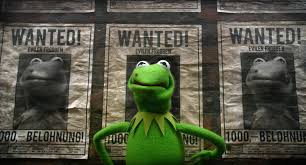
“Muppets Most Wanted” is the latest in the re-invigorated Muppet franchise, following 2011’s “The Muppets” which welcomed Kermit, Miss Piggy, Fonzie, and others back after years in limbo, and I wouldn’t mind getting more of these every few years or so. “Muppets Most Wanted” is more enjoyable than the 2011 film and about as charming as that and the best Muppet movies. It’s cute, funny, and giddily engaging; fun for kids and adults, particularly those who share fond nostalgia for the Muppets.

“Muppets Most Wanted” has what you expect from a Muppet movie—the Muppets, songs, a quick pace, visual gags, suitable humor, and lots of brief cameos. The story is a take on the spy-movie genre and the mistaken-identity concept, as it turns out there’s a criminal on the loose who resembles Kermit the Frog in every way except for a mole on his cheek. This is Constantine, who has escaped from a maximum security Gulag and has a plan in mind. His plan is to kidnap Kermit, sticks a fake mole on his cheek to remove his identity, and replaces him as Kermit is thrown into the Gulag. Constantine, disguised as Kermit, fools the other Muppets (barely) as they embark on their world tour. The world tour is a ruse for Constantine and his sidekick Dominic Badguy (Ricky Gervais), who acts as the Muppets’ manager, to steal as many valuable objects as possible before reaching to carry out a plan to steal England’s Crown Jewels.

Meanwhile, Kermit is locked inside the Gulag with no way of escape, as it is run by a crazed stage-obsessed dominatrix (played by Tina Fey, sporting a Russian accent) who winds up falling in love with Kermit…weird. Somehow he has to either break out of prison or patiently wait for his friends to figure out what’s happened and come and save him.

The story for “Muppets Most Wanted” is the least interesting element, but I guess you don’t see these movies for the stories because they’re equally unexceptional. This one doesn’t even make much sense (for example, why would the bad guy use lots of money to bribe newspaper reporters to write positive reviews for the shows while he’s also stealing lots of money and valuables during the shows?). What makes it fun to watch is the quick humor, which is kid-friendly but adults can laugh at it too. There are funny lines, funny visuals, funny use of cameos (for example, who doesn’t love to watch Danny Trejo, as a rough prisoner, sing a solo in “A Chorus Line?”), and a very funny subplot involving Sam Eagle’s CIA agent teaming up with Ty Burrell’s Pink Panther-like French detective and going through the usual buddy-movie situations. Watching these two together makes me laugh each time they showed up again. I hope they return together again in the next Muppet film.

I know that may be vague in explaining the comedic elements in this review, but one of the downsides to reviewing a comedy is omitting references to what’s funny, so that audiences can see and laugh for themselves. I can’t even go into the musical numbers, except to say that they’re purposefully overdone for us to laugh at.

It’s good to see these familiar faces again, and the Muppet performers do great jobs at supplying voiceover work for them (though I’m still a little thrown off when I hear the new voice given to Miss Piggy). They make these likable, appealing, funny puppets come to life. And speaking of which, it’s about time Kermit stands up to Miss Piggy who is too quick to be in love with him. (You’ll see.)

Ricky Gervais gets the least funny material to work with, despite one funny musical number in which he dances while acknowledging he’s only a sidekick to a frog. Ty Burrell is funny, as I said. Tina Fey, as the crazed Gulag warden, is freaking hilarious! I could listen to her yell with that over-the-top Russian accent for hours.

“Muppets Most Wanted” is as good as the other good Muppet movies. There’s enough to laugh at, even more to smile at, and it makes for an enjoyable, cute comedy to go see.

The Book of Lambs: The 48-Hour Film Project (Short FIlm)

11 Aug

10352323_1535172900035421_9123581861408594316_n

Smith’s Verdict: ***
Reviewed by Tanner Smith

I grew up a member of a Baptist church, and one of the things I and other high-school kids back then were required to do on occasional trips was go door to door in suburban neighborhoods and spread the Word while delivering pamphlets. I remember me and my friends appreciating what we were doing but often worrying that the next house we visited would be “the wrong one.” “The Book of Lambs,” Joshua Harrison’s entry for the 2014 Little Rock 48-Hour Film Project, takes that fear a step further, and I think that’s why it appealed to me right away. Here, we have two Christian boys going about their route to spread the Word…and then suddenly get mixed up in an exorcism! That is a terrific premise brought to life in an inventive seven-minute dark-comedy that was shot and edited for competition in just 48 hours.

Most of the action takes place in a rural home, where our two main characters, young Christian men named Isaiah and Jeremiah (heh), expect to either 1) carry through their mission, or 2) have the door slammed in their faces immediately. But instead, the boys (played by Harrison Tanner Dean and co-writer Matt Maguire) find themselves pulled into a truly bizarre situation they didn’t expect: a group exorcism for a demon-possessed woman in an upstairs bedroom. They’re reluctant but don’t have much choice, as their Christian beliefs can help save the day.

Or, as unorthodox Father Ray (Mark Johnson) puts it, “Let’s go drop a Cosby sweater on the devil!”

There’s a lot thrown into this short film, including a pagan journal, odd characters in masks (to be fair, I don’t think the main characters, including Father Ray, know what they’re doing here either), a laid-back exorcist (played by Bob Boaz) whose payoff is hilarious, and a very funny montage (with opera music playing over it) that involves numerous attempts to defeat the demon (I love the bit where one of the boys takes time for a few “selfies”). It all makes for a funny short that makes me wonder what the writing process for this would have been like for director Harrison and his co-writers, Maguire and John Schol. The night they wrote this script, they must’ve had silly grins on their faces. And the day they filmed it, I’m willing to bet they let the actors improvise, because they seem to enjoy themselves here too. And the night and following day they edited it…I imagine most of them were probably very tired after staying awake for nearly 48 hours. (Hey, that’s how it goes.)

“The Book of Lambs” is an absurd story, yet it’s fun and enjoyable. And I can tell this is a film made by people who must have had fun making it. That makes up for the short’s technical faults. I mean, it’s edited nicely and shot well enough, but the audio recording can be particularly distracting for the most part. But when I’m smiling, I don’t care that much about that.

Oh, and I need to give Harrison’s 48-Hr team, Team Bearshark, props for creativity from the very beginning. For those who aren’t familiar with the 48-Hour Film Project, it begins with a kickoff that has each team draw a random genre to work with (conceive, shoot, and edit) for the following 48 hours. They drew a “wild” card, which for them was “animal film.” What did they do? Where do “animals” fit in? Oh…just watch here: https://www.youtube.com/watch?v=-lUBheBxScs

NOTE: “The Book of Lambs” received two awards at the 48-Hr 2014 Awards Ceremony: Best Directing and Runner-Up for Best Film.

South Park: Bigger, Longer & Uncut (1999)

1 Jul

watching-movie

Smith’s Verdict: ***1/2

Reviewed by Tanner Smith

I guess the best way to start this review is by saying whether or not those who aren’t fans or haven’t seen an episode of the hit animated TV series “South Park” will enjoy this movie version, “Bigger, Longer & Uncut.” Well, a typical “South Park” episode contains a lot of fearless satire (mostly on current issues or trends or sometimes both) with a lot of toilet humor, vulgarities, and usually some mean-spiritedness surrounding it. And if you can get into all that to get to what its creators Tray Parker & Matt Stone address (usually at the end of the episode to make up for everything else) and if you can laugh at it, then you get what you can expect when you see a full-length movie. It’s essentially like watching three or four episodes of “South Park.”

The main difference? It’s a theatrical release, which means the things that Parker & Stone really wanted to include in their material to make the humor full-circle, like heavy amounts of profanity and sexual references, are welcome…to a certain extent, I think. This film isn’t rated NC-17 by the MPAA and instead rated R, I believe, simply because it’s animated. Times have sort of changed since the X-rated “Fritz the Cat.” But there you go—many uses of the F-word every minute in this under-90-minute film.

Aside from that, “Bigger, Longer & Uncut” is essentially like watching a long episode of “South Park,” and if you like “South Park,” you’ll probably like this movie. Simple.

The animation is still bad but consistently so. The humor is still nonsubtle and crude and rude. The targets of such humor are savaged, and there are MANY here (the MPAA’s rating system, Canada, wars, religion, small town America, among others). Stan and Kyle learn an important lesson that they practically address to the audience. And more importantly, Kenny still dies and Cartman is still a pain in the ass. But he’s a hilarious pain in the ass if that makes sense!

What’s the story? Well, it’s quite full. It all begins as our four young heroes, Stan (Parker), Kyle (Stone), Cartman (Parker), and Kenny (Stone), sneak into an R-rated movie in which Canadian stars Terrence & Phillip tell dirty jokes, sing profane songs, and drop the f-bomb left and right. This new vocabulary and behavior fascinates them to no end, as they swear up a storm in front of their friends who then see the movie themselves. Soon, everyone in school has seen the movie and are spewing profanities all around. Kyle’s overbearing mother starts an organization that tries to prohibit profanity and decides to strike against Canada since it was made in their country. They make a citizen’s arrest against Terrence & Phillip themselves. When Canada strikes back by bombing the Baldwin brothers, American goes to war. Their next step: execute Terrence & Phillip at a public gathering. How to attend: join the US Army.

Of course, Kenny dies, as he does in most episodes. (Every occurrence is followed by this—Stan: “Oh my God! They/he/you killed Kenny!” Kyle: “You bastard(s)!”) Here, Kenny imitates a risky action done in the Terrence & Phillip movie and gets killed in the process. Does he go to Heaven? Nope. He’s sent down to Hell where he of course comes across a gigantic Satan. He’s scary at first, until Kenny notices he’s weak when next to Saddam Hussein, who happens to be Satan’s lover in a homosexual relationship. Kenny also finds out that if Terrence & Phillip are killed, Satan and Saddam will rise and rule the world. He makes a ghostly appearance to Cartman to warn him. Can Stan, Kyle, and Cartman stop everything before time runs out?

“South Park: Bigger, Longer & Uncut” is also a musical, much like a Disney animated musical but with swear words. Most of them are catchy and edgy, with hilarious lyrics all around. Where else will you find a musical in which Satan sings about dreaming of a life like everyone else on Earth? There are a lot of songs in this movie, including one that is a follow-up to a popular Cartman song done on the show, but of course with more F-words and an ironic twist.

And speaking of Cartman, he is just hilarious here. Cartman is generally everyone’s favorite character on the show because he’s so loud and obnoxious and despicable…usually, that would make him very unbearable, but somehow (I’m not quite sure how) Cartman has the right amount of cruelty, vulgarity, racism, and loudness to make us laugh at him. And a masterstroke in writing is that midway through the film, after he’s spewed so many profanities, he’s given a chip in his brain that will shock him if he utters another f-bomb or s-word. It drives him crazy when he can’t say what he really wants, and I love how angry he gets about anything, let alone not being allowed to swear.

What’s really funny about the satire is that everything that happens here happened because of profanity in a movie that kids wouldn’t see unless they snuck in to begin with. And it has a point. There’s a line Kyle’s mom says that pretty much sums up what the antagonists are doing—“Remember what the MPAA says: Horrific, deplorable violence is okay, as long as people don’t say any naughty words!” Yeah, really think about that.

That’s one of the joys of “South Park”: that Parker & Stone can look at something and how people react to it and come up with exaggerated versions of it or them. It’s kind of like they’re projecting what these people are acting like to them. And if they imagine them saying something about it, then it’s pretty much what they allow their characters to say.

There isn’t much more I can say about this film’s humor without giving stuff away, and this film practically demands you not to know too much. You may find the movie funnier that way anyway. I guess the best way to recommend “South Park: Bigger, Longer & Uncut” to those who haven’t seen the show is by saying if you’re easily offended, you shouldn’t see this movie. As for me, I laughed out loud quite a lot during this movie and found myself chuckling even more. I found the film to be funny all the way through and I’d watch it about 20 or 30 more times, like my favorite “South Park” episodes.

The Fault in Our Stars (2014)

11 Jun

A Fault In Our Stars

Smith’s Verdict: ***1/2

Reviewed by Tanner Smith

What’s this? A film based on a young-adult novel about a teen romance that doesn’t feature any supernatural elements, a dystopian future, or even a contrived love-triangle? I must say that’s a huge relief, and we can just see these characters grow together through a harsh reality. And what’s the harsh reality? Dealing with cancer…

Yeah, it’s kind of hard to believe, isn’t it? It almost welcomes the inappropriate phrase, “the young-adult cancer romance.” But I did read the book, written by John Green. It is a good read—melancholy but with realistic issues, strong characterization, and good comedic relief thrown in at just the right times.

When I heard that a film adaptation was going to be made, I thought to myself that it could work if the right actors are cast and the writers are smart enough to know what to leave and what to keep. But I was also nervous about certain scenes I knew were meant to be brought to the screen (in that they were inevitable)—I’ll acknowledge there’s a later part in particular that was sort of uncomfortable to read, and so if it was going to be adapted to film, it had to be very moving or even more uncomfortable. Without giving it away, it involves a “pre-funeral” so that one of the doomed characters will be alive to see it. And I was glad to find that it was handled very delicately and with just the right tone to fit. That statement itself could describe the whole movie.

“The Fault in Our Stars,” the film adaptation directed by Josh Boone and written by Scott Neustadter & Michael H. Weber, is an effectively moving film. It’s just as successful as the novel and features good actors that bring strong characters to life.

The main character is Hazel Grace Lancaster (Shailene Woodley), a 16-year-old girl who, because of her cancer, uses a portable oxygen tank to breathe. She attends a cancer patients’ support group (mainly to satisfy her mother, played well by Laura Dern), and finds nothing to raise her spirits until she meets a charming teenage boy named Augustus Waters (Ansel Elgort), who attends the group meetings to support his friend Isaac (Nat Wolff) who is about to be blind due to a tumor in one of his eyes (the other eye has already been extracted). Augustus, a former athlete, had his leg amputated and is now seemingly cancer-free. Hazel and Augustus start to hang out together, and they text and flirt with each other as time goes on. Though, at first, it’s hardly a romance; it’s more of a friendship that grows into a romance in due time. A refreshing thing about this story is how much time goes by in this story before their first kiss.

Hazel forces Augustus (or Gus, as he’s sometimes called) to read her favorite novel which she’s obsessed with, mainly because of its ambiguous ending. Midway through the film, Hazel and Augustus make an excursion to Amsterdam to visit the novel’s reclusive author, Peter Van Houten (Willem Dafoe). It’s here that the story grows more interesting, especially to those who haven’t read the book beforehand, because it’s hard to predict what’s going to happen, what truths are going to be revealed, and where it will go from here. When something upsetting is revealed, it happens naturally and it’s well-handled.

That brings us to the dramatic final half of the film which I’ll admit is manipulative and sometimes overly so; it definitely worked for teenage girls in the large audience I saw it with (they were bawling their eyes out and hardly stopped throughout the film’s last 30 minutes or so), but it was hard for me not to feel emotions because I grew to like Hazel and Augustus and I understood just how doomed their romance really was. And they actually talk about this. They keep most of the dialogue from the original book, and it sounds and acts as real people would talk if they were in this situation. Even with something as heavy as someone saying they will die probably long before the other, it’s handled in a gentle way that works well.

But that’s not to say the film as a whole is a downer because there are some good funny moments and light comedy in the screenplay. The lighthearted conversations between Hazel and Augustus are cute; some of their texting conversations (which are shown to us through animated bubbles) are funny; and Nat Wolff, as Isaac, is very good comic relief and thankfully makes some appearances in the dramatic final half after being away for so long until then. I would have liked to see more of this kid.

I love that the characters of Hazel and Augustus are just as fully realized here as they are in the book. They weren’t lost in translation. You see them as real young people with quirks, problems, their own times to be serious, their own times to have fun, and they’re always believable. Shailene Woodley and Ansel Elgort do terrific jobs at bringing their roles to life, and they exhibit convincing chemistry together.

Now I’ll admit I wasn’t so sure about the film in its first ten minutes. I thought the introduction was a little awkward in explaining Hazel’s illness; I felt the meet-cute between Hazel and Augustus was too awkwardly handled; and there’s a brief backstory shown and told to us about the therapy-group leader, and we never see him again. It’s as if the filmmakers were forced to show diehard fans of the novel that this character was included in the movie. And since we’re talking about problems, I think the editing could used a little more work. I feel a few scenes drag a little longer than they should, and awkwardly at that.

But when I got past all that, I got into “The Fault in Our Stars” and found it to be a well-acted, sweet film with enough humor to keep me entertained and enough melancholy effectiveness to keep me invested. And thankfully, it didn’t need anything else we usually find in young-adult novels to bring more teenagers in.

Blow Out (1981)

4 Jun

primary_EB19810719PEOPLE110329997AR

Smith’s Verdict: ***1/2

Reviewed by Tanner Smith

The premise for the Brian De Palma’s tense thriller “Blow Out” goes like this: A sound man for a b-movie factory goes out one night to capture sounds of nature, only to record a supposed car accident that he believes may not have been an accident the more he listens to his recording. Is there a gunshot before a tire blow-out? Did someone cause the car to lose control and crash? He uses his knowhow to investigate.

That’s a premise Alfred Hitchcock would have loved to try out, so it makes sense that it was given to director Brian De Palma, who has shown with his filmmaking techniques in thrillers like “Sisters” and “Carrie” that he’s kind of like Hitchcock’s protégé. However, I think his filmmaking style is a little over the top, so instead of calling it Hitchcock-like, let’s just call it De Palma-like. Anyway, the point is that De Palma clearly likes to stylize his films, as he obviously loves film and filmmaking. So even if you don’t like some of his films, it’s hard to argue it’s well-made.

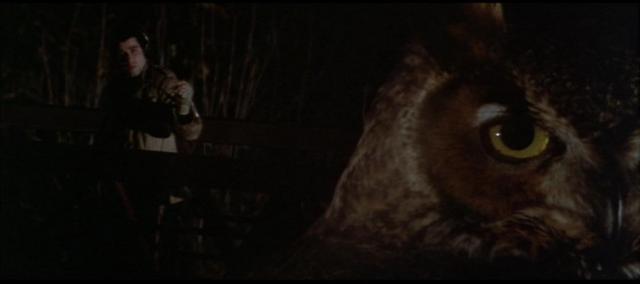
I digress. De Palma’s “Blow Out” is a very well-shot, original thriller that grabs you and doesn’t let go until the end credits roll. It begins with a scene straight out of the sleazy slasher movies in which an unseen stalker lurks about the halls of a college dormitory and follows a young woman to the shower. The twist—the girl’s scream is unconvincing, straight out of a bad horror movie. And…it is a bad horror movie, as our main character, a sound operator named Jack (played by John Travolta), looks over the work-in-progress of the latest product of the b-movie studio he works for. That’s a great opening, and it gives our first glimpse into the fascinating job Jack has. It’s interesting seeing how he works with the equipment in his office, especially for those who enjoy learning about post-production for films.

Anyway, that night, Jack stands on a bridge and records the audio of random sounds of the night. Before long, he becomes witness to an accident that involves a car having a tire blown out and plunging into the river under him. He jumps in to rescue the girl inside the car, named Sandy (Nancy Allen), but is too late to rescue the car’s driver, who turns out to be a potential presidential candidate. He takes her to the hospital and they have a meet-cute that can turn into something semi-romantic for them, but strangely, he is asked by the authorities to forget about what happened. But he can’t, so he tracks Sandy down and sees her every now and then. He also listens to the recording of the accident. He becomes convinced that before the tire blow-out sound is the sound of a gunshot, and that this was no mere accident.

And that’s just the beginning of where this wild ride of conspiracy and secrets takes you, as Jack tries to make it public while he’s being followed and he and Sandy make a run-in with violent characters, including a dirty-tricks specialist (played by John Lithgow) who ties up all loose ends of the ominous plot. There’s also the question of whether or not Sandy can truly be trusted, as it seems she may have something to do with it. Either way, it seems the more they dig deeper into the mystery, the more their lives are in jeopardy.

The plot for “Blow Out” gets more inventive and intense as it connects piece upon piece of this unique, well-crafted puzzle of events. But more importantly, it gives us chances to fully understand what’s going on here and gives us one great sequence after another that shows how these characters work and how they believe that their next move could work. One sequence in particular I’m thinking of is when Jack crafts a movie of the event, using his recording and some photographs.

Of course, being a De Palma film, “Blow Out” is great to look at and gives us unique, striking visual images that are sure to be embedded in the viewer’s head for a long while.

blow-out-john-travolta

blowout

John Travolta is effective as the main character who’s determined but somewhat bitter too. You may notice how downtrodden he is in this performance most of the time; that’s because Travolta went through insomnia at the time of filming. Given the character’s past (his attempt to use his sound & wire skills to assist cops went horribly wrong), I think it works fine. Nancy Allen plays her role of Sandy as a miserable, needy woman who isn’t sure what she wants and will do anything for acceptance, hence her role as an escort. While Allen’s wispy voice takes a little getting used to, she does manage to earn our sympathies by the time it’s clear her life is in jeopardy. John Lithgow is suitably menacing as the sinister figure who pursues everyone involved, and Dennis Franz is good as a private detective who had something if not everything to do with the incident in the first place.

There’s one thing I don’t like about “Blow Out,” and it’s the ending. Without giving anything away, it settles a running joke about dubbing the perfect scream for one of the b-movies. The payoff is so cruel that I wondered if the whole film was supposed to be a joke. But aside from that, this is a solid, gripping thriller with enough to keep us involved and even more to respect our intelligence.

Man Shot Dead (2014)

28 May

1488182_681277818586835_3910100358730003304_n

Smith’s Verdict: ****

Reviewed by Tanner Smith

Filmmaker Taylor Feltner, the oldest of four boys in a big family, left his small Arkansas town of Morrilton at age 17 while everyone else stayed. “So I always felt a bit like an outsider,” he says. “When I come home with a stranger’s curiosity, I look at the family that raised me and I wonder what their lives were like before I came along.”

That’s part of his opening narration in his 74-minute documentary, “Man Shot Dead,” which premiered recently at the Little Rock Film Festival. He states that he will talk to certain members of his family and ask them about a certain incident that resulted in the murder of his grandfather. In some way, it has affected everyone in the family, and he is going to find out how. He comes home to Morrilton, AR, with his documentary crew and equipment, and aspires to gain insight about what happened, why it happened, and what happened after.

The main focus of “Man Shot Dead” is not the subjected incident itself but the reactions to it in present-day, as we learn through the dialogues of Feltner’s grandmother (Bernie), mother (Karen), and aunts (Glenna and Wanda). We’re first introduced to Bernie, who talks about how she first met her husband, Glen Dickson, and what he was like and how they related with each other through marriage. (“We never called each other by our first name,” she says at one point. “It was just ‘Honey.’”) Their daughters, Glenna, Wanda, and Karen, loved him and have fond memories of him.

It’s after that nostalgic opening that the documentary steadily decides to talk about the incident that cost Glen’s life on the night of July 25, 1966. Feltner and his brother, Grant (who we see often in the film), haven’t been told much about it; Grant has only heard little things about it. Feltner wants to know the full story, but because there are no reliable witnesses available and an inconsistent police report, he asks Karen, Bernie, Glenna, and Wanda to tell what they know about it. The only things that are most absolutely certain are that he was on another person’s property and he was shot with a rifle. It was ruled as justifiable homicide.

Why Glen was there to begin with is anyone’s guess. No one knows for sure, save for the only living witness, whose father was the one that shot him. Unfortunately, it seems she is unreliable. Later on, we see Feltner send her a handwritten letter, only to receive a response from presumably her lawyer. He sends another; no response. There are no clear answers to the reasoning behind Glen Dickson’s death, and to Karen, Bernie, Glenna, and Wanda, it seems that while there’s hardly a way to forget about it, it doesn’t hurt to at least try and let it be after all this time.

The main story being told in “Man Shot Dead” is how this family, the surviving mother and three daughters, continued on with their lives after Glen, the sole provider for the family, was killed. Understandably, they were all devastated at first (though Karen was probably better at hiding it, since according to Glenna, she didn’t cry the night they all heard the news). They stayed at a relative’s house for a while in Morrilton before Bernie knew they had to have a home of their own and bought a house. Bernie admits that raising and providing for three kids was rough at first, but through time they all managed to get by. They’ve grown very close together, always taking care of each other.

stills_ManShotDead

Now, some things may be kept inside that neither person wants to talk about, and they even joke about counseling and how they all might need it, particularly Karen who says she has more to say about herself that she won’t on film. Midway through, she sums up her life, and her family’s life: “Whether it just be that one night or things that happened before that, it set the stage for our lives. Our life has been great. We have a wonderful mother that took care of us. But it also robbed us of the things that we’ll never know about.” All the more heartbreaking is that she hardly had a chance to know her father, as she was only eight years old when he died. In probably the most poignant moment of the film, she states while holding back a tear, “I think every girl needs her daddy.”

The film is also a story of a man really getting to know his family in ways he hadn’t before. With his family’s history and the important event that changed their lives suddenly revealed to him, through this documentary project, Feltner can see these people not just as his mother, his grandmother, and his aunts; he understands what they’ve been through, knows what kind of people they were and how they became who they are now, and now sees them, particularly his mother, as stronger than he may have originally conceived.

And we do too, as a result of the finished product. I felt like I knew these people while I was watching this documentary and listening to them talk about what they knew, what they discover, how things were then, how they are now, and how they’ll go on living. And I understood them and was interested in everything they had to say. Karen Feltner, in particular, is one of the most fascinating people I’ve come across in a documentary—you don’t see characters in narrative fiction as compeling as this woman.

I should also praise “Man Shot Dead” on a technical level as well. Using old photographs, written documents, home-video footage, and even sound effects in the chilling sequence in which we’re told, according to the police report, what happened that fateful night, the film’s editing, by Jessica Schilling, is top-notch and makes the film even more captivating. It’s also shot gorgeously, by Feltner, Jennifer Braddock, Gabe Mayhan, and Andy Featherston—the sequence I think of in particular is where we see the brother, Grant, walking through a rural countryside and fishing in a nearby river.

“Man Shot Dead” is one of the very best films I’ve seen so far this year. I hope that after its world premiere at the Little Rock festival, it receives more audiences and recognition any way it can. It’s worth seeing to meet this family.

Manny (2014)

28 May

manny-1024x576

Smith’s Verdict: ***1/2

Reviewed by Tanner Smith

I must confess that I didn’t even know the name Manny Pacquiao before I watched this documentary about him, “Manny.” I knew nothing about him—that he was a boxer, that he was also involved in politics, where he came from, or even that he liked to sing and has even performed a duet with Will Ferrell on “Jimmy Kimmel” once. But after seeing this film, I doubt I’ll forget him.

Co-directed by Leon Gast (who also directed Oscar-winning “When We Were Kings”) and Ryan Moore (a first-time director who first imagined the project), and narrated by Liam Neeson, “Manny” delivers a clear portrait of the Filipino professional boxer who also had other ambitions in mind that he managed to succeed. His story is a familiar one (the rags-to-riches tale) but it’s still inspiring to see how Pacquiao has risen from a time of poverty in an obscure Philippine village to international stardom. We’re told interesting tales, from Pacquiao and other interviewees, about his early life in the Philippines, including how Pacquiao credits his physical strength to working with fisherman as a boy.

Most of the documentary tells about his boxing career. We meet the people who helped train him and supported him, including his uncle Sardo Mejia, his friend Buboy Fernandez, managers, promoters, boxer Freddie Roach, and others, as well as celebrities such as Mark Wahlberg. Arguably most importantly, we also get highlights from his most memorable fights, each of which represent how much his fame heightens through time, from the mid-90s to 2013 at least (as far as I know, he’s still fighting). Now it seems as if everyone who follows boxing knows who Manny Pacquiao is. In this documentary, he’s even mentioned along with Muhammad Ali at one point.

We also get into Manny’s other ambitions, as we see how he gets into entertainment. He acts in cheesy movies with titles such as “Wapak-Man” and “Anak ng Kumander,” plugs products in TV commercials, and, yes, even has a brief singing career, which includes a duet of the song “Imagine” with Will Ferrell on “Jimmy Kimmel Live” and a session recording “Sometimes When We Touch” while being coached by Dan Hill at Capitol Records. That’s the funniest sequence in the film, as Hill tries to give Manny voice lessons while treading lightly in possible fear that he will get brutally punched.

Manny is also involved in politics, as he becomes a congressman in the Filipino House of Representatives. But something that is considered later in the film, and it’s something I was waiting to be addressed, is the question of how Manny’s other activities affect his boxing career. Does he truly have his priorities in check? Does he need to quit one thing or another?

This documentary is gorgeously shot and very well-edited. The best sequences are the latest fighting sequences; it was like I could feel the knockouts being given from Pacquiao to Miguel Cotto, Pacquiao to Ricky Hatton, and Juan Manuel Marquez to Pacquiao (in one of only very few losses for him). These punches are very brutal, and the way they’re shot and edited make it seem almost as if we’re there at these boxing matches (that’s how I felt when I saw this film on the big screen at the Little Rock Film Festival).

I have a few complaints about this film, however. One is that the final 15-20 minutes seemed to me like one too many false endings. Another is kind of a personal preference, but I would have liked to see more of Manny’s mother Dionisia, who is only seen briefly as she talks about raising Manny and what he was like as a child. And I wouldn’t have minded an interview with Manny’s kids either (how is he as a father? Would he like them to fight as well? Etc.), though we have some input from Manny’s wife, Jinkee. To be fair, I think it was hard enough to edit this film with all the interview footage, documenting footage, and media coverage; what they have is good enough, I’d say.

“Manny” is a good documentary, showing that arguably the best, most interesting documentaries are the ones that serve as character-studies. It tells the story of Manny Pacquiao effectively and gives us an appealing, fascinating guy that I’m glad I could be introduced to this way. And I’ll just say I’ll never listen to “Sometimes When We Touch” the same way again.

Little Accidents (2014)

23 May

14063-4

Smith’s Verdict: **1/2

Reviewed by Tanner Smith

Sara Corlangelo’s “Little Accidents” is an ensemble drama that tries to intersect many character stories around not just one tragedy but two at least. As the title suggests, these tragic events are caused by little accidents. While some individual traits work well on their own, and it’s well-acted and suitably atmospheric, the film as a whole lacks focus. There are three particular characters that are given the most attention, but there are also side characters that apparently have much more purpose than is being shown so that when something important is said to them or when something tragic happens to one of them, it’s hard to feel for or even understand them when you hardly got a chance to know them. This is a problem I notice in most ensemble films that try to connect a few character stories into one film: it leaves little room for development on certain aspects.

One of the central tragedies in the film is a fatal mining accident in the small coal town of Beckley, West Virginia. Possibly due to managerial negligence, 10 miners lost their lives, and a lot of Beckley locals are wondering who’s to blame for it. Reserved, quiet Amos Jenkins (Boyd Holbrook) is the lone survivor, which means he’s the perfect subject for interrogation in the investigation. And he also gets unwanted attention from everyone in town, not just because he’s the lone survivor of this incident but also because half of them are afraid he’ll say something against the mine which will cause it to shut down. What he knows could ruin the livelihoods of everyone who works there.

Meanwhile, another tragedy occurs as teenage Owen (Jacob Lofland), whose father died in the mine accident, in involved in the accidental death of one of his schoolmates, J.T. (Travis Tope). Feeling responsible, he hides the body and doesn’t tell anyone about what happened. The only witness was his Down-syndrome-afflicted little brother (Beau Wright), whom he makes promise not to tell anyone, even their mother (Chloe Sevigny).

J.T.’s father, Bill Doyle (Josh Lucas), is one of the corporate executives for the mine and is also under investigation for the mine accident. When J.T. disappears, he and his wife, Diana (Elizabeth Banks), start a public search for him. As time goes on, they come to expect the worst, as they grieve their son’s loss. At the same time, Owen tries to carry on with his life with his silent guilt. Feeling sorry, he gets himself a job doing yard work for Diana and Bill. But when they befriend each other, Owen is even more unsure about whether or not he should tell them what happened to J.T.

Somewhere in all this, Amos gets back into the picture, as Diana, who isn’t very close with Bill anymore and seeks comfort elsewhere, meets Amos at a Bible study and begins an affair with him. But something I have to wonder is what was the clear motivation for Diana in this affair. I mean, I know she’s grief-stricken over the loss of her son and needs someone to be with when Bill isn’t always there for her when he has the investigation to deal with; but is it possible that she’s just cozying up to Amos to keep him from testifying against the mine and its executives, including Bill? I recently asked a friend who saw this with me what he made of this relationship; a possible conclusion is that maybe she started out genuinely liking him and feeling comfortable around him in this distressing situation but then she realized that she does indeed care for her husband when it’s possible that Amos may actually testify against him. Either way you look at it, it still gets Amos to realize what he has to do.

Not that it’s at all implausible, but it’s always interesting in films such as this how people from different classes in a small town are brought together and able to talk to each other like this. I think the most touching friendship is the one that develops between Owen and Diana; the best scene in the film is one in which Diana helps Owen with yard work and they talk about J.T., and Owen tells her what J.T. was like the last time he saw him (because she knows he was there around the time he disappeared). The dialogue and acting in this scene is just perfect and captures the pain and guilt that both of them are going through with one not realizing the full truth about the other.

The film contains a lot of atmosphere as it presents this town and picks just the right locations to show us. The film’s director of photography, Rachel Morrison, captures the setting really well with the aid of natural-light 35mm photography. The actors are solid too—this is some of Elizabeth Banks’ best work as a distraught woman dealing with loss and also feeling guilty about benefit; Boyd Holbrook is suitably subdued as soft-spoken Amos who eventually must face corruption; and Jacob Lofland (in his first film since “Mud”), as a guilt-ridden kid who tries to consider the penalties of his actions, is emerging as a most promising young actor with great range.

But unfortunately, other good actors are left with unwritten, underdeveloped roles that they try to pull off. I guess Josh Lucas gets a fair amount of screen time, but Chloe Sevigny is wasted as Owen’s mother; we know nothing about her except she lost her husband in the accident and she’s able to buy her sons the latest technologies with settlement cash. That’s about it—there’s no character here. I can say the same about Amos’ father whom Amos lives with after recovery. They get only two brief scenes together before something inevitable (at least, if you’ve seen enough movies) happens, and by that time, when you should feel bad for him and for Amos, I feel like I didn’t know a damn thing about him.

By the main aspects of “Little Accidents,” I should like this film. And I do, at least a little. At the end of the film, when characters must reveal their hidden truths, it does have a certain emotional power to it. I think what bothers me about it is that while it spends time with emotional connections with these characters from different classes, there are hardly any room for connections in their own. Because of that, in my opinion, it doesn’t make the new relationships seem entirely special or noteworthy.

Maybe I’m focusing too much on the little things in this film and a second viewing might change that. As I’m writing this review, I come to think that maybe I should give “Little Accidents” a pass, since I think its main intention was to show how people are brought together during tragedy. In that respect, it does work well. I don’t know; if I see the film again and it changes the way I look at it, I’ll revise the review. For now, I give it a mixed review.