Paradigm (Short FIlm)

7 Nov

1000507_10100848049489027_911278862_n

Smith’s Verdict: ***

Reviewed by Tanner Smith

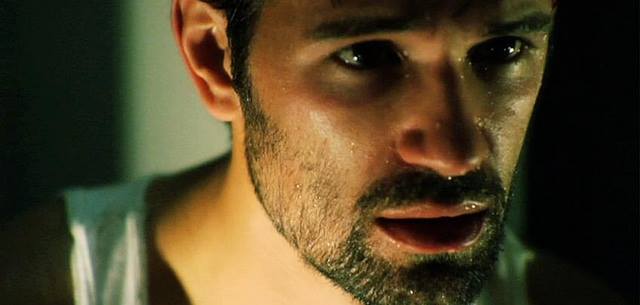
There are two expressions often carried around when someone compared to his/her parent(s), and each has an opposite meaning—“You are not your parents” and “You’ve become like your parents.” When parents make mistakes, kids tend to make an inner sacred pact that they won’t make similar mistakes. Some make it through, following that pact while escaping childhood trauma. Others aren’t so lucky, even as they try; haunting ghosts from the past tend to get in the way of rational thought, and they find themselves doing almost exactly what they swore they wouldn’t do. Writer-director Jess Carson’s 26-minute short film “Paradigm” shows an example of the latter possibility. It begins with happy newlyweds and ends with their marriage fallen apart, as they make unforgivable choices that can be traced back to hurtful events from one’s childhood. The husband, Derrick (Kyle Wigginton), came from a home of abuse, due to his alcoholic father, Maverick (Scott McEntire) who would abuse him and his mother, Anna (Casondra Witham). By the end of the film, Derrick will have inherited similar traits and behaviors, and his wife, Jocelyn (Mindy Van Kuren), will take it no more.

The film begins with a tender moment in which Derrick and Jocelyn refer to each other playfully as Mr. and Mrs. Peters before Derrick reveals his fear of becoming like his cruel father and hurting her. She assures him that it won’t happen, but as time goes on, the Honeymoon stage ends and things start to get worse when they find they can’t have children. This puts Derrick in a bitter mood. Five months pass, and we see them barely relating to each other, as Derrick starts a bad habit of drinking and they start having arguments. During one such argument, Derrick hits her…

The short mostly takes place inside Derrick and Jocelyn’s house, showing us how their marriage transitions into a disaster. And the film doesn’t shy away from some pretty tough material. By the end of the film, I was actually kind of depressed (and the Sheldon Kopp quote shown before the credits didn’t help much either).

Flashbacks that show Derrick’s father’s behavior are effectively handled, as they intersect with situations in the present that mirror the present. There are times when Derrick practically repeats his father’s harsh words word for word to Jocelyn. It’s a clever move.

“Paradigm” is more of an actor’s film, so a lot rides on the performances. Mindy Van Kuren does a great job playing a suffering woman who wonders when the line will be drawn in her relationship. Scott McEntire, who has acted in other shorts I’ve reviewed (such as “Stuck” and “A Matter of Honor”), turns in some of his best work as the father. But I am of two minds about Kyle Wigginton’s performance as Derrick. On the one hand, I see it as a poor acting job. His shouting moments seem a little off to me; he sounds like he’s forcing the anger. But on the other hand, Derrick is supposed to come across as pathetic, so maybe it was Wigginton’s choice to play it like this. I’ve seen him do well in other shorts, like “Blood Brothers,” so I wouldn’t doubt it.

I like “Paradigm,” but I think it could’ve been better with tighter editing. Some scenes seem a little long and even make the film somewhat repetitive. But I guess that was the point—to show the slow proceedings of this relationship in a way that we can get why/how it came to this, and to also show as it gets worse. In that respect, I shouldn’t complain too much about it. “Paradigm” is an effective short that worked for me.

NOTE: The film can be seen here: http://jessvcarson.wix.com/10th-dimension-pro#!paradigm/c20as

The Purge (2013)

27 Oct

the-purge-masks

Smith’s Verdict: *

Reviewed by Tanner Smith

You can spew as much B.S. about it as you want (because that’s all I’m going to think of it as: B.S.), but there is no way I’m going to believe that The Purge should, could, or would be a real law, let alone “work.” That is the main problem with the film, “The Purge.” It’s a really dumb idea to begin with. It goes like this—in order to keep America in great shape and the crime rate at an all-time low, the “New Founding Fathers” (uh-huh) bring forth a social policy that every March 22 for 12 hours, criminal law is put on hold. This is known as The Purge. People can do whatever they want (or as they put it, “release the inner beast”), even murder, without fear of legal consequences. Some go out and let out pent-up anger they’ve held inside for a whole year, while others can hole up safely inside their homes.

Apparently, this law was created so people could let out all their inner anger for one night if they go by the honors system not to commit any crimes the rest of the year, thus bringing crime down and making America a more peaceful place. Do I even have to point out how ridiculous this sounds? It shouldn’t be much to complain about, since it’s only the setup for a laughable home-invasion thriller; but the characters keep repeating over and over why The Purge exists and why “it works” (and not once are mental scarring brought up in the slightest), and it’s very poorly handled. Even the social commentary (in that the rich attempts to cleanse the world of the poor) is weak. This results in “The Purge” turning out to be a pretentious, deplorable thriller that takes itself way too seriously.

The film takes place on March 22, 2022, and right there, you can tell how hard writer/director James DeMonaco is trying to warn his audience that The Purge could exist and it’s the direction America is going. Anyway, we get a couple introductory captions that explain that unemployment is down 1% and crime is abolished, thanks to The Purge. Our main characters are James and Mary Sandin (played by Ethan Hawke and Lena Headey), suburbanites who have made a living thanks to James’ successful security company, which has helped turn all neighborhood homes in fortresses to protect neighbors during The Purge (and the passive-aggressive neighbors resent them for this…for some reason never really explained). Of course, their house has a security system as well, and so they prepare to wait calmly during The Purge with their teenage kids, Charlie (Max Burkholder) and Zoey (Adelaide Kane). But when Charlie notices a homeless man (Edwin Hodge) desperately roaming the neighborhood and screaming for help, he decides to let him in for shelter. (Why did James tell his son the code to disarm the barricades?) James doesn’t trust the stranger, but it turns out the whole family has something more to fear. A group of teenagers wearing masks have been chasing the man down and the creepy Polite Leader (Rhys Wakefield) asks that the family release him or else they’ll break through the barricade and kill them.

From what I can gather, these kids are rich and delight in killing poor people during The Purge. And apparently, they want this particular poor person because he got away just as they were about to lynch him. Why they don’t just let him go and look for someone else to kill is anyone’s guess, since they don’t think to take advantage of The Purge, so it’s just a weak excuse to make “The Purge” into a home-invasion flick, which itself isn’t very successful. The homeless man doesn’t have enough moments to be declared a character, but more of a tool to allow James to question morals and ethics. So therefore, it’s hard to be scared by him when he doesn’t pose a threat, and it’s hard to care because James’ morals and ethics are hardly developed anyway. There’s too much behavior and not much rationality so that we’re questioning what’s really at stake while at the same time, we’re being asked to celebrate the deaths of the home invaders as they ultimately force their way in and delight in torturing their would-be victims just so there can be enough time for someone to come in and save them. But then, in the final few minutes, we’re led to believe that the best way to end the mayhem is peacefully. A worthy compromise, but it’s a bit hypocritical.

Ethan Hawke at least looks dedicated in his role, playing a man who’s being pushed over the edge (at least, I think that’s what’s happening). Lena Headey, on the other hand, looks like she’d rather be somewhere else, as she doesn’t seem invested in her character. The young actors, Max Burkholder and Adelaide Kane, are fine. Meanwhile, there’s the performance of Rhys Wakefield as the creepy leader of the invaders. I don’t know if he knew what he was acting in was laughably bad, but he can hardly keep a straight face while delivering hammy, supposedly-foreboding speeches. He is the most enjoyable part of the film.

What we’re supposed to learn from “The Purge” is that The Purge doesn’t work after all. Since it’s so obvious that The Purge could never happen (seriously, I would believe the futuristic society’s rules in “Divergent” before I believe this logic), there’s nothing to be afraid of or think about after the film is over. So just looking at it as a horror film, it still doesn’t succeed. It’s just a collection of horror-movie clichés within a half-assed political message. But apparently, it was so successful at the box-office that it warranted a sequel. Hopefully, writer/director James DeMonaco decides to do something more with an already-flawed premise and has learned something from making this film. Has he? Well, I’ll get to that later…

The Man in the Trunk

24 Oct

10169225_293732480783733_4538097213807335757_n

Smith’s Verdict: ***1/2
Reviewed by Tanner Smith

“The Man in the Trunk” premiered at the Offshoot Film Festival in Fayetteville, Arkansas this past weekend. This is an early review.

This is the third time this year that I’m doing this in a review. After reviewing Ti West’s “The Sacrament” and Alex Johnson’s “Two Step,” two unpredictable thrillers I couldn’t say much about (lest I give away surprises, taking away the suspense they had to offer), from earlier this year, here comes Marc Hampson’s “The Man in the Trunk,” another terrific thriller of which I can only talk about the setup and not much else. I hate to do this again, but you’ll probably thank me later.

The film, directed by Hampson and co-written by Aaron Fairley, reminded me of a more modern Hitchcockian way of storytelling, as it gives a setup, raises tension from there, and then delivers a plot-twist midway through, creating even more tension as the film continues. The setup goes like this: it’s Christmastime, and Andrew Tucker (Ace Marrero) is looking forward to a romantic night with his wife. But their foreplay is interrupted by an old friend, Steven Winter (very well-played by Erik Bogh), whom Andrew hasn’t seen in years. They catch up and have a couple smiles and laughs before Steven reveals he came to ask Andrew for help. Steven is a nervous, awkward type, so Andrew finds it difficult to say no to a cry for help, even though Steven won’t say right away what the situation is.

Going by the title, you can probably get some idea of Steven’s situation. I won’t give it away here, though that’s not the film’s biggest reveal. Midway through the film, something unexpected happens in the story, and from there, the film turns into a forceful thriller. It does so in such an effective way, by giving us a nice, long, quiet moment (done in one great continuous shot) before something horrific happens. Normally in thrillers and horror films, that’s a cliché, but it’s a cliché that worked so well in “The Man in the Trunk” because at that point (which is about 30 minutes in), I couldn’t begin to predict how the rest of the film would play out; thus I didn’t predict that shocking story turn and it took me by surprise. And from that point on (again, without revealing anything), all hell breaks loose, lives are at stake, and it’s a race to safety. It’s complicated, but that’s one of the reasons why “The Man in the Trunk” works. It’s a scary, unpredictable, suspenseful film that kept me guessing as well as unnerved. Other things that work for the film are the cinematography and the acting, which give the film a more realistic feel, making its settings and problems even more unsettling.

Something I probably could’ve done without is the epilogue. Without giving it away, it provides answers (albeit vague ones) to certain questions that may have been best left to the imagination. While I give Hampson and Fairley credit for not having everything spelled out for the audience by providing a detailed back-story (such as the therapist’s reasoning in “Psycho”), it was a little disappointing for a film that avoided taking the easy way out (again, without giving it away). However, I will let it slide because the film still kept its tone with this resolution.

Even so, “The Man in the Trunk” is a tense, effective independent thriller that I hope gets enough attention in its festival run for distribution, because I really think it’s that good. I’m sorry I couldn’t say much about it, but as I said before, you’ll probably thank me later. And I must admit: the night I saw this film at the Offshoot Film Festival, as I was about to leave for home, I checked the backseat to make sure no one was waiting to stab me when I got in my car. That’s how much the film worked for me.

The Guard Responds (Short Film)

16 Oct

1000w_q75

Smith’s Verdict: ****
Reviewed by Tanner Smith

In late April 2014 came a major tornado outbreak in the central and southern United States. Seven of the outbreak’s tornadoes were deadly, causing 35 fatalities. One such tornado cut an 80-mile path of destruction in Arkansas, hitting the towns of Vilonia and Mayflower the hardest, causing extreme damage. Many people lost everything. Many homes were flattened. And about 16 people were confirmed dead. More than five months have passed and there are people who were affected deeply by the storm, still trying to move on.

The six-minute documentary “The Guard Responds” tells about how the Arkansas National Guard was called on to assist local authorities with traffic safety, search-and-rescue, and medical evacuation in those areas hit by the tornado. But some members of the Guard were also affected by the storm. Some lost their businesses and homes, and one (airman Daniel Wassom) lost his life.

The film is a blend of older news footage (chronicling the event and the aftermath), new wreckage footage, voiceover narration by LTC Matt Snead (who also produced the film), and interviews from Guard members and civilians. Among the interviewees is former Faulkner County judge Preston Scroggin, who recalls what it like seeing the tornado while driving home. Also among the interviewees is Wassom’s father, Daniel Wassom Sr., who remembers his son as a hero in his eyes—Wassom Jr. died to protect his family while their whole house was destroyed.

“The Guard Responds” is about the aftermath of disaster, but it doesn’t just state the facts so that it becomes more of a reporting-news story than a short documentary—it uses footage, testimony, and masterful editing to tell a story about those who will take time of their lives to help. CSM Steven Veazey, one of the interviewees, puts it best in a truly moving final speech—“They put their lives on hold to help these other lives.” Even if “The Guard Responds” were a TV commercial for the Arkansas National Guard, I would still highly recommend it.

NOTE: “The Guard Responds” was directed and co-written (with Lt. Col. Keith Moore) by no stranger to my Shorts reviews, Sarah Jones. I realize I don’t give her enough credit for editing; she edited her own previous films (“John Wayne’s Bed,” “Turn Right on Madness,” and “An Ode to Angeline”) and also edited other Arkansas-made short films (including previously-reviewed “La Grande Fete”). She edited “The Guard Responds” as well; it’s definitely among her best editing work.

La Grande Fete: The 48-Hour Film Project

12 Oct

1170851_1379612195600575_2145006655_n

Smith’s Verdict: ****
Reviewed by Tanner Smith

“La Grande Fete” is a seven-minute short made by the team Flokati Films for the 2013 Little Rock 48-Hr. Film Project. For those who don’t know how it works, it’s a competition in which filmmaking teams craft a short film in just two days. It begins when each team draws a genre. For Flokati Films, it was “Operetta.” So, they had to write, shoot, edit and compose a short film in only 48 hours!

If I thought I was impressed with the 2012 48-Hr. film “La Petite Mort,” I hadn’t seen anything yet.

Directed by Johnnie Brannon and written by three members of Little Rock’s Red Octopus Theater comedy troupe (Jason Willey, Luke Rowlan, and Sandy Baskin), “La Grande Fete” is a remarkable achievement in what dedicated filmmakers can do in just one weekend.

The story: Debi (Karen Q. Clark) brings her new beau, a shy plumber named Andy (Jay Clark), to meet her friends. Things seem fine until Debi’s charming ex, Blade Diamond (Sam Clark), arrives and convinces her to take him back. Can Andy gain enough confidence to fight for Debi’s love. Will Debi make the right choice in the end? The story itself is as simple and old-fashioned as a typical romantic comedy, but “La Grande Fete” isn’t about story. It’s about one important thing: making people laugh. I’ve seen this short with four different audiences at four different film festivals, and each screening I attended had an uproar of laughter all throughout, from beginning to end. And I was among them. I think “La Grande Fete” is freaking hilarious! Willey, Rowlan, and Baskin create a funny script out of familiar material with funny characters and clever lines of dialogue…or should they be described as “lyrics?” Being an operetta, nothing by the characters is said generally, but musically. Everything these people say is sung loudly. This is where a lot of the comedy comes from, and it really works. Another clever “operetta” move—all of the action takes place inside one location (a house), much like a play or (pfft!) an opera.

“La Grande Fete” is a treasure of a short that made me laugh and smile all throughout, but it’s also skillfully crafted. Director-of-photography Will Scott gives the film a sort-of “you-are-there” quality, making the (intentionally-) awkward moments even more awkward and funny, the editing by Sarah Jones is quick and well-timed (important for a comedy), and I also compliment Sam Clark for not only acting as Blade Diamond (isn’t that a great name?) but also creating the score that accompanies the singing. I can’t forget to compliment the game comic actors giving funny performances; everyone in this short is so funny. Jay Clark, who I loved in John Hockaday’s “Stuck,” is effectively low-key (or as “low-key” as you can be in an operetta) while playing a shy, awkward man looking to earn love and self-respect. Sam Clark is funny in his attempt to be smooth, and the supporting cast members (Jason Willey, Moriah Patterson, Michael Goodbar, Alli Clark, Drew Ellis, and Patti Airoldi) deliver amusing lines (er, verses). But the biggest standout is Karen Q. Clark as Debi. I can’t even begin to describe how humorous, luminous, expressive, and appealing her performance is in this short; it has to be seen to be believed. She’s wonderful here.

Oh, I should also mention Brian Chambers as well, since he has some of the biggest laughs as a one-man running gag, but… You know what? I’m sorry, but a review for “La Grande Fete” simply won’t do. You have background information, you have a Smith’s Verdict rating (the highest one, I might add), and now…

NOTE: You have the film. (Vimeo link: https://vimeo.com/101564615)

2ND NOTE: While watching this, be on the lookout for three important things: a plumber character named Andy Benoit, a horn for a prop, and the line of dialogue, “Tell me the truth!” Those were the three requirements for all 2013 48-Hour films. I won’t dare give away how they work in a horn in this film.

3RD NOTE: “La Grande Fete” received three awards at the 48-Hr 2013 Awards Ceremony: Best Music, Best Actress, and Best Film.

The Sowers (Short Film)

10 Oct

240646_521718641175031_1421531275_o

Smith’s Verdict: ***1/2
Reviewed by Tanner Smith

“The Sowers” is a short film that…frankly, I started out hating, but later found myself loving. I saw it twice. The first time, I disliked a good portion of the characters within the first 5 out of the film’s running time of 15 minutes. While I was admiring the film’s look and artistry for the rest of the running time, it wasn’t until the ending that I realized I was supposed to dislike said-characters. When the film was over, I was thinking more about what I just saw and what it all meant. Then I watched the film a second time and found myself looking at it another way (most likely the way it was originally intended to be).

Filmed in Mulberry, Arkansas, the film opens disturbingly with an image of an elderly man lying on the ground in pain, with a bloody, mangled hand. We’re then taken back to what led to this horrific accident as we meet the man, simply known as Papaw (Arnold D. Feller). His stubborn, bitter daughter, Sissy (Kathy Forbes), sometimes cares for him and can hardly tolerate him anymore. It’s clear that he’s not entirely senile as everyone else in his family thinks—he’s just stubborn as well and has his own way of doing things, even if it’s enough to make Sissy angry (even to the point of bringing up a tragedy to his face—“You killed Mama and you’re gonna kill me too!” she snaps at one point). He also has two grandsons (Warren Bryce and Jason Thompson); one is conceited, the other just lazy, and both just want some of Papaw’s fortune he’s been saving that he has stashed in jars hidden in a drawer.

It’s clear to us that neither Sissy nor the grandsons care for Papaw much and are most likely waiting for him to die so they can take his money. But midway through the short, it’s also clear to us that Papaw doesn’t see these people as “family” in one brief but brilliant cut that shows us exactly what they look like to him. The only ones who seem as close to being family as he’d like are a friendly stranger (well-played by Kenn Woodard) and his young son. The stranger helps him to mow the lawn.

While you don’t see enough of the family to know what they’re like outside of being greedy and selfish, the ways that these people behave and act are at least realistic. What makes this certain aspect of a dysfunctional family most remarkable is that it isn’t leading up to a rekindling. Far from it. The film ends with a payoff that is pretty much an “up-yours,” if you’ll excuse me, to Sissy and those damned grandsons. Without giving it away, it’s just what I think “The Sowers” needed and I don’t think any other ending would’ve saved the film like this one did.

“The Sowers” was directed by Juli Jackson, who also helmed the Arkansas-made festival-favorite feature “45 RPM,” and I’m convinced she’s one of the best directors based in Arkansas. She gets natural performances out of her actors, knows how to balance comedy and drama effectively, and gives her films a look & feel all her own. Credit must also go to Amber Lindley, who wrote the script; Bryan Stafford, who shot the film (he also shot “45 RPM” as well); Russ & Les Galusha, who edited the film and also provided makeup for certain pivotal shots; Amos Cochran, who composed a haunting score; and Mike Poe, who did art direction. They have crafted a film that made me cynical at the beginning, pleasantly surprised at the end, and, after another viewing, made me appreciate it as a whole.

NOTE: The film can be seen here: https://vimeo.com/63156927

Jack (revised review)

28 Sep

427

Smith’s Verdict: ***
Reviewed by Tanner Smith

This is a first for “Smith’s Verdict.” I’ve changed my mind about certain movies over time, but this is the first time I’ve had to revise a negative review and make it a positive one. And it’s not a movie I expected to change my mind about either—Francis Ford Coppola’s “Jack.” But recently, I was able to rent the DVD for free at a local library in Conway, Arkansas, and I watched it for the parts I liked (I did acknowledge, in the original review, parts I liked about it), and then something strange happened: I found myself watching the whole thing, from beginning to end…then I watched it again…and then a third time all the way through. And that’s when I realized—there was more for me to like about it than I thought, enough for me to write this now-positive review of a movie that I know a lot of people hate and that even I took some shots at in the other review.

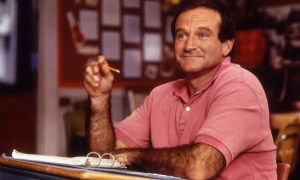
“Jack” is about a 10-year-old kid whose growth disorder causes him to appear four times his actual age, causing him to look about 40. Played by Robin Williams, Jack Powell has led a very sheltered life by his loving parents, especially his mother (played very well by Diane Lane), kept mostly out of society and out of public school. But his private tutor, Mr. Woodruff (Bill Cosby in a nice small role), suggests that maybe he’s ready to join the 5th grade and be with other kids his age. Reluctantly, the parents agree, and so Jack begins school, where of course he is seen as a freak because of his adult appearance who towers over all the other kids, is hairier than most of the kids’ fathers, and breaks his desk on his first day in class. But some cool 10-year-olds realize they can use Jack to their advantage in a schoolyard game of basketball, and they also discover they can use him to fool parents into thinking he’s the school principal. And soon enough, he’s invited to join their treehouse club because he looks old enough to buy them Penthouse magazine.

Yes, “Jack” was directed by Francis Ford Coppola, and maybe that’s what caused people to be distracted while watching this movie, because they expected something more than this. It’s like Roger Ebert said in his review of Martin Scorsese’s “The Color of Money”—“If this movie had been directed by someone else, I might have thought differently about it because I might not have expected so much.” It’s like comparing it to directors’ previous work instead of seeing it as a movie even of itself. I think Coppola just liked making any kind of movie—it’s not like he wasn’t allowed to make a comedy-drama for Disney, starring Robin Williams. “Jack” is well-directed, and Coppola keeps his actors in check (good for comedic actors such as Williams, Cosby, and Fran Drescher), and the film is well-shot with a few Coppola trademarks (fast-moving clouds, POV shots, and a couple others I may have missed). It just happens to be in a sentimental comedy-drama, but I think it’s a good one. “Jack” does a very good job of balancing comedy and drama, as the second half of this film confronts Jack’s mortality, as it should; first you have fun while setting up characters and make us like them, and then you give us the inevitable by easing us into it.

But the first half has its moments of sadness as well, such as when Jack is starting school and, at one point, accidentally breaks his desk as he sits in it. I know a lot of people saw this as a predictable joke, but I don’t think it was necessarily intended as a joke. In context, it’s more upsetting than it is funny, because everyone is laughing at him, not with him. Jack’s status as an outcast only grows until he’s ultimately welcomed on the basketball court by the other boys, and then he has friends and feels like he’s living life the way he wanted to. When the film reaches the back half, Jack has realized how short his life is and must learn to accept it so he can live like everyone else. Nowhere is that clearer than in the ending of the film in which Jack has graduated high school, now looks like an old man, and gives a speech about how he is ready to accept his fate now he has led a full life and acknowledges everyone else to do the same. “Jack” doesn’t take the easy way out; sure, we don’t see him die, but we know he doesn’t have that much longer to live after the movie’s story is finished. We can accept it because he did accept it, and that makes for a touching, heartbreaking resolution by itself.

The film is also very well cast, thanks to Coppola’s usual casting director, Fred Roos (how often do you see a mention of a casting director in a review?). Robin Williams is brilliantly cast as Jack. He’s a master of body language and perfectly captures what it’s like to be a 10-year-old in a 40-year-old man’s body. Watch his hands, watch his head movements, notice his vocal inflections, and you can see Williams really working it here, as if he channeled all the way back to when he was 10. It’s a performance up there with Tom Hanks in “Big” or Judge Reinhold in “Vice Versa.” There are a few instances where he does step out of character and into Williams’ usual adult standup persona, and it can be a little distracting, but mostly he’s excellent in the role.

The supporting cast is pretty solid; I admire the acting in this film. Diane Lane has a difficult role to pull off, as the loving, concerned mother of a boy she knows people don’t accept right away. She’s not a bad person, and she knows some of the things she does isn’t fair; everything she does is for the wellbeing of her son. Bill Cosby is suitably soft-spoken as the tutor and gives a well-written speech to Jack, describing him as “a shooting star.” “You’re a shooting star amongst ordinary stars,” he says. “A shooting star passes quickly, but while it’s here, it’s the most beautiful thing you’ll ever want to see.” Brian Kerwin, as Jack’s dad, doesn’t have as many good moments as Lane’s mother character does, but he does solid work as well. Jennifer Lopez is very good as Jack’s caring teacher. The actors playing the kids are all excellent, especially Adam Zolotin as Jack’s best friend Louie and Todd Bosley as a geeky kid who steals a few scenes here or there. And then there’s Fran Drescher as Louie’s trampy mother who makes her moves on Jack without realizing how old he really is (and I’m guessing she never does)…okay, so I still don’t think this subplot works very well, but oddly enough, I don’t mind her as much as I did before. She’s not that obnoxious here.

Now, I’m going to take a moment to look through my original, negative review and go through my criticisms one by one and see if I can respond to them now. Let’s see…I can now call it “an engaging drama” which I couldn’t call it before…I don’t think it’s “one of the clumsiest lost opportunities I’ve ever seen” as it does a lot with both comedy and drama…”The low point of the movie is a subplot involving Louie’s trampy mother…[the scene in which she meets Jack who poses as the principal] is uncomfortable with the misunderstandings…[the bar sequence] doesn’t have anything to do with the rest of the movie. Take it (and Fran Drescher) out of the movie, and you wouldn’t miss a thing.” Well, I’ve already said I don’t Fran Drescher as much as I did before, and now I think I’ll defend the “principal” scene on the grounds that I think it works okay because Williams still plays it like a 10-year-old kid and it’s mildly amusing, and I’ll defend the bar scene in the sense of Jack feeling like he doesn’t belong in the adult world after he believes he doesn’t belong in the kid world either. But come on, did they really have to throw in a bar fight? And maybe I could’ve done without the whole thing about Drescher hitting on Jack and never finding out who he really is.

Then there’s the scene in which Jack asks out his teacher to a school dance and she has to turn him down. That was the part I criticized the most because I didn’t know how to feel. Well…I think it works fine now. It’s handled delicately and Jennifer Lopez plays it in an endearing manner, and it’s a rather heartbreaking moment.

Oh jeez, sometimes I can’t believe my own writing. Now I found the part in the original review where I wish “Jack” focused on Jack’s mortality. I just went into two-paragraph detail about how the film handles Jack’s mortality well enough that it’s effective and satisfying, so it’s best to say I didn’t pay enough attention to the movie to begin with.

I can’t dislike “Jack” anymore. I think the film is cute. Sometimes it’s funny, other times it’s sad, other times it’s endearing, and only a few times did I find it annoying. “Jack” isn’t a great movie, and maybe it could’ve benefitted from a few scenes in which the ones learn more about girls their own age after reading Penthouse magazine and being curious about the opposite sex or, if writers James DeMonaco and Gary Nadeau were really risky, Jack could’ve had a relationship with a girl his age (ew, that would mean Robin Williams and a pre-teenage actress have to play a 5th-grade couple; never mind). But I do think “Jack,” as it is, is quite good. It’s good-natured, it has effective moments of drama, it’s acted wonderfully, it’s funny, and I’m now glad I have more than a few good scenes to enjoy next time I watch it. And thus presents the last time Smith’s Verdict shall be taken seriously.
Y tu mamá también (2002)

17 Sep

y-tu-mama-tambien

Smith’s Verdict: ****
Reviewed by Tanner Smith

Describing the premise doesn’t necessarily describe the film. In the case of “Y tu mamá también,” its basic premise can be described like so: two horny teenage boys embark on a road trip with an attractive, older woman and learn a thing or two about life, friendship, sex, and each other. To call this film a “teen drama” in that regard is to call “Hoop Dreams” a “basketball movie.” It’s technically true, but doesn’t give enough reason to see the movie.

“Y tu mamá también,” a Spanish film whose title translates as “And Your Mama Too,” takes place in the summertime in Mexico. Teenage best friends Tenoch (Diego Luna) and Julio (Gael Garcia Bernal), one from a rich family, one from a working-class background, are bored with their routines after their girlfriends left for vacation in Europe. They attend a wedding where they meet a stunning, lively young woman named Luisa (Maribel Verdu) and attempt to flirt with her, which leads to inviting her to come with them to a supposedly-secret beach called Heaven’s Mouth. What they didn’t expect was her accepting the invitation. So, they quickly pack up the car with supplies (including condoms, of course), get a map to the beach they didn’t even think existed, and pick her up to embark upon the adventure of a lifetime.

While on this car trip, the horny teenagers continue to attempt impressing this older, sexually progressive woman with how cool they are and how they’re in control of their own sexuality. Luisa likes to cheerfully tease Tenoch and Julio about their attitudes and methods of living, while also luring them into eroticism. She does this because her husband has been cheating on her and she feels the need to be desired. What makes Luisa the most interesting character in “Y tu mamá también” is that while doing this, she feels like teaching them something about sex as well. To them, sex is like a sport they win with their girlfriends and they take it (and them) for granted; maybe Luisa can change that and make them see sex as something more special.

Just listen to the premise—two teenage boys embark on a road trip with an attractive, older woman and learn life lessons along the way. This could’ve been made into a conventional mainstream comedy-drama, especially seeing as how this film was released in the early-2000s at a time when most teen films that came out were about grossout gags (sometimes involving a pie). But listen to the dialogue, written by director Alfonso Cuaron and his brother Carlos…or rather, read the English subtitles over the Spanish dialogue. It looks and sounds like real people talking. The way “Y tu mamá también” is filmed also makes it feel more real, with shaky camera movements and numerous long takes. That, and the film has one of the most frank depictions of sex I’ve ever seen, with characters talking about it in a realistic manner and even showing a lot in graphic detail. There’s plenty of nudity to please any male and/or female who’s tired of reading subtitles. You don’t see this very often in most films, or least of all, “teen dramas.”

Being a film with a road trip device, it’s a long journey and a worthy destination. Along the way, we as an audience see a lot of Mexico that they drive through. They go through small poor villages, pass police checkpoints, and also come across a roadblock of people stopping oncoming vehicles so they give donations to their queen, who is a girl dressed in white, representing the Virgin. The boys think nothing of it, but Luisa probably sees more to it, as she compliments and embraces the oddities they come across, especially when they finally reach the beach and come across more quirky characters. Why? That’s something I can’t answer right now without giving away something important, but let me just say watching the film again, knowing what you know from the first viewing, makes it more of a story about how you face your own mortality, and how no one should take life for granted.

Throughout the film are times when the sound cuts out and an omnipresent narrator states many background details about the characters and the places they come across on their trip. We realize while listening to it all how much of Mexico we’re seeing and what a message it’s conveying about its unfortunate peasantry left by a successful economy. It becomes even more apparent when the characters arrive at the beach and meet a fisherman named Chuy, and we learn that this “unspoiled paradise” will be purchased as a tourist attraction and Chuy will work as a janitor.

And what exactly do Tenoch and Julio learn after all this? That’s not really for me to say, but after seeing the ending of “Y tu mamá también,” it might make you want to see it again. Seeing it once doesn’t quite cut it. I would say that it’s one of those “coming-of-age” films that really has more to say than what its premise might suggest, but honestly, I don’t think I’ve ever seen a film quite like “Y tu mamá también.”

An Ode to Angeline (Short Film)

14 Sep

small

Smith’s Verdict: ***1/2
Reviewed by Tanner Smith

Ever since the UCA-produced 20-minute short “John Wayne’s Bed,” I consider writer-director Sarah Jones to be one of the most talented independent Central Arkansas filmmakers around. And what’s great about her filmography of short films (made in Arkansas) is each one is different. With “John Wayne’s Bed,” it’s a riveting drama & character study. With “Turn Right onto Madness,” it’s a slasher film. And I hear she has a new documentary, “The Guard Responds,” about the Arkansas National Guard’s response to the tornado that swept through the Central Arkansas communities Mayflower and Vilonia earlier this year.

But of course, there’s also “An Ode to Angeline,” Jones’ 4-minute short that premiered at the Little Rock Film Festival a few months ago. I caught it there along with the other numerous Arkansas shorts I reviewed. I knew I liked it, but I think the reason I didn’t review it then was because…well, because I needed to see it again. Its very brief running time didn’t help much either (though I did end up reviewing Eric White’s “Perfect Machine: Homefront,” which is actually two minutes shorter than “An Ode to Angeline”). There seems to be enough material for at least a 10-to-15-minute short. As it is, it’s a 4-minute “ode,” as the title suggests, and it’s still a pretty damn good one. Seeing it again, I can say it’s a well-made, disturbingly effective short that seemed to have more on its mind and left me with more to think about.

The film is about a man who is obsessed with an unattainable beauty (named Angeline) and expresses his feelings to…well, I can’t exactly say to whom. That’s one of the problems with reviewing a film as short as this. Bottom line is, he wants so badly for her to want him that he wants her to suffer as much as he did/does. And that’s all I can say about the story.

Okay, as you can probably tell from my not-so-subtle writing style, the running time is getting to me. But why should it? I mean, the craftsmanship is evident in the directing & editing; the actor playing the narrator, Johnnie Brannon (no stranger to my Short reviews—read “PM: Homefront,” read “Twinkletown,” read “Still Life,” read “A Way Out,” and holy crap, this guy gets around), is chillingly good; it is an ode, as the title states, and it’s about as long as it should be in that sense. Maybe my problem is I don’t want Sarah Jones to make an “ode.” After seeing what she’s done with the material for “John Wayne’s Bed,” I would’ve liked to see what more she could do with this idea of obsession unleashing the inner beast, which is always fascinating. Keep the cast (which includes Kirby Gocke as Angeline), keep the crew (which includes director of photography Grant Dillion), and branch out more with this concept.

But I keep getting sidetracked here, and I have to review the film for what it is rather than what it could’ve been. I don’t dislike “An Ode to Angeline.” On the contrary, the finished product is very good. It’s very well-shot, the editing is great, the dialogue said by the Brannon character is haunting, and it works as a short thriller. Sarah Jones’ “An Ode to Angeline” is an effective short that shows yet again why Jones is a skilled filmmaker; I look forward to seeing her next film.

NOTE: After finishing this review, I messaged Jones and asked her why she chose to make a film as short as this. She said she wanted to “experiment with telling a story in under 5 minutes.” I can respect that.

Wide Awake (1998)

13 Sep

MV5BMTcxODgxOTkyNV5BMl5BanBnXkFtZTcwNjk3NDU0NQ@@._V1_SX640_SY720_

Smith’s Verdict: ***

Reviewed by Tanner Smith

Is there a God? If so, why do so many bad things happen to good people?

Those are the questions that always come up from skeptics who either test the concept of organized religion or simply want answers. In the case of 10-year-old Catholic student Joshua A. Beal in the comedy-drama “Wide Awake,” he just wants to know if his late grandfather, who died of bone marrow cancer, is okay. He wants to know if Heaven, the afterlife, and above all, God, are for real.

And he’s serious about it too. Joshua (played by Joseph Cross) is a smart kid who spends his entire fifth-grade year at a Catholic boys’ school on a mission to find truth in what he believes and what he wants to believe. Does he find what he’s looking for? Well, that’s a little difficult to answer. And to the movie’s credit, it’s meant to be difficult to find answers. I don’t think it’s as interested in finding true answers as it is in coping with death. By the end of the film, Joshua has ultimately accepted the loss of his grandfather (played in flashbacks by Robert Loggia in a wonderful performance) and he learns that sometimes things happen and you don’t know why, and it helps to have faith that in the end, things will be all right. That applies in life—you have to find your own proof within yourself that there is someone out there watching out for us and waiting to take care of us after we die. You can’t see it, but you can feel it.

When I was a kid, I liked “Wide Awake.” As I got older, I had a mixed reaction to it mainly because of moments that since overwrought with sentimentality. Watching it now at 22, I got more into the quieter moments that are very effective, and there’s a nice sense of satire in the ways this kid narrates the everyday, mundane things in his school; these were moments that kept me from rating it less than three stars. The overdramatic parts are still there and are admittedly still a little annoying, and there are parts that were supposed to be poignant that seem kind of weird (for example, when Joshua goes into the toy store and admits to his mother that he doesn’t feel the same as he did when he was younger, his speech not only sounds scripted; it sounds like an adult looking back rather than a kid having a “revelization,” as the kid describes it). And then it got to the ending. Without giving it away, it nearly brought the film to a two-and-a-half-star mixed review. It gives the kid an answer to one or two of the questions he’s been asking, but it’s not subtle and a little too much to buy.

But as you notice in the rating I gave it, I couldn’t bring myself to give “Wide Awake” less than a positive review, and that’s because those good moments are the ones that stick out to me, and there’s a good bunch of them that give me reason to recommend the film. It’s overall a nice mixture of humor and drama (both heavy and light).

The characters are likable and the actors playing them do solid jobs. Joseph Cross is an appealing hero, Denis Leary and Dana Delany do good jobs as his parents, Robert Loggia is excellent as his grandfather, the child actors are convincing (especially Timothy Reifsnyder as Joshua’s best friend Dave), and surprisingly, Rosie O’Donnell, as a good-hearted, wisecracking nun who also loves sports (and keeps basketball & football shots next to paintings of Jesus and the Cross in the classroom), gives a terrific performance. I actually kind of wish there was more of her character in the film (the DVD cover suggests there is, but don’t be fooled—if you are, don’t worry; Rosie O’Donnell is not obnoxious in this movie).

Oh yeah, I forgot to mention this was written and directed by M. Night Shyamalan. It was his second film after 1992’s “Praying with Anger,” which I haven’t seen, and after this, he struck gold with the 1999 psychological thriller “The Sixth Sense.” If you follow Shyamalan’s career lately, with duds such as “The Happening,” “The Last Airbender,” and “After Earth,” you probably have a negative idea of this film already. But I thought he did a good job of directing his cast, and he was smart to write this script with gentleness and light humor rather than taking cheap shots at the Catholic school system or forcing us to cry at the more dramatic stuff. Some of his trademarks are present, like having its setting in Philadelphia and revealing somewhat of a twist at the end (which, as I said, doesn’t work at all), but that’s it, so don’t make fun of Shyamalan or this film before seeing it. I recommend “Wide Awake.”