The 400 Blows (Les quatres cent coups) (1959)

3 Feb

400blows_beach

Smith’s Verdict: ****
Reviewed by Tanner Smith

The title of the 1959 French drama, “The 400 Blows,” refers to an idiom that roughly means, “to raise hell.” It’s actually a somewhat-misinterpretation of its French title, “Les quatre cent coups,” derived from the French expression “Faire les quatre cent coups,” meaning, “to live a wild life.” (The literal translation is “400 practical jokes.”) I didn’t know that until I looked it up after I saw the film. Up to then, I didn’t understand what “The 400 Blows” meant and its literal translation didn’t make much sense to me either. But when the phrase “to live a wild life” came into place, I started to think about it and it made more sense.

The film’s central focus is a resourceful, misunderstood adolescent who is unlucky—he doesn’t necessarily go looking for trouble but it always seems to find him. Adults see him as a troublemaker—his insensitive teacher finds it easy to describe him as a troublemaker, his mother sometimes loves him while doesn’t know how to feel about him at other times, his stepfather tries to be his friend but even he sort of the same as everyone else does toward him, and by the end of the film, he’s labeled as a juvenile delinquent. Even before then, when he gets into trouble, he finds it best to run away and live on his own rather than go home. This kid lives in a world he didn’t make, he doesn’t understand, isn’t understood by, and would rather be left to his own resources, or to put it bluntly, “to live a wild life,” which the film’s title indicates.

“The 400 Blows” is a brilliant film—one that gives us a hard-edged, open-minded portrait as to how this boy, Antoine Doinel (played perfectly by Jean-Pierre Leaud), slowly but surely turns to crime because of how everything and everyone around him seems to judge him. We see events in his life that help shape his present while raising questions about his future. This material could have been treated as light as a feather, but through the vision of French filmmaker Francois Truffaut, it becomes as real as the feelings many kids like Antoine feel.

“The 400 Blows” was Truffaut’s debut feature and it came at a time when filmmakers took advantage of the French “New Wave” cinema by making unique choices through personal stories. This film was one of the most influential at the time because you could tell it was personal and even semiautobiographical (I’ve read reviews that state how the movies saved Truffaut from crime, and there are times when Antoine’s mood is softened by a trip to the cinema). Add solid filmmaking to that and it’s easy to tell why this film was so well-regarded from the start and even still holds up today.

Antoine is a real kid, not much different from other kids his age or from his own classmates for that matter. It’s just he’s usually the one that’s caught and he’s unlucky enough to get punished. At the start, the students are passing around a pinup; the teacher punishes him once it’s in his hands. Antoine fails to turn in homework, skips school, and even makes up a lie about his mother dying to cover for both. Once the lie is revealed, that puts him in a worse spot. For Antoine, it seems he can’t do anything right in his teacher’s eyes. At one point, he writes an essay about his grandfather’s death in homage to Balzac, whom he has a shrine dedicated to in his bedroom. But his teacher gives him a failing grade and suspends him, accusing him of plagiarism.

At home, things aren’t much better, especially when his parents immediately take things from the teacher’s perspective instead of Antoine’s. The only time there seems to be an attempt at understanding Antoine comes when he tells his mother he has trouble concentrating, and even then, it’s hard for Antoine to get across what he wants to say (like real people in general, not just children). Antoine lives in a tiny apartment with his mother (Claire Maurier) and stepfather (Albert Remy). It’s revealed that Antoine was the product of an unwanted pregnancy and his mother wasn’t ready for parenthood. It’s clear that she still doesn’t quite know how to handle issues with her son and grows impatient with him when something new comes up. She has her own problems as well, such as poverty and attempting to cover up an affair; she seems to want to spend as much time out of the house as possible. The stepfather seems friendly sometimes but also has his short-tempered moments due to work. The moments when the family is even remotely happy seem sporadic. For example, the happiest moment in the film comes after Antoine accidentally starts a fire. First, the parents are infuriated but then they decide to forgive him, and the whole family has a pleasant night going to the movies. But most of the time, they just see their son as a bother. This is why, when he gets into real trouble, he’d rather live on the streets than in his own home.

He does live on the streets for a while, with the aid of his school chum Rene (Patrick Auffay), who sometimes instigates Antoine’s troublesome activities. He slowly but surely stoops to petty crime, stealing milk, theater lobby cards, and eventually a typewriter from his own father’s office so he can sell it for money. But when he has a change of heart and decides to return it, he gets caught and arrested by the police. From that point on, he’s labeled as a juvenile delinquent and sent to reform school. His parents won’t help him anymore because they believe he’ll just run away again if he comes home. No one will help him because they have no interest in doing so. He’s left at the mercy of social services and is simply a victim of circumstance. The saddest moment in the film is when he is treated like a criminal and put in a police holding cell and a police wagon in the company of prostitutes and thieves. His look through the bars is heartbreaking.

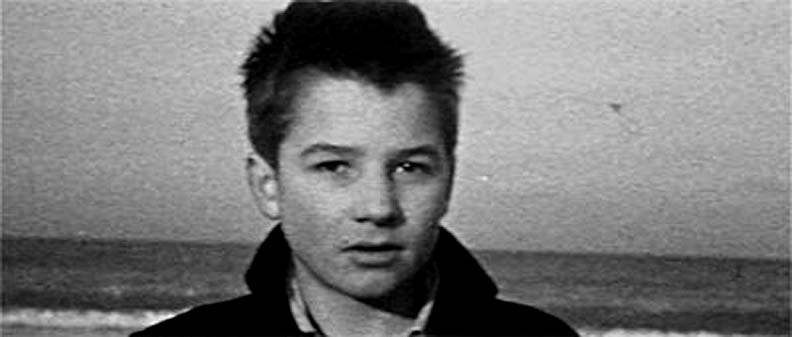
Author Stephen King once said, “In all our lives, there’s a fall from innocence, a time after which we are never the same.” “The 400 Blows” is a film that illustrates that viewpoint very effectively. Nowhere is that clearer in this film than the scene in which Antoine and his friend discuss a way to make more money through petty crime…during a puppet show. While dozens of children are laughing and enjoying the show, these two older kids are in the middle of scheming. By the end of the film, Antoine is no longer innocent and his future is uncertain. The final shot, following a half-grim/half-satisfying final scene, is a freeze-frame with an optical zoom on his face—this closing image has been copied long since this film’s release, but this one has a purpose: for us to interpret Antoine’s predicament for ourselves.

“The 400 Blows” is a subtle, well-acted, great-looking, and emotionally deep character-study that I can’t recommend enough. Today, it still holds up wonderfully as a remarkable film and a classic. Truffaut’s style is direct and truthful so that his film is far from a traditional melodrama, like a good chunk of teenage “coming-of-age” dramas. It’s moving, effective, and causes us to reflect on our own youths. Where will Antoine end up? How did we get here?

NOTE: Truffaut would bring back actor Jean-Pierre Leaud to reprise his role of Antoine Doinel in four other films: the short film “Antoine and Collette” and the features “Stolen Kisses,” “Bed and Board,” and “Love on the Run.” This could show that “The 400 Blows” really was from a chapter in Truffaut’s life and wants to show how he became the kind of person he is now, but I haven’t seen these films…yet.
Magnolia (1999)

28 Jan

magnolia_1999_9

Smith’s Verdict: ****
Reviewed by Tanner Smith

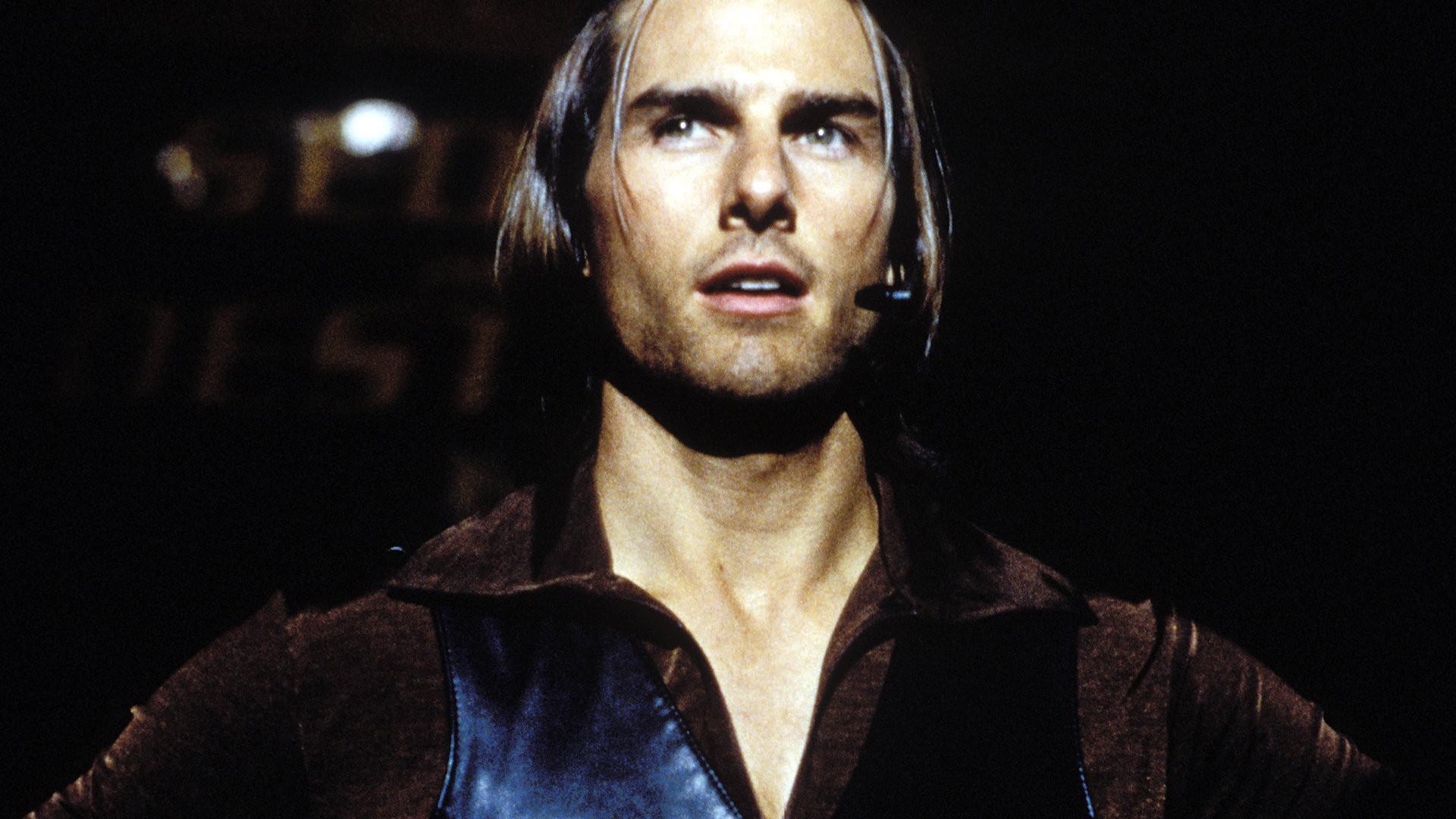
“We may be through with the past, but the past is never through with us.” The meaning of that quote in Paul Thomas Anderson’s “Magnolia” is at the core of the film, which is a series of tales that involve grief, regrets, resentment, and sadness among their central characters. Yes, “Magnolia” is an ensemble piece (and a three-hour long one at that) with many different storylines surrounding different characters (only some of whom interconnect) while maintaining a consistent theme to make the characters’ stories parallel. This is a risky move for any filmmaker to make, but Anderson not only manages to pull it off; he really manages to pull it off. The three-hour running time is enough time to allow each character to develop and have their full story told; the characters’ stories are interesting enough to keep us invested; the filmmaking is riveting; and here’s the true test of how effective it was for me—I was so empowered by each story being told in this three-hour epic that I rarely even noticed what time it was. This is an example of a wildly ambitious project that works wonderfully.

“Magnolia” takes place in one day in rainy Los Angeles and presents a slice-of-life look at many different people. I suppose it’s best to begin by describing each character. Stanley Spector (Jeremy Blackman) is a child genius and a star contestant on a popular TV game show, “What Do Kids Know?” He’s a very smart kid who has every answer and the potential to win the ultimate money prize on the show, and his father couldn’t be prouder; in fact, winning the money seems to be the only thing to get his dad’s attention. The show’s host, Jimmy Gator (Philip Baker Hall), has terminal cancer and learned he has two months to live. He wants to try and reconnect with his daughter, a cocaine addict named Claudia (Melora Walters), but she believes (though he doesn’t remember) he molested her as a child. Meanwhile, Claudia meets a friendly but incompetent police officer, Jim Kurring (John C. Reilly), who looks past the fact that she’s strung out on drugs and just wants to date her and possibly start a relationship.

We also meet a former champion on the show, Donnie Smith (William H. Macy), who has grown up and is unhappy with how his life turned out. He seeks to gain attention from someone he loves—a bartender with braces—by getting money for “corrective oral surgery” so he himself can get braces on his teeth. At the same time, we have the producer of the show, Earl Partridge (Jason Robards), stricken with cancer and on his deathbed. His second wife, Linda (Julianne Moore), is a young woman trying to deal with her imminent loss, and she even admits that she never really loved him and only married him for his money; this self-revelation causes her to think suicidal thoughts. Earl has a dying wish to see his estranged son. His nurse, Phil (Phillip Seymour Hoffman), tries to fulfill that, discovering that the son is actually Frank Mackey (Tom Cruise), a magnetic guru who aids men in the conquering of women—his mission statement: “Seduce and Destroy.” (Aaron Eckhart’s character in “In the Company of Men” would envy this guy.) Earl abandoned Frank when he was a boy and Frank has never forgiven him, and Frank had to take care of his mother who died of cancer.

All these characters are different but also kind of similar too. The central theme of “Magnolia” could be either parental cruelty and its lasting effect on both the parents and their children or the effects of spiritual and physical cancer and looking back on life in sorrow and guilt. Two of these people, Earl and Jimmy, are dying physically, and maybe even more, such as self-destructive Claudia and depressed Linda, are not too far behind. Along with Claudia, the rest are hiding some deep mental scars brought on by the sins of the parents and have their own defenses—Frank uses his misogynistic self-help to mask his insecurities; Donnie is loving and surely losing; and the boy genius, Stanley, is being pushed by his father to keep answering correctly and go on to win the grand prize. It starts to become too much pressure for him. There are so few who try to help, the two in particular being Jim and Phil. A policeman and a nurse—the only figures who represent care and hope in these people’s lives. But they’re only available for about two or three of the people in question; the others could benefit from their help. (What makes it more upsetting is that the connections Jim and Phil make with the people they come across probably won’t last long.)

For a three-hour ensemble drama, “Magnolia” is perfectly-paced. As strange as that sounds, it was enough to keep me involved in each one of these characters’ stories. There’s a lot that happens in this film (obviously, given its running time), so I can’t say too much about the plot in this review. Even the least interesting storyline (to me, it’s the subplot involving Donnie) has something worthwhile to keep me watching. It not only helps to establish these characters in a strongly realistic portrait of how real people with similar problems behave and interact. It also helps to have a top-notch cinematographer (Robert Elswit, Anderson’s usual DP) to photograph the film beautifully; to edit it energetically; and to add a few eccentric moments, such as when all “dying” characters sing along to an Aimee Mann song playing on the soundtrack (“It’s Not Going to Stop”). But there’s also something that happens near the end…but I’ll get to that later.

Every actor/actress in this terrific ensemble cast does a spectacular job. Newcomer Jeremy Blackman is terrific as a kid under tremendous pressure; I felt for this kid at a crucial point when he realizes this game isn’t fun anymore. Julianne Moore does a great job at making Linda into someone who is always sympathetic even in times when she can be unlikable. Jason Robards delivers arguably his best scene in any film he’s been in: a heartbreaking bedridden monologue about how many regrets he has in his life now he’s at death’s door. John C. Reilly radiates a soft gentleness to his policeman character, and he and Melora Walters share a nice, offbeat relationship together. Philip Baker Hall, Phillip Seymour Hoffman, and William H. Macy are equally effective. And then there’s Tom Cruise—this may just be the best performance I’ve ever seen from this top-notch star, playing Frank with much charisma with much sadness hiding underneath. It’s a spellbinding portrayal.

It’s hard to pick my favorite scene—is it the prologue involving urban legends?; is it Stanley’s breakdown on the air?; is it Earl’s monologue about regret and guilt?; is it Frank’s tearful reunion with his dying father?; is it the beautiful sequence in which all “dying” characters (figuratively and literally) share a musical number?; is it the extraordinary, completely out-of-nowhere occurrence near the end of the film? How about the whole thing?

If you’ve seen the film, you’re probably wondering what I make of said-“extraordinary, completely out-of-nowhere occurrence.” This was a sequence that took everyone by surprise in its original release, caused many debates, and even split many audiences and critics in their overall opinion of the film (some say it was a work of genius while others say it was an unbelievable copout; if you haven’t guessed, I belong to the former group). If you don’t know what it is, I won’t reveal it here, but I will say this—nothing in the first 2 hours and 40 minutes of this film will prepare you for it. I certainly wasn’t prepared for it. It may be a copout for some people who thought it ruined a perfectly good setup of effective human conduct and communication, but to me, it only raised the film to a new level that I was fascinated by it. I found myself thinking more about it the second time I watched the film. (I also realize that without the prologue that indicates that even the most improbable things can happen in life, this ending would have made no sense at all.)

P.T. Anderson’s “Magnolia” is simply a wonderful piece of work—a very well-put-together ensemble drama that quite frankly, I would even rank higher than Robert Altman’s best works. I cared about each character, I felt like I knew each of them rather than just some of them, and again, I was engaged by all their storylines, which to me is its biggest accomplishment. Maybe I understand it or I was in the right mood for it when I first watched it, but “Magnolia” was a tremendous film for me to experience.

2014 Review

22 Jan

10151537_10100316206882202_966228584_n

2014 Review

By Tanner Smith

It’s that time of year! The time I feel like a true critic. The time to recap the films I saw this year. So let’s start off this wonderful time of the year with…my Least Favorite Films of 2014.

For starters, the runners-up (the films I can only give mixed reviews to)—(Divergent, Little Accidents, Magic in the Moonlight, The Monuments Men, Non-Stop and…Interstellar; I’m sorry, but the film just didn’t work for me very well)

5. Devil’s Knot—Probably the most redundant film of the year, a fictional narrative based on the West Memphis 3 trials. We’ve already had many great, hard-hitting, harrowing documentaries (the Paradise Lost trilogy and West of Memphis) covering this subject of three young men given unfair trials in the face of an angry public who cried out for blood after a grisly murder. This film doesn’t tell us anything we haven’t seen or heard before in a more compelling documentary.
4. Paranormal Activity: The Marked Ones—I had a little bit of hope for this current “Paranormal Activity” sequel, as its surreal terror was moved to a more interesting location (the ghetto rather than suburbia). But my hopes were dashed when I saw where it story was going. It’s one thing if it’s repetitive of the earlier films’ formulas; it’s another if the story has enough material to make you laugh rather than quiver. This “scary” film has: a Simon game that can communicate with spirits; gangsters going up against witches; and even time-travel.
3. That Awkward Moment—A dumb romantic comedy mainly from the perspective of the guys, but unfortunately, no matter what viewpoint it’s from, the film still doesn’t escape the typical romcom clichés I’m tired of seeing. And seriously, why would Zac Efron’s character wear that embarrassing costume to a party he knows his girlfriend’s family and friends are attending?
2. Life After Beth—A definite disappointment for me because I’ve always found Aubrey Plaza to be very funny and appealing. But as a zombified “angry girlfriend,” she is just flat-out irritating in this would-be comedy about a lonely guy (Dane Dehaan) getting another chance at his lost love. Despite the reliable cast (which also includes John C. Reilly, Molly Shannon, and Anna Kendrick) and an engaging premise, the film is a mess. There are too many scenes of people either saying and doing things that hardly make sense, its attempts at broad comedy just result in awkwardness and everyone being loud and annoying, and even when it looks like there’s going to be a bright spot (supplied by Anna Kendrick who’s usually always lovable), and the script needed a lot of work as it clearly doesn’t know where to go and where to stay. I hope Joe Dante’s upcoming film with a similar premise (entitled “Burying the Ex”) is much better.

And my Least Favorite Film of 2014 is…

1. Men, Women & Children—Just thinking about this film makes me cringe. It’s well-intentioned about how society relies so much on social media but it’s handled all wrong in a heavy-handed way. Great acting from talent such as Adam Sandler, Rosemarie Dewitt, Jennifer Garner, Judy Greer, among others, can’t save this film from its laughable script and poor attempt at social commentary. It’s lame, tedious, pretentious, and about as effective and informative about society as “Reefer Madness!” Yeah I said it. I hate this film, and the sooner this cast and their director (Jason Reitman) can move on from it, the better.

SPECIAL CATEGORIES:
I Liked It, You Didn’t: Horrible Bosses 2, A Night in Old Mexico
You Liked It, I Didn’t: Interstellar
Film I Didn’t Expect to Enjoy But Did: About Last Night, The Purge: Anarchy
Could’ve Been Better: Non-Stop
Best Musical Moment: Bill Hader and Kristen Wiig’s dance to Starship’s “Nothing’s Gonna Stop Us Now” from The Skeleton Twins
Funniest Scene: Groot’s smile from Guardians of the Galaxy (with Channing Tatum’s joyous reaction from 22 Jump Street and the chain-link fence gag from Horrible Bosses 2 as honorable mentions)
Most Overstuffed Story: The Amazing Spider-Man 2
Creepiest Moment: The moment of truth in Oculus
Most Memorable Song: “Everything is Awesome” from Lego Movie
Best Performance of the Year: J.K. Simmons in Whiplash
Haven’t Seen Yet But Would Like To: Big Hero 6, Citizenfour, Dawn of the Planet of the Apes, Foxcatcher, Fury, How to Train Your Dragon 2, Inherent Vice, A Most Wanted Man, A Most Violent Year, St. Vincent, Top Five, Unbroken, and Wild

Special Mention #1: Mark Thiedeman’s Sacred Hearts, Holy Souls. This tender 40-minute coming-of-age comedy-drama is quite honestly one of my personal favorite films of this or any year, which is why it’s unfortunate that it only has one previous screening (so far), this past summer’s Little Rock Film Festival (where it received the award for Best Arkansas Film). Here’s hoping for more to come in 2015, because more people need to see it! I just can’t recommend this film enough.

Special Mention #2: Taylor Feltner’s Man Shot Dead is a terrific documentary I also noticed at the LRFF (it also screened recently at the Indie Memphis Film Festival). I really hope it moves on to even more screenings in 2015 because, again, this is a film more people need to see!

Five Terrific LRFF-Selected Short Films (in alphabetical order): Tara Sheffer’s 13 Pieces of the Universe, David Bogard’s A Matter of Honor, Caleb Fanning’s Origin, Bruce Hutchinson’s Sidearoadia, John Hockaday’s Stuck

But wait! Shouldn’t I list my favorite films of the year already?

Honorable Mentions (in alphabetical order): 22 Jump Street, Gone Girl, The Grand Budapest Hotel, Joe, Lego Movie, To Kill a Man, X-Men: Days of Future Past

Oh, and I liked these as well: About Last Night, The Amazing Spider-Man 2, Before I Disappear, Big Eyes, The Book of Life, Captain America: The Winter Soldier, The Fault in Our Stars, Godzilla, The Heart Machine, The Hobbit: The Battle of the Five Armies, The Hunger Games: Mockingjay Part 1, Muppets Most Wanted, Neighbors, A Night in Old Mexico, Oculus, The Sacrament, The Signal, The Skeleton Twins

Okay, enough stalling. There are my Top 10 Favorite Films of 2014.

10. Locke—Not the most exciting concept (a man goes on a long drive alone in the dark, making decisions through cellphone calls that will ruin his life) but nonetheless brought to life with much dramatic tension put into its writing and a top-notch performance by Tom Hardy, leading an effective one-man show.

9. American Sniper—In my opinion, it’s Clint Eastwood’s best film in a long while and Bradley Cooper’s best work. I can’t say enough about how good Cooper is or how riveting the war-action sequences are in this film. What’s a true relief about this film is that, like the more subtle war films, it doesn’t have an interest in politics; it makes every scene personal and lets you decide for yourself what you’re supposed to feel. A gripping picture.

8. Nightcrawler—A compelling, disturbingly effective character study and a well-made, tense thriller, as well as a fitting satire on news media. Great leading performance by Jake Gyllenhaal.

7. Guardians of the Galaxy—This Marvel-superhero film was definitely one of the most fun times I’ve had at the movies this year. It’s action-packed, it has solid characterization, it’s full of heart, and arguably more important, it has a sense of humor. Instead of going for an epic story, it’s more in the spirit of “why not” with its giddiness. This may just be our generation’s “Ghostbusters,” and that’s a compliment indeed.

6. Whiplash—This was a riveting, intense film about striving for greatness, being pushed too far to achieve it, and the conflict of hardly knowing when to draw the line. The film is less of a sports formula drama and more of a tense thriller. J.K. Simmons, as a tough jazz instructor, gives the performance of a lifetime.

5. The Imitation Game—All in one, this film is an intriguing film about a previously unsung hero, a WWII tale told not with fighting strategy (nor does it even take place on the front) but with intellectual thought, and an unnerving portrait of how ignorance based on a person’s offbeat personality/behavior can blind the fact that that person’s activities saved millions of lives. Great screenplay and a top-notch performance by Benedict Cumberbatch as Alan Turing.

4. Birdman—A truly fantastic film that takes us behind the scenes of a difficult Broadway production and through the mindset of a hard-working, washed-up actor looking for redemption. Remarkable cinematography, excellent acting, and an environment that sucks you in—a film that definitely deserves to be checked out.

3. Rich Hill—I’ve seen films try and truly capture what it’s like growing up in the South, but this documentary shows the real deal in a hard but sensitive journey into the lives of three teenage boys who live in Rich Hill, Missouri. The result is one of the finest films of this or any year.

2. Life Itself—It was fascinating to find out all the things I didn’t know about one of my late heroes, film critic Roger Ebert, through this documentary based on his memoirs. It gives us a talking-head approach with interviews from people from his life before giving us a fly-on-the-wall perspective to see just how much Roger suffered during the final months and years of his life; sometimes it was hard to watch. The commentary near the end, by Roger’s wife Chaz, is one of the most heartbreaking I’ve heard in any documentary. Four stars for the story of Roger Ebert.

And my favorite film of 2014 is…

1. Boyhood—This is like the ultimate slice-of-life picture: presenting little moments in the arc of a boy growing into a man. I’m aware of its history and that it took a few days a year for 12 years to get that genuine chronological feel, but I would never label “Boyhood” as a gimmick film. It’s a moving, intimate epic about coming of age. There were times when I felt like I knew this kid or even was this kid. It spoke to me, touched me deeply, and is the absolute best film I’ve seen all year.

American Sniper (2014)

18 Jan

American-Sniper-Movie

Smith’s Verdict: ***1/2
Reviewed by Tanner Smith

Clint Eastwood’s war thriller-drama “American Sniper” grabs you by the shirt and nearly rips it off after holding on for so long. That’s a compliment to how riveting its intense action sequences are. Here, at a time when it seems nearly impossible to shoot action without the use of a tripod, are some well-shot, fully-realized battle scenes that are among the best in any war film I’ve seen. You can see everything fine, it’s exciting, and it captures the essence (and madness) of war really well. What makes it all work better is that, unlike most action films or thrillers you see coming to the big screen here and there, I actually care about who’s involved in the chaos.

The film is loosely based on the life of Iraq War veteran Chris Kyle, who served four tours in Iraq in the 2000s, and it has received a controversy about how much of his story was exaggerated and how much was never mentioned at all (that is described in his autobiography of the same name). Either way, it’s a fascinating film that paints a clear portrait of a man who wishes to serve his country in any way he can and becomes a “legendary” American sniper in country, with 160 confirmed kills, but still try to keep what’s left of his humanity/mental-state intact out of country.

Bradley Cooper stars in arguably his best work to date as Kyle. While watching this film, I forgot I was watching Cooper in a performance and instead saw Chris Kyle. It’s tough to fully describe how shockingly good he is in this role; it has to be seen to be believed.

We follow Kyle on four Iraq tours, as well as times with his family in between. As I said before, the action sequences are outstanding, with one powerful scene after another—my favorites include an important opening kill, a tense, drawn-out rescue attempt against an interrogation that involves a drill, and a shoot-to-kill scenario where the target is about a mile away. But oddly enough, it’s when he’s home that the film is at its weakest. Its theme of trying to cope in the real world, which we’ve seen better in other films, is more standard in the way it’s presented, even though there are some effective tricks Eastwood pulls for us to feel something (the best of which involves a blank TV screen). But even so, I suppose it’s needed. After all, it’s important to care about Kyle and what he has to live for.

Would the film be more compelling if everything they left out from the book was put into the film? Probably, but then again, as I hear, the book is more about patriotism which would have made a more “complete” film more of a propaganda than anything else. But I’m reviewing this film, not the book. As a film, it’s terrific and one I won’t forget anytime soon.

Men, Women & Children (2014)

14 Jan

Men-Women-And-Children-Film-Reviews-lacks-inspiration-632x330

Smith’s Verdict: *

Reviewed by Tanner Smith

I won’t deny that our dependence on modern technology is a social problem. And to be fair, Jason Reitman’s ensemble drama “Men, Women & Children” poses an interesting question—are we so lonely in the world that we spend more time with our computers and our phones than anything (or anyone) else? This is a film that wants to be (“be,” not “make”) a profound statement on how we all, as a society, rely on social media, not to mention online gaming and pornography. Unfortunately, what should be a deep, moving, effective portrait about where we are now is reduced to a heavy-handed, overbearing, even laughable-at-times mess of a film that tries to say more than it actually is. This film is about as informative a social commentary as “Reefer Madness.”

The film, based on a novel by Chad Kulgen, is an ensemble piece, featuring many talented actors portraying the film’s many central focuses: a group of high school students and their parents who have their own tales being told here, each of them related to how technology is running his or her life. Adam Sandler is effectively low-key as Donny, a family man who is hardly satisfied with his marriage to his wife, Helen (Rosemarie DeWitt), anymore, and seeks excitement from his son’s pornography. Meanwhile, Helen has a similar problem, unbeknownst to him, and their son, Chris (Travis Tope), can’t get aroused by any human sexual contact due to watching so much porn. Hannah (Olivia Crocicchia), a popular cheerleader with her own website full of “modeling” photos, finds this out as she makes her advance toward him but makes up a lie to her classmates. Who’s running Hannah’s website, you may ask? It’s her mother (Judy Greer), who hopes that it will help give her daughter a career in modeling or acting. (It’s indicated that she herself took her shot at one way back when.) Hannah’s friend, Allison (Elena Kampouris), wants to be thin and gets advice from a website about anorexics; of course, this causes her to starve herself.

The campus football star, Tim (Ansel Elgort), quits the team after his mother abandoned him and his father, Kent (Dean Norris), and finds himself questioning life and existence, as well as playing an online game nonstop. He also starts a nice relationship with a wallflower girl, Brandy (Kaitlyn Dever), who has a secret social-media account to keep her outrageously overprotective mother, Patricia (Jennifer Garner), who keeps track of her daughter’s texts, calls, Facebook account, everything. Oh, and she also leads a discussion group where she tries to warn the parents of the neighborhood about the “evils” of online media.

While all these stories are taking place, they’re being observed by an omnipresent narrator (voiced by Emma Thompson), who I guess is supposed to be the voice of Voyager (which we cut to in space every now and then), observing with pity how mankind is becoming worse. And right there is the biggest problem of the film. The execution at work is too condescending, too arrogant, and too messy that it doesn’t leave a tragic impact as much as a dull impression. The way all of these issues are being addressed is just too much to take in, let alone take seriously. And there are far too many callbacks to Carl Segan’s “Pale Blue Dot” that the point is far gone out the window. I’m not moved; I’m just bored. And don’t even get me started on the 9/11 references.

The actors do what they can with what they have, but another problem with the film is that just about everyone is neither appealing nor interesting. And what’s worse is, by the end, their actions are both insufferable and questionable. Near the end, Patricia, who has found out about her daughter’s secret Tumblr account she uses to communicate with Tim, goes so far as to shoot Tim down (not letting him know who she really is), causing Tim to do something that is supposed to be sad and tragic but is instead annoyingly blasé. Lucky for me, I gave up around the point when Helen sees a prostitute midway through.

I really wish director Jason Reitman, who made himself a name with such effective satires as “Thank You For Smoking,” “Juno,” and “Up in the Air,” went sharper with this material and mocked the subject material in a ironic way rather than try to shock and awe us with the dangers of a modern problem. As is, I found “Men, Women & Children” to be awful and, even worse, boring. The sooner this talented director and this large talented cast can move on from this, the better.

Mommie Dearest (1981)

23 Dec

th

Smith’s Verdict: **

Reviewed by Tanner Smith

“No wire hangers EVER!”

Coming from the 1981 film “Mommie Dearest,” that line is one of the most popular movie quotes, even gaining itself a spot on the American Film Institute’s “100 Quotes” list. It’s so quotable that it spawned over a dozen parodies (most of them are quite funny). And it’s from a film that is now a “cult classic” because of scenes such as the one this line came from, because a good deal of actress Faye Dunaway’s performance is loud, abrasive, and over-the-top. When I decided to see this film to see how truly “funny” it is, well…

Well, first, let me talk about the “no more wire hangers” scene, in which wealthy, stubborn actress Joan Crawford (Dunaway) is angry at her little daughter, Christina, for having wire hangers in her closet. This is the scene that is often quoted mockingly and said to be so bizarre that it’s unintentionally humorous. That really surprises me.

Yes, it’s a little confusing as to where Joan’s daughter’s wire hangers came from. Yes, the line is quite memorable. Yes, the scene is a little too over-the-top. But if you really look at this scene, it’s incredibly disturbing! I mean, you’ve got Joan yelling at her daughter for a ridiculous reason. That’s one thing. It’s another thing when Joan beats her with one of the wire hangers! This is a very unsettling, hardly watchable scene that features child abuse at its center. And it doesn’t stop there. She drags her out of bed and messes up the bathroom so she can wash it herself! Even poor Christina knows this is going too far! “Jesus Christ,” she says to herself tearfully.

(Sarcastic remark: I don’t know what’s funnier—the yelling or the beating.)

It baffles me how people have labeled “Mommie Dearest” a “cult classic” because of “campy” scenes like that. I have to wonder what movie they thought they were watching and what substance they were abusing while doing so.

Okay, to be kind of fair, my guess is that it has to do with “shock value.” Aside from the wire-hanger scene, there are moments in which a mother angrily cuts off a lot of her daughter’s hair, tackles her to land on a glass table, and, in another “campy” bit, harshly cutting hedges out of anger. It’s like watching a “Friday the 13th” movie—its fan base sees the appeal in being shocked every couple of scenes. Because of this, “Mommie Dearest” is not the most effective kind of biopic. It’s supposed to show the truly complicated relationship between Joan Crawford and her adopted daughter Christina, as it only gets worse as time goes by due to cruelty and jealousy. But it goes so far at showing the terrible parts of the relationship that after a while, it’s hard to truly explain what it’s all about. There’s hardly a narrative flow here; it’s all one shocking moment after another without much ground. Most of these scenes don’t even have much of a buildup. They just happen.

“Mommie Dearest” is a depressing film; one I wouldn’t want to revisit anytime soon. One viewing of it was enough for me. The film was so successful as an unintentional “comedy” that its popularity led to no Academy Award nomination for Faye Dunaway (which is one of the reasons she doesn’t like to talk about the film) but several Razzie nominations (and wins, for that matter). I can say this about Faye Dunaway’s performance, however. Dunaway clearly put her all into it, and in all fairness, it is a chillingly good performance. When you think about it, Joan Crawford was an over-the-top personality; therefore, Dunaway playing her as such is necessary. Dunaway should not be criticized for playing a loud, rough, even violent woman with some truly unnerving mental issues. I don’t even see Faye Dunaway in this film at all; I see Joan Crawford. (Oh, and thanks to sensational makeup, she even looks exactly Joan Crawford—another strange reason people make fun of this movie.) Too bad we only see her as a monster though. The film was based on a best-selling memoir, written by Christina Crawford, which only described her movie-star mother as such. That may be the film’s biggest problem. It’s too one-sided. I didn’t care much for this movie, other than to prove the point that I am definitely not part of this “cult” that holds it in high regard for all the wrong reasons (or the right reasons, for that matter).

NOTE: I will point out the film’s one satisfactory scene. Just before Joan attacks a young-adult Christina, they engage in a screaming match with a great exchange: “Why can’t you give me the respect that I’m entitled to?!” Joan shouts. “Why can’t you treat me the same as any stranger on the street?!” Christina responds perfectly: “Because I am NOT…ONE OF YOUR FANS!”

Interstellar (2014)

28 Nov

Interstellar-Movie-Trailer

Smith’s Verdict: **1/2
Reviewed by Tanner Smith

Maybe it’s because I’m noticing more of Christopher Nolan’s film trademarks (and frankly, getting a little tired of them) that I didn’t like his latest film, “Interstellar,” very much. Christopher Nolan has made some truly impressive, groundbreaking films, such as “Memento,” the “Dark Knight” trilogy, and “Inception”…but watching them again, I feel like these already-terrific films could be even better if the characters acted like real people. The characters’ emotions are always present, but what Nolan always seems to ask from his actors is that they always know how heavy the weight of their situations are, and so they say their lines in a sort-of monotone way while saying dialogue that is mostly made up of philosophical insight and plot exposition. Nolan never seems to want audiences to feel for themselves what it means for his characters to do what they do; he seems to want the characters to talk about it themselves.

Before anyone attacks me, “The Dark Knight” and “Memento” happen to be two of my all-time favorite films. I admire the in-depth conversations in both films because most of them do give the material more power. Why do I appreciate his most glaring trademark in those films and not in “Interstellar?”

I’m getting ahead of myself. Let’s start with the story. It’s in the future (though a specific year isn’t mentioned), and the world is falling apart due to famine and blight, causing dust storms to appear and crops to die. Former NASA test pilot Cooper (Matthew McConaughey) and his family farm acres of corn that he owns and do their best to adapt in this world where humanity most likely is getting closer to its doom.

Cooper’s daughter, Murph (Mackenzie Foy), keeps noticing a strange occurrence in her bedroom that she thinks is caused by a ghost. She brings her father in on the discovery and interprets these signs as Morse code (this child is either very intelligent or has had a lot of time to think about this—hey, that’s another Nolan trademark). Well, she’s right, and it draws Cooper to a secret location, where NASA is operating as a think-tank to save humanity. One of their solutions is to get people off the planet and into a space station. The only problem is overcoming gravity to send the ship into outer space. But Professor Brand (Michael Caine) has an idea to send Cooper and a small crew, including Brand’s daughter, Amelia (Anne Hathaway), and a sarcastic robot named TARS (voiced by Bill Irwin), through a wormhole near Saturn that was most likely placed there by a superior intelligence presumably to give humanity a chance of survival. With Cooper as pilot, he and his group set out to see what’s out there. The main drawback to attempt saving the world: the mission will most likely take decades to complete, which is how long Cooper will be separated from his family. Murph is particularly upset and resentful as she feels she’s being abandoned.

The first-third of “Interstellar,” which is 45 minutes of a 170-minute film, is fine and it does give us a good look at what it’s like for these people (Cooper, his kids, and his father-in-law, played by John Lithgow) live in this ominous scenario and having to deal with this world every day. Though, there are some parts that I found laughable—for example, the public-school system has new science textbooks that explain how the NASA moon-landing was all fake and staged. Why? Well, because they don’t want the students to even think about the possibility of leaving Earth. (I don’t know; schools are weird. Apparently, nowadays, you get in trouble for saying “bless you” when someone sneezes.) Another odd moment is when the characters attend a ball game and apparently no one notices the approaching massive dust cloud right away. But aside from those parts, it does a good job at establishing the relationship between Cooper and Murph, so that when Cooper has to tell Murph that he’s leaving, it’s very moving. Cooper is not willing to abandon his family, but he knows the chance to save the human race, and his family, is his to take when it’s offered. (But did he really have to make the situation worse by joking that maybe he and Murphy will be the same age when he gets back, because seemingly he won’t age in space? I mean, come on; that was kind of cruel.) And the first act has a pretty good buildup of a mystery involving who made the wormhole, who or what is out there, who or what was causing the anomaly in the first place, what’s the significance of the “ghost,” etc.

I have to give credit to a great transition to the second-third, which goes into the “space” portion of the film, as Cooper and crew blast off into outer space. It shows Cooper driving away from home, as we hear a countdown. At the end of the countdown, there he is, in front of the spacecraft, taking off. No training sequence—just an immediate transition. But unfortunately, the film doesn’t have that kind of smooth cutting for the following hour or so, and I’m afraid it needed it.

But again, I’m getting ahead of myself. When Cooper, Amelia, TARS, and the other astronauts, Doyle (Wes Bentley) and Romilly (David Gyasi), set off in space to embark on their journey through the wormhole. But what do they find in the wormhole? A planet covered in water and a planet covered in ice.

Let’s get to the good things about this long section of the film. The wormhole is spectacular and definitely deserves to be experienced on the big screen, with the best surround sound. The water-planet makes for a suspenseful moment in which the crew must leave before a massive wave comes along to envelop everything. When I saw that wave coming, I got goosebumps; I’m not going to lie. And that some of the icy mountains on the other planet are upside-down and some are even clouds! That’s impressive. And later on, they come across a black hole that is also amazing to look at; maybe even more so than the wormhole. And there is time for legitimately dramatic moments, such as when Cooper realizes how long he’s been gone and watches video messages from Earth that show his kids grow older, while he can only sit and weep at what he’s lost and probably can’t get back.

But unfortunately, this large portion of the film is also the weakest. When all is said and done, these planets are unspectacular; they’re just water and ice. Couldn’t there have been more imagination to go with these planets in a science-fiction story? The adventurous parts of this “epic” science-fiction film are not very epic as a result, and it only gets worse when half of it is made up of that typical Nolan trademark I mentioned before: lots and lots of dialogue having to do with exposition, philosophy, meaning, etc. Only every now and then do the characters behave like real people, and that’s always only for just a few seconds before it’s back to explaining and spewing more dramatic ironies and so on. Oh, and lots and lots of scientific babble.

A lot of people have been wondering whether or not the science in this story is accurate, which really fascinates me because I didn’t think you were supposed to question science in a science-fiction story. There are a lot of talks about relativity and complex physics and so on, and because there is so much dialogue that gives us theory upon theory upon theory, maybe that’s why people who watch this film question it, because they want to know if they should trust it. Well, it’s still science-fiction, and I just sort of go with whatever one can think of, when it’s executed properly.

Though, I did learn that one of the executive producers of this film is CalTech physicist Kip Thorne, so I don’t know; maybe the science is accurate. So there you go.

Oh, and I forgot to mention the Earth scenes that show Murph (now played as an adult by Jessica Chastain), assisting Brand in NASA and still resentful of her father leaving. You would think that after all these years of working for these people who sent him on this mission, she would’ve gotten over it by now. Doesn’t she know the world is at stake and he left to protect the human race? I get it; she feels like her father abandoned her. But sheesh, look at the big picture, why doesn’t she?

Nolan is a hell of a storyteller, which is why most of his films work as well as they do. And even when his stories seem uneven, like this one, there is a big payoff. “Interstellar” is no exception. The last third of the film is quite strong and powerful and, being a Nolan film, quite complex. I won’t give it away, but it gets the emotions right and provides a satisfying resolution to the story. But even then, it has its questionable moments, such as an ending that I thought went against what it was about.

There are strong elements in “Interstellar,” particularly the battle between circumstance and emotion that’s always present and has people wondering what’s more important and of course, being a Nolan film, what it means. And it is serviceable for audiences who just prefer to turn their brain off and watch some good sci-fi action (I forgot to mention an improbable but riveting scene involving trying to lock a craft in place from underneath a space station) or those who just want to get a good emotional experience. But I feel like the film is overblown by Christopher Nolan’s ambition to make it something grand and epic, and as a result, I feel that this is what causes the film’s undoing for me. I hate to say this about a filmmaker I often called one of the greats, and to be fair, maybe it’s because I’m noticing (and being slightly annoyed by) more of his trademarks, particularly with his directing and writing, that I wasn’t getting into “Interstellar” as much as I wanted to as I was entering the theater. But this film just didn’t do much for me.

Whiplash (2014)

27 Nov

Whiplash-miles-teller-jk-simmons

Smith’s Verdict: ***1/2
Reviewed by Tanner Smith

When you really think about it, that determined quest to be “one of the greats” in whatever field or craft is kind of disturbing, because you have to wonder how far that person going for it is willing to go to prove to be “great?” At what point is the line drawn? This can make for an unnerving story, because any artist is going to feel that kind of pressure and maybe even ponder about whether or not it’s worth it. Damien Chazelle’s “Whiplash” decides to go for it. Here’s a film about the progress of a budding musician executed with the intensity and tightness of a thriller. This easily could’ve been a feel-good story about a mentor pushing his student to the limit and both learning a lesson in a happy ending. But no—this film has a major, upsetting twist on the mentor/student relationship that makes it horrific and yet captivating.

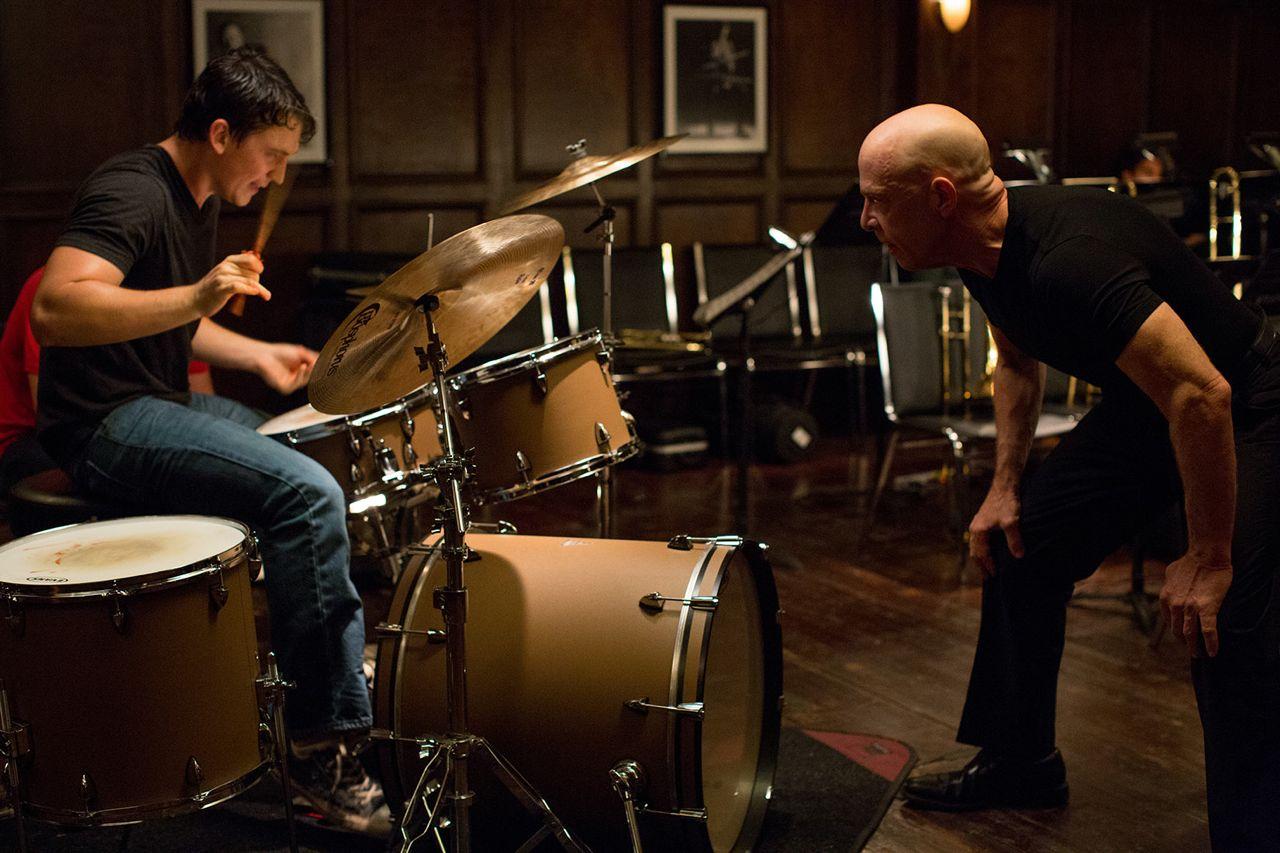
They say with power comes fear, and that’s especially true with Terence Fletcher, played powerfully by the always-reliable character actor J.K. Simmons in probably the best performance of his long career. Fletcher is the orchestra instructor from hell. He runs his band with the intensity of a drill sergeant (hell, he’d probably even make R. Lee Ermey’s “Full Metal Jacket” character piss his pants!), always pushing his students to their full potential so they satisfy not only him but also themselves. But his methods are beyond unorthodox, in that the best ways he can think of to get through to these people is with bullying and sociopathic behavior.

The latest victim of Fletcher’s teachings is Andrew Neiman (Miles Teller, very good), the film’s protagonist. Andrew is a 19-year-old Manhattan music-school student who loves drumming and yearns to be one of the great jazz percussionists. One night, his drumming gets the attention of Mr. Fletcher who overhears him playing. First, Fletcher criticizes him, causing Andrew to first lose hope, and then strive to get better. He does earn a spot in Fletcher’s jazz band, where he learns from Fletcher’s teaching methods head-on.

Due to a teacher’s tough approaches, the student is challenged to understand his full potential in order to achieve his goal of being “great.” Someone once said artistry can redeem any subject matter, and even with old cinematic resources such as this central premise, it’s what is done with the narrative that makes the film what it is. And “Whiplash” doesn’t use predictability or fabricated sentiment or even a true bond between the two characters outside of the practice room (save for one scene later on, but even that’s more a way of challenging wits). It doesn’t even end the way I expect it to; it ends on a note that can be read as either tragic, triumphant, or even both. The bottom line is, “Whiplash” is not an audience-pleaser; writer-director Damien Chazelle is more concerned with telling a cautionary tale and a complex story about obsession and impulse than giving viewers what they want from a story like this. Instead of cheering Andrew on as he becomes a better drummer, we feel pity for him as he beats himself up more and more trying to become “the best,” even when the blisters on his hands bust open and bleed as he practices or even performs live.

What really keeps the film’s audience on edge throughout the film is that anything could set Fletcher off. He could seem like a nice, understanding person to talk to, but all of a sudden, he could turn on a dime and become a sadist who will chew you up and spit you out. You’re always left guessing what he’s thinking and also what it would take to cause him to act this way again. It’s when he acts nice that I get chills while watching this film. And then, at the end, when he reveals something to Andrew and it’s too late to turn back, I was so nervous for this kid that the film had my undivided attention for the remaining final act.

J.K. Simmons deserves a Best Supporting Actor nomination come Oscar-time. His Fletcher portrayal is a powerhouse performance; one of the best I’ve seen all year. Any actor who can act in such an effective, unpredictable manner must be recognized. “Amazing” doesn’t begin to cut it when describing Simmons’ work here. He, along with Teller and Chazelle, helps make “Whiplash” a vibrant, riveting film that I won’t forget anytime soon.

The Hunger Games: Mockingjay–Part 1 (2014)

21 Nov

The_Hunger_Games_Mockingjay_Part_1

Smith’s Verdict: ***
Reviewed by Tanner Smith

The best is yet to come, and until then, we have a lead-in that ends with To Be Continued.” “The Hunger Games,” based on the Suzanne Collins novels, is the third popular book-to-film-adaptation franchise (following “Harry Potter” and “Twilight”) to split its final story in two films. I suppose they do this because otherwise, they’d be adapting a long novel into a 4+-hour movie that they’re afraid no one would want to sit through. But let’s be honest—they mainly do this to make the studios more money.

However, my problem with this way of building up the final chapter is that the “part 1” leaves an incomplete film that is hard to criticize except to say it’s not a complete film. I’m rating “Mockingjay Part 1” three stars, with it amounting to an optimistic “incomplete” status. It’s just a film leading us into “Part 2,” which will come this summer, and as it is, it’s worthwhile for audiences and fans of the original source material. It moves the story forward with interesting developments, particularly with the character arcs, and it just builds up to what I hope will be a strong film for “Part 2.”

“Mockingjay Part 1” is the weakest film in the series because of this, though my opinion could change once I see “Part 2” and view both parts as a whole, in which case I may change my rating.

Jennifer Lawrence again returns as Katniss Everdeen, who along with Finnick (Sam Claflin) has been rescued from the Quarter Quell by a band of rebels who live in a secret military bunker known as District 13, run by President Alma Coin (Julianne Moore). Katniss learns her home district has been bombed by order of President Snow (Donald Sutherland) and that her partner and love interest, Peeta (Josh Hutcherson), is held by the Capitol and ordered to warn the rebels on TV to stand down and stop fighting or else worse things will happen to Panem. President Coin decides to use this as reason for Katniss for propaganda reasons and have a TV crew document her reasons for everyone to stand up and fight for the rebellion.

One major problem I have with this entry in the franchise is that Katniss is mostly an overblown “reluctant heroine” type. She’s a little too unwilling to participate and is kind of an emotional wreck, even when seeing firsthand how coldblooded Snow can be. It’s especially disappointing because the previous film, “Catching Fire,” ended with a haunting visual of Katniss staring at the camera, looking angry and vengeful after going through so much hell. It was an ending that got us (or at least, those who haven’t read the final Hunger Games book) hyped for the next film to see what Katniss would do to help the rebels in taking down this corrupt dictatorship led by the despicable President Snow. And then this film starts and the first shot is of her crying. She spends most of the film lethargic, withdrawn, and often worried. I realize the best way to characterize a heroine is to make her more human and let us see/feel what she’s feeling, but let’s also see more of the Katniss we thought we were going to get.

But to the film’s credit, she has reason to be this way. For this new entry is easily the darkest in the franchise (“Empire Strikes Back” territory, if you will). There are hardly any soft moments, the film focuses on the consequences of actions (hell, President Snow even orders for the destruction of a building full of people, including children, to prove a point that’s pro-Capitol), and the ending provides a shocking twist centered on one of the major characters. It does make me curious about how “Part 2” will turn out to be.

Something I hope continues with this series is the way the love triangle between Katniss, Peeta, and Gale (Liam Hemsworth), who shows up for more moments of protection and broodiness, is downplayed, because God knows I’m tired of love triangles in these young-adult stories. Though, even so, it’s the least interesting aspect of the series for me because I really don’t see Gale as anything other than a buddy-type; he hardly has any personality or development as anyone else. And that’s another problem with the film—Katniss and Peeta are separated for a good chunk of the story, leaving plenty of moments involving Katniss and Gale; and yet, when they kiss, there’s still hardly any emotion because there still isn’t much we know about Gale.

“Mockingjay Part 2” has the potential to be great, and “Mockingjay Part 1” is a worthy lead-in in that case. It is worth recommending for a big screen, particularly for the superb production design, first-rate effects, and a suspenseful raid sequence late in the film. But a part of me wants to say wait for DVD and watch it around the time “Part 2” is released. That might help give a more complete experience.

Birdman or (The Unexpected Virtue of Ignorance) (2014)

10 Nov

Michael-Keaton-on-the-set-of-Birdman-2014-Movie-Image-3-600x338

Smith’s Verdict: ***1/2

Reviewed by Tanner Smith

“Birdman” (subtitled “Or the Unexpected Virtue of Ignorance”) is one of the most ambitious, unique films to come out this year (or any year). It’s a film that shows the mental breakdown of a washed-up actor trying to redeem himself with a comeback through Broadway. It’s a darkly funny, nearly spot-on portrait of theater life that goes into the pains of what goes into a show (with some exaggerations, for laughs) and what it will mean to cast members, both newcomer & veteran, while also taking time out to not only go into the main character’s disturbing inner psyche but also to attack pop-culture sensibilities that continue to ask for everything similar to the modern blockbusters we get every summer (specifically “Transformers”). The result is a black comedy that’s both disturbing to watch and yet fun to watch.

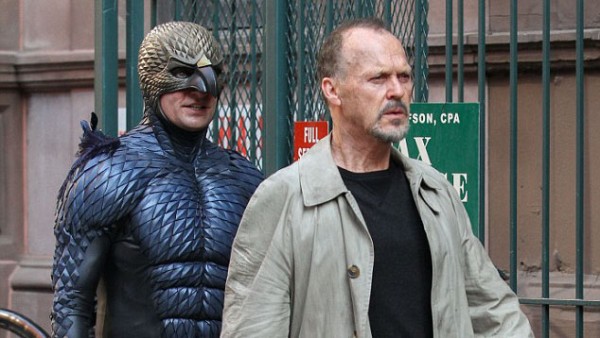
Michael Keaton stars as aging actor Riggan Thomson, who was once famous for playing the star of a superhero franchise called “Birdman” which was a big success. But after refusing to star in a fourth Birdman film, nothing was ever the same, as his life and career went downhill. His attempt at a comeback is to adapt a Raymond Carver short story into a Broadway play. Now in previews for an opening, Thomson writes, directs, and yes, acts in the play. After one of his actors is injured in an accident (which, by the way, results in a hilarious discussion between Thomson and his lawyer/manager/friend Brandon, played effectively against type by Zach Galifianakis), Mike Shiner (Edward Norton) is quickly called in to replace him. Shiner is an undeniably talented actor who brings dedication to his work, but he’s also known for upstaging his directors in a pompous, obnoxious manner.

Also included in the play’s cast are Lesley (Naomi Watts), who is new to Broadway and sees this as her big stage debut, and Laura (Andrea Riseborough), Thomson’s lover who may or may not be pregnant. Thomson’s assistant is his daughter, Sam (Emma Stone), is recently out of rehab and tries to convince her father that the best way to make a comeback is by going viral. As Thomson tries to put everything together while his cast faces their own issues, his fear of failure and continuing a reputation as a “celebrity” rather than an “actor” starts to get to him.

“Birdman” is an effectively disturbing character study, showing us an actor who peaked too soon and is obsessed with reliving the fame while also trying something new with his career. He even hears the growling, grumbling voice of Birdman (sounding very similar to Michael Keaton’s Batman voice) inside his head, telling him to, in a way, become Birdman again. This is a man who let his life choices haunt him later on because he can’t adapt to modern culture and/or he wishes there were a simpler (or better) time when he could make a real impression. Now, he’s so laughable or disrespected that a New York Times theater critic (Lindsay Duncan) pretty much tells Thomson right to his face that she’s going to write a scathing review about the play before she even sees it. This guy lets it practically consume his life.

By the way, that scene where the critic harshly lets it all out to Thomson is a really weak point in the film. That’s because any critic who would slam a work before opening night would lose their job almost immediately!

The cinematography for “Birdman” is unbelievably good. One of the most distinguished qualities of “Birdman” is that, with the exception of an epilogue, looks it was filmed in one long, continuous take. The camera hovers through corridors, goes up and down long flights of stars, even flies from place to place in the city, as Thomson fantasizes himself as Birdman. Emmanuel Lubezki, who shot most of Alfonso Cuaron’s work (and also won a cinematography Oscar for “Gravity”), shot this film, and he does a tremendous job at making the audience feel like they’re inhabiting the same world as the characters. I think only once did I notice the seams in editing, because I was constantly wondering how they managed to make it all seem like one long take. Not even in Alfred Hitchcock’s “Rope” or the 2012 horror film “Silent House” did I question how this style was done. “Birdman” was also directed by Alejandro Gonzalez Inarritu, whose previous films include “21 Grams” and “Babel,” and he’s known for making films in an unconventional way. Well, how’s that for unconventional? In a time with fast editing overpowers quality, it’s nice to see something of this style. Even when Thomson fantasizes about being the center of a “modern blockbuster,” with explosions, robots, and all sorts of loud mayhem in the city that mainstream audiences keep asking for (at least, according to the movie), it still manages to keep that style without visible cuts. That can’t have been easy to pull off.

The acting? Excellent! This is Michael Keaton’s big comeback role, if you ask me. He’s perfectly cast and conveys a certain flair to his performance that can’t be copied. He hasn’t been this good in years. Edward Norton deserves Best Supporting Actor consideration for playing a role that pokes fun at Norton’s own reputation while making the character his own. He’s brilliant here; you just can’t take your eyes off him (which is why it’s a little disappointing that he disappears almost entirely from the film in the final act). Solid support includes Zach Galifianakis, Emma Stone, Naomi Watts, Andrea Riseborough, and also Amy Ryan as Thomson’s ex-wife who still cares for him.

Overall, “Birdman” is a wonderfully-made, well-written, thought-provoking film with brilliant cinematography and acting. It’s a riveting change of pace for those who are tired of the usual stuff people like Michael Bay spews out every year, or hell, every season. But more importantly, it’s one of the best films of the year.