The Whisperers (Short Film)

5 Apr

11070023_829190690462239_1420823634781011477_o

Smith’s Verdict: ***1/2
Reviewed by Tanner Smith

Jason Miller’s “The Whisperers” is a UCA-produced short film I’d very much like to do a “spoiler review” for (like with UCA shorts “Hitchhiker” and “Greed”) just so I can analyze the ending and explain why I think it works so well. But that wouldn’t be fair at this point in time, since its festival run has hardly begun yet (I saw it at a premiere screening). In a year or so, when “The Whisperers” is published online, I’ll come back, write another review, link the film, and talk about the very things I can’t talk about here. This is a spoiler-free review that goes into the quality of the film overall.

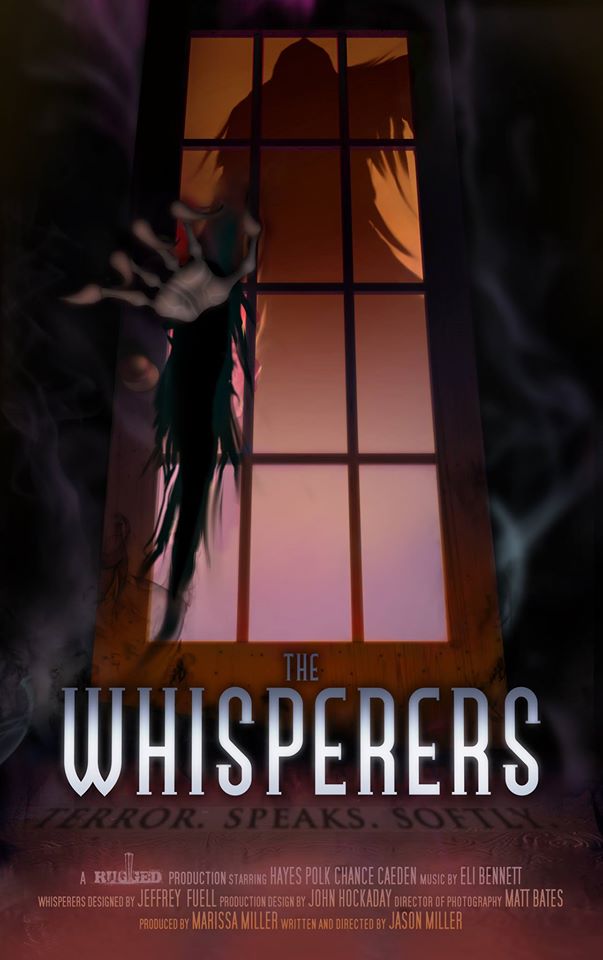
Something wicked this way comes, and when it does, you hear it whisper. “The Whisperers” is a 20-minute horror-suspense film that’s more or less in the spirit of an old episode of ‘90s family-horror TV shows such as “Goosebumps” and “Are You Afraid of the Dark,” among others (and its running time is about the same duration of one episode). Having watched those shows a lot as a kid, I rarely recall any of them that “scared” me. “The Whisperers,” on the other hand, despite its familiar setup and being technically family-friendly, actually managed to get under my skin. It works as well as any good horror film in that it has a neat sense of buildup, atmosphere, and mystery.

The film takes place sometime in the mid-90s, around Halloween, as a pair of squabbling brothers—11-year-old Nathan (Hayes Polk) and 8-year-old Zachary (Chance Caeden)—are left home alone at night in a rural country home. Zachary wants to play with Nathan, but Nathan just wants to be left alone and sees Zachary as a nuisance. But things start to get creepy when Nathan hears faint, garbled whispers coming from outside, and he realizes he and Zachary are not alone…

What’s out there? What does it want? What does it whisper? As the film continues, the whispers become a little clearer and it’s very unnerving to find out what they mean. It all leads to a payoff that (again, without giving too much away) is both disturbing and haunting. The film’s epilogue ends on a poignant note that makes the film more of a cautionary tale about sibling rivalry than what the rest of the film may have led you to believe. But if you watch it again, you’ll see that it’s been building up to not just the scares but to the message. It’s subtle, but it’s there. This is a horror film that is about something.

There are some good, effective creepy moments, some of which make good use of the film’s ’90s-culture references; my favorite scare involves the Clapper. And there is a good deal of suspense aided by moody cinematography and efficient sound design. Sometimes, the ambience of crickets chirping outside or a horror movie playing on TV inside is enough to get the job done, but other times, when Eli Bennett’s chilling music score comes in, are effective as well. If I have a problem with the film, it’s that while it has a good amount of unsettling moments, I imagined certain ways they could’ve made two or three other shots scarier.

Hayes Polk gives a good, natural performance as a pre-teenage boy who suffers the usual problems most kids that age do, especially those who have younger siblings; he sees his kid brother as an annoyance and just wants to be left alone with his thoughts, which seem to revolve around a girl he likes. As Zachary, Chance Caeden is not a very polished actor, but he is enthusiastic, and there are instances when he’s successful at being the source of Nathan’s irritation, particularly when he’s running around the house and pretending to be a superhero (he wears a cape and calls himself “Zach Attack”).

I wish I could say more about the ending because it truly is terrific in the way it brings it all around and makes “The Whisperers” not just a horror story but something more moving and profound. The saying, “Be careful what you wish for,” is the best way to describe it; it’s very well-done.

The film’s writer-director, Jason Miller, previously co-directed the collaborative short film, “Blood Brothers,” and he shows in both these films that he is fully capable of balancing ordinary setups with complex dramatic issues. I’m sure I’ll admire even more of his work in the future.

NOTE: The film is available on demand at https://www.indiereign.com/v/da5d3

Furious Seven (2015)

4 Apr

Furious_7_Reparto

Smith’s Verdict: **1/2
Reviewed by Tanner Smith

“Furious Seven” is the seventh entry in the highly successful series of “The Fast and the Furious” films that basically represent the equivalent of what they feature much of: street racing. Both street racing and these films are made up of speed, adrenaline, and a divergent lack of intelligence. “Furious Seven” is mostly on that level. But this time around, there’s a sense of poignancy surrounding the film’s fun measure, and it has to do with the untimely death of star Paul Walker. Walker died midway through filming and because we’re aware of that, that kind of takes away from the fun whenever he’s on screen.

If you can get past that (which isn’t easy, seeing as how the fourth wall is nearly broken when it brings up this matter near the end), this seventh entry in a film series that is all about stunts, effects, energy, and quick editing is…pretty much the same thing. It’s a relentless series of exciting action sequences that don’t generate any real tension because everyone in the audience knows that everything will turn out okay. But they look great and provide us with a great deal of trailer-fodder. My favorite scene involves Vin Diesel’s Dom and his allies (Walker, Michelle Rodriguez, Tyrese Gibson, and Ludacris) parachuting out of the back of a plane…with cars. It’s tremendously insane and fun to watch, and it’s followed by a similarly insane moment as Walker attempts to flee from the back of a truck that is about to hurdle off a cliff.

Does the story even matter? Does it matter that Jason Stathum’s character is a Special Ops assassin out to avenge his brother’s death by killing Diesel and company, thus making it your typical hunter-vs-hunted tale? And does it even matter that Kurt Russell joins the cast as a government agent who enjoys watching these guys work? Does it matter that there’s a mercenary played by Djimon Hounsou using surveillance technology to track them down? Nope. Not at all. It’s just an excuse to give us awesome action scenes; nothing more, nothing less. I feel that it tries to be a James Bond movie (complete with a beautiful woman, played by Nathalie Emmanuel, who knows a thing or two about computer hacking), but when you have as much high-speed energy as this, you don’t care much about anything else.

Give the filmmakers some credit for attempts at character building, such as when Walker’s character, Brian O’Connor, is struggling to choose between the adrenaline-junkie life he’d gotten used to or a quiet, responsible family life he’s getting used to. But other moments such as Rodriguez’s amnesiac character trying to regain her memories as Diesel’s wife aren’t as successful.

The film ends with a tribute to Paul Walker, which thankfully isn’t done with merely a “For Paul” dedication but with a montage of shots of him from earlier in the series. It also has a nice reflective moment that works with the message I think was trying to get across all along: it’s all about family. I won’t say any more about it, but it’s actually a well-done moment.

I’m giving the film a mixed review but admittedly with some affection. I did enjoy it, and I would probably see it again on DVD or on demand to see those glorious action scenes again. Bottom line here is that it either works for you or it doesn’t. If you like energized, adrenaline-fueled set pieces, this is the movie for you. Just expect a little bit of pathos near the end.

Sounder (1972)

23 Mar

Sounder

Smith’s Verdict: ****
Reviewed by Tanner Smith

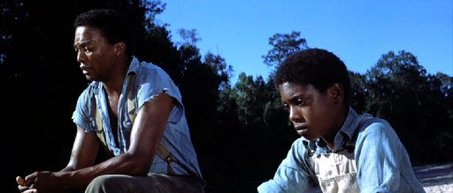
As I begin my review of this wonderful film called “Sounder,” I would like to talk about my favorite scene. It’s late in the film, as its pre-teenage hero, David Lee (Kevin Hooks), visits a school where one of the class tells a story about how he saved his sister from drowning in a creek. The other students think he’s lying; they know he can’t swim. The boy insists the story is true. But David Lee believes, and he speaks for him. He believes the boy had to jump into the water even though he couldn’t swim was because he had to, in order to save his sister from drowning. It’s just like how he, his mother (Cicely Tyson), and his two younger, smaller siblings had to look after the crops after his father (Paul Winfield) has been sent away to serve a one-year hard labor sentence. No one believed they could do it, but they did. Why? Because they had to; otherwise, they wouldn’t survive. After putting it that way, the rest of the class applauds him.

The film is set in the mid-1930s, during the Great Depression, filled with ordinary people doing what they could with what they had. And for a family of poor black sharecroppers in Louisiana, who are the central characters in “Sounder,” they had to work harder, even in the midst of family crises. This is the ethical center of the film: ordinary people faced with needs and rising to the occasion. It’s somewhat easy to root for heroes who have superpowers, lead armies, give big speeches, etc. But it’s so much easier to root for central characters who are not meant for great purposes other than looking out for each other and doing what they can to make their situations better, while also searching for and finding that special feeling within themselves to keep going.

“Sounder” is a slice-of-life film that focuses on such characters. In rural Louisiana, a family of black sharecroppers go through a crisis they have to push themselves out of somehow, and the film shows how they all grow in the process. The oldest son, David Lee, comes of age; his mother is more determined than before; and his father, having served a jail sentence (this is for stealing food for the family early in the film), has valuable advice for David Lee after his return home. The film is about truth and development, centered on real, fully-realized characters who love and try to help each other. As a result, it becomes one of the most moving, effective family films I’ve ever seen—I take it back; maybe not just “family” films, but films in general.

The film is episodic in its storytelling, showing us time after time in a series of events that make up the ethical center. The closest thing that happens on an action level is a sequence in which David Lee and his hunting dog, Sounder, set off on a journey to find the prison camp his father was sent to. He doesn’t have any luck when he gets there, but he does come across a black school where he attends a class and is taken in for a couple of nights by the friendly schoolteacher, who invites him to live with her while he attends her school. It’s here where that scene I mentioned in the first paragraph comes into place.

Another favorite scene comes near the end. The payoff is very effective in a simply moving way. David Lee’s father finally comes home, and David Lee never wants to be without him again, so he doesn’t want to leave to go to the school. But his father insists that he should. Angry and sad, David Lee runs away. But his father catches up to him and gives him a speech about how he shouldn’t get too used to this place; otherwise, he won’t leave and his future will be aimless. It’s a very realistic moment between father and son, and the father’s words are perfectly chosen.

Simply put, “Sounder” is an excellent film with a simple yet affectionate story of growth, love, and hope. The acting is great, especially from Paul Winfield and Cicely Tyson (she brings a lot of subtlety to her role as a nervous but determined mother); the emotions and themes are mature and well-presented; and it’s a film for the whole family to see. Kids can get much out of it, adults can get even more, and all will see that this is a truly wonderful piece of work.

Batman and Robin (1997)

14 Mar

latest

Smith’s Verdict: *1/2
Reviewed by Tanner Smith

The best thing I can say about “Batman and Robin” is that it looks good. The sets, the locations, and even some of the effects help make Gotham City into a colorful, weird, wacky world that looks great. It seems as if director Joel Schumacher and his crew put almost every ounce of their budget into the production design. But unfortunately, this brings me to the film’s first failing: it’s overdone in its colors and cartoonish imagery to the point where it doesn’t even look like it should be Gotham City, meaning it doesn’t look like it belongs in a “Batman” story. But at least it matches the tone, which is more lighthearted and goofy (even more so than Schumacher’s 1995 predecessor to the saga, “Batman Forever,” which was a hit with audiences by playing to a younger demographic) to the point where it seems like a big-budget version of the campy 1960s TV series starring Adam West. Gone are the dark, complex aspects that made the original Bob Kane comic book series and Tim Burton film adaptations so compelling, because now we have a special effects extravaganza with no interest in diving into Batman’s world but instead showering us with exaggerated visual style and lots AND LOTS of cheesy one-liners (most of which centered on ridiculous unfunny puns). Even if you’re a fan of the series this is clearly trying to resemble, I still wouldn’t recommend “Batman and Robin.”

The film on its own is soulless and not much fun. You’d think such an outrageous environment our heroes live in wouldn’t be in a film this dull. There’s so much asinine action that it’s hard to tell what’s going on half the time and, more importantly, why. The characterization is close to nonexistent. The dialogue is godawful with all those lame wisecracks, puns, and double meanings constantly scattered all over the film and spouted out by all heroes and villains. And there’s a whole subplot that would be emotional if it wasn’t centered around a character with very little screen time and nothing in terms of character interaction. That character is Bruce Wayne’s faithful butler, Alfred (Michael Gough), who seems to be dying from McGregor’s Syndrome. Not much is made of this subplot. It doesn’t seem to be psychologically hurting Bruce except for a couple moments when it’s simply referred to but hardly discussed. And it leads to a payoff that’s too easy to spot coming so that the whole thing not only becomes less heartfelt; it’s pointless.

George Clooney dons the cape and mask as Batman and the similar dark attire as Bruce Wayne, and if people thought they knew very little about Michael Keaton’s portrayal, I can’t imagine anyone knowing any more about Clooney’s. Clooney has the sardonic side down and has a great amount of dry wit, and to be fair, it’s not his fault the performance doesn’t work. He’s got nothing to work with.

Some of the film’s “dramatic conflict” (I use quotations to emphasize weakness) revolves around the rivalry between Batman and Robin (played by Chris O’Donnell). I liked Dick Grayson/Robin in “Batman Forever”; the character was interesting and his story was effectively handled to be taken even a little seriously. But here, constantly alongside Bruce Wayne/Batman, there’s no depth or growth in his character. Instead, he’s just an egotistical brat who mostly whines throughout the movie about how he gets very little respect as Batman’s sidekick. I guess we’re supposed to feel sorry for him, but I was wondering when Bruce Wayne would kick spoiled Dick Grayson out of Wayne Manor. And to make matters worse, he’s an idiot. That can only explain how he constantly must be reminded by Bruce that he shouldn’t fall for Poison Ivy, an obvious villainess. This is why Gotham residents will always call on Batman first instead of Robin.

Speaking of Poison Ivy, she’s one of the two main villains in “Batman and Robin.” Played by a lanky Uma Thurman doing her best to imitate Jim Carrey’s Riddler from the previous film, she’s a perfume-dispensing femme fatale who loves plants more than people (and even has a man-eating plant in her hideout) and contains a special poison that makes men fall for her and even kills them with her lips. She teams up with Mr. Freeze (Arnold Schwarzenegger, completely over-the-top), a scientist turned madman who wears a special freeze suit that helps him survive being permanently doused with some sort of “ice chemical.” He carries around a gun that freezes things and people, and his mission is to (what else?) take over the world. These two villains pair up to take down Batman and Robin and recreate their world in their opposing visions (I wasn’t quite sure what they were going to do with plants and ice; you tell me that).

Oh yeah, and I should also mention Alfred’s niece, Barbara (Alicia Silverstone). I’ll neglect the fact that she doesn’t have a British accent despite having lived in London, but she doesn’t have the slightest bit of personality. Her line readings are very stiff and there isn’t much for her to play with either, even when later in the film, she suits up as Batgirl.

When “Batman” is done right, it’s dark, gritty, and complex, but it’s also creative, clever, and compelling. “Batman and Robin” doesn’t even qualify for any of those six adjectives. It’s a goofy, clunky, colorful mess of a movie that reportedly even the makers of the film weren’t very proud of. In fact, there’s a DVD audio commentary by Joel Schumacher in which he talks about what went into making it and why he made the choices he made, and almost midway through it, he acknowledges the harsh criticism he received from fans and apologized for not pleasing them. He even takes the blame himself, stating that he, as director, had full responsibility. If a film is so disappointing that even the director can’t deny it, that’s saying something.

Focus (2015)

2 Mar

focus-will-smith-trailer

Smith’s Verdict: ***1/2

Reviewed by Tanner Smith

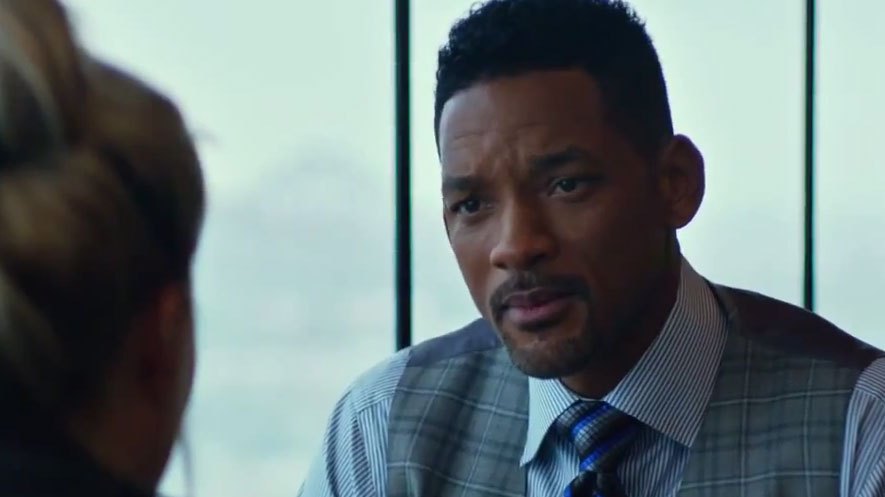
“Focus,” a caper comedy/thriller written and directed by Glenn Ficarra & John Requa, is a film that really plays to the strengths of its star, Will Smith. After some poor recent choices in his career, he takes center stage in “Focus” as Nicky, a master con artist with many tricks of his sleeve, all of which require a lot of focus and incomparable skill. This is the kind of Will Smith performance we love to see: charming, charismatic, compelling, a little frivolous but with some dark undertones within him. His character here may also have an underlying gambling problem, which isn’t addressed directly in the film, but it is there and I noticed it, which made me consider what his character was thinking. He seems to want a bigger score with higher stakes each place he goes, whether it’s New York City, New Orleans, or Buenos Aries.

But of course, getting into the characters’ mindset is not an easy task for a film about slick con artists, especially when they’re in a story with so many twists and turns that you may have to see the film twice in order to understand some of its revelations. On top of that, each character is constantly lying in one way or another. So it’s difficult to know where the lies end and the truth begins, leaving the audience guessing and wondering where their words and crafts will get them next.

Thanks to a clever screenplay, “Focus” does a consistently good job at conning the audience. I must admit I didn’t see many of its twists coming. I was on the edge of my seat, awaiting what the next reveal and what it was going to mean and lead to. Granted, the third-act twist, as unpredictable as I thought it was, may be too much for someone who’s willing to sit down and think about it, in that it may be somewhat irrational, but I don’t think it damages the film. Even better is its depiction of how the characters manage to pull off their schemes—one of the best sequences is when a large number of pickpockets pull off a difficult routine in a busy New Orleans street; it’s very well-choreographed.

The first half is better than the second, as we get into the world of these scheming individuals, particularly Nicky who shows his new apprentice, Jess (Margot Robbie), what more to do with her abilities, while he’s also falling for her (or is he?). It’s fascinating to watch acts of thievery being committed this sneakily and in a fast-paced manner, while also showing that’s it very hard work. It’s also great to see a battle of wits and chance coming about, particularly in a fabulous sequence in which stakes are constantly raised at a football game where Nicky encounters a sneaky gambler (B.D. Wong). That may be the most riveting scene in the film, and its payoff is nothing short of brilliant. The second half may not be as intriguing as the first, but it does allow for even more situations for Nicky to get in and out of.

“Focus” is an entertaining film from start to finish and it’s anchored by clever writing and a top-notch performance from Will Smith, who is in eager need of a hit after years of bad or uneven career choices. This might be that film.

The Last Detail (1973)

11 Feb

the-last-detail-1-1

Smith’s Verdict: ****
Reviewed by Tanner Smith

WARNING: The last paragraph heavily discusses the film’s ending.

Jack Nicholson. What can you say about this iconic, highly charismatic actor (scratch that—“star,” not “actor”) that hasn’t been said already? He’s one of those actors who could read the dictionary or the phone book and be, for lack of a better word, awesome. There are a lot of movie buffs out there who will argue over which is his best performance. Some say it’s the pissed-off working-class man in “Five Easy Pieces,” some say it’s the slimily charming astronaut in “Terms of Endearment,” and so on. For me personally, it’s no question, although I’d say it’s more my “favorite” rather than “the best.” That distinction goes to his performance in 1973’s “The Last Detail,” as Naval Officer Buddusky, played with the Nicholson charm, the Nicholson attitude, and the Nicholson smirk. His nickname? “Bad Ass.” I get the feeling the screenplay was written with Nicholson in mind as this character because, to me, this completely defines everything this star stands for and is best known for.

Buddusky and his fellow officer “Mule” Mulhall (Otis Young) are called upon for a “sh*t detail,” but this is one that seems fairly simple: transport a young sailor, Larry Meadows (Randy Quaid), from his Virginia Navy base to the brig in Portsmouth, New Hampshire, where he will be imprisoned for eight years (“six years for good behavior,” Buddusky assures Meadows). Meadows’ crime was an attempt to lift $40 from a charity box belonging to the base commander’s wife’s favorite charity—a semi-petty crime from a budding kleptomaniac (though he never actually managed to get the money out of the box). Before Buddusky and Mulhall even get to know the kid, they agree that serving an eight-year prison sentence because of this isn’t the least bit fair. But along the way to the brig, by bus and train, they make small talk and get to know each other. The two officers escorting the prisoner find that he’s a sad-sack kid who’s as unlucky as they come. When he has a mental breakdown on the train, they take him off to relax, and Buddusky gets an idea to make this trip worthwhile by stretching it out as much as possible so he can show Meadows how to have a good time (or rather, Buddusky’s idea of a good time). Their two-day trip becomes a five-day journey of beer, ladies, and badass conduct before they inevitably must take Meadows to his destination.

One of the notable assets that works in the film’s favor is Robert Towne’s script (who also wrote another Nicholson vehicle, “Chinatown”), which doesn’t pull punches or go for the easiest task of sentiment. It’s mostly a series of scenes that are either funny, endearing, insightful, or even all three, mostly told through dialogue. The conversations between these three men are mostly natural exchanges and it’s always refreshing to hear characters just be regular people instead of pawns in a screenplay’s game. Credit should also go to director Hal Ashby and cinematographer Michael Chapman—they help what could be formless scenes into something more; something meaningful; something potent. Even in a scene where they’re just sitting around in a motel room, drinking beer, watching a movie, and talking about life and the future, it works because you get into these guys’ heads even more.

But I don’t want to make “The Last Detail” seem so deep that it’s not entertaining and it would chase people away, because it also is very funny, especially when Buddusky comes up with a new way of teaching Meadows how to have fun. There are also many sharp and witty lines of dialogue that makes the conversations between the characters fun to listen to. There’s a sense of underlying bleakness, but it only truly makes its way as a good balance. This way, when something humorous occurs, it’s well-deserved. Some of my favorite bits include a scene at a bar where Buddusky tries to get underage Meadows a drink and snaps at an uptight bartender and a scene in which he tries to hit on a pretty young woman by talking about romance or life on the sea while all she wants to talk about is politics.

Jack Nicholson was tailor-made for this role—profane, vulgar, charismatic, carrying a suitable devil-may-care attitude all throughout the film, and even kind of sentimental, which is notable in scenes such as when he tells Meadows to take back his order at a restaurant because he should “have it the way you want it.” His presence practically makes the film, and “Bad Ass” is the perfect nickname for his character (you were thinking the same thing). The other two actors, Otis Young and Randy Quaid, are solid support. Young is more controlled than Nicholson and a good counterpoint when Nicholson has another idea that may get them in more potential trouble while also (possibly) subtly respecting him in a way that he might actually wish he could be more like him. Quaid is perfect as their charge who is naïve, goofy, and likable; you could even say he’s so pathetic that it’s hard not to care for this poor guy.

At this point, I’m going to discuss the film’s ending in heavy detail. If you haven’t seen the film, please do and come back and read the rest of this review.

The ending of “The Last Detail” is one of the most intriguing and talked-about aspects of the film. It doesn’t end the way movie audiences, especially today’s, would expect. A more conventional film would have ended with Meadows’ escape from his escorts or any kind of decision that would have resulted in him not going to prison. It almost seems as if they were going to go in that direction, in a scene in which Meadows has his chance to escape while Buddusky and Mulhall are discussing bitterly what they have to do in the end. What happens? He bolts, causing them to chase him. They catch him (and not only that; Buddusky pistol-whips him). In the end, Buddusky and Mulhall do their duty and take Meadows to the prison where he is taken away without a word. A lot of people must be thinking, “Why did they do this? Why didn’t they let him escape? How could they let this happen to their new friend after all they’ve done together?” There’s no doubt that both Buddusky and Mulhall are heartsick about the inevitable, but they decide that it is their duty they set out to do and, being honorable men of their position, there’s no other final route. What may throw people off is the hidden irony, which is this—Buddusky pistol-whips Meadows when he catches him and the officer in command at the prison berates him for it…and Buddusky has already mentioned the probable brutality Meadows should expect in the prison. What does that say about the situation? (To be fair, Buddusky does lie when asked if Meadows tried to escape, just to save him any more trouble.) Something else conventional movie audiences would expect is Buddusky and Mulhall would become great friends after this. Do they? It’s hard to tell—as the two men leave, they talk about what they’re going to do next, one of them hoping his Navy orders came through. They just walk away, uncertain of their futures. Fade out. The end. Roll credits. This is what the late film critic Gene Siskel used to call the “life-goes-on” ending, a rarity in films. It’s a resolution in which no matter what we would like to happen to get a “happy ending” out of the film we’re watching, it ends in a way that both surprises and unsettles the audience. (“Terms of Endearment” is another example of this.) It doesn’t end the way we expect it to, or even the way we would like it to, but that’s what you can say for just about any situation in real life. As a plus, by ending movies this way, the audience remembers the movie and can think about what it all amounted to in the end. Discussions among friends can also come about. The ending of “The Last Detail” is hard, realistic, and also ambiguous. It’s a great ending to an already terrific film. The more times I watch it, the more I get out the setup, the journey, and the resolution

Invasion of the Body Snatchers (1978)

9 Feb

invasion_of_the_body_snatchers_1978_image

Smith’s Verdict: ****
Reviewed by Tanner Smith

Don Siegel’s 1956 cult classic “Invasion of the Body Snatchers” is a consistently creepy sci-fi thriller with a clever idea and a chilling subtext for its time, about (presumably) McCarthyism and the paranoia it caused. When you think about it, it’s a premise that would suit any time period and act as a metaphor for whatever issue is at hand in society. That’s what made the idea welcome to be reinterpreted for a remake in 1978. If the ‘50s version is a metaphor for McCarthyism, this ‘70s version could be about the beginning of a new generation that is all about themselves, ending the era of the flower people. But it could also work as a parable for faceless city life, having moved the original setting of a small suburban town to a big city.

But even when that aside (and it’s not a thought that’s dwelled upon in the actual film to begin with), Philip Kaufman’s 1978 retelling of “Invasion of the Body Snatchers” not only matches the original in tone but also surpasses it in execution, concept, and even effect. This is a horror film that frightened, delighted, and captivated me all at the same time.

Strange-looking flowers have bloomed in San Francisco. A health department employee, Elizabeth (Brooke Adams), picks it and decides to inspect it. She brings it home. The next morning, her selfish, slobbish boyfriend seems like a different person—more cold and distant. This is not her boyfriend, she argues, even if it still physically looks like him. Other people in the city have this problem as well, claiming that members of their family and friends are not the same people they used to be. Her colleague, health inspector Matthew Bennell (Donald Sutherland), is ignorant of any change until his writer friend, Jack (Jeff Goldblum), and his wife, Nancy (Veronica Cartwright), discover a deformed body in the bathhouse they both run. The body has an adult figure but no distinguishing characteristics…and it slightly resembles Jack.

The body is missing when Matthew brings his psychiatrist friend, Dr. Kibner (Leonard Nimoy), in on the discovery, and he dismisses everyone’s paranoia as excuses to get out of relationships or not accepting change in their lives. But when Elizabeth falls asleep and Matthew discovers a forming double of her, things get stranger and even more unnerving as it seems the flowers and their pods are the cause of the phenomenon. It seems people are being duplicated and replaced as emotionless beings, and before long, it’s becoming harder for our main characters to know who to trust.

About what I wrote above about how the film works as a parable for city life, that theme of individual isolation is present throughout, especially when more of the city’s residents become converted by the growing population of “pod people” and our main characters are easily outnumbered against many. How do you trust your fellow neighbor when you don’t know who he really is? It’s a scary notion that is played very effectively, as the invasion expands slowly but surely. The tone laced within the film’s atmosphere is perfect—there’s a great sense of quiet foreboding that makes small actions almost seductive. Even in the final half-hour, when the climax should be loud and bombastic, is still quietly creepy and succeeds at being suspenseful in moments of betrayal, fear, and shock. This isn’t a case of the “it’s-good-but-it-could’ve-been-great” syndrome that countless resolutions cause; this film is riveting from the beginning to the middle to the end. (And speaking of endings, I won’t spoil it, but it ranks among the best shockers in horror-film history.)

Most of the credit has to go to Kaufman, whose direction constantly fills the audience with uneasiness. And it looks and feels like he thought up every shot and decided to throw in a little extra something here or there for every frame of the film. He has a disturbing shadowy look that works with the material; he has extras stand still in windows and walls for unnerving effect; reflections cast oddities such as rays of light; and so on. I’ve seen this film about ten times so far—I’m not sure I caught everything as of now.

But more importantly, with a unique gritty style of filming, it feels real, which is one of the main reasons this film still continues to scare me.

This may not seem like an actor’s film, but all the actors do great, believable jobs. Donald Sutherland is excellent what could’ve been a thankless role; this actor knows how to grab your attention with his voice, his poise, and his attitude. Brooke Adams is suitably vulnerable and easily sympathetic. Leonard Nimoy gives us the same deadpan wit that his Mr. Spock character on “Star Trek” is known for, and it rings true for the character and for the situation at hand. Jeff Goldblum is good comic relief. Veronica Cartwright is the least impressive of the bunch, but she’s not bad; her terrified reactions seem a little over-the-top sometimes. While we’re on the subject of casting, Kevin McCarthy, from the original 1956 film, makes a terrific cameo appearance.

To sum up, I love this film. It’s a brilliantly unsettling remake that, in my opinion, even better than the original. I know someone out there is thinking of redoing this idea for a new version in a new era (as well they should, because a good allegory remains a good allegory); one can only hope it’ll be as solid as this version.

Jupiter Ascending (2015)

9 Feb

Jupiter-Ascending

Smith’s Verdict: **
Reviewed by Tanner Smith

Tell me if this sounds familiar to you—a bland, underdeveloped main character hates his or her life but doesn’t realize the very important reason for existing until someone or something is on the attack, causing the person to rise up, accept destiny, and fight back.

This story is tired and old, but I wouldn’t mind that if it had strong characterization, a gripping story, and an imaginative world. With the Wachowskis’ latest science-fiction adventure, “Jupiter Ascending,” they certainly have the world down. The film excels at establishing this new universe with great detail and even first-rate CGI. And you also want to find out more about this interesting place. But the problem is it constantly distracts from everything else and the characters get lost in it. You know the expression of the actors “chewing the scenery?” This is the scenery chewing the actors.

What’s worse is it’s trapped in a story with uninteresting characters, a ton of exposition that lost me as quickly as it had me, and even a shorter running time than it needs to really explain the backstory instead of rushing it out so quickly. But I should probably take back that last one, because it’s already two hours and I wouldn’t want to sit through much more of this mess.

Now, to be fair, there are a few nicely-done action scenes, including one involving attacking spaceships and a soldier flying around on anti-gravity boots, having to evade the enemy fire and keep hold of the film’s protagonist at the same time. That was a riveting scene and it had my attention. A lot of the action is nicely-handled. But there’s another problem with that—I easily forget what it is these aliens are fighting for. I assume it’s Earth, as it usually is, but what was the reasoning? (To be fair, I probably missed it in the ongoing exposition.)

Oh yeah, there’s a story here, right? Our protagonist is Jupiter Jones (Mila Kunis), a Russian immigrant to the United States who works as a maid to aid her indigent family in Chicago. But things turn upside-down when a band of aliens try to kill her. It’s a hit ordered by the inter-dimensional Abrasax family—Balem (Eddie Redmayne), Kalique (Tuppence Middleton), and Titus (Douglas Booth)—who see Jupiter as a threat or as an opportunity to get what they’re interested in. It seems Jupiter is the reincarnation of someone who was originally part of their world, and she may even be of royal blood. A half-man/half-wolf being named Caine (Channing Tatum) is hired to protect her. As he gains her trust, he brings her back to his world, they experience more chases and fights, and she realizes who she truly is by the end of the film.

Oh I must reveal how they find out Jupiter is “royal” because this made me laugh so hard, I almost fell out of my seat in the theater. As Jupiter and Caine visit a farm where lots of bees surround Jupiter before she realizes they’re actually following her every move. Why is this happening? As one character explains, “bees recognize royalty.” If you think that’s funny, you’re going to love the true answer to the question, “what killed the dinosaurs?”

A lot happens in this hastily-rushed story that it’s hard to keep track of whose backstory and even harder to be invested in what little character development there is. Jupiter and Caine are supposed to fall in love, but I think Anakin and Padme in the “Star Wars” prequels had better chemistry than these two. There’s never a sense that these people really connect in a meaningful way. Jupiter is hardly interesting; she’s just a “regular person” without much depth to her that has all this madness happen to her. Caine is a semi-interesting character, but that’s only in his background of being engineered as a half-man/half-wolf creation; aside from that, he’s a standard tough badass hero role. Kunis and Tatum are likable actors, but they don’t have much to work with here.

The villains actually have nice moments and are given at least some personality traits, such as Titus’ smarmy charm. But this brings me to another problem with the film: Eddie Redmayne’s performance as Balem. Balem is a straightforward villain, but Redmayne plays it with what he probably thinks is an “intense whisper” but comes across as Hugo Weaving imitating Dumbledore. Redmayne is currently nominated for the Best Actor Oscar for “The Theory of Everything” and we know he’s a great actor, but he really picked the wrong choice to play this character in this manner.

The “Star Wars” sequels helped further the development of its hero, Luke Skywalker, making his journey more harrowing and personal. With Thomas “Neo” Anderson in the “Matrix” sequels…well, they tried. I don’t think “Jupiter Ascending” is lucky enough to get a franchise, so I’m sorry, Jupiter—I hope your future missions go well without us.

NOTE: I’m just going to address the Abrasax family personally—Have you ever considered she probably wouldn’t be a threat if you didn’t try to kill her in the first place, you morons?! Oh wait. Then we wouldn’t have a movie. Never mind.

The Last House on the Left (1972)

6 Feb

last house 72 01

Smith’s Verdict: **
Reviewed by Tanner Smith

Warning: This review contains many spoilers (but it is an older movie).

“The Last House on the Left” was the feature debut for director Wes Craven, who would go on to be best known for horror films such as “A Nightmare on Elm Street” (and its sixth sequel, “New Nightmare”), the “Scream” movies, and “Red Eye.” I know he’s a smart filmmaker with a lot of interesting ideas to put into the mix of his films, and to be fair to “The Last House on the Left,” I think I kind of understand the reasoning behind most of the choices made for it. Let me explain…

There are many strange elements to this film, all of which are very distracting in comparison to some disturbing, brutal scenes of sex and violence. The soundtrack contains a lot of cheesy, upbeat music, including a theme song for the film’s antagonists and a melancholy (“foreboding”) theme song for their victims that features the central lyric “and the road leads to nowhere.” The unnerving scenes of uncomfortable flirtation and upcoming torture are constantly intercut with quirky scenes in which parents prepare a surprise birthday party for their daughter who happens to be in danger during all this. And even more distracting is the central rape-and-murder sequence interlaced with scenes involving two bumbling police officers who look and act like they belong in a completely different movie.

I suppose the reasoning for this choice in music is what was going on at the time, when you would tune in to TV and radio and hear stories about Vietnam and then switch the dial to chirpy folk music to calm yourself down. I think Craven was trying to satirize that probability through this film. But to me, it didn’t work at all and it kept losing my attention. Maybe back then, it worked. But now, it’s extremely dated.

The film’s tone constantly shifts in the first hour of the film, from horrifying terror to quirky comedy. I know we need some comic relief after some of the scariest of moments, but this is just too much. It’s sloppily handled and has no clever way of seguing from one to the other. Am I being too harsh? Probably, but I never got a laugh from these clowns.

But I’m getting way ahead of myself. “The Last House on the Left” is about two young women, Mari and Phyllis, who go out for a night on the town and meet a strange young man their age who might supply them with pot. But quickly, they’re trapped in a motel room with the young man, two escaped convicts, and their whorish girlfriend, who torture them and kidnap them. (This happens along with Mari’s parents preparing the birthday party.)

The following morning, the brutes stash the girls in the trunk of the car, which breaks down during their “pleasant” drive in the middle of the woods. From that point on, they take the girls further into the woods and go on to violently rape and murder them. It’s extremely violent and very depraved in its execution. The visceral thrills are well deserved, especially since the scene is well acted, very disturbing, and quite scary in that you don’t know what these people will do to these poor young women. What’s especially heartbreaking is that all of this is happening just across the street from Mari’s house and she tries to find a way to escape that far, even trying to talk the weakest of the killers (the young man) into helping her, but it just won’t happen. And when Phyllis tries to escape, you root for her to escape and are saddened to find out what happens to her when the killers catch up to her, just as she almost makes it to the highway. It’s crude and startling, but it’s very effective.

But the big problem here is that it constantly loses its horror; this whole sequence is intercut along with a lot of the material involving the two cops.

One of the most interesting and refreshing things about the film is that the young man, one of the killers, is as unsettled about his companions’ crimes as we are. He has nightmares that night about what they’ve done (with Mari tauntingly chanting his name) and even in the beginning, he believed things were going too far. But the kid is also mentally unstable and is constantly convinced by the two older men to go along with the plan. When the kid finally steps up and tries to put a stop to all the mayhem, it’s especially tragic that he can’t allow himself to. One of the best scenes in the film is when the ringleader of the group, Krug (David Hess), is held at gunpoint by the kid and Krug manages to talk him into pointing the gun at himself and “blowing his brains out.”

Only the last twenty minutes remain consistently unnerving and violent. The killers find themselves spending the night in the home of Mari’s parents. The parents find out who these strange people are when they discover blood stains on their clothing and one of the men wearing Mari’s locket. They decide to take revenge and singlehandedly kill them all in ways that are shockingly more dangerous and violent than the killers’ previous actions. The father attacks with a chainsaw and sets traps around the house (one of which involves electrocution), while the mother does something to one of them that I’m not even going to describe here. A psychologically disturbing scene that gets into the minds of the parents before they carry out their revenge is a dream sequence in which they smash one of the killers’ front teeth out with a hammer and chisel. This climax is horrific but it’s fascinating in that you can see the lengths that the parents are willing to go through to avenge their daughter’s death.

But need I also mention that the curtain-call ending credits feature the same cheesy, upbeat music as well? That’s right; just when we’re supposed to feel something after a gruesome series of murders and ask ourselves questions of how we as people would handle a similar situation, it’s immediately ruined. Something else I should bring up is the advertising for this film—it originally released a trailer with a reassurance, “To Avoid Fainting, Keep Repeating, It’s Only a Movie…Only a Movie…Only a Movie…” I can’t imagine anyone, even back when the film was released, mistaking this for anything else, especially if you show them the scenes involving the two cops.

NOTE: Okay fine, I laughed once, at a scene in which the bumbling cops encounter a woman driving a chicken truck and try to hitch a ride. I might as well admit it.

Rashomon (1950)

4 Feb

rashomon

Smith’s Verdict: ****
Reviewed by Tanner Smith

Akira Kurosawa’s 1950 Japanese classic “Rashomon” is a mixture of simple storytelling and psychological complexity. Just when you think you may have a handle as to what the film is truly about, it raises questions, offers subtle symbolism, and has some things to say about human nature.

Labeled the film that put Kurosawa’s name on the map and had him declared one of the best film directors of all time with his further-coming films (“Seven Samurai,” “The Hidden Fortress,” and so forth), “Rashomon” has a great story idea that is very effectively handled here and has gone on to be copied in other films and TV shows, such as the 1996 war drama “Courage Under Fire.” The central story is about the murder of a man (Masayuki Mori) in a remote wooded area, most likely by a bandit named Tajomaru (Toshiro Mifune, who would go on to appear in other Kurosawa’s films) who wanted the man’s wife (Machiko Kyo) for himself. But the story is told through four different perspectives. The strange thing is neither of the four stories told by the witnesses match up. We see from each perspective presented in flashback as each person tells the story. The characters and the details are roughly the same, more or less, but the accounts of the incident are presented differently.

The film begins as a woodcutter (Takashi Shimura) and a priest (Minoru Chiaki) stay dry from a rainstorm, beneath the Rashomon city gate. A commoner (Kichijiro Ueda) joins them as he wonders what’s troubling them, as they are upset about something not making sense to them. They tell him they witnessed a disturbing story, which they begin to describe to him. The woodcutter claims to have found the man’s dead body and reported it to the police. At the courthouse garden, he and the priest listened in to three different testimonies, describing what happened. The bandit Tajomaru was brought in to tell his part of the story; he accepts the responsibility that he did commit the murder but states the rape of the woman was of mutual consent. The woman’s story follows, as she claims Tajomaru attacked her. Then comes the story of the dead man, told through a medium, which states that there was betrayal from his wife and he committed suicide. It makes very little sense to anybody, since so many details are changed in each story, but then the woodcutter reveals that he not only found the body but saw the event first-hand. His story intertwines elements from the other stories so everything makes more sense.

But did he really see anything at all? Whose story is the more accurate one? What really happened in those woods? What does it say about human nature when you consider all the perspectives about the horrific event in the first place? These questions are all raised, especially by people who try to comprehend the chronology of the incident, and those people aren’t going to find real answers except for those they come up with in their heads. What just about everyone will find in “Rashomon” is what they can learn on the news, when another horrific crime with very few witnesses comes up—that we have hardly a way of knowing the truth unless we were really there ourselves. And even if we did see anything, how will the people we tell our story to interpret it? Perspective is different from reality; it’s how things are seen in retrospect than what happens in the moment that lives within us as time goes on. Therefore, when someone thinks he remembers things clearly, is it really as clear as it seems? We also know people lie, and we know some of these people in this film are lying, but we don’t know who and therefore we don’t know which side to take here. What really happens in “Rashomon” is unsure and not absolute; what do we know for sure? This is why ‘Rashomon” works so well and still holds up after all these years—its themes of unknowable truths, perceptions of innocence & guilt, and variations of human nature are evident and very profound.

Kurosawa’s script is wise and intelligent, but his filmmaking is also very sharp, tightly focused, and quite thrilling and riveting, especially when each of the four stories are told. By the time the fourth story comes about, something happens in the storytelling that makes the visuals and the emotions even grander than before. It makes for a riveting climax that left me on-edge the first time I saw it and still gets to me today. The cinematography (by Kazuo Miyagawa) is gorgeous and really captures the feel of that semi-tropical forest the action occurs in, and there are moments in this film that owe more to silent film than to the Westerns that Kurosawa’s work associated with in the future, particularly in the swordfight sequences between the bandit and the man and also in the first flashback which shows the woodcutter’s journey through the woods before he comes across the body.

The actors must be given due credit as well, since they are asked to play four different variations of the same character. The actor who pulls it off the most is Toshiro Mifune as the bandit Tajomaru; whether playing it dirty or violent or even frightened, he gives an excellent performance, riveting throughout. I can also say the same for Machiko Kyo as the woman in question, who probably has the most difficult challenge of playing the damsel in distress, a fierce, manipulative siren, or a spiteful, sexy vixen.

It’s a brilliant move on Kurosawa’s part not to reveal what really happened in the woods. Every time I watch “Rashomon,” I find myself having a different opinion as to how everything played out. Surely, everyone else who watches the film will have their own opinions, each of them different, but that’s what makes film a great art form; the secret, subtle resolutions can be the way you want it to be, especially with films like “Rashomon.” It’s a great film, it’s still a classic today, it only gets better each time I see it, and I find myself thinking about it a lot more afterwards.