Unfriended (2015)

11 Aug

fullwidth.39024229

Smith’s Verdict: ***

Reviewed by Tanner Smith

If you’re going to make a teen slasher film (a la Friday the 13th) without well-developed or even likable main characters, you have to have A) good commentary with an underlying theme & message, B) a clever gimmick, or C) both. “Unfriended” is a horror film that has both. The characters in distress are mostly terrible people and even those who are seen in the beginning as somewhat-decent human beings have had their unforgivable sins exposed by the time the film is over.

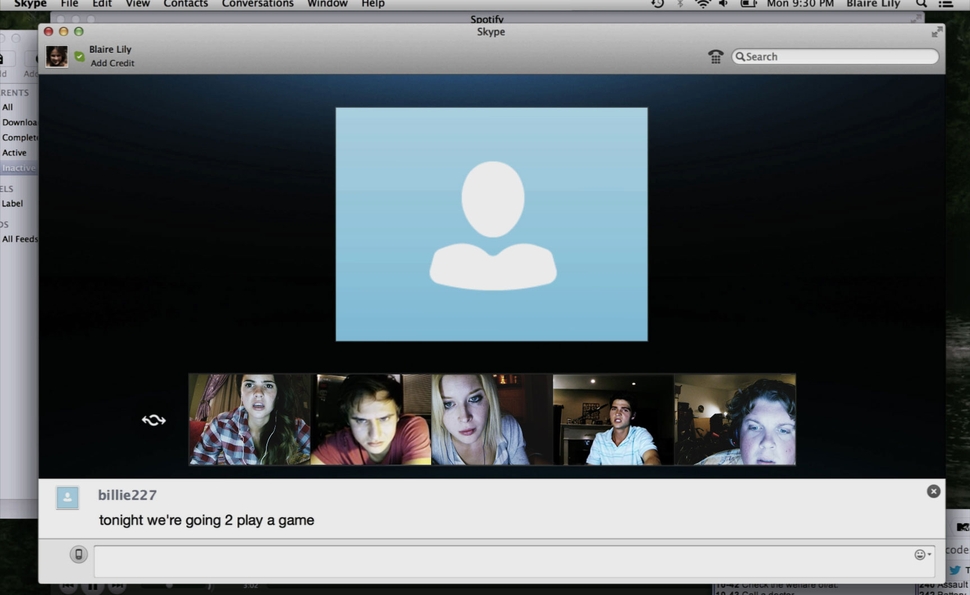
“Unfriended” has received some scathing reviews from critics because the film leans us toward anticipating these characters’ deaths, and they’ve also criticized the film’s central gimmick, which is that the whole thing takes place from the laptop screen of one of our main characters, Blaire (Shelley Hennig), who converses with her friends on Skype. We see her video-chat as well as multitask online. The film is presented in real time and the story is told from her laptop screen, and I can understand if you can’t get past this gimmick, which at times does get distracting. I was able to get past it and accept what the story would throw at me, which, as it turns out, was more than I expected. But before I get into that, let’s talk about the setup:

A high-school student named Laura Barns (Heather Sossaman) killed herself after a humiliating video of which she was the subject went viral. (Someone recorded the suicide and THAT video also went viral.) One year later, six of her classmates, including Blaire, are chatting together on Skype. But there seems to be someone joining them whose identity isn’t revealed. They can’t delete or hang up on the anonymous visitor and they assume it’s a glitch at first…until it starts messaging them. And not only that…but it’s using Laura’s account. Things get even stranger before they get dangerous, as the visitor claims to be Laura and wants to play a deadly game while also exposing dark secrets. It becomes clear that this is not a normal hacker and it may very well be the ghost of Laura seeking revenge on those who bullied her.

I saw “Unfriended” not only as a horror film, though it is very good at that by playing with found-footage gimmicks and cabin-in-the-woods story clichés, but also as a big punch in the face to bullies, especially cyberbullies. Many people, especially teens sadly, want attention and the Internet is the best way to do that and also to anonymously (though fake accounts) spread hatred and taunts. Even when there’s an anti-cyberbullying video online, which usually features a sad person expressing himself or herself, there are always going to be trolls commenting harshly and taunting the subject even more. But acting that way can lead to consequences on both the bully and the victim. It’s established early in the film that Laura killed herself because of the hurtful comments she received after the humiliating video was posted, and it becomes revealed more and more throughout the film that our six main characters have hurt her one way or another. Many of them die by suicidal acts (possibly caused by the malevolent spirit’s possession) and about half of their sins are revealed online for everyone to see. For example, early on, it’s discovered that Laura reached out to one of them for help soon after the video was posted—the person responded, “KILL URSELF.” That proof is exposed to everyone on Instagram.

What I really like about this film is its original, clever way of depicting teenage lifestyle and peer pressure and delivering in a subtle way the message that there are consequences for everything and if you confess your deeds, things might be a little easier. Some of these kids are not entirely bad (after all, no one is just born bad); actually, before the madness begins, we see Blaire and her boyfriend (Moses Jacob Storm) share a playful talk with each other and you can see and feel a genuine human relationship happening on video chat and it can be indicated that when they’re with the group, they can say or do such harsh things. It’s like the film is saying to teens: If you want to try and fit in with people like this to gain popularity in school, you have to really think about what they’re doing and what you might do.

But with that message aside, “Unfriended” is still a horror film, which means each of the characters must die in gruesome ways. If you’re a horror fan and want to see these people get their comeuppances, there are some suitably ridiculous and grisly ways each of these kids get it. (Though, the foreshadowing involving props is a little too obvious to me.) The buildup and tension are well-done in that it’s not clear what is exactly going to happen and when it will happen. And it leads to a brilliant sequence in which the characters are forced to play a deadly game of “Never Have I Ever,” in which the loser dies rather than drinks, in which truths are revealed about each of the players, the kids turn on each other, and the tension level is raised highly. And I like how it’s done in a minimalist way (all told online); director Levan Gabriadze keeps things contained and plays with the cyber reality in a well-handled way.

“Unfriended” will most likely not end cyberbullying because any kind of bullying will always be around. But I admire the way in which this film tried to speak to its audience about how this behavior simply should not continue and the truth will set you free. All the actors are decent, the pacing is strong, the twists and turns within the terror are well-done, and it’s nice to see a horror film tackle a modern issue as a fun but also moralistic cautionary tale. I recommend it but only if you didn’t mind the film’s trailer—if you see the trailer and don’t want to subject yourself to the central gimmick, you won’t enjoy this movie. I looked past it and enjoyed “Unfriended.”
It Follows (2015)

26 Jul

it-follows

Smith’s Verdict: ***1/2

Reviewed by Tanner Smith

How do I begin writing this review? There are three different ways I can think of in writing an introductory paragraph, so I think I’ll go with all of them. Here goes:

Intro Paragraph #1 (The Description of the “It”): It is a curse that can passed along from person to person through sexual intercourse. It is an entity visible only to those who possess the curse. It moves slowly. It will follow you. It can look like other people, even people you know. It will kill you and it will never stop until it does. If it does kill you, it moves back toward the previous holder of the curse. To be rid of it is to have sex with somebody else and pass it on.

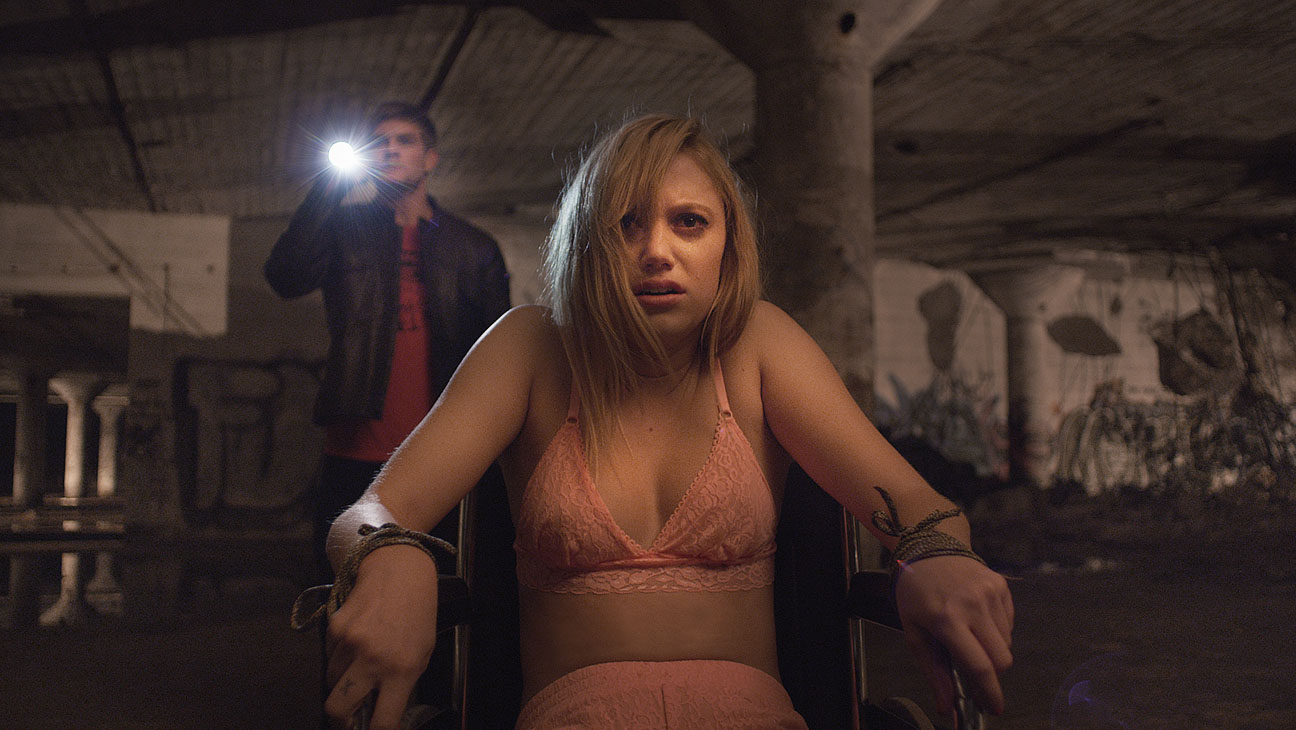
Intro Paragraph #2 (The Daydream): Carefree college student Jay Height has just had sex in the car of her date. She can’t help but express herself by stating a daydream she used to have when she was younger and wishing she was old enough to go out on dates and have the perfect guy by her side. She feels like she’s finally an adult and still feels like her whole life is ahead of her. But her date interrupts her by chloroforming her, tying her to a wheelchair, and scaring her by telling the truth about a horrific curse that will follow her until she sleeps with someone else.

(Each of these two Intro Paragraphs would have continued with explanations of allegorical statement. For example, the “It” could obviously symbolize a sexually-transmitted disease, death, sexual anxieties, or all of the above. And Jay could be learning the hard way that with being an adult comes accepting responsibility, no matter how scary it might be.)

Intro Paragraph #3 (The Negatives): I like this film so much that I’ll get the negatives out of the way first (or in this case, third). There are times early into the film that fake us out too much—the music will build up in one shot and then cut off in the next shot, showing that everything is fine. The film risks losing the suspense by doing that. While the symbolism is mostly well-handled and fascinating, some of it can be a little too obvious. For example, one of the main character’s friends does nothing except quote “The Idiot” from her…compact Kindle case (what was that thing anyway?). I get it already—it’s about the imminence of death. And midway through the film, when the heroine and her friends find the guy responsible for the deadly curse that’s stalking her, they calmly sit down and talk. I should be glad that there are no shouting matches and he lets them know rationally what’s going on and what can be done, but wouldn’t acting accordingly be justified here? And the young characters make about three trips to the hospital—where the hell are their parents?!

OK, now that that’s all out of the way, let’s talk about “It Follows.”

Written and directed by David Robert Mitchell (whose previous film was the wonderful, underrated indie gem, “The Myth of the American Sleepover”), “It Follows” is the best horror film I’ve seen in a long time, recalling what truly makes an effective scary movie scary—slow buildup with suspense; a creepy, unknown monster; moody cinematography; likable characters you want to see live; and an eerie (dare I say, memorable) soundtrack. The film it reminds me of most, in terms of tone rather than narrative, is John Carpenter’s “Halloween.” There are echoes of Carpenter all through “It Follows,” and in this day and age with first-person/found-footage gimmicks and jump-scares and such, that’s welcome in my theater.

Mitchell slowly but surely eases us into something truly scary, as his lead character, carefree college student Jay Height (Maika Monroe), has sex with a seemingly nice guy and then is suddenly in possession of “It.” He lets her know how relentless (and invisible) it is while also explaining the rules of how to avoid it and get rid of it. Surely enough, there is a supernatural stalker following her, and though her friends, including a nice boy named Paul (Keir Gilchrist) who has a crush on her, don’t necessarily believe her at first, they can tell she’s freaked out about something and oblige her by helping fight off whatever’s coming her way.

Mitchell clearly remembers that sex in horror films doesn’t end well for anyone unless they’re fully aware of the danger outside. The film doesn’t dwell too much on that notion of sex equaling death, because it’s not that kind of movie. It’s a movie that wants to scare us and relies on scary imagery and building tension to take us on a rollercoaster ride, and thankfully, he remembers that he can allow to relax at times instead of trying to jump-scare us every couple minutes or less. Mitchell also remembers how unnerving it can be for an oncoming, relentless entity to move slowly. It can be very chilling when someone or something isn’t very fast but surely isn’t giving up. The sense of approaching terror is apparent all throughout this film.

Another smart move is not to explain the origins of “It.” The film establishes rules and takes it from there so that the most important thing for our characters is to survive it. That’s much more effective than knowing where this thing comes from or even what can kill it. And while we’re on the subject, readers who have seen this movie will wonder what I think of the climax involving a naïve plan to destroy “It.” People complain about how the characters should have known better, seeing as how they shoot it in the head at one point and it only mildly affects it. But I say this: at least they tried something, okay? Besides, the climax is fun.

Maika Monroe is wonderful as Jay. She creates a horror-movie heroine worthy of “following,” if you will. You can feel her fear and misery. Her friends are mostly unknowns, though I recognize Keir Gilchrist from “It’s Kind of a Funny Story,” and that also works in the film’s favor. They portray likable characters we hope to see get through one situation after another. Even the character of Greg, played by Daniel Zovatto, would seem like an unlikable jackass in another horror movie, but even he feels likable and real. I won’t go as far as to say they’re all complex characters, but compared to the one-dimensional detestable pawns we see in most modern horror movies, they’re delightful to watch.

“It Follows” is not what I would call a standard horror film. There are far too many symbolic elements, hidden meanings, and even scenes that are quiet (remember those?) for it to be labeled as “standard.” I saw it as a fun, visceral thrill ride the first time I saw it. The second time, I started to notice something deeper within the subtext, whether that was what Mitchell was intentionally going for or not; of that I’m not sure, but his restrained tone would leave me to believe anything.

In fact, just as I’m writing this review and I’m thinking about my question about the kids’ parents, I have to wonder if Mitchell’s intention was to show how the world of youth is dangerous and facing it makes you more of an adult. I wonder…

The main thing to take from this movie is that death is around us and won’t stop. It can be slowed down for a while, but eventually, it will grab hold of us and won’t let go. That’s what I get from the film’s ambiguous ending, which is so low-key and downbeat that it managed to get under my skin and stay there, leading me to believe “It Follows” was something more than just a horror film. It scared me, delighted me in doing so, and even got me thinking, which is more than I can say for most modern horror films.

The Guest (2014)

21 Jul

screen-shot-2014-06-26-at-8-33-05-am-620x400

Smith’s Verdict: ***

Reviewed by Tanner Smith

As “The Guest” begins, David arrives unexpectedly on the doorstep of the Peterson family. He announces himself as a friend of the parents’ eldest son. They served together in combat. The son had been killed in combat. This stranger is polite, possesses good manners, speaks softly, and tells the grieving family that he’s here to look out for them. They let him in. He earns their trust. They welcome him into their home to stay for a while.

All of this happens within 24 hours, and it may sound hurried and a little too trusting. But if you encountered this guy, played brilliantly by Dan Stevens of “Downton Abbey” fame, you’d immediately trust him too or at least want to get to know him. He’s so confident, calm, and quietly funny; he’s the kind of guy you wouldn’t mind sharing a drink with at a bar. It’s to Stevens’ credit that he’s able to deliver that balance of “trusting” and “dangerous.” (And I also give him props for not leaving a trace of his British accent, as he sports a Kentucky accent in this movie.) I say this because once you have gotten to spend more time with him, you can tell there’s something a little off about him. Nowhere is that clearer than when you first see him alone in a room, as his assuring grin turns into a terrifying glare.

There has to be someone in the movie who notices this too, right? Well, the parents (Sheila Kelley and Leland Orser) are so grief-stricken, they’ll easily accept a friend of their late son as friendly. The teenage son, Luke (Brendan Meyer), idolizes him after he protects him from some bullies. That leaves the teenage daughter, Anna (Maika Monroe), to become suspicious. (Though, at first, she fights her own suspicions, as one would before things are all too noticeable.) She gets a clue that he’s not who he says he is and follows that lead to figure out his true story.

“The Guest” can be seen as a predictable thriller-horror flick, as you know David’s nature is secretly violent and his true colors will show by the end of the middle act, and you also know which characters are most likely going to die. But surprisingly, there are a lot of things about it that make it entertaining, thrilling, and memorable, so that it’s not your typical slasher flick. One is Dan Stevens, who’s just great here as a strong blend of Clint Eastwood’s Pale Rider and the Terminator; he has the compelling screen presence that goes beyond playing the perfect British gentleman on “Downton Abbey.” He’s charming in some scenes, badass in others, and sometimes even both. Another is the direction of Adam Wingard and the screenplay by Simon Barrett (both Wingard and Barrett previously collaborated on the horror send-up, “You’re Next,” a couple years ago). The whole film serves as somewhat of a genre tribute, having fun with callbacks to action flicks, horror films, and political thrillers, and also because it has a sense of humor. But at the same time, it’s not self-indulging or even referencing other films blatantly—it has its own identity; some scenes, I could see as moving the film toward cult-movie status. The filmmakers are clearly having fun with this film, especially in the final half. After building up the tension and introducing the characters with a steady pace, all hell breaks loose as they’re thrust into a fun lengthy climax of violent mayhem. Military police are involved, bullets fly, the body count rises, there’s a bloody encounter at a restaurant, and best of all, there’s a climactic chase in a Halloween funhouse maze.

It also helps that the characters are developed in a convincing way. When Anna and Luke are in danger, I fear for their lives because I got to know them and care for them. Both Maika Monroe and Brendan Meyer deliver great work here.

Overall, “The Guest” is a lot of fun. Even when I can find things to dislike about the film, I find they strangely work in its favor. Sometimes it’s silly, sometimes it’s scary, and mostly it’s flat-out entertaining.

Inside Out (2015)

8 Jul

Inside-Out

Smith’s Verdict: ****

Reviewed by Tanner Smith

The new collaboration between Disney and Pixar Animation Studios, Inside Out, is an endearing, intelligently-written comedy-drama with candy-colored imagination. While Disney-Pixar has been stuck in a bit of a rut in the past few years with mediocre films such as Cars 2, Brave, and Monsters University, Inside Out reminds us of the collaborative strengths that made their earlier films, such as the Toy Story movies and Up, special. These are films children love because of their fun, memorable characters, colors, and engaging stories with themes complex enough to keep adults interested. Inside Out belongs in that same category.

Brilliant. Bright. Funny. Imaginative. Profound. Moving. Sometimes sad. All of these adjectives can be used to describe the power of Inside Out, which is easily one of the best films of 2015.

Despite the bright colors, artistic settings, and delightfully varied characters, Inside Out may be somewhat of a hard sell for the smallest of children. This is arguably a more meaningful film than any of Disney-Pixar’s previous works, heading deep into psychological regions. The adventure takes place in the human mind and the central characters are emotions—by making it this way, the film explores complex themes of personality.

Riley (voiced by Kaitlyn Dias) is an ordinary 11-year-old girl who is forced to move with her parents (Diane Lane and Kyle MacLachlan) from Minnesota to California because of a new job opportunity. She wants to make the best out of this situation, but it only gets worse as the moving truck is lost, the house is a dirty mess, the nearby pizzeria has only one topping (broccoli), and she has trouble fitting in at her new school. It’s difficult for her to be cheerful and upbeat as she misses her friends, her old house, and her hockey team. We see Riley’s world through the emotions in her head, which is where much of the film’s story is told. We meet Joy (Amy Poehler), our green-colored (each emotion has a different color) narrator and Riley’s chief emotion who keeps the other emotions in check so that Riley is consistently happy. The other primary emotions are blue Sadness (Phyllis Smith), purple Fear (Bill Hader), red Anger (Lewis Black), and green Disgust (Mindy Kaling). They run the Control Room inside Riley’s mind, which allows them to see what she sees and for her to feel what they feel. Memories are created and stored in collections of glass spheres, whether they’re short-term, long-term, or forgotten entirely. And there are also theme parks connected with one another, with the themes being dreams, nightmares, her favorite sport (hockey), imagination, and so on. It’s amazing to see how this “world” inside a person’s head works. There’s a dark abyss where forgotten memories are stored and eventually fade away, a dream-land that resembles a Hollywood studio where actors act out Riley’s dreams and nightmares, and all sorts of inventive components.

Something goes wrong, as Joy and Sadness are accidentally ejected from the Control Room. With Fear, Anger, and Disgust in charge, Riley, on the outside, snaps at her parents, fears attempts at making new friends, and even considers running away, while Joy and Sadness go on a quest through the craziness of Riley’s subconscious in order for Joy to regain control. They encounter many strange things along the way, including abstractness, fears, daydreams, and even a forgotten imaginary friend, named Bing Bong (Richard Kind).

The film shows complication and difficulty in adjusting and other psychological issues in a way that’s basic but also important and relatable. Some little kids may wonder why some of Riley’s worlds such as Hockey Land or Friendship Land are deteriorating, but adults will understand what Riley is going through and what everything on this journey means. With Joy and Sadness gone, Riley’s personality is shutting down, causing her to lose sense of the bright side of life and what it means to express herself. Even her associated memories are fading, adding more depth to the situation. But even if it all goes over kids’ heads, and they’ll understand it more as they get older, they’ll at least get a kick out of the film’s overall visuals.

There’s a fascinating dynamic between Joy and Sadness. Joy wants nothing more than for Riley to be happy. Sadness knows nothing but sadness and also has a Midas-like touch, so that every one of Riley’s memories she touches turns blue and sad. But in order to get back to the Control Room, they have to work together. I wouldn’t dare give away how, but something occurs to Joy later in the film about how much Sadness is needed. This leads to a wonderful conclusion that delivers a message about how we can’t always have our happy ending and we just have to deal with what we have rather than what we don’t and it’s important to express yourself. That’s a message you rarely find in especially family films. I applaud this movie for not taking the easy way out.

But the film isn’t so dark that its target audience won’t be turned off (after all, films don’t always have to be dark to be deep). There are some laughs to be had as well, such as long-term memories being trashed (such as piano lessons, with the exception of “Chopsticks” and “Heart and Soul,” of course) and brief visits inside the minds of others, including Riley’s parents. (By the way, the biggest laugh I got from this movie is when Riley encounters a boy near the end, and we see what goes on inside his head.)

With the perfect balance of comedy and drama, wonderful computer animation, amazing visuals, and a script that knows more about the subconscious than one might expect from seeing the film’s trailer, Inside Out is an instant classic, the best animated film to come around in a long time, and one of Disney-Pixar’s absolute finest.

Demolition Man (1993)

25 Jun

images

Smith’s Verdict: ***1/2

Reviewed by Tanner Smith

Yes, you read that Verdict right—three-and-a-half stars for “Demolition Man,” the 1993 Stallone/Snipes shoot-em-up/satire that asks the question…how do the three seashells work?

It’s probably the highest rating this movie will get from a critic, but read on.

“Demolition Man” was released in a time where our action films weren’t always about ideas or complex characters (if you think about it, we have plenty of those today; some damn good ones)—they were mostly about iconic figures like Schwarzenegger, Willis, Van Damme, and of course, Stallone shooting stuff up, kicking ass, and taking names. Only a few titles snuck under the radar as films that may have been ahead of their time in terms of story but made up for with the same amount of intense action everyone in the ‘80s and ‘90s was accustomed to. These are films that have some sort of symbolic theme underneath all the violence, such as “Aliens” (holding on to what’s left of being a fighter and (if you’ve seen the director’s cut) even a parent) and “RoboCop” (holding on to what’s left on one’s humanity before being totally under control). And then you have “Demolition Man,” which begins in the 1990s before taking its main story to the 2030s. This was the early ‘90s’ way of predicting what a potential future would be like if America suddenly became politically correct. It’s like if Aldous Huxley’s dystopian novel, “Brave New World,” starred Sylvester Stallone and Wesley Snipes.

And speaking of which, Stallone plays a rogue LA cop named John Spartan, who, in a brief prologue in 1996, has finally tracked down Simon Phoenix (Snipes, chewing scenery like Michael Keaton’s Beetlejuice), the criminal he’s been hunting for a long time. But in capturing him, his actions result in the destruction of a building where Phoenix’s hostages were stored, thus resulting in him serving a 70-year sentence frozen in stasis on a manslaughter charge, while Phoenix serves a life sentence.

Cut to the year 2032, where the city is now the pseudo-utopian San Angeles after a big earthquake caused the merging of LA, San Diego, and Santa Barbara. The city is under the guidance and control of Dr. Cocteau (Nigel Hawthorne). Crime is now gone, weapons are taken away, citizens have transmitters in their hands, vices are outlawed, and even the slightest use of profanity costs a fine. This is why when Phoenix is thawed and awakened in this pacifistic world for a parole hearing from which he escapes, the San Angeles Police Department don’t know how to handle his violent behavior. (By the way, I love this line from Rob Schneider as a nervous cop: “We’re police officers—we’re not trained to handle this kind of violence!”)

They say it takes a maniac to stop a maniac. Luckily, Lt. Lenina Huxley (Sandra Bullock), who collects all ‘90s memorabilia (even in her office), knows what can be done to stop Phoenix, having studied John Spartan’s unorthodox cop behavior. So, Spartan is reanimated, the race is on to stop Phoenix from carrying out whatever dastardly scheme he has in mind, and in the meantime, Spartan constantly tries to adapt to this new world where his methods are even more unusual now than they were before he was imprisoned.

As Spartan and Huxley continue the chase, they learn more about a group of rebels who live underground and don’t agree with Cocteau’s fascist ways. They have their own society in the sewer system, where they store all things prohibited from the surface, such as alcohol and meat (though since there are no cows, the meat is from…rats). And it becomes clearer that the overly evangelistic Cocteau, who arranged for Phoenix to escape in the first place (apparently frozen prisoners can be programed certain knowledge during rehabilitation), wants to obliterate the rebel leader (Denis Leary) so that the rebel group will fall and his city will be 100% peaceful. Even Phoenix agrees Cocteau is more of “an evil Mr. Rogers” than a saintly king.

The film certainly has a sharp satirical edge, establishing a society where violence is purged. People speak in overly polite manners, physical greetings (such as handshakes, high-fives, even kisses) are no more, sex is electronic and not the least bit physical (and pregnancy is apparently forbidden unless you have a “license”), and yes, instead of toilet paper, there are three seashells used to…clean one’s self. (Though, seriously, how are they used? That’s never explained.) There are a lot of funny lines thrown in the mix of numerous touches that make up this futuristic society; so many that I’m not sure I can name them all since they’re so clever and more. There’s also a nice running gag about how Huxley is so determined to be as rogue as Spartan that she constantly tries to come up with catchphrases that suit ‘90s-action-film needs but just can’t pull them off.

But even with that, the film is still a ‘90s shoot-em-up action flick—heavy on intense action, violence, wisecracks from our hero and villain, explosions, etc. It’s all pretty standard stuff and for the most part, setting its central focus in 21st-century totalitarian civilization doesn’t change much of it, no matter how funny the reactions from supporting characters may be. That was a complaint among most critics in 1993, when the movie came out. But looking at it from a mid-2010s perspective, “Demolition Man” really holds up, despite those clichés. That’s because the way things are going today with the Internet, social media, and group-focus, you could argue that our society may be headed in the same direction as the society at the center of this movie. There are people out there, especially on the Internet, who either strive for attention and call out other people, who are too sensitive and want nothing even remotely standing in the way of a goal they believe might be passive. This is what’s being addressed in the film, with Cocteau’s followers complying in the attempt for perfection and rebels who want more variety and free will but take extremes for such things. So, at the center of “Demolition Man” is a battle for compromise, because no side is right or wrong. What’s needed to live in this world, as Stallone’s character learns, is balance, and that’s also what Huxley and her fellow officers, as well as the rebels for that matter, learn along the way as well. And as for the ‘90s action clichés and how they’re definitely dated now, that also works in the film’s advantage, having taken our hero and villain from the 1990s to the future, so it kind of works. Watch this movie again and you might see that this film may actually better now than it may have been in the past. It certainly made me think while it also kept me entertained…but how do the three seashells work? Seriously, how are they even sanitized after they’re used?

Jurassic World (2015)

22 Jun

114

Smith’s Verdict: ***

Reviewed by Tanner Smith

22 years since the events of “Jurassic Park,” the theme park with real dinosaurs as its major attractions is finally opened. To talk about why that’s probably the worst idea imaginable, considering everything that happened before, would take too long, so let’s just move on. The park looks great! The visitors’ center has holographic, life-size dinosaurs, children can ride little Triceratops, the dinosaurs are seen by traveling via monorail and giant glass spheres, there’s an underwater dinosaur that eats sharks and splashes a viewing audience, and so on. If I didn’t see the first movie (and even today, I pretend not to see its first two sequels; I think the creators of this movie pretend that too), I’d want to visit this place in the hope that these things don’t suddenly break free and attack me! And of course, in a “Jurassic Park” movie, things must go wrong on the particular day this movie is set.

One of the more brilliant touches added to the story is that people today are so used to seeing a Tyrannosaurus Rex or a Brachiosaur that they’re just sort of bored by it. Even when tourists are near a T-Rex, some of them are just on their phones and ignoring it. Claire (Bryce Dallas Howard) compares them to elephants and wonders if there’s something bigger and scarier for today’s generation. Thanks to the gene-splicing done by a research team done by the only remaining cast member in this sequel, Dr. Wu (B.D. Wong, from the first movie), a new creation is awaiting approval to be released to the public—the 50-foot Indominus Rex, who apparently ate its only sibling.

Well, there’s only one way this can turn out, right?

Enter Owen Grady (Chris Pratt), a former Navy man who now works as a Raptor Wrangler & Whisperer. No, seriously—he can communicate with Velociraptors using a clicking device and a stern voice. This gets the attention of the obvious villain, the unlikable military-type (Vincent D’Onofrio), who wants to use the Raptors as weapons. But enough about that, Owen says. I gotta check out this Indominus Rex thing!

Claire brings Owen in on the new dino, and of course, he thinks this was a very bad idea. Further proving his point too late is when the creature manages to break out of its paddock, heading toward the park, where thousands of people are! So now it’s up to Owen, Claire, Claire’s assistants at the electronic monitors (including Lowery, played with Jeff Goldblum-style cockiness by Jake Johnson), and even the military to bring this beast down before it causes any more damage. On top of that, Claire’s nephews, teenage Zach (Nick Robinson) and his precocious little brother Gray (Ty Simpkins), are in the park, have escaped from Claire’s assistant, and have separated from everyone else to have some fun. After a T-Rex attacks them, they lose their way in the park.

This is a much better “Jurassic Park” sequel than 1997’s “The Lost World: Jurassic Park” and 2001’s “Jurassic Park III.” It captures the feel of the original while knowing that it’s not enough to give us what made it popular but to add its own inventive elements as well. What do we come to expect? Fun action scenes with some scary dinosaurs. What else do we come to expect? Something new to add on to them. Setting the film in the fully functional park was a good way to start, and even making this new vision of a dinosaur theme park better than what Richard Attenborough’s John Hammond would’ve imagined was a good idea too. There are so many things that can be done with this version, and director Colin Trevorrow and his team of writers take advantage of most of them (if not all of them). They also give the central characters (Owen, Claire, Zach, Gray, Lowery) enough appeal and personality to make us care for them, even if they’re more two-dimensional rather than three-dimensional. This is especially notable since I couldn’t give a damn about most of the characters in the other sequels.

The action scenes are a lot of fun and even almost rival the best in the original. I have two particular favorites—one is a sequence in which escaped Pterodactyls attack the visitors’ center, picking people up, eating them, dropping them, etc., and the other is the intense climactic battle between beast and…beast. (That’s all I’ll say about that.) And of course, being a monster-movie, there’s also room for social commentary and satire—is it worth it to amp up the thrills in an amusement park? And let’s not forget D’Onofrio’s logic in using dinosaurs as weapons: technology will fail, so nature will continue to help us. Maybe this guy should watch “Aliens” and learn something about military-industrial complexes. Oh, and how are the effects? The film uses both CGI and animatronics—while it’s more effective when the animatronics are used (such as a rare tender moments when Owen and Claire comfort a dying Brachiosaur), the CGI dinosaurs are fine. (Just don’t see this movie in 3-D—they look more fake in that process.)

“Jurassic World” is the “Jurassic Park” sequel I was waiting for. It’s fun, inventive, and even works well as a stand-alone thrill ride. This may inspire more sequels to be made, though I don’t think they’re needed. I think the filmmakers have already done for this film what’s left to do with its concept (unless the sequel wants to go for the R rating and do things audiences wouldn’t expect). But for now, be glad there’s fresh, new life brought to a cherished franchise.

Project X (revised review with spoilers)

13 Jun

project-x_photo

Smith’s Verdict: *

Reviewed by Tanner Smith

There are some reviews I wish I could take back if not remove them from the site altogether. There are times when I consider taking them down, but I can’t hide from the truth—I used to feel this way towards that movie and this “revised review” represents how I feel now. I originally did it with Adventureland and War Eagle, Arkansas, finding more things to praise and talk about with those titles. Then I wrote a new review for Jack, which I originally disliked and then liked after a few more viewings. Then, recently, I wrote a new review for Frailty, talking about the ending and why I don’t think it works so much now as I thought I did then. Now, I wonder—which is more embarrassing? Taking back a negative review or a positive one by reversing the feeling?

I don’t know, but I honestly can’t sit here and say that I recommend the Red Dawn remake and “Project X” anymore. It’s time to make a change.

Okay, let’s get through this quick. What’s the story? Three unpopular high-school seniors—Thomas (Thomas Mann), Costa (Oliver Cooper), and J.B. (Jonathan Daniel Brown)—decide to throw a party at Thomas’ house while his parents are out of town. By throwing a “game-changer,” they believe they’ll make a name for themselves. They have someone follow them around with a camera to document history in the making: a party no one will ever forget. But as the night progresses, things spiral out of control and the party gets even wilder.

Yes, I did give “Project X” three stars in my original review, mainly because at the time, I thought this was a teen film that was going the extra mile in its debauchery and praising the overblown final act, in which the teens’ “game-changing” house party turns into a nightmare that is brought to a stop as a crazy drug dealer attacks the whole neighborhood with a flamethrower. I admit I got a laugh out of the craziness of the event (hell, I even saw it as a teenage horror film when it got to the flamethrower) and I could argue that perhaps I was ready to recommend the film, regardless of how it was made or even what it all meant. But then, I watched it again and the effect was wearing off. I was noticing more parts that were distracting. I knew there were parts of the movie I didn’t like, but watching them again only made the experience worse. The more I thought about it, the less I liked it. And the less I liked it, the more I hated it. So now that I’m writing this review, let’s rip it a new one!

To start off, the setup is preposterous. The party is thrown on Thomas’ birthday to bring out the illusion (brought on by Costa, but I’ll get to that little f*cker later) that it’s Thomas’ birthday party. Why are Thomas’ parents out of town on his birthday? Because it’s their anniversary! A forced setup if ever I heard of one!

Now, let’s get to the craftsmanship. The first-person perspective of the camera filming everything doesn’t work—it cheats a lot, as does a lot of “found-footage” movies recently, adding shots that couldn’t have been filmed from one camera. And aside from the main characters, people hardly address or complain about being filmed wherever they go (even in the boys’ locker room!). And of course, the cameraman (a Goth kid named Dax, played by Dax Flame) has to document everything, so that there will be a nice flowing narrative in editing, which would explain why there’s an extended sequence involving the boys visiting a drug dealer to buy “supplies” for the party and then steal a garden gnome for “decoration.” The garden gnome is smashed during the party and it turns out it was filled with ecstasy, which everyone goes crazy for (and on). But I’m getting ahead of myself—the craftsmanship is awful. When the film switches to the party, where everyone has pocket cameras and cellphones, we get many different perspectives, which results in a lot of unpleasant shots that glorify heavy amounts of debauchery. It’s not fun to watch and it adds to the unpleasantness of the whole experience. It also doesn’t help that it has numerous montages, set to pop songs, of everyone getting wasted and going crazy at the party, which gets tiresome and not amusing in the slightest. This is a problem with having the party take center-stage instead of be a destination: there’s very little that can be done with it. We get the familiar, predictable payoffs such as Dad’s nice car ending up in the pool and not much else. You know you’re in trouble when the “comedic highlights” involve a little person being shoved in an oven before punching guys in the testes and a nagging neighbor punching out a 12-year-old “security guard” after being tazed by him.

Now, let’s get to Costa…oh, Costa. This guy is probably the most obnoxious, annoying, offensive, crude, vulgar, pushy, creepy, insecure teenage douche bag I’ve ever seen in a teen film! In any other film, this would be funny. But here, with his constant spewing of profanities, over-the-top ranting, and homophobic and/or sexist remarks, he is not funny; he’s just repugnant. Eric Cartman, he is not. And it’s all the more depressing when you see that he’s such a negative influence on Thomas. He pushes him to do things such as invite more people to the party, take drugs, get drunk, and even the party is happening because Costa made Thomas do it. He keeps pushing Thomas to take the extra step because he manipulates him into going along with it, always stating he can handle everything when he really can’t. Thomas’ life would be a lot better without him around.

Hell, without Costa around, Thomas would adjust to high-school nicely. He’s friends with a pretty, jocky type named Kirby (Kirby Bliss Blanton) who Thomas clearly has feelings for (and vice versa). She comes to the party where they have a couple nice little chats and Thomas confides in Costa that he thinks he might have a shot at being with her and he’s falling in love. But then, Costa screws everything up by telling him that he had plenty of chances with Kirby and he should instead take a shot at “getting lucky” with a popular girl who he wouldn’t have had a shot with before. I don’t know if I’m angrier at Costa for his behavior, Thomas for not standing up for himself, or the filmmakers who have no deliberate payoff other than “Costa might be right.”

Even if the writers (one of which is Michael Bacall, who, to be fair, has written some funny movies previously) don’t believe in Costa’s behavior, the movie doesn’t support that notion, as Thomas comes out of his shell and starts acting as everyone else at the party because, for once, he feels popular. The movie never addresses the lack of importance of high-school popularity, especially for a senior. When it’s over, it’s over and the “fame” you felt in the halls is done for.

I’ll get to what I really hate about this after I talk about the “arbitrary climax.”

The arbitrary climax…is still a lot of fun. It’s like an intense zombie film, with the druggie, demanding his gnome back, burning down parts of the neighborhood with a flamethrower and the police trying to stop him (one cop even shoots at his pack, blowing him up), along with everyone running for their lives as houses burn and helicopters drop loads of water onto everybody. The shakiness of the camera adds some intensity to it. That is the only cool part of this movie—I’d be lying if I said I’ve seen another teen film where the party ends in a more epic fashion.

And now, let’s get to the biggest complaint I have with this movie. After all this madness and mayhem, there are no consequences! The kids have made it out alive and they go home to face the music. Are Thomas’ parents angry that he trashed the house, destroyed Dad’s car, and scared the whole neighborhood? Hard to tell, especially since all we get is a scene in which Thomas’ father, who even called Thomas a “loser” in the beginning for behaving nicely and never getting in trouble (what father is this?), actually respects his son for taking chances! I’m not even kidding—they bond over it! This is followed by the next day at school, where their classmates congratulate the three guys for the party, and Thomas manages to convince Kirby to take another chance on him, even though there’s no reason why she should. And then we get the inevitable captions, explaining what happened to everyone after the big night. Thomas and J.B. get into a little trouble, while Costa, the one who started it all and can have everything blamed on him, gets off scot-free! In fact, he even tells a news reporter that he’s planning another party! No one goes through heavy consequences or even learns anything from this experience!

Oh, and here’s a real shot to the movie’s gonads—the druggie survived after being blown up!

Now that I’ve labeled just about everything there is to know about this detestable film, let’s compare this to another “raunchy teen flick”—“Superbad.” Why does that movie work and this one doesn’t? Easy—that movie doesn’t glorify that kind of behavior; this one does. That movie shows its teenage characters learning how important it is to be themselves around their crushes; this movie declares it’s okay to be as harsh and as chauvinistic as possible because it will gain popularity and babes. That movie has likable characters; this one doesn’t. That movie shows the harsh side-effects of partying; this movie doesn’t. “Superbad” was about teenagers who thought they had to party hard in order to gain respect, and what they learned was they didn’t have to. That movie was like an anti-partying movie—do you think those guys are going to want to act that way after their crazy night? I don’t. After “Project X,” I have no doubt these kids will find themselves in deeper. They’re doomed.

I may have been way too kind to “Project X” before, but not anymore. This movie just plain sucks.

Frailty (revised review with spoilers)

8 Jun

frailty

Smith’s Verdict: ***

Reviewed by Tanner Smith

SPOILER WARNING! This is a new review for the 2002 Bill Paxton thriller “Frailty” in which I’m going to talk about my feelings toward the ending.

Previously on Smith’s Verdict’s original “Frailty” review…”I won’t give away the ending to ‘Frailty,’ but I’ll admit that I didn’t see it coming. It manages to surprise us and mess with our expectations and it brings about new fascinating details about certain plot elements that kept us wondering. And yet, these new additions to the elements still keep us wondering because they also bring about something new to think about! Watch the film and you’ll see what I mean.”

A funny thing about this film is that I enjoy it while I’m watching it. And then when I think about one of the bigger twists (of which there are about three), I understand it, but I wonder if it was even necessary. Watching the movie again with that in mind doesn’t necessarily damage my viewing, but it does bring things to a new perspective that I’m not entirely sure was needed.

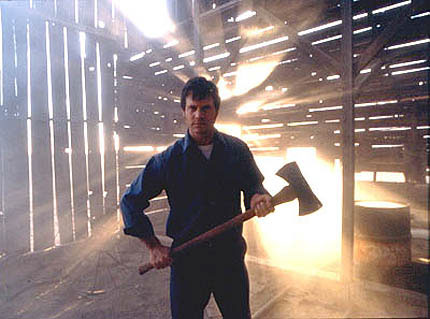
To recap, “Frailty” is a chilling story of a calm, loving father (Bill Paxton, who also directed the film) who live a normal, happy life with his two young sons, Fenton (Matt O’Leary) and Adam (Jeremy Sumpter), until he awakens them one night to tell them about a “vision from God.” Apparently, demons are walking the earth in the guise of regular people and it’s their duty, as “God’s hands,” to destroy them. Fenton doesn’t know how to react to this, but Adam believes Dad and wants to help him. Fenton is even more frightened when Dad makes a list of demons to destroy: people’s names. Dad has three useful tools: an axe, a pair of gloves, and a metal rod—“weapons from God.” Fenton can no longer doubt Dad’s motives when he brings home his first victim—a woman Dad claims is a demon whom he kills right in front his sons. Fenton believes Dad has lost his mind and can only watch in terror as he claims more victims, becoming a serial killer with Adam helping and supporting his father wholeheartedly. The story is told in flashback as one of the sons (grown up as Matthew McConaughey) explains to FBI agent Doyle (Powers Boothe) after revealing his brother is the one responsible for the killings which still continue.

The idea of a seemingly calm, sane father suddenly brought to the point where he kills people “in the name of God” is scary enough; the idea of wanting his young sons (one is 10, the other is 7) to assist him in his deeds is horrifying. And the film builds more tension from the kids’ perspectives and thoughts on the matters at hand—one wants to stop Dad, while the other joins him. It leads to a truly tense sequence in which Dad takes drastic measures with Fenton and locks him in his homemade dungeon for a week, hoping he too will get a vision from God. It leads to a tense climax in which Dad believes Fenton will ultimately follow in his footsteps and destroy a demon himself. Instead, Fenton brings it to a stop by turning the axe on his own father, killing him. Adam finishes the job himself, indicating that Adam will follow in his father’s footsteps and destroy more demons. Adam promises to bury Fenton someday in the same rose garden where they buried the other victims.

But wait. Earlier in the film, the McConaughey character, who has originally labeled himself as Fenton, claimed that the brothers’ promise was for Fenton to bury Adam. As he and Doyle explore the rose garden, that’s when he reveals his true identity—he is not truly Fenton but Adam. He has continued his father’s legacy. That’s one twist. Another twist is that all of this has been a means to capture Doyle, who is his next victim.

Now, this is a very effective twist, as is the realization that the real Fenton has grown up to become a serial killer and that Adam has “destroyed” him as a demon. It’s Adam’s belief that that’s why Fenton didn’t go along with him and Dad; because he was a demon. This would make for a disturbing portrait about what growing up with an influential, apparent serial killer could do to someone. And then comes the bigger twist…

Are these people really demons, or just chance victims of Dad’s delusional mind? Is the angel real or was it just a bad dream? We see one of Dad’s visions, of an angel visiting him and giving him his first list of demons, and it does seem slightly exaggerated, making us believe that it’s all in Dad’s mind. But then in the ending, what little ambiguity was left is suddenly thrown out the window, as it becomes very clear that the people whose lives Dad claimed were actually murderers and not innocent victims. We are shown their evil deeds, as well as Doyle’s murder of his mother. Dad and Adam were truly following God’s will. People find it shocking that “the axe murderer is working for God,” but the realization that the victims were never “human” but actual “demons” for God to demand be destroyed lest the Apocalypse come does make sense to those who strongly believe in God and it may actually be a relief to those same people, who would object to murders being done to “serve God’s will,” to get clarification. In that respect, it does bring everything around for a shocking revelation that I didn’t see coming. But at the same time, as “Frailty” was doing such a great job being a disturbing horror film with effective ambiguity up until that point, it is kind of disappointing that the film would feel the need to explain everything.

I originally gave the film a four-star ending, even with the ending, because I thought even with that in mind, it was still an intelligent, scary horror film with a theme of religious delusion taken very far. And the bigger twist isn’t even bad; it’s just that I feel like it would work better as a film without it. If we were to ask questions after seeing the film (without the twist) whether the angel was real or not and whether the people were really demons or not, it would bring forward interesting discussions about what it would say about religious fanaticism, delusion, and even about God’s will. As is, “Frailty” is a four-star film up until that shocking revelation. With it, in hindsight, I can still recommend the film but not as strongly as I did before, because even with it, there’s still a little ambiguity about whether or not there truly were demons or people who turned the wrong way and committed these deeds. Were they really destined to be that way? Were they truly demons? If they were demons, did they know it? Were they aware of their destinies to be destroyed? We saw their horrific wrongdoings but not their “demon form,” if they have forms under human skin. If God really is guiding these murders of the guilty, what does that mean?

But then again, maybe they are just demons and I’m thinking too much about it.

There are too many good things in this film for me not to recommend it. Different people are undoubtedly going to have different outlooks on the ending and what it all meant. I don’t think I can rate it three stars anymore. I wanted to rate it four. I wanted to love it as much as most critics did, including Roger Ebert and author Stephen King. And up until the final act, or at least until the bigger twist, I do love it and I do think it’s one of the best horror films I’ve ever seen. But with that bigger twist, it’s still a good horror film with something deep to talk about. It could’ve been deeper and it could’ve been better, but I have to review the film for what it is rather than what it isn’t. I still recommend it.

Reservoir Dogs (1992)

30 May

reservoir-dogs-acting

Smith’s Verdict: ****

Reviewed by Tanner Smith

“Reservoir Dogs” was writer-director Quentin Tarantino’s breakthrough effort. Released in 1992, it introduced what would be known now as his famous trademarks—large amounts of sharp dialogue and violence. It’s also known as a milestone in independent filmmaking and was a major influence in independent cinema. How does it hold up? Greatly. It’s still a riveting thriller. The violence is still bloody (while the heavier acts are offscreen, leaving it to our imagination, which is more horrifying); the dialogue is very fun to listen to, with lines such as “Are you gonna bark all day, little doggie, or are you gonna bite?” and also with constant usage of the “f” word as poetry, like David Mamet’s writing; the characters are still enjoyable despite their horrific deeds and the actors playing them are spot-on; the non-linear way of storytelling (which Tarantino would use to greater effect in his next film, “Pulp Fiction”) works in the film’s favor; and no matter how many times you watch it, whether you know the big plot twists or not, it’s still an exhilarating film that grabs you and doesn’t let you go until it’s over.

The film mostly shows us what crime films are afraid to show us, which has since been copied for years to come (hello, Martin McDonagh)—the humor, the conversations about things that aren’t very important, and even the sloppiness. It’s set up in the opening scene, which shows eight men, led by mob boss Joe Cabot (Lawrence Tierney) who name them after colors (Mr. White, Mr. Orange, Mr. Pink, and so on), eating breakfast at an L.A. diner before they set off on a big heist. They talk about Madonna discography and the importance of tipping waitresses before they embark on their planned mission. It’s a wonderfully well-written scene that introduces the characters and lets us know we’re in for an unusual but fun ride.

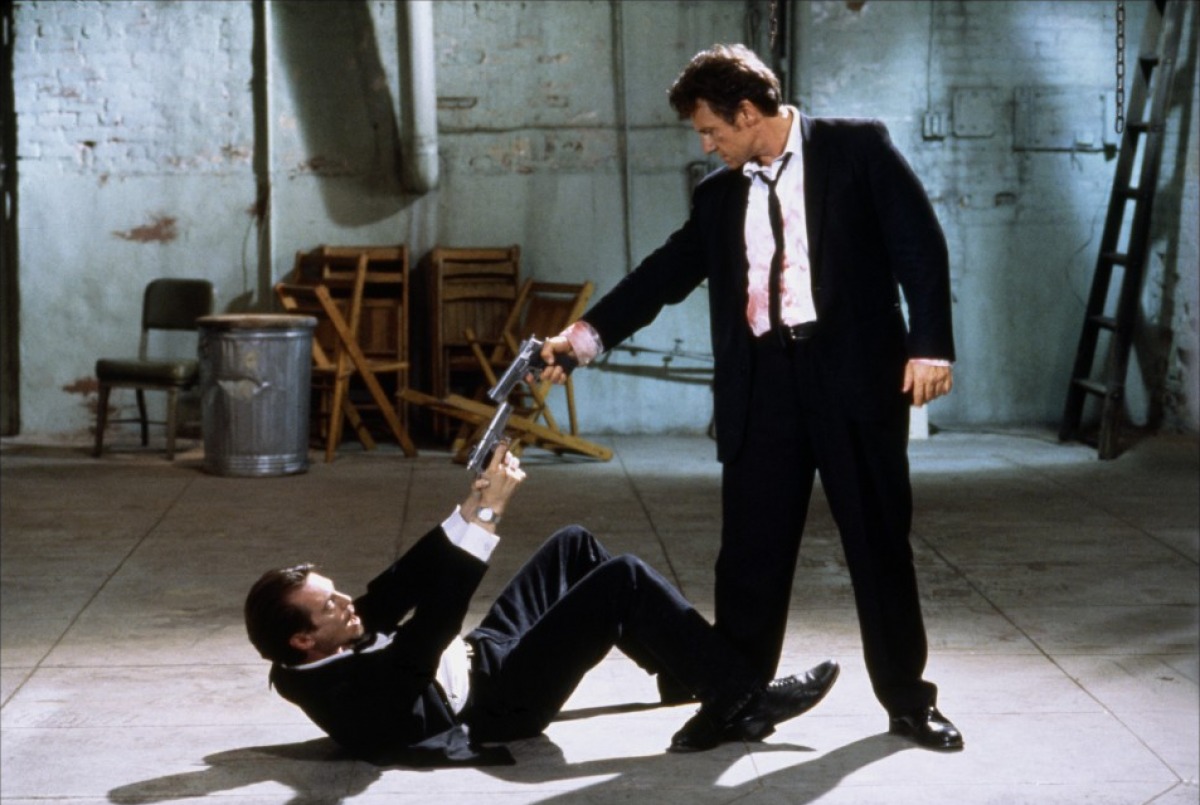
The heist is never actually seen, but the aftermath lets us know quickly that it went horribly wrong, as the cops arrived on scene and started shooting, causing the gangsters to shoot back. Mr. White (Harvey Keitel), the cool-headed one, speeds away from the scene with Mr. Orange (Tim Roth), who was shot in the stomach. He takes him to an abandoned warehouse, which is the rendezvous for the whole group, and he comforts him for a while, until the paranoid Mr. Pink (Steve Buscemi) arrives. He believes the whole thing was a setup, since the police apparently responded too quickly. He and Mr. White try to figure out how to handle the situation, with one of their gang dying on the floor, several others missing, and the psychopathic Mr. Blonde (Michael Madsen) having killed many civilians during the heist when police came. Mr. Blonde shows up with a little surprise in the trunk of his car…

The casting for this film couldn’t be more perfect. Each one of the actors does a spectacular job, bringing these characters to life. In particular, Michael Madsen is delightfully sadistic and calm; a scene in which he tortures someone for answers is both hard to watch and fun to watch. Harvey Keitel is calm, cool, and collected; Tim Roth is charismatic; and Steve Buscemi is excellent as a distrustful guy trying to make sense of things. Also effective are Lawrence Tierney as the leader, Chris Penn as his hot-headed son, Tarantino himself as Mr. Brown, and Eddie Bunker as Mr. Blue. Tarantino also gives his characters well-established personalities so that they’re not stereotypes but real people who do shocking things and yet show their humanity at certain points.

There’s a big twist revealed midway through the film, but I wouldn’t dare ruin it for those who haven’t seen it. To see it for the first time is not to know anything about the surprisingly well-developed plot. That way, you can enjoy its many twists and turns. But even if you already know it, you shouldn’t let that ruin it. I’ve seen this movie 10 times already, and I never let my knowledge of the central twist spoil it because it makes way for more interesting developments, flashbacks, and fun dialogue. Also, not only is the film wonderfully-written and intelligent, but it’s also fun to watch. It’s visceral, the cinematography is well-handled, and you can see Tarantino’s early influences from directors such as Scorsese and John Woo while adding some style of his own.

Simply put, “Reservoir Dogs” is an unforgettable movie. It’s funny, it’s chilling, it’s fun, it’s energetic, and it’s just all-around great. It’s a film I could watch numerous times for those very reasons. And Quentin Tarantino has only gotten better since then.

LRFF2015 Review: The Hanging of David O. Dodd

30 May

11265133_812643538789289_8441849983712533315_n

Smith’s Verdict: ***

Reviewed by Tanner Smith

“The Hanging of David O. Dodd” is part historical documentary, part performance art. Originally, it was a two-act play written by Phillip McMath, for the Weekend Theater in Little Rock, about a Confederate sympathizer hoping to save her wounded son and a Union supporter hoping to save a 17-year-old who is sentenced to hang as a spy. Directors Huixia Lu and Will Scott (The Night the Blackbirds Fell) have crafted an ambitious film version that essentially has the same cast as the play’s 2012 Weekend Theater premiere acting out segments from the play (edited chronologically, I believe). These segments are intersected with interviews from the actors themselves as well as writer McMath and others such as college professors sharing the history behind the story.

Some of the scenes are acted out on stage (in a blackbox theater) while others are presented in authentic-looking interior locations (such as the Old State House Museum in Little Rock) and some outdoor locations as well. This way, the film is like a hybrid of film and theater. The acting is consistently theatrical throughout, keeping in tradition with the play. Admittedly at times, I felt like I should be watching a play rather than a film and some parts don’t work well for film, but other times, such as when they’re making the most of their interiors, do. Yes, they’re written and acted for a play, but for the material, it works fine, such as when David O. Dodd (Aron Long), the 17-year-old sentenced to hang, is being debriefed by General Steele (Will Koberg), and a couple scenes involving Confederate sympathizer Medora Pilgrim (Libby Smith), Union supporter Philomena Tottenberg (Deb Lewis), and a maid named Marcella (Tracy Tolbert). But Lu and Scott know they’re making a film and don’t treat it as merely a recorded performance, hence why they chose other locations to set certain scenes, brought in the actors and other people to talk about the history behind the play’s story, and also filmed footage of a memorial 150 years after Dodd’s hanging.

When I got deeper into the film, I didn’t mind that later segments (such as David’s last day in jail and the hanging) took place in the theater. That may have to do with either the broad style of acting working better for the stage or perhaps even Johnnie Brannon, who plays a soldier, talking about his attitude towards acting in a blackbox theater that may have made it easier to accept. But that’s also when I thought, “Maybe I should be watching a play instead…”

It’s difficult to review a film that is both cinematic and stage-originated. I like film and I like theatre, but they’re both different in terms of style and execution. Putting together a hybrid of the two is no easy task and Lu and Scott mostly succeed in doing it, in that I enjoyed it and learned from it as well. Plus, the actors are appealing to watch—in addition to Long, Lewis, Smith, Tolbert, and Brannon, we also have Alan Rackley (John Wayne’s Bed) as a doctor and Jason Willey (A Matter of Honor) and William Moon as two Yankees guarding the border. And also, the play they’re acting out seems like a damn good play, framing it around the drama of a 17-year-old who became a martyr unwillingly, as well as showing plights of other people struggling through the times of the American Civil War. (“Nothing more dramatic than a hanging,” McMath says during an interview early on.) So in that respect, I admired the craftsmanship and recommend “The Hanging of David O. Dodd” for what it is.