The Big Short (2015)

13 Jan

thebigshortimage2

Smith’s Verdict: ***1/2

Reviewed by Tanner Smith

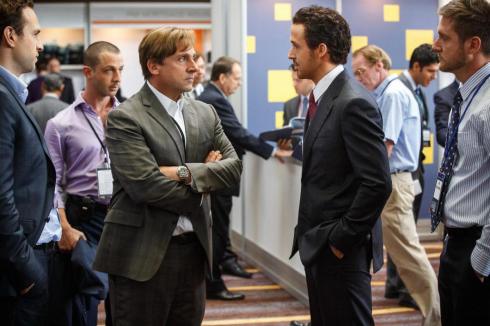
So the housing bubble of the 2000s grew so big that it eventually (and inevitably) exploded in a major way. That would be funny if it wasn’t true. But as impossible it may seem, it really happened, leading to the 2008 global financial crisis. It was chronicled in Michael Lewis’ nonfiction book, “The Big Short,” which was written with the intention of making readers really want to know more about financing—credit-default swaps, collateral debt obligations, etc. I imagine it’d be a difficult challenge to put that same intention into a film adaptation, but not only is Adam McKay’s 2015 film of the same name informative about the situation(s) at hand; it’s also surprisingly funny and entertaining.

Many are surprised that Adam McKay, whose previous films include such dopey mainstream comedies as “Anchorman” and “Talladega Nights,” was able to handle this kind of material well. It wasn’t much of a surprise to me, because whether you like these movies or not, it’s difficult to deny that underneath all the goofiness is sheer craftsmanship and social commentary. For “The Big Short,” the comedic aspects are more in the “snarky” category than the “goofy” category (because most Wall Street people are jackasses, by popular opinion)—the serious, heavier material is still treated sincerely and the comedic edge eases it up and gives the film greater significance, causing it to stand out further. This also gave McKay an opportunity to stretch himself further as a talented filmmaker (which he’s already proven with the well-executed racetrack sequences in “Talladega Nights”); an opportunity he relishes in. He pulls out all the tricks to make this film stand out. He shoots it like a documentary; some shots are intentionally bad, to make the acting and writing stand out in a natural way. Characters often break the fourth wall to let us know what they’re thinking. And there are random show-stoppers, used for informative effect. For example, when the audience might be confused about mortgage-backed securities, suddenly, there’s Margot Robbie in a bubble bath to explain everything! (Though, I doubt most men in the audience are paying attention to what she’s saying, if you know what I mean.)

(Other celebrity appearances include celebrity chef Anthony Bordain using a fish stew equivalence and Selena Gomez playing poker with a doctor.)

The film focuses on five of the characters picked from the original source material. Michael Burry (Christian Bale) is a socially awkward genius with a glass eye and a tendency to work while barefoot and listening to rock music. He’s the first one to notice warning signs of the way Wall Street is overvaluing mortgage-backed bonds, three years before the crash, but no one will listen to him. However, he does see this as an investment opportunity by betting that the housing market will fall. Jackass investor Jared Vennett (Ryan Gosling) decides to do the same and runs it by Mark Baum (Steve Carell), a cynical broker, who reluctantly agrees. While all that’s going on, there are also a couple of amateur traders, Charlie Geller (John Magaro) and Jamie Shipley (Finn Wittrock), who are at the right place at the right time and take the opportunity as well. They get help from ex-broker Ben Rickert (Brad Pitt), who decides to guide them through the madness they’re in for. How often do you see a film in which the heroes are betting over a billion dollars against the American economy, especially since if they’re right, it means very bad times for millions of people who are already in danger of losing their homes? What a tricky subject to focus on. Good thing it works.

And it’s funny. The breaking of the fourth wall leads to fulfilled comedic possibilities, the celebrity cameos are hilarious, the dialogue is sharp and witty, and the humor comes from just how smarmy these people can become. Comedy can help elevate a story like this, which can otherwise be an uninteresting drama or a passable thriller, but what also helps is accuracy, which as far as I can tell (being someone mostly ignorant of financing), it definitely has a large amount of. With sharp filmmaking, great acting (what else do you expect from Christian Bale?), a detailed script, effective hilarity, and a unique amount of precision, who would’ve thought a film about the 2008 global financial crisis would be this deep-cutting and this amusing both at the same time?

Room (2015)

8 Jan

Room-Brie-Larson-Jacob-Tremblay

Smith’s Verdict: ****

Reviewed by Tanner Smith

DISCLAIMER: If you haven’t seen this film’s trailer, this review can contain a spoiler or two.

Not many films that are centered on a traumatic experience tend to focus on the aftermath. What do the characters who went through this go through when they return to the real world? How easy can it be just to get back to a normal life? Who’s welcoming them back and who breaks away? Lenny Abrahamson’s “Room,” adapted from the novel of the same name by its author, Emma Donoghue, would be a powerful film by itself if it just focused on the experience. But that’s only the first hour, and the film nearly elevates itself to “masterpiece” levels by focusing the remaining hour of running time on the after-effects. (This isn’t necessarily a spoiler. Those who have seen the trailer know that the imprisoned characters in “Room” are free by the halfway point.)

“Room” is what 5-year-old Jack (played by Jacob Tremblay) calls his world; the world he and his “Ma” (Brie Larson) have lived in his entire life; a world of one room, with a few pieces of furniture, electricity, plumbing, a TV, and a skylight in the ceiling; a world outside of which Jack has never set foot. You see, Jack’s mother was abducted a young age and kept in the garden shed in the backyard of her captor’s (Sean Bridgers) house. He raped her repeatedly and kept her locked up, and she gave birth to a boy, who he allowed for her to keep and raise by herself. She’s told him many lies about their “world,” shielding him from the truth, like an elaborate fairy tale. But now that Jack is 5, she can’t keep hiding things from him anymore and she sees that there’s a world out there that he needs to know about.

Eventually, Ma does convince Jack that there’s something more to what he’s been taught, and she gets him to help put her escape plan to action. It involves him playing dead so he can be removed from “Room” and run for help. The plan ends up working, Ma is rescued, and she and Jack are free at last.

End of movie? No. It was just the first act of “Room,” the film, and it leads to a brilliant second act, in which Ma and Jack have to deal with normality. And it’s not quite as optimistic as one may think. Yes, they’re free from their captor, but what happens next? Everything now feels strange and kind of unnerving.

The first hour of “Room” is excellent. It’s kept entirely in this room. The sense of claustrophobia can’t be ignored, as it makes for a really tense atmosphere. You get a good feel of how these people have lived for so long in a world they didn’t make (literally and figuratively), and it really helps that the whole long sequence is seen through Jack’s perspective—you hear his narrations (which sound like whimsical Dr. Seuss phrasings), see the world practically through his eyes, and only leave “Room,” the actual room, when he’s brought out. Also, the scene in which he has to escape is the most suspenseful scene in the entire film; even when you know he’s going to break free, it takes its time getting to that point, stretching out the anxiety.

The second hour of this two-hour film is surprisingly even more fascinating, as we’re brought into “the real world” with these two people. Ma (whose legal name is Joy) is reunited with her parents (Joan Allen and William H. Macy), who have divorced since her capture, and Jack is brought in to live with his grandmother and her new boyfriend. But as it turns out, Jack is slowly but surely learning independence and what it truly means to be a kid, while Ma hasn’t gotten over the experience she’s had to deal with in the last seven years. She’s haunted by memories, unsure of her “second chance at life,” and isn’t sure what to do next. See the film in its entirely, with context, and this is all the more compelling. Credit for that goes to director Abrahamson, who is able to balance out the blatant and the subtle, which helps make the complex material come alive even more.

If not for the outstanding acting throughout the film, “Room” wouldn’t have been as successful. In order for us to feel the characters’ plight, the actors have to sell it. Coming into the film, I already had a good feeling about Brie Larson, one of my favorite actresses working today, and boy was I right. This is not only her strongest performance since “Short Term 12” two years ago; as Ma/Joy, this is undoubtedly the best work of her career by far. And not only that, but she’s also able to portray two different versions of the same character—one is Jack’s image of his “Ma” and the other is the mentally tortured & broken woman who tries to deal with life after seven years of captivity. It’s to Larson’s credit that we can fully understand this character even if characteristics of her are not fully seen by Jack or the audience. She’s marvelous in this film. And then there’s little Jacob Tremblay, who plays Jack. With a child this age, I wasn’t sure what to expect, but I knew with a solid director guiding him, he could provide work strong enough for the material. (Actors have to put a lot of trust in their directors, and child actors are no exception.) Thankfully, Tremblay is able to portray Jack as a real, disillusioned little boy who’s also bright, articulate, and able to adjust (though with some difficulty, of course). It’s a performance more natural and credible than most child acting of recent memory. Another strong performance I want to point out is from Joan Allen, as Joy’s mother who just wants her daughter back in her life and is willing to help her through anything in the post-kidnapping phase. It’s her best work in years. And the less I say about William H. Macy’s smaller but heartbreaking role, the better. (I’m already on the border of giving away more spoilers already.)

“Room” can be seen as either an uplifting drama about survival after misfortune, a partial thriller for the first act, or also as a psychological study about adjustment, transition, and effects. Either way, “Room” is a frank, challenging, and powerful film—one of the very best I’ve seen in 2015.

2015 Review

1 Jan

10151537_10100316206882202_966228584_n

2015 Review

by Tanner Smith

It’s that time of year again I usually refer to as “the time I feel like a true critic.” Usually, I try to wait until the middle of January so that I’ve had time to see some of the most critically acclaimed films I have yet to see. But seeing as how it is the end of the movie year I’m highlighting, I don’t see that as fair. So I’m just going to make my “2015 Review” as of now and I probably will review films like “The Big Short,” “The Revenant,” “The Hateful Eight,” “Brooklyn,” “Carol,” and “Sicario” after I’ve seen them. And I will—I know I’ve been slow in my reviews lately. But I’ll change that soon, because there are quite a lot I should really get into. Let me put it this way—six of my top 10 films of 2015 have not been reviewed by me (YET).

Now I’ll start off with my least favorite films of the year. I surprisingly have very few films for this category. I try to save my money for good movies, since I don’t get paid for reviewing films and so I’m not obligated to see some trashy films. I did not see “Fifty Shades of Grey,” “Pixels,” or “Fant4stic,” three of the most critical bombs of the year; maybe I should consider myself lucky. However, I did see…

  • Jupiter Ascending—I disliked this movie when I first saw it. I intensely hated it, the more I thought about it. Hardly anything about it is original, the exposition is ridiculously uninteresting, the sci-fi action/adventure aspects are mostly dull, and the main character is a blank slate with the ridiculous name of “Jupiter Jones.” Do I even need to mention the bees or the dinosaurs? I gave up on even trying to figure out what those were about. That was the worst film I saw this year.

There were three other films I saw this year that I didn’t hate but I didn’t like all that much either. They were:

  • Beyond the Reach—Just a standard chase movie around the desert with Michael Douglas hunting down Jeremy Irvine, and…there’s just not much else to it than that. The one highlight is the funniest line of dialogue I’ve heard all year, delivered by Douglas: “Fool me once, shame on me. Fool me twice…I KEEEL YOOOOOUUUUU!!!” That moment was worth the price of admission.
  • Furious 7—Okay, so I don’t hate this movie. It is a lot of fun in its own dumb way and I was glad to be taken along for the ride…but only once.
  • Goosebumps—I thought this movie had potential. I won’t pretend the original “Goosebumps” books by R.L. Stine were great, but they were creative enough to keep kids interested in reading and had clever ideas and concepts. I thought this film would take the concepts and bring a satirical edge to it. Sometimes, it did…but other times, it reminded me of just how cheesy the original ‘90s “Goosebumps” TV show was, despite higher production value.

Before I get into my favorite films of the year, I want to give special mentions to the best made-in-Arkansas short films I saw at 2015’s Little Rock Film Festival (which sadly turned out to be the last year for it, though it won’t be forgotten and hopefully a good alternative will come around for this upcoming year).

These are my Top 5 LRFF2015 Arkansas Shorts (in alphabetical order):

  • The Dealer’s Tale—This 15-minute modern retelling of Geoffrey Chaucer’s “The Pardoner’s Tale” is a riveting short film that had me engrossed from beginning to end. It’s very well-made, well-acted, and gloriously-shot. I look forward to Justin Nickels’ next project and I hope it also stars Jason Thompson and Jason Willey together again.
  • Perfect Machine—What a beautiful short this is! This futuristic fable about “what is,” “what was,” and “what can be again” is enthralling, stunning, well-made, and intelligent. A lot of effort was put into this 20-minute film; it paid off wonderfully.
  • Stranger Than Paradise—Can a truly great, thought-provoking, skillfully crafted minute-long short be created with less than 20 minutes of camera battery power? With this film in mind, I say it’s possible!
  • Undefeated—I was only able to see this documentary on boxer Terrence “Tank” Dumas once at the festival; I’m still eagerly awaiting the time when I can see it again.
  • The Whisperers—This chilling 20-minute horror film (which won the Best Arkansas Film award at the festival) was said to be homage to certain family-horror TV shows of the 1990s (like “Goosebumps” and “Are You Afraid of the Dark?”). The main difference between this and them? This is actually scary. The short film’s epilogue makes it even more chilling.

Honorable Mentions (to the Special Mentions): The Ask, Hush, I Hate Alphaman, Little Brother, Monotony Broken, The PaperBoy, The Pop N’ Lock, Pyro, Rapture Us, Spoonin’ the Devil, The Tricycle, ‘Twas the Night of the Krampus

My reviews for all of these short films and more can be found in my Shorts category on this blog.

And now I get to my favorite films of 2015.

But first, 11 Honorable Mentions: Amy, When Marnie was There, Ex Machina, Spotlight, Straight Outta Compton, It Follows, Star Wars Episode VII: The Force Awakens, Predestination, The Stanford Prison Experiment, Steve Jobs, and The Gift

Might as Well Mention These Too: Bridge of Spies, How to Dance in Ohio, Kingsman: The Secret Service, Me and Earl and the Dying Girl, Mistress America, Unfriended, While We’re Young

Oh, and I Liked These Too: Ant-Man, Avengers: Age of Ultron, Burying the Ex, Clouds of Sils Maria, Dope, Escobar: Paradise Lost, The Final Girls, Focus, I Believe in Unicorns, In the Heart of the Sea, Jurassic World, King Jack, Mr. Holmes, Trainwreck, True Story, Valley Inn, The Visit

And now for my Top 10 Favorite Films of 2015.

10. THE WALK–I don’t know who or what is to blame for this film’s failure at the box-office (the marketing executives or The Martian), but I think Robert Zemeckis’ latest film deserved more attention. It’s a great-looking, effectively-done film about how a daring dreamer walked a tightrope between the Twin Towers in the 1970s. It reminds us that all good things are worth waiting for.

the-walk

9. LOVE & MERCY—Love & Mercy is like two movies woven into one (one showing Paul Dano as The Beach Boys’ Brian Wilson in the rough points of his career and the other showing John Cusack as Wilson 20 years later, still suffering from paranoia), and they’re both very well-done. I don’t think I can listen to a Beach Boys song the same way again.

love-and-mercy5

8. WHAT WE DO IN THE SHADOWS–I skipped over the question of how vampires can appear on camera if they don’t have reflections, because this New Zealand mock-umentary about the vampire lifestyle made me laugh harder and louder than any other comedy this year.

14237845

7. THE MARTIAN—I had a feeling this would be an intriguing survival tale of an astronaut stranded on Mars, but what pleasantly surprised me was the humor, thanks to a witty script by Drew Goddard. With this and the new Star Wars film, maybe now we’re moving toward an era where our sci-fi blockbusters can have characters most of us optimistic wiseasses can actually relate to. Ridley Scott is at his best, Matt Damon and his fellow cast members are at their a-game, and the film is a lot of fun.

The-Martian

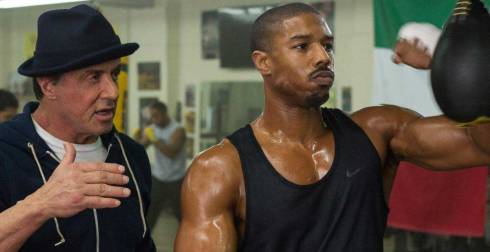
6. CREED—This is the sequel to Rocky that I’ve been waiting for, with something old and something new. The performances are strong, the relationships well-developed, the fights expertly handled, and I admire the bold move on writer-director Ryan Coogler’s part to truly go down the road and assume accurately where Rocky Balboa’s life is now compared to where it was back in 1976.
creed

5. THE END OF THE TOUR—I feel like there’s a very slim chance James Ponsoldt’s terrific slice-of-life comedy/drama will get an Adapted Screenplay nod, and that’d be a shame because this features some of the most interesting dialogue I’ve heard all year. In addition to that, the film truly is wonderful—honest, insightful, a great balance of drollness and pathos, and very well-acted.

the-end-of-the-tour

4. MAD MAX: FURY ROAD—Every decade has its new ground-breaking action-adventure flick. There are still four more years to go in the 2010s, so I’ll be interested to see if there’s another such film that’s as riveting, exhilarating, and downright awesome as Mad Max: Fury Road. What a lovely day!

mad-max-fury-road-10

3. TWO STEP—This film made its way into my “Special Mention” category last year, having seen it in the Little Rock Film Festival. Since it had a limited theatrical release this year and is now available on VOD, this tense thriller now qualifies for my year-end list this year. I highly recommend you seek it out and check it out.

twostep2

2. ROOM—This one was in competition with Inside Out for the #1 spot and it lost out in the end by a very slim chance. Room is a very powerful film that is more moving than its horrific backstory would lead someone to believe, thanks to a brilliant second half showing what happens after being brought back to the real world after spending years in imprisonment. Great acting from Brie Larson and a new young talent named Jacob Tremblay help elevate the film’s emotional levels.

Room-Brie-Larson-Jacob-Tremblay

And my favorite film of 2015 is…

1. INSIDE OUT—The best original animated film and one of the most enjoyable, inventive, touching films I’ve seen in a long time. This is Disney-PIXAR’s return to form, delivering something for both children and adults with a genuinely moving story about the importance of our emotions and getting past hardships in life that is also very imaginative, taking advantage of its creative concepts. From the moment I left the theater the first time I saw it, I knew there wouldn’t be a 2015 film I liked better (though there were a few that came very close).

Inside-Out

Not a bad year for movies! Let’s hope 2016 is even better…
 

Mistress America (2015)

16 Dec

Mistress_America

Smith’s Verdict: ***1/2

Reviewed by Tanner Smith

Following my review of “While We’re Young,” this is yet another 2015 film from Noah Baumbach that left a weird impression on me—from confusion to praise in a matter of time. Baumbach usually writes his characters as ignorant, self-praising, gullible, and disagreeable. That, plus his biting dialogue, can throw moviegoers off, but when they, like me, can get past that in order to see the characters for who they are and what exactly Baumbach is saying with his direction, there is something fascinatingly insightful about much of his films. (And it also helps that he’s lightened up a little since 2010’s “Greenberg,” probably thanks to his collaboration with co-writer/actress Greta Gerwig.) That’s how I came to enjoy “While We’re Young” and that’s how I came to enjoy “Mistress America.”

If “While We’re Young” was Baumbach’s “Woody Allen film,” then “Mistress America” is both his screwball comedy and his “John Hughes film,” complete with lots of sharp dialogue, revelations about characters, intriguing but unusual detail, and even some unnecessary comic relief and a hollow tempo score.

The main character is a college freshman named Tracy (well-played by Elizabeth Olsen lookalike Lola Kirke), who has trouble fitting in at Columbia University. She feels overwhelmed by the college experience, doesn’t have anyone to talk to or connect with, and isn’t sure of exactly what she wants. She has some idea when she signs up for a campus literary magazine and writes a short story for it, but she’s not so sure she’ll get in. She meets a nice intellectual boy (Matthew Shear), but he gets a girlfriend (Jasmine Cephas Jones) soon enough. Then she meets Brooke, who is the daughter of the man Tracy’s mother is going to marry…

Greta Gerwig co-wrote the screenplay with Baumbach after working together on “Frances Ha” and stars as Brooke, a 30-year-old New Yorker who has many ambitions…and will not shut up about them. She talks and talks and talks. She rarely listens to people even when they have something important to say because she’s too busy listening to herself. She wants to be influential and prominent and successful, like most young people aspiring for something great. But also like most young people, she has no clear (or at least realistic) plan to achieve her goals (and for that matter, it’s unclear if she truly has any particular talents anyway). She and Tracy meet due to Tracy’s mother’s insistence and belief that they’ll form a mentor/student relationship. Is she wrong or is she right?

The first few minutes of “Mistress America,” which show Tracy attempting to adjust at college life, are pitch-perfect, showing Baumbach is practically a master at satire, dialogue, and observation. You get the gist of Tracy’s plight by the time the opening credits are done; how often does that happen? It’s funny, observant, and even allows for empathy. As Baumbach showed with “While We’re Young,” his attention to detail is astounding, right down to the cracked screen on Tracy’s cellphone. Then along comes Brooke and the film turns into a madcap comedy, with lots of witty lines, odd attitudinal swings, and eccentricity. Yet the film still keeps a proper amount of authenticity that keeps it intriguing and strangely true.

I can understand why people would be turned off by the character of Brooke. She is constantly babbling about what may or may not happen if/when her dreams come true, and some of her eccentricities (like making up words for herself) are off-putting. A few minutes into getting to know her and you’ll find out pretty quickly whether or not you want to spend another hour with her. (The film itself is pretty short, clocking in at barely an hour and 24 minutes.) As for me, I didn’t have much trouble with her or the way Gerwig portrayed her, but I can see why some critics who panned this film did.

But what’s more interesting is the story with Tracy. She’s the “straight man” to Brooke’s “life force,” but this doesn’t turn out to be as predictable as I expected. There’s a parallel story in which Tracy is taking notes on Brooke’s speech and behavior in order to craft a short story about her (without her knowing it). She believes this story will give herself attention, as she would like to write realistic fiction. What she doesn’t realize is what she knows about Brooke is what she knows from spending only one night with her, and this can be seen as cruelty, especially since it would make Brooke uncomfortable if she reads the final draft. Tracy may know what we have figured out about Brooke, but she has even more to discover about her and about herself as well.

I can’t say the film is entirely realistic. Much of the dialogue can be very stagey, especially when the film takes us to a trip to a house in Connecticut where Brooke hopes to guilt a couple from her past into providing her with funds for a restaurant she’s planning. This whole sequence demonstrates what’s good about the film and what may be flying too close to the sun. (John Hughes, who I referenced in the first paragraph, was guilty of similar problems in his films too.) But there’s enough good in it that it doesn’t damage the film, even with the annoying characters of the deluded boy and his overly jealous girlfriend (who’s so pretentious that even Brooke tells her to stop sounding like an adult) and certain lines of dialogue that I don’t think would be said in real life.

I found “Mistress America” to be a very funny, observant film that shows a definite growth and relaxation in Baumbach’s work, compared to his scathing observations in films such as “Margot at the Wedding” and “Greenberg.” I’m excited to see what he comes up with next.

While We’re Young (2015)

16 Dec

while-were-young.jpg

Smith’s Verdict: ***1/2

Reviewed by Tanner Smith

I do not know what to make of this film. The first time I saw it, I didn’t know what to make of it but I felt I liked it. The second time, I noticed a couple more little things and liked it less. The third time, I noticed even more I didn’t catch the first two times and I find myself grudgingly giving the film a positive review because…I think Noah Baumbach’s “While We’re Young” is both ingenious and infuriating.

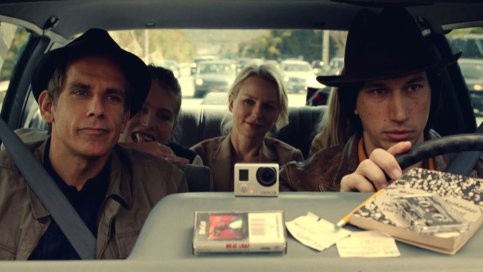
Ben Stiller and Naomi Watts star as a middle-aged husband and wife living in New York. They admit they’re fine living the life of marriage without children and doing things their own way, unlike their friends (a couple played by Maria Dizzia and Adam Horovitz) who have become boring since they started raising their child. Right away, this is an interesting idea that opens a door for character development; but then again, they’re so vocal about their situations that it feels like they’re complaining too much about something they chose for themselves and other things they claim to be focusing on but aren’t putting enough focus into. The couple meets a younger couple, in their mid-20s, played by Adam Driver and Amanda Seyfried. They’re lively, opinionated, ambitious and definitely hipsters (though the word “hipster” is never spoken once, unless I missed it). Both couples form an unlikely friendship, and it’s here that Baumbach shows an interesting contrast between generations. The older couple has a lust for life but also many awkward moments, and the younger couple is into so many retro things (they collect records, VHS tapes, board games, etc.) that make the older couple feel even older than they are. There’s so much detail put into this contrast and it’s hard to fault Baumbach for accuracy; I wouldn’t doubt the New York hipster culture is like this.

Perhaps the biggest difference between generations is that today’s (in shape of the younger couple) seems to expect to have everything they want handed to them without having to work so hard to get it all. They’re actively nostalgic but perhaps lazily content with life. Stiller’s character, on the other hand, has worked so hard to get where he wants to be. He’s a documentary filmmaker who has spent years on a project that he’s sure will be a milestone in capturing “life.” (The problem there is that it’s overlong and kind of boring; even he admits that.) His wife, played by Watts, is a producer whose father (Charles Grodin) is a pioneer of the genre whom Stiller aspires to be like. Then Driver’s character, also a documentary filmmaker working on an ambitious project, has this idea for his film that will mostly go places and jump-start his career, even with help from Grodin’s character. And Stiller becomes resentful that this kid is having the success that eluded him.

Maybe that’s what kept throwing me off the first couple times I saw this film. There’s too much to keep track of, whether it’s montage or production design or character or truth. It’s overstuffed… But then again, at the same time, it’s hard to criticize the film for that, especially when you see how much Baumbach was clearly paying attention to everything around him in his own life so he could properly portray it on film. He is trying his hardest to make everything work and most of it does work. In fact, this is why I had to see the film again: to catch something I didn’t catch before. And I’ll be honest—the second time I saw the film, I thought to myself, “Oh…*that’s* what he was going for,” as if he were making a smug commentary on something in particular. Then I really thought about it and realized maybe it wasn’t so smug as much as it was observant. I do recognize this behavior around me and at age 23, who am I to judge what a 45-year-old man sees, since the film is mostly told from the perspective of a 45-year-old man (the Stiller character), when even I don’t know much about everything I see in my own generation?

And this is why I give “While We’re Young” a positive review (maybe not so “begrudging” as I thought)—it kept me thinking. Why am I not giving it a higher rating than three stars then, you may wonder? Well…because of the last act. The last act tries to juggle ethical dilemmas and reveal the nature of “truth” in art and in life, as Stiller tries to use his newfound discoveries about himself and his friends (old and new) to prove his points in a climax. He desperately wants to prove to everybody that he’s right about Driver on numerous levels. Not that some of what he says are true, but the more he tries to prove it, the more pathetic he becomes, especially when it’s considered the age difference between him and Driver.

But then I realize as I write this review…I think I get the irony here—that Stiller has dropped to a point so low that he’s actually making someone half his age a central figure in his universe. He’s supposed to come off as sort of pathetic and he still doesn’t know what he needs to know in life. He’s almost as if he won and even then he won’t give up.

I could criticize the film’s final act for being so broad, but even so, it has its own points to make and knew how to do it. So why the hell am I criticizing it?! I swear, this review sounded a lot better in my head, but actually typing it for this review is making me feel kind of pathetic. “While We’re Young” is a film that puzzles rather than satisfies. What is necessarily wrong with that? Many character studies (especially Woody Allen’s films of the 1970s) have provided commentary and humor by doing exactly what this film is. Baumbach is becoming a powerful voice in the modern-day independent-film scene and getting his points across in a non-commercial way that is sometimes welcome and other times pretentious. In this film’s case especially, the glass is either half-empty or half-full. Yes, I know this review is all over the place, and for me, writing about it helps me express my full opinion of the film. In the end, I can’t deny it—“While We’re Young” is a terrific film and one I’ll probably watch a few more times because I want to understand it more.

NOTE: The Smith’s Verdict rating was originally three stars. I immediately bumped it up to three-and-a-half after finishing this review.

Living in Oblivion (1995)

16 Dec

living-in-oblivion

Smith’s Verdict: ***1/2

Reviewed by Tanner Smith

SPOILER ALERT!

I have somewhat of an understanding of the behind-the-scenes world of independent filmmaking. I document behind-the-scenes video footage of short films being made, I acted in a small role in an Arkansas indie production (Juli Jackson’s “45 RPM”), and I make my own short films as well. There’s still a lot for me to learn if I’m going to be an accomplished filmmaker (though, being an accomplished film critic would be nice too). Maybe that’s why when a film about filmmaking catches my attention, my curiosity and fascination are provoked. There are parts that feel familiar to me, others that feel new to me, and the rest of the material mostly captivates me. Two of the best films I’ve seen show that are Tim Burton’s “Ed Wood” and Francois Truffaut’s “Day for Night.” Then there’s Tom DiCillo’s “Living in Oblivion,” one such film about filmmaking that actually feels the most familiar to me. In my book (or blog), that’s an accomplishment.

What’s even better (and what would bring in those who aren’t that familiar with the craft) is that it’s also a comedy. It’s wonderfully written—the dialogue rings true in a funny way and the situations ring similarly true in a Murphy’s Law sort of way. Anything that can go wrong on a movie set does go wrong one way or another and it’s funny seeing these characters, a film crew, react to them. It’s lively, clever, and flat-out funny.

The film divided in three parts, each one showing the shooting of a different scene for an independent film. Director Nick Reve (Steve Buscemi) is under stress trying to put together a film on a low budget and trying to get this scene complete. But the production is plagued by all sorts of problems—his leading actress, Nicole (Catherine Keener), is losing faith in herself and her acting career; his leading actor, hotshot Chad Palomino (James LeGros), has an ego too big for the production; his director of photography, Wolf (Dermot Mulroney), is suffering emotional problems; the technical crew is having problems with the new fog machine; actors can’t remember their lines; a pint-sized actor (Peter Dinklage) is angry at his role as a dwarf in a dream sequence; and more.

Good comedy is based on cause and effect; someone has to suffer and that’s where the laughs come from. “Living in Oblivion” has a great collection of funny moments in which this guy is trying his hardest to get these scenes off the ground and everything seems to be working against him, leading to further complications he has to keep getting out of. It’s a relatable conflict but also very funny.

They say “art imitates life.” In the case of this film (in addition to the film-within-the-film), it’s art imitating life imitating art imitating life by way of a perceptive, smart screenplay and even better (for me, anyway), instantly recognizable characters. I’ve come across at least some of these types of people on a film crew a few times before. Even if you don’t know about how the film world works, you can empathize with the issues being faced by people trying to get something done with their art. This goes to show that even with an independent feature film on a shoestring budget, there are as many problems to face as those you hear about in the makings of big-budget studio films.

But there’s a big problem I have with the film (and this is where spoilers come in) and it has to do with the segues into the next vignette (or “scene”). They’re dream sequences. A scene is shot, things go wrong, and a character wakes up from the experience, as it was all a dream. To me, this doesn’t work for three reasons. 1) It’s not clever when it happens repeatedly and it’s groan-inducing when you see that reveal, 2) these dreams are so damn precise and surprisingly accurate, considering the different people having these dreams, and 3) it’s not clear whether or not these scenes were even part of the film-within-the-film, so it left me confused. To me, it just came across a pretentious way to be “artful.”

Even with that distraction, I greatly enjoyed “Living in Oblivion.” It made me laugh with joy and it made me smile with recognition. I wanted more of this film actually! When it ended, I couldn’t believe it was really over. I wanted more of these characters and another scene for them to shoot together. That’s the power of this wonderful film about filmmaking.

City Lights (1931)

16 Dec

City-Lights-Charlie-Chaplin

Smith’s Verdict: ****

Reviewed by Tanner Smith

There aren’t that many silent films I’ve seen by this point in my life. When I was a little kid, I was shown 1920s Little Rascals silent shorts; when I was starting community college, I saw “The Artist”; and when I was in film school, I was subjected to more classic silent films such as “A Trip to the Moon,” “The Passion of Joan of Arc,” and “Nosferatu.” As my appreciation for cinema history continued to grow, there were others I felt I had to check out. For instance, I had never seen a Charles Chaplin film, but I knew I had to check one out. So I came across “City Lights,” one of Chaplin’s most notorious efforts that I heard a lot about from critics and film professors. How did I react to it? Well, let me get into a little background…

Around the time this film was released, films were breaking new ground (new for back then). They were using recorded sound, bringing about the end of the “silent era” and the beginning of the “talkies.” This transition ruined many careers and changed others, but one of the biggest talents, Charles Chaplin, didn’t back down so easily. He made more silent films, using his popular, beloved character of The Tramp, the unkempt figure with a paintbrush mustache and a handy cane, to continue his art. (He would then go on to make five talkies years later, without The Tramp.) “City Lights” was his farewell to the silent era before he made a hybrid out of silence and recorded sound (with “Modern Times”) before making the transition to full sound. In the late-‘20s and early-‘30s, Chaplin never felt pressured to give up on his silent pictures and he was so stubborn that even though talkies were growing in popularity, he would still put his all into “City Lights” just to remind audiences of what he can do with his craft and what they loved to begin with. Did it pay off? Yes, it certainly did. Not only was the film a success, but it would become known as Chaplin’s significant masterpiece.

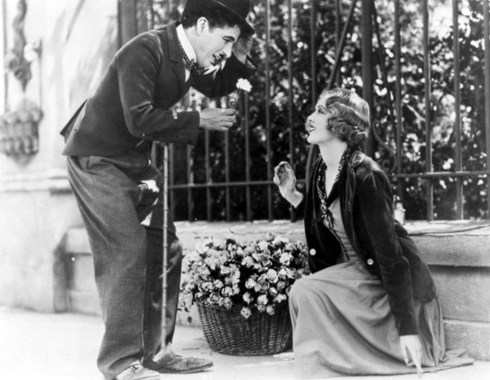
Chaplin wrote, directed, produced, and starred as The Tramp (of course) in “City Lights.” One night, he comes across a suicidal drunken millionaire (Harry Myers) and saves his life. The millionaire is grateful to The Tramp and decides to bring him home and also invite him to a fancy dinner party. But when the millionaire sobers up the following morning, he doesn’t recognize his new friend, though at night when he’s drunk again, they’re friends again. The Tramp uses his association with the millionaire to try and impress a blind, kind Flower Girl (Virginia Cherrill) from whom he bought a flower with his last cent. Now he’s able to buy all of her flowers, drive her around in the millionaire’s car, and even manage to pay for her rent and pay for an operation to cure her blindness. In between encounters with the millionaire, however, he has to raise some of that money himself, getting a job that doesn’t last long and even putting himself in a boxing match to win prize cash.

So which should I talk about first? The dramatic elements of “City Lights” or the comedic ones? Well, since it is largely a comedy, I suppose I should start with the latter. It’s brilliant; Chaplin at his best. The film is pieced together like a series of comedic vignettes framed around a conflict of interest. There’s The Tramp caught asleep on a statue before getting stuck on its sword trying to get off; then there’s his rescue of the millionaire which involves both of them going for a sudden swim; and the funniest of them all, the boxing match in which The Tramp tries everything to keep from getting pummeled by his opponent, who’s twice his size. The choreography and the physical comedy in that sequence are definitely spot-on. It’s one of those rare few times when I’ve literally laughed out loud during a movie and I drew attention to myself. (That was when I decided to think of what The Tramp would do when confronted by a confused bystander—I jerked my head, smiled nervously, and tipped my (nonexistent) hat and moved on.)

In the meantime, there’s a lot of hinted pathos in the way the millionaire often doesn’t recognize who The Tramp is unless he’s drunk. It leads to a heartbreaking scene that even after the tenth time I’ve watched this film, I can’t watch anymore. But the film is also a romance, showing sweet moments between The Tramp and the Flower Girl. And I can’t finish this review without talking about the ending. I won’t give it away here for those who don’t know how this film concludes, but I will say that it is one of the most perfect endings in the history of cinema. Words can’t describe how sweet and effective it is, and it’s also a testament to silent-film acting as Chaplin and Cherill act with very few lines and mostly their facial expressions and body language. I will confess it even got me a little teary-eyed. It’s especially heartfelt in context of the whole film and in consideration of the characterizations of The Tramp and the Flower Girl—The Tramp is a naïve innocent who no one understands and the Flower Girl is a romantic whose perception of him only changes slightly when she sees him for who he is; she’s the only one who doesn’t judge him by his appearance.

Since I saw “City Lights,” I watched a few more Chaplin films, including “The Circus,” The Gold Rush,” and his most infamous talkie, “The Great Dictator.” Those films are good in their own way, but “City Lights” was the one that truly left an impression on me (and it still does, after at least ten viewings). There’s a great mix of humor and heart that can’t be matched or beaten. It’s a wonderful film that I’m sure I’ll treasure forever.

NOTE: I’m embarrassed to say that as of now, I still haven’t seen any of Buster Keaton’s films, but I thought I’d put that out there.

Creed (2015)

6 Dec

creed

Smith’s Verdict: ****

Reviewed by Tanner Smith

2015 has had its share of reboots, with the majestic uprising of “Mad Max” and the tragic downward spiral that was “Fan4stic.” Now comes the return of one of the most iconic figures of the 20th century: Rocky Balboa. Originally brought to life by writer-actor Sylvester Stallone in 1976, his first film, “Rocky,” was the “little film that could,” beating the odds with audiences and critics and even going on to achieve the Academy Award for Best Picture. Since then, the film’s sequels have been hit-and-miss, but the truth was the power of the original film could never be matched…until now.

29 years since the original film and nine years since the decent fifth sequel, “Rocky Balboa” (released 16 years after the disastrous “Rocky V”), filmmaker Ryan Coogler (whose previous film was the great 2013 drama “Fruitvale Station”) has brought Rocky back to life in the seventh (and possibly last) entry in the franchise: “Creed.” Only this time, Rocky (Stallone, of course) is not the boxer training for a fight; instead, he’s the trainer for a champion-in-the-making, a 28-year-old boxer named Adonis (Michael B. Jordan), who happens to be the son of Rocky’s late opponent-turned-friend Apollo Creed.

Times have certainly changed since 1976 and we have to see Rocky the way he is now rather than what he used to be. We may always remember him as the underdog who came close to beating one of the world’s greatest boxers, but that’s not who he is anymore. He doesn’t throw a punch in the whole movie. His body is failing him and his loved ones are no more (either dead or moved on in life). He owns a restaurant (called Adrian’s, named after his late wife) to make ends meet and possibly to distract himself away from the sport. Things change when Adonis shows up in his restaurant, looking for him.

Adonis was the product of an affair with Apollo Creed and abandoned by his mother. He’s been in foster homes and juvenile halls until Apollo’s widow, Mary Anne (Phylicia Rashad), takes him in. Over a decade later, Adonis works for a financial firm in Los Angeles while secretly fighting in brutal Tijuana matches on weekends. But despite Mary Anne treating with the proper education and looking out for him, Adonis prefers to fight due to anger and resentment built up inside him. He quits his job and decides to move to Philadelphia to make a name for himself as a professional fighter (and not with the name “Creed,” as to not be cast in his father’s shadow) where he hopes he can find Rocky Balboa and persuade him into training him. It takes a while ton convince him once he introduces himself to Rocky, but soon enough, he does decide to train Adonis for bigger fights with ranked opponents. But when it becomes revealed to the media who Adonis really is, he is forced to face a tougher challenge: prove everyone that he is who he is and not who his father he never even knew was. He and Rocky figure the best way to show that is to train hard and go up against a seemingly indestructible champion: “Pretty” Ricky Conlan (Anthony Bellew), a British brute who wants one last fight before he goes to prison.

Oh, but that’s not all. I know that sounds strange, but “Creed” is actually full of story. It manages to sneak in a sweet romance between Adonis and a pretty neighbor, Bianca (Tessa Thompson), who is a musician about to go deaf; scenes of pathos such as when Rocky confesses how he’s given up on life now that his wife and friends are long gone; and even a subplot involving Rocky’s deteriorating health and whether or not Rocky wants to get treatment for it. All of these elements come together so well, creating a solid tale of life, strength, companionship, and self-respect, with appealing, well-rounded characters and an emotionally involving story. It was a heavy responsibility on Coogler’s part to bring back familiar elements from the previous “Rocky” films while making the film his own at the same time, and he pulls it off successfully. There are also some neat references and in-jokes going back to the other films, as well as a wonderful moment that brings Rocky back on top of the steps at the entrance of the Philadelphia Museum of Art. (There’s even a final answer as to who won Rocky and Apollo’s private third match behind closed doors at the end of “Rocky III.”) Coogler brings a unique style to the franchise that makes it a welcome return to greatness, including an impressive sequence midway through the film that shows a boxing match inside the ring done in one entire take. It’s like Coogler knew we saw the typical “Rocky” formula and visual style, and so he decided to change things up a bit for purposes of tension and proximity.

Michael B. Jordan is one of my favorite actors working today and delivers a terrific performance, handling himself effectively in dramatic scenes as well as in the ring. Stallone, who is often mocked for his one-note depictions, turns in some of his best work here, bringing sincerity and loneliness to the new side of Rocky Balboa.

I truly do believe “Creed” is a great film; the best “Rocky” film since the original. Yes, it’s a boxing movie and we get the feeling who the winner’s going to be in the final round. But like the original film, it’s about so much more than boxing. The performances are strong, the characters are well-developed, the fights are well-staged, the dramatic scenes are handled terrifically with quietness and subtlety, the Rocky/Adonis relationship is engaging, the rousing training montages are suitably cheerful, and I truly admire the bold move on Coogler’s part to truly go down the road and assume accurately where Rocky’s life is now compared to where it was back in 1976. I think it’s safe to say that it’s the sequel to “Rocky” we’ve all been waiting for.

Star Wars Episode III: Revenge of the Sith (2005)

30 Nov

MV5BMTg3ODc1OTYxMF5BMl5BanBnXkFtZTcwMTM1NzI4NA@@._V1_SX640_SY720_

Smith’s Verdict: ***1/2

Reviewed by Tanner Smith

WARNING: SPOILER ALERT!!!

“The fear of loss is a path to the dark side.” –Yoda

It can be argued that “Revenge of the Sith” is the most complex story in the “Star Wars” franchise, delivering the tragic end of Jedi student Anakin Skywalker and the becoming of the dark lord Darth Vader. Though, I won’t go as far as to say it’s the best film in the series, as it does have its problems that keep it from the status of either the original “Star Wars’ or “The Empire Strikes Back.” But it is still an important chapter in the series that, in a way, improves the other chapters.

“Revenge of the Sith” is the entry in the saga that fans have waited for since the late-1970s. How did Anakin become Darth Vader? In 2005, with George Lucas’ third prequel, they finally got their answer. Anakin was not merely seduced by the power of the dark side of the Force but influenced into believing the dark side can help him save the one he loved, only to pay a hefty price in the end as he became the ruler of the evil Empire we know from the original trilogy. His passion and fear was exploited by Supreme Chancellor Palpatine, who turned him away from the Jedi. The Jedi themselves can’t be ignored either, for they played a part in the creation of Darth Vader by making poor decisions.

But I’m getting ahead of myself. The film begins with one of the best extended action sequences in the history of the franchise, as Obi-Wan Kenobi (Ewan McGregor) and Anakin (Hayden Christensen) are on a mission to rescue Palpatine (Ian McDiarmid) from the clutches of Count Dooku (Christopher Lee) and his droid ally, General Grievous. This takes up the first half-hour of the film. It’s thrilling, it looks great, and even has time for some humor and banter between our two heroes. (I also give it extra points for our favorite droid, R2-D2, managing to take out enemy droids with his resources—I don’t care who you are; that is awesome.) What they don’t know is that it was all staged to give Palpatine a chance to connect with Anakin in order to manipulate him. Palpatine works like the devil, doing a very good job getting to Anakin and feeding his inner demons. This is a crucial time in Anakin’s life—his secret wife, Padme (Natalie Portman), is pregnant, which is going to be an issue seeing as how Jedi are forbidden to fall in love. Anakin also has visions of Padme dying in childbirth and fears for her life. At the same time, the Jedi council have their doubts about Anakin as a Jedi, despite Yoda claiming he is “the Chosen One.” Thus, when Anakin has to make decide what to do for Padme as well as his own life, Palpatine is there to lure him over to the dark side…

Manipulation. Betrayal. Tragedy. Irony. All that and more help make “Revenge of the Sith” become, in my opinion, one of the best “Star Wars” films. Even if we know how it will all end (with Anakin turning evil, the Jedi facing defeat in the war, Obi-Wan confronting Anakin, and Anakin becoming Darth Vader), the joy comes from seeing how everything will play out. It leads to an ending that is all the more tragic in that the very thing he swore to protect has died (in childbirth, having given birth to Luke and Leia, the heroes of Episodes IV-VI) and now he has joined the Empire as a dark lord. To add on to that final nail in the coffin, Palpatine makes Anakin believe it was his fault, and by default, the Jedi’s fault too!

Palpatine is one of the most joyfully despicable villains in film history. Fans are quick to make fun of him for his cackling and screaming (and his infamously silly “NO…NO…NO!!!” scream), but when he’s not doing any of that nonsense, he’s cold and calculating, manipulating Anakin cunningly and effectively. He’s able to use Anakin’s fear, guilt, hopes, etc. to see the Jedi in a different way and lose sense of who he is and what he’s fighting for. He’s responsible for the Empire’s most horrifying ally and you can see he’s able to make anyone join him if given the right amount of time with that person.

George Lucas has always been a masterful storyteller, even if his direction and writing still don’t work as strongly as they should. Some of the dialogue is better than in the previous prequels, “The Phantom Menace” and “Attack of the Clones,” with the exception of some (thankfully-) brief romantic banter and moments when they simply bellow how they feel (I’ll get to Darth Vader’s big reaction at the end later), but his direction still shows some weaknesses occasionally. He’s much better at directing darker material than comedic moments and when it comes to directing actors, he has a lot of responsibility he sometimes isn’t able to follow through with. (I’ll get to that latter element in the next paragraph.) The bigger moments in the film are very well-handled and give fans probably more then they expected to see, especially after seeing what Lucas did wrong with the previous two films.

Hayden Christensen is often criticized for his performance as Anakin Skywalker. But I think it’s unfair, because personally, I think Lucas has had some trouble directing actors to say dialogue properly in these movies. Christensen does his best when reciting these lines, and honestly, he’s better as the tragic figure than as the whiny teenager Anakin was in “Attack of the Clones.” But there are times when he is unable to successfully pull these lines off (especially when he yells) and he comes off as dull. I can’t blame it on him, because he’s not the director—Lucas should have given more guidance to this performance, as well as the other actors’ performances, for that matter. Even Ewan McGregor, who is usually known as the best actor in the prequels, has his offbeat moments as well (remember the close-up on his eyes, during which he taunted and grunted sporadically?) that can be blamed on mediocre directing. That can also explain McDiarmid’s silliness in certain parts of the film. And so, I’d leave Christensen alone—he’s trying, he’s acted well in other films (like “Shattered Glass”), he’s better here than in “Attack of the Clones,” and when his character turns to evil, it’s very believable.

And yes…let’s get to that infamously laughable reaction from Darth Vader upon learning of Padme’s death. He stands himself up and shouts “NO!!!” Audiences were laughing and/or groaning at this response…but I didn’t mind it that much. Yes, it can seem silly out of context and it is another example of Lucas allowing his characters to shout how they feel rather than physically show it. But when you really think about the situation and what Anakin went through to try and save Padme (really think about it—the very reason he joined the dark side in the first place was to protect the woman he loved), it’s hard to blame him for having that reaction. It is a bit perplexing for one of the most badass villains in cinema history to do something Anakin Skywalker would do (hey wait a minute!), but when you think of the dread he must’ve been feeling, it’s a sensible response.

Overall, I feel that “Star Wars Episode III: Revenge of the Sith” is a good film. It’s leaps and bounds above Episodes I and II and arguably even better than Episode VI (which is a fine chapter in its own right). It’s suitably dark, full of several little moments that make up for the film’s weaknesses (Anakin’s reaction to Padme being pregnant; the scene in which Palpatine uses a story to further influence Anakin; moments that lead into Episode IV, which the film obviously brides into; and more), and adds plenty of depth to all the other chapters of the series. And you can tell this is the “Star Wars” film Lucas has wanted to make for a long time and it’s the story fans wanted to see. The result is not a perfect sci-fi film but a compelling one nonetheless.

NOTE: I forgot to mention the final confrontation between Anakin and Obi-Wan on a river of lava… It looks like a video game level. There, I said it. This review’s already pretty long, so I’ll just say I’ll forgive the film for that flaw.

12 Angry Men (1957)

26 Nov

12-angry-men

Smith’s Verdict: ****

Reviewed by Tanner Smith

It takes a lot of effort to successfully make a film like this—a talented cast, smart dialogue, solid directing, and effective commentary. With “12 Angry Men,” the 1957 film adapted from Reginald Rose’s teleplay of the same name, this film about a jury confined to one room while determining the verdict of a murder trial would’ve been to make into an uninteresting hour-and-a-half-long experience. But instead, it’s a riveting, insightful, wonderfully-written-and-acted drama that serves as both a murder mystery and as a commentary on the American justice system and is effective as both.

The film is set in a jury discussion room in real time and mostly stays there, with the exceptions of a brief prologue and an equally brief epilogue. In the prologue, the jury has already sat through the trial and are hearing the final words of the judge before going about deciding the verdict of a young man (who is clearly a minority, but his race is never determined) who is accused of murdering his father. Then the jury moves into the room to determine the boy’s guilt or innocence. 11 of the 12 men vote “guilty,” meaning there is one holdout. Juror #8 (Henry Fonda) has reasonable doubt about the boy’s liability and challenges the others to prove him wrong. They bring up the facts, he states his case, and soon enough, another person, elderly Juror #9 (Joseph Sweeney), holds out and changes his vote as well. This leads to further investigation on the case, with new possible answers and outcomes that help the examination cause change in others’ votes. For example, how are they sure of what the testifying witnesses saw or heard? Why couldn’t the kid clear up his alibi? What about the stab wound coming from the switchblade used as the murder weapon? New elements continue to pile on, adding to the possibility that they misinterpreted the facts. The two strongest jury members voting “guilty” are arrogant Juror #3 (Lee J. Cobb), whose past overshadows his view of the present, and Juror #10 (Ed Begley), an ignorant bigot whose hatred blinds him.

The film works as a “murder mystery,” going by witnesses’ testimonies and physical evidence. But there are no clear answers or even indications as to whether or not the boy is actually guilty. But that’s not what the film is about. Instead, the film is about how if this jury is not absolutely sure that he is guilty, if there is any reasonable doubt, they must acquit him. They must acknowledge all possibilities or they’ll send a wrongfully accused defendant to death row. The film isn’t about the crime as much as analysis of the crime, and it successfully delivers much insight into what goes on in the jury room.

The way new possibilities continue to pile on one after another is handled effectively, with fascinating detail causing audiences to think about what verdict they would choose if they were in that room, listening to all of this. What also makes it work is the excellent dialogue spoken by the characters—how they all react to certain circumstances, what they have to say, etc. That’s really what gives the film its strength: the dialogue and the acting. Each of the 12 actors do great jobs portraying the “12 angry men” in the title and they each do their best to give their characters different personalities (twelve key characters is hard to keep track of, since only about half of them are allowed to leave impacts). Henry Fonda was the only big star at the time to highlight the film, and he does a brilliant job playing the conflicted voice of reason, Juror #8 (whose name isn’t revealed until the very end, along with Juror #9’s). Equally brilliant (at least, those who stand out to me) are Ed Begley as Juror #10, whose bigotry is enough to have everyone in the room turn against him at a crucial point; Joseph Sweeney as wise Juror #9; Jack Warden as the wisecracking salesman who serves as Juror #7 and is willing to stay with the winning side in order to make it to an evening baseball game; Lee J. Cobb as the aggressive Juror #3 (whose final verdict is the most heartbreaking moment in the film, in which he ultimately breaks down and cries); and John Fiedler as meek Juror #2, who is dominated by the others at first but more confident by the end. Those were the ones that stood out to me, but the other actors (Martin Balsam, E.G. Marshall, Jack Klugman, Edward Binns, George Voskovec, and Robert Webber) do fine work as well. It’s a wonder why neither of these 12 performances were given Oscar consideration.

Of course, the direction can’t be ignored. Sidney Lumet, who used social commentary in each of his films no matter what the subject to get multiple points across, knew how to keep the tension going while allowing the actors to actually live the situation they’re in and let everything come naturally. The tension is raised not just with heat (as the film takes place on the hottest day of the summer, as indicated) with assistance from use of shots (mostly close-ups) to deliver a sense of claustrophobia.

“12 Angry Men” may have been released in the mid-1950s, but the issues being addressed in this film are still important today in 2015. What’s to separate facts from possibility? What is truly “fact?” Could a “guilty” verdict be allowed with reasonable doubt? Is there ever reasonable doubt? What are the true priorities of a juror? And most importantly, is a jury just willing to get on with their lives if it means ruining the life of another just because of what they heard and not because of what they know? Those are the questions addressed in “12 Angry Men,” an outstanding film that stands the test of time.