True Story (2015)

14 Mar

JonahHillJamesFrancoTrueStory1

Smith’s Verdict: ***

Reviewed by Tanner Smith

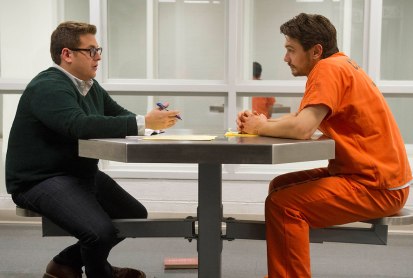
“True Story” couldn’t be more aptly titled. When one hears another tell a story about something, especially when that something is a serious crime, it’s hard to tell if the person telling the story is telling the exact truth or an exaggeration of the truth (if not lying entirely) and even harder for the listener to know what to believe, especially when there is no second side to the story, or at least no one to hear it from. In this film, journalist Mike Finkel was booted off the New York Times for fudging some facts of an important story he wrote for them, after he had defended himself by saying he got enough important details from the experience (but with no notes to back it up). His attempt to redeem himself comes when convicted killer Christian Longo steals Finkel’s identity and Finkel, oddly flattered by the fact that someone knew of him, decides to visit him from time to time to know more about him and get his true side of the story behind his crime of murdering his wife and children. Finkel plans to write about his meetings with Longo for a book, titled “True Story.” But the more Finkel learns about Longo and about the crime, the more he questions what’s true, what’s fabricated, and what’s exaggerated. What is truth? What are lies? What is manipulation? Is the title “True Story” accurate or ironic? You can wonder if the story within the film is true even of itself. (Surely, some liberties were taken, of course.)

“True Story,” based on the actual Michael Finkel’s 2005 book of the same name, is less of a crime story and more of a drama about the codependent relationship/twisted friendship between Christian Longo (convicted killer) and Mike Finkel (his biographer), each of whom begin their relationship with an agenda, though it’s unclear whether they’ve achieved it or not. That’s one of the things that makes the film all the more fascinating, on top of the efficiently understated performances by the actors playing the parts: James Franco as Longo and Jonah Hill as Finkel. Both these actors are known for comedic roles, but their low-key approaches to these serious roles suit them rather well. Hill is believable as a writer who’s sure about his brilliance in his craft, which makes it even more believable when he feels he’s been duped. And Franco delivers one of his very best performances in an unsettling turn as a master manipulator who is so sure of himself as someone who may be able to win over a jury with his charm at a murder trial.

Also very good in this film is Felicity Jones as Finkel’s girlfriend, Jill, who stands by her man when things are tough and mostly stays out of things until a crucial moment late in the film when she meets Longo for herself and decides to tell him a thing or two. I normally grow tired of the cliché in which a secondary character stays quiet for a majority of the film until late in the game when he or she finally says something of significant importance, but when it works, it really works. And that is certainly the case here—Jones nails this scene and her dialogue is choice.

True_Story_2015_Blu_Ray_1080p_mkv_004859000

But this also brings up a problem I have with “True Story”: the script. It may sound odd to you, but I think the script “True Story” is too good. It’s a weird criticism, I know, but a good deal of the dialogue sounds too carefully written. Take this introductory exchange between Longo and Jill when they first meet: she tells him, “I thought you’d be taller.” “Why?” “I don’t know. Maybe because [Mike] looks up to you.” Something about that sounds rehearsed, like it’s part of a play, and her story she tells to Longo, as tough as it sounds, still sounds staged.

But wait…she’s telling a story to get something important across to Longo, much like how Longo has been telling stories to get points across to Finkel and the trial jury. So…isn’t that kind of the point and I’m contradicting myself with this criticism?

Well, another problem with the script is that it can be a little heavy-handed, with obvious statements to make, sometimes repeatedly. And the scene I praised before probably wouldn’t plausible without Longo getting some chance to defend myself, no matter how hard Jill’s words may hit home for him.

Maybe I’m a little unfair with that criticism, because the overall film is very powerful and a solid drama with respectable performances and neat direction by Rupert Gould. It’s an interesting portrait about biography, human conduct, and how it’s not always easy to get what you want no matter how high the stakes are raised. Especially in the aftermath of a heinous crime.

The Gift (2015)

14 Mar

JoelEdgertonTheGift_article_story_large

Smith’s Verdict: ***1/2

Reviewed by Tanner Smith

You know the setup, you saw the trailer, you’ve seen movies like this before: a seemingly mild person identifies himself/herself to an average family but soon becomes violently dangerous, resulting in a deadly battle between them. You think you might be able to guess where filmmaker-actor Joel Edgerton’s “The Gift” is going, right?

Wrong.

“The Gift” may seem like it’s going in that direction, but what you may have heard about it is certainly not the case. I’ll explain the setup before I get to what I mean by that:

Newlyweds Simon (Jason Bateman) and his wife, Robyn (Rebecca Hall), move to a nice new place in Southern California after Simon receives a new job nearby. Soon after they settle in, they meet an old friend of Simon’s from high school: an oddball named Gordo (Joel Edgerton, who also wrote and directed the film). He wants to restart a friendship with Simon, though Simon says they were never close to begin with. But Gordo sends the couple gifts to win their friendship and even starts inserting himself in places where they don’t want him. Robyn doesn’t mind much, but Simon just wants him to go away. He lets Gordo know this in unkind terms, which results in Gordo reacting impulsively and unpredictably.

I didn’t see the film’s trailer, as most people have (and reacted negatively too, especially after actually seeing the movie), and so while I didn’t know what the trailer revealed, I did have some idea from other movies of this sort where this was going to go. Even though I was half-right, I was also…half-wrong (duh). The situation is familiar and recognizable, but when I thought I was getting one thing, I was pleasantly surprised to find myself getting another entirely. That has to do with the ways Edgerton tweaks with the story and makes it more of a story about how whatever wrong you’ve done in the past followed by the insistence not to own up to it and confess eventually will come up and ruin your life. I won’t give away how “The Gift” gets that across (and wonderfully so, I might add), but let’s just say that karma will come and get you when you least expect it.

The filmmaking involved is also impressive, with very carefully constructed execution by Edgerton. Edgerton proves himself worthy as a filmmaker and also turns in a performance that is also creepy and chilling but also strangely sympathetic when you learn more about his character. That’s all I’ll say about him.

Rebecca Hall is suitably vulnerable as a woman who doesn’t know as much about her husband’s past as she thinks she does. And speaking of her husband, Jason Bateman is perfectly cast as a person who can seem charming and likable but also slimy and apathetic, showing he has some things to hide…

The themes of “The Gift” are damage and karma. Secrets are kept from everybody, everyone is damaged in one way or another, and in some way, when the film builds to a haunting finale, the past will come back to haunt you for the rest of your life. “The Gift” works wonderfully as a dramatic thriller. I wish I could tell you more about exactly why it works, but I will leave it for you to discover its secrets for yourself, because it is worthy of checking out. It may even force you to think back to your own past and wonder if there are any secrets of your own that you should own up to…

The Decline of Western Civilization Part II: The Metal Years (1988)

6 Mar

decline

Smith’s Verdict: ***1/2

Reviewed by Tanner Smith

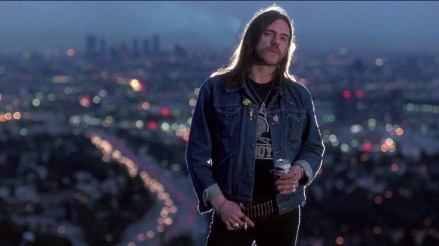
For those who aren’t familiar with director Penelope Spheeris’ trilogy of “Decline of Western Civilization” films, I’ll give a little background. The first “Decline of Western Civilization” film was a documentary about the Los Angeles punk rock scene, featuring concert footage of punk bands and interviews with band members and their audiences, giving a glimpse into the subculture the music created. It filmed through 1979 and 1980 and released in 1981. The film became a cult hit, which led to Spheeris making a sequel, this one about the heavy metal scene of 1986-1988: “The Decline of Western Civilization Part II: The Metal Years.” (Nearly a decade later, a third chapter was made about the gutter punk lifestyle of homeless teenagers of L.A. ‘90s.)

“The Metal Years” uses the same approach as the previous film—a straightforward, constructive, unblinking view of a subcultural phenomenon. But there’s something different about this approach. While interview subjects in the first film could make wild comments at times, the amount of “out-there” these people bring to their interviews doesn’t merely make “The Metal Years’ an in-depth portrait; it also makes it a comedy, with randomly hilarious moments in which these “metalheads” seeking fame and fortune use their egos to unintentionally embarrass themselves on camera.

The reason for their directness may be because director Spheeris is definitely not afraid to ask these people the right questions. And when I say “the right questions,” I mean the questions we might be afraid to ask ourselves; the kind of questions that would seem “rude” to many other people. Whether it’s about groupies, over-ambition, addiction, ethics, economics, or whatever, Spheeris asks these direct questions to get the honest answers she seeks, and she has apparently earned enough trust from her subjects to receive them. Among the questions are: “What do you think parents think about you?” “Are you in it for the chicks?” “What if you don’t make it as a rock star?” “Where do you see yourself in 10 years?”

Among Spheeris’ interview subjects are famous musicians such as Aerosmith, Ozzy Osbourne, Alice Cooper, Dave Mustaine and Paul Stanley, but her initial focus is on unknown bands (some of whom are still unknown today, unsurprisingly), including London, Odin, Seduce, among others; the film has them talk about their desperate quests to stardom and how confident they are that they’ll each make it as a rock star. Many of the answers they give to Spheeris’ blatant questions are fun to listen to just because of how egotistical they are.

It’s nice to get different views on the lifestyle, from those who want to go through certain elements of the lifestyle to those who already have. Among the latter is the somewhat voice of sanity in the form of Ozzy Osbourne, who is seen here as rehabilitated and talking about success while making breakfast in his comfortable home. And there are also those who seemingly haven’t learned much from experience, as Steven Tyler of Aerosmith boasts about his musical and sexual flairs. (By the way, as funny as the movie is, it’s funnier for music buffs looking at this movie from 1988, knowing what they know in 2016.) And then there’s the former, who just desire to be famous, even if it means, according to one subject, “going down in history like Jim Morrison.” They don’t even like to get real jobs because they’re so convinced they’ll be famous sometime soon—they’re that convinced it’s inevitable.

The film is a cult-classic also for its scenes that show rock star excess. There’s a sequence including middle-aged club owner Bill Gazzarri, whose “sexy rock n’ roll dance contest” is now called sleazy and sexist; some of the subjects talk about how women, especially groupies, are portrayed unfairly in the metal scene; Aerosmith talks about spending millions of dollars on drugs; and so on. The most haunting interview occurs late in the film, with Chris Holmes of W.A.S.P., who inadvertently presents the other (darker) side of partying. He’s interviewed in a swimming pool, with his mother sitting in a lawn chair nearby. He slurs and stumbles throughout the interview as he was heavily drunk, admits to being a “full-blown alcoholic,” pours a bottle of vodka over himself, all while his mother watches with discomfort. It’s the most striking sequence in the film.

The film may be dubbed “Part II,” but it can easily be seen on its own. And even if you don’t care about heavy metal of the mid-to-late-‘80s, there’s sure to be something in this documentary that will entertain people today. And when you’re not laughing at these unusual behaviors and straightforward comments, you may also learn some illuminating, interesting information about the pursuit of fame and fortune, which is still relevant in our lives today.

Straight Outta Compton (2015)

3 Mar

hero_StraightOuttaCompton_2015_1

Smith’s Verdict: ***1/2

Reviewed by Tanner Smith

When it came to musical biopics released in 2015, many people may have forgotten about the Beach Boys movie, “Love & Mercy,” one of my favorites of the year; but who could forget the N.W.A. flick, “Straight Outta Compton,” which was a monster hit. Ironically, while “Love & Mercy” was more grounded and low-key, “Straight Outta Compton” is surprisingly conventional as well as energetic. It contains certain music biopic tropes—naysayers, uncertainty of something new and different, downfalls, tragedy, betrayals, etc. We’ve seen all that before. But the film’s electrifying energy is the key to its success—hell, if a film about N.W.A. wasn’t energetic, it’d probably be a major disappointment to nostalgic N.W.A. fans. The point I’m getting at early in this review is that it doesn’t matter how “conventional” a movie of this sort is, much like it doesn’t matter where certain ideas may come from for any movie—it’s what’s done with the material that really matter.

I enjoyed “Straight Outta Compton.” It’s an enthralling, powerful, powerfully acted film about a risk-taking, game-changing rap group, even if the film itself isn’t game-changing (for that matter, it may not be all that risk-taking either, since some original members of N.W.A. were consultants for the film and most likely didn’t want certain things from their life to be portrayed on screen). But I don’t mind so much.

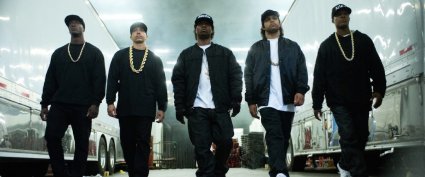
The film takes place from the mid-1980s to the mid-1990s. It begins in Los Angeles in 1986, when Eazy-E (Jason Mitchell) was selling weed, Dr. Dre (Corey Hawkins) moved out of his mother’s house, and Ice Cube (O’Shea Jackson, Jr.) was writing rap lyrics based on everyday things he noticed around him. This is a time when young black men were stopped, frisked, and even beaten by police even when they were just standing on the streets. (Hell, what am I talking about? We still live in that time today!) The anger that came from these kids’ experiences crossed with their dreams of making it big with rap led to “reality rap,” for which they form the group N.W.A. (if you don’t know what that stands for, this isn’t the movie for you) and create angry music based on what they go through day after day. They tell it like it is and become very successful, which in turn makes other people worried that they endorse violence and anti-authority behavior. And of course, the irony becomes clearer when they’re warned not to perform their most angry piece, “F*ck the Police,” at a concert guarded by police; of course, they do and the police start shooting, ending the concert—tell me who’s being violent here?

The first half of “Straight Outta Compton” is by far the best part, showing the creative process of getting this craft done, feeling the intensity of the energetic live performances, and more importantly, letting us feel the anger that they feel, especially when they’re attacked by police. It keeps its riveting edge as the group’s manager, Jerry Heller (Paul Giamatti), manipulates Eazy-E into making him think he’s bigger than everyone else, which then leads to Ice Cube leaving the group to go solo, which then leads to him becoming a hit, which then leads to a nasty war between labels, which then leads to Dre forming Death Row Records with the violent, hulking Suge Knight (R. Marcos Taylor, quietly chilling in the role), and other events that lead to the end of N.W.A. The film gets less energetic as it goes along and its tone grows suitably more grim (especially when it comes to a tragedy late in the film), and while that’s not necessarily “fun” to watch, it is still captivating, well-acted, and intriguing for those who don’t know how N.W.A. went through the downward spiral. I can’t complain that much about it, except for the argument that it suffers from a few pacing issues as a result; I feel like it stalls at certain parts, particularly at the melodramatic material.

The casting is pitch-perfect all around. In particular, Jason Mitchell is abrasive and charismatic as Eazy-E, Corey Hawkins is immensely appealing as Dr. Dre, Paul Giamatti is smooth as a slick album producer who manipulates Eazy-E to betray certain people in the group, and then there’s O’Shea Jackson, Jr. as Ice Cube—damn is he good! This is a truly remarkable performance, bringing Ice Cube’s look and feel to authentic levels. Oh, and did I mention he’s actually Ice Cube’s son? And it’s not just an imitation either, which is more than a plus. Also solid are Aldis Hodge as MC Ren and Neil Brown Jr. as DJ Yella, and I was also impressed by Keith Stanfield (who I remembered from “Short Term 12”) in a brief cameo appearance as Snoop Dogg; I wish he had more screen time.

I mentioned in an above paragraph that the film isn’t entirely “risk-taking.” For one thing, it doesn’t mention Dr. Dre’s violence toward women, which is well-known to quite a lot of people. I get that the writers, Jonathan Herman and Andrea Berloff, chose to keep some things out for the actual band members’ sake, but it’s not like the film portrays them as role models anyway (it does show them as misogynistic at times, even throwing in a “Bye Felicia” joke midway through), so it’s not like they have that much to lose.

“Straight Outta Compton” does work surprisingly well as commentary…unfortunately a little too well. Think about what Ice Cube was rapping about almost 30 years ago and what’s going on in the news even to this day. But “Straight Outta Compton” is still an entertaining film for the power of the material, the live performances which are entertaining, the acting which is spot-on, and the screenplay which is very well-written. I mentioned in my “Love & Mercy” review that I wouldn’t be able to listen to a Beach Boys song the same way again; I feel the same way about N.W.A. songs after seeing this film.

Love & Mercy (2015)

1 Mar

love-and-mercy5

Smith’s Verdict: ****

Reviewed by Tanner Smith

I remember listening to Beach Boys songs when I was a little boy. My parents, as well as cheesy cover bands/children’s entertainers, introduced me to these catchy tunes and even gave me a cassette tape to listen to (and eventually wear out). Good Vibrations. Don’t Worry Baby. Surfin’ USA. Little Deuce Coupe. I Get Around. Help Me Rhonda. Wouldn’t It Be Nice. These were all among the many Beach Boys singles I enjoyed listening to then and still enjoy now. And as I got older, I got into their deeper pieces, especially “God Only Knows,” which is undoubtedly one of their best. And now, with “Love & Mercy,” Bill Pohlad’s biopic about the Beach Boys’ Brian Wilson, I realize I may know their music but I knew practically nothing about what into making the music and what Wilson went through in his life.

Brian Wilson of the Beach Boys was a young, ambitious artist with numerous ideas (possibly too much for him to handle) that led to taking the Beach Boys from catchy surf-themed hits to more detailed, trippy, beautiful works, some of which were ahead of their time. He was also helplessly strung out on drugs, which led to paranoia, schizophrenia, and alienation. For many years since, he would live in a state of awkward arrested development until the woman who would become his second wife helped him out of it.

“Love & Mercy” tells two parallel stories back and forth; one of Brian Wilson at his creative heights, the other of Brian Wilson well after his successes. One story, set in the 1960s (roughly 1965-1968), begins as Brian (played as a young man by Paul Dano) starts to hear voices in his head. He tells his brothers, fellow Beach Boys Carl (Brett Davern) and Dennis (Kenny Wormald), it’s because he has so many ideas on his mind that he simply has to let out. While the band is on tour, Brian stays behind to work in the studio, making new music and intending to make “the greatest album ever made.” His new pieces, including the offbeat “Pet Sounds,” are unusual, innovative, and one might say “unusually innovative,” but neither of them are becoming hits, which angers Beach Boys co-founder/singer Mike Love (Jake Abel). Meanwhile, his grip on reality loosens when the voices in his head attempt to overtake him and his addiction to drugs becomes worse and worse…

The other story, set in the 1980s, shows a middle-aged, broken, confused Brian (played this time by John Cusack) under the pharmacological care of therapist Dr. Eugene Landy (Paul Giamatti). He meets a Cadillac saleswoman, Melinda Ledbetter (Elizabeth Banks), and starts to date her. She notices the grip Landy has on Brian and how he’s using it to his advantage, and so she tries to help him.

The film is really two movies in one, and they both work equally well. Granted, the story involving Brian in his Beach Boys involvement is arguably the most engaging, but the present-day story is very strong and intriguing in the way Brian behaves in his lost state, and we’re genuinely hoping he finds himself again. These two stories intersect effectively, showing two kinds of developments: creative and personal. We wonder how Brian got from who he was in the past to who he is now (or rather, the 1980s, when the “present-day” is set) and we hope he finds his way again.

That’s the ultimate power of “Love & Mercy,” which is without a doubt one of the best musical biopics I’ve ever seen. The film is not only a loving tribute to the Beach Boys, but it’s also a compelling portrait of a tortured artist whose career doesn’t always work out well for him, and it shows that in a non-condescending manner. In other words, it doesn’t take the easy way out, like most music biopics. Even when there’s a triumph, it’s quick and low-key.

But the film is also a lot of fun when it’s paying tribute to the Beach Boys. It opens with a glorious montage of the Boys in their heyday, recording, performing, and having fun (on the beach, of course). It takes us behind-the-scenes on the creation of pieces such as “God Only Knows,” “Pet Sounds,” “Good Vibrations,” among others. The actors portraying the other Boys are credible in their roles, especially Jake Abel who makes a very convincing Mike Love. And the attention to detail is simply marvelous—for example, I love how Brian’s practice piano is in a circle of sand in his living room.

Oh, and I can’t forget to mention the cinematography and editing in many of these sequences. Among the scenes that stick out in my mind is a scene in which Brian, as a young man, is playing a rough piano version of “God Only Knows” and singing nervously, presumably to himself—the camera spins slowly around the piano as he’s performing until it stops to reveal his father (played by Bill Camp), sitting on a nearby sofa and listening. That leads into a hurtful scene in which Brian’s father criticizes Brian harshly and Brian pathetically tries to counter-argue. Suddenly, that tracking shot makes a lot more sense. As for editing, I admire the way the film shows passages of time through the band’s art, such as with the montage, the making of “Good Vibrations,” and Brian’s downward spiral, among others. The film is technically brilliant.

This is the best performance I’ve seen from Paul Dano, an actor I’ve admired many times due to his performances in films such as “Little Miss Sunshine” and “Ruby Sparks.” Not only does he look right for the part, slightly resembling the real Brian Wilson—he feels right. He does such an incredible job of capturing the man’s increasingly peculiar convulsions and characteristics. John Cusack is just as good, capturing the right speech patterns and somewhat childish ways of exposing secrets from his past.

I’ve seen “Love & Mercy” four times now, and I don’t think I can forgive the Academy for passing up this truly superb film, to be honest. I would’ve put Paul Dano in either one of 3-4 slots in the Best Actor category—that’s not a slam against the nominees but a statement of how strongly I felt about this performance. Maybe an Editing nomination, a Best Adapted Screenplay nomination, a Sound Editing nomination, or even a Beat Director nomination would have been warranted. Maybe Academy members should have seen the movie more than once. As for me, I will never listen to a Beach Boys song the same way again.

The Death of “Superman Lives”: What Happened? (2015)

24 Feb

Smith’s Verdict: ***1/2

Reviewed by Tanner Smith

tumblr_m28ii1crg01qztzndo1_500

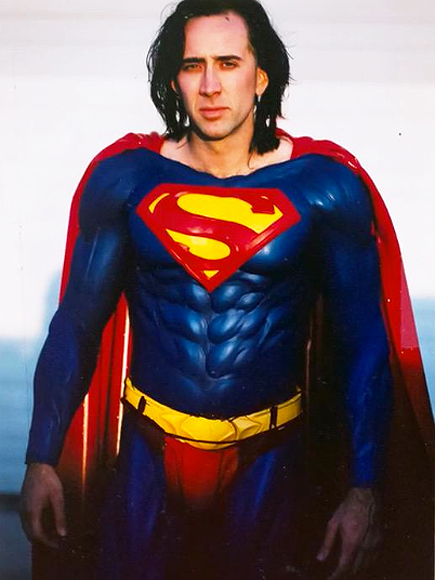
This is a photo taken at an early costume fitting session for which Nicolas Cage was trying on a new Superman suit, because he was going to play the Man of Steel in a Superman project in the late 1990s, titled “Superman Lives,” to be directed by Tim Burton. In this photo, Cage’s eyes are barely open, his long hair looks ridiculous, and the costume looks sillier than the other Superman-suit renditions. People all over the Internet look at this photo and scoff, laugh, groan, or all of the above. Director Bryan Singer, who helmed 2006’s “Superman Returns,” apparently even showed the picture to his crew members, reminding them of how much worse their movie could be.

Now, take a look at THIS photo…

nic-cage-435

Now, that’s Superman—albeit a somewhat different version, but you can still see how a new, improved Superman could look rather awesome. This is the photo most people seem to ignore.

“Superman Lives” was called off just three weeks before production, and people nowadays wonder what would have happened if it were made. Would it have been a welcome new addition to the Superman franchise or would it have been as memorably bad as late-‘90s comic-book movies such as “Batman & Robin”? We’ll never know. But with this documentary, “The Death of ‘Superman Lives’: What Happened?” we now have a good idea about the kind of movie it could’ve been.

Writer-director Jon Schnepp, of Collider Movie Talk on collider.com, was apparently as intrigued about the doomed project’s backstory as everyone else, which would explain why he delves into so deeply, with insights into Hollywood insider power and comic book geek behavior, as well as engaging in-depth interviews with Tim Burton, screenwriter Kevin Smith, producer Jon Peters, former Warner Bros. executive Lorenzo di Bonaventure, among others. (Cage unfortunately wasn’t interviewed, but don’t worry—there are wonderful pieces of archival footage of him mentioning the film in talk-show interviews and even footage of him trying on the costume.)

One of the more fascinating interviewees is Peters, who started out in Hollywood as a hairdresser and then went on to become a successful producer/studio executive. He’s very open about certain topics of discussion and speaks candidly with Schnepp about the process of the film’s pre-production. And it turns out the others have things to say about him too, particularly those who have fought him on numerous things. For example, Smith, who was the first person called upon to write the film, mentions three particularly strange demands Peters had for him—1) Superman should never fly, 2) Superman shouldn’t wear the silly costume, and 3) Superman should fight a giant spider. (These are allegations that Peters denies.)

Maybe Nicolas Cage could have pulled off the role of Superman. We know him today as a crazy actor who will take just about any role thrown at him, but what we forget is that he can be a damn good actor (and “Superman Lives” was being planned at the height of his career, having come off an Oscar win for “Leaving Las Vegas”). He’s not the first choice people think of in the role of Superman, but then again, neither was Michael Keaton for the role of Batman, which the documentary reminds us of. One of the common things mentioned in this film is the mixture of fear and ignorance when news is delivered to comic book geeks and how they will react when an actor they don’t favor is considered for a Hollywood adaptation of their favorite artworks.

“The Death of ‘Superman Lives’: What Happened?” is an engaging documentary to learn from about the planning of a notorious failed project, to listen to these infamous artists talk about it, and even to discover some notions about odd behavior presumably brought upon by Hollywood. (Watch the movie and you’ll see what I mean, the more you learn about Peters.) The inside material is fascinating, the interviewees pleasing, and the overall story intriguing.

Roger & Me (1989)

9 Feb

RogerAndMe_087Pyxurz

Smith’s Verdict: ***1/2

Reviewed by Tanner Smith

Michael Moore once said in an interview that his agenda with making his documentary films that expose big-time corporations and those associated with them is not unlike the scene in “The Wizard of Oz” in which the Wizard is exposed for being a frail man pulling strings. You know the scene—the one in which the mangy dog, Toto, pulled a curtain to reveal that the terrifying entity before our heroes was nothing more than one man putting on a big show. In a way, Moore is Toto, regular American citizens are Dorothy and her friends, and the corporations, politicians, etc. are nothing more than people pulling strings to inspire fear and power.

Whether you like him for making valid points and satirizing material while criticizing them at the same time or hate him for his fudging of the facts, speaking a little out of turn and very directly (remember his controversial Oscar acceptance speech?), or even his snarky personality, it’s hard to deny he’s a daring performance artist, putting himself in the story and showing us what he sees. Some of the ways he handles the material in his movies don’t work for me and I think he tries a little too hard getting his points across, but I can’t hate on the man for making entertaining films while at the same time delivering his points of view. I think “Bowling for Columbine” is a fascinating documentary and “Roger & Me,” the subject of this review, was a great way to get his name across to the general public.

“Roger & Me” was Moore’s debut feature, released in 1989. He originally funded the film by selling his house and hosting weekly bingo nights—anything to make a film about the hardships within Flint, Michigan. Moore was a native of Flint, the birthplace of General Motors. When GM closed many plants, laying off thousands of workers, the muckraking reporter Moore made this film as a response. But if you know Moore’s reputation today, you wouldn’t be surprised to find that this isn’t a bleak documentary about hardships. It’s not only cross and has a point to make—it’s also funny.

Moore narrates the story with his droll sarcasm and stars in the film himself, as he tries repeatedly to get an interview with Roger Smith, the chairman of GM. Every now and then, we’re treated with a sequence in which he thinks he’s going to walk into a building and meet Roger until he is immediately escorted out by security. Before he would even get a chance to get even closer than one floor toward Roger, he speaks with a spokesman from GM. When asked about the layoffs, the spokesman says they’re “necessary.” (Spoiler alert—he gets laid off by the end of the movie. Now there’s an up-yours I’m sure Moore was happy about.)

Moore goes everywhere in Flint. He encounters people with their own businesses (including a woman who chooses color coordinates for people and a woman selling rabbits for “pets or meat”), he meets several former GM workers now working at Taco Bell (some of whom are losing that job too), he looks into a poor attempt to turn the town into a tourist attraction, he goes to wealthy events, he visits an Amway party, he meets celebrities (including Pat Boone and Ronald Reagan) who try to cheer up locals, and he meets the most notable side character in the movie, a deputy sheriff who evicts several unemployed auto workers who couldn’t make their payments. And that’s only half of the material Moore works with in this movie, if you can believe it.

What is Moore trying to say with “Roger & Me?” He’s trying to put across the message that to big corporations, profits are more important than human lives, and something needs to change. This film is his angry way of showing that the best way he can to the public—actually addressing the problem.

Moore’s methods of telling the story of “Roger & Me” have been questionable (there was even a very unkind article from Film Comment about them). Some say it’s too good to be true (which I suppose is the criticism of most documentaries). Apparently, the amusement park was built before the closings and not in response to them; there were less layoffs than the film suggests; Roger Smith wasn’t reading “A Christmas Carol” at the same time of a crucial point; and so forth. Well…so what? Maybe the film was a little manipulative, took some cheap shots, and fudged some of the facts, but A) we all know that, B) Moore knows that, and C) the purpose is both entertain and enrage us. (Besides, anyone could figure out the “Christmas Carol” thing was a setup, just as much as we figure out Moore had staged beforehand his attempts to meet Smith. It would be too good to be true.) I still really like the film. I admire it for its balance of humor and pathos and the way Moore’s cynicism and skillful timing blends everything together. So what if Moore took some liberties? Not every documentary can be objective and even entirely factual. The film as a whole is emotionally true.

Beyond the Bridge (Short Film)

22 Jan

Smith’s Verdict: ***1/2

Reviewed by Tanner Smith

In Seth Savoy’s 10-minute short film, “Beyond the Bridge,” set in World War II, a Cajun-American spy (Stephen Brodie) is sent on a raid to steal German maps so the Americans can have a major advantage. But on his way back, he collapses from exhaustion and ends up falling asleep, only to awaken and find his life in peril when he comes across German soldiers. I know the idea of someone collapsing in time of desperation and need for triumph is difficult to swallow (and I thought so too), but if he wasn’t merely a spy, it would’ve been even less understandable—it’s never specified how experienced he is (though, if he’s inexperienced, why send him on the mission to begin with?). But maybe I’m overthinking it, and I’m willing to overlook it, because it’s possible that something like this does happen (or did happen). The film itself is very well-done.

“Beyond the Bridge” is Savoy’s follow-up to an excellent short he co-directed three years ago (“Blood Brothers,” also reviewed by me), and it’s a well-made, effectively complex war drama-thriller. The acting is solid, especially from Tom McLeod who is effectively despicable as a Commandant and an expressive Harley Burks as a conflicted German soldier. The cinematography by Robert Patrick Stern is outstanding, with every shot brilliantly handled. And the film is rich with atmosphere—when the protagonist is in danger, it’s easily believable. While I was watching the film, I quit thinking about the probability of what got him into this predicament and instead imagined myself in his place at the point where he notices trouble signs; thinking about what I would do, how I would handle it, etc. and being unnerved myself in the process. It’s to Savoy’s credit as a solid filmmaker that he made me care and made me wonder. The rest of the film is just as efficiently unsettling.

The film’s running time is only 10 minutes, which is probably how long it needs to be. But honestly, I wouldn’t have minded another 10-15 minutes of this material handled by this crew. “Beyond the Bridge” is unsettling, deep, well-directed, gloriously-shot, well-acted, and not a film I’ll forget anytime soon.

The Gallows (2015)

20 Jan

Horror-2015-The-Gallows-Movie

Smith’s Verdict: *

Reviewed by Tanner Smith

I remember writing my “Unfriended” review like it was yesterday. It began with somewhat of a PSA about characterization. Let’s review: “If you’re going to make a teen slasher film without well-developed or even likable main characters, you have to have A) good commentary with an underlying theme & message, B) a clever gimmick, or C) both.” There are two types of horror-movie victims: people who make poor decisions and get severely punished for it, and one-dimensional pawns in a deadly game of cat-and-mouse who we do not care about when they die. “Unfriended” worked because while the characters could be seen as the latter for some, they were seen as the former by others who knew they were dumb teenagers—it was the film’s way of showing consequences while partaking in supernatural horror.

And now we have “The Gallows,” which has a lead character so detestable and unlikable and obnoxious that you’ll be wishing for the company of the jackass who got killed by a blender in “Unfriended.”

His name is Ryan (played by Ryan Shoos). He mocks everything and everyone he sees. He throws footballs at unpopular kids. He’s idiotic. He has no personality outside of hurtful comments. He’s the kind of stereotypical jock you usually find as a one-dimensional bully in high-school dramas, except here, he’s our hero. Good thing he’s in a horror film where he’ll surely die; at least when that happens, he’ll shut up.

Oh, and he films everything too. That’s right—“The Gallows” is another found-footage horror film in which characters record everything on their pocket cameras or their cellphones, including their imminent demises. They’re films that cost very little to make and are very profitable upon release. Some are good; others are…well, like “The Gallows,” pretty bad. Like the bad ones, there’s hardly an excuse for our characters to constantly film everything, and when there is, it’s usually nonsensical and lame. And even when they’re running for their lives, they’re still filming, causing a lot of shaky-cam that is never fun to look at. Oh, and there are also loud, sudden sound effects that couldn’t have been captured on camera, unless they knew they were making a movie and wanted to jump-scare audiences who think loud noises are scary

The film begins with home-video footage showing opening night of a high-school play called “The Gallows,” a “Crucible”-like morality tale, in a Nebraska high school in 1993. A prop malfunctions and a student is accidentally hanged. Cut to 2013, when the drama department has agreed to put the play back on. (Yeah I know, just go with it.) The actor playing the boy to be hanged is a star football player named Reese (Reese Mishler), who has a crush on his co-star, the devoted theatre student, Pfeifer (Pfeifer Brown). Of course, his “friend” Ryan is unsympathetic and a complete jerk and tries everything to make him leave the play while also humiliate him in the process. He comes up with a plan for him and Reese to sneak into the school at night and trash the set so the play will be called off. They bring a cheerleader, Cassidy (Cassidy Erin Gifford), in on it, but soon, they, along with Pfeifer (who happens to come across them in the school), find themselves locked in as they begin to suspect that they’re not alone…

Even with an admittedly shocking reveal about one of the four characters in peril, there’s nothing particularly interesting about our bland leads. Even when it seems they’re about to take a promising turn in a possible relationship between Reese and Pfeifer, it’s cast aside to make room for more antics involving the scumbag known as Ryan and more screaming and yelling from everyone else (again, while they film everything—while we’re on the subject, there is no reason for this film to be shot in this style).

Is anything fresh about “The Gallows?” Yes, the location. Setting a horror film inside a school for the most part is an intriguing idea. It shows how a place can seem peaceful and cheery during the day and seem ominous and creepy at night. (Not to mention, it also saves money on a production designer, because the place is decorated already.)

It all comes back to Ryan. There’s a fine line between “funny” and “insulting” when it comes to creating characters that are kind of jerks, and they have to be kept in that gray area for us as an audience to care for them something even remotely bad happens to them. This is the kind of teenage douche bag that I hated in high school—not the best characterization for your horror movie lead! On top of that, the writing is awful, the terror is only mildly effective, and the found-footage gimmick doesn’t provide the slightest bit of tension, so I’m saying skip this movie like whatever school board should’ve skipped the decision to bring back a play that a child died while performing.

The Visit (2015)

19 Jan

the-visit-03

Smith’s Verdict: ***

Reviewed by Tanner Smith

M. Night Shyamalan is a talented filmmaker who has made his mark with “The Sixth Sense” and followed it up with hits such as “Unbreakable” and “Signs.” But after “The Village,” which has split audiences right down the middle in terms of opinion, he has taken many bad spills in his career, resulting in him being the punchline of many movie-related jokes. (These spills are titles such as “Lady in the Water,” “The Happening,” “The Last Airbender,” and “After Earth.”) He was in desperate need for a comeback—if not a home run, then a solid base hit at least. Thankfully, he accomplished a double-base hit with “The Visit,” his best film in at least ten years.

What made his bad films bad? For one thing, they were so damn self-serious. He successfully made it work in his heyday, but after that, he turned in some pretentious, forced filmmaking elements that made his last few films insufferable. That’s why it’s such a relief to actually laugh at the very entertaining “The Visit” because I’m actually supposed to. It is a horror film and it is unnervingly chilling, but at the same time, it’s very funny. I haven’t seen a film work with that kind of balance before, and I applaud Shyamalan for not taking himself too seriously like he did before.

I’m getting ahead of myself. The story: Becca (Olivia DeJonge) and Tyler (Ed Oxenbould) are suburban teenage siblings visiting their grandparents, who haven’t spoken with their daughter, the kids’ mother (Kathryn Hahn), in decades. Becca is an aspiring filmmaker and decides to make a documentary about the visit, these people, and the effect their rejection had on her mother. The kids like their grandparents, Nana (Deanna Dunagan) and Pop Pop (Peter McRobbie)—they seem nice, they’re funny, they seem like grandparents you find in a storybook. But soon enough, they start to notice something isn’t quite right here. Pop Pop keeps going out to the barn by himself. Nana asks Becca to climb all the way into the oven to clean it. The kids hear ominous sounds coming from outside their bedroom at night. And so on. (One of the few problems I have with this movie is whenever the kids tell their mother how “weird” their grandparents are being, she uses the excuse: “they’re just old.” Right.)

As is typical of a Shyamalan film, there is a twist that is revealed late in the proceedings—what IS the deal with these kids’ grandparents? I was watching this movie like a hawk, looking for clues and hints that could lead to what the twist could probably be. Imagine how surprised I was when I didn’t guess it correctly. I’ll be honest—I was so shocked, I felt the world expand around me as the reveal became clear. Then I facepalmed myself for not seeing it coming. (Watching the film again, knowing the twist, actually made the film even more entertaining, which is a huge plus.)

The film is very good at balancing horror and comedy. For example, early in the film, there’s a chilling scene in which Nana chases the kids in a crawlspace under the house, but it turns out she was just playing a game. Moments like this keep the audience guessing, glued to their seats, and wanting to know what’s going on, and it leads to a most entertaining final act; the less I say about that, the better.

The film is shot in found-footage style. Since the film is supposed to be put together like Becca’s documentary, we see everything through the perspective of her camera. This was probably Shyamalan’s biggest risk to take, since this style is wearing out its welcome (though, that’s what people said three years ago and yet films like this are still being made). But he managed to inject some energy into this approach, making executional flaws excusable. (Among the flaws: the video and sound are TOO good for a kid making a documentary, so it’s a little hard to get a natural feeling from the entire film.)

Dunagan and McRobbie are a hoot as Nana and Pop Pop, playing the roles with exaggerated delight. DeJonge is fine as a budding filmmaker who can be pretentious at times, explaining things to her brother like “mise en scene” and “the elixir” and so on. Oxenbould is a riot as Tyler. I forgot to mention this kid wants to be a rapper and often replaces swear words with pop-artist names (for example: “Sarah McLachlan!”)—he raps a few times in the film. Oh and he’s a germophobe…and I won’t even begin to mention how that quirk comes into play later in the film.

Shyamalan hasn’t made the film totally natural. (I already nitpicked the technical aspect, and while I’m at it, sometimes the dialogue and deliveries aren’t entirely convincing.) But he has learned to lighten up with his craft. In doing so, he redeemed himself, making his remaining fans (such as me) wonder what he’ll come up with next. “The Visit” is a lot of fun, even if it isn’t a complete success.