Captain America: Civil War (2016)

10 Dec

mv5bmtq3njiwmzk5mv5bml5banbnxkftztgwmjy0mjy1ode-_v1_cr060640360_al_ux477_cr00477268_al_

Smith’s Verdict: ***1/2

Reviewed by Tanner Smith

2014’s “Captain America: The Winter Soldier” was one of the best entries in the Marvel Cinematic Universe. Since its release, we’ve had another origin story with “Ant-Man” and the next “Avengers” sequel (and “Guardians of the Galaxy,” but none of those characters make an appearance until “Vol. 2”). We still have a while to wait for the ultimate two-part “Avengers” story involving something called “the Infinity Stones”—you know, the things that were only hinted upon in previous MCU films since “Thor: The Dark World” but every comic-book reader seems to know everything about? So, while we’re waiting for that, we have “Avengers 2.5: Civil War.” Er…no, I’m sorry, it’s “Captain America: Civil War,” featuring many of the Avengers in action (excluding Hulk and Thor). But we have something close enough, plus new Avengers. The result is the most exciting superhero movie I’ve seen this year.

The events of “Avengers: Age of Ultron” aren’t ignored. In fact, that film’s climax set up the issues in “Captain America: Civil War.” If you recall (and if you don’t, don’t worry—you’ll catch on), there were many casualties in the devastation of Sokovia at the hands of the Avengers. Because of this, the United Nations wants to oversee and control the Avengers. Steve Rogers aka Captain America (Chris Evans) doesn’t trust the government over his own judgment, but Tony Stark aka Iron Man (Robert Downey, Jr.) feels immense guilt over his part in the incident and agrees to oversight. On Stark’s side are Black Widow (Scarlett Johansen), War Machine (Don Cheadle), and Vision (Paul Bettany), and on Cap’s side are Falcon (Anthony Mackie), Hawkeye (Jeremy Renner), Scarlet Witch (Elizabeth Olsen), and Ant-Man (Paul Rudd). Things get even more complicated when Cap’s childhood-friend-turned-enemy-weapon Bucky Barnes (Sebastian Stan) aka The Winter Soldier returns from obscurity and is reprogrammed by the bad guys to kill. Cap breaks many rules in protecting him in order to find more answers in order to help him. His allies on the UN issue follow him, leading to battle lines being drawn between them and Stark’s followers.

There’s a lot that happens in this film, including the introduction of two new recruits: Black Panther and Spider-Man. T’Challa aka Black Panther (Chadwick Boseman) is the prince of the African nation of Wakanda whose father has fallen victim to an attack brought on by The Winter Soldier. Out for vengeance, he joins Stark’s side, as Stark is after Cap to get to Bucky. Then, there’s Spider-Man, who also joins Stark and is the hero about whom I was both excited and nervous. I’m a Spider-Man fan, and seeing what Sony continued to do with the character after good starts and bad finishes made me cross my fingers that Disney/Marvel would finally serve him well. And what did I get? The best version of Spider-Man I’ve ever seen on film. Played brilliantly by Tom Holland, Peter Parker aka Spider-Man is charismatic and energetic as well as quippy and resourceful. I watch this kid, and I’m not thinking of Tobey Maguire or Andrew Garfield—this is Spider-Man! I can’t wait to see him in this summer’s “Spider-Man: Homecoming.”

The villain isn’t very memorable, but his motivations, which are revealed later, are. That brings me to one of the movie’s biggest strengths: nothing is black and white. Sure, there are other ways of doing things than what some of the characters do here, but that adds to the moral complexities that are scattered all over the movie. The advertising makes a big thing out of “Team Captain America” and “Team Iron Man” and “whose side are you on” and so forth, but the thing about this movie is that the decision of who to side with is not an easy one. This can cause audiences to discuss many of the moral/ethical obligations sure to be brought up.

While I’m on the subject of seeing where Iron Man comes from, I have to commend this movie for making me care about Tony Stark/Iron Man again. Lately, I’ve been on the fence about this guy, after he’s made dumb decision after dumb decision—telling a terrorist where he lives, building a machine that could do good or bad even after he’s had a vision telling him he’s responsible for destruction, and so on. These things made me want to smack him in the face after he said another witty remark, because this guy wasn’t claiming responsibility for anything that was his fault. But thankfully, he does claim responsibility here. He feels a lot of responsibility over what happened in “Age of Ultron” and you can tell he wants to make up for it. This is the side of Tony Stark I’ve been waiting to see for a long time.

Blah, blah, blah. What about the action? Well, it’s there and it’s done well. But it’s nothing too special…until it gets to an extended action sequence midway through, in which the Avengers are fighting each other. This is an amazing sequence and the one people have come to see. To see the heroes we’re all familiar with suddenly facing each other is a fascinating concept by itself, but to see them use their skills on each other is even more entertaining to watch. While a part of you wants them to listen to reason and talk about why they’re fighting, another part of you can’t help but enjoy the battle. The effects are well-done, the pacing is fast as lightning, and there is room for surprises, particularly with a new development in Ant-Man’s technology.

“Captain America: Civil War” is an enormously entertaining MCU entry, though a part of me is admittedly afraid that the MCU can only go down from here. But then again, another part of me is excited to see what is to come anyway. Especially “Spider-Man: Homecoming.” We have a few months until we get to see that one—I’m crossing my fingers (and my toes as well) that it gives us what we want/need from the web-slinging superhero.

Captain America: The Winter Soldier (2014)

10 Dec

images

Smith’s Verdict: ***1/2

Reviewed by Tanner Smith

When Marvel Studios brought us its Marvel Cinematic Universe, movie audiences found themselves looking forward to a new continuing chapter in…well, whatever adapted-from-comics saga it would throw at them. It began with a promise made in the first “Iron Man” movie that an “Avengers” movie would actually happen, and it released movie upon movie upon movie to assure us it would come, from “The Incredible Hulk” to “Iron Man 2” to “Thor” to “Captain America: The First Avenger.” And when “The Avengers” finally hit, it gave them a hell of a good time and exactly what they wanted to see—superheroes working together and a load of action scenes for them to partake in. Then, after seeing the origin stories of Iron Man, Captain America, Thor and Hulk, audiences were curious to see where they were going to go next before the next Avengers movie. With Iron Man, they had “Iron Man 3.” With Thor, they had “Thor: The Dark World.” Both were decent movies, but there needed to be something more. A lone-superhero sequel that truly upped the ante in terms of action, thrills, story, and even comedy and drama; and not just filler to catch up with the heroes. (I may like “Iron Man 3” and “Thor: The Dark World” fine, but when I really think about it, it is sort of “filler” before the next Avengers movie.)

“Captain America: The Winter Soldier” is that movie.

“Captain America: The First Avenger” was a fun origin story for whom people say is the bland Boy Scout of the Avengers. Adapting the comic-book hero for a movie was a difficult task, but thankfully the movie was fun. However, you have to wonder: how do you make something complex out of a patriotic do-gooder? Well, with “Captain America: The Winter Soldier,” sibling directors Joe & Anthony Russo and writers Christopher Markus & Stephen McFeely have found a way.

Steve Rogers, aka Captain America (played again by Chris Evans), is adjusting to life in the modern world, after awakening from decades of suspended animation. Not only does he have a list of pop culture to catch up on (for a treat, pause the DVD/Blu-Ray to see what else is on the list), but many of the people he knew are gone and his old girlfriend is now an ailing elderly woman. But that’s not all. His old-school ideals must make way for subtler threats and difficult moral complexities—nothing is as simple as he was brought up to believe. Things get even more difficult when it seems SHIELD is slowly being taken over by HYDRA, an enemy organization. Before Director Nick Fury (Samuel L. Jackson) falls victim to a HYDRA attack brought on by the ominous Winter Soldier, he instructs Captain America to trust no one. So Cap, along with Black Widow (Scarlett Johansen), go rogue as they find answers as to who exactly is behind this. They partake in battle after battle as they discover some harsh truths about the people they know/meet as well as the identity of the Winter Soldier himself.

What elevates this exciting action-thriller to more compelling levels is its dramatic aspect, mostly centered around the character of Steve Rogers. The struggles he faces as a person are heartbreaking, as he tries to get used to living in this world he’s not too familiar with—a world in which his old friends are either gone or fading. The scene in which he visits his old girlfriend, Peggy Carter (Hayley Atwell), is particularly affecting. And as a hero, he has more to deal with, such as being hunted by the people he works for, facing newer threats with political agendas alien to him, and even the upsetting idea that he’s not doing as much good for the world as he wants to. All of this helps make the character of Captain America more interesting and complicated than we would’ve expected. I appreciate what went into his development in this movie. And when it becomes revealed who the Winter Soldier is, it only makes it more difficult and gripping.

But whatever. People weren’t there for its psychological issues; they were there for the action. And “Captain America: The Winter Soldier” doesn’t disappoint. They’re perfectly executed, fast-moving, and exciting. That’s really all I can say about it, except that because the film takes time out to establish the environment and develop the relationships of the characters, we care about what’s at stake here. It doesn’t feel like a typical superhero movie; there’s more than meets the eye with it.

“Captain America: The Winter Soldier” is one of the best movies the Marvel Cinematic Universe has to offer. It knows how to tell the story, it knows what to focus on, and it knows what to deliver when the time calls for it. There’s more to the film that I already explained in the review, so if you want to find out what I mean by that, I recommend you check the movie out and see what else it has to deliver.

The Witch (2016)

10 Dec

thewitch2

Smith’s Verdict: ****

Reviewed by Tanner Smith

2016—a surprising good year for horror. Among the titles I enjoyed watching: “Hush,” “10 Cloverfield Lane,” “Don’t Breathe,” “The Conjuring 2,” “Lights Out,” “Ouija: Origin of Evil,” “The Invitation,” “Green Room,” and of course, the popular Netflix series “Stranger Things.” But for some reason, I didn’t see a film called “The Witch,” which people have labeled the best horror film of the year. But I recently rented the DVD and gave it a watch…

And then something strange happened: I had trouble sleeping that night.

Then, on the next day, I thought back to the other titles I mentioned in the above paragraph and I realized: as much as I enjoyed the thrills and suspense those movies had to offer, none of them really got under my skin. Don’t get me wrong—they were fun to watch and had me on-edge during crucial tense moments. But I can watch them again with no problem at all. I get the feeling that if I watched “The Witch” again, I would need to brace myself, even though I would know what’s coming. That’s the effect this film had on me. It’s a deeply unsettling, heavily atmospheric, incredibly disturbing, exquisitely made film that gave me the chills.

“The Witch” is a mix of a horror film and a period drama. (In fact, I think this film may be what I looked for and missed in M. Night Shyamalan’s “The Village.”) Set on a small farm in the middle of some woods in 1630s Massachusetts, it’s centered solely on one small set of characters: a Puritan family who recently arrived from England after being banished from their church for vague reasons, which I think have to do with their interpretation of the New Testament. The parents are farmer William (Ralph Ineson, chillingly good here) and his wife Katherine (Kate Dickie) and the children are teenage Thomasin (Anya Taylor-Joy), pre-teenage Caleb (Harvey Scrimshaw), twins Mercy and Jonas (Ellie Grainger and Lucas Dawson), and infant Samuel. They live in the woods, far from the Puritan settlement.

When I write a review about how things slowly but surely go wrong for a group of characters in a horror film, you would expect the occurrences to start small, like disappearing pets or farming animals, objects becoming lost, or even a strange sight in the woods. But no—the horror truly begins early on, as the little baby Samuel disappears. That is a truly unsettling scene, when Thomasin is watching him and playing peekaboo, and suddenly, he just vanishes. Already, this causes grief and fear for the family, who pray endlessly. It begins a terrible time of paranoia, dread, uncertainty, ideals heading south, condemning, and more disturbances.

The film doesn’t throw everything at us, like a typical supernatural thriller would do. It gradually shows the situation getting worse and worse, with a slow build and very few details (shades of Stanley Kubrick’s “The Shining” are merited). We’re not even sure of everything happening around this family. Is there a witch living in the woods causing all the trouble? Is there another explanation? Whatever is happening escalates to darker, deeper areas, and the family is surely doomed.

The horror is found in small, simple chilling moments. I already mentioned the disappearance of the baby, but there’s another bit that truly got me. I won’t give it away, but it involves the milking of a cow. Above all, there’s something I’ve always found chilling about people imposing their will on other people because of their religious beliefs; that’s why, when the family starts to see each other as being associated with the evil outside, I was held in suspense, terrified of what might happen. And the less I say about the ending, the better…

But the best aspect of “The Witch” by far is its execution. This film is heavy on its chilling atmosphere. It’s painted in bleak colors. You can practically feel the environment, which also means you can feel the immense tension. The attention to detail delivered to us by writer-director Robert Eggers (who worked mostly as a production designer before he made this film) is brilliantly done. Execution is key to the film.

I often use the phrase “a film I won’t forget anytime soon” to describe the effect a good film has on me. I use it again for “The Witch,” because any film that can keep me awake at night definitely qualifies as…a film I won’t forget anytime soon. It truly is the best horror film of the year.

Sing Street (2016)

18 Nov

singstreetband15

Smith’s Verdict: ****

Reviewed by Tanner Smith

I’ve always been a fan of coming-of-age movies, especially when they succeed at balancing comedy and drama so well. That’s not an easy task to pull off, and it could result in an uneven mess. But when you do it right, you can expand your audience. It’s like this—you have a gritty, realistic story you want to tell, but you also have lighthearted elements that work within the context; that lightheartedness keeps audiences in; the audiences laugh and smile; then they notice what else the film has to offer and get sucked in even further; they talk about it afterwards; they tell their friends; their friends check it out; and there you go.

Then again, maybe that only happened to me. Basically, I heard the buzz about this film, “Sing Street,” and so I watched it on Netflix—now I’m practically imploring other people (including readers of this review) to see it.

I love “Sing Street.” This may be the film I’ve been waiting to see for a long time—a very charming, fun film that also tells a gripping story about growing up, brotherhood, and turning your personal turmoil into art. It was brought to us to the very talented Irish writer/director John Carney, whose 2007 musical “Once” stole many people’s hearts by stating what music can do to its characters and to the audience, much like this film does.

“Sing Street” takes place in Dublin, 1985. 15-year-old Conor (Ferdia Walsh-Peelo) is caught in the middle of an unpleasant home life, in which his parents (Aidan Gillen and Maria Doyle Kennedy) won’t stop squabbling. His older brother Brendan (Jack Reynor) escapes the household tension by smoking weed, while Conor ventures outward. After his parents transfer him from a prestigious private school to a rowdy Catholic school, he finds himself going from an unpleasant home life to an unpleasant school life—or just an unpleasant life overall, which is helped a little bit by watching new music videos with Brendan. Everything changes when he sees a pretty girl across the street from school and decides to walk over and talk to her.

This is Raphina (Lucy Boynton), and she’s everything Conor only dreams about—tall, beautiful, cool (in a very ‘80s sort of way—remember this film is set in 1985), and a model. But he asks her to be a video for his band, which she shockingly agrees to do. There’s only one problem—he doesn’t have a band! But soon enough, he puts one together out of some classmates who have musical talent and promotes himself as lead singer. Calling themselves “Sing Street,” they start off gaining inspiration from popular bands at the time, such as Duran Duran, but they soon come up with their own material and continuously create song after song after song, as they get better and better. For Conor, this is his way of escaping reality. His parents won’t stop fighting and his personal bully, as well as the school’s principal, won’t stop tormenting him. But if he can bring his music to London with dreams of making it big, he has something to aim for in a new journey. After all, in this bleak time when there are hardly any jobs to be found and many Dubliners are emigrating to London, why shouldn’t he go to London and be a rock star?

This film not only speaks to teenage garage bands who make their own love songs instead of play them on stereo for possible love interests, but it also speaks to many others. It’s easy for people to see themselves in one or two of these characters. Many of them are people who aspire for something greater than what they have, and this film represents “the dreamer” in various ways—for example, there’s the dreamer that awaits the dream to come true, the dreamer that regrets not chasing the dream at first, the dreamer that lives through art, and even the dreamer that actually does go to London to seek the dream. We all have ambitions and dreams in real life and things always get in the way. “Sing Street” speaks to all of us.

It even gets the fantasies right. There’s a scene in which Sing Street is making another amateur music video and trying to make it a ‘50s American prom setting (based on what they saw in “Back to the Future”). They have very little production design and very few extras who don’t get the concept of what dancing was like in that era, but what Conor imagines, in a very well-done fantasy sequence, is greater than they could possibly pull off.

And the film is also a touching tale about brotherhood. I love the realistic brotherly relationship between Conor and Brendan. Brendan isn’t the typical jerk of an older sibling you see in many coming-of-age movies—he’s more helpful than he is condescending, his criticisms of Conor’s band help him along the way, and he wants his little brother to succeed where he hasn’t. Sometimes, he loses his temper, but as you get to know more about him, you understand why he does this.

But of course, I can’t neglect to talk about the music. It’s unfair to say the music in a musical is “unmemorable” after only seeing it once—I mean, Roger Ebert even thought the songs in “The Lion King” would be forgotten back when that movie was released. There is one song from “Sing Street” that I can hum to myself as I write this review (“Drive it Like You Stole It,” a very catchy tune), but I can’t forget how good the other music-video sequences made me feel as I was watching them. And maybe after I see this film a few more times (which I surely will), the songs will stay with me over time.

If there is a line of dialogue I will take from this movie (and not from a song lyric), it’s this one: “I’m going to try and accept it and get on with it and make some art.” Conor says this in reference to how he’s going to deal with being a world full of “morons and rapists and bullies” because that’s just how life is. The artist in me appreciated that moment, just as the critic in me appreciated “Sing Street.” It’s wonderfully executed, brilliantly acted, charming to the max, and one of the best films of the year.

Arrival (2016)

13 Nov

arrival-trailer1-screen2

Smith’s Verdict: ****

Reviewed by Tanner Smith

First contact. It’s a subject explored in many science-fiction stories. If extra-terrestrial life came to Earth, what would it mean? Why would the aliens come here? How would we react? Etc. It’s a fascinating concept to think about—what if we are not alone in the universe? It seems we’ve covered everything that could be done with this scenario—either the aliens are hostile (“Independence Day,” “War of the Worlds,” “Signs”) or they’re friendly (“Close Encounters of the Third Kind,” “Superman”) or they’re here to warn us (“The Day The Earth Stood Still,” “The Abyss”) or they’re stranded here until humans assist them to get home (“E.T.,” “Starman”). Bottom line is, we’ve been through this many times before in movies. So, when French-Canadian “Prisoners”/”Sicario” director Denis Villeneuve’s alien-arrival drama/thriller “Arrival” came to light, I had to wonder—what could this film do that countless other films haven’t already?

“Arrival” beings with the “arrival” of 12 huge quadrilateral ships that hover above the ground at random locations all around the world. Because it’s difficult to communicate with whatever is inside them, no one knows what to make of them—are they dangerous or just visiting or what? Colonel Weber (Forrest Whitaker) of the US government calls upon Dr. Louise Banks (Amy Adams), a professional linguist, to see if she can make anything of the symbols the aliens use to attempt to communicate. She’s reluctant at first to join the first contact team near one of the ships, but she leads kind of an empty life, so she decides to join because she feels she has nothing to lose. Paired with physicist Ian Donnelly (Jeremy Renner), she boards the ship, sees the aliens in their true form (giant seven-legged creatures), and begins to decipher the alien language. She also teaches the aliens human vocabulary so that eventually the team can get an answer to the big question: “What is your purpose on Earth?”

To start off, the film’s tone is set just right, to make it feel like this is really happening; that otherworldly ships have landed on Earth and it’s unknown why the beings inside them are here. The focus is kept on one set of characters in one location near one of the 12 ships scattered all over the world. All we know that’s happening elsewhere is what they see/hear through webcam chats and television media. By using this simple method of storytelling, it not only makes the unknown more unnerving but it also makes the audience more anxious.

But whatever—that’s a given in alien-arrival films, to make the unknown more mysterious until the aliens’ intention is revealed later. What is the film really about? Communication. I won’t give away how, but the communication this film investigates isn’t merely between humans and aliens; it shows the importance of it in a way I can’t explain without talking about spoilers. It’s best I just get across in this review how this film affected me as a critic and a filmgoer and let you go in with a virgin experience.

All I can say about the last half-hour is this: I didn’t see it coming, and I surely didn’t expect to be as fascinated by it as I was. It even raised a discussion with my father, whom I saw it with. I was surprised how much this film left us with more to talk about than I expected it to.

In an outstanding career consisting of 5 Oscar nominations (in 10 years!), Amy Adams turns in one of her best roles here. It’s one of her more serious and psychologically challenging roles, and she is nothing short of perfect in performing it. The more I got to learn about her character, the more I felt for her. And then when I learn something critical about her, it makes her all the more fascinating. But again, I can’t explain why here.

I don’t know how I can continue reviewing this film without giving away some important elements, because “Arrival” really is more than I’m letting on. It’s a powerful, intriguing and thought-provoking drama/thriller that surprised me, delighted me in doing so, and was a wonderful experience all the way through. I really wish I could go into it some more, but maybe someday, after a second viewing, I’ll come back with an analytical review in which I talk about the mysteries’ answers that fascinated me.

Spotlight (2015)

13 Nov

spotlight01

Smith’s Verdict: ****

Reviewed by Tanner Smith

I wrote for a newspaper before. It was The Echo, the campus newspaper for UCA (University of Central Arkansas); I wrote for three semesters, and some of the reviews on this blog made it in the Entertainment section. (Not too shabby.) I wasn’t always writing reviews (or columns) for it, however. A requirement for writing for the paper was reporting on current events, either for News, Campus Life, or Sports. I thought it would be easy at first—just go in, report what I see, and make sure I name my sources and get my facts right. The more I did it, the more difficult it became. I had to get different kinds of information from sources that were either unattainable or hard to get in contact with, and I had to write the story before a certain deadline that would keep crunching down.

There. I have my campus newspaper-reporter story out of the way. Now I’m going to talk about “Spotlight,” a film about investigative journalism at its most challenging. I’m aware of the differences between my experiences in The Echo and what happens in this film (in addition to what happens in big newspaper businesses in real life). I just thought I’d mention it here to state that if I thought it was hard writing an article about a heart-disease lecture or Green Week on Campus (among others) for The Echo, I hadn’t done anything yet.

“Spotlight” is one of the best films about newspaper reporting, if not the absolute best. It focuses on a particular story that our main characters—a team of investigative reporters—are trying to dig up over a long period of time. It begins with the team’s interest in the story and it ends with the story being published, meaning the main storyline of “Spotlight” involves the process of getting the story.

“Spotlight” involves the Boston Globe’s Spotlight team—editor Walter “Robby” Robinson (Michael Keaton) and reporters Mike Rezendes (Mark Ruffalo), Sacha Pfeiffer (Rachel McAdams), and Matt Carroll (Brian d’Arcy James). They’re a small group of journalists who write in-depth investigative articles after spending months conducting an abundant amount of research. In 2001, their new story comes after the Globe’s new editor-in-chief, Marty Baron (Liev Schreiber), learns of a lawyer, Mitchell Garabedian (Stanley Tucci), who represented numerous families alleging their children were sexually abused by Catholic priests. Baron wants the Spotlight team to investigate. Rezendes meets with Garabedian, who reluctantly tells him that there’s much more going on here than meets the eye. The Spotlight team interviews victims and lawyers, and it becomes clear that this isn’t just a 4-13 case number. It’s a widespread conspiracy, with at least 90 cases of scandal and cover-up. The team realizes how risky it is to go after such a powerful institution as the Catholic Church, but they go ahead with the story anyway, spending months to get the full scoop and expose the truth.

“Spotlight” is based on actual events—in early 2002, Spotlight published the story and it triggered a storm that caught the attention of both the country and the world. The whole film is seen through the perspective of this team of journalists, and the audience discovers what they uncover, through conducting interviews, following leads, and so on. Much of the film takes place in the newsroom, and so you get a sense that this is their life (we only get glimpses of their home lives, because the film is less about character than about the job). Director Tom McCarthy (director of small indie favorites such as “The Station Agent” and “The Visitor”), who also co-wrote the screenplay with Josh Singer, has a great eye for the material and makes the wise decision of approaching it with tact and realism without resorting to melodrama. He gets the journalists’ intrigue within the investigation and uses it with respect.

The characters are secondary to the most important aspect of the film, which is to show the harrowing process of this type of investigative journalism. But it takes great acting from those portraying the journalists to really sell it. Thankfully, the ensemble acting is nothing short of brilliant. Keaton, Ruffalo, McAdams, d’Arcy James, and Schreiber look and feel exactly right for their roles, right down to their mannerisms (for example, I love how McAdams keeps scribbling notes as she walks away from a property she got kicked out of). Plus, they undersell certain scenes that would be overly emotional; they play it like any regular person absorbing new, disturbing information would. You can tell they’re upset by what they uncover, but they’re taking it in rather than breaking down and throwing things across the room in anger. There’s only one blow-up scene in which Ruffalo gets angry and explodes, but even that’s not overdone. Speaking of Ruffalo, he’s perfect as an intensely aggressive reporter who won’t stop until he gets what he needs—he earned his Oscar nomination. In fact, the whole cast should’ve been nominated; not just Ruffalo and McAdams. (Seriously, Academy—the Indie Spirit Awards have an Ensemble Acting award, and you should too.)

Even though there were too few occasions where I could see myself in these characters, having worked on a smaller paper for a brief period of time, I could recognize close to everything as being true to life. It makes me wonder how I would feel if I was working for this paper and working with this team and getting this particular story. I will tell you this: it would’ve made me proud to fight with giants and do whatever it takes to get the word out and expose the truth. I feel the passion in the Spotlight team and it makes me glad there are more investigative journalists out there fighting to remove the curtains behind which people hide with their dark injustices.

“Spotlight” was one of the best films of 2015—I really wish I knew that when I did my “2015 Review.” I put it in the Honorable Mentions when it should’ve been placed as #2 on my Top-10-of-2015 list. Watching it again and reviewing it now, I recognize my mistake and attempt to take it back with a four-star rating and nothing but praise for this brilliant film. (And hey, it won the Best Picture Oscar, so there’s that too.)

The Hunger Games: Mockingjay–Part 2 (2015)

12 Nov

mjp2teaser

Smith’s Verdict: ***1/2

Reviewed by Tanner Smith

Previously on Smith’s Verdict…

From the “Mockingjay—Part 1” review—“[Mockingjay—Part 1”] is hard to criticize except to say it’s not a complete film. I’m rating it three stars, with it amounting to an optimistic ‘incomplete’ status. It’s just a film leading us into ‘Part 2,’ and is it is, it’s worthwhile for audiences and fans of the original source material. […] ‘Mockingjay Part 2’ has the potential to be great.”

I get why “Mockingjay,” the third book in the “Hunger Games” trilogy by Suzanne Collins, was split into two movies. For one thing, it’s a long book, and only the biggest “Hunger Games” fans would pay to see a 3+ hour long movie based on it. And for another, making two films was an opportunity for the studio to make double the amount of money it would make if it were just one film. (It’s a move that I honestly think is unnecessary—see the unfortunate mess the “Divergent” series is in.) Yes, it is a long book, but most readers will agree it moves at a snail’s pace. I give credit to the writers for adapting it as close to the source material as they could to please the fans, but I think “Mockingjay” would have been stronger as one film, if they took a few elements from “Part 1” (including the ending) and trimmed a little bit of “Part 2,” “Mockingjay” would have been as strong as “The Hunger Games” and “The Hunger Games: Catching Fire.”

With that said, “Mockingjay—Part 2” is a solid conclusion to what has always been a riveting film series. It’s well-paced, it ties up loose ends, and it ends brilliantly (I’ll get to that later). This entry is bleaker than the other two, which is necessary, since it takes us to the fight to the end between dystopian rule and rebellion. Not everything is going to be easy; if it were, there wouldn’t be as many deaths.

“Part 2” of course picks up where “Part 1” left off, with Peeta (Josh Hutcherson), after being rescued from the devious Capitol, unexpectedly choking his former lover, Katniss Everdeen (Jennifer Lawrence). Peeta has been brainwashed to believe that everything the Capitol is doing is largely because of Katniss’ actions. Distressed by this, Katniss agrees to join a group assault on the Capitol, so she can finally confront and possibly assassinate President Snow (Donald Sutherland).

One of the things that strikes me about this film is how complicated it is in its story. Peeta believes Katniss is the cause of so much destruction and is only making the Capitol worse. What’s strange is, in a way, he’s right. But Katniss does what she does in the name of survival and is trying to hold on to what she has, as well as a good moral center—but the problem is, she doesn’t always know what’s best and even though she sometimes goes against what she’s told to do by her allies, she knows her allies’ advice isn’t the best decision either. That is a strong asset to this movie—it shows the complications of doing the right thing in this corrupt, violent society, and it’s never clear exactly what the right thing is. What matters in this world are survival and holding onto your moral center as much as possible.

This is as much a credit to Jennifer Lawrence’s brilliant work as an actress, but I like how you can see Katniss’ inner struggle to do what she can and must in this insane world she didn’t make. On top of that, she’s made up to be a symbol to the media—someone who did something rebellious and paved the way for the Resistance. So now, the President of the Resistance, Alma Coin (Julianne Moore), wants to use her as a decoy for others to move in ahead of her, but as the raid continues, she’s less interested in becoming a martyr and a decoy than becoming a savior and a heroine. And then, when something horrible happens to one of her loved ones, you’re not sure how she’s going to react/retaliate (that is, unless you read the book).

Other critics complain that “Mockingjay—Part 2” starts off at a slow pace. On the one hand, I can see what they mean. But on the other hand, I don’t mind because I see the turmoil these people are going through before the big raid on the Capitol, and it’s fascinating to see how their minds work. This film needed that time to build things up, so I could feel what they were feeling. And no, there isn’t a lot of action (and a few action scenes are scattered far apart), but I think people misunderstand—this isn’t the epic-battle conclusion in the same way “The Return of the King” was for “The Lord of the Rings” or “The Deathly Hallows” was for “Harry Potter”; it’s still a conclusion, but it’s one that uses wits instead of weapons. The final half-hour of the film isn’t a big, bombastic action climax—it’s a battle of brains. It leads to an unexpected resolution that I honestly commend this film for delivering us instead of taking the easy way out.

If you read my reviews of the previous “Hunger Games” movies, you know I’m not a fan of Gale (Liam Hemsworth). So, something I was interested in while seeing this final chapter was how this love triangle between him, Katniss, and Peeta was going to work out. I won’t give away what becomes of Gale, but I will say it only reinforces my statement that Gale was an unnecessary character. (But on the plus side, nothing too big was made of the “love triangle”; it’s played in a mellow way.)

The action scenes are very well-done, with solid direction by Francis Lawrence. There are scenes of combat that are brutally tense, but the highlight of the film is an “Aliens”-like sequence in which the rebels fight for their lives in a sewer tunnel against Capitol-trained man-monster things. That was a very chilling scene that had me on the edge of my seat.

I appreciated “The Hunger Games: Mockingjay—Part 2” for making a tough point about the moral uncertainty of war in the midst of providing a conclusion most of us have been waiting for. It’s not an action-packed thrill ride, but it’s not supposed to be. If you’re willing to dig beneath the surface of the story, you’ll find that it’s saying deeper than expected.

Stranger Things: Season 1 (2016)

1 Nov

strangerthings_promotionalstill-0-0

Smith’s Verdict: ****

Reviewed by Tanner Smith

Rarely do I review TV shows on Smith’s Verdict (and no, my Top 15 Favorite “How I Met Your Mother” Episodes post doesn’t count), but in the case of “Stranger Things” Season 1, I simply couldn’t resist.

“Stranger Things” is a Netflix Original series that took the world by storm within the first few days it premiered. Viewers go crazy for it, and I completely understand why. This eight-episode-long story within this first season provides an answer to the question, “What would happen if Steven Spielberg directed a Stephen King story?” There are callbacks to Spielberg’s earlier work (such as “E.T.,” “Close Encounters of the Third Kind,” “Jaws,” “The Goonies,” “Poltergeist,” among others) as well as King’s earlier work (“It,” “Carrie,” “Stand by Me,” “Firestarter,” “Salem’s Lot,” among others), so it’s easy to tell products by Spielberg and King gave creators known as The Duffer Brothers (Matt and Ross Duffer) some inspiration to tell a story in tradition to them. The Duffer Brothers pay homage to these stories while making one of their own. Let me put it this way—I’m not blind to certain things that are reminiscent of this or that Spielberg or King story, but at the same time, I’m not thinking to myself, “Maybe I should watch that instead.” That’s a major strength of the series itself.

I’m going to review the first season overall as if it were one long movie, because that’s pretty much how I saw it anyway—a 6-7 hour long movie that I never got tired of watching. (Each episode runs about 45-55 minutes.) This is going to be roughly spoiler-free—any story details going past episode 2 will not be written about here.

Set in a small Indiana town in November 1983, “Stranger Things” begins with the mysterious disappearance of a young boy. While police chief Hopper (David Harbour) starts to investigate and the boy’s mother Joyce (Winona Ryder) and brother Jonathan (Charlie Heaton) put up “missing” posters while frantically looking for him, the boy’s friends—Mike (Finn Wolfhard), Dustin (Gaten Matarazzo), and Lucas (Caleb McLaughlin)—begin their own search. The boys come across a strange girl named Eleven (Millie Bobby Brown) with a limited vocabulary…and psychokinetic abilities. They find that there might be a connection between her and the boy’s disappearance. Meanwhile, something is out there, collecting people in town. The closer the boys, Joyce, and Hopper, along with Jonathan and Mike’s older sister Nancy (Natalia Dyer), get to learning the truth, the more they attract the attention of an ominous government agency…and something even more threatening.

As soon as I was done with the first episode, I knew I had to keep watching to see what was going to happen. The mystery is built up beautifully. Who is this girl? Where did she come from? What’s the story behind this government agency? What happened to the boy? What’s that thing out there? And so on. It shocked me how beautifully woven together many parts of the story were. We get many different stories that eventually connect together by Episode 7—we have the boys learning as much about Eleven (whom they dub “El”) as they can; we have Joyce discovering ways of otherworldly contact with her missing son (such as using Christmas lights to communicate); we have Hopper learning something suspicious about the agency; and we have the sexually intrigued Nancy whose priorities change when her friend Barbara (Shannon Purser) goes missing, leading to working with Jonathan to investigate. There are many characters to follow, but funnily enough, I never dreaded the moment one set of characters returned. I was interested in these characters and their stories, wanting to know what was going to happen.

And the touches of ‘80s pop-culture are fun too, with a Carpenter-like techno score and a soundtrack consisting of hits including an effective running use of The Clash’s “Should I Stay Or Should I Go?” This may not be the exact style we come to expect from a typical ‘80s product, but that’s because it was made in the mid-2010s (duh). That means we’re not afraid to go more outward in writing when we have something we feel passion for. (Look at today’s TV—it’s a great time for storytelling in TV.)

The acting is across-the-board solid. Winona Ryder is brilliant as the frantic mother who is desperately seeking answers and will not brush off the oddities she discovers as side-effects of grief. Harbour is pretty good too—his character, who is a drug addict on top of being a horrible cop, grew on me as the season went on; Harbour nails the dramatic scenes that are called for when we learn more about his past. The kids are all fantastic actors—not a single false note is found in either of them; what makes their team effort work is their ability to act like real friends. Heaton is excellent as well, as a shy high-school outcast who steps up as a hero. And then there’s Matthew Modine as the man behind most of the madness—let’s just say I wanted to punch this guy right in the jaw after I kick him in the groin.

Millie Bobby Brown gives the series’ best performance as Eleven. She had to convey emotions using just her eyes and body language and she is easily sympathetic while pulling them off. I hope she returns in Season 2.

“Stranger Things” is madly entertaining from the beginning to the end. It leaves room for a sequel season (Season 2, which comes out next year), and I’m excited to see it. What’s left to do? What’s left to see? What’s left to investigate? I’m excited to find out.

The Babadook (2014)

31 Oct


rs-176001-13866-1

Smith’s Verdict: ****

Reviewed by Tanner Smith

From looking at the trailer and the cover art, you would think “The Babadook” is a monster movie/creature feature. But, to be fair to the marketing team behind the film, “The Babadook” is a hard film to sell to the general public. This is first and foremost a psychological thriller in which the monster (the “Babadook” of the title, named Mister Babadook) may or may not be real. That doesn’t even matter when you consider what the film is really about. But I’m getting ahead of myself…

“The Babadook” is Jennifer Kent’s directorial debut that tackles two very human (and very dangerous) emotions: depression and loneliness. Its central focus is single mother named Amelia (Essie Davis in an excellent performance) who lost her husband shortly before she gave birth to her son. Six years later, her son, Samuel (Noah Wiseman), is more than a handful; actually, you could say he’s a pure terror. He won’t stay out of trouble, he plays with weapons, he throws temper tantrums, he says he sees monsters, and he tends to hurt people, intentional or not. Even Amelia can’t seem to stand him, even though she won’t admit it to herself or to her sister, who hates him (even before Samuel causes her daughter to fall from a treehouse and hurt herself). Both Amelia and Samuel are dealing with their loss.

One night, Samuel requests Amelia to read him a seemingly children-oriented book called “Mister Babadook.” It’s about a tall dark figure that will visit you and haunt you if you left him into your life. That’s when things start to get a little freaky…

“The Babadook” is one of the scariest films I’ve seen in the past few years, and its effective horror aspects had very little to do with the Babadook itself as a physical presence and more to do with Amelia’s mental state. Much of the torment Amelia faces with her son is psychological, and what she’s feeling ranges from depression to anger. She feels alone, not being able to connect with her son, and as horrible as it is to admit to herself, she sees him as the cause of her mental illness, which she felt ever since she lost her husband the day Samuel was born. And Samuel sometimes annoys her to the point where she lashes out irrationally at him. These two need to find some way to connect with each other, or they’re in for a dreadful life together out of which they can never escape.

I stated above that this isn’t a monster movie. You barely even see the Babadook at all in this movie, but you can feel this thing’s presence looming over these people. It is kept in shadow and it’s a frightening presence, but more importantly, it represents the monster within Amelia trying to get out and extinguish her son, whom she sees as the source of her mental struggles. I know that sounds pretentious when described like that, but the way it is handled in this movie, as well as the way Kent executes the material, is exceptional in addition to horrifying. This movie got under my skin. And it did that without having to resort to many of the tropes mainstream audiences are used to with horror movies these days—there are no loud jump scares, there’s no CGI monster, and there’s no easy way out in the scriptwriting/storytelling. And it means something. The monster represents more than many other horror-movie monsters in recent memory.

“The Babadook” is a very effective representation of what grief and mental illness can do to a person as well as an unsettling horror movie. If you go to this movie and fully expect a monster movie, you’re not going to get what you want and you’ll be disappointed. But if you look deeper under the surface of what is already a disturbing psychological thriller, you might find something better than what you were expecting in the first place. This is a masterful, smart thriller that scared me, kept me on edge, and left me glad that it explored more real horrors than most filmmakers (and even audiences, for that matter) wouldn’t have bothered to try.

My Top 15 Favorite “How I Met Your Mother” Episodes

27 Oct

By Tanner Smith

I’m going to try something new here on Smith’s Verdict—not necessarily a “review” of a television show; just merely a list of my favorite episodes of said-show. So let’s see how it goes.
how-i-met-your-mother-2-ppcorn

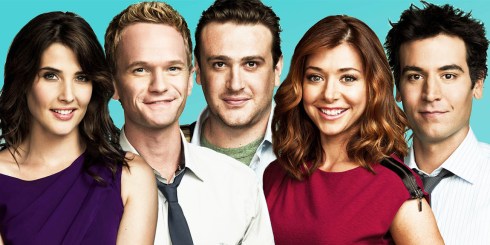
“How I Met Your Mother” was one of my favorite TV sitcoms. Even though it wasn’t entirely successful in its humor or structure, the eighth season is particularly a hit-or-miss with most people (me included), and the series finale is more-or-less a major letdown, I can’t deny when the episodes are good, they’re really good. They entertain me each time, and I never get tired of watching them. I enjoy the misadventures of neurotic narrator Ted (Josh Radnor), good-natured giant Marshall (Jason Segel), cute, excitable redhead Lily (Alyson Hannigan), Canadian tough-chick Robin (Cobie Smulders), and of course, the “legendary” suit-wearing playboy Barney Stinson (Neil Patrick Harris), told by Ted years in the future as stories to his kids, leading to the much awaited meeting of their mother.

“How I Met Your Mother” also one of the few shows I’ve seen all the way through, more than once. (Hey, I’m a movie guy, first and foremost.) So, having seen each and every episode of one of my favorite shows, I thought I’d make a list of my absolute favorites. Which episodes make me laugh, make me smile, and/or even make me tear up? (Oh yes, there’s an episode like that, and it’s on this list.)

These are My Top 15 Favorite “HIMYM” Episodes!

Warning: SPOILERS!

960

15) TEN SESSIONS (Season 3, Episode 13)

This was the introduction to Stella (Sarah Chalke), who would become Ted’s girlfriend and soon-fiancée…and the person to break his heart brutally after leaving him at the alter. But she started out as Ted’s dermatologist. Early in Season 3, Ted got a back tattoo while drunk (or, as his friends put it, a “tramp stamp”). To remove it, he has to undergo 10 sessions of laser tattoo removal surgery. But he’s fine with it, because it gives him time to convince Stella to go out with him after the final session.

Also in this episode is Britney Spears—she plays Stella’s shy receptionist who has an unrequited crush on Ted. Her sideshow appearance on the show was built up big-time, but even though she is funny here, she doesn’t hog the spotlight. (I’m going to be honest—the first time I saw this episode, I didn’t even know that was Britney!) That’s a good thing, because I did care for the Ted-and-Stella story. Stella is very likable, charming and funny. Of course, it’s odd saying that about her now that I know what she’ll do later in the next season, but it’s easy to see why Ted is attracted to her and why he would pull off one of the show’s highlights: a two-minute date. Those who have seen the show know exactly what I’m talking about.
stuff-_dog_walking

14) STUFF (S2E16)

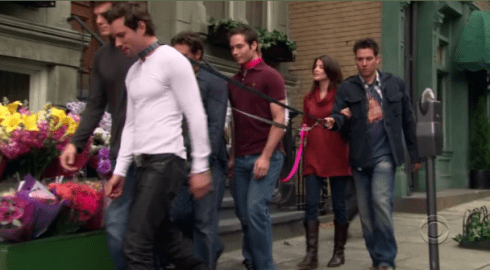
When you break up with someone, what do you do with the “stuff?” Ted and Robin’s relationship takes somewhat of a turn when Robin learns that many of Ted’s possessions are from his ex-girlfriends. He gets rid of them and they move past it…only for Ted to realize that all five of Robin’s dogs are from ex-boyfriends. The visual representations of how Ted and Robin view these possessions gets me laughing each time I watch this episode—Ted imagines the dogs as Robin’s exes; I have nothing else to say about that! This show is particularly successful when it takes relatable issues and puts its own funny spin on them (in this case, it’s figuring out what to do with “stuff” that belonged to exes.)

Is that all to this episode? Nope. It gets better. Not with Ted and Robin, but with Barney and Lily. Their subplot is simply hilarious. It begins as Lily invites (nay, begs) Barney to an “Off-Off-Broadway” play she’s participating in (and an awful one at that). Barney is very blunt about how much he didn’t enjoy it, and as payback, he puts on his own play just to torture her. (As a bonus Easter-egg, if you look in the background, an audience member reads a playbill with the title “SUCK IT LILY.”) Barney’s play is a definite highlight, but the payoff at the end…!
2x04-ted-mosby-architect-how-i-met-your-mother-5162719-608-336

13) TED MOSBY: ARCHITECT (S2E4)

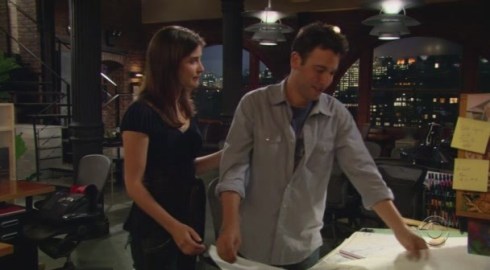
In this episode, Robin learns a thing or two about what it means to be in a relationship. She and Ted get into an argument when she seems disinterested in his work in architecture (and also when she admits she doesn’t like “Field of Dreams,” which Ted sees as a bigger deal than her lack of listening—that’s kind of funny). Barney assures Ted that his job isn’t boring and he just needs to have the right attitude about it in presenting it. Barney’s way of proving it makes Robin suspicious of Ted, leading to Robin and Lily going around town trying to find him. This gets Robin to learn that listening is key to relationships and she’s going to lose him if she isn’t interested in his career. Robin has already stated early in the show that she’s somewhat uncomfortable with relationships; so, to see her undergo a lesson in life and love is welcome. Her problem is she didn’t want to care about what she thinks Ted may be doing this night, but the revelation for her is that she clearly does. She’s pushed out of her comfort zone and it helps her grow as a person. The episode is funny (especially when we see how law majors party in one scene), but the dramatic aspects of this story make it one of the best in the series.

By the way, I like Field of Dreams too. Review here: https://smithsverdict.com/2013/04/06/field-of-dreams-1989/

19-himym-pineapple-w1200-h630

12) THE PINEAPPLE INCIDENT (S1E10)

The Pineapple Incident is one of the most popular episodes of the entire series—it’s the highest viewed of Season 1 and the second highest overall. Ted is criticized by his friends for overthinking everything in his life, and he tries to prove them wrong by taking one shot too many. The next morning, he can’t remember anything—why he sprained his ankle, why his jacket is burned, and…who is this girl sleeping in his bed? Marshall, Lily, and Barney fill him in while they themselves can’t figure certain things out.

What can I say about it that no one has already? The non-chronological story structure is fun. It’s funny to watch Drunk Ted do his thing. Also, additional 10 points for adult Winnie Cooper. It’s great to watch…let’s move on!

By the way, did the pineapple belong to The Captain? I think it might have…
960

11) SLAP BET (S2E9)

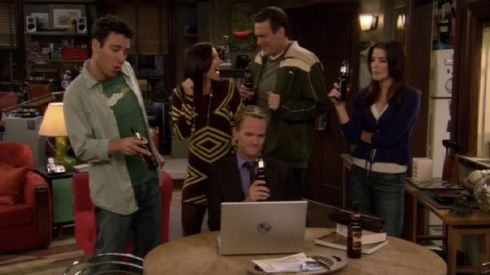
Slap Bet shows another piece of progress for Robin…and man, is it a joyful one! But I’m getting ahead of myself. Ted knows there are some vague important details about Robin’s past, but Robin doesn’t want to talk about them. This makes Ted paranoid that he doesn’t know his girlfriend very well and even pressures her in an attempt to know her secrets. Meanwhile, Marshall and Barney have their own ideas about Robin’s past, which leads to a Slap Bet—whomever is right gets to slap the other person in the face really hard.

Barney finds the key to Robin’s big secret. By this point, Ted wants to respect Robin’s privacy while Robin knows there’s no point in hiding it anymore. So then they all learn the secret. Barney is wrong, Marshall gets to slap him five times anytime, and Robin is embarrassed but feels good now that Ted knows her biggest secret.

Who would’ve expected Robin Sparkles and “Let’s Go To The Mall?” That is a brilliant payoff and a hilarious faux-‘80s-music-video that comes with it.

The use of the “Slap Bet” is wonderful and there are many laughs (and slaps) that come with it, especially with Lily as the appointed Slap Bet Commissioner. And it leads to one of the best running gags of the series. Though, I have to ask—if Barney knows Marshall can slap him at any time and is afraid of it, why doesn’t Marshall use it to scare Barney out of their business when he’s doing one of his schemes or something against them? (Sorry, but that’s always bothered me.)
himym-murtaugh-discussion-after-rave.png

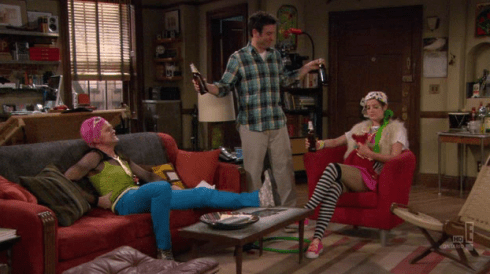
10) MURTAUGH (S4E19)

OK, so there’s nothing especially progressive about this episode. You could watch this by itself and still laugh at it. It’s on my list because…well, exactly that—it’s one of the funnier episodes in my opinion. Barney is kicked out of his favorite laser-tag joint, which inspires Ted to break out the “Murtaugh List.” It’s a list of things people are too old to do, inspired by a line of dialogue by Sgt. Murtaugh in “Lethal Weapon” (“I’m too old for this…stuff”). Barney challenges himself to do everything on the list, which of course leads to hi-jinks.

To see Barney go through such ridiculousness (at least, “ridiculousness” for his age) is funny enough (he gets his ear pierced, hurts his back after sleeping on a futon, and so on), and it gets better when Barney and Robin come up with their own list and challenge Ted to do things he’s “too young to do,” turning Ted into somewhat of a “grumpy old man.” All of this is fun to watch and makes me laugh each time I watch it.

Oh, and there’s also a subplot featuring Marshall and Lily butting heads when it comes to Marshall’s coaching methods in kindergarten basketball. It’s cute, it has some laughs (including a random Teen Wolf…don’t ask me), but whatever—get us back to the Murtaugh list!
sandcastles_in_the_sand

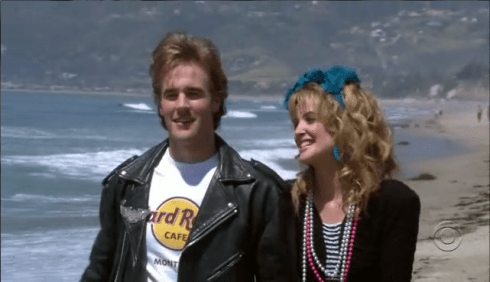
9) SANDCASTLES IN THE SAND (S3E16)

More Robin Sparkles! But uh-oh! There’s something more!

This episode begins with Robin reverting back to her teenage self after her former boyfriend, Simon (Dawson himself, James Van Der Beek), comes into town. Even though Robin has clearly changed for the better since they were together, she can’t help herself around him. Each member of the group feels the same way whenever they reconnect with old friends, a phenomenon of reverting to one’s high-school self (associative regression or “revertigo?”), leading to a very big laugh when Lily’s old high-school friend revisits her.

Blah, blah, blah. What do people remember most about this episode? Robin Sparkles 2! Barney overhears Simon mention another music video Robin made when she was a pop singer, and he sets out to find it because…well, he’s Barney and he’ll do anything to humiliate Robin. But that leads to a surprising development in which Barney actually shows somewhat of a sweet side after Simon dumps Robin. That leads to Robin showing Barney what he’s wanted to see. That leads to yet another delightful Robin Sparkles music video (a love ballad this time, whereas the other was a techno pop song). That leads to…Robin and Barney kissing?! The end.

When this episode was aired for the first time, HIMYM fans freaked out. They had no idea where this was going to go. Were Robin and Barney going to date?! How was this going to work out?! Everyone was excited to find out. Watching this episode knowing what I know now about where this ended up going, it’s still a clever script—it’s interesting to see the subtle hints Barney and Robin may have dropped on each other. Maybe it’s possible Barney’s quest to find more humiliating Robin Sparkles videos was his way of knowing more about the other side of her personality…

Or maybe the writers wanted to deliver some kind of fan service; that’s also a possibility. But I’m sticking to my theory!

barneys_video

8) GAME NIGHT (S1E15)

One of the things I love about this show is whenever it takes us into the pasts of the characters we’ve become very familiar with—I call them “looking-back episodes,” in which characters swap stories about who they were (being a sitcom, they’re usually embarrassing stories). One of my favorites is a Season 1 treat called “Game Night.”

We were only 15 episodes into this show, and we had a pretty good idea about the legend that is Barney Stinson. But it was time to show who Barney Stinson was before he became…Barney Stinson, so to speak. The episode begins when the group is having game night but discovers an embarrassing videotape of Barney…or a longhaired, hippie-ish Barney crying his eyes out and singing a sappy love song to his lost love. The group wants to know what the tape is all about, but Barney will only tell one part of his story and will continue only after someone from the group shares his or her own embarrassing story.

Just when fans think Barney is a one-dimensional playboy at the start of the series, “Game Night” brings new dimensions to his character that’s so fascinating to watch. It’s amazing to see who Barney was and think this is who he is now. It brought the character to a whole new level.

Barney, you got issues. But for you, my friend, I will SUIT UP!

spoiler_alert_-_input_pass

7) SPOILER ALERT (S3E8)

This is the episode in which we learn all the annoying behaviors of the group just as the characters themselves learn them too. It begins with Ted dating a woman he thinks is the perfect girl but everyone has a problem with. Since he doesn’t see their problem with her, they agree not to tell him what it is. But he begs them, and they reveal she’s very talkative. Now he can’t stop noticing and he breaks it off with her. But it doesn’t stop there. The five friends let slip each other’s flaws, leading to annoyances amongst them.

Among the group’s flaws: Lily’s loud chewing; Marshall’s constant singing about his actions; and Ted’s pretentious correcting. Everyone’s illusions of each other’s perfection are being shattered (followed by a shattering glass sound effect each time), but in the end, they learn that people don’t see the flaws of people they truly love and they become more accepting of them.

Yeah, it’s kind of predictable and obvious, but I like it. I like these people, flaws and all.

4-how-i-met-everyone-else-season-3-episode-5-_gallery_primary

6) HOW I MET EVERYONE ELSE (S3E5)

This supposed simple story of how Ted met his wife rambles on a lot. We know that. But hey, that doesn’t mean we’re not curious to know how he and his friends met each other, especially after we’ve known for two seasons by this point.

Ted brings a date (named “BlahBlah,” as Older Ted can’t remember her real name) to meet his friends at McLaren’s Pub, and this leads to stories around the booth about how they all know each other. Marshall and Lily met in the college dorm and it was love at first sight (though Ted has his own twist on the tale). Barney and Ted met in a public restroom and Barney instantly decided he was gonna teach him how to “live.” But my absolute favorite is the story in which Barney met Marshall.

Though, I’ll be honest—I wish I would’ve seen what happened after Barney witnessed Marshall make out with Lily (before he found out it was Lily). Apparently, he was so impressed he provided services for Marshall, thinking it was a “Karate Kid” scenario of master-and-student. It would’ve been hilarious to see Barney’s reaction upon realizing Lily was Marshall’s girlfriend.

But hey, you enjoy what you can get. I enjoyed this episode.

960

5) GIRLS VERSUS SUITS (S5E12)

With the show’s 100th episode, the creators had to come up with something big. Not only did they drop several hints about “the mother,” giving us glimpses of her personality, but they brought Ted so close to meeting the mother without meeting her at all. (“I think I glimpsed her foot,” he narrated.) Ted dates a student at the university where he teaches, and she seems to have a “roommate complex.” Ted’s narration informs us (well, his kids, but mostly us) that his date’s roommate whom she’s not particularly a fan of is “the mother.”

This episode has the best use of comedic narration I’ve seen in the entire series. Example: When Ted’s date complains that men always fall in love with her roommate, Ted replies that he won’t. Older Ted narrates, “Oops.” I don’t know why, but that always makes me crack up.

So what is the mother like? Well, from what we hear, she’s quirky, sweet, artistic…wait, she actually sounds like my girlfriend! Guess I’m a lucky guy, huh? But I digress.

But the hints about the mother aren’t what people remember most about this episode. No, no, no…it’s Barney’s musical devotion to suits! This musical number is GREAT fun to watch, and you can tell Neil Patrick Harris is enjoying the hell out of it with his exuberant performance. It’s well choreographed, the song is well-written, the other members of the group tune in as well, and fans totally ate it up.

And I did too. This episode is transcendent. The show couldn’t get better than this from that point forward…well…except for my number-two choice…

the_leap

4) THE LEAP (S4E24)

This was the end of Season 4, the year in which Ted got so much crap thrown on him. He was left at the alter. He lost his job. He got in an intense fight with a crazy bartender. Oh yeah, and he got beaten up by a goat. But as Older Ted narrates while looking back, it was the best year of his life, because if he hadn’t gone through all of that, he wouldn’t get his teaching job (which he calls the best job he ever had). This would lead him to his future wife…

I’m going to be honest. This episode is one of my favorites mostly because of the ending. The story of Barney and Robin stubbornly trying to scare each other away from a relationship even though they’re nuts about each other is funny and kinda sweet, and of course the fight with the goat is fun too. But it’s the ending I’ll always take from this one. This episode represented the end of Ted’s job as an architect and the beginning of his job as a lecturer. He feels bad about himself, having been fired from his firm and his clients (you know, the two Texans who wanted him to design a rib restaurant shaped like a cowboy hat?). But thankfully, Lily is there to set him straight and tell him to take a major leap and see what the view is like from the other side.

Of course, this is happening in a story in which Marshall wants to take a literal leap from one rooftop to another. Lily’s words inspire Marshall to ultimately take the leap, leading to everyone else following his lead, including Ted, who has now seen the point.

It’s an obvious metaphor, to be sure. But it’s a very effective one. Top it off with the A.C. Newman song “Prophets,” and it’s a hell of a scene.

20091020_howimetyourmother_560x375

3) DUAL CITIZENSHIP (S5E5)

This was the first episode I ever watched, and it made me watch the series from the start. And it was a great introduction for me—this is sitcom material at its absolute finest.

It features two stories—one featuring Barney and Robin, the other featuring Ted, Marshall, and Lily. And I enjoy both of them greatly. In Story A, Barney tutors Robin so she can pass an American citizenship test (while also giving his own questions about what it means to be an American—very funny). But she “goes Canadian” (as Barney puts it) and ends up in Toronto, where Barney follows. She doesn’t feel American enough or Canadian enough, so she decides to do “duel citizenship.” The highlight of this story is Barney’s constant belittling of Canada, to the point where he badmouths the customers of a Toronto coffee shop, leading to a pretty funny resolution. This is yet another nice moment in the series that shows how Barney cares for Robin.

Story B: Ted and Marshall make a road trip to their favorite pizza place in Chicago. But unfortunately for Ted, Marshall brings Lily along, and she becomes a nuisance—always having to pee (funny), bringing along a Kenny Rogers-narrated audiobook (very funny), and even worse, stopping at a bed-and-breakfast for a weekend of pampering for her and Marshall (Ted’s grumbling reactions are VERY funny). The resolution with this side-story is pretty funny as well.

You may notice I’ve used the word “funny” numerous times in this review. See why this episode got me hooked on this show? See why it’s one of my favorite episodes? I just think it’s so damn funny, plain and simple!

TANTRUM!!!
o-HIMYM-200TH-EPISODE-facebook.jpg

2) HOW YOUR MOTHER MET ME (S9E16)

There’s no contest—this is the absolute best episode of Season 9. And it deserves a high ranking as one of the best episodes of the entire series.

This episode is focused on The Mother (Cristin Milioti). We’ve finally come to meet her at the beginning of the season, interacting with some of the other members of our central group on the way to Barney and Robin’s wedding, where she will of course meet Ted. But who is she, really? We got glimpses of her personality, but there has to be something more to her.

With this episode, we got what we all wanted to see by this point. It shows the connections between her and the group from the start of the series, beginning from 2005 to the present point in time. In Barney and Ted’s round of their pick-up gimmick “Have You Met Ted?” it turns out the woman they tried to pick up went to the wrong bar. We follow her as she joins The Mother on her 21st birthday. From there, we get a series of events, most of which are related to what our key characters have gone through throughout the series. They were at the same St Patrick’s Day party, she encountered The Naked Man, she was there when Ted taught the wrong class on his first day, she guesses correctly why anyone would name a bar “Puzzles,” and of course, Ted dated her roommate (even though, if you recall, Ted would’ve liked to know her just from looking at her possessions).

Through it all, we see her own rocky journey through life and love. And she is EASILY sympathetic from the very start—her beloved boyfriend dies in 2005, thus making her romantic situation all the more complicated. The episode had barely started, and I already wanted to hug this poor woman and tell her it’s going to be OK.

We needed this episode, but more importantly, we needed it to be good. We’ve been waiting to spend time with The Mother, and since we obviously weren’t going to get to know her as much as we have known Ted, Marshall, Lily, Robin, and Barney. So, at the very least, we needed to feel like we know her. Was 22 minutes enough? Hell no. But for the challenge the writers brought upon themselves, they did a solid job. We get to know The Mother as much as we would if we were watching her in a 22-minute short film. We already know she’s adorable and immediately appealing, but now we know she has emotional baggage. We see why she has trouble socializing, we see what she does with her time while under stress, and we see how she decides to give relationships a chance again.

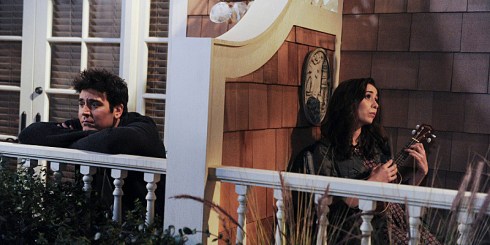
But that leads to the most beautiful scene in the series—and this is the moment I mentioned in the introduction made me a little teary-eyed. She’s at the location of the wedding, and she plays “La Vie En Rose” with the ukulele her late boyfriend gave her and sings to herself. Little does she know that Ted can hear her…

That is a beautiful scene, not only because we understand what she feels at this moment, but also because it’s a quiet, slow scene that earned its place in this quickly-paced episode.

I really, really wish we got to know The Mother even more, because she is a delight to watch. But alas…

This should be my #1 choice, since it has the moments that, for lack of a better phrase, “made me feel things.” But seeing as how the key characters I’ve come to know and love aren’t the focus of this episode, it would feel like to cheating to choose it as my favorite. Besides, this is a comedy show. Which episode made me laugh the most?
the_playbook

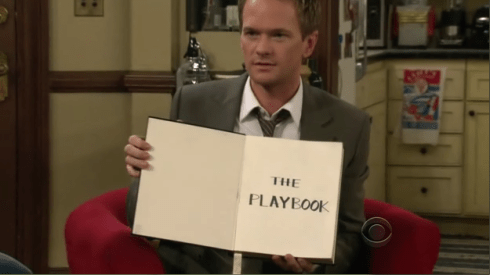
1) THE PLAYBOOK (S5E8)

I’ve been thinking, and no, I cannot think of another HIMYM episode that makes me laugh as consistently as this one does. (That’s right—not even “Dual Citizenship.”) That alone grants The Playbook the choice of my number-one favorite episode.

Barney and Robin have broken up one episode ago, meaning Barney is back on the prowl. (“Daughters, hide your MILSWANCAs!”—meaning Mothers I’d Like to Sleep With And Never Call Again) He shows the group his book of pick-up arts, simply known as The Playbook. Things are fine, until Lily’s attempt to set Ted up with a friend of hers backfires due to one of Barney’s plays. It becomes Lily’s mission to stop Barney from going through ridiculous schemes as she sees The Playbook only as an excuse to move past his relationship with Robin.

I’ve given enough spoilers away in this post, but I won’t dare say how this episode ends. But I will say it left me laughing for what felt like hours. Even today, it makes me chuckle and smile for a while.

And I can say the same for the plays we see performed throughout this episode. The Don’t Drink That. The Cheap Trick. The My Penis Grants Wishes. The He’s Not Coming. And…Mrs. Stinsfire. Every time this part comes up, I die laughing. It’s a cheap joke, but it works so well!

I’m such a fan of HIMYM that I bought the published Playbook. The best coffee table book I’ll ever have.

So, there you have it. A Top 15 list of favorite episodes from one of my favorite TV shows. It took a long while to write this, but you know what? It was worth it. I’d like to do Top 15 Episodes lists from my favorite shows, such as maybe Seinfeld or Psych. I hope you enjoyed this, and remember:

51d