Top 20 Films of the 2010s–#15

12 Dec

By Tanner Smith

Continuing my countdown of my top 20 favorite films of the decade, here’s a recap: 20) Mad Max: Fury Road, 19) Fruitvale Station, 18) Hugo, 17) Parasite, 16) Spotlight

15) SPIDER-MAN: INTO THE SPIDER-VERSE (2018)

Avengers: Endgame was originally going to make this list. The Marvel Cinematic Universe came so far this decade, and with “Endgame,” they gave us one hell of a wild ride that worked as an emotional (as well as thrilling) climax for the whole franchise (as least for this phase, anyway). It was also my favorite film of 2019…and then “Parasite” came along and blew me away by how original and new and brilliant and wonderful it was.

So, I had to remove one title off the list–“Endgame” or “Spider-Man: Into the Spider-Verse.” One Marvel-hero cinematic property or another. I chose “Spider-Verse” simply because…I like it a little better.

By the way, I categorize these choices–with the exception of #1 (my favorite film of the decade), each selection on this list is chosen for being the best of a certain theme or genre or even formula. (Though, there are exceptions–for example, I can’t think of another film like “Parasite.”) I think a part of me found enough of a gap in between “Endgame” and “Spider-Verse” to differentiate them and attempt to place them both on the list.

(And that’s also the reason I couldn’t make room for other 2010s films I hold dear to my heart–like The End of the Tour, Inside Llewyn Davis, Black Panther, Lady Bird, The World’s End, Mud, The Artist, Boy Erased, The Hate U Give, The Way, Way Back, Short Term 12, Me and Earl and the Dying Girl, The Stanford Prison Experiment, Hush, 127 Hours, Arrival, True Grit, The Big Sick, Sing Street, Logan, It, The Disaster Artist, Three Identical Strangers, and 50/50. There you have it–an Honorable Mentions list.)

OK, enough stalling–let’s talk about how awesome “Spider-Man: Into the Spider-Verse” is!

In the 2000s, we had Sony’s “Spider-Man” film franchise of three movies involving the Marvel web-slinging superhero. In the early 2010s, Sony decided to reboot the franchise with The Amazing Spider-Man, which went in a gritty direction that worked well…until the disastrous “The Amazing Spider-Man 2.” Then came the Marvel Cinematic Universe, which brought Peter Parker/Spider-Man into the same mix with Iron Man, Captain America, and so on, in Captain America: Civil War, Spider-Man: Homecoming, and Avengers: Infinity War (with two more movies to come). And it was very satisfying to see a new, flat-out entertaining rendition of one of my favorite superheroes…but even I thought there could be something more.

Enter “Spider-Man: Into the Spider-Verse,” a weird, zany, ultra-creative, beautiful, inventively animated, great big ball of entertainment that was like nothing I expected to see in a cinematic “Spider-Man” movie and became the “Spider-Man” movie I didn’t know I was waiting for.

I’ve already lost count as to how many times I’ve seen it!

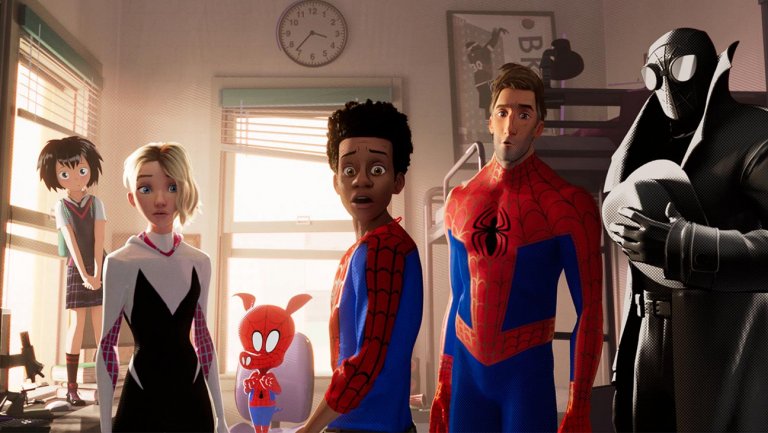
The story–Miles Morales (voiced by Shameik Moore) is a Brooklyn teenager who gets bitten by a radioactive spider and suddenly gains (of course) spider-like abilities not unlike Peter Parker/Spider-Man (Chris Pine), the costumed hero of New York. Spider-Man tells Miles he can help him get used to these powers, but soon after, he is killed by Kingpin (Liev Schrieber), which Miles witnesses. Miles decides to be the new Spider-Man in respect to his fallen hero, but he doesn’t know where to start. That changes when he encounters ANOTHER Peter Parker (Jake Johnson) from another dimension–only this one is cynical, heartbroken, not Spider-Man anymore, heavier and out of shape, and more or less selfish. Miles has the key to sending Peter home, and so Peter decides to coach Miles into being Spider-Man in exchange for his help.

Oh, but there’s more–they also gain a team of allies, each one from their own alternate dimension. There’s Spider-Gwen (Hailee Steinfeld) aka Spider-Woman; Spider-Man Noir (Nicolas Cage–YES!!), a shadowy Spider-Man from the ’30s; Peni Parker (Kimiko Glenn), anime heroine with a spider-like robot companion; and even Peter Porker aka Spider-Ham (John Mulaney)…a pig with spider-like abilities. I want a movie about each and every one of these characters!

The visual style of “Spider-Man: Into the Spider-Verse” is stunning! It’s rich with vibrant colors, filled with very clever inside jokes and comic-book traits, and very active with energy. (You want watching a movie to equal the experience of reading a comic book–here it is!) The blend of 2D and 3D animation works wonderfully too–when I first saw it, it took a little while to get used to the character movements, but when it really got going, I was invested.

Miles is a great lead to follow. Voiced by Shameik Moore, who was great in 2015’s “Dope,” he’s a very likable kid with a lot of charm and also plenty of vulnerability to make us care about him and root for him when he ultimately becomes Spider-Man.

And I also buy into the plight of the cynical, heartbroken Peter, voiced by the often-reliable Jake Johnson. You can tell this guy has seen it all and lost a lot and already given up on life. And it’s Miles that gives him purpose: as a teacher. When he knows he needs to do better, it’s hard not to root for him as well.

With the exception of Gwen, who becomes Miles’ friend upon meeting her at school, the other Spider-heroes aren’t given plenty of time to develop. But they make a great team that provide support and their own individual kick-ass (sometimes hilariously so) action moves. (Speaking of which, the action is both thrilling when it needs to be and also lots of fun for all the right reasons.)

With so many alternate Spideys and a complicated plan to send them all back home (lest they disintegrate from existence in this dimension), you’d think this would all be hard to keep track. But that’s another reason this Oscar-winning (for Best Animated Feature) “Spider-Man” flick is as celebrated as it is: the screenplay is fantastic. The storytelling is “marvelous” (pun intended), it’s great for both comic-book fans and general movie audiences, the characterization is wonderfully told, it’s sweet when it needs to be, it’s often hilarious with great comedic (and comic) writing, and like I said before, it’s just one great big ball of entertainment that I can’t help but come back to again and again.

It’s been a year since I first saw “Spider-Man: Into the Spider-Verse,” and I’m sure it will continue to be my friendly neighborhood Spider-Man classic.

And I can’t wait to see the sequel.

Top 20 Films of the 2010s–#16

3 Dec

By Tanner Smith

Continuing my countdown of my top 20 favorite films of the decade, here’s a recap: 20) Mad Max: Fury Road, 19) Fruitvale Station, 18) Hugo, 17) Parasite

16) SPOTLIGHT (2015)

I could begin this post four different ways–I could mention how strange it was that writer-director Tom McCarthy’s Oscar-winning “Spotlight” was released within the same year as his turkey “The Cobbler” or that “Spotlight” didn’t make my best-of list for that year (2015) and yet it’s on my best-of list for the decade or that it means something when a film has a bigger impact on you after subsequent viewings…or that it’s the only Best Picture Oscar winner on my list (with all due respect to other winners like “The King’s Speech,” “The Artist,” “Argo,” and “Moonlight,” all of which I really like and admire).

When I first saw “Spotlight” in a theater, I was already in kind of a surly mood with much on my mind. So while I could recognize its first-rate dialogue-driven screenplay, brilliant understated acting, and equally understated directing, its dramatic impact didn’t quite hit me. But because of all of those reasons I could recommend the film, I listed it as an Honorable Mention in my 2015 Review because I did recognize its potential even though there were 10 films I felt I liked better.

It wasn’t until I watched the film again on DVD, alone in my room, and with an open mind that I realized just how excellent “Spotlight” was and that it deserved a high ranking on my best-films-of-2015 list.

Based on actual events, “Spotlight” involves the Boston Globe’s Spotlight team—editor Walter “Robby” Robinson (Michael Keaton) and reporters Mike Rezendes (Mark Ruffalo), Sacha Pfeiffer (Rachel McAdams), and Matt Carroll (Brian d’Arcy James). They’re a small group of journalists who write in-depth investigative articles after spending months conducting an abundant amount of research. In 2001, their new story comes after the Globe’s new editor-in-chief, Marty Baron (Liev Schreiber), learns of a lawyer, Mitchell Garabedian (Stanley Tucci), who represented numerous families alleging their children were sexually abused by Catholic priests. Baron wants the Spotlight team to investigate. Rezendes meets with Garabedian, who reluctantly tells him that there’s much more going on here than meets the eye. The Spotlight team interviews victims and lawyers, and it becomes clear that this isn’t just a 4-13 case number. It’s a widespread conspiracy, with at least 90 cases of scandal and cover-up. The team realizes how risky it is to go after such a powerful institution as the Catholic Church, but they go ahead with the story anyway, spending months to get the full scoop and expose the truth.

So what is it about “Spotlight,” a film about the process of investigative reporting, that moves me deeply? Why is it on my decade-end list? What is there to this film that is mostly directed with a down-to-earth low-key tone, extended amounts of dialogue exchanges, and very little characterization?

Ambition. Drive. Drama. Nerve. Credibility. Passion. To name a few.

It’s one of the best movies about what it means to be a reporter. You see all the hard work that’s put into investigating a story–all the research, all the interviewing, all the pushing of people who will give a reporter the time to talk to them, all the doors being slammed in their faces, all the detective work put into the struggles, all the hours spent into it all, and determination to see it through no matter how long it takes. And it’s a story that’s worth following–these people learn how deep this conspiracy goes, that so many horrible people have used the cloth to manipulate and molest children…and so many other people did nothing about it. It’s also just not enough that a few priests and lawyers are exposed for their wrongdoings (there are already some survivor’s groups that are formed and not enough people are even interested about that). They need to get the full scoop and every possible resource that will prove all guilt. It’s great that these hard-working journalists see it through.

The film is based on a true story. There is a Spotlight team for the Boston Globe and they did print a story that exposed a lot of hidden crime within communities, which caused more victims/survivors to speak out. Tom McCarthy and his crew were able to enlist the assistance of the actual Spotlight team members that are dramatized for this film. In fact, Mark Ruffalo even asked his character’s real-life counterpart (Michael Rezendes) to say his lines for him so he could capture his speech patterns, body language, and other mannerisms. (And in a baseball game scene, you can even see the real Rezendes, Sacha Pfeiffer, and Walter Robinson in the background)

In “Spotlight,” we don’t see much of the characters outside of work, and so we don’t know them very well either. But while on the job, we still feel their passions for digging for truth, getting the word out, and helping people. With Steven Spielberg’s 2017 critically-praised journalism drama “The Post,” an obvious comparison, the elements are reversed. There is more characterization at work with “The Post,” but what I don’t feel in that film that I do with “Spotlight” is the drive and ethics behind investigative journalism, which made it more fascinating and worth caring about.

The film is carried by McCarthy’s low-key direction, the effectively convincing acting from everyone on-screen, and McCarthy & co-writer Josh Singer’s gripping dialogue structure, and as a result, “Spotlight” feels real and powerful but not in the ways I would expect. It’s easy to make a film like this and insert a lot of melodramatic elements, like a lot of angry screaming matches or even (God forbid) some type of throwaway assassin hired by the community to prevent the Spotlight team from seeing this thing through. But instead, “Spotlight” is powerful because it simply tells the story that needed to be told as it was. Whenever the team interviews victims, their stories are hard to listen to, and even though their words speak to these reporters, all they can do is sit and listen–and you know in their minds they’re thinking about how serious this all is, and they’re probably sweating from their pits that very moment. That’s what I mean–it’s very quiet that way. The only time one of the Spotlight crew truly breaks and loses his temper is late in the film, when Rezendes is convinced that they have all the pieces together and need to print the story right away, but Robinson isn’t going to rush it. “IT’S TIME!” Rezendes snaps. “THEY KNEW! AND THEY LET IT HAPPEN! TO KIDS!!” This scene was criticized for feeling out of place (probably to earn Ruffalo his Oscar nomination), but it doesn’t bother me at all. It feels like that anger was building up inside throughout the whole film and so it seemed inevitable that it would explode in an isolated incident. If Rezendes didn’t say anything, someone else probably would have.

“Spotlight” is a wonderful film, and I wish I had recognized it as such when I first saw it. But now, I can’t deny that it’s one of the best films I’ve seen this decade. The acting, the directing, the writing, the editing, even the subtly solemn music score (by Howard Shore)–everything about it is top-notch. And I applaud it for being a film that reminds us that whenever something is horribly wrong in the world, there’s always going to be a group of people to do something about it.

Top 20 Films of the 2010s–#17

2 Dec

By Tanner Smith

Continuing my countdown of my favorite films of the past decade, here’s a recap: 20) Mad Max: Fury Road, 19) Fruitvale Station, 18) Hugo

17) PARASITE (2019)

This is a tricky one for me. I saw Bong Joon Ho’s “Parasite” only once a couple of weeks ago, and I’ve had the rough draft of this decade-end top-20 list for several months…am I *positive* I want to include it so soon? Isn’t there another 2019 film I’ve seen more than once that I hold in high regard? (“Avengers: Endgame,” perhaps?)

I had to think long and hard about this choice before I realized…I’m fairly certain there won’t be a better film for the rest of this year than this.

Having seen some of Bong’s other works, such as “Snowpiercer” and “Okja,” what I admire about this director is his ability to layer each key character and scenario with brilliant effectiveness. I think back to Roger Ebert’s quote, “It’s not what a movie is about, it’s how it is about it.” I can’t walk into a Bong Joon Ho film and expect anything predictable. (Even the trailer for “Parasite” was thankfully vague.) To say he thinks outside the box would be an understatement–that’s how creative he is as a filmmaker and as a storyteller.

I love everything about “Parasite.” The commentary. The satire. The filmmaking. The acting. The characterization. The story. The buildups. The resolutions. The script!! This is some of the most brilliant writing of the decade!

Is it a horror? A drama? A thriller? All of the above? Yes.

And seeing as how “Parasite” is still in theaters as of the writing of this post, I still can’t bring myself to even give away the slightest spoilers. So…I’m going to stop here. I know it’s lazy, and I’m sincerely sorry. But I still need to be fair.

Besides, I think I earned myself a break after my angry words in my #19 post.

Top 20 Films of the 2010s–#18

1 Dec

By Tanner Smith

Continuing my countdown of my favorite films of the past decade, here’s a recap: 20) Mad Max: Fury Road, 19) Fruitvale Station

18) HUGO (2011)

Well, I couldn’t find room for a 2010s Steven Spielberg film on this list (as solid as “Bridge of Spies” was), but at least I still found a lovely treasure from another filmmaking master still going strong about 50 years later: Martin Scorsese.

Not “Shutter Island” (solid, gripping thriller). Not “The Wolf of Wall Street” (as ambitious as that was, it didn’t do much for me). Not “Silence” (which I haven’t seen…yet). Not even the recently released “The Irishman” (which WILL end up on another list soon).

Nope…it’s “Hugo”–the one you wouldn’t think was made by Scorsese.

Next, you’ll be telling me Francis Ford Coppola made “Jack”!

Martin Scorsese’s films were best known for being dark, violent, gritty, lively, very profane, and commenting on both corruption and guilt. That’s why it’s surprising to see something like “Hugo” come from Scorsese.

“Hugo” is a film made for the whole family, in that both children and adults will gain something from this–insight, emotion, whimsy, magical realism, and a fun, pleasant experience that wouldn’t leave their minds easily. And it certainly made an impression on me, hence the placement on this list. This is a beautiful movie.

“Hugo” is based on the Brian Selznick novel “The Invention of Hugo Cabret,” which itself is an unusual book, in that it’s more of a combination of historical fiction, a graphic novel, and pictures. Scorsese bought the rights to the novel soon after its publication and made it into a film, with his unique vision and using 3D technology to the way he saw fit. He found 3D to be interesting because of the way actors could be more forward with their emotions, and so, he shot “Hugo” in 3D to present those emotions.

The story for “Hugo” is set in the early 1930s in Paris, mostly in the Monparnasse train station, where our hero, a young orphan named Hugo Cabret (Asa Butterfield), lives/hides within the walls in hidden passages. Since the death of his father (Jude Law), he works the clocks around the station and keeps them working all the time to keep from being discovered by authorities, mostly the Station Inspector (Sacha Baron Cohen), who menacingly (along with his equally menacing dog) patrols the station and will send Hugo to an orphanage if he ever catches him. Hugo’s main goal is to mend a broken automaton bought from his father at a museum long ago. To accomplish this, he steals material from a station shopkeeper (Ben Kingsley) and gains assistance from the shopkeeper’s goddaughter Isabelle (Chloe Grace Moretz). It turns out she holds the key (both figuratively and literally) to solving the mystery of the mechanical man.

Where that leads and what happens after (essentially, the second half of the film) is where the film gets even better. It was already engaging me with its whimsy and Dickensian charm, as well as its gorgeous cinematography and art direction (I mean, WOW, does Paris look its most bedazzling here!). But what it all amounts to is a reminder of cinematic magic.

I mentioned that 3D was used by Scorsese to bring the actors’ emotions upfront, but what also helps is that the City of Lights feels so magical and wondrous seeing these already likable characters walk through such a mystical place makes for a remarkable theatrical experience. I’ve seen 3D done wonderfully (with “Avatar” in particular)–this is one of its greatest examples.

Ultimately, “Hugo” is Scorsese’s homage to legendary filmmaker Georges Melies, one of the pioneers of early filmmaking methods and an early king of special effects–his 1902 masterwork, “A Trip to the Moon,” plays a big role in this story. But it doesn’t stop there. We see the wonders and joy of early film techniques. We learn what film meant to Melies before he hit hard times. We see what it means to everyone who goes into a movie theater and wishes to see their dreams come to life. It’s Melies’ story told through Hugo’s eyes, and it’s very effective that way.

It’s easy to see that “Hugo” is Scorsese’s love letter to the art of the film, and it turns out to be one of his finest works in a career filled with fine works. Simply put, “Hugo” is magical.

Top 20 Films of the 2010s–#19

29 Nov

By Tanner Smith

Continuing my countdown of my favorite films of the past decade, here’s a recap: 20) Mad Max: Fury Road

19) FRUITVALE STATION (2013)

The first time I saw Ryan Coogler’s “Fruitvale Station,” it broke me. Even when I knew how it was going to end, I still wasn’t ready for it. I was sad, angry, and frustrated that what happened at the end of this film actually happened in real life.

“Fruitvale Station” is based on the events leading to the death of Oscar Grant, a 22-year-old man who was killed by Bay Area Rapid Transit (BART) police officers within the early morning hours of New Year’s Day 2009. The murder was witnessed by the present transit passengers stopped at the Fruitvale station where it happened. Many of these onlookers recorded the incident on their phones and shared it online, sparking a ton of interest and controversy.

Before writer-director Ryan Coogler begins his dramatized telling of what led up to this event, he makes the bold choice of showing us a recorded video of the incident (and cutting it off just as we hear the gunshot).

“Fruitvale Station” was Coogler’s feature debut. He was a graduate student at the University of Southern California School of Cinematic Arts when Grant was shot and killed. Since then, he held a passion for making a film about Grant’s last day, with the intent of telling the story that you usually wouldn’t find in the media: who Oscar Grant was. Coogler met and worked with Grant’s family to learn more about Grant, and then he had a big opportunity in 2011 when Forest Whitaker decided to support the project when his production company was looking for new talent to mentor.

In 2013, “Fruitvale Station” premiered at Sundance, where it won the Grand Jury Prize and the Audience Award for drama, and screened again at Cannes before it was released in theaters in July. It received a ton of praise from critics and audiences, and it’s easy to see why. This is a terrific film.

And it introduced us to a truly talented director in Ryan Coogler, who went on to revive the “Rocky” franchise by taking it in a different direction before making a Marvel Cinematic Universe movie that would challenge its audience (no, the other movie)–an impressive track record, to say the least!

All three of Coogler’s movies so far feature actor Michael B. Jordan, another great young talent who broke through this decade. In “Fruitvale Station,” he portrays Oscar Grant, a young parolee trying to stay out of trouble. It’s impossible to dislike him–he feels all too real, and it’s also to Jordan’s credit as a natural actor that we see him as a regular guy, flaws and all. He can get angry and impatient, but he also shows a genuine love for those who love him. When you make a film based on a real person, it’s easy to turn that person into a saint. But with “Fruitvale Station,” it seems Coogler was more focused on showing us who he was and who would miss him.

Nothing dramatic happens to Oscar in the day leading up to his death. He goes about his day preparing for his mother’s birthday party and a New Year’s night out with his girlfriend and their friends, and he’ll also spend time with his four-year-old daughter in the meantime. But there is something else to this day as well–he wants to turn his life around. He’s on parole, so he seeks to get a legitimate job–he was fired from a supermarket position, apparently weeks ago, and so today he’s trying to get his job back; and he even throws out the last of his drugs, which he was going to sell. He tells his girlfriend Sophina (Melonie Diaz), who isn’t very pleased that he’s been selling drugs in the time since he was fired, and he assures her that he’s going to find a way to keep going…and before they drop their daughter off at Sophina’s sister-in-law’s for the night before meeting their friends, Oscar tells Tatiana that they’ll go to Chuck E. Cheese the following morning…

Because we know how this story will end, each of these actions feel all the more meaningful and tragic because we know these are Oscar’s final moments of his life. The family and friends that Oscar interacts with are never going to see him again after this day.

What aids in the film’s effect is the use of handheld cameras to add some rawness to the proceedings, rather than rely on polished cinematography (which a lot of film-school graduates love to show off). And thanks to the first-rate acting from everyone involved (not just Jordan and Diaz but also Octavia Spencer as Oscar’s mother), “Fruitvale Station” both looks and feels real. When the incident finally occurs in the last 15 minutes of the film, even though I knew it was coming, I still wasn’t ready for it.

And…OK, let’s talk about the incident as it truly happened. The reason the BART officers arrived at the Fruitvale station to apprehend Oscar was because he was involved in a fight on the train with a thug he was in prison with. (Actually, they didn’t single out Oscar–they pulled off the train everyone they thought might have been involved in the fight.) The cops had their tasers out, pointed toward their detainees against the platform wall. One thing led to another, and Oscar was pinned to the floor by a cop who tried to arrest him for “resisting an officer.” He couldn’t reach Oscar’s hands, he unholstered his gun, and shot him in the back.

It was a time of confusion that led to ultimate tragedy. The officer who fired the shot was sentenced to two years for involuntary manslaughter after claiming he mistook his gun for his taser and released after 11 months. And the other officers involved were fired. All I can say is…that’s three less inept police officers in the world. Because, that’s what they were: inept. Whether Oscar disrespected them or not, that doesn’t matter. Whether the officer truly was reaching for his taser or not, that doesn’t matter. They panicked, they handled it all wrong, and they weren’t meant to be cops.

Whew. Glad I got that out of my system.

“Fruitvale Station” isn’t an easy film to watch. But it’s one that definitely made an impact on me. I will see it again a few more times, but it depends on the mood I’m in. But when I play the DVD, the ending has the same impact on me each time. And that’s why it’s on my decade-end top 20.

Top 20 Films of the 2010s–#20

27 Nov

By Tanner Smith

Another decade comes to an end, which means it’s time for movie lovers such as myself to look back at all of the movies released within the decade and narrow down which ones stood out the most for them. And if you look at my ridiculously long list of “honorable mentions,” you’ll see that it was tough for me to single out even an extra 30 for a top-50, let alone a top-20–but there are 20 movies I DIDN’T mention, and those are the selections I will be looking at one-by-one.

Let’s begin with my #20 choice–one of the greatest, most riveting, most brilliantly made, and yes, most financially/critically successful action movies to ever grace the silver screen:

20) MAD MAX: FURY ROAD (2015)

“OH WHAT A DAY! WHAT A LOVELY DAY!”

George Miller’s “Mad Max: Fury Road” is awesome. There’s no other way to put it. It’s simply awesome in every aspect I can think of. Miller waited 30 years since 1985’s “Mad Max Beyond Thunderdome” (which I still like, maybe more than I should) to bring “Mad Max” big to cinemas. Now, with a new cast and more resources thanks to a bigger budget, he has created “Mad Max: Fury Road,” in a few ways a sequel but in other ways a reboot. Either way you look at it doesn’t matter–at least, it didn’t matter to me. It’s one of the greatest action movies I’ve ever seen.

In this high-octane, unbelievably effective post-apocalyptic tale, set in a harsh desert wasteland where civilization has collapsed, Tom Hardy struggles to survive as the title role. Water is precious. Freedom is a long ways away. And everyone needs gasoline to fuel their many awesome-looking vehicles that brave the desert from time to time. That’s really the only setup we need for a story that’s as straightforward as they come.

“Mad Max: Fury Road” is a two-hour chase movie. It begins as a loner, Max, is captured by a warlord named Immortan Joe and his bloodthirsty pack of “war boys” to be one of their blood donors to fuel them and ready them for battle. But as Furiosa (Charlize Theron) defies Immortan Joe and flees with Immortan Joe’s five wives to release them from captivity and deliver them to a better place far from him. One of the “war boys,” Nux (Nicholas Hoult), joins his pack along a manhunt in stopping Furiosa, bringing Max with him. After losing the others in one hell of a sandstorm (mixed with lightning!), Max joins forces with Furiosa, Nux is put into the mix as well, and they work together to avoid Joe’s cronies before fighting them off in the name of freedom for them all.

Lots of pyrotechnics, impressive visual storytelling, amazing gadgets and vehicles built for the setting, a badass hero, and a deadly atmosphere to combat it all–all of that is what “Mad Max: Fury Road” delivers for us. The CGI is used to add layers to the environment and is not cartoonishly over-the-top, and the editing isn’t as fast and incomprehensible in the same way Michael Bay makes millions of dollars with his mindless action flicks. Here, a lot of the setting is practical, computers are used to make it look more fitting (with a lot of oranges and reds to create a color scheme that spells out what this environment is like), and we’re also treated to long tracking shots to get a feel for where we are–a great counterbalance for the crazy closeups that often appear to show the characters’ determinations. But the badass hero isn’t Max after all–it’s Furiosa. She’s the one with purpose, determination, a plan, and numerous ways of gaining the upper hand–and Theron has to play the role with minimal dialogue, using mostly her facial expressions to constantly get across what kind of person she is and what she’s up to. Despite having the title role in four movies (he is “The Road Warrior” after all), Mad Max has never really been the most important part of this franchise’s environment anyway–it’s always been the world around him, as well as the characters he comes across, that he interacts with that made it all interesting.

And even better–you don’t have to have seen the other “Mad Max” movies to get into this one.

Oh, and about Immortan Joe’s five wives, for whom Furiosa races to seek freedom–they’re all supermodel-like, as if they’re being prepared for a magazine shoot. At first, I wondered why this was necessary, until I realized, this is how Joe prefers to see them, as they’re often referred to as “breeders.” Thus, they flee to seek their own identity and independence. But they’re not useless either–each of them proves their worth one way or another.

So, we have Max, Furiosa, Nux, and the five women going up against Immortan Joe and his colorful baddies in one extended action scene after another in which Max and Furiosa have to devise one improvised plan after another. It’s never boring–it’s paced fantastically and with carefully chosen dialogue and some emotion to make sure we can catch our breath and learn a thing or two about them and their situation.

Oh, and there’s a blind metal guitarist whose guitar shoots flames…I don’t know why that’s a thing, but I love it!

“Mad Max: Fury Road” runs for two hours. It goes by very fast. Every time I watch it, I don’t get tired of it. I just sit back, relax, and have myself a hell of a good time.

Prepping for My Top 20 Films of the 2010s

26 Nov

By Tanner Smith

Well, it’s getting close to that time–the time when I count down my top 20 favorite films of the decade.

When I started this series of “Looking Back at 2010s Films,” I did not anticipate the many, many, MANY movies I would be “looking back” on. And I think I’m only halfway done covering the 2010s films I really like (or really hate–I only wrote three negative posts in this series). But I figure, I should get started with my #20 choice real soon, despite not writing about “enough” 2010s films that aren’t on the list. So, if I feel the need to write about another film from the decade, I’ll do it (even if it’s during 2020). I’m just saying…the time is come.

BUT FIRST…here are the closest things I have to “honorable mentions” (separated via category):

Great for the Whole Family–“Toy Story 3,” “Paddington 2,” “Coco,” “How to Train Your Dragon 2,” “Kung Fu Panda 3,” “A Monster Calls,” “Frozen,” “Tangled,” “ParaNorman,” “The Lego Movie,” “Big Hero 6”

“Based on a True Story” (as far as YOU know)“127 Hours,” “The End of the Tour,“The Stanford Prison Experiment,” “The Disaster Artist,” “Argo,” “Love & Mercy,” “Boy Erased,” “I, Tonya,” “Dolemite is My Name,” “The Wind Rises,” “First Man,” “The King’s Speech,” “The Impossible,” “Molly’s Game,” “The Tale,” “First They Killed My Father,” “Loving,” “Southside With You,” “Bernie,” “Can You Ever Forgive Me?,” “Bridge of Spies”

New Life into the Franchise“Logan,” “Avengers: Endgame,” “Black Panther,” “Captain America: The Winter Soldier,” “War for the Planet of the Apes,” “Blade Runner 2049,” “Thor: Ragnarok,” “The Hunger Games: Catching Fire,” “Creed,” “Avengers: Infinity War,” “Star Wars: The Force Awakens,” “Skyfall,” “Mission: Impossible–Fallout,” “Harry Potter and the Deathly Hallows: Part 2,” “The Muppets”

True Lives of Interesting People“Three Identical Strangers,” “Stories We Tell,” “Big Sonia,” “Won’t You Be My Neighbor?,” “Rich Hill,” “Man Shot Dead,” “West of Memphis,” “Love, Antosha,” “Amy,” “Robin Williams: Come Inside My Mind,” “Free Solo”

Listen to Them!–“When We Walk,” “The Hate U Give,” “Blindspotting,” “If Beale Street Could Talk”

“True Grit” (Gritty, Compelling Dramas/Thrillers)“True Grit,” “Inside Llewyn Davis,” “Prisoners,” “First Reformed,” “Mud,” “Leave No Trace,” “Room,” “Joker,” “Cop Car,” “Buried,” “Drive,” “Lean on Pete,” “Winter’s Bone,” “Wildlife,” “Blue Ruin,” “Two Step,” “Come Morning,” “Gone Girl”

“Dramedy”“50/50,” “Short Term 12,” “The Way, Way Back,” “The Big Sick,” “20th Century Women,” “The Descendants,” “The Farewell,” “Everybody Wants Some!!,” “Celeste and Jesse Forever,” “Mistress America,” “Private Life,” “Columbus,” “Chef,” “Brittany Runs a Marathon,” “Bridesmaids,” “The Meyerowitz Stories,” “The Kids are All Right,” “Don’t Think Twice,” “Don Jon”

Screen of Terror“Let Me In,” “It,” “Doctor Sleep,” “Hush,” “Attack the Block,” “Us,” “The VVitch,” “Split,” “The Babadook,” “Green Room,” “Lights Out,” “Hereditary,” “The Gift,” “Gerald’s Game,” “It Follows,” “The Invitation,” “Ouija: Origin of Evil,” “10 Cloverfield Lane,” “Super Dark Times”

Just Flat-Out Fun/Funny“The World’s End,” “Deadpool,” “Scott Pilgrim vs. the World,” “Shazam!,” “Much Ado About Nothing,” “Jumanji: Welcome to the Jungle,” “Spider-Man: Homecoming,” “22 Jump Street,” “Turbo Kid,” “This is the End”

Coming-of-Age High School Dramedy“The Perks of Being a Wallflower,” “Me and Earl and the Dying Girl,” “Eighth Grade,” “Booksmart,” “The Edge of Seventeen,” “mid90s,” “Love, Simon”

Celebration of Creativity!“Sing Street,” “Operation Avalanche,” “A Star is Born,” “Birdman,” “Brigsby Bear”

Magical Realism“Life of Pi,” “Safety Not Guaranteed,” “The One I Love”

And the Rest“The Artist,” “Roma,” “Arrival,” “Her,” “Inception,” “La La Land,” “Chronicle,” “The Master,” “Flight,” “Dunkirk,” “Searching,” “Moonlight,” “Last Flag Flying,” “Gifted,” “Call Me By Your Name”

MAN, I hope I didn’t miss anything…but I fear I did. (I can’t help it–I love movies so much!)

And don’t expect me to even touch upon all the short films I reviewed for this blog–because, chances are I’ve missed a lot of great ones in the past few years since I regularly reviewed a whole bunch of them. BUT…is there a better one than Mark Thiedeman’s “Sacred Hearts, Holy Souls”? If there is, I haven’t seen it. (But I may make a special post for that one, if it’s not in the decade-end top-20.)

See you guys in the #20 post!

Looking Back at 2010s Films: A Star is Born (2018)

26 Nov

By Tanner Smith

I knew “Black Panther” wouldn’t get the Best Picture Oscar this year, so there had to be another nominee I could root for that would probably win. My choice: Bradley Cooper’s “A Star is Born.” (Actually, I had two; the other was Alfonso Cuaron’s excellent “Roma.”)

“A Star is Born” is the kind of rags-to-riches story the Academy loves to recognize, and for “A Star is Born,” I see no flaw in their recognition. This is a REALLY good film, proving that it doesn’t matter how many times you’ve seen a familiar story as long as it’s presented in a fresh, different way that still has us applauding afterwards. You know the story for “A Star is Born”–a famous celebrity meets a struggling performer and gives her time to shine, thus causing her star to rise and his own to fall.

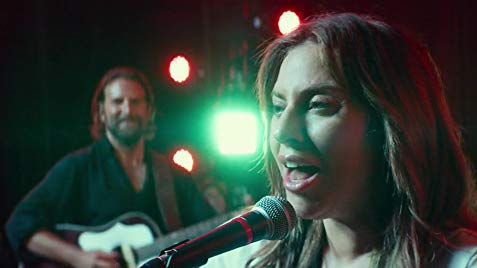
In this case, we have Jackson Maine (Bradley Cooper, who also directed the film), a famous country-rock star who plays his heart out to thousands of fans who still love him even when he’s past his prime. He’s his own worst enemy, very weary and consistently drunk, like a lot of sad successes. But he’s there to hear aspiring singer-songwriter Ally (Lady Gaga) sing at a bar–he goes backstage to meet her, they spend a nice evening together, they even collaborate on a new song together, and it seems like that’s the end of it, right?

Wrong. Jack is captivated by Ally and isn’t going to forget about her so easily. He invites her to his next show, where she’ll stand in the wings…and he begins to play the song she wrote with him that night. He gestures for her to come onstage and join in, and though she’s hesitant…she does. She sings her heart out and amazes everyone in the audience.

Thus…a star is born.

This entire first act of the film, which is about 45 minutes in a two-hour-10-minute movie, is wonderful. First of all, the song Jack sings in the opening (“Black Eyes”) is incredible (and I’m not a music critic–though I like to think I have good taste) and lets you know what this guy is all about, as does the following scene which shows what he’s like OFFstage as he simply tells his chauffeur he just wants to go somewhere to get a drink. Second of all, when he and Ally converse, it feels like they genuinely share a connection–they are both listening to each other. Ally knows the guy is famous and she is afraid he’s there just to pick her up, but she does let her guard down when she sees the guy is pretty OK. This is the highlight of the film for me–Cooper and Gaga feel like real people sharing a relationship together. And third, when Ally goes up onstage and sings with Jack, it’s a magical cinematic moment that rivals such moments from previous versions of a similar story.

Oh, and the song they play together is “Shallow.” I know everyone’s tired of this song, and so am I. But as with “Frozen” and its overplayed single “Let It Go,” I can’t let the fact that it’s overplayed get in the way of what a solid song it is. (Though, I would like to hear other good songs from the soundtrack as well–there are a few more that deserve recognition too.)

The rest of the film is pretty solid and powerful too, as we see Ally go through the usual BS of what it means to make it in the entertainment business. Even when she doesn’t understand it, she can’t bring herself to question it all to her manager (well-played by Rafi Gavron) because it’s her time to shine and she’s been waiting for it! But we also see Jack’s fall from stardom, as he just gets worse with alcoholism and loses himself…and his brother/PR-manager (Sam Elliott). (The scene in which Elliott gets into an intense fight with Cooper is heartbreaking and shows some of Elliott’s finest moments as an actor.) Because we’ve gotten to know Jack and Ally so well, we want to see everything go well for them…and we feel very bad when they don’t.

Speaking of which, I missed the confrontation between Ally and her manager for practically instigating the tragic action that ends the story–that a-hole needed to get his; I hope she fired his ass.

Lady Gaga is wonderful as Ally. I’ve already known she could sing, I DEFINITELY already know she had confidence as a performer, and now I know she can act. And act well. Cooper is also great–I already knew HE could act, but now he’s delivered what I think is his most impressive work. (And he’s also a hell of a good director, as it turns out.)

“A Star is Born” is above all a film about love and connecting–from the loveliness of meeting someone special for the first time to the bittersweet stages of a progressing romance to the sad moments where one brings the other down one way or another to…well, I won’t go into that. I cared about this movie because I cared for these two characters. And I’m always down for a film about a special relationship between two interesting people.

Looking Back at 2010s Films: Inside Llewyn Davis (2013)

26 Nov

By Tanner Smith

The Coen Brothers’ ode to the late-’50s/early-’60s folk-music scene, “Inside Llewyn Davis,” has become somewhat of a trading secret between movie lovers. Not enough people talk about it, but those that do usually praise it to high heaven. And I can certainly see why. It’s as offbeat and ridiculous as many of the Coen Brothers’ best-known works, but there’s something else to it as well–something that speaks to people (particularly those trying to make it in the arts) through the lead character, who is surly, depressed, and either trying so hard or not hard enough to make a name for himself in folk music. It’s the kind of film (and character) that wouldn’t work for a mainstream audience, because it’s so downbeat and also zigzagging, but would delight indie-scene individuals because both its narrative and characters are identifiable.

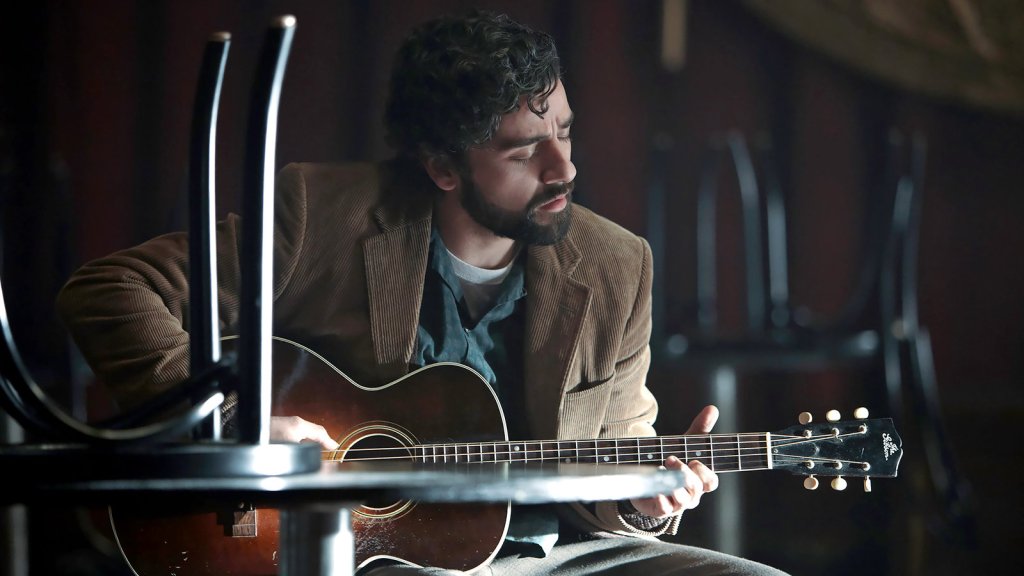
The setting is Greenwich Village, 1961. Llewyn Davis (Oscar Isaac) is a broke, homeless folk singer. With his guitar, he comes alive by performing a song. Without his guitar (hell, even WITH his guitar, which he often brings with him), he’s a bum crashing from place to place. And the film is just pretty much following this guy around for about a week as he interacts with friends, family, acquaintances, and new people he comes across. We see his offbeat relationship with an old flame, fellow musician Jean (Carey Mulligan), who is pregnant and doesn’t want the baby if it’s Llewyn’s and not her current boyfriend’s. (“Everything you touch turns to SH*T!” she snaps at him at one point.) We see him collaborate with other musicians–Jim (Justin Timberlake) and Al Cody (Adam Driver)–for easily the best song in the movie (which admittedly has a very strong soundtrack–I’m humming at least three of these tunes as I write this post), “Please Mr. Kennedy.” We see his rocky relationship with his sister (Jeanine Serralles), from whom he tries to borrow money. We even see him go on a bizarre road trip to Chicago with Roland Turner (John Goodman) and Johnny Five (Garrett Hedlund).

Oh, and there’s a cat too…I don’t know why the cat is there, but he’s a great supporting cat.

So many aspiring artists wish to do what they love doing for a living, and they’re often faced with a choice–continue struggling until something great happens to come along and set them for life…or get a “real” job with steady income. Sometimes, the choice is difficult to make because so many of us want to use our talents to our benefit. (Yes, I include myself–I want to make movies, not write about them forever.) That’s the choice Llewyn has to make in the end. (What’s beautiful about the resolution is that there hardly is a resolution–we don’t know the choice Llewyn ultimately makes.) There is a possibility that Llewyn will continue to struggle because he’s gotten used to it, as Jean bluntly insinuates at one point, but if he does make it in the field, he may actually turn out more miserable than he already is. It’s interesting to think about, and that’s one of the main reasons I think people love this movie. This is not your basic “star-is-born” story.

The cast is perfect, the songs are memorably well-suited, Bruno Delbonnel’s cinematography is wonderful, and it’s a Coen Bros. movie through and through. And upon seeing it again, I’m not gonna lie…it came close to making the decade-end top-20 list.

Looking Back at 2010s Films: Bridge of Spies (2015)

25 Nov

By Tanner Smith

Steven Spielberg, one of my personal favorite directors working today, has had seven feature films released this decade: “The Adventures of Tintin,” “War Horse,” “Lincoln,” “Bridge of Spies,” “The BFG,” “The Post,” and “Ready Player One.” What do I think of them?

“The Adventures of Tintin” is good fun; “War Horse” is flawed but mostly powerful; “Lincoln” looks/feels great but I’d come back more for Daniel Day Lewis’ lead performance than anything else; “The BFG” is cute enough; “The Post”…I’ll probably see that one again to be fair, because it didn’t do much for me when I saw it before (but everyone else seems to love it); and “Ready Player One” is also good fun. But the one I have the most admiration for is “Bridge of Spies,” a historical drama made with just about as much grit, conviction, style, and intrigue as Spielberg’s “Munich” and “Amistad.”

What makes this one even more interesting? Spielberg works with a script by the Coen Brothers! I’m down!

Set during the Cold War, when Americans and Russians sent spies to each other’s country in paranoia of each other’s nuclear capabilities, the film follows a New York insurance lawyer, James B. Donovan (played by Tom Hanks), who is hired to defend Rudolf Abel (Mark Rylance, who won an Oscar for this performance), who’s been charged for spying for the Soviet Union. Believing Abel deserves a fair trial he most likely won’t get if he doesn’t take the job, he agrees to his case. He’s not able to get his client a “Not Guilty” verdict, but his arguments spare Abel the death penalty because Abel is an honorable servant to his country and he might be useful for a future prisoner exchange. And a prisoner exchange might just be in store, as in a parallel storyline, CIA pilot Gary Powers (Austin Stowell), is captured by the Soviets after being shot down in their territory (and failing to hit the self-destruct and/or kill himself, as instructed to do if he were ever caught). So, Donovan is asked to travel to Berlin and talk the KGB and East German representatives into a prisoner exchange: Abel for Powers.

All of what I’m describing to you sounds simple, but it’s more complicated than that. Donovan tries his best to defend Abel fairly, while the CIA urges him to push Abel to reveal what he knows, despite Abel being loyal to his country. Donovan becomes one of the most hated men in the country for defending a Soviet spy–his family home even has shots fired upon with his family inside (no one gets hurt, though). We’re told all the stakes for Powers and his fellow CIA recruits if there’s any chance of capture. The CIA thinks a letter from Abel’s wife contains a hidden USSR message. And this is before Donovan goes to East Berlin to meet with the KGB in the Soviet Embassy only to end up with another exchange, this time it’s Abel for an arrested American student for political purposes.

And on and on and on. “Bridge of Spies” is loaded with exposition, as dialogue drives a great deal of the story. You need three key elements to make it work: a great director, hugely talented actors, and more importantly, a sharply written screenplay.

Well, let’s see, we have a screenplay revised from playwright Matt Charman to Joel & Ethan Coen, whose (arguably-) greatest strength is their flair for words. Check one.

Tom Hanks is top-notch as always playing Donovan who knows all the right things to say to get his points across, which for the most part work. Check two.

And Spielberg is on his A-game. Check three.

That’s not to say the entire film is focused on dialogue. Being a Spielberg film, he has unique imagery in his work. For example, there’s an effective contrast between children playing along the newly constructed Berlin Wall and Brooklyn children playing in their backyard (both occur as Donovan looks from the window of an elevated train in both countries), thus reminding him of the freedoms that America is best known for. And there’s a standout scene that shows Powers and his plane being shot down in Soviet territory–everything about this scene is wonderfully executed. It’s exciting, well-crafted, and looks scarily real.

But much of “Bridge of Spies” is dialogue-driven, and in that respect, it also works wonders. It’s a spy cat-and-mouse game, an urban drama, and a conspiracy thriller all rolled into one, and with this director, actor, and team of screenwriters, it’s all highly satisfying. Thank you, Spielberg–you still got it.