You ever have that experience where you get away from everything for a while, take a nice little fantasy journey, and then you come back to reality a little more enlightened? I love that experience. And this movie is like the cinematic version of that feeling.
The universal acclaim of Sofia Coppola’s sophomore feature “Lost in Translation” was INSANE–critics loved it, audiences loved it, I even think it would’ve won the Best Picture Oscar if “The Lord of the Rings: The Return of the King” had come out the following year!! But that should say something–everyone got something from this film.
And this is the kind of personal-story film that works differently for people. Some will immediately identify with being isolated from your normal routines. Others will identify with the feeling of being a stranger in a strange land. Others will feel the connection between two lost souls who find each other in a strange way. And so on.
Whatever the case, I think the reason the film is so beloved is because people have found many things to like about it.
This is one of Bill Murray’s best performances, right next to “Groundhog Day” and “St. Vincent.” Here, he plays more-or-less a version of himself that seeks something simpler for a little while. And he finds it in Scarlett Johansson, in what is probably her breakout role as a young woman who, like Murray, is an American tourist in Tokyo not knowing what to do or why she’s there. In each other, they find friendship and engage in conversation that strengthens their bond and distracts them from the moment they will inevitably separate and go back to their own regular lives.
Sounds a bit like “Before Sunrise,” doesn’t it?
The way they connect on a personal level is truly moving in a film that is both smart and perceptive. And every time I watch it, I feel like I’ve taken a nice trip–one I wouldn’t mind revisiting anytime.
My favorite scene: as much as I love the scenes between Murray and Johansson, my favorite scene is the filming of a commercial Murray is appearing in, which includes the crazy intensity of a director who only speaks Japanese (his translator isn’t very helpful to Murray). I’ve met some directors in my time who are as intense as this guy.
I’m sure many of us who live near Kansas City, Missouri (such as myself) wish we could relive February 2, 2020 (the day the KC Chiefs won Super Bowl LIV) again and again…because due to the pandemic, it felt like we WERE living the same day again and again!
The time-loop story angle had been used before but not to this mainstream-comedy scale. The cleverly droll and also heartfelt writing from the late Harold Ramis (who also directed the film) resulted in a screenplay that was so good that of course the Oscars had to ignore it for Best Original Screenplay.
If I may quote Roger Ebert, who gave it three stars initially but then went on to include it in his Great Movies collection, “‘Groundhog Day’ is a film that finds its note and purpose so precisely that its genius may not be immediately noticeable. It unfolds so inevitably, is so entertaining, so apparently effortless, that you have to stand back and slap yourself before you see how good it really is.”
Do I even need to go on after that?
We all know how great “Groundhog Day” is, and I certainly know it too–I first watched it as a teen and loved how creative it was, I studied it in a screenwriting workshop, and it’s yet another example of my favorite type of subgenre: the “dramedy.” There are many parts that are funny and other parts that get me right in the feels, and they all feel like they’re part of the same movie.
Bill Murray is great at playing a jerk, but his role as jerko TV weatherman Phil Conners is probably Murray’s most difficult role to date. It’s also his most accomplished, as we go from hating this guy to laughing at him to empathizing with him and then finally to feeling happy for him. He has to repeat this horribly uneventful, mundane day over and over and over AND OVER again (according to Google, Phil endures the loop for over eight years)–Murray has to sell all the various stages of coping with such a strange and aggravating phenomena, especially when there’s no one he can share it with. That makes it all the more funny when he uses this ability to seduce women. But it’s also all the more heartwarming when he realizes that when he tries to copy something that was genuinely romantic before, it just doesn’t work again.
What’s even more interesting about this role is that Phil doesn’t become a different person–but he does become a better one.
Best Murray performances in my opinion: 3) “St. Vincent,” 2) “Lost in Translation,” 1) “Groundhog Day.” (“Broken Flowers” is a good #4.)
The time-loop concept has been used in other movies since–some to very good effect, like “Source Code,” “Edge of Tomorrow,” the “Happy Death Day” movies, and especially “Palm Springs” (the best of the “Groundhog Day” influences). But there is only one “Groundhog Day.” It’s a wonderful masterpiece for both Harold Ramis and for Bill Murray.
Strangely, I didn’t get so into Steven Spielberg’s “The Post” when I first saw it in a theater. I admired it for telling a serious story about a free press at the right time, but I didn’t get much from it apart from that. I think I made the mistake of comparing it to Spotlight–probably a fair comparison, since it’s the Oscar-winning film that set a new standard for “journalism movies” and both films share the same co-writer (Josh Singer). But it’s not really fair to THIS movie.
I’m glad I watched it again on DVD–I noticed a lot more that I didn’t before and grew a new particular fondness for it. In fact…I can admit that I think I spoke too soon when I said Bridge of Spies was my favorite Spielberg film of the 2010s.
There are some doses of romanticized sentimentality and melodrama (plus everyone likes to make fun of the somewhat-forced moment in which Katherine Graham is applauded by a mostly-female crowd as a new heroic figure), but in a lesser movie, those would bother me. The historical accuracy and attention to detail of the early 1970s are spot-on (and the DVD extras help my case there), and the whole film feels like a 1970s dramatic thriller, like “The China Syndrome” or (the most obvious comparison) “All the President’s Men” (to which this film is seen as a prequel). This is director Steven Spielberg and his usual crew (which includes cinematographer Janusz Kaminski and editor Michael Kahn) having a field day with this material. But they’re also telling a serious timely story at the same time, and Spielberg knew the importance of that. In fact, he halted pre-production on one project when he read screenwriter Liz Hannah’s Blacklist draft of “The Post” and immediately went to work on it. Within a year, he had a completed film released and ready for the Academy Awards (for which it was nominated for Best Picture).
That’s not to say Spielberg half-asses “The Post” at all. As I said, he gets a lot of the material spot-on–it’s just that as an added bonus, we get that special Spielbergian magic and edge to it. He cares very deeply about saying the right thing with the right film to be released at the right time. (That was the case with Munich, his take on the war on terror, and it’s the case here, in a film that has allusions to the presidencies of Richard Nixon and Donald Trump.)
“The Post” is set in the early 1970s, but it spoke to audiences in 2017-2018 because it was based on the true story of the Washington Post exposing Pentagon secrets and starting a movement for what we now call “free press,” at a time (during the Nixon administration) when a paranoid President feared such a concept. (Oh how far we hadn’t come…) And that’s why I now admire this film for its journalistic courage and recognition of the power of the First Amendment. (…I’m obligated to say, “Kinda like ‘Spotlight.'”)
At the time, the Washington Post wasn’t taken too seriously–it was seen more as a nice little local newspaper compared to the high standards of the New York Times. But editor-in-chief Ben Bradlee (played by Tom Hanks), who treats journalism like a highly competitive game, won’t stand for that. Things change, however, when one of his reporters, Ben Bagdikian (wonderfully played by Bob Odenkirk), comes across the top-secret documents that prove how the Vietnam War was set up. Bagdikian lets Bradlee in on the secret and he of course decides to go for it and print everything for the Post. (This was my biggest problem upon initial viewing of this film, that Bradlee seemed more concerned about beating the Times to this story than getting the story out there–but the more I watch the film, the more I realize, “This is Ben Bradlee–of course he has a clearer agenda than that.”) The Times has already exposed many of the Pentagon Papers–but when Nixon orders the paper to stop, Bradlee sees this as a chance for the Post to take a stand and remind everyone what freedom of speech means.
Meryl Streep stars as Katharine (“Kay”) Graham, heiress and publisher for the Post. We see the real-life Katharine Graham as a journalistic icon now, but back when this movie is set, she had to prove herself. One of the more intriguing aspects of the film is how Graham has to handle herself with an all-male board of directors who didn’t take her seriously and didn’t hide the fact that they didn’t want her in the way, making her unsure of herself. It’s even more interesting that she’s a long-time friend of Robert McNamara (Bruce Greenwood), the Secretary of Defense who played a major role in America’s involvement with Vietnam–if she gives Bradlee the go-ahead to expose the papers, she’d be turning her back on a friend. (She was also friendly with other Washington insiders–we see her mingling with them at many cocktail parties.) Therein lies the conflict of what’s more important to her (plus the high probability that both she and Bradlee could go to jail for going to print with this), which leads to a conference phone call that is the most suspenseful moment in the film. What results will change Graham for the better.
There’s a lot going on in “The Post” and a lot at stake for the characters and for the country in general. Bradlee knows that there has to be a free press, other people are with him, many people don’t want to risk it due to their own sense of integrities, others want to cover their own asses. It takes an intelligent and sharply written screenplay from Hannah and Singer to keep us on-edge because Spielberg keeps invested with his direction–and it helps further inspire those who dare to expose truth, secrets, or both.
Another thing to admire about “The Post”–the amazing ensemble cast. Even though Streep and Hanks are front-and-center of this film, they are aided by an excellent supporting cast. Aside from Bob Odenkirk (who, in fact, I wanted to see more of upon initial viewing–guess that’s what subsequent viewings are for), there’s also Tracy Letts, Bruce Greenwood, Sarah Paulson, Bradley Whitford, Matthew Rhys, Jesse Plemons, Alison Brie, Carrie Coon, David Cross (hey it’s a “Mr. Show” reunion!), Michael Stuhlbarg–just to name a few! They’re all brilliant here and hold their own with Hanks and/or Streep.
My favorite was Odenkirk’s Bagdikian because he played the type of reporter who went on this particular scoop to obtain these documents because he was truly the heart and soul of Bradlee’s newsroom and mainly cared about setting forth the truth.
And that’s what “The Post” is about: exposing the truth…OK, it may take some liberties here and there (as all films do), but its central message is clear. I may have gotten it back then, but I underrated the way it was delivered. And it’s a mistake I won’t make again.
One of the more telling moments in Ramin Bahrani’s expertly-crafted “The White Tiger” comes roughly early into the proceedings. We’re in Bangalore, India in the mid-2000s (with the story being told from 2010). Our narrator and protagonist Balram Halwai (Adarsh Gourav), the poor son of a rickshaw driver, manages to get a job as a chauffeur for wealthy Ashok (Rajkummar Rao) and his American-born wife Pinky (Priyanka Chopra Jonas). Ashok’s rich, successful (and corrupt) father known as The Stork (Mahesh Manjreker) treats Balram like a slave and even hits him twice, to Pinky’s dismay. She protests, “You can’t do that in America!” The Stork’s replay: “This isn’t America.”
That it isn’t. But one of the things many of us will learn from news stories (and/or stories like this one), it’s that the poor, when pushed too far, will go to great lengths to break out of the caste system and possibly overcome the rich to find their own pathways to success–no matter what country they live in.
“The White Tiger” is adapted from a Booker Prize winning novel by Aravind Adiga, a close friend of masterful filmmaker Ramin Bahrani, who directs the film adaptation in a style similar to Martin Scorsese’s “Goodfellas” in how we see Balram’s story told in flashbacks (and through voiceover narration) about how he got to a certain point in his life and what he plans to do next. Needless to say, it’s not easy–in fact, even though there are somy amusing and cynical touches brought to the storytelling, “The White Tiger” is a rather dark and disturbing tale about the sacrifices this ambitious Indian slumdog makes during his pursuit of happiness.
We’re already in Balram’s mindset with this early line of VO narration: “The Indian entrepreneur has to be straight and crooked, mocking and believing, sly and sincere, all at the same time.” In introducing himself in this manner, we have a pretty good idea of what he aspires to be and what he’s willing to go through (and hide within himself) to achieve it. We also get a flash of his childhood–as a young boy in Laxmangarh, he is seen as bright and able to achieve great things. (He’s also referred to as a “white tiger,” which is a way of meaning he’s someone special.) But when his father is unable to pay off The Stork, who is the corrupt landlord of the family’s village, Balram is no longer able to attend school. (His father also ties from consumption, with no doctor to treat him.)
As a young man, Balram is able to find his way into the chauffeur job, working for Ashok, who treats him like a friend rather than a slave, and Pinky, who is sympathetic towards him. His friendship with the two leads to a night of reckless partying and driving, especially when Pinky takes over for Balram at the wheel…which leads to a tragic accident. This tragedy is a heavy reminder of Balram’s current place in this brutal world, and it’s a catalyst for the next step in Balram’s journey of self-satisfaction. He is going to take control of his own life from this point forward, and it’s not going to be pretty.
“The White Tiger” is a bitingly sharp satire of how class structure can be a cutthroat game in India, and it’s also an exceptionally vivid character study about this man, played perfectly by Adarsh Gourav and written brilliantly by Bahrani (who earned an Oscar nomination for his screenplay). Whether you root for Balram or want nothing to do with him (and the film does a great job keeping that delicate balance), you still understand why he does certain things.
“Slumdog Millionaire,” this is not. In fact, there’s even an unsubtle dig at that flick: “Don’t believe for a second that there’s a million-rupee game show you can win to get out of the chicken coop.” It’s all the more tragic when you realize how many people are still struggling in the “chicken coop” that is their country.
“The White Tiger” is a rough and masterfully crafted look at how far some people will go to stray away from a life of victimhood no matter who gets in their way–and it’s as powerful a film as this great filmmaker, Ramin Bahrani, can deliver. I won’t forget this film anytime soon.
I’m not usually one to spend $19.99 for premier access on-demand for a new film (especially if the rental only lasts for two days). So, a few months ago, I went back to a movie theater to see a film called “Minari,” which was about to receive numerous accolades. It was my first time inside a theater since before the COVID-19 pandemic. And I couldn’t have asked for a better new movie.
“Minari” was one of the top awards contenders and has been referred to by critics as one of the best films of 2020…but seeing as how it wasn’t released to the public until February of 2021, I’m counting it as a 2021 film. (My mind is already made up–this film will appear on my best-of-2021 list. Gene Siskel and Roger Ebert did the same thing for “Being There” and “The Black Stallion” when those movies weren’t released publicly until the following year.)
Anyway, simply put, “Minari” is a beautiful film.
Written and directed by Lee Isaac Chung, whose semi-autobiographical coming-of-age story is told here, “Minari” is centered on a Korean-American family that moves to rural Arkansas in the ’80s to achieve the American Dream. Jacob Yi (Steven Yeun in the best performance of his career) wants to grow Korean foods in 50 acres of inexpensive land and sell them to markets wherever he can. The family’s new dwelling is a mobile home with quite a leap to get up to the front door. His wife Monica (Yeri Han) isn’t too fond of the idea of living here because they live out in the middle of nowhere with no neighbors and she misses her South Korean home and the family’s prior home in California, where she and Jacob were barely making a living as chicken testers. (They work in a hatchery near their Arkansas home, determining the gender of newborn baby chicks.) Jacob and Monica’s children are 10-year-old Anne (Noel Kate Cho) and 7-year-old David (Alan Kim)–little David serves as a stand-in for director Chung and a conduit for the audience as well, as a lot of the film is seen through his eyes.
This Asian-American family isn’t ostracized by the community when they attend church services and social events–the locals are more fascinated by and curious about them. Once a kid roughly David’s age gets past the strangeness of seeing an Asian person in this town, he quickly becomes friends with David. The closest thing Jacob has to a friend is his eccentric evangelical farmhand: Paul (Will Patton), who seems very strange but is a dedicated hard worker and has nothing but respect and admiration for Jacob. (I always loved Will Patton’s work, but this may be one of his most memorable roles. He’s amazing here.)
A lot of the film is watching this family adjust to these new surroundings. How do they prepare for a tornado when their home is in danger of being sucked away if it touches down? How do they get water if they don’t want to pay for it to save funds? What about Monica and Jacob’s marriage when they have conflicting ideals? What about David’s heart condition when the nearest hospital is an hour away? Can Jacob handle both hard work in farming and his job at the hatchery? (There’s a wonderful transformation that comes when we see he isn’t as fast at his job as he used to be.) What happens to the male baby chicks in the hatchery…actually, I probably would’ve been better off staying ignorant about that.
And so on. It’s a wonderful slice of life. And it gets even better when Monica’s mother leaves South Korea to live with the family. This is Soonja (played brilliantly by Yuh-jung Youn), who practically steals the movie whenever she’s on-screen. This character is the wacky-hilarious-grandma you’ve read about in many screenplays, but you haven’t seen her in a movie quite like this. There’s a lot of laughs and a great big heart to her. And I love the relationship she has with her grandson David, who hates her at first (at one point, he’s very mean to her face and then…well, you’ll have to find out) and grows to love her because she loves him regardless.
I love, LOVE this movie. “Minari” was a very special treat and a truly heartwarming tale of family and ambition. It’s superbly acted, wonderfully shot, and written and directed with a great amount of passion and heart by Lee Isaac Chung.
Somewhat (or definitely) influenced by “Mean Girls” (written by director Amy Poehler’s best friend Tina Fey–wonder if Fey gave Poehler any pointers), “Moxie” is a funny, sweet, inspirational high-school dramedy about a quiet girl who fights back against the campus hierarchy. In this case, it’s a battle against the campus patriarchy–taking the place of Regina George is handsome, popular, smarmy jock Mitchell (Patrick Schwarzenegger).
Who is going after the school’s golden boy? That would be Vivian (Hadley Robinson), a wallflower junior who is proud to ignore and be ignored by many of her peers (except for her best friend Claudia, played by Lauren Tsai). This semi-shallow view changes when she notices that a transfer student, Lucy (Alycia Pascual-Pena), is also being ignored–by the school principal (Marcia Gay Harden), no less–when she tries to report that Mitchell is harassing her. This opens Vivian’s eyes to the sexism and misogyny going on in the school (such as a list ranking female students) and she decides she’s going to do something about it. So, inspired by Lucy’s no-BS policy and her mother’s teen rebel days, she creates an anonymous girl-power zine called “Moxie.” She leaves copies in the girls’ restroom for students to find, and just like that, a movement has begun.
These are problems still present in many American public schools–the football team gets most of the funding, other teams can’t afford new uniforms, the dress code is ridiculous and filled with double standards, and many people, even those with authority, just won’t listen when certain issues are mentioned. These are among the things that “Moxie” (both the zine and the movie) addresses.
Poehler also co-stars in the movie as Vivian’s mother, who is the exact opposite of the mother she played in “Mean Girls” and thank God for that. She’s learned a thing or two since her high-school days and when things inevitably get too intense for Vivian in secretly keeping Moxie going, she’s there to help her out with some important knowledge. (Poehler in “Mean Girls” was a wannabe “cool mom”–Poehler in “Moxie” actually IS a cool mom.)
All of the young actors are great here. Hadley Robinson is an appealing lead to follow and she has great chemistry with Lauren Tsai as her best friend–it’s heartbreaking when the two inevitably get into an argument about the way things are going because of the zine (which is why it’s heartwarming when they inevitably make up again). Alycia Pascual-Pena turns in a terrific performance as the rebellious Lucy, who leads the Moxie movement forward and won’t take any crap from anybody. (I love her first scene, in which she questions today’s relevance of “The Great Gatsby” in English class–even when Mitchell tries to silence her, she won’t have it.) There’s also a winning performance from Nico Hiraga as a kind skateboard geek named Seth, whom Vivian takes a liking to–the end of their first date is one of the film’s highlights.
Also among the film’s highlights is the clever dialogue brought on by writers Tamara Chestna and Dylan Meyer (who adapted the screenplay from the YA novel by Jennifer Mathieu) and an empowering ending that would have been cheesy had it not been set up properly by the capable hands of director Poehler.
I think that Netflix Original teen movies are getting much better (the best in recent memory being “The Half Of It”)–following the exceptional “To All the Boys: Always and Forever” a few weeks prior, “Moxie” is further evidence of that. It’s funny, charming, and features some truly awesome teens at its center.
There is a gripping Netflix Original film called “Operation Varsity Blues,” and it’s one of my favorite films of 2021 so far.
Directed by Chris Smith (who also gave us entertaining documentaries such as “American Movie” and “Jim & Andy: The Great Beyond”), “Operation Varsity Blues” is a docudrama that creatively digs into the 2019 college admissions bribery scandal. It uses transcripts from real wiretap conversations and incorporates them into reenactments from actors playing the parts of the people involved. Matthew Modine takes center-stage as Rick Singer, who masterminded the whole scheme of dozens of parents paying him off to bribe elite schools into letting their under-qualified kids in. (This included high-profile parents such as Lori Loughlin and Felicity Huffman.)
I always liked Modine in other works such as “Full Metal Jacket,” but here he turns in what is probably his best performance. How good is he? We do see the real Rick Singer interviewed about an hour into the film, and it’s practically uncanny how close he is to the real thing.
Other actors portray the wealthy parents who didn’t ask many questions when Singer informed them that it would cost tens of millions of dollars to send their kids to Stanford or USC or what have you.
“Operation Varsity Blues” begins with your average high-school senior’s dream come true, as we see recordings of numerous kids each celebrating getting accepted into the school of their choice. That makes it all the more heartbreaking when a half-hour later, after we’ve been sucked into Singer’s con game, we get footage of other students, upset and sobbing that they didn’t get into their choice schools. (One of them even says they feel worthless.) It’s so easy to feel empathy for these young people because it’s more than likely four out of five of us have been there before.
And then to find out that ultra-rich parents paid someone to get their children into whatever premium university they wanted? That has to hurt.
“Operation Varsity Blues” did a very good job sucking me in as it detailed the scandal from the seemingly harmless beginning to its numerous clients to the moment it all came crashing down, with one arrest after another.
With more and more evidence piling up to prove why college isn’t especially necessary for most people in today’s society, I think this intriguing film came at just the right time. “Operation Varsity Blues” is now available on Netflix and I highly recommend it.
If you felt uncomfortable watching the lengthy argument scenes in films such as “Who’s Afraid of Virginia Wolff,” “Before Midnight,” and “Marriage Story”…this film is definitely not for you. However, if you’re looking for a film about a couple testing each other’s love, with solid characterization, brilliant acting, and skillful direction, you can’t go wrong streaming “Malcolm & Marie,” available on Netflix.
John David Washington and Zendaya play a filmmaker named Malcolm and his supportive girlfriend named Marie. They’ve just returned home from the premiere of Malcolm’s latest film. Marie lets Malcolm know pretty quickly that something is bothering her. What is she upset about? Well, she says it’s because he didn’t thank her in his speech to the audience–even though he thanked his parents and his elementary school teachers and an usher at a theater he worked at as a kid (that last one might not have been real) but neglected to mention her. It’s also indicated that Malcolm’s film was inspired by her in a sense (and she also supported him every step of the way making this film). This escalates into a fight where both egos go at it with each other…but it’s only the beginning. It’s going to get worse and worse and worse…
Like I said, it gets pretty uncomfortable. But it’s also fascinating to watch both these extremely talented actors show off their extreme talents, guided by the deeply layered screenplay by director Sam Levinson (who also directed Zendaya in the series “Euphoria”). I wasn’t even halfway through the 106-minute running time when I was getting genuinely concerned how this long night was going to end!
Will this couple stay together? Will they separate? Do they deserve each other? What does that even mean??
I also have to give kudos to Levinson and his crew for making this film under the COVID-19 pandemic restrictions.
Oh, and this film also delivers a LOT of shots at film critics (including a lengthy tirade by Malcolm about a POSITIVE review!) as a way of a character distracting himself from the real issue at hand. And I’m just assuming by the film’s mere 58% on Rotten Tomatoes that some critics aren’t responding to that very well…you do know that if you’re going to get offended at JOKES towards critics, you’re proving the movie right, don’t you?
Bottom line: “Malcolm & Marie” is a darkly sardonic, sharply written, brilliantly acted look into the longest night of this couple’s life.
Let me tell you right at the beginning–the best way to see “A Quiet Place Part II” is in a theater, which is why I’m glad it wasn’t released on-demand during the pandemic. I’m glad I waited to see it in a theater because it’s terrific.
I really like A Quiet Place, and I’m glad it set a new standard for new mainstream horror films. I was looking forward to “Part II” because I was curious to see what was going on outside the central characters’ farmhouse (where the first film mostly took place). The concept is similar to what “Dawn of the Dead” did after “Night of the Living Dead”–taking us outside the familiar settings to see how other places are affected by a terrible outbreak.
But first, we get a wonderfully executed and very chilling prologue in which we see the beginning of the invasion. You see how our familiar characters (played by writer-director John Krasinski, Emily Blunt, Millicent Simmonds, and Noah Jupe) lived in a normal world before all of a sudden, everything has changed…
It’s not zombies that turned the world to hell in this universe–instead, it’s apparently a bunch of beastly alien creatures that really, REALLY do not like sound and hunt/kill every sound they hear. (You can’t help but wonder how these things, if they came from another planet, managed space travel!)
After the prologue, which was a great way to ease moviegoers back into this terrifying universe, we flash forward to about a year-and-a-half since the initial attacks (and pick up where the first film left off). And, also similar to “Dawn of the Dead,” our main characters–mother Evelyn (Blunt), daughter Regan (Simmonds), and Marcus (Jupe)–learn that it’s not just the monsters that are to be feared in the outside world, which they (with a newborn baby in tow) decide to venture into. From that point on, “A Quiet Place Part II” is a delicately crafted, chilling, and even emotionally driven monster movie.
As with the first movie, a lot of “A Quiet Place Part II” rides on visual storytelling–expressive acting, excessive atmosphere, and carefully chosen dialogue. (Having many of the characters communicate through sign language, since Regan is deaf, adds to it as well.) When a sudden loud noise could trigger one of the monsters to attack (how many of these things could be in one area??), such as when someone steps into a bear trap and screams in pain as anyone would, it’s fascinating to see how these people continue living/surviving in this post-apocalyptic world of silence.
I mentioned the carefully chosen dialogue, and an example of this comes from a new character played by Cillian Murphy. We’re introduced to him briefly in the prologue as a seemingly mild-mannered person; he’s a totally different person when we see him again later. His few lines of dialogue carry many amounts of emotional weight. While I’m praising the acting, I was especially drawn by the performance of Millicent Simmonds as Regan, the deaf daughter–she’s excellent here. (Simmons is also deaf in real life.)
In “A Quiet Place Part II,” there are good scares, great moments of suspense, wonderful acting, nicely-done character development, and expert cinematography, shot with 35mm film. (And without giving it away, I also loved the ending.) With such great aspects in a horror film, it’s easy to look over the little things such as my constant questioning of how the predatory creatures manage to function–and I just enjoy a good thrill ride.
Will anyone EVER forget the 2017 Oscars Best Picture controversy? No way. That was a total embarrassment for the Academy–they gave the presenters the wrong envelope for the biggest award of the night, the producers of La La Land had to surrender their trophies (which they did, with style and grace, thankfully), and the whole thing was a nightmare…but it was funny to watch!
Whatever. I think the Oscars are on their way out anyway…maybe.
Anyway, Moonlight won, instead of “La La Land.” And it made a lot of indie filmmakers very happy that the fancy-schmancy Academy of Motion Picture Arts & Sciences decided to honor a small film in this way. Did it deserve it?
Well, yeah. Obviously I think it’s a great film. I’m talking about it like it’s one of my top 300-350 favorite movies, aren’t I?
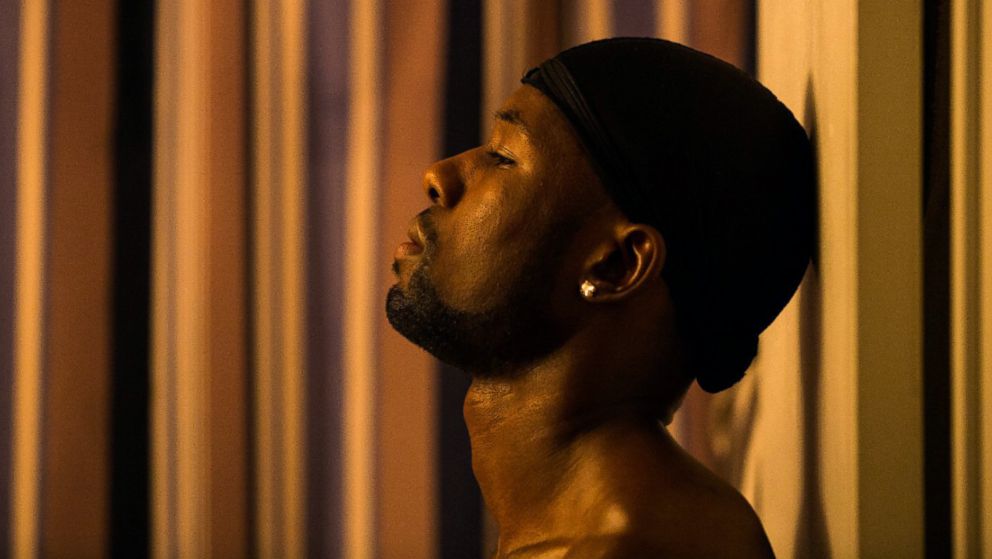
“Moonlight,” directed by Barry Jenkins, is the story of the life of an African-American gay man named Chiron, told in three parts–from boy to teenager to adulthood. But what is it truly about? It’s not merely an exploration of a man coming to terms with his sexuality. It’s a film that shows how important it is to love yourself before you can love others, especially in a world where it’s hard to embrace who you are because it makes others uncomfortable. It’s often said in other sources that if you don’t love yourself, the insecurities get the better of you, which leads to unpleasant confrontations with the people in your life. That would help explain the behavior of Chiron’s mother Paula (Naomie Harris)–when I saw this film a second time, the scene in which she goes through mixed emotions while on crack, I couldn’t help but wonder what was on her mind, how she grew up, what brought her to this, and more. This is a person who doesn’t love herself and thus doesn’t treat her son with the love he deserves. And once I considered that, that made their reunion many years later all the more powerful. (That’s all I’ll say about that.) And so here you have Chiron, who is going through so many issues in life, doesn’t have many people to call his friends or family, is confused about himself, faces intolerance and poverty, and could easily go down the wrong path for the rest of his life (which is why it’s alarming when he commits a certain act in his teenage years). With confidence and love, he can overcome these things and turn it all around, which is what we hope will be the case when he reunites with his old school friend Kevin.
Barry Jenkins knows just how to tackle this subject by making the themes universal so that even audience members who aren’t gay or black or even male can find something big in this small film that they can completely relate with. But of course, it’s one thing to have a gripping script with a look/feel that seems genuine; it’s another if the right actors can pull off these roles. And boy, do they. The cast is across-the-board excellent, with all three main actors capturing all three sides of Chiron brilliantly. Naomie Harris is also brilliant showing the angry and bitter but also human and sad sides of a single mother with too many problems of her own to show love and affection to her son. And last but certainly not least, Mahershala Ali is outstanding as Juan. It’s not a big role, as he’s only present for the first segment, but to say he makes the most of it would be an understatement.
Now, I have a little story I want to share, and it’s my favorite scene too—I missed seeing this film in 2016 and only saw it after it won the Best Picture Oscar; Ali’s Best Supporting Actor Oscar clip convinced me I had to see it as soon as possible. It’s a scene in which little Chiron confides in Juan that he hates his mother. Juan’s response: “I hated my mom too…I miss her like hell now, though.”
Ali is one of those actors that always gets my attention these days, because I think he’s one of the best–I DARE you to look at his performance in “Moonlight” and then look at his performance in Green Book, and tell me he doesn’t have a wide range!
“Moonlight” is a film that is absorbing, rich, and more importantly, real. Much of it is bleak, but that’s what’s needed for the more uplifting, sobering aspects to take effect. The ending successfully shows that in life, there are no ways of going back (and no reason to either), the things you go through make you who you are, and where you go from here on out is ultimately up to you. That it all comes a film that is this well-acted and well-executed makes it all the more powerful and deserving of the Best Picture win.









 Smith's Verdict