Archive | Two-and-a-Half Stars **1/2 RSS feed for this section

Summer School (1987)

11 Jul

images-1

Smith’s Verdict: **1/2

Reviewed by Tanner Smith

It’s “guilty-pleasure” time again here on “Smith’s Verdict” with the 1987 Carl Reiner comedy “Summer School.” There are quite a few Carl Reiner comedies that I very much enjoy without guilt, such as “All of Me” starring Steve Martin. Compared to such comedies to come out of the ‘80s, say the “teenage sex comedies,” “Summer School” is tamer and also sillier, but it’s wonderfully so in the latter category. Parts about it work and make me smile/laugh; other parts are predictable and not particularly funny. But the aspects of the former are enough to make me watch it on DVD, and I’m sure I liked it a little more than the average film critic (I’m assuming). I certainly liked it a lot more than the late Roger Ebert, who had this to say about the film in his overwhelmingly negative review: “It’s a vaporfilm. You see it, you leave the theater, and then it evaporates, leaving just a slight residue, something like a vaguely unpleasant taste in the memory.” Ouch.

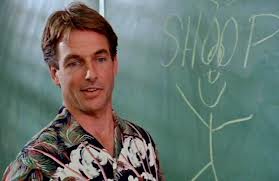
“Summer School” was the feature debut of then-TV star Mark Harmon, famous for his role in “St. Elsewhere” at the time before making himself better known in today’s NBC crime series “NCIS.” Here, he plays Freddy Shoop, a California high school gym teacher who doesn’t care for quality education and is a laid-back surfer type who would like nothing better to do for the summer than vacation in Hawaii with his girlfriend. But at the end of the school semester, he has the misfortune of having to teach summer-school Remedial English. “I ain’t no English teacher,” he tells snooty vice-principal Gills (Robin Thomas). “See? Double-negative.” But when his girlfriend leaves him (and by the way, I notice that Shoop is so laid-back that he doesn’t even feel anything when his superficial girlfriend leaves him for Hawaii), the job doesn’t seem so bad when he realizes he’ll be teaching in the classroom next to Robin Bishop (Kirstie Alley), the obligatory sexy teacher who may or may not ultimately fall for Shoop in the end. Until then, she sees Shoop as a fool, and, oh yeah, is dating Gills. Oh boy…

Shoop’s students are the usual gang of rejects and misfits, but they’re not harmless and they have their own quirks and likable qualities for Shoop to care about them. Shoop has fun with them and even schedules field-trips for their pleasure (going to the amusement park, then going to the beach), before Gills informs him that all of the students have to pass the upcoming English exam at the end of the summer term or else Shoop won’t be granted tenure. So in exchange for the students making an effort to learn, Shoop does each one of them a favor (he chauffeurs a couple of them around, teaches one how to drive, and so on). And to become a better teacher, he gains tips from Robin, who let me remind you may or may not be the love-interest (OK, let’s be honest—she is).

Let’s talk about the students. The students are probably the most entertaining parts of the film. With good young actors to play them, they all have their unique quirks and character traits that aid their appeal. Sometimes, they’re a little too real to be funny, but they are still likable. There’s Denise (Kelly Jo Minter), a dyslexic (I’ll get to that later) who also has trouble with driving and needs some teaching for the upcoming test; Eakian (Richard Horvitz), a squeaky-voiced geek who is appealing enough for even the students to like him (he’s also the one who negotiates with Shoop about the favors in exchange for learning); Larry (Ken Olandt), who sleeps during class (and even asks for a cot) because he works as a stripper at night; Kevin (Patrick Labyorteaux), a linebacker who must pass the English exam to get himself back on the football team; Rhonda (Shawnee Smith), a seven-months-pregnant girl who claims to have had sex with Sean Penn and David Lee Roth; and Anna-Maria (Fabiana Udenio), a sexy Italian exchange student whom Chainsaw and Dave lust after.

Who are Chainsaw and Dave? I was saving them for last. They’re my favorite characters in the movie. They are two horror movie buffs, Francis “Chainsaw” Gremp (Dean Cameron) and Dave (Gary Riley). They’re best buddies who do everything together, and provide a lot of the film’s comedic highlights. They’re also masters of gore, as they use latex rubber who stage two grotesque horror-film-like moments, such as “the bunnies from hell” and most memorably, the classroom massacre. In fact, they’re probably too good to be pulling this off, but their idol is Rick Baker (who is the subject of their first assignment, “Who We Admire Most in the World and Why”), so I guess they did their homework for that particular topic. Their favorite movie is also “The Texas Chainsaw Massacre,” which Chainsaw has Shoop arrange a screening for in class.

summerschool-k

By the way, that “classroom massacre” scene, in which all the students prank Gills and a visiting grade-school teacher with Chainsaw and Dave’s makeup and effects, is very grotesque. I bet if it wasn’t staged, the movie would have gotten an R rating instead of a PG-13. We’re talking slit throats, saw blade in the head, intestines being played with, and most memorably, a tongue being pulled out. These guys should have taken pictures and mailed them to Rick Baker personally.

Oh yeah, and then there’s Pam (Courtney Thorne-Smith), a surfer-type who fakes menstruation to skip class and go surfing, and who also develops an icky crush on the “spiritual” Shoop. At one point, she even moves in with him. Nothing physical is involved—Shoop doesn’t think of her that way; although, I have to admit that it is kind of unpleasant to see a 16-year-old as kind of a maid for 30-year-old Shoop’s services.

Oh, and by the way, logic does not play in “Summer School’s” favor. For example, three questions about the class’ field-trip to the amusement park. First of all, how did Shoop gain authorization to arrange this in the first place? Gills is an uptight jerk who clearly hates and resents Shoop, and it’s obvious he’s in charge. Second, how was seven-months-pregnant Rhonda even allowed to ride the Go-Carts, let alone a Rollercoaster? Isn’t that some kind of a hazard? Third, come on—Denise can’t even drive a go-cart without taking it off the track? Give me a break. Oh, and then there’s the deal about Denise being dyslexic. How did no one notice at all? “She swept through the system” is the only excuse. Yeah, right.

But then again, this is the same movie in which one of the summer-school students has apparently spent the entire term in the bathroom because his “zipper got stuck.” (Though, that doesn’t help explain the disappearance of many other students seen in that class at the beginning of the term.)

Also, these kids are not bad kids, at least not enough to be considered “delinquents” or “criminals.” I mean, sure, they cause a little bit of trouble, but really, what high-school kid doesn’t? Gills’ labeling of these kids is inaccurate, which I guess is supposed to show how stuck-up he is, but it bugged the hell out of me.

So I’ve listed a few things that don’t work about “Summer School” and quite a few that I like about it. What else do I like about it? Well, Mark Harmon is well-cast as Shoop. He’s funny, likable, and has good comic timing when playing off the students or Kirstie Alley, who is admittedly sharp here despite being saddled with the role of obligatory romantic-interest.

And I also admired the ending, which doesn’t go for the easy way out with the kids passing the English exam after finally studying hard to prepare for it. Actually, a neat surprise here is that some of them don’t, but they all have improved greatly since the previous exam, which boosts the kids’ self-respect and makes Shoop seem like a real teacher, which he has become.

So maybe “Summer School” is a little too safe at times and some of the laughs come cheap, but for me, it is entertaining and appealing enough for me to watch it every now and then. Because not many others feel the same way, I can pretty much call it a “guilty-pleasure.” In other words, it’s at least a B- or a C+. But hey—it’s a passing grade.

Cross My Heart (1987)

21 May

MSDCRMY EC005

Smith’s Verdict: **1/2

Reviewed by Tanner Smith

“Cross My Heart” is a romantic comedy that tells its story in the portion of one date—one very awkward date, at that. It begins with a man and woman preparing for a date, which is actually their third, and it becomes an experience that challenges them to question whether or not they’re “right” for one another.

Martin Short plays the man. Annette O’Toole plays the woman. They both have something to hide and lie about, and are unsure of whether or not they should reveal it to the other tonight on their third date. Short has been fired from his job, instead of getting a big promotion like he said he would. O’Toole has a daughter whom she hides from Short. (Oh, and she also smokes.) Short is so desperate to impress O’Toole that he asks his friend for his nice car and stylish apartment just to borrow for the night. So he picks her up, she congratulates him on his promotion, he can’t bring the nerve to tell her the truth, she isn’t revealing her secrets either, and the night is awkward as all lies are destined to be revealed before the date is over.

The film takes place in one night, as Short and O’Toole flirt with one another while still unsure of certain things about themselves and each other. It’s a courageous move to make, and the film doesn’t shy away from everyday, “unnecessary” dialogue to exchange, and thankfully for the most part, Short and O’Toole exhibit convincing chemistry to make us like and care for them. Short is sincere and sometimes insecure, but likable, despite his flaws. O’Toole is sexy and appealing in the way she accepts this man while unsure showing of her own flaws as well.

“Cross My Heart” is mainly an experience such as an awkward date, and the main problem with the movie is that it’s too awkward. You know the lies are going to be revealed sooner or later, and while there are enough suitably funny scenes to play off from that concept, it gets annoying soon enough in that you just want them to get on with that inevitable scene of truth already. This could easily have been resolved if they just revealed their truths and just played off on the idea of dealing with them and moving on with a possible relationship. But no—they keep things even more awkward by trying to keep their secrets. I mean, come on—Short and O’Toole obviously like each other very much; let them talk about what they’ve been keeping from one another.

As a result, “Cross My Heart” winds up clumsy and somewhat mishandled, particularly its last half-hour, which is mainly composed of slapstick and misunderstandings and…for some reason, a woman holding a gun while Short and O’Toole visit Short’s friend after—get this—the friend’s car is stolen. When did this turn into Scorsese’s “After Hours?”

“Cross My Heart” starts out fine, but once you know where it’s heading, it gets annoying pretty fast. Short and O’Toole are fine comic actors and they do work well together, but they needed a better script that delivers the payoff we demand and deserve.

Twister (1996)

14 May

images

Smith’s Verdict: **1/2

Reviewed by Tanner Smith

“Twister” is one of those movies that inspire the question, “When you really get down to it, what’s the point?” This is a blockbuster that just feels like an excuse to showcase some high-quality special effects, and market the hell out of them so that the film will become a hit at the box-office. That’s it—that’s the main purpose I think was in mind when “Twister” was greenlit. This isn’t a disaster movie by most means. The characters aren’t in danger (for the most part, anyway); they’re just scientists studying the “mystery” of tornadoes and racing to get a machine inside one. There’s a romance in an attempt to try and tell some sort of human-interest story, but it just feels like filler until the next tornado effect arrives. And there’s a villain because…Lord knows a massive twister isn’t enough?

Now, to be fair, this is disposable entertainment. It’s energetic enough. The actors are game for the material. And yes, the effects are first-rate. This is a terrific film to look at and admire the technique. The tornadoes look incredible—they’re huge, loud, forceful, fierce, and amazing. And there’s even some room for special effects as humor, such as when a cow is sucked away by the tornado and the characters think another has passed when it’s actually the same one.

It’s obvious that “Twister” doesn’t care much for character, dialogue, or such to make for dramatic situations. And I wouldn’t mind so much, except that I didn’t really find it as witty or as energetic as it would like me to see it as, and thus I ask the question of what’s the point?

OK, fine. I know the point by now. It’s all about showcasing the new effects at the time.

The plot, such as it is, involves a team of tornado chasers, led by Jo (Helen Hunt). She is obsessed finding out the secret of the phenomenon ever since a twister took her father away years ago. Her team’s mission is to try out “Dorothy,” a machine designed to deliver data from inside the vortex. And thankfully, this is the time of one of the big series of storms, so they have to follow tornado among tornado until they reach “the finger of God.” Accompanying her is her ex-husband, Bill (Bill Paxton), and accompanying him is his fiancée, Melissa (Jami Gertz). The rest of the team is mostly forgettable, except for a zany comic relief played by Philip Seymour Hoffman.

Like I said, there is a villain here because apparently, Mother Nature isn’t enough of a villain here. So we have the slick, slimy Jonas (Cary Elwes), a rival scientist who has his own version of “Dorothy” to attempt with his own team. And yes, this means both tornado-chaser groups are competing against each other, trying to get to each storm first. It’s like tornado-hunting is an aggressive sport now or something.

“Superfluous” is not merely the right word to describe the character of Jonas. He’s not only unnecessary; he’s just annoying. (Cary Elwes’ *bleep*-eating grin and hokey Southern accent doesn’t help much either.) Apparently, Jonas used to be part of Jo and Bill’s team until he went solo and got corporate. Insert product-plug here, I guess.

The plot is completely artificial. Also superfluous is the subplot involving the rebuilding relationship between Jo and Bill. You can easily tell from their first meeting in this movie that they’re going to be back together and Melissa will get the shaft (though not the vortex, thankfully). They banter, they share moments, they catch up on certain topics of conversation, etc. Even though Bill Paxton and Helen Hunt are appealing performers, they’re not able to keep this subplot interesting enough. And Melissa is pretty much just a plot device to keep it going, unfortunately.

Mainly, “Twister” is disposable entertainment that you get into for the effects or don’t get into because there isn’t much else. I don’t hate this movie—the effects are fantastic and there are some effective moments of action and tension. But if it didn’t need a substantial plot, it at least needed enough wit to win me over and keep me invested. It didn’t, so I guess it didn’t work for me because of that. It’s not something I’ll be watching again anytime soon.

Daredevil (2003)

6 May

images-1

Smith’s Verdict: **1/2

Reviewed by Tanner Smith

In the Marvel Comics superhero universe, Daredevil would seem like their answer to DC’s Batman. While the Devil isn’t as wealthy or as smooth as the Dark Knight (and on top of that, he’s blind), he does have a similarly tragic backstory, has impressive stealth and skill (not just for a blind man; for anybody), and is still human when all is said and done. He’s vulnerable and he’s experienced so much, and yet has more to overcome and grow from as well.

Mark Steven Johnson’s film adaptation, “Daredevil,” shows this. It moves back and forth between the human and hero side of Matt Murdock/Daredevil, and manages to give its audience a good sense of his plight. There’s a scene early on in which he walks through his apartment after a night out, and he listens to a voicemail by an old flame that indicates that he is closed off from people and has this new identity that is continuing to haunt him each night.

The film opens with Matt Murdock’s backstory. Matt (played as a teenager by Scott Terra) gets into an unfortunate accident involving toxic chemicals. He loses his vision, but his other four senses have been enhanced in such a way that he develops radar sense that allows him to be more alert. This new sense is now his sight and he uses it to develop new talents that do him well. As his father is killed by one of the local mobsters, Matt ultimately devotes himself to bring criminals to justice, even if it means dressing up in a tight leather suit and a mask as an adult.

Many years later (whatever happened in that time is hardly explained, so I’m not sure how long Matt has been Daredevil), Matt (now played by Ben Affleck) is a lawyer by day and a vigilante by night. He apparently is kept busy defeating evildoers, as most of them work for the Kingpin (Michael Clarke Duncan), the biggest crime lord in New York. Kingpin wants to see Daredevil caught and killed, and so he sends in his chief minister—a bald Irish villain named Bullseye (Colin Farrell), who “never misses a shot” and has a target tattooed to his forehead.

Meanwhile, Matt starts a relationship with an athletic, tenacious woman named Elektra Natchios (Jennifer Garner), who has enough fight in her system to playfully engage with Matt upon their first encounter. She has been trained by her father (Erick Avari) to “not be a victim,” and it seems her skills may come in handy when she is next on the target list for the Kingpin. Something happens midway through the story that gives her motivation to follow the same mission as Daredevil—to seek justice/vengeance.

“Daredevil” gets a lot of things right. In particular, the origins of Daredevil, which are shown in a 15-minute prologue, is very well-done. The action scenes, for the most part, are exciting, although my favorite is the foreplay fight between Matt and Elektra after they first meet; they show off their skills by trying to knock each other down. The Kingpin is sort of an obvious villain (which he’s supposed to be), and so Bullseye is the more intriguing, creepier badass. The look of Hell’s Kitchen is genuinely dark and disturbing, making it look as peculiar as Gotham City. And there are some genuinely sweet moments between Matt and Elektra in their relationship. In the film’s most touching scene among these two, Matt has Elektra stand in the rain so that the sounds of the raindrops falling on her face can give Matt a clear-enough image of what Elektra looks like. That’s a very good scene. Also, Ben Affleck is quite solid as the hero—nothing great, but still enough for us to root for him. Jennifer Garner is even better as she radiates enough energy and determination as Elektra.

But there are more than a few missteps that keep “Daredevil” from the type of superhero movie that fans can “marvel” at (in a matter of speaking). For one thing, Matt Murdock is not particularly good at hiding the fact that he’s a vigilante, even though he tells criminals in court (in front of everybody) that he “hopes that justice will find you” and this is followed by those same criminals falling in the hands of the mysterious Devil. The idea is that, like most superhero stories, no one is supposed to know about Matt Murdock’s alter-ego, but Matt (or rather, the way Affleck plays it) is not particularly subtle and it just leads to question of how no one can figure him out. This is especially hurtful in that a nosy reporter (Joe Pantoliano) is able to figure it out quite easily. Now, granted, I know that people wouldn’t suspect a blind man that can be the superhero that prowls the city at night. But Matt doesn’t keep his abilities a secret either, so it’s still in question.

Also, I found myself wondering just what are the extents of Daredevil’s abilities anyway? He can apparently jump from building to building. First of all, how is he able to know where to land without the sound to assist him? Second, have his joints been enhanced in such a way that improves his jumping abilities? That’s not as clarified as his other senses.

And then there are the obligatory, “Batman-esque” lines of dialogue such as, “Can one man make a difference?” Instead of giving it the proper motivation it needed for a story such as this, it just feels like uninspired comic-book-speak.

The execution is all over the place as well. The editing feels like overkill, as there are many music-video tricks that are overused; it makes it pretty distracting at times.

Also, I feel like so much was cut out of the final product before the film’s release date, which is why certain sequences feel unevenly paced. It’s 100 minutes in length, and yet it feels like there’s enough room for more development in certain areas. I hear there’s a “director’s cut” on DVD somewhere; I think I might check it out sometime. The truth is, I don’t see this as a bad film. It has enough elements for a good superhero film. But the way it is, “Daredevil” is merely action-packed entertainment with not much else to offer, except for an admittedly-engaging dark tone. Movies based on Marvel superheroes would only get better as years go by, and while “Daredevil” isn’t among the worst, it’s not as impressive it could have been.

Terminator 3: Rise of the Machines (2003)

22 Apr

500px-2003_terminator_3_rise_of_the_machines_006-1-

Smith’s Verdict: **1/2

Reviewed by Tanner Smith

I had a feeling this was too good to be true. While I thoroughly enjoyed the first two Terminator movies, I really wished I could’ve loved this third movie as well. But it’s heavy-handed and filled with subplots involving the government that are boring when they should be thrilling. Skynet is about to call on Judgment Day in a matter of hours and machines are going to destroy us, just like everyone in the first two movies said they would. Why am I bored? That’s what’s mainly wrong with this movie, entitled “Terminator 3: Rise of the Machines.” It does have heavy-handed, thrilling action sequences and chase scenes but it has too much going on with the story and I was not as thrilled as I was with the previous Terminator films.

Stars Linda Hamilton, Edward Furlong, and even director James Cameron are missing in action for this third movie. But Arnold Schwarzenegger is back as the Terminator, playing a good guy again. His mission is to protect John Connor, now in his early 20s. As you remember from the second movie, “Terminator 2: Judgment Day,” the conflict was to stop Judgment Day from ever occurring, thus stopping the machines from rising. But the Terminator has returned many years later and said, “You only postponed it. Judgment Day is inevitable.” Sure, don’t give us a happy ending to the series. We just wanna see Ah-nold in the saddle again. You remember, the previous films were about something. This third one is more concerned with action. And there is plenty of it here.

We also get plenty of Arnold’s deadpan one-liners, mostly all of which work as comedic timing. But the emotion that was in the second film that I loved so much is missing here. Here, we have John Connor and the Terminator racing against time to survive or stop what’s coming and not much else. Also in the mix is a young veterinarian named Kate Brewster (Claire Danes), who recognizes John from her childhood. You see, John “lives off the grid” now, running away from everything in the world after his mother died of leukemia. Nick Stahl is John this time. But he just plays him as a guy with an action-hero physique and not as a guy who lives off the grid. Edward Furlong, who played John in the second film, really gave John Connor the credibility of the character that is supposed to save the human race if the machines rise. You see, this is why John always has to be protected.

This time, he has to be protected by the T-X (Kristanna Loken), an evil Terminator that can control other machines so they can run by themselves and destroy everything. She has the outward appearance of a female blonde model but she’s an evil machine. One of the problems with this movie is that she’s a particularly compelling villain, even though she looks icy beautiful. I realize that the whole point is that these Terminators are machines and therefore can’t show emotions. But when the machines begin to rise and attack John and Kate, they make for some pretty effective villains. The special effects are outstanding here. The machines look realistic and director Jonathan Mostow gives a good look to the film. He loves to blow things up real good. The best chase sequence in the film involves every vehicle you can think of. One little problem is that he doesn’t have a flair for darkness, much like James Cameron had. And he may be a bit too fond of chase scenes. This movie is less interested in what made the previous films intriguing and more interested in action.

The ending is a letdown. It raises all sorts of questions that need to be answered and in many ways, it’s anticlimactic. Why, after all of these action sequences and chase scenes, did they just decide to end that way?

Despite the clever action, amazing special effects, and good performances, especially by Schwarzenegger, Stahl, and Danes, “Terminator 3: Rise of the Machines” just seems like a fanboy’s script and is not as intriguing and thrilling as the previous films, which I thought were great. It just seems like an unnecessary sequel with a few good things but not the potential of the predecessors.

Weird Science (1985)

19 Apr

weirdscience-blog-jpg_183740

Smith’s Verdict: **1/2

Reviewed by Tanner Smith

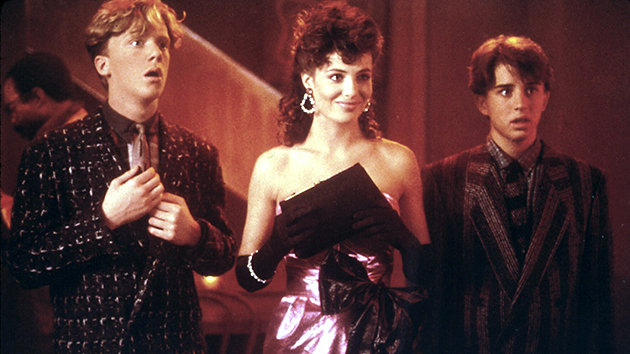
“Weird Science” has its pleasurable elements. It mixes teenage male fantasies with “The Bride of Frankenstein” and adds some science, as well as magic. It’s a movie written and directed by John Hughes, who specializes in putting people (mostly teenagers, like “Sixteen Candles” and “The Breakfast Club”) in mostly realistic situations while writing some very clever dialogue for his characters to say to keep the comedy and drama in the same rhythm. “Weird Science” has some clever dialogue, but the realism is replaced with more of a fantasy. I don’t mind that, but the premise doesn’t quite follow up to its own potential.

Anthony Michael Hall (Hughes’ typecast geek) and Ilan Mitchell-Smith play two dorky buddies named Gary and Wyatt who fantasize about becoming popular and winning the girls of their dreams. One night, they watch “The Bride of Frankenstein” and that’s when Gary gets the idea of creating their own girl. But not by digging up any dead girl and reanimating her, as Frankenstein did. They create a girl on Wyatt’s computer by hacking into main computer systems and simulating a woman that they can create and fill knowledge into. But as in “The Bride of Frankenstein,” lightning strikes and things go way beyond what they expected. Before you can say “it’s alive,” the girl (no, WOMAN) they created is real enough to stand in their doorway (looking almost impossibly stunning) and shower with the boys.

This perfect woman is played by Kelly LeBrock, complete with beauty, sensuous lips, and a heavy British accent to go along with it. Named Lisa, she is no ordinary woman. She is not a dumb bimbo or the cover of this week’s Playboy. She actually has a brain. She’s intelligent and sensitive to the boys’ needs. She also has magic powers (she can get a car, change the boys’ suits at parties, make anything happen). Lisa realizes the boys’ insecurities and spends the movie attempting to make them feel better about themselves.

Of John Hughes’ latest teenage movies, this is probably the least in the entries. The movie starts out with a lot of clever ideas, but the problem is the movie doesn’t really seem to go through with them. The performances by Hall and Mitchell-Smith are engaging and Kelly LeBrock is perfect as Lisa. I just wish they were involved in a better story. A supporting character that is supposed to be funny doesn’t fit here at all—that is Bill Paxton as Chet, Wyatt’s nasty, sadistic older brother. He doesn’t fit in this movie at all, except to provide nasty jokes. His come-uppance (or rather, his punchline from Lisa) is also nasty and not very funny.

“Weird Science” has plenty of good ideas that could’ve made it a better movie. But because it does have its moments, I would say rent it.

Lawless (2012)

18 Apr

lawless-2012-picture05

Smith’s Verdict: **1/2

Reviewed by Tanner Smith

“Lawless” is a mixed bag. It’s well-made and well-acted, but there seems to be something that’s bringing it down. That “something” is possibly the trying-too-hard syndrome. To make this film about violent and ignorant people a more mainstream project than to be expected from the Weinstein Company doesn’t entire work in the film’s favor. Unfortunately, I can only praise the acting and cinematography, while the rest of the material doesn’t do much to support them.

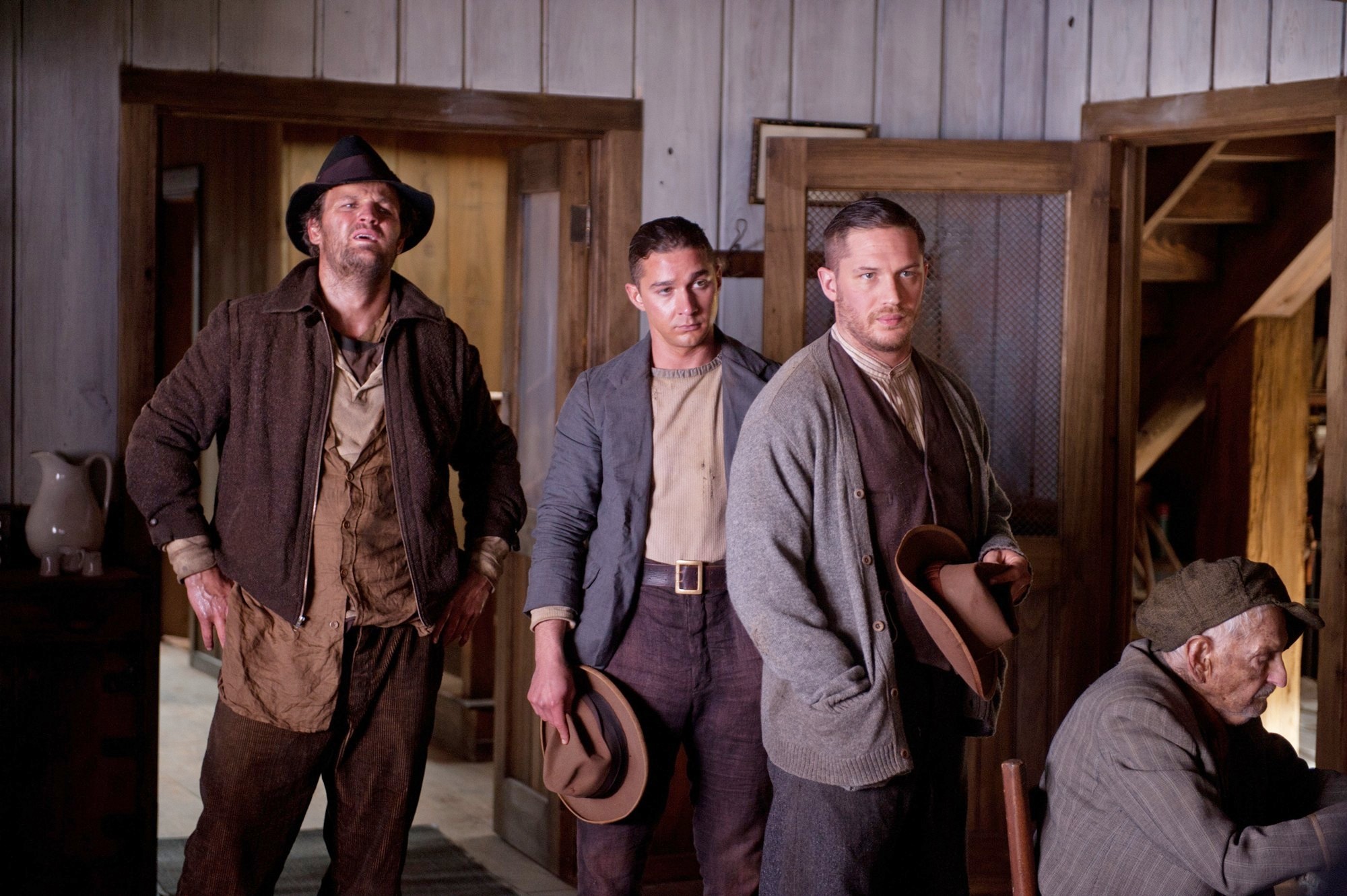
“Lawless” is a gangster film based on the story of the Bondurant brothers, who sold moonshine in Franklin County, Virginia, during Prohibition in the United States. (How much is based on fact, I’m not entirely sure.) The brothers—timid Jack (Shia LaBeouf), tough Forrest (Tom Hardy), and manic Howard (Jason Clarke)—are seen as the best, most prominently respected bootleggers around. They make great moonshine, using their bar for their activities, with help from Forrest’s lover Maggie Beauford (Jessica Chastain) and Jack’s enthusiastic best friend Cricket (Dane DeHaan, “Chronicle”).

Enter Special Agent Charley Rakes (Guy Pearce), a slimy, smarmy Chicago federal agent. He’s working with the local sheriff to attempt to shut them down…or at least, that’s what I think he wants to do. I say that because this guy Rakes is such a cartoonishly evil bad guy, which his sadistic persona and oily appearance (he’s ridiculously well-dressed, with his hair slicked back as well) certainly don’t do him justice for. There’s no motive with this guy; no dramatic purpose. This is one of the problems with the movie—a lot of the action scenes ride with this character, the antagonist, and most of them don’t work because they’re not amounting to much, from a dramatic standpoint.

Also, I’m wondering why Rakes wasn’t shot early into the proceedings, but these movies mainly require him to live to see the climax. And speaking of certain/uncertain death, don’t tell me you’re not able to guess the fate of the young, enthusiastic, innocent, jittery Cricket the moment he runs on screen for the first time. Audiences love him, but those who have seen many other movies like this will know that he’s a dead man walking.

The real reason to see “Lawless” is the acting. Aside from Shia LaBeouf providing a likable lead character (proving once again that he can be a credible, appealing actor), Jason Clarke being suitably maniacal, and Gary Oldman in a small role as a Chicago gangster, the real standouts are Tom Hardy as Forrest and Jessica Chastain as Maggie. Hardy is charismatic and delivers a solid, strong screen presence—I can even forgive the strange scene in which his throat is cut open and he lives long enough to crawl to the hospital and be treated, because Hardy makes it believable somehow. Jessica Chastain, whom I’m still convinced is an angel, is as great as expected, and has her sexiest role to date (she’s even topless at one point), playing an exotic dancer from the city who comes to the country to get away from the violence she gets herself into after the brothers mess with Rakes. Guy Pearce…well, he just does what he’s required to do as Rakes.

There is a great deal of violence in “Lawless,” as you’d expect from an American gangster film. Things get pretty vicious, particularly near the end as the battle lines are crossed. Those scenes actually strike the right note of tension that this fable (if you will) requires. But before that, like I said, the action scenes may have the grit, but they don’t bring the interesting moral dilemmas that something like the remake of “True Grit” was able to deliver, by comparison. It’s just set out like this—the illegal bootleggers (innocent, young Jack and tough, heart-of-gold Forrest) are good; the man trying to do the right thing (the over-the-top villainous Rakes) is bad. And there are some gangsters thrown in for measure (notice I didn’t say “good” measure). “Lawless” is not flawless, I’m sad to say.

Final Destination 3 (2006)

11 Apr

final_destination_3_07

Smith’s Verdict: **1/2

Reviewed by Tanner Smith

It’s a neat premise, really—once you discover that Death has a design, you can cheat it. It fits right into the type of movie that Chicago Sun-Times film critic Roger Ebert called the Dead Teenager Movie. You know the type—teenagers are alive in the beginning and at the end, they’re all dead (except for one, who is kept alive to return in the obligatory sequels).

The premise was used in the 2000 DTM (Dead Teenager Movie) “Final Destination,” which had fun with the theory that Death’s design can be messed with by teenagers. Its sequel, awkwardly titled “Final Destination 2,” didn’t thrill me because of its monotonous tone. Now we have “Final Destination 3,” which has the same spirit and amount of thrills and fun as the first film. The premise is about the same—the main teenager (out of many introduced along with) has a premonition of disaster that will kill many teenagers, the main teenager and a few others are stopped from doing what would have been done, the premonition comes true, but Death isn’t finished yet. It will set up many accidents (yes, I’m calling them “accidents”) that will kill off the ones who were supposed to die—not later, but sooner. About the same premise as the previous films.

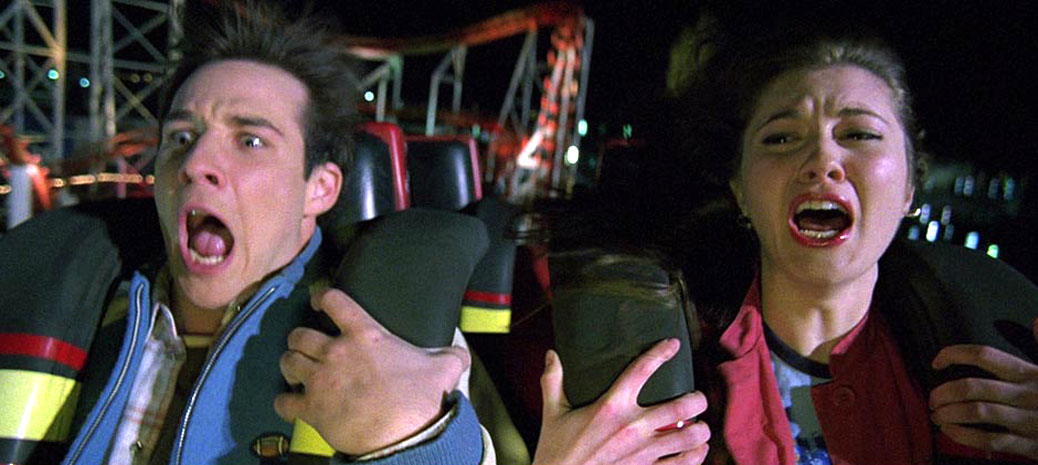
Here, the heroine is named Wendy (Mary Elizabeth Winstead). With her boyfriend and his friends, she is about to board a roller coaster called “The Devil’s Flight.” But in a very convincing, frightening, and well-executed scene (better than the opening sequence in the first film, in my opinion), she has a vision that the roller coaster will go out of control and she and her friends will die. She freaks out and is let off the roller coaster, many of her classmates follow, but the roller coaster takes off and the worst occurs. But of course, it’s not over for those “lucky survivors.”

As sick as this may sound, Death is getting better at forming these accidents (shut up). But It also has a sick sense of humor. There’s one sequence in particular that will most likely frighten the audience the most—I won’t describe it but it involves two dumb blondes and tanning booths. Death shows no mercy (nor should It) and obviously neither does director James Wong. It becomes apparent that the pictures Wendy took of the surviving teenagers before the roller coaster disaster show clues revealing how they will die. To prove that, Wendy shows a friend a picture of the Twin Towers, one of which features the shadow of an airplane…

As a whole, the film isn’t quite up there with the first film, though I was frightened of the tanning booth scene and many of the other deaths that occur and I liked the characters. Mary Elizabeth Winstead shows a lot of pluck as the heroine Wendy and Ryan Merriman is equally good as her friend Kevin—their appearances and performances make up for the fact that no one from the previous two films makes an appearance. I can’t quite recommend this movie. The other characters are all high school caricatures (dumb blondes, jock, skeptic, etc.). They don’t make much of an impression—they’re just the targets of one of Death’s clever traps. And also, why is it that nobody mourns the dead teenagers? Isn’t it sad that these teenagers who have a lot to live for don’t even make it to college? I could ask where the parents are, but that’d be silly. This is a Dead Teenager Movie—it features teenagers; the parents aren’t supposed to be there.

“Final Destination 3” will please fans of the series, but I was searching for more in the premise. I might as well just watch the first movie again.

Jimmy Neutron: Boy Genius (2001)

9 Apr

Jimmy-Neutron-Boy-Genius-thumb-560xauto-24506

Smith’s Verdict: **1/2

Reviewed by Tanner Smith

“Jimmy Neutron: Boy Genius” is a computer-animated theatrical movie by Nickelodeon that is more likely a feature-length pilot episode for a TV show on Nickelodeon. This movie was released around the same time as the first “Harry Potter” movie and the first “Lord of the Rings” movie. After your kids have seen “Harry Potter” but may find “Lord of the Rings” too intense, “Jimmy Neutron: Boy Genius” may be their cup of tea. This is a fun, silly adventure that will entertain its Nickelodeon target audience.

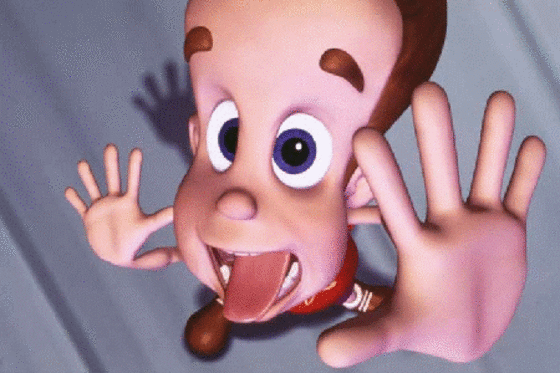
The title character is a grade-school boy inventor named Jimmy Neutron who in the beginning of the film, flew up in his homemade rocket to send a satellite (a toaster) into space. He believes there is an advanced alien civilization out there and plans to prove it but when he arrives back home, he is late for breakfast and his parents are frustrated. (“I don’t care how advanced they say they are,” Jimmy’s mom says. “If your father and I haven’t met them, they’re strangers.”)

Jimmy has many inventions around his house. He has a mechanical canine named Goddard which explodes when told to “play dead” and then fixes itself. He also has many inventions that get him prepared for school—these inventions would make Rube Goldberg proud. At school, his friends are Carl Wheezer, a fat kid with allergies, and Sheen, an odd kid obsessed with a comic-book superhero named Ultra Lord. His enemies are a snobby girl named Cindy and a cool kid named Nick. Why is Cindy an enemy? Because Jimmy and Carl are at the age when girls are “icky.” “We don’t like girls yet, do we, Jimmy?” Carl asks. “Oh no we don’t! No, no, no!” Jimmy exclaims quickly.

But soon, the advanced alien civilization visit Earth and kidnap all of the parents to take them back to their space station. At first, the kids are thrilled and eat all the ice cream they can eat. But pretty soon, they realize they want their parents back. When Jimmy discovers that the aliens kidnapped them, he and his friends have to get them back.

The way these kids travel into space is charming and maybe more than that. What do they do? They invent spacecrafts out of theme park rides. They don’t have to worry about breathing in space because apparently, the space in this movie has room temperature. Silly, I know, but this won’t encourage kids to try this at home. I liked the scene in which they camp out on the moon and tell a story of “The Blair Witch Project.”

I liked the opening scenes and some of the mid-section of the film. But what I didn’t care much for were the aliens. They’re just standard Nickelodeon-type villains and they grew irritating to me. Also, they looked hideous, maybe unintentionally hideous. They look like sunny-side-up eggs that have been waiting outside on a tray for a week. And so, I found the final half, in which the kids do battle with these monstrosities, to be more dumb than charming.

But I understand who “Jimmy Neutron: Boy Genius” appeals to, and it will. The movie is visually stylish and appealing in its main character. But this movie will most likely not be in the same league with the Pixar films or even “Shrek.” Compared to those, the style is a bit inferior and the story is uninspired. Kids will like “Jimmy Neutron: Boy Genius”—that’s all I can truly say about it.

License to Drive (1988)

27 Mar

papa_cadillac_1988_2

Smith’s Verdict: **1/2

Reviewed by Tanner Smith

“License to Drive” seems like it’s going somewhere special. It has the premise of a kid failing his driving exam yet he still wants to drive. You would expect something fresh to come from this idea. But you’d be wrong. Instead, “License to Drive” gives us an entire second half of complications, out-of-control, near-death car accidents (none of which fatal but they’re still not funny), and a long chase sequence. That’s too bad too, because the first half is quite amusing.

The movie stars Corey Haim as an average teenager named Les. Like many high school students, he has a crush on the pretty girl in school—in this movie, she has the nice name of Mercedes—and really wants to drive. But of course, he isn’t focused enough in studying, and his wild, reckless best friend Dean (Corey Feldman, who co-starred with Haim in “The Lost Boys”) isn’t very motivational—“You’ve been a passenger in a car all your life—you don’t need to study.” Les does, however, have a brainy twin sister who studies very hard. When it’s time to take the test, his sister passes, but Les is unfortunate enough to fail. Even more unfortunately, he already scheduled a date with Mercedes (Heather Graham) that he certainly can’t bail on now. So Les asks (right to the camera, breaking the fourth wall and letting us know that we’re in for a different movie), “An innocent girl, a harmless drive, what could possibly go wrong?” There’s always a line like that in these movies.

I wish “License to Drive” hadn’t driven down that route, so to speak, because the first half is most enjoyable. Corey Haim plays a different character than he plays in “Lucas.” While his character in “Lucas” was more original, his character in “License to Drive” is more the same as any other teenager. That’s not necessarily a bad thing because we can identify with him as he goes through his high school problems—wanting to impress the girl, living with his family, and taking the driving exam. Haim is appealing here. Even more so are his family, with Carol Kane as the pregnant mother (I love the bit where she fixes herself a full plate of mashed potatoes with ketchup all over them and says as her teenaged kids look in disbelief, “For your information, this is exactly what I ate when I was pregnant with all of you and you turned out OK.” That’s a great line.) And Richard Masur who is a riot as Les’ overreacting (well, not really overreacting but he shouts a lot) father. Then there’s the scene in which Les takes the test. First, he must take the computer exam (kind of odd, considering he was supposed to take that long before, but oh well). We feel the pain on Les’ face as he tries to get questions right. This scene captures feelings of desperation and the want to drive. Les fails but since his twin sister passed (and with the computers conveniently crashing after Les hits the computer in frustration), he is allowed to take the driving part of the exam. This is the funniest scene in the movie. His driving instructor, played by James Avery, is a military man who uses a cup of coffee (filled to the brim) instead of a clipboard. He tells this scared kid that if that coffee spills on his pants, he fails.

Well, that’s pretty much my review of the first half of the movie, which deserves three-and-a-half stars. But then the long second half approaches us and the film has gone downhill. Les is willing to steal his grandfather’s Cadillac to take Mercedes on a date. Only problem is, he has no license. So the script calls for all sorts of incidents to occur—none of them particularly funny, which is what the main purpose is with this movie being a comedy.

It’s sad to see a movie with comic potential go downhill like this. I really liked the first half of this movie—it had insight, good humor, appealing characters, and true moments of fear of looking like an idiot while trying to impress your dream girl. But they all go through the wrong lane (OK, enough driving puns) as “License to Drive” approaches a dead end (OK, I lied).

Maybe cars themselves are not very funny. What can you do with a piece of metal and machinery that could possibly be funny? Crashes aren’t funny. Cars spinning out of control aren’t funny. Chases aren’t funny. So what can be done with cars as humor? I wish the writers of “License to Drive” took more time thinking of an answer to that question.