Archive | Three Stars *** RSS feed for this section

LRFF2015 Review: “Made In Arkansas” Shorts Block 5

22 May

Reviewed by Tanner Smith
maxresdefault

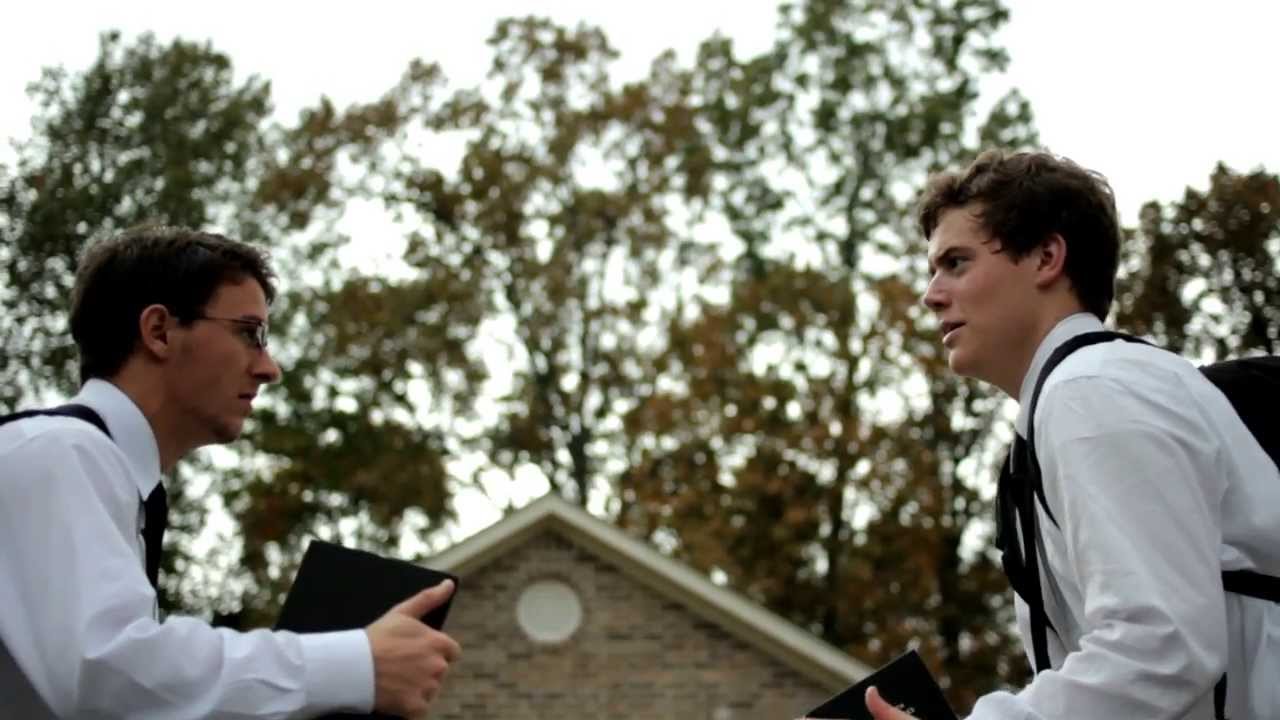
Not Interested

Smith’s Verdict: ****

The full review can be found here.

Southern Pride

Smith’s Verdict: ***

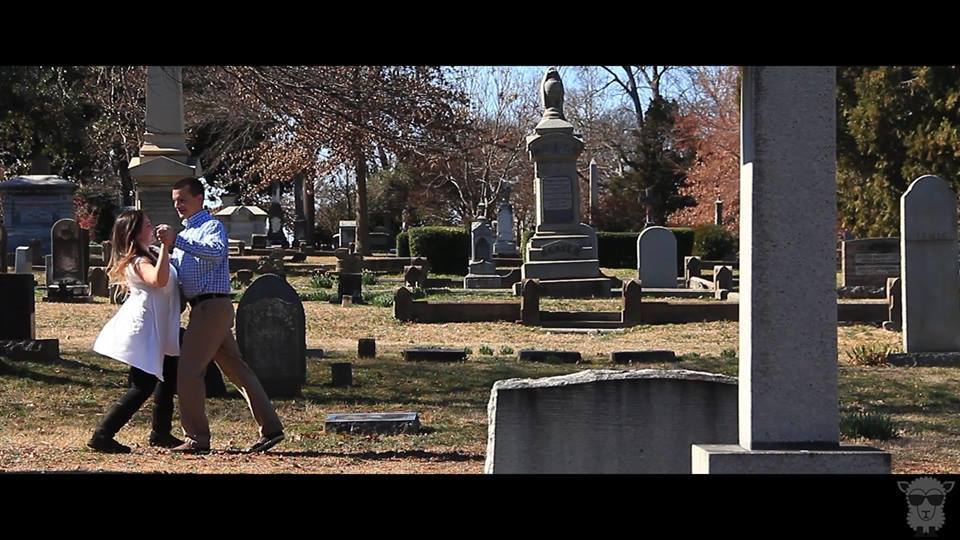
In Nick Lane’s 7-minute short film, “Southern Pride,” an Arkansas gay couple is walking around their suburban neighborhood while their son prepares for a proposal dinner at home. It seems their son is going to propose to his girlfriend. Their conversation soon grows from worrying about how the son will prepare the potato salad to the subject of marriage and whether or not their son is making the right choice. They discuss the pros and cons of marriage when it becomes clear that they’re not merely worried about their son’s proposal but the possibility of getting married themselves. The way it builds up to its surprisingly inevitable payoff is subtle and well-handled, and it digs through the surface of what’s truly bothering these characters. “Southern Pride” is as well-written as it is well-acted.
1619239_10201647049857540_8158271712985537232_n

The Making of “Sensitivity Training”

No Verdict rating

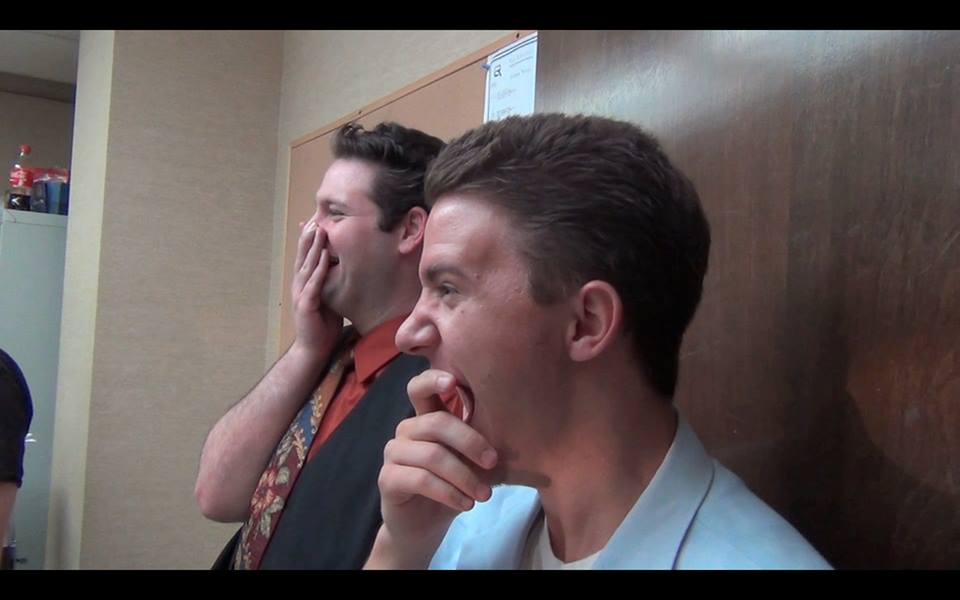
“The Making of ‘Sensitivity Training’” was a 25-minute documentary I made highlighting humorous moments from the making of a short film (called “Sensitivity Training”) made by the team Flokati Films (which includes Johnnie Brannon, Tony Taylor, and Jason Willey, among others) for the 2014 Little Rock 48-Hour Film Project. So, obviously, I can’t review it. But I did find a couple people who had some things to say about it. Here they are:

Paige Murphy (producer, Vampire-Killing Prostitute)—“It was interesting seeing the 48-Hour Film Project from someone else’s perspective (I did it with a group one year). I liked seeing how the group decided on the story that they did. It made me really want to see the film. I think some parts in the beginning were a little unnecessary and possibly could have been replaced with a couple title cards briefly explaining 48HrFP and what genre the group got. Having said that, I’m familiar with how it works, so maybe it felt natural to someone who isn’t.” Murphy goes on to say, as a note to me, that if I do the same thing for this year’s 48-Hr, I should capture how making a film in 48 hours takes a toll on a group of people. “Getting BTS on the movie itself is really good, but I would have liked to see people sleeping on chairs or rubbing their eyes or whatever they did to cope with the lack of sleep. That’s not a criticism so much as just a random thought on my part. Overall, a good job capturing funny and interesting moments on sets.”

Kristopher Pistole (audience member)—“[…] had great editing. I enjoyed it all the way through. Very tight. I didn’t think it needed the intro at the beginning. I thought the film could have been introduced with just a few lines of text—not bad, just not wholly necessary.”

Sarah Bailin (Wellesley student)—“’The Making of Sensitivity Training,’ is, shockingly, about the making of the 48-hour film festival entry, ‘Sensitivity Training’—or as I’d like to think of it, a weekend in the life of a surprisingly unstressed group of filmmakers considering they have 48 hours to make a masterpiece. It is clear throughout the film that these filmmakers truly love the work that they do, and this featurette is all the more enjoyable because of it. Personally it was an odd experience watching a film about the making of a film I haven’t seen, but it’s to Tanner Smith’s credit as a filmmaker that I never felt as though I were missing anything, and I encourage anyone in a similar situation to me not to let their lack of familiarity with ‘Sensitivity Training’ hold them back from seeing this film. In true Behind The Scenes fashion, Smith’s camera was both unobtrusive and omniscient, providing us with a thorough glimpse into the genesis of ‘Sensitivity Training.’ This is not to say the film was without its flaws, but if any genre can get away with a little self-aggrandizing and a certain amount of inside jokes, it’s a behind the scenes video like this one. Ultimately the goal of any featurette is to document and provide insight into the atmosphere in which a film was created, and to this end, Tanner Smith’s ‘The Making of Sensitivity Training’ was more than adequate.”

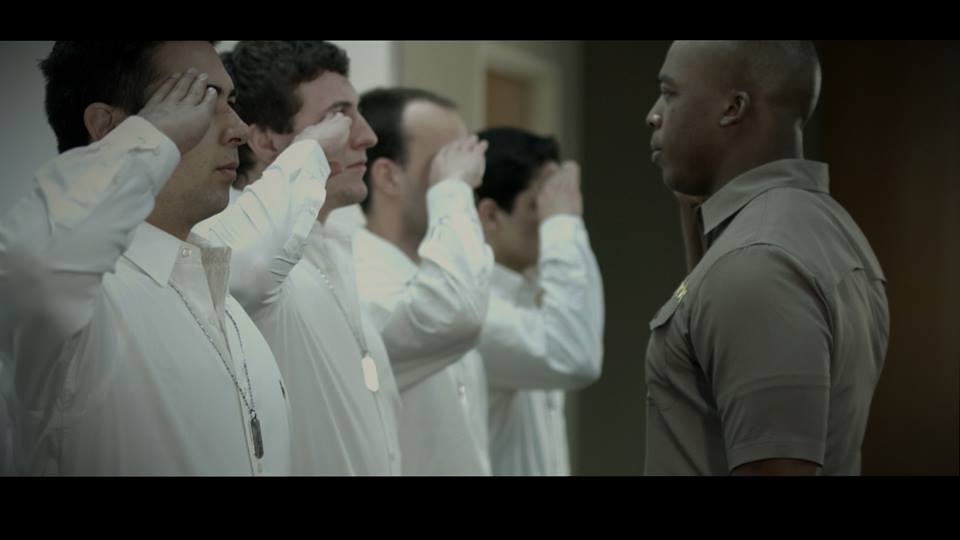
Here’s a trailer for the film:
10391429_944997935518437_6557944063406988990_n

The PaperBoy

Smith’s Verdict: ***1/2

Thien Ngo’s 7-minute action-comedy “The PaperBoy” is a wild ride—a very funny, skillfully made romp that takes us to a strange universe in which newspaper deliverers engage in all-out war, with two different sides fighting for different meanings of “truth.” “The PaperBoy” is not exactly a satire on news or media or even how the public can interpret it in terms of their own politics; it’s just a brief action-adventure that thrusts two rookie paperboys (Keith Hudson and Tres Wilson) into a life-threatening situation with enemy paperboys who use attack dogs, newspaper cannons, and even newspaper-nunchucks. And that’s just some of this film’s original material, which is just full of original material. My favorite sequence is a half-a-minute montage of training at the Newspaper Academy, where the typical shouting drill instructor gives a speech about “how tough it is out there” and our trainees endure tests such as vicious dogs that will be a nuisance to them on their paper routes. (By the way, dog-lovers should probably not watch this scene.) There are other elements that make this a unique, stylish short, including a brief cameo by Johnnie Brannon as a newspaper-cannon-wielding maniac and a final sight gag that is as hilarious as it is grisly. “The PaperBoy” is tight, fast-paced, and over in just a few minutes. It’s just plain fun.
11058417_1555274804754572_4141377977809437307_n

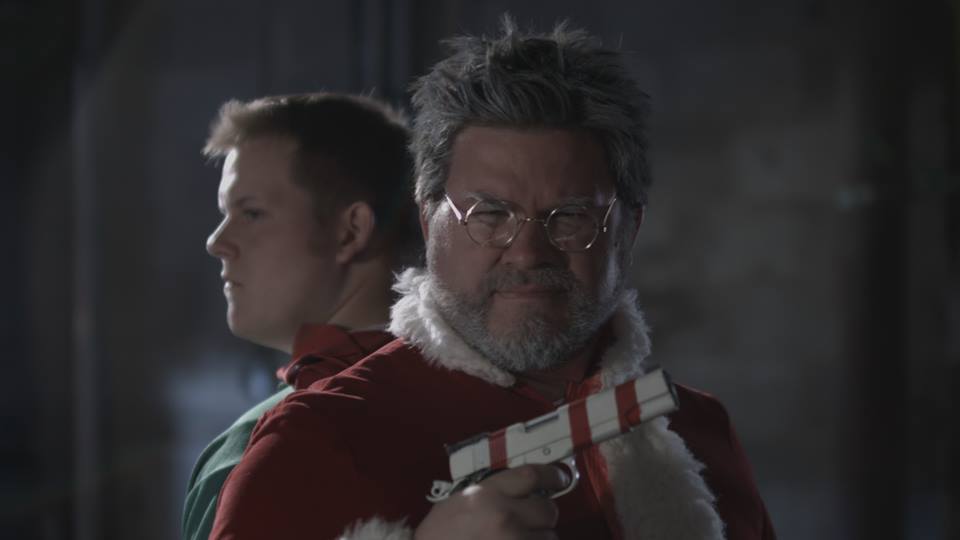
‘Twas the Night of the Krampus

Smith’s Verdict: ***1/2

The full review can be found here.

I Hate Alphaman

Smith’s Verdict: ***

Hunter West’s 8-minute action-comedy “I Hate Alphaman” is a cheesy, fun callback to old-school comic book adaptations. The characters and material are original, but the goofy tone and style are the same, if not totally exaggerated. You know those over-the-top scheming villains who always say they’re ultimately going to stop their adversaries but never do and constantly try again and fail? No one knows that feeling better than Alex Arthur, who doubles as a rather pathetic supervillain who wants to stop a superhero, named Alphaman, for no reason other than…he hates him. Intercut with news footage, we learn how many times Arthur has tried and failed to defeat Alphaman. Each encounter leads to one embarrassing disaster after another (he’s frozen, he’s burned, etc.; this Alphaman possesses so many abilities that I kind of hate him too). That’s pretty much what the film is about; there’s hardly even a story being told here, but rather, a series of events that include news anchor footage, encounter after encounter, and even chats with other pathetic villains, such as a rhymer and a fortuneteller. And that’s fine. It’s fun, amusing, and has a nice visual style that recall the ‘60s campy Batman TV series (though, to say these special effects are better is kind of a no-brainer). My only complaint about the film is that it sort of stops when it should keep going; it ends a little too quickly and I wanted it to continue. But for what it has rather than what it doesn’t, “I Hate Alphaman” is a lot of fun.

1888555_412804585522736_819095362_n

Vampire-Killing Prostitute

No Verdict rating

BRIEF SUMMARY: “Raven is a vampire-slaying prostitute hell-bent on exacting revenge for the death of her father 18 years ago. One night, after killing a vampire, Raven gets a surprise visit from a group of vampire hunters who need her help.”

As I did with The Town Where Nobody Lives, I decided to collect other people’s opinions of Jordan Mears’ 15-minute grindhouse homage, “Vampire-Killing Prostitute.” Because I worked as BTS Videographer for the film, I cannot review it.

Kayla Esmond (actress, Spoonin’ the Devil)—“VKP was equal parts crazy, fun, and horrifying! Brittany Sparkles does just that in her performance as Raven, a, you guess it, Vampire Killing Prostitute. Jordan Mears’ directing was spot-on from beginning to end with an impressive balance of gore and true emotion. Basically, this movie rocked!”

Mathew Thomas Foss (director, Not Interested)—“It was a nonstop thrill ride. Good acting. Great nostalgic writing. More splatter than a slaughterhouse. A Sasquatch playing the piano. It had it all. And comedy for the whole family.”

Cody Harris (director, Rites)—“I think the thing the film had going for it was its use of color and lighting to emphasize the story. I also enjoyed the satirical type of acting that made the film have a comedic relief but not so over the top that it took us out of the story. I think Jordan Mears was pretty clear on what he wanted and it definitely showed.”

Kristopher Pistole (audience member)—“I liked it a lot! Loved the lighting and where Jordan put the camera. The idea of cutting the film off to not show the fight scene was hilarious.”

Donavon Thompson (director, ‘Twas the Night of the Krampus)—“’Vampire-Killing Prostitute’ feels like it was a missing piece of 2007’s ‘Grindhouse’ and Jordan Mears says, ‘Oh! I found it! Here it is!’ It’s a crazy concept involving: vampires, the end of the world, and a Sasquatch named Sassy. Yes, there is a Sasquatch. All these elements come together to deliver a fun film and work wonderfully. The film is full of gore and vulgar jokes, but it is exactly what the genre calls for. If you don’t like that sort of thing, you may be turned off to the film. In short, this film was made by a fan of the genre FOR fans of the genre.”

Al Topich (director, The Town Where Nobody Lives)—“’Vampire-Killing Prostitute’ knows what kind of movie it is. It’s not trying to change the world with any philosophical or symbolic undertones. VKP is Grindhouse. It’s a fun movie meant to entertain, just like other horror and exploitative movies of the genre from the 70s and 80s. It does a fantastic job at replicating the genre, from the blood splattering gore effects all the way down to the highly stylized lighting. Though, I would say that VKP is a notch or two better than the films it tries to emulate. It has an interesting and coherent plot, minus a certain Sasquatch. But its most endearing quality is the fact that it has a strong female lead, which is something that tends to get lost in modern films, especially in shorts. The character of Raven, played by the delightfully badass Brittany Sparkles, has a beautiful character arc that cumulates into a well choreographed final battle between her and her nemesis.”

For the record, my short documentary about the making of the film can be seen here:

LRFF2015 Review: “Made In Arkansas” Shorts Block 4

21 May

Reviewed by Tanner Smith

10687073_1626404404253145_4287237630273644389_n

The Tricycle

Smith’s Verdict: ****

I’ve seen some of Arkansas writer-director David Bogard’s work before; I particularly liked last year’s LRFF selection, A Matter of Honor. I think “The Tricycle” is his best work. It’s a marvelous 6-minute short film that successfully mixes the harsh realism of a quarreling couple with the innocence of a child’s fantasy.

It begins in the home of a 6-year-old girl, named Ava (played by Ava St. Ana), who is drawing some pictures and trying to stay happy while her parents (Quinn Gasaway and Caroline Brooks) are in the midst of an unpleasant argument. This scene is written, shot, and portrayed perfectly. It’s also kind of hard to watch; that’s a credit to the realism the scene creates. What’s more heartbreaking is that when the girl tries to show her father what she drew, he ignores her, causing her to go outside. That was just painful.

After the toughest of family-drama scenarios, the film gives Ava a much-needed escape, as she passes a neighbor’s house and notices an old tricycle left out in front. The tricycle seems to have a mind of its own and it follows the girl along the sidewalk. There’s a truly magical (forgive the pun) faraway shot that shows the girl and the tricycle reluctantly trying to unite together. That shot is as charming as the food-luring scene from “The Black Stallion.” I never thought I would see a tricycle as a living, delightful creature, but that’s the effect the film had on me.

Is the tricycle really magic or just part of the girl’s imagination? The film ends with a certain possibility that it hardly matters whether or not it’s real, but rather, it’s a diversion from the cruel reality she knows too well and into a wonderful place she can always turn to briefly until things get better. That’s generally what kids do—when things in life get so rough, they create in their minds their own worlds to escape into, where things can be better and more fun. That’s what Ava is trying to do. And of course, kids have to come back and still deal with real-life issues, but for the moment, those issues don’t exist. Bogard understands this, and he has created a great short film that I will not forget anytime soon.

hqdefault

What Was Lost

Smith’s Verdict: ***1/2

Sometimes it takes a really good actor or a really good script (or of course, both) to make what could be an overwrought melodrama something special. And while the script and direction by Romello Williams are sound and successful, what really makes his 25-minute JBU-produced drama, titled “What Was Lost,” stand out is the performance from his main actor, Tres Wilson. I’ve seen Wilson’s work in UCA films such as Thien Ngo’s “The Paperboy” (which I’ll get to later), Adam Crain’s “Henchmen,” and Brock Isbell’s “Whiz Quiz”—he’s a good comic actor, playing with a sincere, straight face during some bizarre settings. In “What Was Lost,” however, he truly shows his range in a remarkable performance as Wayne, a young father who loses everything he holds dear and tries to find a way to move on. Also good is Anthony Waits as his friend, James, who comes to town to be there for him and delivers just what the film needs: comic relief. Will Wayne let James help him? It’s not an easy question to answer, especially for Wayne, who has a lost a lot. And the film doesn’t shy away from his plight. What makes the latter half of “What Was Lost” all the more heartbreaking is the sheer realism that is felt within the former half, which effectively shows Wayne interacting and playing with his young son. Not once do I see Tres Wilson and a little actor playing father and son; I see a father and his son. It’s because I felt so much for these two that I didn’t want to see anything bad happen to either of them. And when something does, I feel bad for Wayne, and that’s how I know the film is working. When film was over, I actually turned to the person next to me, and whispered, “Damn.”

Overgrown

Smith’s Verdict: ***1/2

Bruce Hutchinson’s 3-minute short “Overgrown” is less of a narrative short and more of a visual poem. With the aid of an omnipresent narrator, giving what can be best described as a short story, we’re introduced to a young woman, described as “an otherworldly being named Bindy” (played by Kristy Hutchinson), whose practical home is the woods and who apparently lives off mankind’s hopes and dreams and collecting the ones that are unfulfilled. “Overgrown” could be seen as visual storytelling, except that it’s not just the visuals telling the story. Maybe with the narration, there’s a little more clarity than the film needed to succeed, but the descriptive idea of a manifestation of dreams and wishes is a fascinating one and that angle probably wouldn’t gotten across completely without it. The film is also nice to look at, with the right locations and a top-notch cinematographer (Chris Churchill, who also shot Hutchinson’s previous film, Sidearoadia) to bring it to life.

cover_story4-1

Pyro

Smith’s Verdict: ***

I said in one of the reviews above that one of the important steps to recovery is to take grace where it can be found. It can be found in your friends, your family, your hobbies, your work, whatever. For kids, especially teenagers, it’s even more difficult. They search for ways to express themselves and some of those ways can rub people the wrong way, especially when they develop certain habits that can get them hurt. Take Graham, the 17-year-old pyromaniac of Cole Borgstadt’s 10-minute short, “Pyro,” for example. After his parents’ death, there’s nothing he likes better than to light random matches and drop them in the sink, set off fireworks, and enflame whatever he can find. (A line of dialogue indicates he and his late father used to do stuff like that together—or at least, shoot off fireworks together.) That’s his way of expressing himself. He thinks it’s all he has and he doesn’t care for anything else. He’s also trying his older brother’s patience. His brother is more responsible and having to care for both himself and his brother who will most likely set the house on fire, accidentally or not. He’s also trying to lead his own life as not just a surrogate parent. The film opens with his announcement to his brother that he will propose to his girlfriend…with their late mother’s engagement ring. “You’re already taking Dad’s place. You have to take Mom’s ring too?” Graham asks in a scene that is perhaps composed of forced exposition but what can you do in a 10-minute drama? (And at least the characters are addressing what’s bugging them to each other.) The film ends with a selfish, primitive act, which surprisingly doesn’t result in a shouting match but a surprising (refreshingly) calm discussion between the two brothers about the way things are, who they are, who they thought they were, and some probabilities for the future, before ending on an ambiguous note, as well as on a haunting image (haunting because of the character and the symbol). It’s a powerful moment that subtly states that things just happen, people change for better or worse, and it’s important to attempt to accept what you can get and know how to properly use it. As a whole, “Pyro” is a good short film, but that ending is great. The film is very well-crafted with clear direction from Borgstadt, decent acting from Ross Thompson and Zach Stoltz as the brothers, and good cinematography from Emily Field.

Oh, and someone anonymous told me to mention the writer-director Cole Borgstadt was a student at Fayetteville High School when he made this film. I responded to the seemingly condescending comment by saying, “Yes, because apparently, high-school students aren’t capable of making good films, right?” That quickly shut him up.

1507934_820277801382758_9152192932144814110_n

The Space Station

Smith’s Verdict: **

Michael Sutterfield’s half-hour sci-fi film “The Space Station” is about a young woman (Amber Erdley) living a somewhat-empty life in the city and seeking excitement elsewhere. And boy, does she find it. After she meets an older man (Stephen Perry) who claims to be an astronaut, he invites her to his “home away from home”: a space station. She says yes, he sedates her, and she awakens in a room where Earth is seen in plain sight outside her window. She and the astronaut are now in outer space and he shows her the pleasures she wouldn’t have known if she hadn’t met him.

This is yet another short film for which I cannot give a proper full review without going into the resolution. It’s also the one LRFF2015 Made In Arkansas short I was least looking forward to reviewing. Because I can’t recommend the film, I shouldn’t care how much I could reveal even with an attached link to the film online. But I still like to think I have at least some critiquing principles, so I’m going to tread lightly while writing about this one. The first 10 minutes of the film are interesting, the next 10 (or less) minutes are intriguing, and the final 10 minutes made me care less and less after a twist is revealed. As soon as that twist came along, I lost hope for the film. I feel like it tried to redeem itself by the end with a message about appreciating what you have and where you are rather than what you don’t have and where you aren’t. There’s a reason I couldn’t accept that message, but to talk about it would be to give away the twist. That’s why I wasn’t looking forward to writing this review.

That’s enough I’ll say about that. It’s a real shame too, because I was really getting into this story. Curious, bewildered Amber Erdley and calm, confident, suave Stephen Perry play their roles well; writer-director Michael Sutterfield establishes situations and characters well; the visual effects are great to look at; the editing is well-done; and Gabe Mayhan’s cinematography is stunning. A lot of effort was put into this short film (apparently, it took five years to complete) and I hate to give a negative review to a film with such a good setup. But once that twist came along, it became tough for me to recommend. And again, that’s all I’ll say about it.

NOTE: I heard this was based on a short story by Bernard Reed. Perhaps the twist translates better on paper and doesn’t work well in this film, but I’m not reviewing the original story the film is based on.

LRFF2015 Review: “Made In Arkansas” Shorts Block 3

20 May

Reviewed by Tanner Smith

1471805_504736106301203_1137726880_n

Undefeated

Smith’s Verdict: ****

Nathan Willis’ 20-minute film, “Undefeated,” is one of my favorite Arkansas shorts in the entire festival. It’s a documentary with a clear portrait of a man who lost a lot but also gained a lot. It’s a documentary also done well as a dramatic narrative—we see a real person becoming a dramatic character, following his life like everyone’s life as a drama, in a way. The man is Terrance “Tank” Dumas. He’s an undefeated heavyweight boxer who used to be a New Orleans gang leader and drug dealer before he lost everything in Hurricane Katrina. Since then, he’s been training to fight, while also cleaning up his act as he works and cares for his family. The hardest part for him is finding worthy opponents who won’t back down and leave him with hard work gone to waste. “Undefeated” is a wonderful documentary that shows Dumas’ struggles both in and out of the ring. It’s an extraordinary film I can’t wait to see again sometime. I heard director Willis spent months documenting Dumas’ triumphs and failures. Firstly, I admire his dedication. Secondly, I’m sure he has enough for a feature-length documentary that I’d be interested in seeing. I didn’t know who Terrance “Tank” Dumas was before I saw this film; I’m glad to be introduced to him this way.

Little-Brother

Little Brother

Smith’s Verdict: ***1/2

Uh…pardon me a moment.

Okay, I’m back. Sorry, I saw Eric White’s 5-minute short, “Little Brother,” twice now, and I’m still trying to comprehend what I saw. I think it’s good…ish. It’s certainly not a happy short to watch; it’s a deranged, messed-up, odd (did I just use three synonyms in a row?) film that left me with my mouth open…and oddly fascinated. Completed with a mixture of 2D & 3D animation with handdrawn characters (oh and it’s also in black-and-white), “Little Brother” is…weird. But I mean that in the best possible way. It takes sibling jealousy a bit too far, as a boy is annoyed by his baby brother who gets the most attention and hardly ever stops crying…so he tries to…get rid of him. Yep. Dark and unusual, “Little Brother” isn’t quite what I expected from the director of Homefront and the oil-spill documentary “An Uncertain Bill of Health” (both of which were LRFF2014 selections), but it is as effective as it is disturbing. That’s enough for a recommendation in my book…er, blog. Okay, I need another moment…

Okay, moving on! What’s the next one?

1002693_586734404760540_5909615366746225396_n

Spoonin’ the Devil

Smith’s Verdict: ***

“Spoonin’ the Devil” is an awkward title, but the film, which is UCA graduate Michael Carpenter’s 20-minute thesis film, is actually an engaging, well-acted drama about saying goodbye to a lost one and moving forward. It stars the always-appealing Arkansas actress Natalie Canerday (best known for her motherly roles in Sling Blade and October Sky) as a middle-aged woman, named Victoria, who heads off on a road trip to her late husband’s final resting place, while dropping spoonfuls of his ashes along the way. Her car isn’t in great condition and her niece, Samantha (Kayla Esmond), doesn’t think she can get there on her own (nor does she, or we, understand exactly what Victoria has in mind), so she decides to drive her. Along the way, Victoria reveals truths about why she’s really taking this trip while also stating some positives about being alone despite mourning for her husband (kind of a way of self-healing). They also meet a nice traveler named James, played by Keith Hudson, and they go to an empty bar together, where, in a wonderful scene, Victoria fulfills a lifelong dream of singing live. My only problem with the film is that the character of James, despite a nice performance from Hudson, seems superfluous; he doesn’t add much other than a role of a goofy, good-natured side character who comes and goes. But the film is more about the lead character of Victoria, who is compelling, empathetic, and wonderfully portrayed by Natalie Canerday in a marvelous performance; it’s difficult to dislike her in the slightest. Also terrific is Kayla Esmond as the niece, Samantha, who questions her aunt’s judgments and thoughts but still attempts to keep an open mind and is willing to understand. Something else to praise is Carpenter’s script, which is littered with realistic dialogue. Add a moving final scene in which Victoria ultimately says goodbye to her husband at his resting place and “Spoonin’ the Devil” is a winning short film.


Meredith

Smith’s Verdict: ***

The full review can be found here.

11014644_926476367397535_7350708502669868085_n

The Town Where Nobody Lives

No Verdict rating

BRIEF SUMMARY: An older couple who has fallen out of love find their way to a mysterious town. That forces them to confront their true emotions, and therefore, each other.”

I shall not review Al Topich’s 20-minute supernatural-psychological thriller, “The Town Where Nobody Lives,” because I was actually part of production as BTS Videographer. If I reviewed it, it’d be a biased opinion. But since I believe it earns some kind of response in this post, I reached out to a few people (Arkansas actors & filmmakers who weren’t involved in the production process) personally. This is what they said about the film:

Johnnie Brannon (director, Stranger Than Paradise)—“I loved the mood of the film. The acting was top-notch, the production design was great. I loved that the film made me think—is this heaven or hell? And if so…for who? I can’t think of anything I didn’t like about it.”

Pammi Fabert (actress, Rites)—“I thought it was beautifully shot. I loved the location and the acting was on point!”

Jordan Mears (director, Vampire-Killing Prostitute)—“I like it. It’s very bleak and ‘Twilight Zone-y.’ […] The story is fun, but there are a lot of unexplained things that irk me. Some of it is too vague. And I think that is what Al [Topich] might have been going for; very David Lynch. […] The film has some strong observations that it makes about relationships and what it takes to make them work and why some eventually crumble. And it’s done in a very sci-fi, arthouse way. It’s fun.”

Krystal Berry (script supervisor, Vampire-Killing Prostitute)—“I really enjoyed the film! Wonderful execution in storytelling. For me, films tend to exaggerate domestic issues to the point where acting comes across as hokey or unrealistic, but I didn’t feel that way in ‘The Town Where Nobody Lives.’ Karen [Clark] and Duane [Jackson’s] performances are very natural and not at all forced, which helped me build a connection to the characters and their plight. The story itself was relatable—relationships fall apart, sometimes at a painfully slow pace. It unfolded in this strange, dreamy (or nightmarish) way, that I thought was very entertaining. Easily one of my favorite films made in Arkansas this year.”

Rachel Van (actress, Monotony Broken) & Ben Gibson (actor, The Pop N’ Lock)—“The concept is simple on the surface but strong in its execution. The town can almost be considered a character itself, transforming at a moment’s notice to prompt [the characters] to face their issues head-on and preventing them from leaving until they each accept the truth that’s been in front of them all along. The fantastical elements the town displays are not necessarily explained, but they do not have to be. The story is so well-constructed that the viewer doesn’t question what’s happening or why, because we know what the town is trying to achieve. Along with Jackson and Clark, Kayla Esmond rounds out a talented, well-chosen cast as the Girl in the Bar. Each actor plays his or her part perfectly, and looks great doing it, as the cinematography is stunning and always sets the mood with purpose. The only weak spot is the climactic dialogue between Richard and Elizabeth near the end of the film, which feels slightly forced and unnatural. That, along with a couple of minor ADR issues, took me out of the moment in an otherwise seamless film. ‘The Town Where Nobody Lives’ is a very enjoyable film. From the location, to the lighting, down to the costumes, it illustrates what can be accomplished through the collaborative efforts of a strong cast and even stronger crew.”

For the record, my short documentary about the making of the film can be seen here:
Join me later for Block 4!

LRFF2015 Review: “Made In Arkansas” Shorts Block 2

19 May

Reviewed by Tanner Smith

1000204_10152016249577223_1315388335_n

MatchMaker

Smith’s Verdict: ***1/2

The full review of Robin Sparks’ “MatchMaker” can be found here.

10686715_728394807237055_2754205764893534628_n

Hush

Smith’s Verdict: ****

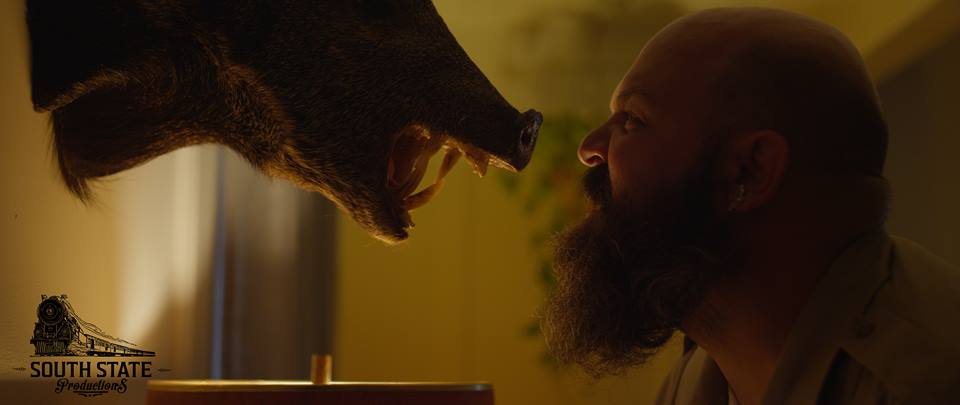
Kenn Woodard’s 20-minute film, “Hush,” is a strange, fascinating thriller-drama that is both hard to watch and fun to watch at the same time. It takes place in a small Southern town and begins with a news report of the arrival of a new Sheriff, Elkins (Billy Chase Goforth) before we are introduced to a couple (Warren McCullough and Cassie Self) in a remote rural area, as they reluctantly take in McCullough’s ne’er-do-well brother (Houston Nutt III). But that night, these two elements come together in surprising, dangerous ways. And unfortunately, that’s about all I can say about “Hush,” lest I give something away (a recurring problem I notice in reviewing some of these shorts, if not most of them). I will say that the film is brutal and effectively so, and the tone and spirit sucked me into a world gone mad. It feels like an efficiently exaggerated tale of how only the position of power (such as in politics) matters when greed is on the line. And I will also say this: the ending, in my opinion, is nothing short of brilliant. With a hint of commentary, an arresting look, an eerie calm, a despicable bad guy, and a good deal of violence, “Hush” is not a short I’ll forget anytime soon. And I certainly won’t forget the image of Elkins staring down an equally horrific trophy; that’s a brilliant shot. Shout-out to cinematographer Blake Elder.)

107595

Dim the Lights

Smith’s Verdict: ***

There’s usually at least one experimental film at every film festival, and Dwight Chalmers’ 10-minute short “Dim the Lights” is the one for LRFF2015. Shot with a Super 8 camera and presumably with hardly any editing whatsoever, “Dim the Lights” is a series of shots of locations that is the equivalent of videography for a nice road trip; it’s like one of those family vacation videos where what you shoot is what you have, with no editing. Minus the family. What we have instead is a feeling of nostalgia as we get numerous images of some of the most forgotten places on Route 66. Surprisingly, it works. It’s almost like a memorial to the Mother Road. Yes, the film can frustrate some by seeming a few minutes too long, but if you get into the spirit of it (like I did), it can turn out to be a nice experience.

11081195_821358944623010_384108672216536778_n

The Pop N’ Lock

Smith’s Verdict: ****

Ohh boy. There’s not much I can say about this one. “The Pop N’ Lock” is Jadon Barnes’ 2-minute short that is computer-animated in the same style as “Lego Movie” with CGI crossed with stop-motion animation…and featuring Lego characters. A Lego couple arrives home after a time of apparently hard partying and drinking, and the man wants to show his girlfriend he still has good dance moves. So he shows them off in comedic over-the-top fashion. That’s pretty much it—just like an awesome YouTube video you want to show your friends. There’s hardly another way to review it. The animation is fabulous, it’s fun to watch, it’s funny…and moving on!

Oh the film is online? Sweet! Check it out!

11174879_773244552794123_170114144763506389_n

Rapture Us

Smith’s Verdict: ***1/2

It’s a terrific premise: when a devout Christian is mistakenly left behind after the Rapture, he attempts to gain God’s attention by breaking the 10 Commandments. Even though I feel there could’ve been more done with it than what is delivered in Levi Agee’s 20-minute short film, “Rapture Us,” it’s still a very entertaining comedy with enough clever twists to keep it interesting. When you get past the notion that “God made a mistake” (it’s not supposed to be taken seriously), it’s an enjoyable romp.

It begins as a young man (played by Quinn Gasaway, Sacred Hearts, Holy Souls) awakens at night as he is levitated from his bed and stopped by the bedroom ceiling. When he is brought back down to the ground, he finds he is alone, with his family members and neighbors seemingly “raptured” into heaven. Further proof that he is now living in the End Times is the appearance of a new friend: an undead wisecracker (played by writer-director Agee) who appears from under Gasaway’s bed. He has a plan for them both to get God’s attention and be raptured, which is, of course, to break all the 10 Commandments.

A feature film could be crafted from this idea. But as is, “Rapture Us” is definitely worth recommending for its ambition, skill, and talent. It’s well-made, with sharp direction by Agee and striking cinematography by Bryan Stafford (The Dealer’s Tale), and also well-acted. Quinn Gasaway is a likable actor and a good lead here, and Levi Agee, as a performer, is freaking hilarious. I loved him as Bo in Cotton County Boys which played at the festival four years ago, and after meeting him since then and watching his interviews at this year’s festival, Agee himself is pretty much exactly like the characters he plays and that’s fine—no one can play Levi Agee like Levi Agee. And with “Rapture Us,” he also proves to be a good filmmaker.

the-ask

The Ask

Smith’s Verdict: ***1/2

In Ed Lowry’s 5-minute short, “The Ask,” a teenage girl (played by Lowry’s daughter) practicing a speech she plans to present to her parents, leading to the question in point. It’s a very well-edited piece, as her pitch is told to us in order but from different locations at different times, as if she’s been preparing to ask this for a long time. It’s well-handled and also quite funny. My only problem with the film is a slight nitpick: I feel the punchline could’ve been stronger. But it’s cute; I’ll let it slide. I like Ed Lowry’s work as an actor (he also received the Best Arkansas Performance award for his role in David Bogard’s “A Matter of Honor” at last year’s LRFF Awards), but like Levi Agee (and also Kenn Woodard, for that matter, for “Hush”), he also proves to be a capable filmmaker.

Contact

Smith’s Verdict: ***1/2

“We help people see the world more clearly.” A perfect slogan for the eye doctor if ever I heard one. Alexander Jeffrey’s 10-minute short film, “Contact,” centers on an eye doctor who believes he can not only make people see more clearly with eyeglasses and contact lenses but also literally give them fresh new outlooks on life and the world around them. Can he? He claims he truly can when he meets an old friend from high school, who is nearsighted. The doctor says his old friend could use some contacts, but after a falling-out due to a betrayal, the friend isn’t sure he can trust him. What he learns is something he won’t forget. The way the resolution comes along is very cleverly handled in an unpredictable way. And it also delivers a positive, powerful message of not taking things for granted and considering what you have rather than what you don’t. “Contact” is a well-done short.

Join me later for Block 3!

LRFF2015 Review: “Made In Arkansas” Shorts Block 1

18 May

Reviewed by Tanner Smith

Last week, the 2015 Little Rock Film Festival was underway and I attended six Made In Arkansas shorts blocks, for short films made in Arkansas (of course). Usually after the festival, I’ll write individual reviews for a select few. But this year, I decided to review all of them. And because a good deal of them are so short that they don’t give me enough material to work with unless I analyze each film as a whole (thus spoiling the entire film), I decided to write posts of each block, as I write short reviews describing what I thought of each short. The catch? I cannot review my own two short films (yes, I had two in the festival; I’ll point those out in later posts), nor can I review two shorts I worked on (even if it was documenting behind-the-scenes; it’s still being part of production). With that said, let’s start off with Block 1!

 Loser

Loser

Smith’s Verdict: ***

When I first saw one of the two central teenage characters in Andrew Lisle’s 8-minute short film, “Loser,” wearing a brown paper bag over his head (with two eye-holes and a smiley-face drawn on it), I thought it’d be one of those quirky indie comedy-dramas that do strange things for no reason other than to be “quirky,” with little to no development. And while it is a strange sight for one typical high-school boy to have a conversation with a boy with a bag over his head, I let it slide as the film went on. This is a bullied kid looking for ways to express himself, like almost every high-schooler. Yes, it’s a ridiculous sight, but I understood it as a trait that isn’t as uncommon as one might think. Director Andrew Lisle was in high school when he made this short (Har-ber High School to be exact); he gets the emotions of these kids down and thankfully understands the effects of not just bullying but also vengeance. This is something that has been addressed before, but it’s just as effective. And I think this may have to with Lisle’s limited resources and not trying to exaggerate anything (strange, given the bag), but its small scale adds on to it. “Loser” is an impressive short.


Forsaken

Smith’s Verdict: **1/2

“Forsaken” is a half-hour film written and directed by recent John Brown University graduate Krisha Mason. It’s about a young woman, named Janessa, who is suffering a tragic loss and trying to move on. And thanks to a controlling mother who is less helpful than she thinks she is, Janessa feels even more miserable. She meets a young man in her apartment building. With his help, she can keep her hope alive. There are sure signs of talent at work here. Mason’s direction is solid, I admire her for trying to tackle a difficult subject such as coping with loss, and the film looks nice, thanks to striking cinematography by Lauren Addington. But the script needed work in order for the film to be truly effective for me. While there were some strong scenes, such as a conversation between Janessa (well-played by Victoria Fox) and her friend, Tanner (Derek Duncan), and a moment in which she breaks down in a church, others, especially those involving Janessa’s appalling mother, feel artificial and forced. The film also brings forth a new plot twist that descends the film more melodramatic than it should be and what’s worse is that it seems all too convenient for the dramatic payoff. “Forsaken” isn’t a bad short film, but it could’ve been better.

10982236_10152944555799611_3913822612409342329_n

Monotony Broken

Smith’s Verdict: ****

J.C. Cocker’s 5-minute short “Monotony Broken” is about a young woman who is depressed at this point in her life and has a blissful fling with a stranger she meets in a laundromat. There isn’t a lot I can say about it without discussing the film in its entirety, which wouldn’t be fair unless the film was online (which it currently isn’t). So, for now, I’ll say that this is a beautiful short that works as art as well as film. There isn’t any dialogue said/heard in any of the five minutes of running time; it’s just simply mood. Thanks to Cocker’s direction, Matt Bates’ gloomy cinematography, and outstanding acting from Rachel Van Hampton as the woman and Kristof Waltermire as the stranger she meets, “Monotony Broken” is quite astounding.

11149241_10152713318661447_3823539604759372715_n

Stranger Than Paradise

Smith’s Verdict: ****

The full review can be found here. Excerpt: “[…] a beautiful film, proving that you can tell a moving story with just one minute of running time.”

11071746_1555888894700012_9056767350489994572_n

Rites

Smith’s Verdict: ***

At its surface, UCA student Cody Harris’ 15-minute film, “Rites,” is about a teenage girl who notices her father’s strange evening behavior and makes a shocking discovery. But at its core…

It’s hard to write a full review of “Rites” without analyzing the ending (or at least, attempting to analyze the ending) because it delivers a shocking revelation that goes into the question (I believe) the film was asking itself, which is, “Does anyone have a right to impose their will on anyone due to their religious beliefs?” How far does that go? Thinking more about the ending, which I won’t give away here, it’s a very chilling thought that raises quite a few questions and makes you ponder what it was really about. The more I thought about it, the more disturbing the whole film seemed.

When the film is posted online, I’ll publish a new, analytical review of the film with spoilers and the attached film. But for now, I’ll say that it is an effective, powerful short; probably more powerful than the “Verdict” makes it out to be. The setup is a little clumsy in its execution, but the acting from Kimberlyn Fiits, Tom Kagy, Johnnie Brannon, and Pammi Fabert is consistently good, the cinematography by Jake Lurvey is well-done, and the film’s ultimate payoff is unsettling and thought-provoking.

10696417_1569825666581038_4661510087930428255_n

The Dealer’s Tale

Smith’s Verdict: ****

Justin Nickels’ 15-minute film, “The Dealer’s Tale,” is a modern retelling of Geoffrey Chaucer’s “The Pardoner’s Tale,” which was about men searching for Death before they are led to treasure by a mysterious old man who claims to know where he is. They stay with it, as things go wrong. It’s one of the great moral tales in literature. In “The Dealer’s Tale,” quite possibly one of the best short films in Arkansas, two hit men, Miller (Jason Thompson) and Reeve (Jason Willey) are searching for Death after performing a new hit, encounter a mysterious little boy (Taj Van Tassel, effectively low-key) who witnesses them dumping the body, and the boy leads them to a hidden treasure (in this case, cocaine) which the men decide to guard for a while until, of course, something goes horribly wrong as tension amongst the men gets the better of them. The settings of both the story and this short film are different, but the structure, spirit and tone are the same. They both display how greed is “the root of all evil” and can turn supposed-friends against each other.

“The Dealer’s Tale” starts off amusing with Tarantino-esque dialogue exchanges between the two men driving down city streets, grisly hints as to their deeds, the introduction of this strange, innocent child walking through quiet alleyways and under bridges, and then the inevitable betrayal leading to an incredible final act. The last few minutes of “The Dealer’s Tale” is quiet and haunting and so well-done that I’ll never forget it. Without giving it away (though, really, it’s an old story), it captures the feeling of contemplation not just with words but with mood in ways that some films can’t or won’t take the risk at attempting. Justin Nickels is a hell of a filmmaker.

Now I’ll take a moment to discuss the acting from the two principal actors. Jason Thompson (who was excellent in the Arkansas feature “45 RPM” and shorts such as “Antiquities”) and Jason Willey (funny and sincere in shorts such as “Diamond John” and “Stranger Than Paradise”) are perfect together. With Thompson’s hotheadedness and Willey’s more reserved manner, these two make a great, efficient comic duo. They worked together in Nickels’ previous short, “Strangers” (screened at last year’s LRFF), and shared a hilarious scene together in “Antiquities” (albeit portraying very different personalities in that one); they’re fun to watch together. They exhibit appealing chemistry and their timing is spot-on. By themselves, they’re good too, particularly Thompson who is part of the reason the final act works so well.

“The Dealer’s Tale” is very well-made, well-acted, and gloriously-shot (by Bryan Stafford of “45 RPM” and the previously-reviewed “The Sowers”). I look forward to seeing Justin Nickels’ next project (and I’d be lying if I said I didn’t wish Thompson and Willey teamed up again).

Join me later for Block 2!

The Hunger Games: Mockingjay–Part 1 (2014)

21 Nov

The_Hunger_Games_Mockingjay_Part_1

Smith’s Verdict: ***
Reviewed by Tanner Smith

The best is yet to come, and until then, we have a lead-in that ends with To Be Continued.” “The Hunger Games,” based on the Suzanne Collins novels, is the third popular book-to-film-adaptation franchise (following “Harry Potter” and “Twilight”) to split its final story in two films. I suppose they do this because otherwise, they’d be adapting a long novel into a 4+-hour movie that they’re afraid no one would want to sit through. But let’s be honest—they mainly do this to make the studios more money.

However, my problem with this way of building up the final chapter is that the “part 1” leaves an incomplete film that is hard to criticize except to say it’s not a complete film. I’m rating “Mockingjay Part 1” three stars, with it amounting to an optimistic “incomplete” status. It’s just a film leading us into “Part 2,” which will come this summer, and as it is, it’s worthwhile for audiences and fans of the original source material. It moves the story forward with interesting developments, particularly with the character arcs, and it just builds up to what I hope will be a strong film for “Part 2.”

“Mockingjay Part 1” is the weakest film in the series because of this, though my opinion could change once I see “Part 2” and view both parts as a whole, in which case I may change my rating.

Jennifer Lawrence again returns as Katniss Everdeen, who along with Finnick (Sam Claflin) has been rescued from the Quarter Quell by a band of rebels who live in a secret military bunker known as District 13, run by President Alma Coin (Julianne Moore). Katniss learns her home district has been bombed by order of President Snow (Donald Sutherland) and that her partner and love interest, Peeta (Josh Hutcherson), is held by the Capitol and ordered to warn the rebels on TV to stand down and stop fighting or else worse things will happen to Panem. President Coin decides to use this as reason for Katniss for propaganda reasons and have a TV crew document her reasons for everyone to stand up and fight for the rebellion.

One major problem I have with this entry in the franchise is that Katniss is mostly an overblown “reluctant heroine” type. She’s a little too unwilling to participate and is kind of an emotional wreck, even when seeing firsthand how coldblooded Snow can be. It’s especially disappointing because the previous film, “Catching Fire,” ended with a haunting visual of Katniss staring at the camera, looking angry and vengeful after going through so much hell. It was an ending that got us (or at least, those who haven’t read the final Hunger Games book) hyped for the next film to see what Katniss would do to help the rebels in taking down this corrupt dictatorship led by the despicable President Snow. And then this film starts and the first shot is of her crying. She spends most of the film lethargic, withdrawn, and often worried. I realize the best way to characterize a heroine is to make her more human and let us see/feel what she’s feeling, but let’s also see more of the Katniss we thought we were going to get.

But to the film’s credit, she has reason to be this way. For this new entry is easily the darkest in the franchise (“Empire Strikes Back” territory, if you will). There are hardly any soft moments, the film focuses on the consequences of actions (hell, President Snow even orders for the destruction of a building full of people, including children, to prove a point that’s pro-Capitol), and the ending provides a shocking twist centered on one of the major characters. It does make me curious about how “Part 2” will turn out to be.

Something I hope continues with this series is the way the love triangle between Katniss, Peeta, and Gale (Liam Hemsworth), who shows up for more moments of protection and broodiness, is downplayed, because God knows I’m tired of love triangles in these young-adult stories. Though, even so, it’s the least interesting aspect of the series for me because I really don’t see Gale as anything other than a buddy-type; he hardly has any personality or development as anyone else. And that’s another problem with the film—Katniss and Peeta are separated for a good chunk of the story, leaving plenty of moments involving Katniss and Gale; and yet, when they kiss, there’s still hardly any emotion because there still isn’t much we know about Gale.

“Mockingjay Part 2” has the potential to be great, and “Mockingjay Part 1” is a worthy lead-in in that case. It is worth recommending for a big screen, particularly for the superb production design, first-rate effects, and a suspenseful raid sequence late in the film. But a part of me wants to say wait for DVD and watch it around the time “Part 2” is released. That might help give a more complete experience.

Paradigm (Short FIlm)

7 Nov

1000507_10100848049489027_911278862_n

Smith’s Verdict: ***

Reviewed by Tanner Smith

There are two expressions often carried around when someone compared to his/her parent(s), and each has an opposite meaning—“You are not your parents” and “You’ve become like your parents.” When parents make mistakes, kids tend to make an inner sacred pact that they won’t make similar mistakes. Some make it through, following that pact while escaping childhood trauma. Others aren’t so lucky, even as they try; haunting ghosts from the past tend to get in the way of rational thought, and they find themselves doing almost exactly what they swore they wouldn’t do. Writer-director Jess Carson’s 26-minute short film “Paradigm” shows an example of the latter possibility. It begins with happy newlyweds and ends with their marriage fallen apart, as they make unforgivable choices that can be traced back to hurtful events from one’s childhood. The husband, Derrick (Kyle Wigginton), came from a home of abuse, due to his alcoholic father, Maverick (Scott McEntire) who would abuse him and his mother, Anna (Casondra Witham). By the end of the film, Derrick will have inherited similar traits and behaviors, and his wife, Jocelyn (Mindy Van Kuren), will take it no more.

The film begins with a tender moment in which Derrick and Jocelyn refer to each other playfully as Mr. and Mrs. Peters before Derrick reveals his fear of becoming like his cruel father and hurting her. She assures him that it won’t happen, but as time goes on, the Honeymoon stage ends and things start to get worse when they find they can’t have children. This puts Derrick in a bitter mood. Five months pass, and we see them barely relating to each other, as Derrick starts a bad habit of drinking and they start having arguments. During one such argument, Derrick hits her…

The short mostly takes place inside Derrick and Jocelyn’s house, showing us how their marriage transitions into a disaster. And the film doesn’t shy away from some pretty tough material. By the end of the film, I was actually kind of depressed (and the Sheldon Kopp quote shown before the credits didn’t help much either).

Flashbacks that show Derrick’s father’s behavior are effectively handled, as they intersect with situations in the present that mirror the present. There are times when Derrick practically repeats his father’s harsh words word for word to Jocelyn. It’s a clever move.

“Paradigm” is more of an actor’s film, so a lot rides on the performances. Mindy Van Kuren does a great job playing a suffering woman who wonders when the line will be drawn in her relationship. Scott McEntire, who has acted in other shorts I’ve reviewed (such as “Stuck” and “A Matter of Honor”), turns in some of his best work as the father. But I am of two minds about Kyle Wigginton’s performance as Derrick. On the one hand, I see it as a poor acting job. His shouting moments seem a little off to me; he sounds like he’s forcing the anger. But on the other hand, Derrick is supposed to come across as pathetic, so maybe it was Wigginton’s choice to play it like this. I’ve seen him do well in other shorts, like “Blood Brothers,” so I wouldn’t doubt it.

I like “Paradigm,” but I think it could’ve been better with tighter editing. Some scenes seem a little long and even make the film somewhat repetitive. But I guess that was the point—to show the slow proceedings of this relationship in a way that we can get why/how it came to this, and to also show as it gets worse. In that respect, I shouldn’t complain too much about it. “Paradigm” is an effective short that worked for me.

NOTE: The film can be seen here: http://jessvcarson.wix.com/10th-dimension-pro#!paradigm/c20as

Jack (revised review)

28 Sep

427

Smith’s Verdict: ***
Reviewed by Tanner Smith

This is a first for “Smith’s Verdict.” I’ve changed my mind about certain movies over time, but this is the first time I’ve had to revise a negative review and make it a positive one. And it’s not a movie I expected to change my mind about either—Francis Ford Coppola’s “Jack.” But recently, I was able to rent the DVD for free at a local library in Conway, Arkansas, and I watched it for the parts I liked (I did acknowledge, in the original review, parts I liked about it), and then something strange happened: I found myself watching the whole thing, from beginning to end…then I watched it again…and then a third time all the way through. And that’s when I realized—there was more for me to like about it than I thought, enough for me to write this now-positive review of a movie that I know a lot of people hate and that even I took some shots at in the other review.

“Jack” is about a 10-year-old kid whose growth disorder causes him to appear four times his actual age, causing him to look about 40. Played by Robin Williams, Jack Powell has led a very sheltered life by his loving parents, especially his mother (played very well by Diane Lane), kept mostly out of society and out of public school. But his private tutor, Mr. Woodruff (Bill Cosby in a nice small role), suggests that maybe he’s ready to join the 5th grade and be with other kids his age. Reluctantly, the parents agree, and so Jack begins school, where of course he is seen as a freak because of his adult appearance who towers over all the other kids, is hairier than most of the kids’ fathers, and breaks his desk on his first day in class. But some cool 10-year-olds realize they can use Jack to their advantage in a schoolyard game of basketball, and they also discover they can use him to fool parents into thinking he’s the school principal. And soon enough, he’s invited to join their treehouse club because he looks old enough to buy them Penthouse magazine.

Yes, “Jack” was directed by Francis Ford Coppola, and maybe that’s what caused people to be distracted while watching this movie, because they expected something more than this. It’s like Roger Ebert said in his review of Martin Scorsese’s “The Color of Money”—“If this movie had been directed by someone else, I might have thought differently about it because I might not have expected so much.” It’s like comparing it to directors’ previous work instead of seeing it as a movie even of itself. I think Coppola just liked making any kind of movie—it’s not like he wasn’t allowed to make a comedy-drama for Disney, starring Robin Williams. “Jack” is well-directed, and Coppola keeps his actors in check (good for comedic actors such as Williams, Cosby, and Fran Drescher), and the film is well-shot with a few Coppola trademarks (fast-moving clouds, POV shots, and a couple others I may have missed). It just happens to be in a sentimental comedy-drama, but I think it’s a good one. “Jack” does a very good job of balancing comedy and drama, as the second half of this film confronts Jack’s mortality, as it should; first you have fun while setting up characters and make us like them, and then you give us the inevitable by easing us into it.

But the first half has its moments of sadness as well, such as when Jack is starting school and, at one point, accidentally breaks his desk as he sits in it. I know a lot of people saw this as a predictable joke, but I don’t think it was necessarily intended as a joke. In context, it’s more upsetting than it is funny, because everyone is laughing at him, not with him. Jack’s status as an outcast only grows until he’s ultimately welcomed on the basketball court by the other boys, and then he has friends and feels like he’s living life the way he wanted to. When the film reaches the back half, Jack has realized how short his life is and must learn to accept it so he can live like everyone else. Nowhere is that clearer than in the ending of the film in which Jack has graduated high school, now looks like an old man, and gives a speech about how he is ready to accept his fate now he has led a full life and acknowledges everyone else to do the same. “Jack” doesn’t take the easy way out; sure, we don’t see him die, but we know he doesn’t have that much longer to live after the movie’s story is finished. We can accept it because he did accept it, and that makes for a touching, heartbreaking resolution by itself.

The film is also very well cast, thanks to Coppola’s usual casting director, Fred Roos (how often do you see a mention of a casting director in a review?). Robin Williams is brilliantly cast as Jack. He’s a master of body language and perfectly captures what it’s like to be a 10-year-old in a 40-year-old man’s body. Watch his hands, watch his head movements, notice his vocal inflections, and you can see Williams really working it here, as if he channeled all the way back to when he was 10. It’s a performance up there with Tom Hanks in “Big” or Judge Reinhold in “Vice Versa.” There are a few instances where he does step out of character and into Williams’ usual adult standup persona, and it can be a little distracting, but mostly he’s excellent in the role.

The supporting cast is pretty solid; I admire the acting in this film. Diane Lane has a difficult role to pull off, as the loving, concerned mother of a boy she knows people don’t accept right away. She’s not a bad person, and she knows some of the things she does isn’t fair; everything she does is for the wellbeing of her son. Bill Cosby is suitably soft-spoken as the tutor and gives a well-written speech to Jack, describing him as “a shooting star.” “You’re a shooting star amongst ordinary stars,” he says. “A shooting star passes quickly, but while it’s here, it’s the most beautiful thing you’ll ever want to see.” Brian Kerwin, as Jack’s dad, doesn’t have as many good moments as Lane’s mother character does, but he does solid work as well. Jennifer Lopez is very good as Jack’s caring teacher. The actors playing the kids are all excellent, especially Adam Zolotin as Jack’s best friend Louie and Todd Bosley as a geeky kid who steals a few scenes here or there. And then there’s Fran Drescher as Louie’s trampy mother who makes her moves on Jack without realizing how old he really is (and I’m guessing she never does)…okay, so I still don’t think this subplot works very well, but oddly enough, I don’t mind her as much as I did before. She’s not that obnoxious here.

Now, I’m going to take a moment to look through my original, negative review and go through my criticisms one by one and see if I can respond to them now. Let’s see…I can now call it “an engaging drama” which I couldn’t call it before…I don’t think it’s “one of the clumsiest lost opportunities I’ve ever seen” as it does a lot with both comedy and drama…”The low point of the movie is a subplot involving Louie’s trampy mother…[the scene in which she meets Jack who poses as the principal] is uncomfortable with the misunderstandings…[the bar sequence] doesn’t have anything to do with the rest of the movie. Take it (and Fran Drescher) out of the movie, and you wouldn’t miss a thing.” Well, I’ve already said I don’t Fran Drescher as much as I did before, and now I think I’ll defend the “principal” scene on the grounds that I think it works okay because Williams still plays it like a 10-year-old kid and it’s mildly amusing, and I’ll defend the bar scene in the sense of Jack feeling like he doesn’t belong in the adult world after he believes he doesn’t belong in the kid world either. But come on, did they really have to throw in a bar fight? And maybe I could’ve done without the whole thing about Drescher hitting on Jack and never finding out who he really is.

Then there’s the scene in which Jack asks out his teacher to a school dance and she has to turn him down. That was the part I criticized the most because I didn’t know how to feel. Well…I think it works fine now. It’s handled delicately and Jennifer Lopez plays it in an endearing manner, and it’s a rather heartbreaking moment.

Oh jeez, sometimes I can’t believe my own writing. Now I found the part in the original review where I wish “Jack” focused on Jack’s mortality. I just went into two-paragraph detail about how the film handles Jack’s mortality well enough that it’s effective and satisfying, so it’s best to say I didn’t pay enough attention to the movie to begin with.

I can’t dislike “Jack” anymore. I think the film is cute. Sometimes it’s funny, other times it’s sad, other times it’s endearing, and only a few times did I find it annoying. “Jack” isn’t a great movie, and maybe it could’ve benefitted from a few scenes in which the ones learn more about girls their own age after reading Penthouse magazine and being curious about the opposite sex or, if writers James DeMonaco and Gary Nadeau were really risky, Jack could’ve had a relationship with a girl his age (ew, that would mean Robin Williams and a pre-teenage actress have to play a 5th-grade couple; never mind). But I do think “Jack,” as it is, is quite good. It’s good-natured, it has effective moments of drama, it’s acted wonderfully, it’s funny, and I’m now glad I have more than a few good scenes to enjoy next time I watch it. And thus presents the last time Smith’s Verdict shall be taken seriously.

Wide Awake (1998)

13 Sep

MV5BMTcxODgxOTkyNV5BMl5BanBnXkFtZTcwNjk3NDU0NQ@@._V1_SX640_SY720_

Smith’s Verdict: ***

Reviewed by Tanner Smith

Is there a God? If so, why do so many bad things happen to good people?

Those are the questions that always come up from skeptics who either test the concept of organized religion or simply want answers. In the case of 10-year-old Catholic student Joshua A. Beal in the comedy-drama “Wide Awake,” he just wants to know if his late grandfather, who died of bone marrow cancer, is okay. He wants to know if Heaven, the afterlife, and above all, God, are for real.

And he’s serious about it too. Joshua (played by Joseph Cross) is a smart kid who spends his entire fifth-grade year at a Catholic boys’ school on a mission to find truth in what he believes and what he wants to believe. Does he find what he’s looking for? Well, that’s a little difficult to answer. And to the movie’s credit, it’s meant to be difficult to find answers. I don’t think it’s as interested in finding true answers as it is in coping with death. By the end of the film, Joshua has ultimately accepted the loss of his grandfather (played in flashbacks by Robert Loggia in a wonderful performance) and he learns that sometimes things happen and you don’t know why, and it helps to have faith that in the end, things will be all right. That applies in life—you have to find your own proof within yourself that there is someone out there watching out for us and waiting to take care of us after we die. You can’t see it, but you can feel it.

When I was a kid, I liked “Wide Awake.” As I got older, I had a mixed reaction to it mainly because of moments that since overwrought with sentimentality. Watching it now at 22, I got more into the quieter moments that are very effective, and there’s a nice sense of satire in the ways this kid narrates the everyday, mundane things in his school; these were moments that kept me from rating it less than three stars. The overdramatic parts are still there and are admittedly still a little annoying, and there are parts that were supposed to be poignant that seem kind of weird (for example, when Joshua goes into the toy store and admits to his mother that he doesn’t feel the same as he did when he was younger, his speech not only sounds scripted; it sounds like an adult looking back rather than a kid having a “revelization,” as the kid describes it). And then it got to the ending. Without giving it away, it nearly brought the film to a two-and-a-half-star mixed review. It gives the kid an answer to one or two of the questions he’s been asking, but it’s not subtle and a little too much to buy.

But as you notice in the rating I gave it, I couldn’t bring myself to give “Wide Awake” less than a positive review, and that’s because those good moments are the ones that stick out to me, and there’s a good bunch of them that give me reason to recommend the film. It’s overall a nice mixture of humor and drama (both heavy and light).

The characters are likable and the actors playing them do solid jobs. Joseph Cross is an appealing hero, Denis Leary and Dana Delany do good jobs as his parents, Robert Loggia is excellent as his grandfather, the child actors are convincing (especially Timothy Reifsnyder as Joshua’s best friend Dave), and surprisingly, Rosie O’Donnell, as a good-hearted, wisecracking nun who also loves sports (and keeps basketball & football shots next to paintings of Jesus and the Cross in the classroom), gives a terrific performance. I actually kind of wish there was more of her character in the film (the DVD cover suggests there is, but don’t be fooled—if you are, don’t worry; Rosie O’Donnell is not obnoxious in this movie).

Oh yeah, I forgot to mention this was written and directed by M. Night Shyamalan. It was his second film after 1992’s “Praying with Anger,” which I haven’t seen, and after this, he struck gold with the 1999 psychological thriller “The Sixth Sense.” If you follow Shyamalan’s career lately, with duds such as “The Happening,” “The Last Airbender,” and “After Earth,” you probably have a negative idea of this film already. But I thought he did a good job of directing his cast, and he was smart to write this script with gentleness and light humor rather than taking cheap shots at the Catholic school system or forcing us to cry at the more dramatic stuff. Some of his trademarks are present, like having its setting in Philadelphia and revealing somewhat of a twist at the end (which, as I said, doesn’t work at all), but that’s it, so don’t make fun of Shyamalan or this film before seeing it. I recommend “Wide Awake.”

Muppets Most Wanted (2014)

13 Aug

images

Smith’s Verdict: ***
Reviewed by Tanner Smith

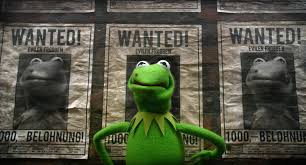
“Muppets Most Wanted” is the latest in the re-invigorated Muppet franchise, following 2011’s “The Muppets” which welcomed Kermit, Miss Piggy, Fonzie, and others back after years in limbo, and I wouldn’t mind getting more of these every few years or so. “Muppets Most Wanted” is more enjoyable than the 2011 film and about as charming as that and the best Muppet movies. It’s cute, funny, and giddily engaging; fun for kids and adults, particularly those who share fond nostalgia for the Muppets.

“Muppets Most Wanted” has what you expect from a Muppet movie—the Muppets, songs, a quick pace, visual gags, suitable humor, and lots of brief cameos. The story is a take on the spy-movie genre and the mistaken-identity concept, as it turns out there’s a criminal on the loose who resembles Kermit the Frog in every way except for a mole on his cheek. This is Constantine, who has escaped from a maximum security Gulag and has a plan in mind. His plan is to kidnap Kermit, sticks a fake mole on his cheek to remove his identity, and replaces him as Kermit is thrown into the Gulag. Constantine, disguised as Kermit, fools the other Muppets (barely) as they embark on their world tour. The world tour is a ruse for Constantine and his sidekick Dominic Badguy (Ricky Gervais), who acts as the Muppets’ manager, to steal as many valuable objects as possible before reaching to carry out a plan to steal England’s Crown Jewels.

Meanwhile, Kermit is locked inside the Gulag with no way of escape, as it is run by a crazed stage-obsessed dominatrix (played by Tina Fey, sporting a Russian accent) who winds up falling in love with Kermit…weird. Somehow he has to either break out of prison or patiently wait for his friends to figure out what’s happened and come and save him.

The story for “Muppets Most Wanted” is the least interesting element, but I guess you don’t see these movies for the stories because they’re equally unexceptional. This one doesn’t even make much sense (for example, why would the bad guy use lots of money to bribe newspaper reporters to write positive reviews for the shows while he’s also stealing lots of money and valuables during the shows?). What makes it fun to watch is the quick humor, which is kid-friendly but adults can laugh at it too. There are funny lines, funny visuals, funny use of cameos (for example, who doesn’t love to watch Danny Trejo, as a rough prisoner, sing a solo in “A Chorus Line?”), and a very funny subplot involving Sam Eagle’s CIA agent teaming up with Ty Burrell’s Pink Panther-like French detective and going through the usual buddy-movie situations. Watching these two together makes me laugh each time they showed up again. I hope they return together again in the next Muppet film.

I know that may be vague in explaining the comedic elements in this review, but one of the downsides to reviewing a comedy is omitting references to what’s funny, so that audiences can see and laugh for themselves. I can’t even go into the musical numbers, except to say that they’re purposefully overdone for us to laugh at.

It’s good to see these familiar faces again, and the Muppet performers do great jobs at supplying voiceover work for them (though I’m still a little thrown off when I hear the new voice given to Miss Piggy). They make these likable, appealing, funny puppets come to life. And speaking of which, it’s about time Kermit stands up to Miss Piggy who is too quick to be in love with him. (You’ll see.)

Ricky Gervais gets the least funny material to work with, despite one funny musical number in which he dances while acknowledging he’s only a sidekick to a frog. Ty Burrell is funny, as I said. Tina Fey, as the crazed Gulag warden, is freaking hilarious! I could listen to her yell with that over-the-top Russian accent for hours.

“Muppets Most Wanted” is as good as the other good Muppet movies. There’s enough to laugh at, even more to smile at, and it makes for an enjoyable, cute comedy to go see.