Archive | Three Stars *** RSS feed for this section

The Dirties (2013)

19 Sep

600x338

Smith’s Verdict: ***

Reviewed by Tanner Smith

In “The Dirties,” film-buff/high-school student Matt has been bullied very often, to the point where he decides to turn his plight into art. He and his best (and only) friend, a fellow outcast named Owen, secretly record themselves being bullied, as part of Matt’s revenge-fantasy project for film-class, in which he and Owen act out the murders of their tormentors.

And not only that, but Matt insists that he and Owen are filmed at all times because he has something bigger planned in mind for his next project. He even buys a set of lavalieres so he has no issues with audio. For his next big project, he plans to make a companion piece to the previous film, in which he films himself actually bringing a gun to school and shooting the bullies, because since he suffered for his art, they apparently might as well do the same.

If you’re wondering right away, yes, “The Dirties” is technically another “found-footage” movie, as it’s shown through the camera’s (or multiple cameras’) point(s) of view. Oddly though, the people filming are hardly ever identified. Who is filming all of this? We never know. For all we know, it could more another student or two, or it could be a documentary crew who gave the kids expensive lavalieres and wanted to make a documentary about bullying and being bullied. Then again, maybe the latter isn’t true, since Matt seems to have edited the “film” the way he wanted.

With that strange tidbit aside, “The Dirties” is actually a well-put-together, compelling portrait of disaffected youth and a descent into sociopathic behavior. That a film geek is the main character is even more interesting. Matt (well-played by the writer-director himself, Matt Johnson) loves film, he loves to spew movie quotes, and he loves to play with the camera when he’s filmed, like his life is a movie because it’s better than accepting a normal teenage life in a school environment where he’s picked on constantly. And we hardly even see his parents, so it seems like he has very little support from anyone else other than Owen (Owen Williams), his only friend. And Owen is at the point in his life where he’d rather do something else, like make new friends and get a girlfriend, and he’s slowly but surely breaking away from Matt. The biggest turning point in Owen’s life is when Matt is too obsessed with his art, never talks to Owen like a real person anymore (and instead, as a “character”), and even scarier, actually seems serious about performing a school shooting. Earlier, he may have just assumed Matt was only kidding, but when he sees that Matt has blueprints of the school (and this is after they’ve had target practice, using real guns), there’s hardly a doubt anymore. These are real kids with real issues—issues of being bullied, isolation, moving on, drifting apart, and even some points, being bullies to each other and eventually to their own bullies.

School shootings are such a risky topic to focus on in America, especially in film, and “The Dirties” may be the first one I’ve seen that really dives into what can cause such a horrific event. When the promising sociopath feels like a real person, instead of a standard, cold, distant, ruthless, cold-hearted killer, that makes it overall tragic; when a funny, artistic, even empathetic guy is also bullied and more that can cause him to take drastic measures for revenge.

Even more tragic is that he’s a high-school teenager who has very little to focus on other than his art. And everyone else is slow to catch on that even the original project was an outlet for his frustration; even the teacher doesn’t catch on, because his only concern is the violence and profanity that he feels needs to be deleted. As for the students, when they see the finished first project early on, they’re not concerned at all; they’re just laughing and mocking Matt and Owen.

The actual shooting occurs in the last few minutes of the movie, and thankfully, Johnson doesn’t dwell on that as much as Matt’s dangerous status and complete loss of innocence, making himself even more of an outcast. It does this by saying little and even doing little. It focuses on the right powerful moment to tell us this as it becomes clear. This is no game anymore. In fact, it never was.

The riskiest thing about “The Dirties” and what I think it deserves high points for is it portrays Matt as a real kid. I’ve known people like him and Owen. At some point, we were all like them, in a way. So, when they get pushed to the limit, we can see why one of them could be moved to retaliate. And there may even be more that we’re just not seeing.

Before anyone goes crazy, let me emphasize that I do not think committing horrific violent acts is acceptable or condonable. And that’s certainly not what’s supposed to be taken from “The Dirties”—those who do take that from this completely miss the point Johnson was trying to make. Also, the movie doesn’t provide us with many clear answers…but it does raise more questions about what causes something like this to happen.
Whiz Quiz (Short Film)

16 Sep

Smith’s Verdict: ***

Reviewed by Tanner Smith

It is almost ridiculously easy to criticize the UCA-produced short film “Whiz Quiz.” It’s vulgar, crude, raunchy, stupid, disgusting, over-the-top, ridiculous, and more. But hey, that’s the film’s purpose. I just pretty much described the film in those numerous adjectives. So what does it matter? Does it work for you? Did it work for me?

I recall seeing “Whiz Quiz” at a screening in Hot Springs. The audience was packed and as far as I could tell, a good majority of it was laughing out loud and exclaiming in fear and disgust (and also delight). But there was still a minority of audience members who were grimacing in a different way. And I recall a story from the film’s lead actor, Tres Wilson, that very evening. He said someone came up to him, asked if he was in the film, leaned forward, and said “Garbage,” in reference to the film.

Needless to say, a film like “Whiz Quiz” is not going to appeal to everybody. That’s because it’s a comedy. Humor is subjective—you either laugh or you don’t. And I’ll admit, after seeing it for the first time, I felt the need to not only take a shower but also gargle some mouthwash. But the second time around, I did laugh more and I wondered if it truly was the purpose of the film to gross people out.

The film is about three perpetually stoned man-children (played by Wilson, Colin Bennett, and Ben Gibson) trying to figure out how to quickly pass a drug test for Wilson’s new job. Let me give you an example of the film’s dirty humor—the boys come to a public school and attempt to collect urine in a bathroom; a janitor (Frank O. Butler) comes in and assumes the boys are there for a custodial job; he locks the door, lets his pants down, and attempts to “initiate” the scared boys, who distract him (while he’s blindfolded) with a dildo and some hand sanitizer (don’t ask). The whole sequence is generally uncomfortable, I’ll admit, but the shots used and the slow pacing (which raises suspense) made me appreciate what the filmmakers, including writer-director Brock Isbell, were trying to get away with and I did laugh as much as I groaned. It’s almost kind of admirable. Another example is when Wilson attempts to detoxify his body and he vomits in the street. One vomit gag is more than enough, but here, it’s dragged out for over a minute. Anyone can be more disgusted than amused at this, but again, anyone could also admire the slow pacing and the way it’s put together, such as when you think he’s stopped and he hasn’t.

The biggest laughs from me each came from Austin Brown as a narcoleptic drug dealer. Let’s just say he falls asleep at the most perfect times in this film.

Now, am I just saying all of this because I’m impressed that a student film like this went the extra mile, in comparison to most UCA-produced shorts I’ve seen? Probably. I will say that it took guts on Isbell’s part to make this film and, in my opinion, to do it right.

But let’s get to the answer that I built up for myself from the start. Did it work for me? I laughed, I cried, I recoiled, I grimaced, and I winced. So yes, it did work for me and I’m giving it a positive review simply for challenging me to consider what exactly I find funny.

Like Father, Like Son (Short Film)

16 Sep

Smith’s Verdict: ***

Reviewed by Tanner Smith

It’s a little difficult to classify Donavon Thompson’s 4-minute short, “Like Father, Like Son.” Is it a comedy, a drama, an action film, a thriller, or all of the above? I’m not sure, but I think any film that uses finger-guns as effective weapons is doing something original.

Made as a UCA film-class project before Thompson’s undergraduate thesis film, ‘Twas the Night of the Krampus, “Like Father, Like Son” starts out as a crime thriller, with a cop (played by Thompson) angrily interrogating a suspect of his wife’s kidnapping. He and his partner (Matt Mitchell, the elf from “Krampus”) track down the other kidnappers and prepare to take them down by…extending their thumbs & forefingers and using them as guns; a cute joke.

This is a project I could tell Thompson had a fun time making, and it shows here that he’s a guy who truly loves movies. He pays homage to trademark Tarantino shots and “Lethal Weapon” (which he stated in an interview is his favorite film), among others, and it’s interesting, especially after seeing “Krampus,” to see the ambition that Thompson had as a student filmmaker about a year before putting his skills and movie-buff knowledge to somewhat greater use. I liked “Like Father, Like Son”; it’s fun, it’s quick, and the ending, though almost a little too sweet for the material, is nevertheless effective.

Unfriended (2015)

11 Aug

fullwidth.39024229

Smith’s Verdict: ***

Reviewed by Tanner Smith

If you’re going to make a teen slasher film (a la Friday the 13th) without well-developed or even likable main characters, you have to have A) good commentary with an underlying theme & message, B) a clever gimmick, or C) both. “Unfriended” is a horror film that has both. The characters in distress are mostly terrible people and even those who are seen in the beginning as somewhat-decent human beings have had their unforgivable sins exposed by the time the film is over.

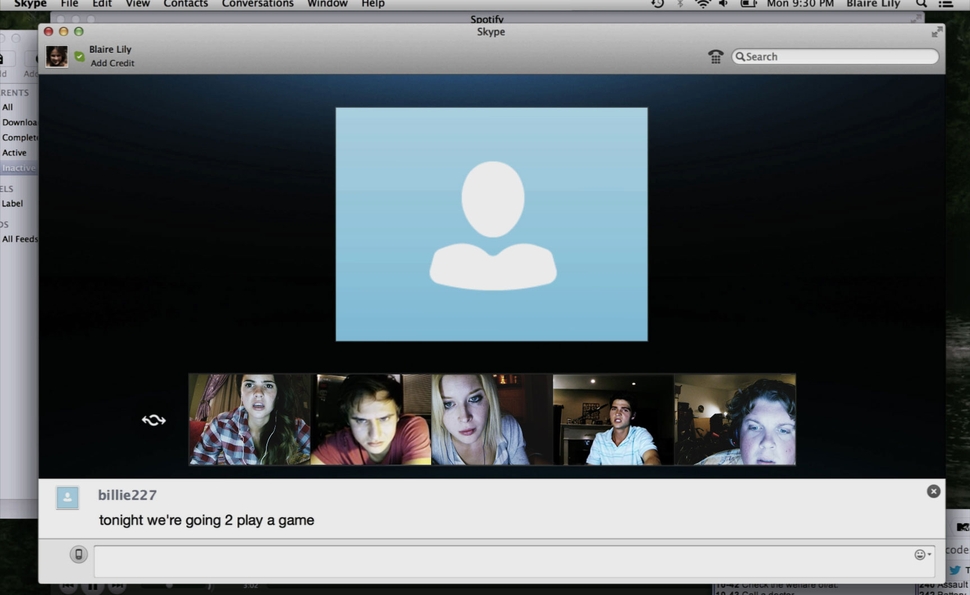
“Unfriended” has received some scathing reviews from critics because the film leans us toward anticipating these characters’ deaths, and they’ve also criticized the film’s central gimmick, which is that the whole thing takes place from the laptop screen of one of our main characters, Blaire (Shelley Hennig), who converses with her friends on Skype. We see her video-chat as well as multitask online. The film is presented in real time and the story is told from her laptop screen, and I can understand if you can’t get past this gimmick, which at times does get distracting. I was able to get past it and accept what the story would throw at me, which, as it turns out, was more than I expected. But before I get into that, let’s talk about the setup:

A high-school student named Laura Barns (Heather Sossaman) killed herself after a humiliating video of which she was the subject went viral. (Someone recorded the suicide and THAT video also went viral.) One year later, six of her classmates, including Blaire, are chatting together on Skype. But there seems to be someone joining them whose identity isn’t revealed. They can’t delete or hang up on the anonymous visitor and they assume it’s a glitch at first…until it starts messaging them. And not only that…but it’s using Laura’s account. Things get even stranger before they get dangerous, as the visitor claims to be Laura and wants to play a deadly game while also exposing dark secrets. It becomes clear that this is not a normal hacker and it may very well be the ghost of Laura seeking revenge on those who bullied her.

I saw “Unfriended” not only as a horror film, though it is very good at that by playing with found-footage gimmicks and cabin-in-the-woods story clichés, but also as a big punch in the face to bullies, especially cyberbullies. Many people, especially teens sadly, want attention and the Internet is the best way to do that and also to anonymously (though fake accounts) spread hatred and taunts. Even when there’s an anti-cyberbullying video online, which usually features a sad person expressing himself or herself, there are always going to be trolls commenting harshly and taunting the subject even more. But acting that way can lead to consequences on both the bully and the victim. It’s established early in the film that Laura killed herself because of the hurtful comments she received after the humiliating video was posted, and it becomes revealed more and more throughout the film that our six main characters have hurt her one way or another. Many of them die by suicidal acts (possibly caused by the malevolent spirit’s possession) and about half of their sins are revealed online for everyone to see. For example, early on, it’s discovered that Laura reached out to one of them for help soon after the video was posted—the person responded, “KILL URSELF.” That proof is exposed to everyone on Instagram.

What I really like about this film is its original, clever way of depicting teenage lifestyle and peer pressure and delivering in a subtle way the message that there are consequences for everything and if you confess your deeds, things might be a little easier. Some of these kids are not entirely bad (after all, no one is just born bad); actually, before the madness begins, we see Blaire and her boyfriend (Moses Jacob Storm) share a playful talk with each other and you can see and feel a genuine human relationship happening on video chat and it can be indicated that when they’re with the group, they can say or do such harsh things. It’s like the film is saying to teens: If you want to try and fit in with people like this to gain popularity in school, you have to really think about what they’re doing and what you might do.

But with that message aside, “Unfriended” is still a horror film, which means each of the characters must die in gruesome ways. If you’re a horror fan and want to see these people get their comeuppances, there are some suitably ridiculous and grisly ways each of these kids get it. (Though, the foreshadowing involving props is a little too obvious to me.) The buildup and tension are well-done in that it’s not clear what is exactly going to happen and when it will happen. And it leads to a brilliant sequence in which the characters are forced to play a deadly game of “Never Have I Ever,” in which the loser dies rather than drinks, in which truths are revealed about each of the players, the kids turn on each other, and the tension level is raised highly. And I like how it’s done in a minimalist way (all told online); director Levan Gabriadze keeps things contained and plays with the cyber reality in a well-handled way.

“Unfriended” will most likely not end cyberbullying because any kind of bullying will always be around. But I admire the way in which this film tried to speak to its audience about how this behavior simply should not continue and the truth will set you free. All the actors are decent, the pacing is strong, the twists and turns within the terror are well-done, and it’s nice to see a horror film tackle a modern issue as a fun but also moralistic cautionary tale. I recommend it but only if you didn’t mind the film’s trailer—if you see the trailer and don’t want to subject yourself to the central gimmick, you won’t enjoy this movie. I looked past it and enjoyed “Unfriended.”

The Guest (2014)

21 Jul

screen-shot-2014-06-26-at-8-33-05-am-620x400

Smith’s Verdict: ***

Reviewed by Tanner Smith

As “The Guest” begins, David arrives unexpectedly on the doorstep of the Peterson family. He announces himself as a friend of the parents’ eldest son. They served together in combat. The son had been killed in combat. This stranger is polite, possesses good manners, speaks softly, and tells the grieving family that he’s here to look out for them. They let him in. He earns their trust. They welcome him into their home to stay for a while.

All of this happens within 24 hours, and it may sound hurried and a little too trusting. But if you encountered this guy, played brilliantly by Dan Stevens of “Downton Abbey” fame, you’d immediately trust him too or at least want to get to know him. He’s so confident, calm, and quietly funny; he’s the kind of guy you wouldn’t mind sharing a drink with at a bar. It’s to Stevens’ credit that he’s able to deliver that balance of “trusting” and “dangerous.” (And I also give him props for not leaving a trace of his British accent, as he sports a Kentucky accent in this movie.) I say this because once you have gotten to spend more time with him, you can tell there’s something a little off about him. Nowhere is that clearer than when you first see him alone in a room, as his assuring grin turns into a terrifying glare.

There has to be someone in the movie who notices this too, right? Well, the parents (Sheila Kelley and Leland Orser) are so grief-stricken, they’ll easily accept a friend of their late son as friendly. The teenage son, Luke (Brendan Meyer), idolizes him after he protects him from some bullies. That leaves the teenage daughter, Anna (Maika Monroe), to become suspicious. (Though, at first, she fights her own suspicions, as one would before things are all too noticeable.) She gets a clue that he’s not who he says he is and follows that lead to figure out his true story.

“The Guest” can be seen as a predictable thriller-horror flick, as you know David’s nature is secretly violent and his true colors will show by the end of the middle act, and you also know which characters are most likely going to die. But surprisingly, there are a lot of things about it that make it entertaining, thrilling, and memorable, so that it’s not your typical slasher flick. One is Dan Stevens, who’s just great here as a strong blend of Clint Eastwood’s Pale Rider and the Terminator; he has the compelling screen presence that goes beyond playing the perfect British gentleman on “Downton Abbey.” He’s charming in some scenes, badass in others, and sometimes even both. Another is the direction of Adam Wingard and the screenplay by Simon Barrett (both Wingard and Barrett previously collaborated on the horror send-up, “You’re Next,” a couple years ago). The whole film serves as somewhat of a genre tribute, having fun with callbacks to action flicks, horror films, and political thrillers, and also because it has a sense of humor. But at the same time, it’s not self-indulging or even referencing other films blatantly—it has its own identity; some scenes, I could see as moving the film toward cult-movie status. The filmmakers are clearly having fun with this film, especially in the final half. After building up the tension and introducing the characters with a steady pace, all hell breaks loose as they’re thrust into a fun lengthy climax of violent mayhem. Military police are involved, bullets fly, the body count rises, there’s a bloody encounter at a restaurant, and best of all, there’s a climactic chase in a Halloween funhouse maze.

It also helps that the characters are developed in a convincing way. When Anna and Luke are in danger, I fear for their lives because I got to know them and care for them. Both Maika Monroe and Brendan Meyer deliver great work here.

Overall, “The Guest” is a lot of fun. Even when I can find things to dislike about the film, I find they strangely work in its favor. Sometimes it’s silly, sometimes it’s scary, and mostly it’s flat-out entertaining.

Jurassic World (2015)

22 Jun

114

Smith’s Verdict: ***

Reviewed by Tanner Smith

22 years since the events of “Jurassic Park,” the theme park with real dinosaurs as its major attractions is finally opened. To talk about why that’s probably the worst idea imaginable, considering everything that happened before, would take too long, so let’s just move on. The park looks great! The visitors’ center has holographic, life-size dinosaurs, children can ride little Triceratops, the dinosaurs are seen by traveling via monorail and giant glass spheres, there’s an underwater dinosaur that eats sharks and splashes a viewing audience, and so on. If I didn’t see the first movie (and even today, I pretend not to see its first two sequels; I think the creators of this movie pretend that too), I’d want to visit this place in the hope that these things don’t suddenly break free and attack me! And of course, in a “Jurassic Park” movie, things must go wrong on the particular day this movie is set.

One of the more brilliant touches added to the story is that people today are so used to seeing a Tyrannosaurus Rex or a Brachiosaur that they’re just sort of bored by it. Even when tourists are near a T-Rex, some of them are just on their phones and ignoring it. Claire (Bryce Dallas Howard) compares them to elephants and wonders if there’s something bigger and scarier for today’s generation. Thanks to the gene-splicing done by a research team done by the only remaining cast member in this sequel, Dr. Wu (B.D. Wong, from the first movie), a new creation is awaiting approval to be released to the public—the 50-foot Indominus Rex, who apparently ate its only sibling.

Well, there’s only one way this can turn out, right?

Enter Owen Grady (Chris Pratt), a former Navy man who now works as a Raptor Wrangler & Whisperer. No, seriously—he can communicate with Velociraptors using a clicking device and a stern voice. This gets the attention of the obvious villain, the unlikable military-type (Vincent D’Onofrio), who wants to use the Raptors as weapons. But enough about that, Owen says. I gotta check out this Indominus Rex thing!

Claire brings Owen in on the new dino, and of course, he thinks this was a very bad idea. Further proving his point too late is when the creature manages to break out of its paddock, heading toward the park, where thousands of people are! So now it’s up to Owen, Claire, Claire’s assistants at the electronic monitors (including Lowery, played with Jeff Goldblum-style cockiness by Jake Johnson), and even the military to bring this beast down before it causes any more damage. On top of that, Claire’s nephews, teenage Zach (Nick Robinson) and his precocious little brother Gray (Ty Simpkins), are in the park, have escaped from Claire’s assistant, and have separated from everyone else to have some fun. After a T-Rex attacks them, they lose their way in the park.

This is a much better “Jurassic Park” sequel than 1997’s “The Lost World: Jurassic Park” and 2001’s “Jurassic Park III.” It captures the feel of the original while knowing that it’s not enough to give us what made it popular but to add its own inventive elements as well. What do we come to expect? Fun action scenes with some scary dinosaurs. What else do we come to expect? Something new to add on to them. Setting the film in the fully functional park was a good way to start, and even making this new vision of a dinosaur theme park better than what Richard Attenborough’s John Hammond would’ve imagined was a good idea too. There are so many things that can be done with this version, and director Colin Trevorrow and his team of writers take advantage of most of them (if not all of them). They also give the central characters (Owen, Claire, Zach, Gray, Lowery) enough appeal and personality to make us care for them, even if they’re more two-dimensional rather than three-dimensional. This is especially notable since I couldn’t give a damn about most of the characters in the other sequels.

The action scenes are a lot of fun and even almost rival the best in the original. I have two particular favorites—one is a sequence in which escaped Pterodactyls attack the visitors’ center, picking people up, eating them, dropping them, etc., and the other is the intense climactic battle between beast and…beast. (That’s all I’ll say about that.) And of course, being a monster-movie, there’s also room for social commentary and satire—is it worth it to amp up the thrills in an amusement park? And let’s not forget D’Onofrio’s logic in using dinosaurs as weapons: technology will fail, so nature will continue to help us. Maybe this guy should watch “Aliens” and learn something about military-industrial complexes. Oh, and how are the effects? The film uses both CGI and animatronics—while it’s more effective when the animatronics are used (such as a rare tender moments when Owen and Claire comfort a dying Brachiosaur), the CGI dinosaurs are fine. (Just don’t see this movie in 3-D—they look more fake in that process.)

“Jurassic World” is the “Jurassic Park” sequel I was waiting for. It’s fun, inventive, and even works well as a stand-alone thrill ride. This may inspire more sequels to be made, though I don’t think they’re needed. I think the filmmakers have already done for this film what’s left to do with its concept (unless the sequel wants to go for the R rating and do things audiences wouldn’t expect). But for now, be glad there’s fresh, new life brought to a cherished franchise.

Frailty (revised review with spoilers)

8 Jun

frailty

Smith’s Verdict: ***

Reviewed by Tanner Smith

SPOILER WARNING! This is a new review for the 2002 Bill Paxton thriller “Frailty” in which I’m going to talk about my feelings toward the ending.

Previously on Smith’s Verdict’s original “Frailty” review…”I won’t give away the ending to ‘Frailty,’ but I’ll admit that I didn’t see it coming. It manages to surprise us and mess with our expectations and it brings about new fascinating details about certain plot elements that kept us wondering. And yet, these new additions to the elements still keep us wondering because they also bring about something new to think about! Watch the film and you’ll see what I mean.”

A funny thing about this film is that I enjoy it while I’m watching it. And then when I think about one of the bigger twists (of which there are about three), I understand it, but I wonder if it was even necessary. Watching the movie again with that in mind doesn’t necessarily damage my viewing, but it does bring things to a new perspective that I’m not entirely sure was needed.

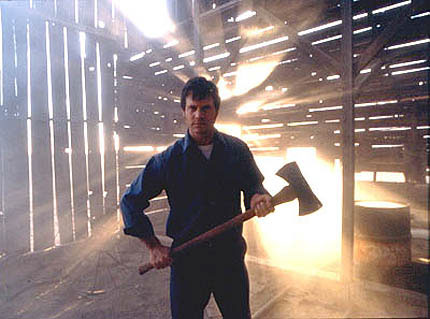
To recap, “Frailty” is a chilling story of a calm, loving father (Bill Paxton, who also directed the film) who live a normal, happy life with his two young sons, Fenton (Matt O’Leary) and Adam (Jeremy Sumpter), until he awakens them one night to tell them about a “vision from God.” Apparently, demons are walking the earth in the guise of regular people and it’s their duty, as “God’s hands,” to destroy them. Fenton doesn’t know how to react to this, but Adam believes Dad and wants to help him. Fenton is even more frightened when Dad makes a list of demons to destroy: people’s names. Dad has three useful tools: an axe, a pair of gloves, and a metal rod—“weapons from God.” Fenton can no longer doubt Dad’s motives when he brings home his first victim—a woman Dad claims is a demon whom he kills right in front his sons. Fenton believes Dad has lost his mind and can only watch in terror as he claims more victims, becoming a serial killer with Adam helping and supporting his father wholeheartedly. The story is told in flashback as one of the sons (grown up as Matthew McConaughey) explains to FBI agent Doyle (Powers Boothe) after revealing his brother is the one responsible for the killings which still continue.

The idea of a seemingly calm, sane father suddenly brought to the point where he kills people “in the name of God” is scary enough; the idea of wanting his young sons (one is 10, the other is 7) to assist him in his deeds is horrifying. And the film builds more tension from the kids’ perspectives and thoughts on the matters at hand—one wants to stop Dad, while the other joins him. It leads to a truly tense sequence in which Dad takes drastic measures with Fenton and locks him in his homemade dungeon for a week, hoping he too will get a vision from God. It leads to a tense climax in which Dad believes Fenton will ultimately follow in his footsteps and destroy a demon himself. Instead, Fenton brings it to a stop by turning the axe on his own father, killing him. Adam finishes the job himself, indicating that Adam will follow in his father’s footsteps and destroy more demons. Adam promises to bury Fenton someday in the same rose garden where they buried the other victims.

But wait. Earlier in the film, the McConaughey character, who has originally labeled himself as Fenton, claimed that the brothers’ promise was for Fenton to bury Adam. As he and Doyle explore the rose garden, that’s when he reveals his true identity—he is not truly Fenton but Adam. He has continued his father’s legacy. That’s one twist. Another twist is that all of this has been a means to capture Doyle, who is his next victim.

Now, this is a very effective twist, as is the realization that the real Fenton has grown up to become a serial killer and that Adam has “destroyed” him as a demon. It’s Adam’s belief that that’s why Fenton didn’t go along with him and Dad; because he was a demon. This would make for a disturbing portrait about what growing up with an influential, apparent serial killer could do to someone. And then comes the bigger twist…

Are these people really demons, or just chance victims of Dad’s delusional mind? Is the angel real or was it just a bad dream? We see one of Dad’s visions, of an angel visiting him and giving him his first list of demons, and it does seem slightly exaggerated, making us believe that it’s all in Dad’s mind. But then in the ending, what little ambiguity was left is suddenly thrown out the window, as it becomes very clear that the people whose lives Dad claimed were actually murderers and not innocent victims. We are shown their evil deeds, as well as Doyle’s murder of his mother. Dad and Adam were truly following God’s will. People find it shocking that “the axe murderer is working for God,” but the realization that the victims were never “human” but actual “demons” for God to demand be destroyed lest the Apocalypse come does make sense to those who strongly believe in God and it may actually be a relief to those same people, who would object to murders being done to “serve God’s will,” to get clarification. In that respect, it does bring everything around for a shocking revelation that I didn’t see coming. But at the same time, as “Frailty” was doing such a great job being a disturbing horror film with effective ambiguity up until that point, it is kind of disappointing that the film would feel the need to explain everything.

I originally gave the film a four-star ending, even with the ending, because I thought even with that in mind, it was still an intelligent, scary horror film with a theme of religious delusion taken very far. And the bigger twist isn’t even bad; it’s just that I feel like it would work better as a film without it. If we were to ask questions after seeing the film (without the twist) whether the angel was real or not and whether the people were really demons or not, it would bring forward interesting discussions about what it would say about religious fanaticism, delusion, and even about God’s will. As is, “Frailty” is a four-star film up until that shocking revelation. With it, in hindsight, I can still recommend the film but not as strongly as I did before, because even with it, there’s still a little ambiguity about whether or not there truly were demons or people who turned the wrong way and committed these deeds. Were they really destined to be that way? Were they truly demons? If they were demons, did they know it? Were they aware of their destinies to be destroyed? We saw their horrific wrongdoings but not their “demon form,” if they have forms under human skin. If God really is guiding these murders of the guilty, what does that mean?

But then again, maybe they are just demons and I’m thinking too much about it.

There are too many good things in this film for me not to recommend it. Different people are undoubtedly going to have different outlooks on the ending and what it all meant. I don’t think I can rate it three stars anymore. I wanted to rate it four. I wanted to love it as much as most critics did, including Roger Ebert and author Stephen King. And up until the final act, or at least until the bigger twist, I do love it and I do think it’s one of the best horror films I’ve ever seen. But with that bigger twist, it’s still a good horror film with something deep to talk about. It could’ve been deeper and it could’ve been better, but I have to review the film for what it is rather than what it isn’t. I still recommend it.

LRFF2015 Review: The Hanging of David O. Dodd

30 May

11265133_812643538789289_8441849983712533315_n

Smith’s Verdict: ***

Reviewed by Tanner Smith

“The Hanging of David O. Dodd” is part historical documentary, part performance art. Originally, it was a two-act play written by Phillip McMath, for the Weekend Theater in Little Rock, about a Confederate sympathizer hoping to save her wounded son and a Union supporter hoping to save a 17-year-old who is sentenced to hang as a spy. Directors Huixia Lu and Will Scott (The Night the Blackbirds Fell) have crafted an ambitious film version that essentially has the same cast as the play’s 2012 Weekend Theater premiere acting out segments from the play (edited chronologically, I believe). These segments are intersected with interviews from the actors themselves as well as writer McMath and others such as college professors sharing the history behind the story.

Some of the scenes are acted out on stage (in a blackbox theater) while others are presented in authentic-looking interior locations (such as the Old State House Museum in Little Rock) and some outdoor locations as well. This way, the film is like a hybrid of film and theater. The acting is consistently theatrical throughout, keeping in tradition with the play. Admittedly at times, I felt like I should be watching a play rather than a film and some parts don’t work well for film, but other times, such as when they’re making the most of their interiors, do. Yes, they’re written and acted for a play, but for the material, it works fine, such as when David O. Dodd (Aron Long), the 17-year-old sentenced to hang, is being debriefed by General Steele (Will Koberg), and a couple scenes involving Confederate sympathizer Medora Pilgrim (Libby Smith), Union supporter Philomena Tottenberg (Deb Lewis), and a maid named Marcella (Tracy Tolbert). But Lu and Scott know they’re making a film and don’t treat it as merely a recorded performance, hence why they chose other locations to set certain scenes, brought in the actors and other people to talk about the history behind the play’s story, and also filmed footage of a memorial 150 years after Dodd’s hanging.

When I got deeper into the film, I didn’t mind that later segments (such as David’s last day in jail and the hanging) took place in the theater. That may have to do with either the broad style of acting working better for the stage or perhaps even Johnnie Brannon, who plays a soldier, talking about his attitude towards acting in a blackbox theater that may have made it easier to accept. But that’s also when I thought, “Maybe I should be watching a play instead…”

It’s difficult to review a film that is both cinematic and stage-originated. I like film and I like theatre, but they’re both different in terms of style and execution. Putting together a hybrid of the two is no easy task and Lu and Scott mostly succeed in doing it, in that I enjoyed it and learned from it as well. Plus, the actors are appealing to watch—in addition to Long, Lewis, Smith, Tolbert, and Brannon, we also have Alan Rackley (John Wayne’s Bed) as a doctor and Jason Willey (A Matter of Honor) and William Moon as two Yankees guarding the border. And also, the play they’re acting out seems like a damn good play, framing it around the drama of a 17-year-old who became a martyr unwillingly, as well as showing plights of other people struggling through the times of the American Civil War. (“Nothing more dramatic than a hanging,” McMath says during an interview early on.) So in that respect, I admired the craftsmanship and recommend “The Hanging of David O. Dodd” for what it is.

King Jack (2015)

25 May

king_jack_1-620x340

Smith’s Verdict: ***

Reviewed by Tanner Smith

For faithful readers of my blog, it should come as no surprise that I’m a fan of the Coming Of Age Tale. Among my favorite films are War Eagle, Arkansas, Stand by Me, and Tex…and Sacred Hearts, Holy Souls, still the best Made In Arkansas short film I’ve seen. When Coming Of Age Tales are done right, they can capture something special, real, and effective. And for the most part, Felix Thompson’s debut feature, “King Jack,” does capture something unique when it’s not delivering a certain distracting element. But I’ll get to that shortly.

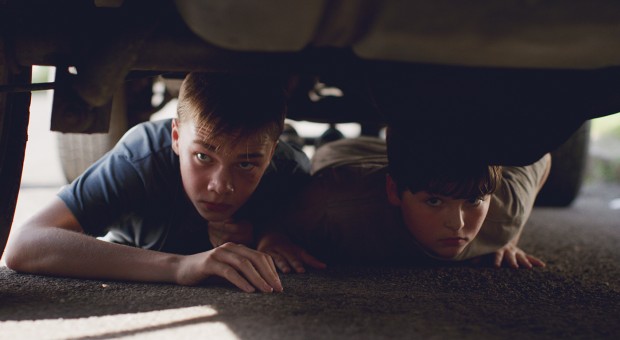
Set in upstate New York, “King Jack” shows a couple days in the life of a 15-year-old kid named Jack (Charlie Plummer) who is heading down a dangerous road in life. He’s attending summer school, his brother’s a violent punk who works at a gas station, and he often gets into trouble; in the film’s opening scene, he’s seen spray painting (arguably) the most offensive word in the English language on the garage door of the house owned by his bully’s family. His bully is an older kid named Shane (Danny Flaherty) who constantly tortures Jack whenever he gets a chance. One day, Jack is left to care for the younger cousin, Ben (Cory Nichols), for a while after his mother has had a recent breakdown. Ben is quiet and shy and hasn’t got a prayer when Shane targets both Jack and Ben, and he and his friends go after them. The bullies manage to nab Ben and torment him in one of many shockingly realistic brutal scenes. Now, Jack must learn a hard lesson in standing up for other people, while Ben also learns to roll up his sleeves at a crucial point.

I must confess: I was ready to give “King Jack” a mixed review right after I saw it at the 2015 Little Rock Film Festival (screened soon after the Tribeca Film Festival, where it received an Audience Award) because so much time was spent with this character of Shane, who I felt was a one-dimensional cardboard-cutout bully not unlike the knife-wielding greaser in Stephen King’s “It.” I felt he was horrendous for no other purpose than…to be horrendous. This isn’t a knock against Danny Flaherty who plays the role well, but I was bored by the role, I wanted him to go away, and when I knew the film was going to be more about Jack’s struggles with his bullying, I was hoping there’d be a reasonable explanation as to why he’s acting this way. I never like bullies in movies unless there’s a reason for their behavior (or unless they’re funny; see Biff in Back to the Future).

But then, I thought more about it during a long drive home. I thought about when I was a kid and I was getting beat up in a schoolyard or humiliated at a dance. Some of the time, I actually provoked my bullies for stupid reasons, some of which had to do with the previous beating. Then I thought about Jack’s introduction in the movie; he’s defacing his bully’s family’s garage! He’s asking for it. And what does he do when he and Ben encounter the bullies? He throws a rock at his head! He put himself and his younger, smaller cousin in peril against a kid who should be picking on someone his own size but clearly won’t. And that’s when I realized this film knows more about young people than I thought. (And I could be wrong, but I think I recall some lines of dialogue that vaguely explain how this began.)

The stuff with the bullies makes “King Jack” feel like a thriller, but the film does take time out to show other adventures for Jack and Ben, such as a truly terrific scene involving truth or dare between the boys and two neighborhood girls and a scene that shows Jack thinking he’s getting lucky with a girl he likes more but in for a dangerous surprise. The film also captures the way most of today’s teenagers talk (though, I have to wonder if kids today still really use the word “doofus,” which I heard twice in the film)—standoffish at some, mockingly to groups of friends, honest to one friend, cussing out everyone they dislike/hate, and so forth. Writer-director Felix Thompson’s dialogue is well-chosen, and cinematographer Brandon Roots shoots it like a documentary, adding realism to the film. I know the shaking camera is a gimmick that has worn out its welcome, but sometimes it’s needed to further the effect. By the time the inevitable climax comes around, in which Jack must face Shane yet again and make an important choice, you feel the film’s intensity. And the violence doesn’t back down either; whenever someone gets punched, you can always feel like it hurts.

At the center of it all is newcomer Charlie Plummer as Jack. Plummer is excellent in the role of a complex kid trying to survive in a cruel world. You can practically feel the emotional baggage he carries with him at all times. Plummer is also successful at showing us an effectively subtle character arc—by the beginning of the film, he’s self-centered, but by the end of the film, he’s standing up for his cousin, well-played by Cory Nichols.

It’s hardly fair to argue against the bully character anymore. But something I will argue against is the purpose of Ben having a mentally unstable mother. That never goes anywhere, and I feel like his character arc of bravery after apprehension could’ve been set up in a simpler way. Another problem I have with the film is the ending. It seemed like it stopped rather than resolved itself. But…perhaps “King Jack” was just meant to portray a day in the life of this kid, his family and his friends, and telling it straightforward (while avoiding allegory or commentary) may have worked in its favor after all. It got me to think, especially about the bully’s behavior, and the more I thought about it, the more I liked it.

Ah hell, watch me change my rating after I see “King Jack” a second time. And chances are I will.

LRFF2015 Review: “Made In Arkansas” Shorts Block 6

23 May

Reviewed by Tanner Smith

Go to the Ball with Me, Jenny

Smith’s Verdict: ***1/2

Cole Borgstadt’s (Pyro) 3-minute comedy, “Go to the Ball with Me, Jenny,” is shot like an amateur YouTube video in which an odd, quirky high-school teenager addresses a girl he likes (named Jenny, of course), asking him to go with him to their school’s Winter Ball, while telling a few things about himself such as his family, his pets, his hobbies, his…never-born twin brother he ate while in uterus (wait, wha…?). We’ve all been there—working up the courage to ask someone to a school dance can be a tricky effort and some of us felt we had to go the extra mile, like the kid in this film. What results is a funny, sweet…You know what? I can’t do it justice with a review. The film is online. Check it out here:

Sassy & the Private Eye

No Verdict rating

“Sassy & the Private Eye” is another short film of mine that was selected to screen at this festival. It’s a comedy, like The Making of ‘Sensitivity Training’, but much different, in that it’s a film-noir parody, it’s not to be taken seriously in the slightest, and it features a certain Sasquatch character from Vampire-Killing Prostitute…named Sassy.

Kristopher Pistole (audience member)—“I really liked ‘Sassy.’ The writing was very strong, really fun premise and your lead was charismatic. If I had any nitpicks, I could tell there were some technical hiccups, like dubbing. But that kind of thing gets better with time and experience.”

I thought Sarah Bailin, who reviewed The Making of Sensitivity Training, would be harsh toward this one, but she actually send me a positive message saying it’s one of my best! “It’s a nice genre mash-up and generally well done,” Bailin said. But she also criticized the slight audio issues the film may have had. “Please tell me it was a style-thing,” she said. I’m sorry, Bailin. It was a mistake.

Here’s a trailer for the film:

10511096_663444157058698_3236168490307898911_n

Simple

Smith’s Verdict: ***

Scott McEntire’s 10-minute short action film, “Simple,” is a hard-edged misunderstanding-gone-wrong, with a wry sense of humor that’s more than welcome for the violent material. It begins as mild-mannered Sam (Clayton Bowman) delivers an important package to a crime boss (Tony Gschwend) as a favor to his lazy slacker friend, Jacky (Kelly Griffin, very funny). When Sam finds out too late what was inside the package, he finds himself running and fighting for his life against the boss’ henchmen. What ensues is a series of fistfights, knifefights, narrow escapes, etc. as Sam must survive to make things right. As a straight-up action flick, it’s exciting and well-made. As a dark comedy, it works too, particularly when it cuts to Gschwend as the crime boss and Griffin as screwup Jacky. Also, Clayton Bowman is a likable lead. Though, my main criticism of the film is that it may have benefitted from tighter editing, which is an odd complaint for a 10-minute short. Aside from that, I liked “Simple”; it’s a nice 10-minute thrill ride.

11070023_829190690462239_1420823634781011477_o

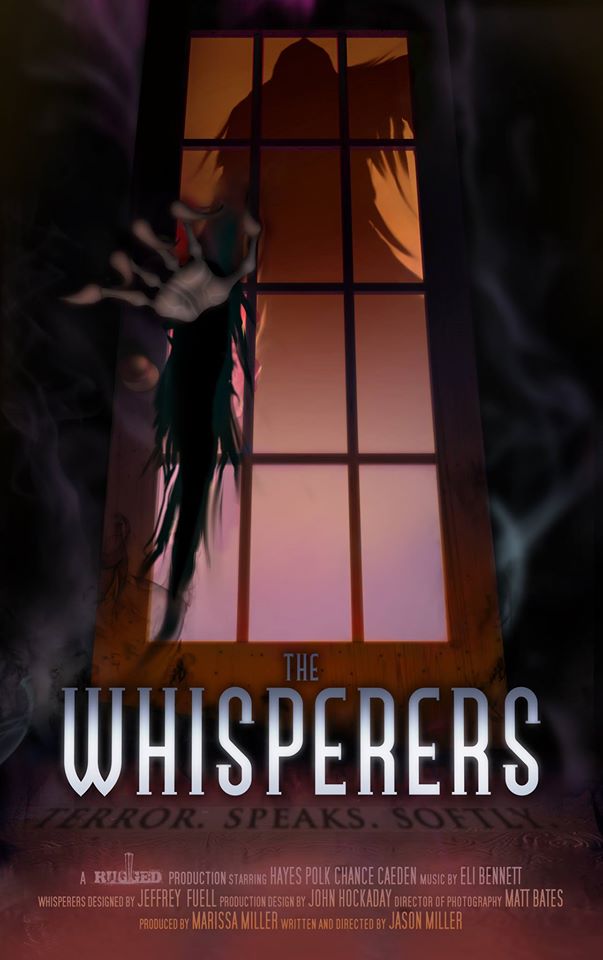
The Whisperers

Smith’s Verdict: ***1/2

The full review can be found here. (NOTE: This film went on to win the LRFF award for Best Arkansas Film and is now available on demand: https://www.indiereign.com/v/da5d3 I recommend you check it out.)

Stay a While

Smith’s Verdict: ***1/2

Michael Kelley’s 4-minute short “Stay a While” is as much a music video rather than a short film. I actually had an interesting conversation with a friend about what it works best as: a narrative short or a music video. He said it works much better as a music video, so I told him, “Then it’s a music video.” Either way, it’s still a well-done piece—a good example of editing that show contrast between what was once here and what is now gone, as a young man is happy with his girlfriend but has suddenly lost her and is frantically searching for her. It’s well-done and has a nice payoff.

1511385_234521863419124_1179789493335139821_n

Perfect Machine

Smith’s Verdict: ****

And now we’ve come to the final review in the LRFF2015 Made In Arkansas Shorts Block collection: Jarrod Paul Beck’s 25-minute science-fiction drama, “Perfect Machine.” After 3 years in the making, as well as an ambitious funding & marketing campaign (see Homefront and MatchMaker), the final creation works wonderfully.

The film takes place in (supposedly) the near future, as a new government system makes everything “perfect.” All citizens of new, altered civilizations are forced against their will to daily comply with this arrangement, by taking special medication, and those who don’t are forcibly “reprogrammed” to get with the program. It’s a world in which all choice is replaced with obedience, and it’s all controlled by the ominous Administration. Stevens 8936 (Kristof Waltermire) is a citizen who has stopped taking his medication for a couple days is starting to “feel,” which doesn’t bode well, seeing as how it’s against the system. Soon after his latest Administration checkup, Stevens 8936 (everyone is given a number to their name, making it easy for matching; again, see MatchMaker) evades two guards and escapes from the city, along with an unwilling woman, Warner 5964 (Caitlin Covey), into a forbidden, untouched world of nature where they take refuge in a cabin. As Stevens 8936 to the new feeling of freedom within himself, he helps Warner 5964 get adjusted to hers. Upon seeing/feeling the beauty of this environment, they learn there’s more to life than what they were forced to believe. And in each other, they find something deeper.

The background of this society is sketchy, but read/see other futuristic fables such as this and their explanations for their universes will probably make as much sense. I’m actually glad Beck doesn’t give us an answer to the question of how this world came to be. I don’t think his characters know either. Within the first five minutes of the film, writer-director Jarrod Paul Beck establishes this new world before taking his characters, as well as us, on a journey of emotion and self-discovery, which takes up more than half of the film. This is a film that uses a sci-fi gimmick to set up the two central characters, carefully develop a trusting relationship into love, contemplate complex issues such as free will and nonconformity, and results in a heartbreaking resolution but with a final shot that brings a beacon of hope. And it’s so beautifully done. The first five minutes of the film, which show the world in a certain amount of detail, are well-executed, and the visual effects are nice. But surprisingly, it’s everything with the more familiar world, taking up mostly the rest of the film, that I take back from “Perfect Machine.” This whole sequence is moving, insightful, and beautiful. It’s also well-written; there are a few extended dialogue-free sequences, but when the characters do engage in conversation, their words are carefully chosen. It’s also great to look at, with fantastic cinematography by Eric White. Watch this on a big screen, like I did, and you’ll most likely feel like you can reach out and touch this film, especially in the nature shots; you can feel the location. Few films I’ve reviewed in these blocks provided such a pervasive sense of time and place; I wasn’t tempted to go elsewhere, not even the inventive sci-fi world established earlier.

Both Kristof Waltermire and Caitlin Covey do great jobs portraying sympathetic characters trapped in a world they didn’t make and content with one that’s been there for them all along. I cared for these two and hoped for the best. Will they remain here for the better or will the cruel, forceful hand of the Administration bring them back for the worse?

The ending makes the film yet another short film I’d like to write a “spoiler review” for, just so I can talk about the final shot and what it could mean. Without giving it away, it’s ambiguous and people will see it one of two ways: positive or negative. Maybe it’s the emotion that was brought up in the mid-section, but I’m leaning toward the positive.

There’s no other way to put it—I loved “Perfect Machine.” It’s well-made, intelligent and charming. Beck and his crew put a lot of effort into this film. It pays off beautifully.

NOTE: Beck received the LRFF2015 Best Arkansas Director award for this film. I’d say his hard work really paid off.