Archive | Three Stars *** RSS feed for this section

Hot Rod (2007)

3 Feb

hot-rod-2007

Smith’s Verdict: ***

Reviewed by Tanner Smith

I’m a huge fan of the SNL Digital Shorts and the three guys who make them—Andy Samberg, Jorma Taccona, and Akiva Schaffer. Their “Lazy Sunday” and “In A Box” creations are some of the funniest videos I’ve ever seen. Even with its occasional racy material, these videos are so upbeat, positive, and just so darn funny. Even their stupidest gags get laughs.

So with me being a huge fan of these guys—who call themselves The Lonely Island—you can imagine how hyped I was when I found out about a movie created by them. Well, they did, and it’s an energetic, cheerfully funny little movie called “Hot Rod.”

It’s a pure “family affair”—Andy Samberg is the film’s star, Jorma Taccone is a supporting character, and Akiva Schaffer is the film’s director. Samberg stars as Rod Kimble, a novice stuntman who doesn’t go a day with nearly killing himself with a crazy stunt. As the movie opens, he attempts to jump a trailer when the takeoff ramp falls apart and Rod falls straight over. But it’s OK—he’s fine. So he can do practically the same thing every day. He never gives up and his failures don’t discourage him. He knows that he will become a great, infamous daredevil (“infamous” for the right reasons, of course).

Oh, and he also sports a fake mustache during each of his stunts, because he thinks it makes him look professional.

Rod is also trying to earn respect from his jerk of a stepfather—Frank (Ian McShane). Every now and then, Rod and Frank engage in a duel (with Rhodesian fighting sticks and throwing stars) to which Frank always wins. But now, it is learned that Frank is dying due to a heart condition. If he dies, Rod will never have gained his respect. So what’s his plan? Raise 50 thousand dollars to pay for Frank’s life-saving heart operation and make him healthy enough so that he can beat him to death! How’s he going to do it? Jump 15 buses, he explains to his crew—his nerdy but loyal stepbrother Kevin (Taccone) and the less ambitious Dave (SNL’s Bill Hader) and Rico (Danny McBride). Rico responds by saying, “Come on, Rod. That’s nearly as much as Evel Knievel jumped.” Well, it’s actually one more than Evel Knievel jumped.

As you can tell, the story is all over the place. It gets crazier during its progression, with Rod raising money to fund the big jump by engaging in stunts like being blown up, set on fire, and even acting as a human piñata. But this is one of the reasons it’s so funny—the zanier the story gets in a lowbrow comedy such as this, the better. And it’s also funny because it’s sincere. It never becomes mean-spirited or condescending in the slightest. It’s just telling a lighthearted story about a likable ne’er-do-well racing to succeed in the most improbable situations—not only with the stunts and the big jump that he must conquer in order to raise enough money to save his stepfather (just so he can beat the crap out of him), but also with attempting to score with the pretty young woman next door named Denise (Isla Fisher) who joins the crew because she likes Rod’s determination. But unfortunately, she has an obnoxious jerk of a boyfriend—played by Will Arnett, who kind of overdoes it with his performance, but I’ll take it—who drives a Corvette, constantly looks down on Rod, and even at one point leaves his girlfriend on a date so he can punch an old buddy in the groin. (By the way, I love his line to Rod and Denise when he leaves—“Don’t you two go falling in love while I’m gone.”) Will Rod get the girl away from this jerk?

Of course he will.

And there’s just a ton of flat-out funny gags scattered throughout “Hot Rod.” This mess of a movie got even bigger laughs out of me in a theater than the overrated Will Ferrell sports-comedy “Talladega Nights.” In just about every scene of this movie, there’s a new gag. Some of them are failures (the enunciating of the word “whiskey” bit shown in the film’s trailers gets a bit old before it finishes), but like with comedies such as “Airplane,” where there’s a gag just about every minute, you wait for the next one to come along and make you laugh. While there are a few gags that didn’t work, many others made me laugh out loud. A few examples—I won’t give away all of them to make the review funnier—include a theoretical discussion about whether or not a taco would beat a grilled cheese sandwich in a fight, a nasty sight gag involving Bill Hader’s Dave in a slight injury due to an acid trip, and (undoubtedly the biggest laugh of the movie) a parody of the punch-dancing scene in “Footloose” that results in the longest, funniest fall in movie history (I will say no more about that—watch the movie; you’ll laugh your ass off).

Andy Samberg has a likable comic presence and makes Rod instantly sympathetic. His goofiness is enough for good laughs as well—he’s as capable as Jim Carrey and Eddie Murphy when it comes to comic actors in comedic leading roles. Jorma Taccone, Bill Hader, and Danny McBride have a lot of great moments to share as Rod’s three-man working crew. And give Sissy Spacek credit for playing her role as Rod’s mother completely straight.

“Hot Rod” is a modest, very funny movie that not only makes me excited for the next Lonely Island video, but mostly for the next Lonely Island movie. Let’s hope these three get a new movie idea together very soon.
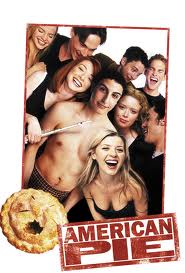
American Pie (1999)

31 Jan

images

Smith’s Verdict: ***

Reviewed by Tanner Smith

Many people would call the 1982 raunch-o-rama box-office hit “Porky’s” a treasure (not me); many others will call it more sick and inappropriate than funny (like me). That brings to what could be considered the “Porky’s of the 1990s”—a movie called “American Pie.” This is a better, brighter, and funnier movie than “Porky’s” and people need to look to see that because there is a difference between cruelty and humor.

The teenagers in this movie are nicer and more appealing than anybody in “Porky’s”—also, they look and feel like high school teenagers when it seemed disturbing to look at the “teenagers” in “Porky’s.” The movie focuses mainly on four high school boys who make a pact to lose their virginities by the end of the senior year. They are nervous Jim (Jason Biggs), who doesn’t know what approach to take toward girls; slow-thinking but good-natured jock Oz (Chris Klein, also good in “Election”); Kevin (Thomas Ian Nicholas), who has a girlfriend (Tara Reid) but is afraid of commitment; and Finch (Eddie Kaye Thomas), the smart one who is so wound up that he never uses the school’s bathroom. They’re all best friends and they’re all virgins. They make their pact when a less-popular student loses his virginity to a popular girl.

Right away, you see how fresh the movie is—how many high school movies nowadays allow their central characters to be virgins? The four teenagers in this movie look and feel like real teenagers because they’re insecure about themselves and about women. And they’re inexperienced in sex. But they’re willing to have sex before graduation day and target the prom to lose their virginities after. In his part of the pact, Oz even joins the glee club to get closer to girls. This is dangerous for his social image because he also has lacrosse to think about. A refreshing move is that Oz doesn’t care much about that.

Jim has his eyes on an attractive foreign exchange student named Nadia (Shannon Elizabeth). After finally convincing her to come to his house, Jim is totally embarrassed when his webcam is turned on and pointed at him and Nadia as they get kinky in Jim’s bed. Everyone with a computer is watching…

Most of “American Pie’s” humor takes place in the form of vulgar gags, most of which make the movie so close to an NC-17 rating (instead, it is given an R). A couple comedies before this have had such gags—the hair gel scene in “There’s Something about Mary” and the tissue sample mistaken for coffee in the “Austin Powers” sequel. This time, in “American Pie,” semen has become main ingredient—for beer and for a pie, hence the title (which has nothing to do with the popular song). This is funny because the characters are not part of the joke. Here, they’re embarrassed, and we feel their embarrassment—how could we not? They don’t know what they’re doing, so it’s funny. Most gross-out gags in movies are not funny because we see them coming and they live to gross us out. Here, in “American Pie,” they’re here just to make us laugh. I laughed a lot during this movie. Also, the movie seems to be very frank about sex. The R rating just doesn’t give in.

There are three supporting characters that stand out among the other characters. One of them is Jim’s dad (Eugene Levy), who completely understands and tells his son how proud he is of him and that he feels his pain—maybe he’s been there before. I loved his lecture on the birds and the bees, using visual aids. When he finds his son doing something very unusual to the apple pie they were supposed to eat for dinner, he just says, “Well…we’ll just your mother we ate it all.” This is one of the best movie fathers in any teenage comedy. Another character that stands out is Kevin’s girlfriend’s best friend (Natasha Lyonne, whose deadpan comic timing is wonderful here). Finally, there’s the irritating (but also very funny) Steve Stifler (Seann William Scott). He’s enough of a sleazeball for us to want to slap him in the face, but enough of a smartass for us to laugh at him. He never shows any sign of sympathy for any of the other characters and would love to create misery for his own amusement. And I won’t dare say how he gets his comeuppance at the end of the movie, but let’s just say Finch now understands why “The Graduate” is a classic film.

“American Pie” has as many laughs as “Animal House” and a lot more laughs than “Fast Times at Ridgemont High.” And like I said, it’s a much better film than “Porky’s” because it’s OK to be raunchy, crude, and vulgar…as long as it’s funny instead of cruel.

Explorers (1985)

31 Jan

Explorers_kids

Smith’s Verdict: ***

Reviewed by Tanner Smith

“Explorers” is a family-friendly gem that is sort of let down by its final act. This film has a great setup that doesn’t leave a strong payoff—in fact it’s real silly. But that doesn’t mean I won’t recommend the film. It’s just that maybe it deserved a little more than what it had to offer. Besides, maybe the journey is the most important part of the movie.

The film is a kid’s science-fiction fantasy directed by Joe Dante (“Gremlins”) and it features three young boys as the central characters. One is a dreamer; one is a young scientist; and the other is a loner that the other two boys befriend in the beginning of the story. The dreamer, Ben (Ethan Hawke), has been having these strange dreams that involve a circuit board. Intrigued by the dream, he draws what he can remember of the circuit board on a sheet of paper to see what his genius friend, Wolfgang (River Phoenix), can make of it.

Don’t ask me how, but with the aid of Ben’s dream, Wolfgang is able to create a solid sphere that can break through a brick wall and can be controlled by Wolfgang’s computer. Loner Darren (Jason Presson) is in on the secret as the boys realize that, when enlarging the sphere, they all can fit inside this thing and use it as a force field…and also are able to fly around in it. So, they get this idea to make an aircraft out of an old Tilt-a-Whirl.

If you think this sounds like a silly idea, you’re not far off. It is a silly idea. But the strange thing about “Explorers” (and yet so wonderful about it) is that it takes this idea seriously but not too much. I love how everything develops as the kids are figuring what to do with this new discovery. It helps that the kids are fresh and likable. It’s fun to watch them as they go on.

But that’s only the first half of the movie. When the second half approaches, the boys have already flown above town in their own homemade spaceship and are reaching signals from what could be another planet. (Some of these signals come from within their own dreams.) But what happens when they actually do go into outer space, I probably shouldn’t give away. But I will say this—these boys are bright enough that we want them to find something really interesting; their find isn’t up to it. I suppose it’s fine and fun for younger kids, but for others who really get into this film from the start, it’s kind of disappointing.

I don’t want to sound too harsh, because the payoff is kind of amusing if not what one might expect. Maybe this is why I’m recommending the film. And besides, what really matters is the journey, and “Explorers” is a very fun journey. It’s a delightful, entertaining watch.

Critters (1986)

30 Jan

220px-Crittersposter

Smith’s Verdict: ***

Reviewed by Tanner Smith

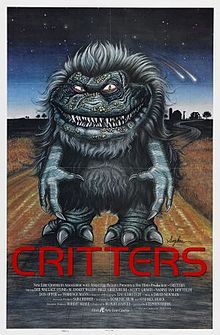
1985 released a critically-panned, “Gremlins”-spoofed, box office bomb “Ghoulies.” It’s a long, sad story, but I won’t write about it right now. But I do know the last line—“they will never rip off ‘Gremlins’ again.” Well, now we not only have one but four science fiction hits that 1986’s “Critters” has to satirize. I have to say I really enjoyed this satire on the science fiction hits of the early 1980s. It’s charming, it’s witty, and it’s funny.

Those sci-fi hits are “Gremlins” (of course), “The Terminator,” “Starman,” and “E.T. the Extra-Terrestrial.” In “Critters,” we get the “Gremlins” spoof with the villains in the film—furry, carnivorous, rolling aliens who come to earth to eat us; we get the “Terminator” bit with the bounty hunters who hunt the aliens and shoot at everything, including the TV; we get the “Starman” bit when the bounty hunters turn human; and the “E.T.” bit with Dee Wallace Stone as the mother to another big-eyed small boy. Oh, and the Critters look curiously at an E.T. puppet.

Well, let’s move on to the “Critters” plot. The movie begins in outer space. A prison asteroid is carrying fanged alien fuzzballs called “Crites” who are about to be terminated for their ravenous appetite for…just about anything. The Crites escape on a stolen spaceship and travel around the solar system until finding the best planet to land and eat—ours.

On earth, we’re introduced to your average family of four living in Kansas, the Brown family. The Browns are Helen (Dee Wallace Stone) and Jay (Billy Bush) and their two kids April (Nadine van der Velde) and Brad (nicely played by Scott Grimes), who is often teasing April, getting into trouble, mouthing off, and shooting firecrackers. Brad is a wild kid in an otherwise “perfect family.”

Hunting for the Crites are the galaxy’s two bounty hunters. Their mission: annihilate the Crites and get paid. They track them down to Earth, pick human identities (one of them chooses a rock star, the other can’t find the right one, so he chooses many), and pack a huge gun to get ready to blow them to kingdom come. But the hungry Crites are now invading the Brown farm and soon the Browns are left in their house in the middle of nowhere to battle until the bounty hunters can find them in time.

This should’ve led to a big scene in a bowling alley where bowlers mistake Crites for bowling balls and Brad and the bounty hunters fight them, but it didn’t. Too bad, considering the possibilities with that idea.

I enjoyed this little film called “Critters.” What I really liked about this movie was that the screenplay didn’t go for the wrong stuff and just gave us a group of characters to root for, scenes to laugh at, and a good satirical screenplay. And that Brad kid isn’t a kid that gets on our nerves. He’s a really cool kid with a great personality and we’re rooting for him to save the day. Also, I admire that this movie lets the two sides of aliens fight amongst themselves.

And it’s funny. This movie has a lot of laughs in it. I especially liked the scenes with the bounty hunters and I’m cracking up already thinking about their antics. This was a nice friendly town and now it’s occupied by these two buffoons who never crack a smile and blow up everything, even a bowling pin and a television set. And one of them can’t even keep an identity. When one of them picks the form of a rock star to disguise himself, the other one chooses the town patroller, the priest, and the town crazy Charlie, who thinks he gets signals in his teeth about arriving aliens- aren’t you surprised, my friend. The screenplay keeps comedy coming as well as horror and the Crites even have some of the best lines. Another funny character is the town sheriff played by M. Emmet Walsh who has no clue as to what’s going on.

“Critters” isn’t quite up there with “Gremlins,” which is a classic comedy-horror film, but this works gloriously as a sci-fi satire or spoof and it’s not dumb either. I still need to give praise to young Scott Grimes because he’s very good as the smart aleck, troublemaking kid who teams up with the bounty hunters and saves the day. The movie’s very entertaining, the Browns are likable characters, the bounty hunters are funny, the script is witty, and it just goes to show that this movie is a lot of fun and the filmmakers a lot of fun making it.

Project X (2012)

28 Jan

project-x_photo

Smith’s Verdict: ***

Reviewed by Tanner Smith

“Project X” is a loud, obnoxious teensploitation movie that at some points reminded me of the offensive, tasteless moments in “Porky’s”…but also the finer moments in “The Hangover,” “Superbad,” and “Animal House.” At times when I was nearly feeling unclean or rolling my eyes in disbelief, I have to admit I laughed, but more importantly, I marveled at the film’s bravery to go the extra mile. Going the extra mile in a teen movie like this should make me hate it, but instead, I found “Project X” to be funny, nicely-made, and even intense when it needed to be.

The film is presented in the “found-footage” concept, which I have to admit I am growing tired of with each film using this format—films like “Blair Witch Project,” “Cloverfield,” “Paranormal Activity,” and even “Chronicle,” a film released a month before this one. “Project X” is mostly seen through the point of view of a video camera used to document the ultimate, “game-changing” house party.

It starts out as a birthday party for likable, average high-schooler Thomas (Thomas Mann), whose parents leave him in charge of the house for a couple of days. You know the drill—throw a party, get in trouble, raise some hell, and clean it all up before the parents return. We’ve seen all this before; it can be traced back to “Risky Business” in 1983.

The hosts are the overweight, geeky, glasses-wearing J.B. (Jonathan Brown) and the loud, crude, vulgar, loathsome, sweater-vest-wearing Costa (Oliver Cooper). They recruit an AV Club member named Dax (Dax Flame) to bring a camera around and record the party. Thus, we see the setup to the event—the parents leaving, Thomas forced to drive Mom’s minivan to school, Costa sending texts to everyone in school to show up at the party, as well as Costa constantly bragging about getting laid. I’m serious—this kid never shuts up. He’s probably the most unlikeable teenage-movie jerk you’ll ever come across, and you just want to hit him with a blunt object. Things don’t get much better with him, such as whenever something is damaged, he constantly says he can fix it; “no problem.”

Then we have the party—we have beer, we have drunk teenagers dancing and making fools of themselves, and we get more than three montages of them having a great time to a heavy soundtrack. (These montages grow monotonously with each one.) But we also have some trouble, like you’d expect from…well, every teenage house-party movie. There are too many people than expected (“Of course; it’s ‘plus-one,’” Costa explains to Thomas), a few freshmen try to sneak into the party, and Thomas attempts to get lucky with the popular girl in school, not realizing that his best girl-pal Kirby (Kirby Bliss Blanton) is the right one for him. When will we—er, I mean, he—ever learn?!

That’s how the party starts out, if you can believe it. As the night goes on, like you’d expect, things go wrong. But in the case with “Project X,” things go very, very wrong. In fact, the movie becomes less of a comedy and more of a horror movie. Things get more intense, mostly unbelievable, with each new twist in the event. And to be honest…that’s kind of funny. Not knowing what’s going to happen, and just knowing that every new occurrence is going to be worse than the last one, makes “Project X” a cross between “Risky Business” and “Cloverfield.” Everything you couldn’t think of going wrong goes wrong here. And I won’t give anything away.

And the way the party ends—the final five minutes of the event—is just crazy. It’s so exaggerated and so violent that I realize that I did not merely see a teenage comedy—I saw a teenage horror movie. It’s so “out there,” but I loved it. And the point-of-view of the video camera really adds to the intensity.

Why did I like “Project X” when I despised the same material that made teensploitation films like “Porky’s” so popular? I think the main reason I liked the film was because with all the craziness that occurs in this movie (the party becomes a life-endangering event rather than just a drunken, loud, naked, sex-crazed house party), this is that rare teen film in which every dangerous deed has consequences. And no consequences will ever be as memorable as the aftermath of a crazed druggie with a flamethrower.

The Lost Boys (1987)

28 Jan

Lost-Boys_l

Smith’s Verdict: ***

Reviewed by Tanner Smith

It’s always fun to see horror movies that use old-school elements and update them into fresh modern entertainments, and “The Lost Boys” represents an appealing, fun look at the definitive vampire stories. This movie has the traditional vampire elements—vampires stalk the night and kill for human blood, and for weapons to fight them off, wooden stakes and holy water always come in handy. Where “The Lost Boys” differs is the teenage outlook. The lost boys in the title are teenage vampires living in Santa Carla, California—they dress like punk rockers, ride through the beach on their motorcycles in the night, and live in a cavern (with a Jim Morrison poster on the wall). They just happen to grow fangs, fly through the air and attack people (and drink their blood).

Oh, and who do they have to lure people into their traps occasionally? They have a “lost girl” who looks stunning while the boys look threatening. The latest person that falls for this is a young man named Michael (Jason Patric). Michael has moved to Santa Carla (which is often referred to as the Murder Capital of the World) with his divorced mother (Dianne Wiest) and younger brother Sam (Corey Haim). While checking out the boardwalk on their first night in town, Michael sees the girl—Star (Jami Gertz)—at a rock concert and follows her until they stop for a chat. It’s then that the Lost Boys—led by David (Kiefer Sutherland)—introduce themselves to Michael and decide to let him join their crowd.

Sam, a comic book geek, visits the local comic store and encounters a pair of brothers who work there—Edgar and Alan Frog (Corey Feldman and Jamison Newlander). They warn him of vampires swarming Santa Carla and they’re the ones to wipe them out. They give him a special comic titled “Vampires Everywhere.” “Think of it as a survival manual,” one of them tells Sam. “Our number’s on the back, and pray you never need to call us.” This proves to come in handy, as Michael falls in with the Lost Boys after drinking a little wine (which could be blood) and joining in on their bizarre activities (such as clinging on to a railroad bridge while a train passes by). But Michael himself is going through some changes—he sleeps during the day, barely has a reflection, and is starting to crave his brother’s blood. Sam freaks out, “You’re a vampire, Michael! My own brother—a damn bloodsucking vampire! You wait ‘til Mom finds out, buddy!”

This vampire problem is more of a way of Santa Carla’s nuisance, among the weird locals, mainly youths, of the town (most of which we see in an opening montage as The Doors’ “People are Strange” is playing). With that said, who would believe that these teenage punks who dress in leather and spikes could turn out to be vampires? But when they ultimately make themselves known, they mean business. These aren’t teenagers merely having fun—these are vile humanistic beasts that slaughter without mercy, while having fun doing it.

But hey, it’s nothing that some wooden stakes, garlic, and holy water can’t fix, right?

“The Lost Boys” is far from a standard horror film. It has a nice serious-satiric edge that fits nicely with the teenage-vampire-horror elements. The idea of these vampires being teenage punks living in a cavernous hangout (did I mention the Jim Morrison poster?) is fun enough, but then they are found deeper in the caves, hanging from the ceiling while sleeping. “I thought they were supposed to be in coffins.” “That’s what this cave is—one giant coffin.” The funniest parts of the movie are with the Frog brothers, whom Sam of course calls to help kill the vampires and save his brother. These are two teenagers who pretend to be Rambo and have suitable game-faces for going into battle. What’s great about this is that it’s not played for laughs—it’s the way that both young actors play them, as serious as possible, that makes these two characters enjoyable.

But of course, they are just teenage boys fighting vampires. At their crucial point of battle, their lives are actually saved by a dog. How embarrassing for them.

“The Lost Boys” is an immensely entertaining movie with wild ideas, a nice comic edge, and good acting. It’s also great to look at. The movie was photographed in rich, dark colors by Michael Chapman, and as a result, “The Lost Boys” always contains that grimness that should come in a vampire story. The night scenes particularly look fantastic. But that’s not to say the movie doesn’t have its flaws. For one thing, it’s a little overstuffed, especially with elements of Dianne Wiest as Michael and Sam’s unbelievably dim mother (she’s too slow to catch on with the madness), and Ed Hermann as a video store clerk who dates her, and whom Sam believes is the head vampire. Actually, that’s necessary. But then there’s Barnard Hughes playing a caricature of an eccentric Grandpa (“Read the TV Guide, you don’t need a TV”). He’s funny, but at times very distracting.

Of the actors, Corey Haim is very likable as Sam, and displays good comic timing while reacting to most of everything around him. Corey Feldman and Jamison Newlander steal the show as the in-over-their-heads Frog brothers. Jason Patric is merely adequate as Michael, but to be fair, I don’t believe the character was written properly. But the real standout is Kiefer Sutherland as David, the leader of the Lost Boys. Sutherland smirks like no other and has a natural menace within him. It’s a strong performance.

The final act of “The Lost Boys” features Michael, Sam, Star, and the Frog Brothers as they fight off the vampires who storm Grandpa’s house while the mother and Grandpa are away. While it is exciting and has its share of awesome and darkly funny moments (they fill a bathtub up with holy water and garlic so that a vampire implodes inside it, damaging the plumbing of the house), I have to wonder if there was some other way this could have gone. Maybe this could’ve taken the direction of a psychological or philosophical look at what it means to be a teenage vampire, for example. But that was just a personal preference. Otherwise, the climax is relatively electrifying and quite fun. And that’s what can be said of the whole movie.

The Monster Squad (1987)

27 Jan

images-1

Smith’s Verdict: ***

Reviewed by Tanner Smith

One of my favorite movies from my childhood was “The Monster Squad,” a 1987 horror-comedy/kid-adventure with a neat premise—think of the original Movie Monsters vs. the Little Rascals, and you have “The Monster Squad.”

I loved watching this movie when I was a kid. It was entertaining, had a neat story idea that came through, and couldn’t find a single flaw. Watching it now, I notice differences between the movie I loved as a kid and the movie I’m watching now. But I still enjoyed the movie. It’s not the classic I remember, but it’s still an entertaining watch.

The Monster Squad in the title are a group of savvy middle-school outcasts who form their own club in a treehouse, where they talk mainly about their favorite subject—monsters. They draw pictures of “spider with human head” in science class, have discussions of whether or not Wolfman can drive a car, and in initiating a new member, they ask questions like how to kill a vampire and “What’s the second way to kill a werewolf?”

But meanwhile, Count Dracula (Duncan Regehr) is alive and plans to rule the world. To his aid are a wolf-man, a two-thousand-year-old mummy that just gets up and walks away from a museum, and a Gillman who…is just there. There’s a lot of story to go with this plan, but I’ll try and explain. But don’t ask how all of these Movie Monsters got associated with it because it’s never really explained. That’s not the main concern and besides, who cares anyway? They’re all here. It’s movie magic.

Anyway, there’s a magical ancient amulet that maintains some sort of balance between good and evil in the world, which can shift if the amulet is destroyed. It’s indestructible, but every one hundred years, the amulet can become vulnerable until a young virgin can read a magic spell that will maintain the amulet’s power and the balance between good and evil. Dracula hopes to find the amulet and destroy it so he can rule the world.

OK…I don’t quite get it either. I didn’t think about it too much when I was a kid, but I can’t ignore it anymore. This story is much more complicated than any other with a magical element. The amulet is simply there as a McGuffin—a story catalyst to get the story where it needs to be.

Anyway, the monster club finds out about the appearance of Dracula in their hometown, and following an old diary with sinister information, they find out what’s going on and set out to find the amulet and fight the monsters, thus the appointed name the Monster Squad.

Maybe the kids in this movie are not the Little Rascals, as I metaphorically described—even though these kids hang out in a clubhouse and have a cute little dog with them, they are also slightly older than the Rascals, are modernized for their time, and cuss because they think it’s cool.

Actually, the kids’ constant swearing, and some occasions of intense violence, is the reason this movie was granted a PG-13 rating. Because of this, audiences didn’t know why they should see this movie—a lot of people thought it would be too scary for kids, while others thought the exact opposite; thinking this was a kids’ film. Therefore, the film did very poorly at the box office. But it did gain a strong cult following by people who discovered it on TV and practically demanded a 20-year anniversary special edition DVD, which they got.

What makes this film so special? Well, for all the “80s cheese” movies that people hold in regard, “The Monster Squad” does have a great deal of production value. Director Fred Dekker and his crew used every ounce of their budget to give the movie an epic feel. You can tell right away in a well-crafted opening sequence set in the 1800s, when Abraham Van Helsing (yes, the scientist from “Dracula”) and his band of freedom fighters storm Dracula’s castle to kill monsters. The interior-castle set is incredible, as it incredibly resembles Dracula’s castle in the original 1931 “Dracula” film. And the creature effects—skeletons that come to life and grab people—are legitimately frightening.

You could argue that this opening sequence is better than the movie itself, but let’s just keep going.

The special effects are quite good, particularly the creature makeup on creatures like Frankenstein’s Monster and the Gillman. Although, the Wolfman isn’t as successful—there are times when you can tell the actor is wearing an obvious mask. (But the wolf-paws look realistic.)

Everyone remembers three particular members of the Monster Squad—the leader Sean (Andre Gower) for his wits and bravery, rebel Rudy (Ryan Lambert) for his bad-boy style and the lion’s share of the monster slaying, and Horace (a.k.a. Fat Kid—well, at least he’s supposed to be a stereotype) for not only playing a stereotypical fat kid (I mean, why else would he carry around a slice of pizza if he wasn’t use its garlic to burn Dracula’s face?), but also for delivering the film’s infamous line after kicking Wolfman in his personal area—his reaction in shocking bewilderment, “Wolfman’s got nards!”

The climax of the movie—in which the kids and monsters battle each other at the town square—is pretty exciting, with one showdown after another without getting boring. How can you not love the part where Horace kills the Gillman with a shotgun?

Duncan Regehr has fun with the role of Dracula, and there’s also Tom Noonan as Frankenstein’s Monster. Dracula brings “Frank” back to life and orders him to find the kids and kill them. But the Monster instead turns on Dracula and winds up befriending the Squad, particularly Sean’s innocent, cute little sister Phoebe (Ashley Bank).

So what about “The Monster Squad” doesn’t hold up very well for me? For starters, the story is all over the place and is a little too much for a film that runs about 82 minutes. In fact, parts of the movie just seem rushed at times. We don’t get enough of this likable Frankenstein character (though he does have an awesome final moment) and the subplot involving Sean’s bickering parents (Stephen Macht and Mary Ellen Trainor) is overlooked once the monsters appear. Oh, and there’s also a recluse simply known as Scary German Guy (Leonardo Cimino) who, in one shot, shows an interesting background that we’d like to get to know about, but no.

Actually, that’s a problem with “The Monster Squad”—for a movie with a short running time as this, it’s pretty overstuffed. Additional stuff with Sean’s police officer father and his comedic partner (Stan Shaw), the human form of the wolf-man (Jonathan Gries, simply credited as “Desperate Man”), and the school bullies (Jason Hervey and Adam Carl) are glanced over and then forgotten without much of a payoff, with the possible exception of the bullies who witness Horace killing the Gillman and respect him for it.

Also, there are quite a few nonsensical moments. For example, when Sean reads a message from someone named “Alucard,” how does he automatically know that the name is an anagram for Dracula? And there’s a scene in which the Squad’s youngest boy—Eugene (Michael Faustino)—tells his father that the Mummy is in his bedroom closet, which he certainly is. Why in the world is the Mummy in a little boy’s closet?

And while Sean, Rudy, and Horace are all entertaining while portraying their stereotypes, the other members of the Squad aren’t as much. One of them—Patrick (Robby Kiger)—is simply on hand so he can have a sexy sister that likes to undress in front of a window that the boys can see with their zoom-lens camera from their treehouse. Oh, and he makes calling cards with just “MONSTER SQUAD” printed on them—no number, address, or anything. Who let this kid in? I can also ask the same about Eugene. Eugene is in this monster club and yet he closes his eyes whenever he gets scared. He doesn’t even do anything in the actual battle except scream and close his eyes at crucial points. (Oh, and he complains constantly, “Mummy came in my house.”) His cute beagle Pete is pointless as well.

I mentioned “80s cheese” before. That’s how you can explain other parts of the movie, like the central montage of the kids getting ready for battle while a cheesy 80s rock song by Michael Sembello plays. Actually, this montage is kind of fun—it shows how the kids are able to get their hands on wooden stakes and also create silver bullets. And the song isn’t that bad either. But there’s another song by Sembello that is just terrible—it’s a rap song (that’s right—a rap song) called “Monster Squad.” It’s one of the cheesiest things you’ll ever come across.

Did I leave anything out? Boy, I hope not, because this review is getting pretty long.

The bottom line is that, despite its flaws, “The Monster Squad” is still as entertaining as I remember it. The filmmaking is nice, there are a good dose of amusing moments, the monsters are entertaining, the kids are likable, and the final battle is quite fun. And yes, Horace, Wolfman still has nards.

Thor (2011)

27 Jan

images

Smith’s Verdict: ***

Reviewed by Tanner Smith

I shouldn’t be too surprised that Kenneth Branagh, the great cinematic adaptor of Shakespearean work, directed a movie based on a Marvel comic book series. I mean, after all, every director likes to try new territory. I mean, look at Ang Lee—he made a “Hulk” picture and then followed it up with “Brokeback Mountain.” And let’s not beat around the bush—Branagh’s “Thor” is a fast, energetic entertainment. It’s well-made, exciting, and features a charismatic new superhero brought from the page to the screen.

Thor (Chris Hemsworth) isn’t your ordinary superhero (boy, that’s a phrase I thought I’d never use). In the land of Asgard, within the “nine realms,” he’s the arrogant god of thunder with an all-powerful hammer. Ascending to the throne by his father Odin (Anthony Hopkins), his ceremony is interrupted by otherworldly beasts known as the Frost Giants of Jotunheim, who are at war with Asgard. In anger, Thor attempts to damage the land of the Frost Giants, which only risks further war.

This nearly-half-hour-long prologue is undoubtedly silly in its storytelling, but it is necessary in developing the continuing story, and it includes the expository rules-and-regulations of this world for us to watch out for. And I have to admit, the battle between Thor and his friends vs. the Frost Giants is well-edited and very riveting.

But the movie really picks up at the half-hour mark, as Thor is ridden of his godly powers (and his hammer) and banished to modern-day Earth for his egotism. There, he meets scientists Jane Foster (Natalie Portman), Erik Selvig (Stellan Skarsgard), and Darcy Lewis (Kat Dennings).

This is the most interesting part of the movie because it shows Thor without his powers and having to deal with being in a strange world as a human. At first, he isn’t so accepting of it—and why wouldn’t he, after going from hero to zero? But what gives the story a breath of fresh air is that this arrogant, stubborn barbarian is willing to learn how to adapt. For example, he has a drink of coffee, he enjoys the drink, and he smashes the cup and yells for more. Jane tells him he can’t do that and Thor just accepts that.

Anyway, there’s a conflict back home involving the Frost Giants seeking to kill Odin, and Thor’s brother Loki (Tom Hiddleston) rising to power after Odin is suddenly in godly traction, I should say. (By the way, am I the only one confused that gods just slip into comas? But I digress.) And then there’s the matter of Thor seeking to gain his power pack, and his hammer held by the government who are trying to figure out what this is. And wouldn’t you know it—it’s the S.H.I.E.L.D. group that’s holding it. Who else would it be, right? Luckily, that annoying, ominous, eye-patch sporting Samuel L. Jackson only waits until after the end credits, for yet another setup to the upcoming superhero epic “The Avengers.”

The stuff with the Frost Giants and the war between Asgard and Jotunheim is pretty clustered and clumsily handled. While it does make some neatly-paced action scenes, I’m not sure I understand what’s really at stake. We start out believing that these Frost Giants are the bad guys and yet Thor grows to try and stop Loki from forming an annihilation of their land. I don’t know, maybe he’s figured out that all life is sacred.

Chris Hemsworth portrays an appealing Thor. He’s strong, but has a heart of gold. He’s arrogant, but knows when to focus. He’s wild at times, but he tries to make something out of himself. Hemsworth brings Thor more dimensions than you’d expect, especially if the character is going to change from a god to a mortal and having to learn from it.

The three people befriended by Thor are also well-cast. Natalie Portman is lovely and likable as always, although I probably could have used a stronger love story between her character and Thor. As it is, it seems rushed and forced, but it’s not Portman’s fault. Stellan Skarsgard is outstanding as Erik, who does more than deliver helpful advice. On hand for comic relief is Kat Dennings as deadpan cynic Darcy, who has some of the funniest lines in the movie (one of which is, “You know, for a crazy homeless guy, he’s pretty cut”).

Now, I want to talk about Thor’s brother Loki, who becomes the villain. When I first saw this movie, I didn’t find Loki to be a charismatic, or even interesting, arch-nemesis for Thor. Right from the get-go, I thought he might as well be walking around with a thought bubble hovering over his head, saying “Oh you’re so dead.” Don’t tell me I didn’t get it. I got it, alright? It’s the Shakespearean element of the jealous brother looking to be rid of his more skillful older brother so he can gain no more attention than him, and so he goes mad with power and decides to further declare war over these Nine Realms. And particularly, he’ll destroy the Earth. Of course.

The truth is, watching the film a second time, I see that I may have missed a few things with this character and realizing that, I can see the effective buildup to this character. You totally buy why he would do these things. But once he goes gain power, he’s still as disappointingly adequate as I remember.

So even if the villain isn’t that charismatic, the screenplay can be a little rushed, and elements from this other-world can seem ridiculous, “Thor” is still a grand production, as you’d expect from Kenneth Branagh’s films. You can tell that Branagh, and designer Bo Welch, went all out to make everything creatively huge—it’s more than notable that the sets and costumes really stand out. And Thor himself is how I imagined him to be, with credits going to his costume design and of course the performance by Chris Hemsworth. Add an interesting fish-out-of-water tale featuring Thor adapting to Earth, as well as some Shakespearean elements to be found here, and “Thor” is an entertaining superhero tale.

NOTE: I really hate to have to say that about Samuel L. Jackson’s Nick Fury, since he’s one of my favorite actors. But his coolness has worn out its welcome after the second time he’s brought up the Avengers project.

Wes Craven’s New Nightmare (1994)

26 Jan

wes-cravens-new-nightmare

Smith’s Verdict: ***

Reviewed by Tanner Smith

“Wes Craven’s New Nightmare” is the seventh entry in the “Nightmare on Elm Street” horror movie franchise, with director Wes Craven back in the saddle after the original film ten years before. I liked Craven’s original film, and I thought the five sequels that followed were dull, standard slasher films (though with a few good twists thrown in, particularly in the third movie), all of which Craven had little to do with. But Craven has returned for a seventh film, and it’s the best one in the series.

The “Nightmare on Elm Street” franchise has been popular mainly because of its villain—the serial killer with knives for fingers and a dark comic personality: Freddy Krueger. But wait. If Freddy died in the sixth film—actually entitled “Freddy’s Dead”—then how can he come back for a seventh film? It’s the same reason killer Jason Voorhees came back for more “Friday the 13th” sequels. The public wants him back, so the character keeps coming back. Horror movie monsters can transform into cultural phenomenon to the point where maybe they create their own existence in reality that forces the writers to create a new script for them.

That’s a crazy idea, but “Wes Craven’s New Nightmare” is centered around that idea. What if Freddy wasn’t a horror movie character, but more like a real thing? What if he didn’t like, as much as his fans, the idea that his character was killed off? This movie plays with that concept and has a lot of fun with it. The result is a quite intriguing horror film.

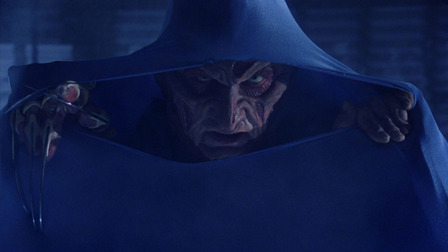
“Wes Craven’s New Nightmare” brings Freddy back to life, as he haunts the nightmares of a few people who worked on the original “Nightmare on Elm Street” film. Most notably troubled is Heather Langenkamp, who played the heroine Nancy in the original film. She gets strange, harassing phone calls from a caller who sings the haunting “Freddy” song (the one that goes, “1, 2, Freddy’s coming for you”). Her son Dylan (Miko Hughes) has an odd habit of sleepwalking and murmuring, “Never sleep again,” while also putting himself in great danger. Robert Englund, who played Freddy in the films, is having nightmares and painting weird pictures.

And Wes Craven himself has been having nightmares too, and is writing a script for a new screenplay. When things start to go very wrong, and Heather actually starts to believe that Freddy might be alive in the real world, she asks Craven about what he’s writing. It turns out that what he’s writing becomes real in Heather’s life. Craven believes that the only way to stop Freddy is to make another movie, and because most of the story involves Heather’s original character, Heather is the focus. This means she has to fight Freddy as Nancy again. Only this time, there’s no shouting of “cut” for reshoots. This is real, or as real as you can be in a dream where if you die in the dream, you die for real.

By the way, Heather is asked to play Nancy for another “Nightmare” movie even though she clearly died in the third movie. But if they can bring Freddy back to life, I don’t see why Nancy doesn’t have a fighting chance.

The idea of “Wes Craven’s New Nightmare” being a horror film within a horror film is unusual, but I’ll take this concept over just another standard story of Freddy just invading people’s dreams. While “Wes Craven’s New Nightmare” follows the “Nightmare on Elm Street” tradition in that it plays with visions of fantasy and reality (in fact, the contrasts grow kind of tiresome after a while, because they seem kind of obvious at times), and while it also keeps the blood and gore consistently horrifying (and the special effects are top-notch), it’s mainly focused on the people who know the tradition by heart because they love to watch horror films. What effect do they have on these people? This includes the actors, who are pleased by the cult following that the series has brought onto the public, and then are horrified by the evil force that the series has generated upon them as well. This affects their own lives.

Having these people play themselves (more or less) in this movie is quite fun. Heather Langenkamp actually shows more dimensions as herself than as Nancy in the original film. She had to, if she was to remain credible. She’s game as an actress who appreciates the fame, but concerned about why she is famous. Wes Craven is terrific, playing himself as a bright filmmaker who knows more about what’s happening and keeps most details a mystery in order to keep the “story” going. Bob Shaye, head of New Line Cinema (which released this film and the predecessors), is gamely satirical as himself stating reasons why there should be a new movie—it’s what the fans want. Robert Englund seems like a fun guy to talk to, despite his reputation as a movie monster. And John Saxon, who played the father in the original film, has a chance to be Heather’s “counselor” in reality when things go wrong and Heather warns him about Freddy.

There are darkly comic moments in “Wes Craven’s New Nightmare,’ such as in an early scene where we see the making of a “Nightmare” movie, with an animatronic Freddy glove and it comes to life and slaughters the special-effects guys (that’s a dream sequence, foreshadowing events in the movie—very clever). But also, there are some genuinely frightening moments in “Wes Craven’s New Nightmare.” Most of them have to do with Heather’s young son Dylan, who is constantly put in harm’s way. One scene has him on top of a jungle gym, possibly being manipulated by Freddy, and about to fall as Heather races to get to him. Then there’s the scene in which Dylan is sleepwalking and makes his across a freeway, nearly being hit by cars and trucks. These are done very well; they’re sincerely creepy moments.

Freddy Krueger himself has updated. While he’s best known as a twisted killer with many one-liners that give him a dark-comedic personality, he actually comes across as legitimately frightening here. He’s more threatening and less comical. He’s more of a monster here than in the other movies. Also, and here’s a nice touch, his appearance is somewhat different than in the films—not too much, but you can tell the difference between the movie-Freddy and the movie-within-the-movie-(reality)-Freddy. Robert Englund is game too and has fun contrasting his actor role with his Freddy role. You can take the campiness of his original Freddy; this is the more frightening Freddy here.

Oh, and I should also mention that Freddy Krueger is listed in the end credits as playing himself. Mwahahaha!

Another positive element to mention for “Wes Craven’s New Nightmare” is that it’s unpredictable. There are many neat tricks and twists to be found throughout this story (or story-within-a-story, if you will). And there are some neat omens, like the constant earthquakes in the earlier scenes and even the earlier dream sequences that foreshadow some important deaths. You’re wondering how is this going to pay off, and it does.

Though admittedly, some of the “meta” elements can get confusing, especially at the very end, “Wes Craven’s New Nightmare” as a whole is a hip, funny, and scary horror film. It’s odd that the two “Nightmare” movies with Wes Craven turned out to be the most successful. I honestly don’t mind Craven working on another “Nightmare” movie. Just hope he’s not doing it because of crazy nightmares, though.

Rookie of the Year (1993)

26 Jan

images

Smith’s Verdict: ***

Reviewed by Tanner Smith

“Rookie of the Year” is a pleasing family sports picture that plays to every Little League baseball player that would love to be the star player, but is mostly benched because he’ll screw things up if he plays. This movie is the story of one of those boys who has a miraculous change of skill that ultimately gets him to pitch for the Chicago Cubs. Of course, it’s not a true story; it’s pure fantasy wish-fulfillment. What kid obsessed with baseball doesn’t wish they could play in the major leagues?

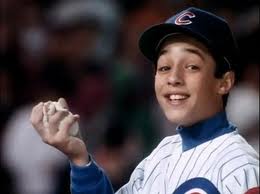
“Rookie of the Year” is about a kid named Henry Rowengartner (Thomas Ian Nicholas), who is probably the worst Little Leaguer in history. He gets called out to right field and tries to catch a fly ball—but he trips, stumbles about trying to find the ball with his cap rim covering his eyes, and then throws it over the fence behind him when he finally grabs it. That’s it—this kid is bully meat for the rest of his life…or is he?

Things start to change for Henry once he trips in the schoolyard and breaks his pitching arm, forcing him to spend the summer in a cast that lifts his arm likes he’s always raising his hand. When the cast is off, the arm is healed in such a way that his tendons are actually tightened closely to one of the bones. When Henry and his friends Clark (Robert Gorman) and George (Patrick LaBrecque) attend a Cubs game at Wrigley Field, where they catch a home run ball in the bleachers. Henry throws it back and everyone is amazed to discover that Henry’s arm is so powerful that Henry is actually able to throw the ball from the stands to home plate.

The kindly Cubs owner (Eddie Bracken) and the slimy General Manager (Dan Hedaya) want to sign Henry onto the team, as it seems he can throw the ball faster than anybody else. Manager Sal Martinella (Albert Hall) gives the kid a tryout and immediately is called upon to play for the Chicago Cubs. Henry pitches several games and becomes an immediate celebrity.

One of the strengths of “Rookie of the Year” is Thomas Ian Nicholas as Henry Rowengartner (his last name is constantly mispronounced by Sal as a running joke). Nicholas gives Henry an appealing personality. He’s openly curious, bright, and excited, and his reactions to almost everything that happens to him is priceless. And then there’s the way he deals with certain games where he’s put on the spot. He has many schemes and tricks up his sleeve that come in handy in two particular game sequences that are both funny and bright. One is when he’s actually called up to bat, and tricks his way around running the bases (he has a small strike zone, causing him to take the base in the first place). Another is the obligatory Big Game—this one, in particular, can’t only be praised for the young actor, but also for the script. It starts out the usual way that all Big Games are supposed to be, but then something happens—I won’t give away what—that forces Henry to rely on his wits to help the team win the game. He plays it like a smart-aleck kid, mocking the other players and at one point “daring” one of them to run.

The whole movie is bright in that way, and has a good amount of clever, funny moments. Most of the comedy comes from a loopy pitching coach, played by Daniel Stern (who also directed the movie). He has an unusual way of speaking and a tendency to hit himself in the head with baseballs after practicing hitting them. The funniest bit in the movie—Stern gets himself caught in a tiny, cramped little closet area in a hotel, and no one is around to help. We see an above shot of just how tight the area is, as Stern looks straight up and says, “Little help now.” That was hilarious.

But the movie also has its dumb moments too. The final pitch, without giving anything away, is handled in a too-corny way. And John Candy, uncredited as a Cubs announcer, tries way too hard to imitate the appropriate voice for a Harry Carey type. I don’t like to criticize John Candy, but I was hoping for something more from him. Other stuff is obligatory, but kind of overdone—the basic example is not the Big Game, but the faltering relationship between Henry and his friends when Henry becomes too busy to hang out with them.

However, there are quite a few nice parts too. Gary Busey is very good as an over-the-hill pitcher who starts out grumpily with Henry, but eventually gives him advice and encouragement. There’s also another appealing character on Henry’s side—Henry’s strong, supportive mother, well-played by Amy Morton. And the scene in which Henry steps onto Wrigley Field for the first time captures the magic that a kid would feel if living this position.

“Rookie of the Year” is unlikely, which is the point for a fantasy. But it’s entertaining, funny, creative, and features a nice leading performance by Thomas Ian Nicholas. It’s a nice film for the whole family to enjoy.