Archive | Three Stars *** RSS feed for this section

Free Willy (1993)

11 Feb

images

Smith’s Verdict: ***

Reviewed by Tanner Smith

The pre-production meeting for “Free Willy” probably went like this:

Quick! We need a family film with a save-the-whales message to give the kids! How do we do it?

What do you mean, “How do we do it?” Why don’t we just make a documentary about the danger that whales face?

Because A) Documentaries don’t make money unless they’re narrated by Morgan Freeman, and nobody will know how cool his voice is until next year when “Shawshank Redemption” is released! And B) Come on, we’re Warner Bros. Family Entertainment now. Let’s make a sweet, charming family-adventure…and make money off of it!

OK, OK, I gotcha. So how about this—we tell the traditional story of a boy and his dog. People eat this stuff up—we’ve had a boy and his dog, a boy and his raccoon, and a boy and his alien. Why not have the whale be boy’s best friend?

Hm, that could work. But we need a certain thing to make sure that people are going to see it…maybe a pop star to sing the theme song!

Michael Jackson?

THAT’S IT!

Yes, “Free Willy” tells the usually reliable boy-and-his-animal story, only it’s an unusual relationship between a young street kid and a killer whale. And while that does seem out there (and sometimes it is) “Free Willy” is innocent and charming enough to make for a winning family entertainment.

Jesse (Jason James Richter) is a young boy living on the streets after being abandoned by his mother and escaping from an orphanage. When he is caught spraying graffiti at an aquatic theme park, he is forced as part of his probation to clean up the mess he made. The main attraction at the park is an orca named Willy, with whom Jesse strikes up an unusual friendship. Soon enough, he finds that Willy is able to respond to the sound of his harmonica. He’s even able to train Willy to do certain tricks that the whale’s trainer Rae (Lori Petty) hasn’t been able to do, and so he’s hired as a co-worker.

Jesse lives with a pair of foster parents (Michael Madsen and Jayne Atkinson), who are both patient and loving towards Jesse. But Jesse doesn’t take to his new home very well, and rebels by giving insults and sneaking out at night. Jesse just doesn’t comfortable with these because he would rather be with his own mother, who would just as soon not want him around. This is how he relates to Willy, who was taken away from his family in the nearby ocean. Both Jesse and the whale are homeless and maybe unable to make the best of their surroundings.

There are not many surprises in this movie—just look at the poster, trailer, or DVD cover and you know how the movie is going to end. And it relies on many clichés and formulas, although while some of these are acceptable because they still work, it’s pretty easy to make fun of the rest of them. The most particular of these elements is the villainous park owners, played by Michael Ironside and Richie Riehle. How can you not laugh when Ironside (who I suppose always has to play the villain) states out loud that they’re both about “making money?”

And while whales are undeniably beautiful creatures (which the movie reminds you right from the beginning, in an opening sequence that stretches out the action of whales jumping), Willy (played by “Keiko”) is probably the least interesting element of the movie, because he’s mostly seen as a big blob for Jesse to interact with, and I can barely see the whale’s eyes to connect with him myself.

And by the way, is it me or does Willy understand English? There are moments in which he nods for “yes” and shakes his head” for “no.”

But despite that, “Free Willy” is a solid family film, mainly because of its dramatic elements with Jesse trying to cope with his foster parents. It also works with how Jesse is able to redeem himself by changing from delinquent to hero, because of having this friendship with Willy whom he wants to help out. This is a gentle movie about a young boy discovering himself, and the relationship between Jesse and his foster parents ring true.

The acting is one of the strongest assets of the movie. Jason James Richter is naturally winning as Jesse—if his performance didn’t work, the whole film might fall apart. Lori Petty is strong as reliable, helpful Rae; August Schellenberg is quite solid as Haida-native handyman Randolph who knows a thing or two about orcas; and Michael Madsen as the foster father Glen is excellent, portraying a three-dimensional individual as he tries patiently to give Jesse a good home while also trying to relate to him. Also good is Mykelti Williamson as Dwight, Jesse’s social worker.

The whale effects are outstanding. Sometimes they would use a real whale (Keiko), but other times, the filmmakers would use animatronic whales. To be honest, I could never tell the difference between which whale was real and which whale was mechanical.

“Free Willy” has its heart in the right place, and the “save-the-whales” message is quite clear, but not so over-the-top that adults will be groaning in annoyance. It’s shot nice, the special effects are convincing, the actors are good, and as I said, the family-drama aspects are well-developed. It’s a charming film.

NOTE: Yes, as I mentioned above, Michael Jackson sings the film’s theme song, “Will You Be There.” It’s a touching song, and this was back when MJ was still king of pop and so if he told people to see this movie, they would. And that’s mainly why this movie was a box-office hit.

Side Effects (2013)

10 Feb

Rooney-Mara

Smith’s Verdict: ***

Reviewed by Tanner Smith

“Side Effects,” director Steven Soderbergh’s final film (yeah, we’ll see about that), has so many twists and turns in its story and development that it’s hard not to think of one of the late Alfred Hitchcock’s thrillers. It’s said that Hitchcock always loved to “play his audiences like a piano” with his films and here, it seems that Soderbergh wanted to do the same thing. To review a movie like this is difficult because I’m hesitant about giving away certain details of the story, even in the beginning. It’s like a movie that Hitchcock would have warned critics not to give away the beginning (“Psycho,” for example).

And I have to be honest—it worked for me. I didn’t watch a single trailer for “Side Effects” nor did I read any other reviews beforehand. (I only noticed the film’s poster, and I was to see either this or “Identity Thief” this weekend.)

“Side Effects” has twist upon twist upon twist, bringing a solid, gripping thriller from one of our best directors.

I have an obligation to at least say a little bit about the story. As the movie opens, we’re introduced to 28-year-old Emily Taylor (Rooney Mara), who is waiting for her husband Martin (Channing Tatum) to be released from a four-year prison sentence (on what charge, I might have missed). As if in a trance, Emily drives her car into a parking garage wall and nearly kills herself. This begins a series of therapy sessions with Dr. Jonathan Banks (Jude Law), who prescribes her a series of antidepressant medications (even though Banks is undoubtedly more interested in drug studies than properly helping his patients). The drugs work, as Emily begins to gain her normal life with Martin again. However, a certain side effect has Emily sleepwalking, and this leads to tragedy…

Period. That’s all I’m going to write about the plot for “Side Effects.” What the tragedy means, what it leads to, and everything that follows further deserves to be experienced. The less you know, the better. But this is a smart film that doesn’t go for the usual elements you’d expect from a modern thriller.

Rooney Mara, playing Emily, is given her first leading role since her Oscar-nominated turn in “The Girl with the Dragon Tattoo.” In the difficult role of a woman fighting depression and confusion, she’s great in this movie. Jude Law, as Dr. Banks, handles his role with great conviction—it’s his finest performance in quite a while. Channing Tatum is a reliable screen presence as Emily’s husband, and Vinessa Shaw is convincing as Banks’ wife who can’t quite handle her husband’s obsessiveness and anger after the aforementioned tragedy occurs (I still refuse to talk). Catherine Zeta-Jones portrays Emily’s previous therapist whom Banks visits for advice about Emily’s conditions, and unfortunately, she’s miscast here. She doesn’t do a terrible job, but she just seems too…obvious.

Not everything about “Side Effects” works. While you can follow the story fine, there are little details I wish were extended—that’s just my personal preference. And the certain twist that sets up the final act of the movie, while I never saw it coming, is a little too much for me to buy.

It’s been reported that “Side Effects” is Steven Soderbergh’s final theatrical feature. Apparently, Soderbergh has said that he wanted to try something new, with TV for example. Maybe he goes and comes back to film, or maybe he likes where his new career will lead him. But one can hope that “Side Effects” does not turn out to be his final film, because this is a director who clearly knows how to make movies and tell stories in a most unpredictable way. If the former is true, and this is his last film, “Side Effects” is a decent way to go. It’s a neat thriller made by a damn good director.

The People Under the Stairs (1991)

9 Feb

images

Smith’s Verdict: ***

Reviewed by Tanner Smith

For a movie director that mostly does horror films, Wes Craven seems like a smart person. His films are not necessarily masterpieces except to many horror fans, but you can see what he shoots for and you have admire him for that. He adds terror and suspense to artistry and imagination. That was the case for “A Nightmare on Elm Street” and “The Serpent and the Rainbow”—“The People under the Stairs” is one of his more satisfying films, in my opinion. It’s a scary, well-acted horror movie with a good deal of imagination.

The main feature is a house full of gruesome surprises, ghoulish children in the basement, passageways in the walls, and a couple, only known as Man and Woman, that are psychotic, delusional, insane, grownup monsters. The people under the stairs in the basement, as the title refers to, are children that they stole as babies and punished very severely when they “heard too much, saw too much, or said too much.” They have stooped to cannibalism after being locked up downstairs for many years—they’re given flashlights to see their ways around and are given dead human meat—don’t laugh—to eat. But the people under the stairs are not the real monsters here—the Man and Woman are not to be messed around with. Anyone who breaks into the house or visits the house to look around (like police or salesmen) wind up murdered by the couple…and then eaten by the people under the stairs. There is no compromising with this couple—they will kill you mercilessly.

And what’s even scarier? They act like it’s their lives’ duty to “punish” people. After they murder mostly-innocent visitors, they say, “May they burn in hell.” They have their own insane delusions of religion and feel like they are supposed to act like this. Also, they have fun while doing this. The Man and Woman are jolly killers, if you can believe this. The Man, especially, is the one who yells at runaways trapped in the house, “Gonna kill yooouuu!!!” At one point, he dances around near the Woman and chants “I got him” multiple times, leaving the Woman to stand not amused and tell him in a firm, clear voice, “Prove it.”

Played by Everett McGill and Wendy Robie, the performances and personalities of the Man and Woman are so over-the-top that even when you shouldn’t, you laugh at certain moments. At the same time, you are frightened because of their behavior. They kill, they sic their bloodthirsty Rottweiler on those who are loose in the house, and they lock up and abuse their teenage daughter Alice (A.J. Langer) very severely, but not as bad as the people under the stairs. (Still, it’s pretty bad.) Alice is a terrified young girl who would like to get out of this house, away from this crazy couple. But nobody ever gets out of this house—the doors are all locked (the front door even gives an electric shock) and the windows are all unbreakable. Inside the house, there are many passageways from inside the walls that Alice’s friend Roach, one of the people under the stairs who has escaped the basement and is being hunted by the Man frequently. The house is like an amusement park haunted house with many surprises around every corner and secret ways to get through many areas.

The passageways come in handy for the young hero of the film—a thirteen-year-old Ghetto kid nicknamed “Fool” (Brandon Adams) who helps his older sister’s boyfriend Leroy (Ving Rhames) break into the house to retrieve a hidden gold coin collection to cover Fool’s family’s apartment rent (one little flaw with this plan is that the Man and the Woman are the landlords to begin with, but oh well). Leroy is killed by the couple and Fool is forced to fight for his life—he makes friends with Alice who gives him some help, he is chased by the Rottweiler, he is menaced by the people under the stairs, and does battle with the Man and Woman throughout the film. This kid has so many tricks up his sleeve in the way he outsmarts these evil adults that this could be an R-rated “Home Alone.” It is very violent and gruesome and frightening—this is not for small children. The R rating is well-deserved.

I mentioned that “The People under the Stairs” was one of Wes Craven’s most satisfying films, and it is impressive. The house is a fun house of horrors, Brandon Adams is a likable resourceful hero, Everett McGill and Wendy Robie are a frightening couple, A.J. Langer is suitably sweet and scared as Alice, and there are genuinely frightening moments. I was cheering for Fool all along, I wanted him to escape this madhouse, and this is quite odd because when you have a child in jeopardy, it seems like a cheap move for suspense. But with the craziness of the villains, it almost seems like all bets are off. It’s this bravery (and again, imagination with the story and sets) that earns “The People under the Stairs” a recommendation from me.

The Runaways (2010)

9 Feb

images

Smith’s Verdict: ***

Reviewed by Tanner Smith

“The Runaways” is a biopic about the all-girl rock band started by Joan Jett, whom we know as the punk rock female singer from Joan Jett and the Blackhearts mainly. For those who have little to no knowledge of The Runaways, her start in the music business, “The Runaways” tells that story with its own touches. The result is a good biopic—not a great biopic. It is well-made but standard in its storytelling. What makes it special—in fact, what makes most biopics special—are the performances from the actors who portray the historical figures the movie bases them on.

The movie opens as a young woman—guitarist Joan Jett, played by Kristen Stewart—and her friend—drummer Sandy West (Stella Maeve)—approach a music agent named Kim Fowley (Michael Shannon). Joan tells Kim that she wants him to manage an all-girl rock band with her as the lead guitarist. Kim hears them play and believes they have potential, so he tells them to be tougher and more energetic in their music performances. He brings The Runaways together and helps bring along the rest of the group—including guitarist Lila Ford (Scout Taylor-Compton), bassist Robin (Alia Shawkat, the rebellious teenage girl in “Arrested Development”), and fifteen-year-old singer Cherie Currie (Dakota Fanning). They are young and ready to rock. But Kim knows getting them known to the public isn’t going to be easy, so he continues to push them harder during practice.

Cherie Currie could be considered the main protagonist of the story. We see her living with her sister and mother (a wannabe actress who always shouts “Places everyone” when getting her daughters’ attention) in a rural home. In an opening scene, Cherie dons a lot of makeup and lip-synchs David Bowie in a talent show, where she is booed off the stage.

What’s most fun about “The Runaways” is the creation of The Runaways’ popular songs such as “Cherry Bomb.” The music is one of the best things in the movie. When the band is on the stage, “The Runaways” rocks along with it. But that’s not the only thing that gives it its strength. Performances from the lead actors make this worth watching. Kristen Stewart is excellent as Joan Jett, with the short brunette hair and attitude that mixes asking for trouble with sincerity. Dakota Fanning is very good as Cherie Currie—I think this is her first role in which she doesn’t play a little girl, but a young woman. The scene-stealer here is Michael Shannon—his character of Kim is a creep and proud of it. He is not likable but he seems very real. What didn’t quite work was some of the elements in the storytelling, such as the relationship between Joan and Cherie. Also, the melodrama in which Cherie’s family misses her is a bit uneven, though Cherie’s relationship with her sister is pleasant enough. Maybe a few scenes with Joan Jett’s home life would’ve made the movie earn a three-and-a-half star rating. What did work, aside from the music and the performances, was Cherie’s descending into the world of drugs and sex, after the band makes it big in Japan. That was convincing enough.

Like I said, “The Runaways” is not a great biopic—it’s a good one and I’m giving it three stars. I just wish the screenplay went further ahead with the band and the relationships. Luckily, they have the performances and the music to compensate for the script’s weaknesses.

Charlie and the Chocolate Factory (2005)

9 Feb

images

Smith’s Verdict: ***

Reviewed by Tanner Smith

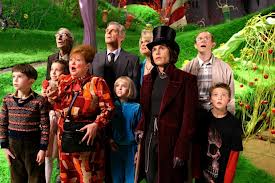
“Charlie and the Chocolate Factory” is a film adaptation of the well-known Roald Dahl children’s book of the same name, as well as a remake of the well-known 1971 children’s classic, entitled “Willy Wonka & the Chocolate Factory.” It’s also an easy movie to review—everything in this movie works except for Willy Wonka, the magical tour guide who was a huge part of the magic in the original 1971 film. While Gene Wilder played him as welcoming, winning, magical, though maybe somewhat deranged, Johnny Depp, playing Wonka in this new version, is just…awkward. Depp plays him all over the place, but there is just no sense of magic with the way he portrays Willy Wonka. He’s not charismatic; he’s uncomfortable and creepy. Wonka is supposed to tour five kids into his wondrous chocolate factory. I’m just glad the parents are there with the kids before the crazy stuff happens to them (more on that later)—especially since their tour guide is a…weirdo.

That’s not to say Gene Wilder’s Willy Wonka in the original wasn’t weird, but at least that was part of his edge. Sure, he was mysterious, but he could be kind when he needed to be and fun to be around. Johnny Depp’s Willy Wonka is not only annoying, but also somewhat psychotic in the way that his motives are never quite clear.

But strangely, even if Johnny Depp’s performance doesn’t work, there are many more elements of “Charlie and the Chocolate Factory” that do. They help me give the movie a mild recommendation.

“Charlie and the Chocolate Factory” centers around a little boy named Charlie Bucket (Freddie Highmore, who previously co-starred with Depp in “Finding Neverland”) whose family is so poor that they have cabbage for dinner every night, all four grandparents sleep and live in the same bed, and there’s a large hole in the ceiling of Charlie’s upstairs bedroom, open to cold weather. Oh, and the house is slanted. He lives in the town where Willy Wonka’s chocolate factory is located—as the story goes, no one goes in and no one comes out. But what goes on in that factory? Who’s working there?

Well, it turns out that five children will get the chance to find out the answers to those questions if they find golden tickets inside Wonka chocolate bars. The first four kids who find it each have serious character flaws—one never stops eating, one is rich, bratty, and spoiled, one is overly obsessed with winning (even chewing a piece of gum for three months for a world record), and one is obsessed with video games and TV. Charlie gets the last ticket, though not without suspense.

That’s the first half-hour of the movie, and then all five kids, each bringing a legal guardian (Charlie brings his feisty Grandpa Joe), arrive at the factory, only to be welcomed by the strange Willy Wonka who will serve as their tour guide. When he first arrives, he’s reading his greeting from cue cards and acts uncomfortable when the kids say “hi” to him. Kind of rude for someone who sends out tickets inviting people to visit inside his top-secret factory.

It turns out the factory is a dream come true. There’s a room that is like a candy wonderland—it’s a meadow made entirely out of sweets. Everything is edible, even the grass and river (which is made entirely out of chocolate and churned by a waterfall). The inventing room is full of strange inventions and neat little tricks all around. There are squirrels that are specially trained to test walnuts. And even more strange, wonderful stuff is seen. “Why is everything here completely pointless,” one of the kids rudely asks. Charlie calmly replies, “Candy doesn’t have to have a point. That’s why it’s candy.” Truer words couldn’t be spoken about this place.

Charlie is a good kid—honest, sincere, nice, and true to his heart. But the other four kids’ flaws get the better of them in this factory. With each stop, one of these kids gets a comeuppance. The fat kid drinks from the chocolate river and winds up in the filtration system after falling in—he shouldn’t have been greedy. The other kids suffer worse fates they had coming due to their flaws, but they still make it out alive so they can learn from their experiences. So the message is as clear, as in the original version—be kind and patient, and one day you’ll be rewarded. That’s how Charlie wins the big prize at the end, which I won’t spoil in this review, if you haven’t seen the original version already.

“Charlie and the Chocolate Factory” was directed by Tim Burton, who specializes in weirdness/quirkiness. As is the case with most of his movies, the movie looks incredible. Even before we go inside Willy Wonka’s chocolate factory, the everyday modern world is neat in the way the settings/surroundings are exaggerated to look like an illustrated fairy tale. The outside of the factory seen from behind a large gate, the young protagonist’s slanted little house, even the candy stores—all of these locations/sets are fun to look at. And that’s just the first thirty minutes of the movie. Inside the factory, later, we get more visual treats. The candy room is a pure delight. Everything looks edible, and you really want to just fly into the screen and join the experience. The chocolate river, in particular, looks especially realistic. And there are more visual treats as the movie (and factory tour) goes along.

The story gets deeper with Wonka’s back-story—how Wonka became who he is now and why he apparently has a “parent” complex. We never even saw a back-story in the original version. That’s because we didn’t need one—the character was already as interesting as he could be without being the main focus of the story, which is Charlie. However, while it may not be necessary, there needs to be at least some saving grace from Johnny Depp’s awkward performance.

And I’m sorry, I keep coming back to how uncharismatic this Willy Wonka is. What’s really surprising is that Johnny Depp playing the role sounds like it would be great. This should have been the high point of the movie, or at least one of them. But I have no idea what he’s doing with this performance. How can you not think of Michael Jackson crossed with Marilyn Manson when watching him? That’s not a welcome combination, and I don’t care who I’m talking to with this review.

But like I said, everything else in the movie works. The movie looks great, the story is well-executed, and the other actors do competent jobs. Freddie Highmore is likable and sweet as Charlie, David Kelly is wonderful as Grandpa Joe, and the other four kids—Julia Winter, AnnaSophia Robb, Jordan Fry, and Philip Wiegratz—are good comic actors.

OH! I cannot believe I forgot to mention something else I liked in this movie—the Oompa-Loompas, the race of strange, little men (all of which played by Deep Roy) who are the workers of the factory. Whenever one of the kids gets into trouble in the factory, there they are to sing songs about their fate. Their musical numbers come out of nowhere and are as weird and fun as the singing waiters in “The Polar Express.” These sequences are very delightful.

“Charlie and the Chocolate Factory” is a nice fantasy film, despite Johnny Depp’s awkward performance. Just about everything else in this movie works well and are enough for me to rate it three stars. I gave the original film four stars, and that was made more than thirty years before this one. At least that version had a more charismatic tour guide for the chocolate factory.

28 Days Later (2003) – 28 Weeks Later (2007)

8 Feb

28-weeks-later

Smith’s Verdict: ***

Reviewed by Tanner Smith

Somehow, I always had a feeling that those darn animal-rights activists would find some way to cause chaos, let alone practically the end of the world. In the opening scene to the horror film “28 Days Later,” a misguided group of British animal liberation activists break into a Cambridge laboratory and free a caged chimp, despite the helpless scientist stating the animals are infected with a dangerous, mysterious, extremely contagious virus dubbed “rage.” The contaminated chimp violently mauls one of the activists, who then turns on the other, and this is the beginning of the end.

Those pesky animal-rights people. They think they know best, but they certainly don’t know better than to go against someone exclaiming, “They’re infected with rage! They’re contagious!”

28 days later, the virus has spread even further. Jim (Cillian Murphy) awakens in an empty, abandoned hospital after a comatose state that started before the disaster. Confused and unnerved, he wanders the streets of London and finds that it’s completely deserted and trashed. Then he is attacked by one of the “infected” people and saved by other survivors who inform him of what has happened and what the “infected” have become—they are wild, aggressive, raging, bloodthirsty beasts with not a sense of human left in them at all. Apparently, all it takes is a bite and a drop of blood to transform you within 10-20 seconds.

Jim and another survivor, Selena (Naomie Harris), encounter two other survivors—a middle-aged man named Frank (Brendan Gleeson) and his young daughter Hannah (Megan Burns). They come across a radio broadcast from the Military that claims a group of soldiers are in a “safe zone” which keeps the secret to curing the infection. So, they all set out to find them.

“28 Days Later” is a gripping thriller with memorable visuals (such as Jim walking down the empty, isolated streets of London) and a surprisingly convincing dilemma. The way these infected “zombies” (for lack of a better word) come about is effectively complex, and all the more frightening. And these beasts are pure rage with only two things on their minds—flesh and blood. They’re very fast, unlike most zombies, and worse yet, they travel in packs. It’s one thing to have one or two zombies charging after you, but an army? That’s always fearsome.

Although, I have to wonder—if they travel in packs, then why don’t they attack each other? Wouldn’t they be hungry enough if no healthy people are around?

Even if “28 Days Later” were just about this infection and these zombies, it would have been a successful horror film. But this movie focuses more on its characters than you would expect from a film of this genre. You grow to like them as you get to know them, and you root for them to survive the infection, the zombies, and whatever comes next. And also, the film becomes more of a tale about human nature, once the characters find the military base where they think they’ll be safe. There’s something more here than what seems to be, and you have to wonder who can really be trusted in this changed world. Questions of evolution, the future, and the right to kill are brought up as well as, “Who’s human and who’s the beast?” That’s a question that science-fiction writers love to try and handle and we have it in “28 Days Later.” It’s predictable, but effective all the same.

“28 Days Later” is a great thrill ride. I was invested from beginning to end, and a lot of credit for that has to go to the director Danny Boyle. He shoots on video to give the film its gritty, almost documentary-like feel (and also because it’s probably more affordable). The camera-shaking element helps as well to keep the tension going in scenes such as when the heroes are trapped in a dark tunnel, and having to change a tire on their car quickly before the zombies catch up with them. The tension is present, as are the shocks that ensue.

Jim, Selena, Frank, and Hannah are all well-developed characters and they’re well-acted by Cillian Murphy, Naomie Harris, Brendan Gleeson, and Megan Burns. All four actors do credible jobs, but more importantly, it’s the writing of these people that must be recognized. Writer Alex Garland remembers that a key essential element to a successful thriller/action picture/horror film is that you care for the characters as much as anything else.

Sure, the allegories can be very obvious, some questions needed some answers, and the ending is kind of a cheat in some way, but for the most part, “28 Days Later” is a scary, intelligent thriller that even gives something as ridiculous as “zombies” a good name.

——————————————————————————————————————

11later600.1a

Smith’s Verdict: ***1/2

Reviewed by Tanner Smith

Who should be feared more? The contaminated zombies that want nothing more than to eat anyone they can catch up to? Or the government that orders a Code Red; to end the problem by picking off everybody to make sure this doesn’t leave the area? In the case of “28 Weeks Later,” both sides are equally threatening. They each bring about a certain single trait—one side contains merely rage; the other side knows less about human nature than they think they do. Both of them bring certain death.

Several months after the contagion that infected about half of the human race (turning them into rage-filled, bloodthirsty zombies—a word that is never used, for better or worse), the infected have died out and Britain is now under quarantine, as US forces have taken over. Settlers are brought in to repopulate the area. These include two kids—Andy (Mackintosh Muggleton) and Tammy (Imogen Poots)—who had been on a school trip to Spain during the catastrophic outbreak. They’ve come home to their father, Don (Robert Carlyle), who now has to explain to them what happened to their mother, Alice (Catherine McCormack). In an unbelievable act of cowardice, Don abandoned his wife during a zombie attack to save his own life. (We see that in the film’s gripping, intense opening sequence—later, Don just tells the kids there was nothing he could do to help.)

Andy and Tammy sneak out of the Green Zone to their old house to pick up a few things, where they discover their mother; still alive, symptom-free, and catatonic. The military goes in to pick up the kids and also brings back Alice to a biohazard room to see if she has the Rage Virus.

I won’t be giving anything away by saying that Alice is in fact infected and that the contagion is going to start all over again, because if that didn’t happen, we wouldn’t have a second half. The first half is mainly for setup and character development. Aside from Don, Andy, and Tammy, we’re also introduced to Doyle (Jeremy Renner), a sniper whose conscience makes his job difficult; Scarlet (Rose Byrne), a medical officer; and Flynn (Harold Perrineau), a reluctant chopper pilot.

Then the second half arrives, and “28 Weeks Later” really kicks into gear with one long, action-packed, intense thrill ride as the virus becomes active again and the military are given one basic order—Code Red. Everyone is a target as Scarlet, Doyle, and the two kids are on the run from the soldiers and the newly-infected zombies.

The second half of “28 Weeks Later” is phenomenally thrilling and even terrifying, the further it continues. It doesn’t let up. The action scenes are superbly handled; they’re very effective and keep audiences on the edge of their seats. There are three key sequences that are equally exhilarating—one is the first sniper attack in which Doyle’s conscience gets the better of him once he sees young Andy running for his life among a mixed crowd of infected and normal, frightened people; one has the characters trapped in an abandoned car by advancing soldiers, nerve gas, and the attacking zombies; and another is seen in night vision as the characters try to keep track of each other, and you just know that one of the infected is going to show up soon, and that feeling alone gets you shaken up. “28 Weeks Later” delivers one hell of a ride.

Who is man and who is beast? That’s the allegory that all science-fiction writers love to use in some or most of their stories, and when it works, it’s very effective, as is the case with “28 Weeks Later.” It’s intense, thrilling, and scary. This isn’t for the faint of heart, but after watching this movie, you’ll be glad the nearest person is still human.

Dracula (1931)

7 Feb

vlcsnap-2011-10-23-17h48m58s209

Smith’s Verdict: ***

Reviewed by Tanner Smith

“Dracula” remains one of the most notable titles in horror movie history, as well as a common spot in the most influential “talkies” of the 1930s. But despite its reputation, does it still hold up? Well, the answer would be “no.” This movie has not aged well—it’s campy, hokey, and really dated. By today’s standards, it’s not very scary and you really can’t take a lot of it seriously. It’s a lesser movie that a lot of people make it out to be. Watch it again, and you’ll probably see what I mean. But “Dracula” is still an entertaining watch. It’s atmospheric, has its share of memorable moments, and features an entertaining villain in Bela Lugosi’s Count Dracula, a vampire. For these reasons, I can recommend the film…slightly.

What do I mean by atmospheric? Look at the scene in the beginning of the film when a British real estate agent named Renfield (Dwight Frye) visits the dark and decaying Castle Dracula, high in the mountains of Transylvania. Look at the inside of this castle and just how decrepit it is. You totally buy this as Dracula’s castle. (Though, why are there armadillos in Transylvania?) It’s here where Renfield meets the sinister Count Dracula who stands on top of the stairs, hears a wolf howl, and states, “Listen to them—children of the night. What music they make.” Yes, this was the 1930s—subtlety in villain characters weren’t exactly a staple in horror movies. But I don’t care—it’s an iconic line for a good reason. Anyway, Renfield quickly falls under Dracula’s spell and becomes his assistant as he helps transport him to England. But upon arriving, Renfield is committed to an insane asylum because he has completely changed from sane and nervous to maniacal and ranting. He also eats flies and spiders.

Meanwhile, Dracula roams the village and seeks new victims to feed upon. He bites a woman on the neck and she becomes a vampire. But his next pick, Mina (Helen Chandler), is more of a challenge, since she’s constantly protected by her boorish fiancé John Harker (David Manners), her father (Herbert Bunston), and clever Professor Abraham Van Helsing (Edward Van Sloan). Van Helsing is the only one who believes in vampires and also delivers the line that hits a strong note in the screenplay—“The strength of a vampire is that no one will ever believe in them.” He soon becomes a threat to Dracula, since he knows how to stop him.

It’s so good to see most of the vampire trademarks in this movie. You can pretty much count them off and smile whenever they’re mentioned or shown. There’s the coffin for the vampires to sleep in during the day (because they only come out at night), the bites on victims’ necks, the setting of the castle in Transylvania, Dracula’s hypnotic eyes, the crucifixes that (for some reason) seems to harm vampires, the giant bat form of Dracula, Dracula not casting a reflection in a mirror, a wide-eyed, crazy assistant, and of course Dracula’s long black cape. It’s nice to see them all in one movie, and I enjoyed singling them out. \

If there’s one very important element to consider from “Dracula,” it’s Bela Legosi. His distinctive accent, calm manner, and huge eyes can make for a realistic vampire. Aside from Legosi, however, the only two actors who stand out in the cast are Edward Von Sloan who’s a hoot as the wily Van Helsing and Dwight Frye as the manic Renfield. Everyone else is either bland or unconvincing.

The film is anticlimactic. From everything Van Helsing states about handling the situation of saving Mina and killing Van Helsing, it’s a huge disappointment. It’s much ado about nothing, as most of it is taken place off-screen, it’s not exciting in the slightest, and the whole final act is let down already by its neverending, calm orchestra background music score.

“Dracula” may not be the classic that it’s been said to be, as it has many flaws. But it is still an entertaining watch.

Road Trip (2000)

6 Feb

4fdea77cb18fc

Smith’s Verdict: ***

Reviewed by Tanner Smith

In 1978’s “National Lampoon’s Animal House,” Tim Matheson uttered the words “road trip” and that led to a very funny sequence while the Deltas are on a road trip. “Road Trip” seems like an extended play on that sequence—it makes sense, considering that the executive producer is Ivan Reitman, who produced the former. The result for “Road Trip” is somewhat uneven but mostly very funny and, in its own way, kind of sweet.

The main character is Josh (Breckin Meyer), a student of the University of Ithaca. He has a long-distance relationship with Tiffany (Rachel Blanchard), who goes to the University of Austin. They call each other every day and Josh sends videotapes of himself to her. But lately, Tiffany doesn’t call Josh back. This upsets Josh, who thinks that Tiffany may be cheating on him. It also drives him to give in to the seductiveness of the attractive Beth (Amy Smart), who has a crush on Josh and is being stalked by the nerdy teaching assistant Jacob (Anthony Rapp). They have sex after Josh bids on her at a girl auction held at a party, while being videotaped by Josh’s camcorder. But the next day, Tiffany finally returns Josh’s calls and says that she went through a mourning period due to her grandfather’s death. But wait. It gets worse—the sex video is accidentally mailed to Tiffany (one of Josh’s roommates mixed it with Josh’s “I miss you” tape, which he meant to send). Josh has three days to get from Ithaca to Austin before Tiffany comes back to school and sees the tape. Josh is joined by three friends (Seann William Scott, D.J. Qualls, Paulo Costanzo) on…what else, a road trip.

Of course, it’s not whether or not characters in road-trip movies make it to their destination that’s important. It’s what happens on the way. A lot happens on this road trip—their car explodes after jumping a huge ditch, they steal a bus, they spend the night in an African-American fraternity house, and more that I can’t give away. Some of the jokes are hit and miss, but there are more laughs. There is also a great deal of raunchiness—a diner cook makes French toast in such a nasty way that you might not want to try it again, there is a lot of nudity, sexual references, and sperm donations (in the most unusual way). You could call this the first follow-up to “American Pie,” which redefined the genre of teen sex comedies. (Oddly enough, Seann William Scott, who played Stifler in “American Pie,” plays a big-mouth best friend here.) Oh, and I almost forgot to mention the subplot involving MTV’s Tom Green as a seven-year student at Ithaca who tries to feed a mouse to a snake and terrorizing it until the moment of “fury.” That’s funny, too. And also a subplot involving D.J. Qualls’ hard-as-nails father (played by Fred Ward) who believes his son is kidnapped and waves a gun at anyone who doesn’t answer questions. A lot happens in “Road Trip” and even if all of it doesn’t mesh well, you still have a good time.

The real show-stoppers of “Road Trip” are D.J. Qualls and (sue me) Tom Green. D.J. Qualls is brilliant as the nerdy, cowardly college student who is afraid of his father and has a redeeming point on this road trip. Observe his performance and notice how flawless he is at playing this character. And as for Tom Green as the film’s narrator—this is probably the only time I’ve found him amusing. Then again, he tones down his persona here. All in all, I did like the characters and laugh a lot, so I recommend “Road Trip” while saying it could have been better.

Flatliners (1990)

5 Feb

flatliners

Smith’s Verdict: ***

Reviewed by Tanner Smith

“Flatliners” is a thriller that asks the question, “What happens to us when we die?” According to the main character in the film, no one can know for sure…unless someone dies and then lives to tell about the afterlife experience. But how is that possible? Well, for the characters in “Flatliners,” it’s possible. As for me, I’m not sure if the method would work, but I personally wouldn’t try it out either.

Let me explain—the movie is about a group of medical students who one-by-one stop each other’s heartbeats, to die. Before too long, the others revive the person. So that person will have come back from the dead to live to explain what was happened.

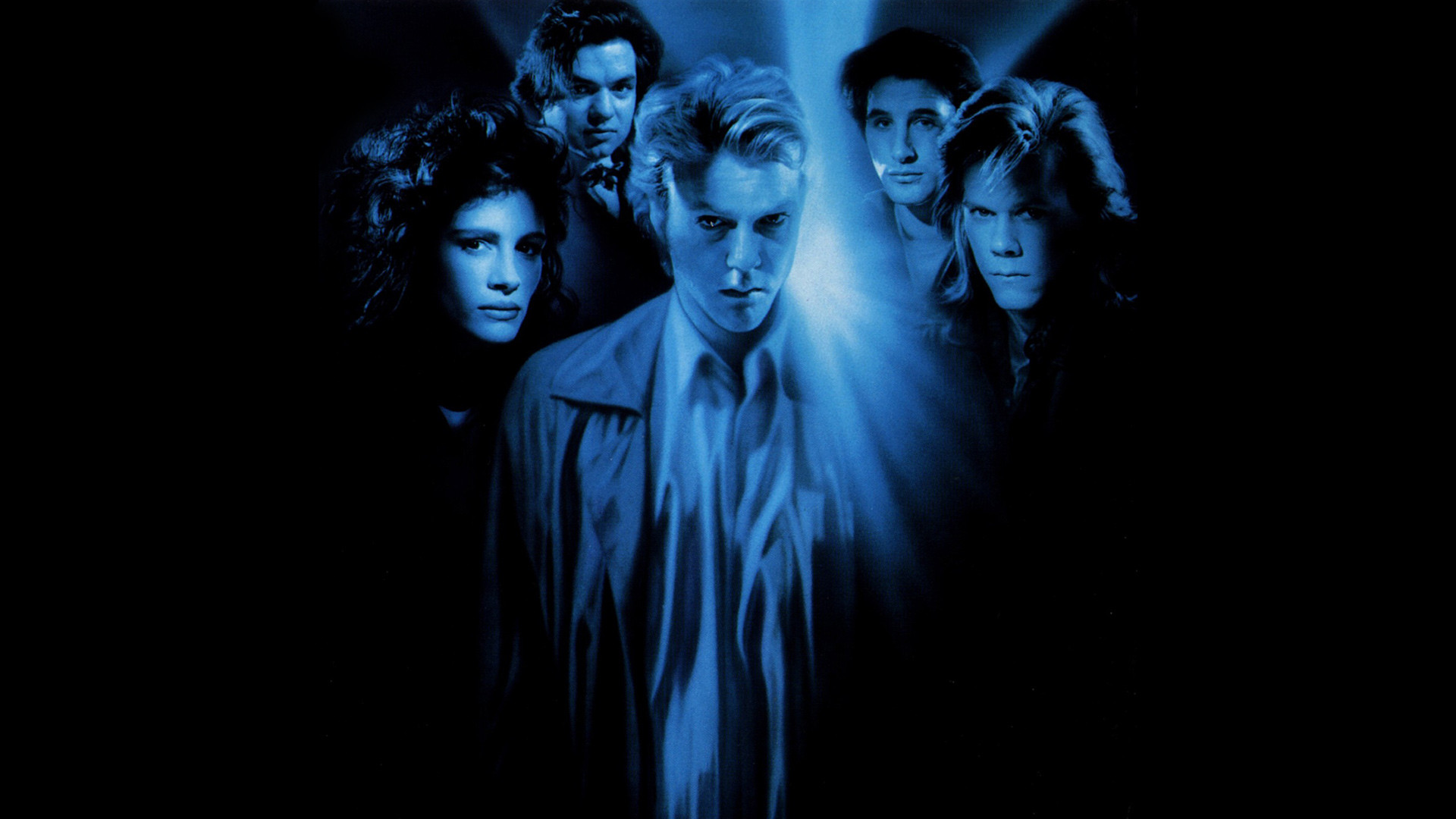
Being medical students, these people have been taught to play God to their patients. It’s Nelson (Kiefer Sutherland) who has the idea to look God in the eye with this little experiment. He enlists the help of Rachel (Julia Roberts), Labraccio (Kevin Bacon), Joe (William Baldwin), and Steckle (Oliver Platt) to sneak into the school after hours with medical equipment, in order to lower his heart rate, die, and have the others revive him by emergency measures. This experiment is dangerous, and would result in both death and expulsion…but it works. Nelson has come back from the afterlife, convincing the others to try it out themselves. Thus tampering with God’s plans for them.

This is an intriguing concept for a movie and it has a top-notch cast, as well as a unique, incredible style to it, from director Joel Schumacher. Also, the idea behind the afterlife’s plans after their experiment is quite something indeed. You know how when you nearly escape death and your life flashes before your eyes? In “Flatliners,” when the characters kill themselves and then are revived again, their biggest sins and fears (mainly to do with guilt) are brought back along with them. They haunt them to no end—for example, William Baldwin’s character is known for his one-night stands and secretly videotaping sexual intercourse; now whenever he looks through a camera or to a TV, he sees those same women, asking “How could you do this to me?” or saying, “I trusted you.” They conclude that the solution is to face them instead of run away from them. This is the movie’s way of saying that you should have your emotions in check before you die. That’s very clever.

This is when “Flatliners” stops becoming an adventure and a thriller and turns into drama. But while I got into Kevin Bacon’s story, and Kiefer Sutherland’s story becomes the central conflict, I feel like William Baldwin’s story had no satisfying turn and Julia Roberts’ entire story is handled so heavily that I felt like I was watching an afterlife-themed soap opera. (Oliver Platt doesn’t “flatline,” which he gladly mentions.)

There’s one thriller aspect that annoyed me, and it had to do with the “flatlining.” Actually, it’s not necessarily the flatlining; it’s the reviving. The first time you see it is kind of suspenseful, but when you have to see it a few more times, suspense is long gone and the scenes desperately try to hammer in the tension to little prevail. I was also annoyed by the competition among the characters based on who can stay dead the longest.

“Flatliners” works as a thriller, and works fine as a drama (though like I said, that’s mainly coming from Sutherland and Bacon’s separate story arcs, which are the strong points). Is there a tunnel with a bright light leading to heaven after you die? I don’t doubt it. Just don’t ask me to undergo this sort of therapy to find out.

21 Jump Street (2012)

3 Feb

21-Jump-street-21-jump-street-2012-26466089-1280-853

Smith’s Verdict: ***

Reviewed by Tanner Smith

Remember in the buddy-cop movie-spoof “The Other Guys” when Will Ferrell and Mark Wahlberg are blown out of proportion after an explosion nearby? Remember how Will Ferrell complained, “How do they walk away in movies without flinching when it explodes behind them?! There’s no way! The movie industry is completely irresponsible for the way they portray explosions!” So sue me—I didn’t laugh at that. The picking-out of the clichés in action movies (though mainly in horror movies as well) has itself become a tired cliché. Quite odd that I’m criticizing what the screenplay was criticizing because it criticized them too much. It was fresh before, like the original clichés themselves. But nowadays, whenever a movie tries to do that, it doesn’t quite work and I wind up saying, “Weak.”

That is why within the supposed-clever satire of the big-screen adaptation of the late-1980s/early-1990s TV show “21 Jump Street,” there was a scene that really made me smile—it involves a police chief moving the movie’s central characters, two misfit cops, to a place that was tried before in the late-1980s and returning to business because “originality is gone and no one has any good ideas.” (It’s sad to admit that I’m paraphrasing; I should’ve written the line down in my phone immediately after I heard it.) It’s no secret that that line is a direct reference to the movie itself. The movie is based on a popular show called “21 Jump Street” that ran from 1987 to 1991. Now for early 2012, Hollywood executives must have thought it’d be great to greenlight if it was a very loose adaptation—not a drama like the original show, but a mashup of screwball comedy. I’m not saying I had a problem with that—I was quite interested when I heard that this new version of “21 Jump Street” was taking the more comedic approach. But that’s mainly because—and I’m just going to come out and say it—I never really liked the show. Even though a lot of people are fond of it and it jump-started its star Johnny Depp’s high-profile acting career, I just felt that the show itself was pretty bland. (But to be fair, I’ve only seen the first few episodes on DVD—maybe the show got better, but I don’t know.)

But anyway, back to the review of the movie. “21 Jump Street” has about as many tongue-in-cheek approaches to certain buddy-cop movie clichés that you would expect, and its satire is about as subtle as “The Simpsons,” but I must say I got more stupid laughs from this movie than I did with “The Other Guys.” “21 Jump Street” does pick out the clichés and isn’t afraid to do so. As a result of a merrily vulgar screenplay, there are jokes that don’t work, but luckily, most jokes that do. And more importantly, I laughed. That is the purpose of a comedy, and I did laugh quite a lot during this big-screen version of “21 Jump Street.”

“21 Jump Street” stars Jonah Hill and Channing Tatum as cops Schmidt and Jenko. In high school, they were complete opposites—Schmidt was a shy nerd; Jenko was a dumb jock. But seven years later, they meet again at police academy and become good buddies, despite their differing personalities. Schmidt and Jenko expect chases and explosions to come into their lives, but as of now, they’re stuck riding on bicycles for park patrol. A bust goes wrong—Schmidt is too nervous to fire his gun, and when they finally catch a suspect, the arrest isn’t precise because Jenko doesn’t remember the Miranda Rights. (Apparently, you have the right to be an attorney.) Schmidt and Jenko are then sent to an undercover unit called “21 Jump Street” (you know, the project that is starting over again because “nobody has any good ideas anymore”), where they’re assigned by their new captain (Ice Cube, consistently funny as the angry boss) to investigate a dangerous new drug being sold at a high school. This means they’ll have to infiltrate the school, masquerading not just as brothers…but as high school students.

These two 20-something-year-old guys make look to old to be in high school (and that’s brought up in the movie sometimes, too), but let’s face it—they’re able to keep their dignity in sense of appearance, which is more than I can say for Johnny Depp, who in the first episode of the original show had to dress like an 80s punk. At least these guys, in this day and age, can dress casually and fit in. Anyway, Schmidt is supposed to be the nerd in AP Chemistry and band class, while Jenko is supposed to be in drama class, but due to a mixup on their part, the roles are reversed. This leads to some pretty funny situations where these guys, posing as teenagers, are in the wrong place at the wrong time, and just attempting to wing it.

This is a preposterous premise, but to me, it’s fun to see an adult go back to high school in a comedy under these certain circumstances—I guess that’s why I liked “17 Again.” I don’t know why I like this gimmick, seeing as how I’m just a couple years out of high school, and wouldn’t dream of going back myself (not yet, anyway), but it does show promise for a comedy. In this movie, Schmidt and Jenko throw their responsibilities as police officers away just to find the right ways to fit in—they throw a party at Schmidt’s parents’ house, Schmidt tries out for the school musical with a popular girl (Brie Larson, with a sweet smile), and the two guys even, in one of the funniest scenes in the movie, are forced to take the new drug that’s being dealt at the school, just to prove to the smooth dealer (Dave Franco, smooth but kind of weak villain) that they’re not “narcs.” One of the more appealing subplots involves Jenko as he falls in with a trio of nerdy outcasts, who are good kids and resourceful enough to help with the bust. This is also one of those movie high schools where authority figures are either clueless or invisible. There doesn’t seem to be much control in this school—the principal is only seen in a couple of scenes. There’s a chemistry teacher (Ellie Kemper) who takes a sexual interest in Jenko, a drama teacher (Chris Parnell) in his own world, and a gym teacher (Rob Riggle), who’s about as dumb as they come. Am I crazy or does that make Schmidt and Jenko, these misfit odd-couple cops, the more mature people in the school?

There are a few things in “21 Jump Street” that don’t work. A few satirical lines don’t reach the pinnacle for good laughs, the addition of Schmidt’s parents who still treat Schmidt like a little boy doesn’t work to its full potential, and the chases and explosions, when they do come, aren’t as funny, save for a few effective tongue-in-cheek approaches. But there are more laughs to be had when it focuses on the two guys as they continue their way back into high school. And there’s also a hint of sweetness in this friendship between Schmidt and Jenko. As played by Jonah Hill and Channing Tatum, they click well together and form an authentic friendship among the ridiculousness of the script.

It’s a funny thing about Jonah Hill’s career. In his first few roles, he’s been known to be an obnoxious presence that you either accept as a character or just want to shut up. I think, since the comedy “Get Him to the Greek” in 2010, Hill has found a way to relax on-screen and connect with the audience (and still be funny) without having to scream every other line in anger. That served him well in the indie comedy-drama “Cyrus” and especially well in the sports drama “Moneyball,” which garnered him an Oscar nomination. Now, after the dreary return to obnoxiousness in “The Sitter,” he’s relaxed (and slimmed down, as well) for “21 Jump Street” while still being likable and pretty funny.

Channing Tatum hasn’t shown a lot of promise in movies—he usually comes off as pretty stiff. But now, people have found a simple solution—put the guy in a comedy! Tatum is hilarious in this movie. His approach to everything he doesn’t understand and yet has to follow through with gets a laugh just by his attitude. Tatum is willing to try something new here, and as a result, he’s charismatic and pretty funny. Put him in more comedies.

The final action climax is where the movie almost lost me, but there are still enough gags and satirical references to get me through it, complete with a fun payoff for a setup having to do with a chemistry experiment.

“21 Jump Street” is a nice surprise, given where it was thought of. I guess someone really did run out of ideas and decided to borrow the premise from a popular TV show and bring it to the big screen. Well, if you’re going a different approach, be sure to have a lot of fun with it.