Archive | Three Stars *** RSS feed for this section

Red Dawn (2012)

12 Mar

GGT_24-11-2012_SCREENLIFE_01_SCN091112Red3_fct1025x631x78_t460

Smith’s Verdict: ***

Reviewed by Tanner Smith

Suspend your disbelief. Sit back and relax…and then next thing you know, you’re on the edge of your seat in the middle of intense action! That is the best way to enjoy “Red Dawn”—at least, that’s how it was for me. Yes, it’s true—I rather enjoyed this modern retelling of the popular 1984 war film (also called “Red Dawn”), while most critics found it to be disposable entertainment. But here’s the obvious wrong element to that phrase—it’s still entertainment in my eyes. With nicely orchestrated action sequences, and a go-for-it style and tone, I found “Red Dawn” to be a suitably energetic action flick.

For those who don’t recall the original 1984 film, it was about a group of high school teenagers who transform into soldiers when their hometown is in the hands of a foreign army. The idea of young people being able to perform great heroic deeds to defend their home and freedom is still a very intriguing idea, and I’m always interested in checking out what the newest movie of such elements has to offer. Earlier this year, I enjoyed the Australian teenage action/adventure “Tomorrow, When the War Began.” Now about eight months later comes “Red Dawn,” the modern remake of the 1984 film of the same name. And I’ll state right now—I understand the film’s flaws. I get it, OK? The war element is defined in an improbable way. The characters aren’t developed enough. The shaky-cam gimmick that they use gets old, as it usually does. The pacing is a bit rushed. The ending feels more like the end of a first-entry in a franchise (which there probably won’t be).

I get it. I don’t care. I know that’s weird of me to say, but…I don’t care. I was entertained. The action was very intense and it kept me interested in what was going to happen. The teenage characters, while not really developed enough, are still likable enough for us to root for them, and they’re played by appealing young actors. The first sights of jets and paratroopers arriving, as seen looking from a suburban front lawn, are chilling and visceral. And I even bought some of the dramatic moments as well.

Instead of the Russians occupying the hometown of our young heroes, and with connections to other parts of America, it’s North Korea that has become our invaders. (Although, it’s said that Russians have helped—and by the way, don’t ask. You shouldn’t care.) They land in Spokane, Washington the morning after a hard-fought high-school football game. The “Wolverines” star player—Matt Eckert (Josh Peck)—has just cost the game, and goes home in misery, while the next morning, he and his visiting older Marine brother Jed (Chris Hemsworth) are awakened by the thud of bombs. They look outside, see the chaos appearing from the sky as enemy troops attack, and get the hell out of dodge, along with a few friends—including Robert (Josh Hutcherson); Daryl (Connor Cruise); Toni (Adrianne Palicki); Danny (Edwin Hodge); Julie (Alyssa Diaz); and Greg (Julian Alcaraz).

The setup is probably the best part of the movie. Introducing these kids as regular teenagers before putting them in this heavy situation was a smart move—in this way, it plays like the regularity of “Friday Night Lights,” with a neatly-cinematographed football game sequence, as well a brief scene involving small-town mingling, that suddenly gets interrupted by a Roland Emmerich/Michael Bay type of invasion. The sequence in which the attack arrives, recalling 9/11 moments, is very well-done and makes for a very forceful action scene in which Jed, Matt, and friends desperately race to escape town before it gets even worse. But did they really have to shake the camera so much?

So with the town in control of the communistic invaders, and most of their parents already killed (and Daryl’s father is the mayor who has no choice but to help the interlopers), Jed takes charge of the small group and ultimately decides to fight. Thankfully, he has military training and so he trains the younger ones to become soldiers as they plan their moves as a guerilla hit-and-run defense force. They use their name—the Wolverines—as a term of rebellion.

Where’s the US Army, you may ask? Well, they help in the background, and the Wolverines do come across a small group of American fighters, led by Lt. Tanner (Jeffrey Dean Morgan), who can’t believe that a group of small-town teenagers could possibly be the great line of defense they’ve been hearing about. (Hey, it could happen. And who knows—maybe other football team members have decided to rebel as well.)

I mentioned that the pacing of “Red Dawn” was somewhat rushed. I could have used more scenes in which Jed trains these inexperienced kids how to fight, instead of a quick montage, and I also am a bit confused as to whether or not this is a national invasion or a local invasion. I think they explained it, but it was somewhat brief and I wasn’t sure what was happening to the rest of the United States. There’s the supposed evolving of young Robert as he makes his first kill and then has a supposed “change”—we never see enough of that, nor do we know what he’s going through. The storyline is not easy to figure out once the Wolverines have made themselves known, and that’s what made it more fun, as they race about in one combat sequence after another, and finally planning what they hope to be a final blow (which we all know it is not) as they sneak through the local police station that the enemy has taken as their headquarters.

We still have moments among the characters—not much, but they’ll do. Most of which involve Jed and Matt’s sibling rivalry, as Matt is a class-A screwup trying things his way and unwittingly putting the rest of the team in danger (most of which, from earlier, are attempts to rescue his captured girlfriend Erica, played by Isabel Lucas). Then there’s a very brief subplot in which Toni develops a crush on Jed, and wouldn’t you know it—just before they’re about to get intimate, there’s an explosion in the distance.

Chris Hemsworth plays the strong, effective leader type as well as Patrick Swayze did in the original film 28 years ago. Adrianna Palicki could have had more to do, but she makes the most of her underwritten role. The constantly-working young actor Josh Hutcherson is fine, while newcomer Connor Cruise is adequate at best. Josh Peck’s mumbling sort of got annoying, as did his character’s ego, but the performance kind of grew on me after a while.

I guess I’ll also say this about this “Red Dawn” remake (although I get the feeling I’m never going to live down this positive review)—it’s consistently entertaining. It knows it’s a movie and never tries to become reality, unlike the original film which tried too hard to play at both the violent angles and the dramatic elements to the point where it sort of put itself in the “strong first half/lackluster second half” category. Here, “Red Dawn” is a popcorn movie through and through. It’s fun, it’s exciting, it’s intense—just don’t expect too much in the sense of logic and you won’t be disappointed.

NOTE: Years later, I took back this positive review. Read the Revised Review here.

Fright Night (2011)

12 Mar

????????????

Smith’s Verdict: ***

Reviewed by Tanner Smith

First, I’ll state that I liked the original 1985 horror-comedy film “Fright Night” as a clever mix of horror and comedy. It wasn’t a masterpiece in the horror genre, but it was still kind of fun. But more importantly, I think this 2011 remake is just as good. Hey, seeing as how good vampire movies come in short supply nowadays, that’s good enough in my book…or review.

The main protagonist is a teenager named Charley Brewster (Anton Yelchin, “Star Trek” and “Terminator Salvation”). He used to be a high school nerd until he started dating the hottest girl in school—Amy (Imogen Poots, “28 Weeks Later”)—and avoided his nerdy ex-best friend Ed (Christopher Mintz-Plasse—yes, McLovin from “Superbad”). Now he’s a jerk who ignores Ed’s cries for help.

Why does Ed want Charley’s help in the first place? Well, he believes that Charley’s new next-door neighbor in their suburban neighborhood—a smooth-talking brooder named Jerry—is a vampire. He also believes that he has killed many people in town, including their friend (whom we saw get murdered in an unnecessary opening scene).

“That is a terrible vampire name,” Charley scoffs in disbelief. “Jerry?”

But it turns out that Ed’s right. Jerry really is a vampire, as Charley discovers a little later. Jerry knows that Charley knows his secret and begins stalking him before setting out to slaughter him, his girlfriend, and his mother (Toni Collette). Charley sets out to protect them (and himself) from the all-powerful Jerry. But he needs help, so he turns to a British illusionist named Peter Vincent (David Tennant, channeling Mindfreak) for help. He knows a lot about vampires, you see. The only problem is, he doesn’t believe they’re real. What he does believe in are his booze, his tricks, and his sex life. But who knows? Things could happen that could bring him in the middle of this madness.

Colin Farrell plays Jerry, and it’s a good, tough performance. He is menacing as an invincible fanged man, but seems normal as a man who is merely mysterious. He lives in a suburban house outside of Las Vegas—his windows are blacked out, but there’s no use in questioning why since most people who live near Vegas work nights and therefore sleep during the day. He seems cool and smooth to those who give a friendly “hello” (including Charley’s mother). But when he thinks that people know about his secret, he scares them until he knows for sure that they know (at least, that’s what I believe), and then if he believes they’ll become smart enough to fight him, he goes after them. That’s what happens with him and Charley. Jerry seems cool towards Charley, yet when Charley discovers that Ed may be right about him, Jerry seems to know that Charley may be a little suspicious and plays with his mind a little bit. It’s a chilling scene that sets up everything else involving Charley pushing himself (and those around him) deeper into trouble.

“Fright Night” has to be noted for its antagonist as an interesting vampire. As Ed puts it, “He’s not brooding or love-sick. He’s the shark from ‘Jaws.’ He’ll kill anyone who gets in his way.” That’s true, and it’s not cheated at. Chris Sarandon may have been a little more subtle in hiding his secret as the vampire in the original 1985 film, but Colin Farrell seems more threatening and menacing when it comes to showing himself as a vampire. But while Farrell has a menacing presence, he also has fun with the role by playing it with a dry sense of humor. It’s as if he’s messing with his prey and having a good time because he knows he’ll get it soon enough.

Now, I think I know what you’re thinking and yes, “Fright Night” does get back to the traditional vampire mythological traits—wooden stakes, crucifixes, fire, jokes about garlic omelets, sunlight that burns the vampires to ashes, bites to the jugular, etc. No vampire sparkles in this movie.

Anton Yelchin, as the hero, is a definite improvement over William Ragsdale’s boring performance in the original film. It takes a while to like him, but that’s really the point seeing as how Charley starts out as a jerk. Imogen Poots, as his girlfriend, is a somewhat improvement over Amanda Bearse’s whiny, annoying performance in the original film—sure, she’s prettier and doesn’t bug her boyfriend as much, but really that’s just it about her until the final half of the movie. (The less said about that, the better.) Toni Collette has a dopey-mom role, but that’s a lot better than the valium-high (and barely visible) mother in the original film. I wasn’t sure how Christopher Mintz-Plasse would handle the role that was played by Stephen Geoffreys with such hilarious intensity as the best friend Evil Ed in the original film. But he’s quite amusing in this remake, mainly because he makes it his own character.

And for those who have seen the original film, don’t think I’ve forgotten about Peter Vincent. Let’s face it—he was the best thing about the original “Fright Night,” played by Roddy McDowell in a terrific comic performance. Peter Vincent was a Hollywood B-actor who is out of a job because no one wants to see vampires or vampire slayers in movies anymore, and then gets involved in a crazy run-in with a real vampire. David Tennant plays Peter Vincent in the remake as more droll and self-indulgent. He’s a foul, rude, aggressive playboy who lives in a Las Vegas penthouse occupied with a lot of vampire artifacts (and silver bullets—you know, for werewolves). And when a vampire first confronts him, Peter does what the true Peter Vincent doesn’t do on stage for his horror show—scream and run. But eventually, he does team up with Charley and sneak into Jerry’s lair because he’s so drunk he’ll do anything. (I love the bit where they reach the basement and he says he’s probably not drunk enough for this.)

“Fright Night” is an ambitious, well-made horror movie with some real production value. However, it’s not a great horror film. There’s an unnecessary introductory scene that features a character that is so obviously going to be killed—I’m tired of scenes like that. The early scenes that show Charley interacting with his friends in high school don’t look or feel the least bit convincing. And while some of the CGI is impressive, more of it (like when Jerry transforms into an ugly beast or some vampires explode in sunlight) just seems so flashy and unrealistic. The prosthetic makeup is more impressive—Jerry’s two simple fangs look frightening enough. “Fright Night” is suitably scary, nicely acted (particularly with strong work by Colin Farrell and David Tennant), good-looking, and funny when it needs to be. I recommend this remake as an energetic horror film.

Saw (2004)

11 Mar

saw1

Smith’s Verdict: ***

Reviewed by Tanner Smith

There’s a new unique serial killer in the horror movie genre these days and he’s labeled only as the Jigsaw Killer. Jigsaw is known as a mysterious person who kidnaps people and brings them to his deadly traps that they can get out of by doing inhumane (mostly gruesome) deeds. The victims are people he sees as being wasteful of their lives and his games are their ways of redemption, if they make it out alive. Jigsaw never kills any of his victims—he sets it up so that they can either live or die by these tests. Do they have the will to survive, is his key question.

He cuts a jigsaw puzzle piece into the flesh of his unsuccessful subjects, hence the nickname Jigsaw Killer. Nobody knows his true identity—his only distinguished manners are his deep, raspy voice and his demonic-looking clown puppet doll that “speaks” for him on video. As if that wasn’t creepy enough, he’s rigged to ride a tricycle to “congratulate” his survivors.

The Jigsaw Killer is one of the more distinctive villains in horror movie history—ranking with Hannibal “The Cannibal” Lector and the killer from “Seven.” He makes himself known in the film “Saw,” a slick, suitably gruesome, tense thriller that is both psychological and gory. There’s blood and gore, but there’s also emotional tension and stress that keeps this from being a freak show.

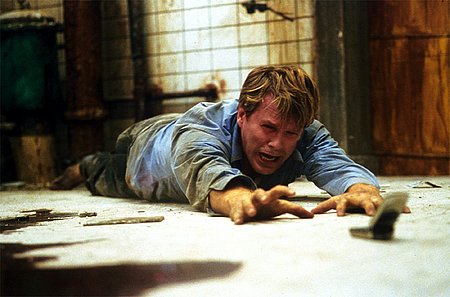
Two men—Adam (Leigh Whannell, who also co-wrote the screenplay with director James Wan) and Lawrence (Cary Elwes)—awaken to find themselves chained by their ankles to pipes in a long-forgotten bathroom. Trapped, with a dead body lying in the middle of the floor, the two try to figure out why this happened and what they should do. They have instructions from their captor, as it’s all part of a game. If they don’t play it by Jigsaw’s rules, one or both of them will die.

Riddles and tools have also been left for Adam and Lawrence, including a gun, a tape recorder, and two hacksaws. What are the hacksaws for? “He doesn’t want us to cut through our chains,” Lawrence declares somberly. “He wants us to cut through our feet.”

The danger grows beyond the bathroom for Lawrence, as he learns his wife (Monica Potter) and daughter have been captured as well. Lawrence’s clear instruction is to kill Adam, or they’ll die. Meanwhile, the killer is being tracked by Detective Tapp (Danny Glover), looking to avenge his late ex-partner Sing (Ken Jeung) who fell victim to the killer. And we also get flashbacks to other bizarre occurrences set up by Jigsaw, including a drug addict (Shawnee Smith) who survived her “game” and claims that it actually helped her to see the finer things in life. And there’s a creep named Zep (Michael Emerson) who works as the hospital, where Lawrence is a surgeon, who may or may not be the killer.

A lot of these elements being thrown at us make “Saw” an overstuffed picture. Actually, I could have done without the subplot involving the detectives and the many twists that continue on. And I hated the rough editing that occurs whenever we flash back to a victim—the frantic fast-motion editing does nothing for me in those scenes. But the real tension comes from the two men in that bathroom and how they’re going to find ways to save themselves. “Saw” does a great job at keeping the suspense alive during these scenes. Also, the scenes of the drug addict getting over her near-death experience are effectively done. This sets the status for this intelligent psychopath who chooses his victims by what they do and how they act, and he puts them into these games as a bizarre act of irony and as a way of possibly surviving by doing horrible things that they could do if they had the willpower.

Really think about it—if you were given the choice to die or cut off your chained foot, what would you choose?

“Saw” is not only psychological; it’s also very gory. Those with weak stomachs should stay away from this film, because there are many disturbing images displayed in “Saw.” Enough to keep an R rating, but others that are a mere inch from an NC-17—in particular, the drug addict is forced to retrieve something from her dead fellow captive’s stomach with a knife, and we actually see the intestines as she pulls them out. Tell me that’s not NC-17 material.

The ending is unforgivable albeit effective. It’s a shocking development that reminded me of what I’ve endured and that the film did indeed work for me. “Saw” is a well-crafted thriller that introduces a new memorable killer to the cinema and terrifies in doing so.

30 Minutes or Less (2011)

10 Mar

images

Smith’s Verdict: ***

Reviewed by Tanner Smith

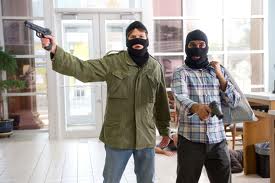
I know a lot of critics reviewing the comedy “30 Minutes or Less” bring up the tragic incident that this film plays its premise off of. To get through it quick, this is a movie about a pizza delivery man with a bomb strapped to him by some guys who tell him to rob a bank or they’ll blow him up. This is a flashback to a 2003 incident where a pizza delivery man planned to rob a bank with what was supposed to be a fake bomb strapped to him, but his partners double-crossed him with a real bomb.

I must confess I didn’t know about that at the time I was watching “30 Minutes or Less,” and I enjoyed watching it with blissful ignorance. Knowing now, I guess I should hate it now, right? Well…I don’t.

No, I still find “30 Minutes or Less” to be a reasonably entertaining comedy that managed to take a grim situation and make it quite amusing. It doesn’t break new ground or fashion a distressing tale about greed, and a lot of the humor comes from politically incorrectness. But I laughed, I wasn’t ashamed by it (for the most part), and I liked the comic actors that are oddly game for this material. It’s not a breakthrough comedy hit, like “Zombieland,” directed by Ruben Fleischer, the same director of this film. It’s just a modestly funny film.

Nick (Jesse Eisenberg) is a loser. He’s a post-college age pizza delivery guy with no ambition in life. He’s labeled a pathetic “man-child,” even by his best (and only) friend Chet (Aziz Ansari) who works as a substitute teacher. Things aren’t much better between the two of them when Chet finds out that Nick has slept with his twin sister Kate (Dilshad Cadsaria) and still has feelings for her.

Meanwhile, two even bigger losers have come up with a scheme. This is Dwayne (Danny McBride), a hapless, witless, wisecracking jackass, and Travis (Nick Swardson), his equally-luckless buddy. Dwayne lives with his Ex-Marine father “Major” (Fred Ward), and makes 10 bucks just by cleaning his swimming pool. “Major” has won the lottery and Dwayne gets the idea of hiring a hitman to kill him so he can get that money. They need a hundred grand to pay off the hitman (Michael Pena). What to do? Travis creates a bomb vest and he and Dwayne decide to strap it to some unfortunate loser and force him to rob a bank or blow him up. They order a pizza, Nick is the delivery guy, and there you go.

Of course, they could have just constructed a realistic-looking fake bomb vest and robbed the bank themselves instead of hiring a hostage. But oh well.

Scared out of his wits, Nick turns to Chet for help and as the bomb timer is winding down, Nick and Chet pair up to pull off the robbery and save their own lives.

There’s something about the tone that is just right for the movie and makes it watchable. Ruben Fleischer is careful not to overdo the heavier material. The robbery scene is paced just perfectly, with the right dose of comedy. And even though there are routine car chases, they’re still lively enough and not supposed to be taken too seriously.

Jesse Eisenberg is a likable lead and Aziz Ansari is a game comedic foil. Together, these two are a good buddy-comedy duo with very amusing banter. Even though Eisenberg’s character makes so many stupid mistakes, running around with explosives strapped to his chest and even risking the life of his girlfriend (who, by the way, is only in the movie so she can be kidnapped in the climax), it’s hard not to like and root for him.

Danny McBride’s Dwayne is an effective villain for this material—idiotic, menacing, and charismatic. This is the McBride I was looking for and really missed in the dreadful “Your Highness.” Nick Swardson is usually next to Rob Schneider as a constantly failing comedic actor, but now he has found the right role as Dwayne’s sidekick—smart, but completely weak-minded compared to Dwayne’s strong will. He’s quite funny here.

Also having their moments in “30 Minutes or Less” are Fred Ward, outstanding as Dwayne’s ex-Marine father with that Fred Ward strict attitude (and a pen-gun, if you can believe it); Michael Pena as the not-entirely-macho hitman the guys hire; and Bianca Kajlich as a stripper named “Juicy,” who goes crazy when someone messes with her investment.

“30 Minutes or Less” recalls some effective moments in “Pineapple Express,” has some game comic actors who do what they can, and brings the laughs however it can. Even if some of the gags don’t work and its raunchy jokes are sophomoric to say the least. But it never runs out of steam and it’s over in just an hour and twenty minutes, excluding the end credits. Laughs overstay the film’s flaws.

Tall Tale: The Unbelievable Adventures of Pecos Bill (1995)

10 Mar

MSDTATA EC004

Smith’s Verdict: ***

Reviewed by Tanner Smith

“Tall Tale: The Unbelievable Adventures of Pecos Bill” is an entertaining family adventure that has an interesting group of heroes for its target audience—being a Disney film, I assume that’s children under the age of ten, although if you get past the silliness of the premise, people of all ages can enjoy it too. The premise and its group of heroes are quite intriguing material for a family adventure movie. It’s a Western about a young boy who saves his family’s farm from an evil land developer with help from three legendary figures—Paul Bunyan, John Henry, and Pecos Bill. That’s our group of heroes (the “tall tales” of the title)—folk heroes, not necessarily superpeople with abilities to fly or practice jujitsu onto their enemies. Already, I’m intrigued. Even if “Tall Tale: The Unbelievable Adventures of Pecos Bill” gets a little too ridiculous at times, it is mostly very entertaining.

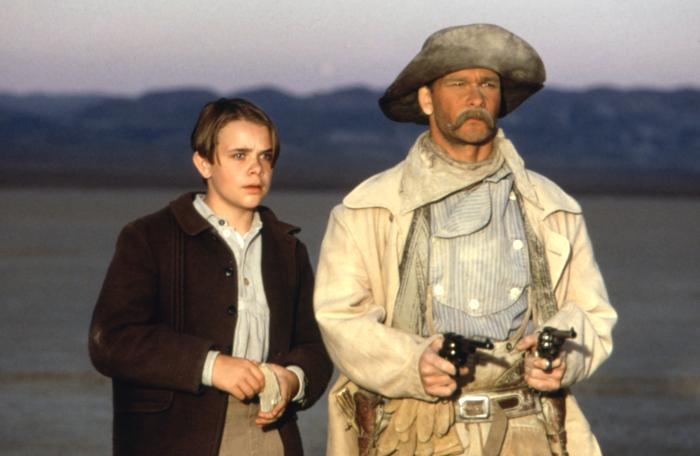
The boy’s name is Daniel Hackett (Nick Stahl, who’s OK but a little bland in the role) who has been told these tall tales by his prideful father Jonas (Stephen Lang). They live in Paradise Valley, a Western area untouched by sinister land developer Stiles (Scott Glenn) that plans to tear it all down as soon as he gets the deeds to every inch of it. But Jonas turns down Stiles’ offer, which leads one of Stiles’ hired guns to wound him. Jonas leaves the deed to the land to Daniel, who runs and winds up falling asleep on a boat in the nearby lake. But he awakens to find himself in a Texas desert (magically, I suppose), where he meets the first of the three heroes he will encounter—gun-slingin’ cowboy Pecos Bill (Patrick Swayze, who is hands-down the coolest person in the movie). As Pecos Bill assists Daniel to get back home for his father, they run into lumberjack Paul Bunyan (Oliver Platt) and strongman John Henry (Roger Aaron Brown) along the way. They teach Daniel how to stand up for himself and his beliefs.

It’s a strong asset to the movie that these “tall tales” are represented with the same dignity of their legend. Pecos Bill may remind some viewers of Indiana Jones, but I guess that’s the point in giving him an adventurous personality with a sly sense of humor and manner. John Henry is a strongman who knows a thing or too about pride and respect (and had his own rocky relationship with his own father which shadows the life Daniel has with his strict father). Paul Bunyan is not a giant (though he is relatively large in human height), but he is as strong as they come when it comes to lumberjacking—he even lives inside of a hollowed-out redwood tree, which is a nice touch. (And of course, there’s Paul’s loyal blue ox, Babe, to complete the ensemble.) All three roles are played very well by the actors.

The film is not great—some motivations are unclear, and the writers couldn’t avoid sentimental clichés as well as adventurous clichés (such as when Daniel is only inches away from being cut in a sawmill). And there’s a walk-on by Calamity Jane (Catherine O’Hara), who I wished had a much larger part. But there are some things to like about it, especially the visuals. Visually, “Tall Tale: The Unbelievable Adventures of Pecos Bill” is a treat, with top-notch production design and great cinematography. There are many great shots in the movie; my most favorite features a mountain meadow where butterflies flutter around the characters. The visuals, the heroes, and some gripping adventure sequences make “Tall Tale: The Unbelievable Adventures of Pecos Bill” a terrific adventure indeed.

The Hole (2012)

8 Mar

Joe-Dantes-The-Hole-Now-Scaring-Up-Thrills-in-Theaters-and-on-DVD

Smith’s Verdict: ***

Reviewed by Tanner Smith

Why Joe Dante’s “The Hole” didn’t get a US theatrical release is totally beyond me. Let’s look at the facts: Joe Dante directed this movie, as well as “Gremlins” and “Small Soldiers,” and I’m sure he still has some mainstream status today. What these movies have in common is the fun way they bring terror with a certain whimsy to what seems like our world. Audiences like that—“Gremlins” was a box-office hit and was also received positively by critics, and “Small Soldiers” did fine too. Are we just supposed to assume that it wouldn’t work again with “The Hole” and that’s why it’s facing difficulty with US distribution?

Also, the film was shot in 3D. Studios are fearless of advertising and releasing “The Nutcracker in 3D” while “The Hole (in 3D)” is left in the shadows? That’s kind of hard to believe. I mean, give props to not releasing “The Hole” as just a 3D gimmick, but now look at this little detail: this movie got a positive reception at the Toronto Film Festival and won the “Best 3D Film” award at 2009’s Venice Film Festival, beating “Up” and “Journey to the Center of the Earth 3D.” What more is there to convince studio executives that…I don’t know, maybe “The Hole” should be released?

Well, someone was convinced and it, in fact, did get a theatrical release…in the UK. D’oh!

OK now that that’s all said, let me review “The Hole.” I didn’t see it in a cinema, and so I didn’t see it in 3D. (It was finally released to DVD in October 2012, after a short-lived limited release in select theaters.) But the 3D is not missed. The truth of the matter is that “The Hole” is a treat—a fun, appealing, and even scary family-horror film. Like most good ones of this genre, younger kids may be scared by a lot of the material on screen, but older ones will most likely be delighted and parents will most likely be entertained as well.

The hole in the title refers to a seemingly bottomless pit in the basement of a suburban house in a small town called Bensonville. The original owner was an old man who is now reclusive, lives in an abandoned factory, and is given the name “Creepy Carl” by all the kids in town. The new owners are a single mother (Teri Polo) and her two sons—seventeen-year-old Dane (Chris Massoglia, “Cirque du Freak: The Vampire’s Assistant”) and ten-year-old Lucas (Nathan Gamble, “The Mist”)—who move around a lot for a mysterious reason that involves the past (not giving anything away).

Dane is bummed—of course, what teenage boy isn’t bummed about moving into a new house? But there is one good thing about this move: Julie (Haley Bennett), the smokin’-hot next-door neighbor whom Dane has his eye on. But the little smart aleck Lucas humiliates him in front of her, causing Dane to chase him into the basement, where they both find a strange door in the floor with six locks keeping it shut. They open the locks and look in the hole. This hole seemingly has no end to it. The boys drop a bucket of nails into it and never hear them drop. They tie a paint can to fishing line and the whole rod unreels. And then, they tie a doll to a rope and…something inside the hole grabs hold of it. What’s going on here?

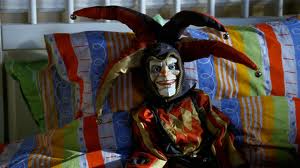
As the boys bring Julie in on their discovery, strange things start to happen: They lower a video camera into the hole and a strange eye is seen. Ghosts and monsters come out of the hole to scare the kids. A creepy jester clown puppet comes to life and attacks Lucas.

images

The setup of “The Hole” is fun, as the kids experiment with the “gateway to hell” in the basement. They even meet the so-called “Creepy Carl” (Bruce Dern) in a room with a dozen light bulbs surrounding him, to protect himself from the “darkness.” Later on though, the movie gets more interesting. Without giving away the secret of the hole, it causes the kids to confront their own pasts and conquer their fears. What makes “The Hole” interesting is that it’s more of a coming-of-age tale than a horror film. There are scares, but story and characters come first. There’s a sense of who these kids are and how they’ll grow in their misadventures with the hole.

The three young actors aren’t strangers to strangeness. Chris Massoglia traveled with a freak show as a half-vampire in “Cirque du Freak,” Haley Bennett was the protagonist of a much-lesser horror film called “The Haunting of Molly Hartley,” and Nathan Gamble encountered giant bugs in “The Mist.” All three are appealing here, but it’s Nathan Gamble that really stands out as the irrepressible but likable little brother.

“The Hole” isn’t a great horror film. Some of the choices the kids make are kind of dumb, like Dane and Lucas not telling their mother about the strange happenings. And also, the ending is not the right one—it’s supposed to resolve all that happened before, but it just feels like an anticlimax. But for the most part, “The Hole” is an entertaining movie with an intriguing story and some good scares along with likable characters to root for. And it still makes me wonder what it takes to get this film a US distribution, and how long it ultimately took.

NOTE: The MPAA rated this movie a PG-13 rating. After the PG-rated “Monster House” and “The Spiderwick Chronicles,” the MPAA is starting to understand that certain family-horror movies are likely to frighten younger kids—this one included.

ANOTHER NOTE: Or maybe they just rated it a PG-13 rating due to certain profanities like the “s” word.

THIRD AND FINAL NOTE: Every film directed by Joe Dante features an appearance by Dick Miller. Watch out for him as a pizza delivery guy in this movie.

Dazed and Confused (1993)

8 Mar

dazed3

Smith’s Verdict: ***

Reviewed by Tanner Smith

“If I ever say these are the best years of my life…remind me to kill myself.”

Those are surprisingly revelatory words spoken by high school senior Randy “Pink” Floyd (Jason London) to his stoned friends on their first night after high school. After a night of partying, drinking, smoking joints, and hanging with friends, Pink—a football jock—finds himself hanging with who the school coach dubs the “wrong crowd,” smoking marijuana on the 50-yard line at the school’s football field. He says these words and it’s possibly the one time any of the teenagers in this movie notice that they feel like something is missing.

But that’s not unlike teenagers. We were caught in states of confusion. We ignore them by simply hanging out and talking about other stuff without having to get too serious, just to have a good time. Only occasionally did we acknowledge what problems we had. As time goes by and we get older, we block out the pain and just remember the nostalgia.

This is probably why Richard Linklater, writer and director of “Dazed and Confused,” decided to set this film in the 1970s instead of the 1990s, when it was made. He’s recalling his own nostalgia and it comes through in this film, which is essentially plotless—it’s just chronicling these small-town teens on the night of the last day of school. They hang out. They party. They drink. They smoke marijuana. They talk. That’s it. That’s the movie. It doesn’t matter if the hero gets the girl, the nerd gets his moment, the bully gets his comeuppance, and whatever high-school-movie cliché you can mention. It has truthful elements to it.

Linklater introduces us to one set of characters and we hang around with them as they hang out with each other. Then we move to another set, stay with them. Then another. We get plenty of time to watch them develop, although I have to admit I think there were too many people to keep track of. Most notable are the aforementioned Pink, who is troubled that the coach insists that he sign a paper that keeps him off drugs and alcohol (and away from the “wrong crowd”), and thus invading his independence; Slater (Rory Cochrane), a stoned-out-of-his-mind party animal; Wooderson (Matthew McConaughey), a graduate from years back, still hanging around high school kids because they remind him of his best moments in life (which causes Pink to say the aforementioned quote); and Mitch (Wiley Wiggins), a freshman who is one of many to be harassed by the seniors as a cruel, time-honored initiation tradition (requiring wooden paddles to smack them on the rear), but ends up lingering with Pink and the guys.

“Dazed and Confused” gives us a lot of characters in the mix, although admittedly, only a few of them are likable (Mitch, in particular, is possibly the most identifiable and his tale is engaging, while a lot of the other teenagers grow kind of annoying with their mean-spirited talk). Linklater, however, apparently cares about each of them.

I don’t expect anybody who went to high school in the 1970s to enjoy this film at their next high school reunion. Or maybe they will, as the film does capture the nostalgia of that time as well (the rock-n-roll soundtrack makes perfectly clear of that). I was born in the early ‘90s, went to high school in the late 2000s, and what I got out of this movie was a miniscule but effective legacy of these “cool” high-schoolers.

NOTE: I have to wonder—if the ‘70s looked back on the ‘50s in “American Graffiti,” and the ‘90s looked back on the ‘70s in “Dazed and Confused,” should I expect the 2010s (would that be the ‘10s, the teens) to look back on the ‘90s?

Somewhere in Time (1980)

8 Mar

somewhere_in_time1

Smith’s Verdict: ***

Reviewed by Tanner Smith

If you can get past the strange concept that allows the possibility of time travel in “Somewhere in Time,” you’d be watching an admittedly cute movie about how one man falls in love…but only 68 years in the past.

Christopher Reeve, the likable star of the “Superman” movies, plays the man, named Richard Collier. He’s a playwright who is celebrating his first play when he’s approached by an elderly woman who hands him a gold pocket watch and simply says, “Come back to me” before leaving. Who is this woman? Richard finds that out eight years later as he stays at the Grand Hotel, after getting over a breakup and while suffering writer’s block. He sees a picture of a beautiful young actress, becomes enthralled, looks up her biography, and finds the latest picture of her, revealing herself to be the woman who gave him the pocket watch, which he still carries around with him.

Richard becomes obsessed with the idea of traveling backward through time, after discovering that the woman has read a book about the subject of time travel. The book was written by one of Richard’s old college professors, so he asks him how he can go back to the year 1912 and see that actress, named Elise McKenna (Jane Seymour).

And so, because this method of self-hypnosis could work for him, and because the movie doesn’t want any past/present misunderstandings, Richard buys an early 20th century suit, cuts his hair for the appropriate time setting, and rids himself of any modern conveniences. He goes to sleep, forcing himself to actually believe he’s no longer in his own time—he’s in the year 1912. It works, and he’s well dressed for the period. Now it’s time to find Elisa and win her affections.

So I guess the idea of this time travel method is that you have to record yourself saying that you’re where you want to be and if you have to keep anything modern out of sight (so you keep the recorder under your bed), or it won’t work. That may sound ridiculous, even confusing (for example, if it’s a dream, then how is there an effect in Richard’s present? Apparently, it’s not a dream, in that case), but getting down to it, it’s more noble than creating a time machine. It’s power of the mind, to say the least.

Eventually, Richard does meet Elisa and they fall in love, as Richard decides to stay in a time not his own just to stay with her. The developing relationship between these two is nicely done, especially considering the possibility that she’s been waiting for him to come along. The chemistry is there between these two actors—Christopher Reeve and Jane Seymour—and you root for their characters to be together. Both actors are good. In particular, Christopher Reeve shows more range here than in “Superman,” and he’s still as likable.

There is a villain in this movie—Elisa’s manager William Robinson (Christopher Plummer). He’s been keeping track of Elisa’s career since she was a teenager and keeps her isolated in order to keep her career going. He resents the arrival of Richard from the moment he sees him, believing that he’ll be the one to take her away from stardom to love. What doesn’t work about his character is that there are hints are to whether or not he knew about Richard’s real presence, but are never addressed. He’s either a time lord or a man obsessed with his managing job.

I should also credit the set and costume design by Jean-Pierre Dorleac for creating the feeling that we have indeed traveled back to 1912.

“Somewhere in Time” isn’t a great movie—aside from somewhat confusing time travel elements and a too-mysterious villain, I didn’t buy the ending very well—but it’s intriguing and sweet enough to win me over.

Red Eye (2005)

7 Mar

936full-red-eye-screenshot

Smith’s Verdict: ***

Reviewed by Tanner Smith

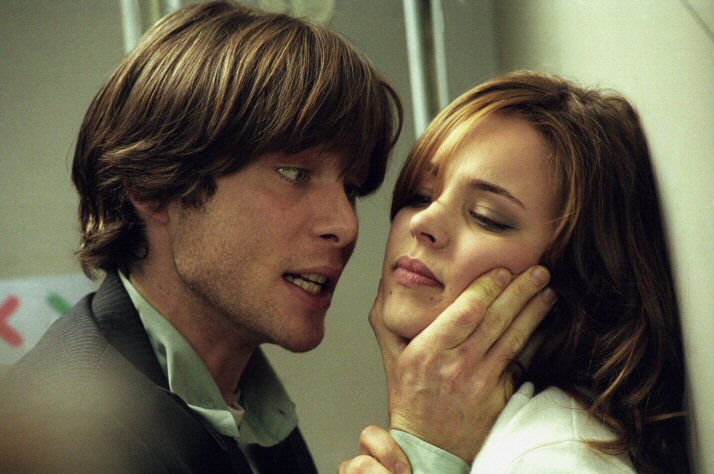
“Red Eye” is a psychological thriller that handles such elements of the genre the right way, while also admiring Rachel McAdams. She has turned so well into a movie star and as the Woman in Peril in “Red Eye,” the camera and script never let us stray away from seeing how plausible, convincing, and (let’s face it) beautiful she is. The Woman in Peril is a hard character to pull off in a movie like this. The wrong actress could easily overact to the terror happening to her character. But not Rachel McAdams—she remains convincing all the way through. Her weapons against a terrorist who made her red-eye flight miserable are a pen, a cane, and a hockey stick. Well of course, those are common weapons of choice.

McAdams plays Lisa Reisert, a hotel desk manager who catches a red-eye flight to Florida after bad weather cancels out her regular flight. Taking over her job temporarily at the hotel is her friend, who is not exactly qualified to handle situations that require…well, much thinking. At the bar in the airport, she meets a charming young man named Jack Rippner (get it?) and strikes up a conversation with him. And then they wind up sitting next to each other on the plane.

This sounds like the opening for a romantic drama. But Jack is definitely NOT the charming young man she met at the airport. Once the plane takes off and the two sit together, his personality transforms into something quite sinister. Jack is a terrorist and he tells her (softly) that her father is taken hostage and will be let go when she makes a call to the hotel to schedule a government agent to be booked in a different room than he already was. Then he will be assassinated. Lisa tries to find a way out of this nasty situation and goes through many threatening confrontations and conversations. It’s almost a wonder why these go unnoticed by the stewardesses, but then again this is a busy flight. The airplane scenes are handled in a plausible way.

Cillian Murphy plays Jack. He’s handsome, but his looks come with a warning. The way he handles Lisa in many moments in which she tries sneakily to get out of this situation is so sinister, it too is convincing. Cillian Murphy does a good job of switching tones in his personality. First he’s pleasant and polite. Then he’s…how many times do I have to use the word “sinister?” You get the point, I hope.

Now the final half of the film is your standard killer-in-the-house climax. I would’ve wanted something a bit more original. Who knows what you could do in an airport terminal? But still, McAdams remains plausible and convincing. I loved that her character was not dumb but a woman who is bright and thinks of what she would do; we feel for her. She has presence and credibility—she’s not one of those thriller victims are simply running around and screaming. She’s given something very specific to do and her scenes with Murphy are very effective. These two are great together.

Craven’s previous work included slasher films such as “Nightmare on Elm Street” and the “Scream” movies. Here, he gives us as little blood as possible and moves on to psychological tensions. The final half of the film may be a bit too conventional but for the most part of “Red Eye,” he succeeds in making a psychological thriller that works.

Christine (1983)

7 Mar

tumblr_krjgmxnI2G1qz72v7o1_500

Smith’s Verdict: ***

Reviewed by Tanner Smith

John Carpenter’s “Christine” is a nicely-crafted horror film about a teenage boy and his car. The boy is a high school nerd named Arnie who wears thick glasses, is very insecure, and is constantly picked on by the school thugs. The car is a ‘50s Plymouth dubbed “Christine” that Arnie finds rusting in a junkyard. He doesn’t care that its original owner killed himself in the car or that some folks around it have died tragically back in the day—he’s just entranced by the car. He buys it, rebuilds it, and develops a certain bond with it.

Of course, teenagers develop a bond with their first car. It becomes a part of them—they look out for their cars, they make sure not one part of it is scratched, and they even talk to their cars at times. But in Arnie’s case, it’s different. Not only does having this new car affect his social life (in that he actually develops one, finally) and boost his self-esteem (like talking back to people, including his overbearing parents), but it also turns out that Christine—the car—has a mind of its own. It moves on its own and even repairs itself after the bullies trash it to junk.

And so, Christine uses its willpower, without a driver, to chase after Arnie’s enemies and run them down—there’s a great scene in which it forces its way through a narrow alley to get to one of the bullies, and another in which another bully is desperately running down the street trying to outrun the car (set ablaze this time—the guy doesn’t have a prayer). But there’s a bigger issue in its “mind,” I should say—Arnie is dating the prettiest girl in school, which makes Christine so jealous that it takes many measures to try and run her down as well. Arnie himself develops into a real scuzzy personality, letting Christine’s power over him take what’s left of his meekness and replace it with a blend of super-coolness and madness.

It’s a nice work of fantasy and horror—the idea of a guy getting his first car that turns out to be alive is an exciting one. That it goes after its owner’s girlfriend may make the movie sound ridiculous, and it is. But I enjoyed it because with John Carpenter’s direction, the movie wants to play how it would occur if it were plausible. Carpenter also does a good job with the three central young actors—Keith Gordon as Arnie, Alexandra Paul as Arnie’s girlfriend, and John Stockwell as Arnie’s best friend, a likable jock that tries to pull Arnie out of Christine’s spell.

I also liked the use of old songs in the score. When someone tries to break into the garage where Christine is kept, its radio plays “Keep-a Knockin’ But You Can’t Come In” as a warning. And whenever Arnie is alone in the car, the radio plays old love songs. See, the radio only plays songs from the 1950s, since that’s when it was created and uses these songs to speak its mind. That’s a clever idea.

“Christine” is an ambitious, well-acted, well-executed horror movie that takes teenage fantasy as a deal with the devil. Yeah, the story is out there, and there are some things that don’t work (see NOTE), but there are many other moments that had me grinning and invested, right down to the final climax where it’s the ‘50s Plymouth Fury “Christine” versus a bulldozer.

NOTE: I’ve read a few posts on “Christine’s” IMDb message board and one of which, not caring much for the movie, said that there could be a remake that was closer to the original Stephen King novel it was based on. I’ve never read the novel, so I don’t know how close this movie adapts it. However, there are certain clichés that can be found in Stephen King stories and they are found here. One main clichéd element—everyone except for the main characters is a one-dimensional jackass. The bullies are the knife-wielding bores, the parents don’t listen (the mother, in particular, is over the top in authority), and the man who runs the body shop (played by Robert Prosky) is a suspicious old fart (though to his credit, he has a good reason to be suspicious of Arnie and his car). So I don’t know—maybe certain parts of the story were left out of the movie.