Archive | Three-and-a-Half Stars ***1/2 RSS feed for this section

The Hunger Games (2012)

13 Feb

images

Smith’s Verdict: ***1/2

Reviewed by Tanner Smith

So imagine this—sometime in the distant future, the nation of Panem has grown from the remains of what used to be North America. A new world order has been arranged, as Panem is divided into 12 districts surrounding the powerful central Capitol. After a failed rebellion with a 13th district, there was a peace settlement that comes with a raffle (known as a “Reaping”) that forces the other districts to participate in the death match known as the “Hunger Games.” Every year, two “tributes” are chosen from each district. The tributes are a young man and young woman in the age range of 12 to 18 who compete against the other tributes (and each other) in a gladiatorial battle for the biggest televised event in the nation. The only way to win is to survive.

That’s the main plot element to “The Hunger Games,” a post-apocalyptic action-thriller based on the popular novel of the same name by Suzanne Collins.

The “Hunger Games” book series is probably the most popular book series out nowadays. The teens are drawn in and adults take notice as well. So it should come as no surprise that when a film adaptation of the first book is announced, a huge amount of hype is garnered. But does the movie lead up to its hype?

The answer is yes. “The Hunger Games” is an intense, entertaining action-thriller that remains faithful to its source material. Fans will be happy, and I think those who aren’t familiar with the books are going to be drawn in as well.

The heroine of the story is 16-year-old Katniss Everdeen (Jennifer Lawrence) from District 12. She’s a strong young woman who cares for her mother and younger sister Prim (Willow Shields). She also has experience in hunting and is a darn good shot with a bow and arrow, as she illegally hunts for food outside the boundaries with her best friend Gale (Liam Hemsworth).

The 75th annual Hunger Games are approaching and the Reaping begins as the movie does. But the female tribute turns out to be Prim, and so Katniss volunteers to take her place in order to save her. The male tribute is Peeta Mellark (Josh Hutcherson), a baker’s son who is very strong, but also gentle. Katniss and Peeta are escorted to the Capitol and advised by impressionist Effie Trinket (Elizabeth Banks, sporting a ridiculous amount of makeup), former champion (now bitter drunk) Haymitch (Woody Harrelson), and stylist Cinna (Lenny Kravitz) to prepare for the Games.

The 24 tributes train in preparation, are evaluated for odds by viewers of the televised show, and are interviewed by the blue-haired on-air commentator (Stanley Tucci) to win support from the public before the big event. Katniss gains the most odds with her showmanship and confidence, but for Peeta to enhance his own image, he announces in his TV interview that he has had a crush on Katniss, letting the “star-crossed lover” angle win both of them admiration from the public. However, as it turns out, Peeta was honest in his statement and Katniss does develop a genuine interest in him. But this comes as a problem, since he must die in order for her to win.

The movie has a running time of two hours and twenty-four minutes. It takes an hour and ten minutes, more or less, to set up the Hunger Games and introduce the characters. Once the actual Games, set inside a giant outdoor arena, are underway, you realize how much is at stake by this point. I admire that the movie takes its time to set up the action before it happens and the entire second half is intense, brutal, and thrilling. It involves Katniss relying on her wits and her skills to survive her competitive, bloodthirsty peers, including the fearsome Cato (Alexander Ludwig) and the knife-throwing Clove (Isabelle Fuhrman).

I should add that despite the ages of these young people competing in the Hunger Games, there is a lot of violence and plenty of gore, pushing the boundaries of the PG-13 rating. The way it starts is particularly cruel, as a bloodbath ensues before some of the tributes have a chance to get their supplies. This is not a film for young children.

This is a shocking development for entertainment—young people killing each other as hidden cameras are placed in the trees to show it—and it seems like the people watching really get a kick out of the violent nature of it. And the fact that these 24 competitors are in the age range of 12 to 18 is scary enough to think about. But the fact that this new world order is forcing them all to accept it for their own good makes it all the more effective. And the villains of the movie—the gamemaker Seneca Crane (Wes Bentley) and snarling President Snow (Donald Sutherland)—are ruthless enough to show exactly where these people stand. They even force obstacles upon Katniss and Peeta to make sure nothing comes easy, even setting their part of the forest ablaze. This movie is a great mix of action-violence and social commentary. Is this what mankind could succumb to when things go very wrong for us?

The original novel of “The Hunger Games” is mainly popular because of its protagonist Katniss Everdeen, and for good reason—she’s an interesting, compelling heroine to follow. She fends for herself, but also cares for those who need (and deserve) her help. She knows how to hunt and survive, but isn’t a bloodthirsty monster. In the movie, she’s brought to life by who is probably my favorite young actress working today—Jennifer Lawrence. Lawrence is absolutely perfect for the role and delivers an excellent performance, giving the right blend of strength and vulnerability for the character. She’s in almost every shot of this two-and-a-half-hour movie—she’s captivating to watch throughout. And I’m going to just say it—even though I respect the other actresses who auditioned for Katniss (including Shailene Woodley and Saoirse Ronan), I couldn’t imagine anyone else other than Jennifer Lawrence to portray the role. Or maybe she’s just that good.

The supporting cast does a nice job—I especially liked Woody Harrelson and Lenny Kravitz in their roles, and the constantly working yet mostly-underrated young actor Josh Hutcherson (in his fifth book-to-film-adaptation, I believe) is solid and likable as Peeta.

“The Hunger Games” was directed and co-written by an unlikely source—Gary Ross, the co-creator of pleasant comedy-dramas like “Big” and “Pleasantville.” As much as I respect Ross, I wouldn’t have expected him to handle the violence of the actual Hunger Games event so effectively. But the truth of the matter is that he’s fully capable of keeping us involved. I have to admit I thought he was relying too much on the “shaky cam” gimmick in the first half of the movie, but as with the “Bourne” movies, once the action kicks in, it adds to the intensity and brutality of the action scenes. Even before the action, there are plenty of quiet moments to be invested in—in particular, the scenes with Katniss saying goodbye to her family and Gale, and Peeta’s talk with Katniss about how he’s not just a pawn in the Games. Credit for keeping the audience involved should also go to the actors, but also to the other two writers of the screenplay—Billy Ray, writer of “Shattered Glass,” and Suzanne Collins, the author of the original source material this movie is based upon.

Having read the book, I was less concerned about story changes (of which there are little to none) and more concerned about how the violence of the Hunger Games would be handled. But the truth is that “The Hunger Games” is very well-done—the Games are gripping, the action is intense, the parable aspect is clear (subtly, but still there), and we have a compelling character played by a fully capable actress.

I look forward to the film adaptations of the other two books in the series, although this movie works well as a stand-alone movie.

The Sure Thing (1985)

12 Feb

images

Smith’s Verdict: ***1/2

Reviewed by Tanner Smith

Rob Reiner’s “The Sure Thing” could have been one of those dumb teenage sex comedies of the 1980s, and for those who were tired of that “genre,” the opening scenes probably turned them off immediately. You’d think you could tell from the first five or ten minutes what was going to happen in this movie, but you’d be wrong, and that’s how the movie tricks you. Rather than going along the lines of the distasteful “Porky’s,” “The Sure Thing” is sweeter and more mature in tone than one might expect.

Surely enough, “The Sure Thing” starts offputtingly. For one thing, the opening credits (which are written in that cheesy, pink-colored cursive font you see in most 80s teen comedies) are played over a sequence in which the title character—a blonde bombshell in a bikini—sits on a California beach and rubs lotion all over herself. Very appealing to look at, I have to say. But there are many other teenage movies that start out this way. Then, we meet our main character—a recent high school graduate named Walter “Gib” Gibson (John Cusack) trying unsuccessfully to pick up girls at a party, and then chatting with his buddy Lance (Anthony Edwards) who keeps telling him to “get back out there” and get laid. Lance is just as annoying as any other “supportive-sexist-best-friend” character you see in this kind of movie—we’ve seen this guy before. He’s boring.

In fact, we’ve seen this opening before. Any groaner will tell you that “The Sure Thing” is going to be just another one of those sleazy teen sex romps. But this is a most pleasant surprise—instead of resorting to that sort of sleaziness that made movies such as “Porky’s” and “Losin’ It” box-office hits at the time, “The Sure Thing” turns out to be a gentle love story that begins as Gib attends an Eastern college and meets Alison Bradbury (Daphne Zuniga) in his English class. He’s attracted to her, and he uses unusual pickup tactics to ask her out. But Alison is not one of your standard dumb movie broads—she’s an intelligent woman (who happens to be good-looking). On their date together, just when the two start to really hit it off, Gib ultimately winds up acting like a total jerk.

Lance invites Gib to spend Christmas vacation in Los Angeles, where a “sure thing” (the blonde at the beginning) is waiting for him—no strings attached, no guilt involved. He plans to get there, from New England to Los Angeles, any way he can. So, he goes to a bulletin board offering rides, and gets a ride with a friendly, showtunes-crooning couple (Lisa Jane Persky and Tim Robbins), but guess who’s also along for a ride to L.A. That’s right—it’s Alison. She’s on her way to spend the holidays with her preppy boyfriend (Boyd Gaines). From here, it’s a combination of a road movie, a comedy, and a romance.

“The Sure Thing” follows a basic Hollywood three-act structure. The first act introduces the characters at the northeastern university; the second act, the most lengthy section of the movie, in which they travel to California while running into some trouble and hitching rides, while surely becoming attracted to each other; and then the final act, in which they reach their destination and ask themselves if they’re there with the right person. You can guess the outcome of the story, but that’s not the point of the movie. What really counts about “The Sure Thing” is that there is genuine chemistry between the two leads, as every good romantic comedy should have. For us to buy the story, we have to buy the attraction between the two. There is conflict between the two at first, but as they get to know one another, they start to really like one another. Sure, they’re opposites, and they’re going to California for another person. But when has that ever stopped true love? We like Gib and Alison—we care about them and we root for them to end up together. And that’s a compliment to the script and a key tribute to John Cusack and Daphne Zuniga, who are both gifted, charismatic, and convincing when playing the old reliable “love/hate” interaction.

My favorite scene in the movie is when Gib and Alison share a bed together. Alison is the first to awaken in the morning, and she notices that Gib has his arm wrapped around her. How does she react? She smiles and keeps lying there. That’s a genuinely sweet moment and it becomes an important turning point in Gib and Alison’s relationship.

And “The Sure Thing” does what every romantic comedy should do once they’ve gotten the sweet elements out of the way—provide the comedy. And surely enough, there are many comedic moments in this movie that work greatly. These scenes include—Gib’s introduction to the “sincerity lie” by his college roommate (Joshua Cadman); a predictable scene involving Alison hitching a ride with a redneck that suddenly becomes unpredictable once Gib comes to her rescue in a hilarious way; a scene in which Gib teaches Alison to “shotgun beer”; and more. More importantly, the comedy comes from the character’s behavior and the situations they go through.

More pleasantly, “The Sure Thing” is not about the “sure thing” (and there’s never any “meanwhile in California” scenes to interrupt the road trip). It’s about this young man falling genuinely in love. When Gib and Alison finally arrive in L.A., and end up at the same party, Gib is starting to feel as if he’s there for the wrong person. Little does he know that Alison feels the same way—she feels no excitement with her boring, middle-class boyfriend.  “The Sure Thing” has something to say about sex and love, and it’s one of those rare teen-comedies in the ‘80s in which sex and love are two completely different things. (So many others at the time pretended they were one and the same.) With realistic teenage characters, a funny script, and a tenderness to the story, “The Sure Thing” is a treasure in the teenage romantic-comedy genre.

The River Wild (1994)

11 Feb

River-Wild-cast

Smith’s Verdict: ***1/2

Reviewed by Tanner Smith

“The River Wild” is predictable. I’ll admit that. You can guess more-or-less where the film’s story is going to go. But that doesn’t make it a bad movie. Actually, I think it’s a terrific action-thriller. It has top-notch acting; it features a fully-realized main character played with more than the right amount of gusto by Meryl Streep than it deserves; it’s shot wonderfully in the great outdoors, the Salmon River in Idaho; and it has its share of tense moments. I enjoyed watching “The River Wild.”

So what do I mean by predictable? Well, here’s the setup:

Meryl Streep plays Gail, a former river guide and rafting expert who decides to take her son Roarke (Joseph Mazzello) on a whitewater rafting journey for his birthday. Her husband Tom (David Strathairn) is a workaholic architect who is reluctant to go on this trip. But he shows up at the last minute, though he is more concerned with getting work done than enjoying the outdoor life and spending time with his family. Gail knows the territory well, and even once braved the challenge known as the Gauntlet, which is said to be the most dangerous set of rapids. (She tells her family that one person was killed and another was paralyzed for life.) Also on the river are Wade (Kevin Bacon) and Terry (John C. Reilly), who are not so experienced in this sort of thing and have lost their guide. They meet Gail and family who decide to let them come along and join them. Roarke is able to befriend them because Wade seems like a nice guy. But the further they go downstream, the more distrust Gail and Tom feel towards Wade and Terry. And things get more ominous when Wade shows Roarke a loaded gun, and Tom plans to confront Wade…

So from reading that setup, you might have already guessed where this is going. Wade and Terry are on the run; they know that Gail knows the river, so she can help them escape; they make their true presence known, as they’re midway through; Gail, Tom, and Roarke are held hostage; and the way Wade and Terry want to go is through the Gauntlet. I was almost about to give a “SPOILER ALERT” for this review, but what’s the point?

The plot is thin and predictable as they come.

But there’s more than enough to make up for that. First and foremost is the fine acting by the cast. They aren’t caricatures or one-note figures thrown in for marketable reasons; they’re well-developed characters played by great actors. Meryl Streep is wonderful as to be expected, and is really the backbone of this movie. She’s physically fit, which is something you rarely see in her other roles, and she plays the character as smart and as tough as we would like to see in this role. Streep captures Gail’s energy and terror perfectly. She has the makings of a strong female action hero.

Kevin Bacon is well-cast as the ruthless Wade, delivering an effective mix of menace and charm. David Strathairn is convincing as an uptight workaholic suddenly pushed to his limits. John C. Reilly is good as Wade’s sidekick whose hesitance, especially when the group is shooting the rapids, makes for some comedic moments.

“The River Wild” also has top-notch production values important to the film’s success. The cinematography is outstanding and the suitable music score is effective assistance. The climax of the film, in which the group inevitably race down the aforementioned dangerous Gauntlet, is exhilarating. Watch this movie on a big screen—you might feel like you’re experiencing this with the characters.

I’m not going to lie—I think that maybe “The River Wild” would have been more effective if it was just about this woman bringing her family to see the beautiful river before it’s “polluted,” and trying to settle things with her distant husband along the way. (And just drop the whole thing about the two guys and the thriller aspects.) That would have been an interesting family drama, and there could have been a lot played off from that.

But while reviewing for “The River Wild” for it is rather than what it isn’t, I still think it’s an effective thriller. Is it familiar? Yes. But it’s also well-executed and delivers the goods.

Ruthless People (1986)

11 Feb

images

Smith’s Verdict: ***1/2

Reviewed by Tanner Smith

If I had to pick my favorite Danny DeVito role, it would probably be rich businessman Sam Stone in “Ruthless People.” DeVito plays the villain that you love to hate—a man so ruthless that he would even cheer at the thought of his own wife dead. In fact, that’s what he’s talking about in the very first scene of “Ruthless People”—he’s telling his mistress Carol (Anita Morris) that he’s planning to swiftly do away with his annoying wife Barbara (Bette Midler). We find out that Sam married her just for her money, and if he kills her, he’ll gain her late father’s inheritance.

This is a vile man. He’s selfish, shallow, and ruthless. But he’s so earnest and passionate in his schemes and purposes that you can’t help but admire DeVito for making this villainous character so entertaining.

“Ruthless People” has the comic premise of Sam’s wife actually being kidnapped before Sam has a chance to do her in (he planned to fill her with chloroform and hurl her off a cliff). He gets a call from the kidnappers who threaten to kill her if he doesn’t pay the ransom. Watch his face as he listens to every detail and knows that his wife could be killed if he doesn’t meet their demands—this is his dream come true! He’s not supposed to tell the police; he tells the police and the story hits the news. He’s told to pay the ransom; he doesn’t.

But the kidnappers, as it turns out, are inane at their title. They’re actually a nice suburban couple (Judge Reinhold and Helen Slater) who kidnap Sam’s wife Barbara for reasons of ruthlessness. Reinhold’s Ken decides that they both need to be ruthless to succeed in this world, and holds a grudge against Sam for stealing spandex designs from his wife Sandy (Slater) and passing them off as his own, and becoming very rich because of them. Now they want their share and hold Barbara hostage until Sam pays the ransom…. Yeah, that’s not gonna happen.

This is a simple idea of a nagging wife being kidnapped and her husband doesn’t want her back. It’s stretched out into a very funny comedy with charismatic acting and a sharp screenplay brough to life by the three-man directing team of Jim Abrahams, David Zucker, and Jerry Zucker—the same guys who made “Airplane.” This script is full of funny jokes and does a good job of making the story be as complicated as it can with this premise, just barely going over-the-top with its conclusion (a standard car chase). I don’t want to give away most of the gags, because that takes away the elements of surprise in this movie.

Bette Midler’s Barbara has a great share of screen time, and I’m sorry I forgot to talk about her. Midler is hilarious in this movie, making her character as stubborn as possible while being held by these two nice losers. She starts out as a shouting whiner (which I know you’d expect, since we first see her in a bag and her mouth is gagged), and then delights in teasing her captors, sometimes intimidating them by saying she’s going to turn them in later, and driving them crazy. Later on, though, she does soften up and even befriends Sandy, and she delivers the funniest line in the movie when she realizes that the ransom number has decreased. I won’t write what it is; just see the movie. Trust me—it’s worth it.

An amusing subplot involves Sam’s mistress Carol as she attempts to blackmail Sam by having him give her all the money, or else she turns him in for killing Barbara. But due to a series of hilarious misunderstandings, she and her buffoonish lover (Bill Pullman, hilarious) find themselves in many unsuccessful attempts to do so. That is all I am going to say about that. Period.

One failing in “Ruthless People,” besides the conclusion, is that there is no dueling confrontation between DeVito and Midler. We only see them together once, to deliver a weak punchline to the story, and I would have liked to see them really have it out with each other.

With some big laughs, game performances, and a very funny screenplay by Dale Launer, “Ruthless People” is a goofy, hilarious movie about…ruthless people. They’re ruthless, but they’re likable and memorable. DeVito is a joy to watch as the lovable villain, Midler is suitably stubborn, Reinhold and Slater are pretending to be ruthless but are truthfully nice enough for us to like them, and Morris and Pullman are hilariously idiotic. They help make “Ruthless People” a very funny movie.

Chronicle (2012)

10 Feb

Dane-DeHaan-in-Chronicle-2012-Movie-Image1

Smith’s Verdict: ***1/2

Reviewed by Tanner Smith

“Chronicle” mixes a superhero origin story with a teenage coming-of-age drama and presents it in a first-person perspective. If that doesn’t sound like an ambitious project, I don’t know what does. “Chronicle” is a well-made movie, and it was thoroughly entertaining. Just when I thought I was getting tired of the first-person perspective (I’ve seen it in “Blair Witch Project,” “Cloverfield,” “District 9,” every episode of “The Office,” and don’t get me started on the “Paranormal Activity” series), “Chronicle” sneaked up on me. I say this because I avoided the trailers and TV spots for this movie and knew hardly anything of the plot, except that it was played as if it was actually documented and there was a poster that looked like a kid was giving a thundercloud the middle finger. I wasn’t anxious to see this movie, but I did the immature thing and gave in to peer pressure. What I saw was a film that has a lot more on its mind than you might expect.

The film’s story is seen through a video camera, though not just the main character’s camera. Sometimes, we see through a v-logger’s camera, and other times, we see through surveillance cameras or any camera that comes into the scene. The film stars a high school senior named Andrew (Dane DeHaan), who is shy, awkward, and standoffish. Girls ignore him, jerks pick on him, and he only has one friend—his popular cousin Matt (Alex Russell). Also, his mother is dying and he’s the constant punching bag of an abusive father who drinks a lot. Andrew has bought a video camera and documents his home life and his high school, though really that makes him even more awkward.

Matt brings Andrew to a rave party, where they and another kid—Steve (Michael B. Jordan), the big man on campus running for class president—stumble across a hole in the ground nearby. It’s circular, seems to tunnel underground, and gets deeper and deeper as the three boys explore.

Now, would you step into something like that? I didn’t think so.

But they do, and Andrew brings along his camera. They come across a strange object, which, because it glows, may give the possibility that it’s alien. The boys are exposed to a kind of force that destroys Andrew’s camera. But luckily, Andrew buys a new camera and we see that a few days have gone by and the boys suddenly possess powers of the mind. They throw baseballs at each other’s chests so they can stop them in mid-air before they get hit. They build a tower out of their Legos without touching them. They start a leaf blower to lift up cheerleaders’ skirts. They play pranks in a department store (like bringing a teddy bear to life in front of a little girl). They can even move themselves up in the air!

They have a lot of fun with their new talents and behave like teenagers while fiddling with them because…they are teenagers. But these kids have no adult mentors (as most superhero stories do) to tell them how to use their powers responsibly. However, Matt decides to lay down some rules after Andrew’s irresponsibility nearly kills someone. This is the start of the dark, disturbing plot thread that follows Andrew’s tortured personal life to something really dangerous. Later in the movie, after being humiliated at a party, he addresses to the camera that he’s evolved into something better than he was and the way he feels about hurting a person leaves him with the same lack of remorse after killing a bug. He thinks of it as natural selection.

The first half of “Chronicle” is the most fun part of the movie. It has fun with these kids experimenting with these new powers and gaining more from them, such as when they realize they can soar through the air together. There are a lot of laughs, particularly with the one-liners the kids spew and the constant mishaps that occur when first testing their powers. My favorite scene is when Andrew and Steve perform at a talent show, showing off their powers, pretending to perform magic tricks, and wowing everyone in the process. But then the movie develops into something more deep and dark that comes mainly from Andrew’s slowly but surely loss of innocence. One tragedy leads to certain danger and that leads to a total mental breakdown. With someone of his abilities, that can’t be good.

“Chronicle” may be inconsistent that way—different second half in contrast to the second—but the second half is admittedly very strong. It shows Andrew’s problems in a convincing way and when you think about it, there are moments in the first half that do lead to what Andrew could be capable of. I remember Andrew always learning his powers faster than Matt and Steve can because he focuses the hardest, and when he records himself with his camera (while moving the camera in the air and letting it hover in his bedroom), he ponders. Now we’re aware what he was thinking about doing all along. We see some of his home life when he’s not fooling around with his friends, and it is enough to show the pain he goes through, what with his ailing mother and his jerk of a father.

Give credit to the director—newcomer Josh Trank—and the writer—also-newcomer Matt Landis, John Landis’s son—for making these kids seem like actual teenagers and behaving like they would behave if they were suddenly telekinetic. I believed these young actors were living their characters and I felt their excitement. But I suppose that could also be because of the first-person perspective, seeing things through the video camera’s point of view. And to keep things from being repetitive, “Chronicle” beat the problem by showing things through the view of other cameras, particularly the camera belonging to a cute blogger named Casey (Ashley Hinshaw), whom Matt has a bit of a crush on. This works especially well in a conversation scene—we first see through Casey’s camera to see Matt talking (while he has Andrew’s camera), then through the other camera to see Casey as she talks. And using other cameras for perspective works especially well in the film’s explosive climax in which Andrew completely loses his sanity and lets out all of his rage onto public property and unlucky people.

So, from goofing around comes deep trouble. But isn’t that what would happen if a troubled teenager really did gain mind powers and decide not to use them responsibly? Not that it could happen, but what if? That’s why the first-person perspective tells this story—to give a great kind of “what-if” tale. What have I left out of this review? Only the effects. The special effects used to make objects float and make the kids fly are downright first-rate. They look extremely convincing and make the production values even more impressive. To wrap this up, even if “Chronicle” switches gears, it has a lot of fun before doing so.

Die Hard (1988)

8 Feb

John-McClaneDie-Hard-1988Before-he-started-talking-to-chairs-Clint-Eastwood’s-Dirty-Harry-was-the-epitome-of-the-trigger-happy-catchphrase-cop.-Yet-out-of-his-legacy-crawled-John-McClane-–-bloodied-bruised-and-probably-we-650x438

Smith’s Verdict: ***1/2

Reviewed by Tanner Smith

One can praise “Die Hard” for its slam-bang action sequences and its two great performances of two very interesting characters. That’s exactly what I am doing—solid three-and-a-half star rating based on those elements. The action scenes are half routine and half original, so when you put them both together, they’re amazing. And then you have the star of the picture—the hero in action who will go through many lengths to accomplish the impossible. A masterstroke here is that the character is believable as he goes through one situation after another—he’s a New York cop named John McClane who visits a 30-story building in Los Angeles and winds up fighting twelve terrorists who have taken over the whole building and are holding many people (including his wife) hostage. The odds are against John McClane here and as the movie’s poster puts it well, that’s just the way he likes it.

That’s one of the two very interesting characters I mentioned already. The other is the villain. Of course, all of the best action movies have compelling villains and Hans Gruber, the leader of the terrorists, is one of the absolute best. This is a man who is well-dressed, has a neatly-trimmed beard, and is not your typical out-of-control maniac—he’s a somewhat well-behaved German intellectual who has his own delusions of authority. He would like to get his way because he believes this is the right thing to do. He doesn’t call himself a terrorist, though not much is said in the defense of his hired team of gunmen who really are maniacs out for blood. Actually, Hans believes he is superior to these misfits, but seeing as how they are packed with machine guns and explosives, it’s probably smart not to say that to them.

Hans has taken control of the Nakatomi building with a controlled plan of robbing millions of dollars in negotiable bonds from the building vault. The terrorists hold party guests hostage on the party floor, but they overlook John McClane who was invited by his almost-divorced wife, now taken hostage. John hides in one of the higher floors of the building and becomes a one-man army against these terrorists. He sneaks around, gets information, finds a way to inform the police (and the FBI become involved later), and fights as many of the terrorists as they come.

All of this is a ton of fun! The action is very impressive, the stunt work is excellent, and the special effects are first-rate. There are shootouts, chases, close calls, and explosives being thrown down an elevator shaft. But more importantly, the action scenes are never boring. For one reason, it’s because of its technicalities. For another reason, the pacing is excellent. Director John McTiernan has paced this movie very well. And for another, it’s because Bruce Willis, as John, makes a great hero. He has a charming personality with wit and priceless one-liners to burst—we definitely know that when the action stops (and it does, so the action doesn’t go forever). And he has an everyman quality—Willis is so great at making John believable. We root for him as he takes down these terrorists and he holds our attention throughout.

In between the action is Alan Rickman as Hans Gruber—mostly, he stands by and makes sure that the plan is not altered. He has his men go after the “fly in the ointment” while he makes sure everything is still under control and negotiates with the police and the FBI, who are mostly as ignorant as can be. We know that Hans is no ordinary terrorist. This is a man who wants to get things done and doesn’t want time to mess around, like the wild animals he sends after John.

Despite all I’ve said, I am not giving “Die Hard” four stars. I apologize, but there is one character who didn’t really work. When you have good supporting performances by Bonnie Bedelia as John’s wife, Reginald VelJohnson as the cop who communicates with John via radio, and William Atherton as a slimy news reporter, there is one really dull character that just doesn’t work. That character is the police chief, played by Paul Gleason. This guy has no purpose in this movie except to say one stupid thing after another. This character is unnecessary and annoying and he almost made me give the movie three stars instead of three-and-a-half.

Put him aside and you have a nearly-perfect action movie. “Die Hard” is fast-paced, well-shot (great camerawork by Jan de Bont), wonderfully-acted, and intensely action-packed. I really enjoyed it and if the movie had put away that character of the police chief, I would’ve loved it even more.

28 Days Later (2003) – 28 Weeks Later (2007)

8 Feb

28-weeks-later

Smith’s Verdict: ***

Reviewed by Tanner Smith

Somehow, I always had a feeling that those darn animal-rights activists would find some way to cause chaos, let alone practically the end of the world. In the opening scene to the horror film “28 Days Later,” a misguided group of British animal liberation activists break into a Cambridge laboratory and free a caged chimp, despite the helpless scientist stating the animals are infected with a dangerous, mysterious, extremely contagious virus dubbed “rage.” The contaminated chimp violently mauls one of the activists, who then turns on the other, and this is the beginning of the end.

Those pesky animal-rights people. They think they know best, but they certainly don’t know better than to go against someone exclaiming, “They’re infected with rage! They’re contagious!”

28 days later, the virus has spread even further. Jim (Cillian Murphy) awakens in an empty, abandoned hospital after a comatose state that started before the disaster. Confused and unnerved, he wanders the streets of London and finds that it’s completely deserted and trashed. Then he is attacked by one of the “infected” people and saved by other survivors who inform him of what has happened and what the “infected” have become—they are wild, aggressive, raging, bloodthirsty beasts with not a sense of human left in them at all. Apparently, all it takes is a bite and a drop of blood to transform you within 10-20 seconds.

Jim and another survivor, Selena (Naomie Harris), encounter two other survivors—a middle-aged man named Frank (Brendan Gleeson) and his young daughter Hannah (Megan Burns). They come across a radio broadcast from the Military that claims a group of soldiers are in a “safe zone” which keeps the secret to curing the infection. So, they all set out to find them.

“28 Days Later” is a gripping thriller with memorable visuals (such as Jim walking down the empty, isolated streets of London) and a surprisingly convincing dilemma. The way these infected “zombies” (for lack of a better word) come about is effectively complex, and all the more frightening. And these beasts are pure rage with only two things on their minds—flesh and blood. They’re very fast, unlike most zombies, and worse yet, they travel in packs. It’s one thing to have one or two zombies charging after you, but an army? That’s always fearsome.

Although, I have to wonder—if they travel in packs, then why don’t they attack each other? Wouldn’t they be hungry enough if no healthy people are around?

Even if “28 Days Later” were just about this infection and these zombies, it would have been a successful horror film. But this movie focuses more on its characters than you would expect from a film of this genre. You grow to like them as you get to know them, and you root for them to survive the infection, the zombies, and whatever comes next. And also, the film becomes more of a tale about human nature, once the characters find the military base where they think they’ll be safe. There’s something more here than what seems to be, and you have to wonder who can really be trusted in this changed world. Questions of evolution, the future, and the right to kill are brought up as well as, “Who’s human and who’s the beast?” That’s a question that science-fiction writers love to try and handle and we have it in “28 Days Later.” It’s predictable, but effective all the same.

“28 Days Later” is a great thrill ride. I was invested from beginning to end, and a lot of credit for that has to go to the director Danny Boyle. He shoots on video to give the film its gritty, almost documentary-like feel (and also because it’s probably more affordable). The camera-shaking element helps as well to keep the tension going in scenes such as when the heroes are trapped in a dark tunnel, and having to change a tire on their car quickly before the zombies catch up with them. The tension is present, as are the shocks that ensue.

Jim, Selena, Frank, and Hannah are all well-developed characters and they’re well-acted by Cillian Murphy, Naomie Harris, Brendan Gleeson, and Megan Burns. All four actors do credible jobs, but more importantly, it’s the writing of these people that must be recognized. Writer Alex Garland remembers that a key essential element to a successful thriller/action picture/horror film is that you care for the characters as much as anything else.

Sure, the allegories can be very obvious, some questions needed some answers, and the ending is kind of a cheat in some way, but for the most part, “28 Days Later” is a scary, intelligent thriller that even gives something as ridiculous as “zombies” a good name.

——————————————————————————————————————

11later600.1a

Smith’s Verdict: ***1/2

Reviewed by Tanner Smith

Who should be feared more? The contaminated zombies that want nothing more than to eat anyone they can catch up to? Or the government that orders a Code Red; to end the problem by picking off everybody to make sure this doesn’t leave the area? In the case of “28 Weeks Later,” both sides are equally threatening. They each bring about a certain single trait—one side contains merely rage; the other side knows less about human nature than they think they do. Both of them bring certain death.

Several months after the contagion that infected about half of the human race (turning them into rage-filled, bloodthirsty zombies—a word that is never used, for better or worse), the infected have died out and Britain is now under quarantine, as US forces have taken over. Settlers are brought in to repopulate the area. These include two kids—Andy (Mackintosh Muggleton) and Tammy (Imogen Poots)—who had been on a school trip to Spain during the catastrophic outbreak. They’ve come home to their father, Don (Robert Carlyle), who now has to explain to them what happened to their mother, Alice (Catherine McCormack). In an unbelievable act of cowardice, Don abandoned his wife during a zombie attack to save his own life. (We see that in the film’s gripping, intense opening sequence—later, Don just tells the kids there was nothing he could do to help.)

Andy and Tammy sneak out of the Green Zone to their old house to pick up a few things, where they discover their mother; still alive, symptom-free, and catatonic. The military goes in to pick up the kids and also brings back Alice to a biohazard room to see if she has the Rage Virus.

I won’t be giving anything away by saying that Alice is in fact infected and that the contagion is going to start all over again, because if that didn’t happen, we wouldn’t have a second half. The first half is mainly for setup and character development. Aside from Don, Andy, and Tammy, we’re also introduced to Doyle (Jeremy Renner), a sniper whose conscience makes his job difficult; Scarlet (Rose Byrne), a medical officer; and Flynn (Harold Perrineau), a reluctant chopper pilot.

Then the second half arrives, and “28 Weeks Later” really kicks into gear with one long, action-packed, intense thrill ride as the virus becomes active again and the military are given one basic order—Code Red. Everyone is a target as Scarlet, Doyle, and the two kids are on the run from the soldiers and the newly-infected zombies.

The second half of “28 Weeks Later” is phenomenally thrilling and even terrifying, the further it continues. It doesn’t let up. The action scenes are superbly handled; they’re very effective and keep audiences on the edge of their seats. There are three key sequences that are equally exhilarating—one is the first sniper attack in which Doyle’s conscience gets the better of him once he sees young Andy running for his life among a mixed crowd of infected and normal, frightened people; one has the characters trapped in an abandoned car by advancing soldiers, nerve gas, and the attacking zombies; and another is seen in night vision as the characters try to keep track of each other, and you just know that one of the infected is going to show up soon, and that feeling alone gets you shaken up. “28 Weeks Later” delivers one hell of a ride.

Who is man and who is beast? That’s the allegory that all science-fiction writers love to use in some or most of their stories, and when it works, it’s very effective, as is the case with “28 Weeks Later.” It’s intense, thrilling, and scary. This isn’t for the faint of heart, but after watching this movie, you’ll be glad the nearest person is still human.

Buried (2010)

7 Feb

wwu9988fmvwb90rqbw87

Smith’s Verdict: ***1/2

Reviewed by Tanner Smith

When I die, I’ll have made sure that my body is cremated. I wouldn’t want a burial. This may sound a little ridiculous, but after hearing about certain miracles that (how do I put this, exactly?) bring people back from the dead. If I’m one of those people, then I would be buried alive, and I shudder to even think about others buried alive. But like I said, that’s probably a rarity. Though still, I’d prefer to be cremated.

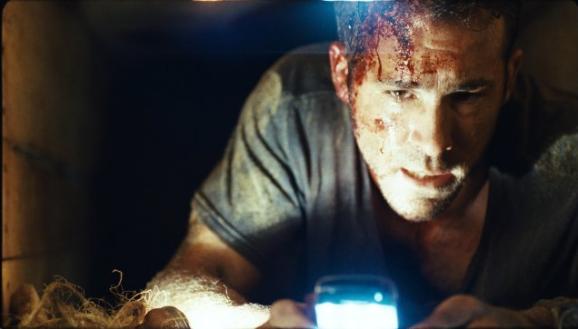
It’s a truly frightening concept, being buried alive. There you are, in a dark cramped coffin. Underground. Barely any oxygen. A real sense of claustrophobia. You can scream…no one can hear you. All of that is covered in the film “Buried,” which is about a man who is kidnapped and placed in a wooden casket underneath the desert. It’s an engagingly gripping thriller.

Ryan Reynolds stars in a convincing, effective performance as Paul Conroy, a truck driver working in Iraq. As the movie opens, he awakens in the casket with only a Zippo lighter, a cell phone, a flashlight, and a pencil. The last thing he remembers is his convoy being attacked and his fellow drivers being shot at. While inside his own possible grave and knowing that there is no way out from inside, he realizes that he’s been captured and held for ransom by his attackers. The terrorists order him to ask the US embassy for five million dollars.

While all this is going on, Paul desperately calls many people for help—the police, the FBI, the hostage crisis handlers, his wife, everybody. It becomes very irritating when those are really supposed to help keep asking all sorts of idiotic questions and wasting what little time there is while Paul is down there. In fact, I don’t even know who’s more the villain—the terrorists or the people who are supposed to help him.

Probably the very best thing about “Buried” (and the most amazing) is that its story follows through only inside that coffin. Throughout the film’s 95-minute running time, we stay entirely with Paul. There are no flashbacks, no scenes that take place on the other side of the phone calls, and nothing even above ground. Perhaps that’s not the most amazing part—the most amazing part is that the film keeps the viewer’s attention and interest. There’s a great deal of atmosphere and mood, told right away by the opening scene.

That opening scene comes after an old-school credits sequence that, along with a heavy orchestral score, promises something massive. The first shot after that is complete darkness, followed a few seconds later by light breathing, some thumps, and finally a lighter igniting to show the fear in the main character’s eyes.

But “Buried” also probably wouldn’t be as effective without Ryan Reynolds’ performance. That’s an odd thing to say, because I don’t consider myself a fan of his. Reynolds’ comedic work does nothing for me—he seems too bland and uncharismatic. But in this serious, dark role, he’s perfect. He brings about every right emotion, he’s absolutely credible, and is easy company for 95 minutes. Since we spend our time in the coffin, the other characters in this film are mainly voiceover roles, played by actors Stephen Tobolowsky, Samantha Mathis, and Erik Palladino.

The more claustrophobic you are, the less “Buried” is going to appeal to you. But this is an unforgettable, impactful thriller that gives me more reason as to why I would prefer to be cremated.

Smokey and the Bandit (1977)

7 Feb

smokey_and_the_bandit_1977_685x385

Smith’s Verdict: ***1/2

Reviewed by Tanner Smith

“Smokey and the Bandit” starts slow, but ends fast. It’s the strangest thing—it’s a movie that I wanted to just move along at first, but as it ended, I wanted to see more. It happened after about twenty minutes in that I started to really enjoy myself. Actually, I can tell you the moment it happened. It happened when Sally Field appeared on screen and joined the adventure of Burt Reynolds’ “Bandit” (as he’s known by his CB radio handle) and Jerry Reed’s “Snowman” as they go on an urgent trip to haul a truckload of Coors beer from Texas to Georgia.

To be sure, I was enjoying the company of Reynolds and Reed, who have a nice comic rapport with each other as they kid with around in their introductory scenes together. What I wasn’t enjoying was the way the bet for the beer was set up, by rich Big Enos and Little Enos (annoying), and I also wasn’t looking forward to how it would all turn out since Bandit and Snowman got the beer with no trouble at all and only fifteen minutes into the movie. I was hoping something would bring the movie to life—hard to believe I could ask for that, since Bandit is driving a cool-looking black Trans Am, but I need more than a car to get me interested. I’m not driving the car, and Reynolds and Reed communicating by CB radio (Reed drives the truck full of beer) could get boring. That’s how I felt while watching this movie.

But thankfully, director Hal Needham apparently knew someone like me would feel this way. So instead of a mere “getaway show,” he brings along three things to make “Smokey and the Bandit” into something fun.

The first is the character of Carrie, played by Sally Field. She’s an excited young woman who joins Bandit after hitching a ride with him, while wearing a wedding dress. She ran away from a wedding and wants something new. What she gets is Bandit’s exciting reckless-driving. What Bandit finds (and what we find) is a terrific gal. She’s attentive, fun, excitable, and so darn cute. She even gets her own CB handle—“Frog.” (“’Cause you hop around like one,” Bandit explains. “And I’d like to jump you.”) And as Sally Field plays her, she brings the heroic side of the movie to life. She’s very funny as she shouts for joy over Bandit’s driving and attempts to explain her background to this charming person she just met (while Bandit has his CB radio on for Snowman to listen to her ramblings). I loved watching her.

The second is the villain—a Texas Mountie with the handle of “Smokey Bear.” He could have been just a boring, one-dimensional caricature. Well, as played by Jackie Gleason, Smokey has two of those things right—“one-dimensional” and “caricature”—but never “boring.” In fact, Gleason is absolutely hilarious as this overweight lawman who chases Bandit along the trail and doesn’t give up for anything. He doesn’t care if he’s far out of his jurisdiction. He just wants to find Bandit and nab him. He’ll shout if he doesn’t get what he wants and takes it out on his idiot son, Junior (whom “Frog” was about to marry), even going as far as to say “There is no way that you could come from my loins.”

The third is the staging of each scene that follows as those two characters are introduced. As Smokey chases Bandit from place to place, the chases are well-staged, well-shot, and most importantly, fun to watch. Pretty much every way Bandit can evade Smokey is put on display here. They’re to the point where I found myself actually involved and I was proud of the movie for bringing me to this after a slow opening.

So what if there’s no feel for Bandit and Snowman to deliver the beer to Big and Little Enos on time? Let these folks drive, let Field keep talking, let Gleason keep chasing after Bandit like Wile E. Coyote, let Reed get beat up by some tough guys at a bar so he can gain revenge by running over their motorcycles in his truck (I love that scene). Once “Smokey and the Bandit” gets going, it really gets going. And as I said, when it was over, I wanted it to keep going.

I love you, Sally Field. I really love you.

Alive (1993)

7 Feb

fears-alive-590x350

Smith’s Verdict: ***1/2

Reviewed by Tanner Smith

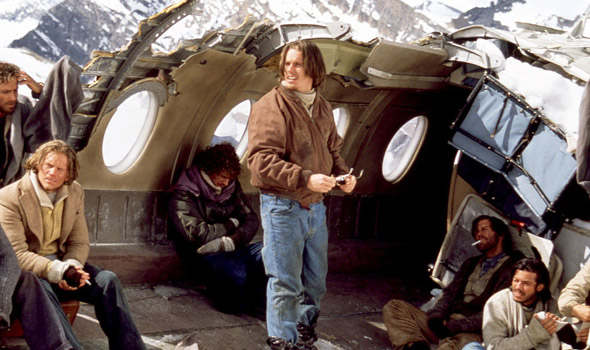
“Alive” is based on the true story from 1972 of a chartered plane carrying friends, families, and members of a Uruguayan rugby team that crash-landed in the Andes. For a little more than two months, before they were finally rescued, the survivors struggled to survive the cold and also resorted to cannibalism, eating parts of the dead, to keep from starvation. The story was made into a best-selling novel by Piers Paul Read, and has been adapted into the uplifting drama “Alive.”

“Alive” opens with one of the most frightening, convincing plane crash sequences you’ll see in a movie. It’s perfectly executed and captures the intense fear of being on a falling plane. It starts out just unnervingly, as the plane goes through some turbulence, but then it gets crazier and more terrifying as the plane surely is crashing down. It’s unforgettable, as sights such as seats with people still in them being hurled outward through a gaping hole where the back cabin used to be. At that point, we’re hooked and wondering what’s going to happen next.

The survivors are stuck on a mountain slope in the Andes and they do what they can to stay alive until a rescue team comes for them. They ration what little food they have, use seat covers as blankets, go inside the fuselage at night and curl up next to each other to stay warm. But with the continual freezing weather, food running out, and a rescue that has been called off, they realize they must do whatever they can to survive, even if that means eating the flesh off of their dead.

The subject of cannibalism is horrid and “Alive” doesn’t shy away from the horrific reality of the situation. It confronts it realistically. The characters talk about it with credible unease and tension. Some are even afraid to say the word “cannibal,” and when one does, it makes the situation even more uneasy. When one does eat, no one asks how it tastes, so no one says what it tastes like—someone eats for the first time and then leans his head down in disgust and holds out the cutting tool used to slice some meat and says quickly, “Someone take this.” When they’re all used to it, though, they manage to crack a few awkward jokes, like “If you eat me, be sure to clean your plate.” This is all done genuinely, with the characters reacting with authentic horror at the situation and then trying to relieve the tension.

“Alive” is something of a “triumph of the human spirit,” as an ordinary group of people is pushed to their limits to survive an extreme situation. The film has a bright look, an uplifting tone, and constant talk about religion and God that make “Alive” more of an inspirational survival tale than a dark thriller confronting the horror of cannibalism. This is why the true event is sometimes remarked as “the Miracle of the Andes.”

One problem I have with “Alive” is that with a large group of people as the film’s central characters, only a few of them can have enough screen time to be considered independent while the others just blend into the film. The only actors I can think of that have a significant amount of screen time are Ethan Hawke as reckless Nando; Vincent Spano as take-charge Antonio; Josh Hamilton as reasonable Cannessa; Bruce Ramsay as optimistic Carlitos; and Kevin Braznahan as pessimistic Roy. Another problem I have with “Alive” is the ending. This is supposed to be the big dramatic payoff, but it just felt sort of rushed and looked over without really gathering a lot of much-needed weight.

But for the most part, “Alive” is very much indeed alive. It’s well-crafted, well-acted, and quite effective. Instead of becoming a mere adventure story, and the final half does venture into that territory (though respectively), “Alive” becomes a more visionary tale about survival and experience that works.