Archive | Three-and-a-Half Stars ***1/2 RSS feed for this section

A Wheel & the Moon (Short Film) (2013)

2 Apr

625488_445476658865564_1831939262_n

Smith’s Verdict: ***1/2

Reviewed by Tanner Smith

“I’ve never really wondered what it would be to lose part of myself. To not feel like a whole person again. Losing someone I love is one thing…but to go on living while part of me dies…” That inner thought that opens the short film “A Wheel & the Moon” says a lot. What if you knew for sure that you were going to lose your vision? What would you feel? What would you do?

Adapted from Jonathan Carroll’s short story, “A Wheel in the Desert, the Moon on some Swings,” and made as a graduate thesis film for University of Central Arkansas’ Digital Filmmaking Master-of-Fine-Arts Program, Chris Paradis’ “A Wheel & the Moon” is about a young man named Norman, who learns he is indeed going blind and tries to imagine his life without eyesight. He finds himself wandering his hometown, hoping to find some way to find something positive about this. The best he can come up with is to buy a camera and take as many pictures as he can that capture the world around him.

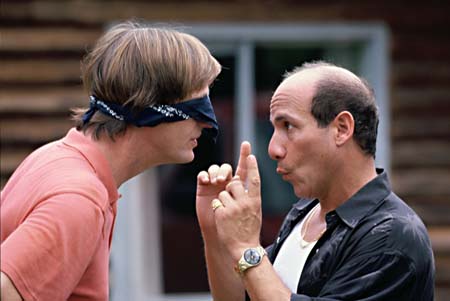
“A Wheel & the Moon” effectively tells an interesting tale of how Norman (Justin Pike in an effective low-key performance) continues to try and find the optimistic side to what he fears will come. The people he encounters along the way are interesting and surprisingly, given their short amount of screen time (for a film that is about 20 minutes in running time), have distinct personalities. In particular, there’s a homeless man (Tucker Steinmetz) who claims to be blind and tells Norman what he misses most about not seeing (fried chicken); Norman’s caring sister (Sarah Holderfield); and a makeup artist (Angy Champine) who manages to give Norman a good idea of what he’ll look like “in 50 years”; among others. These are all appealing characters that our protagonist encounters on his personal journey that ultimately results in him finding himself.

The only thing I didn’t particularly like about “A Wheel & the Moon,” which is otherwise a competently-made film that works as slice-of-life and an effective, non-manipulative feel-good drama, was the ending. I can tell there’s a heartwarming message to be said about enjoying the oddness and beauty of life, but it was kind of hard to take it in because it feels somewhat rushed. Although to be fair, I should note that the sequence that comes before that final bit did an effective job at delivering the necessary emotional drive by itself.

“A Wheel & the Moon” is an effective short drama. It actually kind of reminded me of UCA alum Sarah Jones’ MFA film last year, “John Wayne’s Bed,” in that each short film treated its story and its audience with enough regard that it didn’t have to succumb to melodramatic formulas just to make us care—it just efficiently told the story. “A Wheel & the Moon” is moving, and it’s well-done, and it works.

SIDE-NOTE: I love this line about the fried chicken, said in an earlier scene in which Norman encounters the blind homeless man—“Fried chicken is three things—smell, taste, and sight…You gotta see it to really eat it.” KFC would probably kill for that slogan.

L.A. Story (1991)

2 Apr

la-story

Smith’s Verdict: ***1/2

Reviewed by Tanner Smith

I’ve never been to Los Angeles, California. I’ve heard many things about it—some positive (lovely location, great beaches, movie stars) from those who vacationed there, and some negative (evil place, smog-filled land, snobby materialistic people, lot of traffic) who only hear rumors about it. But it does seem like there are a lot of things to pick on it for, and that’s exactly what Steve Martin does for his screenplay “L.A. Story.”

“L.A. Story” is a lighthearted romantic fantasy-comedy that stars Martin, who also wrote the script, as a man who lives in L.A. and learns to start small and work his way up to something big and better, if only he keeps an open mind. He first starts on his journey to find that special something when his car suddenly stops on the freeway and he finds himself near a magic giant electrical traffic warning billboard that actually talks to Martin through lettering and tells him that he can improve his life.

When we first meet Martin’s character—a weatherman named Harris K. Telemacher—he seems like he could use a change. He’s stuck doing the goofy weather reports that have little to do with actually stating the weather; he has a snobby girlfriend (Marilu Henner), who walks all over Telemacher and apparently will never open a car door for herself and always has Telemacher open it for her; and he finds himself in the midst of a lifestyle that many successful people follow, which is sitting in the sunshine and ordering cappuccinos (with lemon twists for some). So when he encounters this magical sign that gives him a riddle to solve about his life, he keeps an open mind and decides to see what’s in store for him.

For starters, there’s a ditzy Valley Girl named Sandee (Sarah Jessica Parker) who works at a clothing store and spells her name “SanDeE*.” She’s an incredibly bouncy, carefree, like-totally energetic chick who is a lot of fun to be around and she and Telemacher share an interesting, energetic relationship. But there’s someone else out there for him—an attractive British journalist named Sara (Victoria Tennant), who is in town to do a story on L.A. lifestyles. Telemacher believes she might be the right one for him. But the problem is, she’s already seeing someone.

But hey, when has that ever stopped anybody in a romantic comedy?

With the sweet, romantic stuff aside, there are a lot of big laughs to be had throughout “L.A. Story.” Most of them have to do with the exaggerated lifestyles of people in Los Angeles. Everything is so eccentric, you have to wonder when everything is going to stop. Highlights include—Telemacher driving his car to work on sidewalks and through backyards (as neighbors smile and wave as he passes); a magnet gone awry in Telemacher’s weatherman job; people acting casually during an earthquake, except for Sara who is unnerved by this occurrence; the snobby materialism of Telemacher’s ex-girlfriend; and Telemacher realizing that the first day of spring means it’s “open season” on the expressway, and loading a gun before bullets start flying early. There are plenty of jokes like that, most of them very funny stuff. Even in the romantic elements, there’s something to look to and laugh at—for example, when Telemacher and Sandee wander the streets at night, a robber with a gun politely says, “Hi, I’ll be your robber for the evening,” and Telemacher just gives him his wallet like that!

The only problem I have with “L.A. Story” is that most of this energetic comedy doesn’t quite mesh well with the “fantasy” aspects. It sometimes feels like we’re in two different movies, except of course for those occasions where we’re laughing at the billboard sign’s pieces of advice. The final act is when everything finally pays off, and luckily, when we really feel the mood that the movie is attempting to convey, and the Capra-esque ending is underway, the laughs come back and we’re satisfied.

Steve Martin is good as always—sharing a great gift of mixing comedy with sincerity. But he also displays real chemistry with Victoria Tennant, who is just lovely as Sara (I really shouldn’t be surprised since the two were married during production). The real pleasant surprise of the cast is Sarah Jessica Parker, who is simply hilarious and plays the Valley Girl down to a T.

“L.A. Story” has its inconsistencies, but it has enough material to make us smile and laugh. Martin proves again to be a game comic actor and writer, the romance is rather touching, and the screenplay contains plenty of jokes, most of which very funny. And there’s a lot of Los Angeles to take in from this movie. I hope to vacation there sometime.

Superbad (2007)

1 Apr

Superbad-2007_gallery_primary

Smith’s Verdict: ***1/2

Reviewed by Tanner Smith

Welcome back to John Hughes ‘80s teen movie territory…if John Hughes had more vulgarities and risqué material in mind. The territory is welcomed back with “Superbad,” made in 2007 but feels like it was made in the ‘80s, the time of many high school teen movies. I’d say that “Superbad” is (arguably) even funnier than any movie from that category you can think of. It’s a profane, vulgar, risqué, raunchy comedy with a heart and even a brain. Director Greg Mottola and producer Judd Apatow, as well as the writers (which I will mention later), deliver the sort of teen comedy John Hughes would make if he had help from Quentin Tarantino.

As I’ve learned, the writers of this movie—Seth Rogen and Evan Goldberg—wrote the script when they were thirteen and discovering girls in school. The main characters of “Superbad” are named after them. They have different personalities, but they’re best buddies because they’ve known each other for so long. They are the loud, obnoxious, unpopular, pudgy Seth (Jonah Hill) and the sweet, sensitive Evan (Michael Cera, George Michael from “Arrested Development”). They’re high school seniors who are facing the last three weeks of their high school days and worried that they won’t have sex in the next three weeks, and therefore will go to college never to have had sex.

Seth is the most worried, talking nonstop about how much he would like to be the mistake that girls make when they get drunk at parties. He wants Evan to join him, but Evan is more sensitive to the feelings of the girl he likes, named Becca (Martha MacIsaac). Then, on Friday night, they are invited to a party by a nice popular girl named Jules (Emma Stone), whom Seth likes. She asks Seth to supply alcohol for the party.

That leads to a wild night of many misadventures while trying to get booze and make it to the party in time for Seth and Evan to get the girls they want. Having his own adventure on this wild night is Seth and Evan’s even-less popular friend Fogell (Christopher Mintz-Plasse), who is unpopular even by them. His awkwardness/irritation steals many scenes and his fake ID used to help his pals get booze names him as—oh, yeah!—McLovin! Unfortunately, his attempt to get booze is upstaged and separates him from Seth and Evan, who attempt to get booze themselves. While they are at an adult party, trying not to be severely injured by the host, Fogell is cool with the most original characters in the movie—two partying cops (Rogen and Bill Hader, playing the Belushi/Aykroyd-type roles). They show Fogell a good time. Their adventures seem like their own movie—I loved watching these guys; they were hilarious and fun to watch.

It’s a teen movie through and through; with the exception of Evan’s mother, it’s a parent-free zone. Many of Seth and Evan’s problems ring true. Seth is upset because Evan is going to a different college than he is. After all these years of being friends, they may lose each other. These characters are real and convincingly played by the young actors who portray them. Michael Cera is terrific as Evan. He’s an average high school teenager who is unpopular, mostly because he’s friends with Seth. He delivers his lines as if he’s sincerely afraid he’ll say something stupid. He’s so sincere, it’s impossible to dislike him. It is possible, however, to dislike Jonah Hill because Seth is just plain loud and obnoxious. But there are moments when he reacts the way anyone reacts—for example, in a scene where he dances with a kinky older woman at the adult party, he notices “something” on his pants and acts like anyone else would react…though I don’t anyone else had this happen before. I won’t say what’s on his pants—I wouldn’t dare ruin the hilarity of that moment. The script never falls for the tired teen movie caricatures and makes the dialogue more profane and clever and the situations seem real. Another surprise: the popular girl Jules, Emma Stone, isn’t played as the usual snobby girl who’s out to get the unpopular crowd—she’s a caring soul.

“Superbad” is definitely not for everyone, especially anyone who would cringe at the sights of multiple penis drawings. But like Judd Apatow’s previous comedies, “40-Year-Old Virgin” and “Knocked Up,” it’s a funny, smart movie—hilarious, well-acted, well-made, and “supergood,” also with a catchphrase you won’t forget easily: “I am McLovin.” Yes, he is.

Randy and the Mob (2007)

1 Apr

RandyandtheMob

Smith’s Verdict: ***1/2

Reviewed by Tanner Smith

The best filmmakers don’t make the same film over and over. The smartest filmmakers don’t want to (or rather, feel they don’t need to). There is one filmmaker that falls into both descriptions. His name is Ray McKinnon, the Southern filmmaker/actor who directed, co-wrote, co-produced, and co-starred in the short farm comedy “The Accountant” (which won an Oscar for him and one of his creative partners—his wife Lisa Blount) before he took a serious, dark turn with the feature “Chrystal” (which starred Blount in the title role). Both films took place in the South, which McKinnon and Blount apparently have affection for.

So, after the art that was “Chrystal,” McKinnon, Blount, and Walton Goggins (co-producer of the previous films) decided to do something different with a new movie. The result is a lighthearted comedy named “Randy and the Mob,” a movie that mixes the mob with Southern droll. This is clever, and who better to deliver most of the film’s Southern droll than director/writer/co-producer Ray McKinnon as the title character Randy?

McKinnon plays two characters in “Randy and the Mob.” One is Randy, a good ol boy trying to keep track of his various businesses in a small Georgia town. The other is his twin brother Cecil, a gay man who stays in this town because he has deep respect for his family (despite a nosy grandmother). I guess the budget was so low that they couldn’t use split-screen to show both characters in the same shot. But strangely though, it didn’t seem necessary. We know both characters are there and they interact with each other convincingly. And it’s brilliant that McKinnon, like Nicolas Cage in “Adaptation,” is able to show difference in both characters.

In the film, Randy’s latest plan to keep the businesses going involves a loan shark. But his businesses aren’t making enough money and Franco (Paul Ben-Victor), a loan shark for the mob, wants to collect the money. Randy can’t deliver, but the mob has a plan for him. They will use his businesses to move some of their goods, arranging for mob enforcer Tino Armani (Goggins) to take care of things.

Tino Armani is a curious case. Played by Walton Goggins in a terrific comic performance that may remind you of Stooge Larry crossed with Karl Childers of “Sling Blade,” Tino is an uptight, barely emotional deadpan who emphasizes all of his words in a droll Southern accent. At one point, Randy wonders why he doesn’t sound Italian with a name like “Armani.” Tino addresses, “It’s-called-stereotyping. I’ve-dealt-with-it-my-whole-life.” Viewers may have a bit of trouble accepting this character (or rather, his voice) at first, but it grew on me as a truly effective comic character (not a “caricature”). Tino comes into Randy’s life and the lives of Randy’s family and friends. He impresses everybody with his insight on human life (he even has something to say about Randy’s nearly-unlikable attitude), the way he cooks Italian food, and how he keeps Randy’s businesses afloat.

This is all done with a real Southern authenticity. There are no stereotypes or caricatures to be found—these people seem like real people and true originals. These characters are the real source of the comedy in this movie—it’s not just the clever one-liners and slapstick situations; it’s the people. Cecil, the gay brother, isn’t given the stereotype treatment either—not even when he wears a pantsuit in the middle of nowhere at a family cabin. Then, there’s his life partner Bill (Tim DeKay) who won’t let people talk bad about Cecil, Randy’s depressed wife (Blount, wonderfully droll) who glares and stares whenever something is…well, off. And finally there’s the police deputy (Brent Briscoe) who won’t let Randy forget that he beat him up in grade school and would like people to know that.

“Randy and the Mob” is a pretty entertaining movie—well-developed, funny, and subtle

Lethal Weapon 2 (1989)

31 Mar

images-2

Smith’s Verdict: ***1/2

Reviewed by Tanner Smith

“Lethal Weapon 2” is a sequel that is just as good as the original film, “Lethal Weapon.” “Lethal Weapon” was a smartly written, well-portrayed, gripping, and action-packed buddy-cop movie and “Lethal Weapon 2” brings back the wonderful main characters, has as much intriguing action as the original, has a certain intelligence that made the original film work, and adds more comedy in a fantastic supporting character that serves as terrific comic relief.

Danny Glover and Mel Gibson are back in the saddle as the cops who are different in personality but similar in themselves. Glover returns as Sergeant Murtaugh, who may be “too old for this <bleep>,” but that doesn’t stop him from getting into more <bleep>. In the meantime, he’s a family man with retirement plans. Oh, and he isn’t too happy to know that his teenage daughter is the star of a condom commercial. Gibson returns as Riggs, who still lives in a trailer near the beach and enjoys making people think he’s crazy. He’s not as tense as he was in the original film, but that’s not saying much. The relationship between Murtaugh and Riggs remains at the center of both this film and the previous film. It’s an interesting balance of trust and irritation.

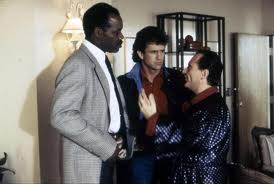
But the movie’s best character—in that he’s the funniest and most memorable—is Leo Getz (Joe Pesci), a fast-talking accountant who barely stands at five feet tall. Murtaugh and Riggs are assigned to protect him because he has found a way to swindle illegal drug money and has the dealers coming to kill him. I described him as “fast-talking,” didn’t I? Well, not only that. He never shuts up. That makes Murtaugh and Riggs’ job of protecting him a little more than they can bear.

Leo is a likable guy, though. He’s just trying to make people like him. But he tries too hard and that’s why people like Murtaugh and Riggs can’t stand him. Joe Pesci plays Leo with a great deal of enthusiasm (I love his indistinct shouts during a car chase scene) and I guess that’s why he’s so funny and leaves an impact.

The villains of the film are ruthless South African diplomats. Murtaugh and Riggs stumble onto their plot to illegally deal gold…or something like that. A weakness of the film is that I wasn’t quite sure that their plan was. But these are real villains—actual characters, and not just violent bad guys. Riggs makes them his own personal enemies—watching them like a hawk until he finally comes across at least one piece of evidence to prove what they’re doing. At one point, he makes his way into their building and shoots their fish tank. Along the way, he strikes up a relationship with Rika (Patsy Kensit), their secretary. Riggs tells Murtaugh that she reminds him of his deceased wife.

“Lethal Weapon 2” has some good action scenes, including a car chase that didn’t bore me but got me excited (that’s also the same car chase that I mentioned has Leo rambling, loudly and indistinctly). Then there’s the scene that has suspense and comedy in which Murtaugh’s toilet is booby-trapped…with Murtaugh on it, pants dropped and all. And the entire bomb squad (and some press, too) comes into the bathroom trying to save him.

Then there’s the explosive action climax that you would expect in a film like this. It features Murtaugh and Riggs fighting all the bad guys and rescuing the kidnapped Leo. It’s not as interesting as anything else in the movie, but it is still kind of exciting.

“Lethal Weapon 2” isn’t like most sequels that try to repeat the previous film to attempt to recreate whatever magic they accomplished the first time. They have the two main characters continuing their relationship while going a different, new crazy adventure. This isn’t a retread, but more of a continuation. Glover and Gibson keep their characters real and exciting, the wit is nice, the action is compelling, and of course, credit has to be given to the great comic relief delivered by Joe Pesci as the irrepressible Leo Getz. “Lethal Weapon 2” is a thoroughly entertaining movie.

Time After Time (1979)

31 Mar

time_after_time

Smith’s Verdict: ***1/2

Reviewed by Tanner Smith

Here’s a wonderful premise for a movie. H.G. Wells, author of “The Time Machine,” has actually created a working model of a time machine, only to have Jack the Ripper come in and use it to escape into the future—our time. And so, Wells must use the device to travel into the future to track him down, finding himself amongst this strange world of automobiles and fast food, among other things. That’s a great idea for a movie and that movie is “Time After Time,” which is just about as delightful it sounds.

The first twenty minutes takes place in London, England, 1893. Jack the Ripper (David Warner) is on the loose, murdering women he meets on the street. He’s also one of the guests of a special dinner party hosted by H.G. Wells (Malcolm McDowell), who knows nothing of his friend’s deeds. He shows his guests the time machine, kept down in his basement, and explains every detail to them (and to us). He announces that he plans to use the machine to travel into the future, which he’s sure will become a social utopia.

Soon, Scotland Yard detectives search the house for the Ripper, who makes a quick and easy escape via the time machine. So, Wells decides to follow him to the year 1979 and somehow track him down and take him back to 1893.

He awakens in the history museum in San Francisco, California, inside the model of the time machine at the H.G. Wells display. Though the city is not exactly what Wells thought of when he expected “utopia,” he finds joy in exploring this new territory (and new time) and solving every riddle he can come across—he sees a newspaper headline “Colts Maul Rams,” attempts through the banking system to get some money, orders a “Big Mac, fries, and a tea to go, please,” and in the movie’s funniest bit, tries his hand at hailing a taxi.

The main joy of “Time After Time” comes from the fish-out-of-water portion that takes up a lot of the movie. It’s great to see this bright, intelligent Englishman from the past exploring the cultures of America’s future. Because Wells is so smart, innocent, and quick-witted, it’s easy to sympathize with him as he goes through all of this. The screenplay by Nicholas Meyer (who also directed this film) also has a share of sly wit in the dialogue, such as a scene in which Wells is told by his lunch date that she likes his suit—“Is that what they’re wearing in England?” she asks. “It was when I left,” he says. It also allows some social commentary in which Wells meets the Ripper in a hotel and is taught why he belongs there and Wells doesn’t—he shows him violence on TV and proclaims that he’s home. “The world has caught up with me and surpassed me,” the Ripper explains. “90 years ago, I was a freak. Today I’m an amateur.”

The screenplay also allows a romance to take place amongst the comedy of the fish-out-of-water tale and the quick action of H.G. Wells’ pursuit of Jack the Ripper. It occurs between Wells and a helpful, flirtatious banker named Amy Robbins (Mary Steenburgen), who later in the movie finds herself about to be the Ripper’s latest modern-day victim.

The romance is written well, and so is the character of Amy, I suppose. But the problem I have with this movie is Mary Steenburgen’s performance. Steenburgen speaks her lines in such a flat, artificial matter that you have to wonder how this fun actress was directed to play the role. She’s just too awkward and uncomfortable in this movie. That’s a strange criticism, because I would have expected Steenburgen, a wonderful actress, to be one of the best things in the movie. Now, she’s my least favorite element of the movie.

But the two lead actors—Malcolm McDowell and David Warner—own the screen. McDowell is wonderful in this role of the intelligent H.G. Wells. And he’s funny when he doesn’t know he’s funny, which means he owns the comedic moments. David Warner is suitably menacing as Jack the Ripper, playing it straight.

If I am going to complain about Mary Steenburgen’s performance, I should point another quibble I have with this movie. There’s a crucial plot point that is so obviously set up at the beginning, only to have us wait and wait until it pays off at the end. And since we know the outcome of the plot point, there’s no surprise.

But “Time After Time” does have a lot to like about it—particularly Malcolm McDowell and the fish-out-of-water story. This is a fun movie about time travel with an appealing lead character and a sharp-witted screenplay.

The House of the Devil (2009)

30 Mar

articleLarge

Smith’s Verdict: ***1/2

Reviewed by Tanner Smith

Filmmaker Ti West is obviously an enthusiast of classic horror films, and indeed, his film “The House of the Devil” feels like an affectionate homage to horror films of the 1970s and 1980s. He not only uses the same filming procedures to refabricate the style of these films, but he also used similar technology (for instance, a 16mm camera to give the film a vintage look). The film also opens with a disclaimer stating that it is based on “true unexplained events.” Isn’t that what the makers of “The Texas Chain Saw Massacre” wanted people to believe in 1974?

“The House of the Devil” also uses elements of the “haunted-house” story and the slasher-film subgenre. It also uses the plot element of the “satanic panic” that swept the 1980s and inspired Ronald Reagan’s infamous speech about good and evil.

Oh, and get a load of this—the film is also set in the 1980s. A specific year isn’t mentioned, but you can tell from all sorts of vintage basics that this isn’t set in the 2000s. There are gigantic Coke cups, payphones, answering machines, a Sony Walkman, and feathered hair.

With such ambition, “The House of the Devil” is a terrific old-school thriller with so many interesting touches put into it. This is the kind of callback to the old-fashioned horror films that I looked for and missed in Eli Roth’s “Cabin Fever.” Ti West seems to understand his elements more.

The setup involves an easygoing young woman, Samantha (Jocelin Donahue), who is saving money for her own apartment so she doesn’t have to deal with her skank of a roommate anymore. While checking posters on college-campus, she notices a call for a babysitting job and decides to take it. Samantha’s friend Megan (Greta Gerwig) drives her to the big Ulman house on the night of a full lunar eclipse…in the middle of a dark forest far from society.

Oh yeah! This isn’t going to go well!

Once Samantha introduces herself to the strange Ulman couple (Tom Noonan and Mary Woronov), she is told that there is no “baby” to look after—instead, it’s Mr. Ulman’s aged mother who stays upstairs. Nonetheless, Samantha stays to earn some much-needed cash, while Megan sees this as a red flag and practically begs Samantha to come back home with her. Samantha stays; Megan leaves, but promises to come back later (the Ulmans didn’t want to pay for two). How much do you want to bet that Megan isn’t coming back later?

Now, without giving much away, something shocking (and worthy of the first murder scene in “Psycho”) happens midway through the movie. And when it does, it raises the tension level for the rest of the movie, which is mainly Samantha roaming about the house, trying to relax and enjoy herself in the huge parlor. She doesn’t know what’s happened, but we know that something may or may not happen to her and the rest of the film keeps us on edge until she finally realizes that something is wrong.

The feeling of being alone in a strange house (though not entirely alone with “Mother” upstairs in her room) creates a constant feel of anxiety, so that when the scary stuff does happen, it doesn’t matter how long it’s been set up—when it finally happens, we’re still prepared for it. That’s how it was for me, anyway. It seems to me that West understands that the best thing about this sort of horror film is not the ultimate occurrence that is scary; it’s waiting for it. It’s the anticipation that something is bound to happen that is more fun than anything else. What does happen, and you’ll probably guess from the opening disclaimer (and even the title of the film) that it involves a satanic ritual, is not necessarily as successful as the buildup, but that’s sort of the point.

I loved Jocelin Donahue in this movie. She has such an appealing, easygoing presence, and made for a very likeable protagonist to follow and fear for. She has no trouble in earning our sympathy. Tom Noonan has been suitably creepy in many roles before; this is no exception, as Mr. Ulman. Greta Gerwig is likeable, and also scores a few laughs with the attitude she brings to her cynical character of Megan.

Ti West truly gets the horror genre and knows what it takes to make a satisfactory horror film. This is also true of his later feature “The Innkeepers,” and I wonder what his personal cut of “Cabin Fever 2” (which was not the cut that was ultimately released, leading to West disowning the film) was like, because I’m sure something that sounds as dumb as a sequel to “Cabin Fever” would get my attention if Ti West directed it. I really think he’s that good. And “The House of the Devil” is a terrific horror film, making Ti West a new potential “master of horror.”

Defending Your Life (1991)

29 Mar

defending-your-life

Smith’s Verdict: ***1/2

Reviewed by Tanner Smith

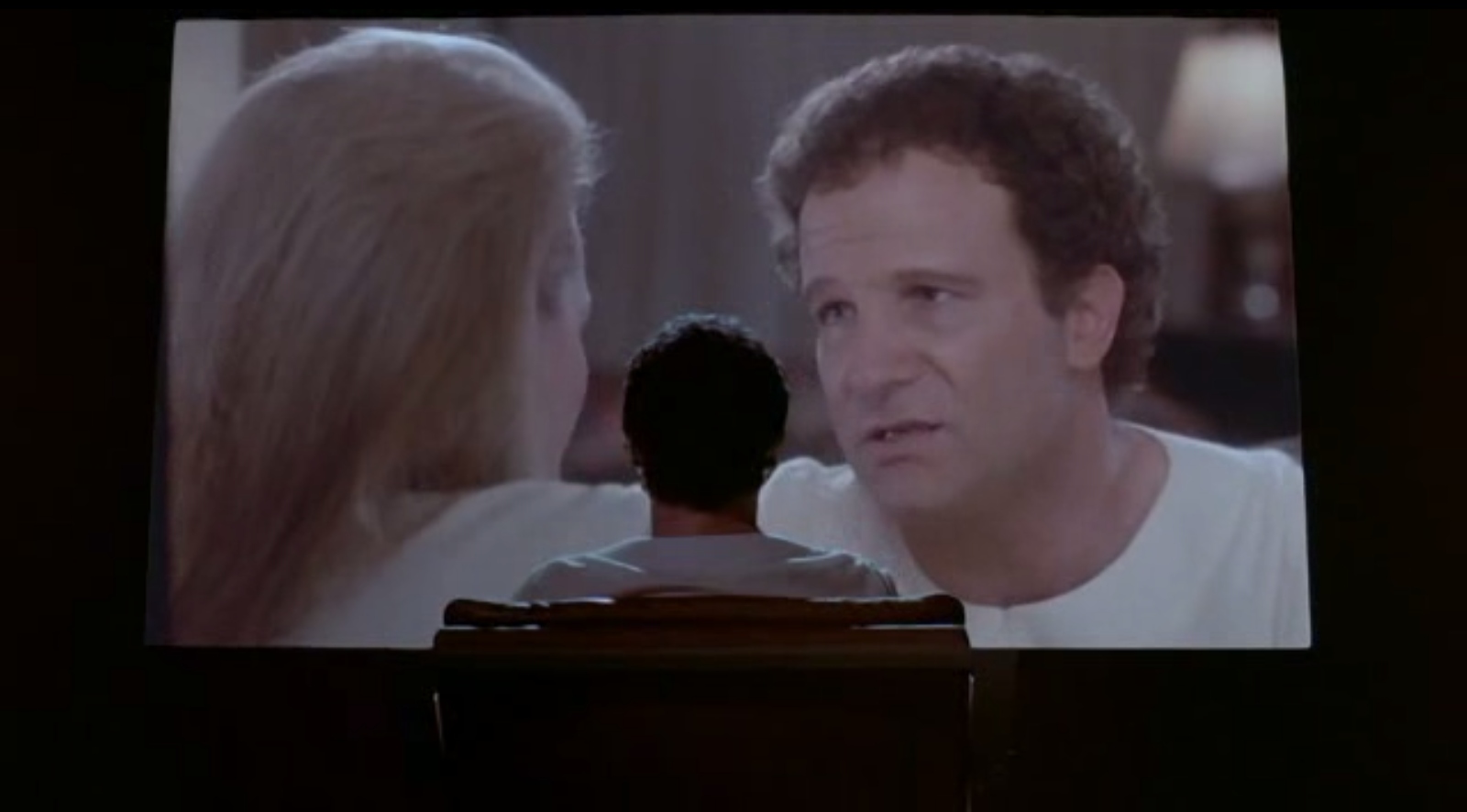
Everybody has their own visions of it, and Albert Brooks decides to share his vision in a film he wrote, directed, and starred in called “Defending Your Life,” a film with wonderful ideas about life after death.

Just imagine if you will. You just bought a new convertible and decide to give it a drive around the city. You listen to the radio and you’re just so happy. But then something drops on the floorboard of the passenger side and you bend down to pick it up while the vehicle is in motion. And then, as luck would have it, an oncoming bus hits you. Whoops. That’s funnily tragic, but then you wake up in Judgment City. That’s exactly what happens to Brooks’ lead character Daniel Miller in the first few minutes of “Defending Your Life.”

You see, apparently there is no heaven or hell (although there isn’t the decision that there isn’t a God). There is only Judgment City. And what a place it is. This city could just be heaven, though nobody wants to admit it. It makes you smarter the longer you stay there and it has the best-tasting foods you could imagine. And get this—apparently, you can eat as much as you want and never gain one ounce of weight. The restaurants are all-you-can-eat. Its one downside—a lackluster comedy club.

Well, there’s another downside. If you’re a Little Brain (which residents call those who have just died and came here), then you have to “defend your life.” It’s like being put on trial for your fears in life on Earth. It’s explained that because people use so little of their brains, their lives function mainly on fear. If the Judgment court has decided that you’ve conquered your fears, then you get to stay in Judgment City and become as smart as them. Otherwise, you’re sent back to Earth as a reincarnation to try again to get past fear.

Daniel has a defense attorney, Bob Diamond (Rip Torn), who explains all of this to him. He is called into a room where Diamond defends against a tough prosecutor (Lee Grant), as we see flashbacks of Daniel’s life. The court uses these clips to show whether Daniel has fear or just dignity, and Daniel gets chances to explain himself.

This is an inventive premise and there are many delights in how it’s all played out. But “Defending Your Life” is also a love story. Daniel roams around the city and meets a wonderful, sweet woman named Julia, who has a smile and manner that only Meryl Streep can deliver. Indeed, Streep plays Julia and her romance with Daniel is beautifully handled. They have warm conversations and enjoy each other’s company—a very sweet romance.

The ending of “Defending Your Life” is dramatically satisfying with the right emotional payoff. “Defending Your Life” is a success in fantasy mixed with romance. It has an inventive premise that delivers on its product and just got more intriguing as it went along.

Spring Breakers (2013)

28 Mar

images-1

Smith’s Verdict: ***1/2

Reviewed by Tanner Smith

How do I even begin to describe my feeling towards Harmony Korine’s “Spring Breakers?” This film is so surreal, so oddly-executed, so vulgar, so raunchy, so ambitious…and yet so unique, so powerful, and so effective. This film, written and directed by the polarizing Harmony Korine (whose screenplay for Larry Clark’s “Kids” was very unusual and yet effective in that way), is like a bizarre, candy-colored fantasy about wild, reckless teenage girls having a blast on a most peculiar Spring Break.

Anyone who knows of Korine’s work (which also includes “Gummo” and “Trash Humpers”) is most likely going to expect something very strange out of a fairly simple concept—capture the lives of ordinary people as characters. The results are usually not as “simple” as they would seem—the characters in his stories don’t feel like characters in execution; actually, they’re not even very likeable…but they seem all too real. That was the case with the loathsome teenager Telly in “Kids,” and this is the case with the four teenage girls in “Spring Breakers.”

Teenage girls Faith (Selena Gomez), Candy (Vanessa Hudgens), Brit (Ashley Benson), and Cotty (Rachel Korine) are four lifelong friends who seek a memorable Spring Break vacation. But they lack enough money for room-and-board, as well as booze and drugs. How do three of the girls (the three nastier ones of the group) obtain the money? They rob a chicken restaurant, with ski masks and fake pistols to make them look threatening.

By the way, that scene is very well-done, as it occurs in one tracking sequence that shows from the camera’s exterior perspective how it all goes down. And the scene returns later, only this time we’re in that restaurant with the people who are frightened by these felons, and so are we, because we see how downright vicious they were. The three are telling (and reenacting) this story to their sweeter friend (Faith) who might actually start to believe that she’s hanging with the wrong people. (They, however, are laughing like hyenas as they retell the story.) But nothing is certain unless it needs to be, just like in reality.

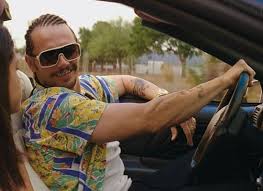
Anyway, for about the first 40 minutes, “Spring Breakers” is thin on story, but rich with style as the girls go about their Spring Break out of town and enjoy themselves by drinking, getting high, gyrating, fooling around with strangers, cruising around on rented scooters, enjoying sunsets with their arms wrapped around each other, and just having a great time, all while Korine uses handheld camera movements and a particularly effective soundtrack to make it look like an even more perverse version of “Girls Gone Wild.” Then, the girls are arrested, jailed, and thrown in court (and still in their bikinis, no less), and they realize that too much of their fun can lead to this. This is where the film suddenly takes a new story turn, as the girls are bailed out by a “gangsta rappa” dubbed “Alien” (James Franco) in exchange for being in the company of him and his own posse as they enjoy Spring Break their own way. Alien considers himself “legit”—he deals drugs, is filthy-rich, has a ridiculous amount of weaponry, and even has twin henchmen to look out for him. And he’s definitely not afraid to let anyone know it, including his new women—in a monologue inside his pad, he constantly uses the phrase, “Look at my s—.”

This is where “Spring Breakers” takes a most sociopathic turn, as the girls have fun with their new predatory acquaintance by playing with guns, fooling around, and lose their innocence more and more (what little they had left, anyway). Things get even darker when Alien’s enemy, another drug dealer, and his allies warns Alien to stop selling in his territory. Of course, Alien ignores him and this leads to a drive-by shooting, which will lead to an ultimate retaliation.

The casting is very spot-on, to say the least. To see Franco in this performance is to believe him. Very rarely do I see James Franco in a “performance,” but here, he really steals the show. This “Alien” character (his real name is Al) deserves his own movie.

images-2

For those who saw the names Selena Gomez and Vanessa Hudgens (both former Disney Channel starlets), and Ashley Benson (TV’s “Pretty Little Liars”), listed above as three actresses who co-star in this film, and are wondering if you read that correctly…you did. The fact of the matter is that these actresses (along with Rachel Korine, Harmony’s wife) are all undeniably convincing. In particular, I want to bring up Selena Gomez. Selena Gomez’s character of Faith, a good Christian girl, is the only one with a soul, while the other three are just plain foul with hardly a trace of a clear conscience anymore. She actually leaves the group midway through the movie because she has gotten as far as she wanted to go with her experiencing with rebellion. This gives Gomez the more complicated role to pull off, and I can’t emphasize this enough—she does.

What “Spring Breakers” does different from Hollywood comedies that use Spring Break as a setup is that it doesn’t emphasize on the fun that these stupid young people seem to have. Instead, it gives us something completely original, almost a different genre of itself (I can see many ripoffs coming after this hits its inevitable “cult-classic” status). It has a bitter essence to it while also getting its laughs from just the unusual psychoticism of certain situations—for example, there’s one particularly odd scene in which Alien plays a touching Britney Spears song (“Everytime”) on the piano while three gun-toting nymphs are accompanying his performance. Watch that scene, and you’ll know that while you’re stuck on knowing exactly how to feel, you can’t deny its originality.

The only thing about “Spring Breakers” I didn’t find fitting in comparison to everything that followed it was the ending. Without giving too much away, it’s supposed to show the growth of certain characters who resort to ultimate destruction to put an end to their paradisiac holiday. First of all, I felt the development of moving along a better path was somewhat sporadic. Second of all, it seemed a little conventional, which is odd to say, especially considering that the rest of the film is far from conventional.

Any other writer-director other than Harmony Korine, and “Spring Breakers” would have been just another raunchy Spring Break comedy. As it is, it’s dark and adamant. Maybe a little too much—I admit, I left the theater feeling somewhat bitter and cold because of everything that was being thrown at me. One thing I can say for sure about “Spring Breakers”—it’s the most unforgettable film of 2013 so far.

NOTE: I mentioned the “particularly effective” soundtrack—the end-credits are played under the hauntingly beautiful Ellie Goulding song “Lights.” That song is now “haunting” for different reasons.
Mean Creek (2004)

28 Mar

mean_creek_2004_portrait_w858

Smith’s Verdict: ***1/2

Reviewed by Tanner Smith

“Mean Creek” is a powerful, disturbingly effective film about how even the smallest thing leads to big magnitude, and how it’s dealt with. It’s also about troubled kids who feel alienated and are soon dealt with the biggest crisis of their lives. Now, they have to deal with it. It reminded me of “River’s Edge,” in which burnout teenagers had to deal with the fact that one of their own killed another one of their own. They were told by their leader not to tell anyone, but how could they not? In “Mean Creek,” it shows kids who all have problems and it also shows that every action comes with a consequence.

As the movie opens, a nice kid named Sam (Rory Culkin, Macaulay’s youngest brother) is beat up by a schoolyard bully named George (Josh Peck), a bipolar kid who has been left back in school because of a learning disability. Sam’s brother Rocky (Trevor Morgan), who smokes weed and drinks a lot as a way of escaping his own insecurities (that’s what I believe, anyway), decides to teach George a lesson in ultimate humiliation. Sam decides to go with it as long as they “hurt him without really hurting him.” Rocky enlists the aid of his two best friends. One is Clyde (Ryan Kelley), who resents the fact that he lives with gay fathers. Another is Marty (Scott Mechlowicz), who lives with his abusive brother who lets out his anger on him whenever their late suicidal father is mentioned. So now, Marty is aching to take out his own anger on George.

The boys invite George to a seemingly harmless boat ride—Sam pretends to make amends by inviting him to his “birthday party” and then the others are going to pull a practical joke on him. So Sam, Rocky, Clyde, Marty, George, and Sam’s girlfriend Millie (Carly Schroeder) head upriver but the unusual thing is that George is acting kind of friendly. Sam, Millie, Rocky, and Clyde see that George isn’t such a bad guy after all, but that he’s just lonely and wants friends. They decide to call off the plan, but Marty is determined to move forward. He wants to create pain and misery for George and when he finally tells George the plan, it leads to a big tragedy.

You probably already know what is going to happen already. “Mean Creek” is not a thriller and there aren’t any surprises either. This is pure drama happening here, and after that climax, the final half of the movie shows how the kids deal with it. They talk about it, they discuss it, they predict the possibilities of what will happen if they tell or not, and they all regret their actions. Their lives will never be the same again. The final half is excellent because it’s just so chilling and so convincing and deeply moving.

“Mean Creek” mainly a dramatic character piece. It doesn’t go over the top; it feels real. The six young actors playing the kids are all credible. There are no weak elements to their performances and there’s no sense of miscasting. Rory Culkin is good as the early teenager who is involved with a huge situation. Josh Peck is brilliant as the troubled fat kid willing to let out some anger on the kid—there are many levels to Peck’s performance. Scott Mechlowicz is chillingly convincing as the tough guy who soon becomes the leader of the group and makes the decision of not telling the authorities about that terrible day. Trevor Morgan, Ryan Kelley, and Carlie Schroeder deliver strong work as well.

“Mean Creek” is the writing/directing debut for Jacob Aaron Estes and he makes a wise choice of keeping his classic camera movements and angles to a basic minimum. He doesn’t direct it like a big-shot mob-movie director. He lets his own script do the work and that’s the right move for this film.

NOTE: This movie is deservedly rated R by the MPAA for violence, profanity, teen drug use, and teen alcohol use. There is one scene in particular that shows young Peck use the f-word practically a hundred times in one scene. This movie isn’t for everybody, especially those who are fans of Nickelodeon’s “Drake and Josh.” But I kid.