Archive | Three-and-a-Half Stars ***1/2 RSS feed for this section

O Brother, Where Art Thou? (2000)

7 Apr

images

Smith’s Verdict: ***1/2

Reviewed by Tanner Smith

Remember when after “Fargo” was said to be based on a true story; the Coen Brothers revealed that it wasn’t entirely true. Now they say their movie “O Brother, Where Art Thou?” is based on the epic poem “The Odyssey” by Homer. They later revealed that they had never read the story. This movie is not an adaptation to the poem, although there are a few elements taken from the story put into this strange, whimsical Western—there’s a Cyclops, three sirens singing on some rocks near a river, and a journey in which one thing happens after another.

“O Brother, Where Art Thou?” is an active, wonderful piece of work from the Coen Brothers. It’s a fun, strange, whimsical Western story about three members of a chain gang who escape while shackled to each other’s ankles. When unchained, they go on a series of adventures to find a buried treasure that one of them says to have left behind at his home. Oh, and they come across a one-eyed Bible salesman. And three women bathing on rocks that they call sirens.

It’s a road movie, basically, in which these three Southern fugitives seek to find redemption and joy. The self-appointed ringleader Everett McGill (George Clooney) is seeking to settle things with his wife (Holly Hunter); the sour appropriately-named Pete Hogwallop (John Turturro) is hoping to start a new life away from the family name; and the dim-witted Delmar (Tim Blake Nelson) learns along the way that baptism is the best way to go from here. They are chased by the town sheriff, who has a hollow voice, sunglasses, and a big dog.

While on the run, they go through many occurrences, as many people in road movies do. They get baptized in a river, they are briefly accompanied by a black boy named Tommy who sold his soul to the devil at a crossroads, they become a huge hit by singing a bluegrass-themed song “I am a Man of Constant Sorrow,” and they come across a one-eyed Bible salesman (John Goodman). These sequences are handled effectively and to near-brilliance. Some are funny, like the Cyclops; some are just plain fun, I especially love the scenes involving the men singing “I am a Man of Constant Sorrow” while dubbed as the Soggy Bottom Boys; some are dark, the men come across a Ku Klux Klan rally at one point. And then there’s one particular sequence that almost stops the show. It’s an encounter with three sirens that bathe themselves near a riverbank and sing in unison, “Go to Sleep, Little Baby.”

All of these sequences are well-done, and the actors have fun with their roles. Tim Blake Nelson, in particular, seems born to play this role—he has that natural dim-wittedness and his accent helps a lot as well. One criticism I must make is that Everett’s no-nonsense wife is a nagging shrew. I have to wonder why Everett would want to go back to this woman at all. I don’t think I can necessarily hold this against Holly Hunter, although she plays this person all too well. I also didn’t really laugh at the random acts of violence against animals in this movie (cows get shot and a toad is squashed). (I think it’s written in stone that no animal is safe in a Coen Brothers movie.)

“O Brother, Where Art Thou?” does succeed in making us squirm in our seats during a few points and then laugh out loud during a few others. Sometimes, it does both. This is an entertaining road movie with charm, humor, and just plain fun in its Western surroundings.

NOTE: I have absolutely no idea why this film is called “O Brother, Where Art Thou?” If anybody has an idea as to why it is called that, please don’t hesitate to tell me.

I am Legend (2007)

6 Apr

iamlegend-still

Smith’s Verdict: ***1/2

Reviewed by Tanner Smith

Thinking you’re the last person on the planet is a common fantasy among people. You have everything to yourself and you make do with what you have. But the truth is if you really were the last person on Earth, it’d be a living nightmare. You’d be very lonely and would most likely suffer psychological anguish for life.

Richard Matheson wrote a novel called “I Am Legend” where the main character goes through that very ordeal. It goes through what the character would go through if he thought he was the only one in the world. Everyone else has either died or become vicious creatures (not unlike vampires)…or have they? I sometimes wonder if what the character is going through with the creatures is really just part of the character’s mind, as a symptom of loneliness. It could be. It’d be very interesting if it was.

2007’s “I Am Legend” is the third cinematic adaptation of the novel and it’s a pretty damn good one.

It stars Will Smith in a powerhouse performance as Dr. Robert Neville, an ex-military scientist who just could be the last man on Earth. He lives in the now-desolate New York City, three years after a virus that was supposed to cure cancer wound up wiping out most of the human race. Neville is immune to the virus and has been spending his days alone, trying to develop a cure for the “infected,” which are the people who didn’t die but instead became predatory zombie-like creatures that only come out at night.

He also has one companion—a loyal dog named Sam. They hide during the night and hunt during the day. As the movie opens, we see him hunting for stray elk as he’s interrupted by a lioness (that escaped from the zoo?). But Neville is lonely and can feel his sanity slowing drifting away (like I said, it could just be that the “infected” aren’t really there after all, and everyone else is just dead). He sets up department store mannequins all over the street and actually talks to them in friendly, neighborly chat as if they were really people. And he often suffers flashbacks of his family’s tragic fate, as Neville tried to keep them clear of the danger before it spread. (This is also where we get knowledge of what exactly happened before all of this.)

The first time we see New York City is just breathtaking. It’s abandoned and desolate, looking remarkably like how it would look after three years’ lack of residence—note the weeds growing on the street. It’s incredible.

For the first hour or so, “I Am Legend” is a masterful piece of filmmaking. It’s a thriller with a great deal of tension (overlying and underlying), a more-than-capable actor playing the hero, and a sense of pace and place. And there are some terrific action sequences, in which Neville and the dog are attacked by the infected. And they also follow some really suspenseful moments, such as when Neville and the dog explore dark garages and buildings where one of the infected just might be hiding and waiting to attack. But then the movie runs on autopilot for its final act, unfortunately. The climax of the movie is just your standard monster-attacking-the-house climax where characters are forced to fight off the enemy, nearly get caught, find some way to fight back—you name it, you got it. The outcome is less than satisfactory. It’s forced.

And do you remember what I said about the creatures possibly being figments of the protagonist’s mind? There’s an ending that proves it wrong. That goes to show that “I Am Legend” was, without giving much away, merely to be a B-movie. But until “I Am Legend” heads in that direction, it’s a heavy, tense, entertaining movie.

My Cousin Vinny (1992)

5 Apr

001

Smith’s Verdict: ***1/2

Reviewed by Tanner Smith

“My Cousin Vinny” is a comedy that relies not just on the comedic talents of the actors, but on its script. This is one of those comedies where the screenplay—material and dialogue—is funny, whether the film itself stinks or not. Luckily, while “My Cousin Vinny” has its problems, it also plenty of laughs and great acting that make it a treat to watch.

The movie opens as two young men on their way to college stop at a gas station in a small town in Alabama. Shortly after they leave, they’re arrested. At first, they think it’s because of the can of tuna that they didn’t realize they’d lifted from the store. But they soon realize—though, a little later—that they’re suspected of murdering the store’s clerk. (I love this exchange: “You think we’re being booked for shoplifting?” “No, you’re being booked for shoplifting. I’m being booked for accessory to shoplifting.”) So the boys—played by Ralph Macchio (“The Karate Kid”) and Mitchell Whitfield—need a lawyer to defend their case. Luckily, Macchio has a cousin named Vinny (Joe Pesci)…who has graduated law school, but passed the bar only after the eighth time. This is his first trial. He lies to the judge (Fred Gwynne) about handling plenty of cases and is held in contempt for sporting his leather jacket in the courtroom. But who knows? He could have what it takes to win this case in the end.

Accompanying Vinny from New York to Alabama is his fiancée named Mona Lisa Vito (Marisa Tomei). She has a loud mouth, a hard Brooklyn accent, and a tendency to stick out in this small town like a sore thumb (with her sexy attire and camera in hand), but she’s supportive and lends Vinny a helping hand, even though Vinny is reluctant to give it. But who knows? She might know a thing or two that could be important to the case.

The running joke is that Vinny is a terrible lawyer, since this is his first case and the boys’ lives rest in his hands to prove their innocence. Surprisingly, this works. Any smaller case, like robbery or drugs, and this probably would’ve proven to be too believable to be funny—I could be wrong. But in this murder case, the more unbelievable it is, the more agitated and nervous Vinny is, and the funnier it is as a result.

Pesci’s funny, but even funnier is Marisa Tomei as Vinny’s fiancée Lisa, who is just lovable. The character’s street-smart personality and her ways of interpreting things or dealing with things make for more-than-effective comic timing. There is not a false note in Tomei’s performance—beauty, brains, and wisecracks are what the character requires. Tomei delivers more than that. She’s perfect in this movie, and she displays great chemistry with Pesci.

There are many laughs in this script. Highlights include: Whitfield’s misunderstanding when he first meets Vinny (while in jail); Vinny’s “explanation” after being asked how his clients plead; Lisa’s reaction when Vinny goes hunting with the prosecutor (Lane Smith); Gwynne’s misreading of the word “yoot” (“youth”); the public defender (Austin Pendleton) not letting out a complete sentence half the time. Plenty of good, funny stuff in this movie, and I haven’t listed them all. It wouldn’t be fair. But I can say that the final scenes of this movie, in which the getaway car is in question, are brilliantly written and very funny as well.

“My Cousin VInny” does have a few hit-and-miss jokes and the movie loses focus of the two boys, so it’s a little hard to worry about them. But with Pesci and Tomei’s performances and a script with plenty of goods, “My Cousin Vinny” is a terrific comedy about trial and error.

Antz (1998)

5 Apr

1667223

Smith’s Verdict: ***1/2

Reviewed by Tanner Smith

Woody Allen in a voiceover role—it had to happen sooner or later. His fast-paced comic timing is what made him famous in the first place, and you just had to imagine him in a recording studio, performing for an animated character. “Antz” is the film that finally used this method.

“Antz” is the second computer-animated film after Disney/Pixar’s “Toy Story” three years before. And speaking of which, I’d say that Dreamworks (the studio behind “Antz”) was in a hurry to give Disney a run for its money, seeing as how Disney/Pixar made a similar “insect epic” (as I think you’d call it) called “A Bug’s Life,” released the same year as “Antz.” Both movies feature ants on incredible adventures. But I’m not comparing the two, because they are both very good movies. I’ll just talk about “Antz,” a delightful movie with a sharp script and a visual brilliance.

The story involves an ant named Z (Woody Allen), who’s as neurotic and cynical as Allen’s other characters. There are two types of ants in his world—workers and soldiers (and of course, there’s also the royal family). Z belongs in the former category, helping to continue building the anthill. He wants to be more than the group—he doesn’t want to continue being insignificant. Then one night, at a party, he dances with Princess Bala, is completely lovestruck, and dares to find a way to meet her again.

His plan is to impersonate his soldier friend Weaver, because soldier ants get to serve for the royal family and thus Z will be able to see the princess again. But he couldn’t have picked a worse time, as it turns out the ants are at war with a colony of termites. In a battle, Z hides as the other soldiers fight. But when he’s the lone survivor of the battle, he’s mistaken for a war hero and sent to honor the royals. But when his identity as a worker is revealed, Z runs away and takes Bala with him. Together, they embark on a quest to find “Insectopia,” which is said to have mountains of food, while enduring many obstacles along the way.

The story is nothing special—a loner is suddenly in the middle of a grand adventure and must be the one to thwart a villain (in this case, it’s the evil General Mandible, who won’t stand for workers’ newly-formed individuality). But the scope of the film is just marvelous. Because the ants are so small and we see from their point of view, the world around them must be grand. An anthill is like a palace, a thermos is a big round tower, a magnifying glass’ sun glare becomes fatal, a apple’s worm turns into a roller-coaster ride, and in the film’s most exciting sequence, a pair of sneakered feet become an imminent threat. Visually, “Antz” is impressive and I could forgive the shortcomings of its story and just enjoy this great new world—ours, seen by little eyes.

This is not necessarily a “kids’ movie.” At its best, it’s a comedy. Like I said, Woody Allen’s vocal performance the neurotic worker ant Z is wonderful. There are great visual jokes, such as when Z and others are being chased by a magnifying glass and the reveal of Insectopia (a garbage can). Although, some of which are somewhat brutally funny, such as a death scene with Z and the disembodied head of a friendly soldier. The dialogue is consistently funny, such as when Z asks about how the soldier ants can’t just compromise with the termites and “try influencing their political process with campaign contributions.”

And Z knows that the story is nothing new—he refers to it as a “basic boy-meets-girl, boy-likes-girl, boy-changes-underlying-social-structure” tale.

The vocal cast is very game. In addition to Allen, we also have Sharon Stone as Princess Kala, Sylvester Stallone doing solid work as Z’s dim-but-trusty friend Weaver, Gene Hackman as the villain, Christopher Walken hamming it up more than Hackman as the general’s second-in-command, Jennifer Lopez as Weaver’s love interest, Danny Glover as a friendly soldier that Z meets before the battle, and Anne Bancroft as the ant queen. I think I should also the clever move of having the characters share similar faces to the actors showcasing their voices.

Even though most people easily compare this to “A Bug’s Life”, I think they should just enjoy “Antz” for what it is—a nice, visually-impressive comedy that will entertain adults, who will laugh at certain mature bits of humor, as well as children, who will dig the story and the cool visuals.

NOTE: This movie is rated PG, but only for casual swearing (very unusual for an animated film).

Drive (2011)

4 Apr

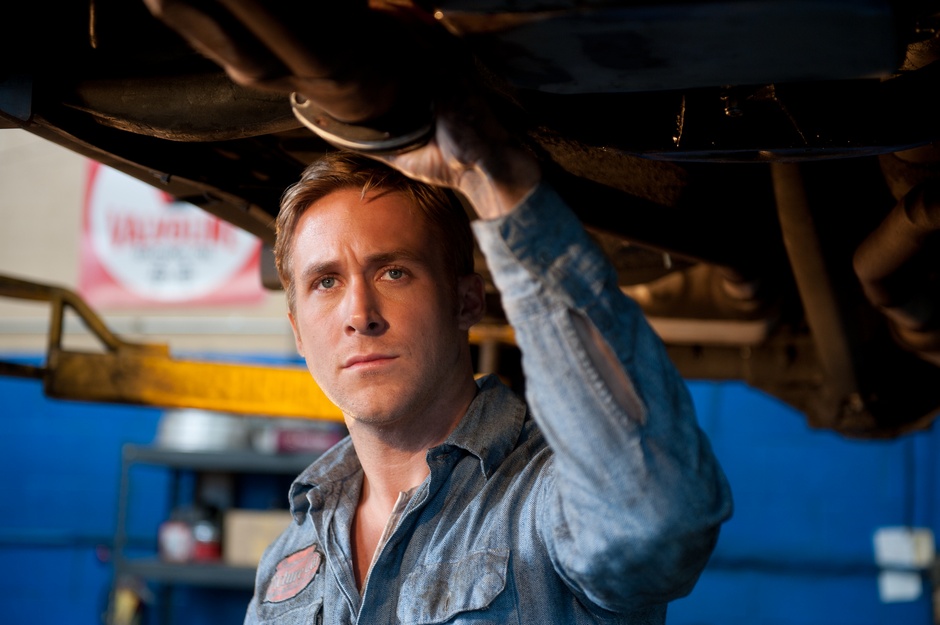
Drive-2011-Movie-Image-3

Smith’s Verdict: ***1/2

Reviewed by Tanner Smith

Is “Drive” a blockbuster? I’m not sure. But it is an action film…or is it? Maybe it’s an action film made for those who usually like blockbusters or action films. There are car chases and a deal of tension, but more importantly, it also has a sense of calmness in its pacing about it and it has characters worth watching.

It’s important for a film like this (or sort of like this) to have an intriguing hero, and “Drive” definitely has one. As played by Ryan Gosling, the lead in “Drive” is a guy simply called the “Driver.” He’s a mysterious auto mechanic who mostly drives—he does car stunts for action movies and drives getaway cars for bank robberies. He says very little and is given little background. This guy is a puzzle. We never know his name and we’re never fully aware of his intentions. We just know that he drives and he has no fear of dying. Ryan Gosling may not be a likely choice for an action hero, but this isn’t a likely choice for an action film. (Excuse me; I’m going back and forth as to whether or not “Drive” is really an action film.)

“Drive” opens spectacularly with a prologue involving a getaway. The Driver provides transportation for some criminals and evades a police chase by timing, swiftness, and possible further-planning, This opening sequence lasts about eight minutes and it’s one of the best paced, thrilling scenes I’ve seen in a long time. That alone could make its own short film, but the rest of the movie is still pretty good.

The plot involves the Driver as his boss Shannon (Bryan Cranston) gets him a job that will allow him to drive a souped-up car in races. But to pay for the car, he has to turn to a couple of mob thugs, Bernie (Albert Brooks) and Nino (Ron Perlman). Meanwhile, he befriends his neighbor Irene (Carey Mulligan) and her young son. In about a week, they grow warm, but then Irene’s husband (Oscar Isaac) is released from prison. In a nice twist, the husband isn’t a hostile, enraged, or even jealous man. He thanks the Driver for looking after his wife and kid, but he also asks him for a favor since he sees him as a professional driver. He plans a heist and asks the Driver to provide the getaway vehicle, and this is where the movie goes underway.

The heist doesn’t end well and the dilemma with Bernie and Nino is further developed, putting lives at risk, which include Irene and her son as well as the Driver.

So with the Driver as an intriguing hero, there must also be menacing villains. Bernie and Nino are absolutely (and memorably) ruthless, while Shannon is more benevolent as the man who the Driver needs on his side. They’re all well played by Albert Brooks, Ron Perlman, and Bryan Cranston, but if I had to pick the standout, it would have to be Brooks. Because we’re used to seeing Brooks play the sympathetic funny guy, it’s surprising to see just how believable and how effective he is as the refined Bernie, constantly going off on the more loutish Nino and secretly planning his next moves.

The whole movie is presented in a real sense of style. The writing is very smart in making the Driver a sympathetic mystery, the villains consistently ruthless, and the abilities to know when to relax and develop character while also setting up the action. The car scenes are outstanding—there seems to be very little CGI and it looks like real stunt driving happening on the screen. It feels so real as it’s happening, and that further builds up the tension. The final act of the movie isn’t as strong as what followed before. This is more standard action film stuff—it’s when the action kicks up an extra notch, the violence becomes more intense (including a gruesome scene in an elevator), and Gosling and Brooks finally meet for a conclusion for either one of them or both of them. But that doesn’t mean we’re not interested in the final outcome.

There’s a real 1980s-vintage feel to the film, from the pink-colored opening titles to the pumping soundtrack (which features a beautiful-sounding song called “A Real Hero,” by the band College). There’s also symbolism to be found, such as when the color of blood is contrasted the beauty of the palm tree outside a nearby window. The director Nicholas Winding Refn crafts this film with complete seriousness—he takes the characters as seriously as the action scenes. That’s what makes it different from most action films (OK, I’ll call it an action film) and why the final act is interesting, despite my little quibbles with it. “Drive” sets up its characters so we can get to know them so that when the action does kick up an extra notch, it’s effective.

Ryan Gosling, with only mannerisms and facial expressions to work with, is just phenomenal. He makes the Driver a compelling individual to watch—we want to know more about him. He creates a hero that is so shrouded in mystery that it’s very compelling. This isn’t the type of role that Gosling isn’t accustomed to—he winds up owning the screen. His relationship with Carey Mulligan’s Irene and her son is sweet. They say very little, as the Driver hardly engages in small talk, but the mood is there. Mulligan is lovely and innocent in the role and deserves to be secure.

“Drive” is a tense, stylish, wonderfully acted, brilliantly crafted thriller (hey—there’s a better way to describe “Drive!”) that opens masterfully, continues smoothly and icily, and ends chaotically, for better or worse. All in all, this is a very good movie with an intriguing hero, menacing villains, an icy tone, and some real badass driving.

All of Me (1984)

4 Apr

allofme

Smith’s Verdict: ***1/2

Reviewed by Tanner Smith

Steve Martin continued to show his skill as a highly acceptable comic actor in 1984’s “All of Me.” “All of Me” has a risky idea—having Lily Tomlin possess the right side of Steve Martin’s body while he controls his left side. The reason that is risky is because Lily Tomlin is a great comedienne and Steve Martin hadn’t been fully appreciated at the time this was made. And since Lily Tomlin is mainly inside Steve Martin, we see more of Martin than we want to, right? In this case, wrong. Lily Tomlin (whose voice is heard a lot) does show up when Steve Martin looks in the mirror and they have their own conversations. But in the meantime, Steve Martin is such a great presence that we love watching him control his own body.

Steve Martin learned to relax a little bit this time, since his over-the-top goofiness in “The Jerk” (directed from the same man who directed “All of Me”—Carl Reiner). Here, he plays Roger Cobb, a hotshot attorney who is unhappy because he is reaching middle-age. Roger will do anything to get a promotion (although bringing his dog to work shouldn’t help, it almost does in the case of his boss). But then he meets Edwina Cutwater (Tomlin), a dying rich woman who wants to live forever (or rather, have a new better life). Roger is to get her affairs in order but he thinks that she’s crazy. She, on the other hand, is confident enough to shun lesser people down.

Edwina hires a guru of transmigration (Richard Libertini) to put her soul into the body of a young, attractive British woman Terry Hoskins (Victoria Tennant). But during the process, something goes wrong and Edwina accidentally winds up in Roger’s body. But she doesn’t control his whole body. Roger is still alive and he controls his left side while Edwina controls the right. This brings a series of misunderstandings, confusion, goofiness, and big laughs. In the scene where it has happened, Roger and Edwina fight for control over Roger’s body as if playing a game of tug-of-war. That’s a very funny scene.

As Roger and Edwina figure a way out of this mess, there are many other great scenes. Some of them may be obligatory but they’re still funny—for example, when Roger has to go to the bathroom, he needs Edwina to help him. Many other scenes showcase Steve Martin’s wonderful physical comic talent. We believe he really is fighting for control over his body—watch that scene I mentioned in the above paragraph and you’ll see what I mean. Steve Martin is great in this movie. He doesn’t go for the obvious physical jokes either (and neither does the script, which is funny and sweet at the same time)—he has learned to control himself a little more, so to speak.

Lily Tomlin is still with us—we just don’t see her as much. We hear her voice most of the time and we see her whenever Roger looks into a mirror and sees her instead of his own reflection. It’s fun to watch them mimic each other’s moves. Also, when Martin is alone, we never feel that Tomlin has left us.

The writing is very good. By the end of the movie, we have laughed and now we feel something for the characters. There are big laughs and genuine sweetness by the time the movie is over. What I also liked were the members of the supporting cast of characters—especially the guru who is learning how to get by in America. His scenes are hilarious and get even better with he’s with Martin, who is desperately trying to communicate with him while the guru is trying to comprehend. I also liked the character of Ty (Jason Bernard), who is a black, blind musician and Martin’s friend and partner.

“All of Me” is a very good comedy—funny, charming, sweet, and fantastic.

Pineapple Express (2008)

4 Apr

Dale-Denton-Seth-Rogen-left-and-Saul-Silver-James-Franco-right-are-two-lazy-stoners-running-for-their-lives-in-Columbia-Pictures-action-comedy-Pineapple-Express.-2008-Columbia-Pictures-Industries-Inc-0-600x398

Smith’s Verdict: ***1/2

Reviewed by Tanner Smith

Imagine you like to smoke pot—like, a lot—and then you witness a murder by a pot farmer who definitely wants you hunted down and killed. How do you stay alive? Stay sober. It takes the “heroes” in the action-stoner-comedy “Pineapple Express” a long time to figure that one out. And when they do, it’s a pretty good subtext. After all of the crazy stuff that they get into, it’s almost guaranteed that they won’t want to get stoned again.

After “Cheech and Chong” come Dale and Saul—two American stoners. Dale (Seth Rogen) is a twentysomething-year-old process server whose girlfriend is in high school. Saul (James Franco) is his weed dealer. These two guys are sloppy enough for us to laugh at them. They’re not quite Cheech and Chong, or even Harold and Kumar, but I could see a TV series put somewhere in the scenes where the two American stoners hang out together in Saul’s apartment.

When Dale is about to deliver a subpoena to druglord Ted (Gary Cole), he witnesses Ted and a female cop (Rosie Perez) commit murder. Dale panics and flees, making a lot of noise while doing so. Frightened, Dale turns to Saul, and soon, the two are on the run.

That leads to silly, funny, and sometimes exciting action sequences for these characters to fall into—they get chased by the female cop in a car chase (the funny twist there is that their car has a red Slushee spilled all over the windshield), they get in a fight with the hilariously-unreliable Red (Danny McBride), and at the end, they wind up in a “Scarface”-inspired massacre between the drug lord and the Asian competition. And Dale and Saul are stoned throughout most of the situations that occur; during that massacre, it’s unclear if they’re still stoned or smart enough to know that whenever they’re stoned, bad things happen. Maybe this will teach them a lesson.

“Pineapple Express” was produced by Judd Apatow, who also produced R-rated comedy hits “Knocked Up” and “Superbad,” and as if predictably, there are a lot of big laughs in it—I like the part where the two are tied up and use a strange method of trying to get out. However, be advised—this is just as profane as “Superbad.”

There are also some winning performances by Seth Rogen and James Franco and also, Danny McBride, who betrays the two heroes a few times; and despite getting shot multiple times and being blown up, he comes back like Wile E. Coyote. There are a couple of things wrong with Seth Rogen’s character—I mean, he’s funny here (he always is funny in everything he’s in), but it’s almost hard to root for a guy who sells weed to high school students and makes out with his girlfriend (smokin’ hot Amber Heard) by her locker. But by the end, we learn to dismiss all of that.

James Franco gives the best performance in the movie as the weed dealer obviously inspired by Brad Pitt’s character in “True Romance.”  He’s very funny here, and thankfully, he doesn’t bring the annoyance of Jay (of “Jay and Silent Bob” fame) or even Daffy Duck to this character. He’s simply a guy who is confused most of the time (because he’s stoned most of the time).

The three actors I’ve mentioned bring comic timing in this film. If someone like Liam Neeson, Daniel Craig, or even Sylvester Stallone took this on, it would have just been your basic action film. Ed Begley, Jr. and Nora Dunn make funny cameos in a scene set in Dale’s girlfriend’s house—a scene that I probably wouldn’t have liked if they hadn’t shown up.

Director David Gordon Green, whose previous work included indie films “George Washington,” “Undertow,” and “Snow Angels,” is the last director you’d expect to direct this Judd Apatow stoner-comedy/action picture, but he does such a good job at keeping the action and the comedy on mostly the same level—it seems almost like a stoner version of “The Blues Brothers,” which also mixed action and comedy. With great comic timing, a brilliant performance by James Franco, and some nifty (though very violent) action sequences, “Pineapple Express” is the movie that the second “Harold and Kumar” movie wanted to be.

Stir of Echoes (1999)

3 Apr

MV5BMTcwOTYwODI1NF5BMl5BanBnXkFtZTcwNzc2NjAxNQ@@._V1._SX640_SY437_

Smith’s Verdict: ***1/2

Reviewed by Tanner Smith

“Stir of Echoes” is a terrific supernatural thriller that uses the horror subgenre, the “ghost story,” and manages to tell a truly original story with intelligent writing, while remembering that the best ghost stories have to do with atmosphere, solid narrative, and character development. And while it does have its jump-scares, it’s not filled with them to attempt more shocks from its audience. Most of it is low-key and the writer-director, David Koepp (best known for his Hollywood screenplays such as “Jurassic Park” and “Death Becomes Her,” among many others), just focuses on telling the story with a quiet approach in order to increase the tension level. As a result, it’s a strong, well-executed, and quite unnerving thriller.

Based on the novel by Richard Matheson, the story involves a husband and wife—Tom and Maggie Witzky (Kevin Bacon and Kathryn Erbe); regular people with normal everyday lives. They live in a working-class neighborhood in Chicago. They’re hard workers. They go out with friends. They have a little son, Jake (Zachary David Cope). And they’re able to make ends meet. They’re very real, and quite likeable as a result.

Tom and Maggie are at a party with Maggie’s sister Lisa (Illeana Douglas) claims she can hypnotize people. Tom states that he believes he can’t be hypnotized, and so he challenges Lisa to attempt it. Lisa manages to put Tom under a deep trance. But when he comes to, he starts to see distorted, fragmented visions of a violent event, as well as the ghost of a teenage girl who seems to be haunting his house.

Who is this ghost? Why is she haunting this house? Why is Tom’s son able to see her too? Can these visions be controlled? How do all these visions fit into what happened (or what will happen)?

It’s obvious these visions are never going to stop, and Tom tries to find answers to all these new questions, as his search to piece together the puzzle leads to obsession. He finds himself neglecting his wife and friends, and even losing his job as well. He becomes so obsessed to solve everything that’s being thrown at him that when he advised, in another hypnosis attempt, to “dig,” he digs up the entire backyard before moving on to the cellar with a jackhammer.

How Koepp is able to show us Tom’s obsession is an example of masterful filmmaking. He actually lets us into Tom’s unhinged mentality (with indistinct point-of-view shots and slick camera movements) so we can be as confused as he is, and therefore can figure things out along with him. Tom is obsessed to the point where he doesn’t care all that much for everything and everyone else around him. And Maggie tries to support him, but this is all becoming too much for her to handle. She’s genuinely worried about her husband, worried that he has lost his mind. Only their son is able to understand, because he has the gift of talking with the ghost girl; while Tom turns to him, Maggie is mostly left in the dark, unable to understand what’s happening. “Stir of Echoes” tells a very effective obsession study in that sense.

Everything in the story builds and builds with new developments regarding the mystery of the plot. It’s interesting how everything seems to fit; you have to watch this movie a second time in order to go back and fully recognize an element you may not have noticed before. I love films that do that. The only thing I wished I could have seen more of is a subplot involving a group of gifted people who share Tom and Jake’s gift of “Receiving.” Maggie has one intriguing scene with a “Receiver,” who is also a cop, and nothing else is made of it, except we know that Tom and Jake have the ability to see the supernatural. I personally would have liked to see more of that group that this guy is in, but oh well—you go with what you got.

The characterization is nicely-handled, as it is always refreshing to find believable protagonists to follow in ghost stories such as this; that’s what helps make them all the more effective aside from the eeriness that is offered. The acting is top-notch. Kevin Bacon, in my opinion, delivers his very best performance as Tom—he’s very believable as a conflicted everyman with a supernatural element that leads him to obsession. Kathryn Erbe does solid work as well, strongly conveying Maggie’s nervousness to aid her husband. I also really liked Illeana Douglas as Maggie’s new-age sister Lisa.

“Stir of Echoes” is a strong, eerie, intelligent, well-acted, very well-done supernatural thriller. It’s smarter than most films of its kind, and manages to keep viewers invested in solving an intriguing mystery along with the characters. It’s a skillful thriller.

The Descent (2006)

3 Apr

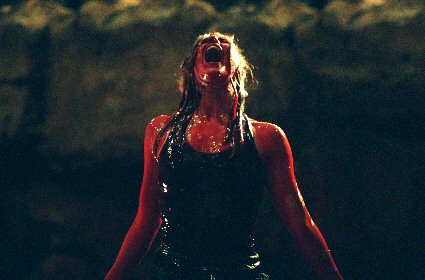
the-descent-08042006

Smith’s Verdict: ***1/2

Reviewed by Tanner Smith

“The Descent” takes us where a good horror film should—it ventures into the unknown. It starts out with real people, one with real issues to face on her own, and then puts them in a mysterious location where, since it’s a horror film, something goes very wrong and they have to fight for their lives.

That location happens to be underground caverns. Already, that’s a masterstroke of horror-film writing. Just imagine yourself down there, on a spelunking expedition with your friends. It’s dark, it’s deep, and it never seems to end. You have to have a guide on your crew that knows the way out. But imagine that the further down into darkness you descend, the more you might discover…for better or worse. “The Descent” takes that feeling and ups the ante with familiar (but welcome) bump-in-the-night elements, as well as a great sense of atmosphere, and results in a satisfying horror film.

The film is about a group of six daredevil women who plan a trip to go spelunking in the Appalachian Mountains of North Carolina. It should seem like a planned-out, safe journey into well-charted caves. But what they don’t know is that one of them—Juno (Natalie Mendoza)—has actually led them to an unknown crevasse so they can be the first to explore it. Of course, none of them know this until they suddenly find themselves trapped deep within the cavernous underworld, due to a cave-in.

Of these characters, the main focus is on Sarah (Shauna Macdonald), who is distant from her friends due to an accident that took the lives of her husband and daughter. What she didn’t know (and still doesn’t, although we catch on) is that her husband may have had an affair with Juno. Now a year later, Juno invites Sarah and their old friends (and a couple new friends) to go on this trip that could grant him fame (and naming rights of the cavern)…granted they find a way out.

The caves are suitably dark and disturbing with only lanterns and headlamps to light the way—the film captures a great sense of mystery within these deep locations. The director Neil Marshall brings a load of suspense in the early stages of cave exploration in the first hour of the film, and brings about a truly unnerving, stomach-wrenching sequence in which the women are squeezing their way through a tight, cramped space to continue their trek. This scene is the most terrifying for my money. Just the idea of having to crawl through that tight a spot, and being stuck about halfway through is unsettling, because I’m as claustrophobic as they come. The fear of dying miles beneath the surface is brought to attention in “The Descent.”

Midway through the movie, the characters realize that they’re trapped and these caves aren’t marked, meaning they have to fight to survive if they’re going to find a way out. For about ten to twenty minutes, we get more good shock tactics featuring heights, falls, and tension amongst themselves. It’s later in the film when we finally see what the marketing of the film has been setting up, and so it’s no secret that as the characters descend deeper into the caves, they happen upon a strange breed of humanistic creatures that notice them as a threat.

These monsters are albino beings with no eyes, a supersonic hearing ability (like bats), and slime dripping off their naked bodies. Since they show up so late in the film, I could see some people calling this a cheap last-minute story gimmick. But I can let it go for two reasons. 1) They’re suitably scary enough. 2) In some bizarre way, I can accept the fact that these creatures could be found in very deep, underground-unknown places.

As you’d expect, the second half of “The Descent” features the characters fighting against the monsters and trying to save each other. The tension still remains with a great deal of suspense and energy, and the climax of the film actually amounts to something in ways I’ll only describe briefly. You see, the title of the movie has two meanings—a descent into the unknown and a descent into chaos and madness. The protagonist Sarah has been struggling with her sanity ever since the accident that killed her family, and now that this horrifying event is happening to her (which includes the reveal of Juno’s secret involving her husband), it is a further descent into chaos that causes her to attempt to act upon the courage she lost and the rebirth that she deserves. This makes the climax all the more compelling because she knows that if she is going to die, she is going to die fighting.

I’m glad that only one character out of these six was given a traumatic back story for us to focus on, although I admit I could have used a few more personality traits from a few of the other women. In fact, some of them I have to watch the movie for again to remember them.

The ending of “The Descent” is one of the most memorable in a horror film. It’s unsettling and unforgiveable, but more importantly, it’s intriguing and unforgettable.

“The Descent” is a terrific thriller with a dark claustrophobic atmosphere, credible tension, a good cast, a great dose of adrenaline, and suitable psychological issues. It’s so effective that I’m actually thinking more about what goes on in the uncharted caves, rather than the well-charted caves I tour with my family in Arkansas for summer trips. I probably don’t truly believe that there are vicious, slimy monsters down below, but you know there could be anything down there.

December 1982 (Short Film) (2013)

2 Apr

578532_284852491618663_378177824_n

Smith’s Verdict: ***1/2

Reviewed by Tanner Smith

Imagine an era without texting, email, or even the Internet. If you wanted to talk to a girl or ask her out, you had to call her house and ask a parent if she was home. If for some reason you wanted to talk to someone from a different country, you had to send that person a letter and hope that person responds the next day or two, so you can continue the conversation.

As the 30-minute film “December 1982” opens, in August 1981, high-school student Tim (Haulston Mann) is given an assignment to write and send a letter to a student in Beirut. Tim would rather focus on his photography than write a letter to someone he doesn’t know. But then he gets the idea to take a picture of a move on a chessboard in his bedroom, and decides to send that to the student, along with the message, “Want to play?” In Beirut, Yara Hajjar (Ashli Brown) receives this, and responds by sending a picture of a counter-move on her own chessboard.

Months pass, and Tim and Yara’s pen-pal relationship continues. Tim has graduated from high school and is trying to decide what to do with his future. He wants to attend a Chicago university for his photography, but is faced with the difficulties of leaving his hometown friends and knowing that his parents would have to pay a lot to send Tim to college hundreds of miles away. But as Tim faces his own future, Yara and her family find themselves in the midst of something more terrifying, as Israeli military forces invade their country and a war brews outside their home.

This pen-pal relationship that forms between Tim (in Central Arkansas) and Yara (in Beirut) is quite interesting, especially how similar interests, such as chess and photography, keeps them talking to each other. Sometimes one has to wait a couple days for the next letter from the other, but when that letter comes, it leaves them with happiness even when one of them should feel miserable. This is especially effective in the scenes that feature Yara in a time when the world around her becomes a nightmare because of the war—when everything outside her family’s apartment building becomes a living hell, what gives Yara a moment of joy is the next letter from Tim.

“December 1982,” written and directed by Lyle Arnett, Jr. (as his thesis film for the University of Central Arkansas Digital Filmmaking Master of Fine Arts Program), is a small gem. It’s a touching, well-made, effective story of how these two young people draw closer to each other, despite being different parts of the world.

I also admired how the film told its subplot involving the 1982 Lebanon War. It mostly uses sound effects in the Beirut scenes, and that actually works in the film’s favor. There are two particularly-powerful scenes that focus on characters’ reactions. One features the first explosion heard, as Yara is enjoying a sunset at the beach, looking at one of Tim’s pictures that he sent, when suddenly there’s an explosion in the distance as she turns around in fright.

The second particularly-powerful scene features Yara having dinner with her brother and widowed mother. It’s a quiet moment until the sounds of muffled explosions that suddenly turns more dangerous when they seem too close. This is arguably the best scene in the film—the reactions seem surprisingly genuine.

But most of the film focuses more on Tim’s story as he realizes his potential, realizes his friends aren’t the best crowd to be around, and explores Chicago to see what living there would be like. (Also, the scenes set in Tim’s family’s house show (actual) TV news footage on the living-room TV set to show/tell more about the war, and the raid in Beirut, which is admittedly a clever move.) Now, you could argue that maybe Tim’s story is less interesting than Yara’s. Of the two, the latter has the least amount of screen time. And I’m not going to lie—I kind of wished I had seen more of how Yara and her family react to their situation. But to be honest, Tim’s side is still handled well and besides, maybe less is more.

The ending left me with kind of a mixed feeling. On the one hand, it is a satisfying conclusion that did make me smile (and it left a satisfying impression on the audience I saw this film with, as well). But on the other hand, it left me with a question of how it came to this. Even though most audience members of the screening probably expected it, and they were pleased to see this resolution, I was a bit confused as to how exactly it came to be. Without giving too much away, this feeling had to do with how little was shown of Yara’s story.

But for the most part, “December 1982” is an impressive, well-put-together short film. It’s intelligent in its writing and directing, as Arnett, Jr. delivers admirable work as a filmmaker; the actors (including Mandy Fason and Kenn Woodard in brief but pivotal roles as Tim’s parents) are convincing, especially Ashli Brown in a role that requires a gambit of emotions; the central setup is fascinating as you consider the true sentiment that comes with handwritten letters after a while; the drama is credibly handled; and the film itself is a true delight.

NOTE: The film can be seen here: https://vimeo.com/62781258