Archive | Three-and-a-Half Stars ***1/2 RSS feed for this section

Percy Jackson & the Olympians: The Lightning Thief (2010)

16 Apr

eGM2cmJyMTI=_o_percy-jackson---the-lightning-thief-2010---full---part-1

Smith’s Verdict: ***1/2

Reviewed by Tanner Smith

I’ve read the entire “Percy Jackson & the Olympians” book series by Rick Riordan, which has gained a huge fan base. I am among those fans. Why? Because this book series gives an interesting modern look at Greek mythology, a series of thrilling adventures set in modern times and places, and most importantly, a strong, likable hero we can identify with and root for. Percy Jackson is a confused kid whose life is changed; throughout the book series, he grows into his strange surroundings and ultimately does battle with what he knows, only for the safety of his friends and family.

But I’m reviewing the books when I should be reviewing the film adaptation of the first in the series—“Percy Jackson & the Olympians: The Lightning Thief.” The filmmakers have made some changes and omitting a few parts from the book for the movie version, but I didn’t mind so much because the same mood of the original story remains the same. And I must say after I saw the movie, I was actually relieved that the filmmakers didn’t use everything. The book had a lot—and I mean a LOT—of situations that definitely work well in a book, but by omitting some of the situations and working their own way around them (but like I said, a lot of parts remain the same as in the book) makes “The Lightning Thief” work as a movie by making the situations that follow in the film simple enough to follow along and piece together. “Percy Jackson & the Olympians: The Lightning Thief” is fun and thrilling with a likeable cast and nicely done action sequences.

Oh yeah and I think I should also tell you exactly who Percy Jackson is. Well, he’s the son of the Greek god Poseidon (god of the seas) and mortal Sally Jackson. You see, as the story of “Percy Jackson” makes itself abundantly clear, the Greek gods are real, and every once in a while, they have kids with mortals. These kids are called demigods and they live among us. Percy Jackson is a demigod but doesn’t realize it until it’s almost too late.

Played by Logan Lerman, Percy is a teenager (he was twelve in the book but 17 in the movie) leading a dull life and not doing well in school because he is dyslexic and has ADHD. His best friend is Grover (Brandon T. Jackson) and his teacher is wheelchair-bound Mr. Brunner (Pierce Brosnan). His mother Sally (Catherine Keener) is a kind woman who has to put up with her husband Gabe (Joe Pantoliano), who is both a slob and a jerk. Percy has absolutely no idea that he’s a demigod nor does he even know his real father (Poseidon)…until the plot gets underway.

Percy is accused of stealing Zeus’ lightning bolt and is chased by monsters (including the Minotaur). It is then that Percy is taken to Mr. Brunner’s training camp for demigods. Mr. Brunner, you see, is actually Chiron, a centaur (he has the bottom half of a horse). Oh, and Grover is a satyr (half-man, half-goat). Anyway, Percy did not steal the lightning bolt. (To explain why he’s accused is too much to explain.) But if it isn’t returned in matter of days, there will be a war among the gods, which could bring disaster to the world.

Percy, Grover, and Annabeth (Alexandra Daddario)—the daughter of Athena—go on a cross-country quest to piece everything together as the movie turns its fun scale up a few notches with a series of thrilling adventures for the kids to go through. My most favorite is when the kids wind up in Medusa’s lair—a gnome emporium; that idea itself is fun. Medusa is played with seductiveness and with a head of snakes by Uma Thurman. She has fun with this role.

OK, I’ve said too much of the plot for you to go and have the fun the movie wants you to have. Director Chris Columbus also directed the first two Harry Potter movies and I guess it’s because of his presence and the story of a hero in a world-threatening situation that many critics are already reviewing the film as a “Harry Potter knockoff.” I sincerely don’t think it’s fair to make that comparison because “Percy Jackson & the Olympians: The Lightning Thief,” while not having that same sense of wonder that the first Harry Potter film had, is something rarely seen in other movies considered to be “Harry Potter knockoffs”—pure magical fun with good acting, well-done special effects, and a great sense of adventure. Logan Lerman is well-suited and charismatic as Percy, Brandon T. Jackson and Alexandra Daddario are likeable as his friends, and the supporting cast is wonderful—Catherine Keener as Percy’s mother; Pierce Brosnan as the centaur; Uma Thurman as Medusa; Sean Bean as Zeus; Kevin McKidd as Poseidon; Steve Coogan in Mick Jagger getup as Hades (he shows how scary he can look when he’s not dressed that way); Rosario Dawson as Hades’ abused wife Persephone; and Jake Abel as Luke, the helpful son of Hermes. Oh, and of course, nobody plays a selfish slob better than Joe Pantoliano.

The movie also does well at tapping into the emotional side of the kids. Since one of their parents is a Greek god and therefore never gets to see them, then why did they bother meeting their mortal parent in the first place? And do the gods even care about them? Actually, if you think about it, those are very good questions.

One other thing—I can’t tell you how pleased I was when this movie, while the sequels to the “Lightning Thief” book are also expected to made into films if this first one does well at the box office, did not end with a cliffhanger. I’ve seen many book-to-film adaptations (two, for example, are “The Golden Compass” and “Cirque du Freak: The Vampire’s Assistant”) that end as if saying to us, “See you next time!” “Percy Jackson & the Olympians: The Lightning Thief” didn’t have to.

Surf’s Up (2007)

16 Apr

images

Smith’s Verdict: ***1/2

Reviewed by Tanner Smith

Does anybody, aside from me, think that “Happy Feet” was a bit overrated? I liked “Happy Feet” OK, but I felt it was a little too much. After “Happy Feet,” I didn’t expect “Surf’s Up” to be any better. “Surf’s Up” is the first movie since “Happy Feet” to feature cute penguins in a computer-animation process and I was really surprised by how much I liked it. It’s charming, cute, and funny. I liked it more than “Happy Feet” because the penguins are cuter and they have a more interesting story to tell. And it’s told through the same documentary process as “This is Spinal Tap”—it’s a mock documentary.

A documentary crew makes a film about penguin surfing. They follow the events of Cody Maverick (voiced by Shia LaBeouf), a small boy-penguin who loves to surf, lives with his mom and jerk older brother, and lives in Shiverpool, Antarctica (a pun on Liverpool, England). His hero is the late, legendary surfer Big Z, and he wants to be just like him. He is noticed by a talent scout and he, along with a friendly chicken surfer from Wisconsin named Chicken Joe (voiced by Jon Heder), is to compete in the Big Z Memorial surfing contest.

Once arriving on the island, he runs afoul of another competitor—tough, self-absorbed Tank (voiced by Diedrich Bader, whom you might remember, from his gruff voice at least, as Rex from “Napoleon Dynamite”)—and develops a crush on the lifeguard Lani (Zooey Deschanel). After an injury in a competition between Cody and Tank, Lani takes him into the woods to her uncle nicknamed “Geek” (voiced by Jeff Bridges).

But as it turns out, Geek isn’t just a hermit. As Cody discovers, he is actually Big Z who went hiding after a failed surfing contest. Cody takes a liking—as you would if you met your idol—to Big Z, who gives him surf lessons, and as you would expect, he teaches a few life lessons as well. He teaches him these lessons in “Karate Kid” and “Big Lebowski” mode. The lesson, of course, is that winning isn’t everything. I love the scene in which Big Z teaches Cody to make his own surfboard out of a block of wood by informing him on the ways of Zen.

Kids will probably love the film but it would also keep parents entertained as well. The script is clever—it gives the movie some funny lines, a few memorable moments including the one I mentioned earlier, and a satire on sports TV shows with the archival footage of the original penguins surfing. I also love the “Spinal Tap” gimmick that it uses, the way that the camera shakes every now and then and there are questions asked by the cameraman (or camera-penguin, the movie never tells who’s making this film) and interviews with the characters.

“Surf’s Up” delivers the goods, and I admired it more than “Happy Feet” mainly because it wasn’t about penguins racing to save the world or embark on great journeys; they just want to catch some waves. It’s as simple as that. It’s funny, whimsical, witty, and a lot of fun. 

Sky High (2005)

14 Apr

Sky High 2005

Smith’s Verdict: ***1/2

Reviewed by Tanner Smith

“Sky High” is a pleasant surprise. It’s a smart, funny, utterly enjoyable family movie about superheroes and a school for superheroes. I never thought I would praise a movie with that admittedly-cheesy idea, but there you go. I would say that “Sky High” is intentionally cheesy and very well done. There’s a lot for me to admire about it.

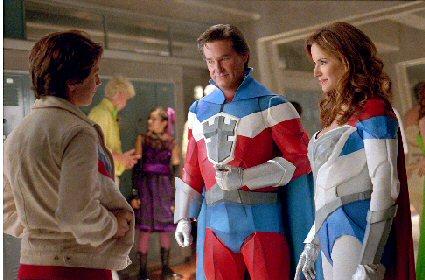
Michael Angarano stars as Will Stronghold, the fourteen-year-old son of the world’s greatest, most infamous superheroes—the invincible Commander (Kurt Russell) and high-flying Jetstream (Kelly Preston). Will’s “superparents” look forward to Will eventually joining them in helping save the world. There’s just one problem—Will doesn’t have any superpowers of any kind. But because of his parents’ reputation as the greatest superheroes on the planet, Will is accepted at Sky High School—a secret high school for the new generation superheroes (the school also hovers in the sky, hence the name—get it?). Will and his friends—Layla (Danielle Panabaker) who can communicate with plants, Zach (Nicholas Braun) whose body can glow in the dark, brainy Ethan (Dee Jay Daniels) who can melt himself at will, and Magenta (Kelly Vitz) who can morph into a guinea pig—are freshmen and because of their unimpressive powers (or shortage of powers), they are listed as “sidekicks.” You see, like all high schools, there are cliques—the cooler clique at Sky High is the “heroes,” the students who have very impressive (I dare even say “super”) abilities.

As the ads for this movie made quite clear, Will does eventually get his powers (he’s super-strong, like his father)—he becomes part of the “heroes” and has a chance with the girl of his dreams, Gwen Grayson (Mary Elizabeth Winstead). But he is neglecting his old friends and becoming more of a neglectful jerk.

This film contains elements from other films (such as “The Incredibles,” “Can’t Buy Me Love,” and a touch of “Harry Potter”), but has its own touches as well. They all work in this film, which lampoons the superhero genre while also becoming a member of it as well. I like the lesson it delivers that popularity is overrated and friendship is more important. (It’s not new, but it’s usually welcome if done right.)

I really like the writing here—a lot of in-jokes, suitable character names (such as “Warren Peace,” the name of the bully at the school), and lines such as “I’m not Wonder Woman, you know,” said by the principal of Sky High, coincidentally played by Lynda Carter (OK, maybe it’s not much of a coincidence after all).

There are some parts comedy, some parts action, and some parts drama. Each of them work well and it helps that the film continues at a consistently interesting pace. The special effects are impressive, the colors in the film are bright and good to look at around the school, the soundtrack is great (I like how Spandau Ballet’s “True” is used in certain scenes), and the film is innocent and for everyone—kids and adults. The PG rating is just right for “Sky High.”

“Sky High” also has an appealing cast—Michael Angarano is an appealing lead, Danielle Panabaker and Mary Elizabeth Winstead are effective as Will’s romantic-triangle subjects, Kurt Russell and Kelly Preston are brilliant as the superheroes who save the world in costume on duty and have secret identities as mild-mannered real estate agents and Will’s loving parents, Bruce Campbell and Dave Foley are amazing as two fun faculty members, Steven Strait strays far from the bully stereotype and becomes someone easy to like (when you don’t get on his bad side, that is—he’s a suitable bully for this movie), and Kevin Hefferman is just fantastic as the overweight school bus driver Ron Wilson. All of these actors look like they’re having a great time making this film.

“Sky High” is just a ton of fun. There are a lot of laughs and even more moments when I had a smile on my face. This is a fun movie with a sharp wit, a sense of humor, an eye for its fictional surroundings, and, again, a great sense of fun.

The Blair Witch Project (1999)

14 Apr

tumblr_lavp8uWGkX1qzzh6g

Smith’s Verdict: ***1/2

Reviewed by Tanner Smith

It’s one thing for a thriller/horror film to claim that it’s based on a true story. It’s quite another to make us believe that statement. You know how Orson Welles’ “War of the Worlds” radio play frightened people into believing something terrible was really happening? How can you transfer that same kind of reaction to film? I mean, let’s face it—whenever we see that a narrative thriller, especially a ridiculous-sounding one, is captioned “based on a true story” or “inspired by true events,” we roll our eyes in disbelief. How can a film be so effective by introducing itself with a disclaimer that it was based on true events, and then making us start to believe it?

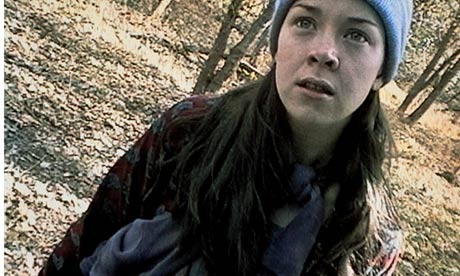
“The Blair Witch Project” provides a successful answer to that query. It opens with the ominous statement, “In October of 1994, three student filmmakers disappeared in the woods near Burkittsville, Maryland while shooting a documentary. A year later their footage was found.” From then on, the entire film is presented as home-video camera footage, in chronological order as if we’re seeing actual found footage leading up to something horrible for three characters who act and feel like real people.

This is great. I knew that “The Blair Witch Project” was fictional, but it’s such a harrowing experience that it manages to take the audience off guard. I know it took me off guard quite a few times. The illusion that this is a documentary-in-the-making is consistently applicable. With this unusual way of showing the film’s story, this is a brilliantly effective horror film and a prime example of independent filmmakers taking advantage of a miniscule budget.

The footage in the film was shot with two cameras—a color video handheld camcorder and a 16-mm. black-and-white camera. The former is used by aspiring director Heather (Heather Donahue) to document the making of her documentary in production, using the latter. With the aid of cameraman Josh (Joshua Leonard) and soundman Mike (Michael Williams), Heather decides to make a documentary about the mythical, legendary Blair Witch, said to haunt the woods near small town Burkittsville, Maryland. All three pack camping gear and prepare for hiking and sleeping in tents in the woods.

We first see them goofing around like normal college students. They playfully make fun of each other, mug for the camera, and joke around, while also filming the opening scene (at a cemetery, where Heather delivers the opening monologue, telling part of the supernatural legend) and interviewing the townspeople who state what they heard about the Blair Witch, whether they believe it or not—one of which happens to believe she had an encounter with the witch. Then it’s off to the forest, where they explore where the legend supposedly takes place. It’s here where a seemingly planned trip to make a film is surely damaged once the three become lost.

There’s most likely something supernatural occurring here, as many clues are left for the three characters to discover, including strange piles of rocks and creepy stick figures hanging from trees. And let’s not forget something going bump in the night, like distant noises and the tent shaking. But what really makes the terror in “The Blair Witch Project” so effective is that it gives an intentionally disorganized production setup that really gives us the feeling of being there with the people that this is happening to. On top of that, the film never shows the monster. This is one of the most successful of thrillers, particularly those based upon ghost stories—our imagination is more creative than anything else. It’s what we don’t see that scares us. (See 1963’s “The Haunting” as another example.) Sounds, darkness, or both can become effective elements in horror. We’re all afraid of things we can’t see because we don’t want to see them. Say, for example, you’re alone in the dark and you suddenly hear some sort of noise. You’re immediately scared and you wonder if you really want to know what’s out there, if anything. “The Blair Witch Project” taps into our fear of everyday things such as darkness, wildlife, and lack of direction. It uses this fear to its advantage. Also, because you don’t see a lot of the action and you’re stuck with growing fear of the unknown, “The Blair Witch Project” can be seen as a psychological thriller rather than just a ghost story.

The acting is excellent. Heather Donahue, Michael Williams, and Joshua Leonard were all unknown actors who also used their real names to add to the illusion that the film was real, and also improvised quite a lot to make lines seem more natural. (I even read somewhere that at the film’s premiere, there were “missing” posters for all three actors, “presumed dead.”) The effect works. I cared very much for what was happening to these three and was worried for them, since I knew that they weren’t going to make it out of this terrifying situation they brought themselves into. In particular, Heather Donahue delivers a heartbreaking monologue to the camera in one of the final scenes, stating with quivering fear that she apologizes to the families of her companions for bringing them out into the place where they’ll all probably die. That scene is extraordinarily acted.

“The Blair Witch Project” is a nearly perfect horror film, but I have to wonder if anyone really would leave the camera on for so long after everything that has been experienced. But then again, I am a filmmaker as well and if I knew that something strange was going to happen, even something potentially life-threatening, I’d probably want to keep rolling in order to let people what happened. So if I’m not going to pick on that very much, I should also mention that while the film is an hour and twenty minutes, I have to admit that the pacing can be very awkward, especially in the setup leading up to the middle part of the film which at times seems pretty slow-moving.

But for the most part, “The Blair Witch Project” is a truly scary experience that shows just how much of an impact a shoestring-budget film can bring to an audience. My best piece of advice: don’t see this film right before an overnight camping trip in the woods.

Three Short Films by Jordan Mears

14 Apr

75080_10152468408285080_113412405_n

Santa Run

Smith’s Verdict: ***1/2

Reviewed by Tanner Smith

Here’s a delightful lump of coal for your stocking come Christmastime. Written, produced, and directed by Jordan Mears, the 10-minute short “Santa Run” is a Christmas fable that can best be described as “naughty.” It’s a crude, vulgar, profane, shocking dark-comedy that is also unique, original, and imaginative.

“Santa Run” is mostly made up of dialogue, and so it belongs to the group of independent short films that are created by the thought, “I have no money; I’ll write funny jokes.” (See my review of Daniel Campbell’s “Antiquities” as well.) I honestly have no idea what was going through Mears’ mind when he decided to write “Santa Run,” but I’d like to know.

The concept is inventive, to say the least. The film takes place on the night before Christmas, just a few minutes before midnight, as (get this) two Santa Claus clones sit in a car and prepare to deliver gifts in a certain neighborhood. Apparently, Santa Claus can’t deliver presents to every child in the world in just one night—his scattered clones do the work for him. Santa doesn’t even go out to do what he should be doing (“Santa Claus gets to sit naked in a hot tub full of eggnog,” one of the clones complains to the other).

One of those clones (whom we learn has dyed his hair and shaved his chin, in contrast to his partner who resembles the traditional Santa Claus) is a rebellious young man who decides not to go through with this this Christmas. This leads to an argument between the rebellious Santa clone and the good-natured Santa clone…and I can’t believe I just typed that.

Despite that silly premise, this is about as dark a Christmas movie could possibly get (with the exception of sexual activity in “Bad Santa” starring Billy Bob Thornton). Both Santa clones constantly spew profanities (it’s more shocking to hear the “traditional-Santa” say “f***in’ quit” than to hear the “rebellious-clean-shaven-Santa” angrily yell to the sky, “I f***ed Mrs. Claus!”); one of them snorts cocaine and drinks booze; they both talk about having sex with Santa’s elves (herpes is even mentioned at one point); and the resolution of the argument, without giving anything away, results in a tremendously dark matter. “Santa Run” may open and close with shots of Christmas decorations in a suburban neighborhood, but the central section is anything but jolly.

It’s weird how this twisted short film “Santa Run” works, but it is original and it is intriguing, and Mears’ script hardly lets up on how devious the tale can get (though I wonder what a feature-length script of this idea would look like). The acting is somewhat natural, as Shannon Dellapelle (as the traditional Santa clone) and Ryan Heumier (as the rebellious Santa clone) deliver convincing banter with each other. The cinematography is surprisingly well-handled. And more importantly, I did laugh. That was the intention of “Santa Run” to begin with—to shock and to amuse. It did its job well.

NOTE: The film can be seen here: http://www.youtube.com/watch?v=md8avhcwPhI

543611_10151525728415038_1141319815_n

Mime Time

Smith’s Verdict: ****

Reviewed by Tanner Smith

“Mime Time” is yet another imaginative short film from the very talented, creative young filmmaker Jordan Mears, who also made the 10-minute dark-comedy “Santa Run.” While the tone is somewhat lighter now, for “Mime Time,” the inventiveness is still as impressive. What’s the premise? A young street mime must find a new job before is evicted from his apartment. Enough said, right?

I don’t think so.

Seen entirely in black-and-white and virtually no dialogue, the short begins as a talented young street mime (Shannon Dellapelle, from “Santa Run”) is performing on the street, when he is upstaged by a “rocker” mime who performs air-guitar. His decrease of tips (one dollar) forces the Boss Mime to revoke his license—I swear, I am not kidding; there is a Boss Mime that sits behind a desk in a dimly-lit office, and sports white makeup with a black mustache and (get this) exaggeratedly-thick black eyebrows. I don’t care who you are; that is hilarious!

Anyway, the mime is also about to be kicked out of his apartment and has to find a new job soon. This leads to a very funny montage in which he looks through the newspaper want ads and imagines him in certain positions, such as telemarketer, therapist, and even singing-instructor. What can you even say about this? It’s so out-there and so damn funny.

The ending, or rather the “punchline” of the film, I wouldn’t dare give away, but I can truly say it’s beyond hilarious…and yet oddly touching at the same time as well.

“Mime Time” is a treasure. It’s funny, it’s touching, and when all is said and done, it’s just a wonderfully-inventive short film created by a truly talented young filmmaker.

NOTE: The film can be seen here: http://www.youtube.com/watch?v=ryl7KluBoaM

408393_10151197246216447_1988381504_n

A Way Out

Smith’s Verdict: **

Reviewed by Tanner Smith

I can’t blame Jordan Mears for wanting to experiment with something new in filmmaking. Usually known for his wildly-creative short films “Santa Run” and “Mime Time,” Mears tries his hand at directing and co-writing (with Rachel McGee) a serious drama. Unfortunately, while I give credit for effort, “A Way Out” is mainly a rushed, unsatisfying melodrama.

The film is about two sisters who live together—one is in her early-20s and works as a waitress at the local bar in a small community; the other is just about to graduate high school. When the older sister learns that her younger sister has been accepted into college, she learns that she can’t fully pay for tuition, and so she tries to figure out how to handle the situation.

Now let me just state that I am not saying that the drama in this 13-minute short film isn’t legitimate. I’m saying that it’s too rushed for me to care. With a film with this short amount of running time, it’s difficult to make it work effectively. As it is here, there’s hardly enough room for development to make its dramatic payoff fully satisfying. For this to work, maybe at least another 10-15 minutes (in addition to further work on the script) could have allowed for more to tell, and then there would be that chance of pulling viewers further into what’s occurring in the characters’ lives. As it is, in my opinion, there just isn’t enough to work with here.

The film isn’t a total failure, however. F.E. Mosby is quite good in the lead role; she and Johnnie Brannon (as her friend and co-worker) share a nice, credible scene in which they talk about how to pay for Mosby’s sister’s college tuition; and Mears certainly shows his growth as a director (the opening shot that shows the goings-on in a bar, where the lead character works as a waitress, is chillingly realistic). But the dysfunctional interaction between the two sisters is unoriginal, the younger sister is too much of a brat for me to care about whether or not she winds up going to college (and her obligatory mood change, into better understanding, comes so sporadically that the shift doesn’t work), the ending is rushed (we get just one shot to clarify a dramatic payoff, and then boom! Credits roll), and “A Way Out” just wasn’t as effective as it should have been.

NOTE: The film can be seen here: http://www.youtube.com/watch?v=bRR9Cfx_iu4

Duel (1971)

13 Apr

images

Smith’s Verdict: ***1/2

Reviewed by Tanner Smith

You know that tense feeling you get when you’re driving on an interstate highway and a big truck (or any vehicle, for that matter) passes you, meaning the driver must be going about 85 or 90? How about when you pass someone, who in turn speeds up and passes you (and then does it again)? Of course, it mostly doesn’t mean anything (and if it does, it’s just a little joke for entertainment that isn’t pushed any further). But what happens when the situation pushes itself way over the edge—meaning, what if you were suddenly chased by an oncoming vehicle (say a semi-truck) that continued to follow you everywhere you go, and just wouldn’t stop?

“Duel” is practically the ultimate chase movie—one big highway pursuit; a cat-and-mouse game in which the driver of a giant oil tanker truck wants nothing more than to hunt down a traveling salesman (played by Dennis Weaver) in his red Plymouth, and kill him. The whole movie, written by Richard Matheson (based on his short story), plays that idea throughout the running time of nearly 90 minutes. It’s as simple as this—the man passes the truck on a two-lane highway in the California desert, only to have it roar past him and then slow down, as if toying with him. Only, it turns out that it’s more deadly than that, as the truck continues to block the man’s path every time he attempts to pass, and then when the trucker signals for him to pass, he nearly hits an oncoming vehicle. Things are more dangerous now, as when the man finally is able to pass the truck, only to nearly be run down at about 90mph.

The driver of this large, imposing truck is never seen or heard. The truck is like a gigantic force that has a mind of its own and just keeps coming. There is no motive, no backstory, nothing—it’s just a simple concept of a man in a nice car being hunted by a big, looming truck, not knowing why, how far the situation is going to go, or when/how this chase is going to end.

To have this fairly simple idea made into such an effective, entertaining road thriller such as this is a tribute to the filmmaking of director Steven Spielberg. “Duel” was the movie that made the name of Spielberg famous—he made his mark with this film, taking advantage of the thinness of the premise by building tension and excitement from simple situations and easy factors. Spielberg clearly loves films and filmmaking, and it’s visible that “Duel” is the work of a remarkably talented young director. The action is delivered in uniquely great detail, from the camera angles of the threatening truck, to the long shots of a desert canyon while the road rage is occurring, to the closeups of anxiety on actor Dennis Weaver’s face as he tries to outsmart his enemy. And there also little eerily effective touches added to the film, such as a railroad track that can be seen on the front bumper of the truck. What that represents, I’m not quite sure. But you can tell it represents something ominous.

This film originally aired on TV; it gained a theatrical release years later when Spielberg became better known for films such as “Jaws” and “E.T.” Either way, “Duel” is very exciting.

Knocked Up (2007)

13 Apr

05_knockedup_lg

Smith’s Verdict: ***1/2

Reviewed by Tanner Smith

“Knocked Up” is a miracle—a romantic comedy that is a clear definition of the phrase. The romance is interesting, the characters are endearing, and last but most definitely not least, it’s freaking hilarious. A sitcom-type love story is covered by dirty humor and a sharp wit, but it’s not mean-spirited, not entirely crude, and is honest in its subject matter. As a result, it’s sweet and funny without transcending to standard romantic comedy clichés.

“Knocked Up” is Judd Apatow’s second outing as a writer/director after 2005’s other great romantic comedy “The 40-Year-Old Virgin.” Apatow has produced many other works, such as the underrated short-lived TV show “Freaks and Geeks,” and has a thing for taking unique characters and surrounding them with ribald humor. That’s pretty much what “Knocked Up” will be remembered for.

The two characters that are subject to the plot are Ben Stone (Seth Rogen) and Allison Scott (Katherine Heigl). Both are almost entirely different from each other. Ben is a pudgy, laid-back 23-year-old slacker/stoner who does nothing but hang out with his buddies and get stoned. Allison is a tall, blonde, attractive woman with a sunny personality and a hint of professionalism that gets her a promotion for the E! Entertainment channel. While celebrating her promotion, Allison meets Ben at a club and share a drunken one-night stand.

Eight weeks later, Ben and Allison haven’t spoken (Allison declares the whole thing a mistake after finding out more about Ben), but Allison experiences morning sickness…that’s right. She’s pregnant. Ben’s the father, so Allison decides to get in contact with him. First there’s uncertainty and then a brief talk about abortion, but Allison decides to keep the baby and Ben decides to support her.

So, Allison and Ben are roped into this weird situation and must get to know one another more in order to stand each other. But what makes this relationship nice is that they’re willing to stand each other and try something new. The problem is, it’s easier said than done. It’s like how Ben realizes that he shouldn’t smoke pot if he’s supposed to be this responsible adult now—he knows he should stop, but does he want to stop? And so, this relationship between Ben and Allison has ups and downs.

The relationship is at the heart of the story. I was surprised to realize just how touched I was by the amount of romance in a movie that is nearly scattered with laughs. It’s touching, how the movie chronicles the efforts of these two opposites to get along perfectly. These are two people who want to fall in love and try not to force themselves into doing so, but to let it flow if they find their own similarities.

Ben’s a likable schmoe, despite his status as a loser—he’s very charismatic and well-played by Seth Rogen. Allison is attractive, energetic, and appealing and is not just a comic foil for Ben—she’s a fully-realized character. As played by Katherine Heigl, sometimes she’s funny, but she’s always convincing.

There are also a lot of funny supporting characters to watch in “Knocked Up,” played gamely by charismatic actors. There’s Allison’s older sister Debbie (Leslie Mann, Judd Apatow’s wife) who has an acid tongue, a need to control things (but also a need to cling to her youth), and some of the more memorable moments in the movie. The always wonderful character actor Paul Rudd plays Debbie’s stressful husband Pete—Rudd delivers his lines as if he doesn’t even know he’s funny. (I love his speech about how marriage is a long episode of “Everybody Loves Raymond.”) There are also Debbie and Pete’s two adorable daughters (played by Apatow’s and Mann’s actual daughters), Allison’s gynecologist who disappears at the worst time imagined, Ben’s supportive father (Harold Ramis) who is not the best person to support anybody, and Ben’s less ambitious slacker buddies (played by Jason Segel, Martin Starr, Jonah Hill, and Jay Baruchel, each keeping their first names for the movie) including one (played by Starr) who grows a beard long enough for the others to make fun of him (“Your face looks like Robin Williams’ knuckles,” for example).

(It’s because of that guy that I shave once a week!)

Amidst the unforced sweetness of the story, “Knocked Up” is straight-up funny! There are so many perfectly delivered one-liners, sharply written dialogue, impeccable comic timing, and public related (and media related) humor. What I mean by that last one is the way the movie uses celebrity cameos (who show up for E! in the movie) is brave and inspired, particularly with Ryan Seacrest’s self-parody. Period. I can’t spoil any jokes; I don’t even know if I can get away with referencing the setups. But trust me when I say there are plenty of laughs in this movie.

What I was wasn’t too crazy about was the climax of the movie, which is possibly the longest delivery room sequence ever put in a movie. There are laughs, to be sure, and the romance pays off, as well as the story. But I feel like most of what was being shown was just padding to build the tension.

What leads up to it, however, is a remarkably funny and sweet romantic comedy that is edgy, joyful, and hard-R-rated (be warned). And I hope that if I ever go to Cirque du Soleil in Las Vegas while on ‘shrooms, I hope Paul Rudd is sitting next to me.

Oh, crap. I referenced a setup. Deal with it. Go watch “Knocked Up!”

Night of the Comet (1984)

10 Apr

Night-of-the-Comet

Smith’s Verdict: ***1/2

Reviewed by Tanner Smith

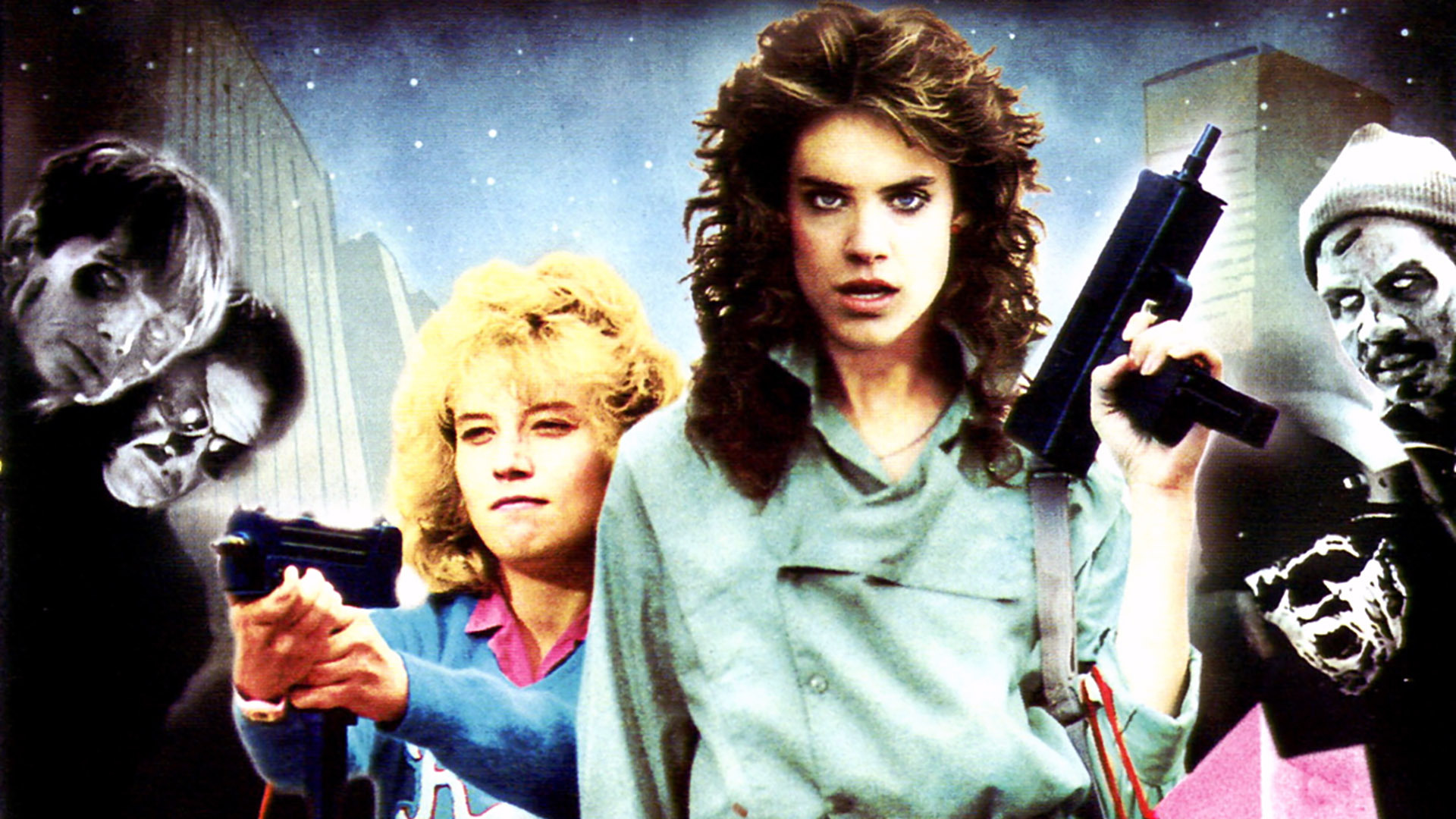
“Night of the Comet” is a B-movie about the end of the world. Sure, logic is thrown out the window. Yes, there are many silly moments in the story. But in the end, “Night of the Comet” is just a good-natured, highly-enjoyable B-movie. I could call it a guilty pleasure, but I hold no guilt on this. I had fun, and chances are other viewers will have fun too.

The film’s hokey narration explains that a comet is hurtling toward Earth around Christmastime—this is the same comet that wiped out the dinosaurs and caused their extinction. In Southern California, we see that people are throwing a midnight comet-party, expecting a light show to bring jolliness to this holiday. But it winds up disintegrating almost the entire Earth population.

Why does the electricity stay on? Why do the cars still work? Why do survivors evolve into zombie-like monsters to eat the other survivors? Your guess is as good as mine. Through the course of the movie, we follow two valley girls—sisters Reggie (Catherine Mary Stuart) and Sam (Kelli Maroney)—as they realize that they’re one of very few people still around after the comet has struck. There’s one good guy named Hector (Robert Beltran), whom the sisters rival over, but everyone else is either a violent zombie or a sadistic looter. There are other people, who are part of a think tank to figure out what to do with the survivors and find a cure for the “infected,” but are they to be trusted?

This movie, like most B-movies, doesn’t care about logic or even humanity at large. But like the appealing ones, it simple takes joy in sharing the adventure of the heroes with us. I liked these protagonists and I liked the way they speak; it’s the typical valley-girl speak spoken with pluck. An example is when Sam is being attacked by gunmen in a supposedly-abandoned shopping mall, mocking these “wimps” saying they can’t shoot anything.

“Night of the Comet” has a nice comic touch that makes it enjoyable. The actors are fun, the dialogue is suitably corny and funny, and I appreciate the fact that it doesn’t take itself too seriously. Even its final climax in which the characters race to thwart the think tank’s plans has its good moments. It’s an entertaining B-movie.

The Mist (2007)

10 Apr

the-mist

Smith’s Verdict: ***1/2

Reviewed by Tanner Smith

“SOMETHING IN THE MIST!!!”

In a horror film like “The Mist,” this is the line that is a staple for the start of something interesting. Here it is—a thick, eerie mist that spreads across a small town. And an old man runs into a crowded supermarket, saying that “SOMETHING IN THE MIST” took somebody away. The mist blows in, enveloping everything in sight. With half the population of the town inside the supermarket, they all begin to get a glimpse of that certain “SOMETHING IN THE MIST!!!” No one is going anywhere until the mist clears…if it clears.

That’s the premise for “The Mist,” a tense, well-done horror film based on a novella by Stephen King. It was directed by Frank Darabont, making this his third Stephen King film adaptation, following “The Shawshank Redemption” and “The Green Mile.” You could tell by the setup for “The Mist” that this is as far from those other movies as you could get. But “The Mist” is about more than cheap scares and monsters (though there are some). When you get down to it, it’s ultimately about the paranoia that develops when people race to survive together in a terrifying situation and how hopeless it can all seem/be.

It all begins somewhat normally as artist David Drayton (Thomas Jane), his son Billy (Nathan Gamble), and his neighbor Brent Norton (Andre Braugher) drive into town to the supermarket—and this is after a violent storm trashes their neighborhood. But it’s then that the mist turns in and the panicked old man (who, did I mention, has blood on his face) runs in, screaming to shut the doors because the mist is coming and, did I mention—“SOMETHING IN THE MIST!!!”

People step outside and disappear, but it seems clear that they didn’t leave the parking lot. And it’s David and a few others who get an encounter with something with a large tentacle and learn that there really is “SOMETHING IN THE MIST!!!”

David tries to lay it down as he possibly could with the other people in the market that there’s something really dangerous outside. But meanwhile, religious fanatic Mrs. Carmody (Marcia Gay Harden), the town loony, believes this is the sign of the Apocalypse and that God has chosen her to show everyone the way to salvation. She rants and scolds those who try to ignore her…and even brings up the idea of human sacrifice!

Sorry lady, but I don’t think it said in the book of Revelation that God would send giant bugs to kill the unfaithful. I think George A. Romero was closer with his zombie stories.

OK, I did mention “giant bugs,” and sometimes they do look silly. Other times, however, they’re pretty frightening, particularly when you catch glimpses of them (like the giant tentacle I mentioned earlier). They’re also quite unnerving (probably the most unnerving, really) when you see them through the gloom of the mist. But sometimes they do look silly and the CGI is too noticeable, when seen up close.

Mainly though, it’s a story of survival, fear, paranoia, and mistrust. As everyone holes up inside the supermarket and things get worse and worse, the people are divided into two groups. One group is with David’s clear-mindedness, and the other is with Mrs. Carmody’s…delusion. (There’s another group following Brent Norton’s skepticism, but that doesn’t last long, of course.) It’s a matter of time before they turn on each other, and the tension is always there amongst the characters. It asks the question of who are more the monster—the people or the actual monsters. Meanwhile, though, a lot of them turn into unlikely heroes. David turns from a professional painter to the person many people turn to in a crisis—he’s sensible, clear-minded, and quick on his wits. Then there’s the meek, nerdy Ollie (Toby Jones), schoolteacher Amanda Dumfries (Laurie Holden), and elderly Irene (Frances Sternhagen) who turn in some big blows when it comes to fighting the monsters.

What I didn’t need in “The Mist” was the obligatory scene that tries to explain exactly what this mist is and why there are these supernatural beings attacking us. Why not let our imaginations run wild and come up with our own explanations?

But mainly, “The Mist” is a nicely-done, truly scary horror film that us real tension amongst characters who seem realized, monsters that are actually frightening (for the most part), and an ending that is…well, let’s just say this movie ends on a deadly-ironic note and leave it at that.

Scream (1996)

7 Apr

Drew Barrymore in Wes Craven's "Scream"

Smith’s Verdict: ***1/2

Reviewed by Tanner Smith

When asked why she doesn’t like “scary movies,” teenage Sidney Prescott’s answer is blatant: “What’s the point? They’re all the same—it’s always some stupid killer stalking some big-breasted girl who can’t act, who’s always running up the stairs when she could be going out the front door.” And surely enough, she herself is attacked by a serial killer and does attempt the front door to escape, but whoops! The door chain is difficult to get rid of in a hurry! So what does she do in desperation? Run up the stairs, of course.

That’s only one of many clever moments in “Scream,” a horror movie in which the characters have actually seen other horror movies. It’s a satire of the genre that does what all great satires do to succeed—it contains self-referential humor to gain the comic aspect it’s going for, but it also actually becomes what it’s supposed to be satirizing so that it balances out. As a result, there are as many scares in “Scream” as there are laughs, thanks to a clever, witty screenplay by Kevin Williamson, and nifty direction by Wes Craven who clearly has a true affection for the horror genre.

The film begins with a 12-minute prologue featuring teenage blonde Casey (Drew Barrymore) alone in a big house, preparing to watch a horror movie on TV when her boyfriend arrives. But she gets a mysterious phone call, asking what her favorite scary movie is; Casey plays along, thinking it’s a prank, and they talk for a while. What’s her favorite scary movie? “Halloween—you know, the one with the guy in the white mask who walks around and stalks babysitters.” But then things turn dark when Casey realizes that the person he’s talking to can see her, and as she tries to get him to quit calling her, he realizes that his intentions are deadly. He tells her to play his movie-trivia game in order to live—“Name the killer in ‘Friday the 13th.’” Of course, she gets it wrong (“Jason didn’t show up until the sequel,” the phone voice reminds her), and she and her boyfriend are murdered by someone sporting a Grim Reaper costume (white mask and black rope) and a knife.

Right there, you see how all out “Scream” goes. This prologue is all characterization, dark wit, suspense and ultimately a double-murder, so that we’re on edge for the rest of the film while sticking around to see what else is going to be thrown at us.

It turns out that was just the beginning, as our focus switches to the killer’s real target, a troubled high school girl named Sidney Prescott (Neve Campbell) whose mother was raped and killed exactly one year earlier. Now it seems like the killer is still out there, assuming the accused man was framed in the first place, and is out to kill Sidney just one year since that tragic incident. And if this is sounding at all like the plot for a horror film, it is the plot for a horror film, as the killer who menacingly stalks and calls his victims is seemingly creating a real-life horror movie of his own.

There are many refreshing aspects of “Scream,” and one of them is the whodunit element. The characters are all developed in a way that A) you actually care for who lives and who dies, and B) it really is hard to tell who the killer is. It could be this person; it could be that. The movie keeps you guessing. When the ultimate resolution comes, it’s actually pretty satisfying.

Among these characters are aggressive news reporter Gale Weathers (Courteney Cox) who is covering the story and will do anything to get what she wants; Sidney’s boyfriend Billy (Skeet Ulrich), who is the first person accused of being the killer; police deputy Dewey Riley (David Arquette), who isn’t taken seriously because of his young age; Stu (Matthew Lillard), the high school’s goofball; and Sidney’s friend Tatum (Rose McGowan), the one character you want to see get slaughtered fast (she’s too cold to be likeable; even Gale manages to gain more sympathy than her). My favorite was video-clerk Randy Meeks (Jamie Kennedy), the resident teenage movie buff who describes everything occurring as standard horror-movie stuff. He’s the one who knows the score on this horror film within a horror film (if you will). Some of the best scenes are ones in which he tries to explain the “very simple formula” of it all, and also there’s the scene in which he explains the basic rules of surviving a horror movie—don’t have sex, don’t drink or do drugs, don’t say “who’s there,” don’t investigate a strange noise outside, and never, ever say “I’ll be right back.” One of the most inventive moments of parody comes when Randy, alone in a house watching “Halloween,” is yelling at the screen, “Look behind you!” As he’s saying this, what he doesn’t realize is that the killer is sneaking up on him from behind.

I love the numerous movie references that are scattered throughout; particularly, fans of the horror genre would love to hear these characters talk about their favorite films. We have “Halloween” (of which footage is shown in similarity with what happens in the actual story), “Psycho” (“Did Norman Bates have a motive?”), “Prom Night,” and even director Craven’s own “A Nightmare on Elm Street” (“The first one was scary, but the rest sucked,” one character notes), among many others. Craven even manages to take a shot at his own status, having one of the characters call him “Wes Carpenter” (it’s said that some people confuse him with John Carpenter of “Halloween”).

What makes “Scream” an entertaining horror movie is that the characters themselves have seen horror movies. They know better than to make the same stupid mistakes that the standard stereotypes in the genre make; instead, they make new stupid mistakes so that the plot can keep going, and the killer can be satisfied with the way his sick, demented plan comes into place. Everything comes together in the final act, in which everything is revealed and there is still a good deal of clever moments; I won’t give it away, but the notions the revealed killer bring up are effectively creepy and clever in the way that he knows that they too belong in a horror movie.

“Scream” is a treasure in the horror-film genre. I liked the setup, I liked the self-aware characters, I love the clever wit that is scattered throughout with horror-film in-jokes and self-parody, and while it may be violent, it needed to be in order to make itself known as a legit horror movie and not just a spoof that seems “fake.” Thanks to Craven’s apparent love for the genre, and a crafty script by Kevin Williamson, this is a neat horror movie that even those who aren’t as fond of the genre might have a good time watching.