Archive | Three-and-a-Half Stars ***1/2 RSS feed for this section

The Innkeepers (2012)

11 Jul

images

Smith’s Verdict: ***1/2

Reviewed by Tanner Smith

I’m convinced now—Ti West is the new king of horror. As he showed with “The House of the Devil” and now “The Innkeepers,” West clearly knows how to build suspense and how to hook audiences and keep them invested from the intriguingly creepy setup to the horrific payoff. West doesn’t go for the easy ways out—he hints early on at what’s going to be seen late in the film, and builds the suspense from that. Thanks to sharp execution and a few effectively helpful gimmicks (letting a shot continue, using open spaces, and such), he’s able to keep us on edge whenever a character appears or walks into a certain position. That’s a pure sign that a horror-film director can earn the trust of horror-film buffs.

West’s “The Innkeepers” also has the fortune of having visible character development. The film is essentially a ghost story that is merely built around these characters, so that more time is spent getting to know them so that we grow to care about them by the time the real horror begins. “The Innkeepers” takes place at the Yankee Pedlar Inn, an old time hotel in New England that is going out of business, due to lack of customers and modern-day touch. The hotel is seemingly haunted, which fascinates the two people working there on the last weekend before the hotel closes for good. These are Claire (Sara Paxton) and Luke (Pat Healy), who decide to spend their time at the hotel investigating paranormal activity and seeking any sort of sign of a ghostly figure. Luke has already claimed to have seen something, and so Claire wants to make her own encounter. So, she roams around the empty rooms and hallways with an audio-recording device, hoping to see or hear a haunting spirit.

Aside from an annoyed single mother and her little son, the other guests at the hotel are Leanne Rease-Jones (Kelly McGillis), an actress who became a “psychic healer” who claims she is able to make contact with the spirits of the hotel and tries to warn Claire not to mess with what she doesn’t understand, and a decrepit old man (George Riddle) who comes to stay in the Honeymoon Suite because he wants the old memories brought back to him…yeah, how much do you want to bet something is wrong with this character?

“The Innkeepers” gets darker and darker as it goes along. Actually, it’s a little more lighthearted at the beginning, when we’re introduced to the characters of Claire and Luke. We see how they work, how they interact with one another, and it’s a believable “work-relationship” and friendship that maybe one of them wants to see as something more, but the other possibly doesn’t want to complicate things.

Then, the supernatural/paranormal element is introduced, and the tone becomes a little playful, with a certain amount of intrigue adding to the mystery as Claire continues to figure it out and talks with Luke about it. But then later on, it becomes clear that this hotel is haunted and the ghosts are definitely not to be trifled with. Remember, people—ghosts are generally tortured souls with no other ambition than to scare you silly or find some way to harm you.

The “ghost-story” aspect is sort of a by-the-numbers concept, but West makes up for it with atmosphere, great execution, and two particularly fine actors—Sara Paxton and Pat Healy—in the lead roles. One of the great examples of horror-movie filmmaking is that West allows the shot to linger and take its time with each scene, and then builds the suspense from that notion that something might happen. As a result, the audience is on edge throughout, thinking something is going to happen and nervously waiting for it.

Now, of course, when things go really, really wrong near the end of “The Innkeepers,” the characters have to make dumb decisions like go in “that room” or go down “those stairs” instead of—oh I don’t know—get out of that damn hotel because it is clearly haunted! I really wish that wouldn’t have been the case in which characters previously shown as bright and smart make dumb decisions to keep that particular “horror-movie” cliché.

But the amount of atmosphere and the characterization that you don’t find very often in mainstream horror movies are what make “The Innkeepers” chilling and quite memorable and definitely worth recommending. This filmmaker Ti West clearly respects the horror genre and is able to make good, smart horror movies that play with the standard elements and make them his own. After seeing both this and “The House of the Devil,” I have to be honest and say that I’d be interested in seeing his “director’s cut” of “Cabin Fever 2.”

The Stone Boy (1984)

8 Jul

baa45115c17c744574added239938a1b

Smith’s Verdict: ***1/2

Reviewed by Tanner Smith

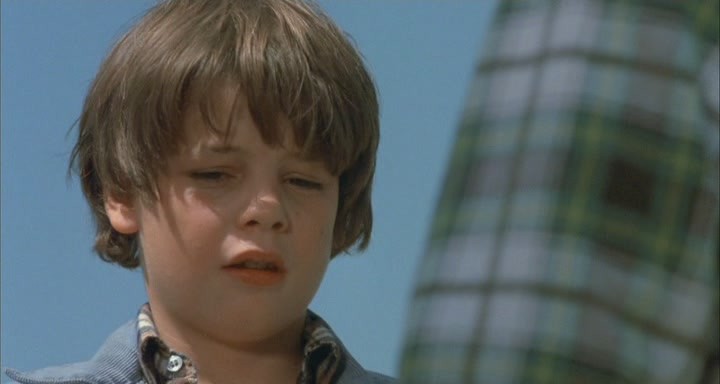
I am of two minds about Christopher Cain’s family drama “The Stone Boy.” On the one hand, it is somewhat slow and not without unnecessary scenes (and one particularly unneeded subplot). But on the other hand, it is a poignant, well-acted film that provides an effective portrait of grief after death and how a family is able or sometimes unable to cope with the situation. The more I keep thinking about the latter half of my mind to come up with a clear verdict for this review, the more I am won over by how well it works as a drama—enough so that I can give it a solid recommendation.

When you feel overwhelmed with grief and despair, you seek understanding and comfort from those closest to you. But when your own family and friends can’t seem to help you feel better, what else can you do but turn to people you don’t know very well, thinking they’ll be able to help? It’s a sad, morbid thing to think about—that those closest to you can’t seem to help you in your time of need. But I suppose when you hear what you want to hear from anyone who will listen, that’s at least something to feel good about. In “The Stone Boy,” a young boy, named Arnold (Jason Presson), is somewhat responsible for the death of his older brother, Eugene. He and Eugene got up early one morning to pick peas in a patch near their family’s farm; Arnold brought a shotgun to shoot some ducks, but it got caught in a barbed wire fence as Eugene tries to help Arnold free it, only for the gun to accidentally go off, killing Eugene.

It wasn’t Arnold’s fault, but his reaction to it confuses his family in a scary way. You see, after the accident, Arnold stayed with the body for a long time in shock (maybe the gravity of what just happened is too much for him, or maybe he thinks he’s having a bad dream and he’ll wake up anytime). How long he stayed out there with the body of his dead brother is never specified, but after this, he goes on to pick peas and put them in a pail, and bring them home, where his family is waiting for him. “Eugene’s dead,” Arnold uncomfortably says.

Arnold’s father, Joe Hillerman (Robert Duvall), keeps his feelings bottled up inside and can’t even bring himself to comfort Arnold. He advises his wife, Ruth (Glenn Close), to leave him alone, believing that “maybe he’ll realize what he’s done” if he’s left alone. Arnold’s older sister, Nora (Susan Blackstone), doesn’t know how to feel toward him. So basically, the family is assuming that Arnold will handle his grief on his own. The only one that will listen and who understands Arnold’s mental scars and confusion about what has happened is his kind grandfather George (Wilford Brimley). He and Arnold share many times together, and Arnold feels more at home with his grandfather than with his parents and sister.

To be sure, Joe and Ruth are not cruel people, and they know that they should be more attentive toward Arnold and give him the comfort he needs, instead of using him as an excuse feel sorry for themselves after this tragedy. But when they think about their late oldest son and Arnold being somewhat involved in his tragic death, they can’t seem to comfort themselves, let alone their guilt-stricken surviving son.

Meanwhile, there’s Uncle Andy (Frederic Forrest), who understands how sorrow and guilt feels…although nevertheless, he’s a lout who can’t seem to control himself. This becomes apparent when he seduces Eugene’s distressed girlfriend (Cindy Fisher), even though he is married. And it’s also apparent that this isn’t the first time he’s cheated on his pregnant wife Lu (Gail Youngs), as the next day she suspects something going on and hysterically talks with Ruth about it. She blames Arnold for all of this, even smacking him about three times in anger. Lu is fed up with her husband, as she packs up and leaves for Reno, Nevada to start a new life.

Now, I grant you that “The Stone Boy” might have been a little better if this subplot was trimmed or cleaned up a bit, because the whole thing with the Forrest character slows down the film’s pacing. I could have used less of his actions and more of how the family is attempting to cope with this tragedy, because there is already something deep and credible here. However, I feel the need to accept in some way, mainly because it is the reason for more grief that traces back to the tragedy. It delivers more to think about, particularly when Lu blames Arnold for causing some sort of trouble that led to Andy cheating on her with Eugene’s girlfriend. Lu’s story is actually pretty interesting, as she herself feels guilt and grief for certain things about her life, hence why she runs away to start a new life. Eventually, she is able to accept Arnold’s apology for what she thought he did to her; but she can’t give him much more than that because she remains a mess. Will she change? Who knows? But the movie isn’t about that. It’s about how everything can and should lead to reconciliation among this family.

“The Stone Boy” is very well-made. You get a sense of the South on this small Montana farm, but more importantly, you can actually feel what these characters are going through—particularly in that scene midway though the movie in which Lu takes out her anger on Arnold; you can get a clear sense of her anger there, and you feel sorry for the kid who is being treated this way. That’s not an easy task for a drama, for us to feel something for both sides of two certain characters that you can sympathize and empathize. And the film is aided by a great cast. Jason Presson is effective and sympathetic as the boy who is indeed treated as if he’s made of stone. Wilford Brimley is great as always, playing a kindly confidant—the kind of grandfather we’d all like to have. Robert Duvall and Glenn Close are solid, and are well-suited for admittedly difficult roles. And Gail Youngs is very good as Lu. Also good is Linda Hamilton in a small role near the end, as a young mother with a baby—she meets Arnold on a bus, and she gives him the kind of absolution and understanding that the kid needed for so long.

“The Stone Boy” does move at a somewhat-slow pace and there are a few moments that seem to drag when we just want to move back to something more interesting. However, its central themes about not knowing how to open up about a loss and what needs to be said and done in order to make yourself or someone close to you feel better about themselves make up for those parts, and provide enough satisfying, compelling dramatic moments that are strong enough to make an impact. You feel for these characters and hope that things turn out well for them. And that is one of the main reasons that “The Stone Boy” works.

The Mighty (1998)

2 Jul

The_Mighty_15559_Medium

Smith’s Verdict: ***1/2

Reviewed by Tanner Smith

Of the live-action family films to come out of the ‘90s, “The Mighty” is usually one that would be considered “underrated.” And it didn’t help that it was released the same year as the successful (though shameless) tearjerker “Simon Birch,” of which it shares similar traits. Don’t get me wrong—I like “Simon Birch,” but there are certain things that I notice suffer by comparison to “The Mighty.” Most importantly, while “Simon Birch” relied on manipulative ploys in order for the audience to feel something about its story, “The Mighty” offers more depth and intelligence to its story of young outcasts who become better than their labels whenever they’re together. This is how it creates an emotional impact for audiences; it doesn’t try so hard. It has a theme, sticks with it, and tells it in a sincere way while also being entertaining.

Based on the book “Freak the Mighty” by Rodman Philbrick, “The Mighty” tells the story of a friendship between two junior-high outsiders with certain weaknesses that define them to their peers. They are Max Kane (Elden Henson) and Kevin Dillon (Kieran Culkin). Max is big for his age, is dyslexic, and is repeating the seventh grade…again. His students refer to him as “The Missing Link,” and on top of that, he’s constantly given weird looks because his jailed father (James Gandolfini) is a known murderer who may have murdered Max’s mother. But Max wouldn’t hurt a fly—in fact, he never retaliates nor does he even stand up for himself at all. That lack of anger makes him the target of teasing and taunting by a group of bullies known as the Doghouse Boys, whose anthem towards him is “Killer Kane, Killer Kane, had a son who’s got no brain!”

Kevin has Morquio’s syndrome, which is said to cause bones to stop growing even though his organs continue to expand, meaning his days are probably limited by the time his organs become too big for him. As a result, he has a dwarfish figure and is crippled. But nevertheless, Kevin is a boy genius. When Max first sees him soon after he moves in next door to his grandparents’ house, he’s making an ornothopter—a bird-like model that can fly with the wind. He’s also a bit of a wise-guy persona, as he uses humor as a defense mechanism. When Max is blamed for a cruel joke toward him by one of the Doghouse Boys, Kevin asks him why he lets them “make a chump outta you.”

Max and Kevin become friends, after Kevin tutors Max in reading. Their book is “King Arthur and the Knights of the Round Table,” which Kevin often refers to constantly. Kevin brings Max into his world of imagination, which sees the real world as a parallel to that which he reads about (only in this case, they’re knights, the dragons are just bullies, damsels in distress aren’t as thankful as they might expect, and so forth). Also, Max often lets Kevin ride on his shoulders so they become one—“You need a brain and I need legs,” Kevin states. This comes in handy when Max saves Kevin from a run-in with the Doghouse Boys, and when they play basketball this way (Kevin is able to dunk the ball into the hoop).

There are more characters involved in “The Mighty,” each of which has their individually effective moments. There are Max’s grandparents, Grim (Harry Dean Stanton) and Gram (Gena Rowlands) as he calls them, who worry for their grandson ever since the death of his mother and the imprisonment of his father. When Max is brought home by the police after saving Kevin from the bullies, their first thought is to assume the worst, that Max has become like his father. (That’s Grim’s first thought aloud, to which Gram immediately responds by telling him to be quiet.) There’s a particularly effective moment in which Max breaks down to Gram after finding out that his father has broken parole, and also that he’s becoming more like him because of the anxiety and anger he feels toward him. Gram must comfort him and reassure him that he isn’t like his father at all. Also among the supporting characters is Kevin’s single mother (Sharon Stone), whose husband apparently left her when he discovered that Kevin was disabled (Kevin tells Max, “He heard the words “birth defect” and left”). Kevin’s mother has made it a point to keep Kevin out of “special schools” that “suit his needs,” and she’s very grateful to Max for being his friend. There’s one scene in which she states how she feels about Kevin playing basketball with Max, after the principal won’t allow it—“Kevin lives in this world of books and ideas…but Kevin would trade it all for a chance to be normal. Max Kane has given him that chance.”

When you really think about it, knowing that he will never be normal represents Kevin’s central inner opponent that he must conquer as a “Knight.” And if that’s the case, and this reality is a parallel to Kevin’s imaginary world, then that means that Max’s opponent is the horrible memory of seeing his father kill his mother. This goes well with a quote that is often used in this movie, “A Knight proves his worthiness through his deeds.” Each one of us has our own demons to battle in life, and it’s how we react to certain situations regarding it that make us who we are. “The Mighty” is a film that mixes imagination with reality (sometimes, the visuals of a fantasy world intersect with the real world, but it’s not overdone), and not once does it ever try to tell us that we should forget about reality; it teaches us to face it as we live our lives, and sometimes fantasy can be an escape-aspect of helping us through our difficulties in life.

And I admire that this story centers around kids, because we all have been through times at the same age as Kevin and Max when we felt like we were outcasts. That sense is seen and felt throughout the film, and is constantly used to turn pain into warmth with this friendship.

Great acting is a crucial element to the success of “The Mighty.” Elden Henson is perfect as the hulking but vulnerable Max; not only does he look right for the part, but also he feels right for the part. He never strikes a false note with this performance. Equally impressive is Kieran Culkin as Kevin, who knows his character inside and out. Gena Rowlands and Harry Dean Stanton do respectable work as Max’s grandparents. There’s also Gillian Anderson, whom I realized I forgot to mention plays a dishonorable, drunken “damsel” that the boys encounter and help retrieve her purse. No presence of Scully to be found here; she’s nearly unrecognizable and not particularly appealing. And there’s also Sharon Stone as Kevin’s mother. This is probably the best work I’ve ever seen from the actress, playing an ordinary single mother who is emotionally vulnerable and attempts to cover it with genuine gratefulness. She’s convincing and very real.

If there’s one thing about “The Mighty” that doesn’t really work, it’s the climax near the end of the film. Max’s father comes and takes him away, and Max is too crippled with anxiety and fear to do anything about it, until a certain part of that night snaps him out of it and causes him to finally let out his anger left onto him by his father. But meanwhile, Kevin figures out where he is, and using his mechanic skills he picked up from reading, he builds a sled that helps take him to where he accurately thinks Max is being held. I know this is supposed to show how further their “Knights of the Round Table” knowledge is being put to the test, but in a film that separates fantasy from reality as often as it keeps it in the same frame, this is pretty improbable. But it’s not so distracting that it harms the rest of the film. Actually, in its own way, it kind of works a bit (even more so than the “daring rescue” in “Simon Birch”).

Despite its occasional emotional, dramatic moments (the heaviest of which comes late in the film), “The Mighty” is not a downer. It has its entertainment values, but more importantly, it knows how to tell its story and theme in such a way that it brings an optimistic view on things in the end. How? Rent the film and see for yourself. You won’t regret it.

Frances Ha (2013)

30 Jun

images-1

Smith’s Verdict: ***1/2

Reviewed by Tanner Smith

Independent writer-director Noah Baumbach is usually not one for conventional or even entirely-pleasant elements when it comes to his stories—his films “The Squid and the Whale,” “Margot at the Wedding,” and “Greenberg” are certainly proof of that. Somehow, he manages to take what sounds like a simple story (parents get a divorce, squabbling sisters reunite at a wedding, etc.) and make it his own. Sometimes, you don’t know how to feel, and the laughs come from certain originality that comes with an odd sense to it, I called his “Margot at the Wedding” an “acquired-taste” film in that you either get into the appeal (or lack thereof) of the material and execution, or you don’t.

With “Frances Ha,” Baumbach has learned to relax with his filmmaking and the film, as a result, is gentler and fairly easier to watch that his previous films. The tone is a bit lighter, but with that same sense of gritty documentary-style camerawork and interaction so you know that it’s still a Baumbach film (except that this one is presented in black-and-white for some reason). And it actually has a charming leading character instead of the usual intentionally unlikable “protagonists” we usually find in his films (see Margot, for example). That character is the excitable, quirky Frances Halloway, played the ever-charming Greta Gerwig, who also co-wrote the screenplay for the film with Baumbach.

Gerwig is generally known as a “mumblecore queen,” but she has gained notice in more mainstream projects (and hopefully will continue to do so, if she wants people to forget she was in the “Arthur” remake). And playing the lead role in “Frances Ha,” she follows a trend I notice a lot recently in indie films—that trend being that actors/actresses write their own leading roles and they wind up showcasing their true talent that was evident but not fully realized in supporting roles they were saddled with previously. That was the case with Zoe Kazan in writing and acting in “Ruby Sparks” and Rashida Jones co-writing and acting in “Celeste and Jesse Forever.” Now, Greta Gerwig co-writes “Frances Ha” with Baumbach and delivers her best performance as an actress, showing further cases of immense appeal and range. Her Frances “Ha” Halloway is a cheerful, high-spirited 27-year-old dancer who has a bit of trouble growing up and can’t seem to deal with the real world of adulthood. She gets excited over the simplest things, such as taking the check on a restaurant date…but having to run all over the city to get money because her credit card is maxed out. (That was the moment early in the film when I realized I loved this woman.) As things get deeper into impending adulthood, she finds she can’t quite deal with it regularly and does/says things out of the ordinary that make her seem…well, “crazy.” But you love her anyway.

So what’s the “simple” story that Baumbach has to put original touches into for this one, and for this character to go through? Frances is a dancing-company apprentice who works in New York and wants to be a real dancer. So she tries to fulfill her dream, even though the road to that fulfillment is a bumpy one. Blah blah blah, right? Wrong. Frances is among thousands in a big city that is seeking an artistic life, but doesn’t have the financial consistencies or the attention or time for her own life to reach her goals. Meanwhile, her best friend from college, Sophie (Mickey Sumner), with whom she does everything together (they even at one point acknowledge themselves as a “lesbian couple that doesn’t have sex”), suddenly moves out of their apartment to a new place in Tribeca. Frances can’t quite pay the rent (nor does she believe she can live alone), so she moves in with two rich, likable schmucks, Lev (Adam Driver) and Benji (Michael Zegen), at their apartment. They’re not the only new ones to come into her life, though, as she meets other interesting people who come into her life and then abruptly leave her life. Even when Sophie returns into Frances’ life, she brings the news that she’s moving to Tokyo with her new fiancé, Patch (Patrick Heusinger), whom the two used to mock before.

Can Frances continue through life with each new change coming her way? Maybe so, but it’s kind of a rough movement. This is not the kind of life she and Sophie used to imagine themselves living in the future. And as the future appears to be the present, it’s harder for even them to understand. Reality takes its course, and maybe there’s hope for them, but it’s a long way down the road.

I’ll be honest—I don’t see the purpose of “Frances Ha” being presented in black-and-white. It’s not set in a past time, and somehow, seeing a MacBook and an iPhone in a black-and-white movie has an odd effect on me…and I’m not sure how I feel about that. Is “Frances Ha” supposed to come off as a new version of Woody Allen’s “Manhattan?”

Huh. Actually, given the tone and structure of this film, that would actually make sense.

The screenplay for “Frances Ha” is quite appealing. The conversations these people have are worthy of “Seinfeld,” as well as Woody Allen, in that the littlest things lead to some interesting conversations. And there are certain oddities in phrases and terms, such as a lame text that is supposed to be a come-on (and it becomes Frances’ playful greeting to Sophie when they meet again) and the description that Benji constantly uses for Frances when she describes the direction her life is going—“undateable.”

Not a lot happens in “Frances Ha.” It’s more of a series of events surrounding this woman—some brief in a montage, others stretched out to get the point. But its emotional aspects, as well as its stellar central character, really make “Frances Ha” a memorable experience. It’s small, but it works very well.

Adventureland (2009) (revised review)

28 Jun

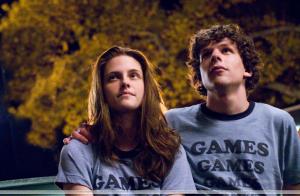
uhq-adventureland-stills-kris-looking-gorgeous-twilight-series-8217686-2560-1679

Smith’s Verdict: ***1/2

Reviewed by Tanner Smith

This is a “revised” review of “Adventureland.” I wrote my original review of the movie three years ago, and back then, I only kind of liked it. But oddly enough, I found myself watching it again recently—but that’s not the odd part. The odd part was that I watched it three times in the past week and found myself admiring it more each time. It happens sometimes—you feel one way after watching a certain movie, and you either love or hate it with subsequent viewings.

So I’m writing a new review on “Adventureland.” But I’m not going back to the original source. I’m starting from scratch.

I think I know what it was back then. I think at the time I watched “Adventureland” on DVD for the first time, knowing that Bill Hader and Kristen Wiig were among the cast and also that it was directed by Greg Mottola whose previous film was the hilariously vulgar “Superbad,” I was expecting a “Superbad-esque” comedy. And it didn’t help that the trailers and TV spots marketed the film to be a slapstick-filled, crudely-funny, wacky comedy. There are laughs to be had, a few sex jokes to be tossed around, a few beers to be had, a few joints to be toked (as well as pot-cookies to be consumed), and an annoying character that constantly hits the main character in the nuts…but “Adventureland” is actually more mature and insightful than the original trailer would like you to believe. It’s a comedy, but it’s based around realistic situations, truthful characters, and, surprisingly, a lack of cheap laughs. Crudeness and profanity are left at a minimum here. Artificial humor doesn’t seem to be at work here, and no laughs are forced (well, for the most part—like I said, there’s a groin-flicking d-bag, but he’s not overused). The mature themes of “Superbad” (growing up, knowing those you’re comfortable with, respecting the opposite sex, etc.) are more at work with “Adventureland,” with no distracting partying-cop characters to hang with the McLovin character.

So maybe I was expecting something a little broader, along the lines of “Superbad,” mainly because of deceptive marketing. The first time I watched “Adventureland,” there was at least something there to keep me entertained enough to like it. The second time I watched it, I noticed something a little more about the heart of the film. Now, with a few more viewings, I find myself admiring it even more for what it is rather than what I may have expected it to be. The truth of the matter is that “Adventureland” has a unique, effective balance between humor and honesty that doesn’t feel the need to be so crude in order to gain an audience along the lines of the Judd Apatow crowd. (Remember—Judd Apatow did not direct “Superbad.”) Instead, it’s a nicely-done coming-of-age romance with sharp writing, a smart sense, and realistic, appealing characters. Most of the characters are in their early-20s, which is unusual for a film like this, but remember that young adults can come of age in comedy-dramas too. And they’re real people too—not stereotypical cardboard cutouts of what we expect from such a film that the marketing would like us to think. The characters are treated with respect and dignity, and they’re three-dimensional as well.

Also noticeable is how much attention to detail is given to the undignified employment of a second-rate amusement park. In this case, that park is called Adventureland. It’s 1987, and the rides at Adventureland may be fun, but a few key characters work games. In a wonderful sequence early in the film, we’re introduced to the technical aspects of the games, all of which are rigged to be unwinnable—there’s a ring toss with rings that have the same width as the tops of target-bottles; there’s a series of mannequins with hats glued onto their heads so that players can’t shake them off with balls; there’s a basketball hoop that has been hammered into an oval shape; and so on. The idea is that no one can win the best prize in the park, which is a Giant Ass Panda (an oversized stuffed panda), because there aren’t many of those left. The other prizes are just disposable little stuffed animals with make squeaking noises. I’m not sure, but it seems as if the rules of this park comes from firsthand experience. I wonder if director Mottola, who also wrote the film, worked at such a place in the ‘80s.

James Brennan (Jesse Eisenberg) is a recent college graduate who lands a games-job at Adventureland for the summer, because his father lost his job and so his parents can’t pay for graduate school in New York City. The job basically requires him to run the game booths for minimum wage, and it’s not very exciting. But he does meet some interesting people, including Connell (Ryan Reynolds), the park’s maintenance man who is in a band and is said to have jammed with such rock stars as Lou Reed…and also plays the field despite being married. There’s also deadpan intellectual Joel (Martin Starr), who shows James the ropes and has something particular in common with James: awkwardness around women. That leaves Lisa P. (Margarita Levieva, astonishingly beautiful), the park’s main attraction (in a way), and Em (Kristen Stewart), a friendly girl-next-door type whom James befriends. James makes friends with his fellow employees at Adventureland, and due to his supply of joints, he also becomes popular among them. And he even finds himself falling for Em. But there are two problems that arise. One is that Lisa P. actually kind of likes James, much to his surprise (and everyone else’s, frankly), so he decides to go on a date with her, since he and Em aren’t “exclusive.” Another is that Em is actually Connell’s secret lover.

It’s a very complicated love story in that James and Em obviously like each other and share undeniable chemistry, but James is too impressed with himself dating the kind of woman who usually wouldn’t give him a chance, and Em is still in the middle of her affair with Connell and not sure how to end it. It’s complicated, and believably so. These are real people who make mistakes and of course learn to realize them, though sometimes after it seems like things may not turn out so nice. One of the most refreshing things about the Connell/Em subplot is that Connell is not characterized as a grade-A douche-bag. When he discovers that James has feelings for Em, he doesn’t try and ruin chances of a possible romance between the two. Although he does give certain advice that sort of unnerves James (which further leads to James going through with a date with Lisa P.), he’s not a jerk. We don’t forgive him for cheating on his wife, but the character is three-dimensional. Any other movie, he might be the villain who deserves a comeuppance. Here, he’s not entirely sympathetic, but he’s not dislikable either.

This goes back to what I wrote earlier about how these characters seem and feel like real people. James likes to think he’s smart and sophisticated, but he’s not as bright as he seems and he notices that as the film continues. Em comes from an uneven home, but she sometimes causes the problems with her stepmother. They’re not too bright, but they’re not too dim either. They feel like they’re patterned after real people. When James and Em are together, it feels real—awkward, but not terribly so; sweet, but not overdone; and funny, but within the context. The same kind of realistic conversational setup can be seen in James’ talks with Joel or Connell. And what about the affair? How is that handled? Without giving it away, it’s handled convincingly and refreshingly.

Jesse Eisenberg has been unfairly labeled as a “Michael Cera copycat” in this movie, but that’s really not fair. If anything, Eisenberg has a further amount of awkwardness to offer, and on top of that, a drier comedic wit. Every word he says, you know he’s trying to be careful in saying it, lest he say anything stupid, and thinking hard and quick about it first. He delivers a convincing portrayal of a geek, never overplaying it. And then there’s Kristen Stewart, also unfairly labeled, though for her it’s because of the “Twilight” movies. For goodness sake, leave Kristen Stewart alone. Stewart can act, and can act very well. Her performance in “Adventureland” is a demo I can immediately think about. Stewart plays Em as an appealing, fully-realized, modest girl-next-door type that would take a chance on James, and who James would fall for. She’s great here. Of the supporting cast, Ryan Reynolds is solid in a role that could have been too easy to play. Martin Starr is a great deadpan.

Oh yeah, I almost forgot about Bill Hader and Kristen Wiig as the adults who run the park. Personally, I find these two to be a distraction. Don’t get me wrong—at times, I find them funny (hell, even Hader’s porn-star mustache gets a laugh out of me); other times, they just seem unnecessary. They just come off as desperate needs for comic relief, and they’re not needed for that because we already have Joel and a few other (stoned) employees for that. I feel bad saying this, because I love these two comic actors—they were fantastic on SNL.

“Adventureland” doesn’t rely on crudeness, profanity, and vulgarity to attempt to get a story going. There are a few moments of such, but they’re far from overused. More importantly, this movie is actually about something. It’s about the routine experiences of a summer job, finding ways to keep it interesting through the people you meet and the misadventures you have, and with characters that grow a convincing bond together. It’s about structure and about character, and I loved spending time with these people. I wondered what would become of these people years down the road.

This is a coming-of-age comedy-drama that doesn’t disgust, doesn’t overdo its sweetness, doesn’t rely on cruelty for humor, and overall, doesn’t rely on familiar territory to keep it going. I liked this movie the first time I watched it; I love it even more now. Who knows? Maybe down the road, I’ll grow to forgive the film of the unnecessary Hader-Wiig characters and even grant it a four-star rating. Hey, it could happen.
Celeste and Jesse Forever (2012)

27 Jun

44692000001_1702426955001_Celeste-and-Jesse-Forever

Smith’s Verdict: ***1/2

Reviewed by Tanner Smith

I love Rashida Jones. Everything she’s in, I’m always curious about; I’m not going to lie. Jones has a very appealing personality that comes with undeniable talent that mixes wit with sweetness; you can’t help but pay attention to her because when she doesn’t make you laugh, she makes you smile. It’s impossible for me to dislike her. I loved her in “The Office”; she’s very funny in “Parks & Recreation”; and she’s fresh and appealing in comedies such as “I Love You, Man” and “Our Idiot Brother.” I will watch her in just about anything. Sometimes, though, I feel she’s underused, which is why I was delighted to find that she takes the lead role in a script that she co-wrote. That film is the romantic-comedy-drama “Celeste and Jesse Forever.”

As you can tell by the title, Jones plays the “Celeste” in that titular couple. Who’s “Jesse?” Andy Samberg. Right away, I’m hooked—Rashida Jones and Andy Samberg together. I’ve always been a fan of Samberg’s “SNL” work and especially his hilarious, collaborative Lonely Island shorts (and he “killed” as a host on the 2009 MTV Movie Awards), so pairing him with Jones had me curious but also interested. What really surprised me was that Samberg had impressive range as an actor, something I never found in “Hot Rod” or “I Love You, Man” which required him to play broadly comedic roles. Here, he’s pretty good and delivers the type of solid (even subtle) performance the role needs, especially considering…

OK, I’m getting ahead of myself here. I just admire these two comic actors so much that I already liked the film before I even saw it. What do I think of the film itself?

Well first, I’ll just state that it exceeded my expectations by not being a mainstream romantic-comedy with two likable leads and a series of comedic antics and dramatic conflict (we already had “The Five-Year Engagement” for that, I guess). Instead, while it is good-hearted, the film, written by Jones and Will McCormack and directed by Lee Toland Krieger, presents more of a nonconventional look at what happens after the end of a relationship.

The story: Celeste (Jones) and Jesse (Samberg) are a likable couple who married young and find themselves at a crossroads now pushing the age of 30. To keep from hating each other, they separate, awaiting divorce, but remain close friends. They still hang out together, laugh at each other’s jokes, and despite the separation, they still live on the same property. They’re still in love with each other, but they won’t admit it. Celeste and Jesse are happy with this friendship, however, although their friends, Beth (Ari Graynor) and Tucker (Eric Christian Olsen), think it’s weird that these two are still close with one another, despite getting divorced. Celeste states that the reason she wants to divorce him is because Jesse is not the right husband for her, since she is a successful career woman and he is unemployed and a bit of a slacker.

Jesse runs into a woman he shared a one-night stand with, Veronica (Rebecca Dayan). It turns out that she’s pregnant with his baby and he decides to stick with her, meaning that the friendship between him and Celeste is on hold for long periods of time. Once reality sinks in, Celeste realizes that she loves Jesse and wants him back, but she probably can’t get him back. As time goes by, Celeste’s life spins out of control and she finds himself incapable of being the way she was when Jesse was around.

This is not the typical romantic-comedy in which two people meet, fall in love, endure certain problems (usually a villain that gets in the way of things), and they get married. While that is overdone, I think maybe I would have liked to see the meeting of Celeste and Jesse, oddly enough. But to be fair, it’s probably because Rashida Jones and Andy Samberg make such an appealing couple that I would have loved following the story of how they met. The early scenes in which they’re together are wonderful, as the two play off each other perfectly with the right amount of timing. But anyway, instead of the usual romantic-comedy clichés, we have the couple reaching the end of their relationship, long after they were married. This is not a film about how the most important thing is to love and be loved, though it is acknowledged that love is powerful; it’s mainly a case of these two people dealing with the poignancy the regret of this situation. There may be a second chance, there may not. This worked especially well for me, because I never knew from one point to the next what was going to happen, which is unusual because I usually pretend to predict the outcome of a romantic-comedy. I didn’t know if they would get back together or even if they would be happy at all (though to be fair, there is that suspicion that the latter is probable in some way).

The second half of “Celeste and Jesse Forever” shows Celeste as she turns from being a happy, controlled businesswoman to being an out-of-control neurotic—it’s like the indie-cred version of “Bridesmaids,” which also featured a neurotic woman struggling to seek control of her life. This puts Rashida Jones center-screen—a leading role. I’m not even surprised when I realize she’s excellent here. She has great range as an actress, she delivers her lines naturally, and I hope that more screenwriters and directors create another role with her abilities in mind so that she herself doesn’t have to create a character for herself (I mentioned before that she co-wrote the screenplay).

Does everything about “Celeste and Jesse Forever” work? Well, not quite. I found a few things to be distracting, like the subplot involving a teen-queen (played by Emma Roberts) who comes into Celeste’s life, and a few unnecessarily harsh moments that sort of drag. But if I’m going to pick on one supporting character, I should name a few others because they do have their funny moments—Celeste’s gay boss (Elijah Wood), whom I was glad was not portrayed in a broad, stereotypical fashion (in fact, the film even cracks a few jokes at the stereotype the character could have been); Skillz (McCormack), the local pot-dealer; and the newlywed couple played by Graynor and Olsen. I have to be honest and say that I’m generally not a fan of Graynor’s usual airheadedness (sue me; I didn’t find her very charming in “Nick and Noah’s Infinite Playlist”), but I thought she acquitted herself nicely here.

“Celeste and Jesse Forever” has its funny moments, but the laughs come from authenticity rather than forced dirty humor you usually find in romantic-comedies desperate for a laugh. This is a romantic-comedy that seems real and credible, with interesting characters and a genuine feel for both Celeste and Jesse. It may not be “forever” for these two, but maybe they’ll remain “just friends.” (Oh boy, here we go again…)

Trainspotting (1996)

24 Jun

trainspotting_movie_image_ewan_mcgregor_01

Smith’s Verdict: ***1/2

Reviewed by Tanner Smith

“Choose life. Choose a job. Choose a career. Choose a family. Choose a big television., choose washing machines, cars, compact disc players and electrical tin openers. Choose good health, low cholesterol, and dental insurance. […] Choose your future. Choose life.”

The narrator/main character of Danny Boyle’s “Trainspotting”—Renton (Ewan McGregor)—has rebelled against the comfortable lifestyle his family has, as he finds it very uninteresting, and instead escapes into the world of drugs. Particularly, heroin is what he and his buddies turn to whenever they need something to “care” about. His friends are even less ambitious than Renton, in that they are all sociopathic, amoral, and even more warped than Renton—they are Sick Boy (Jonny Lee Miller), who constantly talks about Sean Connery movies; Spud (Ewan Bremner), a simple-minded, inoffensive addict; Tommy (Kevin McKidd), a nice, honest young man whose personality changes once he hears about the joys of heroin; and Begbie (Robert Carlyle), a psycho who delights in causing great harm people, even dropping a glass on a young woman’s head.

George Carlin once said this about how one feels about drugs—“They make you feel like wanting more drugs.” And indeed, the addiction is very strong with the characters in “Trainspotting.” Renton knows that heroin leads to misery and bitterness, but is constantly drawn back to it because of the hit. At one point early in the film, he even locks himself in a room with soup, ice cream, milk, Valium, water, three buckets (one for urine, one for feces, one for vomit), a TV set, and porn, in order to withdraw himself from the drug. But soon enough, he does get back to heroin. After a series of odd events, he nearly dies of an overdose, leading to a harsh, forceful intervention and withdrawal after which, much like Alex in “A Clockwork Orange” (that is, if Alex was holding and using), he must either cope with the realities of a clean life or give in to madness, pain, and misery yet again.

All of this is told in a bold, stylistic way that makes “Trainspotting” admirable for its look and feel, while at the same time uneasy to watch for the same elements. That makes it all the more effective in how “Trainspotting” frames its characters and their issues—these characters are pretty much horrible people, but “Trainspotting” does deliver and show comeuppances and consequences for each of them. They may embrace their lifestyle, but how long will it last until it hits them back? It leaves room for tragedy and even a little redemption. And it was a smart move not to show the world of drugs from one side of the argument—in order to understand what drugs can do to a person, the film shows things clear and in detail (sometimes strangely and eerily giddy in such) from the characters’ sides. And the best thing about the story—it doesn’t preach in delivering what it has to.

Thanks to a unique visual style and a clever framing device, “Trainspotting” is a very compelling film—not only is it well-acted and well-done in getting its point across without preaching, but it is lively and energetic. Much like Spike Lee’s “Do the Right Thing,” Danny Boyle creates “Trainspotting” with something that needs to be said about a certain controversial subject and results to all sorts of tricks and such in order to make people remember what they’re supposed to get out of it. in that sense, the film is very successful and quite grippipng.

Rabbit Hole (2010)

24 Jun

rabbithole11

Smith’s Verdict: ***1/2

Reviewed by Tanner Smith

“Rabbit Hole” is like the next “Ordinary People” of the early 21st century, and to me, that’s a good thing. This is just as emotionally involving and well-made as that 1980 Best Picture-winning family drama. And it’s odd, because this could have been as stale and overdone as most modern melodramas, but “Rabbit Hole” is smarter, more efficient, and better-acted than you might expect.

“Rabbit Hole” is a film about grief, particularly coping with the death of a little child. Already, that sounds like a made-for-TV schlocky, overdone melodrama. But “Rabbit Hole” mostly gets it right. The actors are great in making the characters seem real so that we can feel their pain and be convinced about their plight. And the writing is quite intelligent, based on a play by David Linday-Abaire, who also authors the screenplay here. Even if it seems all too real for people who have suffered a deep loss, and at times it is quite uncompromising, the emotions within the credible drama are evident and effectively done.

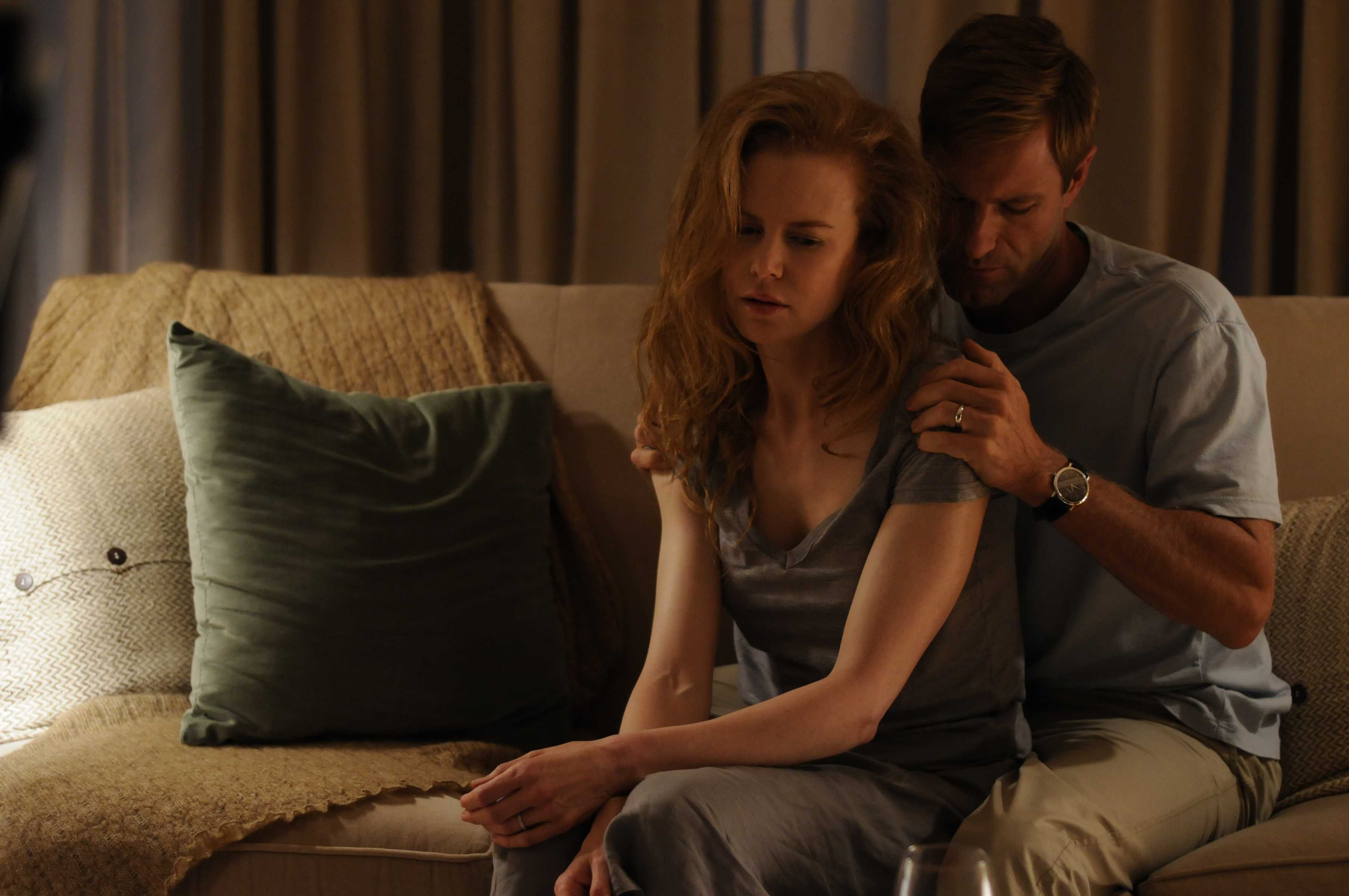
“Rabbit Hole” centers around Becca (Nicole Kidman) and Howie (Aaron Eckhart), ordinary people doing their best to deal with everyday life after the accidental death of their four-year-old son, who was chasing a dog out in the neighborhood street and was struck by a car. Becca is attempting to move on, while Howie stays up all night watching home-movies that feature the boy. And the boy’s bedroom looks as if it’s still there waiting for the boy to come back. They’re enduring a good deal of grief as they’re practically restarting life since the incident, and a group therapy session doesn’t help much, as Becca is bitter enough to notice that these “mourners” are merely self-righteous for the sake of earning sympathy. Also, the couple’s marriage seems to be slowly but surely falling apart, and Howie turns to Gaby (Sandra Oh), who listens to him in sympathy, and he lets her because Becca won’t. Oh, and Gaby’s husband recently abandoned her.

Meanwhile, Becca finds someone to talk to—the last person one would expect for her to have conversations with: Jason (Miles Teller, very good), the teenager who drove the car that killed her son. She notices him and the emptiness in his eyes, and realizes the guilt he feels about that day. So she feels that if she makes him feel better about it, she herself will feel better about it.

Granted, this is not easy, and no one will feel 100% better about such a tragedy, but it does help to talk to someone.

There’s also a subplot involving Becca’s sister, Izzy (Tammy Blanchard), who is unexpectedly pregnant. This leads to quiet denial from Becca who notices her sister’s irresponsibility and questions whether or not she’s able to raise or take care of a kid. And there’s also Becca and Izzy’s mother (Dianne Wiest), who herself has suffered a tragic loss—her son and Becca and Izzy’s brother.

As you can tell, every character is going through some sort of emotional conflict, and they’re finding (or trying to find) ways to cope with each situation either by themselves or through each other. They are not the same people they used to be because an experience such as becoming a parent and in this case losing a child will change a person in such a way that life could no longer be the same. It’s how they’re able to continue through life that really matters and makes them who they are now. These feelings are well-developed and lead to a lot of truly effective, sometimes heartbreakingly so, sequences that ring true and make us understand what they’re all going through.

The acting is an important asset to the success of “Rabbit Hole.” If we don’t believe what these characters endure, we don’t care, which is what makes “Rabbit Hole” all the more powerful in its acting in that we do care. Nicole Kidman delivers one of her best performances, as she delivers a highly credible portrayal of a woman enduring emotional pain and with a force that makes it all believable. Aaron Eckhart is good here too, as a man who has his own issues in dealing with his son’s death (and he’s clearly not on the same page of coping as his wife is). Of the supporting cast, Dianne Wiest delivers her best work in quite a while; Sandra Oh is appealing; Tammy Blanchard is convincingly rebellious; and Miles Teller is credibly vulnerable.

I also admire that “Rabbit Hole” isn’t necessarily about the little boy’s death—it’s about the reactions to it eight months after, and the recovery that can be developed at that point. With the exception of one (very brief) pushover, we don’t even get any flashbacks recalling the tragic incident. We just have Becca and Howie and their explorations of grief after it. That was a smart move, and the right approach to this material.

Not everything about “Rabbit Hole” works, though. For instance, I never really bought the grocery-store scene in which Becca confronts a nearby strict mother who won’t buy her kid Fruit Roll-Ups, despite his constant asking. The payoff to that scene just seemed quite forced to me. And it’s obvious to us that young, artistic Jason’s homemade comic book is supposed to symbolize the guilt he feels since that fateful day (it’s about parallel universes and what it’d be like for a character to experience a different personality within himself), but it’s not supposed to be revealing late in the film, which it is.

But everything else about “Rabbit Hole” works—the character interactions, the dealings/copings with grief, the story-framing, the acting, the writing, etc. Does it end pleasantly? Well, it depends on how you see it or what you get out of what led up to it. What I got out of it, without giving much away, was that it’s as redemptive as I would have liked to be, without being manipulative or dishonest. It worked for me.

The Hangover (2009)

22 Jun

images

Smith’s Verdict: ***1/2

Reviewed by Tanner Smith

(Originally reviewed early 2010)

“The Hangover” is a very satisfying type of comedy. It’s funny and well-made, but also with the feel of a mystery thriller. The plot: Four men throw a bachelor party in Las Vegas and have a crazy night, as it seems, but they can’t remember a thing and can’t figure out why there’s a tiger in their Caesar’s Palace suite bathroom, whose baby is in their closet, why one of them is missing a tooth, and most importantly where the groom is. The marketing campaign that asks these questions lets you know right away that this movie is going to be quite something. And then the movie opens: the wedding is being prepared, the bride is wondering if the groom is going to show up, she gets a call from a friend of the groom’s saying that there won’t be a wedding.

We then flash two days earlier. The groom is a clean-cut young man named Doug (Justin Bartha, the National Treasure movies). He’s getting married to a nice woman who has a pudgy, strange, bearded brother named Alan (Zach Galifianakis). So his friends—vulgar schoolteacher Phil (Bradley Cooper) and sensitive dentist Stu (Ed Helms)—throw him a bachelor party in Las Vegas, taking Alan along for the ride. They check into a Caesar’s Palace suite and have drinks on the roof of the building.

Then, the next morning, they wake up in their suite and find themselves with the important questions: Where is Doug? Why is there a tiger in the bathroom? Whose baby is in their closet? Why is Stu missing a tooth? Why did the valet bring them a police car?

The rest of the movie is about them trying to piece together the mystery and figure everything out. They can’t remember a thing that happened that night because it turns out that Alan drugged them all with roofies. Their journey to figure everything out leads them to a violent encounter with Mike Tyson, a visit to a Vegas wedding chapel, a crude police station, and a nasty run-in with a Chinese mobster.

All of this is just flat-out funny. I laughed a whole lot during this movie. And it helps that the characters feel somewhat real as they possess personality problems. Phil is a schoolteacher who likes to steal his students’ money (to fund the trip), Stu is trying to get along with his snobby girlfriend, and Alan is just plain…strange.

I mean it. This character has to be seen to be believed. Zach Galifianakis turns in a great comic performance—the kind of breakout role that made John Belushi a star in “Animal House.” He’s short, bearded, awkward, clueless, and just wants to be liked. And he delivers some great lines, such as when Stu notices a woman wearing his grandmother’s “Holocaust ring”: “I didn’t know they give out rings at the Holocaust.” And also, he’s so sincere the way he says things like, “Is this the real Caesar’s Palace? Did Caesar live here?” I especially loved his “wolf-pack” speech he gives on the roof with his new buddies.

“The Hangover” is a mystery-comedy, which I didn’t even know existed, and director Todd Phillips (“Old School” and “Road Trip”) and writers Jon Lucas and Scott Moore take no mercy in taking us along for the ride and laughing with it too. “The Hangover” is a hilarious movie with a terrific story and weird characters.

Flipped (2010)

20 Jun

images

Smith’s Verdict: ***1/2

Reviewed by Tanner Smith

There are moments in life we don’t think about very often, and when we do, we like to think how things might have changed if we made different decisions in life. Take childhood, for example. Or rather, the first time we realized we were in love. Take this, for instance—what if you realized too late that you shared the same feelings toward a certain peer that the peer felt for you for the longest time…only to realize that by this time, the peer has lost interest? The timing is off; misunderstandings occurred; and you realize you were probably too blind or dumb to see what was there all along? Before it became a cliché in today’s pop music, it was the kind of thing that Afterschool Specials would have loved to present. It’d be an accomplishment to make an effective movie about such an issue without making it seem like a generic kids’-movie. And an accomplishment is just what Rob Reiner’s “Flipped” is.

“Flipped” involves a crush between two 7th-grade children in the early 1960s. Now I have to admit that at first, I wasn’t sure why this story takes place decades ago, and I thought Reiner wanted to recapture the “Stand by Me” nostalgia-feel. But then I realized something—a majority of junior-high kids in today’s modern age are overexposed with sexual imagery, thanks to the Internet and sheer curiosity aroused by other aspects, such as porn magazines and R-rated movies (particularly teen slasher films and raunchy comedies that feature nudity). I’m not saying that every kid does this or thinks this way about the opposite sex at this age; I’m just saying times have certainly changed.

But anyway, you can’t deny that the feelings that the characters in “Flipped” experience are genuine and familiar to anyone who has endured a childhood crush, especially when the feeling wasn’t exactly mutual. Maybe the “innocence-factor” is a bit forced, but as a story of young love, it’s acceptable in that sense.

The two kids in question are Bryce Loski (Callan McAuliffe) and Juli Baker (Madeline Carroll). When Bryce was 7, he and his family moved to a new house, across the street from Juli’s family. Juli is immediately attracted to Bryce (mostly because of his eyes), but Bryce is desperate to avoid her. (“All I wanted was for Juli Baker to leave me alone,” Bryce states in a voiceover narration.) Juli hardly ever stops chasing Bryce and shadows him all through grade school until junior high. But then at this point, midway through the 7th grade, something strange happens. Bryce is starting to have feelings for Juli, while Juli isn’t so sure about him anymore.

“Flipped” doesn’t cheat by focusing for the most part on one of the two—instead, it has a really clever storytelling gimmick. It plays one situation from the viewpoint of Bryce; and then the scene “flips” so that we can see the same situation from Juli’s point of view. It’s an effective, well-done method to get us to sympathize with both sides. Even when it seems like there’s an unforgivable moment brought upon by one of them, the “flip” manages to tell it from that person’s perspective and make us understand why this happened.

A funny thing about this “family film” is that it’s probably more geared towards older viewers than the younger. Older viewers will recognize the feelings that these children are going through in this movie, particularly the change of a young person’s feelings toward a member of the opposite sex. Whether it’s coming to love them or hate them, it’s a confusing, complicated change in a person’s life. I say it’s more geared towards older viewers because of that nostalgia-perspective angle that “Flipped” delivers.

The acting is spot-on—Callan McAuliffe and Madeline Carroll are two very convincing child actors who capture the immaturity and vulnerability of these characters. The supporting cast, mostly composed of familiar faces, is not entirely memorable, with a couple exceptions—one being John Mahoney as Bryce’s insightful grandfather who notices Juli’s spirit, and the other being Anthony Edwards as Bryce’s father who is a complete and total jerk (this is a character I would rather forget). Other names include Aidan Quinn and Penelope Ann Miller as Juli’s parents, and Rebecca De Mornay as Bryce’s mother—they’re fine, but nothing special.

Yes, I did mention that “Flipped” was directed by Rob Reiner, whose films have never reached that level of worthy filmmaking since “North” almost twenty years ago (I’ll get back to you on “The American President,” though). He needed something that made people remember that this guy once made some impressive, memorable, terrific films such as “Spinal Tap,” “The Princess Bride,” and two particular films that “Flipped” echoes, “The Sure Thing” and “Stand by Me.” “Flipped” is Reiner’s best film in years. And unfortunately, nobody ever saw it, thanks to very poor marketing and a pushed-around release date. More people should give it a watch on DVD; it’s touching, it’s effective, and it’s a satisfying romantic comedy.