Archive | Three-and-a-Half Stars ***1/2 RSS feed for this section

Soft & Quiet (2022)

11 Dec

Smith’s Verdict: ***1/2
Reviewed by Tanner Smith

SPOILER WARNING! I don’t know how I can get through this review without revealing certain plot points that filmmaker Beth de Araujo most likely intended to keep quiet–out of respect, I’ll try to be subtle…but I can’t promise in succeeding.

They look like your typical average everyday sweet (and white) ladies–but try to get to know them a little more because they just might be hiding something…something very serious and evil despite their pleasant demeanor. They might just get together and have their own little meetings–but not for a book club.

Well, even if they did discuss their favorite literature, it’d set off many alarm bells to those outside of these meetings.

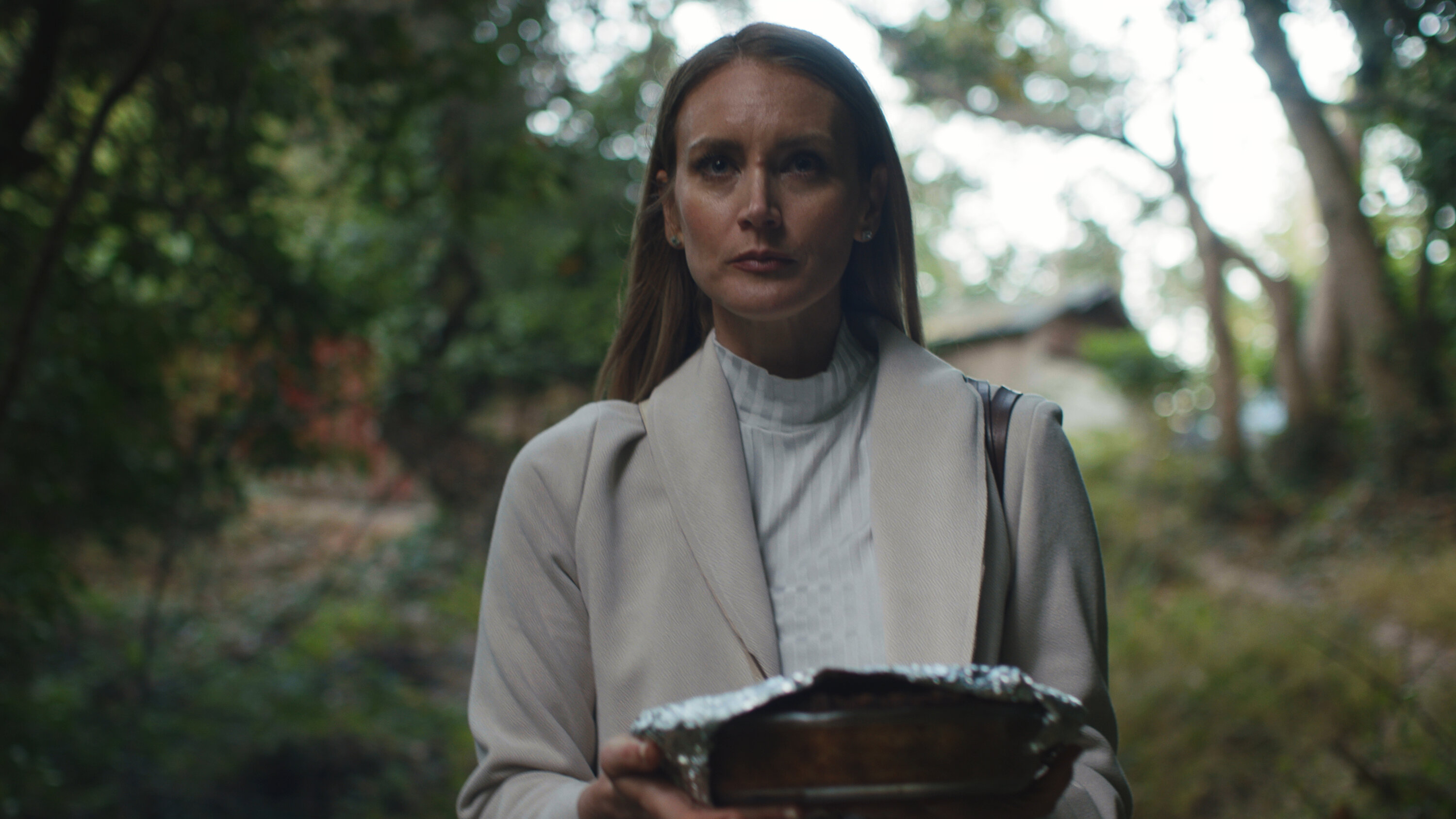
The first few minutes of the intriguing and effectively disturbing thriller “Soft & Quiet” set us up in a brilliantly deceptive fashion, as we meet a pleasant-looking elementary school teacher named Emily (Stefanie Estes). Emily is crying because of a home pregnancy test that turns out negative. Emily is accompanying one of her students as he waits for his mom after school. Emily tells the kid to stick up for himself, singling out the janitor whose mopping caused the kid to slip in the halls. Emily even lets the kid read an excerpt of a children’s book she’s writing. Emily seems great–and she’s on her way to some place with a foil-covered pie she made herself, to share with others at a meeting at a small local church.

Emily (and I’ll stop beginning sentences with “Emily”) meets with other seemingly well-adjusted women and presents her pie to share with them–and de Araujo stays on the homemade cherry pie as it is unwrapped to reveal that carved into the upper crust is…a swastika.

Yep, this is happening and it’s not a joke–it’s a meeting with a far-right women’s group called “Daughters of the Aryan Dynasty,” of which Emily is the leader. (Did I mention the school janitor Emily pointed the kid toward wasn’t white? The questionable look she gave upon passing them says something else now.) These white ladies sit in a circle and discuss what they hate about minorities, liberal agendas, BLM, and other things that irritate their shared bigotry. Just when you think you have an idea of who Emily is and who these people she’s meeting with are, the rug is pulled out from under us as we endure a terrifying 15-20 minute conversation about the things they cannot stand seeing in modern-day America–the things that are assisting people apart from themselves, they speak ill of, and in many different ways too. (Each member represents a type of white supremacy, like a legacy of the KKK and a racist boomer, among others.) They throw out racial, xenophobic, and homophobic slurs to each other like it’s no big deal. And it’s clear that Emily’s “children’s book” has a sinister agenda, revealing more about Emily than I’d like to know. (This woman is SCARY, the more layers are uncovered from her.)

And no, the church’s pastor is not welcoming of this group of monsters–in fact, when he gets Emily alone outside the room for a bit, his demands are clear: they all need to leave. Now. Like, right now.

We are 30 minutes into the film when Emily, hiding the confrontation from the others, adjourns the meeting early and invites everyone for a drink at her house. Well, great–now we can see what these terrible people are like in the real world they heavily criticized. I may foresee the very real possibility of them coming across that’s going to get them in a lot of trouble if they act the way they believe, but they do not, and so off we go. What follows is a truly disturbing portrait of neo-Nazi Karens putting themselves deeper and deeper into a horrid situation (that’s the turning point of the film) that doesn’t need to happen but they’ll let it happen because they are, to be frank, f***ing idiots who deserve every karmic thing she could possibly get coming to them.

As ecstatic as I would have been to actually see that karmic justice upon these awful human beings, I am thankful to see “Soft & Quiet” end on an ambiguous yet optimistic note that will all but assure us that nobody can get away with incidents like this. (And de Araujo, who wrote and directed, was inspired to make this film from the Central Park birdwatching incident–did that lady get away with that? NOPE.)

“Soft & Quiet” is set in real time, presenting an afternoon in the life of this horrible person that escalates into something that was definitely inevitable–the cinematographer, Greta Zozula (who also shot observant gems like “The Half of It” and “Never Goin’ Back”), stays with these people and shows us firsthand something more horrific and sadly real-world than your average horror film. (And even more impressive is its ability to look like one continuous shot, much like the Oscar-winning “Birdman” and Hitchcock’s “Rope.”)

The actors are so convincing that I may be terrified just watching another one of their performances–I may have to repeat the mantra, “They’re only actors,” to myself until I remember exactly that. That may sound like hyperbole, but that’s how credible and effective these actors are–not just Estes but also Olivia Luccardi as an overzealous punk radical and Jon Beavers as Emily’s pushover husband who is often the point of his own wife’s gay slurs. There’s also the aforementioned KKK-legacy who mentions her work in the neo-Nazi website stormfront: “The media loves to portray us as big scary monsters. Do I look that scary?”

Lady, you can look like the angel on top of a Christmas tree and I’ll still be terrified of you if you pull more stuff like this.
I Heard the Bells (2022)

8 Dec

Smith’s Verdict: ***1/2
Reviewed by Tanner Smith

For a debut feature film from a well-known theatre company (in this case, Sight & Sound Theatres, a faith-based company best known for huge-scale Bible-story productions), “I Heard the Bells” could have fooled me into thinking this was their fifth or tenth film. But seeing as how their stage productions are well-regarded for their outstanding (and expensive) resources, I shouldn’t be surprised by the grand theatrics thrown onto the screen (and countered toward the audience as a result–that’s a compliment, by the way) by director/co-writer Joshua Enck and his cast & crew (most of which have worked with Enck on many a S&S show).

Go figure, passionate artists put their heart and soul into a production and all the extra expenses go into something worthwhile. I’ll be intrigued to see other films from this same company.

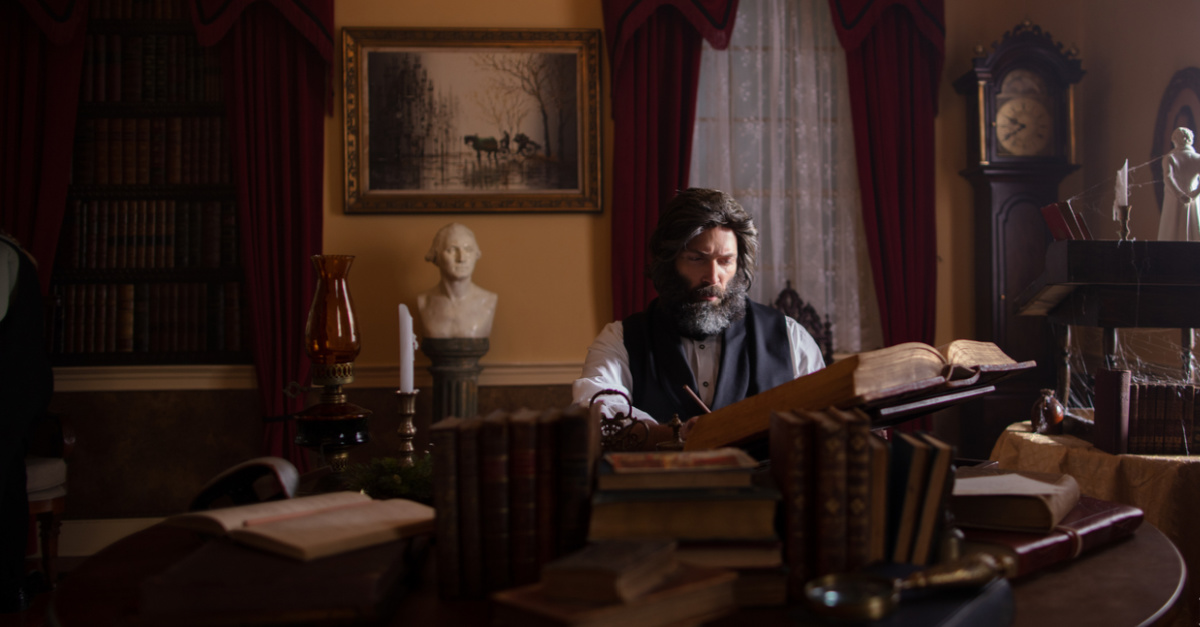
Set in the early 1860s (and let me take a moment to mention the production & costume design to show the era are beautifully detailed), “I Heard the Bells” tells the story of the origin of the well-known poem “Christmas Bells” by Henry Wadsworth Longfellow. It’s a story of a man who had his faith and his passion challenged before ultimately embracing both.

We begin with a warm, welcoming first act that may as well have been directed as part of a S&S stage show, as Longfellow (very well-played with vigor by Stephen Atherholt) celebrates Christmas 1860 with his loving wife Fanny (Rachel Day Hughes) and his five adoring children. After a wonderful moment of a family’s holiday gathering do we get something you don’t often succeed at achieving live on stage: a subtle change of emotions, well-suited for film and the silver screen, as we see the real human characters behind the theatrics. This is important to realize, especially when, as the story continues, we see this family is in for heavy emotional drama that threatens to tear them apart.

We learn that Longfellow has lost a daughter in the past (and will not allow his teenage son, Charley [Jonathan Blair], to enlist in the Union Army, lest he risk losing him too)–thus, we know this family has encountered tragedy already. How a family behaves in the face of tragedy is foundation for intriguing storytelling (and effective for parables to assist in real-life scenarios as well–most of them are based on real-life scenarios)–having not known the Longfellows’ story, I was all the more invested in how this family would adjust when something even more devastating occurs, thus causing Longfellow to lose all interest in writing, Charley to ultimately enlist and go to war, and then…well, I shouldn’t say any more, but seeing as this all results in an uplifting Christmas carol, you shouldn’t expect this film to end any way other than with a positive message.

And “I Heard the Bells” earns its resolution too. Because the filmmaking, acting, and time-period feel are all so effective and wonderfully-done, nothing feels too pat (which is often the downfall of many a faith-based production). This is a film made by people who are, yes, passionate about their beliefs but, most importantly, know how to tell a good story and keep an audience invested. They also give us a clear portrait of this poet, Henry Wadsworth Longfellow, and his complicated feelings towards his own work, despite the positive impact it has on people–we learn that he was one of the best-known abolitionists of the time, writing poems to help free slaves of the South, thus possibly igniting his son’s drive in fighting for a cause; but we also get the feeling that he wishes he could do more. As he’ll come to learn, the right amount of carefully chosen words can make a great (and positive) impact on people.

(We also see more of that positive impact in a comedic moment late in the film, when Charley recites a poem to his fellow soldiers and a local bumpkin who would like to read more poetry.)

The cinematography from Steve Buckwalter is outstanding as well–an opening tracking one-shot that enters from the sky into a hole in the roof of a dilapidated church (where the steeple should be) where we see a dramatic image that speaks volumes for what we’re about to see set it up for me that this is a film made by people with all the resources and all the money (and they even built that church specifically for the film, from scratch!) put into something ultimately worth our viewing pleasure.

“We need poets to change the world,” Fanny tells his beloved husband Henry. “Not politicians.” That line of dialogue is essentially the thesis for the entire film. And thankfully, there’s no political agenda to tell us what we should feel in “I Heard the Bells”–simply a poetic one that shows us what we could. “I Heard the Bells” delivers the meaning of Christmas to those who might lose sight of it, and it’s a moving film that deeply reminded me of it.

Catherine Called Birdy (2022)

8 Dec

Smith’s Verdict: ***1/2
Reviewed by Tanner Smith

Here we have a coming-of-age story set in the Middle Ages. And why not? I don’t see enough such stories from that particular time period.

“Catherine Called Birdy,” based on the young-adult novel by Karen Cushman, is written and directed by Lena Dunham. 12 years ago, Lena Dunham presented a very strong, funny, endearing filmmaking effort in “Tiny Furniture”–12 years later, she had not one but TWO directorial follow-up feature films: “Sharp Stick” and “Catherine Called Birdy.”

It’s funny how “Sharp Stick” (a small, personal story about a young woman exploring sexuality) seemed right at home in the “Girls” star’s wheelhouse and yet felt so confused and unpleasant…and yet “Catherine Called Birdy,” which is set in the early 1200s and features a female protagonist younger than her usual demographic, is as intelligent as it is charming.

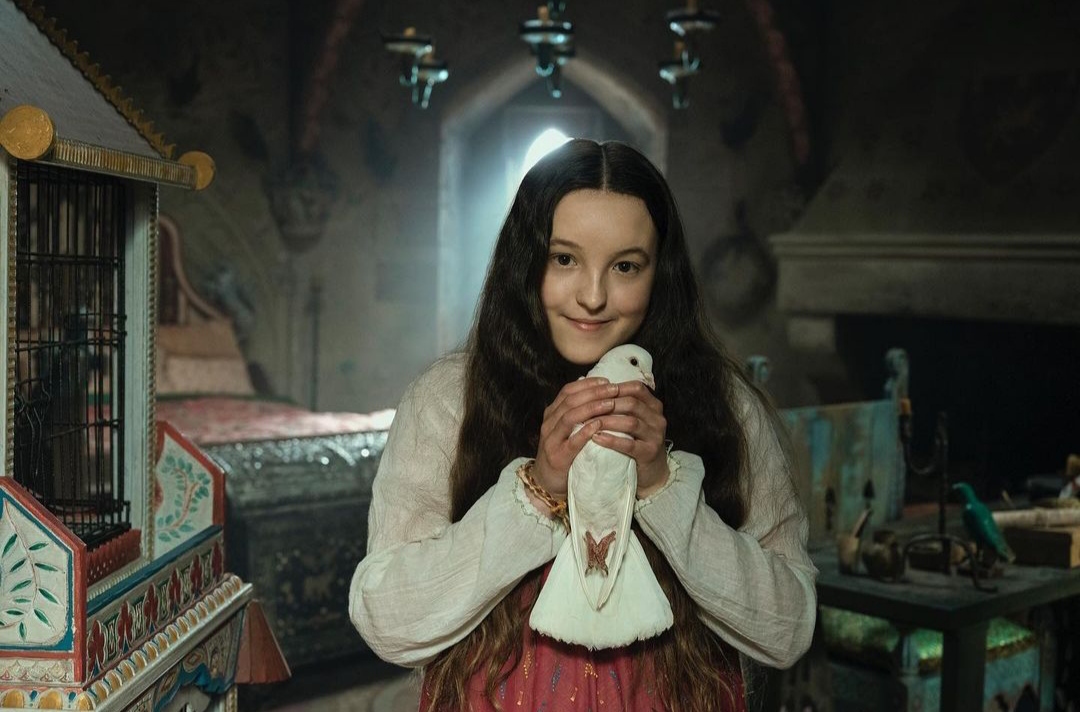
Bella Ramsey shines as 14-year-old Lady Catherine aka Birdy who has just become a woman, which is great news to her father (Andrew Scott) because now he can marry her off and repay his debts. (An example of the comic writing at hand: the father blames his debt on his wife [Billie Piper] for her expensive tastes.) Birdy of course has no interest in getting married and leaving childhood behind–but as she learns throughout the story, it’s not so easy making her way through a world that hardly seems interested in what women want to do.

Birdy knows what she doesn’t want, but she’s not entirely sure what she does want–thankfully, she’s not so precocious that she pretends to know the difference; she is still very young (and also accustomed to an aristocratic environment) and has a lot to learn about herself and the world around her…like most tween girls in the best modern-day coming-of-age films.

There’s a lot of comedy in this story, such as the witty voiceover narrations of Birdy as she continually writes in a diary and the outrageous antics Birdy finds herself succumbing to in an attempt to hold onto her individuality. And there are also some very on-the-nose pop songs on the soundtrack (including “My Boyfriend’s Back” and “Girl on Fire”) that simultaneously cracked me up and made me wonder if I was watching a lost episode of “Drunk History” (or the movie “A Knight’s Tale”).

But the spirit of the setting rings true with authenticity and the characters are written and portrayed with such heart that it’s wonderful to keep up with them–unlike “The Little Hours” which comprised of one joke (Middle-Agey nuns spewing modern-day profanities) or “The Favourite” which tried almost too hard to be edgy and provocative, “Catherine Called Birdy” is crowd-pleasing while containing a genuine affection for its setting and characters.

“Catherine Called Birdy” not only reaches the heights of “Tiny Furniture,” but it may even surpass it as Lena Dunham’s best work to date. It’s truly wonderful.

“Catherine Called Birdy” is available on Amazon Prime.

Bros (2022)

3 Dec

Smith’s Verdict: ***1/2
Reviewed by Tanner Smith

“Bros” is the latest from Apatow Productions. It’s a good thing I’m a Judd Apatow fan or I wouldn’t see this film based on the trailer. Why are comedy trailers so bad?

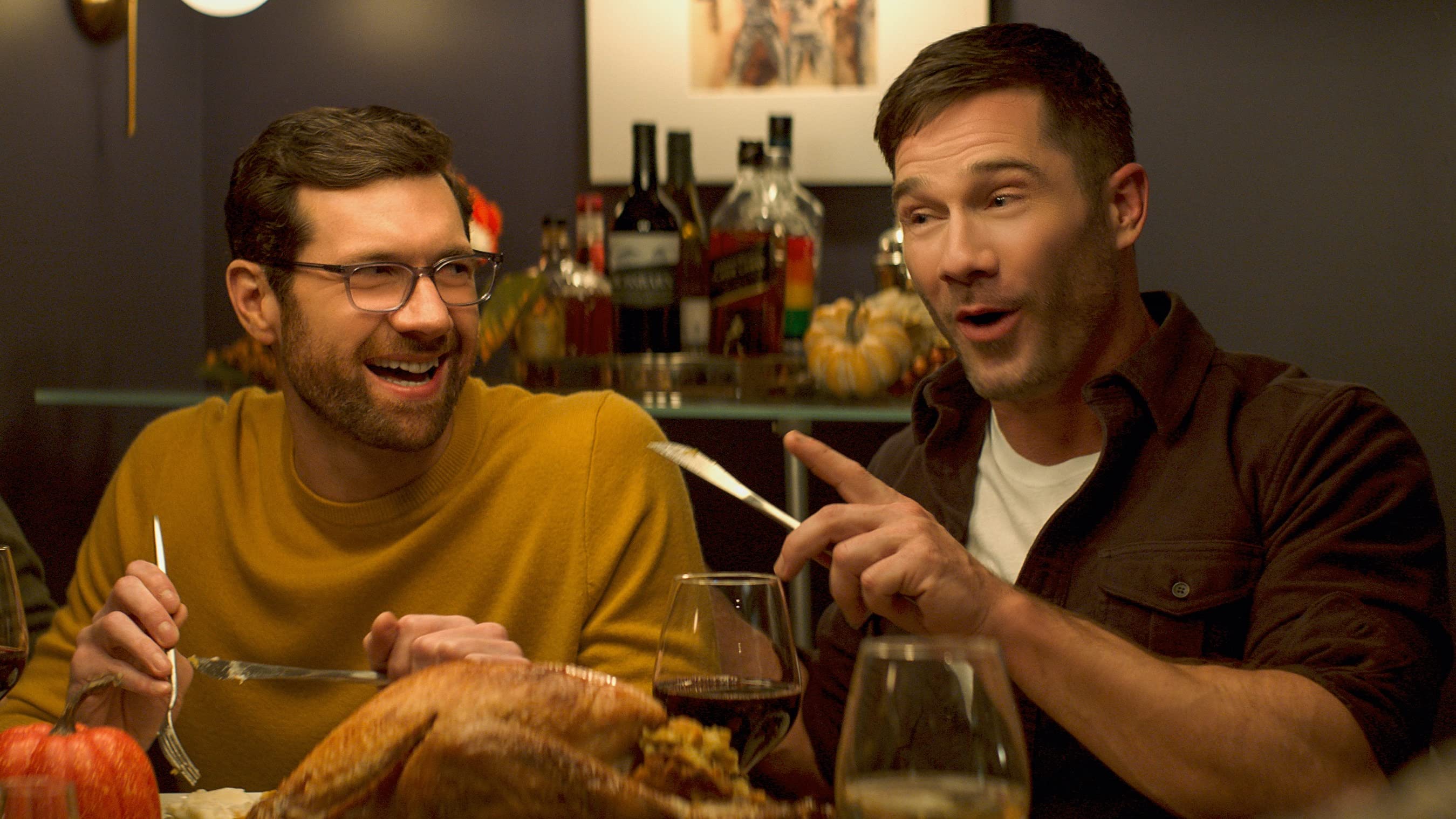
Comedian Billy Eichner stars a gay New York podcaster named Bobby Lieber. (His podcast is called the 11th Brick, as he’s a cis gay white man and he figures a cis gay white man was the 11th person to throw a brick at Stonewall.) He’s 40, a bachelor, constantly hooks up with Grindr users, super intense, defensive, and self-aware to a fault–and he’s never afraid to speak his angry opinion no matter who tells him he should shut up and be respectful of other people. He has a bad habit of dominating the room without reading the room.

Let’s just call Bobby what he is: an a**hole.

But just as Amy was a little much to handle in “Trainwreck” (an Apatow romcom that gets better each time I see it), thankfully Bobby is surrounded by colorful supporting players who are there to either argue with him or bring him down from his arrogant high. (More on them in a bit.) And he also has a winning, funny, and charming romantic interest to help his character grow: a handsome “bro/jock” lawyer named Aaron. At first he’s ready to shove him aside as “boring” but he quickly learns there’s more to him than steroids and baseball caps. So, they start going out, they spend the night together, they lower their defenses a bit, and they sort of start a relationship. (I say “sort of” because neither of them wants to define what this is just yet, especially since Bobby has problems with himself and Aaron has commitment issues.)

Will they? Won’t they?

Well, yeah, of course they will, I already said it’s a romcom, and it follows certain formulas in that regard–but it’s more about how/why than about what.

Back to the supporting cast. As is typical of a film produced by mainstream comedy maestro Judd Apatow, there’s a lot of memorable co-stars on display here. Taking a good chunk of screen time is a terrific ensemble of actors (Ts Madison, Jim Rash, Eve Lindley, Miss Lawrence and Dot-Marie Jones) playing the board members of an up-and-coming museum celebrating LGBTQ+ history. But there are other actors in smaller roles that have time to shine too–if only I could remember the actor/character of Aaron’s brother, because he was freaking hilarious in one scene near the end! (Seriously, I want to see a movie about THAT guy next!)

Aaron is played terrifically by Luke Macfarlane who is as funny as he is likable. I didn’t know who he was before this film, but after Googling him, he’s apparently known for Hallmark movies… There is a running joke in this film about “Hallheart” holiday movies that are playing more to the LGBTQ+ crowd; the joke was already funny, but knowing that he’s a Hallmark actor makes it even funnier!

And “Bros,” directed by Nicolas Stoller (“Forgetting Sarah Marshall”), really is funny. Often times, it’s hilarious. My favorite jokes include a tutorial on “listening,” a “Night at the Museum” reference that pays off wonderfully, and a cameo by Debra Messing that’s just…I won’t give it away here, but I’m cracking up just thinking about it again!

And there’s plenty more like that in the film. (There’s also a funny yet also heartwarming homage to Garth Brooks [Aaron’s favorite musician] late in the film.) But there’s also room for drama as well, such as when Eichner (who also co-wrote the script with Stoller) delivers a heartfelt monologue about how people have told him to hold back on his homosexuality all his life. This not only gives insight as to who Bobby is but also how he became who he is–and in a brilliant masterstroke of writing, there’s another monologue he delivers after being told (by Aaron) to “tone it down.” This one is meant more for laughs, but the context makes for a more heartbreaking moment.

Yet, even when Bobby is at his worst, he can still show us who he is at his best. And that plus the laughs and love throughout the screenplay and characters is why “Bros” is worth recommending.

Also, Bobby’s right–love is NOT love (to mock the ever-popular “love is love” slogan); it’s more complicated than that.

God Forbid: The Sex Scandal that Brought Down a Dynasty (2022)

3 Dec

Smith’s Verdict: ***1/2
Reviewed by Tanner Smith

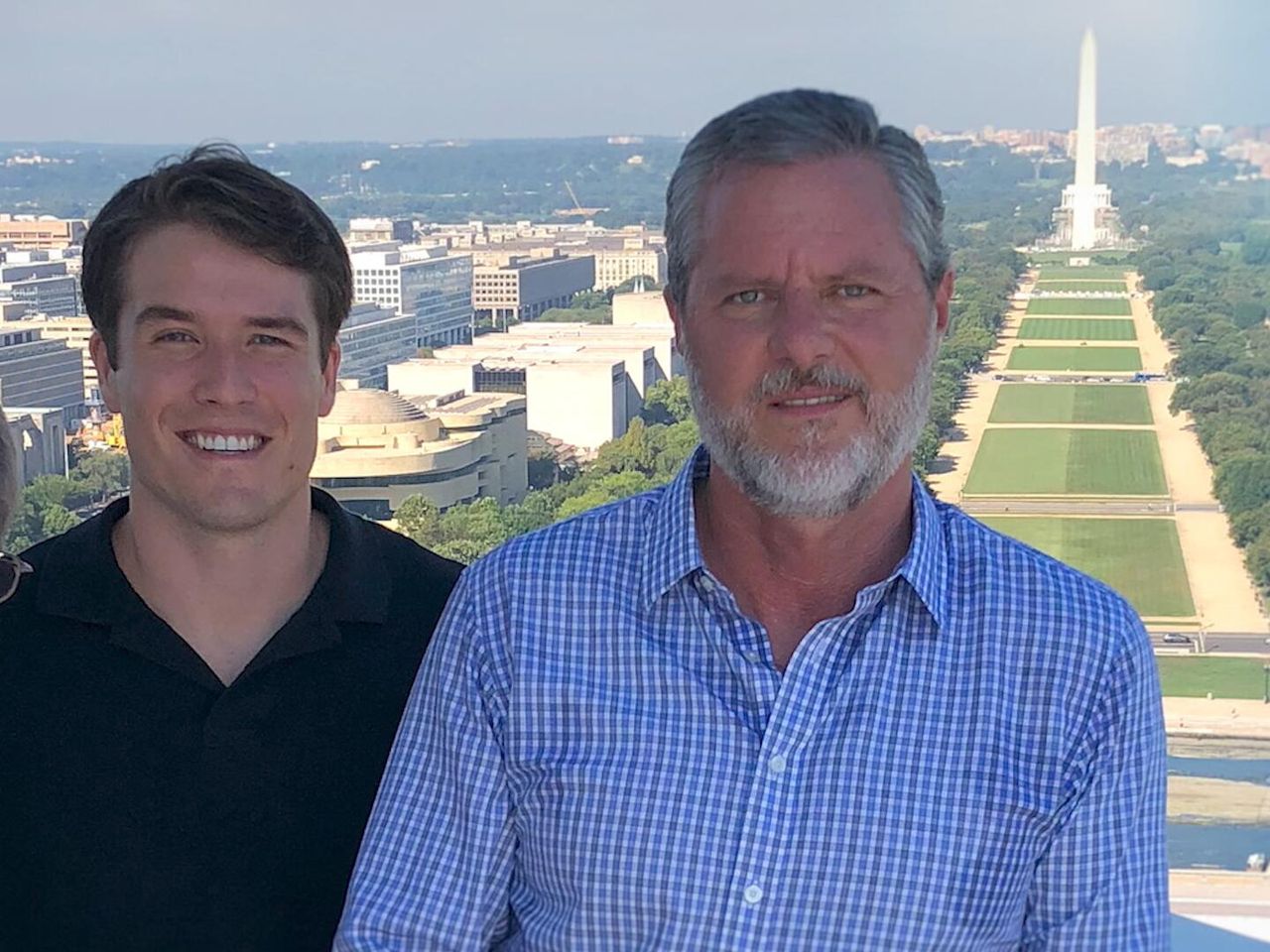
“God Forbid: The Sex Scandal that Brought Down a Dynasty.” Some of you probably already know what scandal the subtitle refers to–for those who don’t, it’s the scandal that destroyed Liberty University president Jerry Falwell Jr.’s reputation as the most powerful evangelical in America.

This guy was so respected, so loved, so revered as this model Christian with the perfect family and a knack for big business. Well, it turned out he and his wife Becki were the ultimate hypocrites as they partook in an affair with a young man named Giancarlo Granda who occasionally would get with Becki while Jerry…watched…actively… This went on for a long time until Giancarlo decided to come forward with it, thus resulting in the downfall of the Falwell dynasty.

But there’s a lot more to the story in this very entertaining documentary “God Forbid,” in which Giancarlo sits down and tells all. Using clever editing, slickly executed reenactment storytelling, and many other nicely handled visual techniques, this is the most intriguing documentary I’ve seen all year. (Even though I should’ve been tired watching it late last night, my attention was focused throughout and I never fell asleep.)

I haven’t seen this filmmaker Billy Corben’s previous docs, like “Cocaine Cowboys” or “537 Votes”–but after seeing this great flick, I’m definitely curious to see what else he has to offer.

Giancarlo says at the start of the film: “If I would have known that accepting this woman’s invitation to go back to her hotel room would have led to a scandal involving the president of the largest Christian university in the world and the president of the United States, I would have walked away and just enjoyed my private life.” He means it too. He was a 20-year-old Miami pool boy, he was seduced by a “cougar,” he saw an opportunity and took it, and he didn’t even know who these people were until he told his older sister about them shortly after. He still went along with them because Becki treated him like a secret boyfriend (and texted him pretty much every day) and Jerry kept providing him with amazing business opportunities (most likely to keep him quiet about the affair).

How could he have known that this bizarre threesome would go on for years or that he couldn’t get out of it because they would guilt him into staying in? These people, who called themselves “moral Christians,” manipulated this poor kid–even when things turned sadder, they continued with it.

Well, enough would be enough sooner or later–and the things Giancarlo Granda knew about the Falwells would bring them down. And this film portrays that beautifully.

“God Forbid” doesn’t stop there either. It’ll take its time to go back to the reign of Jerry Falwell Sr., the extreme conservative who founded LU and the Moral Majority. Then it’ll take more time to show the toxicity brought on by the Falwells’ endorsement of a certain former POTUS. (This went on a bit too long, in my opinion–it just reinforces what most of us already knew.) Then, after all of this, it ends with the question of whether evangelical extremists are the cause of many problems in this country–unlike many big-picture messages I see in many docs, this one doesn’t even seem like a stretch.

Mostly though, “God Forbid” is flat-out entertaining–and it’s as riveting as it is disturbing.

Halloween Ends (2022)

14 Oct

Smith’s Verdict: ***1/2

Reviewed by Tanner Smith

Before you read my thoughts about “Halloween Ends,” you should know up front that I was one of the few that liked “Halloween Kills.”

For those of you still reading, I’ll just state my initial thoughts up front: I kinda loved “Halloween Ends”… That being said, I can see it being just as divisive as “Halloween Kills.” Director David Gordon Green and co-writer Danny McBride have taken a big risk with the final installment of this new “legacy-quel” trilogy in the Halloween franchise, and it may turn diehard fans off.

Well, it didn’t turn me off. I respect the risk, I admire the results, and I’ll say it again, I kinda loved this movie.

You know how people dissed “Halloween III: Season of the Witch” because it was so different? Well, that’s what may happen with “Halloween Ends.” And I don’t think Green & McBride cared that much–hell, the opening-credits font is the same as “Halloween III!” They know they’re doing something different, and they say you can either stay with it or get off the ride.

Laurie Strode is back and played by the ever-awesome Jamie Lee Curtis (who, along with John Carpenter himself, has championed Green for his hard work and risk-taking in this trilogy)–and thankfully, she has more to do in this film than the previous one. But this new Halloween film isn’t merely about how the killer Michael Myers affected her life–it’s about how he (or “it,” seeing as Michael is pretty much evil in the shape of a man) affected the town of Haddonfield, Illinois. This was touched upon in “Halloween Kills” in how mob mentality can do some damage. But in “Halloween Ends,” it’s four years after the night he returned and killed more people, and because Michael Myers has never been caught, most people in Haddonfield haven’t moved on and don’t know how to deal with it. (Laurie, however, has found some closure and a bit of normalcy–hell, she’s even decorating her house for Halloween night!) Some people blame Laurie for provoking Michael while most people look for a new monster to hate and fear. That’s where Corey Cunningham comes in…

Corey (Rohan Campbell) is a young man who is bullied and ostracized by the locals after he accidentally killed a kid he was babysitting. He has a chance at something hopeful with Laurie’s granddaughter Allyson (Andi Matichak), who takes an interest in him. But the town won’t let the past go and keep punishing this guy for what was an accident–a bizarre and VERY unpleasant accident, but still an accident.

His bullies even include a group of high-school marching-band kids who see no repercussions from bullying adults. I mean, it’s not like shoving an issue-filled guy off a bridge is gonna do some damage…IS IT???

I won’t give away what happens after that (and it happens about 30 minutes in), but let’s just say it causes a strange effect in Corey for the rest of the movie.

This is where the film may divide audiences–“Halloween Ends” includes a new serial-killer origin story while Michael Myers sort of hangs out in the background, occasionally getting in on the carnage himself, while we see the growth and horrific progression of a new killer to fear in Haddonfield.

There are no long speeches like in “Halloween Kills,” but there are telling lines of what causes evil to erupt, how do people handle it, are people to blame for what happens, etc. Some of it works, the rest are kinda hokey–it’s not subtle, but it’s not overly drawn out either. (Oh, and no one says “EVIL DIES TONIGHT”–although, “LOVE LIES TODAY” is seen spray-painted.)

And I got into what happens with Corey–it gave me a lot to think about, it kept me intrigued, the guy playing him is a good actor, and most importantly, I admired it because it was happening in a “Halloween” film that was actually doing something different. It felt very fresh.

Although…I do wish they did something more interesting with Allyson. They started to, with her now being a nurse and hanging out with Corey and dealing with people constantly bringing up the murders she survived four years prior (but her parents didn’t). But then, after that, I feel like they took the easy way out in dealing with her character’s progression–that’s a shame, because I actually started to care about her. (Yeah, sorry, but Allyson was the character in this new “Halloween” trilogy that I was least interested in.)

“Halloween Ends” is ultimately a character-based horror film that shows people dealing with some heavy sh*t. This is a very David Gordon Green film in that sense (it even has moments that reminded me of Green’s drama “Snow Angels”)–I feel like this is the “Halloween” film he wanted to make. There’s a lot of dreariness and loneliness here, but there is some hope at the surface–it’s just ever a question of who deserves to hold on to that hope.

Oh, and we DO get the Laurie vs. Michael battle we’ve been waiting for and it is ultimately satisfying–Green is trusting that you’ll stay with the film to get to that point, which is another risk I applaud.

I’ll say it again–I kinda loved “Halloween Ends.” And I like what was done with this trilogy.

Alan Jones Part One (2022)

14 Oct

Smith’s Verdict: ***1/2

Reviewed by Tanner Smith

There are a lot of crime thrillers out there. They’re practically a dime a dozen. So many of them are interchangeable. We get the mood; it’s bleak. We get the scenario; someone is missing (usually a kid). We get the characters; they have personal conflicts. We get everything.

It’s gonna take a special vision to get me to care about a new crime thriller–and maybe it’s because I came into “Alan Jones Part One” with a more open mind, but I did care about the vision brought upon this one from writer/director Baron Redman. It reminds me of why people make these films–to delve deep into the knowledge or lack thereof of why things like this happen in the world. And with stunningly detailed cinematography, a thrilling mystery, and a couple of interesting characters to root for, Redman’s feature film is intriguing and a standout.

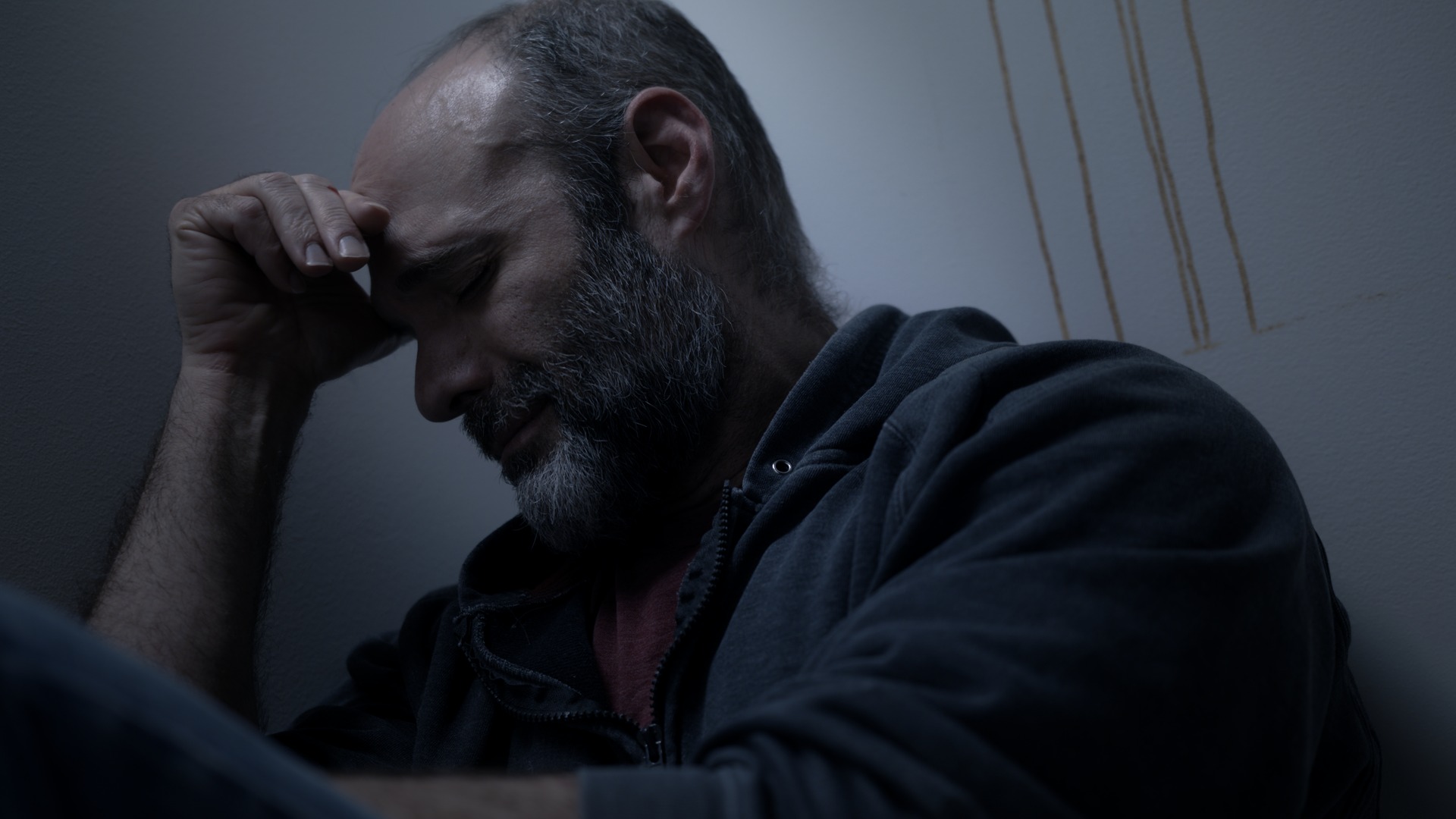
Kurt Hanover stars in a superb leading performance as Henry Allen, an embittered private detective with a tragic past and a rough edge. We already know this guy’s got issues. When we first meet him, it’s in a dream sequence where his hands are stained with blood (and an avalanche threatens to engulf him in the same dream); next time we meet him (in reality), he’s in a bar meeting with police captain Charles Hollis (Greg Lane), who wonders why they didn’t meet at his apartment–his answer: “I ran out of scotch.” Following that, we catch on quickly that a horrific occurrence drove him to leave the force, be a private detective, and drink.

In a refreshing change of pace from most character-based crime thrillers, we also learn just as quickly that Hollis feels guilt for it seeing as it was his case. This type of character-dilemma in this type of dramatic-thriller has been done before, but it’s this kind of pacing that keeps it interesting.

We get even more of a rooting interest in FBI Special Agent Valerie Hall (Wendy Morris). She’s a Kansas City agent being called to handle a missing-child case in the same Oregon town Allen lives in. (Allen is also working the same case on his own.) This is complicated for her as she doesn’t normally do missing-person cases, she and Allen used to be a couple, and their own child disappeared many years prior. But come to Oregon, she does, and she begins by questioning the missing kid’s parents (Stefanie Stevens and Shawn Eric Jones)–they of course question why the FBI is involved here, so we don’t have to. (I joke, but this scene is pretty strong–the writing is great and the acting is on-point, especially from Jones & Stevens’ confusion and uncertainty to Morris’ calm, collected manner of questioning.)

Could the child have run away? Not according to Hall’s instincts…

Soon enough, Allen and Hall are on the case and in each other’s business, as more evidence piles up as to what could’ve happened and more traumatic details are surfaced and resurfaced. This is where “Alan Jones Part One” excels at the most: the characters and the actors playing them. Hanover, in particular, has so much to tackle in his performance as a tortured man trying to let some things go and others linger–he’s up to the challenge.

But the filmmaking at hand can’t escape praise because this is some truly sharp direction provided by Baron Redman, who also wrote the film (he actually began it as a web series before he decided it worked better as a film). He helps keep the tension heavy and the choices unpredictable. Why? Because he’s seen one too many crime thrillers too and thus knows how to make an interesting one. (He also provided the film’s cinematography, which as I said before is absolutely outstanding.)

Other characters, including suspects, give their actors time to shine. (These include Jack McCord as a neighbor whose testimony to Allen may or may not be reliable and Naomi Chaffee as a troubled woman who has an interesting encounter with Hall followed by an emotional breakdown during interrogation.) But who is the titular character of Alan Jones (played by Dan Daly)? Well…that’s not really for me to disclose in a spoiler-free review.

“Alan Jones Part One” is an exceptional crime thriller. The characters are compelling and engaging, the mystery is involving, the filmmaking is terrific, and it’s over in less than an hour-and-a-half. And again, I did care. How much did I care? This is only “Part One” and I’d be interested in seeing a “Part Two” come to light.

“Alan Jones Part One” is available on-demand and you can find out how you can help bring “Alan Jones Part Two” to life by checking out this crowdfunder.

Cha Cha Real Smooth (2022)

28 Jun

Smith’s Verdict: ***1/2

Reviewed by Tanner Smith

“Cha Cha Real Smooth” is the sophomore effort from actor-filmmaker-auteur Cooper Raiff, whose debut feature, S#!%house, is one of my favorite films of the 2020s so far.

In my review of “S#!%house,” I referred to Cooper Raiff, who is now in his mid-20s, as “the real deal”–his work feels so sincere and unpretentious; it even makes the works of other talented auteurs like Zach Braff, Lena Dunham, and Josh Radnor feel forced by comparison.

Now, with “Cha Cha Real Smooth” (does he pick these titles himself?), Raiff maintains the same sincere, unpretentious charm for a more mainstream-friendly (and perhaps a little predictable at times) yet still delightfully offbeat and smart new film.

In addition to being a good filmmaker, Cooper Raiff is also a good actor. He has an awkward charm to match his handsomeness with an eccentric, easygoing attitude.

“Cha Cha Real Smooth” (and yes, “Cha Cha Slide” by DJ Casper does play once in this movie) stars Raiff as a recent college graduate named Andrew, who has no idea what he wants to do with his life, like many people fresh out of college. His girlfriend left for Barcelona (and most likely is never going to see him again), he works a boring job at a “meat-stick” fast-food joint, and he lives at home with his puberty-stricken kid brother (Evan Assante, very good), bipolar mother (Leslie Mann), and stepdad Greg (Brad Garrett), who is so dismissed by Andrew that he even refers to him as “Stepdad Greg.” (Even David, the kid brother, has to tell him to lay off because their mother loves him.)

We’re not sure what dreams Andrew had as a kid–I’m not sure Andrew remembers them either. We do get a prologue in which we see Andrew as a kid pining over an older woman at a dance party and experiencing his first heartbreak upon expressing his feelings toward her. (An awesome tidbit: said-“older woman” is played by Kelly O’Sullivan, who wrote and starred in “Saint Frances,” another underrated indie released in 2020, same as “S#!%house.”) Now, Andrew is 22, graduated, aimless…and now pines over another older woman he meets at another dance party. (Guess he has a type.)

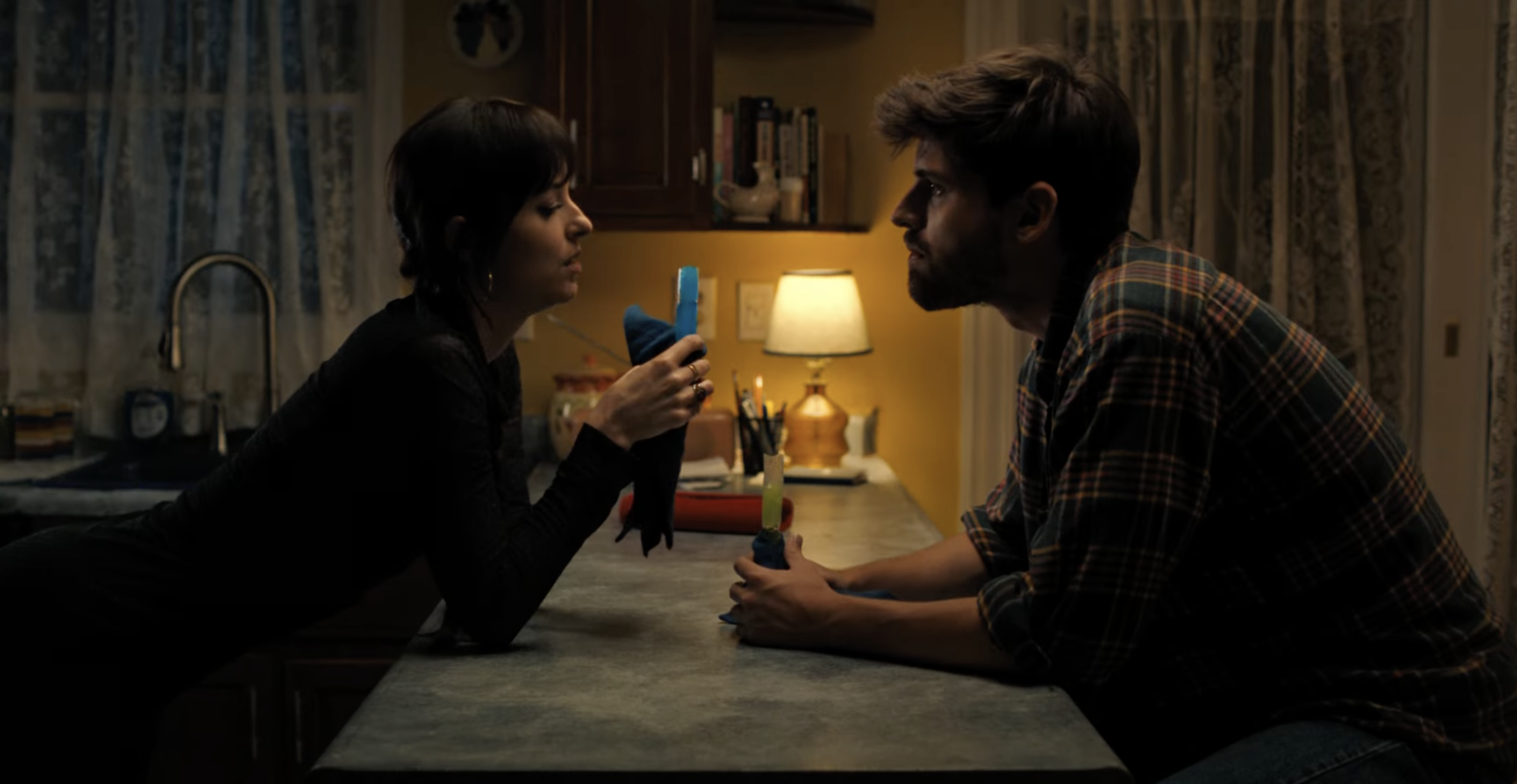
How did this happen? Andrew chaperones David at a neighborhood Bat Mitzvah party, where Andrew gets David’s shy classmates on the dance floor (which then leads him to head the dances of other parties in the neighborhood)–this includes Lola (Vanessa Burghardt), a shy, autistic girl with large headphones. (How Andrew gets Lola to dance is both funny and sweet.) Andrew also meets Lola’s mother Domino (Dakota Johnson), who takes a liking to him the moment he talks her daughter into dancing. She even asks Andrew to babysit Lola every now and then, which then leads to Andrew and Domino getting to know each other better and grow closer together…

Whether or not this develops into a May-December romance, I’ll leave for you to discover. You may even be able to see where it goes, but that’s not a bad thing–a film isn’t about what it’s about but more about how it goes about it, to paraphrase Roger Ebert. What drives the narrative forward is the relationships Andrew shares with Domino, Lola, David, his parents, and others. (Side-note: I’m very thankful that the addition of the character of Domino’s attorney fiancé Joseph [Raul Costillo] didn’t go the way I was afraid it would go.)

And what also aids “Cha Cha Real Smooth,” as with “S#!%house,” is the way Raiff makes something fresh out of familiar cliches while embracing them at the same time. (I’m telling you, Cooper Raiff is a remarkably great talent.) For that matter, Raiff also isn’t afraid to make his own character look downright pathetic and idiotic at times–as with his character in “S#!%house,” Raiff’s Andrew has his own admirable qualities and empathetic, but he messes up, just as we all do; it helps him grow on this coming-of-age journey.

Dakota Johnson is wonderful as Domino. I’ve liked her in movies like “The Peanut Butter Falcon” and “Our Friend,” but here, she gives what is probably her best work as a sad, lonely woman who loves and cares for her daughter, loves her fiancé even when he’s away for work too often, feels a connection with this 22-year-old man but doesn’t always know how to react upon it, and also feels as alone as Andrew at times. There are many layers to her character that help make this my favorite performance of Dakota Johnson’s by far.

Everyone in this film does fine work–Raiff, Johnson, Mann, Garrett, the likable younger actors, Costillo, and also Odeya Rush (in a small but still nicely-done role as Andrew’s friend-with-benefits). But It’s Dakota Johnson and Cooper Raiff who deserve credit for giving us a charming feel-good movie that’s as important as it is charming.

Available on Apple TV+.

Haunt (2019)

16 Apr

Smith’s Verdict: ***1/2

Reviewed by Tanner Smith

A group of young people go out partying on Halloween night and come across a secluded haunted-house attraction where the psychological scares are evened out by real sadistic masked killers that threaten to pick them off one by one…

That is the intriguing premise of “Haunt,” the 2019 horror-thriller film from writing-directing duo Scott Beck & Bryan Woods, best known for writing the original draft of the groundbreaking horror success “A Quiet Place” (before director/co-writer John Krasinski took the reins). “Haunt” is more of a slasher horror film than the former film, but while many people will say they’re tired of the “slasher” subgenre because there isn’t much that’s added to it these days, those people tend to forget there are still new ways to make it good these days.

“Haunt” feels more like a “Saw” movie than the more tonally melancholy “A Quiet Place,” as the central characters move from one deadly contraption to the next in this claustrophobic literal house of horrors (and this isn’t necessarily a spoiler, but some of them don’t survive the traps). Most of the action takes place in this danger house, making “Haunt” worth watching again if only just to appreciate the production design at hand. The traps are elaborately staged and…well, let’s just say the killers don’t mess around. (Actually, they do play with their prey’s heads a little bit–THEN they go for the kills. They also sport neat, scary masks and heavy cloaks, like a club or a cult–who these people are is never explained, but it’s intriguing to think about what they’re all about.)

While the characters aren’t much to write home about, they are likable and played by good actors, including Andrew Caldwell as the comic-relief, Lauryn McClain as the sensible one, and Shazi Raja and Schuyler Helford as their partying friends. Will Brittain, an actor I liked in films such as “A Teacher” and “Everybody Wants Some!!,” does solid work as Nathan, a sensitive-jock type who makes friends easily and even has some funny moments during this horrific nightmare as well. But it’s Katie Stevens who shines as the would-be final-girl named Harper, who is suffering quietly from an abusive relationship with an alcoholic boyfriend (Samuel Hunt) and also has had her own traumatic experiences with a haunted house in the past. (Also, at one point, she refers to one of the mysterious masked figures by her boyfriend’s name, which makes room for thought-provoking angles.) After watching her go through some of the most torturous, injury-inducing antics in this place, you’ll want to applaud her for surviving even longer and root for her even harder to see the end credits.

Speaking of which, stay through the end credits–not because there’s an after-credits surprise (there isn’t), but because the song that plays over the crawl is musician Lissie’s acoustic cover of Rob Zombie’s “Dragula”–and it’s surprisingly (forgive the pun) haunting. I didn’t know I needed that in my life, but here we are.

Just about everything goes wrong from the moment the characters turn away their cellphones, sign consent forms, and are warned not to make physical contact with the “characters” in the haunted house–and while they do make your typical horror-movie mistakes (like splitting up when they shouldn’t), I’m not groaning so much as I’m having fun with the skilled mindset of Woods & Beck, who themselves embrace and have fun with cliches and conventions.

And the ending, which I won’t give away, is ultimately satisfying (and earns the aforementioned “Dragula” cover over the credits).

The Fallout (2022)

27 Mar

Smith’s Verdict: ***1/2

Reviewed by Tanner Smith

Not long ago, I praised a brilliant film called Mass, about the aftermath of a school massacre–and now here’s “The Fallout,” about roughly the same subject. Like “Mass,” “The Fallout” doesn’t focus on the incident but on the effects it has on the survivors. We don’t even see the killer or the spree (or even the victims, for that matter)–we just hear the horrifying gunshot sounds from inside the girl’s restroom, where two teenage girls, upon hearing the first couple pops, hide in one of the stalls while shaking in fear. It’s a brilliantly chilling sequence, being with these characters (plus a boy who rushes in and hides with them) who don’t know what’s happening outside or if this will be their last moment alive.
From there, we cut immediately to the aftermath, and that’s what the film focuses on–the days and weeks of these young people going through several different emotions: guilt, anger, emptiness, confusion, among others.

Also like “Mass,” “The Fallout” is the directorial/screenwriting debut for an actor-turned-filmmaker–in this case, it’s Megan Park, probably best known for “The Secret Life of an American Teenager,” with Shailene Woodley…..side-note: my mind is blown that Shailene Woodley is old enough to play a therapist in this movie–was “The Spectacular Now” really 9 years ago?? Boy I’m getting old!

Where was I? Oh, right–Megan Park. She does great work here. She knows to let a scene play; she communicates with her actors; she knows when to bring in levity; and it’s clear she has a vision here. I look forward to seeing what she does next.

The actors are great too, all convincing and effective. Jenny Ortega is terrific in the lead role of Vada, who copes with her emotions not as easily as she might think. Maddie Ziegler is just as good as Mia, who is an influencer and what some may see as a social butterfly but is really just as lost and confused as Vada and many other classmates. (The more she does films like this, the more likely people are to forget about “Music.”) Also good are Niles Fitch, the boy who copes with the loss of his brother (who was killed in the incident), and Will Ropp, Vada’s best friend who can’t seem to relate to her at this point due to his own coping mechanisms.

“The Fallout” ends on an ambiguous and unsettling note. I think Vada will be OK…but it’s going to take a lot more than one movie to mend what’s been broken.

“The Fallout” is available to stream on HBO Max.