Archive | Three-and-a-Half Stars ***1/2 RSS feed for this section

Lights Out (2016)

15 Aug

lights-out-slice1-600x200

Smith’s Verdict: ***1/2

Reviewed by Tanner Smith

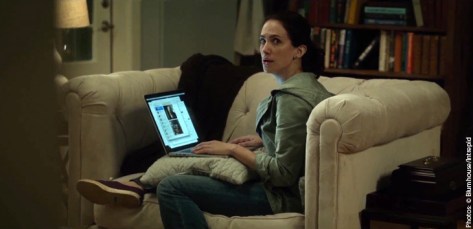
If you’re in the light, you’re safe. But when the lights are off, you’re doomed. It’s a gimmick, of course; one that can generate some good scares in a horror film. But if that were all “Lights Out” had to offer, the gimmick would probably wear out quickly. Thankfully, while this is a very effective scare-fest with neat ways of showing both how easy and how hard it is to escape the mysterious entity that lurks in the dark, there’s more to the film than just scares. Surprisingly, it has a family-drama story to tell also, and Swedish director David F. Sandberg (making his feature debut based on his popular short film of the same name) does a good balancing out the family dilemmas and the supernatural terror.

“Lights Out” lets us know right away what kind of terror we’re up against, in a chilling prologue in which the husband (Billy Burke) of a mentally unstable woman (Maria Bello) falls victim to some form of creature or other, which kills him in the dark, as it can’t come into the light. His wife, now a widow, apparently knows this thing and often talks to it in the shadows, which seriously unnerves her pre-teenage stepson, Martin (Gabriel Bateman). (By the way, that’s a great twist to the “imaginary friend” horror-movie trope: instead of the child befriending a supernatural threat, it’s the child’s parent this time.) Too scared to sleep at night, Martin approaches his grown-up stepsister, Rebecca (Teresa Palmer), for help. Rebecca doesn’t feel fit to handle responsibility as a surrogate parent and she doesn’t know what to do about her mother’s erratic behavior which she’s been trying to avoid since she left home, but she knows she has to try and do something. Then she and her boyfriend, Bret (Alexander DiPersia), encounter the shadow figure and find themselves not only fighting for the wellbeing of Rebecca’s mother and Martin but also their own lives.

2016 has been a pretty good year for smart horror so far. From Netflix treats such as “Stranger Things” and “Hush” to sleeper hits such as “10 Cloverfield Lane” and “The Witch,” not to mention the exceptional sequel “The Conjuring 2,” we’ve had smart filmmakers tell us gripping, well-written stories with well-established characters to go along with well-executed terror. “Lights Out” is no exception. We gradually get an interesting explanation about the monster as the film continues and we get to know the characters through it all as well. The more we learn about them, the more empathetic they become. Even the mother isn’t as antagonistic as she seems; she’s merely a pawn being used in a deadly game. We also see an interesting growth from the character of Rebecca as she learns the importance of family she wishes she learned before. I even cared for Bret, who could’ve been just the throwaway boyfriend character in another movie. But I liked this guy; he’s supportive and reliable, but also surprisingly bright and resourceful. That’s another thing I liked about this movie—these characters are smart. They don’t make the dumb mistakes most horror-movie characters make. I especially like the moments in which they need to get light quickly before they’re caught by the monster. The film is also well-made, with ominous atmosphere adding on to the creepy tone.

And on top of that, the film is short—it barely makes it to the 80-minute mark. That’s because the makers of this film knew to keep the film simple and tight.

Problems I have with “Lights Out” are minor. Teresa Palmer’s performance started out a little stiff to me, but I think maybe that was intended to show how lost she is as a character, having no idea what’s going on with her family and being pressured by her boyfriend to commit to a relationship. (She does get better as the film goes on, even if that wasn’t the case.) As far as horror aspects go, I sort of question how this thing is able to move around when the lights are off, since it can appear just about anywhere. But I think the biggest problem I have with the film is the reveal of the monster. Not that it was bad, but it looked like the typical decrepit, decaying old-age makeup job we’ve seen in several recent horror films already. I would’ve preferred not to see the monster up close; my imagination through the buildup was enough to give me the chills.

Fear of the dark is a very common phobia indeed, and “Lights Out” plays with it in a very neat way. Those expecting a scary movie will definitely get it, but they’ll probably get something more from it too. This is a creepshow with actual story and characters, and it really works.
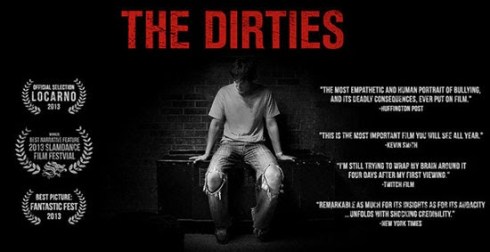
The Dirties: What Does This Underrated Indie Flick Say About Media and Society?

18 Jun

dt

By Tanner Smith

WARNING: This editorial contains spoilers for the film in question, “The Dirties.”

In 2013, an independent Canadian film called “The Dirties” premiered at the Slamdance Film Festival. Since then, filmmaker Kevin Smith helped with distribution by way of his company, Kevin Smith Movie Club, and it has since been released on home media and video-on-demand. Those who have seen it are rather split about it—some say it’s a fresh, compelling take on bullying while others either call it either a self-praising “meta-mockumentary” or an irresponsible look at a risky topic that shouldn’t be touched upon. That topic in question is “school shooting.”

There’s no doubt that whenever those two words are mentioned, people’s minds are at unease. People recall numerous horrifying occurrences in which students were killed by gunmen on campus, which then leads them to wonder why they happened to begin with. The answers from media and society are usually unclear, so people come to their own conclusions, mostly having to do with mental disorders or TV/film violence. “The Dirties” is a controversial film that raises similar questions but also manages to deliver its own interpretation as well.

The film is told through the perspective of a video camera and is about a teenage movie buff named Matt (played by writer-director Matt Johnson) wanting to make his own movie. He buys wireless microphones to use and has someone film him and his best (and only) friend, Owen (Owen Williams), presumably all the time. The movie he wants to make is a wish-fulfillment fantasy in which he and Owen exact revenge on a gang of bullies in their high school, whom they dub The Dirties. When that movie is complete, Matt comes up with an idea to make another movie—a more realistic one in which he actually brings a gun to school and shoots The Dirties. Owen doesn’t take Matt’s idea seriously at first, but he starts to question his sanity when he not only continues to play-act in front of the camera (as if living his own movie), but also has blueprints of the school and has been firing guns for target practice.

the_dirties_trailer_2_screen

The main character of Matt is trying to become a movie star of his own creation. He’s constantly making film references that no one else understands, tries to become the thing he’s referencing, and as the film goes on, he thinks less of what famous people would do and what he would do, since he has become what he usually references. And thanks to the obscure cameraman (whose identity is never revealed), he’s never alone. This is a modern problem in today’s society, that today’s kids film themselves and act in front of the camera. But Matt, who faces issues of bullying and alienation, actively puts himself on camera 24/7, and so he’s always trying to perform and he can’t seem to break out of it. Even when Owen acknowledges what he’s doing is insane, Matt can’t bring himself back to reality and instead wants to further his own interpretation of reality and continue making his movie.

Owen, meanwhile, would rather try something else than keep making a movie with Matt. He wants acceptance among his peers, which is something Matt clearly quit trying to achieve. He longs for the attention of a girl he likes; he wants to make new friends; he wants to try something new. The biggest turning point in his life is when Matt is so obsessed with his art that he never talks to Owen like a real person anymore and, even scarier, actually seems serious about conducting his own school shooting.

600

When looking for someone or something to blame for school shootings, media and society sometimes like to point the finger at violence portrayed in TV and movies, suggesting that watching it can make someone want to commit destruction. But this film shows how that’s actually never the case. What it tries to address is the issue of youth psychology and how it’s never always how we interpret it. According to filmmaker Johnson in an interview with cinema-scope.com, “The news always tells you the story of the kid starting at the last chapter of his or her life: that kid was a loner, or whatever. Which is really irrelevant to what happened. If you actually wanted to know what happened to the kid, you look at the first 200 pages of his life.”

That leads into the film’s ending. Some people complain that the film ends anticlimactically with no clear reasoning or logic. It ends with Matt, after having shot The Dirties in the school hallway and scared away his classmates, finding Owen cowering in a corner. He says, out of breath, “What are you doing? It’s me.” The scene cuts to black, the end credits roll, and that’s the end. But if you really think about it, it ends where the typical news story would start. The news story would start where the tragedy ends, but the film is a representation of what happened beforehand, which no one would want to talk about.

“The Dirties” may be one of the most important films of recent years, delivering a compelling portrait of disaffected youth and a descent into sociopathic behavior. It accurately portrays kids with real issues—being bullied, isolation, moving on, drifting apart, and even at some points, being bullies to each other and eventually to their own bullies. When the promising sociopath feels like a real person, instead of a standard, cold, distant, ruthless, cold-hearted killer, that makes it overall tragic; when a funny, artistic, even empathetic guy is also bullied and more, that can cause him to take drastic measures for vengeance.

“The Dirties” is not merely an unflinching portrayal; it’s also a cautionary tale. The back half of the film is laced with misfortune (albeit with an underlying comic tone, brought on by Matt trying to keep things lighthearted). One scene features Matt telling Owen he thinks he might be a “psychopath”—is this a cry for help or more play-acting? Whatever it is, Owen doesn’t listen. Shortly after, Owen has moved on and become just another face in the halls and another member of society the film specifically criticizes—his mind is elsewhere and he doesn’t see Matt as a friend in distress. So, in a way, it’s Owen, Matt’s best and only friend, who actually drives Matt to do what he ends up doing in the end of the film. As Owen fears for his own life when he sees what Matt has become, Matt doesn’t understand what’s changed and why he can’t see him for what he is, hence the line, “What are you doing? It’s me.” It’s a truly sad moment. We know what’s really going on, but no one else does. Even Matt doesn’t see the trouble in what he’s done.

7823798324uhrwehiuew978234

It’s a challenging concept when the victim is the one with the gun, at least in this film. Many people who see the film arguably miss the point of it (or they’re too busy questioning the identity of the cameraman), but those who don’t can’t help but wonder: Who’s really to blame for occurrences like this? Are they portrayed the exact opposite way? Etc.

More people should seek out “The Dirties,” which is available on demand. It’s the kind of film that will force them to ask questions and find answers they’re uncomfortable about, and it also emphasizes the importance of reaching out and helping those who need assistance and companionship. If society chooses to ignore or mishear cries for help, even from their own friends, it can lead to damage to themselves and/or others. That’s the theory Johnson tried to portray in “The Dirties,” and it’s hard to argue that it’s far off.

My original review: https://smithsverdict.wordpress.com/2015/09/19/the-dirties-2013/

Deadpool (2016)

18 May

deadpool-movie-poster-2016

Smith’s Verdict: ***1/2

Reviewed by Tanner Smith

Comic-book movies have come a long way in the past decade, in that they’re taken more seriously and can have a nice balance of action and comedy (meaning they don’t have to take themselves seriously all the time). The heroes are more relatable, the stories are more intense, technology helps the action sequences look better, a good amount of comedy is supplied without getting too distracting, and we find ourselves long past the era in which the concept of a superhero movie was laughed upon. Of course, some of these superhero movies work more than others—for every “Captain America,” there’s a “Green Lantern”; for every “Guardians of the Galaxy,” there’s a “Fant4stic”; for every “The Dark Knight,” there’s a “The Amazing Spider-Man 2”; and so on. But the point remains—superhero movies in general are getting more respect (and it’s going to take something bigger than “Fant4stic” to kill audiences’ excitement for them). It’s an especially good time for Marvel, with Disney’s Marvel Cinematic Universe delivering such awesome entertainments as “Iron Man,” “The Avengers,” and the “Captain America” movies, among others.

But as fun as they are, I think we can all agree we know what most of them are doing. Many of these movies try so hard to be taken seriously that we can’t help but talk back/make wisecracks to the movies. That’s especially true of origin stories—the stories that show how Super-Somebody became Super-Somebody. They usually involve these tropes we’ve all seen before: the death of a loved one; the villain rising to power not long after the hero gains abilities; loved ones are kidnapped by the villain; the hero learns very quickly; anything is possible as long as there’s some scientific babble to back it up; there’s a big fight between the hero and villain; the hero always survives, no matter what; and of course, the reluctant hero doesn’t want to be a superhero but ends up becoming one anyway. It’s interesting to see where a hero gets his or her start, but these origin stories are mostly predictable.

That’s why when something as flat-out entertaining as “Deadpool” comes around, it’s all the more welcome. Why exactly, you may ask? Because this is a superhero origin-story movie in which all the tropes are present and the story is as standard as can be, and not only does it know it but it revels in knowing it. It has fun with it—the hero is a smarmy jerk who breaks the fourth wall, makes one goofy wisecrack after another, is actually an anti-hero, swears up a storm, and pretty much says and does many things you wouldn’t hear or see in any other superhero film. It’s almost like he’s (gasp!) one of the audience members (except I think he says most things we wouldn’t think to say; he has that much to say)!

“Deadpool” is based on the Marvel comic-book character, although it’s hard to imagine this playing any part in Disney’s MCU (this film is presented by 20th Century Fox; they redeem themselves after the Marvel mess that was “Fant4stic” last summer). But maybe that’s for the best, because “Deadpool” is what it is and its audience is appreciative for it. The film is immature, crude, and in bad taste…and I enjoyed it from start to finish. (What can I say? I need as much a good chance of pace as superhero-movie audiences.)

The hero is a rebel—a simple-minded, angry, wisecracking anti-hero who has one thing on his mind: vengeance. We see his origin story (yes, we get the darned “origin story” here) through flashbacks and see how Deadpool became Deadpool. Before becoming invincible due to mutation and spawning a red spandex outfit and mask to become Deadpool, Wade Wilson (played by Ryan Reynolds) was a mercenary in New York City. He fell in love with an escort, Vanessa Carlysle (Morena Baccarin), and they were going to be married. But when Wade developed cancer, he didn’t want to put Vanessa through the stress and left her. He sold his body to a shady scientific experiment, run by a British scientist named Francis Freeman (Ed Skrein), or Ajax as he prefers to be called despite Wade always mockingly calling him by his legal name, and his superhuman sidekick Angel Dust (Gina Carano). He realizes too late that he’s not being transformed by these bizarre mutation tests to be a superhero, but a super-powered slave. His cancer is healed, but side effects, in addition to strength and invincibility, include his face and body becoming horribly disfigured. He managed to escape, destroying most of the factory in the process, but sees himself as a freak whom he’s certain Vanessa wouldn’t take back. That brings us to now, where Deadpool is hunting Francis (er, “Ajax”) down to get a cure for his disfigurements (and kill him after he’s cured), mowing down his sidemen one by one. Watching from afar are two X-Men (yes, there are two X-Men in this movie)—Russian metallic giant Colossus (a CGI creation voiced by Stefan Kapicic) and an attitudinal energy-boosting teenage girl aptly named Negasonic Teenage Warhead (Brianna Hildebrand). They try to bring Deadpool to join them, but Deadpool doesn’t care about being a hero and just wants his girl (and his face) back…as well as Francis impaled by a sword or two. And he doesn’t care who he has to kill in order to get his life back to normal.

“Deadpool” is respectful of its source material. Deadpool is known for being very profane and committing graphic acts of violence—a PG-13 rating simply wouldn’t do for a faithful Deadpool movie (something every fanboy made clear when actor Ryan Reynolds pranked them on Twitter, fooling them into thinking it would be PG-13 instead of R). Sorry, parents who have no idea who Deadpool is and just wanted to take their kids to see a superhero movie on Valentine’s Day weekend. “Deadpool” is rated R for good reasons.

The offbeat style of “Deadpool,” which includes pop cultural references, fourth-wall breaking, one-liners, etc., is especially welcome now, because in our day and age, we have seen so many superhero films (and enjoyed so many as well). Reynolds, director Tim Miller (making his feature debut), and writers Rhett Reese and Paul Wernick thrive in self-awareness and have fun with the superhero conventions. While I always have my guard up when it comes to this humor (read my “Me and Earl and the Dying Girl” review), it works here. Obviously, there are some jokes that don’t work, which usually happens when there’s one after another; but a great amount of the humor really worked for me, because a lot of it felt fresh and new. I didn’t feel tired of the peculiarity. I enjoyed it throughout.

(Oh, I should also mention the most original use of opening credits I’ve ever seen…but I won’t. See for yourself. The less you know beforehand, the better.)

Speaking of things I usually tend to try and resist, Ryan Reynolds is nothing short of terrific as the title role. While I like Reynolds in more subdued roles, like in “Buried” and “Adventureland,” he usually doesn’t do much for me, especially when he’s trying to be funny—he seems rather bland while desperately trying to make me think he’s funnier than he actually is. I can’t put my finger on it, especially when Reynolds is really trying to be funny here, but somehow he succeeds as Deadpool. Maybe I’m used to his style of acting, maybe he’s heightened up the amount of comic timing in his performance, but I think Reynolds is perfect in this movie. He’s not only able to make us understand what he’s going through but he is also flat-out hilarious throughout. Even despite his unorthodox, homicidal methods, he makes us surprisingly care for Deadpool, making for a very effective anti-hero.

“Deadpool” is a different kind of movie, to say the least. It pays homage to familiar tropes in the superhero-film genre, but it also chews them up, spits them out, and eats them back up again (sorry for the disgusting mental image). Is it closer to satire or parody? That’s a difficult question to answer, but either way, “Deadpool” is a definite comedic treasure for the comic-book audience and one of the best surprises of the year so far.

Hush (2016)

11 May

HUSH16REV

Smith’s Verdict: ***1/2

Reviewed by Tanner Smith

How do you make the Home-Invasion Thriller feel fresh again? Make the heroine a survivalist who disposes of the invaders left and right (“You’re Next”)? Have it occur on the one night in which all crime is legal (“The Purge”)? Well, either of those could work (…and unfortunately, they didn’t work for me—I didn’t particularly like “You’re Next” or “The Purge,” two more recent home-invasion thrillers), but the point is there needs to be something fresh and new about a very familiar setup. When I heard this detail about “Hush,” director Mike Flanagan’s take on the Home-Invasion Thriller, I immediately wanted to see it—the woman in distress, whose home is being invaded by a psychopath, is deaf and mute.

Comparisons to the 1967 Audrey Hepburn thriller “Wait Until Dark” have been tossed around in reviews. But aside from a vulnerable woman making the most of her handicap in order to fend off people trying to hurt her in her home, there really isn’t much of a comparison. “Hush” and “Wait Until Dark” are two different films with different styles, different material, different situations, and even a different handicap. I think “Wait Until Dark” is the better film of the two, but “Hush” is still a well-done, effective chiller with enough tension and scares to make for a suitably unpleasant viewing when you’re alone at night. (I watched “Hush” alone in my room at night, with the lights off, to see how effective it would be.)

Like I said, the main character, a writer named Maddie (well-played by co-writer Kate Siegel), is both deaf and mute. She lives a quiet life while trying to finish her second novel in a nice, isolated house in the woods. Of course, this is the perfect place for a homicidal maniac to attack at night, and that’s exactly what happens. A masked man (John Gallagher, Jr.) arrives and starts to toy with her psychologically, sending her pictures he took from her phone to the laptop she’s using and severing all connections to potential help. She realizes what’s happening and finds herself in further danger when she discovers the body of a person the masked man has already killed and the masked man reveals his face, just so he can have reason to kill her. From that point on is a deadly game of cat-and-mouse with the deranged man sneaking around outside the house and the vulnerable Maddie desperately trying to outsmart him. Eventually, she finds the courage to fight back, having accepted her deafness as an advantage to inner strength.

“Hush” is director Mike Flanagan’s follow-up to an underrated supernatural chiller called “Oculus,” and he is a true talent in the horror-film genre. He does a terrific job at making the most out of a familiar premise. He sets up the character and the environment, with some background, in the opening, and then he really kicks things into gear with one eerie, tense scenario after another. While the final half is somewhat standard, Flanagan still remembers it’s important to make his audience wonder how something will happen in the outcome of the climax even when they have a good idea as to what could happen. He handles it all pretty well with a good amount of suspense and enough surprises to keep me engaged. I’m curious to see what he comes up with for his next film.

Star Wars Episode VII: The Force Awakens (2015)

4 May

Star-Wars-7-Force-Awakens-Teaser-Trailer-2-Finn-Rey-Explosions-Wide

Smith’s Verdict: ***1/2

Reviewed by Tanner Smith

Yes, I know I’m late in reviewing this one. But hey, better late than never, right? And I’m actually glad I’m reviewing this movie now that I’ve seen it a third time, because even though I enjoyed the film the first time I saw it, I found myself enjoying it more and more the second and third viewings.

“The Force Awakens,” the seventh episode in the “Star Wars” universe, is a return to greatness in the franchise, nearly 40 years after the release of the original “Star Wars” (now known to us all as “Episode IV: A New Hope”). Since then, there has been an excellent sequel (“The Empire Strikes Back”), a passable conclusion to the trilogy (“Return of the Jedi”), two major disappointments disguised as prequels (“The Phantom Menace” and “Attack of the Clones”), one watchable prequel (“Revenge of the Sith”), and an animated TV series (“The Clone Wars”), all with an enormous fan base surrounding it all, making the franchise a monster of fandom, merchandising, all that good stuff. Now comes “The Force Awakens,” a joyous, thrilling, riveting, awesome space-opera thrill-ride that I have no shame in calling my third-favorite “Star Wars” adventure, behind “The Empire Strikes Back” and “A New Hope.”

Actually, considering the downward spiral the franchise has turned into, I think “A New Hope” would have been a more appropriate subtitle for this episode!

“The Force Awakens” could be titled “Star Wars: The Next Generation.” The characters we’re familiar with, such as Han Solo (Harrison Ford), Leia (Carrie Fisher), Chewbacca (Peter Mayhew), C-3P0 (Anthony Daniels), and R2-D2 (Kenny Baker), are more like supporting players to the new key characters in this new story—Luke Skywalker (Mark Hamill)…well, I won’t give anything about him away here. The new characters include heroes such as a defective, rebelling Stormtrooper named Finn (John Boyega), a young scavenger-turned-heroine named Rey (Daisy Ridley), and a wisecracking Resistance pilot named Poe Dameron (Oscar Isaac), as well as new villains, such as the imposing Kylo Ren (Adam Driver) and his second-in-command General Hux (Domnhall Gleeson).

The story: 30 years after the events of “Return of the Jedi,” a new evil galactic military organization known as the First Order is terrorizing the galaxy. Resistance fighter/pilot Poe Dameron and his cute little droid, named BB-8, hold the key to the future of the rebellion: a map to the whereabouts of Luke Skywalker, who may be the last great hope. BB-8 escapes with the knowledge, but Poe is captured by the First Order. Fortunately, one of the Stormtroopers, Finn, has developed a conscience and decides to escape and help Poe. He ends up on the junkyard wasteland planet of Jakku, where BB-8 also happens to be, and they’re both found by Rey. Being of a new generation, Rey isn’t sure what to believe in and thinks Luke Skywalker and the Force are part of some mythology. But when she learns what knowledge BB-8 contains and that soldiers of the Dark Side will do anything to obtain it, she and Finn find themselves in a crazy adventure to find the Resistance. Along the way, they come across the old, wise Han Solo, the villainous Kylo Ren, and all kinds of strange beings and situations before playing a part in a plan to destroy the First Order’s new concepts for domination.

That’s as best as I can describe it without digging into spoiler territory (even though some of the plot details are practically memes now but I’ll still be nice for those who haven’t seen the film). And yeah, okay, obviously there are questions that can be asked, such as how this First Order came to be. But visually, “The Force Awakens” is so good at telling the story that I let them slide and just see if they might be answered in some way or another in later installments (which there are sure to be).

The new heroes are likable and well-developed (for the most part). Finn, played brilliantly by John Boyega (who I also loved in “Attack the Block”), reacts to many of these crazy “Star Wars”-ish situations the same way I think most people would, and as a result, he has the funniest lines. Rey is a strong, plucky, resourceful heroine. Poe hasn’t had much time to shine yet, but…eh, maybe in Episode VIII. And BB-8 is a cute little toy—er, I mean, droid. The villains are either complex, intimidating, or both. The more you know about Kylo Ren, who sports an attire much like Darth Vader originally did, the less you’re intimidated by him, but fortunately, that’s not necessarily a bad thing. He’s a three-dimensional villain, in ways I won’t give away here, and I’m interested to see where his story goes in later installments. The one who is consistently intimidating throughout the film is General Hux, who reminds me of Adolf Hitler in a sense, particularly when he addresses a crowd. And it’s nice to see the old heroes again. The closest one of the old characters to play a crucial part is Han. It’s good to see Han fly the Millennium Falcon again, interact with Leia and Chewy, and crack some more one-liners, but you can also tell the character has aged mentally as well as physically. In addition to good writing, the subtleties in Ford’s performance make this character more complex than before. And even when his resolution is pretty predictable (which everyone in the audience I saw it with seemed to agree on), it’s still heartbreaking because of who he was, who he is, and who he has become, which is a real hero. And that’s all I’ll say about that.

The director is J.J. Abrams, who I think outdoes himself here, as much as I enjoy “Mission: Impossible III,” “Star Trek,” and “Super 8.” For one thing, there aren’t many noticeable lens flares (rim-shot). For another, the pacing is excellent. For another, the action is very impressive. And he also co-wrote the script with Lawrence Kasdan, who originally penned the great “The Empire Strikes Back,” and the best part about the writing is the humor—I’m so relieved that this big, bombastic sci-fi adventure had developed a sense of humor. This is one of those rare instances in which the comic relief serves the story as well as make audiences laugh. I feel like with this film and “The Martian,” we are approaching an era in which filmmakers don’t have to take their epic stories so seriously that they’re not fun.

“The Force Awakens” is the start of a new trilogy of “Star Wars” films (Episode VIII will be directed by Rian Johnston, and Episode IX by “Jurassic World’s” Colin Trevorow). I’m excited to see where the franchise continues to go in this direction. Here’s hoping this is the start of something new and something improved.

Casualties of War (1989)

24 Apr

6a00e54ee7b64288330120a5184a39970b-400wi

Smith’s Verdict: ***1/2

Reviewed by Tanner Smith

Brian De Palma’s “Casualties of War” is based on a real-life incident that occurred in Vietnam in 1969—a small unit of soldiers kidnapped a peasant girl, took her along on their reconnaissance patrol through the jungle, raped her, and then ultimately murdered her. One of the five soldiers on patrol was against the plan from the start and didn’t know the sergeant was serious at first when it was mentioned originally, and it was his testimony at a court martial that brought the men to military justice.

Michael J. Fox plays the outspoken private Eriksson. Prior to the event, Eriksson had only been in combat for three weeks; not nearly enough time, apparently, for him to lose his sense of human nature. His fellow infantrymen, Sergeant Meserve (Sean Penn), Corporal Clark (Don Patrick Harvey) and Private Hatcher (John C. Reilly), are more hard-edged and brutal, with only one thing on their minds: wiping out as much VC as they can. One of their platoon members, who was essentially their comic relief (and probably would have prevented the forthcoming event from happening in the first place), is killed in an ambush, and shortly afterwards, Private Diaz (John Leguizamo) serves as replacement.

Meserve is a leader. He’s capable of valor and a strong soldier. But he has lost his moral standards—one even wonders if he had them to begin with, as we don’t know anything about his background. (That wasn’t a criticism—I like that the character raises questions.) When he wants to do something, anything, he is able to get his squad to follow along. That leads to the event. After he is denied access into a nearby village to visit a prostitute the night before the platoon is supposed to go on patrol, Meserve involves his men in a plan to sneak in late at night to kidnap a simple peasant girl and take her with them as their sex slave. Eriksson doesn’t realize he’s serious until the kidnapping takes place.

In the field, Eriksson questions what the squad is doing, while Clark and Hatcher are up for anything. Diaz is the only other standout, but soon enough, he follows along, mostly because he’s intimidated by Meserve. Meserve is in complete denial, not seeing how wrong his actions are; to him, he’s captured a Viet Cong as a prisoner and he and his men are going to “have a little fun with her.” And Clark, the most bloodthirsty of the group, doesn’t care about justifying his actions—“What happens in the field stays in the field,” he says. When the moment of the rape arrives, Eriksson protests, and Meserve verbally abuses him in every way possible—he’s a Viet Cong sympathizer, he’s a homosexual, and so on. But unlike Diaz, Eriksson doesn’t give in and refuses to act in the rape. The next day, he tries to help her, and he even has an opportunity to escape in order to help her. But he himself is afraid of what would happen, and before long, the inevitable occurs, as the other four men pump bullets into her.

I know I’ve given away large chunks of the film by describing the event and the story it was based on, but writing about it and actually seeing it are two different cases here. To see this movie is to feel the weight of the situation happening all around them; that situation being the dehumanization of war. Eriksson has moral values, but they aren’t important in front of Meserve’s power, which is the only thing that matters in the field. When you have morals and ethics, you have to have the power to bring them forward and have your fellow men back you up. “Casualties of War” is a film that examines the realities of this situation and that’s what makes it so effective. Late in the film, Eriksson even says the film’s message aloud: “Everybody’s acting like we can do anything and it don’t matter what we do. Maybe we gotta be extra careful because maybe it matters more than we even know.” Not only does that apply in the battlefield, but it also applies in life.

What I could’ve done without are the scenes at the beginning and the end. The opening scene shows Eriksson looking back at the central story, so those who don’t know the story now know he’s going to survive. The closing scene feels like a tacked-on feel-good ending that didn’t really work very well. (When I watch the film on DVD, I usually stop the movie at the moment I think it should end, which is when Meserve, Clark, Hatcher, and Diaz glare at Eriksson as they’re taken away to military prison.) The framing doesn’t work.

The acting is solid all-around. Michael J. Fox is credible as a man holding on to what he has left inside. Sean Penn turns in a brilliant performance as a young man (about 19, I think) who was probably a bully back home and a bully with a gun in combat. Sometimes, he overplays his demeanor in which he’s able to mock anyone who’s against his methods, but I didn’t mind, because it also shows how pathetic he can be, while also showing why someone would be intimidated by him. Though, if we’re going to be honest, I wasn’t always that intimidated by him personally. Who is intimidating throughout is the character of Clark, played excellently by Don Patrick Harvey—this guy has “psycho” written all over him, and it’s a credit to Harvey’s acting that he’s able to pull off even the most subtle methods of the role. (Something subtle in a Brian De Palma film?! Why, I never!) Character actors John C. Reilly and John Leguizamo are featured in their first feature roles, and they both do equally good jobs.

It was a good decision on director Brian De Palma’s part to move from the hugeness of his previous film, “The Untouchables,” to a smaller story about the human condition in a war film. Some of his filmmaking trademarks are at work here—two things in focus even as one is far away from the other; long wide shots of conversation (sometimes at weird angles); and especially, a chilling point-of-view scene that usually makes it in each of De Palma’s works. But unlike most of his films, they don’t distract from the story, written with a terrific script by playwright David Rabe.

In combat, human values are usually replaced by animal instincts. That’s what “Casualties of War” is saying—just because each of us can be blown up at any time, that doesn’t mean we should be less human; if anything, we should be more human. This story, with the event at its center, is a reminder of that.

Frost/Nixon (2008)

28 Mar

frost-nixon

Smith’s Verdict: ***1/2

Reviewed by Tanner Smith

Spoiler Warning!

What angers many American citizens more than most things in the world is when people of power get away with something they should be held accountable for. That was especially true of how practically the entire liberal population reacted when Richard Nixon resigned from the presidency after the Watergate scandal, as they see it, as a means to avoid responsibility. That he was pardoned by Gerald Ford made them angrier, because that meant he wouldn’t stand trial or face any consequences for what he did, let alone apologize for what he’d done. Nixon was disgraced, and he agreed to a series of four extensive television interviews with British talk show host David Frost in an attempt to win over the public. What he didn’t expect was a publicly viewed ambush…

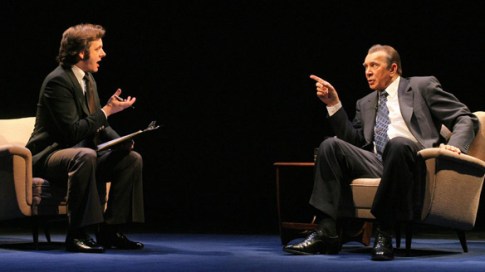
Ron Howard’s “Frost/Nixon” is based on playwright/screenwriter Peter Morgan’s stage play of the same name, and it’s a strong, compelling retelling of real events that present a duel between an iconic figure and one who would become iconic afterwards.

Frank Langella presents a credible Nixon without foaming at the mouth in the name of exaggerating the role, which isn’t demonized. He plays a man who might regret his deeds but will try to justify them and is too stubborn to admit his wrongdoings. It’s a compelling portrayal that deserved the recognition it got, including an Academy Award nomination. But just as strong is Michael Sheen’s underrated performance as his adversary, David Frost, a boyishly charming, charismatic showman who has no interest in politics but sees this interview/duel with Nixon as a way to boost his career. Sheen’s depiction of Frost is fascinating, because he plays him as someone who is either a pure optimist or someone pretending to be a pure optimist while hiding nervousness and uncertainty behind a smile and outgoing personality. And think about it—if you had to go one-on-one on public television with one of the most controversial figures in the White House, wouldn’t you be at least a little uncertain about your chances of winning? (Asking that question made me pay more attention to Sheen’s performance the more times I watch this film.)

Frost was a TV personality who had a lot riding on this. In the first place, people considered him either crazy or stupid for even thinking of interviewing Nixon—they were sure he’d say no, and if he said yes, they were afraid he’s glamorize him. He paid a fortune to arrange the interviews when all networks wouldn’t devote airtime to serious journalism. Frost won the opportunity to do the interviews when Nixon, who (along with his advisors) thought him to be a lightweight interviewer, saw his opportunity to change the image the public saw him as. When Frost and his three allies—producer John Burt (Matthew McFayden) and reporters James Reston Jr. (Sam Rockwell) and Bob Zelnick (Oliver Platt)—play hardball by asking difficult questions, Nixon talks his way through and out of each issue.

It seems like a done deal—with three out of four interviews in which Frost and Nixon are at a stalemate, there’s clearly no self-recognition from Nixon about Watergate, Frost is losing confidence, his friends (save for his supportive girlfriend, Caroline, played by an astonishingly beautiful Rebecca Hall) are becoming skeptical, and it looks like the final interview will amount to nothing. But Frost shocked the world when he managed to ask the right questions and get the right answers, leading to Nixon being humiliated (especially after saying the controversial quote: “I’m saying that when the President does it, that means it’s not illegal.”) and finally owning up to what he had done. Everyone already knew he was guilty, but they wanted to hear him say it. Thanks to Frost, he finally did. Frost became a more widely-known celebrity and Nixon was able to show his face in public again, feeling the truth had set him free.

It’s a gripping story told very well through solid direction by Howard, brilliant writing by Morgan, and excellent acting from the cast (which also includes Kevin Bacon and Toby Jones as two of Nixon’s aides). Though I have to wonder what creative liberties are taken from historic facts, I don’t let it bother me because it is such a good story and the facts shouldn’t get away from that. I know the interviews are shortened; I know certain things didn’t happen; and I’m pretty sure a late-night phone conversation between Nixon and Frost about cheeseburgers didn’t happen (I’m assuming). I don’t care. I’m enjoying “Frost/Nixon” and the battle of wits it portrays.

The Last Temptation of Christ (1988)

27 Mar

The+Last+Temptation+of+Christ+

Smith’s Verdict: ***1/2

Reviewed by Tanner Smith

Spoiler Alert…but come on; you know how this story ends already.

God sent his son to spread His message. There are many ways He could’ve gotten his word across to man, but by using his son as a symbol. God so loved mankind that he made his one begotten son into a man. When Jesus rose from the grave three days after being shamed and beaten and crucified onto a wooden cross to die because of his constant spreading the message of love, that message become clear, and that’s what’s being taught in Christian teachings to this day. Renowned director Martin Scorsese’s “The Last Temptation of Christ,” adapted by screenwriter Paul Schrader from the novel of the same name by Nikos Kazantakis, is a film that shows just how cruelly difficult it was for Jesus to carry on in becoming that symbol. Because he was both a man and the Son of God, he had the same temptations of man.

Sometimes knowing what he had to be would be hard for him to take in. But not knowing what to do made it even tougher. And with the Devil coming in many forms to steer him away from the path to delivering the message, he would even wonder what it would be like to live a normal life as a man. He had desires, thoughts, feelings; the same as any other man. And he had to resist such temptations in order to carry out his mission. What we can take from this film is that it’s “more difficult to be a good man than God.” (That’s a line Gene Siskel originally wrote in his Chicago Tribune review of this film; I’m sorry, but that’s such a good quote.)

The film (as well the book it was based on, for that matter) makes it very clear that it isn’t based entirely on the Bible and that’s more of an interpretation of what Jesus must have felt in the last days of his life. At the time of this film’s release, many religious groups have attacked the film for it, calling it “blasphemous.” (But then again, religious extremists will fire shots at any film in which God is mentioned in terms of story, like “Life of Brian” and “The Passion of the Christ,” usually when they haven’t even seen the film.) Since then, it has become widely appreciated as one of the finest religious films ever made, because it challenges audiences with questions of faith and belief and gets the message across in a very strong way, by showing what trials and tribulations Jesus had to face before fully carrying out his destiny. It’s a message that can give comfort to any sinner.

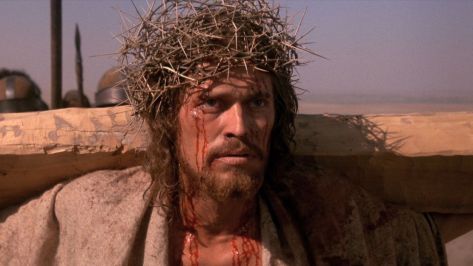
Willem Dafoe portrays Jesus—a challenging role to say the least but he pulls it off successfully. He’s a New Testament guy in an Old Testament land (in this case, the location of Morocco), where the message of love and forgiveness is not easily delivered. And it’s not easy for him either. Sometimes he doubts himself and questions whether or not he truly is the Son of God (and when he does believe, he uses it to reproach his mother and the memory of his father—ouch). When the prostitute, Mary Magdalene (Barbara Hershey), is forbidden to attend a wedding, Jesus has to be as calm as possible in order to rationally bring her in. Sometimes, he’ll confide in Judas (Harvey Keitel, possibly the film’s weak link—I didn’t buy him entirely in this role), who is portrayed as a better man than most teachings have made him out to be (and his name becoming a curse doesn’t help either)—here, he’s a man doing what he thinks he’s supposed to do.

It all leads to the most controversial sequence of the film. Jesus is crucified on the cross, in extreme pain, listening to those around him either berating him or screaming in pain, and he starts to hallucinate and imagine what it would be like if he was taken down from the cross and able to live out the rest of his life as a regular human being. He marries Mary Magdelene, has a family, and lives a full life. But he is also shamed by his former followers, who claim he abandoned his mission and say they don’t know what to believe anymore. Jesus soon finds the strength to shake off his temptation and return to the cross, where he will die as God’s son and come back to deliver the last piece of the message.

Scorsese, who was raised Catholic, is hardly a strange choice to make “The Last Temptation of Christ,” since a good chunk of his films are about flawed people seeking redemption. He knew he was taking a big risk with the Christian right, and he even received death threats and had to arrange private, secure screenings for critics before the film’s release. But he’s a skilled filmmaker, as well as a believer, and those who see the film for what it is can appreciate what he put into it.

The Walk (2015)

20 Mar

the-walk

Smith’s Verdict: ***1/2

Reviewed by Tanner Smith

I won’t issue a Spoiler Alert, because the story of Philippe Petit walking a tightrope across the Twin Towers is very well-known.

Early in the morning of August 7th, 1974, an amazing occurrence/performance happened at the original World Trade Center. French acrobat Philippe Petit walked on a tightrope that spanned from the top of one tower to the top of the other—a 200-foot length over a thousand feet in the air! He spent a little over a half-hour performing his “walk,” with many New Yorkers watching from the ground. He risked life and limb with no harness to support him and no safety net to catch him if he fell. You could call it paid-off training crossed with instincts or a miracle, but what Petit did up there was incredible.

There was already a documentary made about the event, called “Man on Wire,” but director Robert Zemeckis (known for such well-crafted works such as “Back to the Future,” “Who Framed Roger Rabbit,” “Forrest Gump,” “Cast Away,” “Flight”) decided to use his skills with camera angles and digital effects to recreate the performance in “The Walk,” a fictional retelling that goes into Petit’s origins, his team’s efforts in helping plan the “coup,” and ultimately his famous “walk.”

The film is split in three segments. The first segment is somewhat biographical, as Petit (played with energetic charisma by Joseph Gordon-Levitt, whose French accent is mildly distracting at first but grows on you quickly) doesn’t like to think about “death.” When he’s on the wire, performing on the streets of Paris, he claims he never feels more alive. When he hears about the Twin Towers in New York City, he immediately thinks of the perfect place for his “wire.” While in training, under master wire walker Master Rudy (Ben Kingsley), he meets people like his partner in crime (and in love) Annie (Charlotte Le Bon), photographer Jean-Louis (Clement Sibony), and math teacher Jeff (Cesar Domboy), who has a fear of heights—they all become his accomplices as he plans a heist at the Twin Towers. It’s a different kind of heist: a mission to steal a moment in time.

The second segment leads up to the “walk,” as Petit and company go to New York, gain more accomplices, and put their plan into motion. There is much suspense involved when the gang is attempting at night to get the wire ready by morning and in danger of being caught at any time. (And of course, there must be at least two moments in which the acrophobic Jeff has to face his fears—a cheap shot but effective nonetheless.)

Then comes the actual walk, about an hour-and-a-half into this two-hour film. This is unquestionably the film’s highlight. Do I even need to say how fantastic it looks? It’s Robert Zemeckis making a reenactment of Philippe Petit’s famous Wire Walk—knowing his reputation for great-looking craft, I knew this was going to be something special. And I have to admit, as someone who is terrified of heights, watching this was so effective that I cringed and held onto my seat in fear. (Though, I did at first see it in a theater, and my second viewing, on a laptop screen, wasn’t nearly as effective. But it still looks good.)

Many critics have complained that the film has too much buildup to its final act, but honestly, I didn’t mind. I enjoyed getting to know Petit’s origins, his friends are appealing company, and the film is consistently good-looking, with numerous camera tricks and neat effects that occur even before the walk, such as passages of time. I also admired how Zemeckis executed the film much like a spy thriller, with the characters scoping out the layout of the Trade Center, trading secrets, and sneaking in to perform the ultimate task. Whatever problems you may have with “The Walk” may be counterbalanced by the final act alone, which is truly a spectacle to behold. But do yourself a favor, find the biggest screen you can, and watch it on that.

10 Cloverfield Lane (2016)

14 Mar

10 CLOVERFIELD LANE

Smith’s Verdict: ***1/2

Reviewed by Tanner Smith

With a title like “10 Cloverfield Lane,” you would expect a direct sequel to the 2008 hit, “Cloverfield,” which was hidden in secrecy until release and has seen gained a following (just as this new movie was—even its first trailer wasn’t released until two months before the film’s release). But if you walk into the movie expecting it to be just like “Cloverfield,” you’d be disappointed. “10 Cloverfield Lane” is instead a thriller that may or may not have any relation to “Cloverfield,” aside from J.J. Abrams’ production company, Bad Robot, carrying both films. The great thing about keeping this film in secrecy is that you don’t know what to expect, and as a result, you find yourself surprised and able to appreciate the film for its own merits if you’re willing to keep an open mind. “10 Cloverfield Lane” only slightly ties back to the earlier movie, such as a line about “satellites” that may be familiar to those who have a theory about a subtle visual at the end of “Cloverfield.” Anything else might be implied (and that’s all I’ll say about that).

Mostly, however, “10 Cloverfield Lane” is a tense, claustrophobic thriller set inside a basement/bunker under a farmhouse. We’re kept in that area for a majority of the film. Michelle (Mary Elizabeth Winstead) awakens inside, chained to the wall. She learns from her “host,” a hulking, discomforting man named Howard (John Goodman), that he rescued her from a car crash and that he can’t let her or another occupant, Emmett (John Gallagher Jr.) go because something apocalyptic seems to have happened up top. “An attack,” he calls it. Michelle learns Howard is a survivalist and believes he might be crazy, but with every possibility comes something to turn it around, leaving Michelle not knowing what to think. And there’s always something about Howard that makes Michelle even more afraid of him. She’s afraid to go outside but even more afraid of staying inside…

The premise is intriguing, and director Dan Trachtenberg (making his feature debut here) does a lot with it within these confined spaces of tight areas of this basement. He doesn’t let the audience know what’s really happening outside, if there even is something happening—is there really something to fear in the world or is Michelle being held captive by this madman? There are numerous deceptions whenever we may have something figured out, leaving us guessing numerously what’s really happening and keeping us on edge with several tense scenes. What’s going on? Who is Howard, really? What does this certain thing in this place mean for us? What are those noises outside? And so on. The film is a terrific thriller because of this. It even reminded me of the mystery-shrouded first couple seasons of Bad Robot’s TV series, “Lost,” and that’s a compliment indeed.

What it does answer by the end is answered subtly for the most part; others are left suitably ambiguous; and then, there’s the final act which will appease probably the most antsy moviegoer who wants some form of closure. I won’t give it away here, but I would be lying if I said that I probably didn’t need to see it, especially since the buildup to it was so darn good (and had me thinking this was going to be the best film of the year so far). It’s a little disjointed while not necessarily “disappointing.” (I may have to see the film a second time to look back at the hints and clues I know were present at times during the film.) It doesn’t hurt the film as much as I thought it did when I walked out—a few hours later, I had thought more about it and felt I should’ve seen it coming from the moment I bought my ticket stub. It’s a little difficult to explain in this review, since it’s spoiler-free, but I think the best way to describe it is this: “10 Cloverfield Lane” works better as its own thriller than as a “blood-relative” to “Cloverfield” (Abrams’ words).

Effectively done filmmaking aids in the film’s favor, with smooth camera movements adding to the increased tension. But also essential is the acting from the three principals. Mary Elizabeth Winstead is strong in a role that is a rarity in horror movies: a heroine who is smart. You know how most horror-movie protagonists make dumb decisions that lead to audience members wanting to shout advice to them through the screen? (“Call the police!” “Get out of the house!” Etc.) I only felt the need to do that once with her (ONCE), and then she immediately did what I wanted her to do at that moment! From the moment she awakens in her strange surroundings for the first time, you’re with her, thinking of what you would do if you were chained to that wall and had to get to your cellphone on the other side of the room. Then there’s John Goodman, one of film’s finest character actors, as Howard—he is nothing short of brilliant in this role. He has to go back and forth between a kind teddy bear of a guy and a scary, dangerous madman, and he pulls off each transition perfectly. John Gallagher Jr. has less to do as sort-of “the other guy,” but he holds his own fine.

I may have my own problems with the ending of “10 Cloverfield Lane,” but what leads up to it is a masterful, suspenseful thriller that makes me look over a nitpick like that. Overall the film is terrific, and I wouldn’t mind seeing the film again in order to be sure of whether or not my feelings toward the final act are altered.