Archive | Shorts RSS feed for this section

LRFF2015 Review: “Made In Arkansas” Shorts Block 2

19 May

Reviewed by Tanner Smith

1000204_10152016249577223_1315388335_n

MatchMaker

Smith’s Verdict: ***1/2

The full review of Robin Sparks’ “MatchMaker” can be found here.
10686715_728394807237055_2754205764893534628_n

Hush

Smith’s Verdict: ****

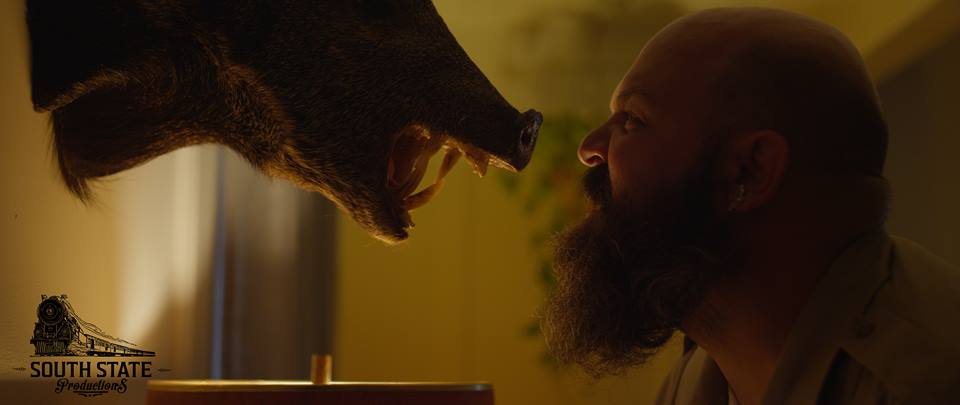
Kenn Woodard’s 20-minute film, “Hush,” is a strange, fascinating thriller-drama that is both hard to watch and fun to watch at the same time. It takes place in a small Southern town and begins with a news report of the arrival of a new Sheriff, Elkins (Billy Chase Goforth) before we are introduced to a couple (Warren McCullough and Cassie Self) in a remote rural area, as they reluctantly take in McCullough’s ne’er-do-well brother (Houston Nutt III). But that night, these two elements come together in surprising, dangerous ways. And unfortunately, that’s about all I can say about “Hush,” lest I give something away (a recurring problem I notice in reviewing some of these shorts, if not most of them). I will say that the film is brutal and effectively so, and the tone and spirit sucked me into a world gone mad. It feels like an efficiently exaggerated tale of how only the position of power (such as in politics) matters when greed is on the line. And I will also say this: the ending, in my opinion, is nothing short of brilliant. With a hint of commentary, an arresting look, an eerie calm, a despicable bad guy, and a good deal of violence, “Hush” is not a short I’ll forget anytime soon. And I certainly won’t forget the image of Elkins staring down an equally horrific trophy; that’s a brilliant shot. Shout-out to cinematographer Blake Elder.)

107595

Dim the Lights

Smith’s Verdict: ***

There’s usually at least one experimental film at every film festival, and Dwight Chalmers’ 10-minute short “Dim the Lights” is the one for LRFF2015. Shot with a Super 8 camera and presumably with hardly any editing whatsoever, “Dim the Lights” is a series of shots of locations that is the equivalent of videography for a nice road trip; it’s like one of those family vacation videos where what you shoot is what you have, with no editing. Minus the family. What we have instead is a feeling of nostalgia as we get numerous images of some of the most forgotten places on Route 66. Surprisingly, it works. It’s almost like a memorial to the Mother Road. Yes, the film can frustrate some by seeming a few minutes too long, but if you get into the spirit of it (like I did), it can turn out to be a nice experience.

11081195_821358944623010_384108672216536778_n

The Pop N’ Lock

Smith’s Verdict: ****

Ohh boy. There’s not much I can say about this one. “The Pop N’ Lock” is Jadon Barnes’ 2-minute short that is computer-animated in the same style as “Lego Movie” with CGI crossed with stop-motion animation…and featuring Lego characters. A Lego couple arrives home after a time of apparently hard partying and drinking, and the man wants to show his girlfriend he still has good dance moves. So he shows them off in comedic over-the-top fashion. That’s pretty much it—just like an awesome YouTube video you want to show your friends. There’s hardly another way to review it. The animation is fabulous, it’s fun to watch, it’s funny…and moving on!

Oh the film is online? Sweet! Check it out!
11174879_773244552794123_170114144763506389_n

Rapture Us

Smith’s Verdict: ***1/2

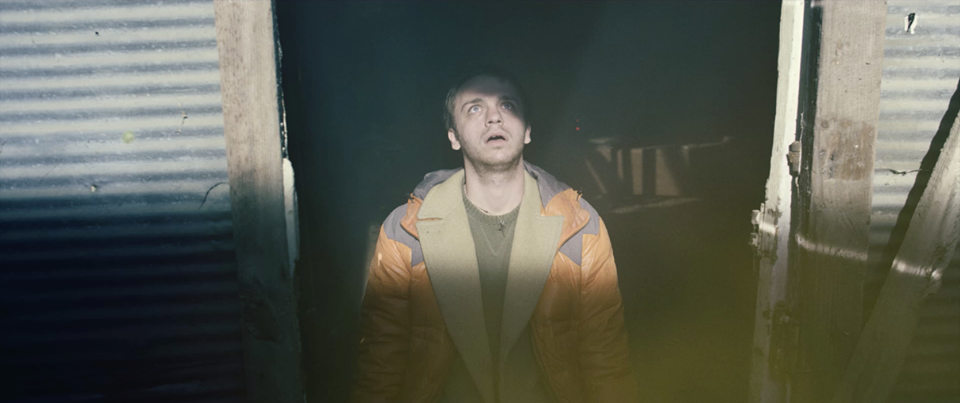
It’s a terrific premise: when a devout Christian is mistakenly left behind after the Rapture, he attempts to gain God’s attention by breaking the 10 Commandments. Even though I feel there could’ve been more done with it than what is delivered in Levi Agee’s 20-minute short film, “Rapture Us,” it’s still a very entertaining comedy with enough clever twists to keep it interesting. When you get past the notion that “God made a mistake” (it’s not supposed to be taken seriously), it’s an enjoyable romp.

It begins as a young man (played by Quinn Gasaway, Sacred Hearts, Holy Souls) awakens at night as he is levitated from his bed and stopped by the bedroom ceiling. When he is brought back down to the ground, he finds he is alone, with his family members and neighbors seemingly “raptured” into heaven. Further proof that he is now living in the End Times is the appearance of a new friend: an undead wisecracker (played by writer-director Agee) who appears from under Gasaway’s bed. He has a plan for them both to get God’s attention and be raptured, which is, of course, to break all the 10 Commandments.

A feature film could be crafted from this idea. But as is, “Rapture Us” is definitely worth recommending for its ambition, skill, and talent. It’s well-made, with sharp direction by Agee and striking cinematography by Bryan Stafford (The Dealer’s Tale), and also well-acted. Quinn Gasaway is a likable actor and a good lead here, and Levi Agee, as a performer, is freaking hilarious. I loved him as Bo in Cotton County Boys which played at the festival four years ago, and after meeting him since then and watching his interviews at this year’s festival, Agee himself is pretty much exactly like the characters he plays and that’s fine—no one can play Levi Agee like Levi Agee. And with “Rapture Us,” he also proves to be a good filmmaker.

the-ask

The Ask

Smith’s Verdict: ***1/2

In Ed Lowry’s 5-minute short, “The Ask,” a teenage girl (played by Lowry’s daughter) practicing a speech she plans to present to her parents, leading to the question in point. It’s a very well-edited piece, as her pitch is told to us in order but from different locations at different times, as if she’s been preparing to ask this for a long time. It’s well-handled and also quite funny. My only problem with the film is a slight nitpick: I feel the punchline could’ve been stronger. But it’s cute; I’ll let it slide. I like Ed Lowry’s work as an actor (he also received the Best Arkansas Performance award for his role in David Bogard’s “A Matter of Honor” at last year’s LRFF Awards), but like Levi Agee (and also Kenn Woodard, for that matter, for “Hush”), he also proves to be a capable filmmaker.

Contact

Smith’s Verdict: ***1/2

“We help people see the world more clearly.” A perfect slogan for the eye doctor if ever I heard one. Alexander Jeffrey’s 10-minute short film, “Contact,” centers on an eye doctor who believes he can not only make people see more clearly with eyeglasses and contact lenses but also literally give them fresh new outlooks on life and the world around them. Can he? He claims he truly can when he meets an old friend from high school, who is nearsighted. The doctor says his old friend could use some contacts, but after a falling-out due to a betrayal, the friend isn’t sure he can trust him. What he learns is something he won’t forget. The way the resolution comes along is very cleverly handled in an unpredictable way. And it also delivers a positive, powerful message of not taking things for granted and considering what you have rather than what you don’t. “Contact” is a well-done short.

Join me later for Block 3!

LRFF2015 Review: “Made In Arkansas” Shorts Block 1

18 May

Reviewed by Tanner Smith

Last week, the 2015 Little Rock Film Festival was underway and I attended six Made In Arkansas shorts blocks, for short films made in Arkansas (of course). Usually after the festival, I’ll write individual reviews for a select few. But this year, I decided to review all of them. And because a good deal of them are so short that they don’t give me enough material to work with unless I analyze each film as a whole (thus spoiling the entire film), I decided to write posts of each block, as I write short reviews describing what I thought of each short. The catch? I cannot review my own two short films (yes, I had two in the festival; I’ll point those out in later posts), nor can I review two shorts I worked on (even if it was documenting behind-the-scenes; it’s still being part of production). With that said, let’s start off with Block 1!

 Loser

Loser

Smith’s Verdict: ***

When I first saw one of the two central teenage characters in Andrew Lisle’s 8-minute short film, “Loser,” wearing a brown paper bag over his head (with two eye-holes and a smiley-face drawn on it), I thought it’d be one of those quirky indie comedy-dramas that do strange things for no reason other than to be “quirky,” with little to no development. And while it is a strange sight for one typical high-school boy to have a conversation with a boy with a bag over his head, I let it slide as the film went on. This is a bullied kid looking for ways to express himself, like almost every high-schooler. Yes, it’s a ridiculous sight, but I understood it as a trait that isn’t as uncommon as one might think. Director Andrew Lisle was in high school when he made this short (Har-ber High School to be exact); he gets the emotions of these kids down and thankfully understands the effects of not just bullying but also vengeance. This is something that has been addressed before, but it’s just as effective. And I think this may have to with Lisle’s limited resources and not trying to exaggerate anything (strange, given the bag), but its small scale adds on to it. “Loser” is an impressive short.


Forsaken

Smith’s Verdict: **1/2

“Forsaken” is a half-hour film written and directed by recent John Brown University graduate Krisha Mason. It’s about a young woman, named Janessa, who is suffering a tragic loss and trying to move on. And thanks to a controlling mother who is less helpful than she thinks she is, Janessa feels even more miserable. She meets a young man in her apartment building. With his help, she can keep her hope alive. There are sure signs of talent at work here. Mason’s direction is solid, I admire her for trying to tackle a difficult subject such as coping with loss, and the film looks nice, thanks to striking cinematography by Lauren Addington. But the script needed work in order for the film to be truly effective for me. While there were some strong scenes, such as a conversation between Janessa (well-played by Victoria Fox) and her friend, Tanner (Derek Duncan), and a moment in which she breaks down in a church, others, especially those involving Janessa’s appalling mother, feel artificial and forced. The film also brings forth a new plot twist that descends the film more melodramatic than it should be and what’s worse is that it seems all too convenient for the dramatic payoff. “Forsaken” isn’t a bad short film, but it could’ve been better.

10982236_10152944555799611_3913822612409342329_n

Monotony Broken

Smith’s Verdict: ****

J.C. Cocker’s 5-minute short “Monotony Broken” is about a young woman who is depressed at this point in her life and has a blissful fling with a stranger she meets in a laundromat. There isn’t a lot I can say about it without discussing the film in its entirety, which wouldn’t be fair unless the film was online (which it currently isn’t). So, for now, I’ll say that this is a beautiful short that works as art as well as film. There isn’t any dialogue said/heard in any of the five minutes of running time; it’s just simply mood. Thanks to Cocker’s direction, Matt Bates’ gloomy cinematography, and outstanding acting from Rachel Van Hampton as the woman and Kristof Waltermire as the stranger she meets, “Monotony Broken” is quite astounding.

11149241_10152713318661447_3823539604759372715_n

Stranger Than Paradise

Smith’s Verdict: ****

The full review can be found here. Excerpt: “[…] a beautiful film, proving that you can tell a moving story with just one minute of running time.”

11071746_1555888894700012_9056767350489994572_n

Rites

Smith’s Verdict: ***

At its surface, UCA student Cody Harris’ 15-minute film, “Rites,” is about a teenage girl who notices her father’s strange evening behavior and makes a shocking discovery. But at its core…

It’s hard to write a full review of “Rites” without analyzing the ending (or at least, attempting to analyze the ending) because it delivers a shocking revelation that goes into the question (I believe) the film was asking itself, which is, “Does anyone have a right to impose their will on anyone due to their religious beliefs?” How far does that go? Thinking more about the ending, which I won’t give away here, it’s a very chilling thought that raises quite a few questions and makes you ponder what it was really about. The more I thought about it, the more disturbing the whole film seemed.

When the film is posted online, I’ll publish a new, analytical review of the film with spoilers and the attached film. But for now, I’ll say that it is an effective, powerful short; probably more powerful than the “Verdict” makes it out to be. The setup is a little clumsy in its execution, but the acting from Kimberlyn Fiits, Tom Kagy, Johnnie Brannon, and Pammi Fabert is consistently good, the cinematography by Jake Lurvey is well-done, and the film’s ultimate payoff is unsettling and thought-provoking.

10696417_1569825666581038_4661510087930428255_n

The Dealer’s Tale

Smith’s Verdict: ****

Justin Nickels’ 15-minute film, “The Dealer’s Tale,” is a modern retelling of Geoffrey Chaucer’s “The Pardoner’s Tale,” which was about men searching for Death before they are led to treasure by a mysterious old man who claims to know where he is. They stay with it, as things go wrong. It’s one of the great moral tales in literature. In “The Dealer’s Tale,” quite possibly one of the best short films in Arkansas, two hit men, Miller (Jason Thompson) and Reeve (Jason Willey) are searching for Death after performing a new hit, encounter a mysterious little boy (Taj Van Tassel, effectively low-key) who witnesses them dumping the body, and the boy leads them to a hidden treasure (in this case, cocaine) which the men decide to guard for a while until, of course, something goes horribly wrong as tension amongst the men gets the better of them. The settings of both the story and this short film are different, but the structure, spirit and tone are the same. They both display how greed is “the root of all evil” and can turn supposed-friends against each other.

“The Dealer’s Tale” starts off amusing with Tarantino-esque dialogue exchanges between the two men driving down city streets, grisly hints as to their deeds, the introduction of this strange, innocent child walking through quiet alleyways and under bridges, and then the inevitable betrayal leading to an incredible final act. The last few minutes of “The Dealer’s Tale” is quiet and haunting and so well-done that I’ll never forget it. Without giving it away (though, really, it’s an old story), it captures the feeling of contemplation not just with words but with mood in ways that some films can’t or won’t take the risk at attempting. Justin Nickels is a hell of a filmmaker.

Now I’ll take a moment to discuss the acting from the two principal actors. Jason Thompson (who was excellent in the Arkansas feature “45 RPM” and shorts such as “Antiquities”) and Jason Willey (funny and sincere in shorts such as “Diamond John” and “Stranger Than Paradise”) are perfect together. With Thompson’s hotheadedness and Willey’s more reserved manner, these two make a great, efficient comic duo. They worked together in Nickels’ previous short, “Strangers” (screened at last year’s LRFF), and shared a hilarious scene together in “Antiquities” (albeit portraying very different personalities in that one); they’re fun to watch together. They exhibit appealing chemistry and their timing is spot-on. By themselves, they’re good too, particularly Thompson who is part of the reason the final act works so well.

“The Dealer’s Tale” is very well-made, well-acted, and gloriously-shot (by Bryan Stafford of “45 RPM” and the previously-reviewed “The Sowers”). I look forward to seeing Justin Nickels’ next project (and I’d be lying if I said I didn’t wish Thompson and Willey teamed up again).

Join me later for Block 2!

4 LRFF2015 MIA Shorts (Under 5 Minutes)

10 May

11149241_10152713318661447_3823539604759372715_n

Reviewed by Tanner Smith

This is a collection of mini-reviews for four short films that were made in Arkansas and selected to screen at the 2015 Little Rock Film Festival. And when I say “short,” I mean “short”, like “under five minutes.” But I still have a few good things to say about them, and when the films are posted online, I’ll link them all at the bottom of this page.

—————————————————————————————————-

Meredith

Smith’s Verdict: ***

Scott Eggleston’s five-minute short, “Meredith,” is about a young couple (played by Jordan Neill and Hannah Culwell) on the night before they move out of their apartment, as Neill confesses his infidelity to Culwell with a woman named Meredith, whom he works with, and the night becomes unpleasant for both of them.

There isn’t a lot I can say about this one without analyzing the ending, thus giving away some major spoilers, particularly two important twists. The film is set up as one big joke, with the ending delivering the punchline. It’s funny and effective, but I can’t talk about it. So I must sum up the overall film quickly—Eggleston’s direction is solid, writer Chris Henderson’s dialogue is mostly well-chosen, Neill and Culwell’s acting are fine, and the ending, like I said, is funny and has been properly set up all along. It also delivers three important messages in a relationship—be faithful, be honest, and think before you share certain things.

That’s about all I can say about it, unfortunately; again, without giving anything away, it’s a funny short that I recommend.

——————————————————————————————————–

Not Interested

Smith’s Verdict: ****

You know those annoying door-to-door evangelists who you know mean well but are so darn cheerful that every time you see them, you wish something would distract them if not stop them from bugging you and your neighbors? Well, it turns out all you have to do is bring two of them in front of the same targeted house and they will fight each other in mortal combat. At least, that’s Matthew Thomas Foss’ solution in his minute-and-a-half short, “Not Interested.”

With no dialogue and a neat visual flair, “Not Interested” is simply a “fight video” but a well-made one that was quite fun due to its insane filmmaking style. It begins with a well-dressed, joyful Morman (Paden Moore) about to step forward to a suburban house when a similarly-dressed, similarly-cheerful rival (Harrison Trigg) joins him. Suddenly, they’re staring each other down, as Western music plays (and something rolls along the ground, representing a tumbleweed, but it was so quick, I couldn’t tell what it was). Then, techno music kicks in as the two head for the door and then brutally fight each other.

With quick editing, nice camerawork, fast-motion, slow-motion, sound effects, and even a “hayah!” sound when one of the men strikes the other, “Not Interested” is a wild, strange short that’s fun to watch. Do I wish it went further in its wildness? Absolutely. But how much more could you do in a minute-and-a-half?

———————————————————————————————–

Perfect Machine: MatchMaker

Smith’s Verdict: ***1/2

One of the Made In Arkansas selections at last year’s Little Rock Film Festival was a two-minute short called “Homefront,” for which its director, Eric White, was nominated for Best Arkansas Director at the LRFF Awards. Despite its very brief running time, I managed to turn out a full review for it. And I find myself able to get as much material out of this companion piece as well. (Despite that, I added it to this four-mini-review post because…it could be longer?)

“Homefront” and Robin Sparks’ “MatchMaker” are part of the same series of short vignettes that show more background of the world within Jarrod Beck’s UCA graduate thesis film, “Perfect Machine,” a 20-minute sci-fi short that takes place in a dystopian future where all citizens are forced against their will to comply to the new system of government for a “perfect” society. “Homefront” was about two rebels who escaped for a better life in isolation, while considering how limited their life choices are for the future. “MatchMaker” shows how people in this society are matched together.

“MatchMaker” is about 30 seconds shorter than “Homefront,” and while it doesn’t take as much of a dramatic narrative approach as that short, it’s still very effective, especially when you consider the context. The world that surrounds “Perfect Machine” and the other vignettes is a fascist civilization in which everything is decided for society members by their leaders, no matter what. They decide what they think is best for the people, and this unfortunately includes matching people together so they each have a “perfect mate.” Personal choice is not an option in this future; whomever they are matched with, they are stuck with no matter what. As described in the short, you are examined and then they run your DNA samples into a computer system so your match is easily found.

This isn’t an explicit factor in the finished film, “Perfect Machine.” It’s just mainly one of the aspects of this universe addressed in the vignettes to give a sense of background. With that said, as I watching “MatchMaker,” I couldn’t help but imagine what it must be like for those who are matched together through science and not by nature. Imagine a story about two people in this dystopian future who are unfairly matched together, don’t love each other, but have no choice but to carry on with this forced relationship. That would make for an intriguing film (a longer film, also), but it’s not the one I’m reviewing right now. “MatchMaker” got me thinking of what it meant, as did “Homefront,” and in that respect, it works well. Like “Homefront,” it’s effective on its own. It’s also a good-looking short, taking place inside a sterile-looking laboratory, in which a young woman (Alisa Harral) is tested by two doctors (Maddie Arey, Michael Tatum), that resembles the future presented in “Perfect Machine,” with the right amount of soft lighting and decent visual effects. The cinematography by Mason Kindsfater works well too. Even at a brisk minute-and-a-half running time, “MatchMaker” is an effective short film.

NOTE: The finished film, “Perfect Machine,” is also screening at this year’s LRFF. I’ll get to that review soon.

————————————————————————————————–

Stranger Than Paradise

Smith’s Verdict: ****

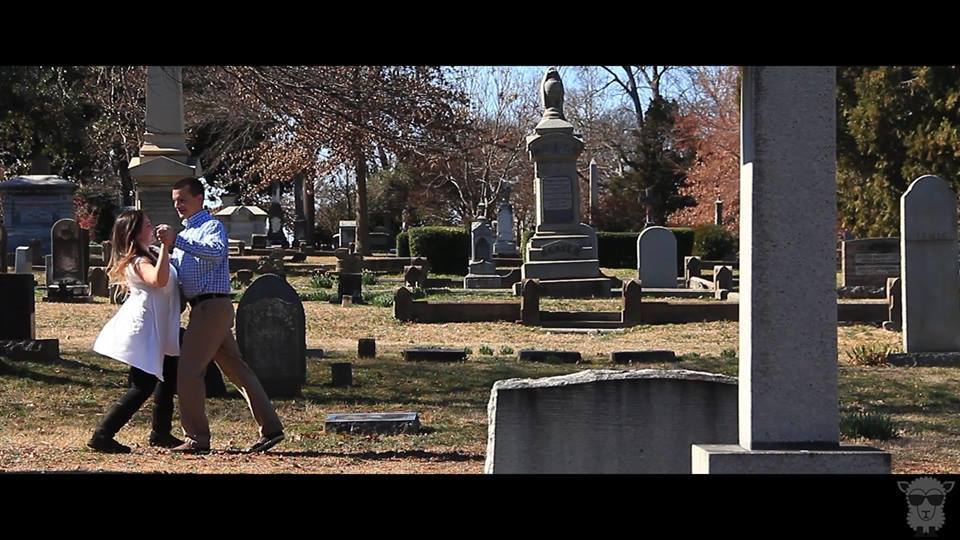
No, it’s not the 1984 Jim Jarmusch indie masterpiece. It’s Johnnie Brannon’s minute-long “microshort,” as it’s labeled. This short film is only one minute long. But what a minute it is! This is a great short film—it’s sweet, poetic and well-staged, and it’s also funny and even challenging.

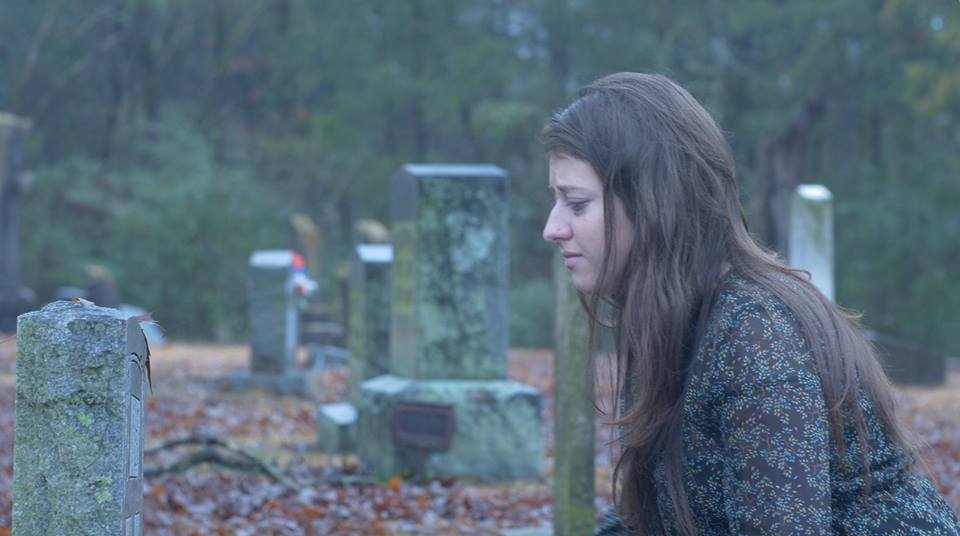
Brannon directs the short and also stars as a cemetery worker who watches as a grieving widower (Jason Willey) brings roses to his late wife’s grave, when along comes his wife (Alli Clark) who has come back to cheer him up. They share a nice time together in the cemetery, frolicking like a couple happily in love, but as the cemetery worker looks on…the man is all by himself.

The film’s humor comes from the contrast between reality and fantasy. We can put it together that the woman’s “ghost” is not real but rather a manifestation of the widower’s loss. It is funny when the couple holds hands and skips along the grass, and when it’s revealed that the man is only skipping alone, with his arm extended to the side where his wife should be. (And for that matter, it’s also funny when Brannon’s character reacts to each silly moment.) But strangely, it’s also kind of touching when you consider that he’s trying to recreate a time that was and will never be again. By the end, you have to decide for yourself: will he let go? Will he continue to weep for the memories or to treasure them instead?

The short’s look mixes color and black-+-white, with color in the fantasy world and B+W in reality. I think this is a brilliant move that makes for obvious but still effective symbolism for how Willey’s character sees the world both with and without the love of his life. This is a short comedy-drama with something to say.

With the aid of a moving music score by mobygratis (www.mobygratis.com), “Stranger Than Paradise” is a beautiful film, proving that you can tell a moving story with just one minute of running time.

NOTE: I learned this film was made with only one camera battery with 20% of battery power left, so Brannon had to shoot the whole thing in a hurry. I should be surprised by how well it turned out, but Brannon, Willey, and Clark, who worked together for the 48-Hour Film Project, can write, shoot, and edit a solid film in two days, I believe they can film something of good quality in one hour.

‘Twas the Night of the Krampus (Short Film)

10 May

11058417_1555274804754572_4141377977809437307_n

Smith’s Verdict: ***1/2

Reviewed by Tanner Smith

Santa Claus is a suicidal grouch who definitely isn’t feeling the Christmas spirit this year. One of his elves is a grump with a mechanical hand. His wife is transformed into a child-abducting monster called the Krampus, who has just kidnapped the President’s daughter. And both Santa and the elf fight the Krampus in an abandoned factory of sorts. Yes, all of these elements go together in the 10-minute UCA undergraduate thesis film, “’Twas the Night of the Krampus,” and surprisingly, they fit well together.

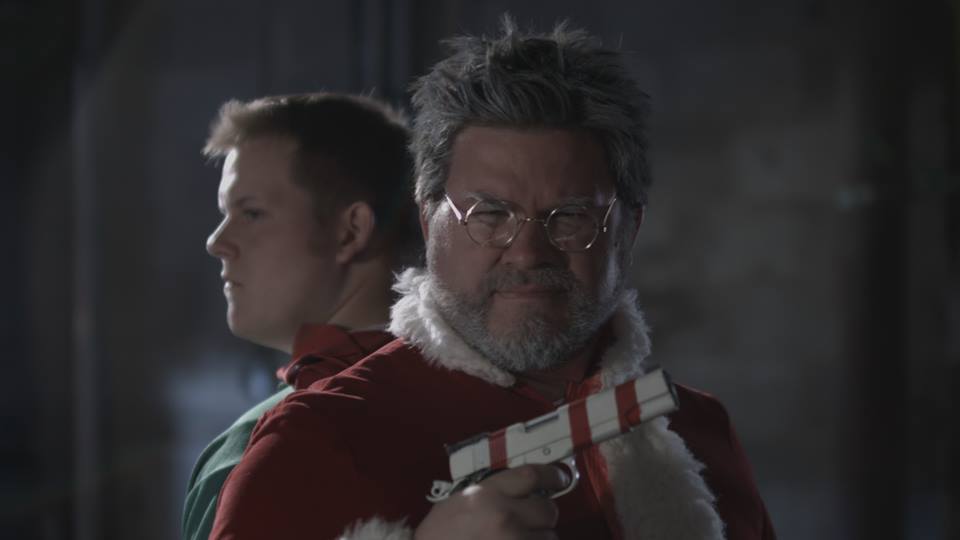
The short, written and directed by Donavon Thompson, is more in the spirit of the typical Buddy-Cop Action-Comedy, with some key differences. For one thing, the “buddies” are not “cops”; they’re depressed (but skilled) Santa Claus (or “Nick,” as he prefers to be called; short for “Saint Nicholas”) and reluctant, irritable Bill and Elf. Santa’s handgun looks like a candy-can pistol (white with red stripes). And in the midst of a driving techno music score, suddenly, we’re treated to its own version of “Carol of the Bells” in the middle of the action-filled climax. Oh, and need I also mention that as well as a candy-cane-striped gun, Santa’s other weapon of choice is a candy-cane-striped sword? Absolutely.

The film opens with some dark humor in a scene that recalls a similar moment in “Lethal Weapon,” as “Nick” (Johnnie Brannon) contemplates suicide in his study on Christmas Eve, holding a gun to his head before placing the barrel into his mouth and about to pull the trigger. At this point, I should mention what qualifies this as dark “humor” to me—the gun is white with red stripes, like a candy cane. (Ho-ho-ho.) One of his elves, Sam (Kandice Miller), unwittingly stops him to deliver him important news—the President’s daughter (Kwynn McEntire) has been kidnapped, and both Nick and Bill the Elf (Matt Mitchell) know who, or what, has her: the Krampus.

For those who aren’t familiar with the folklore that features the Krampus (and I’ll admit I wasn’t at first), the Krampus is a creature that punishes children during the Christmas season, thus presents itself in contrast with Saint Nicholas who of course rewards children. But knowing that doesn’t matter, as the contrast is never addressed. Here, the Krampus (Xander Udochi) is an unattractive meanie with a whip (and a distorted voice); a villain for our heroes to stand up against. But it’s also something more, as we learn early on that the Krampus can take the form of whomever it bites. (As Bill puts it, “Once you get bit by the Krampus, you become the Krampus.”) Since Nick has lost his wife, Mrs. Claus (Karen Q. Clark), to the Krampus and even appears at a crucial moment late in the film (…but is it really her?). This touch gives the story, as well as Nick’s character arc, a more psychological edge that’s actually kind of moving.

This Krampus is no scarier than the stories about it or even the pictures based on its appearance. (Hell, I’d even argue that it’s much more unnerving when it takes the form of Mrs. Claus; Karen Q. Clark, who starred in Johnnie Brannon’s 48-Hr short “La Grande Fete,” really sells a brief role with passive-aggressive tone of voice that makes the scene very unsettling.) But the film isn’t about the Krampus; it’s about Santa Claus coming to grips with his loss while it’s also a kick-ass action short that is very funny at times, a little moving other times, and entertaining overall.

The action climax is very well-executed, with gripping cinematography by Nikki Emerson (there are many great shots here) and tight editing by Thompson. It’s also aided by nicely-done music by Cody Harris; the addition of “Carol of the Bells” in the middle of the score is particularly wonderful. And of course, being in the tradition of the Action-Buddy Action-Comedy, there are quite a few badass one-liners for Nick and Bill to deliver, some of which include puns that actually aren’t painful.

Thanks to sharp direction and good writing by Thompson, “’Twas the Night of the Krampus” is a fun, amusing, entertaining 10-minute thrill ride with Santa Claus kicking some ass.

The Whisperers (Short Film)

5 Apr

11070023_829190690462239_1420823634781011477_o

Smith’s Verdict: ***1/2
Reviewed by Tanner Smith

Jason Miller’s “The Whisperers” is a UCA-produced short film I’d very much like to do a “spoiler review” for (like with UCA shorts “Hitchhiker” and “Greed”) just so I can analyze the ending and explain why I think it works so well. But that wouldn’t be fair at this point in time, since its festival run has hardly begun yet (I saw it at a premiere screening). In a year or so, when “The Whisperers” is published online, I’ll come back, write another review, link the film, and talk about the very things I can’t talk about here. This is a spoiler-free review that goes into the quality of the film overall.

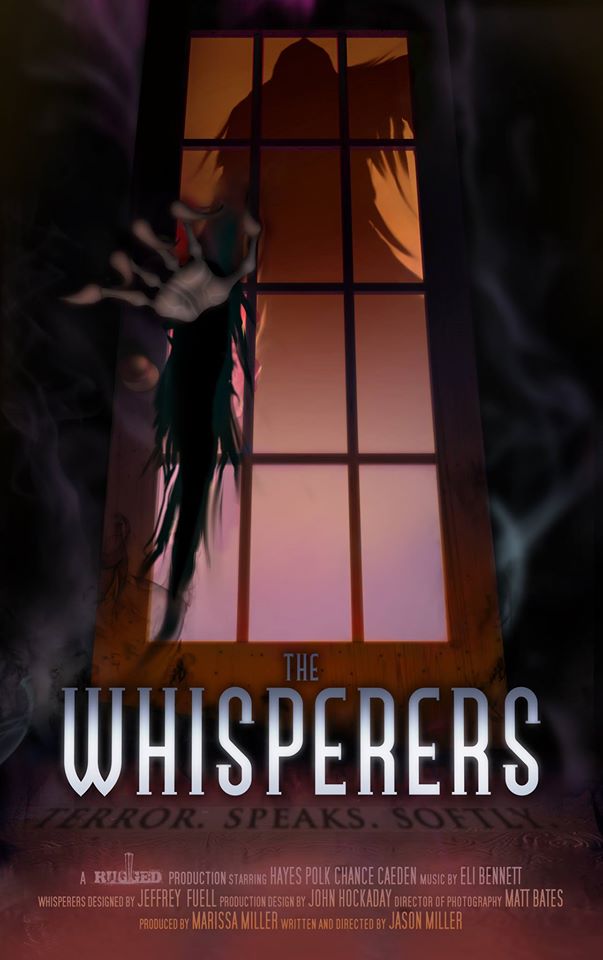
Something wicked this way comes, and when it does, you hear it whisper. “The Whisperers” is a 20-minute horror-suspense film that’s more or less in the spirit of an old episode of ‘90s family-horror TV shows such as “Goosebumps” and “Are You Afraid of the Dark,” among others (and its running time is about the same duration of one episode). Having watched those shows a lot as a kid, I rarely recall any of them that “scared” me. “The Whisperers,” on the other hand, despite its familiar setup and being technically family-friendly, actually managed to get under my skin. It works as well as any good horror film in that it has a neat sense of buildup, atmosphere, and mystery.

The film takes place sometime in the mid-90s, around Halloween, as a pair of squabbling brothers—11-year-old Nathan (Hayes Polk) and 8-year-old Zachary (Chance Caeden)—are left home alone at night in a rural country home. Zachary wants to play with Nathan, but Nathan just wants to be left alone and sees Zachary as a nuisance. But things start to get creepy when Nathan hears faint, garbled whispers coming from outside, and he realizes he and Zachary are not alone…

What’s out there? What does it want? What does it whisper? As the film continues, the whispers become a little clearer and it’s very unnerving to find out what they mean. It all leads to a payoff that (again, without giving too much away) is both disturbing and haunting. The film’s epilogue ends on a poignant note that makes the film more of a cautionary tale about sibling rivalry than what the rest of the film may have led you to believe. But if you watch it again, you’ll see that it’s been building up to not just the scares but to the message. It’s subtle, but it’s there. This is a horror film that is about something.

There are some good, effective creepy moments, some of which make good use of the film’s ’90s-culture references; my favorite scare involves the Clapper. And there is a good deal of suspense aided by moody cinematography and efficient sound design. Sometimes, the ambience of crickets chirping outside or a horror movie playing on TV inside is enough to get the job done, but other times, when Eli Bennett’s chilling music score comes in, are effective as well. If I have a problem with the film, it’s that while it has a good amount of unsettling moments, I imagined certain ways they could’ve made two or three other shots scarier.

Hayes Polk gives a good, natural performance as a pre-teenage boy who suffers the usual problems most kids that age do, especially those who have younger siblings; he sees his kid brother as an annoyance and just wants to be left alone with his thoughts, which seem to revolve around a girl he likes. As Zachary, Chance Caeden is not a very polished actor, but he is enthusiastic, and there are instances when he’s successful at being the source of Nathan’s irritation, particularly when he’s running around the house and pretending to be a superhero (he wears a cape and calls himself “Zach Attack”).

I wish I could say more about the ending because it truly is terrific in the way it brings it all around and makes “The Whisperers” not just a horror story but something more moving and profound. The saying, “Be careful what you wish for,” is the best way to describe it; it’s very well-done.

The film’s writer-director, Jason Miller, previously co-directed the collaborative short film, “Blood Brothers,” and he shows in both these films that he is fully capable of balancing ordinary setups with complex dramatic issues. I’m sure I’ll admire even more of his work in the future.

NOTE: The film is available on demand at https://www.indiereign.com/v/da5d3

Paradigm (Short FIlm)

7 Nov

1000507_10100848049489027_911278862_n

Smith’s Verdict: ***

Reviewed by Tanner Smith

There are two expressions often carried around when someone compared to his/her parent(s), and each has an opposite meaning—“You are not your parents” and “You’ve become like your parents.” When parents make mistakes, kids tend to make an inner sacred pact that they won’t make similar mistakes. Some make it through, following that pact while escaping childhood trauma. Others aren’t so lucky, even as they try; haunting ghosts from the past tend to get in the way of rational thought, and they find themselves doing almost exactly what they swore they wouldn’t do. Writer-director Jess Carson’s 26-minute short film “Paradigm” shows an example of the latter possibility. It begins with happy newlyweds and ends with their marriage fallen apart, as they make unforgivable choices that can be traced back to hurtful events from one’s childhood. The husband, Derrick (Kyle Wigginton), came from a home of abuse, due to his alcoholic father, Maverick (Scott McEntire) who would abuse him and his mother, Anna (Casondra Witham). By the end of the film, Derrick will have inherited similar traits and behaviors, and his wife, Jocelyn (Mindy Van Kuren), will take it no more.

The film begins with a tender moment in which Derrick and Jocelyn refer to each other playfully as Mr. and Mrs. Peters before Derrick reveals his fear of becoming like his cruel father and hurting her. She assures him that it won’t happen, but as time goes on, the Honeymoon stage ends and things start to get worse when they find they can’t have children. This puts Derrick in a bitter mood. Five months pass, and we see them barely relating to each other, as Derrick starts a bad habit of drinking and they start having arguments. During one such argument, Derrick hits her…

The short mostly takes place inside Derrick and Jocelyn’s house, showing us how their marriage transitions into a disaster. And the film doesn’t shy away from some pretty tough material. By the end of the film, I was actually kind of depressed (and the Sheldon Kopp quote shown before the credits didn’t help much either).

Flashbacks that show Derrick’s father’s behavior are effectively handled, as they intersect with situations in the present that mirror the present. There are times when Derrick practically repeats his father’s harsh words word for word to Jocelyn. It’s a clever move.

“Paradigm” is more of an actor’s film, so a lot rides on the performances. Mindy Van Kuren does a great job playing a suffering woman who wonders when the line will be drawn in her relationship. Scott McEntire, who has acted in other shorts I’ve reviewed (such as “Stuck” and “A Matter of Honor”), turns in some of his best work as the father. But I am of two minds about Kyle Wigginton’s performance as Derrick. On the one hand, I see it as a poor acting job. His shouting moments seem a little off to me; he sounds like he’s forcing the anger. But on the other hand, Derrick is supposed to come across as pathetic, so maybe it was Wigginton’s choice to play it like this. I’ve seen him do well in other shorts, like “Blood Brothers,” so I wouldn’t doubt it.

I like “Paradigm,” but I think it could’ve been better with tighter editing. Some scenes seem a little long and even make the film somewhat repetitive. But I guess that was the point—to show the slow proceedings of this relationship in a way that we can get why/how it came to this, and to also show as it gets worse. In that respect, I shouldn’t complain too much about it. “Paradigm” is an effective short that worked for me.

NOTE: The film can be seen here: http://jessvcarson.wix.com/10th-dimension-pro#!paradigm/c20as

The Guard Responds (Short Film)

16 Oct

1000w_q75

Smith’s Verdict: ****
Reviewed by Tanner Smith

In late April 2014 came a major tornado outbreak in the central and southern United States. Seven of the outbreak’s tornadoes were deadly, causing 35 fatalities. One such tornado cut an 80-mile path of destruction in Arkansas, hitting the towns of Vilonia and Mayflower the hardest, causing extreme damage. Many people lost everything. Many homes were flattened. And about 16 people were confirmed dead. More than five months have passed and there are people who were affected deeply by the storm, still trying to move on.

The six-minute documentary “The Guard Responds” tells about how the Arkansas National Guard was called on to assist local authorities with traffic safety, search-and-rescue, and medical evacuation in those areas hit by the tornado. But some members of the Guard were also affected by the storm. Some lost their businesses and homes, and one (airman Daniel Wassom) lost his life.

The film is a blend of older news footage (chronicling the event and the aftermath), new wreckage footage, voiceover narration by LTC Matt Snead (who also produced the film), and interviews from Guard members and civilians. Among the interviewees is former Faulkner County judge Preston Scroggin, who recalls what it like seeing the tornado while driving home. Also among the interviewees is Wassom’s father, Daniel Wassom Sr., who remembers his son as a hero in his eyes—Wassom Jr. died to protect his family while their whole house was destroyed.

“The Guard Responds” is about the aftermath of disaster, but it doesn’t just state the facts so that it becomes more of a reporting-news story than a short documentary—it uses footage, testimony, and masterful editing to tell a story about those who will take time of their lives to help. CSM Steven Veazey, one of the interviewees, puts it best in a truly moving final speech—“They put their lives on hold to help these other lives.” Even if “The Guard Responds” were a TV commercial for the Arkansas National Guard, I would still highly recommend it.

NOTE: “The Guard Responds” was directed and co-written (with Lt. Col. Keith Moore) by no stranger to my Shorts reviews, Sarah Jones. I realize I don’t give her enough credit for editing; she edited her own previous films (“John Wayne’s Bed,” “Turn Right on Madness,” and “An Ode to Angeline”) and also edited other Arkansas-made short films (including previously-reviewed “La Grande Fete”). She edited “The Guard Responds” as well; it’s definitely among her best editing work.

La Grande Fete: The 48-Hour Film Project

12 Oct

1170851_1379612195600575_2145006655_n

Smith’s Verdict: ****
Reviewed by Tanner Smith

“La Grande Fete” is a seven-minute short made by the team Flokati Films for the 2013 Little Rock 48-Hr. Film Project. For those who don’t know how it works, it’s a competition in which filmmaking teams craft a short film in just two days. It begins when each team draws a genre. For Flokati Films, it was “Operetta.” So, they had to write, shoot, edit and compose a short film in only 48 hours!

If I thought I was impressed with the 2012 48-Hr. film “La Petite Mort,” I hadn’t seen anything yet.

Directed by Johnnie Brannon and written by three members of Little Rock’s Red Octopus Theater comedy troupe (Jason Willey, Luke Rowlan, and Sandy Baskin), “La Grande Fete” is a remarkable achievement in what dedicated filmmakers can do in just one weekend.

The story: Debi (Karen Q. Clark) brings her new beau, a shy plumber named Andy (Jay Clark), to meet her friends. Things seem fine until Debi’s charming ex, Blade Diamond (Sam Clark), arrives and convinces her to take him back. Can Andy gain enough confidence to fight for Debi’s love. Will Debi make the right choice in the end? The story itself is as simple and old-fashioned as a typical romantic comedy, but “La Grande Fete” isn’t about story. It’s about one important thing: making people laugh. I’ve seen this short with four different audiences at four different film festivals, and each screening I attended had an uproar of laughter all throughout, from beginning to end. And I was among them. I think “La Grande Fete” is freaking hilarious! Willey, Rowlan, and Baskin create a funny script out of familiar material with funny characters and clever lines of dialogue…or should they be described as “lyrics?” Being an operetta, nothing by the characters is said generally, but musically. Everything these people say is sung loudly. This is where a lot of the comedy comes from, and it really works. Another clever “operetta” move—all of the action takes place inside one location (a house), much like a play or (pfft!) an opera.

“La Grande Fete” is a treasure of a short that made me laugh and smile all throughout, but it’s also skillfully crafted. Director-of-photography Will Scott gives the film a sort-of “you-are-there” quality, making the (intentionally-) awkward moments even more awkward and funny, the editing by Sarah Jones is quick and well-timed (important for a comedy), and I also compliment Sam Clark for not only acting as Blade Diamond (isn’t that a great name?) but also creating the score that accompanies the singing. I can’t forget to compliment the game comic actors giving funny performances; everyone in this short is so funny. Jay Clark, who I loved in John Hockaday’s “Stuck,” is effectively low-key (or as “low-key” as you can be in an operetta) while playing a shy, awkward man looking to earn love and self-respect. Sam Clark is funny in his attempt to be smooth, and the supporting cast members (Jason Willey, Moriah Patterson, Michael Goodbar, Alli Clark, Drew Ellis, and Patti Airoldi) deliver amusing lines (er, verses). But the biggest standout is Karen Q. Clark as Debi. I can’t even begin to describe how humorous, luminous, expressive, and appealing her performance is in this short; it has to be seen to be believed. She’s wonderful here.

Oh, I should also mention Brian Chambers as well, since he has some of the biggest laughs as a one-man running gag, but… You know what? I’m sorry, but a review for “La Grande Fete” simply won’t do. You have background information, you have a Smith’s Verdict rating (the highest one, I might add), and now…

NOTE: You have the film. (Vimeo link: https://vimeo.com/101564615)

2ND NOTE: While watching this, be on the lookout for three important things: a plumber character named Andy Benoit, a horn for a prop, and the line of dialogue, “Tell me the truth!” Those were the three requirements for all 2013 48-Hour films. I won’t dare give away how they work in a horn in this film.

3RD NOTE: “La Grande Fete” received three awards at the 48-Hr 2013 Awards Ceremony: Best Music, Best Actress, and Best Film.

The Sowers (Short Film)

10 Oct

240646_521718641175031_1421531275_o

Smith’s Verdict: ***1/2
Reviewed by Tanner Smith

“The Sowers” is a short film that…frankly, I started out hating, but later found myself loving. I saw it twice. The first time, I disliked a good portion of the characters within the first 5 out of the film’s running time of 15 minutes. While I was admiring the film’s look and artistry for the rest of the running time, it wasn’t until the ending that I realized I was supposed to dislike said-characters. When the film was over, I was thinking more about what I just saw and what it all meant. Then I watched the film a second time and found myself looking at it another way (most likely the way it was originally intended to be).

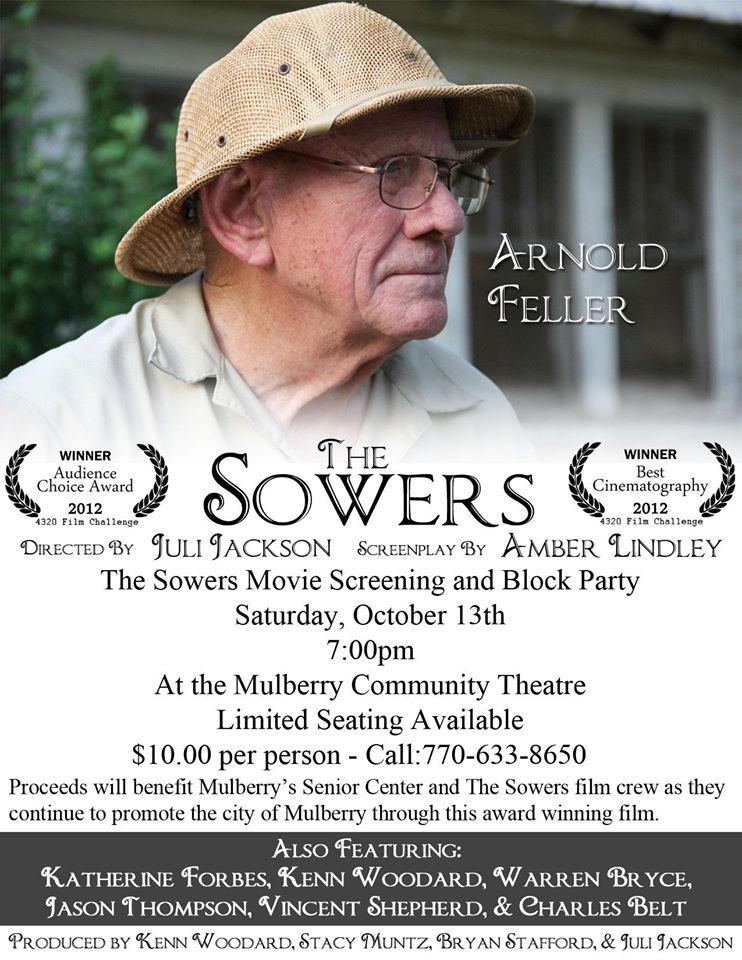
Filmed in Mulberry, Arkansas, the film opens disturbingly with an image of an elderly man lying on the ground in pain, with a bloody, mangled hand. We’re then taken back to what led to this horrific accident as we meet the man, simply known as Papaw (Arnold D. Feller). His stubborn, bitter daughter, Sissy (Kathy Forbes), sometimes cares for him and can hardly tolerate him anymore. It’s clear that he’s not entirely senile as everyone else in his family thinks—he’s just stubborn as well and has his own way of doing things, even if it’s enough to make Sissy angry (even to the point of bringing up a tragedy to his face—“You killed Mama and you’re gonna kill me too!” she snaps at one point). He also has two grandsons (Warren Bryce and Jason Thompson); one is conceited, the other just lazy, and both just want some of Papaw’s fortune he’s been saving that he has stashed in jars hidden in a drawer.

It’s clear to us that neither Sissy nor the grandsons care for Papaw much and are most likely waiting for him to die so they can take his money. But midway through the short, it’s also clear to us that Papaw doesn’t see these people as “family” in one brief but brilliant cut that shows us exactly what they look like to him. The only ones who seem as close to being family as he’d like are a friendly stranger (well-played by Kenn Woodard) and his young son. The stranger helps him to mow the lawn.

While you don’t see enough of the family to know what they’re like outside of being greedy and selfish, the ways that these people behave and act are at least realistic. What makes this certain aspect of a dysfunctional family most remarkable is that it isn’t leading up to a rekindling. Far from it. The film ends with a payoff that is pretty much an “up-yours,” if you’ll excuse me, to Sissy and those damned grandsons. Without giving it away, it’s just what I think “The Sowers” needed and I don’t think any other ending would’ve saved the film like this one did.

“The Sowers” was directed by Juli Jackson, who also helmed the Arkansas-made festival-favorite feature “45 RPM,” and I’m convinced she’s one of the best directors based in Arkansas. She gets natural performances out of her actors, knows how to balance comedy and drama effectively, and gives her films a look & feel all her own. Credit must also go to Amber Lindley, who wrote the script; Bryan Stafford, who shot the film (he also shot “45 RPM” as well); Russ & Les Galusha, who edited the film and also provided makeup for certain pivotal shots; Amos Cochran, who composed a haunting score; and Mike Poe, who did art direction. They have crafted a film that made me cynical at the beginning, pleasantly surprised at the end, and, after another viewing, made me appreciate it as a whole.

NOTE: The film can be seen here: https://vimeo.com/63156927

An Ode to Angeline (Short Film)

14 Sep

small

Smith’s Verdict: ***1/2
Reviewed by Tanner Smith

Ever since the UCA-produced 20-minute short “John Wayne’s Bed,” I consider writer-director Sarah Jones to be one of the most talented independent Central Arkansas filmmakers around. And what’s great about her filmography of short films (made in Arkansas) is each one is different. With “John Wayne’s Bed,” it’s a riveting drama & character study. With “Turn Right onto Madness,” it’s a slasher film. And I hear she has a new documentary, “The Guard Responds,” about the Arkansas National Guard’s response to the tornado that swept through the Central Arkansas communities Mayflower and Vilonia earlier this year.

But of course, there’s also “An Ode to Angeline,” Jones’ 4-minute short that premiered at the Little Rock Film Festival a few months ago. I caught it there along with the other numerous Arkansas shorts I reviewed. I knew I liked it, but I think the reason I didn’t review it then was because…well, because I needed to see it again. Its very brief running time didn’t help much either (though I did end up reviewing Eric White’s “Perfect Machine: Homefront,” which is actually two minutes shorter than “An Ode to Angeline”). There seems to be enough material for at least a 10-to-15-minute short. As it is, it’s a 4-minute “ode,” as the title suggests, and it’s still a pretty damn good one. Seeing it again, I can say it’s a well-made, disturbingly effective short that seemed to have more on its mind and left me with more to think about.

The film is about a man who is obsessed with an unattainable beauty (named Angeline) and expresses his feelings to…well, I can’t exactly say to whom. That’s one of the problems with reviewing a film as short as this. Bottom line is, he wants so badly for her to want him that he wants her to suffer as much as he did/does. And that’s all I can say about the story.

Okay, as you can probably tell from my not-so-subtle writing style, the running time is getting to me. But why should it? I mean, the craftsmanship is evident in the directing & editing; the actor playing the narrator, Johnnie Brannon (no stranger to my Short reviews—read “PM: Homefront,” read “Twinkletown,” read “Still Life,” read “A Way Out,” and holy crap, this guy gets around), is chillingly good; it is an ode, as the title states, and it’s about as long as it should be in that sense. Maybe my problem is I don’t want Sarah Jones to make an “ode.” After seeing what she’s done with the material for “John Wayne’s Bed,” I would’ve liked to see what more she could do with this idea of obsession unleashing the inner beast, which is always fascinating. Keep the cast (which includes Kirby Gocke as Angeline), keep the crew (which includes director of photography Grant Dillion), and branch out more with this concept.

But I keep getting sidetracked here, and I have to review the film for what it is rather than what it could’ve been. I don’t dislike “An Ode to Angeline.” On the contrary, the finished product is very good. It’s very well-shot, the editing is great, the dialogue said by the Brannon character is haunting, and it works as a short thriller. Sarah Jones’ “An Ode to Angeline” is an effective short that shows yet again why Jones is a skilled filmmaker; I look forward to seeing her next film.

NOTE: After finishing this review, I messaged Jones and asked her why she chose to make a film as short as this. She said she wanted to “experiment with telling a story in under 5 minutes.” I can respect that.