Archive | My Favorite Movies RSS feed for this section

My Favorite Movies – Explorers (1985)

13 Oct

By Tanner Smith

I didn’t know it at the time, but one of my favorite movie directors as a kid was Joe Dante. When I was growing up and while I didn’t know the name of the director, I watched a lot of his movies (“Gremlins,” Matinee, “Small Soldiers,” “Innerspace,” among others) and noticed many similarities that I enjoyed watching–goofy lighthearted fun, some dark comedy, referential in-jokes about classic cartoons, and good fast-paced entertainment (oh, and a Dick Miller cameo appearance in each one of his movies).

And the one I watched the most in my childhood was definitely his sci-fi fantasy, “Explorers,” about three kids (two of which are played by a young Ethan Hawke and a young River Phoenix) who are launched into space via their own homemade spaceship and actually make contact with an alien species…

OK, that premise does sound admittedly ridiculous, but surprisingly, this movie manages to tell its story in a plausible way (plausible enough in its setup, anyway). The kids are portrayed as real kids and the film takes its time to show how they’re able to create their own flying spaceship; the first 40 minutes shows how it comes from a simple discovery to a way of getting in touch with aliens who send out signals even in their dreams. Later in the film, they do go up in space and find an alien spaceship.
People are split about this film–they either like it or…I don’t think there’s anyone who hates it, but there are people who lose interest when the kids go into space.

It wasn’t well-received when it was originally released in theaters and that it’s grown a cult following over the years. What people seem to agree on is that while the setup is suitably serious, the payoff is just plain silly. And I would have to agree; it seems writer Eric Luke suddenly remembered he was writing a kid’s movie and decided to throw in a cartoonish punchline to everything being set up before so that the younger viewers will be amused. The weird thing is, the buildup actually promises something more than that, like something along the lines of “Close Encounters,” where the kids stumble upon something big. But they instead find a couple of goofy aliens who love to watch television and impersonate any Earth pop-culture icon that can think of. It is kind of a weird turn that this movie makes. I didn’t mind it as a kid because I liked the aliens and thought they had some funny charm to them.

This is going to sound strange, but I don’t really mind it that much. While I should give it a negative review because the film is kind of inconsistent in that sense, I…kinda like some of the stuff having to do with the aliens. It’s cute, it’s amusing enough, and I love Robert Picardo as the zany alien Wak. On the one hand, it’s a huge disappointment. On the other hand, it’s…cute?

I can’t help it. I have a real soft spot for this film. Is it great? No. Is it silly at times? Absolutely. But there’s something so inventive and charming about it that makes it fun to watch each time. It’s charming with a whimsical spirit to it; I like how it shows step-by-step the construction of the kids’ spaceship; the set design of the alien spaceship looks fantastic; and all three kids are likable. The payoff may not be what its buildup may have promised, and I can understand why people wouldn’t like it because of that. (Even Siskel & Ebert summed it up with a strong point: “One of the things you don’t want to know in a space film is that it’s less interesting up there than it is here.”) But I still enjoying watching this one every now and then.

My Favorite Movies – Us (2019)

13 Oct

By Tanner Smith

I was talking with a friend recently about why I enjoy Jordan Peele’s films, and my reason for it just came to me–it’s because they represent the best of two different types of horror films we often see in terms of pure terror. Does he want to make a piece of mainstream entertainment in the horror genre? Or does he want to make a more sophisticated, artistic, allegorical film?

He does them both. If you want to analyze Get Out and Us, you can. If you want to be entertained, you can. It’s the best of both worlds.

“Get Out” was my favorite film of 2017, so I was excited to see how Peele’s next film would turn out. From the trailer, I could see that it was another horror film and details were left thankfully vague. I didn’t want to be like those people who were so excited to see M. Night Shyamalan’s “Unbreakable” because of how much they loved “The Sixth Sense,” only to be let down because, guess what, they expected another “Sixth Sense” and it wasn’t another “Sixth Sense” because it’s was freaking “Unbreakable” which is freaking awesome and– My point is I tried not to overhype myself for “Us” because I knew it wasn’t going to be “Get Out.”

If “Get Out” is in my top 100, then Us is probably in my top 200-300 (which still means I think it’s pretty great).

Peele knows the horror genre is perfect for the concept of allegory in fable, like a cautionary tale or a morality tale or a social commentary or whatever. What do the “Tethered” doubles in “Us” represent? I think it’s safe to deduce that it’s about the haves and the have-nots fighting themselves.

You have the father, Gabe (Winston Duke, amazing here), showing off his newly-purchased boat and pushing his family to go hang out on the beach with wealthier friends. You see the fancy devices of those same friends failing them in a darkly funny, ironic way. You listen to what the Tethered, particularly Red (who’s the only one that speaks), has experienced and how it’s a dark, twisted parallel to what all these people have experienced. And then, you put it all together after the remarkably brilliant ending and you have this beautifully twisted horror film that provokes thought and discussion.

Just like “Get Out.” But for different reasons, which I was more than thankful for.

My favorite scene: the entire home-invasion sequence that starts off the central terror for our key characters is wonderfully done. From Winston Duke’s hilarious attempts at trying to resolve the issue before it starts, to Red’s horrifying story she shares with the family, to everyone’s individual battles with their Tethered selves, to the resolution that makes you sigh with relief (except we know it’s far from over…). It’s all just an example of great filmmaking. If I had to pick an individual scene from this entire section of the film, I guess it’d have to be Red’s story because of how well Lupita Nyong’o plays it.

Now I want to tell this story:

I know a person (who will be anonymous) who is very picky about the movies she chooses to watch, meaning she doesn’t particularly care for horror films. The day after I saw “Us” in a theater, I told her about it and she didn’t care at all what I say and then proceeded to give her own theory about what she was so certain happened in it without having seen it…I then told her, “That’s not what happens at all.” Going against my better judgment, I gave away all the secrets of the film to her, and then to my astonishment, she replied, “Wow…that sounds really interesting!”

Later, she told me that she did see the movie and that it was one of her favorites of the year.

Revisiting: Halloween (2018)

7 Oct

By Tanner Smith

I really like “Halloween”…er, Halloween 2018…couldn’t they have called it “Halloween Returns?” I get why they wouldn’t call it “Halloween II,” seeing as how there are already two “Halloween II’s”…then again, there are now three “Halloweens!!”

How about “Halloween: 40 Years Later?” Or “Halloween: Laurie v. Michael?” Or “Halloween: The Return of Great Filmmaking & Good Reviews For a Halloween Movie?”

I’ll stick with calling it “Halloween 2018” because to me, there’s only one “Halloween”: John Carpenter’s Halloween, one of my favorite scary movies of all time.

David Gordon Green’s “Halloween?” It’s good too. I liked it when I first saw it in a theater. A few more viewings at home, it gets better.

SPOILERS!

Why do I like it so much? Well, for one thing, it’s the “Halloween” sequel I was waiting for…mostly because it pretended that the other sequels didn’t exist. (Not only are Michael Myers and Laurie Strode not blood-related anymore, but also, Ben Tramer is probably alive again!) I know a lot of people don’t like the idea of retconning everything in previous sequels, but…c’mon, did you really believe Laurie Strode was Michael Myers’ sister?

Btw, I don’t hate “Halloween II”–I only hate parts of it.

Secondly, they got David Gordon Green as director and he’s tackled every other genre but horror–he and his co-writer Danny McBride (yes, THAT Danny McBride) have a clear admiration for the source material, and so they put their talents to good use here. They pay homage to parts of “Halloween” while adding some new, modern techniques. (And that goes for the music too–its alterations add to the more tense sequences late in the film.)

Third, they got Jason Blum as producer–he can make three “Halloween” sequels at the cost of one “Friday the 13th 2009!” (You don’t need 19 million dollars to make a slasher movie!!)

And fourth, much of this film is hella tense! I can’t remember the last time in a slasher movie where I actually FELT the fear of a teenager about to be killed by a masked madman. And the climax with Laurie? Awesome.

Maybe it’s because I’ve seen this new “Halloween” so many times, but I don’t really have that much to complain about anymore.

A lot of critics complain about the random comedic bits thrown in here and there–I don’t really have a problem with it. To me, it just shows more atmosphere. Even the dad’s unfunny “peanut butter” joke…it’s a dad joke. Of course it’s not meant to be funny.

Oh, and what about the jerk boyfriend who survives because he’s never seen again for the rest of the movie? I like my horror films to be unpredictable. If he comes back in “Halloween Kills” and/or “Halloween Ends,” I dunno–maybe he has a Steve-from-Stranger-Things type of development or maybe he gets killed in the first act of “Halloween Kills.”

What about the kid that Vicky was babysitting? He’s never seen again either….that’s because he was the smart one for getting the hell out of the house!! Aren’t we always complaining about horror-movie characters NOT doing that? Actually…I heard a theory that since “Halloween Kills” is supposedly more intense and takes no prisoners, this kid, Julian, is probably going to die…man I hope that’s not the case. That’d be like killing John Connor in “Terminator: Dark Fate.” (Wait…)

What about Judy Greer’s character of Laurie’s daughter and the line everyone makes fun of (“The world is not a dark and evil place! It is full of love and understanding!”)? Guys…she had a rough childhood and she’s married to a loser. It’s not that hard to get why she wants to believe everything is fine.

But what about the doctor who turns out to be evil and then gets killed?……..Well OK, I think that part could’ve been developed a little more. Makes me wonder if they’re going to try something like that in the sequels.

If I keep thinking about how the sequels will turn out, I’m gonna turn into a disappointed “Star Wars” fanatic.

I like “Halloween 2018”–I like Jamie Lee Curtis, I like the atmosphere, I like that it feels more like Halloween night than the original “Halloween” (to be fair, this one has a bigger budget, so they could afford more decor), I like the pumpkin in the opening credits, I like the climax, and more importantly, I like that I can like a “Halloween” movie again.

And I look forward to seeing “Halloween Kills”…and then “Halloween Ends”…and I’m sure that’ll be the last we see of the Boogeyman…

But maybe not.

My Favorite Movies – Super Size Me (2004)

6 Oct

By Tanner Smith

Back in my university days, I was studying the art of documentary film. I developed a true fondness for cinematic non-fiction such as “Hoop Dreams,” the “Up” series, “Life Itself,” “Streetwise,” “The Thin Blue Line,” “The Decline of Western Civilization Part II,” “Paradise Lost,” “Touching the Void,” “Roger & Me,” “Trouble the Water,” among others–all of these films took great measures in making real-life stories into compelling cinematic art.

One of my absolute favorites then and now was and is Morgan Spurlock’s “Super Size Me,” a documentary that told a serious message in a thoroughly entertaining way. I think it was this film that taught me that when it came to documentary filmmaking, entertainment can be just as important as telling a compelling story. Likable people become dramatic characters, performance art helps illustrate points, the narrator could be a wisecracker, and so on.

Morgan Spurlock puts himself at center-stage in his own movie, “Super Size Me,” in which he decides he’s going to go on a month-long diet of nothing but McDonald’s–if McDonald’s doesn’t sell it, he can’t eat it. And if he’s given the option of Super Size, he HAS to take it. (Since this film’s release in 2004, McDonald’s has gotten rid of the Super Size Option–though, they claim the film had nothing to do with that decision.)

Spurlock is a very likable guy, so I have no problem following him on this journey to see what would happen if he stays on this ridiculous diet for a full 30 days. And more importantly, he doesn’t shy away from showing what eating fast food day after day does to a person with no balanced diet. For example, one day, he’s sitting in his car, going to town on his Super Size double quarter pounder cheese meal, enjoying a sugar high, and unable to finish it before he has to upchuck. This is only the beginning…

He frequently visits three physicians to keep track of what this food is doing to his health. What happens is he gains close to 25 pounds, his liver malfunctions, his sex drive is low on energy, and he has heart palpitations.

There’s a reason my mother, who is a high-school Family and Consumer Science teacher, likes to show this film to her classes.

We also join Spurlock on certain detours, as he visits people who are also affected by fast-food effects and also takes a look at public schools to compare cafeteria lunches. The message is clear–we as Americans consume too much fast food, which doesn’t do well for our health, and we need to either have a more balanced diet or swear off it entirely. If not for Spurlock’s vision, drive, and biting wit, “Super Size Me” would simply be a PowerPoint presentation not worth spending too much time talking about. (I’m looking at YOU, “Forks Over Knives.”)

Plus, the experiment is a great hook–it’s one thing to be told fast food is bad for you; it’s another to see it demonstrated.

And yes, I know the effect is not the same for everybody–there have been people besides McDonald’s spokesmen that argue that this diet allows weight and cholesterol reduction. And I know Morgan Spurlock is aware of this too–but c’mon, it’s his movie. His main goal isn’t to keep his audience away from McDonald’s but simply to show what heavy consumption of McDonald’s COULD do to people, like what it did to him. He’s showing us in a lighthearted way an understanding of what we’re eating.

Btw, check out “Super Size Me’s” DVD extras–there’s another experiment Spurlock tries out, with different burgers and fries; watch what happens with McDonald’s fries after a while…

My Favorite Movies – Runaway Train (1985)

5 Oct

By Tanner Smith

I remember when I first saw this movie about two cons being trapped on a speeding runaway train, I was confused because it was nothing like the action films I had seen before. I think I was expecting something like “Speed” (runaway bus) or “Unstoppable” (another runaway train)–a lot of thrilling action, speeding through the city, likable heroes to save the day, not much to provoke thought, just a hella good time. But that’s not what I got with “Runaway Train”–it took me a while to realize how brilliant it was.

The film stars Jon Voight and Eric Roberts as Manny and Buck, two convicts who escape from an Alaskan maximum security prison and hop aboard the caboose of a train going along the snowy, desolate railroad. (Already, the setting was different than I expected–how many action films take place in snowy, bleak Alaska?) But what they don’t realize is that the conductor has suffered a heart attack and fallen off the train. There’s no one on the train to shut it down as it accelerates and the dispatchers do their best to handle the situation, and Manny and Buck are none the wiser until the train runs through and smashes the caboose of another train. They also meet a worker on the train, named Sara (Rebecca De Mornay), who is also powerless to stop the train but at least knows how to slow it down. Meanwhile, the prison warden is aware the convicts are on the runaway train and is hellbent on making sure he gets to them before the train derails…

With the exception of the desolate Alaskan landscape, this sounds like your typical action flick, right? Well, if I told you this was based on an original screenplay by Akira Kurosawa, then you might get an idea as to what’s really on this film’s mind. There is some good action, to be sure (a lot of the stunts in this movie, I can’t believe they had the budget to pull them off!), but “Runaway Train” is more about philosophy and character. It asks questions such as:

What does it mean to be “free”? What makes man different from animal? And why is it that modern technology can solve some logical problems but not problems that require human thought? This film is intelligent enough to provoke those questions.

Jon Voight turns in what I think is his career-best as Manny–make no mistake: this guy is not your traditional hero. He is dangerous and twisted and obviously sentenced to life in prison for good reason, and as the movie goes on, he keeps you guessing as to whether or not he’s worth rooting for. He does know what a normal life is like–when the younger, more excited, less experienced Buck brags about all the outrageous things he’s going to do now that he’s free, Manny lays it all down realistically in a great speech that says everything about what he wishes he could do. But late in the film, I’ll be terrified of what he’s about to do and I’ll see him as the villain, and then suddenly I’ll be invested in him as a hero again because of the choices that he makes. And then, right at the end, without giving away spoilers, his last action becomes one that everyone will want to talk about afterwards.

My favorite scene: the ending. I already said I wouldn’t go into it here, so I’ll just say that no matter how many times I watch this film, this final moment never ceases to amaze me.

So, what did Siskel & Ebert say about one of my favorite movies back when it was originally released in 1985? Well, Siskel didn’t like it; he admired Voight’s performance but criticized Roberts’ manic energy, De Mornay’s seemingly pointless character, and even the shots of the speeding train. Ebert, however, loved it, calling it “a reminder that the great adventures are great because they happen to people we care about.”

I’m with Ebert. And I think I like “Runaway Train” just a little more than he did–it’s one of my favorite movies.

My Favorite Movies – Holes (2003)

2 Oct

By Tanner Smith

Director Andrew Davis is best known for action films like “Code of Silence,” “Under Siege,” and “The Fugitive”…but my introduction to his work (and still my personal favorite of his films) was his 2003 Disney adventure flick “Holes,” based on the Louis Sachar novel of the same name. I’ve loved this movie since I was 10 years old, and it’s still in my personal top 100 even today. So I’m gonna talk about it!

What is it about this movie that still appeals to me as an adult? Honestly, it’s the same thing that appealed to me as a kid. It’s a wonderful mix of legend, charm, mystery, fate, and whimsy–and all around just a clever story (wonderfully adapted for the screen by author Louis Sachar himself). Add to that some of the most convincing juvenile ensemble acting in any movie (right up there with “The Goonies” and “It”), some legitimate intimidating threats, and damn good directing by Davis, and this is a movie that both kids and adults can enjoy!

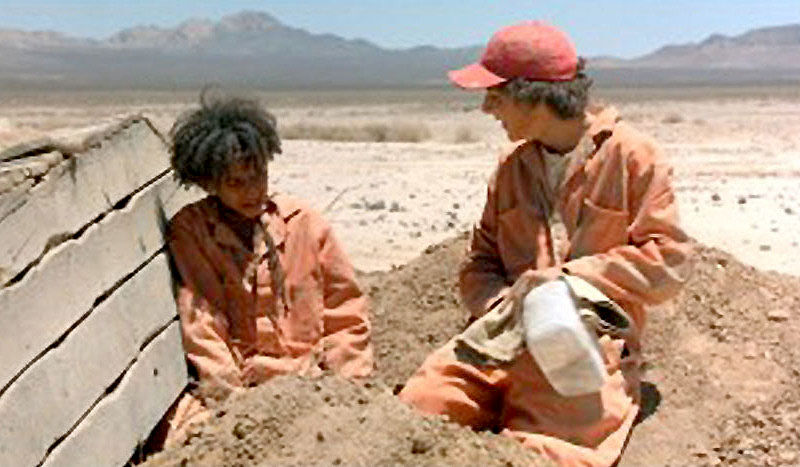
Stanley Yelnats (Shia LaBeouf) is the young hero of the story. He seemingly comes from a century-old family curse, which his family blames on when he’s falsely accused of a crime, stealing a famous athlete’s shoes (really, they just landed on his head) which were supposed to be given to charity. His punishment is serving time at Camp Green Lake, which isn’t as fun as it sounds–it’s really a desert bunkhouse surrounded by thousands and thousands of holes. He has to join his bunkmates (each with their own quirky nicknames–X-Ray, Armpit, Magnet, etc.) in digging one hole per day–five feet deep, five feet wide (though really, it just has to be as long and as deep as the shovel being used–that’s the system the boys use anyway).

Why is this? Well, Mr. Sir (Jon Voight), a boorish ominous supervisor, tells Stanley: “You take a bad boy, you make him dig holes all day in the hot sun, and it turns him into a good boy. That’s our philosophy here at Camp Green Lake.”

I think it’s right about here, early on, that Stanley suspects that something is up, that they’re obviously looking for something–the audience is already thinking it, I’m sure. (I was.) But Mr. Sir is so imposing and Stanley’s counselor Dr. Pendanski (Tim Blake Nelson) seems like a good listener but is always easy to brush something off and the number-one rule is not to upset the Warden (Sigourney Weaver)–and if Mr. Sir can get upset, I don’t think any of these kids want to cross the Warden! So, I let it pass and enjoy the ride.

There are also parallel stories told in flashbacks. One story shows us how the curse began and another, which is probably the most heartbreaking arc of the story, involves a schoolteacher (Patricia Arquette) who becomes an outlaw whose legacy’s trail of blood leaves clues for our present-day heroes to find, making for a fascinating mystery to be solved. It’s wonderfully smart and creative and intriguing to see how these pieces fit together in each timeline.

There’s also a lot of time dedicated to showing Stanley fit in at camp. He soon earns the respect of his bunkmates–X-Ray (Brendan Jefferson), Magnet (Miguel Castro), Squid (Jake Smith), Zigzag (Max Kasch), Armpit (Byron Cotton), and Zero (Khleo Thomas)–and is even given a nickname of his own (“Caveman”). The way these kids interact feels like these are real kids joking with each other. And they’re all acted greatly. There’s also a real heart brought to light when Zero, often ostracized by the rest of the group, helps Stanley, who in turn teaches him how to read. Their partnership that develops as the movie continues is one of the highlights of the movie.

That’s another thing I love about “Holes”–even as there’s a lot going on here, it takes its time with the character interactions and the progressing adventure and the compelling mystery, and it doesn’t feel forced. Something else I love is that despite the fantastical material, it all feels downplayed, making for a convincing feel in style and tone. Even the villains, played by Weaver, Voight, and Nelson, could have easily played their roles over-the-top, but they’re kept in check too–it’s like they knew they were still making a Disney movie but a different kind of Disney movie.

Oh, right. I forgot about the yellow-spotted lizards. This is the one thing that doesn’t hold up as well, particularly when they use poorly-rendered CGI lizards to chase and/or bite some of the characters. I can easily tell which lizards are real and which ones are fake, which kind of takes away the fear factor a little bit.

But that’s really the only nitpick I have with this movie. I even like Henry Winkler as Stanley’s father who tries to find a cure for foot odor–I bring this up because most people tend to see this arc as too silly, but I didn’t mind it.

I love “Holes.” I love both the book and the movie. I’ve watched it a thousand times before, and I’m sure I’ll watch it a thousand more times in the future.

Oh, and I even like the rap song performed by the young actors. I know some of you who grew up with this movie are humming it right now…

My Favorite Movies – Creed II (2018)

17 Sep

By Tanner Smith

Yep, Creed II now joins Rocky, Rocky II, and Creed in my collection of favorites. In fact, God’s honest truth here…I even think about “Creed II” more than I think about “Creed!”

“Creed” is a great film and an even greater sequel in the “Rocky” franchise (or rather, “Rocky/Creed” franchise). It breathed new life into the story of the familiar character of Rocky Balboa (Sylvester Stallone), gave us new engaging characters in up-and-coming boxer Adonis “Donnie” Creed (Michael B. Jordan) and deaf musician Bianca (Tessa Thompson), and didn’t need to retcon the other sequels in order to further the story. Director/co-writer Ryan Coogler (Fruitvale Station, Black Panther) did a remarkable job here.

I love it. It’s great–and so is “Creed II.”

Ryan Coogler isn’t at the helm this time (though he did help produce it; he’s also a producer for the upcoming “Creed III”). But we have Stallone writing again (co-writing this screenplay with Juel Taylor, with story by Sascha Penn and Cheo Hodari Coker) and welcomed a bright young director named Steven Caple Jr. (whose debut film “The Land,” I did see after my initial review of “Creed II”–very good work; check it out!). Plus, Ivan Drago, the Russian super-boxer from “Rocky IV” played by Dolph Lundgren, is back–and what’s even better is that Lundgren (along with Stallone, who created the cartoonish-villain character of Ivan (“I must break you”) Drago way back in the 1980s) humanized the character years later for this story.

That’s one of the things I, as well as other “Rocky” fans, love about “Creed” and “Creed II”–the events of the otherwise-silly (but still somewhat awesome) “Rocky IV” (particularly the death of Apollo Creed at the hands of Drago in the ring) are carried over for dramatic effect and consequence. Drago and his son Viktor (Florian Munteanu) are the antagonists of “Creed II,” and they feel more like real people with emotional conflict surrounding them, thus making the familiar character of Ivan Drago all the more interesting. When I learn about the shame he went through in his home country after he lost to Rocky in the ring decades ago, and now he’s training his son to be the next best killing machine decades later, I’m very curious to see which direction he’ll go in the final act when a lot more is at stake than in your typical sports drama. (It’s also great to see Brigitte Nielsen back and reprising her role from “Rocky IV” for a few minutes of screen time–even her appearance leads to dramatic tension late in the film.)

The heroes are still very appealing. Donnie is still cocky and abrasive, but he’s also still learning (the hard way, to say the least) and he has moments of greatness in him. I liked Bianca better in this film than in the previous film, though that may be because I like her and Donnie together now that they’ve been a couple for a while. (I felt the same way about Adrian in “Rocky II”–by the way, I love the callback to the proposal scene from that movie.) And of course, there’s Rocky Balboa himself–still getting older, still long past his glory days, but most importantly, still there for those who need him. Just when I thought “Creed” gave us what was left of Rocky’s complexity, “Creed II” reminds us that while there’s still Stallone, there’s still Rocky–and he’s always welcome anytime.

There’s a lot for me to really like about “Creed II,” and I can’t wait to see “Creed III” (which is directed by Adonis Creed himself, Michael B. Jordan). I’ll keep seeing these movies if they keep giving me people to care about and emotional weight to be invested in.

And keep an eye out for this Steven Caple Jr. character–I think he’s going places.

My Favorite Movies – Batman: Mask of the Phantasm (1993)

15 Sep

By Tanner Smith

There are three Batman movies in particular that I hold in such high regard–and they’re all very different in style and tone, but neither of them is any less entertaining or powerful or thought-provoking. I love Christopher Nolan’s The Dark Knight, I love Tim Burton’s Batman, and I love Batman: Mask of the Phantasm, which I’m going to talk about now.

I didn’t watch “Batman: The Animated Series” as a kid–I was in college when I watched the first season on DVD and I was enthralled by the gritty atmosphere and adult themes and complex ideas that made for the very best episodes. To my pleasant surprise, this was not just a show for kids–in fact, I’d even say it treated kids as if they were adults. And my first time watching the cinematic spinoff, “Batman: Mask of the Phantasm,” which I had bought soon after watching my first episodes of the show, was like watching a fully-realized three-part episode crafted by the show’s best writers (and a bigger budget as well).

There’s a reason “Mask of the Phantasm” has grown a following over time and is even hailed by some as THE best Batman movie of all time: because it is really freaking good.

It was so good that when Siskel and Ebert missed seeing it in theaters, they dedicated a spot to it on a much later show, after they had finally caught it on laserdisc. They thought it was so good that it was worth talking about regardless. Better late than never. I agree with their review, except for one major point: Mark Hamill as The Joker. “I don’t like this Joker’s voice,” Siskel admitted.

I disagree–I always thought Mark Hamill was one of the best Jokers in Batman entertainment. As a maniacal clown, he was both twisted and funny at the same time; he’s like Pennywise fully realized. And I like him in this movie too, especially in his final moments where he’s at his craziest.

So what is it about “Batman: Mask of the Phantasm” that everyone including myself loves? Well, for one thing, it’s short (77 minutes, including credits)–that means every single frame of animation counts. Nothing in the story is wasted.

Speaking of which, the story is great. It delves more into Bruce Wayne’s past and how he could’ve had a normal life with the right woman before becoming Batman. It also gives us a compelling mystery with another masked vigilante who is mistaken for Batman, whose name is now sullied as a killer. The more we learn, the more interesting the mystery becomes. (Also, if you look up who does the voice for the Phantasm, it leaves a pretty good clue as to who’s behind it all.)

And yeah, people die in this PG-rated action-thriller–the sight of a smiling corpse (one of Joker’s victims) that the Phantasm finds always gives me a jolt each time I see it! If I had seen that as a kid, WHOA!

My favorite scene: a flashback scene in which Bruce Wayne ultimately becomes Batman and dons the infamous mask. Alfred reacts, “My God!” The music, the shadows, the sheer delivery of that one line from a man who’s raised Bruce all his life and now seeing him become a terrifying figure–it’s all so great!

I’m glad I caught this movie when I did. And I’ll talk about “The Dark Knight” and “Batman” at some point in the future too.

My Favorite Movies – Cyrus (2010)

10 Sep

By Tanner Smith

Jay & Mark Duplass, famously known as The Duplass Brothers, made quite a name for themselves as heroes in the micro-budget (or no-budget) filmmaking movement. (Many call it the “mumblecore movement,” but even the “mumblecore” filmmakers don’t seem to appreciate that term; why not call it “semi-pro?”) After making short, Sundance-accepted films with no money and making their impressive debut feature “The Puffy Chair” with only 15 grand, the Duplass Brothers had an opportunity to make a film with a bigger budget financed by a studio such as Fox Searchlight. (If their shared autobiography “Like Brothers” is any indication, that preparation process took so long that they made Baghead for cheap in the meantime just to stay creative–great move, guys.)

Whenever indie filmmakers get a chance to show a wider audience what they’re all about, it’s always kind of a risky move. Sometimes, it works, like with David Lowery and “Pete’s Dragon,” Richard Linklater and School of Rock, Mike Flanagan and Ouija: Origin of Evil…and yes, I know those are some strange examples, but try and fight me on their effectiveness. And with the Duplass Brothers, it really works. The film they made for $7 million, and with a cast of great, popular talents such as John C. Reilly, Marisa Tomei, Jonah Hill, and Catherine Keener, and made to appeal to a more mainstream audience than their arthouse features, actually turned out to be very funny, very sweet, and very weird–a great mix of their “mumblecore” (er, “semi-pro,” sorry) techniques and the mainstream “dramedy” entertainment they grew up watching.

That film is titled Cyrus.

I appreciated this film when I first saw it long ago (in 2011, I think; I missed its 2010 theatrical release). It’s grown on me even more over time because of its unique mix of dark comedy and romantic drama. And, I must confess, it currently rivals “Baghead” for the position of my favorite Duplass Brothers film.

John C. Reilly, one of the best character actors still working today, stars as John, a lonely guy who is depressed when his ex-wife Jamie (Catherine Keener) tells him she’s getting married. Knowing the news is devastating for him (even though they’ve been separated for seven years), Jamie invites John to a party, hoping he’ll meet somebody. And to John’s surprise and delight, he does meet someone: Molly, a quirky, delightful, fun woman who is played with the effortless charm of the lovely Marisa Tomei. They hit it off really well (and partake in a great dance number set to “Don’t You Want Me” by The Human League) and promise to see each other again, but…she has a secret.

John stalks Molly to discover said-secret and that’s when he meets Cyrus (Jonah Hill), Molly’s 21-year-old son who still lives with her. John finds it somewhat difficult to connect with Cyrus, a grown man who is very attached to his mother (so close to the point that I think he could be reaching Norman Bates levels), whom John is now dating and having sex with. And yes, that is a bit much for John to take in–but Cyrus seems cool about the situation (and even makes uncomfortable jokes about it). But as this dynamic continues and Cyrus is more off-putting and clingy towards his mother, John has his suspicions about Cyrus’ intentions–and we do too, such as, is Cyrus trying to break up John and Molly? What is Cyrus truly all about? Where is this going?

Jonah Hill is absolutely brilliant as “Cyrus.” This film was released in 2010, a time when audiences who were familiar with Hill as the abrasive loudmouth in comedies like Superbad got to see a different side to him as an actor; to see him as this creepy, manipulative sort of man-child is to recognize this talented actor’s impressive range. (And a year later, Hill would star in “Moneyball” and earn his first Oscar nomination.) There are many different levels to Hill’s performance as Cyrus, and the more times I watch the film, the more amazed and intrigued I am by what he accomplishes in his facial expressions, his dialogue, and his attitude.

When John and Cyrus are at wits with each other, it makes for some delightfully dark comedy, with this relatively nice guy trying to figure out what the deal is with this potential psychotic and whether it will damage his relationship with the psychotic’s wonderful mother–and there are moments when we’re looking at it from John’s perspective and finding moments such as when Cyrus and Molly are wrestling together in the park…very off-putting.

But because John is so likable and played by the lovable John C. Reilly, and also because the Duplass Brothers care more about character, we’re not just laughing at the actions/reactions; we’re also caring about the main character and getting to know the other characters through him. When Cyrus’ humanity (his true humanity) does show, it doesn’t feel forced; it feels like a real person with faults and even guilt. And with Molly, it’s not as simple as, oh if only she could just wake up and get rid of this creep of a son–it’s more complicated for her to take sides.

It’s this kind of characterization that many mainstream comedy-dramas lack–those films are about comedy and drama with character, while “Cyrus” is a film about character with comedy and drama. The Duplass Brothers did a wonderful job here, making an indie film with mainstream appeal (or a mainstream film with indie appeal, however you see it).

My Favorite Movies – If Beale Street Could Talk (2018)

28 Aug

By Tanner Smith

Very rarely do I use the term “beautiful” to describe a film. (The most recent one I called “a beautiful film” was Minari.) Director Barry Jenkins’ “If Beale Street Could Talk” is indeed a beautiful film, following the equally-remarkable Moonlight.

Granted, there’s a lot of roughness in “If Beale Street Could Talk.” Despite its 1970s setting, a lot of issues being addressed within this story are sadly still relevant today. The film isn’t a pleasant nostalgic look back at “the good old days”–instead, it’s more of a cautionary tale during which we lament that injustices towards innocents happened back then…and still happen today.

So, why is “If Beale Street Could Talk” worthy of the term “a beautiful film?” Because, after these characters at the center of the story, all of whom we’ve come to understand and sympathize with, have undergone some truly sad circumstances, there is a real sense that they will continue living the best way they can because they have each other to lean on–and when times are tough, that’s the best you can truly hope for.

I guess it was a little too tough for the Oscars, though, seeing as how it didn’t reach the same surge as “Moonlight.” You know for whom it wasn’t too tough? The Film Independent Spirit Awards, to the rescue yet again! (Is that a common theme in my favorite movies of this past decade?)

“If Beale Street Could Talk” received Indie Spirits for Best Feature, Best Director, and Best Supporting Female. In a year that also included great nominees such as Eighth Grade and Leave No Trace, I could find any faults in the voters’ decisions. (It wasn’t totally shut out by the Academy, to be fair–it was nominated for Best Adapted Screenplay and Best Music Score, and it won for Best Supporting Actress.)

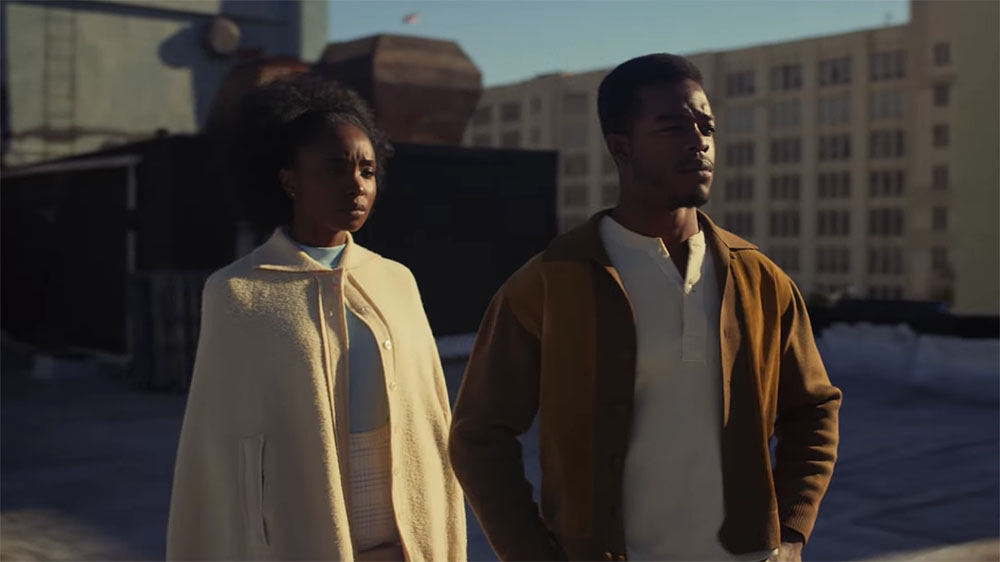
Based on the 1974 novel of the same name by James Baldwin, “If Beale Street Could Talk” takes place in Harlem in the early 1970s (and give credit where it’s due, the setting feels like another world with its great attention to detail for the time period). Our two protagonists are lovebirds Tish (KiKi Layne) and Fonny (Stephan James). Tish narrates the story and tells us about how she and Fonny looked forward to a wonderful life together (they knew each other ever since they were little)…until everything changed.

Fonny has been falsely accused of rape and is in jail. The whole thing was a setup by a racist cop, and because the victim (who was raped, but not by Fonny) has fled the country and could not testify, it was Fonny’s word against the cop’s. So now, who knows what the future holds in store for Tish and Fonny now that they’re separated by the glass wall that separates them during Tish’s visits.

Tish is pregnant with Fonny’s baby, and Tish’s family is supportive (and also trying their hardest to see what they do to defend Fonny)…which is more than can be said for Fonny’s family.

Actually, Fonny’s father (Michael Beach) seems like a relatively okay guy. But Fonny’s mother (Aunjanue Ellis) and Fonny’s sisters, on the other hand…yikes.

In probably the best (and most intense) scene in the film, Tish’s parents (Regina King and Colman Domingo) invite Fonny’s family over to the family apartment so they, Tish, and Tish’s sister (Teyonah Parris) can share the blessed news of Tish delivering new life into the world. Well…Fonny’s fanatically religious mother doesn’t feel so blessed and lets Tish know immediately that neither she nor the child will be welcomed into the family.

What happens next, I’ll leave for you to discover–the scene gets pretty heavy after that, when Tish’s mother and sister come to Tish’s defense (and Tish lets out some words she’s been aching to let out probably long before this moment).

It’s a great scene, and it leads me to another reason as to why I identify the film as “beautiful”: it has a real notion of faith and love. In this scene, we have two different, conflicting versions of “faith.” Tish’s family sees Tish’s pregnancy as a reason of celebration, while Fonny’s family is mostly so self-righteous that to them it’s the opposite of a blessing. One’s faith is more authentic than the other. And one is more loving than the other too.

The extent of love comes with a pivotal sequence late in the film in which Tish’s mother visits Puerto Rico to find the rape victim and convince her to come back and testify, in an effort to help Fonny out of jail and help her daughter make her vision come alive. What results is another heartbreaking scene, in which…well, it hurts to write about (and it’d be a spoiler anyway). Regina King is excellent in these scenes; she sells the love that she feels for her daughter and for those in her daughter’s life.

Midway through the film, there’s another heavy moment, set before Fonny’s jail time (the film is told non-linearly), in which Fonny’s old friend Daniel (Bryan Tyree Henry) joins Fonny after being released from prison. He tells Fonny about the tough times he endured behind bars, and it’s especially heartbreaking because we know Fonny is about to feel more or less the same things he felt.

That’s another thing I love about the film–the non-linear story structure adds more emotional weight due to scenes like that. And there’s also the moment in which Fonny first comes across that same cop that would set him up…

Faith and love is what keeps Tish and Fonny going, and they’re what will keep them going too. And long after the film is over, I can’t help but be optimistic about their future.

Because they deserve it.