Archive | My Favorite Movies RSS feed for this section

Looking Back at 2010s Films: Won’t You Be My Neighbor? (2018)

8 Oct

Wont-You-Be-My-Neighbor_KEY_IMAGE

By Tanner Smith

Continuing my series of Looking Back at 2010s Films, I’m starting to realize why I’m talking about all of these movies that probably won’t make my best-of-the-2010s list…because LISTS ARE A JOKE!!! They change after time and it’s like others don’t even matter. Well, they matter to me, dammit!

I mean, obviously I’m still going to do it, but…where was I going with this?

Ah whatever, let me just talk about “Won’t You Be My Neighbor?,” the Oscar-winning documentary…oh, it wasn’t even nominated because the Oscars are a joke. (God bless the Indie Spirits though! Even they knew the Oscars were a joke.)

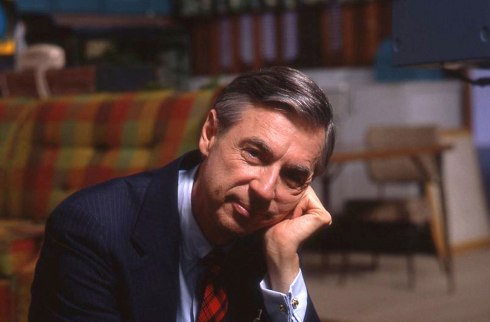
Obligatory introduction describing the importance of Fred Rogers and his iconic PBS show here…do I even need to go into that? All I can add is I grew up with it. So let’s move on…

I don’t know how people who aren’t familiar with Mr. Rogers would respond to this documentary, but I hope they got a pretty good idea as to how culturally impactful he was to Gen-Xers and Millennials (among others). But for me and most other people who grew up with the show, it’s an excellent companion piece.

To be completely honest, there were three movie moments from 2018 that made me a little teary-eyed (no joke)–one was in ‘Boy Erased,” in which a gay teen received a verbal thrashing at conversion camp; one was in “Wildlife,” as Joe realized his parents’ relationship was done for good; and the other was near the end of “Won’t You Be My Neighbor?,” as Fred Rogers’ funeral was protested by Westboro Baptist (because what else were those miserable, hate-fueled asses going to fart upon with their spare time?)…and there were children there holding signs as well–one of the interviewees of the documentary took notice that the children didn’t look very happy. That was heartbreaking, especially when you know just how important Fred Rogers was in using television to shape young minds.

“Won’t You Be My Neighbor?” is basically a standard, straightforward biographical documentary about Mr. Rogers, and obviously in terms of filmmaking, it can’t compete with “Free Solo” or “Minding the Gap” (two Oscar-nominated docs that you could argue took more chances than this)…but it’s just so freaking GOOD at being standard and straightforward and respectful and all that! (I doubt it’s possible to make a “negative” film about Mr. Rogers anyway…I mean, unless it was made by one of those jerks who thought Mr. Rogers’ message about children being special meant they didn’t have to achieve anything–weren’t those guys even AWARE of Barney the Dinosaur?)

At least the 34th Film Independent Spirit Awards, who awarded “WYBMN?” the documentary award, knew how special this film was–yet another reason for me to gain more interest in the Indie Spirits than the Oscars.

Looking Back at 2010s Films: I, Tonya (2017)

8 Oct

Image result for i tonya movie

By Tanner Smith

Continuing my series of Looking Back at 2010s Films, there’s a moment late in the film that shows why Margot Robbie was cast as Harley Quinn as “Suicide Squad.”

It’s a moment late in “I, Tonya.” Everyone’s harping on her. She’s dealing with a great deal of stress. Very few people are on her side. She has to go out there on the ice again and impress the judges again. Did I mention she’s Tonya Harding?

Yep, it’s the film that makes the harsh statement that we are all in fact terrible people. I mean…we just suck. No question about it.

The film didn’t even need to necessarily take sides in the whole Nancy Kerrigan scandal to make that assessment. That’s because it doesn’t even go on record saying “THIS IS REAL; THIS REALLY HAPPENED.” Instead, it uses the clever technique of crafting the story based on interviews/testimonials not from Nancy Kerrigan or anyone who followed her but from Tonya Harding and everyone who followed HER. There is evidence that implicated Tonya criminally, and other people have criticized her actions. We could’ve gotten a film from Nancy’s perspective. But Nancy’s barely even a character, so what we have with “I, Tonya” is a different perspective that may or may not be true…especially because many characters saw things differently!

It’s like “Rashomon,” with the many different perspectives of an incident contradicting each other, except we never even hear from the supposed victim of said-incident! A strange method, but intriguing nonetheless.

I love biopics that use different techniques to take creative liberties with “true” stories. Some other brave ones that came out in the past few years were “The Big Short” and “Vice.” But my favorite is “I, Tonya”, mostly because…I just think it’s smarter and funnier.

Here’s where the film first grabbed me. We start off with “irony-free” interviews of Tonya (Margot Robbie), her husband (Sebastian Stan), her mother (Allison Janney), her coach (Julianne Nicholson), her husband’s friend/”bodyguard” (Paul Walter Hauser), and…the reporter (Bobby Cannavale). The reporter’s opening line is GREAT: “I was a reporter for ‘Hard Copy,’ a pretty crappy show that legitimate news outlets looked down on…and then became.” Bravo, movie! BRAVO! I was hooked from that moment forward.

And he’s right too. When the Incident happened, everyone was obsessed with it, and so, when tabloids and “crappy” news outlets like “Hard Copy” covered it heavily, everyone was looking to them for “the truth.” That’s when they started to be taken “seriously,” and nowadays, it’s a common popular thing, especially now that the Internet has grown significantly since then.

This film pretty much tells us that truth is in the eye of the beholder and we’re all just going to believe what we want to believe, even if we harp on people to further our own points of view.

How much of “I, Tonya” is accurate?? I don’t know! But it’s interesting to think about, isn’t it?

The writing is brilliant, the directing from Craig Gillespie (who also directed “Lars and the Real Girl” and “Fright Night”) is top-notch, the editing (which was nominated for an Oscar) is very clever as it goes from one point to the next just as we’re wondering what it might be, and of course, the acting is excellent. Margot Robbie is chillingly good as Tonya, and Allison Janney…wow. I mean, Janney is always great in funny, endearing supporting roles, but here, she gave herself the challenge of making this character of Tonya’s coldhearted, foul-mouthed mother as unlikable as possible. And for that, she deserved the Oscar for Best Supporting Actress.

And I also really liked Paul Walter Hauser as the burly, delusional “bodyguard” who promises to “take [Nancy] out.” Again, who knows how this really went down? But HE claims he masterminded the attack…DID he? It’s so easy to fact-check and debunk his stories.

See? This movie raises questions, provokes thought, gives insights, blah blah blah…and we don’t know how much of it is factual! In the end, it doesn’t matter. What does matter is this most important question…why wasn’t this nominated for Best Picture at the Oscars??

(OK, obviously, there are more important questions to ask about it, but I’m trying to be funny here.)

Looking Back at 2010s Films: Miss Stevens (2016)

8 Oct

MV5BMmE3MGRjNzYtNTQ2MS00ZDM5LWJlMjItNGNmN2IxNDZiZmI5XkEyXkFqcGdeQXVyNDcxNzU3MTE@._V1_.jpg

By Tanner Smith

Continuing my series of Looking Back at 2010s Films, I love movies that start out well enough on the first viewing and then grow into more appreciation after a few more viewings. (About half of my decade-end top-20 choices are among those movies!) I liked “Miss Stevens” fine when I first saw it, I showed it to my fiancee and enjoyed it a second time, and recently I played it in the background on Netflix and…my attention kept getting drawn towards it.

So much for the film that started out “fine” at first.

“Miss Stevens” is an indie road-movie about a high-school teacher (Rachel Stevens, played by Lily Rabe of “American Horror Story” fame) who chaperones three students to a state drama competition. One is Billy (Timothee Chalamet, who acted in this film just one year before his career breakthrough), who has a behavioral disorder and a crush on the teacher; one is Margot (Lili Reinhart), the organized and somewhat stuck-up one of the trio; and the other is Sam (Anthony Quintal), the sweet, chill one of the bunch. This is one of those weekend-that-changed-everything movies, as the teacher and the students bond over the weekend and learn important lessons and become better people and–you get the idea.

Actually, it is sweet, the way they find ways to relate to one another, even when Billy’s attempts at flirting are borderline creepy (but you have to remember, he’s just a teenager–and Miss Stevens lets him down easy). Billy learns to control his anger and channel it into his acting performance for the competition. Margot learns some rules are OK to break. Sam works up the courage to ask one of the other competitors out on a date. And Miss Stevens, or Rachel, learns to follow her own advice, as she needs someone to help take care of her too.

A lot of the charm in this small but likable film comes from the actors. Lily Rabe won a Special Jury Award for her acting at SXSW, and it’s easy to see why–she’s caring but has her own problems, and she’s able to let us see both sides of the same person. It’s a wonderful balance she pulls off. And Timothee Chalamet is excellent as the most troubled of her students. I’m glad this guy’s career has taken off in a major way, with his accolades for “Call Me By Your Name” and whatnot, and is still giving him much to work with. Here, I genuinely believe him as a kid with so many issues built up inside of him that he’s able to unleash when in character during his competing representation of “Death of a Salesman.” (Eat your heart out, Dave Franco in “The Disaster Artist.”)

The film’s director is Julia Hart. Her next film, “Fast Color,” which was released earlier this year, is a gripping indie look at a superhero origin story. Her upcoming film, “Stargirl” (based on the novel of the same name), is coming to Disney Plus, so I’ll be interested in seeing that too.

“Miss Stevens” is still available on Netflix–check it out and see what you think…and then see it again.

Looking Back at 2010s Films: The End of the Tour (2015)

7 Oct

the-end-of-the-tour

By Tanner Smith

Continuing my series of Looking Back at 2010s Films………why is “The End of the Tour” not on my top-20-of-the-decade list?

Well, there’s a ridiculous BS reason as to why. Same reason as to why there’s only one MCU movie that’s going to be on my list. The way I made the list was I split the choices into separate categories to make it easier to choose some over others. “The End of the Tour” fit into the Biopic category, and there’s one biopic that I’d feel bad for leaving off the list…this wasn’t it.

But I LOVE this film–believe me, I do! I have a select group of dialogue-heavy films available on streaming services that I just like to listen to on my phone while I’m driving or walking through the mall or the library or whatever. “The End of the Tour,” currently available on Netflix, is one of them.

The dialogue in this film’s screenplay is BRILLIANT. It reminds me a lot of Linklater’s “Before” trilogy, in that it’s mostly centered around two smart people sharing smart ideas and philosophies. And here, we have reporter/novelist David Lipsky and the late enigmatic author David Foster Wallace–two smart guys who bond together by simply discussing their views on life for just a few days.

Played by Jesse Eisenberg and Jason Segel, I could listen to these two smart guys talk about anything. What does it mean to have something you don’t want? What if you didn’t know you didn’t want it? What if you want it and don’t know how to get it? Who can you truly trust when you have this “celebrity” status? Do you think you’re performing some sort of “social strategy” to alter your persona to less intelligent, average Joes? They even discuss other things like “Die Hard,” Alanis Morrissette, even masturbation.

What makes the conversations especially interesting is that Lipsky convinced his Rolling Stone editor to let him write a piece on Wallace while he’s on the last stages of his book tour promoting his ingenious novel “Infinite Jest.” (At least, I heard “Infinite Jest” was “ingenious.” I never read it…I think I’m scared to.) That’s because he hero-worships Wallace for having the fame that he desires. (As the film opens, Lipsky has just published a novel himself, but chances are it won’t go anywhere.) So, he’s happy to be having these pleasant chats with him, and vice versa (though, Wallace is a bit uncertain as to Lipsky’s “agenda” for the article–he even tells him at one point, “This is nice…this is not real.”). And then, late in the film, Lipsky decides to call Wallace out on what he’s seen so far on the tour, which is that Wallace, who must obviously be “brilliant” to write this long, allegorical novel, is performing some sort of act around him and other people so that they won’t be intimidated. Wallace’s response is amazing. What he’s basically saying is that everybody wants to be perceived in certain ways because we want to please other people. Therefore, we WILL adopt different personas.

I’m guilty of it. And you are, too.

The film was directed by James Ponsoldt, who also directed one of my favorite teen films, “The Spectacular Now.” And it was written by Donald Margulies, the Pulitzer Prize winning playwright famous for “Dinner with Friends.” It was also based on the real Lipsky’s novel “Although Of Course You End Up Becoming Yourself,” which he wrote based on tape recordings he made with the real Wallace–I’d be interested in reading that…I don’t know why I haven’t yet.

I love “The End of the Tour.” I love the dialogue. I love the two lead performances from Segel and Eisenberg. And I love how it makes me feel each time I watch (or listen to) it.

Looking Back at 2010s Films: Can You Ever Forgive Me? (2018)

7 Oct

07a4bb20-38f5-4552-8236-d69d12329446.jpg

By Tanner Smith

Continuing my series of Looking Back at 2010s Films, why are we always surprised when comedic actors play it straight?

Seriously–are there any comedic actors who CAN’T play it straight? Why are we always surprised when Adam Sandler turns in a solid dramatic performance or Jason Segel or Bill Murray or Chris Tucker or Seth Rogen or Marlon Wayans or Kristen Wiig or Albert Brooks–I could go on and on, but you get my point. They can stay committed to comedic bits; they can stay committed to going outside of that too.

Same goes for Melissa McCarthy–critics were surprised to see a different side to her, given her reputation as a loud, obnoxious, abrasive personality in several mainstream comedies (one of which even gave her an Oscar nomination for Best Supporting Actress). She also had a dramatic supporting role in “St. Vincent” in 2014, but hardly anyone saw that. In Marielle Heller’s biopic “Can You Ever Forgive Me?,” she takes center-stage as Lee Israel, a failed novelist who made a living by forging celebrities’ memorabilia and selling it. She forges letters “written” by Dorothy Parker and Noel Coward, among others, and sells them to collectors for huge amounts of cash. Her fakes are so believable, and she’s able to keep it going for a while, but of course, she has to get caught. (That’s not a spoiler–this is based on a true story.)

McCarthy is wonderful in this film (and thankfully she was nominated for the Best Actress Oscar for her work). She has to be drinking constantly, she has to be resentful of her falling career, she has to lash out on the wrong people, she does all these illegal activities to earn money–it takes work to make someone like that likable, and McCarthy pulls it off. Actually, she plays it like the exact opposite of the kind of character she’s used to–she’s not the life of the party, but she COULD be if she opened herself up to society.

It’s when we see her with her only friend (outside of her 12-year-old cat), a charming but weathered gay man named Jack Hock (Richard E. Grant, also nominated for his fine work), that we see what it’d be like to be around her when she lowers her defenses, and she can make for good company.

Oh, and best of all–SHE DOESN’T IMPROVISE! That’s one of my pet peeves about her comedic work–sometimes, she doesn’t trust the script enough to be funny, and she’ll try so hard to make people laugh that she’ll ramble after the bit should be over. Here, she trusts the writing of a script (that was also nominated, for Best Adapted Screenplay) and Heller’s direction.

The script, by the way, was written by Jeff Whitty and Nicole Holofcener. Whitty is a playwright best known for the stage musical “Avenue Q,” but Holofcener has become well-known to me after I saw both this film and the Netflix Original film she directed (“The Land of Steady Habits”), which were both released around the same time. Then I would look up what else she wrote and/or directed and check out these other indie treasures, like “Walking and Talking,” “Lovely and Amazing,” “Friends With Money,” “Please Give,” and “Enough Said”…and it turned out I had apparently seen some “Parks and Recreation” episodes she did (and one episode of “Togetherness”). Now that I know who she is, I’m very glad her work for “Can You Ever Forgive Me?” has been recognized by so many Screenplay awards.

Marielle Heller previously made the solid indie coming-of-age film “The Diary of a Teenage Girl,” which I only learned about from the audio commentary from The Lonely Island film “Popstar: Never Stop Never Stopping,” in which she made a cameo as a documentary filmmaker “best-known for the great indie flick ‘The Diary of a Teenage Girl.'” (When I looked up the film was when I found out Heller was Jorma Taccone’s wife.)

Her next film, “A Beautiful Day in the Neighborhood,” starring Tom Hanks as Fred Rogers, comes out this fall, and I’m looking forward to seeing it.

Looking Back at 2010s Films: Lean on Pete (2018)

7 Oct

Lean-on-pete-header

By Tanner Smith

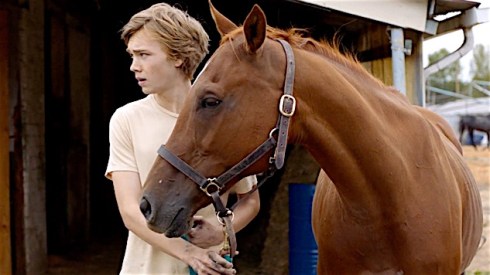
Continuing my series of Looking Back at 2010s Films, I missed “Lean on Pete” in theaters–I didn’t even know about it. But when I worked at Vintage Stock and we got a series of trailers for upcoming DVD releases, I noticed one with many festival laurels and critical blurbs praising it–the sound wasn’t on the TV set that displayed the trailer, and it just looked like a typical boy-and-his-horse story. But if film critic Richard Roeper gave it four stars, I knew it would be anything but “typical.”

When it was released on DVD, I rented it, checked it out…and was blown away.

“Lean on Pete” is a film about a 15-year-old boy who gets a job looking after an aging racehorse, named Lean On Pete. He learns the horse is bound for slaughter because he’s slowing up, and when he ends up in a situation where he may go into care, he steals Lean On Pete and sets off on a journey to find his aunt, with whom he hasn’t been in contact for years.

Think “The Grapes of Wrath” meets “The 400 Blows.”

“Lean on Pete” is a beautiful film–not always heartwarming but always compelling. The kid in this movie, Charley (played by Charlie Plummer), is a good kid who endures many hardships (and sometimes has to do the wrong thing to get ahead), and it’s so hard not to root for him to find what he’s looking for. What IS he looking for? He just wants a place to call “home.”

My favorite scene comes late in the film, in which Charley is walking with Lean On Pete through the frontier and he tells him about a time when he was invited to breakfast by one of his friends. This kid’s a football jock, so you would think he’s got other things to talk about. But no–he was just happy to be accepted somewhere with people he liked. That’s all he wants. Like Marge from “Fargo” or Atticus Finch from “To Kill a Mockingbird,” Charley from “Lean on Pete” has learned what others need spelled out for them–that the simplest pleasures are the greatest treasures.

I remember seeing this kid Charlie Plummer represent a film he starred in four years ago (called “King Jack”) at the Little Rock Film Festival and thinking he’d have a great career ahead of him. Well now, he’s been in a Ridley Scott film (“All the Money in the World”), he was considered for the MCU’s Spider-Man for a while, he’s appeared in a few more indie flicks (including the thriller “The Clovehitch Killer”)–he’s barely 20 years old; I hope he keeps up the good work!

Charlie Plummer IS this film. If “Lean on Pete” works for you, then it’s because of him. If “Lean on Pete” doesn’t work for you, meaning you don’t tear up or at least feel some kind of sympathy for this kid, then you might be dead. Take that for what it’s worth.

Looking Back at 2010s Films: True Grit (2010)

7 Oct

truegrit2_wide-4b699e9ddcf73d0553b038bd48651f8cdc23e262-s800-c85.jpg

By Tanner Smith

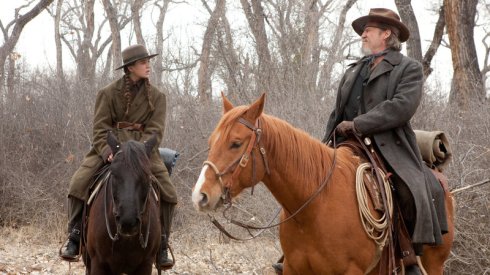
Continuing my series of Looking Back at 2010s Films…is it possible for a film to be nominated for 10 Oscars and not win a single one? I didn’t think so, until I checked the awards for the Coen Brothers’ 2010 adaptation of “True Grit!”

DAMN, and to think the 1969 John Wayne version won 1 out of 2.

The John Wayne version is as classic a Western as they come–a joyous, enthralling, and “gritty” frontier adventure. The Coen Brothers’ version plays the story differently…it’s not as joyous as the other. That makes it more interesting.

All the fun you can find in a young girl’s bloodthirsty quest to find her father’s killer and bring him to justice is GONE. This journey is as gritty as they come. And the ending hammers in effectively just what this crusade has done to this child.

And I’m going to talk about the ending, so…SPOILER ALERT!!!

Mattie Ross loses her arm from the snake bite, she and Rooster Cogburn never see each other again, and she grows up bitter and cold, an old maid with clearly no love in her heart. This might be the Coens’ way of saying someone this young being so dedicated to vengeance leads to a life of misery. That’s how the film ends! John Wayne doesn’t ride merrily into the sunset, there’s no happy ending (though not really a “sad” ending either), it just…ends. You can barely even argue that it even “ends” so much as “stops.” I actually found that pretty intriguing. It stayed with me more than the ending of the John Wayne movie.

END OF SPOILERS!!!

Hailee Steinfeld is brilliant as Mattie Ross, and there’s no way you can convince me that she deserved a Best SUPPORTING Actress nomination–the film is ABOUT HER CHARACTER! (They should’ve switched her out with Annette Bening in “The Kids Are All Right” for the Best Actress nod.)

Jeff Bridges is also perfect as Rooster Cogburn. He vanishes in the role of a dirty, nasty, mean-as-hell fighter of justice, which admittedly is more than I could say for John Wayne who played it almost too “safe.”

Also great is Matt Damon as the Texas bounty hunter. He plays the role as a hero from a different movie who isn’t too keen on playing second-fiddle to Mattie and Rooster’s story.

And the supporting cast is solid too, from Josh Brolin as the killer to Barry Pepper as the gang leader Ned Pepper (wait, what?) to…hey wait, is that Domhnall Gleeson as Moon?? Holy crap, I just noticed when watching this film again today! He’s definitely come a long way since having his fingers cut off…especially that horrible line reading. (You know the one–“Oh Lord…I’m dying!”)

And of course being a film lensed by Roger Deakins, it looks great. Under the shadow of the Coens and these fine performances, we’re also taken through a dark, grey, compelling world where anything can happen and anyone can die. Let me see, was this film nominated for Best Cinematography….?

Yes it was. (Whew–it would’ve surprised me if that WASN’T one of the 10 Oscars it was nominated for.)

There is some much appreciated levity sprinkled throughout, so the film isn’t so gritty that it’s depressing. But pit one “True Grit” against the other, and it just depends on the kind of movie you prefer–one that’s overall lighthearted or one that’s overall compelling.

For me, though, I prefer the latter.

Looking Back at 2010s Films: The Big Sick (2017)

7 Oct

024a_tbs_sg_30719-h_2017.jpg

By Tanner Smith

Continuing my series of Looking Back at 2010s Films, I was trying to think of what was my favorite romantic comedy of the decade. It didn’t take too long to realize it was “The Big Sick.”

The script for “The Big Sick” was written by comedian Kumail Nanjiani and his wife Emily Gordon, based on the true-life experience of how they met and fell in love. Thanks to producer Judd Apatow, they were able to get the screenplay made into a film. (And the screenplay was nominated for an Oscar!)

This semi-autobiographical romcom stars Nanjiani as more-or-less a fictional version of himself, a Pakistani-American stand-up comedian whose strict, traditional family don’t want him to partake in the American Dream. That’s why when he meets a white grad student (Emily, played by Zoe Kazan) and starts up somewhat of a relationship with her as time passes, he keeps her a secret from his parents and vice versa. But when Emily finds out, she feels like he’s ashamed of her and breaks up with him.

The end? Of course not! (I can’t even issue a spoiler alert–the writing credits alone are a spoiler.)

Midway through the film, Kumail learns Emily has suffered a serious lung infection and needs to be immediately placed into a medically induced coma. Feeling guilty, he signs the permission form and calls her parents. Now that Emily’s being treated in comatose, Kumail has to deal with her parents (Holly Hunter and Ray Romano), who already know Kumail and Emily broke up. As they deal with Emily’s illness, the three grow closer and find common ground. In particular, Kumail learns more about relationships from being around this married couple who has been together through good times and bad. This causes him to want to patch things up with Emily when she wakes…if he can gently let his parents know how he feels.

I’ve said this before, and I’ll say it again. If there’s anything more important than a comedy that can make you laugh, it’s a comedy that can make you feel. There’s a lot to laugh at in “The Big Sick” (such as “positive heckling,” Holly Hunter’s mocking of a racist heckler, Ray Romano’s liberal guilt, Kumail’s one-man show, and the differences between good and bad standup comedians). But we also feel for the main characters and see the side characters as real people. Therefore, when something dramatic happens, like when it seems Emily may not make it through after the illness spreads throughout her body or when Kumail’s parents disown him after he finally tells the truth, it really means something for them. It also helps that Kumail and Emily are great together. (Though, I have to wonder how the real Emily herself felt about her husband reliving their meet-cute and honeymoon phase with an actress instead of her.)

Btw, Bo Burnham is in this film, playing one of Kumail’s comic friends. Not knowing anything about his standup, it was surprising watching this film again after watching “Eighth Grade,” seeing his opening credit, and being like, “Wait, that guy directed ‘Eighth Grade’? Whoa. Next, you’ll be telling me director Michael Showalter was in ‘Signs’…I need to watch ‘Wet Hot American Summer,’ don’t I?”

Looking Back at 2010s Films: Tangled (2010)

7 Oct

Tangled.jpg

By Tanner Smith

Continuing my series of Looking Back at 2010s Films, I’d personally like to thank my fiancee Kelly for begging me to watch “Tangled” again with her…and even bought me the DVD for $30 at Barnes and Noble. (I could’ve just rented it from the local library or bought it cheaper at Vintage Stock, but whatever–that’s how far she’ll go to watch a movie with me.)

Can I blame her? It’s a good flick. And it should’ve been nominated for Best Animated Feature.

Have you heard of “Toy Story 3?” Of course. Have you heard of “How To Train Your Dragon”? Yes. Have you heard of “The Illusionist”? No? Some of you, maybe? Well I hope so, because that was nominated instead of “Tangled” that year. You thought “Lego Movie” was snubbed?

“Tangled” is an update on the classic fairy tale Rapunzel. My favorite addition? A sense of humor. There’s a lot of comedy in just how unprepared Rapunzel (voiced by Mandy Moore) is for the world outside the tower in which she’s been trapped most of her life. (“Frying pans–who knew?”) But there’s also pathos to be found in that issue as well, especially when she learns who she truly is and what’s been waiting for her that her “mother” (who’s actually kept Rapunzel there for her magic hair that gives eternal life, hence why the hair so long) has been keeping her away from.

And then there’s Flynn Rider (voiced by Zachary Levi), the dashing heroic narrator. He could’ve easily just been your typical rogue misunderstood hero with a heart of gold…well, he is, but he’s also very funny, which makes all the difference! (What do I like about both “Tangled” and “Frozen”? Both their main characters are as funny as they are likable!) His wit, his one-liners, his quick thinking–it’s hard for me not to like this guy.

It’s like if Joss Whedon wrote a fairy tale.

But my favorite character (and Kelly’s favorite too) has no lines of dialogue in the slightest. No, it’s not the chameleon. It’s Maximus, the horse that hunts Flynn down. The expressions he gives, the body language he uses, his overall intent–this is like if a silent-movie comic just happened to be a horse!

While “Frozen” is arguably better at tackling Disney-movie tropes (and ironically added new ones because it became so popular), I do like the little digs “Tangled” was able to sneak in, such as when Flynn asks why everyone suddenly bursts into song.

Speaking of which, the songs are pretty good and memorable. “I See the Light” is nice, “When Will My Life Begin” is right up there with “Part of That World” (from “The Little Mermaid”) when it comes to Disney heroine songs about wanting more, and “I’ve Got a Dream” and “Mother Knows Best” are both lighthearted and funny for different reasons.

“Tangled” is a fun Disney movie. Next time Kelly wants to see it, I’ll sit down and watch it with her.

Looking Back at 2010s Films: It Follows (2015)

6 Oct

it-follows

By Tanner Smith

Continuing my series of Looking Back at 2010s Films, IT FOLLOWS!

You know how many bad supernatural-teen-thrillers there are? Films with malevolent supernatural presences that seem to target an annoying group of bland teenagers? Sometimes, you come across a good one, but for the most part, they’re pretty disposable. And then, you get It Follows…

Remember when Paul Thomas Anderson made “Punch-Drunk Love,” giving an otherwise-typical Adam Sandler comedy the arthouse treatment and gave it more depth than we didn’t think could be found? Well, filmmaker David Robert Mitchell gave the same treatment to an otherwise-typical supernatural-teen-thriller, with “It Follows.” Think about it–we have teens being stalked by an invisible presence that wants nothing more than to kill them. It’d be so easy (scratch that–TOO easy) to screw this up. But instead, Mitchell left room open for analysis by keeping enough questions unanswered, providing plenty of atmosphere to add to the terror we’re facing by using striking cinematography, and even setting it in a time that’s hardly defined, with old-timey cars & TV sets, a few modern-day devices, and even a futuristic compact Kindle…or whatever that thing was.

The characters are still the same as you would see in most other supernatural-teen-thrillers–there’s hardly anything special about them. But…eh. They’re real enough; I’ll accept them, mostly because they’re set in this movie’s world and that makes me realize this is a neat alternative to most supernatural-teen-thrillers that have only the slightest amount of creativity and not the slightest bit of atmosphere.

The late, great French director Jean-Luc Godard once said the best way to criticize a movie is to make another movie. That about sums it up here.

Anyway, what does “It” represent in “It Follows?” It can be transferred through sex, which makes it easy to label “It” as a metaphor for an STD and a cautionary warning for safe-sex. When I first saw the film, I thought it was that simple. But now, I realize it may be something deeper than I thought. Our main character, Jay, wants to explore the world of adulthood, thinking of it as freedom. And you know how a lot of teens think when it comes to the subject of sex–for example, in their world, sex makes boys into “men.” But with adulthood comes responsibility & consequence, and THAT could be what “It” represents–Jay has sex with this guy she likes, then feels like she’s walking on air while she’s talking about what she used to imagine when she was old enough to date…and then the guy holds her captive for a little while and warns her that this “thing” will follow her just as it followed him, and if it catches her, she’ll die. The only way to get rid of it to pass it along and make it someone else’s problem. It may slowly walk towards her, but it won’t stop. And it’ll look like someone she knows or just another face in the crowd…

(Though, it’s easy to point it out–just look for the person who’s either naked or wearing white clothing…and walking slowly with blank facial expressions.)

“It” could mean anything here–death, consequence, guilt, inner demons becoming outer demons, etc. Whatever it is, it’s out there and the characters who are targeted by it can either live with it and/or do something about it or just let it take them. If they ignore it, they’ll surely suffer for it. I like that it’s left open to analyze, and it can be analyzed in many different ways, so there’s hardly any wrong answers.

It’s also interesting to think about–CAN you escape it, like take a plane to leave the country or something? Or will it board the plane with you? Or will it keep walking to where you’re going? Can it swim across the ocean?

I like the way “It Follows” ends. Actually, it doesn’t end–it stops. We don’t know if the characters have ultimately escaped “It” or not; we just know they’re stuck with the knowledge that it could still be out there, waiting for them and/or coming for them. They’re adults now, and they have to live with adult responsibilities & consequences for their actions. Whether they like it or not, they’re stuck with it.

And it won’t stop.