Archive | My Favorite Movies RSS feed for this section

Looking Back at 2010s Films: Super Dark Times (2017)

26 Oct

tumblr_o0ngblW4Rb1rwvbbio1_1280-1024x409

By Tanner Smith

Fun fact: I met this film’s director, Kevin Phillips, once (at the Fantastic Cinema & Craft Beer Festival in Little Rock in the summer of 2017). Nice guy.

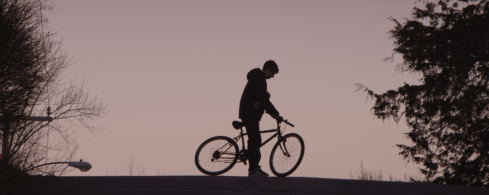
“Super Dark Times” is a slow-burn thriller that escalates into bloody violence, sheer terror, and complete loss of innocence…and even during all that escalating, things are already “super dark!”

Don’t believe me? It opens with two cops killing a dying deer that made its way through a window at school, as one of our main characters watches in awe…that’s only a hint of the bloodshed that’s to come!

Things get worse when four boys, alone in an open field, play around with a sword…you probably already know what happens there.

When I watch scenes like that (and a scene from “Boyhood” in which kids play with saw blades), I tense up because I’m afraid something might happen. (Sometimes, I’m right–the film wouldn’t be called “Super Dark Times” if things didn’t get…”super dark,” thanks to scenes like that.) It makes me think back to when I was a kid growing up in the country and thank God that the stupid things my friends and I did back then didn’t get us hurt and/or killed!

I mean, we always felt like we knew what we were doing, and nothing terrible ever happened. But sometimes, I wonder, what if… ah, forget it, we were careful and things were fine. (But even so, I’m never letting my kids play with weapons.)

“Super Dark Times” is a film about a group of kids who think they’re invincible and nothing can go wrong…until EVERYTHING goes wrong. The youngest kid wants to ignore it all and move on with his life. One kid is too busy trying to accept the responsibility of making sure not everything goes to hell that he keeps having to turn down the advances of his own crush! And then, the other kid…

You know what? In my long ramblings this past month, I’ve talked about spoilers and what I think they mean in analysis (with the exception of “The VVitch”), but this time, I’m just going to say check it out and see what you make of it. It’s currently streaming on Netflix–if you have an account (and can stomach the material I already mentioned here), give it a watch!
Looking Back at 2010s Films: Gerald’s Game (2017)

26 Oct

geralds-game-2017

By Tanner Smith

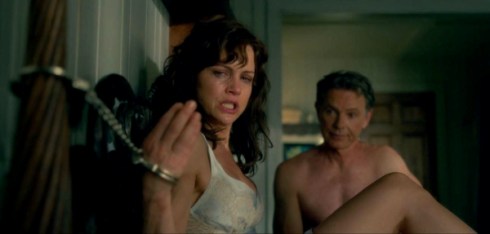
“Gerald’s Game” gets better each time I see it, and I can’t believe I complained about the ending when I first saw it, because this film NEEDED it! It needed the right amount of positivity & resolution after spending an hour-and-a-half in someone’s personal hell. (And it only lasted eight minutes, which is good for something that was originally about 50 pages in the original novel!) It made the film all the more special.

“Gerald’s Game” is based on a Stephen King novel whose story is told from a character who spends most of the time trapped in bed, handcuffed to the posts. How do you make a movie like that? Or, at least, how do you keep it interesting? The same way you make an interesting movie about a character trapped in a canyon (“127 Hours”) or a coffin (“Buried”)–you get a great actor and an even better director. This film’s star: Carla Gugino, in her best role to date. This film’s director: Mike…freaking…Flanagan!

I was already a fan of Flanagan’s by the time “Gerald’s Game” was released on Netflix, after seeing “Oculus,” “Hush,” and “Ouija: Origin of Evil.” So, I had a feeling “Gerald’s Game” would be really good. What he created in adapting King’s novel was something special: the kind of film that practically demands be watched more than once so that more things can be developed and explored when the audience is given the knowledge of where it’s going and where it’s been. The best kind of film, particularly the best kind of horror film, is the one that keeps you coming back for more.

Flanagan’s next film is another King adaptation: “Doctor Sleep.” I can’t wait to see how that one turns out.

Looking Back at 2010s Films: Let Me In (2010)

26 Oct

360_letmein_review_0930.jpg

By Tanner Smith

“Let the Right One In”…”Let Me In”…which one of these films do I prefer?

I don’t know.

Which one is better? A part of me wants to say “Let the Right One In” for how effective it is in its simplicity, but…I don’t know!

It’s that rare instance in which I like one film and its remake equally.

Actually, it’s more than that–I LOVE both of these movies!

The story is the same in each movie. A bullied lonely boy makes friends with a strange new girl living next door in his apartment building, and he doesn’t know until late in the friendship that she’s a vampire. So now, the boy has to decide whether or not he’ll let her into his life. (And vampires can’t come into your home without being invited…METAPHOR!)

The story is the same, but the movies aren’t the same. They’re both done differently, with different styles of filmmaking and even different ideas for the similar characters. And they’re both done beautifully!

“Let the Right One In” is a Swedish import that served as an “arthouse” vampire film. The beauty in the film comes from the simplicity–for example, nearly every scene is done in one take; in these scenes, we feel the emotional weight in the dramatic scenes and the intense rising fear of the horrific scenes. The friendship between the two 12-year-old main characters (well, one of them is actually 12; the other has been 12 for a very long time) feels just as genuinely sweet as it feels dangerous. You feel the plights of both of these people, and you realize that together, they can either be bad for each other or the best thing each other could ask for.

“Let the Right One In” is as beautiful as it is chilling, because it’s really *about something.* It has more on its mind than, say, brooding and admiring each other from afar. (Did I mention this released around the same time as “Twilight?” Did I need to?) It’s about two lost souls who find each other and face an uncertain future together.

Wait, “Let the Right One In” came out in 2008, and this is part of the Looking Back at 2010s Films, so I should talk about “Let Me In” (released in 2010).

I was open to the idea of an American remake, though I was a bit uncertain, because “Let the Right One In” was so terrific. When I noticed “Let Me In” was getting positive reviews, that’s when I started getting excited…

And I loved “Let Me In” for the same reasons I loved “Let the Right One In” and yet for different reasons too. It was more mainstream-friendly than “Let the Right One In,” to be sure. But there was still a great deal of atmosphere aided by gorgeous cinematography–I felt like I could reach out and touch the movie, it was that effective; I felt like I was there!

I felt more sorry for the boy in this one, named Owen, and he’s played by a great young actor (Kodi Smit-McPhee, who would go on to act in movies such as “Slow West” and “Dawn of the Planet of the Apes”). The boy in the original film (Oskar) was quite pitiful and you sympathized with him, but you could sense more of a darkness in Owen’s eyes when he was angry and more misery when he gets picked on. When he has to make a choice as to whether or not he can trust the girl (Abby, played by Chloe Grace Moretz), the tears in his eyes made me feel even more for the poor kid!

And whereas “Let the Right One In” put nearly as much focus on the local townspeople who either fall victim to the vampire or become a vampire themselves, “Let Me In” keeps the focus on the protagonists for the most part (with only a prologue involving a police detective played by Elias Koteas serving as a chilling pushover). To me, I felt that was the right choice.

Oh, and the frightening-as-hell swimming-pool scene from the original is represented in the remake as well…let me just say that I lost my appetite because I was so freaked out. (The original is still scarier, again because of its simplicity, but this one got me pretty well too.)

I can’t choose! I love both “Let the Right One In” and “Let Me In” exactly the same. (And I’ve had nine years to think about this!) They’re just…both…my favorite vampire movie. And I can’t see myself bending anytime soon.

Looking Back at 2010s Films: The Final Girls (2015)

15 Oct

1474240819793074470

By Tanner Smith

Continuing my series of Looking Back at 2010s Films…I want a sequel to “The Final Girls!” Why is there still not a sequel to “The Final Girls”?? People will see it!…Or somebody will!…I will!

“The Final Girls” is a satirical horror film about a group of modern-day young adults who are magically teleported into a 1980s slasher film–think “Last Action Hero” meets “Scream.” And now, in order to see the end of the film and hopefully get back home, they have to help the ’80s protagonists fight off a mysterious masked killer. What complicates things is that one of the ’80s kids was played in reality by the deceased mother of one of the millennials, and she’s not ready to lose her again.

The film was co-written by Joshua John Miller (along with M.A. Fortin), whose father is Jason Miller, who was best-known for playing Father Karras in “The Exorcist.” I can’t help but feel like writing this screenplay was like a form of therapy for him. (And another fun fact: Joshua Miller was best-known for acting as the little punk from ’80s cult classics “River’s Edge” and “Near Dark”–I know he plays different characters, but c’mon, he’s still the same little jerk in each film.)

But even with its heart, it’s still a horror-comedy. Does the comedy work? Yes…for the most part. The deconstructing of the slasher-movie tropes is very well-done, including how even being genre-savvy doesn’t always save your life. The killer, named Billy, is obviously molded after Jason Voorhees and the “Black Christmas” killer (also named “Billy”). They try to work in as many types as possible for the disposable teens–the Stud, the Sexpot, the Virgin, the Final Girl, and more. And it’s also nice to see these millennial youths play parental roles to these ’80s stereotypes.

What I don’t like so much about the film is that the ’80s stereotypes don’t feel even like “’80s stereotypes.” They feel like millennials trying to play ’80s so they can have an excuse to be as impolitically correct as possible. Did they really expect me to buy Adam DeVine as a jock stud from the ’80s? Bullsh*t. I have the same problem with Angela Trimbur as the ’80s Sexpot–again, I’m not seeing as much of a type as much as someone trying to perform community theater. Even for an ’80s slasher film, you gotta try harder than this.

Though, I will say…they are more memorable than most disposable teens in real ’80s slasher films.

Speaking of which, the main characters themselves are likable enough for me to want to follow them. It’s not really an actor’s movie, but it is important to have appealing players in any film, no matter how satirical it may be. Taissa Farmiga is a fun protagonist, Alexander Ludwig is convincing as a sensitive jock, Nina Dobrev is funny as a conceited slutty type, Alia Shawkat is also funny at being Alia Shawkat, and Thomas Middleditch is irritating without being ear-numbingly so. Also, Malin Akerman as the ’80s Virgin who doesn’t know her character is played by someone’s late mother is very sweet and effective.

Again, not an actor’s movie. But give credit where it’s due.

And judging from the entertaining blooper reel at the end, it looked like everyone had a fun time making this flick. If I were involved, I’d probably have a blast too. I definitely had fun watching this film…and I’d undoubtedly have fun watching a sequel if they would just make one already!

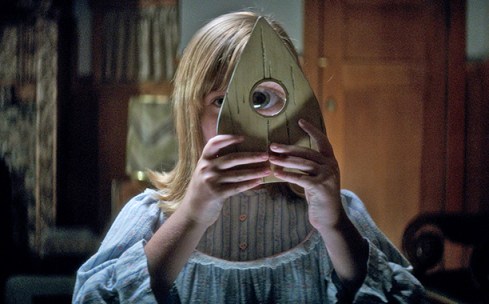
Looking Back at 2010s Films: Ouija: Origin of Evil (2016)

15 Oct

ouija-origin-of-evil

By Tanner Smith

How did this happen? How did a prequel to a subpar horror film turn out to be so good? It’s as if the first “Halloween” movie to be released was “The Curse of Michael Myers” (the sixth, and arguably worst, of the franchise) and then it was followed up by John Carpenter’s “Halloween.”

That’s how impressive “Ouija: Origin of Evil” is.

This is the prequel to 2014’s “Ouija,” which was about a group of teens who play a Ouija board game to communicate with spirits, and of course, evil demonic forces take hold of their lives and slowly but surely kill them off. “Ouija” was overwhelmingly panned by critics, calling slow and nonsensical.

“Ouija: Origin of Evil,” its follow-up, was given the opposite reaction, with highly positive reviews from critics who noticed the significant amount of improvement over its predecessor.

Here’s how I think it happened. Director/co-writer Mike Flanagan (who had already impressed me with quality horror films such as “Oculus” and especially “Hush”) was focused on making a good movie as well as compromising with the studio system. What did the executives want to see?

They wanted to see kids playing the board game, like in the original film. Fair enough–so, Flanagan wrote in a scene in which one of the leads, a teenage girl, plays with her friends and introduces the audience to the rules of the game.

They wanted a jump-scare early into the proceedings. Ugh, fine–but Flanagan, who hates fakeout jump-scares as much as I do, used it for comedic effect.

And he had to tie up all loose ends from the original. How do you do that, when it seemed the ending twist of the original “Ouija” didn’t seem to make sense? Well…Flanagan found a way to fix that too.

And surely there were more studio notes like that, but Flanagan chose not to fight against them but to use them as a benefit. You know what? Freaking KUDOS to this guy!

So, now that Flanagan used the studio notes, what was he going to give us in “Ouija: Origin of Evil?” Story! Characters! Atmosphere! Caring! He thought of giving us all of that before throwing in the terror! By God, it’s A MOVIE!

Thus, what started as a deplorable work-for-hire turned into one of the most surprisingly good horror films of the decade.

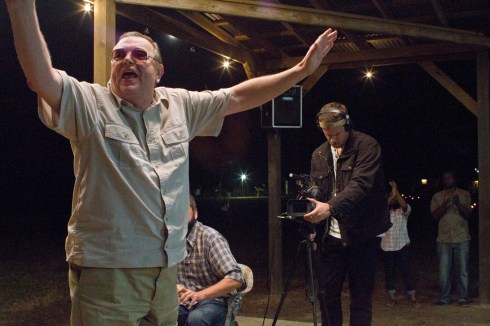
Looking Back at 2010s Films: The Sacrament (2014)

15 Oct

sacrament_05

By Tanner Smith

I stated before that I’m a supporter of the found-footage/faux-documentary format (again, when it’s done right). One of the inspirations I turned to when making my own fake-documentary feature was Ti West’s “The Sacrament.”

“The Sacrament” is a faux-documentary thriller in which a small VICE camera crew (played by AJ Bowen, Kentucker Audley, and Joe Swanberg) travels to a secluded religious community, where people who were down on their luck come together to live in peace and serve the community founder, simply called “Father” (Gene Jones). Everything seems fine, until they come across some members who beg them to take them away from here. With that tension comes the paranoid possibility that the crew will return home to reveal too much about the community. And with that…comes complete chaos.

The trailer tried to be clever in hiding where this whole ordeal is going, but even if you haven’t seen the movie already, you can tell where this story is going: it’s based on the Jonestown massacre.

But even so, “The Sacrament” is a gripping thrill ride. Once everything goes to hell, it’s just a question of which of our main characters could survive and how long it will take before they finally make their way out of this horrible experience. And unlike most first-person-perspective movies, I’m not wondering why the characters keep filming everything–they’re a media group getting as much of the story as they can in the hopes that they can get out of this situation with their lives and reveal it to the world. I buy that.

And because I buy that, I’m constantly on-edge when everything goes from bad to worse, because we’re seeing things mostly through the eyes of our protagonists, whether they’re hiding from armed guards or running to a new location. We even get disturbing footage from the antagonists as well, after they take one of the cameras–the most brutal scene that comes from this is a static-shot scene in which someone is forcibly poisoned and dies in his sister’s arms. The poor guy…

Oh, and I should also mention that because our heroes are camera operators & documentarians, that creates a perfect alibi to keep shots steady, except for when they’re running for their lives while filming! It’s the little things that prevent criticism…except for when it comes to people who claim the idea of exploiting the Jonestown massacre for horror-movie purposes is in bad-taste. (It’s just a movie.)

Looking Back at 2010s Films: ParaNorman (2012)

14 Oct

image_1024x576_paranorman_hero_v3.jpg

By Tanner Smith

“ParaNorman” is a fun, well-animated Halloween horror-adventure film…but it’s actually more than that.

It’s another creepy stop-motion animated film, though I wouldn’t confuse it with “Coraline” or “The Nightmare Before Christmas” (both good in their own ways). The plot involves Norman (voiced by Kodi Smit-McPhee) as an odd outcast kid who sees ghosts. One of the ghosts warns him of a witch’s curse that haunts his small hometown. The deceased are brought back as zombies, and Norman, along with four peers, have to race to put them back to rest before the witch returns and destroys everything and everyone in town.

Without giving too much away, it turns out the question as to who the real monsters are is more complicated than it seems. The zombies walk about town, and of course, the townspeople are frightened (and in a funny twist, the feeling becomes mutual when the locals fight back). But as Norman and his friends find out, it’s not the zombies or the witch that’s haunting the town and the characters–instead, it’s the past. Terrible decisions made in the past come back to haunt the town, much of which has to do with refusing to accept the things the majority calls strange and unusual. It’s a tragic story that makes you feel for the characters and become more invested in what’s happening.

It’s not easy to accept a family Halloween film that warns its audience that THEY could become the monsters they fear–and THAT’s why “ParaNorman” deserves to be treasured.

THIS lost Best Animated Feature to “Brave”?!

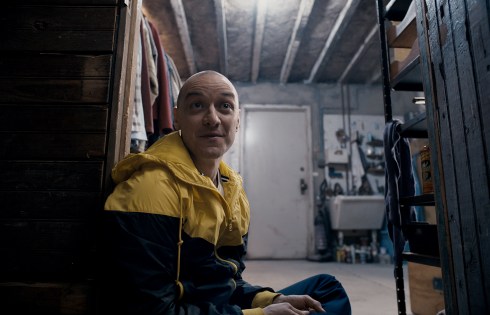
Looking Back at 2010s Films: Split (2017)

12 Oct

james-mcavoy-split-image

By Tanner Smith

Continuing my series of Looking Back at 2010s Films, for me, the best kind of film is the film you don’t expect to like/love as much. They’re far more interesting than the films you go in expecting to like/love, because with those films, they’re usually exactly what you expect to see, without much of a surprise. And those films keep people from coming back to them so often. But when other films contain twists and turns to keep the story coming and going, you can go back and rewatch those films with the knowledge you have from the first viewing and look at them in a different way. Maybe you’ll think less of them because things don’t add up as well as you thought, but then again, maybe you’ll like them even more because you know there’s more to discover and admire about them.

When it comes to M. Night Shyamalan, when he can succeed at this sort of thing, he can make some great films that get better the more you watch them. “The Sixth Sense,” “Unbreakable,” “Signs,” “Split”–these are four of Shyamalan’s films you have to watch more than once. (Even a few more viewings of “The Village,” which I know a lot of people hate, are worthwhile in order to understand it more.)

“Split” was a big risk for Shyamalan to take. He had to put total faith in his audience to stay with it all the way through to the end, even when things get head-scratchingly odd in the final act. And it apparently paid off, as the film was both a critical hit and a financial success. I get the feeling that it was a box-office hit because people had to see the film once, tell their friends to go see it, and then revisit the film to notice more hints and clues that point to the final story-twist making sense.

That’s what I did. And I have to admit, the first time I saw it, I wasn’t sure exactly where the story was going. But I stayed with it because I felt like it leading me somewhere, and I wanted to know where…

Much of the film is based on the idea that hasn’t been entirely scientifically proven about Dissociative Identity Disorder (D.I.D.), that one personality is so different from the others that it can take on physical traits that the others couldn’t handle or the personalities actually become who they think they are. As with similar movies like “Psycho” and “Fight Club,” “Split” isn’t to be taken too seriously–it’s just a thriller that has some fun with the concept. And in “Split’s” case, it’s about a man with 24 different personalities, one of which is a beastly killer known as The Beast. He feeds on those who don’t know true suffering, such as sheltered young people with no problems in the slightest, whom he declares as “impure.” Watching the film again, I realized this was a way to counteract for his host’s tragic abusive childhood (as hinted in a flashback late in the film).

I’m going to go into spoilers here, so SPOILER ALERT!!!

The Beast is real. It changes size, his veins bulge, he climbs walls, he’s super-strong, and seemingly can’t be destroyed–use a knife against him, the blade breaks apart; pelt him with a shotgun, it just barely breaks the skin. It kills (and eats) two of the three girls captured by The Horde (the personalities that serve The Beast’s purposes). Why doesn’t he kill the third girl, our main character Casey Cooke, even though her attempts to fight back are hardly successful? Because he can tell by the scars on her body that she knows what it’s like to understand pain and suffering whereas the other two were probably self-entitled rich girls who had everything go perfectly well for them up until now. By the end of the film, we have it figured out that Casey is often brutally assaulted by her uncle who took her in after her father died. (These are things that aren’t clearly explained, but we pick on them pretty easily.) So now, when Casey behaves the way she does throughout the film, we now understand why during the second viewing. She knows how to survive because she’s been going through this stuff for half of her life.

When she’s finally rescued and her uncle comes to pick her up, she has a look on her face that could read one of two things–either she’s going to stand up to her son-of-a-bitch guardian now that she’s faced unspeakable evil, or she’s going to report him to C.P.S. and be rid of him. Either way, I get the feeling she’s not going to take any more crap from him.

Having seen “Glass,” I was glad to find out that she’s living a happier life. Kudos to Casey!

I love “Split.” It gets better each time I see it, with new things to discover and think about. Shyamalan put a lot of passion into this project, and it didn’t backfire. He thought the whole thing through the same way he thought the story of “The Sixth Sense” all the way through, and it really shows! I haven’t even mentioned the thorough production design, the fitting cinematography, the chilling music score, or even James McAvoy’s brilliant performance in which he has to portray many different personalities with different facial expressions and body language. There’s a lot to this movie even before the big twist was revealed at the end (that “Split” is set in the same universe as “Unbreakable”) that fascinated me simply because it was made by a person who loves movies and respects his audience. I felt glad to see that Shyamalan was BACK in a major way, and um…I’ll talk about “Glass” sometime in the near future.

Looking Back at 2010s Films: Sinister (2012)

12 Oct

Sinister.jpg

By Tanner Smith

Continuing my series of Looking Back at 2010s Films, “Sinister” is a horror film that features the best kind of jump-scare and the worst kind of jump-scare.

The former occurs when the main character Ellison Oswalt (Ethan Hawke) watches one of the sinister snuff films, which features a lawnmower…and suddenly someone is in the lawnmower’s path!

The latter just seems like a lame studio note–the monster, the Bughuul deity, suddenly appears on-screen for one last scare for no good reason other than…Blumhouse Productions wanted one last scare.

(This is not the only time Blumhouse has given us movie endings with cheap jump-scares. They just kept doing it for a while. I think they’ve learned by now not to do it anymore. I mean, would their later films like “Split,” “Get Out,” or ‘The Gift” be any more effective if they all concluded with someone jumping on-screen and shouting “boo”?)

The reason the lawnmower jump-scare worked was because it actually was a legitimate scare. It had appropriate buildup and a scary payoff. It didn’t fake out the audience with a lame joke in which it turned out to be a random noise caused by a friend or a pet or something. (Like a lot of people, I HATE those fakeouts.)

I really like “Sinister.” I like the mystery, I like the looming doom that surrounds the characters, I like Ethan Hawke, and I especially like that it’s co-written by a film critic (C. Robert Cargill of spill.com), someone who respects film audiences.

But there’s one other thing I like about the film, and I cannot believe I neglected to mention him in my original review years ago. My favorite character in the film is Deputy So-And-So, played by James Ransome (who recently starred as Eddie in “It: Chapter Two”). He’s the sheriff’s deputy who helps Hawke’s investigative crime-author character figure just what is going on with these snuff films and this Bughuul figure. He could’ve easily been written as dumb and naive, for comic relief. Instead, while he is starstruck by the author and eager to help him any way he can, he’s very bright, and he even manages to figure out the hidden truths before the author is able to. I don’t think he gets enough credit, even from the author himself who even lists him in his smartphone contacts as “Deputy So-And-So.”

I did see the critically-panned “Sinister 2,” which brings back Deputy So-And-So (no, seriously–he’s the lead character this time, and he’s STILL credited as So-And-So), the only recurring character aside from Bughuul. Unsurprisingly, it disappointed. Maybe I don’t need a sequel. I have “Sinister,” and that’s good enough for me…except for that final jump-scare. (Seriously, f*** off.)

Looking Back at 2010s Films: The Hunger Games Movies (2012-2015)

12 Oct

The_Hunger_Games_Mockingjay_Part_1

By Tanner Smith

Continuing my series of Looking Back at 2010s Films, let’s talk about the “Hunger Games” movies!

I read the first two (out of three) books in the “Hunger Games” series by Susanne Collins when I first heard the movies were being made. I skipped the last book, because…well…the second book (“Catching Fire”) didn’t really grab me as much as the first one did.

About a year later, “The Hunger Games,” the movie, was released. I really liked it. I thought it was well-acted with great performances from Jennifer Lawrence, Woody Harrelson, Josh Hutcherson, Lenny Kravitz, among others. And I thought it had great social commentary about what we perceive as entertainment, what draws the most attention in times of crisis, what classes find valuable, and so on. Yes, it is very dizzying with its constantly shaky camera movements and the whole purpose of an action film is to actually SHOW the action…but to be fair, I don’t want to see the bloody deaths of children. (Btw, even though they aren’t shown in graphic detail, this movie should’ve gotten an R rating! PG-13, my ass.) I will criticize the heavy amount of closeups and the actual “hunger” of the Hunger Games going ignored, but the shaky-cam? Eh. Doesn’t bother me that much.

Even though I wasn’t entirely sold on the second book, “Catching Fire,” I was still curious to see how that film adaptation would turn out…and to my amazement, “The Hunger Games: Catching Fire” turned out to be even better than the first movie! (It’s my favorite of the four “Hunger Games” movies.) I don’t know if it was a case of toning the material down while still getting a clear understanding about what made it worth selling to begin with, or if the new director (Francis Lawrence, taking over for Gary Ross) with a different style had something to do with it (I CAN SEE THE ACTION NOW), or whatever. But either way, “The Hunger Games: Catching Fire” had elements of what made “The Hunger Games” compelling and added to it by deepening the themes, broadening the characters, exploring the environment this story is set in, and heading into darker territory. This was like the “Empire Strikes Back” of young-adult book adaptations! And I loved it–and I still hadn’t read “Mockingjay,” the final book, so where was it going to go from there??

They split “Mockingjay” the movie into two parts (because of course they did).

“Part 1” is fine–it still has more of that commentary coming out and giving us more survival techniques for the resistance in this war-driven world, and Jennifer Lawrence carries a great deal of it (of course). But “Part 2” is where things get REAL good. This is the final resolution, the story that’s going to make things right…or are they? We get a lot of tough questions and even tougher answers, and we find ourselves asking, what would WE do if we had the upper hand on our enemies? It’s a lot more thought-provoking than I expected. There isn’t a lot of action in it, but I didn’t need a “Return of the King” type of climax for this series that’s talking to people about hard choices, such as moral uncertainty of war–I just needed something deeper than that. And I got it. And I admired this franchise for taking that risk.

My ranking of the films:
1. Catching Fire
2. Mockingjay Part 2
3. The Hunger Games
4. Mockingjay Part 1