Archive | My Favorite Movies RSS feed for this section

Looking Back at 2010s Films: Chronicle (2012)

22 Nov

By Tanner Smith

Well, before director Josh Trank’s name became a punchline thanks to the messy blockbuster “Fantastic Four” (or “Fant4stic,” as people like to call it), he had a sleeper hit with the 2012 found-footage superhero teen film “Chronicle.”

Honestly, I feel bad for the guy for what happened with “Fant4stic.” He probably could’ve had something special if not for the studio interference. (Again, the studio system strikes.) Let’s see if he’s doing anything else.

*quick Google search*

Oh OK, he’s doing an Al Capone film with Tom Hardy, called “Fonzo.” Sounds good. Wonder when that’s coming out.

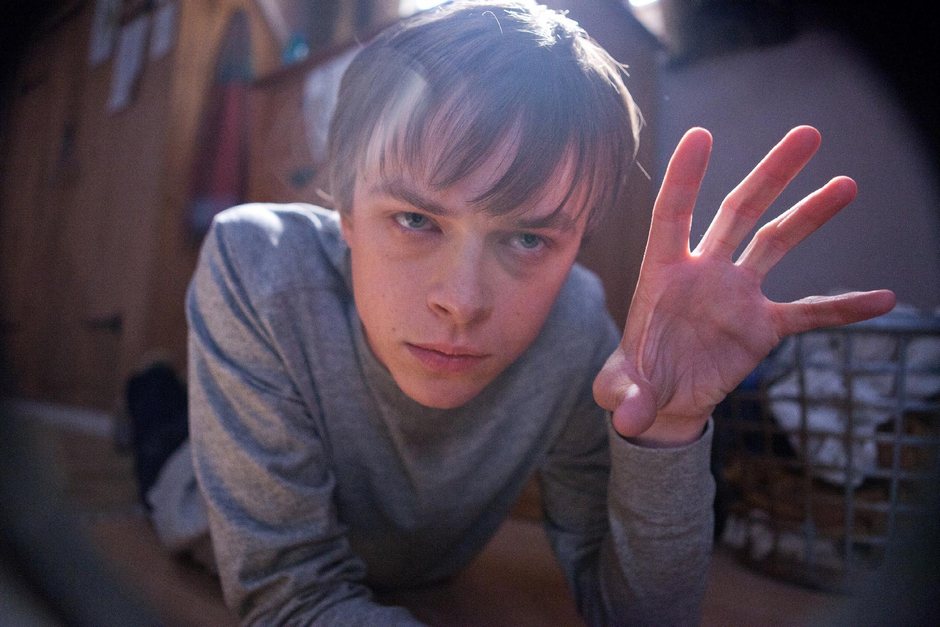
But back to “Chronicle.” “Chronicle” is a film about three high-school students–Andrew (Dane DeHaan), Matt (Alex Russell), and Steve (Michael B. Jordan)–who come across some sort of otherworldly portal that leads them to a force that gives them superpowers. They have telekinesis, they can fly, and they’re stronger the more they use their abilities (“like a muscle”). Because it’s a found-footage movie (though from the perspective of different cameras to tell the whole story), they document it all–the kid holding the camera for the most part (Andrew) even operates it without touching it (meaning there’s very little shaky cam here!). But Andrew, who comes from a broken home and is constantly bullied in school, starts to feel dangerous urges with his new strength and uses them to get back at people who do him wrong.

The first half of “Chronicle” is lots of fun to watch over and over. The kids are played as real kids, they work off each other brilliantly, and they behave the way I think real kids would behave if they suddenly gained superpowers. (Although, wouldn’t it be more interesting if they showed it to their classmates? I digress.) The effects are nicely done, especially for the low budget. (The flying sequences are a little dated, but they’re not terribly done.) And I love seeing them experiment with their abilities–pranking people, flying around, catching a baseball mid-air through mind powers, and even the damage they can cause if they’re not careful…which brings me to the second act, which is very dark and grisly. Much of it has to do with Andrew’s loss of control, which if you go back and watch the film again is inevitable rather than sudden. It bothered me when I first saw “Chronicle”–it doesn’t anymore.

What I like best about “Chronicle” overall is that it tells the full story. It doesn’t set up for a sequel. There’s an obvious beginning, middle, and end, with all the right buildups and just about every right payoff, and it’s told very satisfyingly.

With that said, I do wonder what Matt found when he set off on his quest to find out what happened to him and his friends–what was that thing down there in the tunnel? Where did it come from? But on the other hand, maybe it’s best to keep wondering. I like “Chronicle” just the way it is.
Looking Back at 2010s Films: Big Hero 6 (2014)

19 Nov

By Tanner Smith

I’m going to get to writing about “Frozen” soon enough, because it’s Disney’s biggest hit (to say the absolute least!!). I already talked about “Tangled,” a very enjoyable romp. Other terrific Disney animated films from the 2010s include “Zootopia,” “Moana,” and “Wreck-It Ralph”–but today, I want to talk about what I think is their most “pure fun” animated film from this decade: “Big Hero 6.”

Remember when the Oscars didn’t nominate “The Lego Movie” for Best Animated Feature? Well, I feel a little better about that since they gave Disney’s “Big Hero 6” the honor.

“Big Hero 6” is conventional, cliched, and kind of predictable…but damn it if it also isn’t a ton of fun!

It’s an origin story for a team of superheroes, as a lovable collection of techno-savvy geeks band together and decide to suit up as a super-team to go up against a techno-savvy baddie. To their aid is a robotic companion, now programmed to kick some serious butt. Along the way, there’s tragedy, comedy, and of course, a life lesson that our main hero has to learn as well as the main villain.

Would it surprise you that this is based on a Marvel comic? Didn’t really surprise me, either.

Oh, and it also takes place in a future city known as San Fransokyo, a hybrid of San Francisco and Tokyo–there’s not any explanation for this joining, but it makes for a pretty visual sight when we go to some different spots of this world here and there.

It begins as Hiro Hamada (voiced by Ryan Potter) is convinced by his older brother Tadashi (Daniel Henney) to join his science college to better his creative mind. Hiro comes up with a unique robotic invention and unveils it at a science fair, but it seems someone is out to get it for himself and starts a fire in the building that claims the life of Tadashi. (It wouldn’t be a Disney movie without some sort of tragic death, right?) Hiro is left with Tadashi’s own robotic invention–a portly Pillsbury Doughboy lookalike designed as a health care robot, named Baymax (Scott Adsit). At first, Hiro doesn’t want to admit he needs help in any way, even though he’s clearly suffering from loss of his brother. But when it becomes clear to him why his brother died (that it was no accident), he decides to get to the bottom of it. He rallies Tadashi’s genius classmates–cowardly laser specialist Wasabi (Damon Wayans Jr.), quirky chemist Honey Lemon (Genesis Rodriguez), bitter engineer Go Go (Jamie Chung), and comic-book loving slacker Fred (T.J. Miller)–to help him out, and he also reprograms Baymax to become a lean (er…OK, not lean), mean (actually, he maintains his calm manner) fighting machine (thanks to karate styles in movies) to back him up.

Baymax is adorable. He speaks in a soothing voice, has many resources (including hugs) to help those in need of medical attention, and is the perfect toy for Disney to sell to children.

They go through all the motions of the origin story. They encounter a masked supervillain that they think is someone in particular but really turns out to be someone else for another reason. And of course, the villain’s motivation mirrors the hero’s selfish desire, which leads to a moral that both need to learn before the credits roll. Yes, admittedly, “Big Hero 6” doesn’t have much that’s “new,” per se, but when it works, it’s not only one of the most entertaining animated movies of the decade–it’s also one of the most touching. By the end, I wanted to tell Hiro that everything’s going to be OK and we all suffer and get through loss at some point of our lives.

Hiro is the most well-developed of the kids, which mostly comprise of generic types–the stoner, the goth, the wuss, the loony. But I like them all for the same reasons I like the kids in “Honey, I Shrunk the Kids,” who were also generic types. They’re more than likable enough to follow and they add to the fun. They each get their time to shine.

The action is fun and wonderfully animated (like I would expect anything less from Disney animation). The themes of loss and redemption are well-done. And when it’s all said and done, it doesn’t matter what we have or have not seen before in other movies before–what matters is how well it’s all handled. “Big Hero 6” is a ton of fun.

Also, stick around after the end credits (this is a Marvel movie, after all). It’s a pretty golden moment that follows.

Looking Back at 2010s Films: Kung Fu Panda 3 (2016)

12 Nov

By Tanner Smith

One of the best, most surprising animated treasures of the 2000s was DreamWorks’ “Kung Fu Panda,” starring Jack Black as a panda who learns kung fu…thinking about what I just wrote baffles me for how stupid it seems and yet delighted that it actually worked.

And it definitely worked. Released in 2008, “Kung Fu Panda” was not only beautifully CG-animated and very funny AND wonderfully choreographed (for animation, providing as many kung fu styles as possible takes incredible skill)…but it was also rather moving and beautiful when it needed to be, and it taught a valuable lesson that speaks to both kids and adults: we all have unique skills that help make us who we are.

Three years later, in 2011, we got “Kung Fu Panda 2,” which was even better. More atmosphere, more action, more visual treasures, and most surprising of all, more emotions–you will believe Jack Black as Po the Kung Fu Panda will make you feel things!

I could make a Looking Back on 2010s Films post about “Kung Fu Panda 2,” but honestly, I think I’d rather write about “Kung Fu Panda 3,” my favorite of the trilogy.

Yes, it’s a trilogy with a conclusion…unless DreamWorks decides to go the PIXAR/”Toy Story 4″ route and meet back up with familiar characters years later. (I’d be fine with that, if it’s done well, like with “Toy Story 4.”)

With each passing film, we see a neat progression in Po’s character. In the first movie, Po was a mere kung fu enthusiast (and flabby panda) who was chosen to become the Dragon Warrior to combat a dangerous villain and bring peace to the valley. No one believed in him until he was able to find the skills within himself to get the job done.

But with “Kung Fu Panda 2,” we’re reminded that it’s not as simple as that to become what you desire to be. Po had to search within himself to find out who he truly is and not just who he wants to be. (Oh, and he also had to find out about his origins, as his father’s a duck who obviously adopted him.) Through it all, he finds inner peace. A satisfying resolution for an even more satisfying sequel. Where can we go from there?

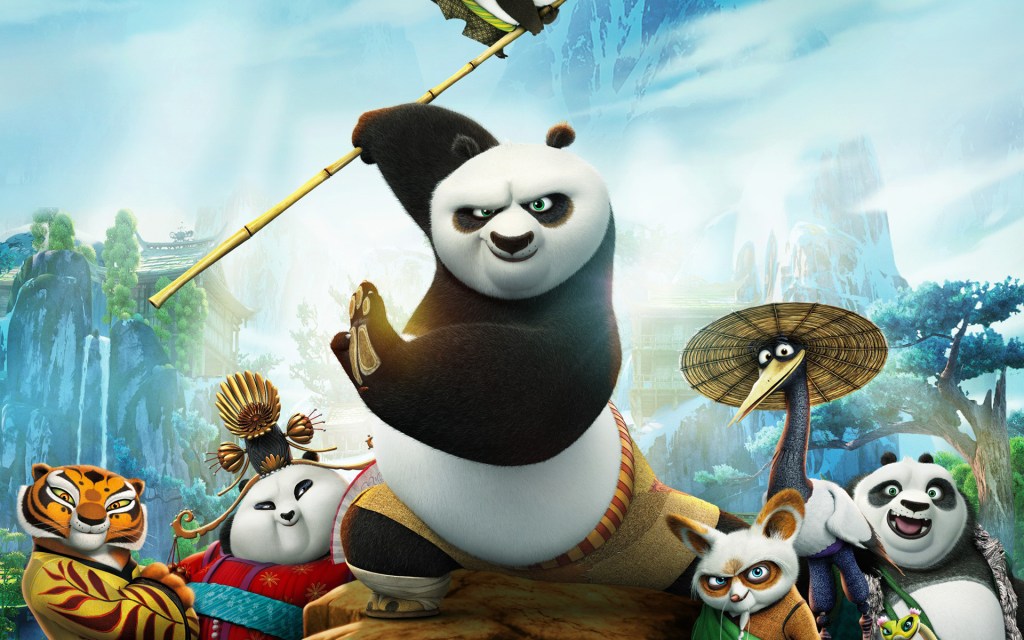
Well now we have “Kung Fu Panda 3.” What are we going to tackle with this one? Well, this time, Po has to be a teacher. Already, I’m intrigued. Po is still excitable and energetic. He has mastered many of the ways of kung fu, but we see he still has a lot more to learn. Now, Master Shifu (voiced by Dustin Hoffman) is stepping down as master of the Furious Five and appointing Po as the new guy in charge. But even Po knows he’s not ready for this responsibility–and thankfully, we get a scene early on in which Master Shifu states the reason he wants Po to teach is so Po himself can learn something new, because he shouldn’t get used to what he already knows. Pretty good point there.

Anyway, Po is visited by another panda in the valley, named Li (Bryan Cranston), who it turns out (GASP!) is Po’s birth father! It’s a happy reunion that turns into more than that when it turns out Li may be able to help in defeating a new all-powerful villain, the chi-stealing warrior Kai (J.K. Simmons). You see, pandas possess the hidden secrets of the power of “chi,” which translates to “life force” or “energy flow.” The more Kai can possess from those he comes across, the more powerful he becomes. Thus, Po has to travel with Li to the secret panda village to learn chi. But it’s going to be harder than it seems, as Po is interacting with his own species and finally learning how to be…a “panda,” for the first time in his life.

Oh, and Po’s adoptive father–you know, the goose (James Hong)–is understandably jealous of Po’s new attachment to the father he never knew. Thankfully, this subplot isn’t as annoying or even as distracting as it could have been. And its resolution is actually kind of touching…but not as effective as…

You know, it’s baffling and kind of disconcerting that “Kung Fu Panda 3” didn’t get the attention it deserves. Critics recommended it mildly at best. It was released in January, when it could/should have been a fitting summer release. And of the three “Kung Fu Panda” movies, this was the only one not to be nominated for the Best Animated Feature Oscar.

People just see it as just another “Kung Fu Panda” movie, which is a shame, because…I love this movie.

Why do I favor this one over the previous two? Because it’s a definite proper conclusion in this sense: it’s the only one in the trilogy that came through with its original promise. You ever notice that what usually defeats the previous villains is some kind of magic that was never fully explained, defeating the purpose of the message the films try to get across, that it’s best to find your own inner strengths? Well, this time, even though the mystic Wuxi finger hold (which I still don’t get) plays a role in the climax, the focus is still on what Po is able to teach his fellow pandas in the ways of kung fu. He teaches them to use their abilities to their advantage, and in a fresh, inventive way, it truly works. There’s an ancient Chinese saying that kung fu lives in everything we do–this is a Kung Fu Panda showing us how! As strange as that may sound, it’s truly effective.

Now, I can just predict some troll commenting, “Haha I’m writing an angry comment on your blog–is THAT kung fu? XP” To that, I say, “It just might be.”

And as Po learns who he himself really is, it’s actually very emotionally satisfying. I can’t help it–the “Kung Fu Panda” trilogy is better than it had any right to be. With the right skills and writing and technical wizardry, you can make even the silliest ideas work wonders.

Looking Back at 2010s Films: The Wind Rises (2014)

12 Nov

By Tanner Smith

Hayao Miyazaki’s swansong, this was said to be. Well, a few more years will change anyone’s mind, as he seemingly has another film in the works. But it wasn’t the first time he announced retirement anyway. Who am I to complain? If he wants to keep making films, let him.

“The Wind Rises” is one of Miyazaki’s best. It shows his strengths as a visionary animation director. It’s visually stunning, has a beautifully told story, and is just an overall fantastic film. It’s also the first time Miyazaki tackled a “true story,” so that’s just as impressive. It’s a story loosely based on aviation engineer Jiro Horikoshi, who came up with the design of the Japanese Zero fighters, which were used in WWII.

Thankfully, neither the character nor the film have a political agenda to get across. We know what damage and tragedies came from this creation, with many lives lost at the hands of the fighter pilots. But the character of Jiro didn’t know that would happen–he just felt happy to create something unique and special…it just turned out that “something” was a weapon.

The film doesn’t focus on the controversies that spawned from what this creation led to, but it doesn’t ignore them either. It instead focuses on the wonder and majesty of bring something new and innovative to life. That is what the film is about–it’s a fable about dreams, creativity, and passion.

And the way the film explores the creative process is imaginative. We see Jiro’s dreams and fantasies (in which he converses with his hero, a late Italian aviator voiced by Stanley Tucci), and we also see little things that inspire him, even something as small as a curvy fish bone that inspires his ultimate design.

But the film is also very downplayed. Characters talk about what should be done and what needs to be in order to make it work, in realistically effective fashion. The visually amazing sequences that Miyazaki does best are saved for dream/fantasy sequences, which was a wise decision for a film like this.

Oh, and here’s an interesting tidbit: human voices are largely used as sound effects, such as engine roars. I don’t know exactly why, but I think that’s ingenious.

So maybe Miyazaki hasn’t called it quits yet. Whatever his next film turns out to be, I’ll be interested in seeing it.

Looking Back at 2010s Films: Columbus (2017)

11 Nov

By Tanner Smith

One of the bonus features on my Criterion DVD/Blu-Ray collection for Richard Linklater’s “Before” trilogy is a wonderful video essay called “On Cinema and Time.” It looks at many of Linklater’s films (including the “Before” trilogy, of course) and Francois Truffaut’s “Antoine Doinel” film series (spawned by “The 400 Blows”) to look into the styles of distinctive filmmakers who can be labeled as “auteurs.” And it was done brilliantly. (Side-note: please watch it here.)

Who made the video? A filmmaker best known for his video essays, simply known as Kogonada (or, : : kogonada). He’s all about content, form, and structure of film, and his video essays are about trademarks and aesthetics used by filmmakers. Other sources for his essays include Wes Anderson, Quentin Tarantino, Stanley Kubrick, among others.

I remember thinking, this is a fascinating “movie buff” (for lack of a better word) and he should write/direct a feature film some day. Well, he did–a wonderful conversation-driven comedy-drama called “Columbus.”

The film takes place in Columbus, Indiana. One of our two main characters is Casey (Haley Lu Richardson), a young architecture enthusiast who graduated high school, works at the local library, likes to walk around local architecture and pretend she’s a tour guide providing important information to people, and also cares for her mother, who is a recovering drug addict. The other is Jin (John Cho), an American who works in South Korea translating literature to English and comes to Indiana to care for his estranged father, who is now in a coma after he was supposed to give a lecture about architecture.

Jin and Casey meet by chance, strike up conversation, and find they share a rapport. Jin hates architecture, leading Casey to tell him about her favorite buildings, which then leads Jin to ask WHY they’re her favorite structures. In talking about this stuff, they also open up about themselves, such as how Jin feels resentful towards his father since he buried himself into his work and how Casey would love to pursue her dreams of working in architecture but feels pressured to look after her mother. The two help each other out, even when they both stubbornly state they don’t need help.

I mentioned the “Before” trilogy and how Kogonada’s video essay was used to illustrate Linklater’s style of presenting philosophy and time through cinema. Watching “Columbus,” I can’t help but feel like this is the style Kogonada took inspiration from. Most of it is not so much “dialogue” driven as it is “conversation” driven, as the “Before” trilogy was. That’s not to say he steals Linklater’s style; he just puts his own spin on it, with his own writing, characters, and style. He’s telling his own story through words, and he’s also doing it through architecture–many of the film’s static shots are framed in such a way that we can appreciate the design of the setting just as Casey appreciates the structures of her favorite buildings. He’s practically forcing you to look at what he has to show you.

Jin and Casey are two interesting people communicating both through conflict and despite conflict. They need each other to talk with/to, and as a result, we learn more about each one of them and what they have to go through. That makes the scenes in which they’re with other people, such as Jin with his father’s assistant (Parker Posey) and Casey with her coworker Gabriel (Rory Culkin), all the more interesting when you note the contrast between they want to talk about and what they’re afraid to talk about. Thus, each time Jin and Casey revisit each other to talk some more, I’m all the more invested in what they have to say next.

John Cho is very good as Jin–it’s great to see the guy who was known as the “MILF guy” in the “American Pie” movies and the first half of “Harold & Kumar” get opportunities to shine as a dramatic actor. (He was even better in “Searching” in 2018.) But the real star of the film for me is Haley Lu Richardson as Casey. I’ve liked her in movies like “The Edge of Seventeen,” “Split,” and “Support the Girls,” among others–“Columbus” gives her the role she was born for. She’s brilliantly natural, she has great screen presence, I feel for her character from beginning to end, and she delivers a true heart to the film that I can’t praise enough. I want to hug her when she’s upset, I want her to follow her dream, I feel bad for her when something goes unexpectedly, and I smile for her when she does something she even remotely likes. She’s nothing short of wonderful here.

There’s a lot of sadness in “Columbus,” which is why Jin and Casey need their outlets to let out their emotions. But there’s also a lot of possibilities for them to move past it all and embrace what they have and what they could get. Much of it has to do with love–the sacrifices for it as well as the avails…kind of like what goes into architecture as well.

Kogonada has another feature in the works: a science-fiction drama called “After Yang,” starring Colin Farrell. With this guy at the helm, I look forward to seeing that film as well.

Looking Back at 2010s Films: Argo (2012)

11 Nov

By Tanner Smith

If you’ve followed my Looking Back on 2010s Films series (and it’s OK if you haven’t–I’m mostly doing this because it’s fun, not to gain a large fanbase or anything), you may have noticed I tend to mock the Oscars (mostly in favor of the Indie Spirits). But maybe that’s not fair. The Oscars aren’t the only game in town and when you get down to it, it’s still another group of people who have their own collected opinion about movies they think deserve higher recognition.

With that said, are there any Best Picture Oscar winners on my decade-end top 20?

Well…there’s one. (And there are also two Best Animated Feature winners as well.)

BUT I still would like to write some others for this series, such as “The King’s Speech,” “Birdman,” “Moonlight,” and “Green Book.” And “Argo.”

(And I’ve already written about “The Artist.” That film came SO close to making the list.)

Ben Affleck’s “Argo” is one of the more entertaining thrillers of the decade. It’s thrilling, intriguing, frightening, tense as hell, and overall very interesting to watch. And even though I liked another Best Picture nominee of that year, “Life of Pi,” a little better for different reasons, I still cheered when “Argo” took home the gold. (And “Life of Pi”‘s Ang Lee took home the award for Best Director–not that Affleck was nominated, anyway. Oh yeah, I still remember the controversy about that!)

As time went on, I’ve seen “Argo” more times than “Life of Pi,” so I guess that says something about being careful which film you personally declare “the best” at the time, but how do you know at first?

“Argo” is based on “declassified” true events–a story that was kept a secret for decades: the “Canadian Caper.” US CIA agent Tony Mendez rescued six US diplomats from Tehran, Iran during the Iran hostage crisis, by having them pose as a filmmaking crew who were in Iran for a location scouting. It was a plan so crazy that it actually worked, but not without some suspense along the way. Affleck has already established himself as an accomplished director with gripping thrillers such as “Gone Baby Gone” and “The Town,” and so he was up to the challenge to make this into a film (and he also stars in the film as Tony Mendez).

But of course with such praise from critics and audiences came the inevitable backlash–films that are based on true events always have people coming out about facts that differentiate from fiction. In the film’s climax, it shows higher stakes for the six diplomats than what was probably set up in the real-life situation of escaping from the country. And former President Jimmy Carter, who still liked the film, criticized the Canadian embassy’s minimal involvement in the film, where in actuality, the whole plan was mostly their idea.

Well…OK, fair enough. The main hero for “Argo” could’ve been Canadian ambassador Ken Taylor rather than US CIA agent Tony Mendez. But…eh, let me enjoy what I have. What I have is really damn good already.

It feels like a ’70s political thriller. Everything looks and feels right. The hairstyles. The technology (right down to the box TV sets). Even the vintage Warner Bros. logo that starts the film. And plus, ’70s political thrillers exaggerated a lot of tense situations based on true events as well–“Argo” is just playing by “movie rules.”

It’s also very funny, with Alan Arkin and John Goodman as a movie producer and makeup artist who help Mendez with the ruse of a sci-fi film in pre-production that needs enough exposure make it realistic. Their interaction with Affleck, the dialogue they deliver about what it means to make it in the business, the contrast between what they stand for–all of that is well-done here. Plus, old-school Hollywood always fascinated me, and that’s why these are my favorite scenes in the movie.

Though, I’m sure if the “Argo” film project they talk about was made into an actual film, I’m 75% certain it would have been pretty bad, even for “a $20 million Star Wars rip off.”

What else can I say but…”Argo f**k yourself!”

Looking Back at 2010s Films: Attack the Block (2011)

11 Nov

By Tanner Smith

Joe Cornish’s “Attack the Block.” This. Film. Kicks. Ass!

OK, I’ll admit, when I first saw this British import on DVD, I turned on the English subtitles because the accents were a little too thick for me to understand a lot of the dialogue, and there was a lot of British slang I didn’t get at first either. (Don’t blame me for being a dumb American.) But it didn’t matter; I still enjoyed the film. Then I watched it again; I liked it even more. Then I watched it again; I loved it even more. And I kept watching it again and again and again, and soon enough it became one of my favorite movies!

I should contain myself, but this is a retrospective after all–can’t I be a little excited?

It’s funny because thick accents aside, I can understand why people wouldn’t get into this film at first. The main characters, who are streetwise teenage thugs in South London, are violent, cruel, vulgar, and unlikable. When you first see them, they’re mugging our secondary main character, nurse Sam (Jodie Whitaker), and bragging about how tough they are…or how tough they THINK they are. It’s when the aliens arrive that we actually see them as real, scared kids. They realize they’re hardly a match for these numerous, gigantic, vicious beasts who want nothing more than to maim and kill anyone that they come across. (Btw, how DO these things travel through space? They don’t seem to be that intelligent. It’s like if the shark from “Jaws” was an alien.) The kids are scared; they think quickly; they trust their wits; they perform deeds that they think are so tough before they get a couple of them killed; and so on. As the film continues, these kids do become worth rooting for, which is very important.

By the end of the film, after a night of mayhem and surviving, even if a couple of them haven’t learned anything and will probably stay the same, at least the leader, Moses (John Boyega, a few years before his breakthrough as a defective Stormtrooper), has learned the error of his ways and will most likely rehabilitate himself. And it’s to Boyega’s credit that we can see the transformation through his performance; he’s great here. And so is Alex Esmail who plays pyromaniac Pest and makes for effective comic relief (I love when he’s trapped in a room filled with weed but with no papers).

And speaking of comic relief, there is plenty of that, mostly provided by Nick Frost as a drug dealer and Luke Treadaway as a preppie druggie who has no idea what the hell’s going on until it’s too late to run away easily. BUT “Attack the Block” is also an effective thriller/horror film. The tension builds with each scene, the monsters are nicely-done and pose as a legitimate threat, and there are some good boo-scares (such as when a creature suddenly appears through a peephole).

More importantly, “Attack the Block” is a ton of fun! It’s thrilling, it’s funny, it’s tense, it’s engaging, it’s even dramatic at times, it has good effects, even better acting, the action and characters go well together, the creatures are suitably gruesome, and it’s over in less than an hour-and-a-half. I’ve seen it a hundred times already, and I’ll definitely watch it a hundred more! What else can you say but “That’s a alien, bruv! Believe it!” See? It’s even making me saying those British slang words I didn’t even know were real.

Looking Back at 2010s Films: The Artist (2011)

8 Nov

By Tanner Smith

WHAT?! “The Artist” isn’t on my decade-end top 20, either?! C’mon!

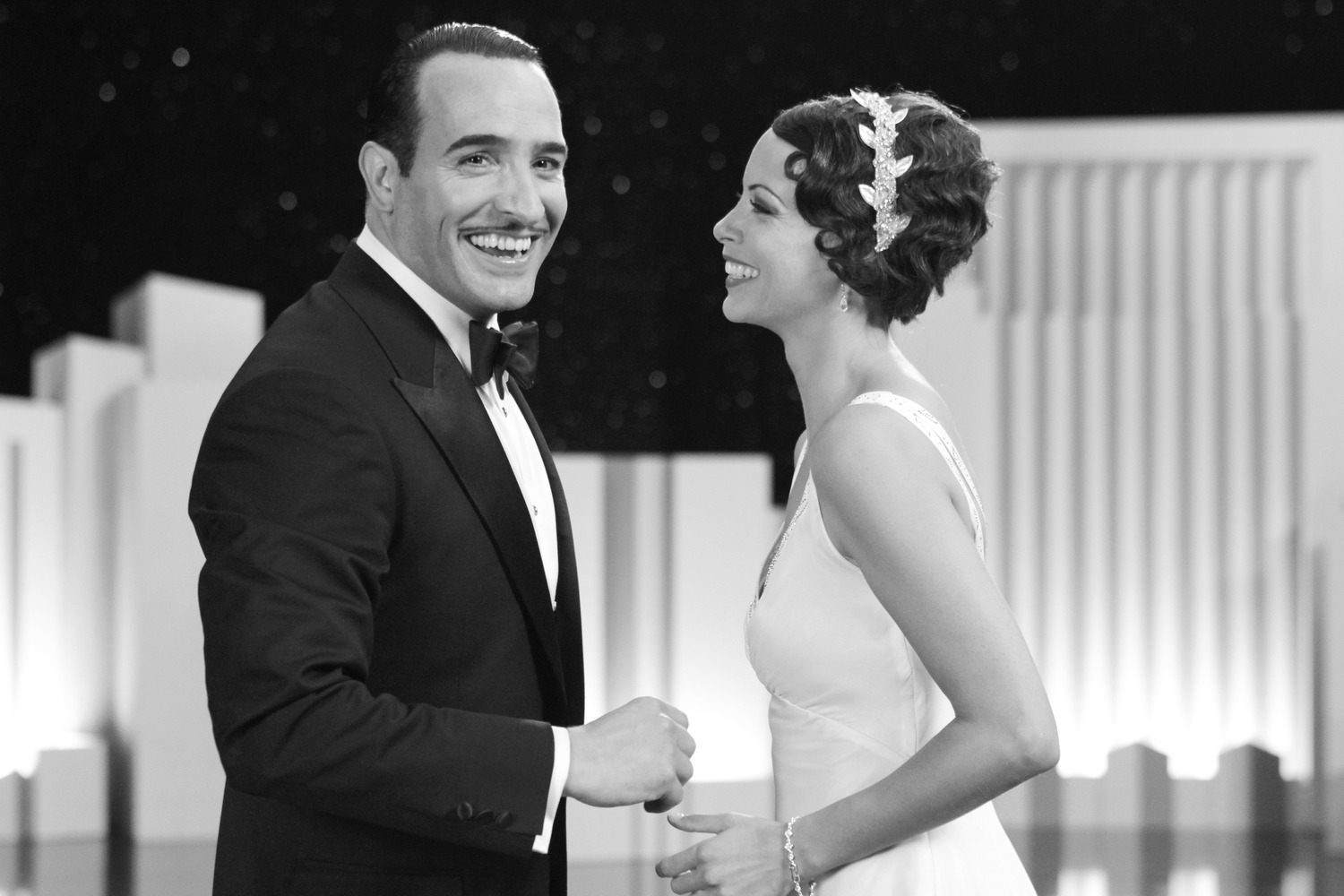
What a wonderful piece of cinema. This is a silent film that is not only homage to silent film but also a riveting, touching story that works no matter if it’s in sound or silent. This is a movie about the dawning era of “talkies,” a time when silent films were put to an end and those who were famous for their work had to adjust to being heard in these new films. This has also been covered in movies like “Singin’ in the Rain,” which was about how actors learned to adapt to this change, but “The Artist” does something more complicated; it tells the story of a silent-film actor who couldn’t make that transition, and whose career was ruined because of it.

It’s a deeply effective portrait of a man who had everything and wound up with close to nothing. That’s not to say the whole film is a downer, because there are many comic moments to be found here as well, particularly those that mimic the style of silent films in the earlier scenes. I love that the people who made this movie actually went out of their way to craft something creative and remarkable. Do you really need dialogue (and color) to tell a story? “The Artist” says no–it allows the performances and scenery to assist in telling a story that you can easily get caught up in. If you haven’t seen it, do yourself a favor and rent this astonishing treasure of a movie.

And as much as I’ve mocked the Oscars for ignoring certain films or performances (all in good jest, mind you), I applaud them for recognizing the majesty of this film, even awarding it the Best Picture statue.

Looking Back at 2010s Films: Captain America: The Winter Soldier (2014)

5 Nov

By Tanner Smith

After “The Avengers” became a humongous box-office hit, we knew we were going to see something great from the Marvel Cinematic Universe. But when?

Well, “Phase Two” begin in May 2013 with “Iron Man 3,” which was fun enough. But then came “Thor: The Dark World” in November 2013, which was dull as dishwater. We needed something that was going to be the next big thing for the MCU! And what’s this? A “Captain America” sequel? OK, let’s see what you got…

One viewing later, everyone was convinced, like “Holy cow this is what I didn’t know I was waiting for and it’s freaking amazing.”

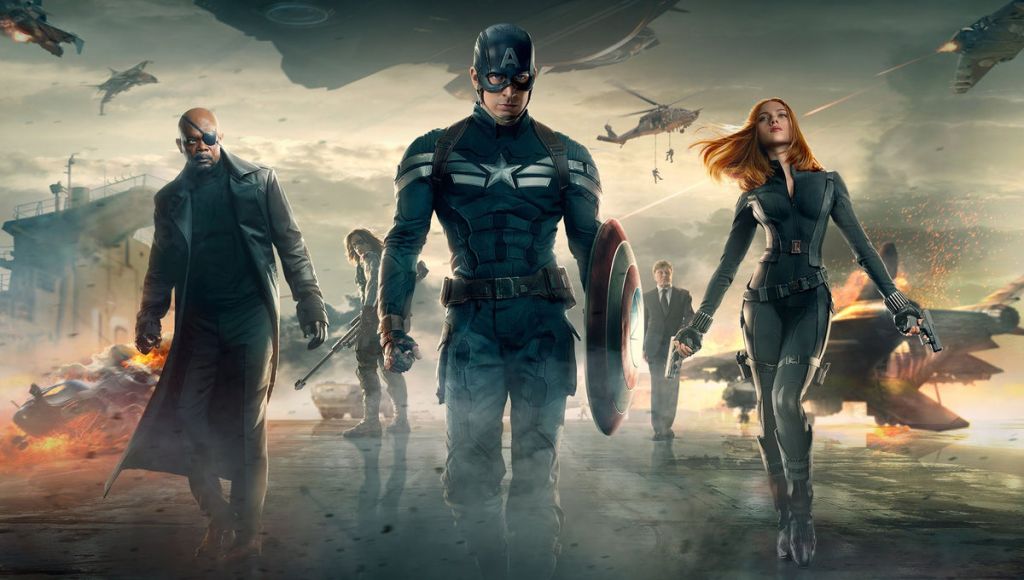
“Captain America: The Winter Soldier” is a film that dared to challenge its audience and it paid off in a major way. We still got the kick-ass action we go to these blockbusters for, and for that matter, we still got Steve Rogers aka Captain America (Chris Evans), Black Widow (Scarlett Johansson), Nick Fury (Samuel L. Jackson), among other MCU characters we recognize from other movies. But we got more than that. We got a more complicated story that asked questions we didn’t bother to think about in a movie like this. And as it progressed, it got even more interesting.

Before Steve Rogers was thawed out after being frozen for decades, he was led to believe that there was a simple war he was fighting: obvious good guys and obvious bad guys, no in-between. But now he’s in a world he’s trying to understand, not just because many people he knew are gone or even because of pop culture (about which he makes a list of things to keep track–I’ve paused that moment several times just to read the list), but because things are more complicated within who he thought he was fighting for and why. Now he can’t trust anybody except maybe Black Widow, and the two go on the run from HYDRA, the organization that’s taken over SHIELD, and their newest weapon, The Winter Soldier.

Suddenly, Captain America, the Boy Scout who always wanted to do good in his time, is suddenly the most interesting character in the MCU because he’s now in a time where he’s afraid he’s not doing as much good as he thought. You can tell that it’s eating him up inside that he just doesn’t know who to trust anymore and what’s worth fighting for. And then comes the reveal of the Winter Soldier…

I would issue a SPOILER ALERT but I think we all know by now that the Winter Soldier is Bucky (Sebastian Stan), Steve’s buddy from long, long ago, now brainwashed by HYDRA. It becomes a plot point in “Captain America: Civil War,” which everyone saw, so let’s move on and say this was another big strength in the story development for “Captain America: The Winter Soldier.” It adds to Steve’s confusion about what he needs to do. What is his purpose now? To save Bucky? To stop him? Who else is he supposed to be fighting against/alongside? The moment Bucky’s reveal is brought onto us, everyone knew this movie was what we as comic-book movie fans needed. It’s great, and where it goes from there is not “predictable” so much as “inevitable.”

Every twist and turn “Captain America: The Winter Soldier” throws at us feels important and we’re completely invested in what’s going to happen next.

Even a cameo by the late Garry Shandling can feel like a big deal. (“Hail HYDRA.”)

This was the first MCU entry for the Russo Brothers (Anthony and Joe Russo), who would later give us more of the best MCU movies (“Captain America: Civil War,” “Avengers: Infinity War,” and “Avengers: Endgame”). They know we need something new to add to the familiar stuff we want to see, and this would only be the beginning of their impressive MCU track record. (Hah! I use the mild word of “impressive” when they’re responsible for this year’s highest-grossing film!! But you get what I mean.)

For one thing, they didn’t use much CGI. It is there, but it’s not what’s focused upon. It was surprising to find real stuntmen doing their thing or actual sets being built. For another thing, they let the actors play with their roles–reportedly, Chris Evans and Scarlett Johansson wrote their own dialogue for many scenes they shared together; that’s why their chemistry as partners is spot-on. Also, the Russo brothers let the characters feel like real people we could know in our own lives–the opening scene introduces Steve to Sam aka Falcon (Anthony Mackie), and their dialogue together genuinely feels like two war veterans sharing their stories.

And also (and I’m saving this for last because I think it’s really cool), they’re big fans of Honest Trailers, the web series from YouTube channel Screen Junkies that picks apart little details here and there–they aimed for this film to be “Honest-Trailer-proof.” That just lets you know they’re thinking of both the audience and the film critics.

Fun fact: Screen Junkies did an Honest Trailer for this movie, which led to the Russo brothers being interviewed by the channel’s host Hal Rudnick and Honest Trailers writers Dan Murrell and Spencer Gilbert.

So, yeah. This movie’s great. It’s one of my favorite MCU movies. What are my other favorites? Well, I’ll post about those as well in this Looking Back at 2010s Films series…except “Iron Man,” one of my top-3 MCU faves, because that awesomeness came out in 2008.

Looking Back at 2010s Films: Boy Erased (2018)

4 Nov

By Tanner Smith

SPOILERS!!!

Ugh! “Boy Erased” didn’t make my decade-end top 20 either? Seriously??

I loved this film when I first saw it, and I’ve seen it about four times since–each time, it’s gotten an emotional reaction out of me…the first time made me cry.

The moment in Joel Edgerton’s “Boy Erased” that made me cry–midway through the film, Jared Eamons (Lucas Hedges) is a Christian conversion camper who is already uneasy about the “methods” being used to “cure” homosexual teenage boys…and it’s this point when he realizes he needs to get out of there: when one of his fellow campers is repeatedly, physically beaten with a Bible…not just by the therapists but by his own father. My heart wept for the poor kid.

Three cinematic moments from 2018 legitimately made me cry–the funeral discussion in “Won’t You Be My Neighbor?,” Jake Gyllenhaal’s drunken arson attempt in “Wildlife,” Jared’s revelation in “Boy Erased.”

This moment is followed by Jared standing up to Victor Sykes (Edgerton), who is trying to force a reason for hatred out of Jared. Jared can’t take it anymore–he won’t lie to “save” himself and he doesn’t hate his father; he challenges Sykes. He storms out of the room and yells as he exits: “I hate YOU! But what does that help?!” And that’s when he decides he’s getting out of there.

He tried as best as he could, for his father, a small-town Arkansas pastor played by Russell Crowe. His father gave him an ultimatum–go to the camp and be “cured” of his homosexuality, or be kicked out of the family. Jared either wants to believe something is wrong with him or simply doesn’t want to be shunned by his father (or both), but he chooses to undergo conversion therapy. His loving mother (Nicole Kidman) is rather submissive of her husband’s deal but wants to help her son any way she can. When she finally understands that something is wrong well into the program, she doesn’t back down in helping Jared break free. Soon, his father realizes the harm that these conversion therapy programs cause but isn’t ready to admit it to himself or to his family.

That leads to the emotionally powerful ending, in which four years have passed and Jared hasn’t been on speaking terms with his father. He can’t take it anymore–after writing an article that exposes the wrongdoings of the program, he comes back home to confront his father. He doesn’t simply want him to hold himself accountable for his actions–he wants him to love him as his son. And here’s a brilliant move in the telling of this story, which results in some of Russell Crowe’s finest moments as a dramatic actor–the father, having held on to his strict religious beliefs probably his whole life, isn’t fully accepting of his son’s sexual identity but also isn’t ready to lose him. The two reconcile with somewhat of an understanding, on a beautifully ambiguous note.

I’ve just described three of many powerful scenes in “Boy Erased,” a film that asks (or rather, demands) families to accept and love their LGBT children. And it does so tenderly and tactfully…which is why I’m frankly surprised and a bit disheartened that it didn’t get the attention it deserved.

Don’t get me wrong–it didn’t necessarily bomb; it was able to make its budget back. And it was well-reviewed (mildly positive, from the reviews I’ve read, but still positive) by critics. And it was nominated for some accolades (Hedges was nominated for a Golden Globe; Nicole Kidman for a Critic’s Choice Award; among others). Watching it again today (before writing this post), I can’t help but feel like it deserved more. More people should have talked about this film; awards shows should have recognized the script (which was adapted from a real-life memoir of the same name by Garrard Conley); Russell Crowe’s superb performance should’ve gotten more attention; and what about the Oscars?

Well, I’m not going to forget this film. It’s too good for that. And it was only the second directorial outing for Joel Edgerton, whose previous film, the psychological thriller The Gift, definitely impressed me. Edgerton knows and loves movies and he knows what it takes to get audiences debating and discussing over particular issues such as bullying and identity. (Edgerton has also gone on-record stating that he himself was a bully, so it’s interesting to see him as someone seeking redemption.)

I mentioned in my original review that Edgerton’s character of Victor Sykes, the therapy group leader, becomes more interesting in hindsight. Why did I say that? Because of an ending caption that outs him as gay–after leaving the group, he lives in New York City with his husband. This film did such a great job of showing the characters as realistic people with more-or-less moral/ethical dilemmas that even the ones who seemed like caricatures can be looked at in different ways. Why do they do what they do? How were they brought up? What is their thought process? Among many other questions that probably don’t even need answering. I can name so many bad “Oscar-bait” melodramas that have answers as simple as “they’re just jerks.”

But with “Boy Erased,” these characters are as complicated as real-life people.

NOTE: And speaking of “real-life people,” my parents know the real Jared Eamons (Garrard Conley) and his parents. And they have both pointed out the one fact-vs-fiction flaw they just wouldn’t let go: that Garrard’s mother (Martha Conley) isn’t nearly as tall as Nicole Kidman.