Archive | My Favorite Movies RSS feed for this section

My Favorite Movies – Scream (1996)

8 May

By Tanner Smith

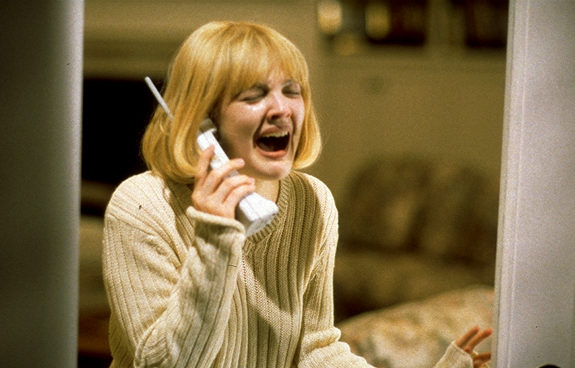
“Scream” became popular for still being a solid slasher-horror film while satirizing slasher-horror films. When a serial killer is on the loose, a bunch of savvy high-school kids recognize the scenario as something from a slasher movie. The rules for survival are put in place:

1) Don’t have sex.
2) Don’t drink or do drugs. (An extension of #1, in that committing any sin gets you killed.)
3) Never EVER say “I’ll be right back,” because chances are…you won’t be right back.

Other rules scattered in the film are not to say “Who’s there?” or investigate a strange noise outside your safe zone. And also, as movie-geek Randy (Jamie Kennedy) exclaims, “EVERYBODY’S A SUSPECT!!!”

This was from a 1990s point-of-view. With the solid horror movies of today, we have a new important rule: just do what you can do and hope for the best. That way, things are less predictable in knowing who lives and who dies.
It’s a lot scarier when there are no rules (which is something that Scream 4 (or “Scre4m”) proclaimed in 2011).

I love “Scream.” It has a neat mystery, a unique blend of horror and comedy while still keeping a consistent tone, and likable characters (which is more than I can say for a lot of other ’90s horror films).

But this one part always bugged me–for all the beatings the killer takes, wouldn’t it have been interesting if one of the suspects ended up with a black eye or a broken nose or something? That would’ve added to the mystery element!

I also really like “Scream 2,” which I think is underrated. The commentary about that thin line between horror and reality (which was hinted at in “Wes Craven’s New Nightmare”) is more compelling in this one, particularly in the prologue that shows a horror-movie audience applauding a murder, not realizing right away that there’s a murder happening right in front of them and it’s not fun anymore. And the twist involving the identity of one of the killers, I thought was very well-done and I didn’t see it coming. (Though, that scene in which the boyfriend serenades Sidney in the cafeteria…yeah I always skip through that part.)

“Scream 3″…sucks. I can’t beat around the bush when it comes to this one–it’s just not as memorable because it’s just not as fun or energetic as the other two films.

I like “Scre4m” a lot more now than I did when I first saw it. It’s got a lot of good stuff in it.

The late Wes Craven made good horror films because he focused on making good films first and good scares second.

My favorite scene: a drunken Randy watches Halloween alone and shouts advice at the TV (“LOOK BEHIND YOU!”), totally unaware that the killer is creeping behind him. That’s the best piece of satire in the whole film.

And always remember not to blame the movies for violence in real-life, because “MOVIES DON’T CREATE PSYCHOS–MOVIES MAKE PSYCHOS MORE CREATIVE!!!”
My Favorite Movies – Munich (2005)

7 May

By Tanner Smith

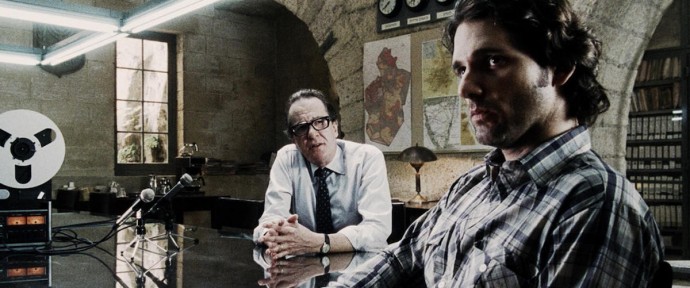
No matter how many times I watch this movie, I ALWAYS tense up every time it gets to the part with the bomb, the phone, the wrong person answering the phone, and the desperate race to stop the bomb from detonating! Everything about this scene is masterfully done–the editing, the sound design, the directing, everything about it raises the suspense of this already-tense scene to “Good God get me out of here” levels!

Director Steven Spielberg made “Munich” soon after “War of the Worlds” in 2005. (Actually, it might have been made right after “WotW’s” release–the time it took to plan, shoot, edit, and release Munich was SIX MONTHS!) “Munich” was Spielberg’s attempt to understand the war on terror by using a parallel story from the 1970s–in this case, it’s the aftermath of the 1972 Munich Summer Olympics, where a Palestinian terrorist group attacked and killed Israeli athletes. A team of covert, ex-Mossad operatives are assigned to assassinate all involved in the massacre.

Even though James Bond himself (Daniel Craig) plays one of the assassins, this is as far from a Bond movie as you could get. (Actually, as cold as Craig’s James Bond could get, his hotheaded character here is more bloodthirsty!)

Eric Bana stars as Avner Kaufman, the leader of the team. For Avner, patriotism is most important, which is why he decides to leave his pregnant wife for seven months to partake in this mission that takes him and his team across the globe. But as the mission goes on, things get more complicated, especially when his conscience starts to get the better of him. By the end, Avner isn’t so sure what has been accomplished here.

While the fictional setting is the 1970s, it matched the world of the 2000s. When “Munich” ends with a striking image (of what, I’ll leave you to discover if you haven’t seen it already), it all becomes clear what Spielberg has been saying with this film from the start.

Of Spielberg’s most serious endeavors, “Munich” may not be the best (that still goes to “Schindler’s List,” in my opinion), but it’s definitely one of his most accomplished. One of the things that drew controversy amongst this film’s release was Spielberg’s decision to attempt to understand both sides of the war against terrorism without easy answers. But that’s the point he’s making here: there are no easy answers when it comes to questions like when vengeance becomes disadvantageous, when a patriot with the best intentions at heart loses a good part of himself, and whether a war on terrorism can truly be won. So many of these questions, people don’t even want questioned.

But that is why “Munich” is as powerful as it is.

And that’s all I’ll say about it…but I will share this quote from “Knocked Up,” when Seth Rogen and his friends talk about how awesome “Munich” is: “That movie was Eric Bana kicking f***ing ass! You know, every movie with Jews, we’re the ones getting killed–‘Munich’ flips it on its ear! If any of us get laid tonight, it’s because of Eric Bana in ‘Munich’.” I bet Seth Rogen was starstruck when he co-starred with Eric Bana two years later for “Funny People” (which was also shot by Spielberg’s frequent cinematographer Janusz Kaminski)!

My Favorite Movies – Pineapple Express (2008)

7 May

By Tanner Smith

As much as I love the balance of raunchy comedy and heartfelt drama in Judd Apatow productions like “The 40-Year-Old Virgin,” The Big Sick, and even Superbad (hey it’s got a heart too)…I freaking love the outlandish nature of “Pineapple Express,” a movie that is a great chunk of comedic dialogue/improvisation, outrageous action set pieces that show they were using their budget like it was no problem, and a weird anti-drug message even though I highly doubt many of the people involved took it to heart long since this movie’s release!

I guess you could say there’s some heartfelt drama in the scenes in which the main characters’ friendship develops, but…I never took it that seriously!

Thing is, I always saw “Pineapple Express” as a hella FUNNY movie! Seth Rogen & Evan Goldberg’s typical mix of sharp wit and blunt outrageousness is elevated to action-comedy levels, all of the actors are having a ton of fun with their roles, and…what is my favorite scene in this? I don’t know!!

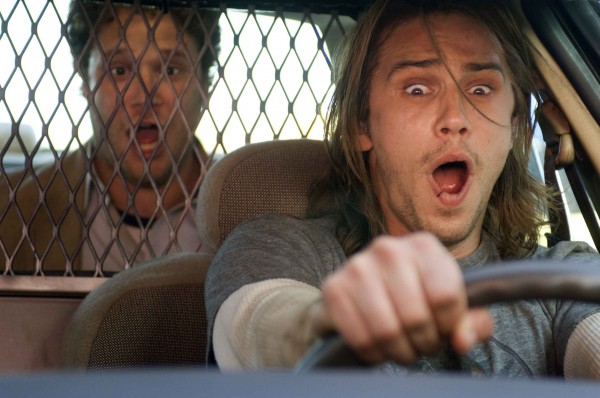
Is it the scene in which a panicked (and stoned) Dale (Rogen) tries to explain to his dealer Saul (James Franco) about the murder he just witnessed? Hilarious! Is it the long fight sequence between Dale, Saul, and the hilariously unreliable Red (Danny McBride)? Hilarious! Is it the chase scene where Saul has to kick through the red-slushee-drenched windshield in order to see where he’s going? HILARIOUS!

How about the whole final act in which Dale and Saul have to fight their way out of the villains’ lair, which is already invaded by Asian mobsters? (They never specify which “Asians,” so…racist? I dunno.) Even many of the violent deaths are so random and gratuitous, I just can’t help but laugh!

And in between all these hilarious sequences are some nicely handled down-to-earth moments where characters are just sitting around and talking. The director was David Gordon Green, who’s best known for low-key slices of life (and “Halloween 2018”), so seeing this director’s style brought to a Rogen/Goldberg script produced by Judd Apatow is actually pretty awesome. There’s a scene early into the proceedings as Dale and Saul just hang out and shoot the breeze, and it actually feels like a real conversation as opposed to many mainstream comedies were they’re improvising just because they desperately want to be funny.

I mentioned the actors having a ball with their respective roles, and there are A LOT of them here! Seth Rogen is great at being…well, still Seth Rogen, but still the likable type of Seth Rogen. James Franco is hilarious as an intentional extension of Brad Pitt’s drug dealer in “True Romance.” But there’s also Danny McBride as the hilariously unreliable dealer who constantly goes back and forth between helping our heroes and betraying them; Gary Cole and Rosie Perez as the sinister drug lord and corrupt cop who are out to kill these guys; Kevin Corrigan (from True Romance–coincidence?) and Craig Robinson who deserve their own buddy comedy as the two hitmen sent out to dispose of Dale and Saul; James Remar and Bill Hader as a general and a private in a hilarious (I keep using that word) prologue set in the 1930s; Ed Begley Jr. and Nora Dunn as the parents of…Dale’s high-school girlfriend played by Amber Heard……

OK…even though the film makes it very clear Angie (Heard) is 18, it’s still kind of icky that this 20something-year-old process server is making out with his girlfriend by her locker.

Screw it, I love this crazy movie. I loved it as a teen and I love it as an adult.

My Favorite Movies – Jaws (1975)

6 May

By Tanner Smith

Here’s the film that helped create the “summer blockbuster,” made Steven Spielberg famous, and gave us three or four of the scariest movie moments we’ve ever seen!

The production problems of “Jaws” are well-known (half the crew even dubbed the film “Flaws”), particularly with all the troubles that can be imagined when filming out at sea. And Spielberg was a young talent with a couple feature films under his belt, and he had huge ambitions in making “Jaws.” But there were many ways the film could’ve gone wrong. Thankfully though, Spielberg used what he had to his advantage and created a film that impressed just about everyone nationwide.

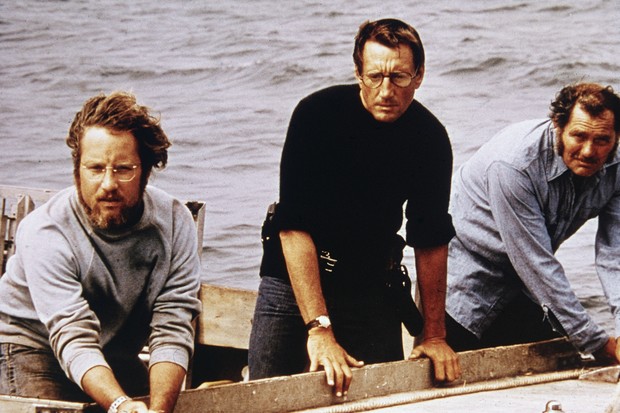
One of the problems he faced was working the animatronics of the shark, which posed the question, “How can you make a scary shark movie without a well-functioning shark?” Spielberg found a way to fix that problem as well: by not showing the shark most of the time but making the audience feel its presence. You see the shark’s POV underwater, you see blood in the water, you see HUMAN LIMBS in the water, the characters attach barrels to the shark so they know it’s still there, and up until the ending, you only catch glimpses of the monstrosity. But most importantly…John Williams’ chilling score. With just two simple notes and an accompanying theme, we were able to be scared of the shark without actually seeing it.

“Jaws” is the perfect example of the phrase “less is more.”

We do see the shark up close when it destroys the ship and attacks the men onboard, and you can see why it wasn’t used more before: it looks fake. We’d be laughing at the film if we got to see more of this thing and if the film wasn’t so well-made leading up to this point.

I love watching this film with a crowd (I did twice–once at the Cinemark in Conway; the other with my cinema-history class at UCA)–when the head pops out of the boat underwater, there’s always at least three or four people SCREAMING. (That’s a great jump-scare, by the way–most jump-scares are false scares following a loud noise, but that ain’t no false scare!)

The main characters are also great. Brody (Roy Scheider) is a great everyman, trying to save his community by stepping outside his element to help catch a shark; Quint (Robert Shaw) is a wonderful Captain-Ahab-type who just wants to capture this damn beast of the sea; and Hooper (Richard Dreyfuss) is wonderful comic relief while also knowing everything to know about marine biology. (My favorite Hooper moment is when he sarcastically laughs at some amateur fishermen who are out to hunt the shark and then mutters, “They’re all gonna die.”)

My favorite scene: the infamous moment in which we get our first look at the shark, as Brody finds himself staring it in the face for a brief moment before backing up slowly and informing Quint, “You’re gonna need a bigger boat.” That’s another thing I love about this movie: Spielberg’s ability to insert much-needed humor to a terrifying situation.

Quick sum-up of my thoughts on the sequels: “Jaws 2” is an okay movie, even though the only reason it exists is for box-office reasons. “Jaws 3-D” is hilariously bad. And “Jaws: The Revenge” is EMBARRASSINGLY hilariously bad (though it makes for one of my favorite Siskel & Ebert reviews, slamming it). I hope Michael Caine got paid well for that last one.

My Favorite Movies – Baghead (2008)

5 May

By Tanner Smith

I didn’t want to call Baghead one of “my favorite movies” because it’s just so…simple?

But the whole “mumblecore” thing has definitely been a big influence on me as an indie filmmaker, so if I had to pick one, I guess I’ll have to pick “Baghead,” my favorite of the directorial efforts of Jay & Mark, the Duplass Brothers.

For those who wonder what I’m talking about, here’s a definition of “mumblecore”–a subgenre of independent film characterized by naturalistic acting and dialogue (sometimes improvised), low-budget film production, an emphasis on dialogue over plot, and a focus on the personal relationships of people in their 20s and 30s. (Thank you, Wikipedia.)

“Baghead” is a strange, wonderful little film is centered around four actors who are down on their luck–one of whom is played by Steve Zissis, who went on to star in the Duplasses’ HBO series “Togetherness”; another is played by the one and only Greta Gerwig, who back then was labeled the “mumblecore queen.” They decide to take a trip to an isolated cabin in the middle of the woods so they can all work on a script idea for them to star in together. One of them has a nightmare about a stalker with a paper bag over his head, which sparks a new idea for a film: a horror movie about a “baghead” stalker-killer. But WOULDN’T YOU KNOW IT–there seems to be an actual baghead lurking outside the cabin!!

I know–what are the odds, right?!

This isn’t really a horror film, necessarily. It’s mostly a romantic comedy about Chad (Zissis) hoping to score with the lovely Michelle (Gerwig), who has a crush on Matt (Ross Partridge), who used to date Catherine (Elise Muller)…and then occasionally, Baghead shows up. It’s only near the end of the movie where the suspense truly elevates, and its payoff would be disappointing only if you’re going into this film thinking it’s a standard slasher flick. And I admire Jay & Mark Duplass for handling things unconventionally.

And how the movie was made was basically this: Jay, Mark, their actors, and a very small crew, went up to a cabin in Austin, Texas, in August 2007, and decided to just make a movie. They got the film completed just in time for Sundance 2008 and they ended up selling it for a whole more than it took to actually make it.

Jay & Mark’s first film was a similarly made-on-the-spot production “The Puffy Chair.” I admire that film more than I “like” it, though to be fair, I think it’s because I saw “Baghead” first. They followed up Baghead with their first studio production: Cyrus, starring popular actors like John C. Reilly and Jonah Hill, but still made with the feel of a “Duplass Brothers production.”

The story of the Duplass Brothers, as chronicled in their wonderful autobiography “Like Brothers,” inspires me even today. They teach me that it doesn’t matter what I have to make art–it’s what I do with what I have that truly matters.

My favorite scene in “Baghead”: there’s actually a fairly creepy scene in which Michelle is waiting for Matt to enter her bedroom; Baghead appears and Michelle thinks it’s Matt playing a joke, so she takes her top off…but IS it Matt? She isn’t so sure anymore, and Baghead keeps watching until he suddenly walks away… Uncomfortable.

How did I first find out about this movie? Well, in June 2008, there was an episode of Ebert & Roeper in which Richard Roeper and guest critic Michael Phillips talked about it. They both admired it for its strangeness–Phillips in particular admitted he probably liked it so much because he saw many other films at Sundance that year that were even more pretentious than this one.

I may be dealing with a copyright issue here, but…here’s a transcript of that initial review, aired in mid-June 2008:

MICHAEL PHILLIPS: “I can’t think of a single reason why BAGHEAD should work at all…but it does. This new microbudget film by the Duplass brothers gives us four LA friends who want to jumpstart their fledgling film careers. So they head to Big Bear, east of LA, with the idea of writing a screenplay in the woods. For a while, the characters spend time scaring each other for fun, drinking too much, and then SOMEONE appears outside the cabin with a bag on his or her head. No one knows who it is, and at this point, a nicely observed deadpan comedy gets more and more interesting.”

(shows clip from trailer–“Somebody saw me naked!”)

PHILLIPS: “I don’t want to inflate Baghead or anything, but for me, the Duplass brothers show us, with Baghead, how the so-called ‘mumblecore’ genre should be done–with a sense of humor to go with a sense of everyday realities. In very limited release this weekend, it opens wider over the July 4th weekend…and I say ‘see it!'”

RICHARD ROEPER: “I’m with you, Michael–I liked this film quite a bit! I think this guy should’ve walked into that movie ‘The Strangers’ where they had the guy with the sackcloth over his head! (chuckles) This one’s a lot more entertaining–it’s very funny, it’s smart, and it can be really scary, and…it really has some nice performances as well, so, you know, people should look for this one.”

PHILLIPS: “I saw it the first time at the Sundance Film Festival, and I didn’t know if I was laughing then because I had just seen 10 movies that were so much lamer and more pretentious than this. But you know, second time through, it works well as its own kind of comedy.”

ROEPER: “Absolutely.”

Side-note: I miss this show. Roeper and Phillips had a good rhythm in reviewing new movies together.

My Favorite Movies – Halloween (1978)

4 May

By Tanner Smith

It’s the scary movie that made the late film critic Gene Siskel too nervous to walk home after an initial preview screening!

It’s the little indie horror film that could…and did…and set up a long string of disappointments (except for “Halloween (2018)”–that was a pretty good one).

John Carpenter’s “Halloween.” Man, even today, that opening-credit sequence and its subsequent murder scene gives me chills–THIS is how you begin a scary movie!

When I first saw it (at age 13, on the AMC channel), even when I had already seen countless slasher films at that time, I knew there was something special about it. I think it taught me that there could be far more to a horror film than just cheap scares, because “Halloween” had a great deal of heavy atmosphere and provoked more thought in my head than something like “Nightmare on Elm Street” or “Scream” or the “Friday the 13th” movies or any of the ’90s-horror films I was renting at that time. (“Psycho” taught me the same thing; I saw that around the same time I saw “Halloween” for the first time.)

I didn’t even notice at first that there’s very little graphic violence and almost NO blood (except in the opening murder scene). This movie scared little, dumb 13-year-old Tanner with…great filmmaking! Imagine that!! “Halloween” doesn’t specialize in blood or gore; it just relies on suspense, of which it has a great deal.And I’m not gonna lie–the first time I saw the moment in which the killer pops back up near the end, while first watching the movie late at night at age 13, I shouted “OH SH*T!” out of sheer fear. (I can’t be sure, but I think I woke up my parents with that remark.)

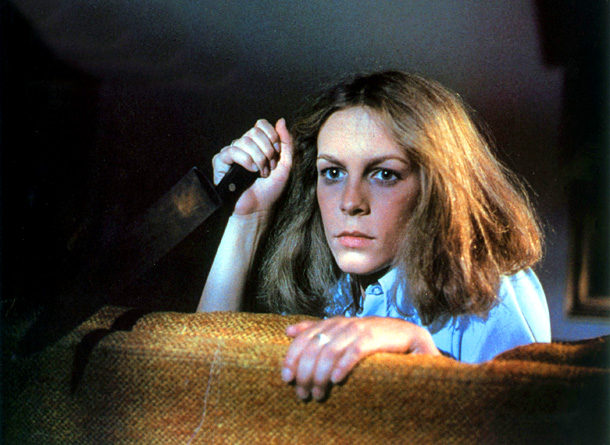
But…the film isn’t perfect. I know it’s not. I can tell it wasn’t filmed in the fall season or in Illinois, for that matter–note the palm trees in the background. (“Halloween 2018” contains a better feel for the Halloween season, thanks to the bigger budget.) Some of the acting isn’t very good, and some of the dialogue is even worse. And no matter how many times I watch the film, I still question why Laurie (Jamie Lee Curtis) just throws the knife away when she could’ve kept it for safety’s sake.

But when I think about “Halloween,” I don’t think about little things like that. Instead, I remember the fantastic cinematography (by Dean Cundey, who went on to shoot blockbusters like “Back to the Future” and “Jurassic Park”), the iconic music score (by Carpenter himself), the brilliantly disturbing one-shot prologue, the silent looming killer, the likable characters I don’t want to see get killed, the metaphors of fate and evil which are scattered all over the film, Dr. Loomis (played terrifically by Donald Pleasance), and the haunting ending that signifies that evil will never die. This film is also credited for that horror-film trope that states that the “final girl” must be a virgin in order to survive–John Carpenter and co-writer Debra Hill argued against that, saying that the horny teens die because they’re so preoccupied with the prospects of getting laid that they don’t realize there’s a killer at large, while Laurie has other things on her mind and is more observant. When she finally realizes the danger she’s in, she has chances of survival. She does survive, though she may be mentally scarred for life…

That leads to “Halloween 2018” (or “Halloween: The Return of Good Filmmaking”), which was a solid sequel 40 years later, tackling how this incident affected Laurie all this time. And I’ll be curious to see what the upcoming “Halloween Kills” and “Halloween Ends” bring us in the future.

My favorite scene: the closet scene. Laurie is hiding from Michael and locking herself in a closet, but Michael knows she’s in there and tries busting his way in. The tense music is great, the filmmaking is spectacular, and you have to wonder what you would do if you were in Laurie’s shoes as she’s trying to use whatever she has around her to fight back.

So, if you feel like you’re in a scary movie, just remember these important rules of survival:

1) You can never have sex.

2) You can never drink or do drugs. (An extension of 1.)

3. Never, ever, under any circumstances, say, “Linda, you a**hole!” (…Or was it something else?)

Revisiting: The Battle of Shaker Heights (2003)

30 Apr

By Tanner Smith

The Battle of Shaker Heights–it’s not one of my “favorites,” necessarily, but there is a place in my heart for it (right next to movies like “The Wackness,” Click, and “Clerks II”).

This was the winner for the second Project Greenlight contest for screenwriting and directing. As with the first contest winner (2002’s Stolen Summer), the making of 2003’s “The Battle of Shaker Heights” from its conception to its premiere screening was chronicled heavily for HBO’s reality series Project Greenlight. I own this collection of “Project Greenlight 2” on DVD, complete with the finished movie.

But way before I even knew about Project Greenlight, I first saw the movie on cable-TV. when I was 12 years old Because it starred Shia LaBeouf and I was a diehard “Even Stevens” fan (it was made just as “Even Stevens” ended and Shia had just done “Holes”), I was hooked from his appearance alone. It was one of the first “indie” films I ever took interest in (and then shortly came the “Napoleon Dynamite” craze). A few years later, I bought the Project Greenlight 2 DVD set and checked out what went on making the film.

I’ve seen a lot of BTS docs as a kid, on DVD extras for movies like “The Goonies,” School of Rock, and “Back to the Future.” But this was different–it showed the ugly side of making a movie for a studio. There were producers breathing down the directors’ necks. The directors were pains in the asses. The writer is either in or out of the loop. There was hardly room for compromise a lot of the time. There’s a lot of passive-aggressiveness amongst the crew. (And strangely enough, despite the film being made for Miramax, Harvey Weinstein stays out of the picture.) It was like, “DAMN! THAT’S what it’s like to make a movie?!”

It made me upset…yet at the same time, I binged the entire series and saw it through because I was still intrigued by it all.

Anyway, back to the movie. Shia LaBeouf stars as a sullen teenager named Kelly, who is a war reenactor. The battles are his way of escaping everyday life, which he finds boring and unfulfilling. He makes friends with Bart (Elden Henson), who comes from a privileged WASPy home and wants to do something for himself. Kelly and Bart’s friendship sparks a developing change in Kelly, which begins as Bart suggests they use their tactical skills to stage a payback operation against Kelly’s bully Lance (Billy Kay).

Speaking of whom, this is my favorite exchange between Kelly and Lance:

LANCE: “Why are you d*cking with me, you little d*ck?! You wanna play, d*ck-face?” KELLY: “Wait…you just used ‘d*ck’ as a noun, adjective, and a verb. That’s impressive.”

Kelly also develops a crush on Bart’s older sister Tabby (Amy Smart), who is soon to be married (like Kelly cares about that). Kelly tries to be smooth and confident around her, but Tabby, being the smart artist that she is, doesn’t take him too seriously. Kelly’s of course too blind to realize he should be with his cute, friendly co-worker Sarah (Shiri Appleby), and that blindness could lead to a bit of trouble. Where this story goes is pretty easy to figure out, but both Shia LaBeouf and Amy Smart still play it really well.

There’s also Kelly’s parents–his mother Eva (Kathleen Quinlan), who’s a commercial artist, and his father Abe (William Sadler), who works with drug addicts and has been clean for five years. In the film, these characters seem underdeveloped. But in the Project Greenlight show, we see more of who these people are, and the Abe character in particular is the most compelling character in the story. Miramax, worried about whether they could market a comedy or a drama, insisted upon numerous cuts to the film, which resulted in the more emotional parts of the movie left on the cutting room floor.

Screw you, Weinsteins.

The film we got isn’t great, but it is good, in my opinion. LaBeouf shines in the lead and it’s really his character and his journey that makes the movie worth recommending. But sometimes I can’t help but wonder if the studio kept their dirty little hands off a product they should’ve believed in in the first place.

But, and I’m not giving credit to the Weinsteins in the slightest here, that might have something to do with the film’s pair of directors Kyle Rankin & Efram Potelle were extremely difficult to work with! I get that they were amateurs getting their big break to make a studio-funded film, but these guys seriously needed to try harder in being professional. Watching the show again recently, I sided with producer Chris Moore, who had to keep telling them again and again that they needed to learn compromise.

I had to look up both directors to see if they had done anything since. They had made a few projects, though not together and not of much note. It’s actually shocking to see that Rankin directed “Run Hide Fight,” the controversial action thriller film I heard about recently. As for Erica Beeney, the screenwriter for whom I always felt sorry, she wrote “Captive State” a couple years ago.

“The Battle of Shaker Heights” didn’t define anyone’s career, but it’s still a decent flick and I like to pop in the DVD every once in a while. And that’s about as good a recommendation as I can give, when it’s all said and done.

My Favorite Movies – The Breakfast Club (1985)

30 Apr

By Tanner Smith

“You never really understand a person until you consider things from his point of view. Until you climb inside of his skin and walk around in it.” -Atticus Finch, “To Kill a Mockingbird.”

“We think you’re crazy to make us write an essay telling you who we think we are. What do you care? You see us as you want to see us–in the simplest terms and the most convenient definitions.” -Brian Johnson, “The Breakfast Club.”

High school–what a time. It doesn’t matter how popular you were because you were just as confused and messed up as the rest of us. And the reason we still get movies about the high-school experience even today is because we all still need them–those currently in high school can find something to latch onto and those out of high school are reassured it wasn’t a great time for anybody.

And we have the late John Hughes to thank for it. He wasn’t the first filmmaker to reenact the high-school experience on film–but he was definitely the key influencer, bringing it into the mainstream and reminding movie audiences that, yes, teenagers are people too.

After scoring a big hit with the teen comedy “Sixteen Candles” in 1984, Hughes was able to make something a little more mature and quiet for his next project, which would be “The Breakfast Club.”

Little did he know it’d be arguably his most popular film. EVERYONE saw “The Breakfast Club,” and more importantly, everyone connected with it. And people still love it even to this day.

It was even a major influence on me–my favorite films to make are indie dramedies, and “The Breakfast Club” is an indie dramedy…in spirit. (It was already made for a big studio, so it wasn’t like “Napoleon Dynamite” or anything like that.) Conversation-driven, character-piece, slice-of-life? I’ve just described a bunch of modern indie films…and “The Breakfast Club.”

Like I need to describe the film’s plot to anybody. Five high-school students spend a Saturday in detention together, they’re all very different (a brain, a jock, a recluse, a bad boy, and a beauty), and by the end of the day, they’ve expressed themselves to each other in ways they couldn’t to anybody else.

And that’s about it. This was a cut above the sex and booze-filled antics of the teen films released prior (there are drugs in “The Breakfast Club,” but it’s only pot), and Hughes just let his characters talk and relate to one another. What resulted was something that was perceptive and emotionally true. It’s also funny in how frank and honest it is in these interactions–that’s how the best dramedies are: come for the humor, stay for the drama.

As a result, “The Breakfast Club” is always watchable and consistently entertaining.

It’s also just a great idea to bring in members of five different cliques together and humanize them like this. I get the feeling the dialogue practically wrote itself when Hughes wrote the screenplay. (Hughes is best known for turning out a script in one weekend. I wouldn’t be surprised if this was one of those.)

My favorite character has always been Allison, played wonderfully by Ally Sheedy. Her story’s as sad as the others’, but she also scores many of the biggest laughs in the movie. (Second favorite is Bender (Judd Nelson).)

And uh…yeah, some scenes are a little…problematic…I’ll neither deny nor ignore it. To say it was a different time isn’t really an excuse. I’ll direct you to Molly RIngwald’s New Yorker essay about it.

I still really enjoy “The Breakfast Club.” Great characters, great moments…and one of the greatest movie endings ever. When Bender walks along the football field and lets out a silent cheer while thrusting his fist in the air, what is he celebrating? Getting the girl? Sticking it to the vice principal? Whatever the case…it was a good day.

Last thing I’ll say is…man, is the TV version of this movie pretty lame. “Flip you!” “Oh my Lord.” “DAMN YOU!” I mean, come on, that’s just hilarious.

My Favorite Movies – The Stepfather (1987)

28 Apr

By Tanner Smith

it’s easy to dismiss “The Stepfather” as just another ’80s slasher film. But it’s more than that if you look underneath the surface.

Terry O’Quinn stars in chilling lead performance as a complicated psychotic, which elevates some of the dumber material. (Among the “dumber material”–a newspaper runs a year-old story about a fugitive killer and doesn’t bother to print a picture of him??) I find this killer more creepy and unsettling than Freddy or Jason (…but no scarier than the crazy aunt from Jack Ketchum’s “The Girl Next Door”–she still faces no competition, in my opinion), because of two things: one is how little I know about him (and when he has his little freakouts, he seems to repeat things that were said to him in his past, but even that’s sort of vague), and the other is what he stands for.

He wants to live a life like the father characters in ’50s-’60s sitcoms because he sees them as pleasant and wholesome, and he can’t live in reality–a world where things can get difficult and sometimes uncompromising. And when he doesn’t like the changes in the new family he marries into…he slaughters them and goes searching for a new one.

How deranged is that?! And what makes it even scarier is that he could fool anybody into thinking he’s a good guy, because HE sees himself as a good guy!!

The suspense of “The Stepfather” comes from how he may react when his new teenage stepdaughter Stephanie not only causes trouble and gets expelled from school (thus ruining his image of a “perfect daughter/Daddy’s little girl”) but also suspects that her stepfather is the killer mentioned in the newspaper. And we know that if Stephanie keeps pushing this further, she and her mother are going to wind up murdered like “the stepfather’s” other victims. And you don’t want anything bad to happen to them.

This is smart, clever filmmaking, and Terry O’Quinn portrays one of the most interesting and creepy antagonists I’ve ever seen. “Who am I here?”

My favorite scene: the creepy-as-hell basement scene, in which Stephanie witnesses one of her stepfather’s manic freakouts…and when he finally notices he’s not alone, he immediately switches back to calm. (“Hi, honey.”)

This is one that I definitely disagree with both Siskel and Ebert on–Ebert gave it a mixed review, praised O’Quinn’s performance but criticized the violence; but Siskel was much more harsh, likening the violence to “Friday the 13th” and “I Spit On Your Grave” (that’s a bit of an overreaction, in my opinion).

“The Stepfather” is one of my favorite thrillers…but seriously, why didn’t they print the guy’s picture in the newspaper? Did the editor think it would ruin the serial killer’s sex life??

My Favorite Movies – School of Rock (2003)

27 Apr

By Tanner Smith

When an indie director takes on a mainstream project, two thoughts cross my mind–is the director going to compromise with the studio (because studios often give tough ultimatums and can ruin careers) and/or is the director going to put their all into it rather than treat it simply as a work-for-hire?

Well, Richard Linklater knew he had to branch out from the artistic spotlight at some point–thankfully, writer Mike White, actor Jack Black, and the Paramount studio called him on-board to make their feel-good comedy blockbuster into something more noteworthy.

The result is “School of Rock,” which is a hugely entertaining comedy that managed to overthrow most of its competition in 2003 just because of how much fun it is and even how sweet its tone is.

I loved it at age 11; I still love it to this day.

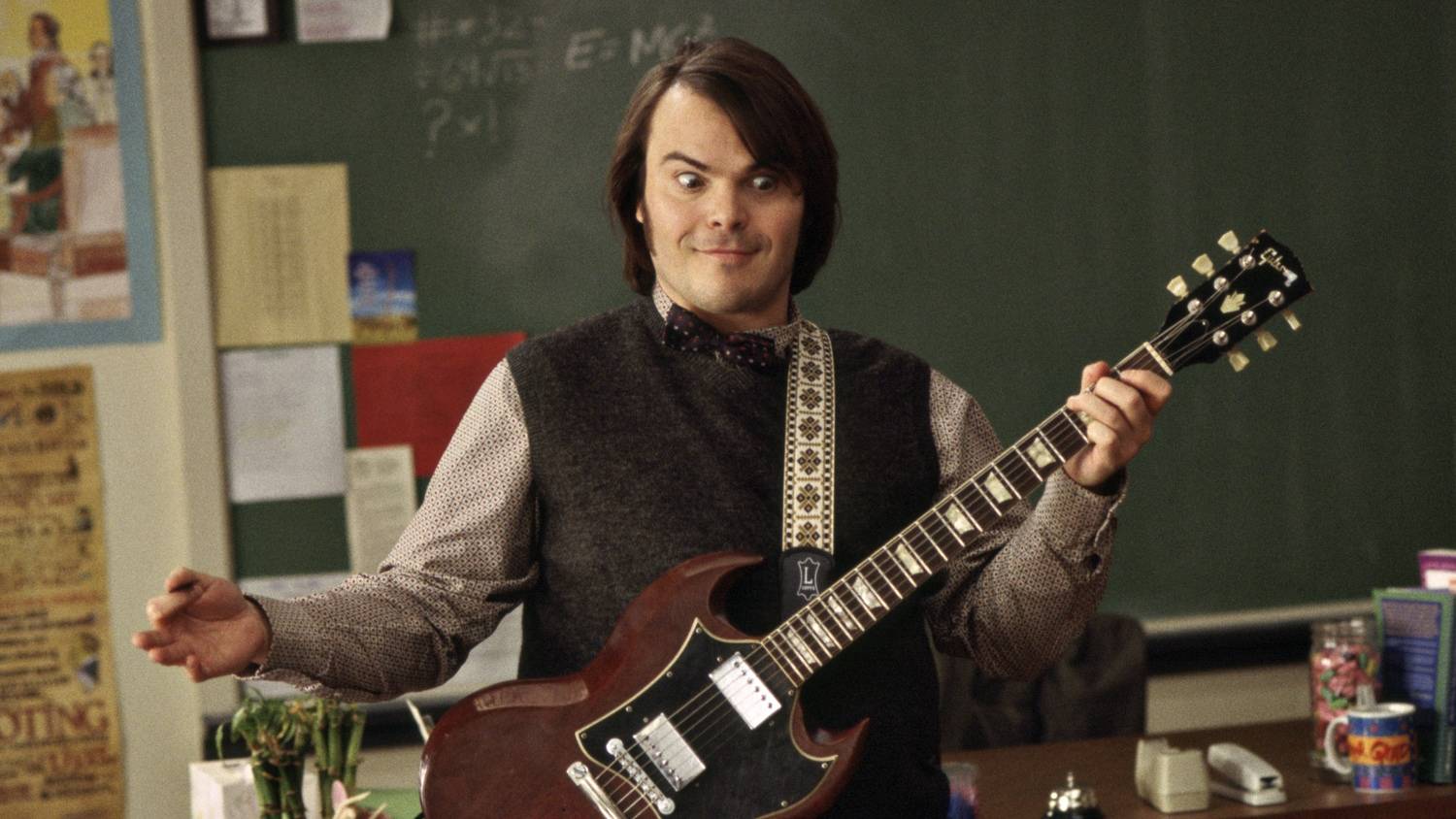
This actually wasn’t my intro to Jack Black. I caught some of Shallow Hal on cable TV, but before that, I knew Jack Black as the villain from…”The Neverending Story III” (yes, I did watch that thing as a kid). Watching him in “School of Rock,” I recognized just how talented he truly was, carrying a film and taking center-stage and just inviting his audience to share the joy and excitement with him.

In the film, he plays Dewey Finn, a wannabe hardcore rocker who, as the trailer put it, “would have sold his soul for rock n roll…but nobody was buying it.” He’s very certain that his band is going to become successful once they win a big upcoming battle-of-the-bands competition, but the rest of the band sees him as an embarrassment because he’s too extreme in his performances. So, he decides to start his own band…but he needs members to join. He starts to see an opportunity rise when he poses as his roommate (Mike White), who is a substitute teacher, to sub for a prestigious elementary prep school where students are ordered to conform–it turns out many of his students are musically talented, so he decides to use his time prepping the kids for an exclusive class project: “Rock Band.” And so, he gets the kids ready for the competition as he teaches them to lighten up and not worry so hard about following or breaking rules.

If ANYONE at that prep school had done so much as check Dewey for ID, we wouldn’t have a movie, so let’s just move on.

Richard Linklater gets to make a family movie and this just feels the type of family movie he would make. The kids feel real, the numerous conversations about music and how it can reach people feel natural, and Jack Black’s character’s personality of try-hard hardcore (try-hardcore?) rocking is a way of life rather than just a plot gimmick. Even the uptight principal, played wonderfully by Joan Cusack, feels real–in any other movie, she’d be the villain; here, she gets drunk does a Stevie Nicks impression because she’s not such a stick-in-the-mud after all. (This family movie knows the difference between a villain and an antagonist.)

And yes, I call “School of Rock” a “family movie.” This is a great film for both kids and adults to enjoy. There is very little reason for the MPAA to rate this movie PG-13.

The film’s screenwriter was Mike White, who wrote the part specifically for Jack Black after having worked with him on the film “Orange County.” And thank God, because this was the role that gave Jack Black plenty of time to shine after taking hilarious side roles in movies like High Fidelity. (He did have a leading role in “Shallow Hal” before “School of Rock,” but I don’t think that one gave him a lot to work with. This one definitely did.)

Something else I love about this movie is that it takes music seriously. When Dewey is practicing with the kids and teaching them basic lessons in “rock,” he’s able to mold their talents into something they didn’t expect, and in doing so, they find their own artistic flairs and self-expressions. That’s what art does to people, and this movie shows that particular lesson with music.

The song they ultimately perform at the battle-of-the-bands competition is a fun song. (With any music film, you need memorable music to make it work.) And the scene itself stays true to its tone, even when the kids’ angry parents force themselves into the front row…or at least, it stays true to rock-n-roll.

My favorite scene: after Dewey has heard the kids play for music class, he’s gathered all his instruments and immediately puts the kids at work as soon as they return to the classroom. He duels with the guitar player, Zack, who never played electric guitar; he has the piano player, Lawrence, play “Touch Me” by The Doors on keyboard; he teaches the cello player, Katie, to play bass; and…OK, the audition for the drummer, Freddy, is a little weak (just a few taps on the drums and cymbal), but the kid already plays percussion and likes to hit things, so let’s have him learn as he goes. Fair enough.

“School of Rock” is one of those movies where I can’t just watch the movie–I have to watch all the DVD extras too. And there are some GREAT ones, such as the making-of documentary, the kids’ first experience at the film’s premiere, and my personal favorite, an MTV “documentary” about Jack Black’s daily routine (which includes a collab session with his Tenacious D partner, Kyle Gass).

I love this movie. It’s smart, it’s funny, and it rocks.