Archive | Looking Back at 2010s Films RSS feed for this section

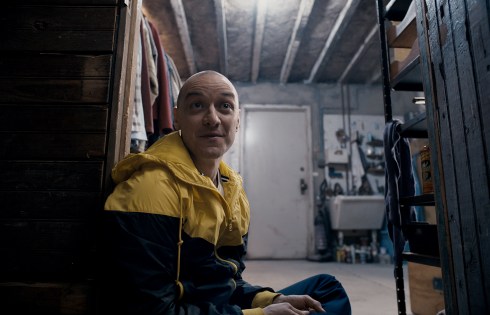
Looking Back at 2010s Films: Split (2017)

12 Oct

james-mcavoy-split-image

By Tanner Smith

Continuing my series of Looking Back at 2010s Films, for me, the best kind of film is the film you don’t expect to like/love as much. They’re far more interesting than the films you go in expecting to like/love, because with those films, they’re usually exactly what you expect to see, without much of a surprise. And those films keep people from coming back to them so often. But when other films contain twists and turns to keep the story coming and going, you can go back and rewatch those films with the knowledge you have from the first viewing and look at them in a different way. Maybe you’ll think less of them because things don’t add up as well as you thought, but then again, maybe you’ll like them even more because you know there’s more to discover and admire about them.

When it comes to M. Night Shyamalan, when he can succeed at this sort of thing, he can make some great films that get better the more you watch them. “The Sixth Sense,” “Unbreakable,” “Signs,” “Split”–these are four of Shyamalan’s films you have to watch more than once. (Even a few more viewings of “The Village,” which I know a lot of people hate, are worthwhile in order to understand it more.)

“Split” was a big risk for Shyamalan to take. He had to put total faith in his audience to stay with it all the way through to the end, even when things get head-scratchingly odd in the final act. And it apparently paid off, as the film was both a critical hit and a financial success. I get the feeling that it was a box-office hit because people had to see the film once, tell their friends to go see it, and then revisit the film to notice more hints and clues that point to the final story-twist making sense.

That’s what I did. And I have to admit, the first time I saw it, I wasn’t sure exactly where the story was going. But I stayed with it because I felt like it leading me somewhere, and I wanted to know where…

Much of the film is based on the idea that hasn’t been entirely scientifically proven about Dissociative Identity Disorder (D.I.D.), that one personality is so different from the others that it can take on physical traits that the others couldn’t handle or the personalities actually become who they think they are. As with similar movies like “Psycho” and “Fight Club,” “Split” isn’t to be taken too seriously–it’s just a thriller that has some fun with the concept. And in “Split’s” case, it’s about a man with 24 different personalities, one of which is a beastly killer known as The Beast. He feeds on those who don’t know true suffering, such as sheltered young people with no problems in the slightest, whom he declares as “impure.” Watching the film again, I realized this was a way to counteract for his host’s tragic abusive childhood (as hinted in a flashback late in the film).

I’m going to go into spoilers here, so SPOILER ALERT!!!

The Beast is real. It changes size, his veins bulge, he climbs walls, he’s super-strong, and seemingly can’t be destroyed–use a knife against him, the blade breaks apart; pelt him with a shotgun, it just barely breaks the skin. It kills (and eats) two of the three girls captured by The Horde (the personalities that serve The Beast’s purposes). Why doesn’t he kill the third girl, our main character Casey Cooke, even though her attempts to fight back are hardly successful? Because he can tell by the scars on her body that she knows what it’s like to understand pain and suffering whereas the other two were probably self-entitled rich girls who had everything go perfectly well for them up until now. By the end of the film, we have it figured out that Casey is often brutally assaulted by her uncle who took her in after her father died. (These are things that aren’t clearly explained, but we pick on them pretty easily.) So now, when Casey behaves the way she does throughout the film, we now understand why during the second viewing. She knows how to survive because she’s been going through this stuff for half of her life.

When she’s finally rescued and her uncle comes to pick her up, she has a look on her face that could read one of two things–either she’s going to stand up to her son-of-a-bitch guardian now that she’s faced unspeakable evil, or she’s going to report him to C.P.S. and be rid of him. Either way, I get the feeling she’s not going to take any more crap from him.

Having seen “Glass,” I was glad to find out that she’s living a happier life. Kudos to Casey!

I love “Split.” It gets better each time I see it, with new things to discover and think about. Shyamalan put a lot of passion into this project, and it didn’t backfire. He thought the whole thing through the same way he thought the story of “The Sixth Sense” all the way through, and it really shows! I haven’t even mentioned the thorough production design, the fitting cinematography, the chilling music score, or even James McAvoy’s brilliant performance in which he has to portray many different personalities with different facial expressions and body language. There’s a lot to this movie even before the big twist was revealed at the end (that “Split” is set in the same universe as “Unbreakable”) that fascinated me simply because it was made by a person who loves movies and respects his audience. I felt glad to see that Shyamalan was BACK in a major way, and um…I’ll talk about “Glass” sometime in the near future.

Looking Back at 2010s Films: Fright Night (2011)

12 Oct

fright_night-still_2-1160x480.jpg

By Tanner Smith

Continuing my series of Looking Back at 2010s Films…you know something? Ratings hardly mean diddly. I like the “Fright Night” remake much better than the “Fright Night” original, and I originally gave them both the same 3-star rating!

To be fair, there’s still much to like about the 1985 original film, starring Roddy McDowell and Chris Sarandon. Two of the reasons are…well, Roddy McDowell and Chris Sarandon. They’re a ton of fun to watch and they were clearly having fun themselves while making the film. McDowell is a riot as a classic-horror icon who finds himself up against real classic-horror monsters and mostly runs away screaming before he finally performs some action, and Sarandon is a suave figure; calm, cool, and collected, thus making him uneasily identifiable as a killer vampire. Then there’s Stephen Geoffreys as the wacky drugged-out kid who becomes a vampire, Evil Ed…I’ve also seen this guy act in films like “At Close Range” and I still don’t know if he was a good actor or not, but by God was he entertaining!

They’re certainly better than the main character, his girlfriend, and his mother, who are so gratingly annoying that I want to embrace the remake even more for making them both likable AND interesting!……Well, OK, I don’t know if they’re THAT interesting, but they are likable enough. That they’re played by likable actors such as the late Anton Yelchin, Imogen Poots, and Toni Collette makes it even better. (Whoa–Yelchin and Poots in the same film five years before “Green Room?” Nice!)

I like Colin Farrell fine as an actor, but I like him more when he’s playing someone who’s a total ass. Here, he’s a vampire. And while he’s not as subtle as Sarandon in hiding his identity, he’s not terribly obvious either. He walks that fine line between brooding (*cough* Edward Cullen *cough cough*) and actually menacing. He’s also sarcastic and makes snide remarks that seem more threatening in hindsight. Also, and this goes without saying, he is an asshole! (That smiling face he makes when one of his fresh bites vainly attempts to escape is simply priceless.)

Then there’s the matter of Peter Vincent, the reluctant “vampire killer.” In the original, he’s an old out-of-work horror-movie actor who is roped into a situation with real vampires, and he was one of the main characters. Here, he’s an illusionist who is said to be an expert in the dark arts, and he’s more of a side character than anything else. Oh, and he’s played by David Tennant, one of the coolest people in show business today–because of that, it does sort of bother me that he isn’t given as much to do as he could’ve had. However, he is funny and fun to watch and he does lend a helping hand when the chips are down, so I can’t say he’s “wasted” in the role. (“Let’s kill something!”)

Giving Charley (Yelchin) more of a character arc than his original counterpart makes it all the more interesting than if he were just some kid who randomly discovered a monster lives next door to him (and also wanted to get laid). And while we’re on the subject of positive character changes, I also like that his girlfriend Amy (Poots) is more understanding and supportive than her original counterpart (and not so whiny and shrilly all the time). (I mentioned this in my review of the original film–I really don’t like the Charley or the Amy of the 1985 film.) And Charley’s mother is more realistic than the passive, Vicodin-hooked loony the original came off as. Then there’s Ed, who’s more of a nerdy McLovin this time around (fitting–he’s played by McLovin himself, Christopher Mintz-Plasse), but no matter–no one can replace the original Evil Ed and I’m glad they didn’t even try to.

I also like that the remake’s story is set in Vegas and the main characters live in a suburb surrounded by desert. A) As characters mention, it’s the perfect hiding spot for vampires. (“People work the Strip during the night and sleep all day.”) B) Horror movie watchers complain that not enough people call for help; well, there’s hardly any reception in the desert when characters are chased in there, so there’s that.

Speaking of which, that desert chase scene is technically well-executed, with one of those one-shot wonders we reviewers love to marvel upon. Just forget about the subpar CGI and remember the awesomeness of this well-crafted scene.

So, yeah. I like this film. A lot, actually. And honestly, I even forget that it IS a remake until they bring in some obvious callbacks (“You’re so cool, Brewster!”). It’s a fun, entertaining thrill ride (or as someone puts it, “a f**ked-up night”), and I like to pop the DVD in every once in a while for some good vampire fun (well…after “Near Dark,” “The Lost Boys,” and “From Dusk Till Dawn,” obviously).

Looking Back at 2010s Films: Scre4m (2011)

12 Oct

scream-4-1.jpg

By Tanner Smith

I didn’t like “Scream 4”–oh I’m sorry, I mean “Scre4m”–when I first saw it in theaters. But after watching it again fairly recently, I’ve warmed up to it. It still has its annoying and/or unnecessary moments (the parking-garage scene, the dumb cops, the epilogue), but…at least it’s better than “Scream 3.”

What DO I like about it? Honestly, I think what I like most about it is what the ending means when you think about the movie in hindsight and watch it again with the knowledge. (Yep, “Scre4m” is another one of those “watch-it-more-than-once movies,” in which you learn something new from subsequent viewings.) I won’t give it away here, but I’ll just say it’s kind of a brilliant revelation that shows the increasingly blurred line between celebrity and monster. (It also makes certain characters I thought were bland before even more interesting now.)

I also like the little bits of commentary here and there. (“One generation’s tragedy is another generation’s joke.”) I love the opening prologue with its horror-movie fakeouts and satirical jabs at some of the more annoying horror-movie tropes (such as how certain franchises run on fumes and just do what they can to stay afloat). And I really like Kirby, played wonderfully by Hayden Panettierre–she’s a movie geek with an admiration for the genre, an acid tongue, and thankfully a heart.

I don’t dislike “Scre4m” (I’m going to keep calling it that–it’s like when the “Fantastic Four” poster labeled it “Fant4stic”) as much as I did before. I sort of admire it now. Like “Scream” and “Scream 2,” it knew how to blend horror and comedy well, it knew when to scare and when to spoof and when to provide social commentary (well, for the most part, at least–there are still some forced moments here and there), and unlike “Scream 3,” it actually felt like a “Scream” movie.

Wait…this is a horror sequel about the same woman (Sidney, played by Neve Campbell) who survived a traumatic event years ago, comes back to the place where it all happened, more killings occur involving her and her relatives, and she has to deal with the whole thing again…that sounds almost exactly like the 2018 version of “Halloween!”

Side-note: the “Scream” franchise tries to talk about the rules of horror movies, but lately, I think horror movies are more effective when there are new rules or when there are NO rules. I mean, how can the horror-movie game be changed if the rules stay the same?

Looking Back at 2010s Films: Sinister (2012)

12 Oct

Sinister.jpg

By Tanner Smith

Continuing my series of Looking Back at 2010s Films, “Sinister” is a horror film that features the best kind of jump-scare and the worst kind of jump-scare.

The former occurs when the main character Ellison Oswalt (Ethan Hawke) watches one of the sinister snuff films, which features a lawnmower…and suddenly someone is in the lawnmower’s path!

The latter just seems like a lame studio note–the monster, the Bughuul deity, suddenly appears on-screen for one last scare for no good reason other than…Blumhouse Productions wanted one last scare.

(This is not the only time Blumhouse has given us movie endings with cheap jump-scares. They just kept doing it for a while. I think they’ve learned by now not to do it anymore. I mean, would their later films like “Split,” “Get Out,” or ‘The Gift” be any more effective if they all concluded with someone jumping on-screen and shouting “boo”?)

The reason the lawnmower jump-scare worked was because it actually was a legitimate scare. It had appropriate buildup and a scary payoff. It didn’t fake out the audience with a lame joke in which it turned out to be a random noise caused by a friend or a pet or something. (Like a lot of people, I HATE those fakeouts.)

I really like “Sinister.” I like the mystery, I like the looming doom that surrounds the characters, I like Ethan Hawke, and I especially like that it’s co-written by a film critic (C. Robert Cargill of spill.com), someone who respects film audiences.

But there’s one other thing I like about the film, and I cannot believe I neglected to mention him in my original review years ago. My favorite character in the film is Deputy So-And-So, played by James Ransome (who recently starred as Eddie in “It: Chapter Two”). He’s the sheriff’s deputy who helps Hawke’s investigative crime-author character figure just what is going on with these snuff films and this Bughuul figure. He could’ve easily been written as dumb and naive, for comic relief. Instead, while he is starstruck by the author and eager to help him any way he can, he’s very bright, and he even manages to figure out the hidden truths before the author is able to. I don’t think he gets enough credit, even from the author himself who even lists him in his smartphone contacts as “Deputy So-And-So.”

I did see the critically-panned “Sinister 2,” which brings back Deputy So-And-So (no, seriously–he’s the lead character this time, and he’s STILL credited as So-And-So), the only recurring character aside from Bughuul. Unsurprisingly, it disappointed. Maybe I don’t need a sequel. I have “Sinister,” and that’s good enough for me…except for that final jump-scare. (Seriously, f*** off.)

Looking Back at 2010s Films: The Hunger Games Movies (2012-2015)

12 Oct

The_Hunger_Games_Mockingjay_Part_1

By Tanner Smith

Continuing my series of Looking Back at 2010s Films, let’s talk about the “Hunger Games” movies!

I read the first two (out of three) books in the “Hunger Games” series by Susanne Collins when I first heard the movies were being made. I skipped the last book, because…well…the second book (“Catching Fire”) didn’t really grab me as much as the first one did.

About a year later, “The Hunger Games,” the movie, was released. I really liked it. I thought it was well-acted with great performances from Jennifer Lawrence, Woody Harrelson, Josh Hutcherson, Lenny Kravitz, among others. And I thought it had great social commentary about what we perceive as entertainment, what draws the most attention in times of crisis, what classes find valuable, and so on. Yes, it is very dizzying with its constantly shaky camera movements and the whole purpose of an action film is to actually SHOW the action…but to be fair, I don’t want to see the bloody deaths of children. (Btw, even though they aren’t shown in graphic detail, this movie should’ve gotten an R rating! PG-13, my ass.) I will criticize the heavy amount of closeups and the actual “hunger” of the Hunger Games going ignored, but the shaky-cam? Eh. Doesn’t bother me that much.

Even though I wasn’t entirely sold on the second book, “Catching Fire,” I was still curious to see how that film adaptation would turn out…and to my amazement, “The Hunger Games: Catching Fire” turned out to be even better than the first movie! (It’s my favorite of the four “Hunger Games” movies.) I don’t know if it was a case of toning the material down while still getting a clear understanding about what made it worth selling to begin with, or if the new director (Francis Lawrence, taking over for Gary Ross) with a different style had something to do with it (I CAN SEE THE ACTION NOW), or whatever. But either way, “The Hunger Games: Catching Fire” had elements of what made “The Hunger Games” compelling and added to it by deepening the themes, broadening the characters, exploring the environment this story is set in, and heading into darker territory. This was like the “Empire Strikes Back” of young-adult book adaptations! And I loved it–and I still hadn’t read “Mockingjay,” the final book, so where was it going to go from there??

They split “Mockingjay” the movie into two parts (because of course they did).

“Part 1” is fine–it still has more of that commentary coming out and giving us more survival techniques for the resistance in this war-driven world, and Jennifer Lawrence carries a great deal of it (of course). But “Part 2” is where things get REAL good. This is the final resolution, the story that’s going to make things right…or are they? We get a lot of tough questions and even tougher answers, and we find ourselves asking, what would WE do if we had the upper hand on our enemies? It’s a lot more thought-provoking than I expected. There isn’t a lot of action in it, but I didn’t need a “Return of the King” type of climax for this series that’s talking to people about hard choices, such as moral uncertainty of war–I just needed something deeper than that. And I got it. And I admired this franchise for taking that risk.

My ranking of the films:
1. Catching Fire
2. Mockingjay Part 2
3. The Hunger Games
4. Mockingjay Part 1

Looking Back at 2010s Films: Stuck (Short Film) (2014)

11 Oct

10170685_269154369930564_7839115434050606911_n.jpg

By Tanner Smith

Continuing my series of Looking Back at 2010s Films, who says every film I talk about here has to be feature-length? Not me–it’s my series; I’ll do what I want with it! With that said, I’m going to highlight some short films as well, starting with John Hockaday’s award-winning short film “Stuck.”

“Stuck” is a 20-minute short about Spence (Scott McEntire), a door-to-door salesman for glue (yes, GLUE!) whose life is changed when his man-child brother, named Bob (Jay Clark), moves in with his family.

10260016_271919986320669_5566062525866172658_n.jpg

“Stuck” was Hockaday’s undergraduate thesis film for the film program at the University of Central Arkansas. It was filmed in February 2014, and when it was finished, it screened at the 2014 Little Rock Film Festival in May. The film was nominated for three awards Best Arkansas Film, Best Actor in an Arkansas Film (Jay Clark), and Best Arkansas Director. Hockaday took home the directing award.

I couldn’t have been happier for him, for three reasons. For one, I was also a UCA film student at the time and a year before I would make my own undergrad thesis film. I would often sit in on the film classes to catch up on the progresses of the films being made at the time, i.e. watch rough cuts to see which ones had the most potential.

(Excuse me while I take a moment to shudder my own usage of the word “potential,” a word often spoken to me in film-school. I have an utter disdain for the term now. But you get what I mean.)

Anyway, “Stuck” was a film that I could tell would become something special. And it wasn’t just me–one of Hockaday’s classmates (who shall remain anonymous, even five-and-a-half years later) told me in confidence that he was jealous of Hockaday’s film. (And the classmate’s film was pretty good too.)

For another reason, Hockaday was a very good friend of mine. I used to hang out with him on campus, we’d often chill at his apartment, my nickname for him was “Hockadude,” and we had a mutual love for movies and the art of filmmaking. It was amazing to see my dear friend win the Director award at LRFF, and I knew he was walking on air at the time.

And last but not least, “Stuck” is a very good film. It has a lot of heart to it, it’s very well-made, and it just comes off as the type of feel-good movie that audiences generally feel the need for every now and then.

Now let’s address a certain elephant in the room I brought upon myself in this post. You could argue that because of our friendship, I’m obligated to like whatever film he made for his thesis. Well, he was honest with me after I showed him some of my work at the time, so I had to return the favor. I could have given “Stuck” my highest rating of 4 stars out of 4 when I originally reviewed it. I didn’t–I gave it 3 1/2, which was close enough…because there were a few little nitpicks I had with the film.

And I might as well address them now:

-The character of Spence’s wife (played by Julie Atkins) is barely a character at all, she’s so underwritten.

-Why does Spence’s son (Peter Grant) have two beds (one of which is occupied by Bob when he moves in)? Is there another child we didn’t see in the film? Did he or his parents think it would be fitting to have twin beds? A little nitpick, but it always bothered me.

-As clever as the “stuck” metaphor is, I’m not sure there are a lot of ways to make GLUE funny.

-In the fabulous opening musical number, Spence turns to the camera to express his bitterness in an angry way. In the original cut of the film, Spence maintained his forced giddiness while singing the same lyrics–under the film professor’s advisement, Hockaday brought actor Scott McEntire back to re-record the lyrics in an angrier tone…and I don’t think it’s nearly as funny.

There. I’ve shared the few things I don’t like about “Stuck.” Now I can talk about how awesome the rest of the film is.

And I’ll just power through it:

The opening song is delightful, with impeccable lyrical timing/content (that is, except for the fourth-wall breaking, which could’ve been funnier the other way–that’s the last time I mention that). I also like that there are two different versions of the song, with an acoustic reprise playing during the end credits. The acting is very solid; particularly, Clark is a ball of energy that is impossible to dislike. Jarrod Paul Beck’s cinematography is top-notch. (I’ve seen many UCA-produced films lensed by this guy, and I’ve worked with him many times as well–he always knew what he was doing.) It’s very funny (particularly with the payoff to the introduction of Spence & Bob’s parents’ ashes…even now, I can’t believe Hockaday actually went there). The editing is excellent. I love this line: “WHAT IN THE GREAT STATE OF ARKANSAS IS GOING ON HERE?!” And I love the energy that Hockaday put into the making of this film, from pre-production to post.

You can check out the film on YouTube and see if you agree: https://www.youtube.com/watch?v=blgWI_jBR8g

10297873_277635615749106_8044313234235864819_n.jpg

NOTE: Hockaday has since worked behind-the-scenes for studio films such as “Star Wars: The Force Awakens” (post-production assistant), “10 Cloverfield Lane” (assistant visual effects coordinator), and “Star Trek Beyond,” among others.

Looking Back at 2010s Films: The Way, Way Back (2013)

11 Oct

the-way-way-back-film-film-reviews211.jpg

By Tanner Smith

Continuing my series of Looking Back at 2010s Films, there are four films that come to mind when I think of movies that really capture the essence of summertime–“The Sandlot,” “The Flamingo Kid,” “Call Me By Your Name,” and…”The Way, Way Back.”

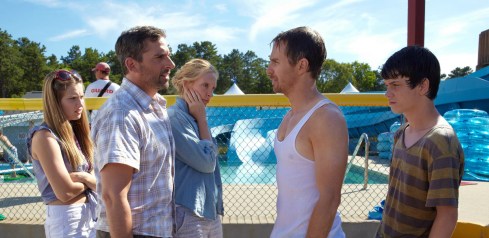
Everyone has that Summer That Changed Everything–it’s that precious coming-of-age experience that you never forget. For super-awkward teenaged Duncan (Liam James, to whom I’m always going to refer as Young Shawn from the first few seasons of “Psych”), that time comes with a job at a water park. This kid definitely needs something fun in his life–his mom (Toni Collette) is going through a rough time, her new boyfriend (Steve Carell) is a jerk, there’s no one to hang out with, and it doesn’t help that he’s uncomfortable in his own skin. But that changes when he runs off to a water park near Carell’s vacation home and finds himself getting employed by the wacky man-child manager, Owen (Sam Rockwell), which he decides to keep a secret. He fits in with the older staff members and has numerous misadventures that help boost his self-esteem and cause him to take chances and stand up for himself.

“The Way, Way Back” was co-written and co-directed by Nat Faxon & Jim Rash, who also won the Oscar for Best Adapted Screenplay for their collaboration on the Alexander Payne film “The Descendants.” Rash has said that he put a lot of his own childhood experiences into the character of Duncan…even down to his own mother’s ex-boyfriend labeling him a “3” on a scale of 1 to 10. (No joke–he admitted this in the BluRay bonus features! People can be very cruel.) There’s obviously a lot of passion put into this script, and it shows. The comedy and drama feel like they’re part of the same movie (like the best “dramedies”) and the characters all feel real and fleshed out……well, for the most part. Allison Janney’s constantly-drunken, wisecracking single mother character feels a little too out-there, but…eh, it’s still Allison Janney–she’s always great even when she plays obnoxious.

Everyone else is GREAT. Liam James sells “awkward” really well, and he’s all too relatable. There are a lot of levels to Toni Collette’s mother character that become too obvious when watching the film again. Steve Carell’s character is a jerk but a realistic one–you can tell there are times when he wants to do better, but there’s just too much in the way…like a harpy played by Amanda Peet. AnnaSophia Robb is a three-dimensional dream-girl. Maya Rudolph is great as the water park’s general manager who takes things more seriously than Owen and yet can’t resist Owen’s charm at the end of the day. River Alexander is funny as the lazy-eyed kid who is constantly picked on by his mother (Janney) and ultimately becomes Duncan’s friend. And Faxon & Rash are good and funny in their own side roles as water-park staff.

And then you got Sam Rockwell……I’ll just say it–this is my absolute favorite Sam Rockwell performance. He’s great in a complex role in “Moon” and even better in his Oscar-winning performance that actually made a bigoted a-hole kind of empathetic in “Three Billboards Outside Ebbing, Missouri,” and he’s always been great in other stuff. But look at him here in this clip and you only get a little taste of his energy in this movie! Every time he’s on screen, I smile! And he BECOMES this movie.

Looking Back at 2010s Films: Straight Outta Compton (2015)

11 Oct

hero_StraightOuttaCompton_2015_1

By Tanner Smith

Continuing my series of Looking Back at 2010s Films, let’s talk about the major anti-authority movie of 2015. No, it’s not “The Big Short.” Instead, it’s “Straight Outta Compton.”

Do I even need to describe this one? This film was a big hit because no one needed to tell them it wasn’t going to be.

For those few who don’t know, it’s basically a two-and-a-half-hour tribute to NWA, a group of young rappers who became famous for what was dubbed “reality rap,” mostly reporting on the horrid things they saw on the streets in the late 1980s and early 1990s. Young black men would get stopped and even handcuffed by police even for the mere act of standing there.

Oh, how far we haven’t come…

“Straight Outta Compton” is a conventional biopic, which is both its main strength and its main weakness. We know the drill–the early days starting out with big ambitions, creative people getting together to make some magic, getting a big break, moving to big performances, the introduction to the downfalls of fame, the controversies, the fighting, the breakups, the tragedies…..let’s face it, it all sounds familiar. I guess just about every celebrity goes through it all one way or another.

But why do we keep watching music biopics? Because even the same stuff is different for everybody that goes through them. And if it’s told well with interesting characters and smart writing, we still get something special.

The first hour-and-a-half or so has the best parts of the movie. It’s interesting to see how these kids start out–Eazy-E is a drug dealer, Dr. Dre performs his mixes wherever he can, Ice Cube is writing lyrics on the school bus, and so on. And it’s great to see them work together, such as in this clip where they lay down a track for the first time.

The second hour or so is the least interesting, as we see the gradual fall of NWA. But it still does consist of compelling material, such as what NWA has become after many of them have left to do their own thing, the hustling manager Jerry Heller (Paul Giamatti) continues to show favoritism towards E, and Dre teams up with Suge Knight (R. Marcos Taylor, very chilling), and then…tragedy strikes.

Yeah, the film does drag from time to time. But strangely, when the credits roll, and we get the real-life footage of the actual NWA, I find myself thinking, “Yeah…that WAS good! In fact, I think it should’ve gone on longer!” Director F. Gary Gray (who also directed the Ice Cube-penned “Friday”) and screenwriters Jonathan Herman & Andrea Berloff (who were nominated for an Oscar for their script) clearly had a story to tell and were going to try hard to create one of the best music biopics ever made.

All the actors are terrific. Jason Mitchell is winning and charismatic as Eazy-E, Corey Hawkins is a solid Dr. Dre, and O’Shea Jackson Jr. as Ice Cube…you know, now that I’ve seen Jackson in other movies since “Straight Outta Compton” (“Ingrid Goes West,” “Long Shot”), I don’t have to see him as “Ice Cube’s son” but “O’Shea Jackson Jr., a very talented actor.” That just makes his performance as Ice Cube (his own father) all the more interesting. He’s great here.

And, uh…OK, let’s address the elephant in the room. Because the real Ice Cube and Dr. Dre are among the film’s producers, there’s no mention of Dre’s publicized violence against women. But…at least they don’t try to make the NWA members into role-model types? I dunno, it is a bit disconcerting that a lot of the real important negative attitudes are either merely glanced at or ignored entirely.

But then again, it’s not really about that; maybe it’s simply about the impact these people had on culture, telling the truth the best way they knew how and becoming famous for it. And as such, it’s a pretty solid film.

Looking Back at 2010s Films: The Edge of Seventeen (2016)

11 Oct

af91364d-8abe-4a50-b8a3-6e470a780e56.jpg

By Tanner Smith

Continuing my series of Looking Back at 2010s Films, this is “The Edge of Seventeen”…not to be confused with the Stevie Nicks song…which is nowhere to be heard in this movie…weird.

This is a teenage coming-of-age comedy-drama about an awkward, depressed outsider named Nadine (played wonderfully by Hailee Steinfeld) in her senior year of high school. She’s resentful of her popular brother Darian (Blake Jenner from “Everybody Wants Some!!”), her mother (Kyra Sedgwick) doesn’t pay enough attention to her, she’s not comfortable in her own skin, and worse yet, her only friend (Haley Lu Richardson) is now in a relationship with Darian. There’s an awkward but sweet classmate named Erwin (Hayden Szeto, who I learned was *30* when he made this film!) who not-so-secretly admires her, and while she does give him attention, she has another boy on her mind–you know, the “dangerous” type. The film is basically about Nadine being comfortable with herself with help from those around her, including a teacher (Woody Harrelson) who tells it like it is.

A lot of this material is familiar, but a lot of us have gone through similar experiences in high-school and it’s important for as many writer-directors to draw from what they themselves have gone through.

There is a lot of heart and emotion in this film, thanks to writer-director Kelly Fremon Craig’s vision and the performances from her talented cast.

Nadine is easy to empathize with, even when she seems difficult to sympathize with, because she’s 100% real. When she’s a smartass, when she’s sad, when she’s self-loathing, when she’s a terror towards other people–I get it, because we’ve all been there and done that.

ALL of the characters seem real. They’re not as fleshed out as Nadine (obviously), but they aren’t portrayed as two-dimensional types either. The mom is clueless but she’s trying. The brother has self-esteem issues too. The best friend wants to venture away from familiar territory. The teacher has wisdom behind his wisecracks. And so on.

Oh, and there’s also Erwin. Was I the only one who bought his charm from the beginning? I didn’t know I was supposed to warm up to him the same way Nadine (and apparently the rest of the audience) did. Whatever–Erwin’s awesome, and I’m glad he got the girl.

One other thing I want to say to critics who aren’t reading my posts–stop comparing today’s “teen movies” to John Hughes teen movies. It’s cliched and doesn’t make sense anymore. Those movies were also good at blending comedy and drama with real teen problems. But this is a new era, with new problems, and new filmmaking techniques. Just call “The Edge of Seventeen” what it is–one of the smartest coming-of-age films in a decade full of smart coming-of-age films.

Kelly Fremon Craig’s upcoming film project is an adaptation of the Judy Blume novel, “Are You There God? It’s Me Margaret.” And I’m definitely curious to see how she handles that heavy material.

Looking Back at 2010s Films: Gifted (2017)

11 Oct

67101473_10211328887897440_5701080683233935360_n.jpg

By Tanner Smith

Continuing my series of Looking Back at 2010s Films…here’s the setup for Marc Webb’s “Gifted.” A single working-class man is raising his 7-year-old niece who is actually a child prodigy. Soon enough, her mathematical abilities catch the attention of the child’s formidable grandmother, who seeks to be sure that her brilliance is put to good use, which means she and her uncle will be separated.

Well, gee. Will the uncle fight to keep her in his custody, and will the grandmother learn the error of her ways, and more importantly, will anyone who isn’t a fan of Hallmark movies care about any of this?

The answer to that last one is definitely more important than the answers to the other ones, but they’re all the same: Yes.

I did care. Very much, actually. But why? This sounds like a cliched story with cliched characters, but everything is done…RIGHT.

For one thing, the characters are given more dimensions than you’d expect. Even the grandmother, Evelyn (played by Lindsay Duncan–just when I thought her critic character in “Birdman” was her most unlikable role), is more human than the role deserves to be. She IS a stick-in-the-mud and she feels superior to most people, but her backstory, which involves her failed attempts at raising her own daughter who was also a prodigy, lets you understand what she’s trying to do. It’s arguably unhealthy, and she’s hardly sympathetic (especially when you learn what becomes, or what could’ve become, of the granddaughter’s precious one-eyed cat), but she does turn out to be empathetic. She’s one of the more interesting characters in the film.

That’s a BIG plus for a film like this–turning your antagonist into a human being.

Chris Evans plays Frank, the guy who cares for Mary, the kid (played by McKenna Grace), and he’s great here. He’s had many opportunities to display his acting chops as Captain America, but he stretches his range even further with this role, and he’s really good at it. He’s somewhat reclusive and doesn’t make much contact with other people, but when it comes to his niece, we see the person underneath his act–his heart’s in the right place, even if he is just making things up as he goes in the ways of guardianship.

We also get a lot of supporting characters, including Mary’s teacher (Jenny Slate) who’s the first to realize maybe Mary doesn’t belong in her classroom solving simple math problems, like literally within the first few minutes of school! There’s also the next-door neighbor, Roberta (Octavia Spencer), who constantly checks in Frank and Mary from time to time and forces herself into their lives. Even these characters are well-done, even if…oh gee, I wonder if Frank and the teacher are going to hook up despite her telling him they won’t?

There are a lot of courtroom scenes when the conflict could’ve been resolved a few different ways. But to be fair, the only reason it isn’t is because both Evelyn and Frank are too stubborn and loving towards Mary to back down, which does make for an interesting debate…even in a scene in which Evelyn gives a totally-full-of-sh*t speech in the courtroom about what she believes in and whatnot. (Even that, you could say, is part of the character’s desperation.)

That’s another reason “Gifted” works so well–the SCRIPT is good. Written by Tom Flynn, it’s full of sharp dialogue and warm insights, as well as moments of well-done humor. The characters feel like real people, the comedy and drama mix perfectly rather than forcibly, and as a result, I CARED.

My only major nitpick–and it really IS a nitpick–is McKenna Grace as Mary. I mean, this is a very talented young actress (she was also in “I, Tonya” and “Captain Marvel”), but for some reason, I’m not quite accepting of her as a child prodigy–I just see it as it is: a talented child actress TRYING to play smart. Funny enough, this film came out the same year as Colin Trevorrow’s “The Book of Henry,” starring another child actor, Jaeden Lieberher (“It,” “Midnight Special”), as another child genius–that film wasn’t nearly as good as this one, but I bought HIS performance as a prodigy hook-line-and-sinker more than I did Grace’s.

The film was directed by Marc Webb, who also directed one of my favorite romcoms, “500 Days of Summer.” He’s best at directing small indie flicks than he is at directing web-slinging superheroes…OK, I still like “The Amazing Spider-Man” (though, not as much as I did originally). (“The Amazing Spider-Man 2,” though? Yikes…) Although, there was another indie film directed by Webb that came out the same year as “Gifted,” called “The Only Living Boy in New York.” I think that one’s a dud–maybe he just needs the right material to make a good movie. (Doesn’t everybody?)

So yeah. I cared about what happened in “Gifted.” I even cared about the cat. And I’m not a cat person. That should say something. Check out “Gifted.”