Archive | Looking Back at 2010s Films RSS feed for this section

Looking Back at 2010s Films: Cop Car (2015)

1 Oct

copcar

By Tanner Smith

Continuing my series of posts about 2010s films I really like, “You don’t…steal…a f***in’…COP CAR!!!”

Before director Jon Watts made the thrilling “Spider-Man: Homecoming,” he made a tense thriller called “Cop Car,” which starts off as a lighthearted romp before easing us into dark Cormac McCarthy territory.

It begins as two 10-year-old boys run away from home in the deep South, walking along empty fields, until they come across…a cop car. It’s a patrol unit parked out in the open, no cop in sight, and they decide to hit it with a rock…then they decide to play inside…then they realize the keys are in it…

And this leads to a fun joyride, as the boys drive along fields before taking it to the mostly-empty highway to drive faster. But meanwhile, the Sheriff (Kevin Bacon, very scary) wants his car back…

Sounds pretty stale, right? But believe it or not…the situation gets ugly. And this is where the film goes from kinda fun to holy-crap-this-is-kinda-messed-up crazy. The Sheriff is definitely a bad guy. He’s already disposed of one body, and there’s another in the trunk of the car…which the boys have stolen, not knowing about it until they hear someone banging from inside the trunk! What does this lead to? Ohhhh boy…let’s just say it’s a miracle ANYONE gets out of this situation alive, let alone two little boys, movie characters or not!

It’s like someone took those direct-to-video kiddie adventure flicks I grew up watching and turned it into “No Country for Old Men!” That’s why I love “Cop Car”!!

Looking Back at 2010s Films: 127 Hours (2010)

1 Oct

Image result for 127 hours movie

By Tanner Smith

SPOILERS…but Deadpool already spoiled this movie, so what difference does it make?

Continuing my series of posts about 2010s films I really like, saying “127 Hours” is a film about a guy who cuts off his own arm is like saying “It’s a Wonderful Life” is about a guy who gets drunk and crashes his car.

(I stole that simile from Chicago film critic Richard Roeper–sorry to say I’m not as witty as he is.)

But seriously though, “127 Hours” is one of my favorite movies…and I say that despite never being able to watch THE SCENE all the way through in the eight years I’ve seen the movie multiple times.

You know THE SCENE. It’s gotten a lot of publicity, especially since moviegoers who saw THE SCENE supposedly fainted at test screenings and some had to be taken away from cinemas by paramedics. I saw this film in a theater with my parents–we had trouble viewing THE SCENE too. Even though we all knew it had to happen, we weren’t ready for it to happen.

For me, it’s not just seeing the action happen–as a film buff/film student, I know it’s latex and rubber and corn syrup and whatever else they could use to make the effect as graphic and realistic as possible. It’s not just that…it’s the SOUND DESIGN. Just hearing the bones break and James Franco’s agonized yells and ESPECIALLY the sounds the nerves make when they’re about to be severed (sounds like an electric guitar string)…NOT FOR ME.

So yeah, I usually skip the climax of the movie and yet I still call it one of my favorite movies. WHY??

THE SCENE is inevitable, the film took its time earning the important moment, and because it’s so important that it had to happen, of course director Danny Boyle was going to go all out in showing the audience HOW it was going to happen. THE SCENE had to be in the film…I just skip through it, is all.

Why do I love this movie? It’s a film with a concept that’s as minimalist as you can get–our main character is trapped in stasis for five days–and yet, it feels bigger than it is, thanks to Boyle’s unique hyperactive directing style. Despite our character, Aron Ralston (played by James Franco in an excellent performance–he’s another important reason this film works so well), being immobile, Boyle went all out in making sure we’re being inside the character’s mind as it rushes through all sorts of emotions of anger, sadness, freedom, confusion, and more. He illustrates Aron’s frenzied mental state beautifully. We even get a little black comedy as Aron imagines being on a talk show talking about his situation. That’s typical Boyle.

Not that the opposite approach (to make us feel as trapped as the character) wouldn’t work–in fact, “127 Hours” came out the same year as “Buried,” which was about a guy trapped in a coffin and we’re trapped inside the coffin with him, and it turned out to be a pretty solid thriller.

And when all is said and done, I understand everything Aron went through and why he had to do what he did in order to survive and start his life all over again. It also begs the question, “Would YOU do it?” I’m not so sure I would, but then again, if I were trapped in a canyon for five days and had no other alternative……

Looking Back at 2010s Films: 10 Cloverfield Lane (2016)

1 Oct

10 CLOVERFIELD LANE

By Tanner Smith

Continuing my series of Looking Back at 2010s Films, there are so many fan theories about how “Cloverfield” and “10 Cloverfield Lane” (and “The Cloverfield Paradox”) connect together, and I’m not going to try to give my own take. I’m just going to talk about “10 Cloverfield Lane” as its own movie.

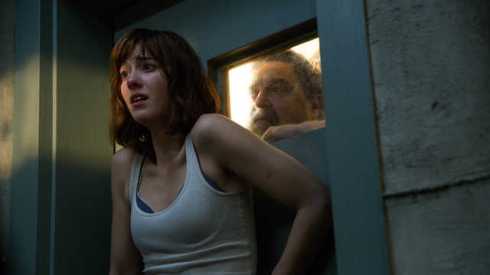
The story is told from the perspective of Michelle (Mary Elizabeth Winstead in her best performance), who suddenly awakens from a car crash to a farmhouse basement. She was brought there by a mysterious hulking man, Howard (John Goodman, always a delight), who tells her that above ground is a war zone–according to him, an “attack” of some kind seems to have contaminated the air, and the basement is the safest place to be. Michelle isn’t sure what to make of it, since Howard seems potentially dangerous. But when she notices some strange things that sort of back up his statement, she and her companion, Emmett (John Gallagher Jr.), have no choice but to ride it out. But soon enough, the question of whether it’s safer in here or out there comes into play…

“10 Cloverfield Lane” is a masterfully done thriller that gets better each time I watch it. The first time I saw it, I didn’t know what to make of it after its ending, which felt like a different movie. But the more I thought about it, and the more pieces I put together after watching it repeatedly, the more sense the ending made. It made the film even more intriguing both in hindsight and in revisit.

I love movies like that–movies that you have to watch more than once in order to fully understand it. If you need to watch a movie only once, what’s so special about it? (I mean…unless it’s something as incredibly disturbing albeit well-made, like “The Girl Next Door” or “We Need to Talk About Kevin.”)

The ending does make sense. All the sounds the characters hear, many of the things that are said or implied–it all adds up. And we don’t know everything–because most of the movie is set in this closed-off basement area, our knowledge of what’s really happening upstairs is as limited as it gets. It’s only when we get a major clue at the end, which makes for a neat climax, that we’re able to piece together the puzzle.

But something else I really like about “10 Cloverfield Lane” is the development from our lead character Michelle. When we first meet her, she’s running away from her husband after they allegedly had some kind of domestic dispute (though, when her husband calls as she drives away, he simply describes it as a little fight). And when she’s in the basement, we see her use every resource to attempt to escape, however and whenever she can. That’s the only thing she knows how to do, having grown up from an abusive household and regrets not doing anything about what she saw both then and now. You can tell she’s not a fighter, but she will do anything and everything to run away from an uncomfortable situation. The first time I saw the movie, I was too busy thinking about how SMART this horror-movie protagonist is before I could pick up on that, but at least I’m giving her credit for something in the first place. (SPOILER ALERT!!!) Then, she fights her way out of the basement to take her chances outside…where it turns out Howard was right all along about the attack, as she encounters some kind of alien ship and, using her wits, skill, resources, and newfound courage, manages to blow the thing up. So, now she’s a fighter. But will she continue to run? She’s free to go wherever she wants. But instead, after hearing a distress call on a radio station coming from the other direction, she decides she’s going to help people instead of run from them.

Really good stuff here.

Looking Back at 2010s Films: Blue Ruin (2014)

1 Oct

Image may contain: 1 person, smiling, tree, child and outdoor

By Tanner Smith

Continuing my series of Looking Back at 2010s Films–Jeremy Saulnier’s Blue Ruin. I didn’t review this one before–consider this a new one.

You know the old saying “violence only begets violence”? “Blue Ruin” is a grisly and effective example, showing one uncompromising act of violence after another.

It begins when Dwight (Macon Blair), a beach bum, is informed that the man that murdered his parents 20 years ago is getting released from prison. He heads back to his hometown, follows the murderer and his family, and…kills him. Simple as that, right? Wrong.

I mean, he does go through with it. But after that, he realizes he dug himself a deeper hole than he started. The killer’s family hasn’t alerted the authorities, and so the lives of Dwight’s sister and her family are in jeopardy. Meaning, he has further to go if he wants to protect them and himself.

One of the strengths of “Blue Ruin” is its ability for visual storytelling. There are a few dialogue-heavy scenes, used for characterization purposes, but for the most part, we’re just seeing Dwight think and act his way through whatever he has on his mind. (Dwight hardly even has a line in the first 20 minutes or so.) It’s quiet, bitter, mysterious, sinister, uncomfortable, and brilliant direction–the same kind that took me to a dark, scary night in director Saulnier’s next film, “Green Room” (one of my favorite horror films of the decade–I’ll get to that one soon enough).

Obviously, “Blue Ruin” isn’t a conventional revenge story, but what kept surprising me throughout the film were all the little things that can (and did) go wrong in this emotionally damaged and seemingly gentle man’s supposedly simple task to exact revenge against the man got away from justice after murdering his family. It’s just not as simple as “kill the guy and life will go on.” Where it goes from there is very disturbing, especially when he realizes what he’s going to have to do next to others…and to himself. (The self-surgery-attempt scene…ugh!) The anti-violent message isn’t preachy in the slightest–it’s just presented in a way that the point is made effectively…especially when Dwight sees for the first time just what a bullet can do to a person.

I’m glad Saulnier and producer/actor Macon Blair didn’t give up on filmmaking after their first film “Murder Party” (despite being a crazy entertaining thrill ride) didn’t do much for them. They put the dream on hold for a while, raising families and whatnot, but then they decided to go for it again. So they put together a successful Kickstarter campaign (and also collected from Saulnier’s savings) to get money for the film’s budget, despite Saulnier being hesitant to ask for help. What resulted was a successful thriller in festivals, in limited theatrical release, on VOD, and led to successful careers for both of them. That’s an example of perseverance right there.

Cheers to not letting the dream die!

Looking Back at 2010s Films: The Gift (2015)

1 Oct

JoelEdgertonTheGift_article_story_large

By Tanner Smith

Continuing my series of posts about 2010s films I really like, Joel Edgerton’s “The Gift!”

So, there’s a guy who comes into the lives of this couple, he seems harmless to have around, but he oversteps his boundaries one time too many, and when the couple tries to shoo him away, he just keeps coming back and things get really sinister from there… If it were that simple, then Joel Edgerton’s psychological thriller “The Gift” wouldn’t be worth talking about. Instead, it’s a well-crafted domestic thriller with a well-developed mystery and a haunting message about karma.

A couple (Simon and Robin, played by Jason Bateman and Rebecca Hall) relocates to California following a lost pregnancy. Not long after moving in do they meet Gordo (Joel Edgerton), who Simon knew from high-school. He’s a nice enough guy, he does favors for them (some big, some small), he…keeps showing up at their house, bearing gifts…while Simon’s at work and Robin’s alone… Robin’s nice enough to welcome him, but Simon’s ready to get him to shove off. It seems like a little conflict that’s going to resolve itself, until you realize that this is actually deeper than we imagine, as Robin does some investigating to discover what Gordo means when he tells Simon that he was “willing to let bygones be bygones all these years.” What does that mean? Did something happen between Simon and Gordo long ago? If so, what was it? Is this opening an old wound that’s coming back to haunt them? The questions keep piling up and the answers reveal more disturbing revelations than a mainstream audience might expect.

Edgerton, in his filmmaking debut, is not interested in cheap thrills or conventional scares. He focuses more on the psychological path the story takes; he builds tension from a very basic fear: that not everyone can be trusted, not even your own spouse. It’s that kind of uneasiness that keeps the film going at a good pace, and it’s aided by solid filmmaking.

I HAVE to talk about the ending to “The Gift” and what it could possibly mean. So, SPOILER WARNING!!!

So, as we find out midway through the film, it turns out Gordo’s life was ruined after Simon, who was a bully in the same high-school he attended, made up a disturbing lie about Gordo that everyone believed. It was a fabrication that got out of control, which caused Gordo’s father to nearly kill him and ship him to military school. And now it seems Gordo wants payback after all these years, and Simon isn’t willing to accept any kind of responsibility for what he did; he’d rather be rid of anything from his past.

Simon’s still a bully. He pushes Robin around, he thinks he can control her because she’s emotionally unstable, he beat up Gordo after he was told to apologize to him, and he’s STILL making up stories, this time to screw over workplace rivals. Someone should show him how it feels…

The ending of “The Gift” is BRILLIANT. Simon receives some final gifts from Gordo, all of which indicate that Robin’s newborn child is actually Gordo’s, about nine months after Gordo seemingly raped her when she suddenly passed out alone in the house. By that point, Simon has already lost his job due to his boss finding out about his latest work lie and Robin wants nothing to do with him anymore now that she knows what kind of person he is…and now it seems that the new baby may not even be his. Just when we’re ready to accept this cheap shock of an ending…Gordo removes an arm-sling we were led to believe was from from Simon’s beating, and he walks away, leaving it behind…

That one little gesture fixed everything! It leaves the whole revelatory ending open to interpretation, that if Gordo lied about his injuries…maybe he lied about the rape too…

It’s much better than the alternate ending, which does state all. It clearly states that Gordo made the whole thing up just to mess with Simon as payback to show what a lie can do to people. He never raped Robin, he cut himself severely, and he just used little tricks of knowledge to mess with Simon’s head. See, that’s what I thought, but I’d rather it be left ambiguous, which thankfully it was.

You know what the scariest thing about the film is? When we really think about it, we realize that we can see ourselves in any of the characters, both the bully and the bullied. I don’t mean we’ll hurt anyone or those we’ve hurt in the past will do any of the things Gordo did, but “The Gift” is a film that reminds us that we as people can be pushed over-the-edge, either by regrets or by seeking closure or simply from answers about the person you thought you knew before.

Joel Edgerton made a really good first film, and his follow-up film, “Boy Erased”…I’ll get to that one soon enough.

Looking Back at 2010s Films: Celeste and Jesse Forever (2012)

1 Oct

44692000001_1702426955001_Celeste-and-Jesse-Forever

By Tanner Smith

I want to start a new series of mini-review posts celebrating the films of the 2010s that I truly enjoy. I’ll call it Runners Up for the Best Films of 2010s…or maybe just the films of the 2010s that I truly enjoy, like I said.

I’ll start with an indie dramedy from 2012 called “Celeste and Jesse Forever.”

It’s the film that made John Lassester reach out to writers Rashida Jones & Will McCormack to write the screenplay for Toy Story 4…only to have the script rewritten by frequent Pixar writer Andrew Stanton (while Jones and McCormack apparently still share Story credit)…I don’t think I’ll ever understand the studio system.

Anyway, “Celeste and Jesse Forever” is a film about what brings people together in relationships and what pulls them apart. Celeste (Jones) and Jesse (Andy Samberg) are the best of friends, and they love each other very much–they even get married. (In a clever opening, we see the progression of their relationship through a montage of still photographs.) Seems like their love could last forever. But nope. As the story begins, we learn they’re separated–in fact, they’re getting divorced. Though, they’re hardly separated–they still spend a lot of time together, are still great friends, and Jesse even lives in the guest-room garage just a few feet away from the house! They don’t find it weird (in fact, they agree that it makes their relationship stronger)–their friends do, though. When one of them asks Celeste what went wrong, Celeste explains that it’s as simple as just being two different people–Celeste is a very driven businesswoman and Jesse is a slacker. Everything changes when Jesse reunites with an old flame and starts getting serious with her and changing his life around. Celeste feels a new void left behind and decides it’s time to move on and start dating. But it’s not so easy.

There are some things I don’t like about this film. The least of which is sometimes the attempts at shock humor don’t work (other times, it’s very funny). Mostly though, it’s the character of a trashy pop-star played by Emma Roberts–nothing wrong with the actress, it’s just I don’t know why this character is even here. I get that she’s a client of Celeste’s marketing firm and we should get a sense of how Celeste’s job works, but the character is underdeveloped and her interaction with Celeste doesn’t feel nearly as special as the other relationships in the film. There didn’t need to be a whole subplot dedicated to her.

What do I like about the film? There’s a lot I not only like about the film but LOVE about it. For one thing, director Lee Toland Krieger is able to balance a series of tones as one, which is really tricky especially for a “romantic comedy.” (Though, I think I’d call this more of an “anti-romcom,” since it’s less about the meet-cute and more about the break-up.) It’s funny when it needs to be, but more importantly, it’s sweet and heartfelt when it needs to be. It can also be kind of depressing. (After all, Celeste’s character arc is trying to be OK without the man she called her best friend to whom she was married.) One particularly upsetting moment is when Celeste finally snaps at Jesse late in the film, when Jesse finally has his life together, and she asks him the question, “Why didn’t you change for ME?”

Rashida Jones has always been talented, but not many roles have been written the best for her. I think the reason she’s able to portray all kinds of depth in this particular role is that she wrote it herself. Almost as if she thought, “No one’s gonna give me the role I need–I’LL give me the role I need!” And she’s excellent here. And so is Andy Samberg as Jesse, who shows more subtlety than I’d ever expect from one of the funniest people I follow.

And I like the supporting cast as well–I know I picked on Emma Roberts, but there’s also Elijah Wood who scores some laughs as Celeste’s boss/confidant (who wants to be the “saucy-gay-friend” type but Celeste won’t let him play it), Ari Graynor & Eric Christian Olsen who are VERY funny as Celeste and Jesse’s soon-to-be-married friends (though Graynor’s outburst at the beginning is a bit much), Will McCormack (Jones’ co-writer) as consistently-stoned friend “Skillz,” Chris Messina as a guy who keeps trying to hit on Celeste, and Rebecca Dayan as Jesse’s sweet, new girlfriend.

(Oh, and Chris Pine shows up at one point…I don’t know why he was there, but I’m glad for some reason.)

“Celeste and Jesse Forever” is an honest film about how love isn’t everything, as powerful as it may be–and while it’s good when it’s funny, it’s great when it’s bittersweet. And I hope that after the film ended, Celeste took hold of a chance with someone new…someone better than the men we’ve already seen her date.

Looking Back at 2010s Films: Me and Earl and the Dying Girl (2015)

4 Jan

me-and-earl-and-the-dying-girl

by Tanner Smith

SPOILER WARNING!!!

What is the purpose of my “Revised Reviews”? To express new thoughts about a particular film that are different from what I initially had. That’s the beauty of continually watching films–while the films themselves don’t change, our attitudes toward them do. We can praise films for being great and then in good time they can become some of our favorites. Or we can think less of them as time goes by. My personal favorite type of film is one I think is “OK” or “fine” at first but then gets better and better with each viewing, to the point where I can call it a “favorite.”

This is probably why it was a mistake to publicly post about my Top 250 Favorite Movies. Maybe the Top 100 was enough. Creating the Next Top 150 only meant many other films wouldn’t slip in over time. (Hell, there may even be a couple films that could sneak into the Top 100 over time. See what I mean?)

Anyway, I gave three stars to a 2015 indie comedy-drama called “Me and Earl and the Dying Girl,” and now I’d give it three-and-a-half. This is after watching it countless times since it was released.

How many three-star reviews have I written for movies that eventually ended up on my personal-favorites list? I’ve lost count.

Seriously, there’s The Dirties, Gremlins, The Monster Squad, Dazed and Confused, Scott Pilgrim Vs. the World, Harry Potter and the Order of the Phoenix, among others, that I’ve initially rated a measly 3 stars out of 4.

“Me and Earl and the Dying Girl” isn’t in my Top 250…but it might be in the Top 400 (if ever I make one…which I won’t…publicly…). But why?

While I praised the acting from the leads, the charming atmosphere, and the revealing bittersweet ending, I complained very much about two other things–I called them Excessive Comic Relief and Kind of Aware But Not Quite. For the former, I was referring to the side comedic characters (particularly those played by Nick Offerman and Molly Shannon) who seemed like they were there because there wasn’t enough comedy already given by the droll commentating lead character, his wisecracking best friend, their natural appeal & chemistry together, and especially the amateur home movies they make. (This is always my pet peeve in independent dramedies–a lot of them seem to have quirky side characters for the sake of…having quirky side characters.)

And yes, I’ve read the book this film is based on, written by Jesse Andrews who also penned the screenplay for this film adaptation. These characters work a little better in the book, but only slightly.

And for the latter, I was referring to the characters pointing out that they’re partaking in cliches that were done in other movies involving teenage friendships–just because you say you’re doing something doesn’t make it any different.

But I did mention a lot of the things that I did like about the film, hence the three-star recommendation. How was I supposed to know I would end up watching the film several times after, just for the things I really like about it?

What has grown on me with subsequent viewings? Well, for one, there’s the dialogue. I know I harped on a lot of the self-awareness of the characters, which much of the voiceover narration focuses upon, but when we actually get to see these kids as regular high-school kids, they sound very authentic (with a lot of intentionally awkward “uhs” and “ums” and stammers here or there) and have a lot to say. And as such, they’re not only likable–they’re real.

That’s another thing I like about the film: the lead characters are great! Greg (Thomas Mann) goes through a brilliant character arc in which he learns that he needs friendship in his life, and Earl (R.J. Cyler) knows he and Greg have been friends the whole time (even though Greg won’t acknowledge it) and ultimately becomes the one that has to talk sense to Greg. They make films and they go to high school, where they have very little social status, but they don’t take it all so seriously. And the more I watch the film, the more I realize how unserious they are in their filmmaking…and when you think about all the pretentious analyses we get from filmmakers and film scholars, especially from the indie film circuit nowadays, seeing these kids treat their films this way makes me smile.

Then there’s Rachel (Olivia Cooke), the titular dying girl. Critics complained that she’s more of an “idea” than a “person,” much like the dreaded Manic Pixie Dream Girl trope…THAT’S THE IDEA! We’re not supposed to know the real her–we’re supposed to get an idea of her: Greg’s idea. That way, when Greg realizes there’s so much more he could’ve known about her, it’s all the more tragic.

And I also like that it’s a film about friendship. It’s a film about a teenage boy and girl who form a relationship, but at no point are the two romantically linked. Maybe they could’ve been, if they had taken the time to get to know each other more and decided to take another risky step further. But then again, maybe they would’ve been fine as just friends. That’s not something you would expect in your average teen film, but there you are–this is not your average teen film. It’s better than that.

Me and Earl and the Dying Girl got high honors at the Sundance Film Festival; it’s a shame it didn’t get higher praise for Oscar season (like Best Adapted Screenplay?). And for good reason–despite the heavy subject material of an awkward boy befriending a cancer-patient girl, the story is told effectively with useful benefits, instead of resorting to melodrama. It takes realistic characters and forces them to ask questions about themselves–about what they must go through at this crossroads in life, how they must react when someone is in turmoil, how useful they can be in certain situations, etc. and so on.

And the more times I watch this film, the more I think about THAT rather than the things I complain about.

To conclude, I also love this dialogue exchange, after Greg and Earl are accidentally stoned (don’t ask): GREG: You can’t tell them we’re on drugs. EARL: Why not? (pause) GREG: Because then they’ll know.

That line (“Because then they’ll know.”) makes me cry with laughter each time I hear it.