Archive | Looking Back at 2010s Films RSS feed for this section

Looking Back at 2010s Films: Creed (2015)

5 Oct

creed

By Tanner Smith

Continuing my series of Looking Back at 2010s Films, here are my brief thoughts on the “Rocky” franchise: the first “Rocky” is great, the sequel’s terrific, “Rocky III” has its moments, “Rocky IV” is too goofy for me to dislike, “Rocky V” is meh, and the sixth film, “Rocky Balboa,” is fine. But just because the sixth film was about getting older and partaking in one last act, that didn’t mean the story was over. Hence, “Creed!”

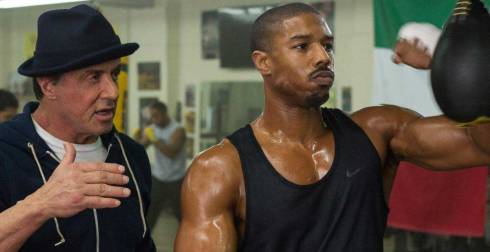
Years since Rocky Balboa (of course played by Sylvester Stallone) had his last fight in the ring, he lives a life of mostly solitude. He runs his own restaurant (Adrian’s, named after you-know-who), he visits the graves of both his wife and his friend Paulie regularly, his son has his own life now, and his health is deteriorating. His glory days are far behind him, and he knows it.

Into his life comes Adonis “Donnie” Johnson (Michael B. Jordan), who is the son of an extramarital lover of Apollo Creed. Creed, if you recall, was the former heavyweight champion before Rocky took the belt, and he was killed in the ring in “Rocky IV.” Donnie has been adopted by Apollo’s widow and dreams of becoming a pro boxer just like his father. So, he leaves Los Angeles and travels to Philadelphia to be trained by Rocky, who reluctantly agrees.

Side-note: When I first saw the film, I was glad to finally know who won the last fight between Rocky and Apollo (“behind closed doors”) at the end of “Rocky III”–by the way, I love how “Rocky IV” reminded audiences of the fight and still didn’t tell them who won! (What a gip.) Anyway, Rocky tells Donnie that Apollo won the fight, and I was happy…but then when I thought about it, I realized if Rocky won, he wouldn’t tell that to Apollo’s son. So, WE STILL DON’T KNOW! But I’m fine still wondering.

Anyway, Rocky trains Donnie, who wants to keep his identity as Apollo Creed’s offspring a secret so he can make it on his own. Rocky and Donnie develop a nice father/son relationship that grows as Rocky learns he has lymphoma and has to be reminded by Donnie why it’s important to fight in life. Meanwhile, Donnie learns to control his anger and what it means to go his own way in his ambition.

“Creed” is the “Rocky” film that gets back to what made “Rocky” and “Rocky II” so special–putting its interesting characters center-stage and showing exactly what’s at stake, thus making us care for who wins in the climactic boxing match. Speaking of which, the fight scenes are very well-executed, including a match midway through the film that is only done in ONE TAKE! The film also gives us an interesting new character in Adonis Creed to root for, and his relationship with Rocky is a special one that is both written and acted brilliantly.

“Creed” was directed and co-written by Ryan Coogler, whose previous film was the excellent “Fruitvale Station” (also starring Jordan) and whose later film was one of my favorite MCU movies, “Black Panther” (which I’ll get to soon enough). He’s got a pretty good track record!

My only complaint about “Creed” is Donnie’s rival, “Pretty” Ricky (Anthony Bellew), isn’t nearly as interesting as Apollo was in the first movie. He’s just kind of a loudmouthed boring antagonist. Also, this is more of a nitpick, but while I could understand Bianca (Donnie’s girlfriend, played by Tessa Thompson) turning her back on Donnie when his anger gets to be too much, I don’t appreciate an earlier moment in which she gets cold the moment she finds out Donnie is the son of Apollo Creed. (It doesn’t become a big thing anyway, so her behavior just seemed pointless.)

The film ends really well, with Donnie and Rocky climbing those familiar 72 steps. It made me wonder, this seems like a perfect ending to the Rocky franchise–do we NEED another sequel after this?

Well, walking into “Creed II,” directed by Steven Caple Jr., I was wondering if it was necessary to see the story continue. As it turned out, it was! These characters aren’t gone yet, and especially Donnie has more room to grow, so why not give us more with them? And “Creed II” did…even if I now have to accept the cartoonish villains in “Rocky IV” as “real” characters now, thanks to their returns in this more grounded story.

“Creed” is one of the more pleasant surprises of the 2010s. And I recently reviewed “Creed II,” so you can find out more about my thoughts on it here: https://smithsverdict.com/2019/08/16/creed-ii-2018/
Looking Back at 2010s Films: The Disaster Artist (2017)

4 Oct

Brody-The-Disaster-Artist

By Tanner Smith

“Here’s to the ones who dream, foolish as they seem. Here’s to the hearts that ache. Here’s to the mess we make.” -Emma Stone, “La La Land”

“You don’t want to be good. You want to be great.” -Tommy Wiseau, writer-producer-director of “The Room”

“No refunds.” -Sign outside the Laemmle Fairfax, June 27th, 2003, opening weekend of “The Room”

Continuing my series of Looking Back at 2010s Films…seriously, “The Disaster Artist” isn’t on my top-20-of-2010s list? Ugh. Screw lists.

Greg Sestero, actor/co-producer for “The Room,” wrote and released a memoir about his experiences in making “The Room” with his offbeat filmmaking friend Tommy Wiseau. That book became “The Disaster Artist: My Life Inside The Room, the Greatest Bad Movie Ever Made.” And of course, fans of “The Room,” which may very well be “the greatest bad movie ever made,” flocked to pick up their copies as soon the book was published, because they just had to know… What really went on behind the scenes? What was the thought process behind many of these decisions? Can Greg answer these questions as well as Tommy, who seems too far out of his mind to give his own clear answers? Well, maybe–Greg is Tommy’s best friend; he’s the one who always sticks up for his weird behavior. Maybe he knows something we don’t.

I bought and read the book in December 2015, and when I heard there was going to be a film based on it, I was very excited. James Franco was going to play Tommy Wiseau (perfect casting) and the book was going to be adapted by Scott Neustadter and Michael H. Weber, who previously wrote “500 Days of Summer,” “The Spectacular Now,” and “The Fault in Our Stars.” So far, so good.

Two years later, when the film released in theaters, it didn’t disappoint. In fact, I even placed it as #2 on my best-of-2017 list. To me, it’s one of the most throughly entertaining movies of the decade.

And again, it’s not on my list?? Dammit.

This biopic is more straightforward than the book’s nonlinear, loaded storytelling, but that doesn’t make it any less entertaining. And I’m well aware of the things that were changed around or removed entirely (I read the book in print and listened to the audiobook, read by Greg Sestero himself). I don’t care–the film is still fun as its own thing.

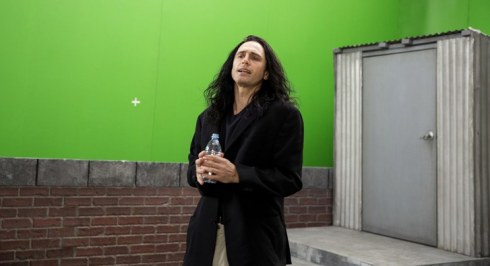
Greg (played by Dave Franco) is an aspiring actor/model who just wants his time to shine…as does Tommy (James Franco), another aspiring actor from presumably another planet. Tommy invites Greg to move to LA with him so they can chase and achieve their dreams. But Tommy is too off-putting for any casting director to give a chance, and Greg is too insecure and shy. It gets to the point where Tommy decides to write his own movie for himself and Greg to co-star in. And that movie becomes…”The Room,” a Tennessee Williams-inspired drama about fear, guilt, tragedy, and misunderstanding…amidst a lot of sex and quotably weird out-of-context dialogue and the strangeness of Tommy Wiseau himself taking the lead role. And it wasn’t easy to make the film–Tommy got too demanding, continued mistreating his cast/crew, and never listened to decent advice from anyone who had something to say about his own vision. But in the end, he still made his vision come to life, which is always inspiring.

Btw, that’s only the simplification of what truly happened according to the book. If you haven’t checked it out, you should–it’s really interesting!

James Franco is 100% believable and spot-on as Tommy Wiseau. He captures his weirdness to a T, but there is also a sense of humanity to him, which makes it all the more interesting to the point where you have to ask yourself, “IS Tommy playing an act on us the whole time?” Franco was robbed of an Oscar nomination for this performance–he truly deserved one.

What’s even better about someone seeing this film without even knowing what “The Room” is or who Tommy is is just the sheer shock when they realize that this stuff actually happened in real life. They know this not just because of the prologue that features some of today’s celebrities (including J.J. Abrams, Kevin Smith, Adam Scott, Kristen Bell, among others) talking about The Room and its impact on cult culture…but because the film ends with side-by-side comparisons of actual clips from “The Room” and reenacted scenes for “The Disaster Artist!” (I showed this film to my grandma–she was also shocked that this wasn’t an act!)

Oh, and stay after the credits–there’s an interesting cameo appearance by…somebody who knows a thing or two about the true story.

The scenes in which some of “The Room’s” more popular scenes are reenacted are a ton of fun to watch. You can tell Franco and his crew have done their homework and tried to get it as close as possible. And it’s also great to see actors like Josh Hutcherson, Ari Graynor, Zac Efron, and Nathan Fielder play these roles of actors trying to make something out of Tommy’s poorly-written characters.

(Though, there is one thing missing that I think Franco could’ve had comedic possibilities with–the real Tommy overdubbed a lot of his dialogue, whereas the fictional Tommy had his recorded lines kept intact. Considering how unbelievably lazy the dubbing is, I think Franco could’ve had fun with it. But oh well.)

Another thing I love about this movie: Seth Rogen as script supervisor Sandy Schklair. He basically speaks for the audience in pointing just how ridiculous everything is on set of The Room. (“Oh we got a bottle now. Look out.”) And if you read the book, you know he basically was the unsung hero in terms of directing “The Room” because Tommy was completely inept in just about every way of directing, and it also didn’t help that Tommy would constantly do things his own way rather than listen to someone else’s directing. Rogen delivers some of his best work here.

And I barely even scratched the surface in presenting to you just how much I enjoy “The Disaster Artist” and why I embrace this film wholeheartedly. Much like “Ed Wood,” one of my favorite movies of all time (and also about a notoriously bad filmmaker), this is a film about passion and dreams and appreciating the thing you love to do despite how other people see it. The haters can hate all they want–these guys still made the film and it’s still popular today.

Looking Back at 2010s Films: Private Life (2018)

4 Oct

lead_720_405

By Tanner Smith

Continuing my series of Looking Back at 2010s Films, let me tell you a reason why lists are pointless: because they keep changing.

Case in point: “Private Life,” the Netflix Original “dramedy” by Tamara Jenkins, would have made my top-20 list for 2018, had I seen it a couple more times before compiling the list. (I instead gave it an Honorable Mention.) It makes me wonder, am I going to stand by the titles that are already on my decade-end list? Will I change anything by the time I publish it this December?

But whatever, it’s better to recognize a film’s true merits later than never. “Private Life” is a terrific film–I always knew it was…I just had to watch it a few more times to understand how terrific it actually was.

“Private Life” is about a middle-aged married couple (Richard and Rachel, played by Paul Giamatti and Kathryn Hahn) who are desperately trying to have a child. After several failed attempts, they start to consider of using a donor egg to inseminate Rachel which would help make it possible to conceive. Enter Sadie (Kayli Carter), their 25-year-old niece (STEP-niece; the film makes it very clear that they’re not blood-related) who comes to live with Richard and Rachel while finishing her college writing program in absentia. They decide she could be a good candidate, and Sadie agrees to it, because she loves the two and wants to help them out and also because it will give her meaning in life.

I guess the first obvious reason as to why I like this film is the same reason anyone would like a film that’s mostly about characters and their relationships–the acting and the writing are both solid. The characters are written with depth and development, and the actors bring them to life wonderfully. And of course, when they’re together, that makes it even better. Richard and Rachel genuinely care for each other, and you can tell they’ve been through this mess of a married life for many, many years–and they’re going to stick with it, because neither one can imagine being with anyone else. And I love their relationship with Sadie. Sadie obviously idolizes them (they’re writers, so you could point towards them as inspirations for her aspiring craft), and they want to return the favor…by letting her do this huge favor for them.

All three of these actors do splendid work, and also delivering great work is Molly Shannon as Sadie’s condescending, pessimistic mother who knows a thing or two about tough love.

And of course, the subject matter isn’t really one that you’d think would make for great drama (or even great comedy). But as with any topic that’s hardly touched upon, it takes clever (and realistic) writing and a genuine heart to make it special.

“Private Life” is only writer/director Tamara Jenkins’ third film in 20 years–in 1998, she had “Slums of Beverly Hills”; in 2007, “The Savages”; and in 2018, “Private Life.” (She’s also credited as a screenwriter for 2018’s “Juliet, Naked.)” I guess like Debra Granik (whose “Winter’s Bone” and “Leave No Trace’ were eight years apart), she’s an indie filmmaker who just likes to take her time with projects.

Looking Back at 2010s Films: Love & Mercy (2015)

4 Oct

love-and-mercy5

By Tanner Smith

Continuing my series of Looking Back at 2010s Films, there are two movies in “Love & Mercy.” Movie 1 is a tragic story about a famous musician/producer who lets mental illness and drugs get the better of him. Movie 2 is a redemptive story set a couple of decades later as he gets help putting his life back together again.

Movie 2 is very solid and well-acted, with effective dramatic structure. But Movie 1 is one of my favorite films of the decade.

The man in question is Brian Wilson of The Beach Boys.

Unlike most biopics that try to put so much about one person into one movie, “Love & Mercy” made the brilliant choice of focusing on only a few points of Brian Wilson’s life–creating the album “Pet Sounds,” experimenting with drugs, giving in to his inner demons, and then being rescued so he can start over again.

That’s it–we don’t even see how The Beach Boys came together, had their first big break, blah blah blah, and so forth. Instead, we’re treated to an opening-credits montage of The Beach Boys in their glory days in the 1960s–performing at wild concerts, playing at the beach while also partaking in photo shoots, playing for live TV, and recording in the studio, while we also get a sense of how creative Brian is behind the scenes. This is BRILLIANT–well-edited, fun, gives us enough material to start with, and something I could watch again and again (which I have).

Movie 1, as you may have guessed, focuses on Brian’s Pet Sounds/Good Vibrations days. On the plane ride home from another Beach Boys tour, Brian (Paul Dano) suffers a panic attack and tells his brothers, Carl and Dennis, that it’s because he has these “sounds” in his head that he desperately wants to put into a new album, possibly so that the sounds will leave his head afterward. So, while the rest of the group is on another tour, Brian stays home and is hard at work in the studio with numerous musicians (“studio musicians–the best in the world”), coming up with new tracks with new musical techniques.

They create what would become well-known classics like God Only Knows and Wouldn’t It Be Nice, but for all the band knows, they’re just creating nonsense that no one will buy. (“It’s not the Beach Boys,” argues Mike Love, played very well by Jake Abel.) And all the pressure starts to get to Brian, as he starts to hear strange, unusual, scary voices in his head that only drugs such as LSD can subdue. He also grows more paranoid, which leads to him becoming a shut-in and ultimately spending his time away from the band.

“Love & Mercy” intercuts Movie 1 and Movie 2 together (not very flawlessly–sometimes, it gets to be a little random when a shift happens). Movie 2 is set in 1987, where Brian Wilson (now played by John Cusack) is under the care of Dr. Eugene Landy (Paul Giamatti, sporting a not-particularly-convincing wig–I wonder if it’s supposed to be or not). But when Brian dates a pretty car salesman, Melinda Ledbetter (Elizabeth Banks), she notices just how tightly Landy’s grip is on Brian, and she feels the need to try and get him out of it.

Movie 2 is real good and all, but Movie 1 is just more interesting to me. I love watching the creative process, as Brian puts together all these new songs in the recording studio and he tries everything he can possibly think of to remain creative and innovative. I like seeing the Beach Boys interact together, whether they’re recording or goofing off in the control room or arguing about what the songs are about or whatever.

Paul Dano turns in an excellent performance as young Brian Wilson. He’s goofy, he’s likable, he’s troubled, he’s excited, and he’s in trouble but doesn’t quite know it yet. It’s hard not to feel anything for this guy.

And even though I already picked on the editing for the shifts from Movie 1 to Movie 2 and then back to 1 again, the editing WITHIN Movie 1 is pretty effective. An example–they show the progress of creating a new song while in the same rhythm of the very song.

Whether you’re a fan of The Beach Boys or not (I am), I think “Love & Mercy” delivers “good vibrations.”

Looking Back at 2010s Films: Green Room (2016)

4 Oct

960

By Tanner Smith

Continuing my series of Looking Back at 2010s Films, are you afraid of Patrick Stewart? You will be.

In the excellent survival thriller “Green Room,” he plays the head of a Neo-Nazi organization in his remote club in the Pacific Northwest. A punk band on their way out of performing for the club has just witnessed a murder in the green room, and so now Stewart and his skinhead army use artillery, attack dogs, whatever they can to make sure this band doesn’t leave this place alive.

Stewart pretty much plays the scum of the earth–racist, violent, and unapologetic for it. And he plays it the way you’d think Patrick Stewart would play it–calm, intelligent, and commanding. He’s a great villain in a story that is very tense and very gruesome.

Our heroes are a punk band called the Ain’t Rights–Pat (the late Anton Yelchin), Sam (Alia Shawkat), Reece (Joe Cole), and Tiger (Callum Turner). They siphon gas to continue on their tour, which is basically just them going wherever a club or dive will let them perform. Oh, and they don’t do social media. Why? Because apparently, if they have a social media presence, their fans, what little they have, won’t be in the moment. They only reluctantly grant an interview to a podcaster. These guys want to be “hardcore,” but the truth of the matter is they’re full of sh*t.

After their last gig falls through, they’re given another opportunity at an out-of-the-way rural beer hall in the middle of some woods in Oregon…where a bunch of head-banging white supremacists like to party.

Here’s what you do in this situation–you say “no” and turn around and end the tour and go home!

But no, they got this. They even perform a cover of “Nazi Punks F*** Off!” just to show they’re so cool. But it’s OK because the crowd are sheep who start banging their heads as soon as the band plays something else. Now all they have to do is leave. But oh shoot–Sam left her phone charger in the green room. Pat goes to get it. And there’s where he sees something he definitely wasn’t supposed to see.

Now, the band and a tough rebel named Amber (Imogen Poots) are held in the green room by the huge, intimidating Justin (Eric Edelstein) who has a big gun, while Gabe (Macon Blair) and leader Darcy (Stewart) try to figure out how to fix the situation…which they feel should end in the band’s deaths.

From that point, it’s one horrible situation after another, as the band find themselves in a real hardcore scenario they’re forced to fight their way out of. And let it tell you…it gets pretty graphic. When it comes to doing these gruesome acts of violence in the name of survival, it’s uncompromising. You see what a box-cutter can really do to a person, a character’s hand is barely dangling onto the rest of his arm after it’s been sliced repeatedly (and duct-taped together), and you even see the full-on effect of a shotgun blast at close range. This film is not for the squeamish. (The part with the box-cutter, I cover my eyes during subsequent viewings of the film.)

The film is so realistic in its brutal tone that things happen when you least expect them to. For instance, when the band takes a chance and leaves the green room with no plan of action, two of the members are disposed of fairly quickly, one after the other. They didn’t have a prayer. When you’re out of your element and you don’t know what to do and you’re just going by instinct alone, of course it’s not going to end well.

And that’s what leads me to an important thing about the film that some vloggers have paid attention to more than film critics–the right way to use bad decisions in horror movies. In “Scream,” when a character is attacked by a killer and runs upstairs because she can’t get through the front door, that’s the right move because she’s in fight-or-flight mode. In “Prometheus,” when the scientists on an alien planet remove their helmets and mess around with alien objects, that’s not the right move because they should know better. In “Green Room,” the characters aren’t thinking straight; they’re just going by blind luck. The action is not only moved forward by these actions; they’re used as a way to make us realize we probably wouldn’t fare any better if we were in their shoes. They’re desperate, in a world they didn’t make, and don’t know what to do–they just know they’re going to die for sure if they stay and do nothing. So it makes sense that they sneak around without a plan of action…and it also makes sense that two of them are killed off right then and there.

Jeremy Saulnier wrote and directed “Green Room” and also did “Blue Ruin”–when it comes to taut, atmospheric, tense thrillers, he seems like the guy to call. He also lets us care for the characters who are going through such terror.

All the actors playing the band members do really good work (though I could tell Joe Cole was trying to hide an accent–I looked him up, and surely enough, he’s English). This was one of Anton Yelchin’s final film roles before his tragic death, and he does great, sympathetic work as the pacifistic one who finds the best way to get through this war is play it like it’s a game (“like paintball,” he decides) because that will throw the armed men off a bit. It’s hard not to feel anything for him when he finally sheds a tear and declares the whole night a “nightmare.”

(And yeah, I’m waiting for that Yelchin-based documentary “Love, Antosha” too.)

And Patrick Stewart…even when he knows he’s got no other options in the end, he still maintains his calm presence. Any other actor, his character’s final moment wouldn’t be as memorable.

Looking Back at 2010s Films: Last Flag Flying (2017)

4 Oct

lead_720_405

By Tanner Smith

Continuing my series of Looking Back at 2010s Films, “Last Flag Flying” was a most pleasant surprise to me for three reasons. 1) It was based on the sequel to the novel that was adapted into the 1973 film “The Last Detail,” my favorite Jack Nicholson movie. 2) It was directed by Richard Linklater, one of my absolute favorite film directors still working today. And 3) I didn’t even know about it until it was about to be released!

Apparently, the characters in the novel are the same ones from “The Last Detail.” And in the film, the characters are given very similar traits–but for whatever reason…they have different names here, as if to separate them from “The Last Detail.” But I can’t un-see it. “Doc” Shepherd (Steve Carell) is Meadows. Mueller (Laurence Fishburne) is “Mule.” And Sal (Bryan Cranston) is “Bad Ass.” Why not just call them that? We understand actor replacements in movies (for the most part).

OK, to be fair, the main change that’s added between movies is these three apparently served in the Vietnam War and the reason Doc went to prison is different from Meadows’ petty crime. I haven’t read the book, so I don’t know if this was added for the movie to add more of a contrast or not. But I’ll take it, I guess.

Anyway, “Last Flag Flying” is set in 2003. The Iraq War is going on, and Doc’s son has been killed in combat. He reaches out to his Vietnam War buddies, Sal and Mueller, and they agree to help him bury his son at home. So, they go on a cross-country road trip together, talk about the past, and contemplate the idea of war, going from one (the Vietnam War) to another (the Iraq War).

As is typical of a Linklater film, the characters have a lot of interesting things to say–philosophies, contemplations, predictions, and so on. It’s just these three guys talking about what they went through, what’s happened since, and that other people are going through something similar to them.

But it’s not an anti-war movie. Some people would make that distinction, seeing as how at the center of this road trip is the body of an Iraq War soldier who was the son of a Vietnam vet, thus representing the consequences from the perspective of other VW vets. Yes, there are cynical and bitter comments about the military and the overall purpose of war that heavily indicate that while opponents and locations have changed, the reasoning never changes. But at the same time, when the three main characters (plus a young soldier who is commanded by his superior to come along for the ride) get down to it, they still remain loyal patriots who were proud to help serve their country. I think it’s more of an area in which they’ll do what they feel is their duty even if they’re entirely sure why it’s their duty to begin with. It’s ambiguous and it’s smart because of that.

It’s also smart that Linklater, who wanted to adapt the novel in the mid-2000s, chose to wait until the time was right.

But there’s also room for funny moments such as when the three guys are bonding together…and buying cellphones. That’s right–mobile phones! Remember how shocking and innovative they were back in 2003? How times have changed, indeed.

Looking Back at 2010s Films: Star Wars Episode VIII: The Last Jedi (2017)

3 Oct

4adbe3-20171212-star-wars-last-jedi.jpg

By Tanner Smith

Ohh boy, I’m getting nervous writing this one now.

Continuing my series of Looking Back at 2010s Films…before I start this one, here’s my favorite bit from the Nostalgia Critic review of “Star Wars: The Last Jedi”:

YODA: You must let go of the past and create a future of new challenges and ideas.
(pause)
LUKE: You do know you’re talking to “Star Wars” fans, right?
YODA: Bite my ass, they can!

I’m nervous to bring up “The Last Jedi” to people after the INSANE backlash it’s gotten since its original release. Those who hate this flick act like director Rian Johnson killed their dogs!

Yeah, this “Star Wars” film is…very divisive, to say the least. Some appreciate the film’s action and tone and deviation from traditional “Star Wars”…others saw it as too progressive, inconsistent, unfair to fan theories, insignificant (in terms of Rey’s parents), had underdeveloped characters (like Snoke), a betrayal Luke Skywalker’s character from the original trilogy, and…just too different for them to accept.

If I recall correctly, there was even a petition to redo Episode VIII entirely….yeah I’m sure that’ll happen, right after they redo “Game of Thrones” season 8.

Well, I love “The Last Jedi”…or…parts of “The Last Jedi,” anyway.

OK. *cracks knuckles* Let’s do this…

The thing is, we’re not going to get the old “Star Wars” again. We already had the old “Star Wars.” Hell, we still have the old “Star Wars” to watch whenever we want. Even “The Force Awakens,” which used the old formula, used it to pave the way for the NEW “Star Wars.” New ideas. New challenges. New questions. New answers. New characters. This is “Star Wars” taking risks with the old “Star Wars” ways, and I applaud Disney for that.

(If only they’d taken those same chances for the Han Solo movie, but that’s another post for another time.)

The character of Rey represents exactly that. She learned in the previous movie that she’s Force-sensitive and she wants to learn more about it. But not only did she learn more than she anticipated, but she also learned that there is so much more that could be done with it. And she’s not going to learn from it from reading the old scrolls/texts that explain the Jedi’s ways of The Force, because she also learned what Luke Skywalker learned the hard way long ago–that the Force has more possibilities than the Jedi ever even found use for.

So, who are we to say that the Force can’t do this/that? Think of all the things we’d miss out on.

People complain about Luke Skywalker turning his back on the Jedi and closing himself off from the Force and becoming so damn “cynical.” (Even Mark Hamill himself argued with director Johnson about it.) Well…yeah. This is years later. As with Han Solo in “The Force Awakens,” we see times have changed with Luke Skywalker in “The Last Jedi.” He’s seen things, felt things, been a part of something he thought would benefit people–of course he’d be bitter.

Why doesn’t this bother me? Because he directly acknowledges the decisions made by the Jedi in the prequels as the ultimate wrong choices. No kidding–they’re the ones responsible for Anakin becoming Darth Vader in the first place! Luke is someone who wants to do the right thing and is uncertain anymore about what it is, especially when there are other influences that can make things better or worse. Hell, he even thought of KILLING his student because of how strong he was with the Force! And because he couldn’t handle the pressure, he went into exile, and not for reasons as simple as why Yoda went into exile.

People complain about Rey coming from “nothing”–fans expected her to be Luke’s daughter or related to some other character. I was hoping they wouldn’t go in that direction, so I was pleased they didn’t. She’s just someone new who could either bring balance back to the Force or aid the First Order in completely taking over…or being totally neutral, which, again, would be something new. What matters is that she knows her past doesn’t matter and it’s what she does next that truly matters. And Luke realizes it too. And you could also argue Kylo Ren does too.

Everything involving Rey, Luke, and Kylo Ren in this movie, I absolutely love. The story moves forward with each of these three characters, and it brings the new challenges/ideas to life in ways I’m glad I didn’t expect. I also liked Poe Dameron’s arc. This is a brash, over-confident heroic type who learns that being stealthy and knowing when to run to fight another day is usually the best option rather than just jump into things and risk lives……BUT (and this is a big “but”) couldn’t Leia and/or Admiral Holdo have at least told him they were planning a stealthier approach in escaping the First Order’s clutches? They had to risk a mutiny that Poe was leading in order to teach him this lesson??

I’m going on a huge ramble here…I guess it all just comes down to whether or not it works for you. And this works for me…for the most part. Speaking of which, what parts don’t I like about “The Last Jedi?”

-The subplot about Finn and a new character named Rose doesn’t do a thing for me after rewatching the film. That’s not to say Rose is a bad character (especially not bad enough for actress Kelly Marie Tran to receive online attacks….seriously, some people need to grow the hell up); she’s spunky enough to catch interest. At first, I thought their journey to a casino was interesting because we could see how the wealthy live in this galaxy. But nowadays, I skip through it to get back to the good stuff with Rey and Luke and whatnot. It’s a shame, because Finn is an interesting character–there’s a lot for him to do, and I hope “The Rise of Skywalker” gives him much to do.
-Leia using the Force to shoot herself back to the ship after being thrust into space…yeah, I can’t really defend that either.
-Laura Den as Holdo. I love Laura Dern, but she doesn’t have the right amount of commanding power to make the character work.
-The Porgs…actually, I can’t hate the Porgs all that much; it’s not like “Star Wars” hasn’t tried even more desperate attempts to sell toys in the past.

That’s really all I have in terms of things I don’t like about “The Last Jedi.” Not explaining who Supreme Leader Snoke is, especially after revealing that he’s the one who drew Ben Solo to become Kylo Ren, doesn’t bother me as much…though maybe I’m under the impression that it’ll be explained at least slightly in “The Rise of Skywalker.”

“The Last Jedi” has SO much more going for it than so many fans are willing to accept, and I really like it because of that.

I know fans are also ticked off that this sequel trilogy doesn’t adapt any of the “Star Wars” books…that at least is more understandable to me than the other reasons they’re upset about it.

But then again, I also liked the “Game of Thrones” finale, so what do I know?

Looking Back at 2010s Films: Star Wars Episode VII: The Force Awakens (2015)

3 Oct

set_star_wars_The_force_awakens_640.png

By Tanner Smith

Continuing my series of Looking Back at 2010s Films, “Star Wars: The Force Awakens” was the first “Star Wars” film without any input from George Lucas after he sold the rights to Disney. So, for this “Sequel trilogy,” executive producer Kathleen Kennedy and director J.J. Abrams, among others, had to prove the franchise was in good hands. What better way to start than make a film that feels like a “Star Wars” movie, right?

That’s why I didn’t mind that “The Force Awakens” more or less borrows the same formula as “A New Hope.” The formula is the same, as many, many people have already brought up (the argument being that it plays it too safe that way), but the way it goes about it is not.

It’s years later, and the First Order is following in the Empire’s footsteps (well, that didn’t take too long…). The rebels need help from Luke Skywalker, who has “vanished,” and a little droid has the info as to where he is. On a desert planet, the droid comes across our young protagonists, and the race is on to get the info to the right people while being chased by the First Order and assisted by Han Solo and Chewie.

Sound familiar? Of course it does. Everyone’s made that joke.

We have new, interesting characters to follow through it all–Rey (Daisy Ridley), the orphaned scavenger who knows she’s meant for something more; Finn (John Boyega), the defecting Stormtrooper who wants no part of the war and just wants to run; Poe Dameron (Oscar Isaac), the brash heroic pilot; BB-8, the droid designed to sell more toys; and arguably the most important new element, the complex, villainous Kylo Ren (Adam Driver), who is given more backstory and character in one movie than Darth Vader was in “A New Hope.” (You know it’s true–even before “The Empire Strikes Back,” Darth Vader was simply a badass with a cool helmet and cape.)

But we also welcome back familiar characters such as Leia (Carrie Fisher), Chewbacca (Peter Mayhew), and especially Han Solo (Harrison Ford). Han Solo’s characterization in “The Force Awakens” is GREAT. It had been more than 30 years since anyone’s seen this scruffy-looking nerfherder who was kind of reduced to a running joke in “Return of the Jedi,” and in “The Force Awakens,” we see that this guy has been through a lot, seen more than we probably could imagine, and has grown as a person dramatically because of it all. We had our happy ending with him and Leia getting together in “Return of the Jedi,” but it’s interesting to learn what happened after that and especially compelling to see Han in this light. And Harrison Ford turns in some of his best acting work here.

The action is pretty solid too–Abrams knew to keep the focus on the interesting characters rather than the big explosions. There’s a scene in which Rey and Finn are running away from a fireball that ensues on the desert planet, and our attention is always on THEM and not the explosion behind them. (What a thought!) Though, while the duel between Rey and Kylo Ren at the end is interesting, especially when it’s revealed how Force-sensitive Rey is, I could care less about the rebel attack that’s also happening at the same time.

OK, what DON’T I like about the film? Well, the CG tentacle things on the Millennium Falcon, I didn’t think were necessary. I don’t like the design of Maz Kanata. And I don’t like how Luke Skywalker’s actions are now seen as “myths.” I mean, I get that Rey lives alone and this is still “a long time ago in a galaxy far, far away,” but this is still a little over 30 years since the second Death Star was destroyed!! Unless…maybe that’s the lesson of the film and why the First Order came to be–those who don’t remember history are doomed to repeat it?….Maybe?

Huh…maybe it’s not as big an issue as I originally thought.

This is what “Star Wars” should be–likable, interesting characters going through some mysterious, fantastic stuff with some compelling action along the way and questions the audience has to find it within themselves to answer. And if “The Force Awakens” is a retread of “A New Hope,” then fine–at least it did it well. It showed that Disney could make a Star Wars movie. And it’s a good one.

Looking Back at 2010s Films: The Amazing Spider-Man (2012)

3 Oct

the-amazing-spider-man-1200-1200-675-675-crop-000000.jpg

By Tanner Smith

Continuing my series of Looking Back at 2010s Films, when “The Amazing Spider-Man” came out, I loved it. I gave it my highest rating of 4 stars out of 4……I think I overpraised it.

But there’s still much for me to enjoy in the film, so I’ll talk about it here.

“The Amazing Spider-Man” was billed as “The Untold Story.” It was advertised as a darker, grittier cinematic version of Spider-Man, after the lightheartedness of Sam Raimi’s take on the web-slinging Marvel hero.

It turned out to be another origin story, with Peter Parker getting bitten by the radioactive spider, gaining unbelievable abilities, losing his uncle, donning a suit to fight crime, coming across a supervillain to take down, and learning “with great power comes great responsibility”……I didn’t mind. It was done with a different style, like an indie dramedy turned blockbuster, which makes sense considering director Marc Webb’s indie/music-video background. And I was game.

Andrew Garfield is an extremely likable Spider-Man. He’s a pretty good Peter Parker too, like a mumbling, awkward skater-punk…but there’s no way you can make me believe he’s in high school. You could’ve put the character in college and it would’ve been fine. This is just distracting.

The same goes for Emma Stone as Gwen Stacy. High school, my ass. But she’s super likable (if there’s an Emma Stone role that isn’t likable, then it’s not worth talking about), and on top of that, she’s wicked smart–not only because she knows how to make an antidote for a super-complex body-changing formula (…I don’t know HOW she knows how to do it, but YOU can’t do it) but also because she picks up on things faster than Kirsten Dunst’s Mary Jane ever did in three Spider-Man movies. (Thank God!)

What else do I like about the movie? I like watching Peter figure out his powers; I love the chemistry between Peter and Gwen; Martin Sheen is terrific as Uncle Ben; I like that the jock bully Flash is able to lay off Peter after Uncle Ben gets killed; Denis Leary is great as the police captain (and Gwen’s father) who sees Spider-Man as a vigilante threat; I like the scene of Spider-Man making fun of a car thief, showing he’s more of an anti-hero the first time around; I like the rescue scene at the bridge where Peter has to use psychology as well as strength to help a kid in danger; Stan Lee’s gratuitous cameo is awesome; and I like Rhys Ifans as The Lizard…for the first half of the movie.

OK, here we go…what DON’T I like about the movie? I’ve tried to convince myself that The Lizard is a complex villain, but I can’t deny it anymore–his plan makes no sense. How did he go from using his experiment to grow his amputated arm back and getting back at the scientist who threatened to take it all away from him…to using it to turn all of New York City into lizard hybrids? I just can’t wrap my head around it anymore, and I’m usually good at finding b.s. reasons for things in movies I otherwise love.

Sometimes, the fast pace benefits the film, such as when Peter tries getting used to his powers–it lets you feel the anxiety of what he’s going through. Other times, it feels way too rushed to satisfy–for example, how is this kid who’s supposedly poor able to create the web shooters? It made more sense in the other movies when the webs were organic. He’s able to afford to create a suit that looks like a basketball AND super-advanced web shooters? It’s just glanced over; I don’t like that. I also don’t like that the search for Uncle Ben’s killer is disposed of pretty quickly, like Peter forgot all about why he became Spider-Man to begin with.

Oh, and there’s also the prologue flashback with Peter’s parents…I was positive this would be explained in “The Amazing Spider-Man 2″……OK, here’s a brief mini-review of “The Amazing Spider-Man 2”: When I first saw it, I knew it had problems but I thought it was solid nonetheless…then I saw it again and the problems just became too much for me. I think I’d rather watch “Spider-Man 3” again than watch “The Amazing Spider-Man 2” again.

And I’ll still watch “The Amazing Spider-Man” too again anytime, despite its own problems.

Looking Back at 2010s Films: The Fault in Our Stars (2014)

3 Oct

A Fault In Our Stars

By Tanner Smith

Continuing my series of Looking Back at 2010s Films, I was forced (er, “suggested”) by a friend to read John Green’s popular young-adult novel “The Fault in Our Stars,” because it was one of her favorite books and the film adaptation was coming that summer.

Being the pushover that I am, I agreed to read it…and I’m glad I did. No dystopian futures. No contrived love-triangles. No vampires. Just a nice little romance between two young people…who have cancer. (YIKES!) It was written with a sly wit, the characters were likable, it was melancholy with realistic issues with the comic relief thrown in at just the right time, and it made me feel something overall.

And thankfully, I could also say that about the film adaptation.

I joined my friend to see the movie on opening day in June 2014, and I was impressed. It was handled very delicately with just the right tone to fit…though judging from the loud sobbing from the teenage girls sitting in the row behind us in the theater during the final act, I’d say it did its job TOO well.

Our narrator is Hazel (Shailene Woodley), a teenage girl who, because of her cancer, uses a portable oxygen tank to breathe. She starts up a relationship with a charming teenage boy named Augustus (or “Gus,” played by Ansel Elgort), a former athlete who had his leg amputated due to cancer risk. This guy is too good to be true (call him the Manic Pixie Dream Boy), but then again, he does have his secrets, most of which are revealed late in the relationship (and the film). Both of these characters know that their relationship is surely doomed, and they actually talk about it, which makes up for the overabundance of cuteness that’s set up in the former half of the film. Thus, just as “50/50” worked because it used humor to lure the audience into serious territory, “The Fault in Our Stars” used charm and cuteness.

There are some good funny moments and light comedy in the screenplay. The lighthearted conversations between Hazel and Gus are cute, some of their text conversations are funny, and there’s an effective comic relief from Isaac (Nat Wolff), who uses humor to cope with having just become blind–Isaac deserves his own movie.

I wrote in my original review, “it could work if the writers are smart enough to know what to leave and what to keep.” Who wrote the screenplay? Scott Neustadter and Michael H. Weber, probably my favorite screenwriting duo working today–they also wrote “500 Days of Summer,” “The Spectacular Now,” “Paper Towns” (another adaptation of a John Green novel), “Our Souls at Night,” and “The Disaster Artist.”

At times, they’re so faithful to the novel that I think scenes could have been cut from the film (especially the little sidetrack of a backstory for the therapy-group leader–seriously, was that even needed?). But…eh. At least the strengths of the original source are still in the movie.

“The Fault in Our Stars” is sweet, well-acted, and with enough humor to keep me entertained and enough melancholy effectiveness to keep me invested.