
Archive | Looking Back at 2010s Films RSS feed for this section

Looking Back at 2010s Films: True Grit (2010)

7 Oct

truegrit2_wide-4b699e9ddcf73d0553b038bd48651f8cdc23e262-s800-c85.jpg

By Tanner Smith

Continuing my series of Looking Back at 2010s Films…is it possible for a film to be nominated for 10 Oscars and not win a single one? I didn’t think so, until I checked the awards for the Coen Brothers’ 2010 adaptation of “True Grit!”

DAMN, and to think the 1969 John Wayne version won 1 out of 2.

The John Wayne version is as classic a Western as they come–a joyous, enthralling, and “gritty” frontier adventure. The Coen Brothers’ version plays the story differently…it’s not as joyous as the other. That makes it more interesting.

All the fun you can find in a young girl’s bloodthirsty quest to find her father’s killer and bring him to justice is GONE. This journey is as gritty as they come. And the ending hammers in effectively just what this crusade has done to this child.

And I’m going to talk about the ending, so…SPOILER ALERT!!!

Mattie Ross loses her arm from the snake bite, she and Rooster Cogburn never see each other again, and she grows up bitter and cold, an old maid with clearly no love in her heart. This might be the Coens’ way of saying someone this young being so dedicated to vengeance leads to a life of misery. That’s how the film ends! John Wayne doesn’t ride merrily into the sunset, there’s no happy ending (though not really a “sad” ending either), it just…ends. You can barely even argue that it even “ends” so much as “stops.” I actually found that pretty intriguing. It stayed with me more than the ending of the John Wayne movie.

END OF SPOILERS!!!

Hailee Steinfeld is brilliant as Mattie Ross, and there’s no way you can convince me that she deserved a Best SUPPORTING Actress nomination–the film is ABOUT HER CHARACTER! (They should’ve switched her out with Annette Bening in “The Kids Are All Right” for the Best Actress nod.)

Jeff Bridges is also perfect as Rooster Cogburn. He vanishes in the role of a dirty, nasty, mean-as-hell fighter of justice, which admittedly is more than I could say for John Wayne who played it almost too “safe.”

Also great is Matt Damon as the Texas bounty hunter. He plays the role as a hero from a different movie who isn’t too keen on playing second-fiddle to Mattie and Rooster’s story.

And the supporting cast is solid too, from Josh Brolin as the killer to Barry Pepper as the gang leader Ned Pepper (wait, what?) to…hey wait, is that Domhnall Gleeson as Moon?? Holy crap, I just noticed when watching this film again today! He’s definitely come a long way since having his fingers cut off…especially that horrible line reading. (You know the one–“Oh Lord…I’m dying!”)

And of course being a film lensed by Roger Deakins, it looks great. Under the shadow of the Coens and these fine performances, we’re also taken through a dark, grey, compelling world where anything can happen and anyone can die. Let me see, was this film nominated for Best Cinematography….?

Yes it was. (Whew–it would’ve surprised me if that WASN’T one of the 10 Oscars it was nominated for.)

There is some much appreciated levity sprinkled throughout, so the film isn’t so gritty that it’s depressing. But pit one “True Grit” against the other, and it just depends on the kind of movie you prefer–one that’s overall lighthearted or one that’s overall compelling.

For me, though, I prefer the latter.

Looking Back at 2010s Films: The Big Sick (2017)

7 Oct

024a_tbs_sg_30719-h_2017.jpg

By Tanner Smith

Continuing my series of Looking Back at 2010s Films, I was trying to think of what was my favorite romantic comedy of the decade. It didn’t take too long to realize it was “The Big Sick.”

The script for “The Big Sick” was written by comedian Kumail Nanjiani and his wife Emily Gordon, based on the true-life experience of how they met and fell in love. Thanks to producer Judd Apatow, they were able to get the screenplay made into a film. (And the screenplay was nominated for an Oscar!)

This semi-autobiographical romcom stars Nanjiani as more-or-less a fictional version of himself, a Pakistani-American stand-up comedian whose strict, traditional family don’t want him to partake in the American Dream. That’s why when he meets a white grad student (Emily, played by Zoe Kazan) and starts up somewhat of a relationship with her as time passes, he keeps her a secret from his parents and vice versa. But when Emily finds out, she feels like he’s ashamed of her and breaks up with him.

The end? Of course not! (I can’t even issue a spoiler alert–the writing credits alone are a spoiler.)

Midway through the film, Kumail learns Emily has suffered a serious lung infection and needs to be immediately placed into a medically induced coma. Feeling guilty, he signs the permission form and calls her parents. Now that Emily’s being treated in comatose, Kumail has to deal with her parents (Holly Hunter and Ray Romano), who already know Kumail and Emily broke up. As they deal with Emily’s illness, the three grow closer and find common ground. In particular, Kumail learns more about relationships from being around this married couple who has been together through good times and bad. This causes him to want to patch things up with Emily when she wakes…if he can gently let his parents know how he feels.

I’ve said this before, and I’ll say it again. If there’s anything more important than a comedy that can make you laugh, it’s a comedy that can make you feel. There’s a lot to laugh at in “The Big Sick” (such as “positive heckling,” Holly Hunter’s mocking of a racist heckler, Ray Romano’s liberal guilt, Kumail’s one-man show, and the differences between good and bad standup comedians). But we also feel for the main characters and see the side characters as real people. Therefore, when something dramatic happens, like when it seems Emily may not make it through after the illness spreads throughout her body or when Kumail’s parents disown him after he finally tells the truth, it really means something for them. It also helps that Kumail and Emily are great together. (Though, I have to wonder how the real Emily herself felt about her husband reliving their meet-cute and honeymoon phase with an actress instead of her.)

Btw, Bo Burnham is in this film, playing one of Kumail’s comic friends. Not knowing anything about his standup, it was surprising watching this film again after watching “Eighth Grade,” seeing his opening credit, and being like, “Wait, that guy directed ‘Eighth Grade’? Whoa. Next, you’ll be telling me director Michael Showalter was in ‘Signs’…I need to watch ‘Wet Hot American Summer,’ don’t I?”

Looking Back at 2010s Films: Tangled (2010)

7 Oct

Tangled.jpg

By Tanner Smith

Continuing my series of Looking Back at 2010s Films, I’d personally like to thank my fiancee Kelly for begging me to watch “Tangled” again with her…and even bought me the DVD for $30 at Barnes and Noble. (I could’ve just rented it from the local library or bought it cheaper at Vintage Stock, but whatever–that’s how far she’ll go to watch a movie with me.)

Can I blame her? It’s a good flick. And it should’ve been nominated for Best Animated Feature.

Have you heard of “Toy Story 3?” Of course. Have you heard of “How To Train Your Dragon”? Yes. Have you heard of “The Illusionist”? No? Some of you, maybe? Well I hope so, because that was nominated instead of “Tangled” that year. You thought “Lego Movie” was snubbed?

“Tangled” is an update on the classic fairy tale Rapunzel. My favorite addition? A sense of humor. There’s a lot of comedy in just how unprepared Rapunzel (voiced by Mandy Moore) is for the world outside the tower in which she’s been trapped most of her life. (“Frying pans–who knew?”) But there’s also pathos to be found in that issue as well, especially when she learns who she truly is and what’s been waiting for her that her “mother” (who’s actually kept Rapunzel there for her magic hair that gives eternal life, hence why the hair so long) has been keeping her away from.

And then there’s Flynn Rider (voiced by Zachary Levi), the dashing heroic narrator. He could’ve easily just been your typical rogue misunderstood hero with a heart of gold…well, he is, but he’s also very funny, which makes all the difference! (What do I like about both “Tangled” and “Frozen”? Both their main characters are as funny as they are likable!) His wit, his one-liners, his quick thinking–it’s hard for me not to like this guy.

It’s like if Joss Whedon wrote a fairy tale.

But my favorite character (and Kelly’s favorite too) has no lines of dialogue in the slightest. No, it’s not the chameleon. It’s Maximus, the horse that hunts Flynn down. The expressions he gives, the body language he uses, his overall intent–this is like if a silent-movie comic just happened to be a horse!

While “Frozen” is arguably better at tackling Disney-movie tropes (and ironically added new ones because it became so popular), I do like the little digs “Tangled” was able to sneak in, such as when Flynn asks why everyone suddenly bursts into song.

Speaking of which, the songs are pretty good and memorable. “I See the Light” is nice, “When Will My Life Begin” is right up there with “Part of That World” (from “The Little Mermaid”) when it comes to Disney heroine songs about wanting more, and “I’ve Got a Dream” and “Mother Knows Best” are both lighthearted and funny for different reasons.

“Tangled” is a fun Disney movie. Next time Kelly wants to see it, I’ll sit down and watch it with her.

Looking Back at 2010s Films: It Follows (2015)

6 Oct

it-follows

By Tanner Smith

Continuing my series of Looking Back at 2010s Films, IT FOLLOWS!

You know how many bad supernatural-teen-thrillers there are? Films with malevolent supernatural presences that seem to target an annoying group of bland teenagers? Sometimes, you come across a good one, but for the most part, they’re pretty disposable. And then, you get It Follows…

Remember when Paul Thomas Anderson made “Punch-Drunk Love,” giving an otherwise-typical Adam Sandler comedy the arthouse treatment and gave it more depth than we didn’t think could be found? Well, filmmaker David Robert Mitchell gave the same treatment to an otherwise-typical supernatural-teen-thriller, with “It Follows.” Think about it–we have teens being stalked by an invisible presence that wants nothing more than to kill them. It’d be so easy (scratch that–TOO easy) to screw this up. But instead, Mitchell left room open for analysis by keeping enough questions unanswered, providing plenty of atmosphere to add to the terror we’re facing by using striking cinematography, and even setting it in a time that’s hardly defined, with old-timey cars & TV sets, a few modern-day devices, and even a futuristic compact Kindle…or whatever that thing was.

The characters are still the same as you would see in most other supernatural-teen-thrillers–there’s hardly anything special about them. But…eh. They’re real enough; I’ll accept them, mostly because they’re set in this movie’s world and that makes me realize this is a neat alternative to most supernatural-teen-thrillers that have only the slightest amount of creativity and not the slightest bit of atmosphere.

The late, great French director Jean-Luc Godard once said the best way to criticize a movie is to make another movie. That about sums it up here.

Anyway, what does “It” represent in “It Follows?” It can be transferred through sex, which makes it easy to label “It” as a metaphor for an STD and a cautionary warning for safe-sex. When I first saw the film, I thought it was that simple. But now, I realize it may be something deeper than I thought. Our main character, Jay, wants to explore the world of adulthood, thinking of it as freedom. And you know how a lot of teens think when it comes to the subject of sex–for example, in their world, sex makes boys into “men.” But with adulthood comes responsibility & consequence, and THAT could be what “It” represents–Jay has sex with this guy she likes, then feels like she’s walking on air while she’s talking about what she used to imagine when she was old enough to date…and then the guy holds her captive for a little while and warns her that this “thing” will follow her just as it followed him, and if it catches her, she’ll die. The only way to get rid of it to pass it along and make it someone else’s problem. It may slowly walk towards her, but it won’t stop. And it’ll look like someone she knows or just another face in the crowd…

(Though, it’s easy to point it out–just look for the person who’s either naked or wearing white clothing…and walking slowly with blank facial expressions.)

“It” could mean anything here–death, consequence, guilt, inner demons becoming outer demons, etc. Whatever it is, it’s out there and the characters who are targeted by it can either live with it and/or do something about it or just let it take them. If they ignore it, they’ll surely suffer for it. I like that it’s left open to analyze, and it can be analyzed in many different ways, so there’s hardly any wrong answers.

It’s also interesting to think about–CAN you escape it, like take a plane to leave the country or something? Or will it board the plane with you? Or will it keep walking to where you’re going? Can it swim across the ocean?

I like the way “It Follows” ends. Actually, it doesn’t end–it stops. We don’t know if the characters have ultimately escaped “It” or not; we just know they’re stuck with the knowledge that it could still be out there, waiting for them and/or coming for them. They’re adults now, and they have to live with adult responsibilities & consequences for their actions. Whether they like it or not, they’re stuck with it.

And it won’t stop.

Looking Back at 2010s Films: Safety Not Guaranteed (2012)

6 Oct

SUBSAFETY-jumbo.jpg

By Tanner Smith

Continuing my series of Looking Back at 2010s Films, here’s Colin Trevorrow’s feature debut “Safety Not Guaranteed.”

As soon as I heard the premise, I immediately wanted to see this film. Magazine reporters respond to a Classified ad asking for someone to assist in time-travel. “Must bring your own weapons.” “Safety not guaranteed.” “I have only done this once before.” I’m hooked.

What I got was a delightful quirky comedy about two lost souls who find each other. One is a bitter, depressed, sarcastic–aw screw it, it’s just Aubrey Plaza (either she’s exactly like the characters she’s playing or she’s just that talented). And the other is an awkward oddball charmer who genuinely believes he can travel through time. He’s played by Mark Duplass. (Fun fact: this was my introduction to Duplass–I didn’t know anything about his filmmaking work in “mumblecore”; at the time, I just thought he was a talented no-name actor.) Plaza goes undercover to respond to Duplass’ ad, earn his trust, find out more about him, and see what he’s all about. I mean, he can’t seriously travel through time…can he? He seems so entirely convinced that he has the resources to do so and that all he needs is a partner…and some lasers, which Plaza reluctantly helps him steal. Whether he’s for real or not, the two form a connection together. Soon enough, I forget all about the sci-fi element that may or may not be present and just focus on the chemistry between these two people.

Oh, and there’s also Jake Johnson as Plaza’s wiseass boss and Karan Soni as a shy intern who of course blossoms over this life-changing road trip. I like these two actors, but I don’t think these characters belonged in this movie at all. Johnson’s subplot about reconnecting with an old flame doesn’t fit, because I’m not sure what he’s supposed to have learned after what should have been a lesson in humility. He doesn’t seem to change. It just feels like filler for a longer running time. (And the film overall is 87 minutes long.) And we know why Soni is there–he’s the nerd who comes of age and has the time of his life, thanks to Johnson. My point is Plaza and Duplass don’t need more support unless it’s helping them advance their story. I feel like Johnson and Soni slow it down.

But the stuff involving Plaza and Duplass is so good, that other stuff doesn’t matter that much.

How does it end? I’ll leave that for you to discover, but I will say it gives us what our emotions want to see in this moment. I’ll admit I was a little on the fence about it when I first saw it…but then I read the original ending from the screenplay online. And I gotta tell you, reading it, I didn’t feel a thing! It made me appreciate the cinematic ending a lot more.

Director/co-writer Colin Trevorrow went on to direct “Jurassic World” and was in line to direct “Star Wars Episode IX”…until his next film “The Book of Henry” flopped hard. (Btw, am I the only one who thinks that isn’t fair? Seriously, one bomb and they fire him just like that? Screw the studio system.) BUT there are rumors going around that they are keeping something from Trevorrow’s script in “The Rise of Skywalker”…they better credit him if that’s true. (Look at Wikipedia–his frequent collaborator Derek Connelly is still credited.)

This is generally what happens when a small-budget indie gets the attention of the big boys–small-time directors get their shot at the big time. Look at Jordan Vogt-Roberts (he went from “The Kings of Summer” to “Kong: Skull Island”); look at Jon Watts (“Cop Car” to “Spider-Man: Homecoming”); look at David Lowery (“Ain’t Them Bodies Saints” to “Pete’s Dragon”); look at Josh Trank (“Chronicle” to…”Fant4stic”……he was kicked off of “Star Wars IX” too). There are plenty of examples like that; it’s the Hollywood Zeitgeist.

Maybe that’ll happen to me someday…will I turn it down? I say “yes” now because of stories I’ve heard about how the studio system screws people over more often, but I don’t know…

Where was I? Oh yeah, “Safety Not Guaranteed.” Check it out if you haven’t already!

Looking Back at 2010s Films: Sing Street (2016)

5 Oct

singstreetband15

By Tanner Smith

Continuing my series of Looking Back at 2010s Films, I may as well come out about it–I, L. Tanner Smith, am “happy-sad.”

I was upset when not a single song from “Sing Street” was nominated at the Oscars for Best Original Song! (And I applaud ScreenJunkies for their Honest Trailer for the Oscars of that year for acknowledging that mistake! “Didn’t ANYONE see Sing Street?”)

These are all good songs! And they’re all influenced by ’80s pop idols–Riddle of the Model is “modeled” (if you will) after Duran Duran, Beautiful Sea is inspired by The Cure, Drive It Like You Stole It has a Hall & Oates vibe to it, and so on. The Sing Street band’s softer material, such as Up and To Find You, seem like the only songs that were made with their own sound, showing that they’re playing from the heart.

“Sing Street” is a lovely music film directed by John Carney, who also directed Once (which DID get an Oscar nod for one of its songs, and won). Set in Dublin in the ’80s (because the ’80s are everywhere now), the film is about a teenage boy named Conor (Ferdia Walsh-Peelo) who moves from a private school to a tough inner-city school, where he has trouble fitting in. To impress a mysterious older girl (Lucy Boynton) who aspires to be a model, he starts his own band with some of his classmates. Calling themselves Sing Street, they gain inspiration from ’80s pop music and Conor is guided by his older brother (Jack Reynor) in order to get the girl and find his own voice.

“Sing Street” was my favorite film of 2016. It made me smile, it moved me in ways I didn’t expect, it delighted me in each direction it took, and there was hardly a moment when I didn’t have a smile on my face. This film could have been just a simple film about a boy who starts his own rock band to impress his crush, and in some way, it IS that simple. But that’s what I love about it–there’s a genuine passion thrown into the making of this delightful film that is felt all throughout.

I could also easily relate to and sympathize with Conor and the things he goes through. He even delivers one of my favorite lines of dialogue of the decade:

“I’m stuck in this shithole full of morons and bullies and rapists, and I’m just going to live with it. It’s just the way life is. I’m going to accept it and get on with it. And I’m going to make some art.”

How does that affect his band? “Positively.”

I love this movie.

Looking Back at 2010s Films: Logan (2017)

5 Oct

logan-review-759

By Tanner Smith

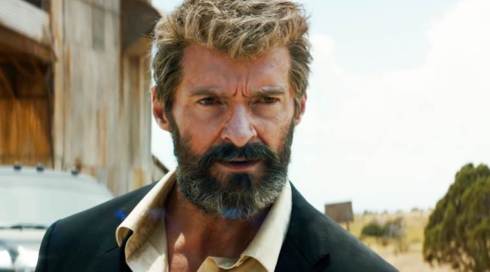
Continuing my series of Looking Back at 2010s Films, I still have not seen 2013’s “The Wolverine.” But maybe I don’t have to, seeing as director James Mangold made another Wolverine film and it was pretty great!

I’m of course talking about “Logan.”

I give up trying to fit this movie into the X-Men chronology…actually, I didn’t even try. I just enjoy the film on its own.

What does it mean to be an aging comic book hero whose glory days are far behind them? We all know how awesome Logan/Wolverine (played memorably by Hugh Jackman) was from the previous “X-Men” movies. To see him in decline is bittersweet; to see him still able to take action is still pretty cool.

“Logan” isn’t so much a “superhero movie” as it is a sci-fi Western. There’s good guys who are the outlaws and a bunch of ruthless and greedy baddies who will stop at nothing to take them down. (There are even many references to “Shane,” the classic Western.)

Oh, and it’s R-rated. Very, VERY R-rated. All the gruesome kills Wolverine is able to perform with his vicious metallic claws–hell yeah you see some graphic gore this time around! With all the slicing and dicing in this one, you know Logan isn’t messing around this time.

But that’s only for those foolish enough to try to jack his car in an opening scene. Soon after, we see that Logan is making a living as an Uber driver long after Professor Xavier’s School for Gifted Youngsters has shut down for good. In fact, Logan even cares for Professor X (Patrick Stewart), whose mind is fading day by day.

So here we are…the final chapter in the X-Men story. We know this can only end in tears. And once we accept that, we can only hope for something inspiring to come from this.

Anyway, Logan is roped into taking care of Laura (Dafne Keen), a young mutant who is hunted by government agents who bred her as a secret medical experiment that would result in a super-mutant army. When it becomes clear she shares Wolverine’s DNA, it also becomes clear that this little girl doesn’t mess around either. Logan doesn’t want to get involved, but he has no choice, and he has to protect her against the villains and bring her to a place where she’ll be safe.

What happens to superheroes when they get old? Not many movies want to play with that idea, but Logan does unbelievably well. And it introduces us to a villain that is even more relatable than any of the antagonists Logan and X have to face: mortality.

But the film isn’t too grim that one can’t get any enjoyment out of it. There is some pretty intense action, including one of the best car chases I’ve seen in any action flick, and when Laura gets where she needs to be, it is nice to see that there will be a spirit to carry on the legend that will inevitably be left behind. But overall, “Logan” gives its audience answers to questions comic book fans never wanted to ask, and it gives them what they didn’t know they needed.

When it comes to dark, compelling, what-is-life superhero movies, I say DC has “The Dark Knight” and Marvel has “Logan.” (And Marvel also has the excellent Netflix series “Daredevil,” for that matter.) That’s how good I think this film is! And it only gets better the more times I watch it.

And I gotta be honest…it almost made the list of my picks for the best of the decade.

Looking Back at 2010s Films: Bridesmaids (2011)

5 Oct


Image result for bridesmaids movie

By Tanner Smith

Continuing my series of Looking Back at 2010s Films, it’s the first of two Apatow productions to get a Best Original Screenplay Oscar nomination (the second being “The Big Sick”): “Bridesmaids!”

Let’s just forget about “Ghostbusters 2016” for now (or ever) and think back to a time when a film from director Paul Feig and starring Kristen Wiig would delight us and make us laugh. And here we have “Bridesmaids,” a comedy-drama about a woman who suffers a series of misfortunes after being asked to serve as maid of honor for her best friend.

I didn’t see this one in a theater. Having seen Wiig on “SNL” and only a couple movies at the time, she was very hit-or-miss for me. And the trailer didn’t look promising–it made the movie look pretty lame. But when I did catch the flick on DVD, it actually turned out to be pretty engaging. Wiig was hilarious (I think I liked her act even more after seeing this film), the whole cast was funny, the writing was sharp, and there was actually something more to it than comedy, to my surprise.

Why is it that so many good comedies have the worst trailers? (I didn’t want to see “Long Shot” based on its trailer either and that film was pretty good too.)

The Oscar-nominated script for “Bridesmaids” was co-written by Wiig and Annie Mumolo (who also acted as the paranoid airplane coach passenger). What I really like about Judd Apatow’s productions is that they give actors a chance to write their own stories (such as Steve Carell for “The 40-Year-Old Virgin,” just about every Seth Rogen screenplay, Jason Segel for “Forgetting Sarah Marshall,” Amy Schumer for “Trainwreck,” and of course Kumail Nanjiani and Emily Gordon for “The Big Sick”). It’s a very effective way of saying, “I can’t get the right role for me, I’ll write the right role for me.” Kristen Wiig is really good here, playing a neurotic woman on the verge of a nervous breakdown due to the fear that she’s losing her best friend, which is the one thing she feels she has left in life. Sometimes it’s funny, sometimes it’s sweet, sometimes it’s bittersweet, sometimes it’s pathetic, and it’s always convincing.

Maya Rudolph is also good as her buddy who’s getting married, Rose Byrne is wonderful as the passive-aggressive Helen who threatens to steal Wiig’s “thunder” with her assertiveness, and of course…Melissa McCarthy. This was the movie that made Melissa McCarthy a household name and even gained her her first Oscar nomination, playing Megan, the wild card of the bunch of bridesmaids. I could blame this movie for giving birth to the typical McCarthy role that I usually can’t stand, but she’s just so damn funny here–maybe she had more of a filter here or she just trusted the writing enough to simply go with it instead of try to go beyond it.

OK, so the movie has funny people. But what about funny sequences? Oh yeah–this movie has plenty of those! Critics scoffed at the “bridal shop/food poisoning” scene; I thought it was so outrageous that it had to be hilarious, and I know I’m not alone. The plane scene? It displays some of Wiig’s funnier moments of her career, and I love McCarthy’s persistence toward a passenger she knows for sure is an Air Marshall. The bit where Wiig and Byrne desperately try to get Chris O’Dowd’s Irish cop’s attention? YES!

Speaking of which, I know a lot of people don’t really care for the Chris O’Dowd character and his relationship with Wiig, but I thought it was sweet enough. Who I could’ve done without were Rebel Wilson and Matt Lucas as Wiig’s odd British roommates who never got a single laugh out of me.

Oh, and Jon Hamm is also in this movie, playing a “himbo” Wiig often has fun with. This movie’s a little overloaded with wacky characters–some work, some don’t…I can’t say Hamm’s doesn’t work.

But there’s more to “Bridesmaids” than zany comedy. We also get a smart, convincing, very effective view on female friendship and competition–we see how the friendship could continue between Wiig and Rudolph after what they’ve been through together, we get a great deal of class-consciousness between Wiig and Byrne’s little feud, and there are great insights of companionship between the other bridesmaids, including when a tired mother/housewife (Wendi McLendon-Covey) gives advice to a newlywed (Ellie Kemper). And sometimes, even that can be a little funny.

Pretty good stuff here. “Help me, I’m poor.”

Looking Back at 2010s Films: It (2017)

5 Oct

Movie-Cast-2017-1024x549

By Tanner Smith

Continuing my series of Looking Back at 2010s Films, let’s talk about one of the most pleasant surprises of the decade, one of the most successful horror films of all time: “It.”

Or rather, “It: Chapter One.” I did see “It: Chapter Two,” and I’ll probably post its own review for that one–but “Chapter One” is what I want to focus on right now.

I love the central premise of “It”–there’s this thing that consumes children after feeding on their personal fears, and there’s a group of outcast kids that fight back, and as they reach adulthood, they have to confront the thing again, as well as their childhood traumas they tried to forget. The Stephen King novel of the same name has a lot of great stuff in it (and a lot of not-so-great stuff as well). The 1990 TV miniseries, as entertaining as it was (especially with Tim Curry as Pennywise the Dancing Clown), couldn’t quite tackle the heavier material with the adult portion of the story. (Even the director, Tommy Lee Wallace, doesn’t like the second part of the miniseries.)

The stuff with the kids in the miniseries was fine, mostly because the child actors were great, but there just wasn’t enough time to fully develop their experiences, their fears, what they have to overcome, etc. We needed a whole movie about all of that…and that’s where “It: Chapter One” came in.

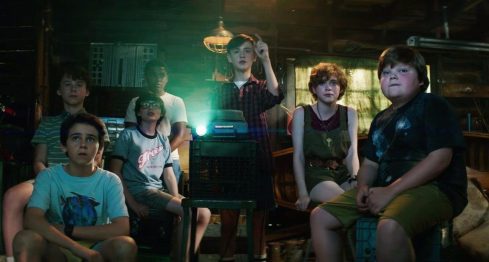
“It: Chapter One” only focuses on the kids as they encounter and combat It, which can become each of their personal fears and mostly takes the form of Pennywise the Dancing Clown (played by Bill Skarsgard). For Bill (Jaeden Lieberher), it’s guilt over the loss of his little brother Georgie; for Beverly (Sophia Lillis), it’s her abusive, sicko father; for Ben (Jeremy Ray Taylor), it’s bullies and morbid histories; for Mike (Chosen Jacobs), it’s fire (since his parents were killed in a house fire); for Stan (Wyatt Oleff), it’s a creepy abstract painting in his rabbi father’s temple office; for Eddie (Jack Dylan Glazer), it’s germs; and for Richie (Finn Wolfhard), it’s…clowns. (Tough break there, kid.)

This film knew to take the time to get to know these kids–who they are, what they go through, and just as important, how they relate to each other. They understand each other and therefore can help each other out. And they know the only way to defeat It is by sticking together, which is also how they can face their inner demons.

Despite the clown taking so much of the promotional material before the film’s release, Pennywise doesn’t have as much screen time as you would think. That’s because the clown isn’t as important as what It can become. But thanks to Skarsgard’s remarkably chilling portrayal, it’s hard not to feel Pennywise’s presence. And when he does show up…let’s just say he doesn’t help Bozo-phobics get over their fears.

The eyes…the mouth…the inflections in his voice…..Tim Curry’s Pennywise was a good clown and used it to lure children into his trap–if I saw Bill Skarsgard’s Pennywise, I’d be running for my life. Poor Georgie should have, too…

Georgie’s death is one of the most shocking moments I ever experienced in any movie in a theater. Of course, I knew Georgie was going to die–I read the book, I saw the miniseries, everyone knew his fate. What I DIDN’T know was that it was going to be played so horrifically! I thought he was going to be sucked into the sewer drain with a scream (the “safe” way to kill a child in a horror movie)–but nope!

I didn’t think they’d go there…they went there. My mouth was agape for about five minutes after that scene. (And I usually skip over it on the DVD–as soon as Pennywise bares his sharp teeth and the second he bites into Georgie’s arm, I skip to the opening title.)

Another reason for this film’s success–it is scary! Director Andy Muschietti knows just as much as modern horror master Mike Flanagan and the classic horror directors that the best way to reach an audience with a horror film is with character, story, and ATMOSPHERE. Because we can relate to the characters and we understand the world they’re living in, we can get unnerved when the tension settles in yet again in many parts of the movie. And with nearly every eerie setup, there’s a frightening payoff. Speaking of which, whenever you see a red balloon, you know something’s going to happen…

I love the climax of the movie, which plays like a superhero action fight, as all of the kids take turns beating up Pennywise as It tries to take the shape of all their fears. It’s exciting and well-executed, and it made me want to take a shot in as well.

But we know it’s not over after that. After the kids think they’ve defeated It, they oath to each other that they’ll come back to finish the job if they need to. “Chapter Two” will take place 27 years later, when they’ve all become like the adults who wouldn’t help them as children and they must go back and finish what they started.

We’ve had many terrific horror films in the past few years, and “It: Chapter One” is one of the best. (And I’ll get to “It: Chapter Two” soon enough. I know a review for it’s already overdue.)

Looking Back at 2010s Films: Mistress America (2015)

5 Oct

Mistress_America

By Tanner Smith

Continuing my series of Looking Back at 2010s Films…whether you like “Mistress America” or not depends on how much you like Greta Gerwig. Case in point: I like Greta Gerwig a lot, so I like “Mistress America” a lot.

A bit of an exaggeration, to be sure. But it’s the best I can come up with.

Gerwig also co-wrote the film with director Noah Baumbach–they also collaborated together on “Frances Ha,” one of my favorite films of the decade.

In “Mistress America,” Gerwig takes center stage as Brooke, a wacky, extremely confident, adventurous, highly lively, sometimes unbearable, overall lovely gal who lives for New York as well for simply living. And she knows so many awesome people, and she has all these amazingly incredible projects in the works, and she’ll even force herself onto the stage of a rock concert.

How did Richard Roeper describe her? “The initially entertaining but ultimately exhausting, self-appointed life of the party who won’t leave, even after the life has been drained of the party.”

Some critics weren’t so kind to “Mistress America” for Gerwig’s extreme portrayal of The Life Of Every Party. But for a brisk 84 minutes, I was happy to be in her company. I didn’t think she wore out her welcome. I could see how she would for others, but I can’t help it–there’s just something about Greta Gerwig that sticks with me and I can’t shake it off.

“Mistress America” is essentially a screwball comedy, with eccentric characters spewing a whole lot of dialogue with impeccable comic timing while on zany misadventures. I don’t know how long it took Baumbach to get these actors to find the right rhythms for each of these dialogue-driven scenes, but the effort is definitely appreciated.

Lola Kirke co-stars as Tracy, an 18-year-old college freshman who is very bright but not very sociable. Even when she finds a guy she can get along with because of their mutual aspirations in creative writing, the guy doesn’t stick around for too long before he finds a girlfriend of his own. Now bored in New York, Tracy reaches out to her stepsister-to-be: Brooke. Brooke, who’s 12 years older than Tracy, shows Tracy a great time while tagging her along for a wild night on the town.

Side-note: I relate just about every bit to the opening-credit sequence that shows Tracy trying to adjust to college life. Been there, lived that.

Tracy sees a unique character in Brooke (who is essentially a Manic Pixie Dream Girl who won’t reveal her true self), which inspires her to write a short story about her (giving her written counterpart the name “Meadow”). So, she decides to follow her around even longer, secretly taking notes as she goes along. Soon enough, the journey leads them (along with Tracy’s would-be boyfriend and his jealous girlfriend) to Connecticut where Brooke reunites with an old flame and an old foe.

This is the part where some critics who weren’t particularly invested in Brooke before would tune out. This is where the screwball-comedy aspect ventures into outrageous farce. More characters, more snappy dialogue, much going on, everything paying off…I had a blast! Critics like Roeper and James Berardinelli were turned off by it; I thought it made the film even more appealing.

Tracy sees right through Brooke, that she’s more talk than action and she should live more in the real world. When Brooke ultimately (and inevitably) finds out that Tracy’s been taking notes and writing stories about her, she explodes because it’s not her at all. Tracy counters back with an excellent point: that Brooke hardly ever shows herself for who she truly is. (She even uses her dead mother as an excuse for not confronting reality with other people.) Even at 18, Tracy is the smartest person in the film, even if she does need a lesson in social behavior. (Don’t we all, though.)

But as good as Lola Kirke is as Tracy, it’s Greta Gerwig as Brooke that will make or break “Mistress America” for people. She didn’t break it for me. I like her a lot, so I like the movie a lot.