Archive | Four Stars **** RSS feed for this section

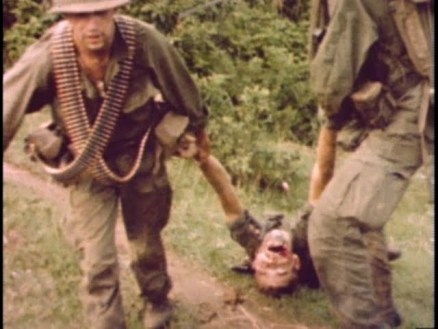
Dear America: Letters Home from Vietnam (1988)

26 Apr

Dear+America+6

Smith’s Verdict: ****

Reviewed by Tanner Smith

“Dear America: Letters Home from Vietnam” is a brilliant documentary that would serve as a companion piece to any of the best narrative films on the subject of the Vietnam War. Watch “Platoon” or “Apocalypse Now” or “Full Metal Jacket,” and then watch “Dear America: Letters Home from Vietnam” and you will have a complete movie-viewing experience. This is a film that captures and clasps the terror, sorrow and bravery of the Vietnam War, and it’s all done through real, non-reenacted footage and narration of real words from soldiers writing home from Vietnam.

We see the footage of the soldiers’ own home movies, as well as old TV news footage that provided updates on the war, and much of this footage is very brutal to watch. We even see fire fights and soldiers on the verge of death, mortally wounded in the field. While viewing this footage, we hear the soldiers’ voices, in the words they wrote in their letters home. The voices given to these people were given by many different celebrities, such as Robert De Niro, Martin Sheen, Sean Penn, Tom Berenger, Willem Dafoe, among many others. Some people may be paying attention to who’s providing the voice of whom, but those who do are distracting themselves. I’ll admit I was listening too, but to the credit of the actors & actresses, I found myself not paying as much attention to the voices as much as the words coming from real-life soldiers who either died or were wounded. (Hell, I completely forgot De Niro, Robert Downey Jr., and Charlie Sheen were even part of this process until I looked back at the credits.)

It’s a simple technique used to tell the story of young men who went to a strange new world and either died in the middle of it or were scarred for life in body and/or soul. And it works perfectly for this material, as does the use of popular ‘60s songs to provide the soundtrack.

The ending takes us to the Vietnam Memorial in Washington, D.C., with one last letter, read by Ellen Burstyn as the voice of the mother of one of the fallen soldiers. It’s a heartbreaking close to say the least; I’ll even admit it got me a little teary-eyed, which is no small feat, to be honest.

“Dear America: Letters Home from Vietnam” was originally released on PBS in 1987, but strong critical praise gave it life on the big screen in 1988. Whether you watch it on a big screen or small screen, it’s hard to deny that to experience this film is to feel this film.

Good Night, and Good Luck (2005)

28 Mar

good_luck_good_night02

Smith’s Verdict: ****

Reviewed by Tanner Smith

“Good Night, and Good Luck” is filmmaker/actor/activist George Clooney’s dramatized portrait of CBS’ battle against Senator Joseph McCarthy in the 1950s, when anti-Communist McCarthy would accuse any of his detractors of being traitors to the country. CBS journalist Edward R. Murrow (played by an excellent David Strathairn) decides he can’t stand by any longer while McCarthy lies, scares, and destroys freedoms in the name of defending them. So Murrow, with help from producers (including one portrayed by Clooney) and fellow reporters, devotes episodes of his show, “See It Now,” to publicly criticize McCarthy’s methods. Of course, McCarthy fights back, but as powerful as he may be, he doesn’t have the resources to back up his statements. Murrow’s counterstrike leads to Senate investigating McCarthy, which then leads to a sigh of relief from those running from accusation. The story is bookended by the 1958 “Salute to Edward R. Murrow,” during which Murrow talks about the importance of morals and ethics when it comes to media.

“Good Night, and Good Luck” is not a conventional biopic or historical melodrama—it plays 100% straight, with one key focus, a documentary-like approach in execution, and no off-topic subplots (save for a little subplot involving a married couple in the workplace who may or may not be targeted, but that doesn’t distract from the plot in the slightest). Clooney knows what’s really important to be presented by this film: the struggle between Murrow and McCarthy, which is powerful enough on its own. And I can’t commend Clooney enough for using actual newsreel footage of the real McCarthy, instead of hiring a lookalike actor to portray him. (The black-and-white cinematography works in the film’s favor also.)

If “Good Night, and Good Luck” was resonant in 2005 (when it was originally released), then it’s even more significant now, in 2016, sadly. McCarthyism still lives—politicians spread bad publicity about their rivals; they condemn those who question certain political beliefs; and many issues are exploited for any sort of gain, whether they be for debates, news channels, or even tabloids, just to gain attention. The thing is, we may live in a different time than what is portrayed in this film, but watch it again and you’ll find enough parallels to see that we still haven’t learned our lesson and thus we’re doomed to repeat history. That is why “Good Night, and Good Luck” is as important now and it was when it was first released into theaters.

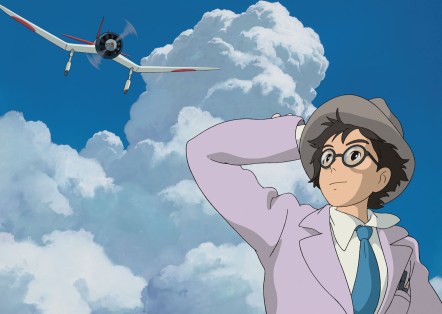
The Wind Rises (2014)

24 Mar

yoko_out

Smith’s Verdict: ****

Reviewed by Tanner Smith

Visionary Japanese animation director Hayao Miyazaki has claimed that “The Wind Rises” is his final film. It’s not the first time he’s made that statement, but this film truly is his last one, it’s a great one to end his extraordinary career with. It showcases the best of his abilities—it’s visually stunning, tells a good story, is beautiful in its own way, and is a truly terrific film. What else should I expect from the man who gave us such animated classics as “Spirited Away,” “Kiki’s Delivery Service,” and “Castle in the Sky,” among others?

Miyazaki wanted to try something different for his swansong, so he apparently decided to add his usual touches to a biography, loosely based on the life of aviation engineer Jiro Horikoshi who came up with the design of the Japanese Zero fighters, which were used in World War II. From that description alone, you may be thinking this is not a good thing. But the character has no political agenda—he dreams of creating something truly unique and innovative just like his idols. He wants nothing to do with war; he just wants to create.

The film doesn’t have a political agenda either—it’s merely a fable about dreams, creativity, and passion. Though the film doesn’t necessarily ignore the controversies involved, they’re not the central focus. Instead, the central focus is breaking new ground with technology and bringing something incredible to life.

“The Wind Rises” begins in post-WWI days, with Jiro as a teenager (voiced by Zach Callison) who would love to fly but his poor eyesight discourages him. (Even in his dreams, he ends up crashing a plane he’s piloting—a definite bad sign, as flying is one of the most common traits of dreams.) But he is truly fascinated by aircraft and reads up on an Italian aviator (Stanley Tucci), who often visits Jiro in his dreams, and learns that he never actually flies the planes he invents. This inspires Jiro to craft his own designs. As time goes by, Jiro (now voiced as an adult by Joseph Gordon-Levitt) follows his dream by helping to create one plane after another.

One of the best things about “The Wind Rises” is the way it explores the creative process. It takes us into Jiro’s imagination; his dreams and fantasies, in which he mostly converses with his heroes. The film also shows us how little things inspire him—shooting stars, debris being whisked off by the wind, and even something as small as the curve on a fish bone in his lunch inspire his ultimate design. There are realistic dialogue-based scenes in which Jiro talks about his inventions with fellow engineers and others, but for the most part, what we need to know about his passion for creating is told through his dreams and fantasies, which are beautifully realized and, being a Miyazaki film, visually amazing.

And speaking of “visually amazing,” I can’t neglect to talk about the best-animated sequence in the film, which is the 1923 Great Kanto Earthquake. It’s intense, impactful, and well-drawn, and the aftermath of the earthquake is effectively handled, presenting a dread that would of course come from such a disaster.

In addition to showing Jiro’s work, “The Wind Rises” is also a sweet romance, as Jiro meets Nahoko Satomi (Emily Blunt) years after he assisted her when she was injured in the earthquake. You could say destiny, the wind (which, if you notice, whooshes them toward each other), or both brought them together after they lost track of each other, but they become reacquainted, spend much time together, and eventually get married. But unfortunately, due to her tuberculosis, their relationship is doomed.

The film doesn’t lose sight of the characters, and given its visual inventiveness, that’s no small feat. We enjoy these characters, especially Jiro, whose likeability equals his passion, who we root for when he inventions fail and he constantly has to try again, and who we feel sorry for when people take what he sees as wonderful and original and use it for dangerous, horrible purposes. His goal was never to create a war machine—it was to develop something that no one else had before, even if, in the end, it resulted in the deaths of many, many people. It leads to a haunting, bittersweet ending in which Jiro takes in what his invention has done in the wrong hands—writing about it would decrease the film’s impact and meaning, so I’ll leave you to interpret for yourself what it means.

Disney made a wise choice in having Touchstone present “The Wind Rises” for North American distribution and the MPAA, who I usually mock, I have to give credit for rating it PG-13. It may be animated, but that doesn’t mean it’s suitable for children. The film is very much adult (that is to say, “mature”) in its storytelling and historical content, and I also think the earthquake sequence would be too intense for younger children to take. Miyazaki went out of his way to tell a great story, regardless of his target audience, which really should be those looking for visionary ingenuity. The result is one of the best animated films in recent years. Would this be the end of Miyazaki’s long career? We shall see, but this is a pretty impressive film to go out on—one of his absolute best.

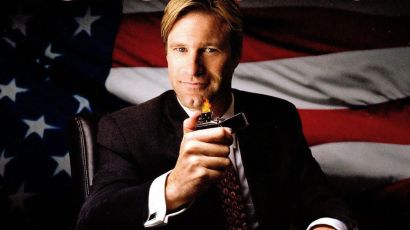
Thank You For Smoking (2006)

20 Mar

thank-you-for-smoking

Smith’s Verdict: ****

Reviewed by Tanner Smith

Tell me if containing each of these elements in one film sounds risky in the slightest:

  • Pro-smoking lobbyist as our charming protagonist
  • Environmentalist U.S. Senator as a sleazy villain
  • Smoking endorsements, even in front of children
  • Manipulation to the masses is a sport
  • Death tolls leading to long-lasting friendships

“Thank You For Smoking” was Jason Reitman’s 2006 satirical comedy that featured all of those things and more. It cuts its subjects slowly and delicately with a knife instead of bludgeoning them to near-death, and as a result, it’s a brilliant satire with a deep layer of appreciation of human nature hidden underneath risqué words and ideas that would have caused (and probably are causing) more people in our modern PC society to discuss it further.

Our main character is Nick Naylor (Aaron Eckhart). He’s a spokesman for the Academy of Tobacco Studies, speaking on behalf of cigarettes, but he’s also speaking for something more: freedom. Freedom of speech and of choice, particularly. And he’s so good at what he does that anyone listening to him and even about to argue with him is left speechless. The film opens with his guest appearance on “The Joan Lunden Show,” alongside a teenage boy suffering lung cancer and a representative of a Vermont Senator. Naylor is in the spotlight and on the spot, but he is able to win an audience over through his charm and his speech. How does he do it? He states that Big Tobacco could never profit off of the kid’s death and that they’d be losing a customer. “It’s in our best interest to keep him alive and smoking,” he says. He even goes as far as to say the representative and the Senator he represents are using this “Cancer Boy” to prove their points against smoking, or as he puts it, they’re “trafficking in human misery.”

And…he’s actually right! Later in the film, the Senator Finistirre (William H. Macy) balls out the representative (Todd Louiso) for not finding a “Cancer Boy” who’s more “hopeless.” He’s Naylor’s archrival, trying to argue a point to the people that should be simple: smoking is bad. But he’s no more manipulative than the tobacco industry—he just uses different methods of manipulation to the public.

That’s right—Naylor, a tobacco lobbyist, is the hero of “Thank You For Smoking” and Finistirre, a Senator promoting healthy living, is our villain. How often does that happen? And get this—Finistirre tries to force people to see things his way, while Naylor simply convinces them.

Naylor dines once a week with two friends, alcohol lobbyist Polly Bailey (Maria Bello) and firearms lobbyist Bobby Jay Bliss (David Koechner). They call themselves the M.O.D. Squad; M.O.D. standing for Merchants of Death. Sometimes, they argue over which of their products cause more deaths per year. This may be the only argument that Naylor even comes close to conceding over.

But no matter. He still has children to spread the pro-smoking message across to, such as when he visits his son Joey’s (Cameron Bright) class on Career Day and counter-argues with a girl whose mother says “cigarettes kill”—“Is your mommy a doctor?”

Naylor also meets with media executives, such as Hollywood agent Jeff Megall (Rob Lowe), to further get the message across. This includes Jeff’s idea for incorporating smoking in a futuristic science-fiction film (he chooses the future because he believes in a coming world were smokers and nonsmokers can live together in harmony). (By the way, I love this dialogue exchange between Naylor and Jeff: “Cigarettes in space? […] But wouldn’t they blow up in an all-oxygen environment?” Pause. “Probably…But it’s an easy fix. One line of dialogue. You know, ‘Thank God we invented the…you know, whatever, device.’” I would like to see a whole film about Jeff.)

But there’s something else to Naylor, and that’s his relationship with his son. He’s great at what he does, which is frowned upon by many, but he also wants to be a good father to Joey. Some of the more eye-opening moments for Naylor come when Joey accompanies him in a business trip in California so he can see what his father does for a living. Naylor’s moral center comes into play as he teaches Joey what he’s really trying to get across, which is that it’s a duty to educate people, warn them about the dangers of any substance they’re interested in, and let him choose for themselves whether or not they’ll follow the advice. He says it’s all about freedom and liberty.

The film addresses that cigarettes are addictive, easily available, and profitable, but it does address the dangers of smoking as well (the most obvious being lung cancer). And while the message and the people condoning the message are seen as very dangerous to society, it’s hard to argue against it because of how charming and likable Naylor is. Played brilliantly by Aaron Eckhart, Naylor is manipulative, charismatic, and also has his morals, especially when it comes to raising his son. True, his ethics may be questionable and not precisely clear, but they do come across in his own way as valuable. This creates a conflict for him as he sometimes has to decide what’s right or wrong, especially at a low point in his life when he has to say the right thing at a congressional hearing at which he goes one-on-one with Finistirre. But what is “the right thing?”

You’d think this would lead to a predictable conclusion during which Naylor sees the error of his ways and changes the world around him or something, right? It’s not as easy as that. His cross-examination to Finistirre’s arguments is the result of a decision he makes that is more or less the same message he’s been getting across before, but it’s more grounded, less morally vague, and even valuable. I won’t say how he manages to pull it off, but it’s handled in such an intelligent way that takes brilliant writing to truly pull off. It also gets the film’s true message across, which is that we should be allowed to do what we want but we should also educate those who look up to us and hope they make good choices.

Oh, and if you think the film does truly endorse smoking, take this fact into consideration: no one in the entire movie is seen smoking.

What does this mean? That the film is truly against smoking? That it’s hypocritical in that sense? I think it’s the film’s way of offering a suggestion that whatever the film’s audience is going to get from it is neither correct nor incorrect, meaning that we can debate about it from different viewpoints, but each viewpoint is our own. “Thank You For Smoking” leaves everything up to its viewer.

I think “Thank You For Smoking” is a comic masterpiece. It took chances with its subject matter, it’s well-crafted and tightly-edited (I may have mentioned a lot of plot, but there’s even more to this 90-minute film, if you can believe it), it’s very funny but also knows to lighten up on its dramatic portions, it’s brilliant in the way it uses smoking as a representation for the risks people are going to subject themselves to but have a right to, and it has a main character who’s exactly like that—maybe we’re better off without him, but we have a right to listen to what he has to say. It also has a wonderful cast. Aside from Eckhart as Naylor, I already mentioned William H. Macy, Maria Bello, David Koechner, Rob Lowe, and Cameron Bright, but there’s also Robert Duvall as founder of Big Tobacco, J.K. Simmons as Naylor’s shouting boss, Sam Elliott as the original Marlboro Man dying of cancer, and Katie Holmes as a sexy reporter who gets the scoop on Naylor, and they all do terrific work here. The true stars of the film, however, are Jason Reitman’s direction and Aaron Eckhart’s performance. This is the best film of either of their careers and a film they may want to show to their kids some day and see what they choices they make after seeing it.

Love & Mercy (2015)

1 Mar

love-and-mercy5

Smith’s Verdict: ****

Reviewed by Tanner Smith

I remember listening to Beach Boys songs when I was a little boy. My parents, as well as cheesy cover bands/children’s entertainers, introduced me to these catchy tunes and even gave me a cassette tape to listen to (and eventually wear out). Good Vibrations. Don’t Worry Baby. Surfin’ USA. Little Deuce Coupe. I Get Around. Help Me Rhonda. Wouldn’t It Be Nice. These were all among the many Beach Boys singles I enjoyed listening to then and still enjoy now. And as I got older, I got into their deeper pieces, especially “God Only Knows,” which is undoubtedly one of their best. And now, with “Love & Mercy,” Bill Pohlad’s biopic about the Beach Boys’ Brian Wilson, I realize I may know their music but I knew practically nothing about what into making the music and what Wilson went through in his life.

Brian Wilson of the Beach Boys was a young, ambitious artist with numerous ideas (possibly too much for him to handle) that led to taking the Beach Boys from catchy surf-themed hits to more detailed, trippy, beautiful works, some of which were ahead of their time. He was also helplessly strung out on drugs, which led to paranoia, schizophrenia, and alienation. For many years since, he would live in a state of awkward arrested development until the woman who would become his second wife helped him out of it.

“Love & Mercy” tells two parallel stories back and forth; one of Brian Wilson at his creative heights, the other of Brian Wilson well after his successes. One story, set in the 1960s (roughly 1965-1968), begins as Brian (played as a young man by Paul Dano) starts to hear voices in his head. He tells his brothers, fellow Beach Boys Carl (Brett Davern) and Dennis (Kenny Wormald), it’s because he has so many ideas on his mind that he simply has to let out. While the band is on tour, Brian stays behind to work in the studio, making new music and intending to make “the greatest album ever made.” His new pieces, including the offbeat “Pet Sounds,” are unusual, innovative, and one might say “unusually innovative,” but neither of them are becoming hits, which angers Beach Boys co-founder/singer Mike Love (Jake Abel). Meanwhile, his grip on reality loosens when the voices in his head attempt to overtake him and his addiction to drugs becomes worse and worse…

The other story, set in the 1980s, shows a middle-aged, broken, confused Brian (played this time by John Cusack) under the pharmacological care of therapist Dr. Eugene Landy (Paul Giamatti). He meets a Cadillac saleswoman, Melinda Ledbetter (Elizabeth Banks), and starts to date her. She notices the grip Landy has on Brian and how he’s using it to his advantage, and so she tries to help him.

The film is really two movies in one, and they both work equally well. Granted, the story involving Brian in his Beach Boys involvement is arguably the most engaging, but the present-day story is very strong and intriguing in the way Brian behaves in his lost state, and we’re genuinely hoping he finds himself again. These two stories intersect effectively, showing two kinds of developments: creative and personal. We wonder how Brian got from who he was in the past to who he is now (or rather, the 1980s, when the “present-day” is set) and we hope he finds his way again.

That’s the ultimate power of “Love & Mercy,” which is without a doubt one of the best musical biopics I’ve ever seen. The film is not only a loving tribute to the Beach Boys, but it’s also a compelling portrait of a tortured artist whose career doesn’t always work out well for him, and it shows that in a non-condescending manner. In other words, it doesn’t take the easy way out, like most music biopics. Even when there’s a triumph, it’s quick and low-key.

But the film is also a lot of fun when it’s paying tribute to the Beach Boys. It opens with a glorious montage of the Boys in their heyday, recording, performing, and having fun (on the beach, of course). It takes us behind-the-scenes on the creation of pieces such as “God Only Knows,” “Pet Sounds,” “Good Vibrations,” among others. The actors portraying the other Boys are credible in their roles, especially Jake Abel who makes a very convincing Mike Love. And the attention to detail is simply marvelous—for example, I love how Brian’s practice piano is in a circle of sand in his living room.

Oh, and I can’t forget to mention the cinematography and editing in many of these sequences. Among the scenes that stick out in my mind is a scene in which Brian, as a young man, is playing a rough piano version of “God Only Knows” and singing nervously, presumably to himself—the camera spins slowly around the piano as he’s performing until it stops to reveal his father (played by Bill Camp), sitting on a nearby sofa and listening. That leads into a hurtful scene in which Brian’s father criticizes Brian harshly and Brian pathetically tries to counter-argue. Suddenly, that tracking shot makes a lot more sense. As for editing, I admire the way the film shows passages of time through the band’s art, such as with the montage, the making of “Good Vibrations,” and Brian’s downward spiral, among others. The film is technically brilliant.

This is the best performance I’ve seen from Paul Dano, an actor I’ve admired many times due to his performances in films such as “Little Miss Sunshine” and “Ruby Sparks.” Not only does he look right for the part, slightly resembling the real Brian Wilson—he feels right. He does such an incredible job of capturing the man’s increasingly peculiar convulsions and characteristics. John Cusack is just as good, capturing the right speech patterns and somewhat childish ways of exposing secrets from his past.

I’ve seen “Love & Mercy” four times now, and I don’t think I can forgive the Academy for passing up this truly superb film, to be honest. I would’ve put Paul Dano in either one of 3-4 slots in the Best Actor category—that’s not a slam against the nominees but a statement of how strongly I felt about this performance. Maybe an Editing nomination, a Best Adapted Screenplay nomination, a Sound Editing nomination, or even a Beat Director nomination would have been warranted. Maybe Academy members should have seen the movie more than once. As for me, I will never listen to a Beach Boys song the same way again.

Room (2015)

8 Jan

Room-Brie-Larson-Jacob-Tremblay

Smith’s Verdict: ****

Reviewed by Tanner Smith

DISCLAIMER: If you haven’t seen this film’s trailer, this review can contain a spoiler or two.

Not many films that are centered on a traumatic experience tend to focus on the aftermath. What do the characters who went through this go through when they return to the real world? How easy can it be just to get back to a normal life? Who’s welcoming them back and who breaks away? Lenny Abrahamson’s “Room,” adapted from the novel of the same name by its author, Emma Donoghue, would be a powerful film by itself if it just focused on the experience. But that’s only the first hour, and the film nearly elevates itself to “masterpiece” levels by focusing the remaining hour of running time on the after-effects. (This isn’t necessarily a spoiler. Those who have seen the trailer know that the imprisoned characters in “Room” are free by the halfway point.)

“Room” is what 5-year-old Jack (played by Jacob Tremblay) calls his world; the world he and his “Ma” (Brie Larson) have lived in his entire life; a world of one room, with a few pieces of furniture, electricity, plumbing, a TV, and a skylight in the ceiling; a world outside of which Jack has never set foot. You see, Jack’s mother was abducted a young age and kept in the garden shed in the backyard of her captor’s (Sean Bridgers) house. He raped her repeatedly and kept her locked up, and she gave birth to a boy, who he allowed for her to keep and raise by herself. She’s told him many lies about their “world,” shielding him from the truth, like an elaborate fairy tale. But now that Jack is 5, she can’t keep hiding things from him anymore and she sees that there’s a world out there that he needs to know about.

Eventually, Ma does convince Jack that there’s something more to what he’s been taught, and she gets him to help put her escape plan to action. It involves him playing dead so he can be removed from “Room” and run for help. The plan ends up working, Ma is rescued, and she and Jack are free at last.

End of movie? No. It was just the first act of “Room,” the film, and it leads to a brilliant second act, in which Ma and Jack have to deal with normality. And it’s not quite as optimistic as one may think. Yes, they’re free from their captor, but what happens next? Everything now feels strange and kind of unnerving.

The first hour of “Room” is excellent. It’s kept entirely in this room. The sense of claustrophobia can’t be ignored, as it makes for a really tense atmosphere. You get a good feel of how these people have lived for so long in a world they didn’t make (literally and figuratively), and it really helps that the whole long sequence is seen through Jack’s perspective—you hear his narrations (which sound like whimsical Dr. Seuss phrasings), see the world practically through his eyes, and only leave “Room,” the actual room, when he’s brought out. Also, the scene in which he has to escape is the most suspenseful scene in the entire film; even when you know he’s going to break free, it takes its time getting to that point, stretching out the anxiety.

The second hour of this two-hour film is surprisingly even more fascinating, as we’re brought into “the real world” with these two people. Ma (whose legal name is Joy) is reunited with her parents (Joan Allen and William H. Macy), who have divorced since her capture, and Jack is brought in to live with his grandmother and her new boyfriend. But as it turns out, Jack is slowly but surely learning independence and what it truly means to be a kid, while Ma hasn’t gotten over the experience she’s had to deal with in the last seven years. She’s haunted by memories, unsure of her “second chance at life,” and isn’t sure what to do next. See the film in its entirely, with context, and this is all the more compelling. Credit for that goes to director Abrahamson, who is able to balance out the blatant and the subtle, which helps make the complex material come alive even more.

If not for the outstanding acting throughout the film, “Room” wouldn’t have been as successful. In order for us to feel the characters’ plight, the actors have to sell it. Coming into the film, I already had a good feeling about Brie Larson, one of my favorite actresses working today, and boy was I right. This is not only her strongest performance since “Short Term 12” two years ago; as Ma/Joy, this is undoubtedly the best work of her career by far. And not only that, but she’s also able to portray two different versions of the same character—one is Jack’s image of his “Ma” and the other is the mentally tortured & broken woman who tries to deal with life after seven years of captivity. It’s to Larson’s credit that we can fully understand this character even if characteristics of her are not fully seen by Jack or the audience. She’s marvelous in this film. And then there’s little Jacob Tremblay, who plays Jack. With a child this age, I wasn’t sure what to expect, but I knew with a solid director guiding him, he could provide work strong enough for the material. (Actors have to put a lot of trust in their directors, and child actors are no exception.) Thankfully, Tremblay is able to portray Jack as a real, disillusioned little boy who’s also bright, articulate, and able to adjust (though with some difficulty, of course). It’s a performance more natural and credible than most child acting of recent memory. Another strong performance I want to point out is from Joan Allen, as Joy’s mother who just wants her daughter back in her life and is willing to help her through anything in the post-kidnapping phase. It’s her best work in years. And the less I say about William H. Macy’s smaller but heartbreaking role, the better. (I’m already on the border of giving away more spoilers already.)

“Room” can be seen as either an uplifting drama about survival after misfortune, a partial thriller for the first act, or also as a psychological study about adjustment, transition, and effects. Either way, “Room” is a frank, challenging, and powerful film—one of the very best I’ve seen in 2015.

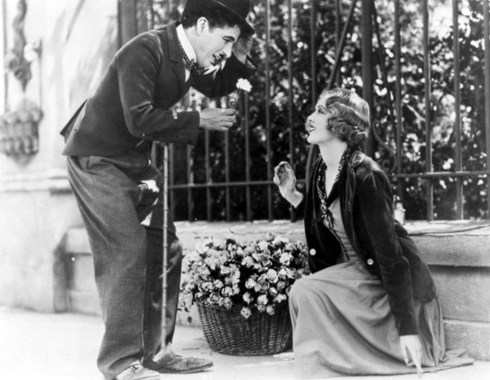
City Lights (1931)

16 Dec

City-Lights-Charlie-Chaplin

Smith’s Verdict: ****

Reviewed by Tanner Smith

There aren’t that many silent films I’ve seen by this point in my life. When I was a little kid, I was shown 1920s Little Rascals silent shorts; when I was starting community college, I saw “The Artist”; and when I was in film school, I was subjected to more classic silent films such as “A Trip to the Moon,” “The Passion of Joan of Arc,” and “Nosferatu.” As my appreciation for cinema history continued to grow, there were others I felt I had to check out. For instance, I had never seen a Charles Chaplin film, but I knew I had to check one out. So I came across “City Lights,” one of Chaplin’s most notorious efforts that I heard a lot about from critics and film professors. How did I react to it? Well, let me get into a little background…

Around the time this film was released, films were breaking new ground (new for back then). They were using recorded sound, bringing about the end of the “silent era” and the beginning of the “talkies.” This transition ruined many careers and changed others, but one of the biggest talents, Charles Chaplin, didn’t back down so easily. He made more silent films, using his popular, beloved character of The Tramp, the unkempt figure with a paintbrush mustache and a handy cane, to continue his art. (He would then go on to make five talkies years later, without The Tramp.) “City Lights” was his farewell to the silent era before he made a hybrid out of silence and recorded sound (with “Modern Times”) before making the transition to full sound. In the late-‘20s and early-‘30s, Chaplin never felt pressured to give up on his silent pictures and he was so stubborn that even though talkies were growing in popularity, he would still put his all into “City Lights” just to remind audiences of what he can do with his craft and what they loved to begin with. Did it pay off? Yes, it certainly did. Not only was the film a success, but it would become known as Chaplin’s significant masterpiece.

Chaplin wrote, directed, produced, and starred as The Tramp (of course) in “City Lights.” One night, he comes across a suicidal drunken millionaire (Harry Myers) and saves his life. The millionaire is grateful to The Tramp and decides to bring him home and also invite him to a fancy dinner party. But when the millionaire sobers up the following morning, he doesn’t recognize his new friend, though at night when he’s drunk again, they’re friends again. The Tramp uses his association with the millionaire to try and impress a blind, kind Flower Girl (Virginia Cherrill) from whom he bought a flower with his last cent. Now he’s able to buy all of her flowers, drive her around in the millionaire’s car, and even manage to pay for her rent and pay for an operation to cure her blindness. In between encounters with the millionaire, however, he has to raise some of that money himself, getting a job that doesn’t last long and even putting himself in a boxing match to win prize cash.

So which should I talk about first? The dramatic elements of “City Lights” or the comedic ones? Well, since it is largely a comedy, I suppose I should start with the latter. It’s brilliant; Chaplin at his best. The film is pieced together like a series of comedic vignettes framed around a conflict of interest. There’s The Tramp caught asleep on a statue before getting stuck on its sword trying to get off; then there’s his rescue of the millionaire which involves both of them going for a sudden swim; and the funniest of them all, the boxing match in which The Tramp tries everything to keep from getting pummeled by his opponent, who’s twice his size. The choreography and the physical comedy in that sequence are definitely spot-on. It’s one of those rare few times when I’ve literally laughed out loud during a movie and I drew attention to myself. (That was when I decided to think of what The Tramp would do when confronted by a confused bystander—I jerked my head, smiled nervously, and tipped my (nonexistent) hat and moved on.)

In the meantime, there’s a lot of hinted pathos in the way the millionaire often doesn’t recognize who The Tramp is unless he’s drunk. It leads to a heartbreaking scene that even after the tenth time I’ve watched this film, I can’t watch anymore. But the film is also a romance, showing sweet moments between The Tramp and the Flower Girl. And I can’t finish this review without talking about the ending. I won’t give it away here for those who don’t know how this film concludes, but I will say that it is one of the most perfect endings in the history of cinema. Words can’t describe how sweet and effective it is, and it’s also a testament to silent-film acting as Chaplin and Cherill act with very few lines and mostly their facial expressions and body language. I will confess it even got me a little teary-eyed. It’s especially heartfelt in context of the whole film and in consideration of the characterizations of The Tramp and the Flower Girl—The Tramp is a naïve innocent who no one understands and the Flower Girl is a romantic whose perception of him only changes slightly when she sees him for who he is; she’s the only one who doesn’t judge him by his appearance.

Since I saw “City Lights,” I watched a few more Chaplin films, including “The Circus,” The Gold Rush,” and his most infamous talkie, “The Great Dictator.” Those films are good in their own way, but “City Lights” was the one that truly left an impression on me (and it still does, after at least ten viewings). There’s a great mix of humor and heart that can’t be matched or beaten. It’s a wonderful film that I’m sure I’ll treasure forever.

NOTE: I’m embarrassed to say that as of now, I still haven’t seen any of Buster Keaton’s films, but I thought I’d put that out there.

Creed (2015)

6 Dec

creed

Smith’s Verdict: ****

Reviewed by Tanner Smith

2015 has had its share of reboots, with the majestic uprising of “Mad Max” and the tragic downward spiral that was “Fan4stic.” Now comes the return of one of the most iconic figures of the 20th century: Rocky Balboa. Originally brought to life by writer-actor Sylvester Stallone in 1976, his first film, “Rocky,” was the “little film that could,” beating the odds with audiences and critics and even going on to achieve the Academy Award for Best Picture. Since then, the film’s sequels have been hit-and-miss, but the truth was the power of the original film could never be matched…until now.

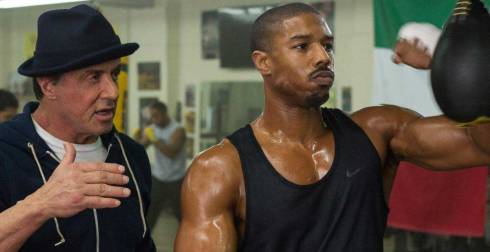
29 years since the original film and nine years since the decent fifth sequel, “Rocky Balboa” (released 16 years after the disastrous “Rocky V”), filmmaker Ryan Coogler (whose previous film was the great 2013 drama “Fruitvale Station”) has brought Rocky back to life in the seventh (and possibly last) entry in the franchise: “Creed.” Only this time, Rocky (Stallone, of course) is not the boxer training for a fight; instead, he’s the trainer for a champion-in-the-making, a 28-year-old boxer named Adonis (Michael B. Jordan), who happens to be the son of Rocky’s late opponent-turned-friend Apollo Creed.

Times have certainly changed since 1976 and we have to see Rocky the way he is now rather than what he used to be. We may always remember him as the underdog who came close to beating one of the world’s greatest boxers, but that’s not who he is anymore. He doesn’t throw a punch in the whole movie. His body is failing him and his loved ones are no more (either dead or moved on in life). He owns a restaurant (called Adrian’s, named after his late wife) to make ends meet and possibly to distract himself away from the sport. Things change when Adonis shows up in his restaurant, looking for him.

Adonis was the product of an affair with Apollo Creed and abandoned by his mother. He’s been in foster homes and juvenile halls until Apollo’s widow, Mary Anne (Phylicia Rashad), takes him in. Over a decade later, Adonis works for a financial firm in Los Angeles while secretly fighting in brutal Tijuana matches on weekends. But despite Mary Anne treating with the proper education and looking out for him, Adonis prefers to fight due to anger and resentment built up inside him. He quits his job and decides to move to Philadelphia to make a name for himself as a professional fighter (and not with the name “Creed,” as to not be cast in his father’s shadow) where he hopes he can find Rocky Balboa and persuade him into training him. It takes a while ton convince him once he introduces himself to Rocky, but soon enough, he does decide to train Adonis for bigger fights with ranked opponents. But when it becomes revealed to the media who Adonis really is, he is forced to face a tougher challenge: prove everyone that he is who he is and not who his father he never even knew was. He and Rocky figure the best way to show that is to train hard and go up against a seemingly indestructible champion: “Pretty” Ricky Conlan (Anthony Bellew), a British brute who wants one last fight before he goes to prison.

Oh, but that’s not all. I know that sounds strange, but “Creed” is actually full of story. It manages to sneak in a sweet romance between Adonis and a pretty neighbor, Bianca (Tessa Thompson), who is a musician about to go deaf; scenes of pathos such as when Rocky confesses how he’s given up on life now that his wife and friends are long gone; and even a subplot involving Rocky’s deteriorating health and whether or not Rocky wants to get treatment for it. All of these elements come together so well, creating a solid tale of life, strength, companionship, and self-respect, with appealing, well-rounded characters and an emotionally involving story. It was a heavy responsibility on Coogler’s part to bring back familiar elements from the previous “Rocky” films while making the film his own at the same time, and he pulls it off successfully. There are also some neat references and in-jokes going back to the other films, as well as a wonderful moment that brings Rocky back on top of the steps at the entrance of the Philadelphia Museum of Art. (There’s even a final answer as to who won Rocky and Apollo’s private third match behind closed doors at the end of “Rocky III.”) Coogler brings a unique style to the franchise that makes it a welcome return to greatness, including an impressive sequence midway through the film that shows a boxing match inside the ring done in one entire take. It’s like Coogler knew we saw the typical “Rocky” formula and visual style, and so he decided to change things up a bit for purposes of tension and proximity.

Michael B. Jordan is one of my favorite actors working today and delivers a terrific performance, handling himself effectively in dramatic scenes as well as in the ring. Stallone, who is often mocked for his one-note depictions, turns in some of his best work here, bringing sincerity and loneliness to the new side of Rocky Balboa.

I truly do believe “Creed” is a great film; the best “Rocky” film since the original. Yes, it’s a boxing movie and we get the feeling who the winner’s going to be in the final round. But like the original film, it’s about so much more than boxing. The performances are strong, the characters are well-developed, the fights are well-staged, the dramatic scenes are handled terrifically with quietness and subtlety, the Rocky/Adonis relationship is engaging, the rousing training montages are suitably cheerful, and I truly admire the bold move on Coogler’s part to truly go down the road and assume accurately where Rocky’s life is now compared to where it was back in 1976. I think it’s safe to say that it’s the sequel to “Rocky” we’ve all been waiting for.

12 Angry Men (1957)

26 Nov

12-angry-men

Smith’s Verdict: ****

Reviewed by Tanner Smith

It takes a lot of effort to successfully make a film like this—a talented cast, smart dialogue, solid directing, and effective commentary. With “12 Angry Men,” the 1957 film adapted from Reginald Rose’s teleplay of the same name, this film about a jury confined to one room while determining the verdict of a murder trial would’ve been to make into an uninteresting hour-and-a-half-long experience. But instead, it’s a riveting, insightful, wonderfully-written-and-acted drama that serves as both a murder mystery and as a commentary on the American justice system and is effective as both.

The film is set in a jury discussion room in real time and mostly stays there, with the exceptions of a brief prologue and an equally brief epilogue. In the prologue, the jury has already sat through the trial and are hearing the final words of the judge before going about deciding the verdict of a young man (who is clearly a minority, but his race is never determined) who is accused of murdering his father. Then the jury moves into the room to determine the boy’s guilt or innocence. 11 of the 12 men vote “guilty,” meaning there is one holdout. Juror #8 (Henry Fonda) has reasonable doubt about the boy’s liability and challenges the others to prove him wrong. They bring up the facts, he states his case, and soon enough, another person, elderly Juror #9 (Joseph Sweeney), holds out and changes his vote as well. This leads to further investigation on the case, with new possible answers and outcomes that help the examination cause change in others’ votes. For example, how are they sure of what the testifying witnesses saw or heard? Why couldn’t the kid clear up his alibi? What about the stab wound coming from the switchblade used as the murder weapon? New elements continue to pile on, adding to the possibility that they misinterpreted the facts. The two strongest jury members voting “guilty” are arrogant Juror #3 (Lee J. Cobb), whose past overshadows his view of the present, and Juror #10 (Ed Begley), an ignorant bigot whose hatred blinds him.

The film works as a “murder mystery,” going by witnesses’ testimonies and physical evidence. But there are no clear answers or even indications as to whether or not the boy is actually guilty. But that’s not what the film is about. Instead, the film is about how if this jury is not absolutely sure that he is guilty, if there is any reasonable doubt, they must acquit him. They must acknowledge all possibilities or they’ll send a wrongfully accused defendant to death row. The film isn’t about the crime as much as analysis of the crime, and it successfully delivers much insight into what goes on in the jury room.

The way new possibilities continue to pile on one after another is handled effectively, with fascinating detail causing audiences to think about what verdict they would choose if they were in that room, listening to all of this. What also makes it work is the excellent dialogue spoken by the characters—how they all react to certain circumstances, what they have to say, etc. That’s really what gives the film its strength: the dialogue and the acting. Each of the 12 actors do great jobs portraying the “12 angry men” in the title and they each do their best to give their characters different personalities (twelve key characters is hard to keep track of, since only about half of them are allowed to leave impacts). Henry Fonda was the only big star at the time to highlight the film, and he does a brilliant job playing the conflicted voice of reason, Juror #8 (whose name isn’t revealed until the very end, along with Juror #9’s). Equally brilliant (at least, those who stand out to me) are Ed Begley as Juror #10, whose bigotry is enough to have everyone in the room turn against him at a crucial point; Joseph Sweeney as wise Juror #9; Jack Warden as the wisecracking salesman who serves as Juror #7 and is willing to stay with the winning side in order to make it to an evening baseball game; Lee J. Cobb as the aggressive Juror #3 (whose final verdict is the most heartbreaking moment in the film, in which he ultimately breaks down and cries); and John Fiedler as meek Juror #2, who is dominated by the others at first but more confident by the end. Those were the ones that stood out to me, but the other actors (Martin Balsam, E.G. Marshall, Jack Klugman, Edward Binns, George Voskovec, and Robert Webber) do fine work as well. It’s a wonder why neither of these 12 performances were given Oscar consideration.

Of course, the direction can’t be ignored. Sidney Lumet, who used social commentary in each of his films no matter what the subject to get multiple points across, knew how to keep the tension going while allowing the actors to actually live the situation they’re in and let everything come naturally. The tension is raised not just with heat (as the film takes place on the hottest day of the summer, as indicated) with assistance from use of shots (mostly close-ups) to deliver a sense of claustrophobia.

“12 Angry Men” may have been released in the mid-1950s, but the issues being addressed in this film are still important today in 2015. What’s to separate facts from possibility? What is truly “fact?” Could a “guilty” verdict be allowed with reasonable doubt? Is there ever reasonable doubt? What are the true priorities of a juror? And most importantly, is a jury just willing to get on with their lives if it means ruining the life of another just because of what they heard and not because of what they know? Those are the questions addressed in “12 Angry Men,” an outstanding film that stands the test of time.

Star Wars Episode V: The Empire Strikes Back (1980)

24 Nov

the-empire-strikes-back-luke-skywalker-and-yoda

Smith’s Verdict: ****

Reviewed by Tanner Smith

When you make a sequel to a largely successful film, you have to take it in new directions. Bring back the characters if you must, but take them somewhere new and raise the stakes in their shared situations. After the surprise success of “Star Wars,” George Lucas was determined to create two following chapters to complete a trilogy as a whole, knowing that millions of people will see the sequel and will most likely see a third one. With Lucas’ story brought to life by new writers (Lawrence Kasdan and Leigh Brackett) and a new director (Irvin Kershner), “The Empire Strikes Back” (which Lucas called “Episode V” when he saw potential in telling three additional episodes as back-story, which would come years later) removes the joyfulness of the original “Star Wars” and takes the series in a dark, thought-provoking direction.

And boy, what a direction it took! Who doesn’t know the identity of Luke Skywalker’s father by now? It was the most shocking twist in not just the history of science-fiction but also film in general (arguably), and many people had to tell their friends and family either about the twist or to see the movie for themselves. (And they also quote it…or misquote it: “Luke, I am your father,” instead of “No. I am your father.”) To add on to the darkness, when you think there may be hope for good to triumph in this one, evil gets the upper hand and things have gotten even worse for our heroes. That was not the case in “Star Wars”—will it be the case in “Return of the Jedi,” the trilogy’s end?

But I’m getting ahead of myself. The film is set a while after the Death Star has been destroyed and Luke (Mark Hamill) and Han Solo (Harrison Ford) have been with the Rebellion, whose base is on the ice planet of Hoth. But when an Imperial Probe Droid arrives, the Rebels must evacuate before it’s too late. But before long, the planet is invaded, as Darth Vader (David Prowse; voiced by James Earl Jones) is certain his adversary, Luke, is present. Luke gets a vision from the spirit of his late advisor, Obi-Wan Kenobi (Alec Guinness), and so he escapes with his faithful droid, R2-D2, to the planet of Degobah to learn the ways of the Jedi from wise Jedi master Yoda (Frank Oz). Meanwhile, Han, Princess Leia (Carrie Fisher), Han’s first mate Chewbacca (Peter Mayhew), and worried droid C-3P0 (Anthony Daniels) are having problems of their own, going through an asteroid field, barely escaping a strange gigantic creature, and dealing with a bounty hunter named Boba Fett, who is hunting Han for Jabba the Hutt (who Han owes money) and is in cahoots with Darth Vader.

The film cuts back-and-forth between these two stories, and it was a smart move to show both sides go through so much and bring more to this universe that we’re still learning about. They’re both intriguing in their own way. For Luke’s side, it’s learning to stretch all emotions in order to conquer his nemesis and not let his anger get the best of him. Yoda tries his best to teach him, but Luke is too aggressive and impatient to concentrate on the tasks at hand. For Han and Leia, it’s getting from one dangerous situation to another. So we have one story that’s psychological and another that’s action-packed. They intersect at the end, when both sides of the story come into place with a race to save companions and a lightsaber battle with Darth Vader. By the end, evil has almost triumphed, but there’s a ray of hope as Luke reunites with at least most of his friends, as they set off to rescue Han from Jabba the Hutt and find some answers to new questions.

The aforementioned twist is the defining moment in the film. It occurs near the end of the film, after Luke nearly gets himself killed fighting Darth Vader, having fallen into a trap which used his friends in danger to lure him in. it’s no secret now, with the prequel trilogy showing how it came to be, but back in 1980, audiences gasped and were shocked. Even today, it’s a tragic moment when Luke realizes who Darth Vader is and would rather die than join him. It’s the most complex, compelling scene of any “Star Wars” film.

All the actors do fine work, having grown into their roles (and Billy Dee Williams, as a conflicted friend of Han’s named Lando Calrissian, is a welcome addition). But I can’t get through this review without talking about Yoda. This character is a masterpiece of state-of-the-art puppetry. I can tell this thing is Muppet-like, but at heart, I see Yoda as a real character—it even appears like his facial expressions change when they need to. Frank Oz’s Grover-like voice he lends to the role really helps a lot as well.

I also can’t let the review end without even a mention of John Williams’ fantastic score (which I, like an idiot, neglected to mention in my original “Star Wars” review). Williams’ score provides one of the best movie soundtracks of all time—rousing, dark, exciting, etc. This is also the first appearance of his infamous “Imperial March,” Darth Vader’s theme that brings the film to a darker, more operatic level.

And of course, the visual effects still hold up, with the exception of one—when Luke is falling through a tube, it doesn’t look convincing by today’s standards. But that’s one little nitpick I found in an excellent film. “The Empire Strikes Back” is easily the best film in the “Star Wars” franchise and one of the best, most rousing, brilliant science-fiction films ever to grace the screen. And so, Lucas has opened a door to another sequel that would provide the answers we’ve been waiting for, which would be released three years later (a long time to wait but better late than never). How would “Return of the Jedi” turn out? Join me in the next review.