Archive | Four Stars **** RSS feed for this section

The Iron Giant (1999)

4 Feb

tumblr_l6kz3yqDII1qzoa9f

Smith’s Verdict: ****

Reviewed by Tanner Smith

1999 brought a string of first-rate animated features, four of which in particular stood out among the rest, in my opinion. One was “Princess Mononoke,” a feature of Japanese-style animation. Another was the computer-generated “Toy Story 2.” But definitely not the least of these movies are hand-drawn animations Disney’s “Tarzan” and Warner’s “The Iron Giant.” “The Iron Giant” is the subject of this review, and it’s a wonderful movie—well-crafted, entertaining, funny, charming, witty, wonderfully-drawn, and just a joy to watch.

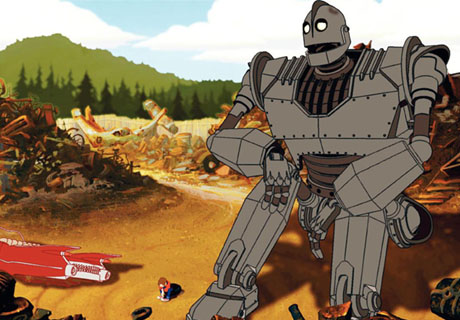
“The Iron Giant” mixes certain elements from science-fiction thrillers from the 1950s (such as “The Day the Earth Stood Still”) and brings to a level not unlike a “boy and his pet” story. In this case, it means that a giant metal robot man from outer space crashes down to Earth and is befriended by a young boy who vows to keep him hidden from the government and the Army. This giant robot could have been a threat to society (and we see that it can become a deadly weapon when it reacts to being fired upon, even by a toy space gun), like in the traditional sci-fi thrillers. But with help from a well-meaning little boy, he becomes a harmless being that learns as it goes along its journey on Earth. The boy describes him as Superman, in that he too has crash-landed on Earth without knowing why and using his power for good instead of evil—although, there’s another comic book character called Atomo which resembles the giant in every way except that he’s the villain instead of the hero. Will the giant continue the path of the hero?

The movie takes place in the mid-1950s, suitably enough. The hero boy’s name is Hogarth Hughes (voiced by Eli Marienthal). Hogarth lives in Rockwell, Maine, and would like to have a pet, which his mother (Jennifer Aniston) won’t allow. One night, while Mom is working late, he’s watching cheesy monster movies when his TV antenna suddenly disappears, which Hogarth suspects as the workings of “invaders from Mars.” So he goes outside to investigate, when he finds the giant robot. The robot is about fifty feet tall and can only eat metal. When it tries to eat a power station and is nearly electrocuted by the wires, Hogarth arrives in time to save him, thus beginning the friendship between the two.

“My own giant robot! I am now the luckiest kid in America!” Hogarth proudly exclaims.

The giant won’t hurt the boy, and Hogarth believes he isn’t here to hurt people. He takes it upon himself to teach him certain things, like how to speak, and also to try and keep it a secret. But unlike E.T., however, hiding a fifty-foot metal man is not going to be an easy task. This leads to many funny moments; my favorite being a scene in which the giant’s disembodied hand scampers around the house like a puppy dog as Hogarth desperately tries to get it out before his mom notices.

But as he finds somebody to trust with his secret—a beatnik junkyard-owner/artist named Dean (Harry Connick, Jr.), whose junkyard cars provide food for the giant—Hogarth also comes afoul of a sneaky, conniving, dastardly government agent named Kent Mansley (Christopher McDonald), who knows of the giant and is constantly questioning for Hogarth to find out what he knows about it.

This Kent fellow is a caricature of a G-man if I ever saw one. He doesn’t care about human nature, and even states out loud that if he doesn’t understand it, then it must be killed. He brings forth the U.S. Army to come and take out the iron giant, and doesn’t listen for a moment when Dean and Hogarth try to explain that it’s harmless if not fired upon. This is a heavy caricature of a government agent we’ve seen in other movies, but at least he knows it. And he does have a great final moment of comeuppance, which I won’t reveal.

The giant learns about friendship, the boy learns about tolerance, and everyone learns a certain expense that should or should not be made. “The Iron Giant” is a family film that teaches us all of these important lessons without ever being too preachy. And there’s a very strong anti-violence notion that comes midway through the film and continues in the final act, as the giant realizes that “guns kill” and just because the giant was possibly built for destruction doesn’t mean he has to be a weapon because as Hogarth puts it, “You are who you choose to be.”

The iron giant himself , voiced by Vin Diesel, is a lovable character. He’s well-designed and instantly appealing. This is a nice, gentle hunk of junk that we all come to care for and even feel sorry for. That’s saying something when you can make a robot lovable.

“The Iron Giant” is a delightful family film—wonderfully-crafted, nicely-animated, and surprisingly smart. It’s rare to come across a family film of this caliber, and when it comes around, it’s always welcome. I loved this movie.

Witness (1985)

3 Feb

witness-1985

Smith’s Verdict: ****

Reviewed by Tanner Smith

“Witness” could be considered a crime thriller, as some would recall it to be, but you’d only be sort-of right. Aside from being a thriller, it’s also a love story and a fish-out-of-water tale featuring the clash of cultures. Strangely enough, all of these elements come together not merely in a capable way, but in a masterful way. “Witness” is everything it needs to be—sometimes sweet, sometimes tense, and always gripping. Add it to the great direction by Peter Weir, an intelligent screenplay by Earl W. Wallace William Kelley, and great performances from actors including Harrison Ford and Kelly McGillis, and “Witness” is a great triumph.

This was Harrison Ford’s first opportunity to try something different in his acting career, in a time when he was free from his Han Solo image but still stuck to his Indiana Jones character. With his great performance in “Witness,” Ford was able to prove to people that he was more than just an action/adventure icon, and that he was a legitimate capable actor that can play drama convincingly. In “Witness,” he plays Detective John Book, who is called upon to investigate the murder of a police officer. He has one witness—an eight-year-old Amish boy, Samuel Lapp (Lukas Haas). Samuel and his mother Rachel (Kelly McGillis) were waiting in a Philadelphia train station for a train to take them to Baltimore, as Samuel witnesses the murder while hiding in one of the bathroom stalls. He was able to make out one of the two killers. And so, Book keeps Samuel and Rachel in the city for a while so Samuel can help him out.

At this point, it would seem like a simple homicide with different cultures. We see some early scenes that feature a bit of lifestyle for Rachel and Samuel in their Amish community, and then once they come into the mainland and this unexpected event occurs, they get a sense of modern police work as well as other cultural aspects, such as hot dogs, which Samuel enjoys. But “Witness” doesn’t keep it that simple. It only gets more complicated once Book discovers that it was a cop that was involved in the crime, and that changes things. Book tells his superior, Chief Schaffer (Josef Sommer), what he knows, only to find that he too is involved, thus putting Book, the kid, and his mother in danger. Book has no choice but to give up on the case and take Samuel and Rachel back home and go into hiding with nowhere else to go. Back at the Amish community, while Book recovers from a bullet wound brought on by a fiery encounter, Rachel lets the locals believe that Book is a cousin. Book is planning his next move, and in the meantime, helps out around the farm, doing chores and eventually helping to build a new barn.

All while this is happening though, Book falls in love with Rachel and the feeling may be mutual; Schaffer is searching for answers as to where Book is so he can silence him and even the kid and mother if need be; and Book has to make an important choice to either stay with the Amish community where he finds himself actually fitting in or back to where he’s more accustomed in the world of modern convenience. There is one person that he would stay for, and that is Rachel.

This story has so many levels to it that I wonder if Alfred Hitchcock could have hooked us in further. In some ways, “Witness” could be considered a Hitchcockian exercise, if you will, Hitchcock always loved to play his audience like a piano, and so director Peter Weir follows the same way and gives us a story that has so many things with it and yet is consistent in its structure and execution. His approach is quite unique in the way that “Witness” is not mainly about the crime aspects, as you’d expect it to be. It’s mainly about a man struggling and adapting to a new lifestyle. It’s not played for comedy; it’s played as straight drama to establish characters, relationships, and routines. And it states positions in clashing cultures with symbolism, such as Book’s gun, and moments of clarity and revelation.

The defining moments come after Book has been more or less accepted into the Amish community, and then encounters a topless Rachel who then offers herself to him. In this dialogue-free scene, Book declines, feeling embarrassed and uneasy. He later explains that if he and Rachel had made love that night, that he would have to stay or she would have to leave. She may be ready to risk a relationship, but Book isn’t so sure. What makes this romance interesting is that while they exchange friendly glances, which lead to good moments with each other and even a kiss, they may not have a future together. The real world would only get in the way. It’s a great example of tragic romance.

Another defining moment is when Book comes into town for a while and encounters some rowdy thugs who mock his clothing. He strikes back by punching one of them out, something that goes against the Amish culture. And then later, when the thriller aspects finally returns to the story in the inevitable climax, they amount to something because of everything that has been built up before. Book is forced to act in defense of the pacifistic Amish against the corrupt cop-killers. It’s not your standard action climax—it’s about something. There’s something to fight for and a reason for being. (And there’s also a clever use of a grain bin as a death machine.)

Harrison Ford is great and convincing as John Book, playing it straight and credible. But he’s not the only actor to earn praise in “Witness.” Kelly McGillis, as Rachel, is equally excellent. I heard that she took lessons in acting like an Amish widow, by experiencing life with the Amish and also trying to get her character’s speech just right. It all pays off. McGillis’ performance is note-perfect and feels very authentic. Also having their preparations paid off for the Amish roles are Jan Rubes as Rachel’s concerned father and Lukas Haas as Samuel the titular “witness.”

And by the way, I should point out that “Witness” shouldn’t be considered an insult to the Amish community. The movie never shows them in a negative way; they show them in a believable way. And I should also give credit to all the actors playing the Amish side characters for doing convincing work. You’d probably think that some Amish folks were brought along to become extras, but actually, no Amish appeared in the film because they believed that being photographed diminishes them. (Reportedly, however, the filmmaking process intrigued them.)

“Witness” gives us a murder to hook us into the story and then lets loose with the love story and the fish-out-of-water tale. It has many great moments, including the ones I described and also the murder sequence that brings the plot into motion is suspenseful on its own (as Samuel must avoid being seen by the killers). The acting is great, the story continues to invest as it goes along, and the result is a satisfying, terrific film.

Beauty and the Beast (1991)

31 Jan

Belle-and-Beast-in-Walt-Disneys-Beauty-and-The-Beast-1991-0

Smith’s Verdict: ****

Reviewed by Tanner Smith

“Beauty and the Beast” may just be the greatest animated movie I’ve seen. It’s certainly the finest I’ve seen, but it deserves a spot on any list of all-time great movies. I really think it’s that good. It’s a wonderfully told, great-looking, joyfully-animated movie that has the same magic as other great Disney animated features such as “Snow White,” “Pinocchio,” and “The Little Mermaid,” but the movie may just be something more.

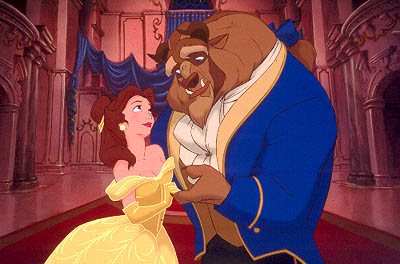
The “beauty” of the movie’s title is a beautiful young woman named Belle (voiced by Paige O’Hara), who lives in a French provincial town where she is the oddball and everybody knows it. The locals can’t believe that a woman of her beauty keeps to herself, cares for her inventor father Maurice (Rex Everhart), is obsessed with books and stories, and wants “more than this provincial life,” as her opening song suggests. The town’s handsomest man—a narcissistic, buffoonish hunter named Gaston (Richard White)—believes he should have the town’s most beautiful girl and sets out to marry Belle, who is repelled by him.

Maurice goes on a journey through the mysterious forest nearby and loses his way, leading him to the dark castle of the Beast. The Beast is a monstrous, uncompassionate, half-man/half-wolf creature who takes Maurice as his prisoner. When Belle finds him, she begs to take his place. We already know the origins of the Beast, explained in opening narration over a series of pictures on stain-glass windows. The Beast was a handsome but horrid prince whose cruelty got him into trouble with a witch, who transformed him into the Beast and everyone living in the castle into household objects—the butler is now a candlestick and the maid is now a teapot, for example. The only way to reverse the spell if the Beast can love and be loved in return before a magic rose, held in the west wing of the castle, wilts away.

Belle and Beast start off unpleasantly. His attitude is hostile towards her and she finds life in the castle very dreary. But with help of the helpful live objects, they learn to accept one another. As their relationship develops further, so does their romance as they realize they start to love each other, despite their differences. But Gaston will not stand for it as he rallies the whole town to come to kill the Beast and take Belle back.

“Beauty and the Beast” provides a pair of memorable, three-dimensional characters to follow, making this romance into a wonderful tale. Belle is not like all the other Disney animated heroines, and hardly like any animated heroine as far as I’m concerned. She’s independent, bright, strong-willed, kind, free-spirited, and is beautiful but doesn’t flaunt it. She doesn’t care about how she looks and doesn’t share Gaston’s logic (or lack of logic) that beautiful people should be together. All the other women in this movie are dim-witted and constantly swooning over men. Belle just keeps her nose in the books and doesn’t bat an eye when confused passersby notice her as the odd one in the neighborhood. When Gaston comes on to her, she turns him down, not taking any of his bull. And when she sees the Beast, she’s admittedly frightened of his appearance, but lets down her defense and sees the Beast for whom he could be, and who she could help make him to be. Belle is a perfect leading character for this story, and the animators do great jobs at creating her facial expressions—happiness, sadness, fear, anger, skepticism, and concern.

Now the Beast—there’s something monstrous and frightening about his giant stature, long brown fur, giant fanged teeth, beast-like walk, and deep roaring voice, but there can also be something worth caring for. The Beast learns he can genuinely love and even makes his own sacrifice to show his true nature and win Belle’s heart.

The supporting characters are memorable—every single one of them. The father Maurice is enjoyable in how curious he is about everything (his reactions to the enchantments of the castle are winning). The household objects that have personalities really take advantage of their screen time. There’s a candlestick named Lumiere (Jerry Orbach) who has a sophisticated manner and a welcoming personality (although I have to ask—why is he the only one in this movie with a French accent?); a clock named Cogsworth (David Ogden Stiers) who has a nervous, uptight personality and likes to keep things in control; a kindly teapot named Mrs. Potts (Angela Lansbury); Mrs. Potts’ young son Chip (Bradley Pierce), now a little teacup; and a footrest that acts as the castle’s dog. All of these characters deliver many wonderful moments, including an exciting musical number called “Be Our Guest” in which they make Belle feel right at home.

Then there’s the villain Gaston—I love this guy. His idea of logic just cracks me up with laughter. He doesn’t know he’s being ridiculous in thinking that since Belle is the most beautiful woman in town, he should marry her. Everyone else in that town thinks the same way, and besides, he’s the town hero. He could be the lead character of another movie—he’s charming, good-looking, and heroic. But here, he doesn’t get his way and the more he resorts to, the more of a beast he becomes, leading to a necessary line delivered by Belle about the Beast—“He’s no monster, Gaston—you are!”

The voiceover work is perfect. Paige O’Hara gives likeability and personality to Belle; Richard White is deliciously despicable as Gaston; Jerry Orbach, David Ogden Stiers, and Angela Lansbury are all fantastic; and then there’s the actor voicing the Beast—if you told me Robby Benson, the wimpy, wispy actor from films such as “One on One,” provided the voice for the Beast, I wouldn’t have believed it. In fact, I didn’t even know that it was Robby Benson until I saw the credits. And to be honest, he’s excellent in this movie!

Now that I’ve talked about the memorable characters, I should get to an important topic—the animation. This is some of the best looking animation I’ve seen in a movie. It’s amazing that the animators pay attention to every detail. There’s a great, polished look to the film that helps make it inviting. The settings are drawn perfectly, especially the castle which looks unbelievably amazing. There’s a neat gothic exterior that looks like something out of the best haunted-house movies—it’s just incredible. And I should also point out a central sequence in which Belle and Beast dance in the ballroom—using computer-generated backgrounds with hand-drawn characters, there’s an extraordinary shot that works as a crane shot, moving all over the room as the two dance. It’s moments like this that make this look as real as live-action.

Then there are the songs/musical numbers—music by Alan Menken and lyrics by Howard Ashman, both of whom worked on the music for “The Little Mermaid.” These are some of the best, most memorable songs in any Disney movie, and the production numbers are well-drawn, well-timed, and outstanding. There’s the opening number “Belle,” the villain’s theme “Gaston,” the joyous “Be Our Guest,” the observant, lighthearted song “Something There,” and the lovely, slow, noteworthy title ballad “Beauty and the Beast.”

It’s hard to resist loving “Beauty and the Beast.” It’s a perfect mix of characters, romance, music, enchantment, and animation. I can’t imagine anyone not enjoying this movie—kids will love its energy and spirit; adults will get even more from it. It’s a great family film that provides great entertainment.

Amadeus (1984)

31 Jan

Tom-Hulce-in-Amadeus-1984-001

Smith’s Verdict: ****

Reviewed by Tanner Smith

“Amadeus” is a film that gives a positive answer to the question “is a film about an artist as interesting as his or her work?” The answer is yes, as “Amadeus” is a historic-fiction period drama/portrait of Wolfgang Amadeus Mozart, and is also a high achievement in cinema history. This is one of those movies that, like most of the actual Mozart’s work, is just perfect. It’s a compelling story, a powerful drama, and a showcase of great talent.

“Amadeus” occurs through ten years of Mozart’s life, mostly spent in Vienna from the year 1781 to 1791. The film chronicles his successes and failings, but it covers more than just Mozart’s talent. It’s also an amazing portrait of creativity and envy. For you see, this film is not merely about Mozart and his work, but more of how envious the most miserable of colleagues in this craft can be to the point of trying to destroy him.

The envious one is Mozart’s rival Antonio Salieri (F. Murray Abraham) whom we first meet in the 1820s as an old man who attempts suicide while exclaiming that he killed Mozart. He is sent to an insane asylum where he gives his confession to a priest. As we see in flashback, Salieri looks back on his days as Court Composer for Emperor Joseph II (Jeffrey Jones) in Vienna. Mozart was Salieri’s idol, as he recognizes greatness in Mozart’s work, even when he was a young lad. Salieri himself is actually a mediocre composer, which he doesn’t realize and no one seems to point out because the Emperor himself is tone-deaf—he wouldn’t know a great music piece if he played it himself.

Salieri meets Mozart and is utterly shocked and dismayed when he realizes that Mozart is actually just an immature child stuck in a man’s body. He simply can’t believe that one of the greatest music creators in the world, if not the greatest, behaves wildly—chasing women, making inappropriate remarks, and having very little manners. But he truly is a genius and Salieri can’t deny it. However, Salieri is saddened and confused that God would display this great talent to this “creature,” as he calls him. As Mozart grows more and more famous and infamous, Salieri becomes more envious and wants nothing more than to plot Mozart’s downfall. But what always sets him back is the power of his music.

As you may have guessed, the most complex character in “Amadeus” is not Mozart, but Salieri. This is the one telling the story; this is the one who is envious the genius brought to this spoiled brat of a man; this is the one who is caught in a mixed bag of emotions; this is the one who has ignored all of the things that Mozart has enjoyed in life, just to be noticed for his own music, but alas he’s a second-rate composer. He even goes as far as pretending to be his late (disapproving) father’s ghost to work hard on the grandest opera the world has ever known, putting Mozart to a large amount of stress. And as Mozart is lying there, suffering and pretty much close to death, Mozart begs Salieri to help him finish the composition, while Salieri plans to steal it and claim it as his own.

That piece, by the way, is of course “Requiem,” and the scene is probably the most touching in the movie, because Mozart is willing to go all out with his creativity and genius, even on his deathbed. And a great touch added to it—as the piece is written, the actual music (imagined) is developed right along with it.

Mozart is an interesting portrayal. As I’ve said, he’s an immature child trapped in a man’s body. He can be loud and obnoxious, especially with his trademark braying laugh, as he could be considered to be trapped in a state of arrested adolescence. He’s mainly like a modern-day rock star—easing his way into this world and just having the time of his life. Sometimes, he’s nervous—such as when the Emperor orders for a piece to be shortened because the music has “too many notes,” and especially when his father, whom he’s devoted to, judges him. (Even when his father dies, Mozart is still haunted by him.) But sometimes Mozart can be unpleasant. There are moments when he’s either cruel to his wife Constanze (Elizabeth Berridge) or just unfaithful to her, though he does love her, and there’s also a scene in which he flat-out mocks Salieri’s work without knowing he’s present.

Tom Hulce plays the complicated role of Mozart and does an excellent job at playing him like Salieri sees him, as thus how we see him. Sometimes he’s likeable, sometimes he’s rude and obnoxious, but when you get down to it, he is Wolfgang Amadeus Mozart.

F. Murray Abraham is perfect as Salieri. He’s not a standard villain for Mozart; he’s a classic, tragic figure of envy. Though we wouldn’t prefer to stir through his sort of measures, we understand the pain he’s going through. And I also have to give him credit for playing both the young and old versions of the character—thanks to some great makeup work and equally great acting by Abraham, I never would have guessed this was F. Murray Abraham playing the older Salieri. But it is. Great work!

Is “Amadeus” completely historically accurate? Maybe not. But what should it matter when this much heart is put into the story and film? Maybe some parts were exaggerated; maybe other parts were stretched out. Either way, it’s known as “historic fiction,” and not to be one-hundred-percent accurate. It’s just a movie. And it’s an excellent one too.

War Eagle, Arkansas (2009)

29 Jan

Luke Grimes and Dan McCabe in "War Eagle, Arkansas."

Smith’s Verdict: ****

Reviewed by Tanner Smith

Enoch is a talented teenaged baseball player. He pitches strikeouts when he’s not under pressure. However, there are times when he does get under pressure—mostly because of his best friend, nicknamed “Wheels.” The reason Enoch is not popular among his peers is not just because of his stutter that prevents him from letting out a full sentence. It’s also because of his friendship and assistance to Wheels. Wheels is a smart aleck who won’t shut his mouth for even a minute. He also has Cerebral Palsy and is in a wheelchair, hence the nickname. These two share an odd friendship, having grown up together in a small community called War Eagle, in the Ozark Mountains. Enoch can’t talk, but can pitch very well; Wheels can’t walk, but he almost speaks for Enoch at some points—he can’t shut up. These two are the best of friends and they need each other. But Wheels is afraid of dragging Enoch down in the future.

The friendship between Enoch and Wheels is the main element of the independent film “War Eagle, Arkansas.” Theirs is a very refreshing coming-of-age story in that they don’t simply talk to each other about why they’re great friends or why they’re afraid of the future (it also helps that one of them has an uncontrollable stutter—I’m repeating myself, but let the record show that this kid has an even worse stutter than the geeky, stammering high school student who joined the debate team in 2007’s “Rocket Science”). When they get together and Enoch tries to come to Wheels with a problem, Wheels advises him and tries to help him, but not before using his acid tongue to a somewhat cruel outburst, even if some of what he’s saying is the truth.

“War Eagle, Arkansas” is a splendid piece of work. It doesn’t slip into melodramatic elements that would belong in a “movie-of-the-week.” Thankfully, the script by Graham Gordy doesn’t dumb down this coming-of-age story even when Enoch’s grandfather (well-played by Brian Dennehy) gives him multiple lectures about life. There are also nice, realistic supporting characters including Enoch’s mother (Mare Winningham) and Wheels’ mother (Mary Kay Place)—both love their children—and a video store owner named Jack (James McDaniel), who tries to build and open his own church in this small town. And then there’s a nice relationship between Enoch and a girl named Abby (helium-voiced Misti Traya), which has some comic timing in the ways that Enoch tries to use poetry as a pickup line, or when he writes conversations on his forearm to look at and bring up on their date. The relationship between Enoch and Abby almost strains the friendship between Enoch and Wheels when Enoch brings Abby to Wheels’ house. Wheels almost immediately regrets encouraging Enoch to ask Abby out. But he can’t just confront his friend and say how much jealousy contains him, not even when Enoch has a shot at a baseball scholarship for an out-of-state college.

And this friendship is one of the best coming-of-age teenage friendships I’ve seen in a movie. It helps especially that both boys are very well-acted. Enoch is played by Luke Grimes and Wheels is played by Dan McCabe. Both are newcomers, but they live and breathe their characters and do tremendous acting jobs. They play characters with differing personalities that really develop into one personality. The very best parts of the movie are when they’re together.

Also, the setting of the movie (a rural community) really makes you understand why Enoch and Wheels feel confused about their surroundings.

“War Eagle, Arkansas” is well-made with great performances. What I don’t understand is why, according to http://www.rottentomatoes.com, the sole review of this movie is from Philip Martin of the Arkansas Democrat-Gazette. Why is this movie so ignored? People need to see it because this is a terrific coming-of-age drama; one of the best I’ve ever seen.

Permanent Record (1988)

29 Jan

permanent-record-1988-teen-movie-keanu-reeves-screencap-06-21

Smith’s Verdict: ****

Reviewed by Tanner Smith

The term “teen movie” could easily be described as a comedy or drama about teenagers and just that. But only the bad “teen movies” are just that. But the best of this genre (I guess “teen movie” could be considered a genre) features more intelligence than expected—movies like “Tex” and “Lucas,” among others. Here is another movie to add to that list. It’s called “Permanent Record” and it’s about an event that a group of teenagers must cope with. It’s a movie so good that it’s unfair to even put it in a list with other “teen movies.” (OK, I’ll stop with the quotation marks.)

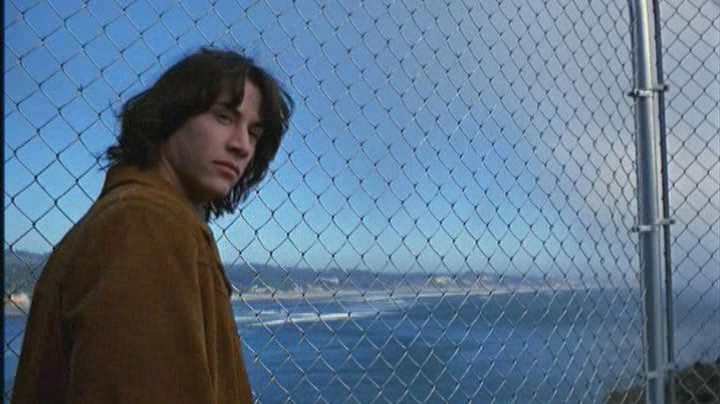
The first shot of the movie rings true. It’s a shot of a group of teenage friends who hang out together with their cars on top of a high bluff overlooking the sea. They have their own conversations and we see that they’re good friends. The camera pans all throughout the friends as they talk and mess around with each other. This shot isn’t forced and there doesn’t seem to be any acting (but we know these kids are played by actors).

One of these characters catches our eye as the first half of the movie unfolds with not necessarily a plotline. This character is a high school student named David (Alan Boyce), a model student. He gets good grades, is a nice guy, is a talented guitar player, helps compose the music for the school production of “The Pirates of Penzance,” and has just received a scholarship from a great music school. He has about everything going for him. But something is wrong. He feels that he is too busy for the scholarship, but the principal reminds him that it’s not for another two years. He is also a bit impatient when teaching his best friend Chris (Keanu Reeves) to play guitar. Chris can be good at it, but he doesn’t focus enough and that almost makes David mad.

This first half is great because it shows that David, Chris, and their friends are teenagers who are bright and thoughtful. They are not like most teenagers you see in other movies. And their high school days are not routine. They’re well-written and insightful. The way David’s crisis gets worse is so subtle. We don’t need dialogue to see what’s really going on in this kid’s life. And it really hits us hard when the second half occurs right after Chris sees David on top of that high bluff from the opening shot, then he looks again and he’s gone.

Many of David’s friends believe that David’s death was an accident. But soon, Chris receives a letter from David before he died—a suicide note that explained that David wanted everything to be perfect and it wasn’t. Chris is convinced that David has indeed committed suicide and tells everyone because they deserve to know. But knowing that this model student committed suicide is even worse than trying to deal with his death. Nobody knows how to feel anymore and the rest of the movie is about Chris and David’s other friends as they express rage, cry over his death, and feel sorrow. Was there anything they could’ve done to stop him from killing himself? “Permanent Record” features the kind of realism and emotion expressed by realistic teenagers over a friend’s death that I looked for and missed in the ‘80s after-school special “A Desperate Exit,” which featured Malcolm-Jamal Warner and Rob Stone. The way these teenagers express their emotions feels authentic and real. Credit director Marisa Silver and her writers Jarre Fees, Alice Liddle and Larry Ketron for creating a story with such subtle realism.

The performances of the teenaged characters are spot on, especially by Alan Boyce as David, Keanu Reeves as Chris, Michelle Meyrink (“Real Genius”) as their friend MG, and Jennifer Rubin as David’s girlfriend Lauren. And another intriguing character is their school principal, played by Richard Bradford. He shows very little, but we somehow know he is a good man who is unlike the mean-spirited high school principals in other movies. Also, the parents are given something in particular to do. They are not entirely absent here. They show up when the time is right.

Everything leads to the heartwarming final scene, in which “The Pirates of Penzance” goes on without David to arrange the music. But David is remembered in a way I will not describe. It’s such a great scene. And because of that scene, there is a sense that life will go on for these kids. But they will also realize that life isn’t perfect. Life is problems, but they have to deal with it in the way that David couldn’t. That message is emphasized at just the right note. It didn’t need to carry out even further. If it had, it would’ve cost the movie its subtlety.

Tex (1982)

29 Jan

images

Smith’s Verdict: ****

Reviewed by Tanner Smith

When American audiences feel that all a movie really needs in order to satisfy them is a crime caper and a chase scene, it’s rare for the 1980s that a movie like “Tex” comes along. This is a movie about real people in realistic situations and the whole movie is just about a few weeks in their lives. What’s even more surprising and great about this movie is that most of these people are teenagers. They’re some of the most engaging group of teenagers I’ve seen in any movie. They’re the characters of “Tex,” adapted from a young adult novel by S.E. Hinton. S.E. Hinton is an author who clearly understands teenage talk, problems, and behavior (she also proved that with “The Outsiders,” one of my favorite books). “Tex” is faithful to the novel and even more alert towards its teenage characters.

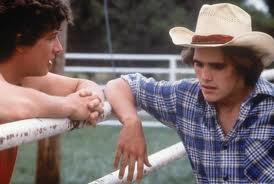
The main focuses among these teenagers are two brothers named Tex and Mason McCormick. Tex (Matt Dillon) is a simple-minded yet engaging fifteen-year-old and Mason (Jim Metzler) is a cynical, basketball-playing eighteen-year-old. They live alone in Bixby, Oklahoma. Their mother is long dead and their father is a rodeo cowboy who hardly ever comes home and forgets to send the boys money at times. So the boys have to raise themselves (well actually, it’s Mason raising Tex) and they do a good job of it. But they need money, food, and heat. So Mason is forced to sell Tex’s beloved horse and that brings Tex in a world of emotions and partial hatred towards his brother.

We meet their friends—Tex’s motorcycle-riding best friend Johnny (Emilio Estevez) and Johnny’s smart aleck feminist of a sister named Jamie (Meg Tilly) whom Tex has a crush on. Their father (Ben Johnson) is a strict man who doesn’t want Tex and Mason associating with his kids—at one point, he even commands Johnny to promise not to be Tex’s best friend anymore. What he doesn’t see (or doesn’t even want to believe) is that his kids are just as unpredictable as Tex and Mason. We also meet another kid named Lem (Phil Brock) who got a girl pregnant, married her, and moved to Tulsa in order to care for his new wife and the newborn baby. But he also deals drugs. Tex doesn’t realize this, but Mason has known it a long time, even when he seems very happy that his baby is born. This situation leads to a violent scene in which Lem and Tex, who is basically looking for trouble, are caught up in a jam with one of Lem’s customers.

The story includes a lot of conflict, conversations amongst the characters, and more. This is a movie about events in these kids’ everyday lives and because we believe in these kids, we stay focused on their story. How the story develops in “Tex” is more to the point than actually what happens when it develops.

“Tex” is very well-acted. Matt Dillon is appealing as this simple-minded central character named Tex, and Jim Metzler is great as his knowing-well older brother Mason. Actually, I believe Metzler has the more complicated role than Dillon’s, because he has to play surrogate father to his stubborn younger brother and constantly keep him in line. I truly believed in these characters so much that I didn’t really care much for the plot. They’re realistic teenagers given room to learn and grow and I was interested in watching them do just those.

“Tex” is a movie that seems like true events are occurring, and I think that was what S.E. Hinton was originally shooting for when she wrote the novel it was based upon. “Tex” is a great movie, though it’s sadly overlooked by many. I hope more people seek this out and admire what this movie has to offer.

The Big Easy (1987)

28 Jan

MCBR01_0

Smith’s Verdict: ****

Reviewed by Tanner Smith

“The Big Easy” starts out as a thriller, and then it turns into an erotic romance. Then it goes back to being a thriller again and then an erotic romance again, until the film finally becomes a romance/thriller. That usually comes rare in the movies, since in most thrillers, whatever romance develops isn’t quite as important as its own central story. But “The Big Easy” manages to keep consistency in both elements.

As you may have guessed, the Big Easy in the title refers to the nickname of New Orleans, Louisiana. And New Orleans is quite a unique city to set a thriller, as it’s one of the most mysterious cities, as far as I’m concerned. It’s humid and quite eerie with its many alleyways and courtyards. There had to be a thriller to come around and use it as its location.

“The Big Easy” starts with an investigation of the dead body of a Mafia (or “wise-guy”) member, found lying in a fountain. We meet our two main characters who are on the case. They’re a police lieutenant named Remy McSwain (Dennis Quaid) and an assistant district attorney named Anne Osborne (Ellen Barkin). They meet in Remy’s office and are immediately attracted to each other, despite Anne wanting to keep this a professional relationship. They go out to dinner that night, and she rightfully accuses Remy of being on the take, to which Remy responds by saying she doesn’t know how the system works around here.

After some bickering between them, they wind up forming a passionate love affair with each other, mainly because Remy is too persistent. But after a couple days, their affair ends when Remy is caught on videotape while accepting payoffs in an Internal Affairs sting. Anne becomes his prosecutor, which makes things pretty tense for both of them.

Anne takes her job (and burden) seriously, despite her affair with Remy, and she nearly puts him in jail. But with the help of some folks at the station, the evidence is destroyed and Remy gets off scot-free. Anne wants to forget about all of this, but Remy has arranged for her to be “arrested” and brought to his mother’s house, where a party is being held and Remy would like to dance with her, as he’s still in love with her. This is a great scene.

But soon enough, more killings continue and it seems like someone on the police force might be involved, and so Remy and Anne work together again. While doing so, their romance is further developed.

“The Big Easy” is great because it manages to take a string of these nicely-developed, interesting characters and manages to fit them into a thriller that is not one of those assembly-line thrillers, but a real interesting caper that gets more intriguing and investing as it goes along. I wasn’t expecting much from the story in the first few minutes as much as I was enjoying the company of these characters on-screen. That’s why I was pleasantly surprised when I realized that I was really getting into the mystery. And when one of the characters that I have become accustomed to turns out to be involved with the bad guys, I was actually pretty surprised because I didn’t want that person to be associated. That lets you know a thriller is working.

The two leads are intriguing roles and real three-dimensional characters as well. Remy, we see, is both honest and dishonest in doing his duty as a cop. Sometimes he does the wrong things, but for what he thinks are the right reasons—like arranging a “widow and children’s fund” so he can use the money to keep his younger brother (Tom O’Brien) through college. He’s also cocky and very persistent, and that’s how he usually gets his way. But that doesn’t mean that Anne isn’t a tough cookie. She’s smart, fierce, and will do anything to get what she needs, and yet she falls for this guy because she notices his charm. Dennis Quaid and Ellen Barkin do excellent jobs at playing these characters, and their love scenes are some of the most erotic I’ve seen in a movie—it’s mostly realistic.

But the supporting characters are given time to develop and shine. There’s the sincere police chief (Ned Beatty, excellent here) who isn’t constantly arguing with Remy like most chiefs, but actually fools around with him because the two are good buddies. And there are the other guys down the station, constantly making wisecracks at each other, even at a crime scene. There’s Remy’s younger brother who comes in at the wrong times. And last but not least, in fact he’s my favorite supporting character—Lamar Parmentel (Charles Ludlam), a Cajun-accented defense attorney in a Panama hat and a summer suit.

New Orleans also seems like a major character in the movie—no wonder the movie is called “The Big Easy.” The feel of the city is just right—the people, the locations, the music, and even the food are given notice as colorful New Orleans elements.

Sure, the movie ends with a typical showdown involving Remy and Anne versus the revealed killers, but even that’s well-done. It’s not as long as most climaxes go, and it even does the smart thing by making it seem like the characters’ actions are in their nature. “The Big Easy” is not just a thriller, and it’s not just a romance either. Those expecting either of those will be surprised by a great movie.

A Simple Plan (1998)

26 Jan

Simple Plan

Smith’s Verdict: ****

Reviewed by Tanner Smith

The title of the thriller “A Simple Plan” represents a form of irony. There is no simple plan. Every time the characters think they’re following a “simple plan,” things just get more complicated and difficult as they go along. The plan ends with disastrous results. Nothing is simple in this movie.

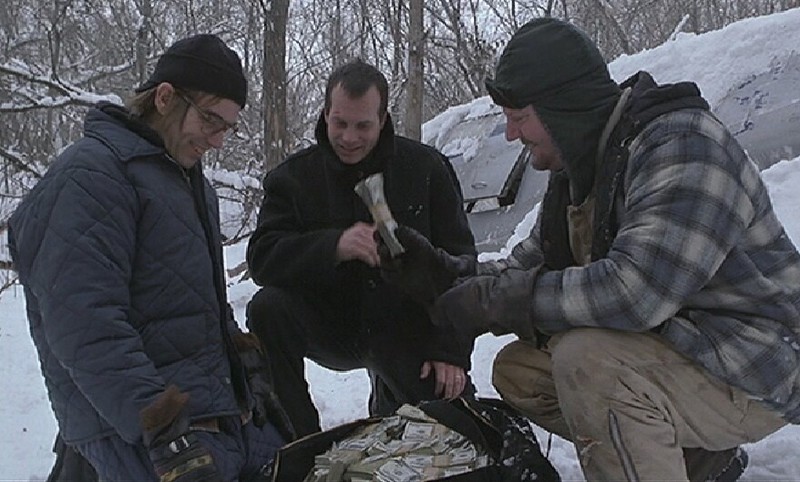
The film takes place in the winter in a small, rural Midwestern town. The protagonist Hank (Bill Paxton) is a nice, bright man living a happy life with his wife Sarah (Bridget Fonda). He has everything he believes a happy man should have, which he states in an opening narration—a lovely wife, a decent job, and people who like and respect him. Then one day, something happens that changes his life. As he, his mentally-slow brother Jacob (Billy Bob Thornton), and their rowdy, drunk friend Lou (Brent Briscoe) stumble through the woods, they come across the wreckage of a crashed plane, where they find a duffel bag filled with money—millions of dollars in cash.

Amazed by this discovery, the trio is split about what to do with it. Hank wants to do the reasonably smart thing and turn it in to the authorities to let them handle this. Lou believes that nobody has to know and that they should all keep the money. Jacob has no opinion—he’ll just go along with whatever his brother and friend agree on. Lou acts as the devil on Hank’s back—“It’s the American Dream in a gym bag and you wanna walk away from it.” Hank tries to counter by saying, “You work for the American Dream. You don’t steal it.” Lou and Jacob think that since the money probably belonged to some drug dealers, then it’s no problem if they keep the bundle for themselves.

Reluctantly, Hank agrees to hide the money until they’re sure no one’s looking for it or the plane. Then they’ll all split it. In the meantime, Hank keeps the money in his house and lets his wife in on the secretive “simple plan.” Sarah becomes Hank’s silent partner in keeping the money hidden and making sure that no suspicion is present.

This seems like a relatively harmless and, for lack of a better word, simple plan. Hank is undoubtedly the most responsible in the group and as long as Jacob and Lou keep it a secret (and they will, if they want to keep the money), nothing should go wrong. But Sarah suggests that Hank return $500,000 to the plane, so that whoever’s looking for the money won’t be suspicious if they find the plane. OK, a little roadblock. Easily fixable, right?

Wrong. Everything you think can go wrong with this plan goes wrong from that point on. There are consequences, mistrusts, further complications, and the whole situation just becomes a disaster that Hank has to face. Oh, and just when you think everything is finally going to go right, they still have a way of turning around. The money is still around and it will always be a problem. Hank’s right—“You don’t steal the American Dream,” no matter how easy it may seem at this moment.

“A Simple Plan” is an ingenious thriller that plays with tension and storytelling. The screenplay was written by Scott Smith, based on his novel, and it’s brilliantly written in the way it handles this bizarre situation and its further implications. The director was Sam Raimi, who wonderfully portrays the small-town life in the surface of the growing tension between the characters. He keeps the suspense alive. He also uses a snowy backdrop for a chilling atmosphere, much like how the Coen Brothers handled their environment in “Fargo.” (Incidentally, Raimi asked the Coens for advice in filming in this weather.)

“A Simple Plan” faces its moral implications head-on. In order to keep the plan a secret, a character has to do something horrible to help it remain a secret. And then, the characters are forced with the crisis of what they’re going to do, and their decisions bring additional complications for them to handle. The characters deal with it, they talk about it, they have discussions, etc. And we, as an audience, are involved and brought along to follow the story, wondering how they’re going to get out of this.

The performances are flawless. Bill Paxton brings an everyman quality to the role of Hank, and he’s easily identifiable. This is why when paranoia and deception sometimes takes over in his mind to the result of a horrible deed, we feel sorry for him. We’re hoping that things will turn out okay for him. Brent Briscoe is suitably slimy as Lou, who winds up demanding his share of the money soon enough. Bridget Fonda is ultimately solid as a woman who starts to take charge of the situation for the good of her husband.

But in an ensemble cast of flawless performances, one that will undoubtedly catch the most attention is Billy Bob Thornton as Hank’s dim-witted but good-natured brother Jacob. Thornton is absolutely perfect in this film. Playing Jacob by walking a fine line between gentle and psychotic, Thornton delivers a striking portrayal of a slow-minded man who learns to think faster than he has before, and actually has his moments of revelation as well—probably more than what can be said for the other characters who attempt to go on with this secret. Thornton is always appealing in this role, and sometimes even quite haunting.

“A Simple Plan” is a superb thriller with greatly effective storytelling and great acting. It’s an involving story from beginning to end—suspenseful, tense, stylistic, complex, and plausible. And just remember—if you think you can get away with something like thievery, just remember to think about what you’re getting yourself into. There is no simple plan.

Stand by Me (1986)

24 Jan

365647730_640

Smith’s Verdict: ****

Reviewed by Tanner Smith

In a series of novellas called “Different Seasons” by Stephen King, the third (of four) novella—entitled “The Body”—uses the segment “Fall from Innocence,” meaning in all of our lives there is a time that changes our lives forever. Coming-of-age stories are the tales that showcase a character (or characters) going through important events in their lives. In “The Body,” the event for four pre-teenage boys is the journey to find a dead body and become famous for turning it in. They find the body, but they really find each other and learn some valuable life lessons. Despite being written by Stephen King, it isn’t a horror story. In fact, one of King’s strengths in his horror stories is the strong friendships that develop between the characters. This is simply a story of one of those friendships with no macabre elements (save for the sight of a corpse); just simple life lessons.

The novella is closely adapted into the film “Stand by Me.” You can put the praise onto the nostalgia aspects of the story, the convincing portrayals of these four compelling young characters by four excellent young actors, its honest look at their journey (psychologically, as well), or all of the above. Either way, “Stand by Me” is a wonderful movie. It’s one of the best teenage coming-of-age films I’ve ever seen. It’s fun, it’s touching, it’s believable, well-acted, well-executed, and when it needs to be, very funny. It’s the third outing for Rob Reiner as a director, after the success of “This is Spinal Tap” and “The Sure Thing.” His impressive streak continued with “Stand by Me.” Reiner knows the subject material by heart and, with an excellent screenplay by Ray Gideon and Bruce A. Evans, brings delight to the screen in telling this story.

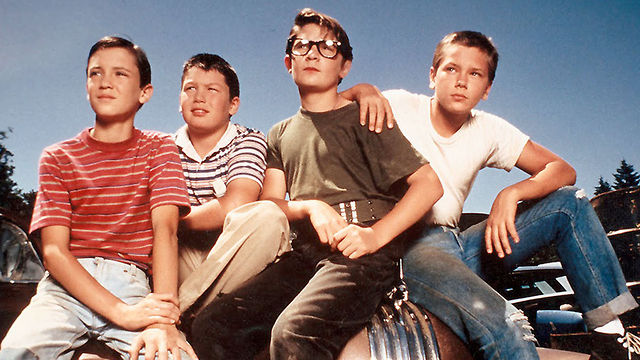
Unlike most coming-of-age stories, this one takes place in just a couple of days, rather than a couple weeks, months, or even years. That’s how long it takes for these small-town Oregon treehouse boys to walk along the railroad tracks to find the dead body of a missing kid. It begins as pudgy, wimpy Vern Tessio (Jerry O’Connell) arrives to the treehouse to tell his friends—Gordie Lachance (Wil Wheaton), Chris Chambers (River Phoenix), and Teddy Duchamp (Corey Feldman)—his knowledge of where it can be found. They decide to trek after it, turn it to the authorities, and become famous.

Where do I start with the effective drama in this movie?

Each of these boys have their own demons, as we learn through the journey. Gordie—who serves as the narrator of the story, voiced as an adult by Richard Dreyfuss—is haunted by the thought that his parents believe his late older brother—the “favorite son” (played in flashbacks by John Cusack)—was the wrong one that died. (He even has a nightmare in which his father states, “It should’ve been you.”) Chris comes from a family who doesn’t love him, has a reputation of being a bad seed like his brother “Eyeball” (Bradley Gregg), and just wants a fresh start, but feels trapped by his hometown. Teddy’s mentally unstable father, who wound up in a mental hospital, abused Teddy and no one ever lets him forget it. Vern is a coward, always afraid of trying anything new. Each of these elements are brought up and confronted along the way. They realize the good things they have in life—one is each other, and the other is their own abilities. In particular, Gordie is a creative storyteller and Chris is loyal and mostly takes the peaceful route. This is all told in a convincing, well-written, well-acted way that makes for one great scene after another. The most touching scene is when Chris finally breaks down and tells Gordie, his best friend for life, about the time he really felt let down.

The boys’ friendship is in danger of being torn apart. This is first brought up when Chris tells Gordie that he’ll be separated from him and the others, because he’ll achieve at a higher rank than them. Gordie doesn’t want that to happen, but it’s inevitable. Since Chris doesn’t want to drag Gordie down, he doesn’t want to fight it—he wants Gordie to use his gift of writing to succeed in life. No one’s friendship is the same as when they were 12 years old, but at the time, there’s nothing stronger than that bond.

Then once the kids find the body, they’re faced with their own mortality once it turns out that the town bullies, led by knife-wielding Ace (Kiefer Sutherland), show up and decide to claim it for themselves. It’s then that they realize what’s more important, what’s at stake.

This is great stuff! It’s all told in a very effective way and makes us believe in every detail these characters go through. But the movie isn’t so dramatic that it will turn people off—there is a lot of comic relief in many inventive scenes of comedy and adventure. In the latter category, we have the actual trek itself. The boys get attacked by a junkyard dog, which turns out to show as a real difference between fantasy and reality (it turns out to be a harmless-looking Golden Retriever); they go through leech-invested waters in the middle of the forest; and in the most exciting scene, they cross a railroad bridge and nearly get run down by an oncoming train. As for comedy, the best segment comes during the boys’ campout—it’s the story told by Gordie to the others about a tormented overweight boy who gets his revenge at a pie-eating contest, in the most disgusting and hilarious way. It works as comedy and as a concept of a disregarded child, giving come-uppance to his tormentors.

The comedy, drama, and adventure go great together, and the performances by Wil Wheaton, River Phoenix, Corey Feldman, and Jerry O’Connell are spot-on. They capture their personalities distinctively and memorably and make for great company to spend an hour-and-a-half with.

I love this movie. I love it so much that I’m sincerely hoping I’m not leaving anything out in this review. Sometimes, I want to hurry along a review and finish it. But with really great movies such as this one, I hope there’s nothing I’ve missed that needs to be brought up. I love “Stand by Me” that much.